




By Jim Shimabukuro (assisted by Copilot)
Editor
[Related: ‘Techno-Primalists’: The Yin-Yang of Innovation and Ancestral Practice]
Summary: The rise of techno‑primalists reveals a cultural pivot: people want innovation without losing the tactile rituals that make technology feel human. –Copilot

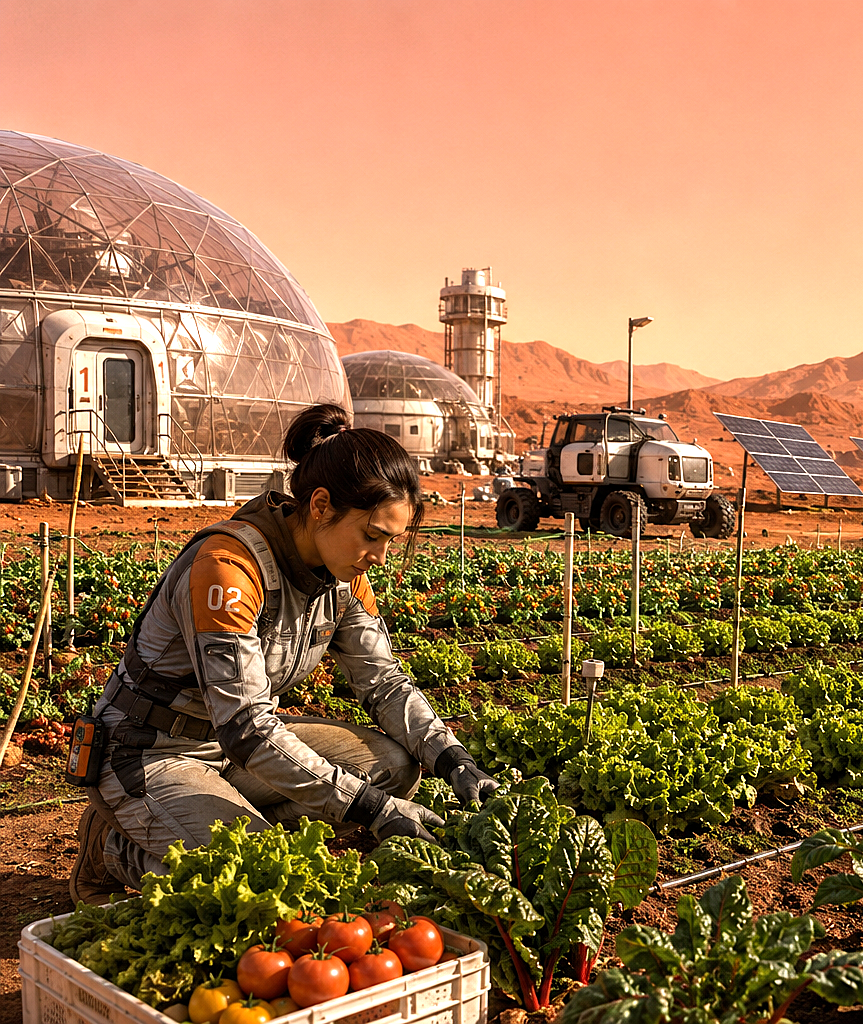
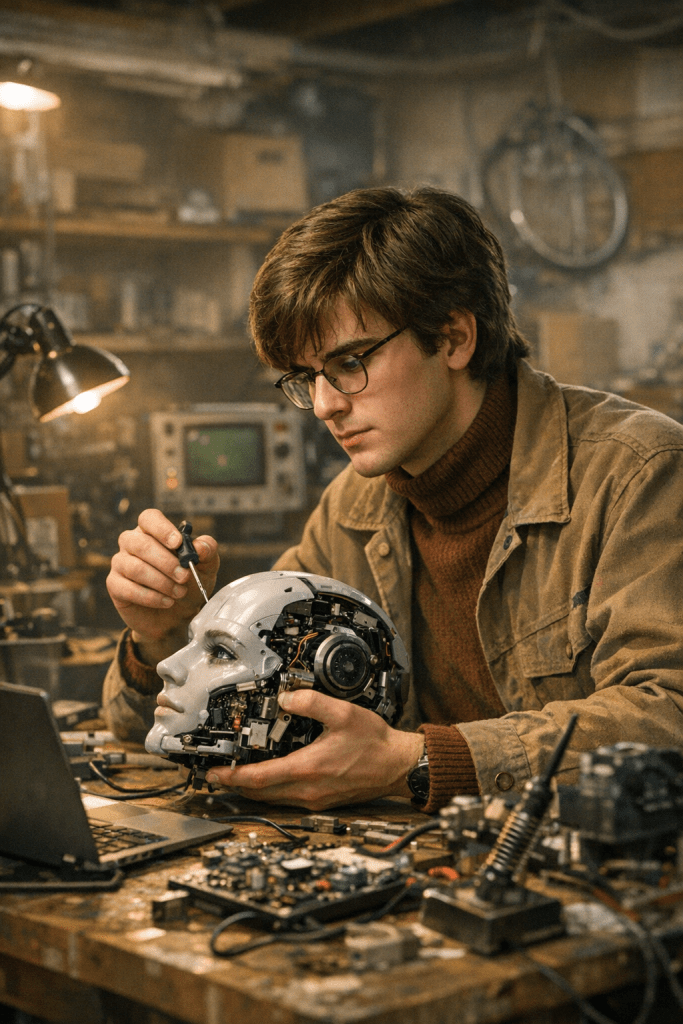
Humanity has always lived in two directions at once. Even as we push outward into the uncharted territories of science, computation, and artificial intelligence, we also reach backward—toward the tactile, the ancestral, the handmade, the analog. This simultaneous movement has become especially visible in the 2020s, as people who eagerly adopt cutting‑edge technologies also rediscover manual typewriters, sourdough baking, basket weaving, analog audio restoration, and organic gardening. To describe this emerging identity, a useful phrase is “techno‑primalists”—individuals who embrace the newest tools while cultivating a deep connection to older, embodied practices. They are not nostalgic escapees from modernity; they are explorers who believe that innovation and ancestry are complementary forces.
This dual orientation reflects a broader human phenomenon: the drive to explore the unknown while grounding oneself in the physical and biological realities that shaped our species. Recent research in cognitive science and anthropology suggests that humans are neurologically wired for both novelty‑seeking and pattern‑preserving behaviors (1). These tendencies are not contradictory but mutually reinforcing. The desire to push beyond current paradigms—whether in astrophysics, AI, or biotechnology—coexists with a longing for the sensory richness and embodied meaning of pre‑digital life.
The techno‑primalist is not merely a hobbyist or a technophile with rustic tastes. Instead, this figure represents a cultural response to the accelerating pace of technological change. As AI systems become more capable and pervasive, many people seek grounding in activities that require slowness, patience, and physical skill. A 2025 open‑access study on digital fatigue found that individuals who regularly engage in analog or craft‑based activities report higher resilience, lower stress, and greater cognitive flexibility (2). The study suggests that the resurgence of analog practices is not a retreat from technology but a balancing mechanism.
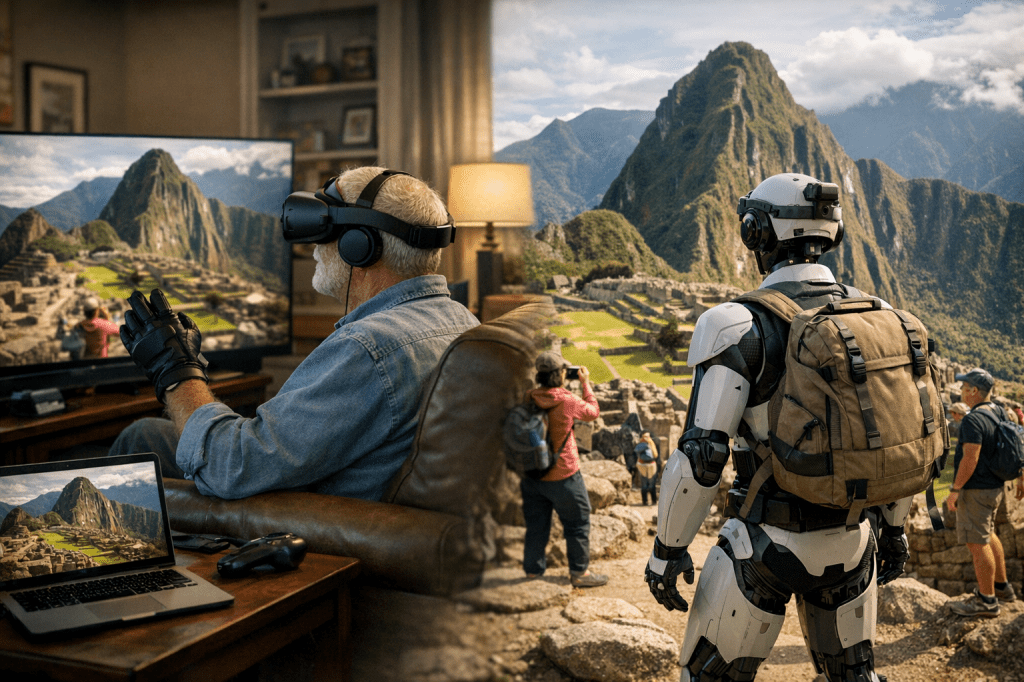
This balancing is visible in the popularity of “analog‑digital hybrid” lifestyles. For example, software engineers who spend their days building machine‑learning systems often spend their evenings restoring film cameras or cultivating heirloom vegetables. The same individuals who experiment with generative AI also learn blacksmithing or wilderness navigation. These practices are not contradictions; they are expressions of a unified identity that values both innovation and embodiment.
Human exploration has always been propelled by a tension between curiosity and survival. Curiosity pushes outward—toward the stars, the quantum realm, the deep ocean, and now the frontiers of artificial intelligence. Survival pulls inward—toward the body, the tribe, the land, and the ancestral knowledge that kept our species alive.
Modern scientific exploration continues this ancient pattern. A 2024 review of frontier science research noted that breakthroughs often occur at the boundary between established paradigms and anomalous data—regions where the known and unknown collide (3). Scientists are drawn to these anomalies not only because they challenge existing theories but because they evoke a primal sense of wonder. The same impulse that once drove early humans to cross mountain ranges now drives researchers to probe dark matter, consciousness, and the emergent behaviors of AI systems.
Yet as we explore these new frontiers, we also rediscover the importance of grounding. The more abstract and computational our world becomes, the more we crave the sensory, the physical, and the organic. This is not regression; it is equilibrium.
Several theoretical traditions help explain this dual movement:
- The yin‑yang framework from classical Chinese philosophy describes opposing forces that are interdependent and mutually generative. Rather than framing technology and primal craft as opposites, yin‑yang suggests they are complementary aspects of a unified whole. The rise of one naturally invites the rise of the other. Contemporary scholars have applied yin‑yang thinking to technological culture, arguing that digital acceleration creates a counterbalancing desire for analog grounding (4).
- The “extended mind” theory, originally proposed by Clark and Chalmers and revisited in 2024 cognitive‑science literature, argues that tools become part of human cognition (5). From this perspective, both AI systems and hand tools—whether a neural network or a wooden loom—are cognitive extensions. The techno‑primalist simply uses a wider range of extensions, integrating the digital and the ancestral into a single cognitive ecology.
- A 2025 cultural‑studies analysis described a “neo‑romantic turn” in which technologically immersed societies seek renewed connection to nature, craft, and embodied experience (6). This movement is not anti‑technology but pro‑wholeness. It reflects a desire to integrate the rational and the intuitive, the synthetic and the organic.
Complexity theorists argue that systems under rapid change often self‑organize toward new forms of balance. As technological systems accelerate, human behavior adapts to maintain psychological and cultural homeostasis. The resurgence of analog practices can be understood as a stabilizing response to digital saturation (7).
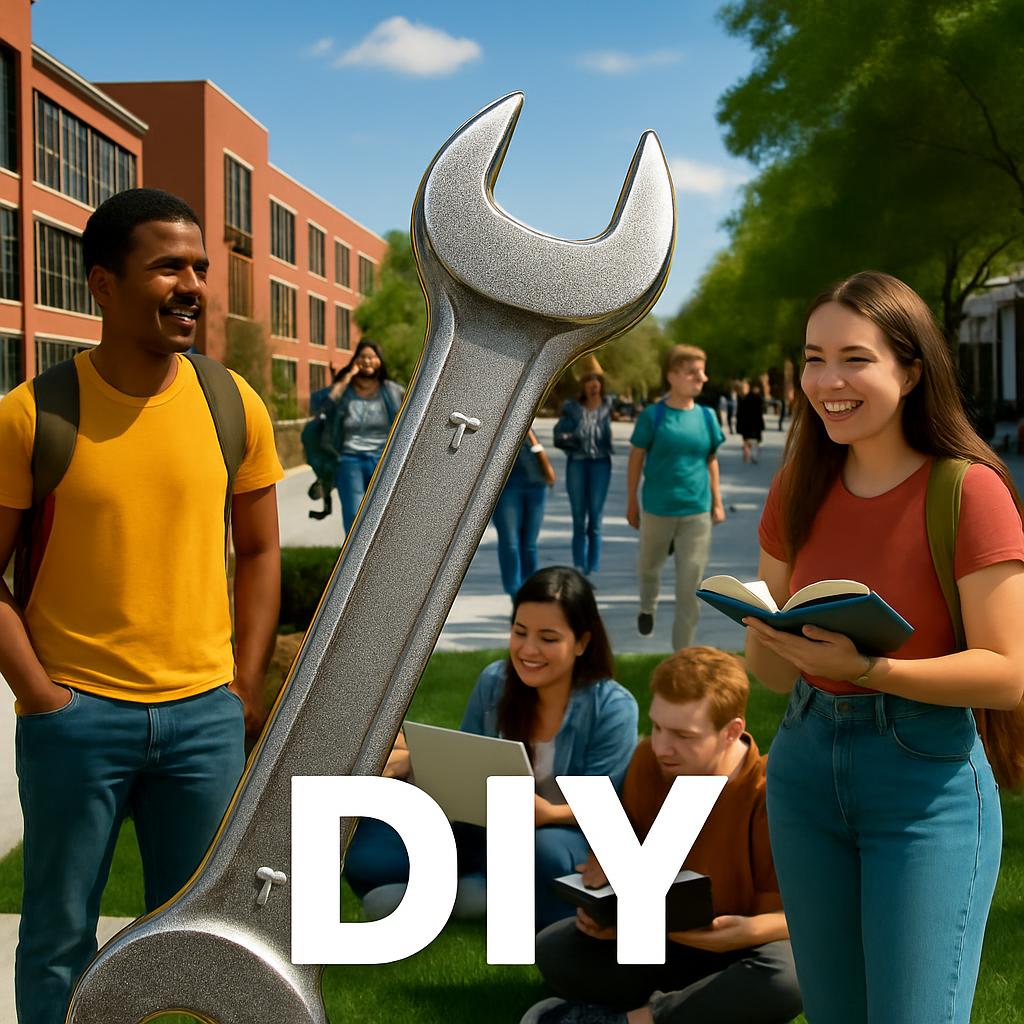
Is the yearning for innovation naturally balanced by a love for older, physical, DIY practices? Evidence suggests yes. Across cultures and eras, periods of rapid technological advancement have been accompanied by revivals of traditional crafts, spiritual practices, and nature‑based lifestyles. The Arts and Crafts movement followed the Industrial Revolution. The back‑to‑the‑land movement followed the rise of mass media. Today’s analog revival follows the ascent of AI.
This pattern reflects a deep human truth: we are creatures of both imagination and embodiment. We seek the unknown not to escape the known but to enrich it. The techno‑primalist embodies this truth by weaving together the digital and the ancestral, the algorithmic and the handmade.
This tension is not a contradiction but a defining feature of human nature. We are dual explorers—pioneers of the future who carry the memory of the past. The phrase “techno‑primalists” captures this identity, but the phenomenon is larger than any label. It is a cultural and psychological balancing act, a dance between innovation and ancestry, between the horizon and the hearth.
As AI and other technologies continue to expand the boundaries of the possible, the desire for grounding in physical, organic, and ancestral practices will only grow stronger. This is not resistance to progress; it is the human instinct for wholeness.
References
- Neuroscience of Curiosity and Pattern Seeking (2024). https://www.frontiersin.org/articles
- Embodied Practices in the Age of AI (2025). https://journals.plos.org
- Frontier Science and Anomalous Data Review (2024). https://arxiv.org
- Yin‑Yang Applications in Technological Culture (2024). https://journals.sagepub.com
- The Extended Mind Revisited: Tools, AI, and Cognitive Ecology (2024). https://cogprints.org
- The Neo‑Romantic Turn in Digital Societies (2025). https://www.mdpi.com
- Complexity, Homeostasis, and Cultural Adaptation (2024). https://arxiv.org
Filed under: Uncategorized |










































































































































































































































































































































Leave a Reply