




By Jim Shimabukuro (assisted by ChatGPT)
Editor
A growing body of 2025–2026 guidance suggests that mid-career professionals can no longer treat AI as a discrete skill to “learn once,” but instead must adopt a continuous, self-directed cycle of experimentation, reflection, and integration into daily work. Recent practitioner-oriented articles emphasize that the most effective professionals are not those who complete isolated courses, but those who build what might be called a personal AI lab—a lightweight, evolving system of tools, workflows, and projects that mirrors how AI is actually used in modern organizations.

For example, a 2026 MIT Sloan Management Review piece argues that professionals should treat generative and agentic AI systems less like software and more like junior collaborators, requiring ongoing calibration, prompting strategies, and evaluation habits that improve with use rather than formal instruction alone [1]. This shift reframes “learning AI” as an applied, iterative practice embedded in one’s existing domain expertise.
A consistent theme across the latest literature is the importance of workflow integration over tool familiarity. A 2025 Harvard Business Review analysis notes that workers who gain durable advantage are those who redesign their core tasks—writing, analysis, decision-making—around AI augmentation, rather than simply adding AI as a peripheral tool [2]. In practical terms, this means professionals should continuously map their weekly tasks and ask where AI can compress time, expand insight, or automate routine components. Over time, this produces compounding returns: small workflow optimizations accumulate into significant productivity and strategic advantages. Independent experimentation—keeping a running log of prompts, outputs, and refinements—emerges as a key DIY practice, effectively serving as a personalized “prompt engineering notebook” that evolves alongside rapidly changing models.
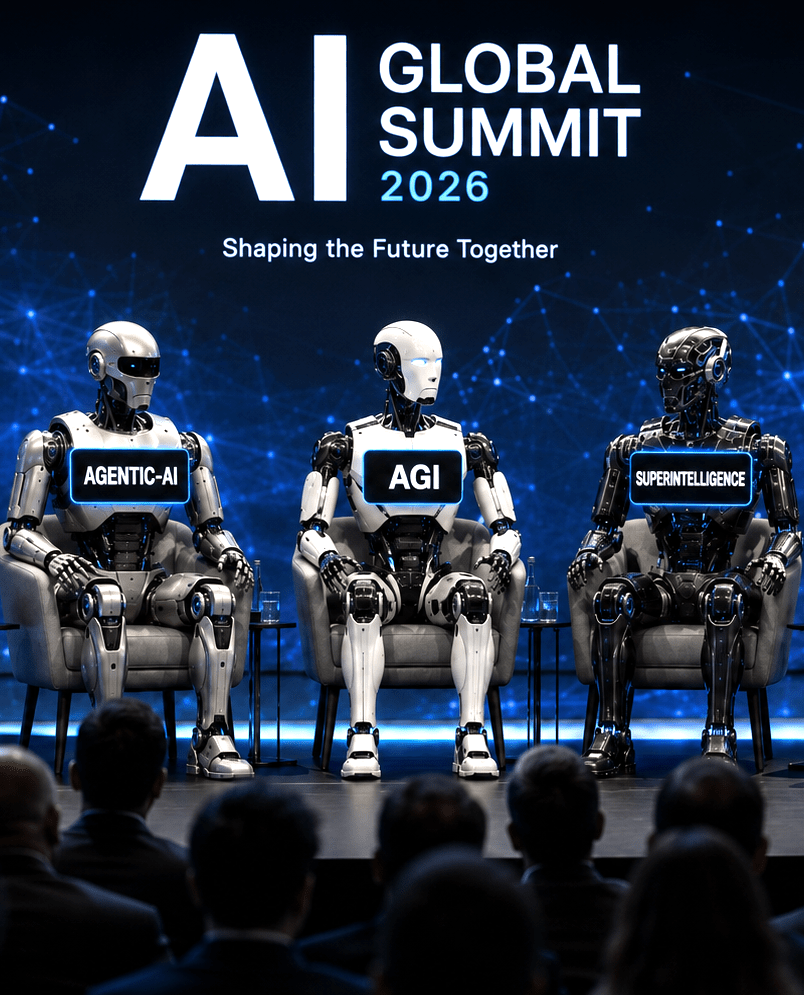
Another major insight from recent publications is the rise of agentic AI literacy as a distinct layer beyond generative AI. Reports from organizations like the World Economic Forum and McKinsey (2025–2026 updates) emphasize that professionals should begin learning how to orchestrate multi-step AI systems—agents that can plan, execute, and iterate on tasks with minimal supervision [3,4].
For independent learners, this does not require advanced coding at the outset. Instead, accessible platforms and frameworks now allow professionals to experiment with chaining prompts, setting goals for AI systems, and supervising outputs. The DIY pathway typically progresses from (1) mastering high-quality prompting, to (2) using AI for structured workflows (documents, analyses, reports), and then to (3) building simple agentic processes such as automated research assistants or task managers. This staged progression reflects how organizations themselves are adopting AI, making it a practical roadmap for individuals.
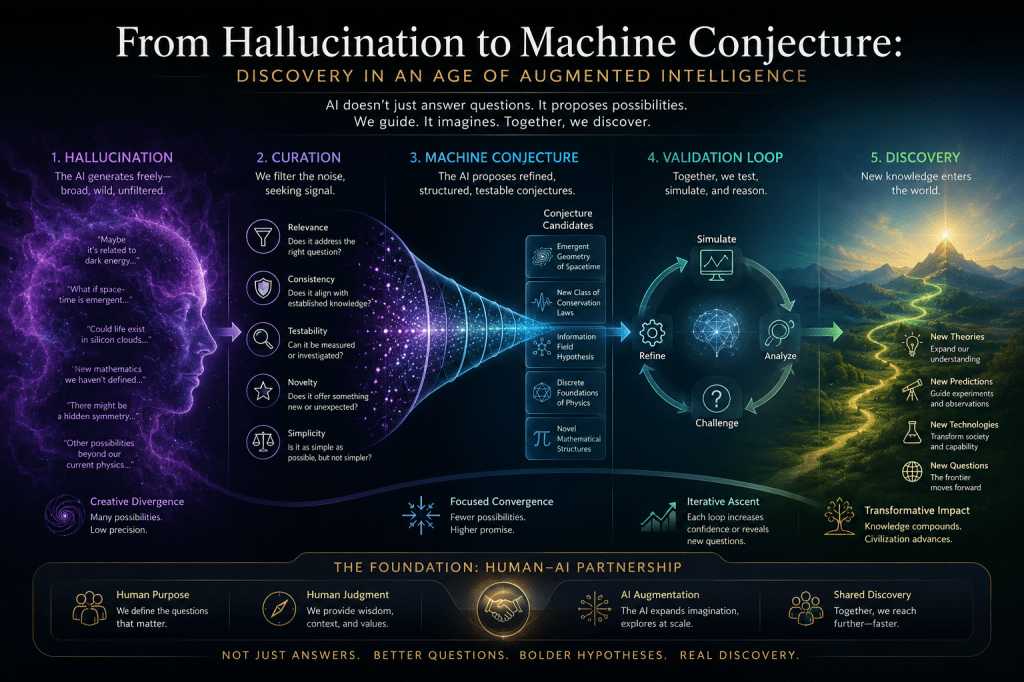
Equally important is the recommendation to cultivate evaluation and verification skills, which multiple 2026 studies identify as a key differentiator in AI-augmented work. A Stanford HAI report highlights that as AI systems become more capable, the bottleneck shifts from generating outputs to judging their reliability, bias, and applicability [5]. DIY learners are therefore encouraged to develop habits such as cross-checking AI outputs against trusted sources, stress-testing responses with adversarial prompts, and maintaining skepticism toward confident but unverified answers. This evaluative mindset is especially critical as agentic systems begin to act autonomously; professionals who can supervise and audit these systems effectively will hold disproportionate value in the workplace.
The literature also underscores the importance of domain-AI fusion, rather than pursuing AI knowledge in isolation. A 2025 OECD skills outlook update notes that workers who combine deep domain expertise with even moderate AI capability outperform those with general AI knowledge alone [6]. For mid-career professionals, this means anchoring AI learning in their existing field—whether finance, healthcare, education, law, or engineering—and continuously asking how AI reshapes core problems in that domain. DIY strategies include replicating real-world tasks with AI assistance (e.g., drafting reports, analyzing datasets, simulating client interactions) and progressively increasing complexity. This approach not only accelerates learning but also produces tangible artifacts—portfolios, case studies, or internal process improvements—that demonstrate value to employers or clients.
Another notable trend is the emergence of microlearning ecosystems and open resources that support continuous, self-paced development. Platforms such as DeepLearning.AI, Microsoft Learn, and Google’s AI training hubs have expanded their 2025–2026 offerings to include short, modular lessons specifically designed for working professionals [7,8]. However, recent commentary cautions that passive consumption of these materials is insufficient. Instead, the most effective learners pair micro-courses with active experimentation—immediately applying new concepts to real tasks. This “learn → build → reflect” loop mirrors the practices of software developers and is increasingly seen as the default model for AI skill acquisition.
Finally, several forward-looking articles emphasize networked learning as a critical DIY strategy. Unlike earlier technological shifts, AI capabilities are evolving so rapidly that no single curriculum can remain current. A 2026 Fast Company analysis highlights the role of professional communities—online forums, Slack groups, GitHub repositories, and social platforms—in diffusing new techniques and use cases in near real time [9]. Professionals who actively participate in these networks gain early exposure to emerging practices, from new prompting techniques to novel agent frameworks. This social layer effectively supplements formal learning and helps individuals stay aligned with the cutting edge.
Taken together, the latest research suggests that continuous AI skill development for mid-career professionals is less about structured retraining and more about adopting a disciplined, experimental mindset. The most effective individuals build personal systems for learning, integrate AI into daily workflows, progress toward agentic capabilities, and cultivate strong evaluation skills—all while anchoring their efforts in domain-specific problems. In this sense, DIY AI learning is not merely self-study; it is an ongoing process of redesigning how one works, thinks, and creates value in an AI-augmented world.
References
[1] “How to Work with AI as a Colleague,” MIT Sloan Management Review (2026) – https://sloanreview.mit.edu/article/how-to-work-with-ai-as-a-colleague/
[2] “How Generative AI Changes Knowledge Work,” Harvard Business Review (2025) – https://hbr.org/2025/03/how-generative-ai-changes-knowledge-work
[3] “Future of Jobs Report 2025 Update,” World Economic Forum – https://www.weforum.org/reports/future-of-jobs-report-2025
[4] “The State of AI 2026: Agentic Systems and Enterprise Adoption,” McKinsey & Company – https://www.mckinsey.com/capabilities/quantumblack/our-insights/state-of-ai-2026
[5] “AI Index Report 2026,” Stanford Institute for Human-Centered AI – https://hai.stanford.edu/ai-index/2026
[6] “OECD Skills Outlook 2025: AI and the Future of Work” – https://www.oecd.org/skills/oecd-skills-outlook-2025
[7] DeepLearning.AI Short Courses (2025–2026 updates) – https://www.deeplearning.ai/short-courses/
[8] Microsoft Learn: AI Skills Initiative (2025) – https://learn.microsoft.com/training/ai/
[9] “How Professionals Are Keeping Up with AI in 2026,” Fast Company – https://www.fastcompany.com/ai-professional-learning-2026
###
Filed under: Uncategorized |
















































































































































































































































































































































































































































Leave a Reply