





By Jim Shimabukuro (assisted by DeepSeek)
Editor
Summary: As China accelerates humanoid deployment, the national‑security debate intensifies around whether machine labor, autonomy, and mobility redefine strategic power. –Copilot

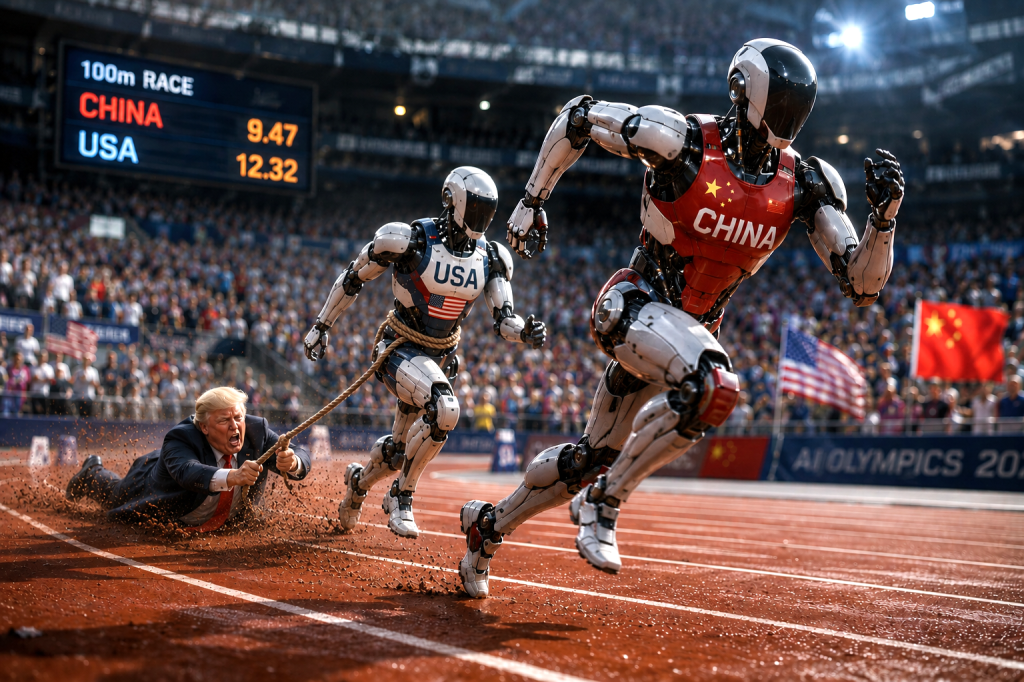
Since early 2026, Western media including ABC News have highlighted a growing concern: China’s rapid and massive proliferation of humanoid robots (“embodied AI”) may eventually pose a national security risk to Western nations (1). As of May 2026, China continues to solidify its position as the world’s dominant force in humanoid robotics, driven by industrial policy, cost advantages, and rapid technological iteration. Chinese firms have captured nearly 80% of the global market (2). However, events in the first half of 2026 have added new dimensions to the security debate, including the deployment of autonomous humanoid robots in public traffic management (3), the emergence of specific cybersecurity vulnerabilities (4), and the establishment of a national standardization committee that directly links robotics development to People’s Liberation Army (PLA) priorities (5).
Market Dominance: Numbers, Costs, and Supply Chain
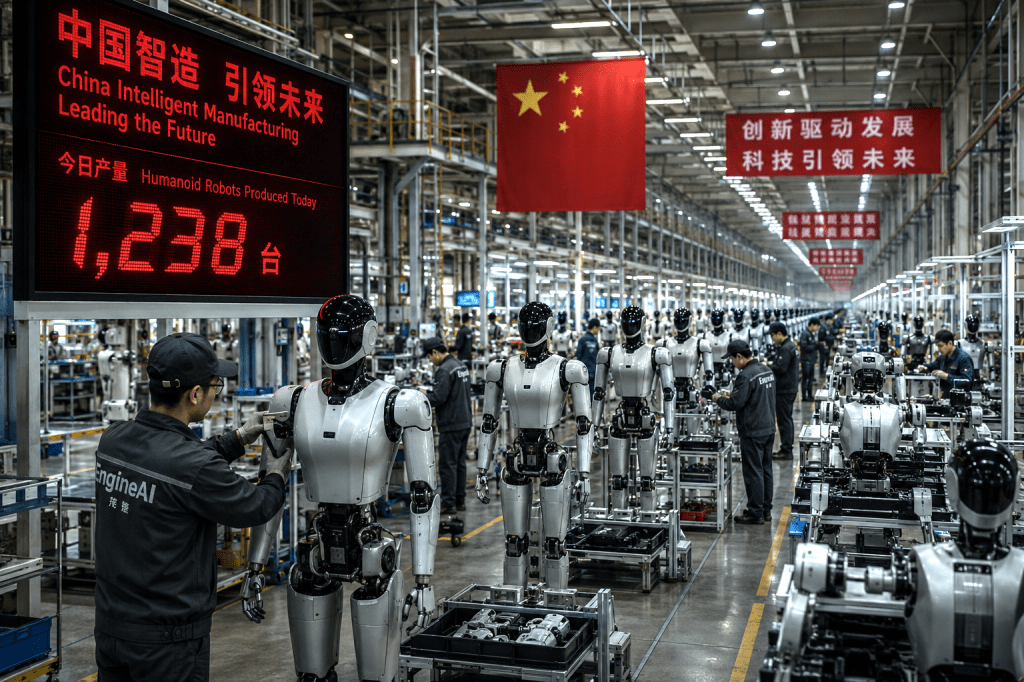
According to the Ministry of Industry and Information Technology (MIIT), China now has over 140 humanoid robot manufacturers, with more than 330 distinct models launched in the past year alone. In 2025, Shanghai‑based AgiBot delivered 5,168 units, capturing a 39% global market share, followed by Unitree Robotics (32%) and UBTECH (7%); Chinese firms collectively controlled nearly four‑fifths of the global market (2).
TrendForce projects that China’s domestic output will surge by 94% in 2026, with Unitree and AgiBot together accounting for almost 80% of shipments (6). Deutsche Bank’s 2026 forecast expects China to ship more than 35,000 units, nearly three times the combined shipments of all US OEMs (7). Some industry insiders predict that 2026 output could exceed 100,000 units – a twelvefold increase from 2025 levels (6).
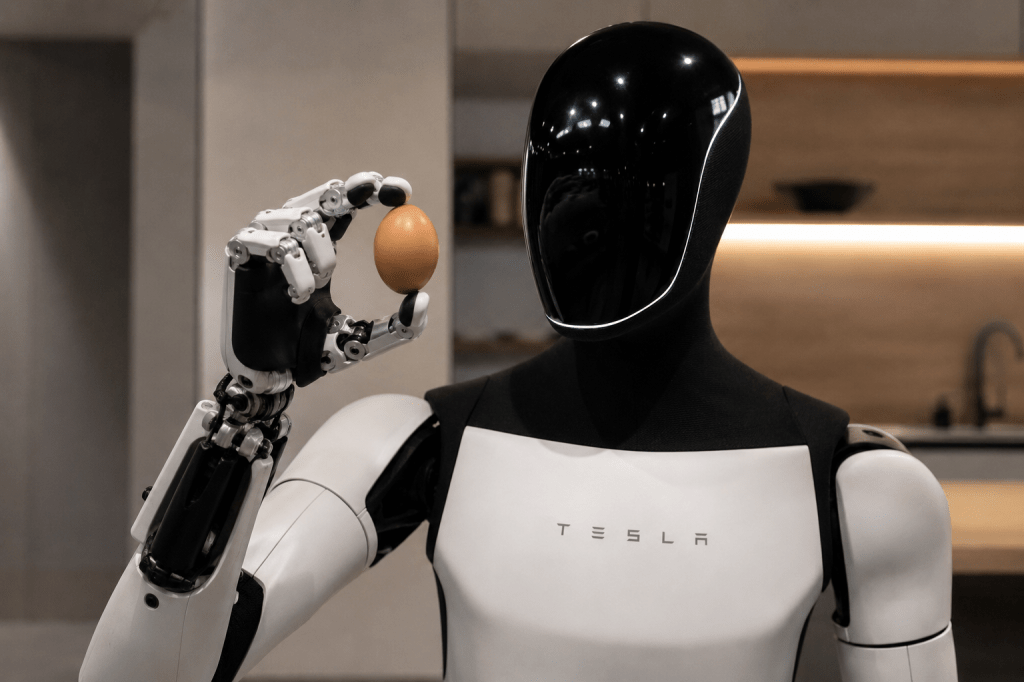
A key driver of this dominance is cost. Chinese manufacturers have achieved per‑unit costs roughly one‑third to one‑half of Western equivalents: Unitree and AgiBot offer low‑end humanoids for about $10,000, whereas US and European OEMs target the $20,000–$30,000 range (7). Chinese firms have reduced total BOM costs by approximately 40% year‑over‑year, a rate far exceeding industry predictions. Morgan Stanley economists note that China is replicating its electric vehicle playbook, using an integrated supply chain and massive domestic testing grounds to drive down costs, projecting that this strategy will help lift China’s share of global manufacturing from 15% today to 16.5% by 2030 (8).
Technological Advances: From Stage to Street
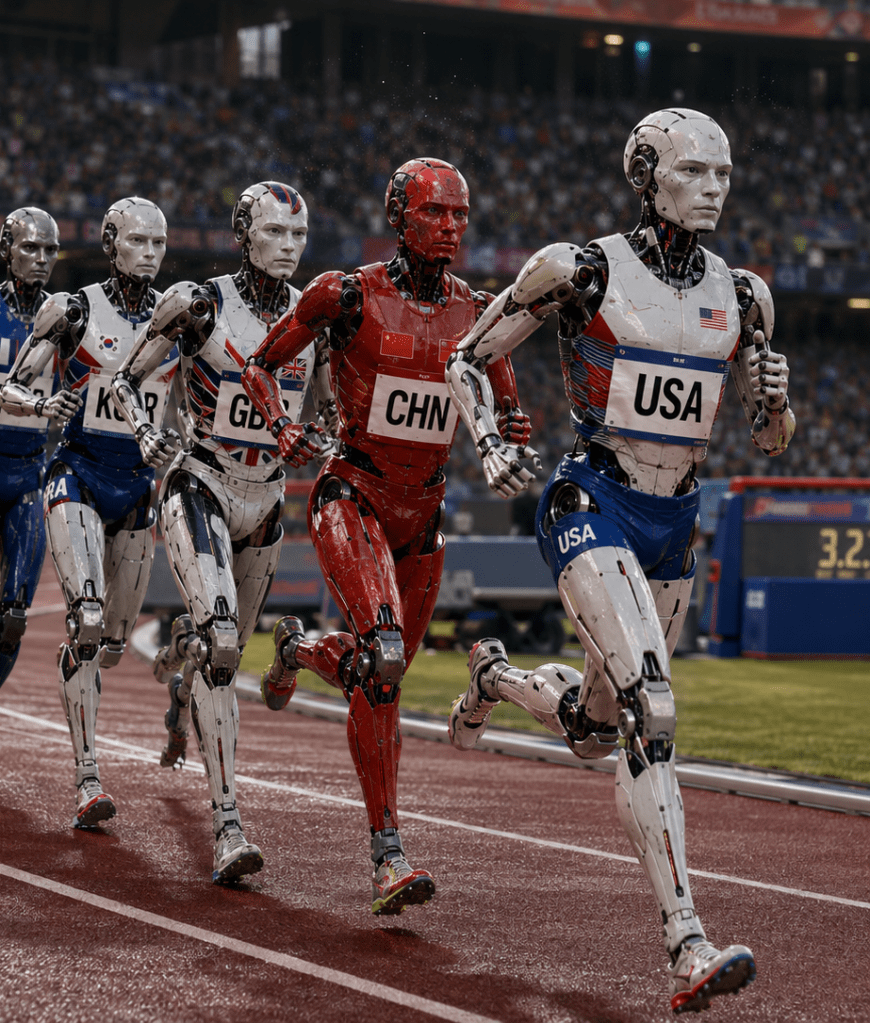
The past twelve months have witnessed a dramatic leap in real‑world capabilities. The April 2026 Beijing E‑Town half‑marathon featured more than 100 humanoid robots tackling a complex urban course. The autonomous winner, “Lightning,” finished in 50 minutes and 26 seconds – six minutes faster than the human world record. Nearly 40% of the robots competed in full autonomous navigation mode, compared with only a handful in the previous year’s event (9). Engineers attribute this leap to coordinated advances in “big brain” AI perception and planning and “small brain” real‑time motor control, as well as the successful transfer of autonomous driving algorithms to legged locomotion (10).
Real‑world deployment has moved beyond competition. In May 2026, the city of Hangzhou launched the world’s first public‑facing humanoid robot traffic management brigade, placing 15 AI‑equipped robots alongside human traffic officers at key intersections and tourist areas (3). The move reflects the Chinese government’s stated intention to move embodied intelligence “from moving on stages and running in competitions to working in homes and performing tasks in factories” (2). Behind the scenes, China is also building out large‑scale production and testing infrastructure, including a new “embodied intelligence super factory” in Beijing’s E‑Town that has begun initial deliveries (11).
Policy, Standardization, and the Dual‑Use Foundation
In March 2026, China released its first comprehensive national standard system for humanoid robots and embodied intelligence (2,5). The six‑part framework – covering foundational technologies, brain‑like computing, limbs and components, complete systems, applications, and safety/ethics – was drafted by over 120 institutions (2). Analysis of the committee’s membership reveals a strategic dimension. The 65‑member National Humanoid Robot Standardization Technical Committee includes founders of leading robotics firms, representatives from PLA‑linked universities, executives from U.S.‑restricted companies such as SenseTime and Huawei, and most significantly, Fan Chang from the 43rd Research Institute of the China Electronics Technology Group (CETC), a defense conglomerate that undergirds PLA electronic warfare (5).
According to the Jamestown Foundation, the committee’s mandate explicitly embeds mandatory domestic cryptography, industrial cybersecurity, and ecosystem alignment into humanoid robotics development, which could severely limit interoperability with foreign platforms and may facilitate state supervisory access. This arrangement reflects a deliberate attempt to build the sector around principles of dual‑use integration and centralized control – the same template that underpinned China’s advances in EVs, drones, and AI (5).
National Security Risks: Emerging Vulnerabilities and Strategic Concerns
The security debate has shifted from abstract speculation to documented vulnerabilities. At the GEEKCon 2025 cybersecurity event in Shanghai, researchers from DARKNAVY showed how a single verbal command could be used to seize control of a commercially available domestic humanoid robot and then turn that compromised unit into a “Trojan horse” that could infect and commandeer other internet‑connected robots. The researchers exploited a flaw in the robot’s built‑in large‑language‑model agent, gaining full remote control through voice interaction (4).
While the demonstration was conducted in a controlled environment, the underlying flaw highlights how the rapid integration of generative AI into physical systems can introduce new classes of vulnerabilities that are distinct from traditional cyber threats (4). As Xu Wenyuan and colleagues note, embodied AI systems create an “expanded threat surface” where risks can propagate into real‑world physical actions, potentially endangering critical infrastructure and public safety (12).
These concerns are set against a broader strategic backdrop. In March 2026, U.S. lawmakers introduced the “American Security Robotics Act,” a bipartisan bill that would ban the federal government from procuring or using robotics equipment from “covered nations” (including China), with special emphasis on humanoid models. The stated justifications mirror those used previously for Huawei and DJI: that Chinese‑made robots could surreptitiously collect sensitive data, transmit it back to China, or be remotely activated for malicious purposes (13).
Although no public evidence has emerged that any Chinese robot has actually been weaponized in the West, the demonstrated voice‑command vulnerability (4) and the dual‑use orientation of China’s standardization body (5) have pushed the issue onto the legislative agenda (13). As one industry observer summarized, the U.S. anxiety stems from the structural fact that “a virtual algorithm must be attached to a reliable mechanical body to truly intervene in the physical world,” and China is systematically securing control over the production of those bodies (13).
Implications and the Path Forward
As of May 2026, China’s humanoid robotics industry is moving from technology demonstration to full‑scale commercialization and real‑world deployment. Its cost and scale advantages appear insurmountable in the near term, and its strategic planning – embedding robotics into the 15th Five‑Year Plan (2026‑30) and aligning it with military modernization – suggests a sustained effort (5).
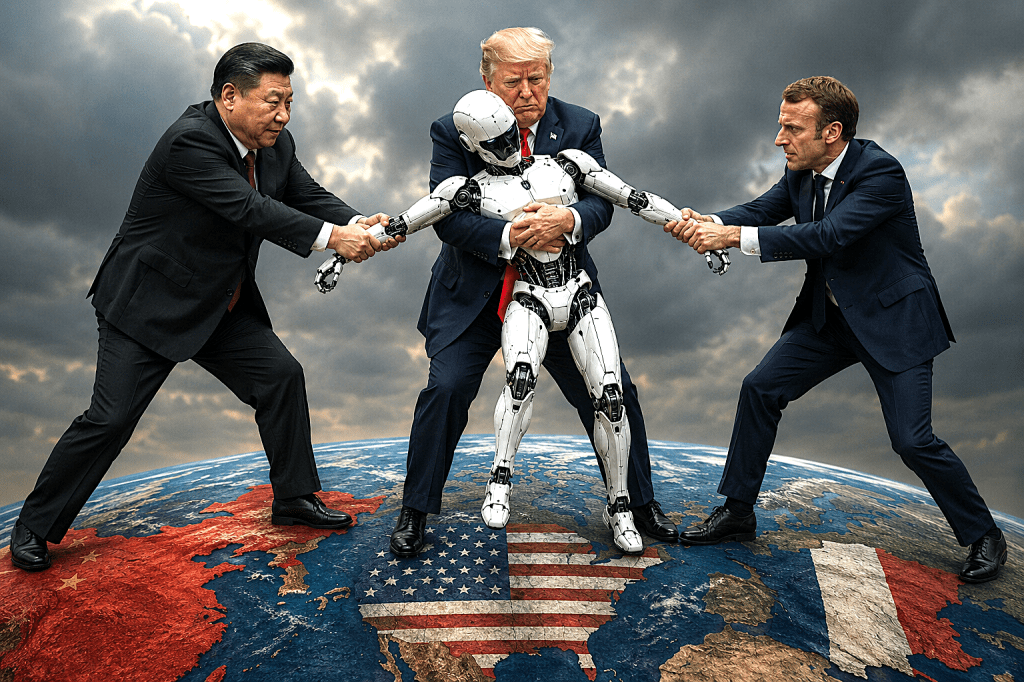
For Western policymakers, the challenge lies in distinguishing between legitimate national security concerns and over‑broad protectionism. While the documented cybersecurity vulnerabilities (4) and dual‑use nature of China’s robotics ecosystem (5) are real, a wholesale ban could also stifle competition and slow the adoption of potentially life‑saving technologies. The coming months will likely see continued intensification of the debate. What is already clear is that humanoid robotics has emerged as a frontline technology in the broader U.S.‑China strategic competition, with long‑term implications for global manufacturing, labor markets, and – as ABC News and others have highlighted – the fundamental security of the digital‑physical infrastructure that underpins modern society (1,13).
References
- Do humanoid robots pose national security risk? [Good Morning America / ABC News] https://goodmorningamerica.com/video/133179146
- China’s Humanoid Robot Boom Gains Speed [China Economic Net] http://en.ce.cn/Insight/202603/t20260307_2811144.shtml
- China despliega robots humanoides para controlar el tráfico [La Nación] https://www.lanacion.com.ar/tecnologia/china-despliega-robots-humanoides-para-controlar-el-trafico-nid19052026/
- Chinese researchers show how a word could let spies take control of a robot army [South China Morning Post] https://www.scmp.com/news/china/science/article/3337300/chinese-researchers-show-how-one-word-could-allow-spies-take-control-robot-army
- New Military–Civil Fusion Body for PRC Robotics Ecosystem [Jamestown Foundation] https://jamestown.org/new-military-civil-fusion-body-for-prc-robotics-ecosystem/
- 2026 年中國人型機器人產量年增 94%,宇樹、智元合計拿下近八成市場 [TechNews] https://technews.tw/2026/04/09/china-humanoid-robot-production-2026/
- 德意志銀行:2026中國人形機器人出貨量將超3萬台,世界模型正成為關鍵技術架構 [Hao CNY] https://hao.cnyes.com/post/239628
- Humanoid robots to drive next leg of China’s export dominance — Morgan Stanley [The Edge Malaysia] https://dev.theedgemalaysia.com/node/802736
- Embodied intelligence enters real-world tests [China Daily] https://global.chinadaily.com.cn/a/202605/13/WS6a03e11da310d6866eb4853f.html
- 具身智能系统安全风险及应对建议 [SecRSS] https://www.secrss.com/articles/89228 (this source covers both the vulnerability analysis and the “expanded threat surface” concept)
- China Focus: China’s embodied AI robots take on high-risk industrial frontiers [China.org.cn] https://www.china.org.cn/china/2026-05/04/content_118701163.htm
- 美拟立法禁购中国机器人 [Weixin / Chinese legislative summary] https://mp.weixin.qq.com/s/z9eFjK7PpRqR4XxWbY8rGQ
- 李颕彰律师|大脑在硅谷,躯干在中国:听证会挡不住“具身革命” [HK01] https://global.hk01.com/01专栏/60332254/李颕彰律师-大脑在硅谷-躯干在中国-听证会挡不住-具身革命
###
Filed under: Uncategorized |





































































































































































































































































































































































































































































Leave a Reply