




By Jim Shimabukuro (assisted by Copilot)
Editor
[Related: 30-day Cycle of Obsolescence: Battlefield to Workplace, What Are ‘AI Colleges’ and How Are They Different?, ‘AI Colleges’ Are Genuine Disruptors: Impact in 2027-28]
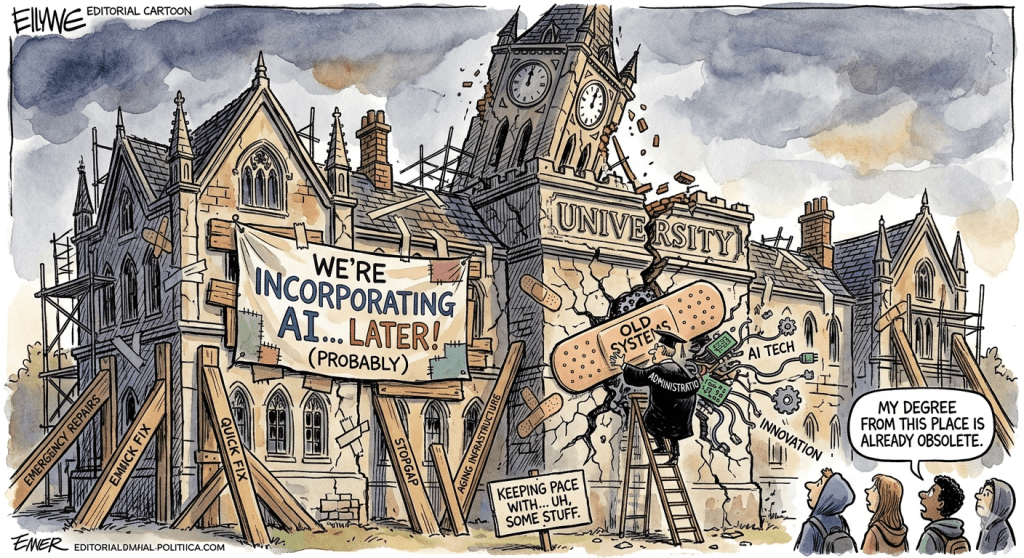
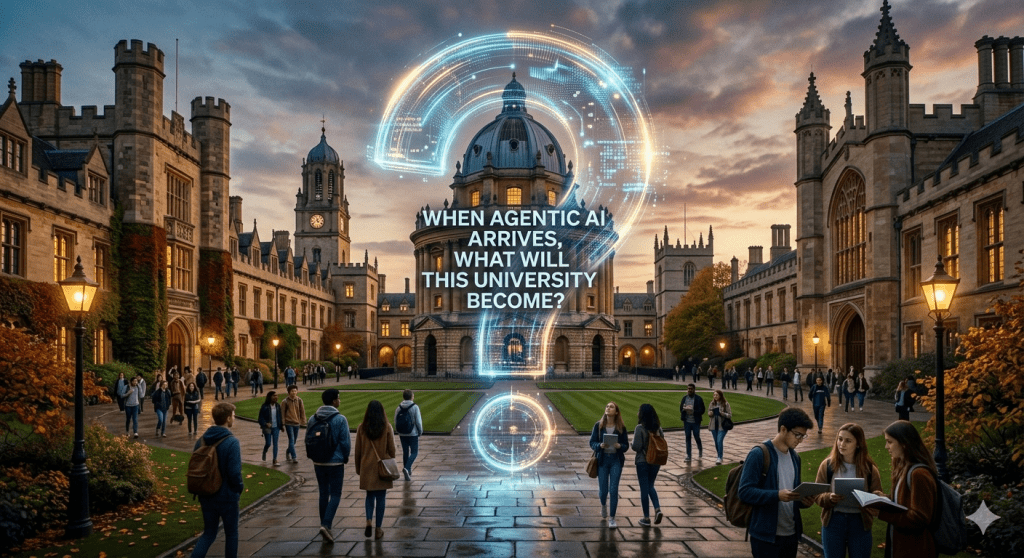
The accelerating cycle of innovation—especially in AI—forces higher education leaders to confront a basic shift: universities can no longer treat technological change as a series of episodic disruptions; they must assume continuous, compounding transformation as the default condition. In this environment, the core role of universities moves from being primarily degree-granting institutions that “finish” learners to being long-horizon infrastructure for lifelong capability-building, ethical stewardship of powerful tools, and rapid translation between frontier technologies and human flourishing. The question is whether institutions can re-architect themselves fast enough to match the exponential curve they are now riding.

Recent large-scale surveys show that most institutions are still in early, uneven stages of this transition. WCET’s 2025 survey of AI in higher education describes campuses “moving from curiosity and concern to strategy,” but also highlights gaps in governance, equity, and sustainable implementation, even as experimentation accelerates across student services, teaching, and operations [1]. The 2025 EDUCAUSE AI Landscape Study similarly finds that while a majority of leaders now view AI as a strategic priority, institutional readiness, policy frameworks, and workforce planning lag behind the pace of adoption, creating a “digital AI divide” between institutions with coherent strategies and those reacting piecemeal [2]. The U.S. Department of Education’s 2025 brief on AI in postsecondary education frames the dual mandate clearly: institutions must both leverage AI to expand access and success, and prepare students for an AI-shaped labor market, all while addressing ethics, privacy, and equity [3]. Taken together, these reports suggest that the exponential pace of change is not just a technology problem; it is a governance, mission, and business-model problem.
In such a world, the traditional university role—front-loaded education followed by a largely symbolic alumni relationship—is misaligned with the realities of work, where skills decay in a few years and career paths are non-linear. The emerging role is closer to what some have called “AI colleges”: institutions designed around continuous, AI-augmented learning, stackable credentials, and tight coupling to evolving work and civic needs, rather than fixed, time-bound programs. This aligns with the ETC Journal’s framing of “AI colleges” as entities that integrate AI into their core operations, pedagogy, and learner relationships, rather than treating it as an add-on or a single department’s concern [15]. In this model, universities become platforms for ongoing upskilling, reskilling, and reflective practice, with AI acting as both infrastructure and co-learner.
Several universities are already pioneering elements of this trajectory. Arizona State University (ASU) is perhaps the clearest example of an institution intentionally reconfiguring itself around continuous, AI-enabled learning. Through its Learning Enterprise and the newly launched “ASU for Life” platform, ASU is building an AI-enabled system that supports career transitions over a lifetime, using AI to recommend personalized learning pathways, connect microcredentials to degrees, and align offerings with evolving workforce demand [5–8]. The platform’s stackable model allows learners to start with short, career-aligned experiences and build toward certificates and degrees, with AI guidance that adapts as their goals and the labor market change [6,8]. This is not just a technology deployment; it is a redefinition of the university–learner relationship as continuous, data-informed, and career-connected.
ASU is also piloting “stackable microcredentials” in engineering and technology fields, explicitly responding to evidence that job skills now “expire” in less than five years and that half the global workforce will require reskilling by 2025 [10]. By modularizing learning into badges and microbadges that can be combined into larger credentials, ASU is experimenting with a structure that can keep pace with rapid skill turnover while remaining anchored in a research university context [10]. The strength of this model lies in its scalability and its alignment with industry needs; its vulnerability lies in the risk of fragmentation—if microcredentials are not coherently governed, learners may accumulate disconnected badges rather than a durable, integrative education.
Another important cluster of models comes from the institutions profiled in Complete College America’s 2025 playbook “Building AI-Capable Institutions,” which documents system-wide AI literacy microcredentials in the University of Louisiana System, cross-disciplinary AI innovation grants at UMass Lowell, and AI-enabled teaching and student success initiatives at ASU [3,4,9]. These case studies show that it is possible to build AI capacity at scale without massive budgets, by focusing on faculty development, targeted microcredentials, and practical tools that embed AI into advising, instruction, and student support [3,4,9]. Their strengths include broad reach (e.g., AI literacy for tens of thousands of students), attention to equity and academic integrity, and concrete implementation toolkits. Their limitations are equally instructive: they remain largely additive to existing structures, and their long-term sustainability depends on whether institutions integrate them into core funding, governance, and promotion systems rather than treating them as projects.
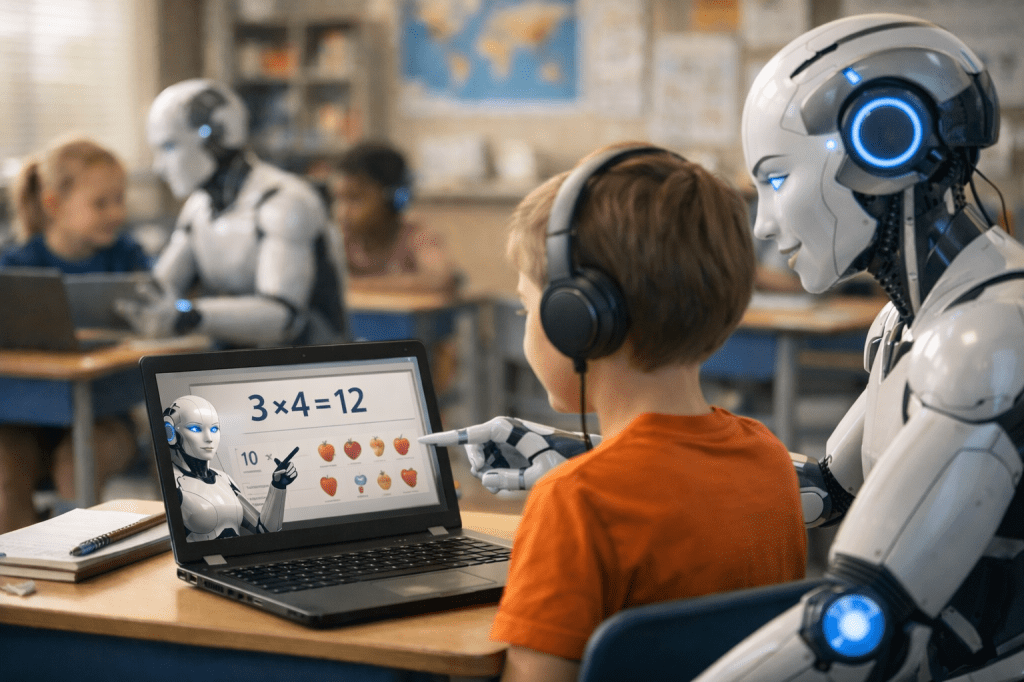
A different but complementary frontier is the “AI-native university” concept, popularized in 2025 discussions around OpenAI’s education partnerships and covered in outlets like eCampus News and other analyses of fully autonomous digital campuses [12,14]. In this model, every student and staff member is provisioned with an institutionally governed AI assistant—akin to an LMS account—that supports tutoring, research, advising, and administrative tasks throughout the academic journey [14]. Early pilots with systems like ChatGPT Edu at large institutions such as the California State University system, Duke, Wharton, and the University of Maryland show how AI can personalize learning at scale, automate routine inquiries, and free faculty time for higher-value work [14]. The strength of this model is its systemic integration: AI is not a scattered set of tools but a core layer of the university’s digital infrastructure. The shortcomings are significant: risks around bias, privacy, over-reliance, and the potential erosion of human mentorship if AI is treated as a replacement rather than an augmentation.
Other universities are experimenting with governance-first approaches. Stanford’s 2025 AI framework, for example, emphasizes creating “safe spaces” for experimentation while embedding ethics and governance across administration, education, and research, rather than imposing rigid, one-size-fits-all rules [13]. This approach recognizes that in a fast-moving environment, over-regulation can stifle innovation, but under-regulation can erode trust and exacerbate inequities. The University of Michigan’s student-centered AI assistant (MiMaizey) similarly illustrates how institutions can build AI tools that are tightly coupled to local context—drawing on institutional data, course materials, and campus communications—rather than relying solely on generic platforms [13]. These models’ strength is their attention to institutional culture and values; their limitation is that they may scale more slowly and require substantial internal capacity.
At the more radical edge, new providers such as Campus.edu are designing programs around applied AI from the ground up, integrating tools like ChatGPT Edu into a two-year “Applied AI” concentration that focuses on hands-on deployment of AI in business contexts [11]. While this 2024 initiative sits just outside the 2025–2026 window, it foreshadows a wave of “AI colleges” that treat AI fluency as a baseline skill across disciplines, not a niche specialization. The strength of such models is their agility and tight alignment with emerging job roles; their weakness is that they may underinvest in the broader intellectual, ethical, and civic dimensions that traditional universities are uniquely positioned to provide.
Across these examples, several implications for higher education leaders emerge. First, the exponential pace of change means that static, multi-year strategic plans are increasingly misaligned with reality. Institutions need adaptive strategy cycles, with AI and digital transformation treated as ongoing capabilities rather than time-limited initiatives. The 2025 federal brief explicitly calls for building institutional capacity—governance, infrastructure, faculty development, and partnerships—so that campuses can iteratively integrate AI into learning environments, student support, and operations [3]. This suggests a shift from “project thinking” to “platform thinking”: universities must build reusable, extensible AI and data platforms that can support many evolving use cases.
Second, the role of universities in credentialing must evolve from gatekeeping to curating and validating continuous learning. Stackable microcredentials, AI literacy badges, and modular pathways—like those at ASU and the University of Louisiana System—are early attempts to align credentialing with a world where learners repeatedly re-enter formal and informal education across their lives [4,8–10]. To avoid a race to the bottom in microcredential quality, universities will need robust frameworks for assessing learning outcomes, interoperability across providers, and transparent signaling to employers. Here, the “AI college” idea is helpful: institutions that design their credential ecosystems with AI from the start can use AI to map skills, detect gaps, and personalize pathways, while still anchoring those pathways in rigorous assessment and human oversight [15].
Third, the faculty role must be reimagined. Surveys show that faculty are both key enablers and potential bottlenecks in AI adoption, with concerns about academic integrity, workload, and professional identity [1,2]. Models that invest in faculty mini-grants, AI fellows, and cross-disciplinary communities of practice—like those documented by Complete College America—demonstrate that when faculty are given time, support, and agency, they can become designers of AI-enhanced pedagogy rather than passive recipients of tools [3,4,9]. Over the next decade, universities that thrive will likely be those that treat AI fluency as part of faculty development and promotion criteria, while also protecting time for deep disciplinary and ethical reflection.
Fourth, equity and access cannot be afterthoughts. The EDUCAUSE AI Landscape Study warns of a growing “AI divide” between institutions with resources to build robust AI infrastructure and those that cannot, which risks amplifying existing inequities in student outcomes and institutional viability [2]. Federal guidance similarly emphasizes that AI must be used to expand access and support historically underserved learners, not just to optimize operations for already-advantaged populations [3]. AI-native and AI-college models that rely heavily on data and automation must therefore be designed with strong guardrails: transparent data practices, bias audits, human-in-the-loop decision-making, and participatory governance that includes students and communities.
Projecting forward, a plausible trajectory for aligning higher education with a world of continuous rapid change has several intertwined strands. Structurally, universities will increasingly operate as lifelong learning networks rather than bounded campuses: learners will move in and out of formal enrollment, stacking microcredentials, degrees, and experiential learning across decades, with AI systems maintaining a persistent, evolving profile of their skills, goals, and contexts. Operationally, AI will become a pervasive co-pilot: every learner, faculty member, and staff member will have access to institutionally governed AI agents that support learning, research, advising, and administration, integrated into core systems rather than scattered across apps. Pedagogically, curricula will be designed for adaptability: emphasizing meta-skills (learning how to learn with AI, critical thinking about AI-generated content, collaboration with human and machine partners) alongside domain knowledge that is continuously updated through AI-augmented research and industry partnerships.
Governance-wise, institutions will need agile, multi-stakeholder structures that can revise policies, evaluate new tools, and respond to emergent risks on short cycles. This includes not only internal committees but also external partnerships—with employers, governments, and communities—to ensure that AI-enabled learning ecosystems remain aligned with societal needs. Ethically, universities will be among the few institutions with both the legitimacy and the intellectual breadth to interrogate AI’s impacts on democracy, labor, identity, and the planet. In an “AI college” future, their role as critical, reflective spaces becomes more important, not less.
The strengths of this trajectory are clear: greater personalization, expanded access, more responsive alignment with work and civic life, and the possibility of making universities relevant across the full arc of adulthood. The shortcomings and risks are equally real: commodification of learning into ever-smaller units, over-reliance on opaque systems, erosion of human relationships, and widening gaps between institutions that can invest in AI infrastructure and those that cannot. Higher education leaders who take the exponential pace of change seriously will not resolve these tensions once and for all; instead, they will build institutions capable of navigating them continuously. In that sense, the most important innovation may not be any particular AI tool or microcredential, but the cultivation of universities that themselves learn—rapidly, ethically, and in public—how to live in a world where change is the only constant.
References
[1] “Supporting Governance, Operations, and Instruction and Learning through Artificial Intelligence: A Survey of Institutional Practices and Policies 2025 (WCET AI Survey 2025).” WCET.https://wcet.wiche.edu/resources/supporting-governance-operations-and-instruction-and-learning-through-artificial-intelligence-a-survey-of-institutional-practices-and-policies-2025/ (wcet.wiche.edu in Bing)
[2] “2025 EDUCAUSE AI Landscape Study: Into the Digital AI Divide.” EDUCAUSE.https://library.educause.edu/resources/2025/2/2025-educause-ai-landscape-study-into-the-digital-ai-divide (library.educause.edu in Bing)
[3] “Navigating Artificial Intelligence in Postsecondary Education: Building Capacity for the Road Ahead.” Office of Educational Technology, U.S. Department of Education, 2025.https://tech.ed.gov/publications/navigating-artificial-intelligence-in-postsecondary-education/ (tech.ed.gov in Bing)
[4] “New Playbook Shares Case Studies on How Colleges Can Embed AI Into Curriculum and Instruction.” Complete College America, 2025.https://completecollege.org/article/new-playbook-shares-case-studies-on-how-colleges-can-embed-ai-into-curriculum-and-instruction/ (completecollege.org in Bing)
[5] “New AI-enabled platform to help learners navigate career transitions in a rapidly changing world.” ASU News, April 13, 2026.https://news.asu.edu/20260413-new-ai-enabled-platform-help-learners-navigate-career-transitions-rapidly-changing-world (news.asu.edu in Bing)
[6] “ASU for Life launches to support continuous career readiness in a rapidly changing world.” ASU Learning Enterprise, 2026.https://learningenterprise.asu.edu/news/asu-for-life-launches-support-continuous-career-readiness-rapidly-changing-world (learningenterprise.asu.edu in Bing)
[7] “ASU for Life.” Arizona State University.
https://asuforlife.asu.edu/
[8] “ASU for Life – Lifelong Learning Platform.” Arizona State University.
https://asuforlife.asu.edu/catalog
[9] Ellis, A., Yorke, T., & Ansell, C. “Building AI-Capable Institutions: Implementation Tools for Higher Education.” Complete College America, 2025.https://completecollege.org/resource/building-ai-capable-institutions/ (completecollege.org in Bing)
[10] “ASU introduces trailblazing ‘stackable microcredentials’ pilot.” Ira A. Fulton Schools of Engineering, Arizona State University.https://outreach.engineering.asu.edu/asu-introduces-trailblazing-stackable-microcredentials-pilot/ (outreach.engineering.asu.edu in Bing)
[11] “Innovative College Taps OpenAI for 2-Year AI Skills Degree.” Campus.edu press release, Oct. 29, 2024.https://www.prnewswire.com/news-releases/innovative-college-taps-openai-for-2-year-ai-skills-degree-302078046.html (prnewswire.com in Bing)
[12] “The Rise of AI Universities: How Fully Autonomous Digital Campuses Are Redefining Global Education in 2025.” The Tuition Center, Dec. 11, 2025.https://thetuitioncenter.com/the-rise-of-ai-universities-how-fully-autonomous-digital-campuses-are-redefining-global-education-in-2025/ (thetuitioncenter.com in Bing)
[13] Legatt, A. “How Leading Universities Are Building The Future Of AI.” Forbes, May 15, 2025.https://www.forbes.com/sites/avivalegatt/2025/05/15/how-leading-universities-are-building-the-future-of-ai/ (forbes.com in Bing)
[14] Johnston, J. “The rise of AI-native universities.” eCampus News, Dec. 29, 2025.https://www.ecampusnews.com/ai-in-education/2025/12/29/the-rise-of-ai-native-universities/ (ecampusnews.com in Bing)
[15] “What Are ‘AI Colleges’ and How Are They Different?” Educational Technology and Change Journal, April 14, 2026.https://etcjournal.com/2026/04/14/what-are-ai-colleges-and-how-are-they-different/ (etcjournal.com in Bing)
###
Filed under: Uncategorized |

























































































































































































































































































































































































































Leave a Reply