






By Jim Shimabukuro (assisted by Perplexity)
Editor
[Related: Beyond Earth: The Dynamics of Human Expansion Across the Stars, Interstellar Travel Is Harder than You Think]
Interstellar travel is still hard, but Keller’s pessimism may be too strong if the goal is to search for habitable planets rather than carry humans there. The latest open sources point to a much more optimistic picture: astronomy is rapidly narrowing the target list to nearby candidate worlds, while AI, robotics, lightsails, and nuclear propulsion are steadily improving the tools that would make interstellar exploration practical (1-5).

Why the outlook is better
One major reason for optimism is that we no longer need to search the entire sky blindly. In 2026, astronomers identified 45 rocky worlds as top habitable-zone targets, with especially interesting nearby systems including TRAPPIST-1, Proxima Centauri, and LHS 1140 b; that kind of target prioritization makes a real interstellar program far more focused than it would have been even a few years ago (1,2). PLATO, scheduled to begin searching for Earth-like planets in 2026, is also designed to find and characterize rocky planets around Sun-like stars, which should further improve the quality of targets for future probes (3). That means the challenge is shifting from “find anything like Earth” to “pick the best nearby candidates,” a much more tractable problem.
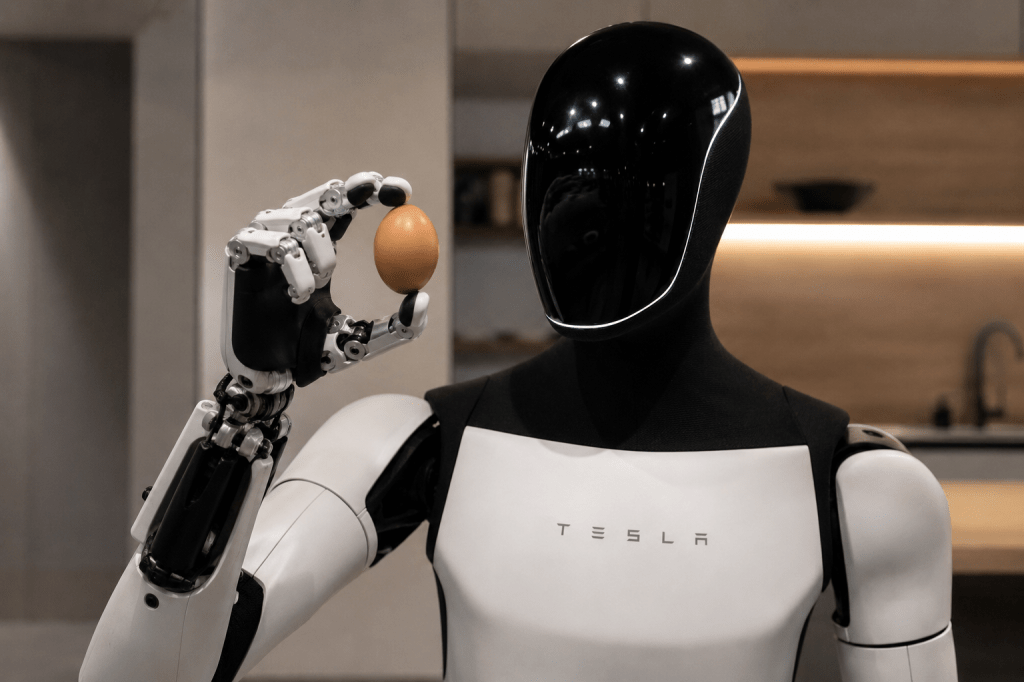
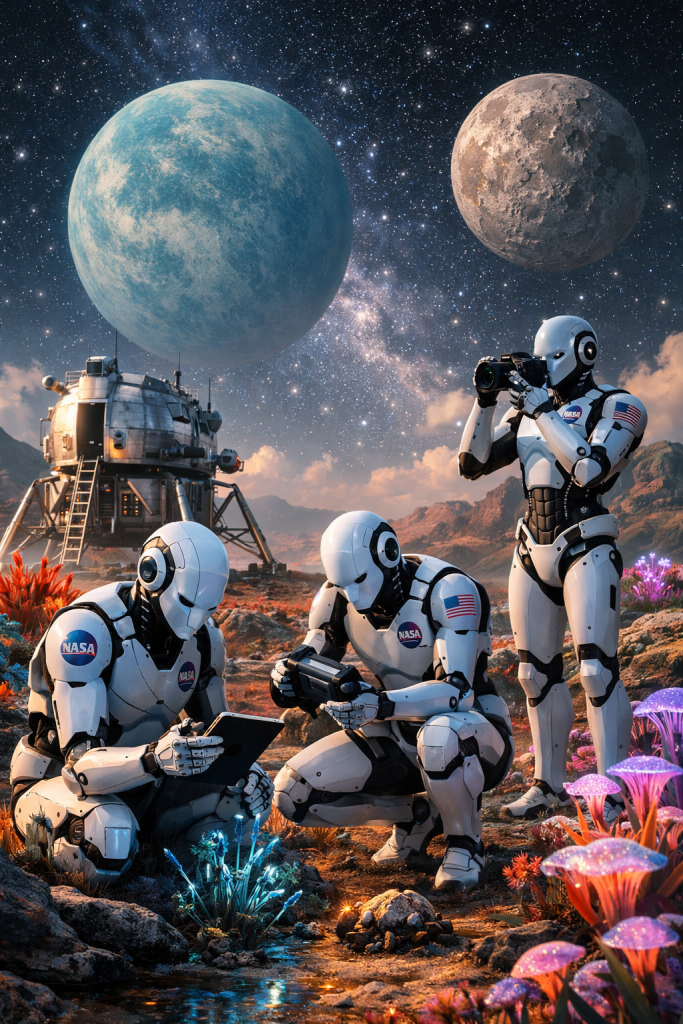
A second reason for optimism is that robots are becoming much better at doing the exploration work that humans are least suited for. NASA’s Perseverance has already completed AI-planned driving on Mars, showing that vision-capable generative AI can create safe routes and make complex navigation decisions without human route planning (4). That matters because deep-space missions will face long communication delays, so autonomous systems are not just convenient; they are essential (4,6). The most plausible interstellar explorers are therefore not people in cramped ships but agentic robot astronauts or highly autonomous probes that can navigate, sample, repair themselves, and adapt on the fly (5,6).
Robot astronauts
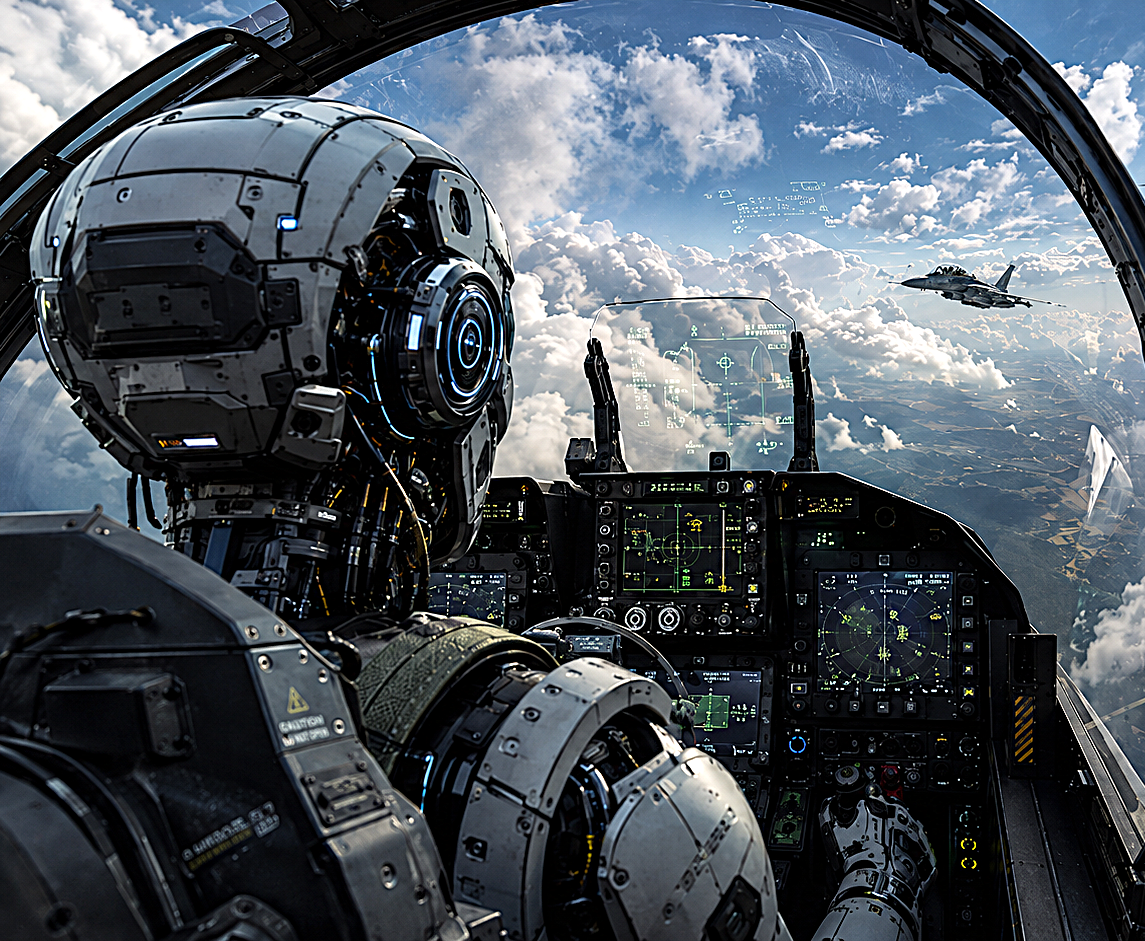
The “robot astronauts replace humans” argument is stronger than Keller’s pessimism allows. Space.com’s 2025 reporting on “artificial super astronauts” highlights the core advantage: artificial crew members would not need food, water, oxygen, radiation shielding at human levels, or other life-support mass that makes interstellar missions so punishingly expensive (5). BBC reporting likewise notes that robotics can go farther and do more work at lower cost, even if there are still some human tasks robots cannot yet replicate (6). For searching habitable planets, that limitation matters less than Keller suggests, because the mission objective is data collection, imaging, spectroscopy, atmospheric analysis, and perhaps sample-return logic—not human settlement.
Propulsion progress
Keller’s case is also weakened by the growing plausibility of fast propulsion concepts. Caltech has reported active lightsail research tied to Breakthrough Starshot, explicitly framing ultrathin sails as a route to direct interstellar spacecraft exploration rather than just remote observation (7). More recent coverage describes laser-powered sails as a real engineering pathway toward Alpha Centauri, and separate 2026 reporting suggests a laser propulsion method could, in principle, cut transit time to roughly two decades for a nearby star system (8,9). Even if those timelines are aspirational, the underlying point is important: interstellar travel no longer depends only on far-future breakthroughs in exotic physics. It increasingly rests on engineering problems that are difficult but not obviously impossible.
Nuclear propulsion is another reason for measured optimism. NASA announced in 2026 that it aims to send a nuclear-powered spacecraft to Mars by 2028, which would be the first probe to use nuclear propulsion beyond Earth’s orbit if successful (10). That is not interstellar travel, of course, but it shows that nuclear systems are moving from theory into mission planning. Combined with fusion concepts that are being actively developed for high-velocity robotic missions, the gap between current propulsion and genuinely fast deep-space travel looks narrower than Keller implies (11).
Strong counterarguments
Keller is still right about several hard constraints. Interstellar distances remain enormous, and even the nearest targets are tens of trillions of miles away. That means dust impacts, energy requirements, thermal management, power delivery, and communications remain serious barriers, especially for large crewed spacecraft. Lightsail concepts also face brutal engineering demands: ultra-thin sails must survive intense laser illumination, maintain stability, and carry useful payloads without being torn apart or overheated (7,8). In other words, optimism should not be mistaken for ease.
The biggest counterargument to the pessimistic view is not that humans will soon stroll between stars; it is that human presence is not required for the first meaningful interstellar search for life. Autonomous probes can be tiny, expendable, and highly specialized, which makes them far more realistic than human colonies or generation ships. Recent discoveries also show that the target list is better than ever, with dozens of rocky habitable-zone worlds now identified for follow-up, reducing the mission from a vague dream to a concrete survey problem (1,2). So Keller’s broader conclusion—that interstellar travel is prohibitively hard—may hold for crewed travel, but it is much less convincing for robotic exploration aimed at habitable planets.
References
- The best places to look for alien life: Scientists identify 45 Earth-worlds — https://ras.ac.uk/news-and-press/research-highlights/best-places-look-alien-life-scientists-identify-45-earth-worlds
- Project Hail Mary meets reality: 45 planets could harbor life — https://www.sciencedaily.com/releases/2026/03/260325005926.htm
- PLATO telescope to find Earth-like planets from 2026 — https://www.innovationnewsnetwork.com/plato-telescope-to-find-earth-like-planets-from-2026/49411/
- NASA’s Perseverance Rover Completes First AI-Planned Drive on Mars — https://www.jpl.nasa.gov/news/nasas-perseverance-rover-completes-first-ai-planned-drive-on-mars/
- ‘Artificial super astronauts’: How AI and robotics could help humanity settle Mars — https://www.space.com/astronomy/mars/artificial-super-astronauts-how-ai-and-robotics-could-help-humanity-settle-mars
- Future of space travel: Could robots really replace human astronauts? — https://www.bbc.com/news/articles/cy7keddnj31o
- The Pressure to Explore: Caltech Researchers Take First Experimental Steps Toward Lightsails that Could Reach Distant Star Systems — https://www.caltech.edu/about/news/the-pressure-to-explore-caltech-researchers-take-first-experimental-steps-toward-lightsails-t
- From Sci-Fi to Reality: Laser-Powered Sails Are Changing the Future of Space Travel — https://scitechdaily.com/from-sci-fi-to-reality-laser-powered-sails-are-changing-the-future-of-space-travel/
- Humans could reach a new star system over four light-years away in just two decades — https://www.gbnews.com/science/space-breakthrough-new-galaxy-discovery
- NASA aims to launch the world’s first planet-hopping spacecraft powered by nuclear fiss… — https://www.smithsonianmag.com/smart-news/nasa-aims-to-launch-the-worlds-first-planet-hopping-spacecraft-powered-by-nuclear-fiss-180986529/
- Robotics is the future of space labour — https://room.eu.com/article/robotics-is-the-future-of-space-labour
###
Filed under: Uncategorized |





























































































































































































































































































































































































































































Hi Jim,
My article did not cover robotic missions. Many of the objections to crewed missions vanish for robotic missions.
The problems associated with robotic missions are fewer in number. The mass of the starship will be considerably reduced.
The future will see breakthroughs, but I can’t predict them. Regarding Breakthrough Starshot, the payload must be able to transmit back to Earth. This is a serious challenge because of the power required in such a tiny package.
Note that the realistic times involved put such a launch far in the future.
You did not mention the momentum issue. Using lasers from Earth or the Moon (more likely), eliminates that problem, but the packaging and power remain difficult. I wish them luck. Those lasers become uselessly weak long before the systems leave the solar system, and the speeds will be limited.
I would love to see interstellar travel, even robotic, before I die. It will be a long, rocky road.
Advances in propulsion will enable robotic probes to explore more of the solar system. AI advances will make human exploration unnecessary. Advances in sensing technologies will provide data on every celestial body within Neptune’s orbit and selected bodies outside it
I think that all of the hurdles to interstellar travel will be overcome by the end of this century, except for momentum. Starship engines with exhaust speeds of 99% of the speed of light will probably have to wait for the next century, hopefully in the early decades. The goal must be 10% of the speed of light. Even if we could send humans, robot probes must come first, so we will know what awaits us upon arrival. Based on biology, it’s likely that no oxygen atmosphere awaits. That’s okay, as long as the air pressure is well above the Armstrong limit (about one-tenth of an atmosphere). A breathing mask is not a big problem. Temperature concerns me as well.
I expect that 40 light-years is a reasonable distance within which we might find a suitable planet. Then comes the final challenge. Why will we spend enormous sums on a very dangerous voyage? By the time we can send humans on this sort of trip, I can only hope that we will be living in an abundance society, where it’s easier to make this commitment.
As a sort of postscript to these comments, consider a timeline for human occupation of an exoplanet. The advances that would enable a robotic probe could happen by this century’s end. We know what must happen. Assume that we can launch a dozen such probes to a dozen planets in 2100 (I like round numbers). At 10% of the speed of light, arrival at the destination will happen 400 years later for the average planet, 400 being only a guess. Some will happen sooner and some later.
We are at 2500 now. The data will take an average of 40 years to reach us. A decade or two later, humans will be ready to go because the data must be analyzed and the starship must be modified to accommodate the conditions we know will greet the settlers. (The goal must be a settlement if humans are going.) Maybe, in four centuries, we will see improvements in space travel that reduce a four-century trip to three. The settlers will arrive around 2800, more or less, depending on distance and improving technologies.
Could an astonishing technology advance change all of this? Yes, but not by a huge amount. With grit and determination, along with some luck, we could see humans going to an exoplanet well within the third millennium. As I titled my original article, it’s harder than you think, unless you are a denier who thinks it is impossible. Few things in this universe are impossible. One is FTL travel. Another is visiting the past. Travel to a distant star is possible, but it’s very tough. Humans have shown a remarkable ability in engineering, given enough time and financing.
I only suggest that all of you who expect interstellar travel in a century or so review your assumptions critically. Do not forget momentum. It’s very likely to be the most difficult of all.
Hi, Harry. Your comment is inspiring! Please see my response in Beyond Earth: The Dynamics of Human Expansion Across the Stars. -Jim