






By Jim Shimabukuro (assisted by Copilot)
Editor
Across 2024–2026, churches, seminaries, and lay Christians have begun to treat generative and agentic AI as a new layer in the long history of study tools, from concordances to Bible software. The result is a mix of real democratization, serious ethical and theological questions, and a looming need for wise norms rather than simple acceptance or rejection (1,3,4).

The once-laborious task of gathering verses on a theme is now almost trivial for anyone with a phone. AI-powered Bible tools combine semantic search, cross-reference mapping, and natural language queries so that a user can type “What does the Bible say about grief?” or “Show me passages about justice and foreigners” and receive curated verse sets in seconds (1,2).
Recent guides for churches report that AI Bible study platforms are now mainstream: one 2025 survey cited in a discipleship-focused report claims that over 60% of Christian leaders use AI-powered Bible tools daily, and that AI-based engagement with Scripture grew by nearly half between 2024 and 2025 (1). These tools don’t just match keywords; they use semantic search to surface thematically related passages even when the wording differs, and they can automatically link Old and New Testament texts around shared motifs like covenant, kingdom, or mercy (1,2).
This is exactly the democratization you’re pointing to. Historically, only those with access to large libraries, specialized concordances, or advanced software could quickly assemble comprehensive topical studies. Now, a teenager in a youth group can approximate the same research flow in a chat interface. Personalized AI Bible chat systems go further by adapting reading plans and explanations to a user’s goals, time constraints, and prior engagement, lowering the barrier to sustained study and making “deep dives” more accessible to non-specialists (2).
The upside is obvious: more people can move beyond proof-texting and into broader canonical patterns, and they can do it without needing formal training. The downside is that the ease of retrieval can create an illusion of mastery—people may feel they “know” a topic because they’ve seen a curated list of verses, without wrestling with context, genre, or interpretive tensions. That’s where agentic and more analytically capable systems will matter, for better or worse.
Agentic AI—systems that can chain tasks, call tools, and pursue goals over multiple steps—are already being framed as “Bible study companions” or “theological research assistants.” They can map a user’s question to relevant passages, pull in historical and linguistic background, propose preliminary outlines or argument structures, and then refine those based on follow-up questions (1,2,4).
Developers and theologians writing in 2024–2025 describe AI as reshaping the “method of doing theology” by offering new research workflows: rapid comparison of commentaries, automated tracing of themes across centuries of Christian writing, and instant synthesis of multiple perspectives (4). Some seminary students now routinely use AI for exegesis, language study, and draft theological essays, while faculty debate how to integrate these tools without hollowing out the formative struggle of learning to interpret Scripture (1,4).
In expository work, agentic systems can generate multiple structural outlines for a passage (e.g., Romans 8), highlight intertextual echoes (e.g., Exodus motifs in the Gospels), and suggest questions for application in different cultural contexts (1,4).
Used well, AI can enrich human analysis by surfacing options and connections that a single reader might miss. Used poorly, it can tempt preachers and teachers to outsource the interpretive labor itself, accepting AI’s synthesis as “the” reading rather than a starting point. The most thoughtful voices in 2024–2026 insist that AI should be treated as a tool within a hermeneutical and missiological framework—especially the practice of contextualization—so that human discernment, community, and the work of the Spirit remain central (3,4).
Pastors’ blogs, ministry platforms, and practical theology articles all note that AI can dramatically accelerate sermon prep: finding cross-references, summarizing commentaries, simplifying complex theological concepts, and even generating draft outlines or full manuscripts (1,5,6). Several 2024–2026 pieces outline both the appeal and the danger:
- Appeal: AI can reduce the time spent on mechanical tasks (background research, word studies, structural brainstorming), freeing pastors for prayer, pastoral care, and contextual application. It can help bi-vocational pastors or those preaching multiple times per week avoid burnout (5,6).
- Danger: AI can produce “passable” sermons in seconds, with solid structure and plausible exegesis, making it easy to plagiarize a machine and present the result as one’s own spiritual labor. This raises questions of integrity, authenticity, and the absence of genuine wrestling with the text (5,6).
Ethics-focused articles warn that when AI “does the thinking” for the preacher, the sermon may be technically sound but spiritually thin—lacking the preacher’s own encounter with God’s Word and the specific knowledge of the congregation’s needs (5). Others argue that AI should be treated like any other study tool: acceptable for research and idea generation, but never as a substitute for personal study, prayer, and contextual discernment (6).
A 2024 practical theology discussion (and several ministry blogs) propose that the key is transparency and boundaries: pastors should know where they draw the line (e.g., AI for research and outlining, not for full manuscript drafting), and some suggest that significant AI involvement should be disclosed, at least in teaching contexts (3,5,6). The consensus in these recent sources is not “never use AI,” but “use it as a servant, not a surrogate.”
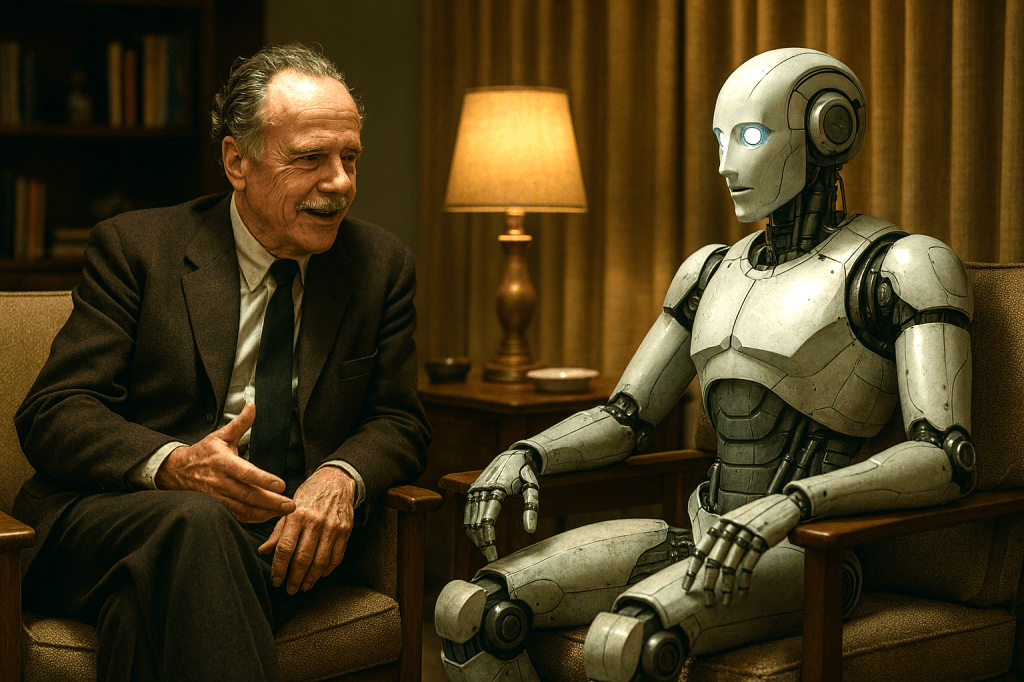
On the lay side, AI Bible chatbots are already being marketed as “personalized spiritual growth companions.” They promise instant answers to theological questions, tailored reading plans, and conversational explanations of difficult passages. These systems can explain concepts like justification, covenant, or apocalyptic imagery in everyday language, adapt explanations to a user’s age, background, or prior questions, and nudge users toward consistent habits of reading, reflection, and prayer (2).
Reports from 2025 describe how such tools are being integrated into church apps and online discipleship platforms, with features like micro-devotions, Q&A channels, and “encouragement companions” that check in on users’ progress (1,2). For many who feel intimidated by academic theology or dense commentaries, this can be a genuine on-ramp into deeper engagement with Scripture. But there are risks:
- Overconfidence: users may assume AI answers are definitive, not realizing that the model reflects particular theological biases or training data limitations (2,4).
- Decontextualization: quick answers can bypass the slow, communal process of interpretation in small groups and congregations.
- Substitution: some may drift from embodied church life, treating the chatbot as their primary “teacher” (3,4).
The more responsible platforms emphasize guardrails: clear statements that AI is not a pastor, links to human-led resources, and escalation paths that encourage users to bring questions back to their church community (2,3).
There is pushback, especially from more conservative or tradition-conscious scholars and pastors. The resistance is not monolithic, but several recurring concerns appear in 2024–2026 discussions:
- Doctrinal reliability and bias: Because generative models are trained on broad textual corpora, they can reproduce theological positions that conflict with a given tradition’s confessions or magisterial teaching. Orthodox, Catholic, and confessional Protestant voices worry that AI may normalize a “lowest common denominator” theology or smuggle in secular assumptions under a biblical veneer (3,4).
- Authority and revelation: Some theologians argue that allowing an algorithm to “interpret Scripture” risks confusing tool-generated synthesis with the authoritative work of the Spirit through the Word in the church. They stress that AI cannot receive revelation, exercise faith, or participate in the church’s sacramental and communal life (3,4).
- Formation and virtue: Traditional educators emphasize that the struggle of learning biblical languages, wrestling with difficult texts, and engaging in communal debate is itself formative. If AI shortcuts that process, students may gain information but lose the virtues—patience, humility, perseverance—that come from long-term study (3,4).
- Integrity in preaching and teaching: As noted, there is strong concern about plagiarism, authenticity, and the temptation to “outsource” sermons or lessons. Some pastors and homiletics instructors argue that this undermines the moral trust between preacher and congregation (5,6).
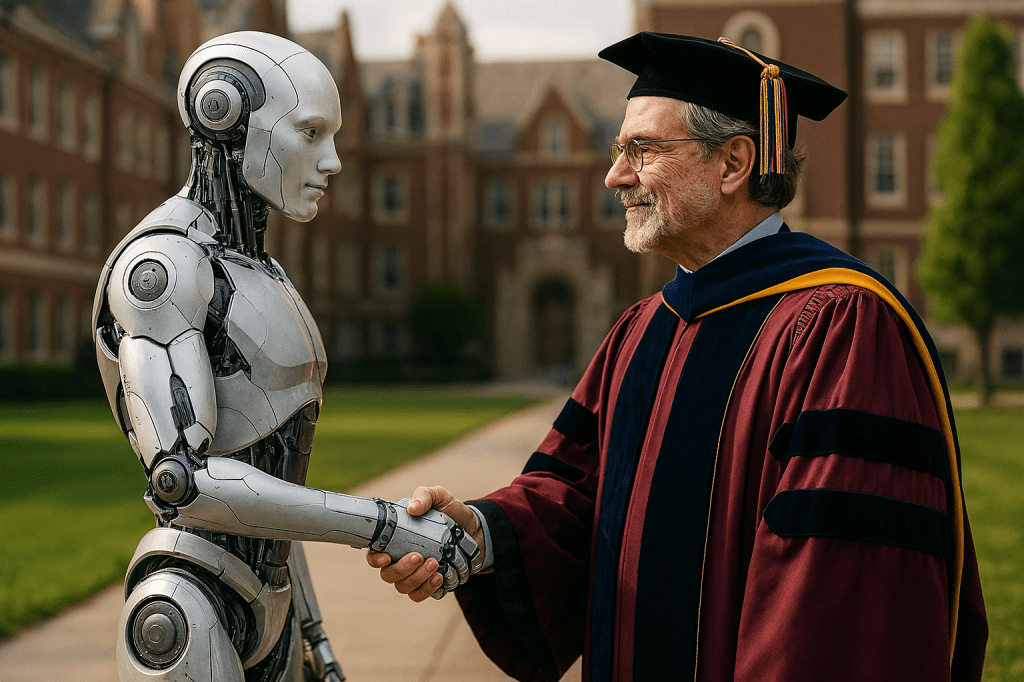
Interestingly, not all orthodox or conservative voices are simply rejecting AI. Many frame it as analogous to the printing press or Bible software: potentially disruptive, but ultimately a tool that must be disciplined by doctrine, ecclesial authority, and pastoral wisdom (3,6). The sharpest critiques are usually aimed not at the technology itself, but at uncritical adoption, lack of transparency, and the erosion of embodied, communal practices of interpretation.
Looking ahead a few years, several trajectories seem likely based on current trends and 2024–2026 commentary:
- Normalization with clearer norms: AI will likely become as normal in Bible study as digital concordances are today. The key shift will be from “Should we use this?” to “What are our rules?” Expect denominational guidelines, seminary policies, and church-level covenants about AI use in sermon prep, academic work, and discipleship resources (1,3,5,6).
- More explicitly theological AI systems: We are already seeing “confessionally tuned” or tradition-specific AI tools (e.g., Reformed, Catholic, evangelical). Over the next few years, expect more models trained or constrained by particular doctrinal standards, with explicit statements of theological alignment and oversight by recognized scholars. This could mitigate some concerns about doctrinal drift while also fragmenting the ecosystem along confessional lines (3,4).
- Agentic study companions integrated into platforms: Bible apps, church management systems, and learning platforms will likely embed agentic AI that can manage multi-step study plans: tracking what you’ve read, suggesting next passages, generating reflection questions, and even coordinating with small-group curricula. For pastors, agentic tools may manage research pipelines—collecting sources, summarizing commentaries, and maintaining sermon archives (1,2,6).
- Renewed emphasis on human presence and community: Paradoxically, as AI becomes more capable, many Christian leaders are already doubling down on what AI cannot do: know a congregation personally, embody pastoral presence, or participate in sacramental life. Expect more teaching that contrasts “AI assistance” with “human shepherding,” and more liturgical and communal practices designed to resist isolation and over-reliance on digital tools (3,5,6).
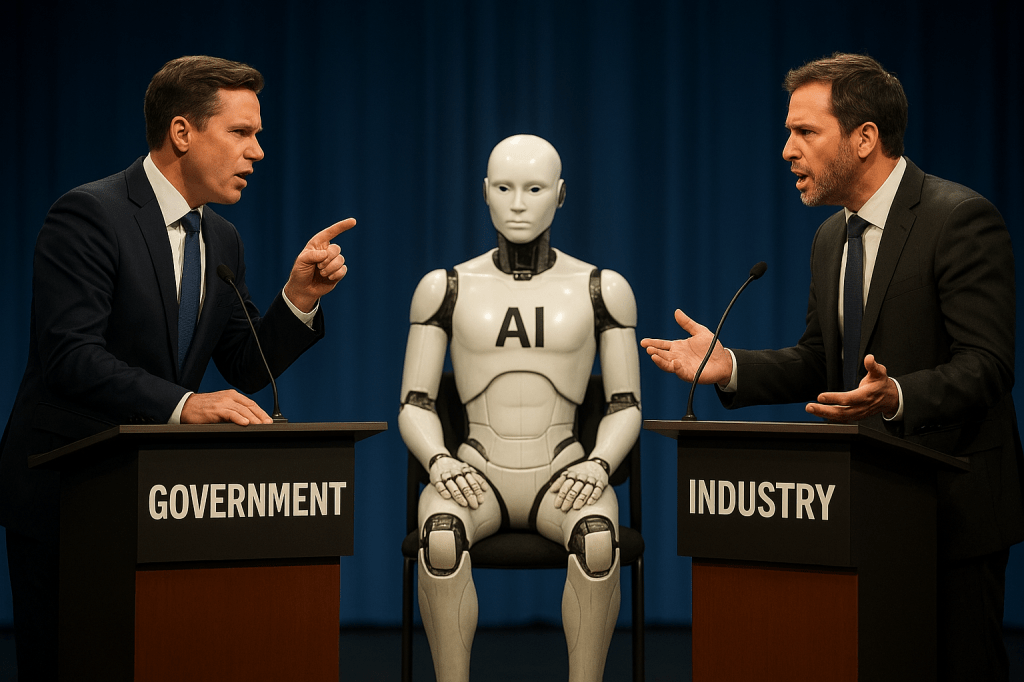
- Ethical and legal scrutiny: Questions about data privacy (e.g., users sharing confessional or pastoral-care details with chatbots), intellectual property (AI-generated sermons and study materials), and transparency will likely draw attention from both church bodies and regulators. Churches may need policies about what kinds of pastoral or counseling conversations are appropriate for AI-mediated channels (2,3,5).
- A deeper methodological debate in theology: Beyond practical questions, theologians will continue to wrestle with whether AI can participate in the “method” of theology at all. Some will explore AI as a tool for large-scale textual analysis (e.g., tracing themes across patristic writings), while others will argue that theology is irreducibly personal, ecclesial, and Spirit-led. That debate will shape how far seminaries and research institutions integrate AI into their core practices (3,4).
In short, generative and agentic AI are democratizing access to Scripture, accelerating research, and reshaping sermon preparation and lay comprehension. The next few years will not be about whether AI is present in Bible study—it already is—but about how Christian communities set boundaries, cultivate virtue, and keep human, Spirit-led interpretation at the center while using these tools to deepen, rather than dilute, engagement with Scripture.
References
(1) “How AI Bible Study Tools Are Transforming Christian Discipleship in 2025: Complete Guide for Churches and Small Groups.” https://faithtechhub.com/how-ai-bible-study-tools-are-transforming-christian-discipleship-in-2025 (faithtechhub.com in Bing)
(2) “Bible AI Chat: How Artificial Intelligence Is Helping People Study Scripture with Personalized Spiritual Growth.” https://faithtime.ai/blog/bible-ai-chat-how-artificial-intelligence-is-helping-people-study-scripture (faithtime.ai in Bing)
(3) Eric Nolin, “Generative AI: Its Innovation, Implications and Use in the Christian World.” The Presbyterian Outlook, March 5, 2024. https://pres-outlook.org/2024/03/generative-ai-its-innovation-implications-and-use-in-the-christian-world (pres-outlook.org in Bing)
(4) Tonye Brown, “AI and the Future of Christian Thought: How Technology Is Reshaping Theology.” FaithGPT Blog, November 16, 2025. https://faithgpt.ai/blog/ai-and-the-future-of-christian-thought (faithgpt.ai in Bing)
(5) “Ethical Boundaries (and Risks) of Using AI for Sermon Preparation.” ChurchLeaders, August 11, 2025. https://churchleaders.com/pastors/pastor-articles/469927-ethical-boundaries-and-risks-of-using-ai-for-sermon-preparation.html (churchleaders.com in Bing)
(6) “Should Pastors Use AI for Sermon Preparation? A Biblical Perspective.” PulpitPartner, February 12, 2026. https://pulpitpartner.com/blog/should-pastors-use-ai-for-sermon-preparation (pulpitpartner.com in Bing)
###
Filed under: Uncategorized |










































































































































































































































































































































































































































































Leave a Reply