




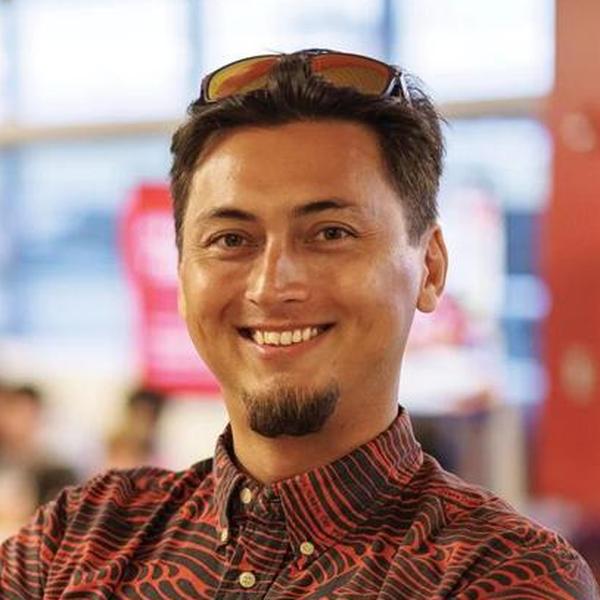
By Jim Shimabukuro (assisted by Claude)
Editor
Summary: Nadaka Yoshinari isn’t just Japan’s Muay Thai standard-bearer—he’s the rare fighter who turned technical brilliance into a cross-border takeover of Thailand’s toughest ring. It matters because his rise signals how global combat sports power is shifting beyond the traditional Thai stronghold. –Perplexity

[Note: For a video overview, see The Japanese Bruce Lee Who Conquered Thailand—Nadaka Yoshinari (YouTube, uploaded by Boxing Mates)]
In the long and storied tradition of Muay Thai — a martial art born in Thailand and jealously guarded by its practitioners — the idea of a foreign fighter ascending to the sport’s highest echelons was, for most of its history, nearly unthinkable. Rajadamnern Stadium and Lumpinee Stadium, the twin temples of the art, were places where Thai fighters ruled with an authority that bordered on the absolute. Then came Nadaka Yoshinari, a young man from Yokosuka, in Kanagawa Prefecture, Japan, who would quietly, methodically, and finally unmistakably rewrite what was thought possible for a fighter born outside Thailand’s borders. (1,2)
Born on January 8, 2001, Nadaka grew up in a household already touched by martial arts. According to published accounts, his older brother was already training in karate when the young Nadaka first became captivated by combat sports. That early family influence was the spark; what followed was decades of discipline. (3)
His introduction to Muay Thai came at age eleven, when he traveled to Thailand for the first time. The atmosphere of the sport in its homeland — the tradition, the crowd energy, the ritual — made a permanent impression on the boy from Kanagawa. Upon returning to Japan, he joined Eiwa Sports Gym in Yokohama, a facility distinguished by the presence of Thai trainers who brought authentic Bangkok-style techniques and traditions directly to Japanese soil. It was there that his primary instructor, Khundong Por Thawatchai, would mold him according to the classical Thai style. (4,5)
The transition from amateur to professional was swift and bold. At just fourteen years old, Nadaka made his professional debut at Lumpinee Stadium in Bangkok — not at some regional event in Japan, but at one of the most prestigious venues in the world of Muay Thai. That debut fight, a points victory over Thai fighter Phansaeng Sakwarun in 2015, was less a routine first professional fight than a declaration: a Japanese teenager announcing himself on Thailand’s most hallowed ground. (6,7)
The road from that debut to his current status as ONE Championship’s inaugural ONE Atomweight Muay Thai World Champion is one of the most extraordinary in modern combat sports. By age sixteen in 2017, Nadaka had become Japan’s youngest-ever Muay Thai World Champion, knocking out Thailand’s Yaksaed Siriluck Muaythai to claim the WMC strap at 100 pounds. The following year, he added the WBC title at 105 pounds in April and then the IBF title at the same weight in September — a three-belt haul within a single calendar year that led the World Boxing Council to elect him its Best Boxer of the Year for 2018, a remarkable honor for an eighteen-year-old. (4,5)
By 2019, Nadaka had achieved something no foreign fighter had done before and, to this point, none has replicated: holding Rajadamnern Stadium and Lumpinee Stadium gold simultaneously at 105 pounds, making him only the second non-Thai in history to achieve that distinction. He then pressed further, capturing additional Rajadamnern titles at 112 and 115 pounds to become the only non-Thai fighter ever to claim three Rajadamnern Stadium belts across three different weight classes. By the time he signed with ONE Championship in early 2025, he had accumulated ten Muay Thai World Championships and had not suffered a defeat since July 2019 — a winning streak that had grown to 39 consecutive fights. (2,4,8)
The final, defining chapter of his historic rise arrived on November 16, 2025, at ONE 173, held at Tokyo’s Ariake Arena. Fighting in his home country for the inaugural ONE Atomweight Muay Thai World Championship against Thailand’s Numsurin Chor Ketwina — a veteran with over one hundred career victories and a perfect 6-0 promotional record — Nadaka delivered a masterful five-round performance, earning a unanimous decision and extending his winning streak to forty consecutive fights. He had become Japan’s first-ever ONE Championship Muay Thai World Champion. (1,9,10)
He did not stop there. On April 29, 2026, at the inaugural ONE SAMURAI 1 event — also held at Ariake Arena in Tokyo — Nadaka successfully made the first defense of that title, defeating challenger Songchainoi Kiatsongrit by unanimous decision across five hard-fought rounds, improving his overall record to 67-6 and extending his unbeaten run to 41 fights. ONE Championship had already recognized his 2025 campaign by naming him its Muay Thai Fighter of the Year. (11,12,7)
Martial Arts Background and Technical Excellence
To understand Nadaka Yoshinari’s fighting style is to trace a lineage that begins not with Muay Thai but with karate. At age four — an age when most children are still mastering the mechanics of play — he was introduced to karate, inspired by his older brother’s practice of the discipline. That early foundation in karate’s structure, precision, and explosive movement would prove not merely a precursor to Muay Thai but an enduring technical contributor to it. (3,13)
Nadaka himself has spoken openly about the persistence of those early lessons. In an interview published by ONE Championship, he reflected: the movements and kicking techniques from karate are still with him, and movements practiced when young tend to become ingrained in muscle memory so deeply that, even as an adult, one can replicate them as if they were second nature. (5)
By age nine, he had transitioned from karate to kickboxing, competing in the amateur ranks for five years and compiling a record of 80 wins against 13 losses with two draws — a total of 95 amateur contests that built the ring intelligence and situational awareness that would distinguish him as a professional. His first amateur title came at eleven years old, signaling that the talent was not merely promising but exceptional. (4,5)
When he transitioned to Muay Thai and began training under Khundong Por Thawatchai at Eiwa Sports Gym, he encountered not only superior technical instruction but also a philosophical approach to fight education instilled by the gym’s founder and president, Natsuo Nakagawa, who directed him from a young age to study vast amounts of fight footage — to watch, to absorb, and to mimic the fighters he most admired. Nadaka has credited this approach as transformative, explaining that the gym had many Thai trainers from whom he learned Muay Thai techniques, and that this is one reason he started using techniques a bit different from typical Japanese fighters. He also described Nakagawa’s instruction to watch countless fights by fighters he admired and try to mimic them as something that has made him who he is today. (5)
The synthesis of karate’s structural discipline, the ring IQ accumulated through nearly one hundred amateur fights, and the authentic Thai training received at Eiwa Sports Gym produced a fighter of unusual technical completeness. Nadaka fights from a southpaw stance and is known for his sharp timing, feints that freeze opponents mid-attack, and footwork that both creates and manages distance with surgical precision. His finishing ability is significant — of his 70 professional wins, 44 have come by knockout. (2,14,15)
He has publicly identified versatility as his ultimate technical goal, stating his ideal fighting style is one where he can do everything — kicks, punches, clinching, elbows, knees — anything, and that this completeness is what he strives toward. To that end, he has actively incorporated intensive boxing training into his regimen to ensure no avenue of attack remains underdeveloped. (5)
His technical development was not a straight line. After his debut at Lumpinee Stadium at fourteen, he suffered three losses in his next seven professional fights — setbacks he later identified as the turning point in his development. Those defeats pushed him to reevaluate his entire training regimen and to move beyond simply doing the drills he was told to do, beginning instead to add his own extra elements to training. He has described that period in high school — when he committed to double sessions, training both morning and evening — as the phase when he truly started making significant progress. (5)
The technical maturation that followed was rapid and comprehensive. Bangkok-based Muay Thai journalist and long-time stadium observer John Wolcott noted that Nadaka’s southpaw technical precision, developed under the tutelage of Khundong Por Thawatchai, translated seamlessly to Bangkok’s exacting standards, and that the karate foundation he built starting at age four gave him explosive kicks and footwork that distinguished him from other talented foreign competitors. (16)
Coaching, Culture, and Acceptance in Thailand
For a non-Thai fighter, earning genuine respect from Thailand’s Muay Thai establishment is perhaps the sport’s most difficult achievement. The Thai stadium circuit — particularly Lumpinee and Rajadamnern — operates according to traditions and standards developed over generations, and its gatekeepers have historically been skeptical of foreign fighters who arrive seeking shortcuts to legitimacy. Nadaka did not seek shortcuts. (16)
His path to acceptance in Thailand was built on the foundational choice made at Eiwa Sports Gym: train under Thai coaches, absorb authentic Thai technique, and then go to Thailand and prove it against Thai fighters in Thailand’s most prestigious venues. From the moment he debuted at Lumpinee Stadium at fourteen, he was not treating Thailand as a destination for occasional exhibitions — he was competing in its central arenas, under its traditional scoring systems, judged by its officials, in front of crowds of Thai fight fans who had watched the sport their entire lives. (4,7)
The role of Khundong Por Thawatchai, his primary Thai trainer, cannot be overstated. Training under an authentic Thai coach within a Japanese gym that maintained close ties to Thailand allowed Nadaka to develop not merely the physical techniques of Muay Thai but also a cultural fluency — an understanding of rhythm, timing, and the tactical language of the sport as Thai fighters and judges understand it. ONE Championship notes that Eiwa Sports Gym, which has produced champions recognized by Thai media, underscores the collaborative efforts in technique refinement that promote deeper ties in the global Muay Thai community. (3,17)
The ultimate validation of his acceptance came through his unprecedented stadium championship haul. When Nadaka captured his first Rajadamnern Stadium belt in December 2018 — defeating the unified Rajadamnern and Lumpinee champion Hercules Phetsimean by unanimous decision after five rounds — it was not a fringe promotional title but the championship of one of Muay Thai’s two most revered venues, decided by Thai officials watching a seventeen-year-old Japanese fighter dominate in Bangkok. The same was true of his Lumpinee championship won in April 2019, simultaneously holding both prestigious stadium titles — an achievement that made him only the second non-Thai in history to do so, after Belgian-Moroccan fighter Youssef Boughanem. (14,16)
The broader combat sports community took notice. Liam Harrison, himself one of the most celebrated foreign fighters in Muay Thai history, called Nadaka the best non-Thai fighter on the planet, adding that even in the stadiums in Thailand, fighting at the weight he fights at — one of the most competitive weights — none of the Thais could beat him. Harrison went further, predicting he would soon be not just the best non-Thai fighter, but simply the best fighter on the planet. (18)
Nadaka’s growing fame in Japan has also been a point of personal reflection. Following the capture of his ONE Championship title, he has spoken about what the past six months as a world champion have genuinely felt like, noting that when he went to Thailand or to ONE events, many fans came up to talk to him, and that in Japan his name has really spread as a ONE world champion — that over the past six months he has truly started to feel that he is an ONE world champion. (11)
This duality — the external recognition from Thai officials and audiences on one hand, and growing domestic celebrity in Japan on the other — represents the full arc of acceptance that has eluded most foreign fighters throughout Muay Thai’s long history. Nadaka has earned both simultaneously, from Thailand’s most discerning critics and from Japan’s increasingly enthusiastic Muay Thai following. (15,7)
Physical Attributes and Vital Statistics
Nadaka Yoshinari was born on January 8, 2001, in Yokosuka, Kanagawa Prefecture, Japan. He stands at 163–165 cm (approximately 5 feet 4–5 inches) and has competed across multiple weight divisions over his career, ranging from pinweight (approximately 100 lbs / 45 kg) through light flyweight (approximately 115 lbs / 52 kg), with his last recorded fight weight cited as approximately 52 kg (115 lbs) in the atomweight division. He fights from a southpaw stance and is trained at Eiwa Sports Gym under Khundong Por Thawatchai. (14,19)
Professional Win-Loss Record
Nadaka’s professional Muay Thai record, as of his first ONE Championship title defense in April 2026, stands at 67 wins against 6 losses (67-6), with 44 of those victories coming by knockout. He has not suffered a defeat since July 2019, a span that now encompasses 41 consecutive victories. His amateur record preceding his professional career comprised 80 wins, 13 losses, and 2 draws across 95 contests, demonstrating world-class ability well before he turned professional at fourteen. (14,19,12)
World Championships and Title History
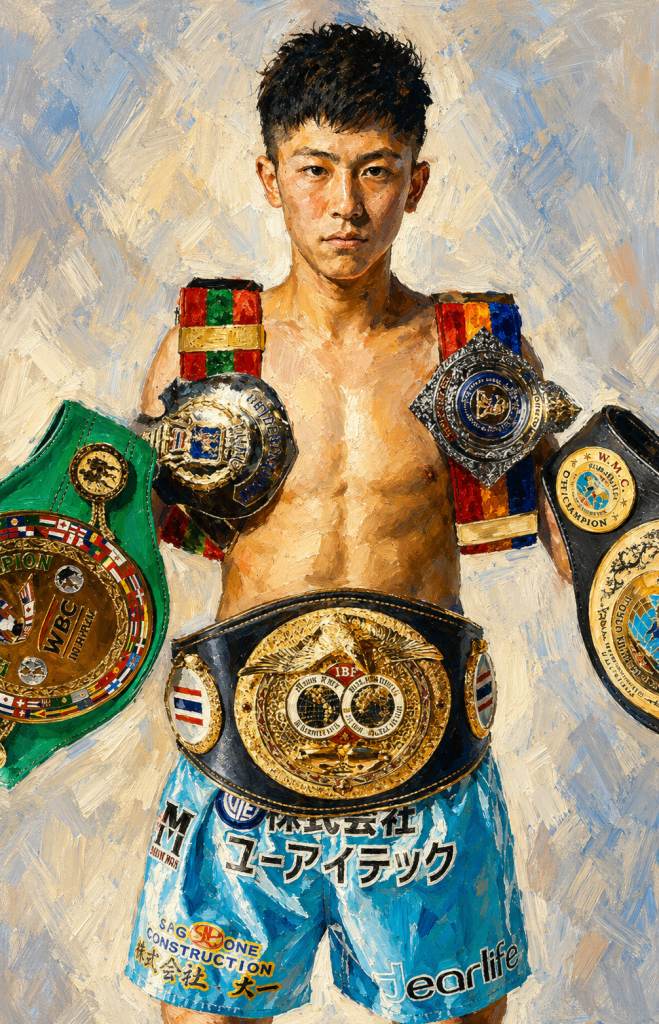
Nadaka’s championship collection is without parallel among non-Thai fighters in the modern era of the sport. His confirmed major titles include: the WMC Muay Thai World Title at 100 lbs (2017); the WBC Muay Thai World Title at 105 lbs (2018); the IBF Muaythai World Mini Flyweight Championship at 105 lbs (2018); the Rajadamnern Stadium Muay Thai World Title at mini-flyweight (105 lbs, December 2018); the Lumpinee Stadium Muay Thai World Title at mini-flyweight (105 lbs, April 2019); additional Rajadamnern Stadium championships at 112 lbs and 115 lbs; the Rajadamnern Stadium Super Flyweight Title (July 2024); the WBC Muay Thai Super Flyweight Diamond Title (September 2024); the Rajadamnern Stadium Super Flyweight Title defense (December 2024); the inaugural ONE Atomweight Muay Thai World Championship (November 2025); and a successful first defense of the ONE title (April 2026). (2,4,14,19)
Taken together, these titles span five weight divisions and represent three of the four major prestige categories in Muay Thai — sanctioning body world titles (WBC, WMC, IBF), Bangkok stadium championships (both Rajadamnern and Lumpinee), and the world’s largest global martial arts promotion. He is the only non-Thai fighter in history to have won three Rajadamnern Stadium Muay Thai World Titles across different weight classes, and only the second non-Thai (after Youssef Boughanem) to simultaneously hold both Lumpinee and Rajadamnern gold. (2,14,8)
Awards and Recognition
Beyond his titles, Nadaka has received formal recognition from governing bodies and promotions alike. The World Boxing Council elected him its Best Boxer of the Year for 2018 — an extraordinary honor for an eighteen-year-old competing in a weight class that attracts some of the world’s most technically accomplished fighters. In 2025, ONE Championship named him its Muay Thai Fighter of the Year, capping a twelve-month campaign in which he went 4-0 inside the promotion, captured the inaugural atomweight belt, and extended his winning streak to 40 fights. He has also been recognized as the best non-Thai Muay Thai fighter in the world by respected figures throughout the combat sports community. (4,7,18)
Comparison to Tenshin Nasukawa
Any serious discussion of Nadaka Yoshinari’s place in Japanese combat sports history inevitably turns to Tenshin Nasukawa — the Matsudo-born kickboxing prodigy who, prior to Nadaka’s emergence on the global stage, stood as the clearest argument that Japan could produce combat athletes capable of transcending regional boundaries and competing at the sport’s absolute pinnacle. Both men are products of Japan’s deep martial arts culture; both began their training in karate before transitioning to striking sports; and both accumulated extraordinary competitive records that defied the normal pace of athletic development. But their careers represent meaningfully different achievements, pursued on different stages and by different competitive philosophies. (20,21)
Tenshin Nasukawa, born August 18, 1998, is three years older than Nadaka. He compiled a flawless professional kickboxing record of 42 wins and zero losses, capturing the RISE featherweight world championship and the 2017 Rizin Fighting Federation featherweight tournament among his major honors. He went 4-0 in MMA before retiring from that discipline, and has since transitioned to professional boxing, where he maintained an undefeated record through his available career history. His amateur kickboxing career — 107 contests with 99 wins — is among the most extensive and accomplished amateur records in the sport’s modern history. In Kyokushin karate, he holds a black belt and began training at age five. (22,20,21)
The most substantive difference between the two fighters’ legacies lies in where and against whom they competed. Tenshin built his professional record primarily in Japan — through RISE, K-1, and Rizin — in kickboxing, a format that differs from pure Muay Thai in its restriction of elbows and, in most formats, clinch work. His fights, while technically superb and conducted against credible opponents including Takeru Segawa and Rodtang Jitmuangnon of ONE Championship, were largely organized under promotions that, at their peak, reach large domestic Japanese audiences and a global streaming audience but lack the traditional pedigree of Thailand’s stadium circuit. (23,20,24)
Nadaka, by contrast, built his entire reputation in the full-rules Muay Thai format — elbows, knees, and clinch included — and did so primarily in Thailand, against Thai fighters, at Thailand’s most historic venues. The distinction matters enormously within the culture of Muay Thai. Winning at Rajadamnern or Lumpinee against Thai fighters, judged by Thai officials, is the sport’s most demanding test of authenticity. As journalist John Wolcott observed, these were not ceremonial belts handed out at promotional events — they were titles earned in Thailand’s most prestigious venues, judged by Thai officials, watched by Thai crowds who have seen every style and seen through every pretender. (16)
Tenshin’s transition to professional boxing in 2023 effectively removed him from the striking arts conversation in which Nadaka operates. As a kickboxer, Tenshin was widely regarded as a generational talent and one of the sport’s all-time greats; the Evolve MMA publication noted that his name is likely to go down in history alongside the likes of Buakaw or Yodsanklai as the best of his era. But his career, as extraordinary as it was, unfolded largely within the Japanese promotional ecosystem and in kickboxing’s more restricted ruleset. (22)
Where the two men converge most clearly is in the karate foundation that shaped each of them — karate was the initial martial arts language through which both Tenshin and Nadaka learned to move, strike, and manage distance — and in their shared status as standard-bearers for Japanese martial arts excellence. Both represent arguments for the proposition that Japan’s combat sports culture can produce fighters who rank among the world’s best. (20,13)
But if Tenshin’s legacy is one of domestic dominance and stylistic brilliance within a kickboxing framework, Nadaka’s is one of cross-cultural conquest: a Japanese fighter who went to Thailand, earned Thailand’s respect, won its most prestigious titles on its own turf, and then carried that stadium-forged greatness onto the global stage of ONE Championship. The achievements are different in kind, not merely degree. Nadaka is operating in Muay Thai’s most traditional and demanding competitive environment; Tenshin operated in kickboxing’s more controlled format. Each is extraordinary on its own terms. (15,7)
Future Prospects and Historical Significance
Nadaka Yoshinari is twenty-five years old. He has forty-one consecutive victories. He is a reigning ONE Championship world champion who has already made a successful title defense. By virtually any measure, his career arc is still ascending, and the most consequential chapters may not yet have been written. (25,12)
In the near term, the obvious trajectory points toward continued title defenses and the consolidation of his status as the undisputed ruler of the ONE atomweight Muay Thai division. Following his first successful defense against Songchainoi Kiatsongrit, Nadaka was candid in his post-fight assessment — acknowledging that Songchainoi’s evolution surprised him, that the Thai challenger’s speed, power, and timing were all drastically sharper than their previous encounter, and that he cannot be satisfied yet. That kind of analytical self-awareness, rather than self-congratulation, suggests a champion who understands that sustained dominance requires continuous growth. (26)
Looking further ahead, Evolve MMA’s analysis of Nadaka’s trajectory suggests future challenges may include higher-profile defenses, potential cross-divisional bouts — including possible movement up to strawweight or flyweight — or continued dominance within ONE Championship. As Muay Thai continues to globalize, Nadaka represents a new generation of fighters who respect tradition while thriving on the modern stage, and his ability to bridge both worlds suggests that his best years may still be ahead. (15)
The historical significance of what Nadaka has already accomplished, however, transcends whatever title defenses and record extensions lie ahead. He has irrevocably altered the narrative of what is achievable for a non-Thai Muay Thai fighter. Where previous non-Thai champions had earned recognition at one prestigious stadium, he earned recognition at both simultaneously. Where previous non-Thai fighters had won titles in a single weight class at Rajadamnern, he won titles in three. Where other Japanese fighters had built careers within domestic or regionally prominent promotions, he built his at the source — in Bangkok, at Lumpinee and Rajadamnern, judged by the same standards applied to Thailand’s own fighters. (2,14,16)
For the sport of Muay Thai itself, Nadaka’s career represents proof that the globalization of the art does not require a dilution of its standards. He has not succeeded by fighting in a sanitized format designed for international audiences. He has succeeded by meeting Muay Thai on its own terms — in Thailand, with Thai trainers, against Thai fighters, in Thailand’s own stadiums — and then demonstrating on the world’s largest martial arts stage that the lessons learned there translate globally. As ONE Championship observed in naming him its 2025 Muay Thai Fighter of the Year, his journey from a fourteen-year-old debuting at Lumpinee to a twenty-four-year-old ONE champion crowned in Tokyo was not just about collecting belts; it was about proving that stadium pedigree transcends geography. (7,16)
For the coming generation of Japanese — and broadly, non-Thai — Muay Thai fighters, Nadaka’s career functions as a demonstrable blueprint: that authentic immersion in Thai training culture, combined with the discipline to compete at Thailand’s most demanding venues from the earliest stages of a professional career, can produce a fighter capable of beating Thai fighters at their own game and on their own ground. That is perhaps his most enduring contribution to the sport: not simply the belts he has won, but the possibility he has proven. (3,15)
References
1. ONE Championship. “Nadaka Defeats Numsurin To Win Inaugural ONE Atomweight Muay Thai World Title.” November 20, 2025. https://www.onefc.com/videos/and-new-nadaka-defeats-numsurin-to-win-the-inaugural-one-atomweight-muay-thai-world-title/
2. ONE Championship. “Nadaka Yoshinari – Athlete Profile.” Accessed May 2026. https://www.onefc.com/athletes/nadaka-yoshinari/
3. Grokipedia. “Nadaka Yoshinari.” January 17, 2026. https://grokipedia.com/page/Nadaka_Yoshinari
4. ONE Championship. “How Nadaka Yoshinari Became Japan’s Leading Muay Thai Force.” October 30, 2025. https://www.onefc.com/features/how-nadaka-yoshinari-became-japans-leading-muay-thai-force/
5. ONE Championship. “How Nadaka Yoshinari Became Japan’s Leading Muay Thai Force” [extended fighter quotes]. October 30, 2025. https://www.onefc.com/features/how-nadaka-yoshinari-became-japans-leading-muay-thai-force/
6. Fight Record. “Nadaka Yoshinari – Fight Record.” Accessed May 2026. https://fightrecord.co.uk/fighters/nadaka-yoshinari/
7. Muay Thai Stadiums / Wolcott, John. “From Lumpinee To Tokyo: How Nadaka’s Journey Earned Him ONE Championship Fighter Of The Year.” January 7, 2026. https://muaythaistadiums.com/from-lumpinee-to-tokyo-how-nadakas-journey-earned-him-one-championship-fighter-of-the-year/
8. ONE Championship. “5 Reasons Why ONE Newcomer Nadaka Yoshinari Is Japan’s Biggest Muay Thai Star.” February 27, 2025. https://www.onefc.com/features/5-reasons-why-one-newcomer-nadaka-yoshinari-is-japans-biggest-muay-thai-star/
9. LowKick MMA. “Nadaka Yoshinari Dominates NumSurin Chor Ketweena To Become Inaugural ONE Atomweight Muay Thai Champion – ONE 173 Highlights.” November 16, 2025. https://www.lowkickmma.com/nadaka-yoshinari-one-atomweight-champ/
10. BVM Sports. “Nadaka Yoshinari Dominates NumSurin Chor Ketweena to Become Inaugural ONE Atomweight Muay Thai Champion.” November 16, 2025. https://bvmsports.com/2025/11/16/nadaka-yoshinari-dominates-numsurin-chor-ketweena-to-become-inaugural-one-atomweight-muay-thai-champion-one-173-highlights/
11. Sportskeeda. “ONE SAMURAI 1: ‘I’ve truly started to feel that I am a ONE world champion’ – Nadaka reflects on his newfound global fame.” April 25, 2026. https://www.sportskeeda.com/mma/news-i-ve-truly-started-feel-i-one-world-champion-nadaka-reflects-newfound-global-fame
12. ONE Championship. “Nadaka Retains Atomweight Muay Thai World Title With Masterful Display Against Songchainoi At ONE SAMURAI 1.” April 29, 2026. https://www.onefc.com/news/nadaka-retains-atomweight-muay-thai-world-title-with-masterful-display-against-songchainoi-at-one-samurai-1/
13. Grokipedia. “Nadaka Yoshinari” [early karate background]. January 17, 2026. https://grokipedia.com/page/Nadaka_Yoshinari
14. Wikipedia. “Nadaka Yoshinari.” Accessed May 2026. https://en.wikipedia.org/wiki/Nadaka_Yoshinari
15. Evolve MMA. “The Making Of Modern Muay Thai Prodigy Nadaka Yoshinari.” January 1, 2026. https://evolve-mma.com/blog/the-making-of-modern-muay-thai-prodigy-nadaka-yoshinari/
16. Wolcott, John. Muay Thai Stadiums. “From Lumpinee To Tokyo: How Nadaka’s Journey Earned Him ONE Championship Fighter Of The Year.” January 7, 2026. https://muaythaistadiums.com/from-lumpinee-to-tokyo-how-nadakas-journey-earned-him-one-championship-fighter-of-the-year/
17. ONE Championship. “Nadaka – Athlete Profile.” March 3, 2026. https://www.onefc.com/athletes/nadaka-yoshinari/
18. Sportskeeda. “‘The best non-Thai fighter on the planet’ – Liam Harrison offers high praise for Nadaka Yoshinari.” 2025. https://www.sportskeeda.com/mma/news-the-best-non-thai-fighter-planet-liam-harrison-offers-high-praise-nadaka-yoshinari
19. Muay Thai Records. “Nadaka Yoshinari – Fight Record.” Accessed May 2026. https://muaythairecords.com/fighters/nadaka-yoshinari
20. Wikipedia. “Tenshin Nasukawa.” Accessed May 2026. https://en.wikipedia.org/wiki/Tenshin_Nasukawa
21. Grokipedia. “Tenshin Nasukawa.” January 14, 2026. https://grokipedia.com/page/Tenshin_Nasukawa
22. Evolve MMA. “9 Of The Best Japanese Muay Thai Fighters And Kickboxers In The Modern Era.” November 13, 2024. https://evolve-mma.com/blog/9-of-the-best-japanese-muay-thai-fighters-and-kickboxers-in-the-modern-era/
23. Sports Illustrated / FanNation. “Discover Tenshin Nasukawa: The Best Fighter You’ve Never Heard Of.” July 9, 2024. https://www.si.com/fannation/mma/news/discover-tenshin-nasukawa-the-best-fighter-youve-never-heard-of
24. LowKick MMA. “Muay Thai Vs. Kickboxing In Action: Tenshin Nasukawa Vs. Rodtang Lookback.” January 5, 2025. https://www.lowkickmma.com/muay-thai-vs-kickboxing-tenshin-nasukawa-vs-rodtang/
25. BJPenn.com. “Nadaka to make first title defense against Songchainoi at ONE Samurai 1.” March 31, 2026. https://www.bjpenn.com/mma-news/nadaka/nadaka-to-make-first-title-defense-against-songchainoi-at-one-samurai-1/
26. ONE Championship. “‘I Can’t Be Satisfied Yet’ — Nadaka Breaks Down Successful World Title Defense Against Songchainoi At ONE SAMURAI 1.” May 4, 2026. https://www.onefc.com/news/i-cant-be-satisfied-yet-nadaka-breaks-down-successful-world-title-defense-against-songchainoi-at-one-samurai-1/
###
Filed under: Uncategorized |


























































































































































































































































































































































Leave a Reply