






By Jim Shimabukuro (assisted by ChatGPT)
Editor
Summary: Bionics are turning injury recovery into performance engineering — redefining the boundary between healing and enhancement in modern athletics. –Copilot

Consumer bionics are beginning to matter to sports, but not in the way science-fiction imagery might suggest. Professional and lower-level teams are not, as a rule, sending players into competition wearing powered exoskeletons. Public evidence points instead to three nearer-term uses: robotic and semi-robotic systems in rehabilitation, AI movement analysis for injury prediction and return-to-play decisions, and a new class of adaptive protective equipment that reacts to dangerous motion while staying light enough for practice or games. The sports version of consumer bionics is therefore likely to arrive first as recovery support and protective gear, not as visible motorized augmentation.
That distinction is crucial. A powered hiking exoskeleton, a walking-assist wearable, a neural sleeve, a smart ankle brace, an airbag knee garment, and a helmet-mounted impact system all belong to the broad movement toward human-machine assistance. But they raise different questions in sports. In rehabilitation, a device may be judged by whether it restores gait, reduces load, or gives a therapist better data. In live competition, it must also be legal, safe for opponents, fair to competitors, comfortable under pressure, durable through sweat and collision, and trusted by athletes who cannot think about equipment during play.
What teams appear to be using now
Sports organizations are already deep into AI biomechanics, workload monitoring, sensor data, and injury modeling. The NFL’s Digital Athlete program is one visible example. The league describes it as an AI injury-prediction tool that draws on real-time data and millions of simulations to help identify risk and guide player-health decisions (1). This matters because it shows where teams are most willing to adopt technology: not first as powered devices on the body during competition, but as intelligence systems that help coaches, medical staffs, and performance departments interpret risk.
The research literature follows the same pattern. A 2025 scoping review of artificial intelligence in sports biomechanics groups current work around performance enhancement, injury prevention, injury prediction, sport-specific analysis, translation to practice, and remaining research gaps (2). A 2026 review of AI-integrated wearable technology in sports medicine emphasizes real-time monitoring, gait analysis, rehabilitation support, and injury-prevention applications (3). These sources do not prove that teams are already issuing consumer exoskeletons to athletes. They show that the informational layer around movement has matured faster than the intervention layer.
Robotics in sports rehabilitation is also visible, but mainly inside clinics and supervised return-to-play settings. A 2025 sports rehabilitation article describes lower-extremity rehabilitation robots, including powered exoskeletons, as tools that can help restore walking patterns in athletes after musculoskeletal injury (4). The likely sports path is therefore not immediate game use. It is rehabilitation first, then carefully controlled training, then possibly sport-specific protective devices once the evidence becomes strong enough.
Consumer bionics as training and recovery tools
Several consumer or near-consumer devices show why teams will watch this field even if they do not yet adopt it widely. Nike’s Project Amplify is one of the clearest signals from a major sports brand. Announced in October 2025 with Dephy, it is described as a powered footwear system for running and walking, intended to help everyday athletes move faster and farther with less effort (5). The announcement does not make Project Amplify a team medical device, but it shows that powered assistance is being pulled into the language of sport, fitness, and ordinary movement.
Skip and Arc’teryx MO/GO points in a similar direction. MO/GO is marketed as powered hiking pants that reduce exertion, fatigue, and discomfort, with preorders now pushed into 2027 and a listed total price of $4,999 (6,7). WIRobotics announced in January 2025 that it planned to introduce WIM to the U.S. market, describing it as a 1.6-kilogram walking-assistance wearable robot (8). Hypershell markets outdoor exoskeletons for hiking, training, work, travel, and daily movement (9). DNSYS X1, reviewed in 2025, sits in the same consumer-performance neighborhood, even if reviewer experience suggests that the category is still young and uneven (10).
These products are not designed for NBA playoff minutes, NFL snaps, or college soccer matches. Their sports relevance is more indirect. A team might eventually use such devices for graded walking, stair work, low-load conditioning, post-surgical confidence, or controlled reconditioning after knee, hip, ankle, Achilles, or back injury. In that setting, the point is not to make an athlete better than normal. The point is to let the athlete move safely while load, symmetry, fatigue, and compensation are measured.
Cionic’s Neural Sleeve belongs in an adjacent but important category. It is not a powered exoskeleton in the classic sense, yet Cionic describes Neural Sleeve 2 as an FDA-cleared bionic clothing system that uses stimulation to activate functional muscle movement and relax spasms for people with neurological mobility impairment (11). For sports, the relevance is conceptual: the body-worn device becomes a therapeutic interface between nervous system, movement, and data. That is very close to what future athletic rehabilitation systems may try to do, even if the population and clinical indication differ.
Why game use is harder than recovery use
The barrier to live competition is not simply engineering. It is sport itself. A powered hip device, ankle motor, or knee-assist system could alter acceleration, cutting, fatigue, jumping, collision mechanics, and competitive fairness. World Athletics already maintains separate rules for athletic shoes and mechanical aids, which shows how quickly performance equipment becomes a governance problem once it affects results (12). Team sports would face the same problem in a messier form because devices would interact not only with the wearer but also with teammates and opponents.
That is why the first game-condition bionics are more likely to resemble adaptive protection than powered augmentation. Football helmets and batting helmets are accepted because they protect athletes without being understood as motors. Mouthguards, shin guards, shoulder pads, ankle braces, and catcher’s gear have the same cultural logic. The next generation will probably extend that model: protective devices that sense dangerous motion or absorb impact differently, but do not obviously add power.
Football: the helmet precedent and the collision problem
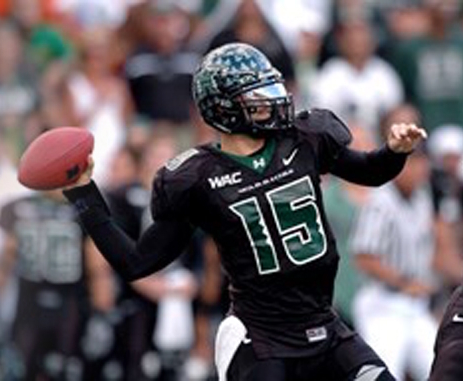
Football is both the most obvious and the most difficult market. The injury burden is broad: concussion, sub-concussive impacts, shoulder injuries, stingers, knee ligament tears, ankle sprains, hamstring injuries, hand injuries, rib trauma, and accumulated wear. Yet football also has the most developed protective-equipment culture. The Guardian Cap is not an exoskeleton, but it is a useful precedent because it shows how a safety device enters a collision sport: testing, practice use, league review, player acceptance, and then more selective game use. Guardian Sports continues to market Guardian Caps as helmet add-ons intended to reduce impact forces (13). The NFL also continues to update helmet performance standards and announced seven new top-performing helmet models for the 2025 season (14).
The Guardian Cap example also warns against easy claims. A 2025 University of Wisconsin report on a high-school football study found that helmet covers did not significantly reduce concussions in that setting (15). Meanwhile, an NFL-focused 2025 analysis of Guardian Cap use reported changes in concussion incidence in the league context (16). The lesson for bionics is not that one source settles the matter. It is that performance may differ across lab testing, elite practice, youth sports, and live competition. Sports bionics will need evidence in the exact settings where athletes are expected to wear the devices.
Powered exoskeletons in football game play remain unlikely in the short term. They add mass, complexity, failure modes, and fairness concerns. They could protect one athlete while changing collision forces for another. In practice and rehabilitation, however, wearable robotics could support loaded movement retraining, controlled return from injury, fatigue-reduction drills, and symmetry work. Football’s near future is therefore more likely to be smart protective equipment and AI-guided recovery than robotic suits on game day.
Basketball: ankles are the near-term proving ground
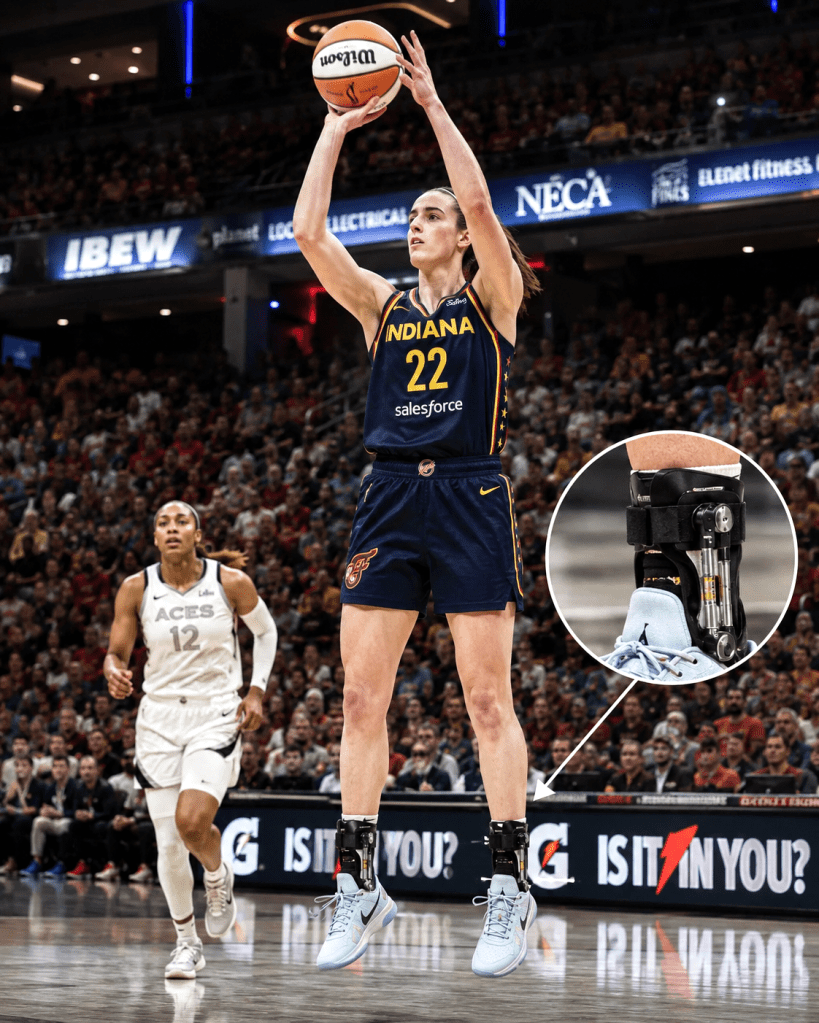
Basketball may be the most plausible near-term test bed for live-use bionics because ankle injuries are common, visible, and connected to movements that can be sensed: landing, cutting, inversion, supination, and sudden deceleration. Traditional tape and lace-up braces already fit basketball culture, so a dynamic ankle brace does not require athletes to accept an entirely new idea. It only has to prove that it protects without costing mobility.
Betterguards is the leading example. Its ankle brace uses micro-hydraulic pistons that the company describes as a seatbelt-like system: relaxed during normal motion, then locking when the ankle begins to roll or twist (17). Sports Business Journal reported in July 2025 that Betterguards had partnered with NBA trainers and released a new version of the brace (18). Wired later described the technology as a high-tech ankle guard being used by NBA players (19). This is not a powered exoskeleton, but it is a form of consumer bionics for live sport: a wearable system that responds to risky motion rather than merely wrapping the joint.
The short-term outlook for basketball is strongest at the ankle. The device category is familiar, the injury target is specific, and the intervention can be mechanical and fast. Knee protection is more difficult. ACL and meniscus injuries can arise from complex combinations of hip position, knee valgus, rotation, landing mechanics, fatigue, and external contact. A knee device must intervene without stiffening the athlete, interfering with shooting or cutting, or introducing new stresses elsewhere.
Knees: the airbag pathway
Hippos Exoskeleton is the most direct current example of a bionic knee-protection concept aimed at athletes. The company describes its first product as an intelligent airbag legging designed to protect the knee, including ligaments, meniscus, and tendons (20). Sports Business Journal reported in April 2025 that Hippos planned a knee brace with airbags to help prevent ACL injuries (21). A November 2025 release described an AI-driven ultra-light knee sleeve intended to reshape knee injury prevention in 2026 (22).
The idea is compelling: if a garment can detect the onset of a dangerous knee position and deploy support inside the injury window, it could become a knee equivalent of a helmet or airbag. The unresolved question is proof. The device must react quickly enough, avoid false triggers, work across body types and sports, survive sweat and contact, and be accepted by athletes who often resist anything that changes feel. For now, smart knee protection is best understood as prototype-to-pilot rather than mainstream game equipment.
What AI adds
AI’s role is not decoration. It is the control layer that may make adaptive protection possible. A smart protective device must distinguish normal elite movement from injury-producing movement. A safe ankle angle during a crossover may look dangerous for a recreational athlete. A soccer player cutting on wet grass may need a different threshold than the same player on dry turf. A post-injury athlete may need tighter limits during return-to-play than during midseason competition. AI can personalize these thresholds, compare motion to baseline, detect fatigue drift, and warn when a movement pattern begins to change.
In rehabilitation, AI can help decide how much assistance a device should provide and when assistance should be reduced. In practice, it can connect wearable data to workload, asymmetry, and recovery. In game equipment, the challenge is much harsher: prediction fast enough and accurate enough to justify intervention. A system that misses dangerous events fails its purpose. A system that triggers too often will be discarded. The winning designs will probably combine passive protection that is always present, mechanical or pneumatic reaction that is extremely fast, and AI-guided personalization that shapes when or how the device responds.
Short-term outlook: 2026 to 2030
Through 2030, consumer bionics in sports will probably grow by diffusion rather than by a sudden league-wide breakthrough. The first adopters will be individuals, clinics, and sports-medicine departments rather than entire professional leagues. The easiest purchases will remain AI movement assessment, force-plate analysis, sensor monitoring, and software platforms because those systems do not change the rules of play. Wearable robotics will enter more slowly, case by case, especially after injury.
The most likely early uses are lower-limb rehabilitation after surgery, graded return to running, conditioning when full loading is not yet safe, walking and stair work after knee or hip injury, and confidence-building for athletes who have developed protective movement habits. Powered consumer devices such as Project Amplify, WIM, Hypershell, DNSYS, and MO/GO will be watched because they normalize assistance and generate useful lessons about weight, battery life, comfort, controls, and user trust. But they are not likely to become standard game equipment in the next few years.
For live play, the near-term winners are more likely to be reactive ankle protection, smart knee sleeves, helmet systems, instrumented mouthguards, sensor-equipped compression garments, and protective layers that look like ordinary sportswear. This is how the bionic future can enter without announcing itself as robotics.
Long-term outlook: the 2030s and beyond
In the longer term, the sports-bionics field may split into three branches. The first will be medical and therapeutic: regulator-cleared devices for gait impairment, nerve injury, post-surgical rehabilitation, and chronic mobility limitations. The second will be consumer fitness and outdoor movement: powered shoes, powered pants, knee-assist wearables, and hip-assist devices that make walking, climbing, and low-intensity training easier. The third will be elite sports performance and protection: devices designed for return-to-play, load management, and injury prevention under sport-specific conditions.
Market forecasts should be read cautiously, but they point toward continued growth in the broader exoskeleton field. Grand View Research estimates the U.S. exoskeleton market at $234.18 million in 2025 and projects $640.25 million by 2033, with growth driven by geriatric demand, medical adoption, industrial use, defense, and stroke incidence (23). Sports will likely remain a smaller slice than healthcare, defense, and industry, but it will be an influential proving ground because athletes and teams care intensely about small improvements in load, symmetry, recurrence, and time lost.
The most important long-term shift may be cultural. Once athletes accept that a device can intervene without interfering, the boundary between protective equipment and bionics will blur. Helmets protect the skull. Adaptive ankle braces protect ligaments. Airbag leggings may protect the knee. Smart textiles may protect shoulders, hips, and spines. The public may not call these systems exoskeletons, but functionally they will be wearable robotic or semi-robotic protection systems.
Bottom line
Professional and lower-level teams are not yet using powered consumer bionics as routine sports equipment. The evidence points to early adoption, pilots, rehabilitation use, individual experimentation, and fast-growing interest in AI biomechanics. But the future of sports bionics does not depend on full exoskeleton suits appearing on courts and fields. It is already taking shape through the side door: recovery devices, adaptive braces, smart textiles, AI-guided monitoring, and protective equipment that reacts to danger rather than merely absorbing it.
Sports injury prevention is moving from passive armor to reactive protection. The path runs from helmets and braces to adaptive ankles, airbag knees, AI-personalized thresholds, and eventually sport-specific bionic systems. The field is real, but the game-day version will advance only as fast as evidence, rules, athlete acceptance, and safety allow.
References
1. NFL. Revolutionizing Player Health and Safety with the Digital Athlete. https://www.nfl.com/videos/revolutionizing-player-health-and-safety-with-the-digital-athlete
2. Souaifi, M., et al. Artificial Intelligence in Sports Biomechanics: A Scoping Review. Bioengineering, 2025. https://www.mdpi.com/2306-5354/12/8/887
3. Aryan, A., et al. Artificial intelligence-integrated wearable technology in sports injury prevention and rehabilitation. Journal of Sports Rehabilitation and Science, 2026. https://www.jsportrs.com/article_237953.html
4. Shaji, S. P. The application of robotics in sports rehabilitation: A revolution in musculoskeletal injury treatment. Journal of Sports Rehabilitation and Science, 2025. https://www.jsportrs.com/article_226689.html
5. Nike. Nike Unveils Project Amplify, the World’s First Powered Footwear System for Running and Walking. October 23, 2025. https://about.nike.com/en/newsroom/releases/nike-project-amplify-official-images
6. Skip. Skip x Arc’teryx MO/GO Starter Pack preorder page. https://www.skipwithjoy.com/buy/p/style-01-ej5na-hbs9d
7. Skip. MO/GO product site. https://www.skipwithjoy.com/
8. WIRobotics. Wearable Robotics Leading Company WIRobotics to Introduce Ultra-Lightweight Walking Assistance Wearable Robot WIM to the U.S. Market. January 7, 2025. https://www.prnewswire.com/news-releases/wearable-robotics-leading-company-wirobotics-to-introduce-ultra-lightweight-walking-assistance-wearable-robot-wim-to-the-us-market-302342842.html
9. Hypershell. Hypershell: World’s First Outdoor Exoskeleton for Hiking & Daily Use. https://hypershell.tech/en-us
10. Tom’s Guide. DNSYS X1 exoskeleton review. March 21, 2025. https://www.tomsguide.com/ai/dnsys-x1-exoskeleton-review
11. Cionic. Neural Sleeve 2: FDA-cleared leg mobility device. https://www.cionic.com/neuralsleeve
12. World Athletics. Book of Rules: Competition Rules, Technical Rules, Athletic Shoe Regulations, and Mechanical Aids Regulations. https://worldathletics.org/about-iaaf/documents/book-of-rules
13. Guardian Sports. Guardian Caps. June 10, 2026. https://guardiansports.com/guardian-caps/
14. NFL Player Health & Safety. NFL Continues to Raise Standard for Helmet Performance with Seven New Models for 2025. April 11, 2025. https://www.nfl.com/playerhealthandsafety/resources/press-releases/nfl-continues-to-raise-standard-for-helmet-performance-with-seven-new-models-for-2025
15. University of Wisconsin School of Medicine and Public Health. Football Helmet Covers Do Not Reduce Concussions for High School Players, New Study Finds. February 12, 2025. https://www.med.wisc.edu/news/football-helmet-covers-ineffective-for-concussions/
16. Funk, J. R., et al. An Analysis of Guardian Cap Use and Changes in the Incidence of Sport-Related Concussion in the National Football League. PubMed, 2025. https://pubmed.ncbi.nlm.nih.gov/40746051/
17. Betterguards. The BetterGuard Ankle Brace: Protecting Performance. https://betterguards.com/
18. Lemire, Joe. Betterguards Partners with NBA Trainers, Releases New Version of Ankle Brace. Sports Business Journal, July 23, 2025. https://www.sportsbusinessjournal.com/Articles/2025/07/23/betterguards-partners-with-nba-trainers-releases-new-version-of-ankle-brace/
19. Wired. A High-Tech Ankle Guard Is Helping NBA Players Stay in the Game. October 20, 2025. https://www.wired.com/story/betterguards-ankle-guard-nba-players/
20. Hippos. Hippos – The First Soft Robot Humans Wear. https://www.hippos.life/
21. Lemire, Joe. Hippos Exoskeleton Will Soon Launch a Knee Brace with Air Bags to Prevent ACL Injuries. Sports Business Journal, April 11, 2025. https://www.sportsbusinessjournal.com/Articles/2025/04/11/hippos-exoskeleton-will-soon-launch-a-knee-brace-with-air-bags-to-prevent-acl-injuries/
22. Hippos Exoskeleton. AI Driven Ultra-Light Knee Sleeve Looks to Reshape the Future of Knee Injury Prevention in 2026. 24-7 Press Release, November 25, 2025. https://www.24-7pressrelease.com/press-release/529149/hippos-exoskeletons-ai-driven-ultra-light-knee-sleeve-looks-to-reshape-the-future-of-knee-injury-prevention-in-2026
23. Grand View Research. U.S. Exoskeleton Market Size & Share, Industry Report 2033. https://www.grandviewresearch.com/industry-analysis/us-exoskeleton-market-report
Filed under: Uncategorized |































































































































































































































































































































































































Leave a Reply