






By Jim Shimabukuro (assisted by ChatGPT)
Editor
[Related: Hallucination and the Emergence of Embodied Extrapolation in Agentic AI | Hallucination and Conjectural Literacy: Implications for the Next Five Years]
Summary: When hallucination evolves into conjecture, AI stops mimicking knowledge and starts generating hypotheses — accelerating discovery beyond human cognitive limits. –Copilot

Abstract: This article develops a theory of machine conjecture for an age in which generative and agentic artificial intelligence increasingly augment human thought. It begins with the contemporary problem of AI hallucination: the production of fluent but unsupported claims by large language models. Rather than treating hallucination only as a defect, the article uses it as a historical starting point for examining a larger cognitive problem: how intelligent systems generate possibilities that are not yet justified by evidence. Drawing on philosophy of science, creativity research, critical-thinking scholarship, embodied cognition, agentic AI, embodied science, and emerging AI-literacy work, the article argues that discovery depends on a cycle of generative openness, conjectural preservation, exploration, embodied evaluation, and disciplined closure. Four concepts organize the argument: machine conjecture, conjectural reserve, embodied extrapolation, and conjectural literacy. Machine conjecture refers to the generation, preservation, evaluation, and refinement of possibilities beyond established knowledge. Conjectural reserve names a protected cognitive space in which possibilities can be entertained without premature acceptance or rejection. Embodied extrapolation describes the movement from conjecture to testable interaction with environments. Conjectural literacy names the human capacity to generate, preserve, explore, evaluate, and refine possibilities without prematurely accepting them as true or prematurely rejecting them as false. The article concludes that as generative and agentic AI increasingly augment human thought, the future of discovery may depend less on access to information than on our collective ability to cultivate, evaluate, and navigate possibility spaces.
Introduction: For centuries, human societies have invested enormous effort in expanding access to knowledge. Writing preserved memory beyond the limits of individual minds. Libraries organized accumulated learning. Printing multiplied access to texts. Schools and universities distributed knowledge across generations. Digital networks accelerated information retrieval on a global scale. Throughout these transformations, however, one assumption remained largely intact: while tools could assist thinking, the generation of new possibilities remained primarily a human endeavor.
The emergence of generative and agentic artificial intelligence may challenge that assumption. Public discussion of AI has largely focused on questions of automation, productivity, and information access. Can AI answer questions more quickly? Can it summarize documents more efficiently? Can it automate routine cognitive tasks? These questions are important, but they may obscure a deeper development. Increasingly, AI systems do not merely retrieve information. They generate alternatives, propose explanations, construct scenarios, formulate hypotheses, and participate, however imperfectly, in activities traditionally associated with imagination, creativity, and discovery.
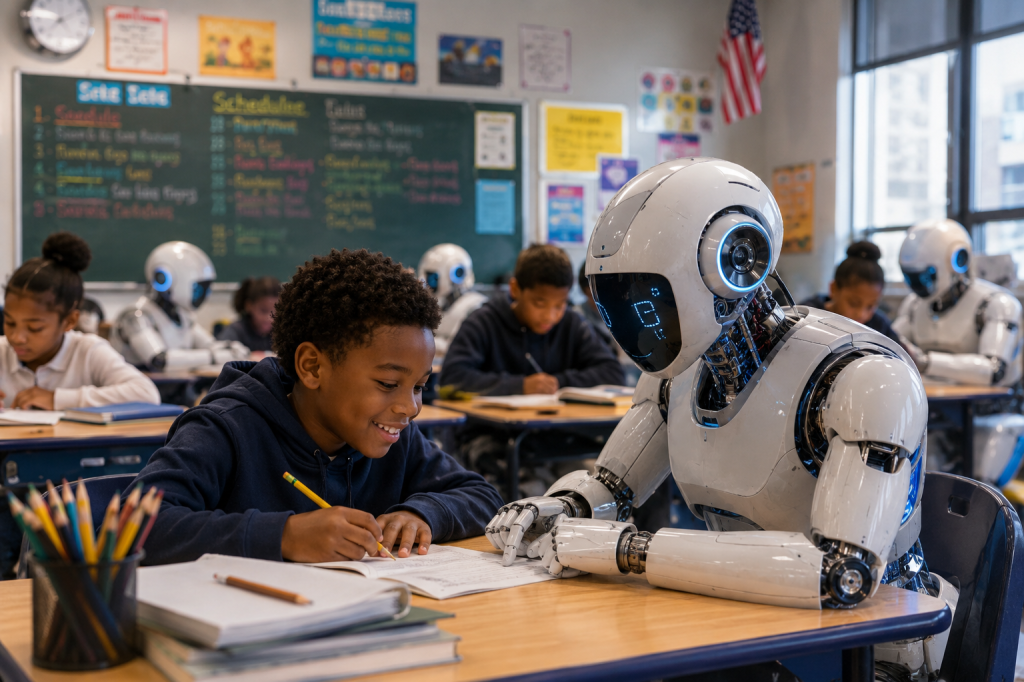
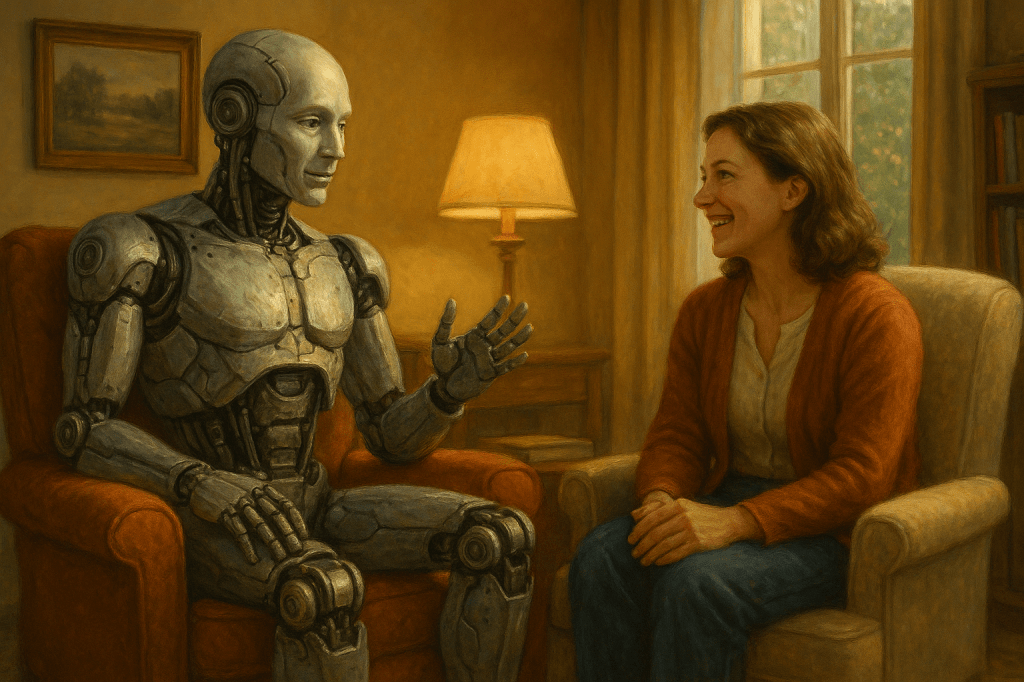
As these systems become integrated into education, work, research, and civic life, millions of people will increasingly use AI not merely as an information source but as a thinking partner. Students will use AI to explore competing interpretations of historical events. Scientists will use it to generate hypotheses and design experiments. Entrepreneurs will use it to examine alternative business models and future scenarios. Citizens will use it to investigate policy proposals, anticipate consequences, and consider competing viewpoints. This development raises a question that extends beyond artificial intelligence itself: What happens when conjecture becomes augmented?
The question matters because the generation of possibilities occupies a special place in human cognition. Knowledge is built upon it. Discovery depends upon it. Scientific revolutions begin with it. Every major innovation, invention, theory, design, or social reform begins not as knowledge but as a possibility. Before a proposition can be tested, it must first be imagined.
The first widespread encounter with machine-generated possibility arrived under an unfortunate label: hallucination. Large language models became known for producing fabricated citations, invented facts, fictional quotations, and plausible but unsupported claims. Researchers appropriately treated such outputs as reliability failures. From the standpoint of factual accuracy, they were failures. Yet the hallucination debate may have concealed a deeper development. For the first time, widely accessible machines were producing possibilities that extended beyond direct retrieval of existing information.
Most of these possibilities were wrong. Many were trivial. Some were absurd. Nevertheless, the phenomenon revealed something new. Machines were no longer functioning solely as retrieval systems. They were generating alternatives. The significance of hallucination may therefore lie less in its errors than in what those errors revealed.
This article explores that possibility through the concept of machine conjecture. Machine conjecture refers to the capacity of an intelligent system to generate, preserve, explore, evaluate, and refine possibilities that are not yet justified by available evidence. The concept does not deny the reality of hallucination or the importance of accuracy. Rather, it suggests that the emergence of AI-generated possibilities may require a broader framework than error correction alone. The ETC Journal essay that inspired this inquiry proposed that hallucination might be understood, under some conditions, as a form of extrapolation that could become more meaningful when connected to embodiment and feedback [1]. This article extends that suggestion into a broader theory of discovery.
The framework developed here introduces four related concepts: machine conjecture, conjectural reserve, embodied extrapolation, and conjectural literacy. Together, these concepts offer a way of understanding how possibility generation, critical evaluation, and knowledge creation may interact within future human-AI partnerships. The broader implications remain uncertain. The framework should therefore be regarded as exploratory rather than definitive. Its purpose is not to predict the future with confidence but to provide a vocabulary for thinking about emerging relationships among AI, discovery, education, and human cognition.
Nevertheless, one possibility deserves careful consideration. As generative and agentic AI increasingly augment human thought, the future of discovery may depend less on access to information than on our collective ability to cultivate, evaluate, and navigate possibility spaces. In such an environment, conjectural literacy–the ability to generate, preserve, explore, evaluate, and refine possibilities without prematurely accepting them as true or prematurely rejecting them as false–may become as important as information literacy once was.
The Hallucination Era
The emergence of large language models introduced a new challenge into public discussions of artificial intelligence. Unlike traditional information systems, which primarily retrieved and organized existing information, generative models routinely produced outputs that had never previously existed. These outputs ranged from useful summaries and creative narratives to fabricated references, invented quotations, and unsupported factual claims.
Researchers adopted the term “hallucination” to describe these failures. The label proved effective because it captured an important reality. The systems often produced content that appeared convincing despite lacking adequate grounding in evidence. Recent surveys define hallucination in large language models as fluent or coherent output that is factually incorrect, fabricated, or unsupported by external evidence [2]. A 2026 Nature article similarly begins from the premise that large language models sometimes generate confident plausible falsehoods, and it argues that common accuracy-based evaluation systems may even incentivize some forms of hallucination when models are rewarded for guessing rather than abstaining [3].
This reliability problem is real. A system that cannot distinguish fact from fabrication presents serious challenges in law, medicine, science, journalism, education, and public decision making. Hallucination also becomes more dangerous as systems become agentic. A chatbot that fabricates a citation misleads a reader. An agent that acts on a fabricated belief may affect budgets, experiments, purchases, schedules, safety decisions, or physical environments. Surveys of agentic AI therefore treat hallucination, evaluation, tool use, safety, and accountability as central design problems rather than minor inconveniences [4,5].
Yet the dominant framing of hallucination as defect may also restrict the questions we ask. If AI is understood primarily as a knowledge-retrieval system, unsupported generation appears only as failure. But if AI is also understood as a possibility-generating system, the issue becomes more complex. Discovery does not begin with verified propositions. It begins with possibilities that have not yet earned the status of knowledge.
This distinction does not make hallucination acceptable. A hallucination that presents itself as fact is still a failure of epistemic labeling. The problem is not that the model generates a possibility. The problem is that it often fails to represent the possibility as provisional. It speaks the language of knowledge while operating in the domain of conjecture. This is why hallucination is both dangerous and theoretically revealing.
The conventional response is to suppress unsupported generation through retrieval augmentation, verification, model calibration, abstention mechanisms, external tools, and improved evaluation. These approaches remain necessary. However, an exclusive focus on suppression risks producing systems that are more accurate but less exploratory. The more difficult challenge is to distinguish irresponsible fabrication from disciplined conjecture.
In other words, the question is not whether AI should hallucinate. It should not present unsupported claims as facts. The question is whether the generative capacity that produces hallucination, when uncontrolled, might also support hypothesis formation, alternative analysis, creative exploration, and discovery when properly bounded by uncertainty, evaluation, and feedback. This is the transition from hallucination to machine conjecture.
Discovery, Inquiry, and Conjecture
The philosophy of science provides a useful corrective to any view of intelligence that equates good thinking with accurate retrieval. Scientific discovery has never proceeded by retrieval alone. It requires the generation of possibilities that are not yet established.
Charles Sanders Peirce’s theory of abduction is central here. Abduction is often distinguished from deduction and induction. Deduction derives necessary consequences from premises. Induction generalizes from observations. Abduction introduces an explanatory possibility. The Stanford Encyclopedia of Philosophy describes abduction as one of the major forms of inference alongside deduction and induction, with the crucial difference that abduction is ampliative rather than truth-preserving in the deductive sense [9]. A classic Peircean formulation, discussed in a 1946 study of abduction, emphasizes that abduction is the logical operation that introduces new ideas; deduction merely unfolds consequences and induction tests or estimates values [10].
This matters for AI because abduction occupies the very space that hallucination contaminates and machine conjecture might discipline. It is the space in which a system says, in effect, “Here is a possible explanation.” The statement is not yet knowledge. It is a candidate for inquiry. The error of hallucination is not that it introduces a possible explanation. The error is that it often omits the epistemic label: possible.
Karl Popper’s account of scientific knowledge reinforces the same point from another direction. Popper’s Conjectures and Refutations frames scientific progress as a cycle of bold proposals and critical testing [11]. Scientific theories are not final certainties; they are conjectures exposed to criticism. Theories improve when errors are found, not when speculation is avoided. Popper’s view does not glorify guesswork. It insists that conjectures must be exposed to rigorous attempts at refutation. But it also insists that without conjectures there is nothing to test.
John Dewey’s theory of reflective thought adds an educational dimension. Dewey described reflective thought as careful consideration of a belief in light of the grounds that support it and the consequences to which it leads [12]. Dewey’s model of inquiry begins in uncertainty or perplexity and moves through suggestion, problem definition, hypothesis formation, reasoning, and testing. Recent work revisiting Dewey emphasizes his concern with obstacles that lead to premature conclusions and his continuing relevance for education and cognition [13].
Peirce, Popper, and Dewey differ in vocabulary and philosophical commitments, but they converge on a practical insight: discovery begins before evidence is complete. The intelligent act is not merely to know but to generate possibilities worthy of investigation. Evidence determines which possibilities survive. Inquiry is the disciplined movement from uncertainty toward warranted belief.
This tradition helps clarify the conceptual mistake built into many discussions of hallucination. If all unsupported generation is treated as failure, then hypothesis formation itself becomes suspect. But if unsupported generation is permitted to occupy a provisional category, then it can become the beginning of inquiry. The task is not to collapse conjecture into fact. The task is to preserve conjecture as conjecture long enough for evaluation.
This is why the paper introduces machine conjecture rather than machine creativity or machine imagination. Creativity and imagination are useful terms, but they often emphasize novelty, expression, or recombination. Conjecture emphasizes a possibility oriented toward inquiry. It is not merely an unusual output. It is a proposition that may be explored, tested, revised, or rejected. In an AI context, the concept helps separate possibility generation from truth assertion.
Creativity, Fluency, and the Generation of Alternatives
Discovery also requires the creative generation of alternatives. In educational discussions, creativity and critical thinking are often separated: creativity generates ideas; critical thinking evaluates them. The separation is understandable, but discovery depends on their interaction.
Creativity research offers useful language for the first half of the discovery cycle. The Torrance Tests of Creative Thinking have long assessed dimensions such as fluency, originality, elaboration, abstractness of titles, and resistance to premature closure [14]. Fluency is especially relevant because it refers to the production of many ideas or alternative solutions to a problem [15]. Flexibility refers to the capacity to shift categories or perspectives. Originality concerns unusualness or novelty. Elaboration concerns development. Resistance to premature closure is particularly important for the present argument because it names the capacity to keep a form, idea, or interpretation open long enough for fuller development.
These concepts help anchor the article’s notion of generative openness. Generative openness is not random verbal excess. It is the first phase of discovery, in which a wide range of candidate explanations, analogies, scenarios, designs, and hypotheses is allowed to appear before strict evaluation begins. It is a disciplined tolerance for multiplicity.
This distinction is important because creativity without evaluation can become fantasy, but evaluation without creativity produces stagnation. A classroom that teaches students only to critique ideas may produce careful thinkers who lack alternatives to evaluate. A research system that rewards only incremental correctness may discourage the bold conjectures that open new fields. A workplace that punishes every failed idea may quietly suppress innovation. In all these cases, premature closure becomes a cognitive and institutional danger.
Generative AI enters this landscape as a powerful amplifier of fluency. It can produce lists of alternatives, analogies, explanations, counterarguments, scenarios, drafts, and problem framings in seconds. That capability is easily trivialized as brainstorming automation, but it has deeper significance. If used responsibly, AI can reduce the cost of exploring possibility spaces. It can help individuals and groups move beyond the first familiar answer. It can generate contrasts, edge cases, and perspectives that stimulate further human thinking.
This is not an argument for accepting AI suggestions uncritically. It is an argument for recognizing that the generation of alternatives is a genuine component of higher-order thinking. Current educational frameworks often emphasize analysis and evaluation under the banner of critical thinking. The AI era may reveal that these skills require a complementary capacity: the fluency to produce meaningful possibilities in the first place.
The machine-conjecture framework therefore treats possibility generation as a serious cognitive function. It does not romanticize every output. Most AI-generated alternatives will be conventional, incomplete, or wrong. But a discovery system must generate alternatives before it can evaluate them. The important question becomes how to preserve enough openness to avoid premature closure while still maintaining the evaluative discipline needed to avoid error.
Critical Thinking, Evaluation, and Closure
If creativity research anchors generative openness, critical-thinking scholarship anchors evaluation and closure. The point is not to replace critical thinking with conjectural thinking. It is to place critical thinking within a larger discovery cycle.
Peter Facione’s Delphi Report identifies interpretation, analysis, evaluation, inference, explanation, and self-regulation as core critical-thinking skills [16]. Robert Ennis famously defines critical thinking as reasonable reflective thinking focused on deciding what to believe or do [17]. Richard Paul and Linda Elder emphasize the need to identify the elements of thought and assess them against intellectual standards such as clarity, accuracy, precision, relevance, depth, breadth, logic, significance, and fairness [18]. These frameworks remain indispensable in the AI era.
Indeed, AI makes them more important. When generative systems can produce fluent claims at scale, the ability to analyze evidence, evaluate assumptions, identify gaps, and regulate one’s own thinking becomes essential. Hallucination is dangerous precisely because fluency can masquerade as warrant. The more persuasive a system sounds, the more important it becomes to ask whether its claims are grounded.
At the same time, critical thinking can be misunderstood if it is reduced to skepticism or fault-finding. Discovery requires not only deciding what to believe or do but also generating candidate beliefs and actions worthy of consideration. Contemporary research on divergent and convergent thinking helps bridge this gap. A 2025 study links divergent thinking with convergent evaluation and highlights creativity as involving both the production of unique, diverse ideas and the evaluation of those ideas [19]. A recent literature review similarly describes creative thinking as involving idea generation followed by selection and development, while critical thinking assesses strength and appropriateness through questioning and analytic reasoning [20].
The machine-conjecture framework builds on this relationship. Generative openness corresponds to fluency, flexibility, inventiveness, and the generation of alternatives. Conjectural reserve corresponds to open-mindedness, ambiguity tolerance, and delayed closure. Embodied evaluation corresponds to analysis, evidence gathering, experimentation, and verification. Disciplined closure corresponds to judgment, belief revision, and knowledge integration.
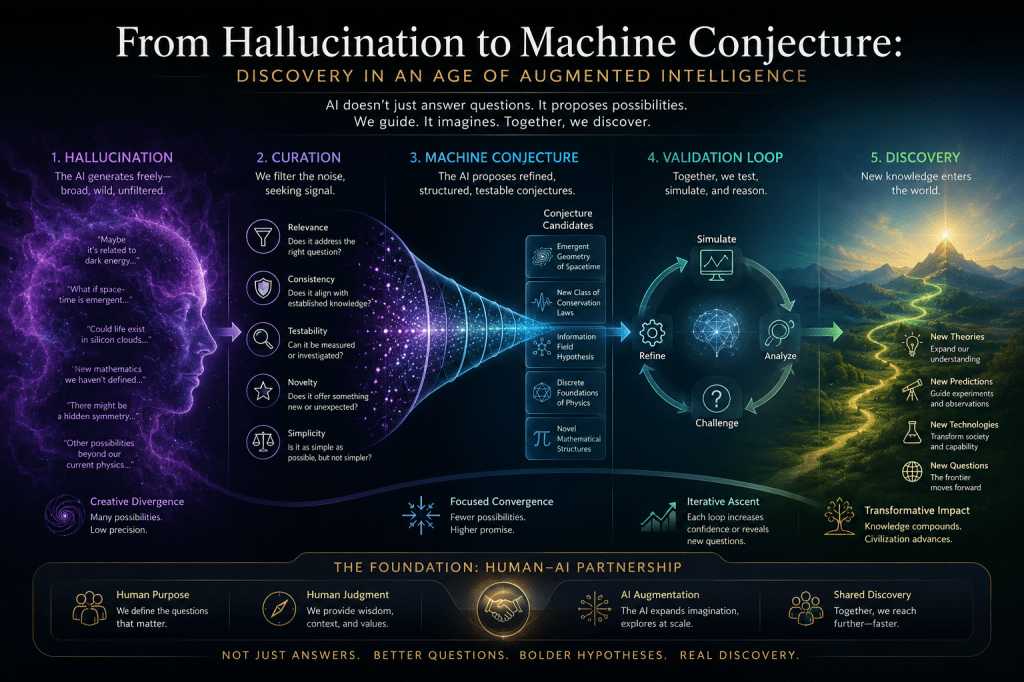
This yields a discovery cycle rather than a simple opposition between creativity and criticism. Possibilities must be generated. Some must be preserved. Some must be explored. Some must be tested. Some must be rejected. A few may become knowledge. The goal is not endless openness or immediate closure. It is intelligent movement between them.
This distinction is especially important in education. Students often encounter critical thinking as evaluation after the fact: analyze this argument, assess this source, critique this claim. Those are valuable tasks. But in an age when AI can generate arguments, sources, scenarios, and claims, students also need to learn how to manage the upstream stage: how to ask for alternatives, how to compare problem framings, how to preserve unusual but potentially valuable possibilities, and how to avoid accepting or rejecting AI-generated conjectures too quickly.
Critical thinking remains the safeguard against hallucination. But conjectural literacy expands the educational objective. It asks students not only to decide what to believe but to participate responsibly in the process by which possibilities become candidates for belief.
Machine Conjecture
Machine conjecture is the central concept of this article. It names an emerging capability in which artificial systems generate possibilities that are not yet justified by available evidence and then place those possibilities into processes of preservation, exploration, evaluation, and refinement.
The concept is intentionally broader than hallucination. A hallucination is an unsupported output presented as if it were reliable. A machine conjecture is an unsupported or incompletely supported possibility explicitly treated as provisional. The distinction lies not only in accuracy but in epistemic status. Hallucination says, “This is so.” Conjecture says, “This may be so; it is worth examining.”
This difference is small in wording but large in consequence. It transforms the goal from eliminating all unsupported generation to managing possibility responsibly. It allows systems to generate alternatives without pretending those alternatives are facts. It also allows users to benefit from AI’s generative power without surrendering judgment.
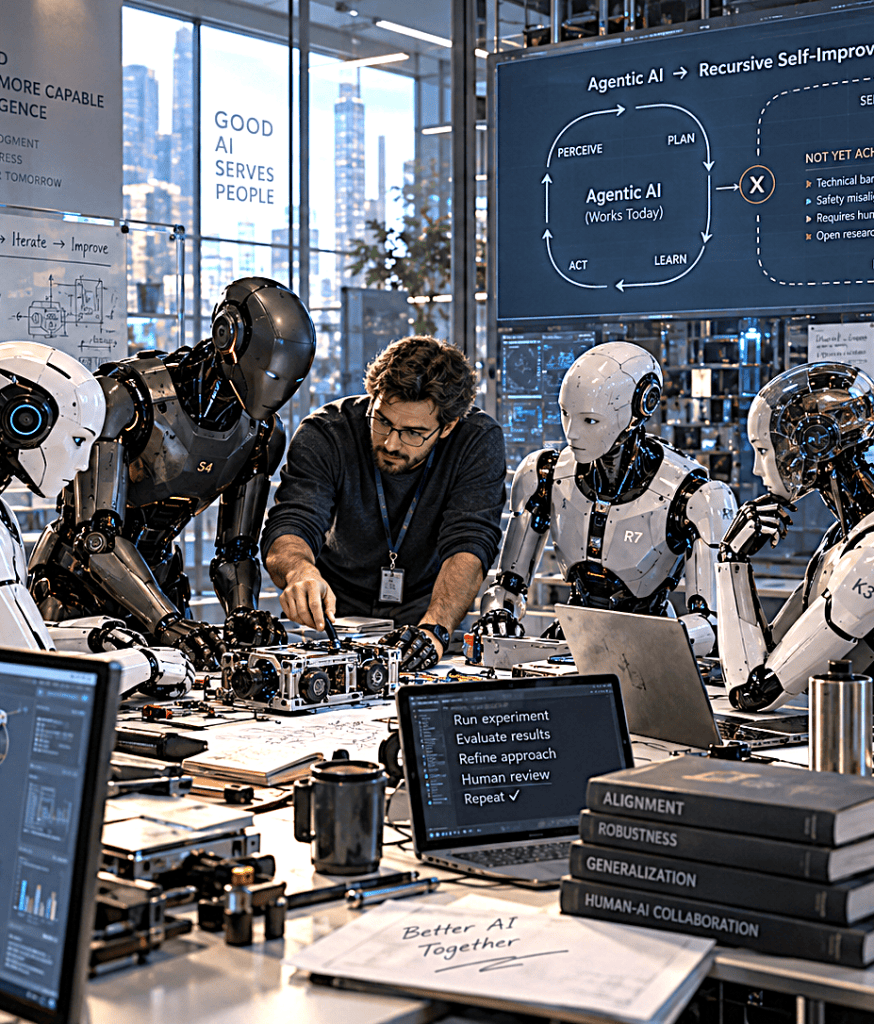
Agentic AI makes this distinction increasingly urgent. Recent surveys describe agentic systems as architectures that combine perception, planning, reasoning, memory, action, tool use, collaboration, and evaluation [4,5]. These systems are not merely responding to isolated prompts. They are beginning to operate across workflows and environments. They can gather information, use tools, take intermediate steps, and coordinate with other agents. In such systems, conjecture is not a luxury. Planning itself depends on conjecture. The agent must imagine future states, predict consequences, compare strategies, and select actions under uncertainty.
When such conjectures are mislabeled as knowledge, hallucination becomes dangerous. When they are represented as provisional, they become manageable. The future of agentic AI may therefore depend not only on more accurate models but on better conjecture-management systems: mechanisms for generating candidate possibilities, tagging uncertainty, tracking evidence, preserving alternatives, designing tests, revising beliefs, and communicating epistemic status to human partners.
This also suggests a different way to evaluate advanced AI. Accuracy remains essential, but discovery-oriented systems should also be judged by their capacity to generate useful conjectures, avoid premature closure, represent uncertainty, seek disconfirming evidence, revise appropriately, and learn from feedback. A system that never generates unsupported possibilities may be safe but intellectually conservative. A system that generates unlimited possibilities without evaluation is chaotic. Intelligence emerges in the management of the transition.
The framework should not be interpreted as a defense of hallucination. It is a critique of hallucination’s epistemic carelessness. The point is that possibility generation is valuable only when joined to labeling, preservation, exploration, and testing. Machine conjecture is not hallucination renamed. It is hallucination disciplined by inquiry.
Conjectural Reserve
The key mechanism in this framework is conjectural reserve. A conjectural reserve is a protected cognitive space in which possibilities can be entertained without being prematurely accepted as true or prematurely rejected as false. It separates consideration from endorsement.
Human beings maintain conjectural reserves constantly. Scientists keep hypotheses in notebooks and research programs. Writers preserve fragments, outlines, and drafts. Inventors build prototypes. Designers sketch variations. Teachers encourage students to brainstorm before selecting an approach. Children engage in pretend play. In each case, a possibility is granted temporary existence without being treated as settled knowledge.
The conjectural reserve performs several functions. First, it protects novelty from premature dismissal. Many transformative ideas initially appear implausible because they conflict with accepted frameworks. Second, it allows multiple competing possibilities to coexist. A problem may have several plausible explanations before evidence favors one. Third, it preserves ideas whose value may depend on future contexts. Fourth, it supports comparison, combination, and refinement. Possibilities that are weak in isolation may become stronger through synthesis.
The reserve also protects against gullibility. To preserve a conjecture is not to believe it. This distinction is crucial. The danger of hallucination is that unsupported claims are presented with the confidence of knowledge. The function of a conjectural reserve is to prevent that collapse. It creates a category between rejection and belief: worth considering.
Educationally, this category is underdeveloped. Students are often asked to decide whether a claim is true or false, strong or weak, credible or not credible. These judgments matter, but inquiry also requires the ability to hold a possibility in suspension. A student may say, “I do not know whether this explanation is correct, but it is interesting enough to explore.” That statement reflects a mature relationship to uncertainty.
AI systems may require analogous capacities. A future discovery-oriented agent should not merely output a single answer. It should be able to maintain a portfolio of conjectures, represent degrees of support, identify evidence gaps, propose tests, update rankings, and keep low-probability but high-potential possibilities available when appropriate. In other words, it should operate a conjectural reserve.
The idea also helps manage the relation between openness and closure. Without a reserve, systems may close too quickly by selecting the most probable answer. With an undisciplined reserve, systems may accumulate endless possibilities without action. A mature reserve must therefore be dynamic. It must admit possibilities, organize them, prioritize them, expose them to evaluation, and discard or revise them when warranted.
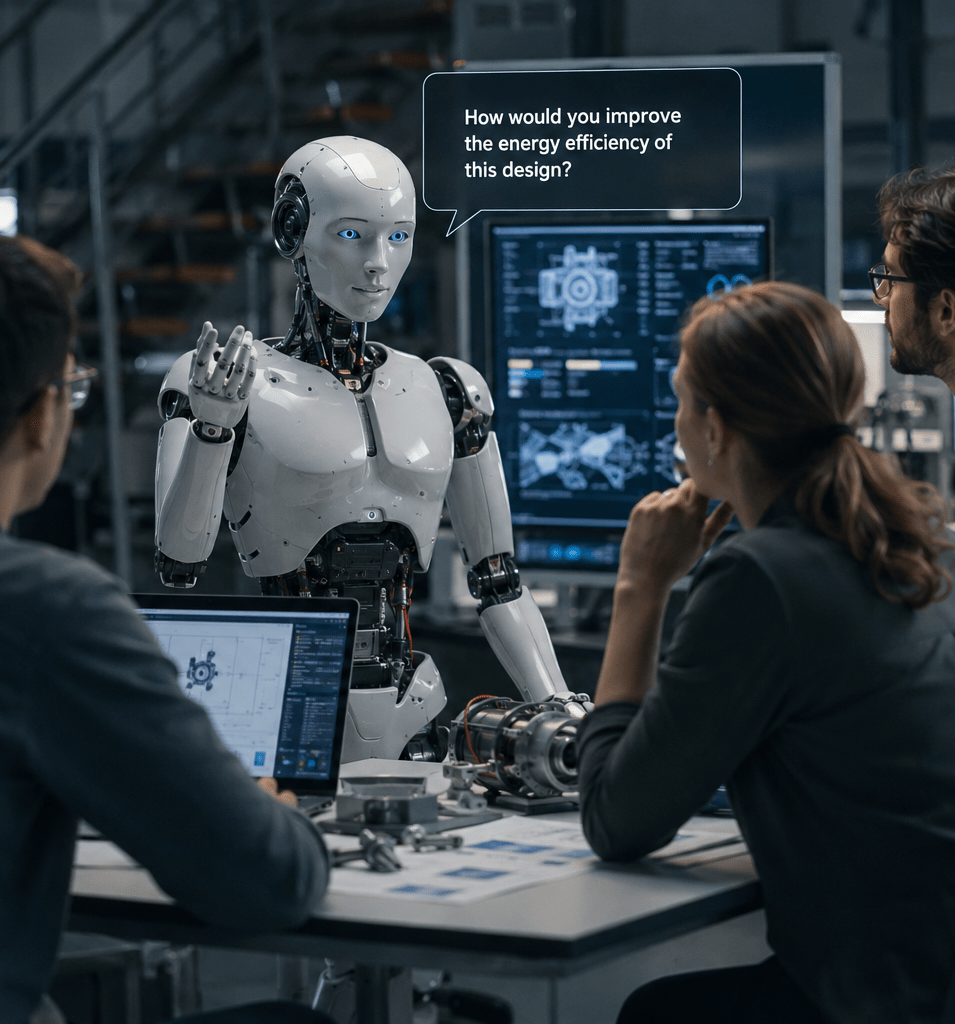
Conjectural reserve may be especially important in human-AI collaboration. A human user can ask an AI system to generate unconventional explanations, but the user needs a way to store, compare, and revisit them without being misled. The reserve becomes a shared workspace for possibilities. It is neither a database of facts nor a stream of hallucinations. It is an inquiry space.
Embodied Extrapolation
If conjectural reserve protects possibilities from premature closure, embodied extrapolation connects them to reality. The term embodied extrapolation refers to the process by which conjectures become testable through interaction with environments, experiments, tools, bodies, and feedback.
The idea is grounded in broader work on embodied and 4E cognition. The 4E framework understands cognition as embodied, embedded, enactive, and extended. A 2025 study of human-AI interaction through 4E cognition describes cognition as shaped by bodily capacities, situated in social and material environments, arising through active engagement, and often extended through tools and technologies [7]. Work integrating 4E cognition with science and technology studies similarly emphasizes cognition’s entanglement with socio-material practices and AI technology [8].
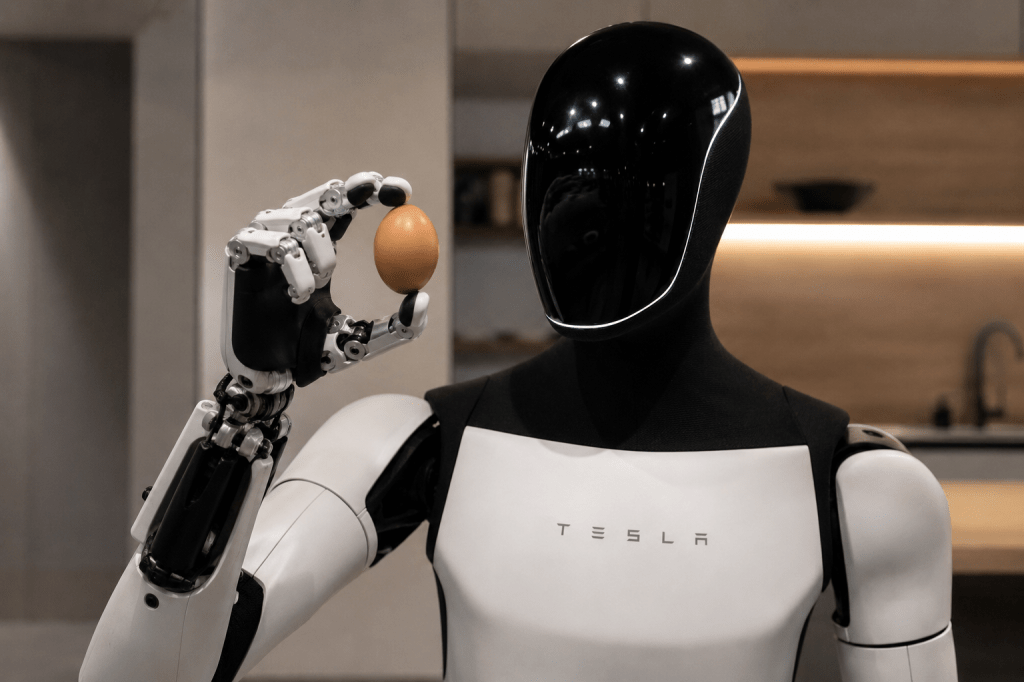
This perspective matters because current large language models are largely disembodied. They can generate possibilities, but they have limited direct access to the physical, social, and material feedback loops through which human beings test possibilities. They can describe an experiment, but they usually do not perform it. They can propose a plan, but they may not observe consequences. They can infer from text, but they lack the full corrective pressure of lived interaction.
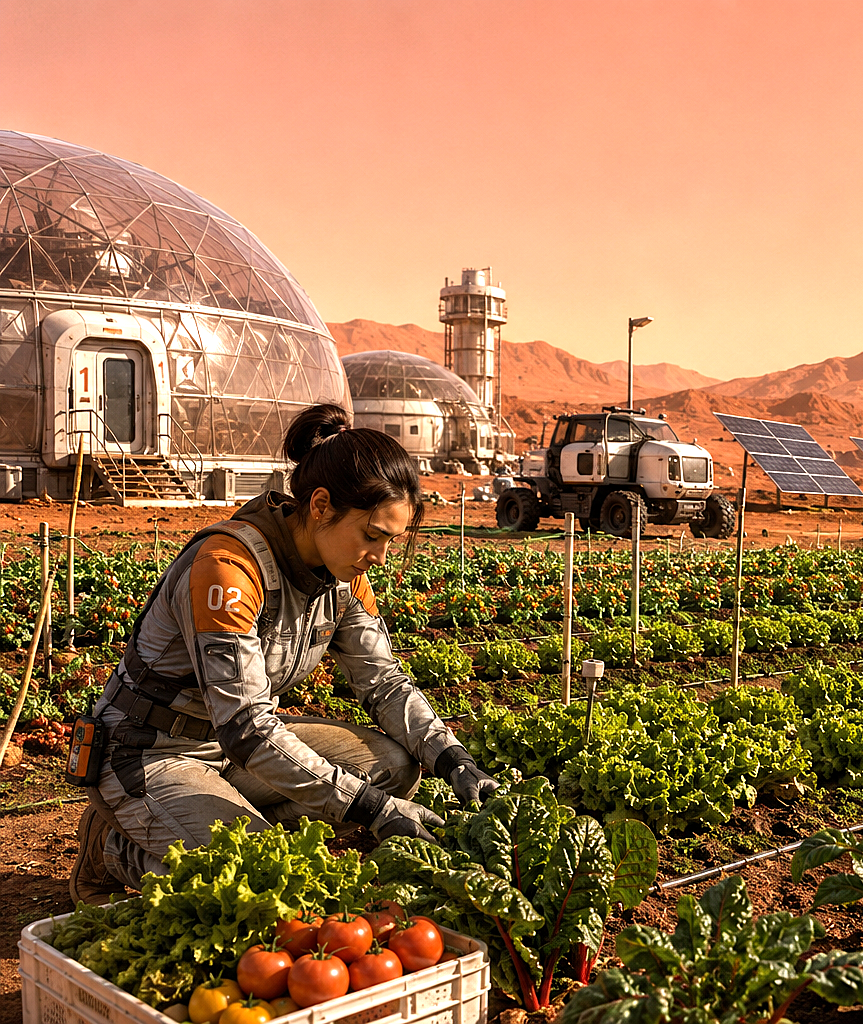
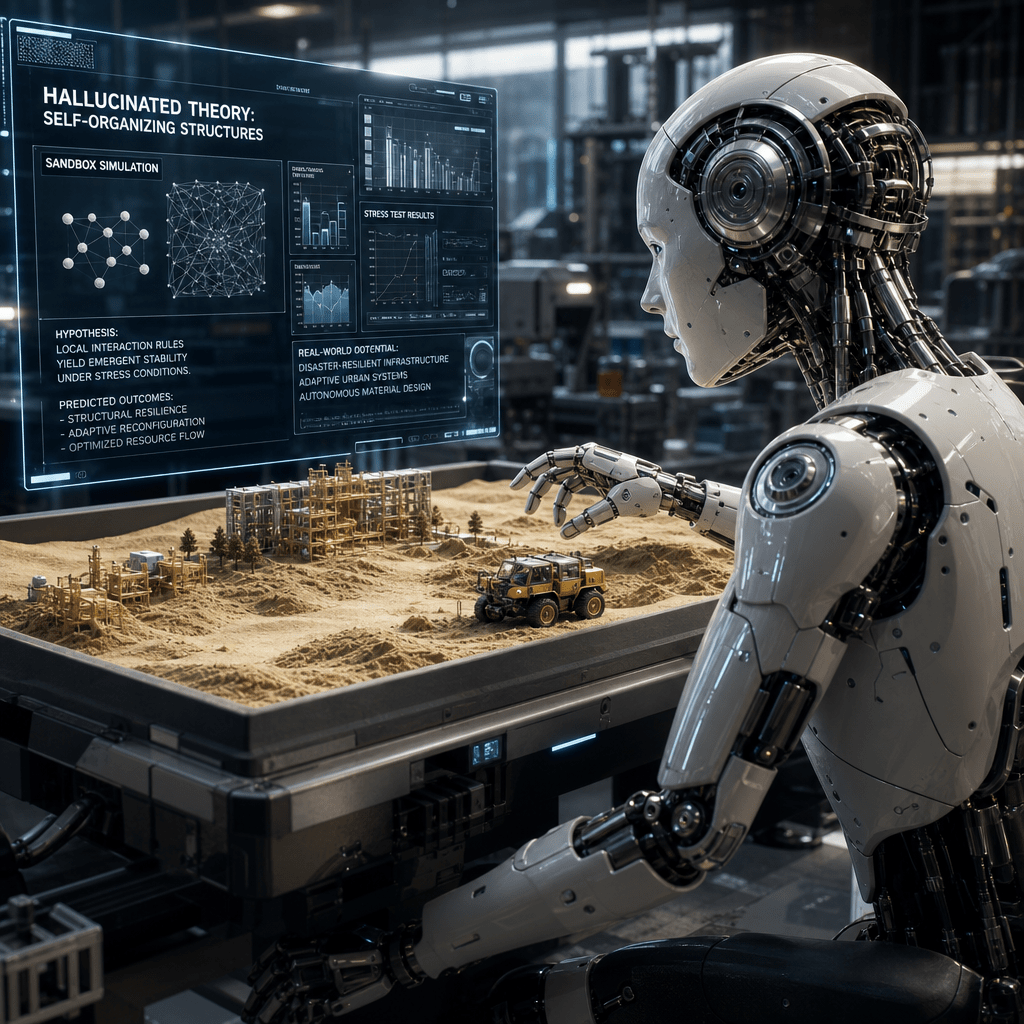
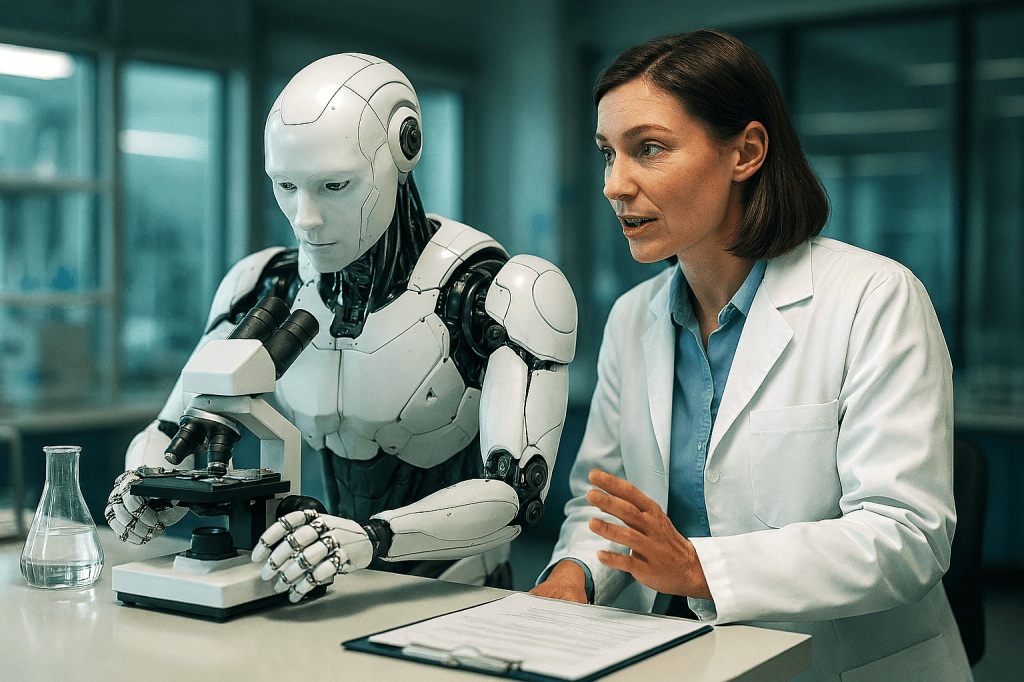
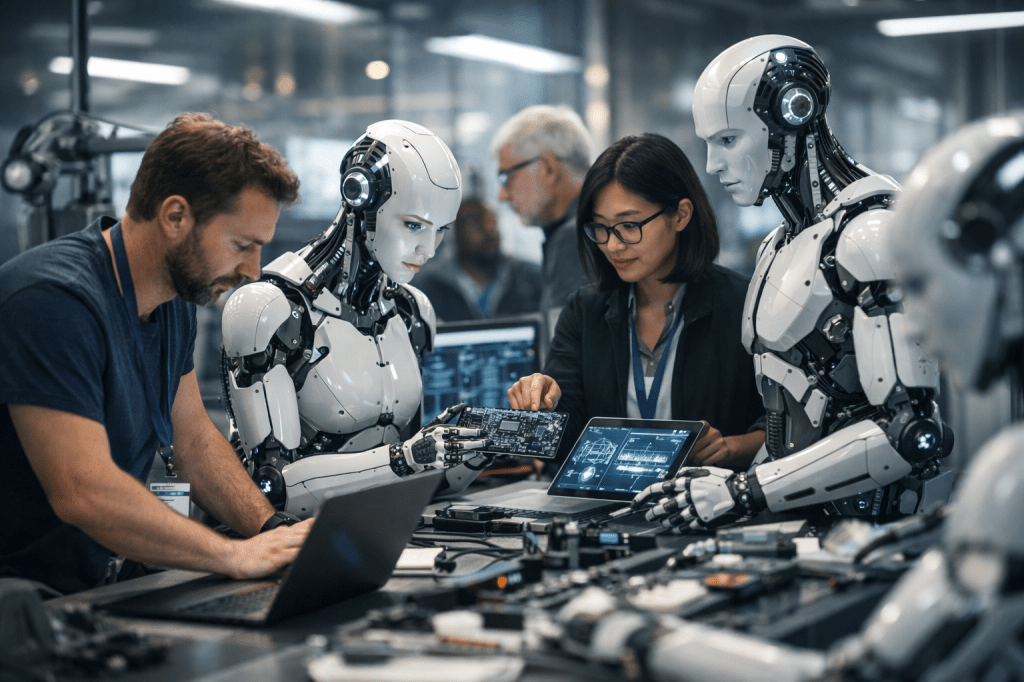
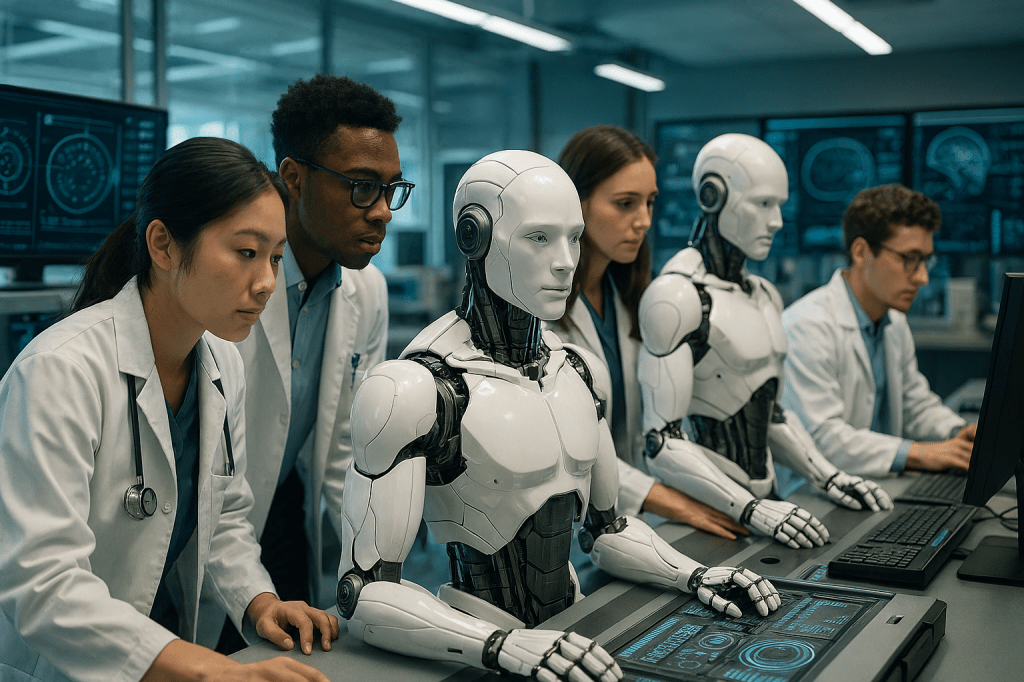
Embodied science research points toward a possible next stage. A 2026 paper on embodied science argues that scientific discovery is not an isolated prediction task but a physical, long-horizon process governed by experimental cycles. It proposes a Perception-Language-Action-Discovery framework in which embodied agents perceive experimental environments, reason over scientific knowledge, execute physical interventions, and internalize outcomes for further exploration [6]. This is exactly the movement from conjecture to embodied extrapolation.
In such a system, a generated possibility does not remain a verbal claim. It becomes a prediction, a design, an intervention, or an experiment. The environment responds. Feedback changes the system’s beliefs. The conjecture is revised, rejected, or strengthened. This closes the loop between imagination and reality.
The ETC Journal article that prompted this inquiry anticipated this structure when it suggested that hallucination could become hypothesis, hypothesis could become experiment, experiment could become feedback, and feedback could become learning [1]. That progression is powerful because it shows why hallucination is inadequate by itself. Unsupported generation is not discovery. Unsupported generation connected to inquiry may become the first step in discovery.
Embodied extrapolation also clarifies why agentic AI raises both promise and risk. As AI systems gain tools and agency, they may become better able to test conjectures. But they may also act on poorly evaluated conjectures. The same feedback loop that enables discovery can amplify error if the system lacks safeguards. For this reason, embodied extrapolation must be joined to uncertainty representation, human oversight where appropriate, experimental constraints, and ethical governance.
The destination, then, is not an AI system that freely hallucinates and acts. The destination is a system that freely generates possibilities, labels them as conjectures, preserves them in an organized reserve, designs appropriate tests, interacts with environments, learns from feedback, and revises its understanding. That is the developmental pathway from hallucination to machine conjecture to embodied extrapolation.
Conjectural Literacy
The human complement to machine conjecture is conjectural literacy. Conjectural literacy is the ability to generate, preserve, explore, evaluate, and refine possibilities without prematurely accepting them as true or prematurely rejecting them as false.
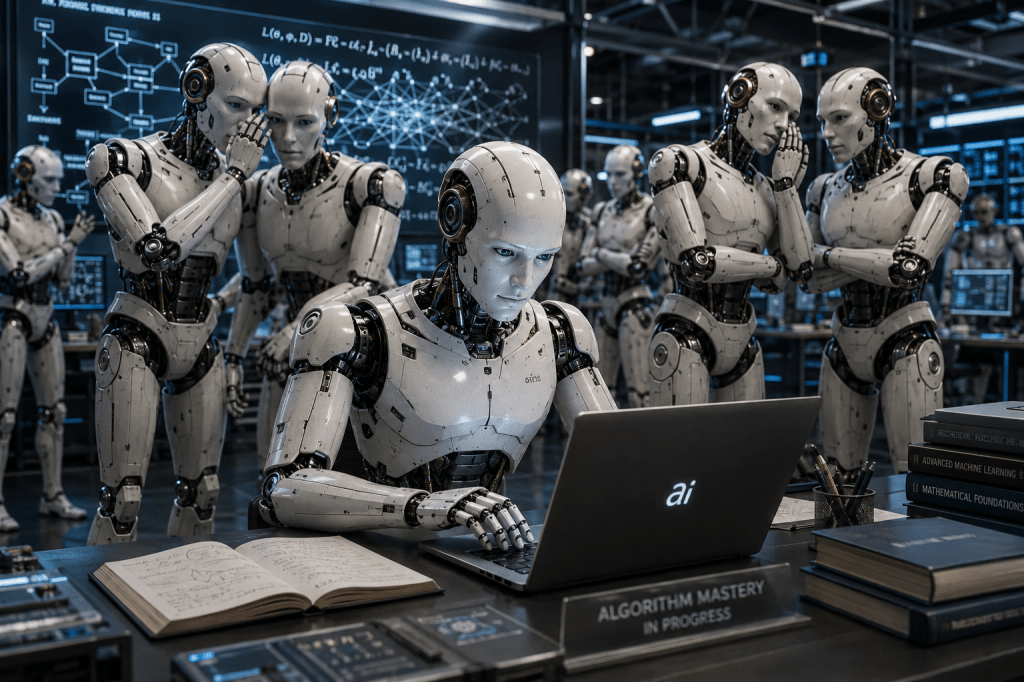
This definition integrates creativity and critical thinking. The first verbs–generate, preserve, explore–belong to the divergent side of cognition: fluency, flexibility, inventiveness, ambiguity tolerance, and delayed closure. The later verbs–evaluate and refine–belong to the convergent side: analysis, evidence, comparison, judgment, and revision. Conjectural literacy does not replace information literacy, media literacy, digital literacy, AI literacy, or critical thinking. It extends them into the domain of possibility management.
This extension is timely because AI literacy has become a major educational concern. The Digital Education Council’s 2025 AI Literacy Framework takes a human-centered approach and emphasizes human skills such as critical thinking, creativity, and emotional intelligence [21]. UNESCO’s AI competency framework for teachers emphasizes a human-centered mindset, ethics, AI foundations, pedagogy, and professional development [22]. Brookings’ 2026 work on AI and students frames the issue as one involving promise, risk, student agency, deep learning, and well-being across learning contexts [23]. These frameworks rightly focus on responsible engagement with AI.
Conjectural literacy adds a specific cognitive focus. It asks what students, workers, and citizens need when AI makes possibility generation abundant. If a system can instantly produce ten explanations, twenty solutions, five counterarguments, three simulations, and a dozen future scenarios, the scarce skill is no longer access to ideas. The scarce skill is navigating them.
The need is already visible in research on AI and critical thinking. A 2025 Microsoft Research study of knowledge workers found that the rise of generative AI in knowledge workflows raises questions about critical-thinking skills and practices [24]. Studies of students using generative AI for digital content creation emphasize modification and refinement of AI outputs rather than direct submission [25]. These findings align with the conjectural-literacy framework. The goal is not passive consumption of AI output. The goal is active participation in a cycle of generation, evaluation, and revision.
Conjectural literacy would require students to learn several habits. They would need to ask AI systems for alternatives rather than single answers. They would need to distinguish facts from possibilities. They would need to preserve unusual suggestions long enough for examination without accepting them prematurely. They would need to evaluate evidence, test assumptions, compare explanations, and revise beliefs. They would need to know when to close inquiry and when to keep it open.
This literacy is not only for advanced students. Younger learners can practice it when they generate multiple explanations for a phenomenon, compare story possibilities, test design ideas, or ask what evidence would support a claim. Workers can practice it when they use AI to explore process improvements, policy alternatives, customer scenarios, or product designs. Citizens can practice it when they examine competing interpretations of public problems and ask which conjectures are evidence-based, which are speculative, and which are misleading.
The educational challenge is to prevent AI from becoming a shortcut around thinking while using it as an infrastructure for richer thinking. If students ask AI for answers and submit them, cognition narrows. If students use AI to generate possibility spaces and then evaluate, revise, and justify their conclusions, cognition may deepen. The difference lies in pedagogy.
In this sense, conjectural literacy may become a central educational response to augmented intelligence. Information literacy taught learners how to locate and evaluate information. AI literacy teaches them how to understand and use intelligent systems responsibly. Conjectural literacy teaches them how to participate in discovery with such systems.
Implications for Education, Work, and Civic Life
The implications of machine conjecture should be stated carefully. The core thesis of this article concerns discovery, conjecture, and literacy. Broader claims about society should be treated as possibilities rather than conclusions. The farther outward we move from the central framework, the more tentative our language should become.
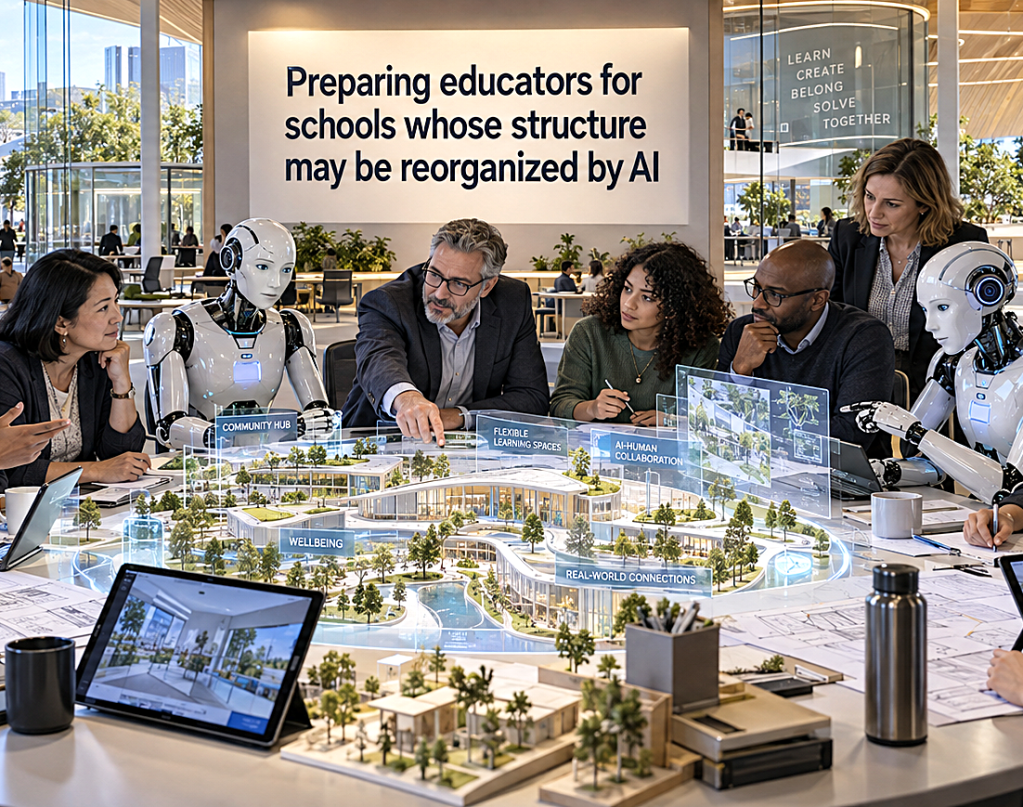
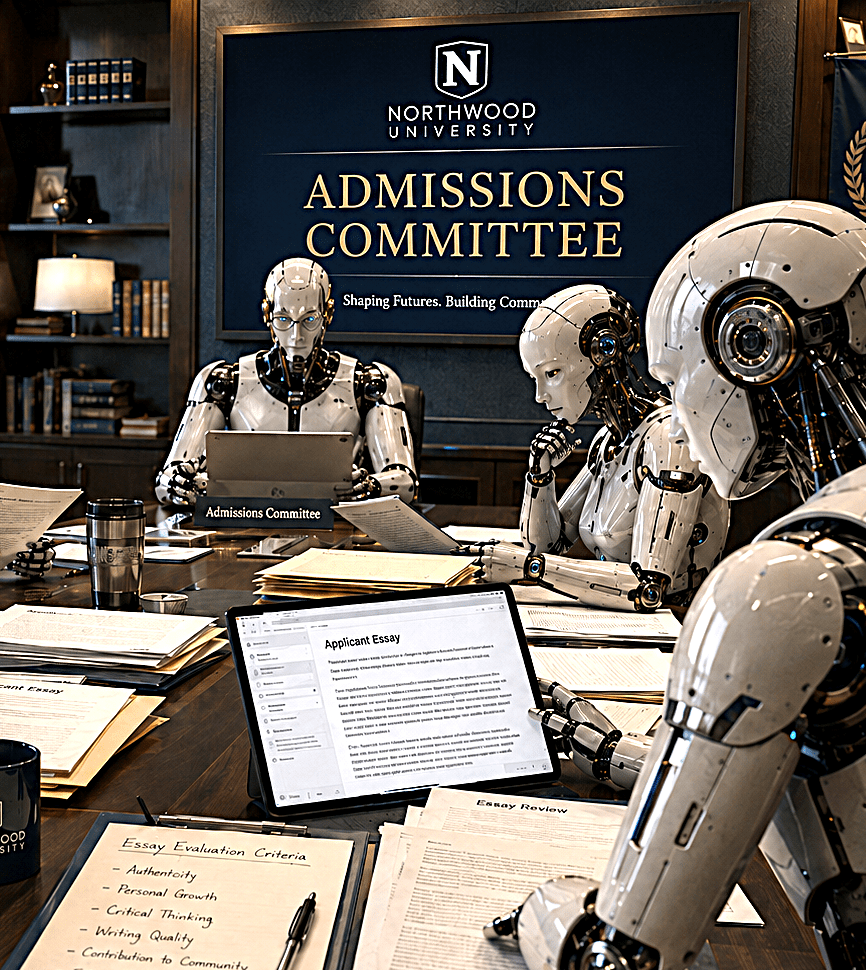
With that caution, several implications are worth considering. First, education may need to place greater emphasis on possibility management. For generations, schooling has emphasized acquisition, retention, explanation, and analysis. These remain essential. But AI increasingly augments retrieval, summarization, explanation, and even some forms of analysis. As a result, the distinctively human educational task may shift toward asking better questions, generating alternatives, preserving promising possibilities, evaluating evidence, and refining judgment.
Second, creativity and critical thinking may need to be reunited in curriculum design. In many schools and colleges, creativity is treated as expressive or optional, while critical thinking is treated as analytical and rigorous. The machine-conjecture framework suggests that discovery requires both. Fluency without analysis can become fantasy. Analysis without fluency can become stagnation. Students should learn to move between generative openness and disciplined closure.
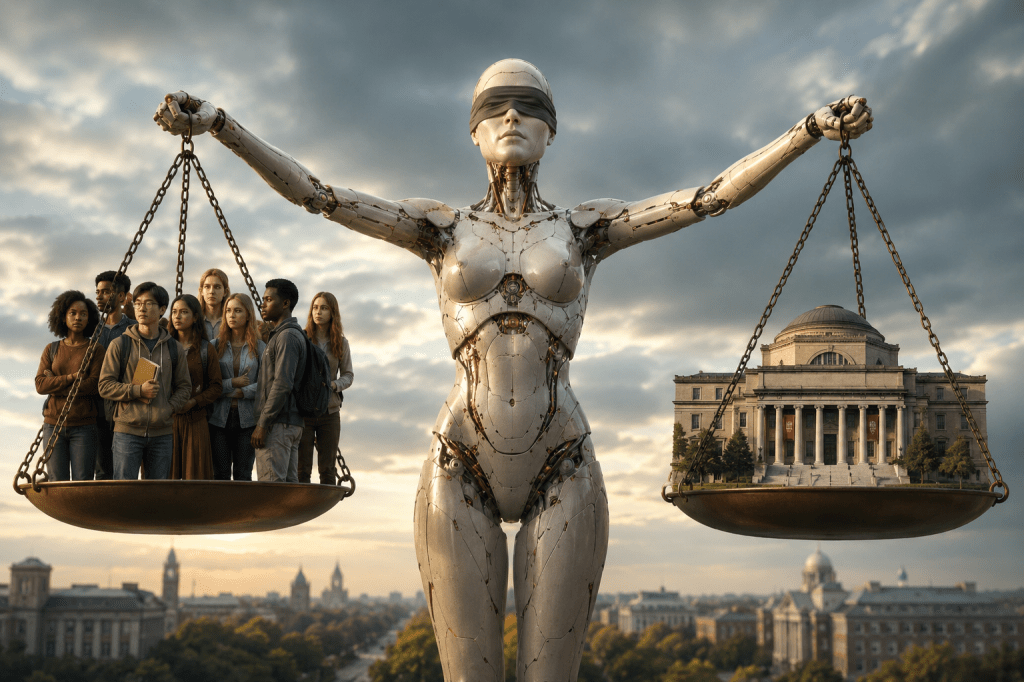
Third, AI may lower the cost of exploratory thinking. Historically, advanced conjectural activity was concentrated in research universities, laboratories, design firms, think tanks, and specialized professions. Generative and agentic AI may enable larger numbers of people to identify problems, generate alternatives, investigate possibilities, and develop potential solutions. This possibility is not guaranteed, and it could be undermined by inequitable access, poor pedagogy, misinformation, overreliance, or commercial manipulation. But it is significant enough to warrant attention.
Fourth, workplaces may increasingly value conjectural collaboration. Knowledge workers already use generative AI to draft, brainstorm, analyze, and plan. As agentic systems become more capable, the worker’s role may shift from producing every idea to orchestrating cycles of possibility generation and evaluation. The most valuable employees may not be those who merely accept AI output but those who can shape inquiry: define problems, elicit alternatives, identify weak assumptions, preserve promising anomalies, and guide refinement.
Fifth, civic life may require conjectural discipline. Public discourse is already saturated with claims, narratives, predictions, and counterclaims. AI can amplify misinformation, but it can also help citizens compare policy alternatives, identify assumptions, and explore consequences. The difference again depends on literacy. A conjecturally literate citizen does not treat every AI-generated scenario as truth, nor dismiss every unfamiliar possibility as nonsense. The citizen asks: What kind of claim is this? What evidence would support it? What alternatives exist? What assumptions does it depend on? What would change my mind?
These implications are offered as conjectures rather than predictions. They follow from the framework, but they require future research, institutional experimentation, and empirical validation. The most important contribution of generative and agentic AI may not be that they help us access knowledge more efficiently. It may be that they help us engage more systematically, more collaboratively, and more democratically in the process by which new knowledge is created. That possibility is promising, but it is not automatic. It depends on whether societies develop the educational, ethical, and institutional capacities needed to use AI as a partner in inquiry rather than a substitute for thought.
Limitations and Open Questions
The framework presented here should itself be regarded as a conjectural exercise. The concepts of machine conjecture, conjectural reserve, embodied extrapolation, and conjectural literacy are offered not as settled conclusions but as exploratory constructs intended to illuminate emerging relationships among AI, discovery, education, and human cognition.
Several limitations follow. First, not all hallucinations are meaningful precursors to conjecture. Many are simply errors produced by statistical patterns, sparse data, model miscalibration, or evaluation incentives. The framework does not claim that hallucinations are hidden insights. It claims only that the broader capacity to generate possibilities, when properly labeled and evaluated, may be important for discovery.
Second, current AI systems do not understand, intend, or inquire in the human sense. They generate outputs through computational processes that differ from human embodied, emotional, social, and biological cognition. Similarities in function should not be mistaken for identity of mechanism. Machine conjecture is therefore a functional and epistemic concept, not a claim that machines possess human-like imagination.
Third, embodied extrapolation raises safety and governance concerns. Systems that act on conjectures can produce harm if their conjectures are poorly grounded or their experiments poorly constrained. The movement from language generation to action increases the need for evaluation, monitoring, accountability, and human judgment.
Fourth, conjectural literacy may be difficult to teach and assess. Existing educational systems are often better at measuring recall, procedural competence, and finished products than at measuring the quality of possibility generation, uncertainty management, and belief revision. Developing curricula and assessments for conjectural literacy would require sustained work.
Fifth, the democratization of discovery is not guaranteed. AI may broaden participation, but it may also deepen inequalities if access, training, and institutional support remain uneven. It may amplify powerful organizations more than individuals. It may produce dependence rather than empowerment. It may flood public life with low-quality conjectures rather than disciplined inquiry. These risks should be treated seriously.
Finally, the framework needs empirical development. Researchers could investigate whether AI-assisted conjecture generation improves problem solving, creativity, scientific reasoning, writing, policy analysis, or civic deliberation. They could study how students learn to maintain conjectural reserves, how experts use AI to manage hypotheses, and how embodied agents revise conjectures through feedback. Such research would help determine which parts of the framework remain useful and which require revision.
In keeping with the paper’s own logic, these limitations should not close inquiry prematurely. They should define the next phase of inquiry.
Conclusion: From Access to Possibility
The history of artificial intelligence may eventually be understood as a progression through overlapping eras. The era of retrieval emphasized access to existing knowledge. The era of generation emphasized the production of novel outputs. The emerging era of conjecture may emphasize the management of possibilities.
In this framework, hallucination is not the destination. It is the historical starting point. It revealed, in flawed form, that machines could generate possibilities beyond direct retrieval. The challenge is not to celebrate hallucination or to tolerate fabricated claims. The challenge is to transform uncontrolled possibility generation into disciplined inquiry.
Machine conjecture names this transformation. Conjectural reserve provides the mechanism for preserving possibilities without premature acceptance or rejection. Embodied extrapolation provides the path from possibility to testable interaction with the world. Conjectural literacy provides the educational response for humans who will increasingly think with generative and agentic systems.
The defining challenge of the next era of AI may not be teaching machines how to answer questions. It may be teaching humans and machines how to freely generate possibilities and then manage, evaluate, and refine them together. This challenge is cognitive, educational, ethical, and institutional.
The broader societal possibilities discussed here–including wider participation in discovery, AI-augmented work, and more conjecturally disciplined citizenship–should themselves be regarded as conjectures rather than conclusions. They are offered not as predictions but as possibilities emerging from the framework of machine conjecture. Whether they become realities will depend on design choices, educational priorities, access, governance, and human judgment.
Still, the possibility is worth preserving in our collective conjectural reserve. For centuries, societies have expanded access to memory, text, calculation, and information. Generative and agentic AI may now expand access to possibility itself. If that occurs, the central educational task will not be merely to help people find information or use AI tools efficiently. It will be to cultivate the capacities needed to participate responsibly in the creation of knowledge.
As generative and agentic AI increasingly augment human thought, the future of discovery may depend less on access to information than on our collective ability to cultivate, evaluate, and navigate possibility spaces. In an age of augmented intelligence, conjectural literacy may become as important as information literacy once was.
References
[1] Hallucination and the Emergence of Embodied Extrapolation in Agentic AI. ETC Journal. https://etcjournal.com/2026/06/16/hallucination-and-the-emergence-of-embodied-extrapolation-in-agentic-ai/
[2] Anh-Hoang, D. et al. Survey and Analysis of Hallucinations in Large Language Models. Frontiers in Artificial Intelligence, 2025. https://www.frontiersin.org/journals/artificial-intelligence/articles/10.3389/frai.2025.1622292/full
[3] Kalai, A. T. et al. Evaluating Large Language Models for Accuracy Incentivizes Hallucinations. Nature, 2026. https://www.nature.com/articles/s41586-026-10549-w
[4] Arunkumar, V., Gangadharan, G. R., and Buyya, R. Agentic Artificial Intelligence (AI): Architectures, Taxonomies, and Evaluation of Large Language Model Agents. arXiv, 2026. https://arxiv.org/html/2601.12560v1
[5] Abou Ali, M. et al. Agentic AI: A Comprehensive Survey of Architectures, Applications and Challenges. Artificial Intelligence Review, 2025. https://link.springer.com/article/10.1007/s10462-025-11422-4
[6] Zhuang, X. et al. Embodied Science: Closing the Discovery Loop with Agentic Embodied AI. arXiv, 2026. https://arxiv.org/abs/2603.19782
[7] Noller, J. 4E Cognition and the Coevolution of Human-AI Interaction. Discover Artificial Intelligence, 2025. https://link.springer.com/article/10.1007/s44163-025-00595-0
[8] Gahrn-Andersen, R. Integrating 4E Cognition with Science and Technology Studies. Frontiers in Artificial Intelligence, 2025. https://www.frontiersin.org/journals/artificial-intelligence/articles/10.3389/frai.2025.1545014/full
[9] Douven, I. Abduction. Stanford Encyclopedia of Philosophy. https://plato.stanford.edu/entries/abduction/
[10] Burks, A. W. Peirce’s Theory of Abduction. Philosophy of Science, 1946. https://people.ucsc.edu/~ktellez/abduction.pdf
[11] Popper, K. R. Conjectures and Refutations: The Growth of Scientific Knowledge. Basic Books, 1962. https://www.dpi.inpe.br/gilberto/cursos/cst-311/popper_conjectures_refutations.pdf
[12] Dewey, J. How We Think. 1910 public-domain text. https://brocku.ca/MeadProject/Dewey/Dewey_1910a/Dewey_1910_a.html
[13] Schulz, T. S. The Concept of Reflection in the Work of John Dewey. Journal of Philosophy of Education, 2025. https://academic.oup.com/jope/advance-article/doi/10.1093/jopedu/qhaf073/8267025
[14] Alabbasi, A. M. A. et al. What Do Educators Need to Know About the Torrance Tests of Creative Thinking?. Frontiers in Psychology, 2022. https://pmc.ncbi.nlm.nih.gov/articles/PMC9644186/
[15] Torrance Framework for Creative Thinking. Bethel University resource. https://people.bethel.edu/~shenkel/physicalactivities/creativemovement/creativethinking/torrance.html
[16] Facione, P. A. Critical Thinking: What It Is and Why It Counts. Insight Assessment, 2013. https://law.uh.edu/blakely/advocacy-survey/Critical%20Thinking%20Skills.pdf
[17] Ennis, R. H. Critical Thinking: A Streamlined Conception. University of Illinois PDF. https://education.illinois.edu/docs/default-source/faculty-documents/robert-ennis/ennisstreamlinedconception_002.pdf
[18] Paul, R., and Elder, L. The Elements of Reasoning and the Intellectual Standards. Foundation for Critical Thinking. https://www.criticalthinking.org/pages/the-elements-of-reasoning-and-the-intellectual-standards/480
[19] Rawlings, B. S. et al. Divergent Thinking Is Linked With Convergent Thinking. Thinking & Reasoning, 2025. https://www.tandfonline.com/doi/full/10.1080/13546783.2025.2485059
[20] Brandt, W. C. A Review of the Literature on Creative Thinking. ERIC, 2023. https://files.eric.ed.gov/fulltext/ED645078.pdf
[21] Digital Education Council AI Literacy Framework. Digital Education Council, 2025. https://www.digitaleducationcouncil.com/post/digital-education-council-ai-literacy-framework
[22] UNESCO AI Competency Framework for Teachers. UNESCO/Cedefop PDF. https://www.cedefop.europa.eu/files/unesco_ai_competency_framework_for_teachers.pdf
[23] Burns, M. and Winthrop, R. AI’s Future for Students Is in Our Hands. Brookings, 2026. https://www.brookings.edu/articles/ais-future-for-students-is-in-our-hands/
[24] Lee, H. P. H. et al. The Impact of Generative AI on Critical Thinking. Microsoft Research, 2025. https://www.microsoft.com/en-us/research/wp-content/uploads/2025/01/lee_2025_ai_critical_thinking_survey.pdf
[25] Hwang, Y. et al. Exploring Students’ Experiences and Perceptions of Human-AI Collaboration for Digital Content Creation. International Journal of Educational Technology in Higher Education, 2025. https://link.springer.com/article/10.1186/s41239-025-00542-0
Filed under: Uncategorized |






























































































































































































































































































































































































































Leave a Reply