





By Jim Shimabukuro (assisted by Claude)
Editor
Summary: Across 178 years of dissent, hope, fury, and moral clarity, America’s truest patriots reveal that national character is forged not by celebration but by self‑interrogation. –Copilot

The seven pieces below were chosen against a deliberately narrow test — not patriotism, not heroism, not sacrifice, but the quieter question of what makes Americans humane. Each holds up to reflection rather than applause. Several were picked specifically because they are not the pieces you’d expect on a Fourth of July list — one indicts the holiday outright, one is a mother’s refusal to raise sons for anyone’s war, one is a victorious wartime president who will not gloat. Read together, the seven span 1782 to 1960, are arranged chronologically, and argue with each other as much as they agree.
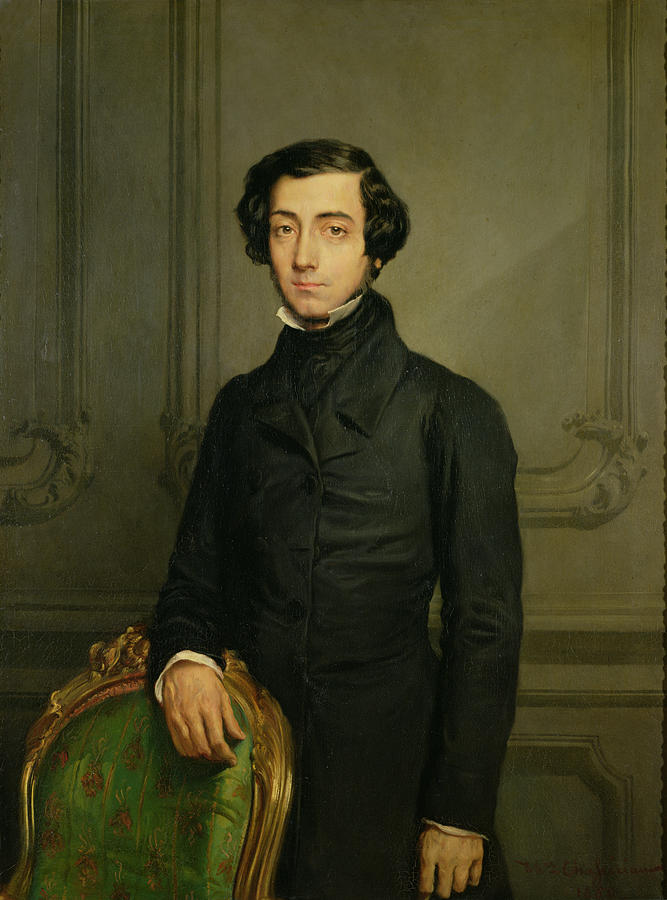
1. J. Hector St. John de Crèvecoeur, “What Is an American?” (1782)
The founding answer to the question, written by a French-born farmer in New York a few years after the Revolution — before the word “American” had settled into any fixed meaning. What holds up 244 years later isn’t the optimism so much as the mechanism he describes: a country that turns strangers into citizens not through blood or doctrine but through the plain fact of starting over.
In this great American asylum, the poor of Europe have by some means met together, and in consequence of various causes; to what purpose should they ask one another what countrymen they are? Alas, two thirds of them had no country. Can a wretch who wanders about, who works and starves, whose life is a continual scene of sore affliction or pinching penury; can that man call England or any other kingdom his country? A country that had no bread for him, whose fields procured him no harvest, who met with nothing but the frowns of the rich, the severity of the laws, with jails and punishments; who owned not a single foot of the extensive surface of this planet? No! urged by a variety of motives, here they came. Every thing has tended to regenerate them; new laws, a new mode of living, a new social system; here they are become men: in Europe they were as so many useless plants, wanting vegetative mould, and refreshing showers; they withered, and were mowed down by want, hunger, and war; but now by the power of transplantation, like all other plants they have taken root and flourished!
… What then is the American, this new man? He is either an European, or the descendant of an European, hence that strange mixture of blood, which you will find in no other country. I could point out to you a family whose grandfather was an Englishman, whose wife was Dutch, whose son married a French woman, and whose present four sons have now four wives of different nations. He is an American, who, leaving behind him all his ancient prejudices and manners, receives new ones from the new mode of life he has embraced, the new government he obeys, and the new rank he holds. He becomes an American by being received in the broad lap of our great Alma Mater. Here individuals of all nations are melted into a new race of men, whose labours and posterity will one day cause great changes in the world. The American ought therefore to love this country much better than that wherein either he or his forefathers were born. Here the rewards of his industry follow with equal steps the progress of his labour; his labour is founded on the basis of nature, self-interest: can it want a stronger allurement? Wives and children, who before in vain demanded of him a morsel of bread, now, fat and frolicsome, gladly help their father to clear those fields whence exuberant crops are to arise to feed and to clothe them all; without any part being claimed, either by a despotic prince, a rich abbot, or a mighty lord. The American is a new man, who acts upon new principles; he must therefore entertain new ideas, and form new opinions.
(Source: J. Hector St. John de Crèvecoeur, Letters from an American Farmer, Letter III, “What Is an American?” (London, 1782). Full text: https://avalon.law.yale.edu/18th_century/letter_03.asp)

2. Frederick Douglass, “What to the Slave Is the Fourth of July?” (1852)
The essay that has no business on a celebratory list, and belongs there anyway. Delivered as a speech in Rochester on July 5 — Douglass wouldn’t speak on the 4th itself — it is the single most searching thing ever said about the distance between what America claims and what it does. It isn’t bitter for its own sake; it’s a plea to close that distance, made by a man who had more reason than anyone in the room to give up on the country and didn’t.
Fellow citizens, pardon me, and allow me to ask, why am I called upon to speak here today? What have I or those I represent to do with your national independence? Are the great principles of political freedom and of natural justice, embodied in that Declaration of Independence, extended to us?
Such is not the state of the case. I say it with a sad sense of disparity between us. I am not included within the pale of this glorious anniversary! Your high independence only reveals the immeasurable distance between us. The blessings in which you this day rejoice are not enjoyed in common. The rich inheritance of justice, liberty, prosperity, and independence bequeathed by your fathers is shared by you, not by me. The sunlight that brought life and healing to you has brought stripes and death to me. This Fourth of July is yours, not mine. You may rejoice, I must mourn.
… At a time like this, scorching irony, not convincing argument, is needed. Oh! had I the ability, and could I reach the nation’s ear, I would today pour out a fiery stream of biting ridicule, blasting reproach, withering sarcasm, and stern rebuke. For it is not light that is needed, but fire; it is not the gentle shower, but thunder. We need the storm, the whirlwind, and the earthquake. The feeling of the nation must be quickened; the conscience of the nation must be roused; the propriety of the nation must be startled; the hypocrisy of the nation must be exposed; and its crimes against God and man must be denounced.
What, to the American slave, is your Fourth of July? I answer: a day that reveals to him more than all other days of the year, the gross injustice and cruelty to which he is the constant victim. To him your celebration is a sham; your boasted liberty an unholy license; your national greatness, swelling vanity; your sounds of rejoicing are empty and heartless; your shouts of liberty and equality, hollow mock; your prayers and hymns, your sermons and thanksgivings, with all your religious parade and solemnity, are to him mere bombast, fraud, deception, impiety, and hypocrisy — a thin veil to cover up crimes which would disgrace a nation of savages. There is not a nation of the earth guilty of practices more shocking and bloody than are the people of these United States at this very hour.
Go search where you will, roam through all the monarchies and despotisms of the Old World, travel through South America, search out every abuse and when you have found the last, lay your facts by the side of the everyday practices of this nation, and you will say with me that, for revolting barbarity and shameless hypocrisy, America reigns without a rival.
(Source: Frederick Douglass, address delivered to the Rochester Ladies’ Anti-Slavery Society, July 5, 1852. Full text: https://americanliterature.com/author/frederick-douglass/essay/what-to-the-slave-is-the-fourth-of-july)
3. Walt Whitman, Preface to the 1855 Leaves of Grass
Published, fittingly, on the Fourth of July, 1855. Whitman’s preface is remembered for its style, but the substance is the plainer thing: an argument that the “genius” of the country isn’t in its office-holders or institutions but in the people who never make the papers. It’s a corrective worth keeping in mind whenever “American greatness” gets defined from the top down.
The Americans of all nations at any time upon the earth, have probably the fullest poetical nature. The United States themselves are essentially the greatest poem. In the history of the earth hitherto, the largest and most stirring appear tame and orderly to their ampler largeness and stir. Here is action untied from strings, necessarily blind to particulars and details, magnificently moving in masses. Here is the hospitality which for ever indicates heroes. One sees it must indeed own the riches of the summer and winter, and need never be bankrupt while corn grows from the ground, or the orchards drop apples, or the bays contain fish, or men beget children upon women.
Other states indicate themselves in their deputies — but the genius of the United States is not best or most in its executives or legislatures, nor in its ambassadors or authors, or colleges or churches or parlors, nor even in its newspapers or inventors — but always most in the common people, south, north, west, east, in all its States, through all its mighty amplitude. The largeness of the nation, however, were monstrous without a corresponding largeness and generosity of the spirit of the citizen. Not swarming states, nor streets and steamships, nor prosperous business, nor farms, nor capital, nor learning, may suffice for the ideal of man — nor suffice the poet. No reminiscences may suffice either. A live nation can always cut a deep mark, and can have the best authority the cheapest — namely, from its own soul.
… This is what you shall do: Love the earth and sun and the animals, despise riches, give alms to everyone that asks, stand up for the stupid and crazy, devote your income and labor to others, hate tyrants, argue not concerning God, have patience and indulgence toward the people, take off your hat to nothing known or unknown, or to any man or number of men — go freely with powerful uneducated persons, and with the young, and with the mothers of families — re-examine all you have been told in school or church or in any book, and dismiss whatever insults your own soul; and your very flesh shall be a great poem, and have the richest fluency, not only in its words, but in the silent lines of its lips and face, and between the lashes of your eyes, and in every motion and joint of your body.
(Source: Walt Whitman, Preface to Leaves of Grass, first edition [Brooklyn, 1855]. Full text: https://whitmanarchive.org/published-writings/leaves-of-grass/1855)
4. Abraham Lincoln, Second Inaugural Address (1865)
The traditionally patriotic entry on this list, and the one that argues hardest against the hawkish version of patriotism. Delivered five weeks before Lee’s surrender, with Union victory all but certain, a wartime president had every reason to claim vindication. Instead Lincoln points out that both armies “read the same Bible and pray to the same God,” that neither side’s prayers were fully answered, and that the only fitting response to four years of slaughter is charity — extended not just to the defeated South but, in his final phrase, “with all nations.”
On the occasion corresponding to this four years ago all thoughts were anxiously directed to an impending civil war. All dreaded it, all sought to avert it. While the inaugural address was being delivered from this place, devoted altogether to saving the Union without war, insurgent agents were in the city seeking to destroy it without war — seeking to dissolve the Union and divide effects by negotiation. Both parties deprecated war, but one of them would make war rather than let the nation survive, and the other would accept war rather than let it perish, and the war came.
One-eighth of the whole population were colored slaves, not distributed generally over the Union, but localized in the southern part of it. These slaves constituted a peculiar and powerful interest. All knew that this interest was somehow the cause of the war. … Both read the same Bible and pray to the same God, and each invokes His aid against the other. It may seem strange that any men should dare to ask a just God’s assistance in wringing their bread from the sweat of other men’s faces, but let us judge not, that we be not judged. The prayers of both could not be answered. That of neither has been answered fully. The Almighty has His own purposes. Fondly do we hope, fervently do we pray, that this mighty scourge of war may speedily pass away. Yet, if God wills that it continue … so still it must be said “the judgments of the Lord are true and righteous altogether.”
With malice toward none, with charity for all, with firmness in the right as God gives us to see the right, let us strive on to finish the work we are in, to bind up the nation’s wounds, to care for him who shall have borne the battle and for his widow and his orphan, to do all which may achieve and cherish a just and lasting peace among ourselves and with all nations.
(Source: Abraham Lincoln, Second Inaugural Address, delivered March 4, 1865. Full text: https://avalon.law.yale.edu/19th_century/lincoln2.asp)
5. Julia Ward Howe, “Mother’s Day Proclamation” (1870)
Howe wrote the words to “The Battle Hymn of the Republic” — the most martial of American anthems, sung by Union troops marching to war. Five years after that war ended, she wrote this instead: not a call to arms but a mother’s flat refusal to raise sons for anyone’s slaughter, American or otherwise. It is the appeal to nurturance over victory, addressed to women “without limit of nationality” on both sides of every future war.
Arise then, women of this day! Arise, all women who have hearts, whether your baptism be of water or of tears! Say firmly: “We will not have questions answered by irrelevant agencies. Our husbands will not come to us, reeking with carnage, for caresses and applause. Our sons shall not be taken from us to unlearn all that we have been able to teach them of charity, mercy and patience. We, the women of one country, will be too tender of those of another country to allow our sons to be trained to injure theirs.”
From the bosom of a devastated Earth a voice goes up with our own. It says: “Disarm! Disarm! The sword of murder is not the balance of justice.” Blood does not wipe out dishonor, nor violence indicate possession. As men have often forsaken the plough and the anvil at the summons of war, let women now leave all that may be left of home for a great and earnest day of counsel. Let them meet first, as women, to bewail and commemorate the dead. Let them solemnly take counsel with each other as to the means whereby the great human family can live in peace, each bearing after his own time the sacred impress, not of Caesar, but of God.
In the name of womanhood and humanity, I earnestly ask that a general congress of women, without limit of nationality, may be appointed and held at some place deemed most convenient, and at the earliest period consistent with its objects, to promote the alliance of the different nationalities, the amicable settlement of international questions, and the great and general interests of peace.
(Source: Julia Ward Howe, “Mother’s Day Proclamation,” Boston, September 1870. Full text: https://americanliterature.com/author/julia-ward-howe/poem/mothers-day-proclamation)
6. Zora Neale Hurston, “How It Feels to Be Colored Me” (1928)
Nothing about this essay behaves the way you’d expect. Hurston refuses grievance, refuses martyrdom, refuses the whole “sobbing school” of writing about race in America, and instead writes one of the most exuberant, unsentimental things ever published about simply being oneself in this country. It belongs on a list about American character precisely because it never mentions patriotism once.
Sometimes it is the other way around. A white person is set down in our midst, but the contrast is just as sharp for me. For instance, when I sit in the drafty basement that is The New World Cabaret with a white person, my color comes. We enter chatting about any little nothing that we have in common and are seated by the jazz waiters. In the abrupt way that jazz orchestras have, this one plunges into a number. It loses no time in circumlocutions, but gets right down to business. It constricts the thorax and splits the heart with its tempo and narcotic harmonies. This orchestra grows rambunctious, rears on its hind legs and attacks the tonal veil with primitive fury, rending it, clawing it until it breaks through to the jungle beyond. I follow those heathen — follow them exultingly. I dance wildly inside myself; I yell within, I whoop; I shake my assegai above my head, I hurl it true to the mark yeeeeooww! My pulse is throbbing like a war drum. I want to slaughter something — give pain, give death to what, I do not know. But the piece ends. The men of the orchestra wipe their lips and rest their fingers. I creep back slowly to the veneer we call civilization with the last tone and find the white friend sitting motionless in his seat, smoking calmly.
“Good music they have here,” he remarks, drumming the table with his fingertips.
Music. The great blobs of purple and red emotion have not touched him. He has only heard what I felt. He is far away and I see him but dimly across the ocean and the continent that have fallen between us. He is so pale with his whiteness then and I am so colored.
I have no separate feeling about being an American citizen and colored. I am merely a fragment of the Great Soul that surges within the boundaries. My country, right or wrong.
Sometimes, I feel discriminated against, but it does not make me angry. It merely astonishes me. How can any deny themselves the pleasure of my company? It’s beyond me.
But in the main, I feel like a brown bag of miscellany propped against a wall. Against a wall in company with other bags, white, red and yellow. Pour out the contents, and there is discovered a jumble of small things priceless and worthless. A first-water diamond, an empty spool, bits of broken glass, lengths of string, a key to a door long since crumbled away, a rusty knife-blade, old shoes saved for a road that never was and never will be, a nail bent under the weight of things too heavy for any nail, a dried flower or two still a little fragrant. In your hand is the brown bag. On the ground before you is the jumble it held — so much like the jumble in the bags could they be emptied that all might be dumped in a single heap and the bags refilled without altering the content of any greatly. A bit of colored glass more or less would not matter. Perhaps that is how the Great Stuffer of Bags filled them in the first place — who knows?
(Source: Zora Neale Hurston, “How It Feels to Be Colored Me,” The World Tomorrow, May 1928. Full text: https://www.gutenberg.org/ebooks/73549)
7. Wallace Stegner, “Wilderness Letter” (1960)
Not an essay about America at all on its face — it’s a letter Stegner dashed off in an afternoon to a federal outdoor-recreation commission, arguing against a bureaucratic proposal to develop wild land. But buried in it is one of the plainest statements ever made of what the country’s character depends on, and it has nothing to do with government, or even people.
Something will have gone out of us as a people if we ever let the remaining wilderness be destroyed; if we permit the last virgin forests to be turned into comic books and plastic cigarette cases; if we drive the few remaining members of the wild species into zoos or to extinction; if we pollute the last clean air and dirty the last clean streams and push our paved roads through the last of the silence, so that never again will Americans be free in their country from the noise, the exhausts, the stinks of human and automotive waste. And so that never again can we have the chance to see ourselves single, separate, vertical and individual in the world, part of the environment of trees and rocks and soil, brother to the animals, part of the natural world and competent to belong in it. Without any remaining wilderness we are committed wholly, without chance for even momentary reflection and rest, to a headlong drive into our technological termite-life, the Brave New World of a completely man-controlled environment. We need wilderness preserved — as much of it as is still left, and as many kinds — because it was the challenge against which our character as a people was formed. The reminder and the reassurance that it is still there is good for our spiritual health even if we never once in ten years set foot in it. It is good for us when we are young, because of the incomparable sanity it can bring briefly, as vacation and rest, into our insane lives. It is important to us when we are old simply because it is there — important, that is, simply as idea.
(Source: Wallace Stegner, letter to David Pesonen of the Outdoor Recreation Resources Review Commission, December 3, 1960 (later published as “Coda: Wilderness Letter”). Full text: https://wegefoundation.org/the-wilderness-letter-from-coda-wilderness-letter-copyright-by-wallace-stegner-1960/)
Conclusion
A note on scope: this first pass leaned on pieces that could be verified word-for-word against their original sources. A handful of strong later-20th- and 21st-century candidates — Richard Rodriguez on growing up bilingual, Jose Antonio Vargas on being undocumented and American, N. Scott Momaday on land and memory — didn’t make the cut only because their original publications sit behind paywalls we couldn’t verify text against directly. If a “ten best” follow-up is worth doing, that’s where we’d start next.
###
Filed under: Uncategorized |


























































































































































































































































































































































































































































Leave a Reply