



By Jim Shimabukuro (assisted by ChatGPT)
Editor
Summary: If Amodei’s forecasts hold, medicine is about to shift from reactive care to predictive intervention—forcing societies to redefine responsibility for human health. –Copilot

Dario Amodei’s October 2024 essay, “Machines of Loving Grace,” is best read not as a checklist of near-term product launches but as a forecast about what could happen after the arrival of what he calls “powerful AI.” His central claim is that AI could increase the rate of biological discovery by at least tenfold, allowing humanity to compress “the next 50-100 years of biological progress in 5-10 years” (1). He explicitly allows for laboratory and clinical latency: animal experiments, hardware design, and clinical trials cannot be reasoned away by software. That caveat matters. It keeps his forecast from being a simple prediction that today’s AI tools, scaled a bit further, will cure infectious disease, cancer, Alzheimer’s disease, and aging by 2030. The better question is whether the world in mid-2026 is showing the kind of acceleration that would make the 2028-2033 window credible.
The outlook is mixed. Amodei is directionally right about the acceleration of biology. The evidence from protein modeling, generative chemistry, AI-guided vaccine design, clinical trial enrichment, automated laboratories, and regulatory filings is now too strong to dismiss as hype. But the stronger form of the claim — reliable prevention and treatment of nearly all natural infectious disease, elimination of most cancer, prevention of Alzheimer’s disease, and a doubling of human lifespan by roughly 2028-2033 — is not yet supported by clinical evidence. The field is moving faster than it did before deep learning entered biology, but it is not yet moving fast enough to make those outcomes likely on that schedule.
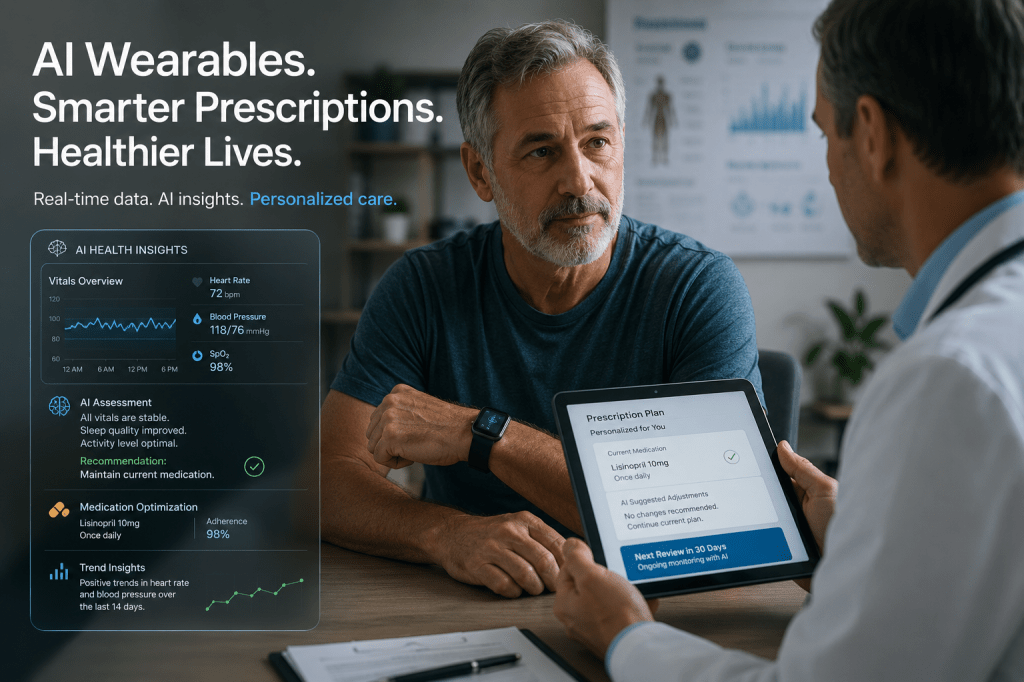
The first reason is that AI has already changed discovery, but discovery is not the same thing as medicine. The FDA now says that its Center for Drug Evaluation and Research has seen “a significant increase” in drug applications using AI components across nonclinical, clinical, postmarketing, and manufacturing phases; it also reports experience with more than 500 submissions containing AI components from 2016 to 2023 (2). This is a real institutional signal. AI is no longer confined to academic demonstrations or investor presentations. It is entering the regulatory bloodstream of drug development. Still, most uses are supporting roles: modeling, trial design, evidence generation, safety assessment, manufacturing, and review. Those uses can speed work and reduce failure, but they do not by themselves prove that AI-designed interventions will routinely cure major diseases.
The most important clinical milestone so far is rentosertib, Insilico Medicine’s generative-AI-discovered TNIK inhibitor for idiopathic pulmonary fibrosis. In 2025, Nature Medicine published results from a phase 2a multicenter, double-blind, randomized, placebo-controlled trial. The paper notes that “few novel AI-discovered or AI-designed drugs have reached human clinical trials,” then presents rentosertib as a first-in-class AI-generated small molecule directed at a first-in-class AI-discovered target (3). This is exactly the kind of evidence Amodei’s thesis needs: an AI-enabled path from target discovery to a molecule to a human trial. But it is also a cautionary marker. The study enrolled 71 patients and treated them for 12 weeks. It is promising, not definitive. It shows that AI-driven drug discovery can reach meaningful human testing; it does not show that AI has collapsed the full path to safe, approved, widely used medicines.
In infectious disease, the evidence is promising but still far short of “nearly all.” The most striking 2026 example is the University of Cambridge and DIOSynVax first-in-human trial of an AI-designed universal Sarbeco coronavirus vaccine. The trial involved 39 healthy volunteers. Cambridge reported immune responses not only to SARS-CoV-2 and SARS but also to related bat viruses that could someday jump into humans. The university described it as the first time a vaccine whose active component was designed entirely by computer simulations had been tested in people (4). This is important because it points toward a less reactive vaccine model: design antigens that cover viral families before the next outbreak, rather than chasing variants after they spread.
Yet this does not mean that infectious disease is on track for reliable prevention and treatment by 2028-2033. Viruses are only one part of the problem. Bacterial resistance, parasitic diseases, fungal infections, tuberculosis, HIV, malaria, pathogen evolution, delivery infrastructure, vaccine hesitancy, and unequal access remain hard constraints. Reviews of AI in infectious disease emphasize outbreak detection, diagnosis, resistance prediction, antibiotic discovery, and clinical management as useful applications, but they also stress the need for validation, data quality, and integration into health systems (5). AI may give public health better sensors, better vaccine designs, better candidate drugs, and better outbreak models. That is a major gain. It is not yet a route to reliable control of almost every natural infectious disease within seven years.
Cancer is the area where Amodei’s optimism is most understandable and most vulnerable to overstatement. Cancer is many diseases, not one disease. Some cancers are already being transformed by immunotherapy, targeted therapy, early detection, liquid biopsy, and precision oncology. The American Cancer Society’s 2026 report projects about 2,114,850 new cancer diagnoses and 626,140 cancer deaths in the United States in 2026, while also noting that the cancer death rate has fallen 34 percent from its 1991 peak, averting about 4.8 million deaths (6). That is genuine medical progress, accumulated over decades. It gives a benchmark for the scale of change that “eliminating most cancer” would require.
AI is likely to accelerate several parts of oncology. A 2026 Nature Precision Oncology perspective argues that AI can help individualize care in precision oncology, but it also states that limited regulatory oversight, data bias, ownership, privacy, and implementation barriers have slowed broad clinical adoption (7). In other words, the bottleneck is not only whether a model can find a pattern. The bottleneck is whether the pattern is clinically valid, generalizable, explainable enough for use, equitable across populations, and actionable in a health system. The same point applies to AI-guided pathology, radiology, treatment selection, radiotherapy planning, and biomarker discovery. AI can improve each layer, but cancer mortality falls only when these layers produce earlier diagnosis, better matching of therapy to patient, durable remission, and broad access.
Personalized cancer vaccines show why the forecast should be hopeful but not triumphant. Machine learning can help identify patient-specific neoantigens and improve the selection of vaccine targets. Yale reported in 2026 that a new machine learning tool could help scientists tailor patient-specific therapeutics by finding the right epitope more easily and accurately (8). Other recent work in personalized and off-the-shelf cancer vaccines is encouraging, especially in combination with checkpoint inhibitors. But these are still studies in selected cancers and selected patients. Pancreatic cancer, glioblastoma, metastatic disease, immune-resistant tumors, late diagnosis, and treatment toxicity remain major obstacles. The evidence supports a forecast of faster, more personalized oncology by 2033. It does not support the elimination of most cancer by then.
Alzheimer’s disease is even less likely to match the strong version of Amodei’s timeline. The recent shift from symptomatic treatment to disease-modifying anti-amyloid therapies is real. Lecanemab and donanemab have given clinicians the first widely discussed disease-modifying tools for early Alzheimer’s disease, and the Alzheimer’s drug pipeline is growing. The 2026 pipeline report lists 192 clinical trials assessing 158 candidate therapies, including 36 drugs in phase 3 and 84 in phase 2 (9). That is a large research base. It makes prevention more plausible than it was a decade ago.
But the clinical reality remains modest. Current anti-amyloid drugs are for early disease, require biomarker confirmation and monitoring, carry risks such as brain swelling and bleeding, and slow decline rather than restore lost cognition. AI can help, especially by making trials smaller, sharper, and more likely to enroll the right patients. Cambridge researchers reported in 2025 that an AI reanalysis of a completed Alzheimer’s trial identified a subgroup of early-stage, slow-progressing patients in whom the drug slowed cognitive decline by 46 percent; the same report framed the result as evidence that AI can streamline future trials by matching patients more precisely to drugs (10). That is valuable, but it is not prevention of Alzheimer’s. A reasonable 2033 forecast is earlier diagnosis, better risk stratification, better trial design, and perhaps additional disease-modifying therapies. Prevention at population scale remains unproven.
The doubling-of-lifespan claim is the weakest part of the forecast. Here the distinction between healthspan and lifespan is decisive. AI may help discover geroprotective drugs, identify biological-age biomarkers, repurpose existing drugs, and model aging pathways. Longevity biotechnology is attracting serious investment, and companies are increasingly targeting inflammation, metabolism, cellular senescence, immune aging, and tissue repair. But as Clarivate summarized in 2026, most longevity therapies remain in early clinical development, years of trials are still ahead, the FDA has no general “aging” indication, and chronic use in healthy people requires extensive safety validation (11). That is not a near-term path to doubling lifespan.
Demography also pushes against the strongest version of the claim. A 2024 Nature Aging analysis of the world’s longest-lived populations found that improvements in life expectancy have decelerated since 1990 and concluded that radical human life extension is implausible this century unless biological aging can be markedly slowed (12). The authors do not say that future aging interventions are impossible. In fact, they leave room for a second longevity revolution based on geroscience. But their data show how hard it is to move population life expectancy once early-life and midlife mortality have already been greatly reduced. Eliminating many diseases would increase healthy years and reduce suffering, but it would not automatically double average human lifespan. To do that, medicine would need to slow the biological aging process itself, safely, durably, and across entire populations.
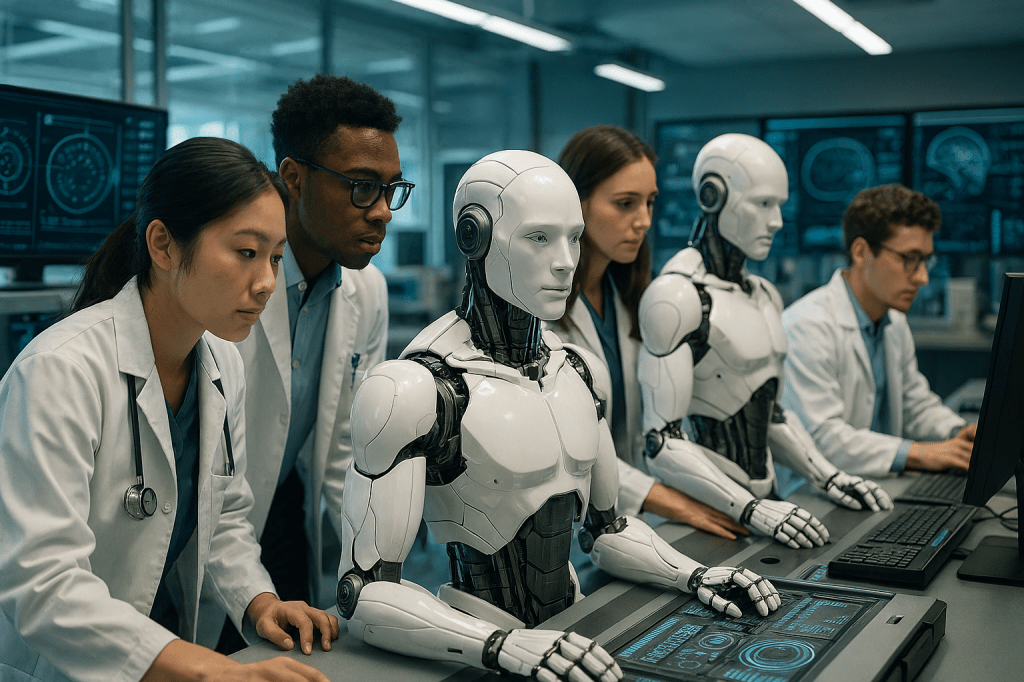
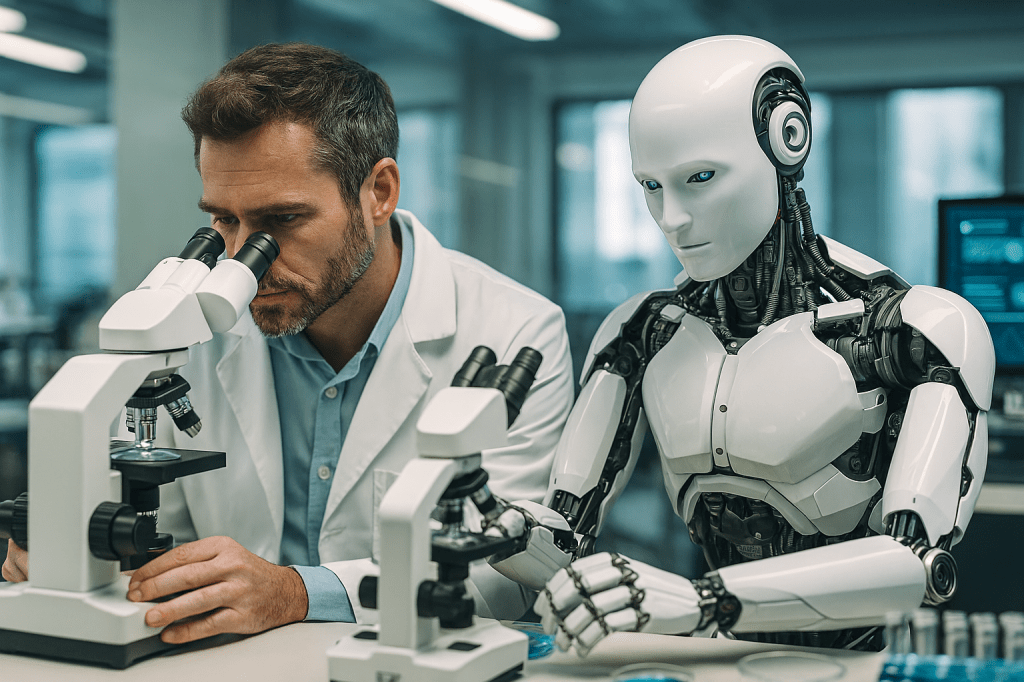
A fair update, then, is that Amodei’s forecast is more credible as a research-acceleration thesis than as a dated medical-outcome thesis. The acceleration thesis says that AI will help scientists make discoveries, design interventions, run experiments, interpret multimodal data, select trial participants, and test hypotheses faster. The evidence supports this. AlphaFold and its successors have widened the searchable space of biology; AI-designed drug candidates are entering human trials; AI-designed antigens are being tested in people; the FDA is preparing guidance for AI-supported regulatory evidence; oncology and Alzheimer’s researchers are using AI to make patient selection and therapeutic targeting more precise (2,3,4,7,10).
The dated-outcome thesis says that by 2028-2033 the world will have reliable prevention and treatment of nearly all natural infectious disease, elimination of most cancer, prevention of Alzheimer’s, and doubled human lifespan. The evidence does not yet support that. Each target has different barriers. Infectious disease is partly a design problem but also a surveillance, manufacturing, deployment, mutation, antimicrobial resistance, and public-health trust problem. Cancer is partly a molecular-targeting problem but also a heterogeneity, early-detection, resistance, toxicity, recurrence, and equity problem. Alzheimer’s is partly a protein-aggregation and neuroinflammation problem but also a timing, diagnosis, trial-duration, mixed-pathology, and irreversible-damage problem. Lifespan extension is not simply the sum of cures for named diseases; it requires intervention in aging itself.
The best way to state the conclusion is this: by 2033, AI could plausibly make medicine feel discontinuous in several areas. We may see AI-assisted discovery pipelines that move more candidates into trials, broader vaccine platforms for viral families, more effective antimicrobial discovery, better cancer screening and therapy matching, more individualized cancer vaccines, blood-based Alzheimer’s diagnostics tied to earlier treatment, and clinical trials redesigned around predictive models and digital biomarkers. Those developments would be large enough to justify Amodei’s sense that biology is entering a new regime.
But if the question is whether we are on course, as of June 2026, to achieve the four strongest health goals by 2028-2033, the answer is no. We are on course for acceleration, not completion. The compressed century may have begun in the laboratory. It has not yet reached the clinic at the scale required by Amodei’s most dramatic claims.
That should not be read as dismissal. In fact, it may be the more useful version of optimism. The near-term promise of AI in medicine is not that it will make biology easy. It is that it may turn many formerly impossible searches into tractable searches. It can make scientists less blind in protein space, chemical space, immune space, patient-subgroup space, and trial-design space. That is a profound shift. But the last mile is biological, clinical, regulatory, economic, and social. No model, however powerful, can skip the need to prove safety and benefit in human beings.
For educators, this is the central lesson. Amodei’s forecast should be taught neither as prophecy nor as hype. It should be taught as a bold hypothesis about the relationship between intelligence, experimentation, and institutional capacity. The right classroom question is not “Will AI cure everything by 2030?” It is “Which parts of medical progress can be accelerated by intelligence, and which parts still depend on slow contact with the world?” The answer, so far, is that AI is beginning to transform the search. The cures, preventions, and longevity gains will depend on whether that faster search can survive the discipline of evidence.
References
1. Dario Amodei, “Machines of Loving Grace,” October 2024. https://darioamodei.com/essay/machines-of-loving-grace
2. U.S. Food and Drug Administration, “Artificial Intelligence for Drug Development,” updated 2026. https://www.fda.gov/about-fda/center-drug-evaluation-and-research-cder/artificial-intelligence-drug-development
3. Z. Xu et al., “A generative AI-discovered TNIK inhibitor for idiopathic pulmonary fibrosis: a randomized phase 2a trial,” Nature Medicine, 2025. https://www.nature.com/articles/s41591-025-03743-2
4. University of Cambridge, “New ‘universal vaccine’ technology could protect us from future virus outbreaks,” 5 June 2026. https://www.cam.ac.uk/research/news/new-universal-vaccine-technology-could-protect-us-from-future-virus-outbreaks
5. A. Cesaro et al., “Challenges and applications of artificial intelligence in infectious disease control,” Nature Communications Medicine, 2025. https://www.nature.com/articles/s44259-024-00068-x
6. American Cancer Society, “Annual Cancer Statistics Report 2026,” 13 January 2026. https://pressroom.cancer.org/cancer-statistics-report-2026
7. A. Weitzner et al., “The role of AI in oncology: present applications and future directions,” npj Precision Oncology, 2026. https://www.nature.com/articles/s41698-026-01408-y
8. Yale School of Medicine, “Using Machine Learning to Develop Personalized Vaccines for Cancer,” 24 February 2026. https://medicine.yale.edu/news-article/using-machine-learning-to-develop-personalized-vaccines-for-cancer/
9. J. L. Cummings et al., “Alzheimer’s disease drug development pipeline: 2026,” Alzheimer’s & Dementia: Translational Research & Clinical Interventions, 2026. https://alz-journals.onlinelibrary.wiley.com/doi/10.1002/trc2.70251
10. University of Cambridge, “AI can accelerate search for more effective Alzheimer’s medicines by streamlining clinical trials,” 17 July 2025. https://www.cam.ac.uk/research/news/ai-can-accelerate-search-for-more-effective-alzheimers-medicines-by-streamlining-clinical-trials
11. Clarivate, “Why longevity might be biopharma’s next big thing,” 2 March 2026. https://clarivate.com/life-sciences-healthcare/blog/why-longevity-might-be-biopharmas-next-big-thing/
12. S. Jay Olshansky et al., “Implausibility of radical life extension in humans in the twenty-first century,” Nature Aging, 2024. https://www.nature.com/articles/s43587-024-00702-3
###
Filed under: Uncategorized |

































































































































































































































































































































How realistic are Dario Amodei’s medical predictions for 2028–2033, and what scientific or technological evidence supports or challenges his claims about rapid breakthroughs in healthcare? LINK