






By Jim Shimabukuro (assisted by ChatGPT)
Editor
Summary: “Humanizer” tools are turning into the new gray market of AI writing: useful for smoothing prose, but risky when they’re really built to mask machine authorship. It matters because the fight over AI text is shifting from style to accountability, and that changes what counts as honest writing. –Perplexity

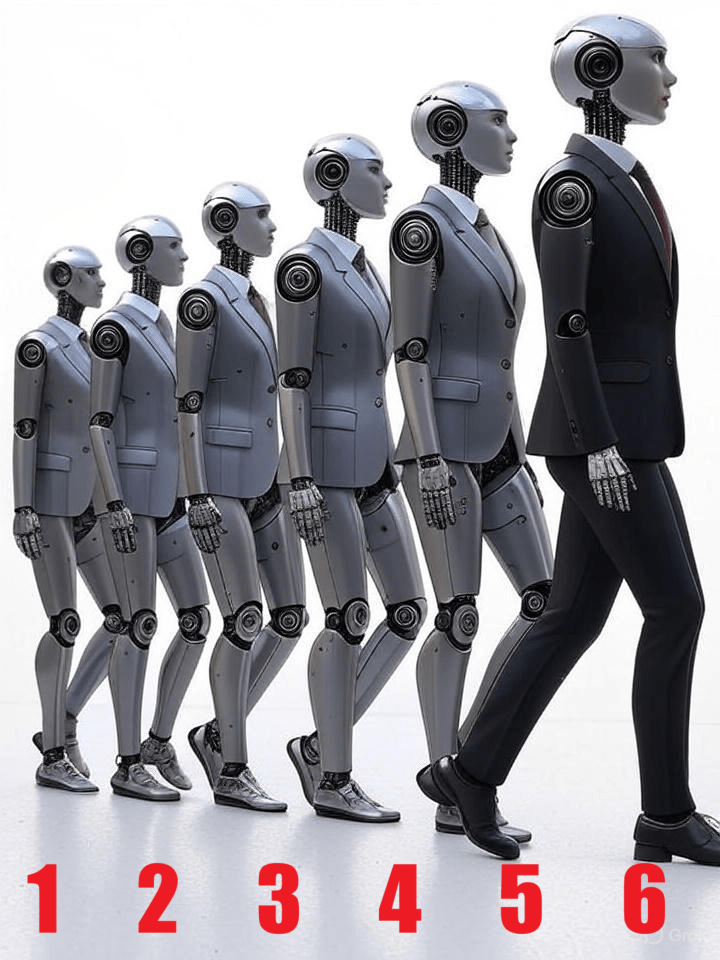
A new word has found its way into the machinery of writing: humanizer. It sounds harmless, even humane — a last editorial pass that takes stiff, generic prose and gives it rhythm, specificity, and a recognizable voice. Sometimes that is exactly what it is. A job seeker turns a bland AI-assisted cover letter into a letter that sounds like a real person. A multilingual researcher removes clumsy phrasing without surrendering technical precision. A manager smooths the tone of a difficult memo. In those settings, humanizing is simply editing by another name.
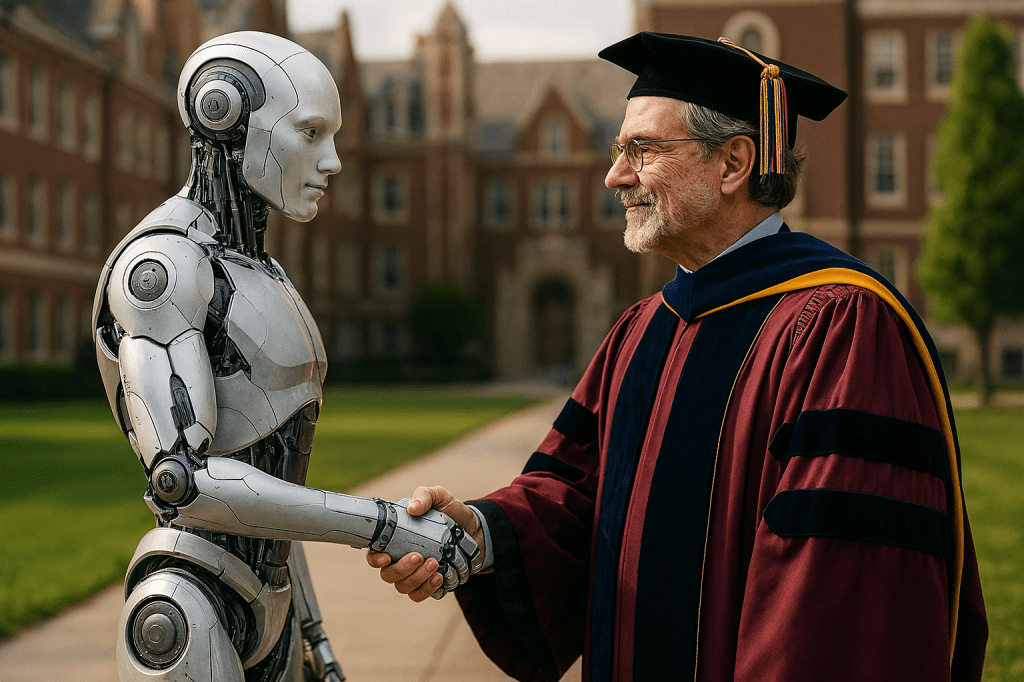
But the same word also names a booming set of products designed to make AI-generated text look less machine-made to readers and to automated detectors. The distinction is not academic. A tool that polishes a draft can be a useful assistant; a tool marketed as a way to “score as human” has entered a different business: concealing the route by which the draft was made. That collision acquired a face and a date on June 20, when Jie Ding, a machine-learning researcher at the University of Minnesota in Minneapolis, released Academic Humanizer, an open-source tool aimed at papers and grant proposals. Its GitHub page originally said that it could match an author’s voice and “strip the AI tells without casualizing”; after concerns were raised, its public language shifted toward clarity and voice. Nature’s July 7 report follows the dispute from both sides: researchers who see a needed editorial equalizer and critics who see an invitation to conceal material AI assistance. The question is no longer whether such tools exist. The question is what kind of writing culture they are creating. [22]
The trend is widespread, but the census is slippery
Yes, humanizers are now widespread in the practical sense that matters to writers, teachers, editors, and publishers: they are easy to find, cheap or free to try, and built into an expanding number of writing workflows. A 2025 conference paper examined nineteen humanizer and paraphrasing products. A 2026 preprint that systematically searched the web catalogued fifty-five humanizer sites and found a strikingly consistent sales pitch: free access or a low-cost tier, a promise of “natural” prose, and, in many cases, an implied or explicit assurance that detection systems can be beaten. [1,2] The category no longer lives only on commercial landing pages. Ding’s June release shows that a humanizer can also be a freely copied instruction set for a general-purpose AI, rather than a distinct website or subscription product. [22]
That does not mean anyone has a reliable headcount of users. The market is littered with self-reported customer totals, affiliate reviews, rapidly changing prices, cloned interfaces, and private-label services that put a new logo on someone else’s model. There is no audited equivalent of a circulation bureau. What can be said with confidence is narrower and more useful: a person who wants one of these tools can reach several within minutes, and organizations that want to offer one can buy or white-label the capability. Undetectable AI, for example, advertises a business offering that lets customers incorporate its detector and humanizer into branded products. [3]
How the category took shape
The commercial trend is young. Its decisive moment came after public access to ChatGPT made competent first drafts cheap and nearly instantaneous, while schools, publishers, and platforms responded with AI-detection products. One of the category’s best-known brands, Undetectable AI, says its founders began the venture in 2023, and an early company announcement described a May 2023 launch. [4] By 2025, researchers were treating humanizers as a distinct class of adversarial rewriting software rather than as ordinary paraphrasers. [1] The academic version is a natural extension of that trajectory: Ding adapted an earlier humanizer for scientific work, adding directions meant to trim familiar AI constructions and to tighten evidence for unsupported claims. [22]
The early market fed on a simple asymmetry. Generative models produced fluent text faster than institutions could decide what counted as permissible assistance. Detectors then looked for statistical regularities — predictable word choices, repeated sentence patterns, unusually even phrasing — and humanizers promised to disturb those regularities. The arrangement invited an arms race: generation, detection, rewriting, retraining, and a new round of claims. A 2025 study of adversarial paraphrasing showed why the arms race will not be settled by a single clever detector: text can be rewritten against the feedback of a detector until it begins to evade not only that detector but others as well. [5]
Who is offering them, and where
The market is not one thing. The following examples show four different business models. They are illustrative rather than a ranking, and claims about detector bypassing are vendor claims unless independently noted.
| TYPE / EXAMPLE | WHAT IT OFFERS | ACCESS AND PRICE SIGNAL | DEVELOPER / LOCATION SIGNAL |
| Dedicated detection-evasion brand Undetectable AI | A detector-and-rewriter suite that says it can make text “score as human.” It also sells API and white-label access. [3,6] | Free trial/basic access; published plans begin at $9.99 per month for 10,000 words, with larger paid plans. [7] | Founder Christian Perry and co-founder Devan Leos are identified on the firm’s site; a 2023 announcement was issued from Sheridan, Wyoming, and Leos lists Los Angeles County. [4,8] |
| Mainstream writing suite QuillBot | An AI Humanizer alongside paraphrasing, grammar, plagiarism, and detector tools. It says the objective is more natural, readable language and urges compliance with institutional rules. [9] | Free basic humanizing is limited to 125 words; Premium removes word and usage limits and adds deeper rewriting. [9] | A Learneo, Inc. business. Its terms list San Francisco, California. QuillBot’s parent says the product has more than 30 million monthly active users across the broader platform. [10,11] |
| Mainstream writing suite Grammarly / Superhuman | A free AI Humanizer that explicitly says it is not intended to bypass detectors; the company frames it as clarity, coherence, and tone refinement. [12] | Free basic tool; a free account offers a Humanizer agent, while paid Pro unlocks the full feature set. [12] | San Francisco-based legal entity with hubs in the United States, Canada, Germany, Poland, and Ukraine. [13,14] |
| Open-source academic skill Academic Humanizer | A free, downloadable instruction set for Claude Code, Codex, and similar AI agents, tailored to papers and grant proposals. It directs the model to revise recurring “AI tells” and improve evidentiary support while preserving claims, numbers, and citations. Ding frames it as an editing aid, not a detector-evasion product. [15,22] | MIT-licensed and free. Users can clone the repository or copy its guidelines into a compatible AI system; there is no standalone paywall, but access to an AI assistant is required. [15,22] | Released June 20, 2026 by Jie Ding, a machine-learning researcher at the University of Minnesota in Minneapolis. The GitHub pages identify MorphMind / AIScientists-Dev as the publishing organization. [15,16,22] |
One warning belongs beside any market map. A startling number of smaller humanizer sites reveal little about who operates them, where uploaded text is processed, or how long it is retained. A service can be global at the point of use while remaining opaque about its jurisdiction and security practices. That opacity matters more for unpublished research, grant proposals, student records, legal documents, and proprietary business writing than it does for a throwaway social-media caption.
How users reach them
The familiar front door is a web form: paste a passage, choose a tone or reading level, press a button, and copy the rewrite. Some services permit document uploads; Humanize AI, for instance, advertises uploads of .docx, .pdf, and other files without registration. [17] Others sit inside the writer’s normal environment. QuillBot offers browser extensions, Word support, and a custom GPT; its Humanizer page says users can work directly inside ChatGPT, Gemini, and related tools. [9] A third route is the developer path: API access, white-label resale, or an open-source “skill” loaded into an AI coding agent. [3,15] A fourth route is even more diffuse: copy an instruction list into a general-purpose AI. Ding says that users can paste Academic Humanizer’s guidelines into their model of choice, so no dedicated website has to stand between the writing and the rewrite. [22] That portability turns a humanizer from a web toy into a reusable stage in a publishing pipeline.
There is a practical privacy lesson here. Passing a draft through a humanizer is not the same as revising it in a local word processor. The service may receive the whole text, its embedded names, its citations, or its confidential facts. The safer rule is plain: do not upload unpublished manuscripts, grant proposals, student work, medical material, legal material, or client documents until the provider’s terms, data practices, and institutional rules have been checked. That concern is not theatrical. The ICMJE’s 2026 recommendations warn that AI use on unpublished manuscripts can breach confidentiality and require disclosure of the tool and purpose when AI has been used in publishing. [18]
Do they work? The answer depends on what “work” means
For an editor, “work” may mean fewer stock phrases, less verbal padding, and a cleaner fit between a writer’s intent and the reader’s experience. On that modest standard, a good humanizer can help. It may spot the overfed adjectives, the ceremonial “in recent years” opening, the three-part list that appears for no reason, or the sentence that tries to carry four ideas at once. The Academic Humanizer repository makes this case directly, listing patterns such as “paves the way,” “delve,” excessive em dashes, and inflated claims that should be tied more tightly to evidence. Nature reports that its guidelines also flag the construction “not just X, but Y” and ask the model to add support where a scientific claim outruns the evidence. [15,22]
For a user whose real goal is to produce an “undetectable” paper, essay, or proposal, the answer is far less stable. The 2025 DAMAGE study found that many detectors then on the market missed humanized AI text, even as its authors demonstrated that a detector trained with diverse rewrite examples could be more robust. [1] A separate 2025 NBER working paper reported that one commercial detector in its test set remained strong against humanizer tools, while other systems varied sharply in both missed AI text and false accusations against human writers. [19] And a 2026 empirical study of three humanizing tools found uneven results across tools and detectors rather than a dependable victory for any one product. [20] Chen’s reporting supplies a useful real-world check: Max Spero, chief executive of the detection firm Pangram, said his initial tests caught most, though not all, of the AI-generated language after it had been run through Academic Humanizer. He also said Pangram was designing upgrades to identify humanizer use. That is not a controlled benchmark, but it is a reminder that a vendor’s evasion claim is never a permanent result. [22]
The sober conclusion is that a 99 percent “human” score is not a property of the writing. It is a momentary result from a particular detector, version, language, sample length, and threshold. It may change after a vendor updates its model, or after a school changes its product. A humanizer can also break what it is supposed to preserve: narrow a qualification, alter a technical definition, substitute a false synonym, or smooth away the very oddity that made a writer’s voice memorable. The more formal and consequential the document, the less sensible it is to treat a one-click rewrite as a final draft.
A problem, a godsend, or both?
It is both, because the word “human” conceals two very different activities. The beneficial use is editorial. It starts with a writer’s own ideas, evidence, decisions, and responsibility, then uses software to make the expression clearer and less generic. This can be valuable for non-native speakers of English, writers with disabilities, people drafting under pressure, and professionals who need to adjust register without spending an afternoon on a two-paragraph message. It can also correct a genuine injustice: a person whose original prose has been falsely branded “AI-like” may want help making the text more unmistakably personal without changing the underlying work. Nature’s reporting gives that argument a human face. Francisco Maria Calisto, a health-informatics researcher at the University of Lisbon, described using the tool chiefly for e-mail and code documentation, while Misha Teplitskiy of the University of Michigan argued that such tools can help level the playing field for scientists writing in a second language. [22]
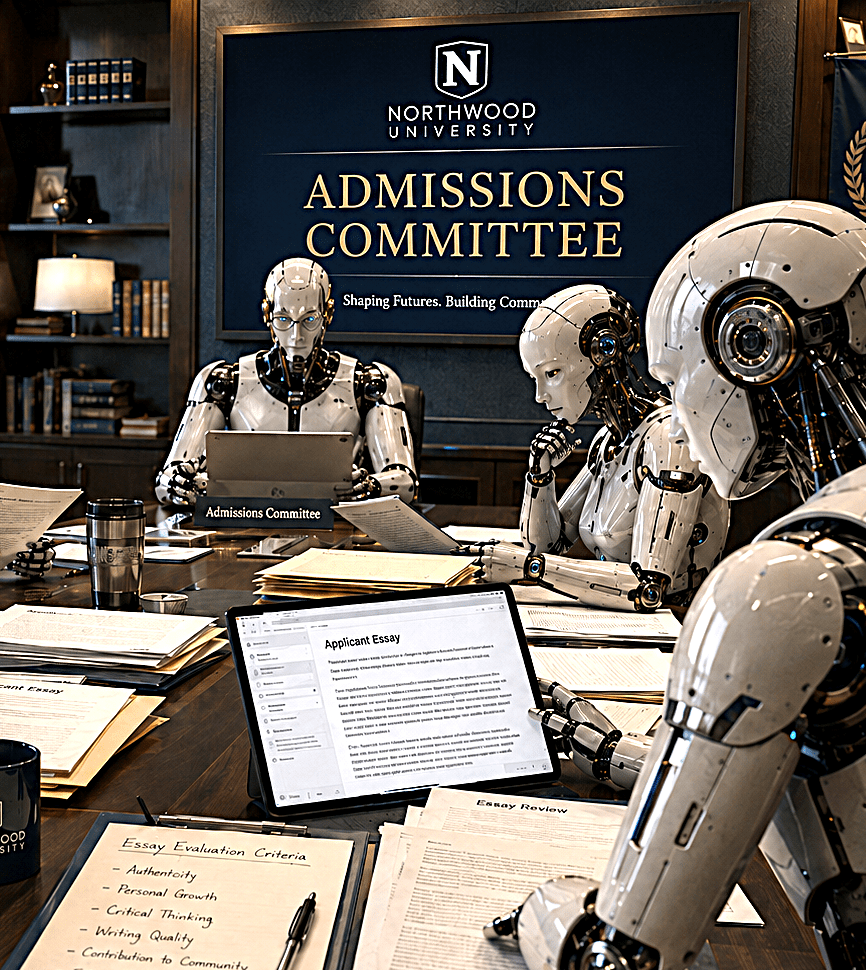
The harmful use begins when the “human” label is asked to perform an alibi. A student who submits a machine-written assignment as independent work has not cured the authorship problem by changing cadence. A researcher who uses a humanizer to conceal substantial AI drafting has not reduced the need to disclose it, verify every claim, and protect confidential material. A marketer who floods a site with machine-produced pages may make the pages less obvious without making them more useful. The 2026 survey of humanizer websites is persuasive on this point: it describes a feedback loop in which surveillance technologies and circumvention technologies both thrive while the underlying problem — an assessment or publishing process that cannot see the actual work — remains untouched. [2] Chen’s sources articulate the scientific version of the worry: undisclosed AI assistance in papers and grant applications becomes harder to see, even where journals or funders require disclosure. Michael Lauer, who until last year oversaw all external grants at the US National Institutes of Health, told Nature that using humanizers to evade detection would be serious misconduct. [22]
That is why the best response is not a fantasy of perfect detection. In education, better assessment asks for process: proposal notes, source trails, short oral defenses, revision history, local observation, and assignments connected to a student’s actual experience. In research and professional publishing, it asks for provenance, accountable authors, verified citations, and a candid statement of material AI assistance. The CDC’s May 2026 guidance treats disclosure as a practical scientific-writing task, not as a moral scarlet letter. [21] The ICMJE’s 2026 recommendations similarly warn that AI use on unpublished manuscripts can create confidentiality problems and require disclosure of the tool and purpose when AI has been used in publishing. [18] The Nature case points in the same direction: Ding himself said that, where disclosure is required, the ethical failure is non-disclosure and intent, not the mere existence of an editing aid. [22] That is a healthier direction than treating a detector as a lie detector or a humanizer as a certificate of authenticity.
Will humanizers disappear as AI style becomes better?
The name may fade. The function will not. As base models become better at following an individual’s preferences, “humanizer” will sound increasingly like a temporary label for a broader family of style controls: make this plainer, less corporate, more skeptical, shorter, more like the last three things I wrote, or appropriate for a grant panel rather than a blog. Richard She, a biologist at Nanyang Technological University in Singapore, told Nature that he expects humanized text to become indistinguishable from human-written prose within two years. That is a prediction, not a demonstrated result, but it captures the direction of travel. [22] QuillBot and Grammarly already place humanization beside grammar, paraphrasing, tone, and detector features rather than presenting it as a standalone underground craft. [9,12]
The detection-evasion side will remain as long as a system promises rewards for text that appears wholly human-authored while offering few ways to examine the work behind it. That is the durable market condition. Technical studies will continue to trade attacks for defenses; commercial vendors will continue to advertise the latest result. The language around the practice will likely soften. After questions from Nature, Academic Humanizer’s public description changed from “removes the usual AI tells” to “sharpens clarity and voice.” [22] But the center of gravity should move away from stylistic fingerprints. A polished sentence is weak evidence about who formed the judgment, chose the sources, made the discovery, or bears responsibility for the consequences. Those are process questions, not punctuation questions.
The practical verdict
Use a humanizer as an editing aid only when you remain responsible for the ideas, facts, citations, and final voice. Never mistake a lower detector score for proof of authentic authorship, and never use “natural sounding” as a reason to hide material AI assistance where disclosure is required. Humanizer tools are widespread in availability, not yet measurable in verified usage. They range from ordinary style editors to products that openly promise to evade AI detectors. Academic Humanizer, released on June 20 for scholarly writing, shows why the same tool can be understood as either an editorial aid or a possible concealment device. The market is real, the performance claims are unstable, and no detector score by itself establishes who did the thinking. [22]
References
[1] Masrour, Elyas, Bradley N. Emi, and Max Spero. 2025. “DAMAGE: Detecting Adversarially Modified AI Generated Text.” Proceedings of the 1st Workshop on GenAI Content Detection, 120–133. https://aclanthology.org/2025.genaidetect-1.9/
[2] Roe, Jasper, Mike Perkins, Peter Bannister, Leon Furze, and James Wood. 2026. “Dramaturgies of Deception: AI Humanizers and the Performance of Legitimacy in Higher Education Assessment.” Preprint. https://arxiv.org/abs/2605.02649
[3] Undetectable AI. 2026. “Business Solutions.” https://undetectable.ai/business-solutions
[4] Undetectable AI. 2026. “About Us.” https://undetectable.ai/about-us
[5] Cheng, Yize, Vinu Sankar Sadasivan, Mehrdad Saberi, Shoumik Saha, and Soheil Feizi. 2025. “Adversarial Paraphrasing: A Universal Attack for Humanizing AI-Generated Text.” https://arxiv.org/abs/2506.07001
[6] Undetectable AI. 2026. “AI Humanizer.” https://undetectable.ai/ai-humanizer
[7] Undetectable AI. 2026. “Plans & Pricing.” https://undetectable.ai/pricing
[8] Undetectable AI. 2023. “Undetectable AI Surpasses Two-Million Active Users.” Press release. https://www.globenewswire.com/news-release/2023/09/30/2752341/0/en/undetectable-ai-surpasses-two-million-active-users.html
[9] QuillBot. 2026. “Free Humanize AI Tool.” https://quillbot.com/ai-humanizer
[10] QuillBot. 2026. “Terms of Service.” https://quillbot.com/terms
[11] Learneo. 2026. “Rohan Gupta — CEO, QuillBot.” https://www.learneo.com/team/rohan-gupta
[12] Grammarly. 2026. “Free AI Humanizer: Humanize AI Text.” https://www.grammarly.com/ai-humanizer
[13] Superhuman Platform Inc. 2026. “Terms of Service.” https://www.grammarly.com/terms
[14] Grammarly Support. 2026. “What Is Grammarly?” https://support.grammarly.com/hc/en-us/articles/115000090792-What-is-Grammarly
[15] AIScientists-Dev / MorphMind. 2026. “academic-humanizer.” GitHub repository. https://github.com/AIScientists-Dev/academic-humanizer
[16] MorphMind. 2026. GitHub organization profile. https://github.com/AIScientists-Dev
[17] Humanize AI. 2026. “Humanize AI Text.” https://www.humanizeai.pro/
[18] International Committee of Medical Journal Editors. 2026. “Use of Artificial Intelligence in Publishing.” https://www.icmje.org/recommendations/browse/artificial-intelligence/
[19] Jabarian, Brian, and Alex Imas. 2025. “Artificial Writing and Automated Detection.” NBER Working Paper 34223. https://www.nber.org/papers/w34223
[20] Epaphras, Nicodemus, and Fredrick Mtenzi. 2026. “Evaluating the Effectiveness of AI Text Humanising Tools in Reducing AI Detection in AI-Generated Texts by AI Detectors.” International Journal of Advanced Research 9 (1): 107–125. https://ecommons.aku.edu/cgi/viewcontent.cgi?article=1258&context=eastafrica_ied
[21] Centers for Disease Control and Prevention. 2026. “Considerations for Disclosing Generative AI Use in Scientific Work.” https://www.cdc.gov/ai/resources/considerations-for-generative-ai-use-in-scientific-work.html [22] Chen, Edward. 2026. “Humanizer tool can erase signs of AI-written text — alarming scientists.” Nature, July 7. https://doi.org/10.1038/d41586-026-02105-3
[22] Chen, Edward. 2026. “Humanizer tool can erase signs of AI-written text — alarming scientists.” Nature, July 7. https://doi.org/10.1038/d41586-026-02105-3
###
Filed under: Uncategorized |









































































































































































































































































































































































































































Leave a Reply