





By Jim Shimabukuro (assisted by ChatGPT)
Editor
The 2026 Women’s World Cup lineup dispute has become part basketball argument, part culture-war argument. The public record allows a close look at both—without assigning motives that have not been documented.

Three games into the FIBA Women’s Basketball World Cup in Berlin, the United States has won all three. It beat China 94–61, survived Italy 55–52, and defeated Czechia 105–64. Head coach Kara Lawson has opened each game with the same veteran five: Chelsea Gray, Jackie Young, Napheesa Collier, Kahleah Copper and Breanna Stewart. Caitlin Clark, Paige Bueckers and Angel Reese—the three young stars attracting much of the public attention—have come from the bench (Kenny, 2026; FIBA, 2026a).
That arrangement has generated a familiar sports question: Are the five starters actually the five players who give the United States its best chance to win? It has also generated a much larger political question. Some critics read the preference for established veterans as another example of institutions protecting status, identity or internal hierarchy at the expense of present performance. Others see a normal coaching decision being pulled into the American fight over diversity, equity and inclusion, or DEI, without evidence that race or any formal DEI policy played a part.
Basketball performance can be tested through minutes, shooting, assists, rebounding, defense, lineup function and results. Motive requires direct evidence. As of September 9, no public statement, roster policy or reported instruction from Lawson, USA Basketball or managing director Sue Bird says that race or a DEI objective determined the starting five. Lawson has explained the choice in basketball terms. Asked again about Clark before the quarterfinal, she said, “Our starting group’s done a really good job of getting us off to good starts,” adding that she liked where the rotation stood (Thompson, 2026). The same basic answer was given when reporters asked about Bueckers and Reese.
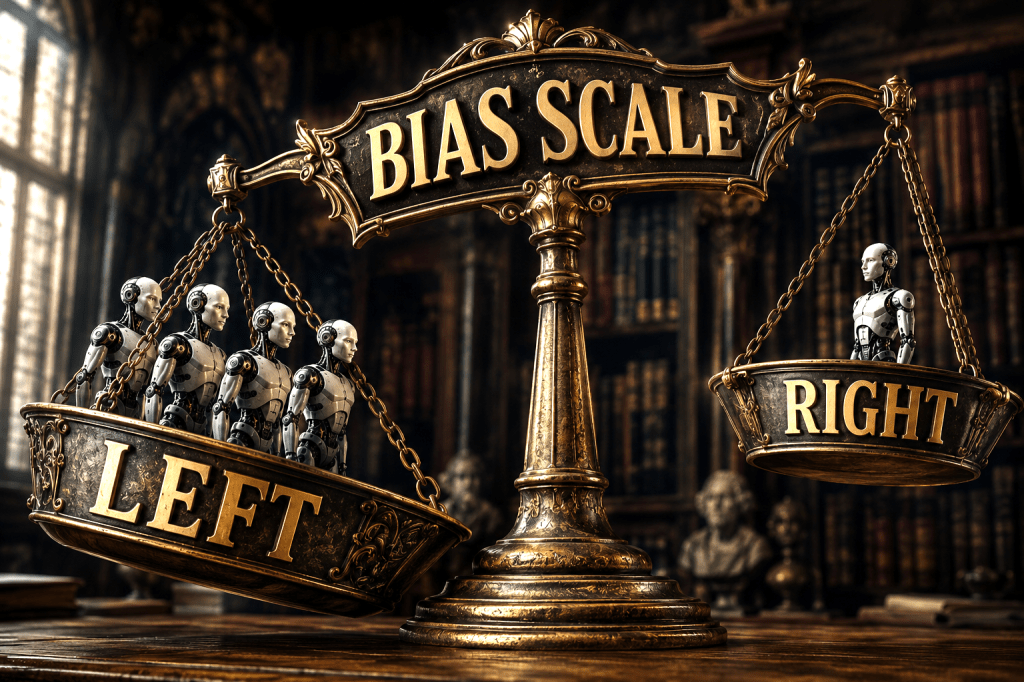
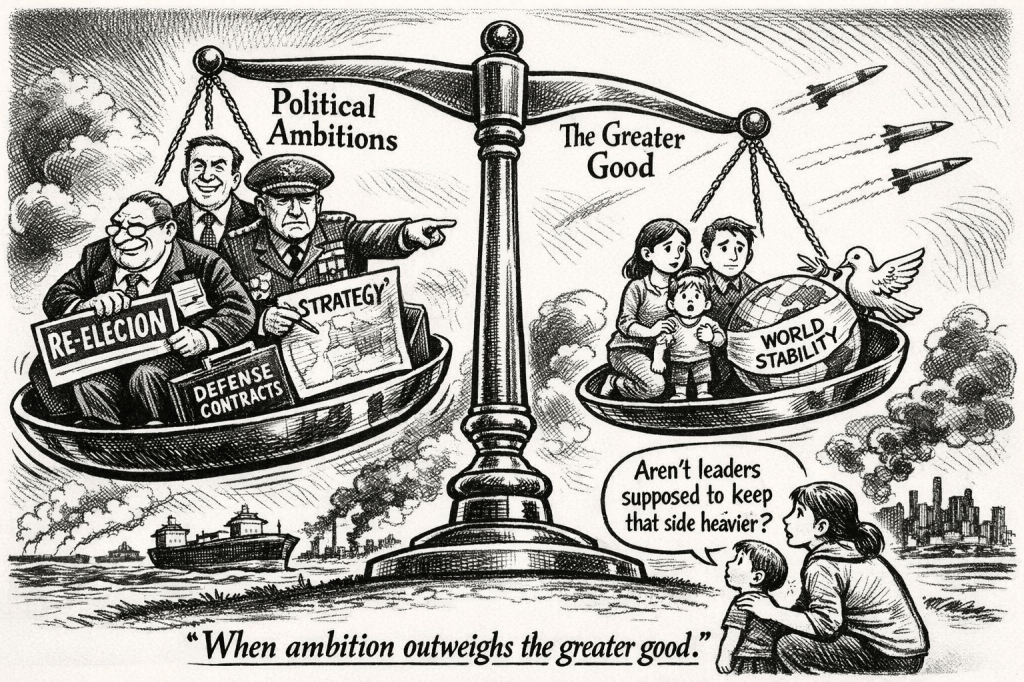
The controversy therefore contains two separate questions. The basketball argument concerns merit, incumbency and how much weight a coach should give experience. The DEI argument comes from the political climate surrounding Clark, the WNBA and American institutions more broadly. Public discussion often fuses the two.
What has actually happened in Berlin
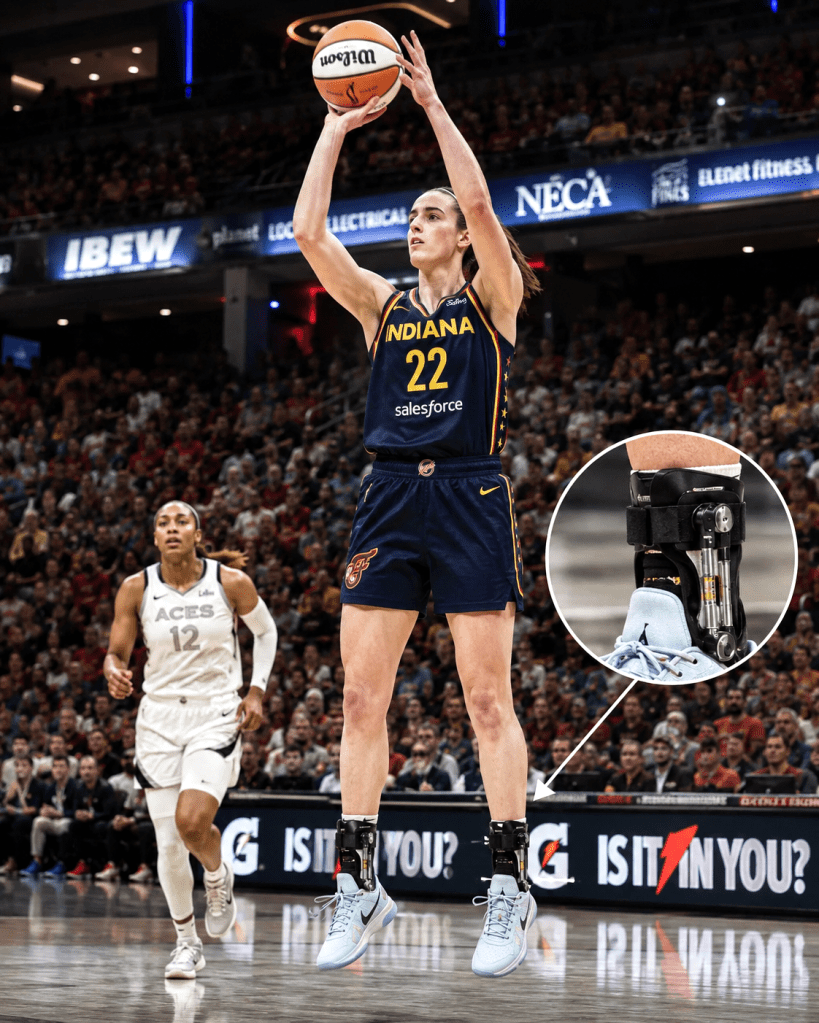
Clark’s first World Cup game made the debate immediate. Against China she scored 14 points, handed out 11 assists and committed no turnovers in 25 minutes. FIBA’s official line gave her a plus-30 differential. Through the group phase she leads the United States with 19 assists, an average of 6.3 per game, which ranks third in the tournament. She has also played 66 total minutes, more than any U.S. teammate through three games (FIBA, 2026b).
Her scoring line is much less dominant. Clark is averaging 8.0 points and has made 7 of 23 field-goal attempts, 30.4 percent, including 4 of 16 from three-point range. The Italy game was especially rough: one point, no made field goals in six attempts, one assist and two turnovers. She rebounded against Czechia with nine points and seven assists (FIBA, 2026b). That mixed record matters because a merit argument based only on her best night would leave out evidence that supports Lawson’s caution.
The other young reserves also have strong statistical cases. Bueckers is averaging 10.3 points and 3.7 assists while shooting 59.1 percent from the field through three games. She has four steals and four blocks in 58 minutes (FIBA, 2026c). Reese is averaging 8.7 points and 6.0 rebounds in 17.2 minutes while shooting 57.1 percent. Nine of her 18 rebounds have been offensive rebounds (FIBA, 2026d). These are not token minutes. Lawson is using all three as regular rotation players.
The veteran group is producing, too. Young leads the team in scoring at 11.3 points per game while shooting 53.8 percent overall (FIBA, 2026e). Stewart leads the United States in rebounding at 8.3 per game, according to USA Basketball’s September 9 tournament review (Kenny, 2026). The same review emphasized that Stewart, Young and Gray made decisive plays in the narrow win over Italy. The United States has led after the first quarter in all three group games—27–14 against China, 19–8 against Italy and 29–15 against Czechia—supporting Lawson’s statement that the starters have produced good openings (FIBA, 2026a; FIBA, 2026f).
The Italy game nevertheless supplies the critics with their best exhibit. The United States shot 29 percent from the field, made only one of 12 three-pointers and scored its lowest Women’s World Cup total since the three-point line entered the competition in 1984. Italy had a three-point attempt to force overtime in the final seconds (FIBA, 2026f). Italy’s near-upset gives critics a concrete test: the veteran-led rotation produced only 55 points and the offense nearly stalled. Any claim that a different starting five would have performed better remains hypothetical.
The merit-first case for changing the starting five
The strongest case for Clark is larger than her three games in Berlin. In March, she was named MVP of the World Cup qualifying tournament in San Juan after the United States went 5–0. She averaged 11.6 points, shot 52.9 percent and led the tournament with 6.4 assists per game (FIBA, 2026g). In the 2026 WNBA season, the league’s current player page lists her at 22.5 points and 8.4 assists per game (WNBA, 2026a). Those numbers describe a player who is already carrying a heavy professional offensive load rather than a developmental prospect waiting for a future turn.
The same point applies to Bueckers. Her current WNBA line is 20.5 points and 5.9 assists per game, and she has been one of the most efficient U.S. scorers in Berlin (WNBA, 2026b; FIBA, 2026c). Reese brings another kind of performance evidence: the WNBA lists her at 16.1 points and 12.4 rebounds per game this season, and her offensive rebounding has translated to the international tournament (WNBA, 2026c; FIBA, 2026d).
A strict merit-first critic therefore asks a simple coaching question: if present professional performance and present tournament production are the main criteria, how much historical credit should a veteran retain? Gray has a remarkable résumé—four WNBA championships and a 2022 Finals MVP award—and Young is a multiple-time champion and All-Star. Stewart is one of the defining players of her generation. Those achievements are relevant evidence of performance under pressure. They can also become a form of incumbency if past status receives more weight than current matchup value.
Clark’s particular skill makes the question more visible. She changes pace and creates shots for teammates. Against China, she entered from the bench and immediately turned the offense toward transition and passing. FIBA recorded 11 assists without a turnover. Through the group phase she has nearly twice as many assists as any U.S. teammate. A critic can reasonably argue that putting the team’s most productive distributor on the floor at the opening tip would increase the chance of establishing the preferred tempo before substitutions begin (FIBA, 2026b).
There is also a symbolic argument inside elite sports. “Starter” is not just a minute total. It signals hierarchy. Clark has actually played more total World Cup minutes than any U.S. player through three games, so the controversy is not primarily about being denied court time. It is about which players the coaching staff publicly identifies as the first unit. For fans who see professional sports as the clearest arena for measurable merit, a starter designation that appears slow to follow current performance can look like institutional deference to seniority.
That is where the word “legacy” has force. Every successful national program faces the same succession problem. A champion wants continuity, but continuity can harden into a presumption that established players keep preferred roles until they clearly lose them. A merit-first model would reverse that presumption: the current lineup would have to keep earning its place as aggressively as the challengers earn theirs.
The case for Lawson’s veteran starting five
Lawson has a different set of facts available. Her team is 3–0. The starting group has produced double-digit first-quarter margins in every game. Young, one of the veterans whose position is sometimes treated as part of the problem, is currently the team’s leading scorer. Stewart remains the leading rebounder. When Italy threatened the United States, USA Basketball credited the veteran trio of Stewart, Young and Gray with late-game plays that preserved the win (Kenny, 2026). A coach can point to those outcomes and say the opening unit is performing its assigned job.
National-team basketball also compresses preparation. Players who dominate in the WNBA must learn new roles in a short camp, under FIBA rules, against unfamiliar teams. The United States lost A’ja Wilson to health issues and Kelsey Plum after an injury-affected season just before the tournament; Sonia Citron and Kiki Iriafen were added late (Reuters, 2026a; USA Basketball, 2026a). Lawson entered Berlin with less continuity than she expected. In that setting, previous international experience and familiarity can be treated as basketball assets rather than honorary status.
The roster itself was selected under an “earned” standard. When USA Basketball announced the team on August 6, managing director Sue Bird called it “an incredibly talented group that has earned the opportunity to compete in Berlin” (NBA.com, 2026). Lawson said in the same release that the 12 players had earned their positions through “play” and “consistency.” Those statements establish USA Basketball’s public selection language: play, consistency and earned opportunity. The later formula for ranking starters has not been disclosed.
A second coaching argument concerns role balance. Coaches build five-player units around complementary jobs as well as individual résumés. Lawson may want scoring and playmaking in the second group, defensive assignments distributed across rotations, or a particular guard available to change pace after the opponent settles into its defense. Clark’s team-high minutes place her among the team’s core players regardless of the reserve label. Bueckers and Reese are also receiving substantial minutes.
Clark herself has publicly accepted that structure. After the China game, she described Lawson’s message as confidence regardless of minutes or starting status and said, “At the end of the day, we have one goal, and that’s to win gold” (Songco, 2026). Clark’s statement also leaves no documented public conflict between her and the coaching staff over the reserve role. The separate basketball question—whether the opening five is optimal—remains open.
Lawson’s defense rests on function. The starters have opened well, the bench has supplied playmaking and scoring, the team has won, and Clark has received the largest minute total. From that coaching perspective, a change made mainly to reflect individual fame or WNBA statistics could disrupt a rotation that is already producing the required result.
Is this actually a DEI decision?
This is the point at which the basketball dispute and the culture war are easiest to confuse. DEI normally refers to organizational policies intended to expand representation, access, fair treatment or inclusion for groups that have faced exclusion. USA Basketball’s public materials describe the roster and rotation in competitive terms. None of the materials reviewed for this article identifies a racial target, a gender-equity target or a diversity quota for choosing starters. Since every athlete on this roster competes on the women’s national team, gender does not distinguish one candidate for a starting position from another.
Race can enter public interpretations of the decision, especially because Clark’s WNBA career has already been surrounded by racialized commentary. A claim about a coach’s racial motive requires evidence beyond the racial politics surrounding the league. The same veteran-first starting policy has kept Clark, Bueckers and Reese in reserve. Their basketball profiles are different, and the public narratives around them are different. The common feature most visible in Lawson’s explanation is experience and the established starting group.
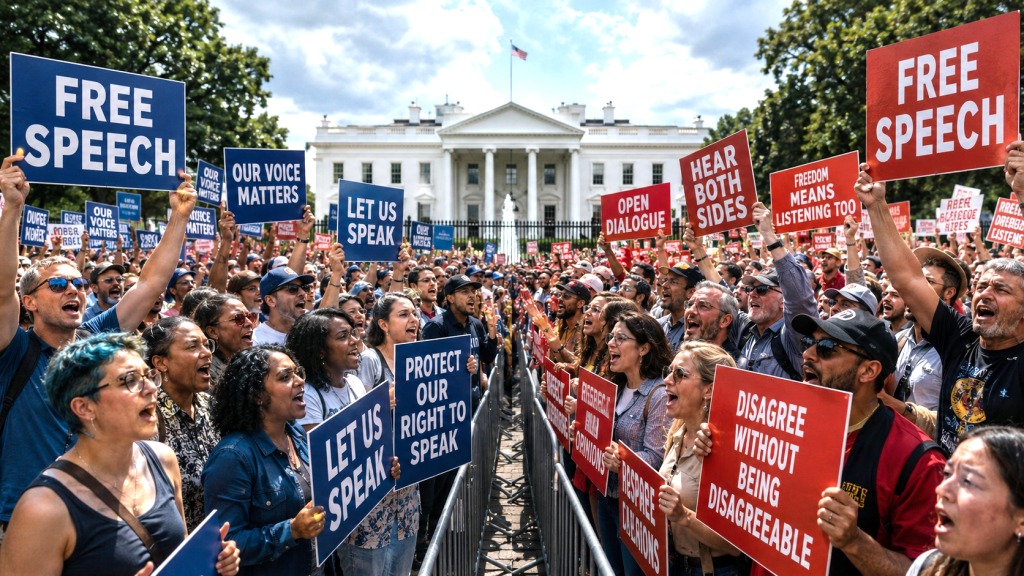
“Incumbency versus present performance” has the clearest documentary trail in this case. Critics can still connect incumbency to a larger DEI argument: they may believe institutions sometimes substitute demographic goals, internal relationships or inherited status for individual achievement. Supporters of diversity policy argue that opportunity, evaluation and role assignment affect who gets the chance to demonstrate merit. The current Team USA record supplies no direct link between either ideology and Lawson’s lineup choice.
The strongest anti-DEI argument: equal treatment and visible performance
The anti-DEI position begins with a principle that has become central to U.S. politics in 2026: institutions should make consequential decisions without using race or sex as a preference. The Trump administration has applied that principle aggressively in education. On September 3, Treasury and the IRS proposed rules that could remove tax-exempt status from private schools that use race in admissions, scholarships or other programs. Treasury Secretary Scott Bessent said that describing race-based preferences as equitable or inclusive did not change what the administration considers their discriminatory character (Internal Revenue Service, 2026; Reuters, 2026b). Civil-rights advocates quoted by Reuters argue that such programs address historical inequities, which shows the policy divide in unusually direct form.
Applied to sports, the anti-DEI case sounds even more intuitive because competition generates statistics in public. Points, assists, rebounds, shooting efficiency, wins, losses and defensive results are visible. The audience sees the same game as the coach. If identity or institutional politics were allowed to override a clearly superior player, critics would regard that as both unfair and competitively irrational.
A process critique can stand on its own without accusing Lawson of racial bias. When an institution says places are earned but leaves the weighting of current performance and experience unexplained, fans may suspect that status protects insiders. Transparent performance criteria reduce that suspicion. In Clark’s case, the question is sharpened by her qualifying-tournament MVP award, her WNBA production and her team-leading World Cup assist total.
The strongest pro-DEI argument: merit has a context
Supporters of DEI begin from a different institutional problem. They argue that “merit” is often measured after unequal access, unequal development opportunities and unequal representation have already shaped the pool of candidates. In sport, that concern is clearest outside the starting lineup of an already elite national team: who has access to facilities, coaching, travel, youth programs, leadership jobs and professional pathways?
A 2026 open-access study by Ava Xingmeng Huang traced three decades of gender-equality, diversity and inclusion policy in the Olympic movement. It found major formal gains, including athlete parity, while also identifying gaps between policy commitments and substantive change in leadership and institutions (Huang, 2026). The FIBA Foundation’s 2026 Her World Her Rules projects are designed to expand female participation and gender equality in basketball and have reached more than 180,000 girls worldwide (FIBA Foundation, 2026). Those initiatives operate upstream from elite starting assignments: they widen the pipeline of people who get opportunities to play, coach and officiate.
The pro-DEI case also disputes the idea that sport reduces merit to one rankable number. A point guard’s value includes decision-making, turnovers, tempo and spacing. A wing’s value includes defense, switching, rebounding and matchup flexibility. A veteran’s experience can affect late-game execution. A reserve can be more valuable in a particular rotation than in the opening lineup. Coaches make judgments from film, practice and tactical assignments that spectators do not fully see.
For this side of the argument, the danger lies in treating every decision that disappoints the public as evidence of identity preference. That can turn athletes into political symbols and encourage racial speculation without proof. It can also expose players on the other side of the comparison to abuse for decisions they did not make.
Why Caitlin Clark is already carrying a political argument
The Berlin controversy did not begin in Berlin. Clark’s enormous audience, her rapid impact on WNBA business and the physical play around her have made her a recurring subject in American politics. In July, a group of Republican members of Congress asked the WNBA for information about player safety and competitive treatment of Clark. The Republican Study Committee framed Clark as a transformative star and raised the possibility of federal scrutiny if discrimination or retaliation were documented (Republican Study Committee, 2026). Sports Business Journal reported that the lawmakers’ concerns included claims that attacks on Clark might be racially motivated (Sports Business Journal, 2026).
The WNBA and its players have faced the opposite concern at the same time: racist, homophobic and threatening abuse directed at players, often through social media. After a June incident involving Clark and Alyssa Thomas, NBA commissioner Adam Silver said Clark had become “a bit of a political football in this country” and called that treatment “incredibly unfair to her” (Reuters, 2026c). Clark herself condemned “the harassment, the hate,” while Fever coach Stephanie White spoke about rising “toxicity, racism, homophobia” around the league (Reuters, 2026c).
A KQED/PBS discussion in August described the WNBA as a venue for culture-war fights over race, gender and sexual orientation (Lagos, 2026). That framing matters because a Team USA substitution now arrives in front of an audience that has spent months interpreting Clark-related events through partisan lenses. A basketball decision can therefore acquire political meaning even when the coach does not give it one.
What the dispute could mean for the WNBA and USA Basketball
The first implication is institutional trust. The WNBA and USA Basketball are governing elite competition while also operating as public-facing businesses. Fans accept difficult decisions more readily when they understand the criteria. If a superstar leads a team in playmaking and minutes but remains a reserve, the coach’s tactical explanation must compete with a much louder online explanation supplied by partisan media, fan communities and influencers.
The second implication is player safety and team cohesion. Political narratives tend to personalize structural arguments. A debate that begins with “Should Clark start?” can become “Who is keeping her down?” The target then shifts toward a coach or another player. The 2026 WNBA season has already shown how quickly basketball disputes can produce threats and racial abuse. Silver, Clark, White and league officials have all publicly condemned that behavior (Reuters, 2026c).
The third implication is succession. USA Basketball has won four consecutive Women’s World Cups and is pursuing a fifth. A program that successful must constantly decide when established champions should yield roles to younger stars. That problem has no DEI requirement built into it. It exists in every dynasty. The current team makes it unusually visible because Clark, Bueckers and Reese are not obscure prospects; they are prominent WNBA players with large audiences and measurable production.
The fourth implication is commercial. Clark’s games draw exceptional attention, and decisions involving her can dominate national sports coverage (Sports Business Journal, 2026; Reuters, 2026c). A national team cannot responsibly select starters only to maximize audience interest. It also cannot ignore the communications cost of unexplained choices in an era when a rotation decision becomes a political narrative before the postgame press conference begins.
The larger U.S. political split: two definitions of fairness
The DEI fight surrounding sport reflects a broader American disagreement about fairness. Pew Research Center reported in March that 64 percent of U.S. adults consider it important for companies and organizations to promote racial and ethnic diversity. The partisan gap is wide: 87 percent of Democrats said it was important, compared with 40 percent of Republicans. Pew also found that 82 percent of Democrats viewed racial and ethnic diversity’s impact on American culture positively, compared with 45 percent of Republicans (Hurst, 2026).
Those numbers help explain why the same sports controversy can produce two coherent readings. Many conservatives define fairness primarily through equal rules applied to individuals and are suspicious of policies that explicitly consider group identity. In sport, that outlook naturally favors the language of measurable performance and colorblind selection. A star who appears to outperform an incumbent becomes an easy example of the argument that institutions should stop protecting categories, constituencies or established hierarchies.
Many liberals and progressives define fairness partly through access and the effects of historical exclusion. They are more likely to regard diversity efforts as legitimate attempts to widen opportunity and to question whether supposedly neutral measures always capture the full range of value. In sport, that outlook also makes them more alert to racialized harassment and to claims that Clark is being targeted for racial reasons when direct evidence of racial motive is absent.
These partisan frameworks help explain the sharply different readings of the same box score. Lawson is choosing among elite players while the public argues about what counts as merit, whether institutions can be trusted to recognize it, and when identity should enter institutional decisions.
Beyond the United States
The argument has international reach because the Women’s World Cup is a global event and because DEI politics do not travel under one vocabulary. Many sports organizations outside the United States have adopted gender-equality and inclusion programs, particularly to increase female participation and leadership. Their debates often focus on access to facilities, governance, coaching pipelines and discrimination rather than the American partisan label “DEI.” Huang’s 2026 Olympic-governance study shows both the spread of these commitments and the continuing difficulty of turning formal policy into institutional change (Huang, 2026).
FIBA operates in that environment while running a competition in which performance remains unforgiving. Lawson called this World Cup the most difficult the United States has faced because international rosters have become deeper and stronger. The Italy game supplied evidence for her warning: the defending champions came within one missed three-pointer of overtime after scoring only 55 points (Reuters, 2026a; FIBA, 2026f).
That global setting makes the Team USA debate useful beyond Clark. National federations have to pursue wider participation and fair access while also selecting teams and lineups to win. Those are related responsibilities, but they occur at different stages. Programs can expand opportunity throughout the pipeline and still use performance-based selection at the elite end. Critics will demand proof that the second stage remains independent of identity preference. Supporters of inclusion will demand proof that the pipeline itself is genuinely open.
Where the evidence stands on September 9*
The current record supports several facts. Lawson has favored a veteran starting unit for all three group games. Clark, Bueckers and Reese have come from the bench but have played meaningful minutes. Clark leads the United States in assists and total minutes while shooting poorly overall from the field. Bueckers has been highly efficient. Reese has rebounded well in limited minutes. Young leads the team in scoring. Stewart leads it in rebounding. The United States is 3–0, and the starters have produced strong first quarters. Italy also exposed serious offensive vulnerability (Kenny, 2026; FIBA, 2026b–f).
As of September 9, the public record contains no evidence that race, gender or a DEI directive determined the starting lineup. Lawson has publicly cited the performance of the veteran group and has left open the possibility of rotation changes. The allegation of racial or gender preference lacks documentary support at this dateline. The question of whether Lawson is giving too much weight to experience remains a legitimate basketball argument because the younger players have supplied substantial current evidence for larger roles.
The quarterfinal against Hungary will add another game to the performance record. A Clark start would change the tactical debate; another reserve appearance would intensify it; either outcome could be followed by a win or a loss. Those outcomes measure basketball performance. A claim about hidden political motive still requires independent evidence. As of September 9, the verified record shows a live merit-and-incumbency dispute on the court. The DEI culture war is the political context surrounding that dispute.
References
FIBA. (2026a). USA team profile: FIBA Women’s Basketball World Cup 2026. https://www.fiba.basketball/en/events/fiba-womens-basketball-world-cup-2026/teams/usa
FIBA. (2026b). Caitlin Clark: USA player profile, FIBA Women’s Basketball World Cup 2026. https://www.fiba.basketball/en/events/fiba-womens-basketball-world-cup-2026/teams/usa/235603-caitlin-clark
FIBA. (2026c). Paige Bueckers: USA player profile, FIBA Women’s Basketball World Cup 2026. https://www.fiba.basketball/en/events/fiba-womens-basketball-world-cup-2026/teams/usa/235601-paige-bueckers
FIBA. (2026d). Angel Reese: USA player profile, FIBA Women’s Basketball World Cup 2026. https://www.fiba.basketball/en/events/fiba-womens-basketball-world-cup-2026/teams/usa/255458-angel-reese
FIBA. (2026e). Jackie Young: USA player profile, FIBA Women’s Basketball World Cup 2026. https://www.fiba.basketball/en/events/fiba-womens-basketball-world-cup-2026/teams/usa/283322-jackie-young
FIBA. (2026f, September 6). Italy hand holders USA a major scare. https://www.fiba.basketball/en/events/fiba-womens-basketball-world-cup-2026/news/italy-hand-holders-usa-a-major-scare
FIBA. (2026g, March 18). Clark crowned TISSOT MVP in San Juan. https://www.fiba.basketball/en/events/fiba-womens-basketball-world-cup-2026-qualifying-tournament-san-juan-puerto-rico/news/clark-crowned-tissot-mvp-in-san-juan
FIBA Foundation. (2026). Propose a Project 2026 reaches new heights with Her World Her Rules integration. https://foundation.fiba.basketball/en/news/propose-a-project-2026-reaches-new-heights-with-her-world-her-rules-integration
Huang, A. X. (2026). Global sports governance: Three decades of gender equality, diversity and inclusion policies and strategies in the Olympic movement. Equality, Diversity and Inclusion: An International Journal, 45(9), 86–99. https://doi.org/10.1108/EDI-06-2025-0404
Hurst, K. (2026, March 25). How Americans view racial and ethnic diversity in the country and workplace. Pew Research Center. https://www.pewresearch.org/short-reads/2026/03/25/how-americans-value-racial-diversity-ahead-of-the-countrys-250th-anniversary/
Internal Revenue Service. (2026, September 3). Treasury, IRS move to end tax-exempt status for discriminatory practices in private schools (IR-2026-103). https://content.govdelivery.com/accounts/USIRS/bulletins/4283909
Kenny, J. (2026, September 9). USA poised for Women’s World Cup knockout stage. USA Basketball. https://www.usab.com/news/2026/09/2026-wwc-knockout-preview
Lagos, M. (2026, August 20; updated August 21). The WNBA has a politics problem. KQED. https://www.kqed.org/news/12096193/the-wnba-has-a-politics-problem
NBA.com. (2026, August 6). 2026 USA Basketball Women’s National Team announced. https://www.nba.com/news/2026-usa-basketball-womens-team-announced
Sports Business Journal. (2026, July 9). GOP lawmakers press WNBA for accountability over hits on Clark. https://www.sportsbusinessjournal.com/Articles/2026/07/09/gop-lawmakers-press-wnba-for-accountability-over-hits-on-clark/
Republican Study Committee. (2026, July 8). RSC Chairman Pfluger leads letter to WNBA demanding accountability over unfair treatment of Caitlin Clark. https://rsc-pfluger.house.gov/media/press-releases/rsc-chairman-pfluger-leads-letter-wnba-demanding-accountability-over-unfair
Reuters. (2026a, September 3). U.S. prepare for toughest-ever World Cup with Wilson’s sudden absence. https://www.reuters.com/sports/us-prepare-toughest-ever-world-cup-with-wilsons-sudden-absence-2026-09-03/
Reuters. (2026b, September 3). Trump moves to strip tax-exempt status from schools that consider race. https://www.reuters.com/legal/government/trump-moves-strip-tax-exempt-status-schools-that-consider-race-2026-09-03/
Reuters. (2026c, July 17). Adam Silver says Caitlin Clark has unfairly become a “political football.” https://www.reuters.com/sports/adam-silver-says-caitlin-clark-has-unfairly-become-political-football–flm-2026-07-17/
Songco, P. (2026, September 5). Caitlin Clark embraces pressure after Team USA’s 94–61 victory over China. Athlon Sports (syndicated by Yahoo/AOL). https://www.aol.com/articles/caitlin-clark-embraces-pressure-team-235801000.html
Thompson, J. (2026, September 9). Team USA coach reveals if Caitlin Clark will start in the World Cup final stage after bench role in group play. OutKick/Fox News. https://www.foxnews.com/outkick-sports/team-usa-coach-reveals-caitlin-clark-start-world-cup-final-stage-bench-role-group-play
USA Basketball. (2026a, August 31). Sonia Citron and Kiki Iriafen added to 2026 USA Basketball Women’s National Team roster. https://www.usab.com/news/2026/08/sonia-citron-and-kiki-iriafen-added-to-2026-usa-basketball-womens-national-team-roster
WNBA. (2026a). Caitlin Clark player profile and 2026 statistics. Retrieved September 9, 2026. https://www.wnba.com/player/1642286/caitlin-clark/profile
WNBA. (2026b). Paige Bueckers player profile and 2026 statistics. Retrieved September 9, 2026. https://www.wnba.com/player/1642784
WNBA. (2026c). Angel Reese player profile and 2026 statistics. Retrieved September 9, 2026. https://www.wnba.com/player/1642291/angel-reese
__________
*Reporting status: Current through September 9, 2026, after the group phase and before the United States–Hungary quarterfinal on September 10. Tournament statistics and roles can change as the knockout stage continues.
###
Filed under: Uncategorized |
































































































































































































































































































































































































































































Leave a Reply