






By Jim Shimabukuro (assisted by Claude)
Editor
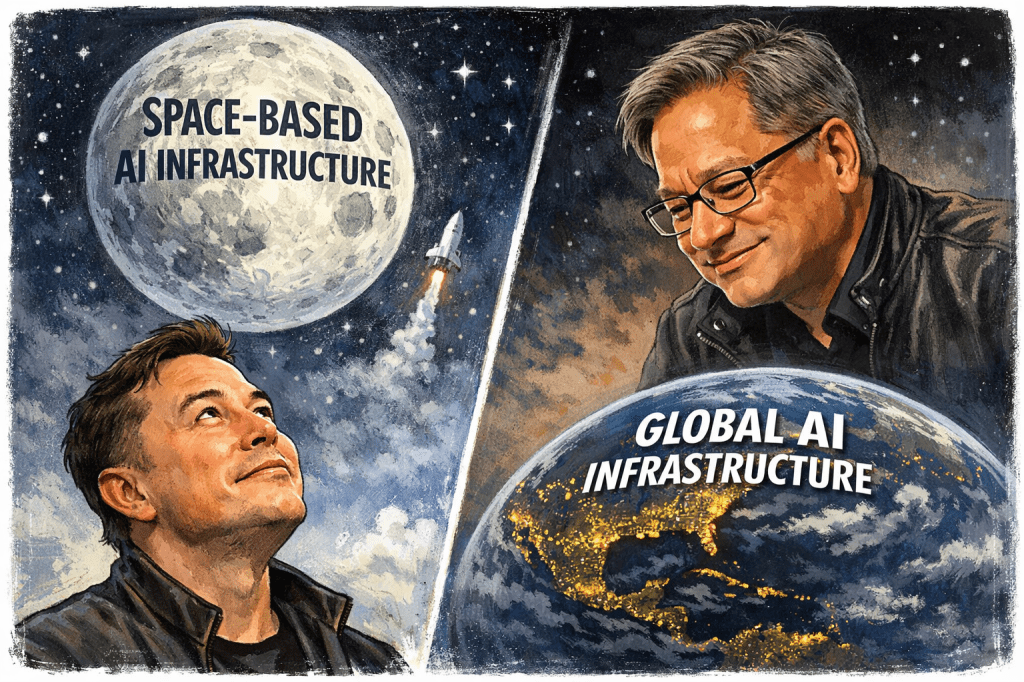
SpaceX carries most of the world’s mass to orbit. On top of that one fact, Musk has stacked Starlink, an AI company, chip factories, robots, a planned million-satellite computing network, and a renewed push for the Moon. Here is what is real, what is scheduled, and what is still a promise.

On October 23, Yahoo Finance reporter Jake Conley published a long look at how Elon Musk came to be described by Gautam Mukunda, a research fellow at the Harvard Kennedy School, as possibly “the most powerful civilian, non-governmental actor in history” (Conley, 2026). In the middle of the piece sits a sentence that explains much of that power: “SpaceX is now responsible for roughly 90% of all mass sent into orbit off Earth, Musk said on SpaceX’s recent earnings call” (Conley, 2026).
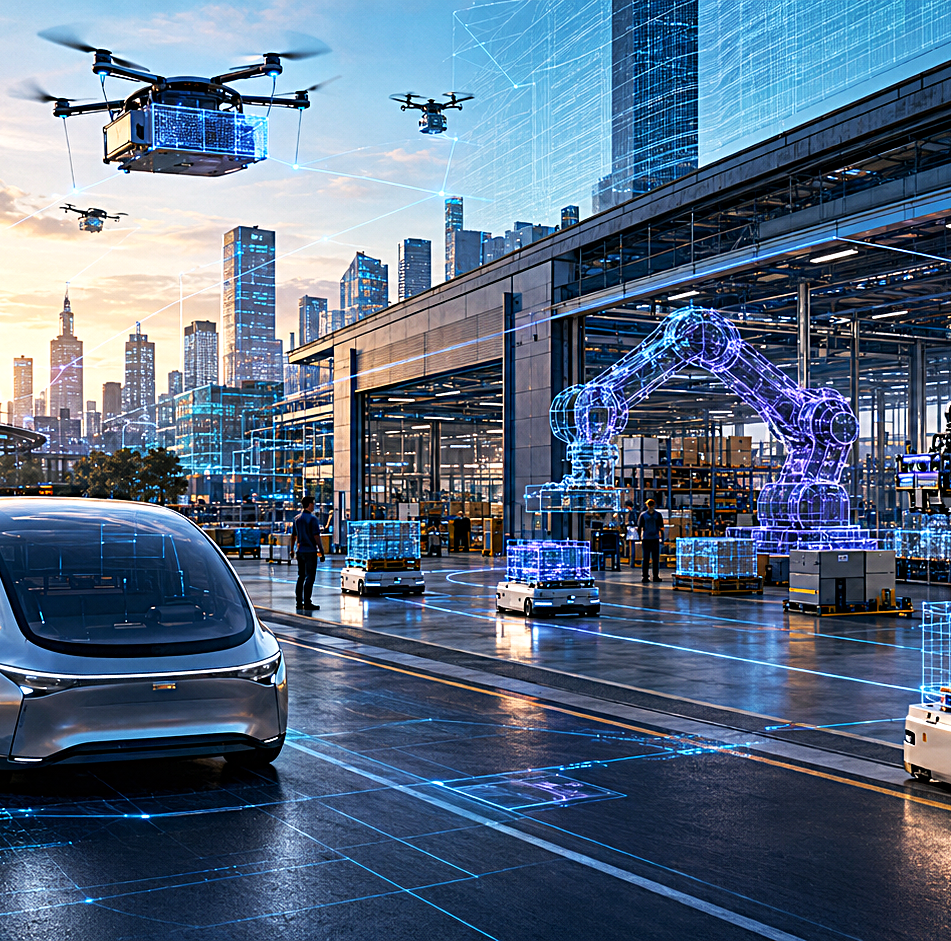
The number deserves a check, and so does what has been built on top of it. In 2026 SpaceX stopped being only a rocket and satellite company. In February it absorbed xAI, Musk’s artificial intelligence company, which already owned the social network X and the Grok chatbot. In June it went public on the Nasdaq. In August it bought the AI coding company Cursor. It is planning a chip-making complex with Tesla called Terafab, renting out its Colossus supercomputer in Memphis to other AI labs, designing a constellation of up to a million computing satellites called Starmind, and, as of last week, studying a merger with Tesla, the company that builds the Optimus robot. Musk’s stated destinations, a city on the Moon and then one on Mars, sit at the far end of that list.
This article sorts those pieces into three groups: what has happened and can be verified, what is scheduled and has hardware or money behind it, and what remains a forecast from a man whose forecasts have a long record of arriving late. The goal is one clear picture of where Musk is going and how far along he is.
Checking the ninety percent
Musk made the claim on SpaceX’s third-quarter earnings call on October 20. According to the Motley Fool’s transcript of the call, he said the company had reached “almost 90% of all mass to orbit of earth,” and he put China at roughly 6 percent and the rest of the world, including other American launch companies, at about 4 percent (The Motley Fool, 2026). He had said something similar in August, on SpaceX’s first earnings call as a public company: “We deliver 80% to 90% of total earth mass to orbit per year with Falcon.” He estimated that Falcon rockets lift about 2,500 tons a year, against about 300 tons for everyone else combined (Space Exploration Technologies Corp. [SpaceX], 2026b).
The most careful version of the figure is in SpaceX’s IPO prospectus, filed with the Securities and Exchange Commission in May. A prospectus carries legal liability for misstatements, and this one says SpaceX has “launched more than 80% of mass to orbit for the world each year” since 2023 (SpaceX, 2026a). Independent counts fit that range. The analytics firm BryceTech reported that SpaceX flew 165 orbital launches in 2025, nearly 51 percent of the world’s total, and carried 85 percent of all satellites launched; BryceTech estimated that launch providers worldwide put about 2.7 million kilograms of spacecraft into orbit that year (Holmes, 2026). The space-industry newsletter Payload counted 170 SpaceX launches in 2025, including five Starship test flights, against 92 Chinese launch attempts (Gorman, 2026).
The claim holds up in broad terms. The prospectus figure of “more than 80%” is the conservative floor. Musk’s “almost 90%” is his own estimate for the current year, and no independent tally for 2026 has yet confirmed it. The gap between SpaceX’s share of launches (about half) and its share of mass (80 to 90 percent) comes from the fact that Falcon 9 rockets fly nearly full and fly often, while many other rockets carry lighter loads less frequently.
A second qualification matters more. Most of that mass is SpaceX’s own hardware. Of the company’s 165 launches in 2025, 122 carried Starlink satellites, according to Via Satellite’s summary of the year (Holmes, 2026). SpaceX is its own largest launch customer. The 90 percent figure measures the company’s grip on the launch business, and it also measures how much of its rocket capacity goes into building its own satellite network. That arrangement is the base of everything else in this story: cheap, frequent launches made Starlink possible, and Starlink’s revenue paid for the next layer.
From rockets to a revenue machine
Starlink is now a large business in its own right. SpaceX’s connectivity segment, which is mostly Starlink, brought in $5.2 billion in the third quarter, up 69 percent from a year earlier. The company reported 13.6 million consumer subscribers, more than 22 million monthly users of Starlink Mobile, its service that connects directly to ordinary phones, and contracts for roughly 12,000 airplanes (The Motley Fool, 2026). The average consumer is paying less, though. SpaceQ calculated average monthly revenue per consumer at $69, down from $83 a year earlier, as the service spreads into lower-income countries (Boucher, 2026).
Musk’s forecasts for Starlink are much larger than its current results. In August he said “it’s not out of the question that at some point, Starlink will deliver a majority of the world’s Internet” (SpaceX, 2026b). In October he described “a clear path to several hundred billion dollars a year in connectivity revenue” (The Motley Fool, 2026). At the third-quarter pace, the segment earns a little over $20 billion a year. “Several hundred billion” would require growth of ten times or more. Musk did not give a date.
The AI layer arrived on February 2, when SpaceX formally acquired xAI. In a memo explaining the deal, Musk wrote that “current advances in AI are dependent on large terrestrial data centers, which require immense amounts of power and cooling,” and that “global electricity demand for AI simply cannot be met with terrestrial solutions, even in the near term.” TechCrunch, citing Bloomberg, reported that xAI was burning about $1 billion a month at the time (O’Kane, 2026). The AI business now operates under the name SpaceXAI.
Four months later, SpaceX went public. On June 12 it sold 555.6 million shares at $135 each, raising about $75 billion, and began trading on the Nasdaq under the ticker SPCX (Chowdhry, 2026). Musk kept more than half of the voting power (Korosec, 2026). Between the merger and the listing, in May, Anthropic agreed to use all of the computing capacity at SpaceX’s Colossus 1 data center, which it said gave it “more than 300 megawatts of new capacity (over 220,000 NVIDIA GPUs)” and added that it had “expressed interest in partnering with SpaceX to develop multiple gigawatts of orbital AI compute capacity” (Anthropic, 2026). In August SpaceX completed its $60 billion purchase of Cursor, one of the largest technology acquisitions on record (Arroyo & Mascarenhas, 2026).
The third-quarter results showed what those moves added up to. Revenue rose 161 percent from a year earlier to $14.6 billion, and the company reported net income of $4.4 billion (The Motley Fool, 2026). The segment SpaceX now calls “Super Intelligence,” which includes compute rental, Grok, X, and Cursor, produced $7.6 billion, about 52 percent of the total. Connectivity produced about 36 percent. The rocket business that started it all, labeled “Space,” produced $1.8 billion, or about 12 percent (Boucher, 2026). A company founded in 2002 to reach Mars now gets more than half its revenue from artificial intelligence.
SpaceQ’s Marc Boucher, reading the same numbers, pointed out several soft spots. Cursor alone contributed $608 million of the AI segment’s revenue. After $1.2 billion of stock compensation tied to that deal, the segment earned an operating profit of only $431 million. About $1.6 billion of the $4.4 billion net profit came from items other than operations, including other income, a tax benefit, and interest. Spending is the bigger issue: SpaceX spent $19.6 billion on capital projects in the third quarter and guided to $35 billion to $40 billion in the fourth. Over nine months, operating cash flow was $13.1 billion while spending on property and equipment reached $48.1 billion, and cash and short-term investments fell 10 percent during the quarter to $89.9 billion (Boucher, 2026).
The forecasts on the AI side are the most aggressive Musk has made this year. SpaceX had 1.7 gigawatts of nameplate computing capacity at the end of September (Boucher, 2026). Musk told analysts, “I would be surprised if we brought on less than 13 gigawatts of compute by the end of next year,” and said annual recurring revenue by the end of 2027 could be “somewhere between $500 billion and $1 trillion” (The Motley Fool, 2026). Chief financial officer Bret Johnsen repeated a nearer goal of $100 billion in annual recurring revenue by the end of 2026. Boucher calculated that hitting it would require about $8.3 billion of revenue in December alone, roughly 70 percent above the third quarter’s monthly average (Boucher, 2026). That target comes due in nine weeks and will be the first hard test of the AI story.
Starship comes first
Almost every plan beyond today’s business depends on Starship, the fully reusable rocket SpaceX has been testing in Texas since 2023. Starship is supposed to launch the larger third-generation Starlink satellites, the Starmind computing satellites, NASA’s lunar lander, and eventually Mars ships. Johnsen told investors in August that Starship aims to cut launch costs to one-tenth of Falcon 9’s (SpaceX, 2026b).
On September 28, on its 14th test flight, Starship reached orbit for the first time and released 26 operational Starlink V3 satellites (Garrett, 2026). Musk said the flight “deployed 26 terabits per second of Starlink bandwidth” (The Motley Fool, 2026). The prospectus had promised that Starship would “commence payload delivery to orbit in the second half of 2026” (SpaceX, 2026a). That promise was kept.
The next goal is to catch both stages, the Super Heavy booster and the Starship upper stage, with the arms of the launch tower so both can fly again quickly. SpaceX president Gwynne Shotwell said the company remains “on track with our goals to bring back both the first and second stages to the tower this year,” and Musk said it was “more likely than not that this succeeds next flight” (The Motley Fool, 2026).
Launch frequency is where Musk’s timelines are easiest to measure. In August, after Flight 13, he said, “probably a year from now we will be doing at least one flight a day, possibly more” (SpaceX, 2026b). On October 20 he said, “We expect Starship to fly weekly at some point in the first half next year.” In eleven weeks, the forecast moved from daily flights by about August 2027 to weekly flights by mid-2027. Musk also described a planned launch complex in Louisiana with “on the order of 20 or more launch towers,” targeted for a first launch in 2028, adding that “’29 is highly likely” (The Motley Fool, 2026).
Computers in orbit, chips on the ground
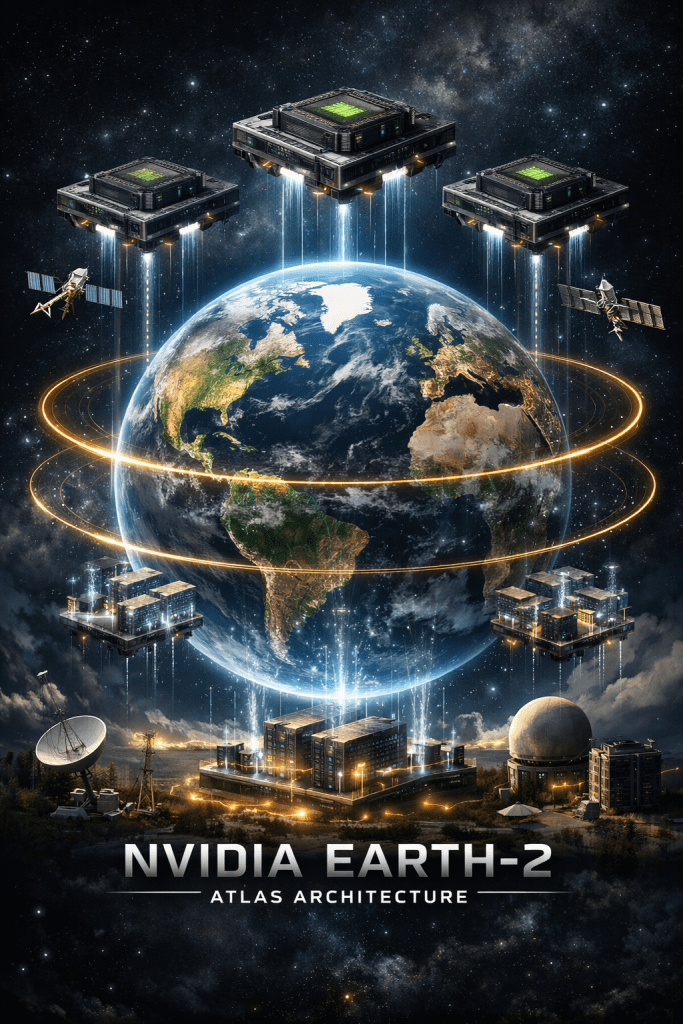
The most ambitious layer is Starmind. In January, SpaceX asked the Federal Communications Commission for permission to deploy an orbital data center system of up to one million satellites (Owens, 2026). After the xAI merger, Musk argued that the satellites’ near-constant sunlight “will transform our ability to scale compute,” adding, “It’s always sunny in space!” (Wall, 2026). He also predicted, “My estimate is that within two to three years, the lowest cost way to generate AI compute will be in space” (Hawley, 2026). Musk confirmed the Starmind name on June 23. For scale, Starlink had about 10,700 active satellites at the time, so a million-satellite Starmind would be roughly 100 times larger (Wall, 2026).
The first satellite design, called AI1, is built around Nvidia’s Vera Rubin NVL72 computer system. It measures 70 meters from tip to tip, averages about 120 kilowatts of computing power, and carries 150 kilowatts of solar panels. SpaceX expects each Starship flight to carry 30 to 50 of them (Hawley, 2026). The schedule has moved earlier on paper. The May prospectus said SpaceX expected to begin deploying orbital AI satellites “as early as 2028” (SpaceX, 2026a). In August, Musk posted a target of the fourth quarter of 2027, and VKTR reported that the first flights would be proof-of-concept missions rather than paid service (Hawley, 2026). On the October call, Shotwell said SpaceX would “begin flying Mobile V2 and Starmind satellites in 2027” (The Motley Fool, 2026).
Simple arithmetic shows the size of the job. At 120 kilowatts per satellite, one gigawatt of orbital computing would take more than 8,000 AI1 satellites, more than three-quarters of the entire Starlink network as of June. At 30 to 50 satellites per launch, that is roughly 170 to 280 Starship flights for a single gigawatt, and that single gigawatt is less than a tenth of the 13 gigawatts of computing Musk expects SpaceX to have by the end of 2027.
The main technical objection is heat. On Earth, data centers dump heat into air and water. In a vacuum, as Brookings fellow Lauren Tokos wrote in June, “thermal radiation may be the only way to dissipate the heat generated by orbital data centers,” and some scientists estimate that a single facility would need about 2.15 million square feet of radiators (Tokos, 2026). Musk has dismissed the concern: “For some reason there’s been a bizarre debate about radiators in space,” he said, adding, “It’s safe to say SpaceX knows how to do heat rejection in space with 10,000 satellites in orbit” (Griessel, 2026). Cost is the other objection. VKTR, citing the research firm SemiAnalysis, reported that orbital compute remained more than four times as expensive as ground-based compute in 2026 (Hawley, 2026). Musk’s answer ties the whole plan back to Starship: “As soon as the cost to orbit drops to a low number, it immediately makes extremely compelling sense to put AI in space” (Griessel, 2026).
The satellites, the ground data centers, and Tesla’s cars and robots all need chips, which is the reason for Terafab. Musk announced the project in March as a joint effort of SpaceX, Tesla, and xAI. “We need the chips, so we’re going to build the Terafab,” he said. He said the goal was a trillion watts of computing capacity per year, compared with about 20 gigawatts of AI chips produced worldwide each year, and that about 80 percent of the output would go to space uses such as orbital data centers. A May public notice put the first phase at about $55 billion in Grimes County, Texas, with total costs up to $119 billion if later phases are built (Owens, 2026). On the October call, Musk said SpaceX hoped to produce a test chip around May or June of 2027 and to “reach volume production around Q3 of ’28 at Terafab,” and he called those dates very aggressive (The Motley Fool, 2026).
Electrek editor Fred Lambert was blunt when the project was announced. “Tesla has zero semiconductor manufacturing experience,” he wrote, noting that a chip plant “takes about 38 months just to build in the U.S.” and that TSMC’s $165 billion, six-fab program in Arizona will not reach 2-nanometer production until 2029 (Lambert, 2026).
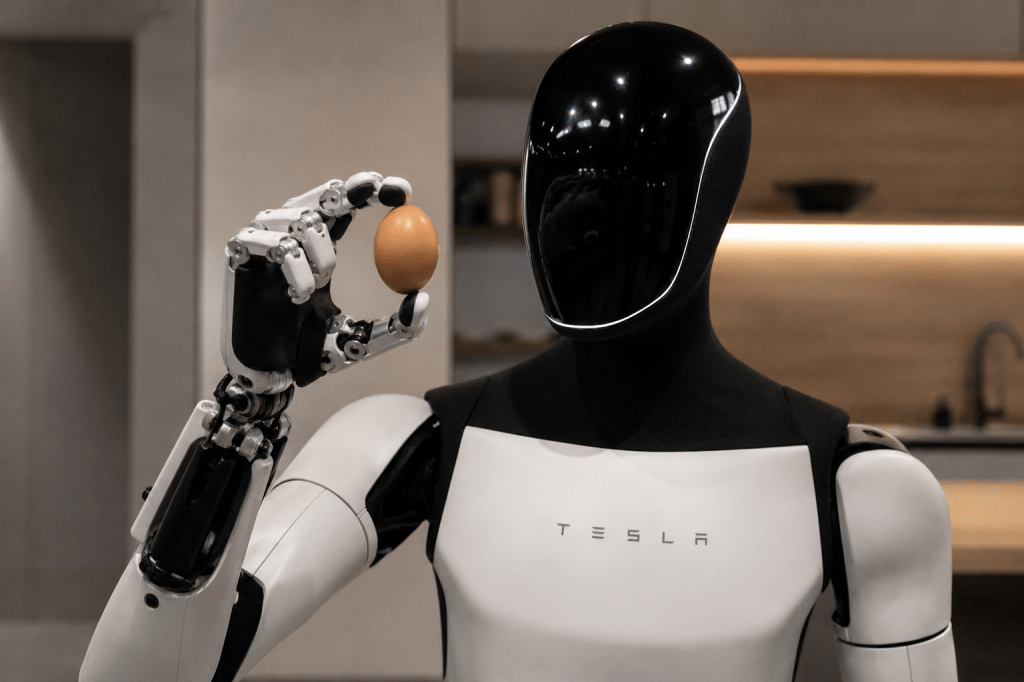
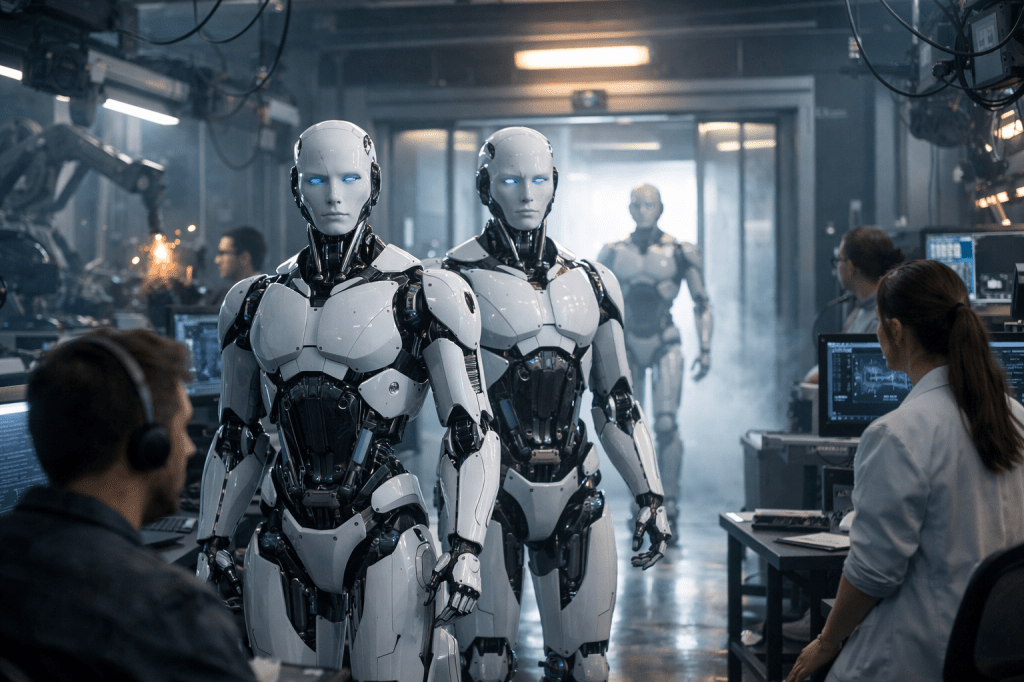
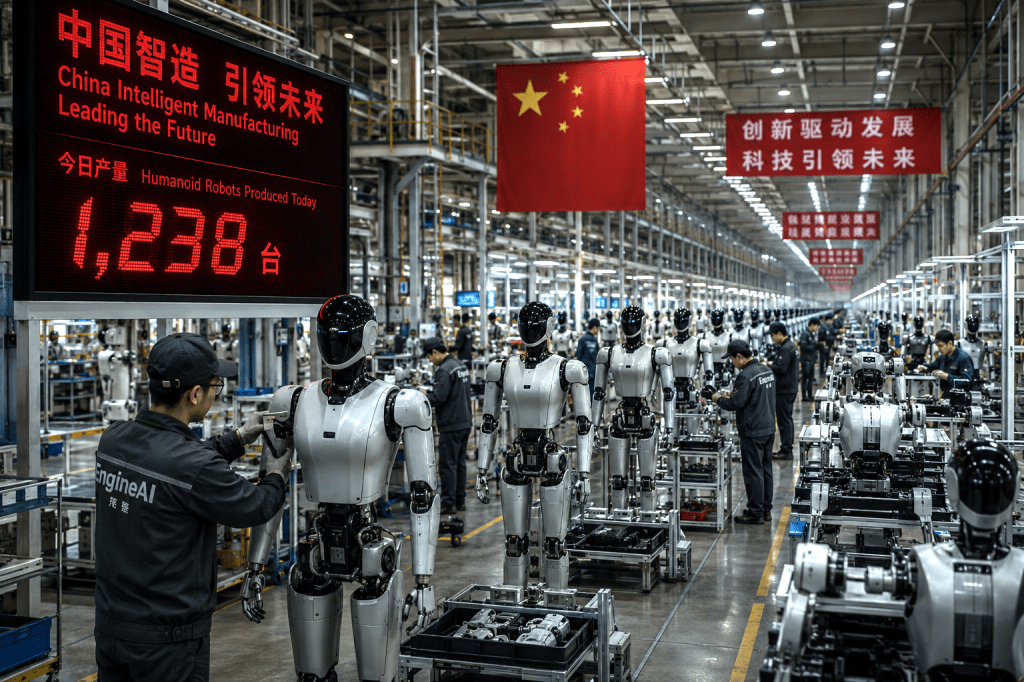
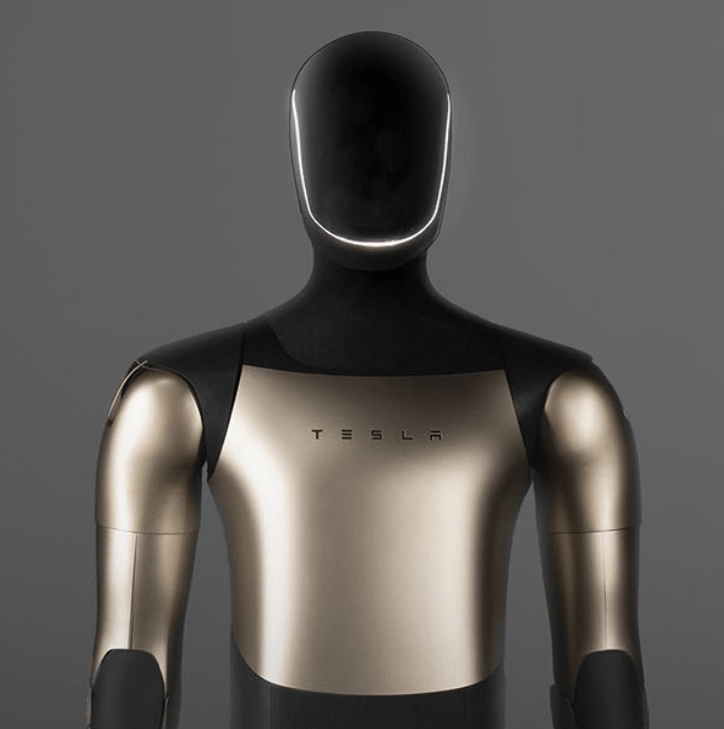
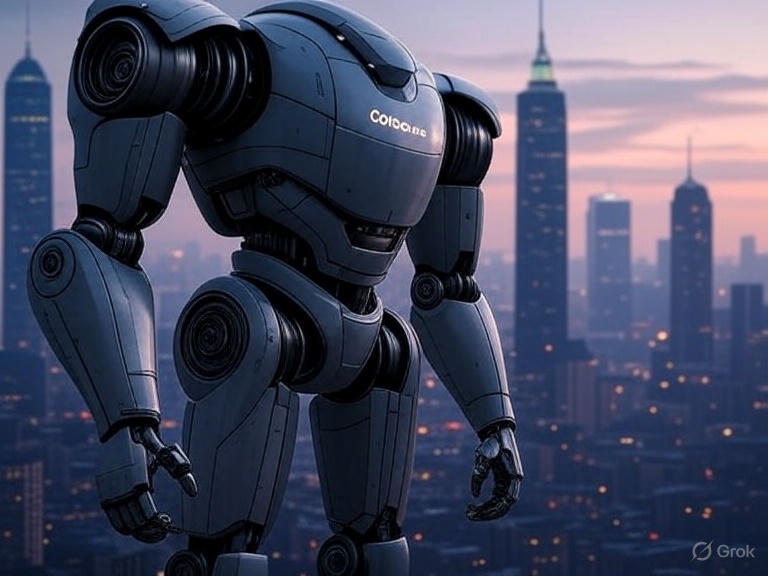
Tesla is where the robots come in. The company began production of its Optimus humanoid robot in October, in a factory that formerly built cars. Musk called it “early production” and said the ramp would be “somewhat bumpy because it is such a radically new product.” Tesla’s target is 20,000 robots a week by the end of 2027. The same quarter, Tesla’s profit fell 43 percent (Tolomia, 2026). In August, Musk tied the robots to the Moon, telling SpaceX investors, “we are going to land a lot of tonnage on the Moon” and build factories there (SpaceX, 2026b).
That overlap is the case for merging Tesla and SpaceX. On October 20, Musk confirmed that both boards had formed special committees of independent directors to study a combination, citing shared work on AI software, robotics, Starmind, and Terafab. He said there is “a lot of merit to combining the companies,” but warned that treating a merger as certain “would be overstating it.” Approval at Tesla would require a majority of all outstanding shares, not just those voted (Korosec, 2026). Yahoo Finance reported that teams inside both companies are pursuing an aggressive timeline to merge before the 2028 presidential election (Conley, 2026).
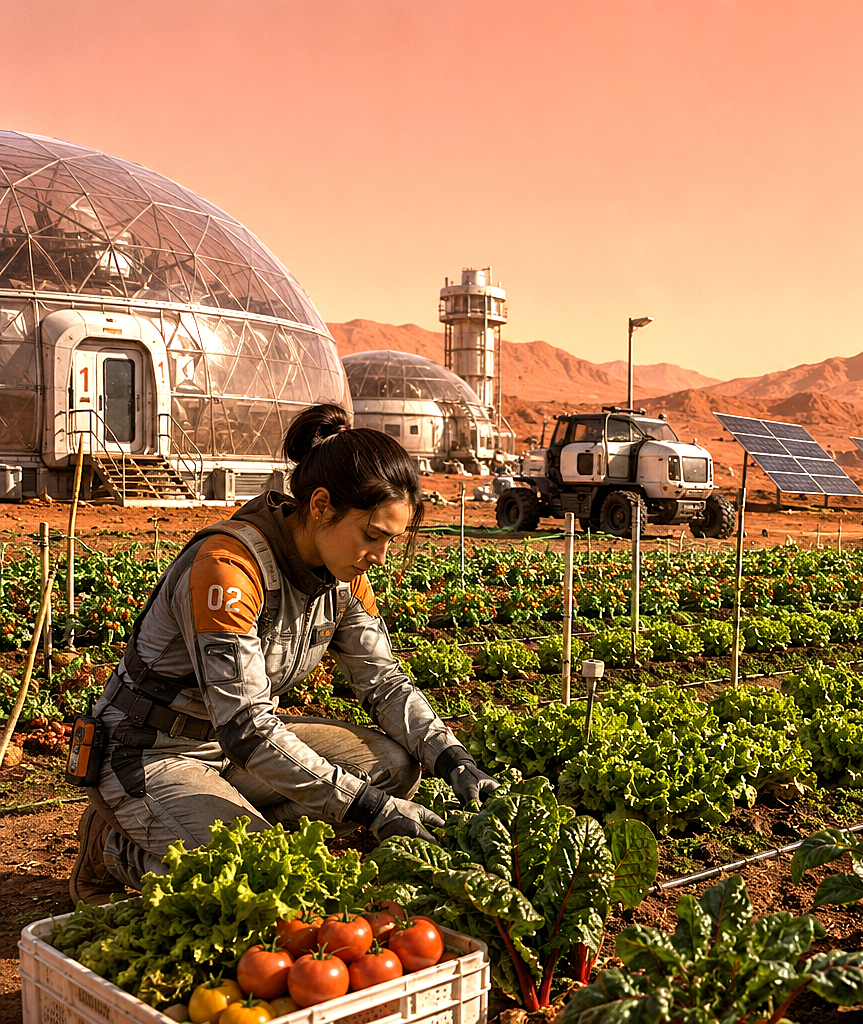
The Moon first, Mars later
Musk’s space destinations have changed more in the past two years than at any time since he founded SpaceX. In January 2025 he said, “No, we’re going straight to Mars. The Moon is a distraction.” As recently as 2025 he had aimed for an uncrewed Mars mission by the end of 2026. On February 8, 2026, he reversed course and said SpaceX would build a “self-growing city” on the Moon, which he said could be done in under ten years, and would start a Mars city in five to seven years. “The overriding priority is securing the future of civilization and the Moon is faster,” he wrote. The Wall Street Journal reported that SpaceX had told investors it was targeting an uncrewed lunar landing in March 2027 (Sultan & Sriram, 2026).
The Mars window Musk once aimed for opens next month and closes about a month later; the next one does not arrive until late 2028 or early 2029 (Kass, 2026). No Starship will be on its way to Mars this year.
NASA’s plans moved with Starship’s schedule. Artemis III, originally the first crewed landing since 1972, has been turned into a test in Earth orbit in which astronauts will practice rendezvous and docking with the commercial landers built by SpaceX and Blue Origin. NASA administrator Jared Isaacman told a House appropriations subcommittee this spring that the target is “late 2027.” The first landing is now aimed for 2028. As of May, SpaceX had not yet shown it could transfer propellant from one Starship to another in orbit, a step the lunar lander requires (Speed, 2026). In August, Shotwell still described “boots on the Moon in 2028” (SpaceX, 2026b).
What Ukraine crisis
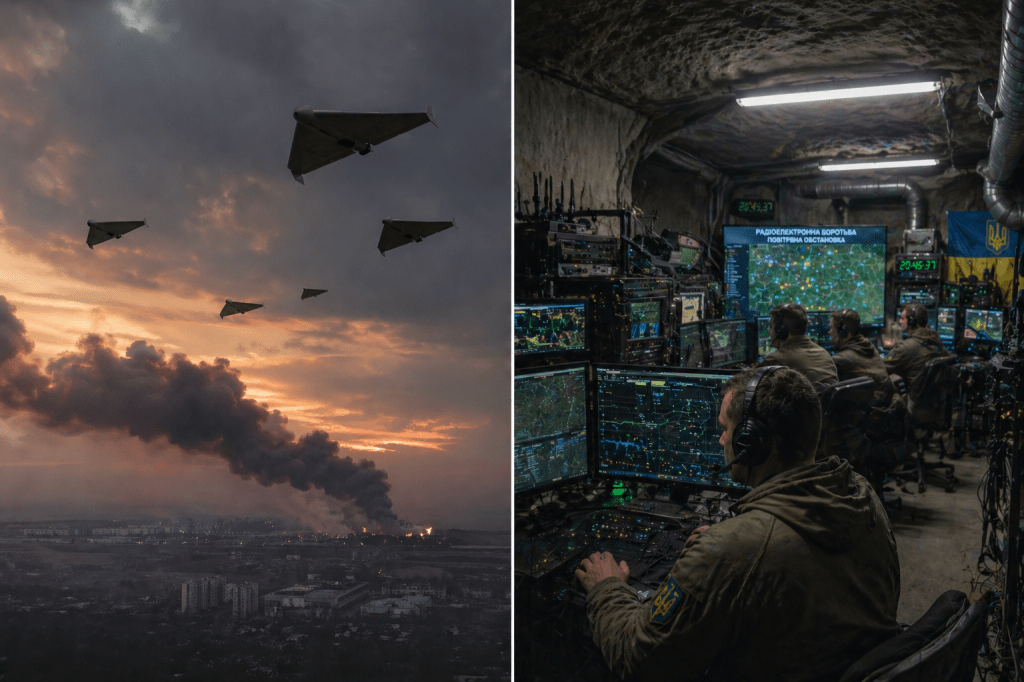
The same infrastructure that makes SpaceX valuable also makes it powerful. Overnight on October 13–14, Ukrainian hardware connected through Starshield, the military version of Starlink, began losing its link when moving faster than about 100 miles per hour. That hit Ukraine’s interceptor drones, which must chase Russian attack drones flying at more than twice that speed (John, 2026). On October 17 President Volodymyr Zelensky said, “The maximum speed today is 161 km/h; after exceeding it, Starlink shuts down, and we lose the drone” (John, 2026).
The accounts of who ordered the limit conflict. Musk said, “Starshield systems are owned and controlled by the US government.” President Trump said, “It wasn’t me, and I don’t think it was Elon.” Secretary of State Marco Rubio called reports of a White House order “categorically false” (John, 2026). Reuters, citing the Wall Street Journal, reported that Musk himself ordered the slowdown, which Reuters could not independently verify (Shah, 2026). On October 24, after full speeds were restored, Musk wrote that “Ukraine military violated Starlink terms of service and used it for offensive drone strikes to kill people,” and that “that loophole was closed last week.” Zelensky wrote, “The speeds are now where they need to be” (CBS News, 2026).
Congress has taken notice from both parties. Representative Brian Fitzpatrick, a Pennsylvania Republican, said, “Lapsing Starshield in that manner that costs human lives, there’s got to be consequences to that” (Svan, 2026). Senator Ruben Gallego called for subpoenas to Musk, SpaceX, and the Defense Department, and Musk answered on X: “Those who pick fights with me should understand that I will find out who is really pulling the strings and come for them, not just their puppets.” Darrell West of the Brookings Institution summed up the concern: “He can turn a country’s communications on or off — that’s an extraordinary power. Even governments can’t do that” (Conley, 2026).
The episode connects directly to the business plan. Each layer Musk adds runs through the same company and the same controlling shareholder. A world that relies on SpaceX for most of its launches, for satellite internet in war zones, for AI computing, and possibly for robots and chips is a world in which one person’s decisions carry unusual weight.
A timeline to measure Musk’s goals
The table below sets Musk’s and SpaceX’s stated targets beside their status at the end of October 2026. The last column sorts each into done, in progress with hardware or money behind it, or forecast.
Musk’s SpaceX-related targets and their status as of October 2026
| Goal | Stated target | Status, late Oct. 2026 | Assessment |
| Share of world mass to orbit | “Almost 90%” (Musk, Oct. 2026) | Prospectus: “more than 80%” each year since 2023 | Verified range |
| Starship delivers payload to orbit | Second half of 2026 | Done on Flight 14, Sept. 28, with 26 Starlink V3 satellites | Done |
| Catch both Starship stages | 2026 | Planned for Flight 15 | In progress |
| Starship flies weekly | First half of 2027 (in Aug.: daily flights by about Aug. 2027) | Forecast revised within one quarter | Forecast |
| $100B annual recurring revenue | End of 2026 | Q3 revenue: $14.6B for the quarter | In progress, steep |
| 13 GW of AI compute | End of 2027 | 1.7 GW nameplate at Sept. 30 | Forecast |
| First Starmind satellites | Q4 2027 (prospectus: as early as 2028) | AI1 design shown; FCC application filed | Forecast |
| Terafab chips | Test chip mid-2027; volume Q3 2028 | Site chosen; $55B first phase announced | Forecast |
| Optimus robots, 20,000 a week | End of 2027 | Early production began Oct. 2026 | Forecast |
| Uncrewed Starship lunar landing | March 2027 (per WSJ) | No lander flight yet | Forecast |
| Crewed lunar landing | 2028 (NASA target) | Artemis III Earth-orbit test set for late 2027 | Forecast |
| Self-growing Moon city | Under 10 years (from Feb. 2026) | No dated plan | Aspiration |
| Mars | Uncrewed 2026 (missed); city in 5–7 years | Next window late 2028 or early 2029 | Aspiration |
| Tesla–SpaceX merger | Before 2028 election (reported) | Special committees formed; no terms agreed | Undecided |
Sources: The Motley Fool (2026); SpaceX (2026a, 2026b); Boucher (2026); Garrett (2026); Hawley (2026); Owens (2026); Tolomia (2026); Sultan & Sriram (2026); Speed (2026); Kass (2026); Korosec (2026); Conley (2026).
Musk’s record argues for reading the right-hand column carefully. In 2019 he said Tesla could have “a million robotaxis” on the road by the end of 2020; by mid-2026 Tesla had just under 400 (Neiger, 2026). The Mars dates have slipped repeatedly. The Starship cadence forecast changed within one quarter this year. At the same time, Starship did reach orbit with a working payload in the half-year the prospectus promised, and the share of world launch mass that prompted this article is real, documented in a legal filing, and enormous.
Put together, Musk’s plans form a sequence in which each step depends on the one before it. Cheap, frequent Falcon launches built Starlink. Starlink’s cash, the xAI merger, and $75 billion of public money are paying for AI data centers on the ground, which already produce more than half of SpaceX’s revenue but spend money far faster than they make it. Starmind, Terafab, and the robot factories depend on Starship becoming as routine and as cheap as Falcon 9, and none has yet produced a working product at scale. The Moon city and Mars sit at the end of the sequence and have no firm dates.
Readers who want to track how much of this is real have a short list of things to watch. The first is whether Flight 15 brings both Starship stages back to the tower before the end of the year. The second is whether SpaceX reports anything near $100 billion in annual recurring revenue when it announces fourth-quarter results. The third is how the company pays for $35 billion to $40 billion of quarterly spending with cash flow that is a fraction of that. The fourth is whether a Starmind satellite actually reaches orbit in 2027. Each answer will be public and dated, and each will show how far the sequence has advanced.
References
Anthropic. (2026, May 6). Higher usage limits and a SpaceX compute deal. https://www.anthropic.com/news/higher-limits-spacex
Arroyo, C., & Mascarenhas, N. (2026, August 14). SpaceX completes its $60 billion Cursor acquisition. Bloomberg Government. https://news.bgov.com/mergers-and-acquisitions/spacex-completes-its-60-billion-cursor-acquisition
Boucher, M. (2026, October 26). SpaceX Q3 2026: AI passes Starlink as SpaceX turns a profit. SpaceQ. https://spaceq.ca/spacex-q3-2026-ai-passes-starlink-profit/
CBS News. (2026, October 24). Ukraine says Starlink speeds restored as Elon Musk admits SpaceX throttled service over drone strikes. CBS News. https://www.cbsnews.com/news/ukraine-starlink-drone-spacex-musk-speed-restriction/
Chowdhry, A. (2026, June 12). SpaceX: $75 billion IPO priced at $135 per share. Pulse 2.0. https://pulse2.com/spacex-75-billion-ipo-priced-at-135-per-share/amp/
Conley, J. (2026, October 23). How Elon Musk went from Tesla CEO to the ‘most powerful civilian, non-governmental actor in history.’ Yahoo Finance. https://finance.yahoo.com/technology/article/how-elon-musk-went-from-tesla-ceo-to-the-most-powerful-civilian-non-governmental-actor-in-history-100000227.html
Garrett, L. (2026, September 28). Starship reaches orbit for first time on Flight 14. AIAA. https://aiaa.org/2026/09/28/starship-reaches-orbit-for-first-time-on-flight-14/
Gorman, D. (2026, January 6). 2025 orbital launch attempts by country. Payload. https://payloadspace.com/2025-orbital-launch-attempts-by-country/
Griessel, G. (2026, September 30). SpaceX just revealed that orbital data centers will be here sooner than you think. BGR. https://www.bgr.com/2274086/spacex-reveals-orbital-data-center-faster-expected/
Hawley, M. (2026, August 25). SpaceX and NVIDIA plan to put AI data centers in orbit by late 2027. VKTR. https://www.vktr.com/ai-market/spacex-and-nvidia-plan-to-put-ai-data-centers-in-orbit-by-late-2027/
Holmes, M. (2026, April 10). BryceTech report shows SpaceX accounted for 50% of launches in 2025. Via Satellite. https://www.satellitetoday.com/launch/2026/04/10/brycetech-report-shows-spacex-accounted-for-50-of-launches-in-2025/
John, S. (2026, October 19). Ukraine’s drones lose their Starlink link above 100 mph. Musk, Rubio, and Trump all say it wasn’t them. Fortune. https://fortune.com/2026/10/19/ukraine-starlink-starshield-drone-speed-limit-musk-trump/
Kass, H. (2026, August 9). The Mars launch window opens in November 2026 and closes about a month later. The next one is in 2029. 19FortyFive. https://www.19fortyfive.com/2026/08/the-mars-launch-window-opens-in-november-2026-and-closes-about-a-month-later-the-next-one-is-in-2029/
Korosec, K. (2026, October 20). SpaceX and Tesla boards form special committees to review merger. TechCrunch. https://techcrunch.com/2026/10/20/spacex-and-tesla-boards-form-special-committees-to-review-merger/
Lambert, F. (2026, March 22). Tesla and SpaceX announce $25B ‘Terafab’ chip factory — here’s why it reeks of desperation. Electrek. https://electrek.co/2026/03/22/tesla-spacex-terafab-chip-factory-ai-desperation/
Neiger, C. (2026, October 16). Elon Musk promised “a million robotaxis” by 2020. None materialized, and a dedicated robotaxi fleet isn’t expected until at least 2027. The Motley Fool. https://www.fool.com/investing/2026/10/15/elon-musk-promised-a-million-robotaxis-by-2020-non/
O’Kane, S. (2026, February 2). Elon Musk’s SpaceX officially acquires Elon Musk’s xAI, with plan to build data centers in space. TechCrunch. https://techcrunch.com/2026/02/02/elon-musk-spacex-acquires-xai-data-centers-space-merger/
Owens, N. (2026, March 24; updated 2026, May 6). Musk’s SpaceX to invest up to $119B on Terafab project. Manufacturing Dive. https://www.manufacturingdive.com/news/elon-musk-build-advanced-chip-factories-austin-texas-spacex-tesla-xai/815542/
Shah, A. (2026, October 20). Musk reportedly ordered Starlink slowdown that hurt Ukraine’s drone missions [Reuters]. Honolulu Star-Advertiser. https://www.staradvertiser.com/2026/10/20/breaking-news/musk-reportedly-ordered-starlink-slowdown-that-hurt-ukraines-drone-missions/
Space Exploration Technologies Corp. (2026a, May 20). Form S-1 registration statement. U.S. Securities and Exchange Commission. https://www.sec.gov/Archives/edgar/data/1181412/000162828026036936/spaceexplorationtechnologi.htm
Space Exploration Technologies Corp. (2026b, August 4). Edited transcript: SpaceX second quarter 2026 webcast. https://s21.q4cdn.com/184289198/files/doc_financials/2026/q2/SpaceX-Q2-2026-Earnings_Transcript-FINAL.pdf
Speed, R. (2026, May 1). Artemis III aims for ‘late 2027’ for Earth orbit demonstration. The Register. https://www.theregister.com/2026/05/01/artemis_iii_aims_for_late/
Sultan, A., & Sriram, A. (2026, February 9). SpaceX prioritizes lunar ‘self-growing city’ over Mars project, Musk says [Reuters]. BNN Bloomberg. https://www.bnnbloomberg.ca/business/2026/02/09/spacex-prioritizes-lunar-self-growing-city-over-mars-project-musk-says/
Svan, J. H. (2026, October 21). Lawmakers call for investigation into source of Starlink disruptions in Ukraine. Stars and Stripes. https://www.stripes.com/theaters/us/2026-10-21/lawmakers-investigation-ukraine-starlink-disruptions-23218791.html
The Motley Fool. (2026, October 20). SpaceX (SPCX) Q3 2026 earnings call transcript. https://www.fool.com/earnings/call-transcripts/2026/10/20/spacex-spcx-q3-2026-earnings-call-transcript/
Tokos, L. (2026, June 25). Orbital data centers’ feasibility gap is a governance risk. Brookings Institution. https://www.brookings.edu/articles/orbital-data-centers-feasibility-gap-is-a-governance-risk/
Tolomia, C. (2026, October 22). Tesla started Optimus humanoid robot production as profit fell 43%. Quartz. https://qz.com/tesla-optimus-robot-production-fremont-profit-drop-102226
Wall, M. (2026, June 25). Another ‘Star’ is born: SpaceX names AI megaconstellation ‘Starmind.’ Space.com. https://www.space.com/space-exploration/launches-spacecraft/another-star-is-born-spacex-names-ai-megaconstellation-starmind
###
Filed under: Uncategorized |














































































































































































































































































































































































































Leave a Reply