






OpenAI launches a college-application planner for teens (Claude)
OpenAI will add a College Planner to ChatGPT for Teens that tracks each school’s deadlines, requirements and financial-aid steps for U.S. students in grades 10 to 12. The company says hundreds of thousands of U.S. teens already use ChatGPT weekly for college planning, and about 1.2 million used its visual learning tools in one week. The launch moves an AI company further into a role that school counselors have long held, at a time when many under-resourced schools have few counselors. Source: OpenAI, October 7, 2026 — openai.com/index/teens-learn-and-plan
OpenAI rolls out GPT-6 with “Intelligent UI” to all ChatGPT users (Claude, ChatGPT)
OpenAI’s new GPT-6 models can answer with working interfaces such as buttons, forms, charts and small tools, rather than text alone. Paid users got the GPT-6 Sol model on October 7, and free users get GPT-6 Luna starting the next day. For instruction, the consequential change is the form of the response: a student may be able to explore a concept or adjust a calculation within the conversation. OpenAI also claims faster responses and improved web research, based on its own evaluations. Classroom usefulness will depend on the accuracy of those explanations and how students engage with them. OpenAI says ChatGPT now has more than 1.2 billion weekly users, so the change puts an agent-like interface in front of a large share of the world’s internet users at once. Source: OpenAI, October 7, 2026 — openai.com/index/gpt-6-for-everyone
Russian operation used ChatGPT to trick schools, OpenAI says (Perplexity)
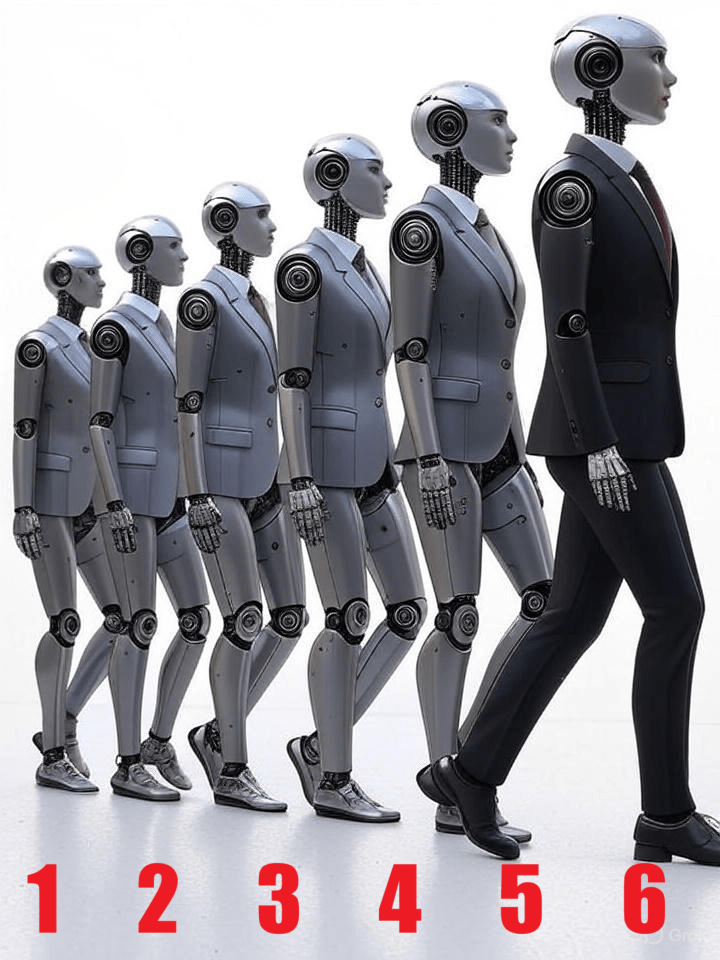
OpenAI said Thursday that it disrupted a Russian influence operation, describing it as the most far-reaching it has reported, which used ChatGPT to varying degrees to trick schools in Latin America, stoke tension between Ukraine and Poland and draw responses from politicians in several countries. The company’s report rates the operation Category 5 on its six-point scale, the first at that level. According to the report, operators sent email impersonating Lima’s Regional Directorate of Education in May to instruct Peruvian schools to hold Ukraine-themed events referencing Stepan Bandera, and in June tricked schools in Ecuador into holding ceremonies pledging allegiance to President Daniel Noboa and to Erik Prince, the former Blackwater head; OpenAI said it found media coverage matching the Ecuadorian episode and a rebuttal from the country’s education minister. OpenAI banned the accounts involved. Source: NBC News, Kevin Collier, “Russian operation that used ChatGPT tricked schools, a politician and media, OpenAI says,” October 8, 2026 — Article URL; operation details from OpenAI’s report as described by Unite.ai, “OpenAI Bans Two Covert Influence Operations Using False Fronts,” October 8, 2026 — Article URL.
CU Denver opens AI Hub; Boulder faculty and students seek voice on OpenAI contract (Grok)
The University of Colorado Denver opened an Artificial Intelligence Hub to host lectures, train students and faculty, and discuss research practices. Separately, the Boulder Faculty Assembly and CU Student Government passed resolutions asking the CU system to create a shared-governance committee with faculty, staff, and student representation that would decide whether to renew the system’s $2.1 million OpenAI ChatGPT Edu contract. Nearly 11,000 users had signed up by late September. Sources: Chalkbeat Colorado, Oct. 7, 2026 (https://www.chalkbeat.org/colorado/2026/10/07/cu-denver-hub-prepares-students-for-artificial-intelligence/); Boulder Daily Camera, Oct. 7, 2026 (https://www.dailycamera.com/2026/10/07/cu-boulder-openai-chatgpt-contract/).
New study links academic AI use to student well-being, with limits (ChatGPT)
A peer-reviewed study published October 8 surveyed 390 university students in Bangladesh about academic AI use, cognitive overload, digital confidence, and mental health. Students who perceived AI as useful and used it more frequently also reported better mental health, according to the authors. That finding deserves careful reading: the study measured responses at one point in time, so it cannot establish that AI caused an improvement. Its focus on cognitive overload also puts a practical question before colleges: when does ready access to AI make studying easier, and when does it add another demand? Source: Scientific Reports, “Integrating artificial intelligence into higher education balances student learning benefits and cognitive overload,” published October 8, 2026. https://www.nature.com/articles/s41598-026-74412-8
Broadcom reportedly arranges more than $50 billion for OpenAI’s custom chips (Perplexity)
The Wall Street Journal reported that Broadcom has spent recent weeks arranging more than $50 billion in financing for the custom AI chip it is developing with OpenAI, with Apollo Global Management and Blackstone among the lenders in talks. The talks are early, the amount could change, and the financing could close before the end of the year and pay for several gigawatts of OpenAI chip capacity. The report describes the package as part of a surge in deals to pay for AI infrastructure; Broadcom said in June that it had established a financing platform, with Apollo and Blackstone as anchor investors, to support more than 20 gigawatts of computing capacity for AI developers including OpenAI through 2028, beginning with an initial tranche of $35 billion. The financing remains under discussion, not a completed transaction. Source: The Wall Street Journal via Business Times, “Broadcom plans US$50 billion financing for OpenAI chips, WSJ says,” October 8, 2026 — Article URL.
Samsung projects about $80 billion quarterly profit on AI memory demand (Perplexity)
Samsung Electronics estimated third-quarter operating profit of 107.4 trillion won, about $80 billion, which would make it the first technology company to post quarterly operating profit above 100 trillion won. The preliminary estimate is up 782.5% from a year earlier, with projected revenue of about 195 trillion won, up 127%, and would mark the company’s fourth consecutive record quarter. Reuters attributes the gains to memory chips: AI infrastructure investment has outpaced supply growth, tightening conventional DRAM and NAND and lifting demand for the high-bandwidth memory used in AI accelerators. A full breakdown by division is due October 29. Source: Reuters, “Samsung flags $80 billion profit on AI boom, highest quarterly for any tech company,” October 8, 2026 — Article URL.
Teen ChatGPT safety claims face conflicting tests (ChatGPT)
OpenAI reported October 7 that teens spend less than 15 minutes a day on ChatGPT on average and said its teen experience is generating more education-related use. A separate assessment by Common Sense Media found that test accounts sometimes received late or no parental alerts during conversations about self-harm and other risks. OpenAI disputes the testing, saying some accounts may not have completed the process needed to activate parental controls; Common Sense says accounts linked long enough still lacked timely alerts. The dispute matters to schools considering a tool that students may use for both homework and personal questions. Source: Reuters, “OpenAI says teens use ChatGPT for under 15 minutes a day as worries over risks grow,” published October 7, 2026, 4:00 p.m. UTC. https://www.reuters.com/business/media-telecom/openai-says-teens-use-chatgpt-under-15-minutes-day-worries-over-risks-grow-2026-10-07/
Sutton Trust finds poorer students gain most from a degree (Claude)
A Sutton Trust analysis of English data finds graduates who received free school meals earn 55% more than similar non-graduates, compared with a 43% premium for better-off graduates. Yet only 5% of these students enter the most selective universities. The charity urges bolder contextual admissions, including lower entry grades where evidence supports it, which feeds the debate over merit and fairness in admissions. Source: Times Higher Education, October 8, 2026 — timeshighereducation.com
Maryland’s AI tutor trial: most students never used it (Perplexity)
The University of Maryland ran a randomized controlled trial of its Virtual Study Assistant, a closed AI tutor built on ChatGPT that draws on course materials in the learning management system; 2,379 undergraduates and 30 instructors took part in fall 2025. Access to the tool marginally reduced final grades and learning-management-system participation in course sections where it was offered, but only about 15% of students offered the tool chose to use it. Of those who did, 73.8% asked it for information, explanations or solutions, 11.3% used it for practice and test preparation, and 0.7% sought feedback on their own work; few instructors switched the tool out of its default mode, which returns the correct answer, into tutor mode. Students also had access to ChatGPT and Gemini, which the researchers said made the tool’s effects difficult to isolate. The study appeared as a working paper from the Annenberg EdExchange, and the university has held off on a campuswide rollout while it examines deployment. Source: Inside Higher Ed, Kathryn Palmer, “A University’s Research on Its Own AI Tool Raised More Questions Than Answers,” October 7, 2026 — Article URL.
Women finish bachelor’s degrees faster than men, new U.S. data show (Claude)
National Student Clearinghouse data on 2.33 million first-time graduates in 2024–25 show 55.1% of women finished a bachelor’s degree in four years, against 48.9% of men. Men were more likely to take five or more years. The pattern flips for associate degrees and certificates, where men finish faster. The numbers add detail to the growing gender gap in who starts and completes college in the United States. Source: Women In Academia Report, October 7, 2026 — wiareport.com
Trail Blazers broadcaster fired over teenage tweets seeks his job back (Claude)
Portland hired play-by-play announcer Braiden Bell, 29, and fired him the same day after a reporter found tweets from 2012–13, written when he was 15, that demeaned women and Asian people. His lawyer is pressing for reinstatement, arguing a teenager’s words should not outweigh a decade of conduct since. The team says it stands by its decision, reviving the debate over how far back accountability should reach. Source: Front Office Sports, October 6, 2026 — frontofficesports.com
Denmark proposes restrictions on AI impersonation (ChatGPT)
Denmark’s culture minister said October 8 that she would propose a bill barring the copying and sharing of lifelike digital representations of people without consent, including imitations of their appearance or voice. The proposal seeks faster removal of manipulated content and protection for performers, while retaining exceptions for parody, satire, and political criticism. It still needs parliamentary approval, and its practical effect will depend on how platforms identify and remove offending material. For educators and publishers, the proposal brings a familiar concern about fabricated media into the realm of consent and rights. Source: Reuters, “Denmark plans ban on sharing AI deepfakes without consent,” published October 8, 2026, 6:36 a.m. UTC. https://www.reuters.com/world/denmark-plans-ban-sharing-ai-deepfakes-without-consent-2026-10-08/
CU Denver opens an AI hub as campus use expands (ChatGPT)
The University of Colorado Denver opened an AI hub on October 7 where students and faculty can learn about the technology and discuss how to use it in teaching and research. The opening follows a University of Colorado system agreement that gave students access to ChatGPT Edu in August. CU Denver’s provost says instructors will still set their own classroom rules, while discussions at the hub may help shape campus policy. The question is how the university will judge whether its growing AI investment improves learning. Source: Chalkbeat, “CU Denver’s AI Hub aims to teach students and faculty about the technology,” published October 7, 2026, 11:23 p.m. UTC. https://www.chalkbeat.org/colorado/2026/10/07/cu-denver-hub-prepares-students-for-artificial-intelligence/
Virginia campaign pushes high-school league to reverse its transgender athlete ban (Claude)
Equality Virginia, the ACLU of Virginia and Arlington groups launched “Right 2 Play VA” to get the Virginia High School League to undo its 2025 rule barring transgender girls from girls’ teams. The league adopted the rule around the time of President Trump’s “Keeping Men Out of Women’s Sports” order, ending a 12-year policy that allowed them to play. Together with the Washington case, it shows the fight moving state by state in both directions. Source: Washington Blade, October 8, 2026 — washingtonblade.com
UK universities face sanctions as student visa refusals surge (Claude)
UK visa refusal rates for students have jumped, reaching 34.2% for Pakistan and 25% for Nigeria in the latest quarter, while a new rule flags universities whose refusal rate tops 5%. The Home Office suspended Bucks New University’s visa sponsor licence on September 30, the first such suspension of a full university in a decade. Because UK universities lose about £3,000 per domestic undergraduate, losing international fee income could push some toward insolvency. Source: Times Higher Education, October 7, 2026 — timeshighereducation.com
Proposed work fee could reshape international students’ career plans (ChatGPT)
The U.S. Department of Homeland Security proposed requiring colleges to pay $70,000 for each international student’s initial application to Optional Practical Training, which permits work related to a student’s field during or after study. A renewal would cost $30,000. DHS describes the proposal as a response to fraud and cheap labor; international education groups warn it would deter students and employers. The rule is open for public comment and has not taken effect. Its consequences could be substantial for universities and for the STEM talent pipeline that supports AI research and development. Source: Associated Press, “Trump administration proposes a $70,000 fee for international students to work in the US,” published October 7, 2026, 3:14 p.m. UTC. https://apnews.com/article/opt-dhs-fee-international-students-enrollment-schools-0919dcbc5a61a589e01ec29041a2087e
New UT San Antonio graduate certificate targets AI literacy for language educators (Grok)
UT San Antonio launched a 15-credit online graduate certificate in Applied AI in Language Education. Courses cover applied AI literacy, natural language processing, and critical evaluation of AI output for language teaching and learning. The program is aimed at educators and technology professionals who want to assess when AI tools are useful and how they affect communication.
Source: UT San Antonio College of Education and Human Development, Oct. 7, 2026. https://education.utsa.edu/news/2026/10/new-ut-san-antonio-certificate-helps-educators-approach-ai-with-a-critical-eye.html
California learners report AI influencing choice of study programs (Grok)
A Gallup–College Futures report found that 55% of California adult students said AI had at least some impact on the program of study they selected. More than half reported using AI regularly for schoolwork (20% daily, 35% weekly). Views on AI’s job impact were split roughly evenly between positive and negative.
Source: USA TODAY Network via Reuters Connect / Belleville News-Democrat summary, Oct. 7, 2026. http://rmb.reuters.com/rmd/rss/item/tag:reuters.com,2026:newsml_MT1USDAYNETN92063135007?channel=xsp076 (report context also referenced in multiple outlets).
Congress races a November 10 rare-earth deadline with China (Claude)
China’s suspension of its October 2025 rare-earth export controls expires on November 10, and House Republicans are pushing a four-bill package to speed up U.S. mining and processing. One bill, the Critical Mineral Dominance Act, has passed the House 224–195. A bipartisan Senate bill would create a $2.5 billion strategic reserve. The deadline tests whether the truce reached around the Trump–Xi summit in September holds, since U.S. defense and chip supply chains still depend on Chinese magnets. Source: Tech Times, October 6, 2026 — techtimes.com
NATO drafts a “Theory of Victory” built on drones and AI (Claude)
NATO’s top commander in Europe, Gen. Alexus Grynkewich, is preparing a strategy to stop a Russian attack on the eastern flank with low-cost drones, lightly crewed systems and AI-assisted targeting, to be presented in Poland on October 12. The plan could shift how members split budgets between tanks and newer technology. Washington has also asked allies what extra forces they can supply as it reviews its own commitments in Europe. Source: Daily Tribune, October 5, 2026 (reporting first published by Bloomberg) — tribune.net.ph
###
Filed under: Uncategorized |









































































































































































































































































































































































































































Leave a Reply