








By Jim Shimabukuro (assisted by Claude)
Editor
Are the Democrats’ 2026 victories a sign that the era of trauma politics is ending?

On November 3, American voters gave the Democratic Party control of both houses of Congress. By the following Saturday the Associated Press count stood at 254 House seats for Democrats and 162 for Republicans, with 19 races uncalled, and the party was “on track to win its largest majority since 2008.” In the Senate, Democrats had flipped seven seats and held 54, with Alaska and Mississippi still undecided (Yahoo News Staff, 2026). The winners included Adam Hamilton, the first Democrat elected to the Senate from Kansas in almost 100 years, and in Texas both a Democratic senator, James Talarico, and a Democratic governor, Gina Hinojosa (Schneid, 2026; Stening et al., 2026).
The campaign was notable for what the winning candidates declined to talk about. Hinojosa, who unseated the three-term governor Greg Abbott, described her attitude toward him to Politico in September: “You can shove it with your culture wars.” She said her race was about “how we’re gonna make life easier for working families” (Wolfe, 2026). The day after the election, House Democratic leader Hakeem Jeffries summed up the result in one sentence: “The American people have chosen the economy over extremism” (Carpenter, 2026).
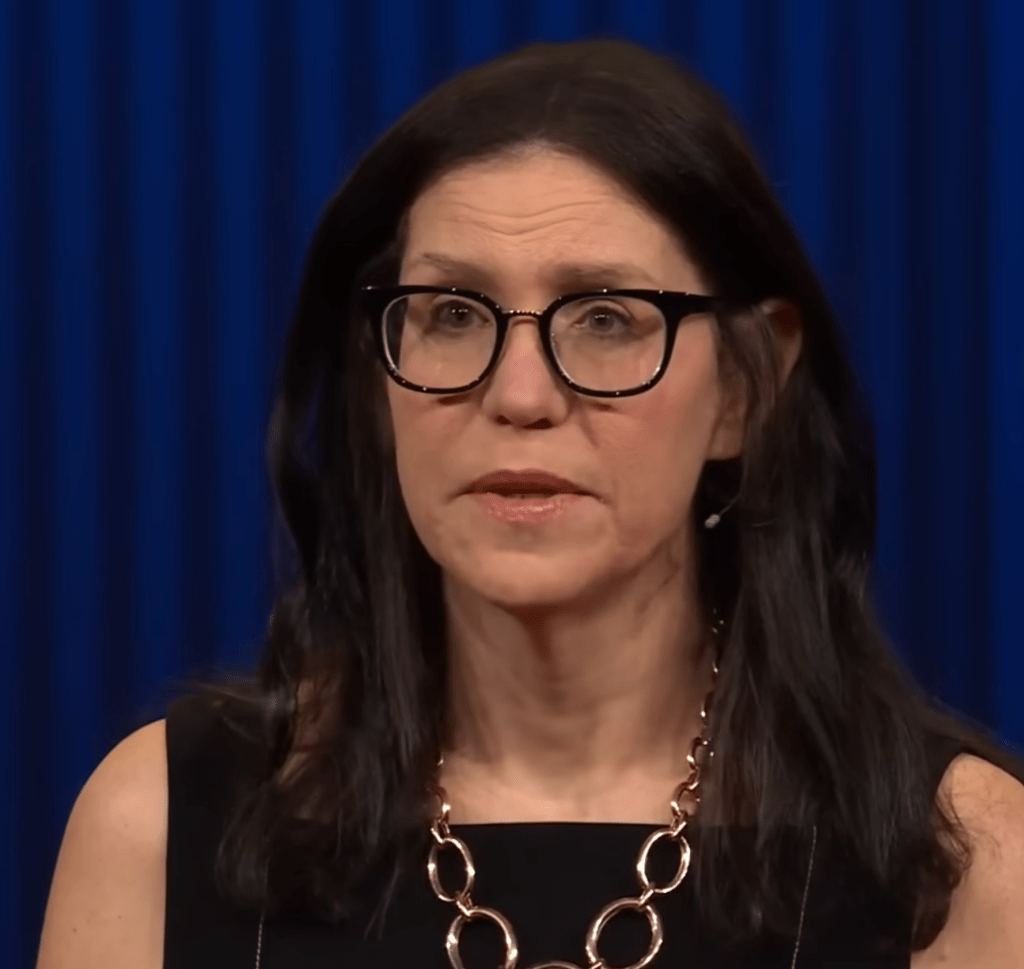
On November 12, a New York Times Opinion podcast asked whether that discipline will last. “The Democrats are back in power with a new economic mandate,” its description reads. “But is that how they will actually govern?” The guest, the cultural theorist Catherine Liu, argues that Democratic elites remain invested in culture wars and in what she calls “trauma politics” (Rosen, 2026). This essay takes up the question behind that conversation. Do the victories of 2026 show that the era of trauma politics is coming to an end?
The evidence supports a limited answer. Trauma politics has stopped working as a campaign strategy for Democrats, and the 2026 results confirm a decline that began several years earlier. The election did nothing to remove trauma politics from the professions and institutions that produced it, from everyday American culture, or from the Republican Party. Divided government also gives Democrats practical reasons to return to it. The era of trauma politics as a way to win national elections appears to be closing. The habits themselves will be around for a long time.
What ‘trauma politics’ covers
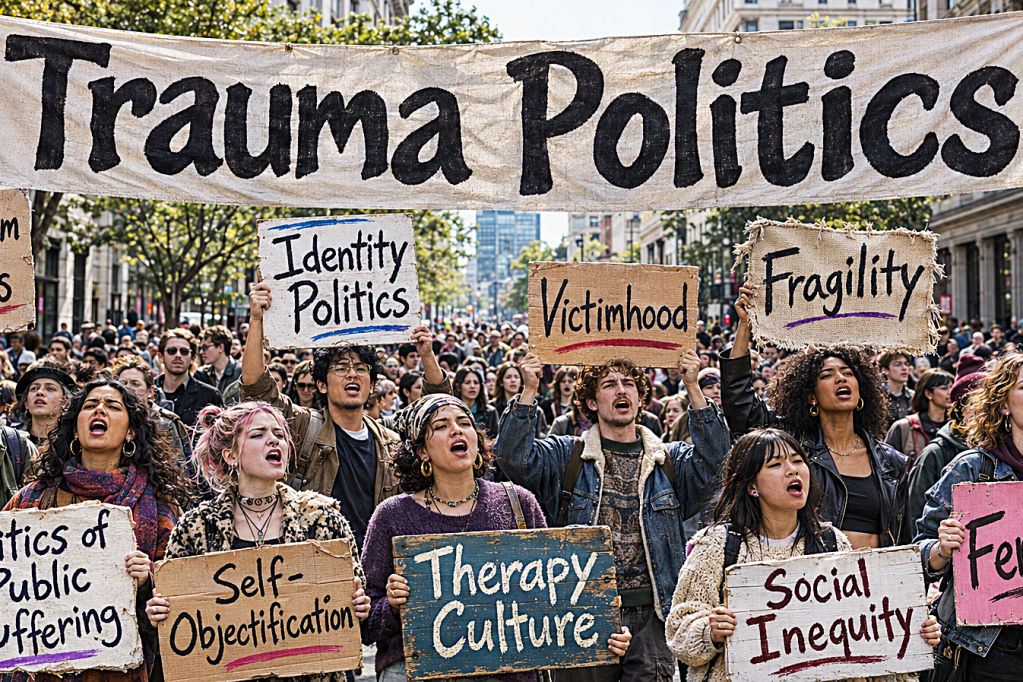
Trauma politics is the practice of treating personal suffering, disclosed in public, as a source of political authority. A speaker gains standing by recounting an injury, and the audience is asked to respond with recognition and sympathy. Liu’s name for the form is the “trauma script,” which she describes as “a tightly choreographed performance of suffering, healing and revelation.” She adds that “trauma has become a way of constructing an identity both online and in real life” (Liu, as quoted in Anderson, 2026).
The related terms describe parts of the same practice. “Identity politics” and “identitarianism” refer to political claims organized by race, sex, or sexuality. “Personal politics” refers to private experience used as public argument. “Therapy culture” refers to the spread of clinical vocabulary and the therapeutic relationship into ordinary life. “Victimhood” and “fragility” refer to the status that an injury confers and the protection the injured person expects. “Instagram politics” refers to the medium, in which a politician or activist speaks directly to followers in a confessional voice. “Self-objectification” comes from psychology, where it means “adopting an observer’s perspective on the physical self” (Kahalon et al., 2018). Applied to politics, it describes people who present their own pain as an object for an audience to assess.
It is reasonable to treat these terms as one family, because by the late 2010s they worked together. They have separate origins, however, and the separate histories explain two things: why the combination became so influential, and why some parts of it will outlast any election.
How suffering became a political credential
The medical idea came first. Nineteenth-century doctors used “railway spine” for the unexplained symptoms of accident survivors, and later wars produced “shell shock” and “battle fatigue.” In 1980 the American Psychiatric Association added post-traumatic stress disorder to its diagnostic manual, the DSM-III, a decision that “stemmed from research involving returning Vietnam War Veterans, Holocaust survivors, sexual trauma victims, and others” (Friedman, n.d.). The diagnosis legitimized mental health care for veterans (Anderson, 2026). It also established that an invisible injury could be certified by a professional and could support a claim on public resources. Liu calls the 1980 manual “a massive redefinition of mental illness” (Liu, as quoted in Jennings, 2026).
Feminism supplied the second element. In a 1969 memo later published as “The Personal Is Political,” Carol Hanisch defended women’s consciousness-raising groups against colleagues who dismissed them as “therapy.” She wrote that “personal problems are political problems,” and her conclusion pointed toward organized action: “There are no personal solutions at this time. There is only collective action for a collective solution” (Hanisch, 1970/2006). In 1977 the Black feminists of the Combahee River Collective named a politics built on a group’s own experience: “This focusing upon our own oppression is embodied in the concept of identity politics” (Combahee River Collective, 1977). In both texts, personal testimony was a first step toward a shared political program.
Television and the self-help market changed that sequence. Accounts of Liu’s history point to the 1980s: Oprah Winfrey’s on-air disclosure in 1986 that she had been abused as a child, the 1988 self-help book The Courage to Heal, and the day-care abuse cases such as McMartin Preschool, which drew on new theories of trauma and memory (Jennings, 2026). Liu writes that Winfrey’s confession “forged an image of the ideal liberal subject for the end of history in the televisual era” (Liu, as quoted in Jennings, 2026). Her larger charge is that this culture “suppressed any discussion of class and material conditions in favor of an allegedly therapeutic individualism” (Liu, as quoted in Anderson, 2026). On daytime television the disclosure was the whole event. The audience’s sympathy completed it, and no collective action had to follow.
The third element was institutional. In 2014 the sociologists Bradley Campbell and Jason Manning described a “culture of victimhood,” one “characterized by concern with status and sensitivity to slight,” in which people answer offenses by appealing to authorities and publicizing what was done to them (Campbell & Manning, 2014, as cited in Haidt, 2015). Greg Lukianoff and Jonathan Haidt argued in The Coddling of the American Mind that American schools and universities were teaching young people to regard themselves as fragile (Lukianoff & Haidt, 2018). The objection was also raised inside the academic left. In a 2014 essay on trigger warnings, the queer theorist Jack Halberstam used the phrase “hierarchies of woundedness” to describe what the dispute was doing to people who were political allies (Halberstam, as quoted in Lucken, 2026). The change showed up quickly in print. The sociologist Musa al-Gharbi, reviewing counts of terms in news media, books, and scholarship, found “a rapid spike in negative terms signifying bias and discrimination after 2012” (al-Gharbi, 2023).
Social media joined these elements together. A first-person account of harm suits platforms built on personal profiles and followers. The example Liu chooses is Representative Alexandria Ocasio-Cortez’s Instagram Live broadcast about the January 6 attack on the Capitol. In Liu’s reading, “Ocasio-Cortez used the platform Instagram provided her to create an illusion of political and personal connectedness” (Liu, as quoted in Lucken, 2026). The phrase “Instagram politics” refers to this kind of communication, in which the leader’s feelings are the content and the follower’s identification with her is the intended result.
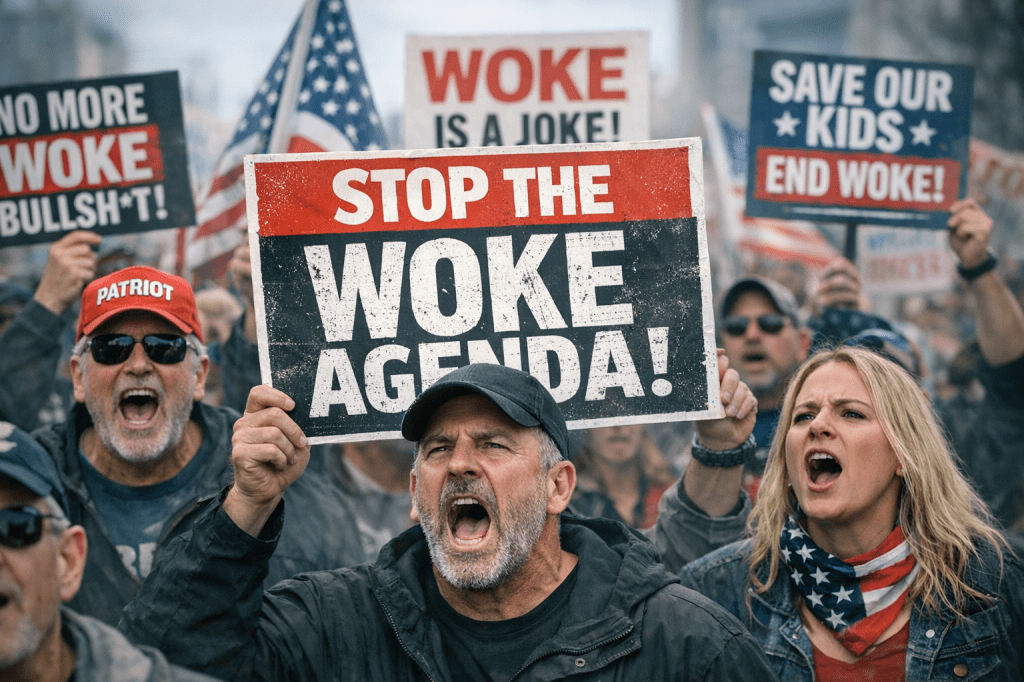
Republicans built campaigns against this vocabulary. Opposition to critical race theory, diversity programs, and “wokeness” became a rallying point in the 2020 and 2022 campaigns (Hitchmough & Wallace, 2026). In 2024 a Republican advertisement told voters, “Kamala is for they/them, President Trump is for you.” The Democratic National Committee’s own review of that defeat, released in May 2026, reported the judgment that “there was nothing which would have worked as a response.” The same report looked at Democratic statewide wins in Arizona, Nevada, and North Carolina and found that economic messages resonated “more than identity politics” (Peoples, 2026).
A retreat that began before 2026
The political retreat started well before this election. Al-Gharbi concluded in early 2023 that “the period of rapid normative and discursive change that began after 2011 seems to be running its course.” He reported that “among BA holders, Democratic alignment peaked in 2020 and has been declining since,” and he cited a Wall Street Journal estimate that job listings for chief diversity officers fell 75 percent in 2022 (al-Gharbi, 2023).
Politicians followed the trend. In August 2026, ABC’s Jon Karl asked Ocasio-Cortez whether the progressive movement had gone too far with positions such as defunding the police. She answered that a city councilman she knows has a saying, “woke one was crazy,” and that “rhetoric in that time is not rhetoric that we would use today” (Hains, 2026). The politician Liu chose as her model of Instagram politics had set the period aside in public three months before the vote. Hinojosa was blunter in September: “We’re not doing the culture wars” (Wolfe, 2026).
Everyday therapeutic culture moved the other way. A Deseret News report in July gathered the figures. The National Center for Health Statistics found that 14 percent of Americans had counseling or therapy in 2024. A study in JAMA Psychiatry found that 8.5 percent received psychotherapy in 2021, up from 6.5 percent in 2018. Thirty-six percent of Gen Z adults had received mental health care, compared with 15 percent of baby boomers (Graham, 2026). The psychotherapist Jonathan Alpert argues in his book Therapy Nation that “the more therapy people get, the more fragile, anxious, and dysfunctional they seem to become.” The Columbia epidemiologist Mark Olfson answers that “we still have substantial portions of the population with mental health problems who receive no treatment.” The psychiatrist Sally Satel finds Alpert persuasive about bad therapy but says of his claim that therapy divides society, “It’s an interesting hypothesis but very hard to demonstrate” (Graham, 2026). The political use of trauma language was falling during the same years in which the private use of therapy was rising.
What the voters said
The AP Voter Poll, a survey of about 80,000 voters, shows what drove the result. About four in ten voters named the economy as the top issue, roughly three in ten named the state of democracy, and only about one in ten named immigration or health care (Sanders et al., 2026). About two-thirds said President Trump’s policies had made the economy worse, and about eight in ten of those voters chose the Democrat in their House race (Boak et al., 2026). About seven in ten voters under 30 and about six in ten Hispanic voters backed Democrats (Sanders et al., 2026). Among voters without a college degree, NBC’s exit poll put Democrats at 48 percent, up from 43 percent in CNN’s 2024 exit poll. That is a real gain, though Timothy Noah of The New Republic noted that by this measure “Democrats did not win the working-class vote” (Noah, 2026).
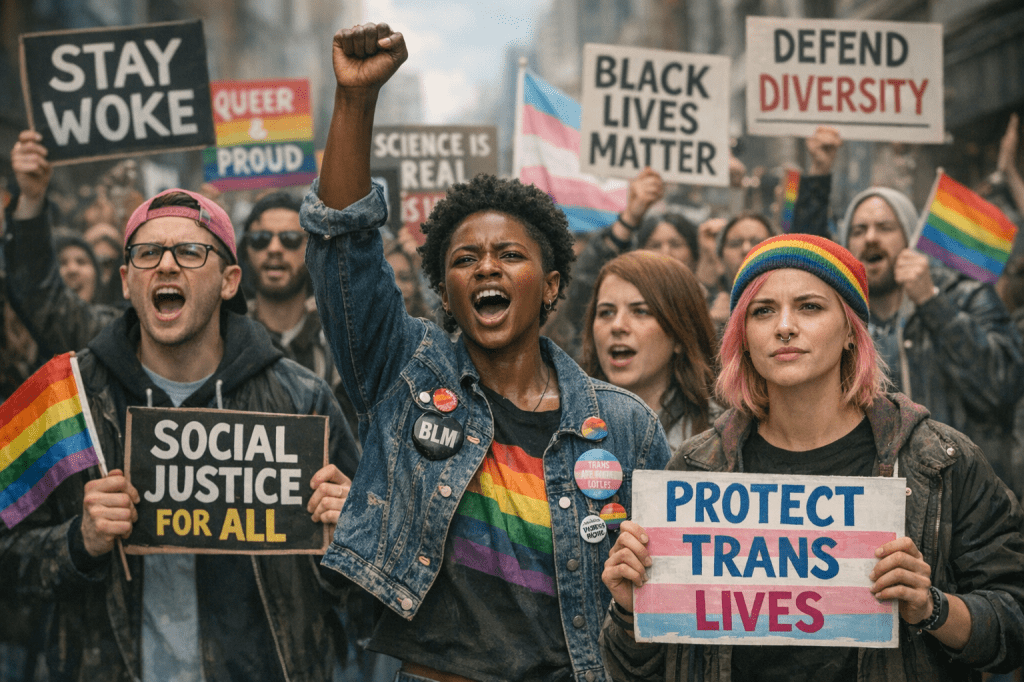
Cultural appeals failed for the party that relied on them. The progressive polling firm Data for Progress found that Republicans’ closing emphasis on culture war issues “was misaligned with what voters wanted to hear from their candidates.” In its late-October survey of what voters wanted candidates to discuss, “transgender athletes in girls’ sports ranked dead last, including among Independents and Republicans” (Data for Progress, 2026). The AP poll found that voters preferred Democrats on transgender issues by a wider margin than they did on the economy (Sanders et al., 2026). Two University of Bristol historians had predicted as much on election day: “Playing politics with CRT, DEI and ‘wokeness’ will not decide this election” (Hitchmough & Wallace, 2026).
Commentators from different camps read the result as a verdict on style. The journalist Charlotte Alter wrote that “pronouns and land acknowledgements are done” and that the loser was “the strident, activisty, ‘silence is violence’ style” (Alter, 2026). Eric Boehm of the libertarian magazine Reason wrote, “This election was not a victory for progressives.” He called it “a thunderous rejection of the Republican Party and Donald Trump’s presidency” (Boehm, 2026).
Boehm’s second sentence sets the limit on what the election can prove. The AP reporters wrote that “despite Democrats’ victories, voters did not deliver a ringing endorsement of the party as a whole.” Just under half of voters viewed the Democratic Party favorably, against about four in ten for the Republicans. About six in ten disapproved of Trump’s performance, and about four in ten said they cast their House vote to express opposition to him (Boak et al., 2026; Sanders et al., 2026). “I do not think we can see this as a clear victory for the Democratic Party’s policy agenda or priorities,” said the Northeastern University political scientist Martha Johnson (Stening et al., 2026). Stephanie Valencia of Equis Research gave the same warning: “The lesson for Democrats is not to interpret their opponents’ loss as their victory” (Schneid, 2026). The poll cannot tell us how a Democratic campaign conducted in the vocabulary of 2020 would have done against a president this unpopular.
Why the era is not over
There are four reasons to doubt that the election ends anything beyond a campaign style. The first is that the people who carry the trauma script did not change on November 3. Liu’s argument is that the script belongs to the professional class, and that it “has been fully metabolised into the cellular structure of professional-class liberalism” (Liu, as quoted in Gurr, 2026). The universities, newsrooms, foundations, and human resources departments where that class works are not on any ballot. One of Liu’s critics on the left concedes the point from the other direction: “whether we like it or not, trauma isn’t going away” (Gurr, 2026). Pre-election polling by Pew, cited by Hitchmough and Wallace (2026), found that 52 percent of Democrats, compared with 18 percent of Republicans, identified issues around race and ethnicity as a voting priority. Democratic candidates dropped the language while much of their base kept the concerns.
The second reason is that public testimony does real political work, and its defenders have a strong case. Reviewing Liu’s book, Walter Lucken IV objects that “at no point is a counterexample presented in which trauma or public suffering rhetorically serves emancipatory ends.” He points to #MeToo, Black Lives Matter, and the Epstein case and concludes that “the public presentation of suffering has been more politically generative than almost any other force” (Lucken, 2026). Another reviewer notes that some trauma is “irreducible to class” (Anderson, 2026). Testimony will return whenever an issue arises in which injury is the substance of the complaint. Immigration enforcement is the likely case. Voters expressed frustration with the administration’s aggressive enforcement (Stening et al., 2026), and Representative Delia Ramirez has already told her colleagues, “Shame on us Democrats if we again do not meet the moment when it comes to immigration” (Lacy, 2026). The argument over deportations is likely to be made through the stories of detained workers and their families.
The third reason is that victimhood is not the property of one party. The political scientists Miles Armaly and Adam Enders found that feelings of victimhood “cut across partisan, ideological, and sociodemographic lines” and “are confined to neither ‘actual’ victims nor those partisans on the losing side of elections.” They also found in an experiment that “some political messaging can make supporters feel like victims” (Armaly & Enders, 2022). The conservative backlash against diversity programs was, in Hitchmough and Wallace’s description, “fuelled by right-wing media” (Hitchmough & Wallace, 2026). A Republican Party that has just lost both chambers has every incentive to tell its voters that they have been wronged.
The fourth reason is the arithmetic of divided government. Senate Democratic leader Chuck Schumer promised to lower costs “with the president or without him” (Carpenter, 2026), and Representative Greg Casar, who chairs the Congressional Progressive Caucus, wants a bill on Trump’s desk “every single week” (Lacy, 2026). Trump can veto those bills. Data for Progress found that only 16 percent of swing voters believe the Democratic Party has a solution to the cost of living, and it concluded that “Democrats still do not have swing voters’ trust to deliver on the issue” (Data for Progress, 2026). A law that lowers prices needs a presidential signature. Hearings, resolutions, and statements of recognition need none. If the economic agenda stalls, the low-cost alternative is the one Boehm predicts: “They might try to reignite culture wars” (Boehm, 2026).
Implications
For Democrats, the immediate implication is that their mandate is narrow and tied to results. Jeffries has said the House majority will “focus on affordability, accountability and a return to American values” (Jeffries, 2026). The progressive wish list published the day after the election covered costs, health care, corruption, the Iran war, artificial intelligence, and immigration enforcement. It did not mention diversity programs, policing, or transgender rights (Lacy, 2026). That omission shows how much the party’s left has changed its priorities since 2020. The next test will come in the 2028 presidential primaries, where candidates will choose between competing on economic plans and competing on biography and injury.
For Republicans, the implication is that their own cultural strategy has also run out. By the Data for Progress account, the party spent the final weeks on an issue its own voters ranked last (Data for Progress, 2026). If Republicans respond to defeat with a politics of grievance, they will be offering their own version of what Democrats just set aside, and the Armaly and Enders research suggests there is an audience for it.
For feminism and for the politics of inequality, the election leaves the hard question open. Sexual violence, racial discrimination, and the conditions of women’s lives were the causes that trauma politics carried into public debate, and the critics of the trauma script have been better at describing its faults than at offering a replacement. One sympathetic reviewer says Liu “never considers” how a socialist state would avoid reinforcing a medicalized bureaucracy (Jennings, 2026). Another notes that her criticism falls on the professional-class feminists of the 1970s (Nichols, 2026). Hanisch’s 1969 formula suggests a different lesson from the same decade. Testimony was useful when it ended in “collective action for a collective solution.” The 2026 results offer one small sign of what that could look like today. At least 17 union members will be sworn in as House Democrats, and 15 of them won districts previously held by Republicans (Noah, 2026). Their standing with voters rests on occupation and membership, which gives the party a source of authority that does not depend on personal disclosure.
For the wider culture, the implication is that an election does not regulate how people talk about their pain. Therapy use is rising, especially among the young, and schools, employers, and media companies will keep using the language of harm and safety. The risk on the other side is overcorrection. A reaction against trauma politics that dismisses clinical trauma would hurt the veterans and assault survivors for whom the 1980 diagnosis was written, and Olfson’s point about untreated illness applies to them first.
The answer to the opening question is therefore a qualified no. The Democratic victories of 2026 mark the end of trauma politics as an electoral asset for the party, and that change had been under way for several years. The vocabulary survives in the professions, therapeutic culture is expanding, grievance remains available to the right, and a blocked Congress rewards symbolic conflict. Voters told the AP poll what they will judge next: about six in ten said they were “very concerned” about the cost of food and groceries (Boak et al., 2026). If those costs come down, the affordability message will probably hold through 2028. If they do not, both parties will have reasons to go back to arguing about who has been wronged.
References
al-Gharbi, M. (2023, February 8). The “Great Awokening” is winding down. Musa al-Gharbi (Substack). https://musaalgharbi.substack.com/p/the-great-awokening-is-winding-down
Alter, C. (2026, November 10). Admit it, progressives: Here’s where moderates got it right. Humanism by Charlotte Alter (Substack). https://charlottealter.substack.com/p/admit-it-progressives-heres-where
Anderson, T. (2026, September 28). Trauma for sale. Newcity Lit. https://lit.newcity.com/2026/09/28/trauma-for-sale/
Armaly, M. T., & Enders, A. M. (2022). “Why me?” The role of perceived victimhood in American politics. Political Behavior, 44(4), 1583–1609. https://link.springer.com/article/10.1007/s11109-020-09662-x
Boak, J., Yoo, H., & Lodhi, H. (2026, November 4). How Trump and Republicans lost the 2026 midterm elections, according to AP Voter Poll. PBS News. https://www.pbs.org/newshour/politics/how-trump-and-republicans-lost-the-2026-midterm-elections-according-to-ap-voter-poll
Boehm, E. (2026, November 6). America did not vote for Woke 2.0. Reason. https://reason.com/2026/11/06/america-did-not-vote-for-woke-2-0/
Carpenter, S. (2026, November 4). Schumer, Jeffries say reducing cost of living is job No. 1 for Democratic majority. Spectrum News. https://spectrumlocalnews.com/us/snplus/politics/2026/11/04/schumer-jeffries-midterm-election-wins-democratic-congressional-control
Combahee River Collective. (1977). The Combahee River Collective statement. Reprinted in Yale University American Studies course readings. https://americanstudies.yale.edu/sites/default/files/files/Keyword%20Coalition_Readings.pdf
Data for Progress. (2026, November 5). 2026 post-election report: How Democrats rode economic populism to landslide victory. https://www.dataforprogress.org/memos/2026-post-election-report-how-democrats-rode-economic-populism-to-landslide-victory
Friedman, M. J. (n.d.). History of PTSD in veterans: Civil War to DSM-5. U.S. Department of Veterans Affairs, National Center for PTSD. Retrieved November 12, 2026. https://www.ptsd.va.gov/understand/what/history_ptsd.asp
Graham, J. (2026, July 12). Is America’s penchant for talk therapy making us better off or worse? Deseret News (via Yahoo News). https://www.yahoo.com/news/us/articles/america-penchant-talk-therapy-making-030001044.html
Gurr, N. D. (2026, September 30). Stop whining! Start winning! A review of Catherine Liu’s Traumatized: The new politics of public suffering. Prometheus. https://prometheus-mag.com/2026/09/30/stop-whining-start-winning-a-review-of-catherine-lius-traumatized-the-new-politics-of-public-suffering/
Haidt, J. (2015, September 7). Where microaggressions really come from: A sociological account. The Righteous Mind. https://righteousmind.com/where-microaggressions-really-come-from/
Hains, T. (2026, August 9). AOC on Francesca Hong: Woke-1.0 was crazy [Video and transcript]. RealClearPolitics. https://www.realclearpolitics.com/video/2026/08/09/aoc_on_francesca_hong_woke_one_was_crazy.html
Hanisch, C. (2006). The personal is political. (Original work published 1970) https://www.carolhanisch.org/CHwritings/PIP.html
Hitchmough, S., & Wallace, S. (2026, November 3). 2026 midterm elections: Are Trump’s culture wars losing their political power? Transforming Society. Bristol University Press. https://www.transformingsociety.co.uk/2026/11/03/2026-midterm-elections-are-trumps-culture-wars-losing-their-political-power/
Jeffries, H. (2026, November 9). Leader Jeffries in the Capitol: “House Democrats are going to focus on affordability, accountability and a return to American values” [Press release]. Office of the House Democratic Leader. https://democraticleader.house.gov/media/press-releases/leader-jeffries-capitol-house-democrats-are-going-focus-affordability
Jennings, S. (2026, October 3). How the West got addicted to trauma. UnHerd. https://unherd.com/2026/10/how-woke-traumatised-the-west/
Kahalon, R., Shnabel, N., & Becker, J. C. (2018). Experimental studies on state self-objectification: A review and an integrative process model. Frontiers in Psychology, 9, Article 1268. https://www.frontiersin.org/journals/psychology/articles/10.3389/fpsyg.2018.01268/full
Lacy, A. (2026, November 4). The progressive agenda: End Iran war, rein in AI, get Dems to actually do something. The Intercept. https://theintercept.com/2026/11/04/midterms-democrats-agenda-congress-iran-ai/
Lucken, W., IV. (2026, October 14). Anti-woke redux redux: A review of Catherine Liu’s Traumatized. Geese. https://geesemag.com/articles/anti-woke-redux-redux-a-review-of-catherine-lius-traumatized
Lukianoff, G., & Haidt, J. (2018). The coddling of the American mind: How good intentions and bad ideas are setting up a generation for failure. Penguin Press. https://www.fire.org/research-learn/coddling-american-mind
Nichols, L. (2026, October 18). Traumatized: The new politics of public suffering – book review. Counterfire. https://www.counterfire.org/article/traumatized-the-new-politics-of-public-suffering-book-review/
Noah, T. (2026, November 10). Developing! The Democrats are (almost) the working-class party again. The New Republic. https://newrepublic.com/article/217802/democrats-2026-working-class-vote
Peoples, S. (2026, May 21). 4 takeaways from the DNC’s long-awaited 2024 election autopsy report. PBS News. https://www.pbs.org/newshour/politics/4-takeaways-from-the-dncs-long-awaited-2024-election-autopsy-report
Rosen, C. (Guest host). (2026, November 12). The fragile truce between the working class and the woke left [Audio podcast episode]. In Interesting Times. New York Times Opinion. https://podcasts.apple.com/us/podcast/the-fragile-truce-between-the-working-class/id1438024613?i=1000801486892
Sanders, L., Lodhi, H., & Yoo, H. (2026, November 3). AP Voter Poll: How key demographic groups voted in the 2026 midterms. PBS News. https://www.pbs.org/newshour/politics/ap-voter-poll-how-key-demographic-groups-voted-in-the-2026-midterms
Schneid, R. (2026, November 4). What Democrats’ midterm gains reveal about Trump’s voter coalition. TIME. https://time.com/article/2026/11/04/what-democrats-midterm-gains-reveal-about-trump-s-voter-coalition/
Stening, T., Moulton, C., & Chadwick, J. (2026, November 3). 2026 midterm election results: Who won the key House and Senate races? Northeastern Global News. https://news.northeastern.edu/2026/11/03/midterm-election-results-analysis-2026/
Wolfe, L. (2026, September 25). Hinojosa hates the culture war. Reason. https://reason.com/2026/09/25/hinojosa-hates-the-culture-war/
Yahoo News Staff. (2026, November 7). Midterms 2026 results and latest updates: Mississippi and Alaska Senate races still too close to call; Boebert trails in Colorado. Yahoo News. https://www.yahoo.com/news/politics/live/midterms-2026-election-results-and-latest-updates-mississippi-votes-still-being-counted-in-senate-nail-biter-after-democrats-take-control-of-congress-200037541.html
###
Filed under: Uncategorized |






























































































































































































































































































































































































































































































Leave a Reply