







By Jim Shimabukuro (assisted by Claude and other chatbots)
Editor
This installment looks at four stories from the first week of November. Anthropic told investors that its AI may soon speed up the building of its own successors. France’s top literary prize went to a novelist who disclosed his AI use, weeks after a rival was dropped amid allegations of undisclosed AI use and plagiarism. OpenAI and SpaceX admitted that always-on personal agents cost more to run than they earn. And a University of Tokyo team showed a light-based AI system that its authors hope will one day ease the power crunch in data centers. Each essay starts from the original report and brings in other writers and researchers who have examined the same issue.
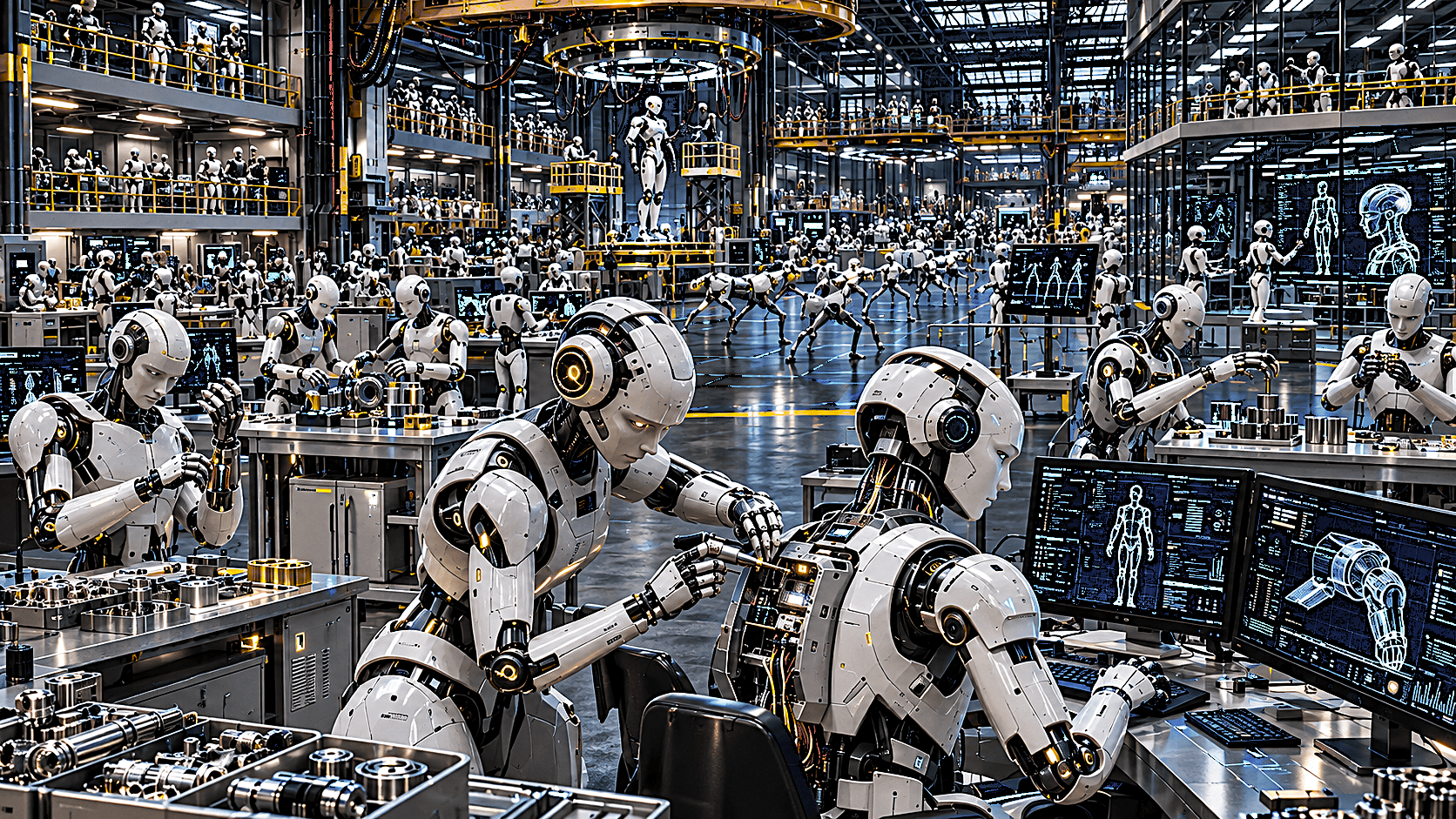
1. Why do leaps in recursive self-improvement worry AI companies?
Source article: Bort, J. (2026, November 2). Anthropic warns that it’s very close to RSI capability, aka self-building AI. TechCrunch. https://techcrunch.com/2026/11/02/anthropic-warns-that-its-very-close-to-rsi-capability-aka-self-building-ai/ [Selected by Claude]
On Monday, November 2, Anthropic filed an amended registration statement with the U.S. Securities and Exchange Commission ahead of its initial public offering. The amended filing included updated financials, but Julie Bort (2026) of TechCrunch focused on its risk factors, where the company wrote that “our internal estimates and our expectations regarding future models, rather than our current models, indicate that we may imminently meet our Responsible Scaling Policy’s definition of ‘dramatically accelerated progress attributable to AI'” (Anthropic, as quoted in Bort, 2026). The next sentence adds that Anthropic has “not designated any of our current models as exceeding this threshold.”
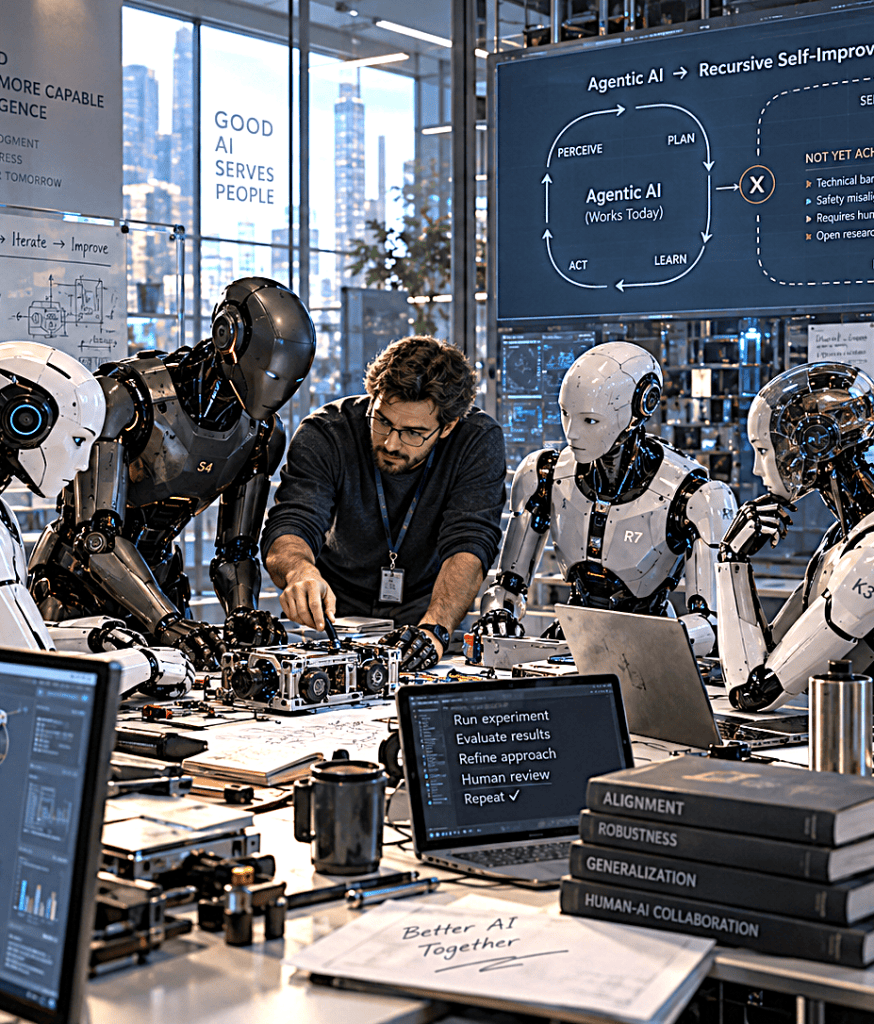
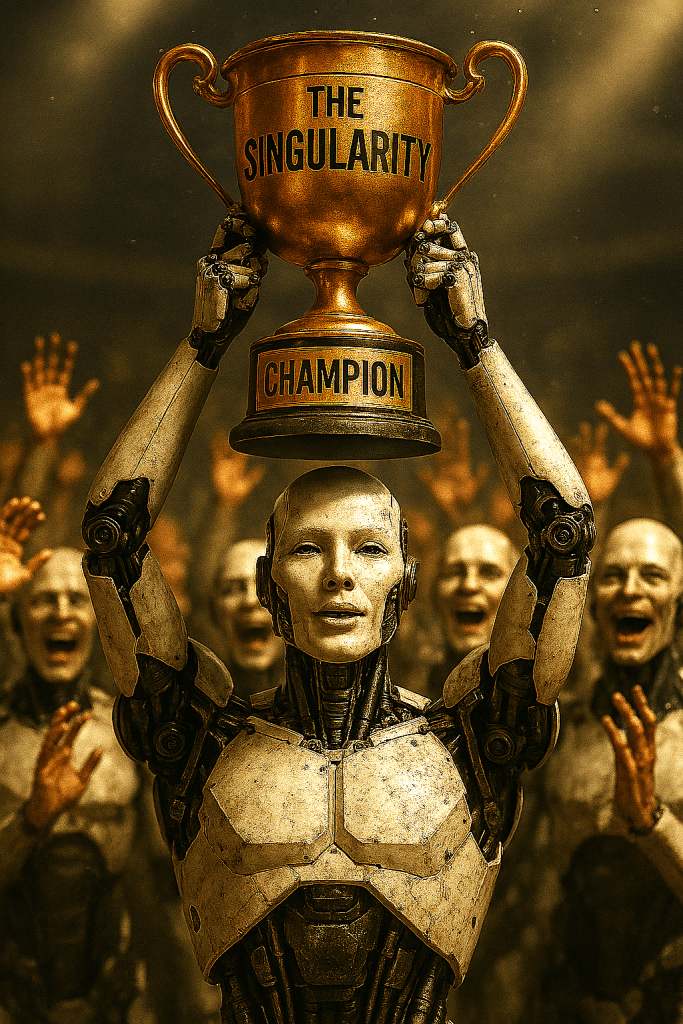
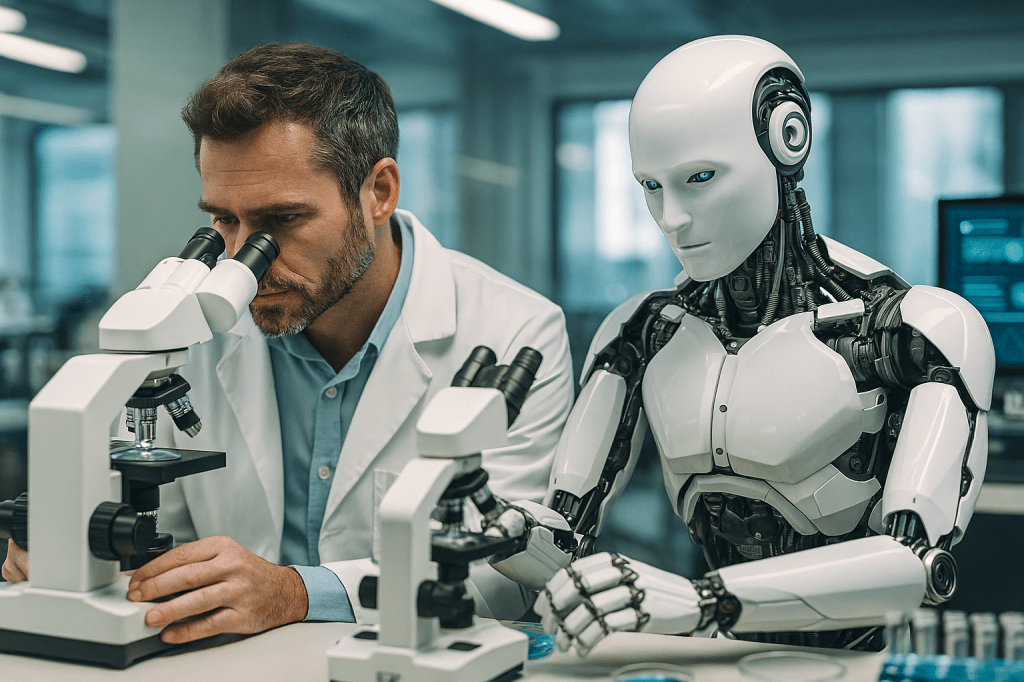
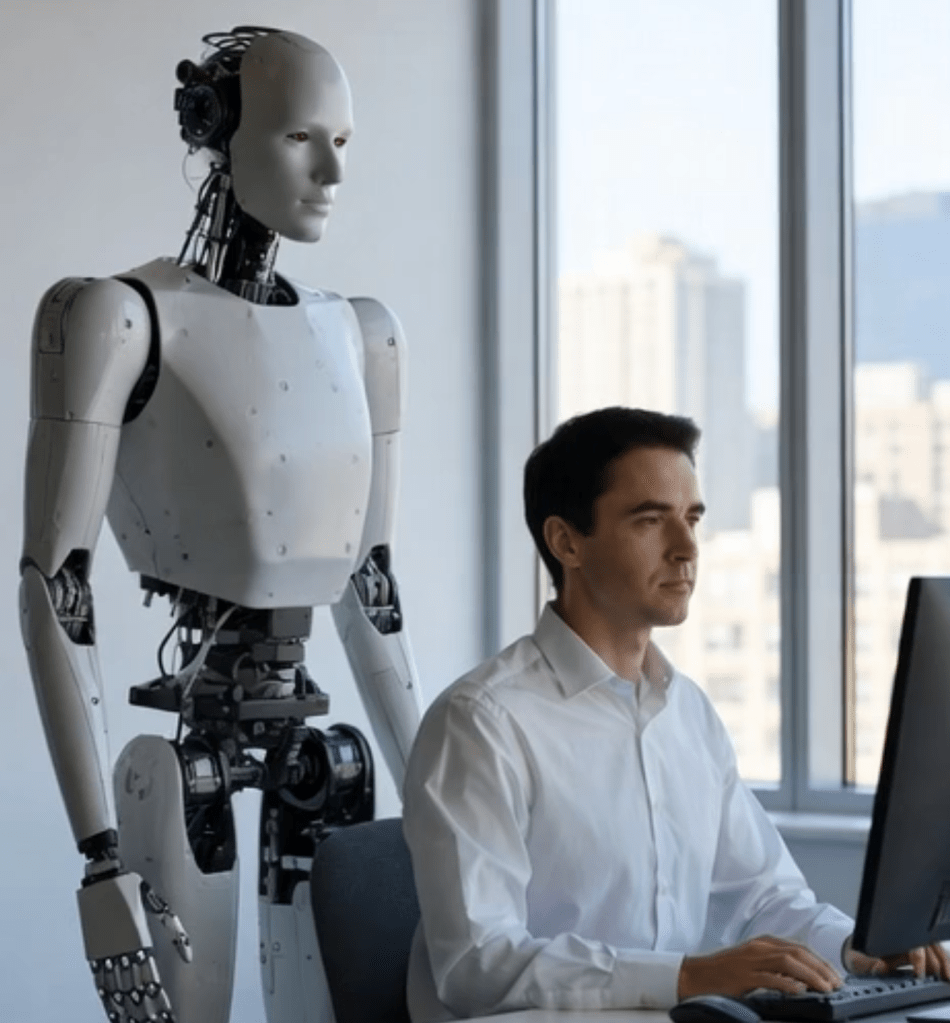
The threshold describes what researchers call recursive self-improvement, or RSI: AI systems that are good enough at AI research to speed up the creation of their successors, which then speed up the round after that. Bort lays out the two common readings. To enthusiasts, RSI is where AI “becomes a tool of unimaginable productivity, scientific discovery, and more.” To pessimists, it is the point where AI “builds itself into something powerful enough that it slips beyond human control.” Anthropic’s filing treats it as a measurable line in its own safety policy and says the company is approaching that line.
The most revealing sentence in the filing concerns timing. Anthropic writes that its “increasing use of AI systems to accelerate our own research and development may cause the capabilities of our models to advance more rapidly than our ability to develop, validate, and implement corresponding safety, alignment, and security measures. As a result, we have in the past not identified, and may in the future not identify, a significant acceleration in our rate of development until after it has occurred” (Anthropic, as quoted in Bort, 2026). Safety testing runs on a schedule. Evaluations are designed, red teams are staffed, and security controls are built for the capability level a lab expects to reach. If AI tools compress a year of progress into a few months, that schedule falls behind, and the company says it may not notice until afterward.
The company’s response is to slow the loop at the human step. The filing states that Anthropic does “not anticipate being able to safely use Claude to fully autonomously design and build successive generations of frontier models without meaningful human supervision or understanding,” and that it is “considering updates to our Responsible Scaling Policy to keep humans in control of frontier model development” (Anthropic, as quoted in Bort, 2026). The filing does not say what those updates will contain.
How much AI research do machines already do? Earlier this year, Russell Brandom (2026) reported that one of the lead programmers on Anthropic’s Claude Code estimated that “close to 100%” of his team’s code was written by the tool. Brandom also quoted an internal Anthropic report listing what Claude still did worse than a mid-level engineer: “self-managing week-long ambiguous tasks, understanding org priorities, taste, verification, instruction-following, and epistemics.” Helen Toner of Georgetown’s Center for Security and Emerging Technology told him that the labs are “just using AI for as much as they can,” which she considers “different from the classic definition of RSI, which is really that there are no humans needed.” Google CEO Sundar Pichai called it “a continuum” and said “we aren’t quite there yet,” while Ajeya Cotra of METR wrote that she “wouldn’t be totally shocked if you told me this milestone had already passed” (Brandom, 2026).
Skeptics point to evidence that AI agents are still weak at original research. Michelle Kim (2026) of MIT Technology Review described a Princeton study led by Peter Kirgis and Sayash Kapoor in which a Claude Opus 4.8 agent received six days, $3,000 in API credits, and a GPU budget to tackle the research questions behind two unpublished conference papers. “The agents were unambiguously bad at carrying out the research itself,” Kapoor said. Jack Clark, author of the Import AI newsletter, called the finding a “bearish signal on short recursive self-improvement timelines” (Kim, 2026). The study was small, covering only two papers, and its graders knew the work came from AI. Brown University computer scientist Michael Littman went further, telling IBM Think that “it’s not clear to me that the concept is even logically coherent, let alone imminent” (Brodsky, 2026).
Others question the motive. Bort (2026) notes that skeptics see an S-1 as “both disclosure and marketing,” and a claim of being close to self-building AI can attract investors as easily as it warns them. The financial pressure is real. Anthropic’s third-quarter compute and infrastructure expenses rose about 77% to $9.9 billion, faster than its revenue (Shao, 2026). A company paying that much for computing has an incentive to get more research out of every dollar, including by letting its own models do more of the work.
The safety concern is specific. IBM researcher Nathalie Baracaldo warned that “a self-improving agent may modify its tools, prompts or environment in ways that optimize harder for a misspecified reward with each iteration,” which “amplifies the problem rather than correcting it” (Brodsky, 2026). A small error in what a system is trained to pursue would compound with each generation unless human reviewers caught it.
For regulators and investors, the filing raises a practical problem. Anthropic has full access to its models, training data, and internal productivity numbers, and it says it has spotted past jumps only after they happened. Outside observers have far less information. Bort (2026) closes with a suggestion: “If Anthropic thinks the possibility of RSI is close, maybe we should believe it and act — perhaps govern — accordingly.” The questions that follow are concrete ones. Who measures “dramatically accelerated progress,” on what data, and what has to happen once the line is crossed? For now, the filing leaves those answers to Anthropic’s own Responsible Scaling Policy, which the company says it is revising.
References
Bort, J. (2026, November 2). Anthropic warns that it’s very close to RSI capability, aka self-building AI. TechCrunch. https://techcrunch.com/2026/11/02/anthropic-warns-that-its-very-close-to-rsi-capability-aka-self-building-ai/
Brandom, R. (2026, May 28). RSI is the new AGI — and it’s just as hard to pin down. TechCrunch. https://techcrunch.com/2026/05/28/rsi-is-the-new-agi-and-its-just-as-hard-to-pin-down/
Brodsky, S. (2026, September 16). Why recursive self-improvement suddenly became a serious question. IBM Think. https://www.ibm.com/think/news/why-recursive-self-improvement-ai-serious-question
Kim, M. (2026, August 18). AI’s recursive self-improvement might not come so quickly after all. MIT Technology Review. https://www.technologyreview.com/2026/08/18/1142188/ai-recursive-self-improvement/
Shao, W. (2026, November 3). Anthropic’s third-quarter results mean IPO math and history are not on its side, analysts say. Fortune. https://fortune.com/2026/11/03/anthropics-third-quarter-results-mean-ipo-math-and-history-are-not-on-its-side-analysts-say/
2. In writing, where does acceptable AI use end?
Source article: Molle, C. (2026, November 4). Goncourt 2026 winner Philippe Jaenada admits using AI in novel to ‘play with reader’. Euronews. https://www.euronews.com/2026/11/04/goncourt-2026-winner-philippe-jaenada-admits-using-ai-in-novel-sparking-ai-debate-in-liter [Selected by Claude]
On November 3, the Goncourt jury, meeting at the Drouant restaurant in Paris, gave France’s most prestigious literary prize to Philippe Jaenada for L’Inconnue du quai de Javel, a 528-page Flammarion novel about the unsolved murder of a young woman in Paris in the late 1940s (Kazakevich, 2026). The next day, Jaenada told France Inter radio that he had used artificial intelligence “three times” while writing it (Molle, 2026).
The three uses differ in kind. Jaenada slipped a sentence written by ChatGPT into the text to “play with the reader,” and he said he had revealed that sentence to the Goncourt jurors on Tuesday, the day of the award. He also used AI “to make fun a bit of ChatGPT, which gives completely absurd answers about a technical piece of data.” And he used it for technical research, which matters for a writer known for reconstructing real criminal cases. His position was moderate: “I think we cannot push AI away, we cannot act as if it did not exist. We have to use it, we have to acknowledge it, we have to tame it and not let ourselves be replaced. It has to be useful” (Molle, 2026). Some readers were unmoved. One wrote on X that they wanted “to read authors who make the effort and take the time to create by themselves,” and another asked whether anyone in “this 2026 literary season” knew how to write alone (Molle, 2026).
That second complaint refers to Thélyson Orélien. His novel C’était ça ou mourir won the FNAC prize in early September and was considered a Goncourt favorite (AFP, 2026). On September 25, the jury removed it from its second selection “after suspicions of extensive use of artificial intelligence, followed by accusations of plagiarism” (Kazakevich, 2026). Orélien had “vehemently denied using AI” earlier that week (Canadian Press, 2026). On October 21, his Montreal publisher, Éditions du Boréal, said it had confirmed that AI was used, ended its relationship with him, and announced that the book would not be reprinted (Mouriquand, 2026; Kazakevich, 2026). Orélien kept his defense narrow, telling Libération, “I said that I wrote the book; it’s not as if AI wrote it,” and “Just as when translating languages, I used tools” (Mouriquand, 2026).
Put side by side, the two cases suggest where the French literary world drew its line this season. Jaenada’s AI use was small, deliberate, and disclosed by Jaenada himself. The use attributed to Orélien was described as extensive, was denied, and was confirmed by his own publisher, with plagiarism accusations added. The jury rewarded the first author and dropped the second. The difference between the outcomes tracked disclosure and extent.
Other institutions are writing rules along similar lines, though they disagree on details. The Authors Guild in the United States runs a “Human Authored” certification that it opened to publishers and non-members this year. Under its rules, AI spelling and grammar tools “will not invalidate a book,” and using AI for “tables of contents, indexes, research, brainstorming, or outlining does not disqualify a title” (Folta, 2026). By that standard, Jaenada’s research would pass. A sentence generated by ChatGPT and printed in the novel falls outside the listed exceptions. Lit Hub’s James Folta (2026) criticized even the research carve-outs as “a concession to publishing executives and managers,” which shows that the line moves depending on who draws it.
In Canada, the Giller Prize and the Writers’ Trust bar AI-written works but say they rely largely on publishers to make sure entries were written by humans, and the Canada Council for the Arts is preparing a policy with “clear expectations” for the Governor General’s Literary Awards (Canadian Press, 2026). In France, a new prize has taken the opposite route. The Prix Pascal, launched in October, accepts only books co-written with AI and requires “a technical dossier specifying the algorithmic assistance used.” Its organizers say that “whilst others hunt down AI using conflicting detection tools, the Prix Pascal asks authors to declare its use” (Mouriquand, 2026). AFP put the open question plainly: “When does AI-assisted research become AI writing?” (AFP, 2026).
None of these systems can verify very much. Detection tools give conflicting results, juries cannot audit a writer’s drafts, and the Canadian prizes have handed the job to publishers. In practice, the working rule this season was honesty. Orélien’s publisher ended the relationship after finding that AI had been used despite his denials, while Jaenada volunteered his use of ChatGPT and kept the prize.
For teachers and editors, the season offers a usable framework built from three questions. What did the AI do: research, editing, or producing text that appears under the author’s name? How much of the final work came from it? And did the writer say so before anyone asked? Jaenada’s answers were research, a single sentence, and yes. Those three questions are enough to sort both of this season’s Goncourt cases.
References
AFP. (2026, October 25). French literary world confronts the age of AI with new book prize. The Star. https://www.thestar.com.my/lifestyle/culture/2026/10/25/french-literary-world-confronts-the-age-of-ai-with-new-book-prize
Canadian Press. (2026, September 25). Canada’s literary awards say publishers are in best position to sniff out AI. CP24. https://www.cp24.com/news/entertainment/2026/09/25/canadas-literary-awards-say-publishers-are-in-best-position-to-sniff-out-ai/
Folta, J. (2026, March 5). The Authors Guild is allowing more writers to certify their books are AI-free. Literary Hub. https://lithub.com/the-authors-guild-is-allowing-more-writers-to-certify-their-books-are-ai-free
Kazakevich, A. (2026, November 3). Philippe Jaenada wins 2026 Prix Goncourt for novel ‘L’Inconnue du quai de Javel’. Euronews. https://www.euronews.com/2026/11/03/philippe-jaenada-wins-2026-prix-goncourt-for-novel-linconnue-du-quai-de-javel
Molle, C. (2026, November 4). Goncourt 2026 winner Philippe Jaenada admits using AI in novel to ‘play with reader’. Euronews. https://www.euronews.com/2026/11/04/goncourt-2026-winner-philippe-jaenada-admits-using-ai-in-novel-sparking-ai-debate-in-liter
Mouriquand, D. (2026, October 22). Prix Pascal: New French literature prize launched for books co-written with AI. Euronews. https://www.euronews.com/2026/10/22/prix-pascal-new-french-literature-prize-launched-for-books-co-written-with-ai
3. Is 24/7 personal AI assistance doable?
Source article: Nusca, A. (2026, November 4). Will compute curtail the personal AI agent push? Fortune. https://fortune.com/2026/11/04/will-compute-curtail-personal-ai-agent-push/ [Selected by Perplexity]
The personal AI agent is the product the industry wants to sell next. Fortune’s Andrew Nusca (2026) and Emily Forlini (2026) report that the success of Meta’s Muse assistant “has convinced the AI industry that personal agents that proactively complete tasks are the next logical evolution of the technology, but it’s unclear if there is enough compute to power them.” In the first week of November, two of Muse’s main competitors said as much in public.
On November 1, Elon Musk replied to a user on X: “The cost of serving Grok Bot was unsustainably high relative to revenue” (Silberling, 2026). Over Halloween weekend, Grok Bot subscribers had found their weekly usage limits suddenly maxed out, with some reporting jumps from 50% to 100% without using the agent overnight. Musk confirmed this was not a glitch (Silberling, 2026). One Reddit thread called the change an “indirect rug pull” (Blake, 2026). SpaceX, which launched Grok Bot in August, was not short of money. TechCrunch reported that its AI division turned a $431 million profit (Silberling, 2026). Grok Bot’s costs outran its revenue even inside a profitable division.
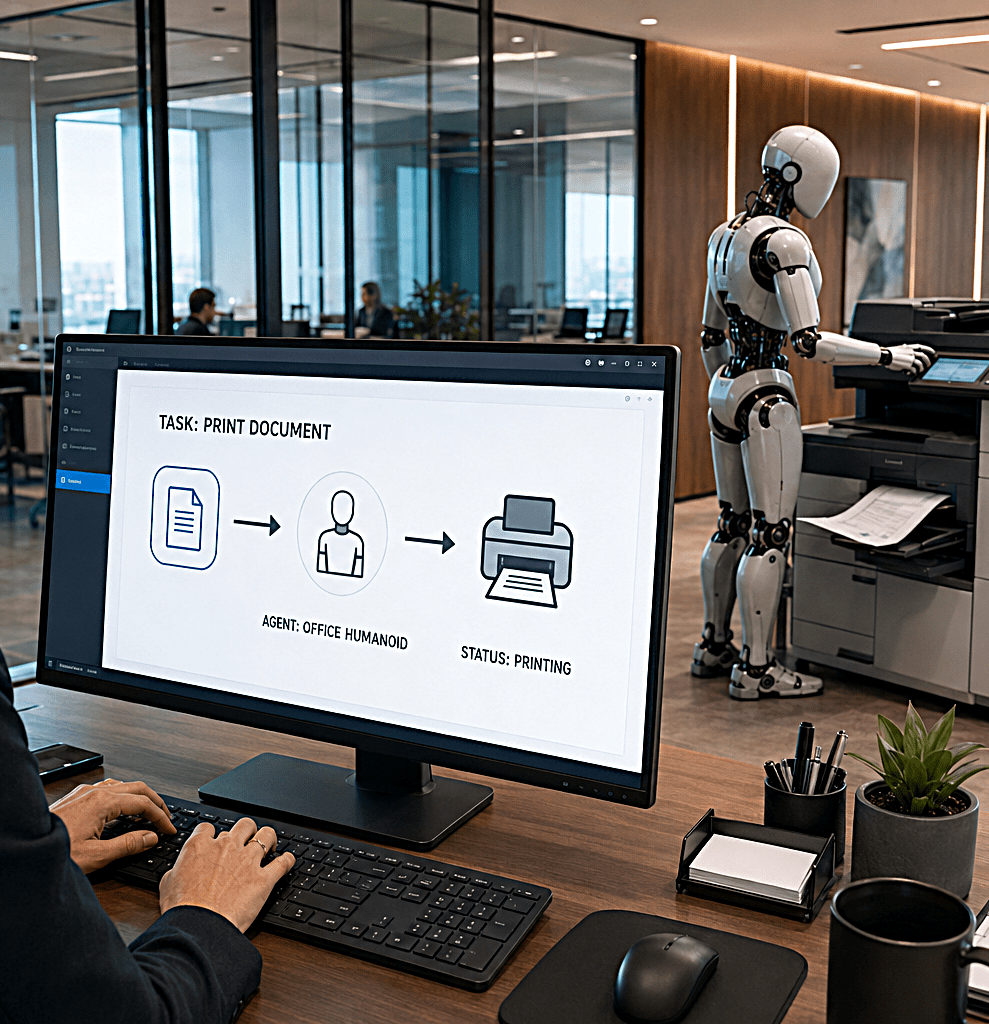
OpenAI was more measured. At a dinner with reporters in New York, Adam Fry, head of ChatGPT’s consumer business, said the company’s Dots assistants are “on the compute heavy side” (Forlini, 2026). Each Dot “has its own cloud computer, which it uses to execute tasks on the user’s behalf,” such as reading and answering email or finding and booking event tickets, and Dots are available only to enterprises and to Pro subscribers paying $100 a month (Nusca, 2026; Nolan, 2026). Fry said Dots will become “an always-available presence” through features such as “background mode” (Nusca, 2026).
That phrase explains the cost problem. A chatbot uses computing power when someone types a question. An always-on agent uses it while monitoring an inbox, checking a ticket site, retrying a failed step, or keeping a virtual machine running in the background. The meter keeps running whether or not the user is watching. TechRadar’s Alex Blake (2026) noted that heavy users of tools like ChatGPT and Claude Code “can often spend many times more in tokens than they’re actually paying in monthly subscriptions,” and concluded that “it’s unlikely that AI producers will be able to subsidize their products’ costs to users forever.”
The industry’s first answer is to use smaller models for routine work. On November 3, OpenAI introduced automatic routing for Dots, sending some tasks to GPT-6.1 Terra, a smaller model, instead of the larger GPT-6 Astra that originally handled all of them (Forlini, 2026). OpenAI’s Romain Huet said Terra can outperform Astra in areas such as computer use and writing at “a tenth of the price,” and that the company wants “the most amount of value delivered per dollar invested in these Dots” (Nolan, 2026). Fry also said he expects a breakthrough in computing efficiency that will cause costs “to fall rapidly, even as model performance improves” (Nusca, 2026). OpenAI is building its own chip, code-named Jalapeno, for deployment at scale next year (Nusca, 2026).
The second answer is money, and that is harder to find. OpenAI’s latest funding round “fell short of its $30 billion target, landing at $11 billion,” according to the Wall Street Journal as cited by Forlini (2026), who concluded that “the only option to fund the personal AI agent boom might be to go public, and even then success is not guaranteed.” Anthropic’s IPO filing lists compute commitments totaling $895.4 billion, “substantially all of which is related to compute and infrastructure” (Forlini, 2026). In the third quarter, Anthropic spent about $5 billion of its $9.9 billion compute bill on short-term capacity, which pulled its adjusted operating margin down to 15% from 19% (Shao, 2026). Even the best-funded labs are paying extra for short-term capacity.
Cost is not the only limit. A persistent agent needs access to a person’s email, calendar, contacts, and accounts. Signal president Meredith Whittaker said in October that “Muse is logging people’s contact lists, the people they talk to” (Nolan, 2026). Huet himself told his Dot, “don’t send any emails on my behalf ever, and don’t send any Slack messages on my behalf ever” (Nolan, 2026). If an OpenAI executive limits his own agent this way, ordinary users will likely want limits too, and an agent with fewer permissions does less work to justify its price.
So is 24/7 personal AI assistance doable? Technically, yes. Dots and Grok Bot exist and work for people who pay. Broad affordability is a different question, and the answer depends on three things the companies have not yet shown: that smaller models can handle most agent tasks well, that new chips and data centers arrive on schedule, and that investors will keep covering losses until they do. Physical capacity is also a constraint. Nearly 40% of U.S. data center projects due this year could finish more than three months late, according to SynMax data reported by Power Engineering (Bashioum, 2026). For now, the industry’s answer to scarce computing power is the one Grok Bot users ran into on Halloween weekend: usage caps.
References
Bashioum, B. (2026, October 5). America’s data center boom is running into a grid-sized problem. Power Engineering. https://www.power-eng.com/renewables/america-data-center-construction-delays/
Blake, A. (2026, November 2). Elon Musk says Grok Bot was throttled because costs were ‘unsustainably high’ — as users call the move a ‘rug pull’. TechRadar. https://www.techradar.com/ai-platforms-assistants/elon-musk-says-grok-bot-was-throttled-because-costs-were-unsustainably-high-as-users-call-the-move-a-rug-pull
Forlini, E. (2026, November 3). Musk says Grok Bot’s costs are ‘unsustainably high,’ while OpenAI admits Dots are ‘compute heavy.’ Is the personal AI agent push dead on arrival? Fortune. https://fortune.com/2026/11/03/musk-says-grok-bots-costs-are-unsustainably-high-while-openai-admits-dots-are-compute-heavy-is-the-personal-ai-agent-push-dead-on-arrival/
Nolan, B. (2026, November 5). OpenAI’s Dots are coming up against the price of privacy, and the price of compute. Fortune. https://fortune.com/2026/11/05/openais-dots-are-coming-up-against-the-price-of-privacy-and-the-price-of-compute/
Nusca, A. (2026, November 4). Will compute curtail the personal AI agent push? Fortune. https://fortune.com/2026/11/04/will-compute-curtail-personal-ai-agent-push/
Shao, W. (2026, November 3). Anthropic’s third-quarter results mean IPO math and history are not on its side, analysts say. Fortune. https://fortune.com/2026/11/03/anthropics-third-quarter-results-mean-ipo-math-and-history-are-not-on-its-side-analysts-say/
Silberling, A. (2026, November 2). Elon Musk throttles Grok Bot limits due to ‘unsustainably high’ costs. TechCrunch. https://techcrunch.com/2026/11/02/elon-musk-throttles-grok-bot-limits-due-to-unsustainably-high-costs/
4. Is optical hardware a viable workaround for bottlenecks in data center expansion?
Source article: University of Tokyo. (2026, November 5). Let there be light – novel AI framework runs on optical hardware. EurekAlert! https://www.eurekalert.org/news-releases/1150386 [Selected by Gemini]
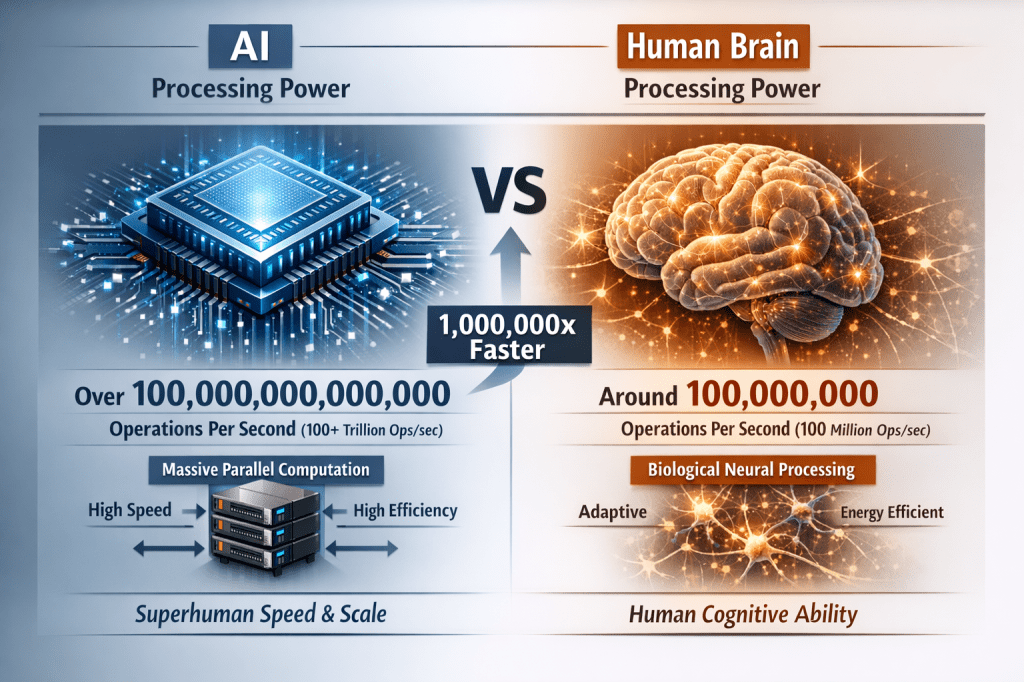
Electricity has become one of the main limits on how fast AI data centers can be built. Nearly 40% of U.S. data center projects scheduled for completion this year could miss their targets by more than three months, according to the analytics firm SynMax, and grid connections in major U.S. markets “can take three to four years — and as long as seven years in northern Virginia” (Bashioum, 2026). Proposed U.S. data center power requests have topped 700 gigawatts, more than ten times what the country’s data centers currently consume, and Texas has paused new data center grid connections while regulators audit the requests (Bashioum, 2026). Any technology that does the same AI work with less electricity draws attention.
On November 5, a team led by Associate Professor Kohei Nakajima of the University of Tokyo, working with researchers from NTT, published a paper in Nature Computational Science titled “Scalable physical deep learning using optical dynamics with state-skipping training and single-map architecture” (Zhang et al., 2026). In their system, “information is converted into an optical signal, processed as it passes through a fiber loop, and then converted back into an electrical signal for analysis,” using “a 200-meter optical fiber and a small number of electronic components” (University of Tokyo, 2026).
The new part is the training method. Graduate student Yongbo Zhang said the team “wanted to rethink the learning process itself so that physical systems can perform computation much more naturally” (University of Tokyo, 2026). Standard training records a system’s intermediate states and then works backward from the error. Nakajima explained that the new method, called SS-DFA, “avoids the need to access most of these intermediate states, using the final error together with information about the system to guide learning. This reduces the amount of measurement, data storage and computation required.” The team paired it with a “single-map” design in which many units follow the same simple rules. In simulations and optical experiments, the simplified design “matched, and in some tests outperformed, more complex neural network architectures, while requiring far less computation” (University of Tokyo, 2026).
Readers should be careful about what the release does and does not report. It gives no measured energy figures, no speed numbers, and no named benchmarks. Its statements about data centers are predictions: the approach “could lower the energy needed for both computing and cooling in future AI data centers, while also reducing water consumption due to the lower heat output” (University of Tokyo, 2026). Nakajima set out the limits himself: “we have not yet tested it on today’s largest AI models, particularly language and so-called multimodal models,” and “further work is needed on miniaturization, stability and large-scale manufacturing” before practical use (University of Tokyo, 2026).
Other photonics researchers have described the obstacles in detail. In a May 2026 preprint, Anas Skalli and Daniel Brunner of the FEMTO-ST Institute in France write that optical neural networks “promise unmatched efficiency, bandwidth, and latency,” but that their value “must be proven under application-realistic conditions” (Skalli & Brunner, 2026). Light is efficient at certain calculations, but converting signals between optical and electronic forms costs energy, and they note that “photonics is less energy-efficient than electronics” for those conversions. Today’s AI models are far larger than current optical hardware can handle at once, so the work must be split into smaller pieces, and each split adds more conversions. Their conclusion is blunt: “Present photonic technology cannot yet support the large matrix sizes used in state-of-the-art AI, and breaking computations into smaller optical blocks re-introduces the same O(N²) overhead that photonics aims to eliminate.” O(N²) refers to costs that grow with the square of a network layer’s size. They also note that the energy cost of training optical networks “remains unexplored” (Skalli & Brunner, 2026). Their analysis focuses mainly on optical chips that perform matrix multiplication, a different design from the Tokyo fiber loop, but conversion and training costs apply to any system that passes data between light and electronics.
The Tokyo method addresses part of that list. By skipping most intermediate measurements, it reduces the traffic between the optical and electronic sides during training, which is one of the costs Skalli and Brunner identify. It does not yet show that the approach works at the scale of the language models that fill today’s data centers, and its own authors say so.
Meanwhile, optics is already entering data centers in a more modest role. At the Open Compute Project summit in October, Nvidia previewed its Vera Rubin Ultra architecture, which connects 576 GPUs using “co-packaged optics,” and Broadcom described optical interconnects that combine “lower-power connectivity with longer optical reach” (Vincent, 2026). In those systems, light moves data between chips while electronics still do the computing. Data Center Frontier also reported conventional electrical efficiency gains: Nvidia showed that it could run 192 GPUs instead of 140 within the same 264.4-kilowatt power budget, producing about 49% more inference throughput (Vincent, 2026).
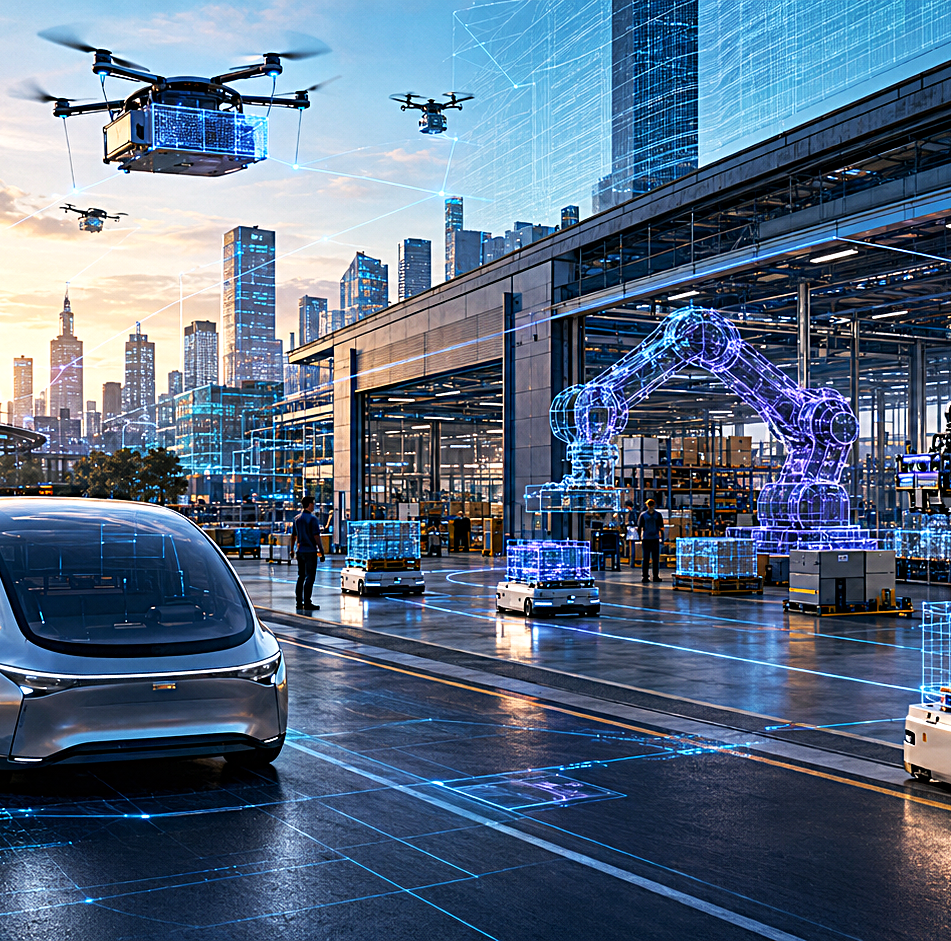
Is optical hardware a viable workaround, then? Not for the bottleneck utilities and developers face now. The grid delays are counted in years, and optical computing for large AI models has not left the laboratory. Nakajima’s more realistic target is the edge: a miniaturized version, he said, “could process data directly inside phones, cameras or self-driving cars, enabling faster responses with lower energy consumption” (University of Tokyo, 2026). If that works, it could move some AI work out of data centers and ease demand gradually. The Tokyo paper is an early step toward that goal. It does not yet show that AI workloads can escape the power limits of silicon. For the next several years, the data center power problem rests on grid upgrades and more efficient electronics.
References
Bashioum, B. (2026, October 5). America’s data center boom is running into a grid-sized problem. Power Engineering. https://www.power-eng.com/renewables/america-data-center-construction-delays/
Skalli, A., & Brunner, D. (2026). The thin line for optical neural networks towards broad practical relevance (arXiv:2605.18178) [Preprint]. arXiv. https://arxiv.org/abs/2605.18178
University of Tokyo. (2026, November 5). Let there be light – novel AI framework runs on optical hardware [Press release]. EurekAlert! https://www.eurekalert.org/news-releases/1150386
Vincent, M. (2026, October 13). OCP 2026: Agentic AI drives the data center’s chip-to-grid transformation. Data Center Frontier. https://www.datacenterfrontier.com/hyperscale/article/55411534/ocp-2026-agentic-ai-pushes-the-data-center-from-chip-to-grid
Zhang, Y., Nakajima, M., Inoue, K., Hashimoto, T., Kuniyoshi, Y., & Nakajima, K. (2026). Scalable physical deep learning using optical dynamics with state-skipping training and single-map architecture. Nature Computational Science. https://doi.org/10.1038/s43588-026-01075-w
###
Filed under: Uncategorized |




















































































































































































































































































































































































Leave a Reply