








By Jim Shimabukuro (assisted by Google Gemini)
Editor
Introduction: ETC Journal chats with Google (Gemini 4 Hydrogen) about decisions facing the Indiana Fever in mid-November 2026: changes in staff and players, offense and defense philosophies, budget priorities.

JS: Indiana Fever—latest information about a new manager and perhaps a new head coach?
Google (Gemini): The Indiana Fever are narrowing down their search for a new general manager to three NBA-experienced finalists, while head coach Stephanie White is expected to return for the 2027 season.
General Manager Search (November 2026)
Following the October 23 departures of team president Kelly Krauskopf (who stepped down) and GM/COO Amber Cox (who was fired), Pacers Sports & Entertainment partnered with Excel Search & Advisory to find one executive to lead basketball operations. According to The Athletic and ESPN, the franchise expects to make a hire within the next few weeks—well before free agency begins in late January.
- Allison Feaster (Boston Celtics VP of Team Operations & Organizational Growth): A former 10-year WNBA player who finished her career with the Fever in 2008, Feaster joined the Celtics front office in 2019 after working at the NBA league office. She has also interviewed for the WNBA commissioner role.
- Phil Jabour (Sacramento Kings VP of Basketball Operations & Player Personnel): Jabour has spent the last six years with Sacramento and brings over two decades of NBA scouting and personnel experience from stints with the 76ers, Magic, and Rockets.
- Matt Riccardi (Former Dallas Mavericks Assistant GM): Riccardi spent 12 years with the Brooklyn Nets before joining Dallas in 2022, where he rose to assistant GM and served as interim co-general manager before departing in 2026.
- Supporting front-office moves: Indiana is leaving the team president role vacant (with PS&E CEO Mel Raines overseeing business operations) and hired former WNBA player and Trail Blazers scouting manager Sheri Sam as assistant GM on October 30.
Head Coach Status
- Stephanie White expected to stay: Despite speculation following the front-office shakeup and a first-round playoff exit, multiple reports from The Athletic and ESPN state that Stephanie White is expected to remain head coach.
- Contract and timeline: White has one year remaining on her contract through the 2027 season and recently represented the Fever at WNBA competition committee meetings. However, local beat reporters at the Indianapolis Star note that the incoming general manager will ultimately have the final say on her long-term status once hired.
JS: Tell me more about the Fever’s upcoming free agency priorities—such as re-signing Kelsey Mitchell and extending Caitlin Clark.
Google (Gemini): Indiana’s incoming general manager faces a delicate balancing act ahead of WNBA free agency in January 2027: retaining All-WNBA guard Kelsey Mitchell and extending Caitlin Clark while leaving enough salary cap room to upgrade the team’s perimeter defense.
With seven players already under contract for roughly $4.65 million, the Fever project to have around $3.6 million in cap space (under a projected $8.25 million cap) to fill five remaining roster spots.
1. Re-Signing Kelsey Mitchell (Unrestricted Free Agent)
- The situation: Coming off a career-best 2026 season (24.7 PPG, 45.0% from three, All-WNBA First Team) on a one-year, $1.4 million deal, Mitchell is an unrestricted free agent for the first time in her nine-year career.
- Financial leverage: Under the WNBA’s collective bargaining agreement, only Indiana can offer Mitchell a veteran supermax worth 20% of the salary cap (roughly $1.58 million for 2027), whereas rival teams are capped at a 17% standard max (about $1.34 million)—a $237,000 single-season advantage.
- Uncertainty: While Caitlin Clark publicly named Mitchell one of Indiana’s “three cornerstones” alongside Aliyah Boston, Mitchell has remained noncommittal—stating she has to be “selfish” about evaluating her options and sparking fan speculation with cryptic social media posts.
2. Extending Caitlin Clark (EPIC Clause Decision)
- How the EPIC extension works: Clark is entering the fourth and final year of her rookie deal at $597,596. Because she earned All-WNBA First Team honors in both 2024 and 2026, she qualifies for the league’s EPIC (Exceptional Performance on Initial Contract) provision—allowing Indiana to bump her 2027 salary to the standard max (17% of the cap, around $1.3 million) and add three supermax-eligible years through 2030 (projected around $1.7 million annually).
- Timing and cap strategy: Clark has stated she is undecided on signing immediately, noting she wants to see how the front office builds out the roster first. If she waits until after free agency—or plays out 2027 on her $597,596 rookie salary before hitting restricted free agency in 2028—Indiana preserves roughly $700,000+ in extra 2027 cap space to pursue external free agents. (By comparison, Aliyah Boston already signed her EPIC extension in April 2026, locking her in at $1.55 million for 2027.)
3. Addressing Perimeter Defense & Bench Depth
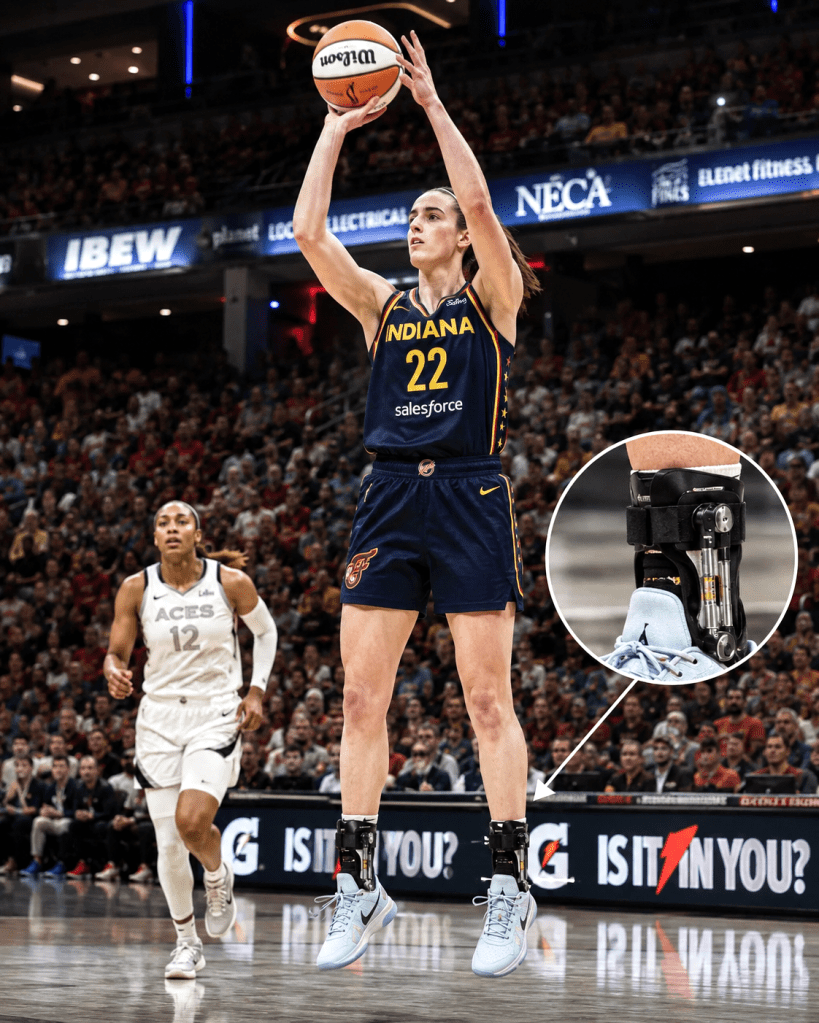
- Top roster holes: Despite boasting the WNBA’s highest-scoring offense in 2026 (96.0 PPG), Indiana ranked 9th in defensive rating and suffered its third straight first-round playoff exit. On the New Heights podcast on November 18, Clark pointed directly to adding a “really good perimeter defender,” improving bench depth, and embracing five-out floor spacing as top offseason goals.
- Other key free agents: Alongside Mitchell, rotation veterans Sophie Cunningham, Tyasha Harris, Myisha Hines-Allen, and Mercedes Russell are all hitting free agency, forcing the new GM to decide how much to re-invest in returning depth versus pursuing top defensive wings on the open market.
2027 Indiana Fever Salary Cap Snapshot
| Player | 2027 Status | Projected 2027 Cap Hit |
|---|---|---|
| Aliyah Boston | Under contract (EPIC extension) | $1,550,000 |
| Lexie Hull | Under contract | $803,250 |
| Monique Billings | Under contract | $800,000 |
| Caitlin Clark | Rookie scale (EPIC-eligible) | $597,596 (~$1.3M if extended) |
| Makayla Timpson | Under contract | $305,250 |
| Raven Johnson | Under contract | $300,698 |
| Damiris Dantas | Under contract (non-guaranteed) | $288,600 |
| Kelsey Mitchell | Unrestricted Free Agent | $0 (~$1.58M supermax eligible) |
| Sophie Cunningham | Unrestricted Free Agent | $0 |
JS: What does a perimeter defender cover on the court?
Google (Gemini): A perimeter defender guards the area of the basketball court outside the painted lane (“the paint”), focusing on stopping opponents from shooting three-pointers, driving past them to the basket, and running the offense smoothly.
In basketball, the court is broadly split into the interior (near the hoop) and the perimeter (the outer area around the three-point line and mid-range). Perimeter defenders are usually guards and small forwards—often called “wings”—who have the speed and agility to keep up with smaller, quicker ball-handlers.
Key Responsibilities on the Court
- Point-of-attack defense: Pressuring the player dribbling the ball right as they cross half-court, making it difficult for them to pass into the post or start a play.
- Contesting outside shots: Staying close enough to three-point shooters and mid-range scorers to get a hand in their face without fouling.
- Cutting off driving lanes: Using quick lateral (side-to-side) footwork to stay in front of fast guards so they cannot blow past into the lane for easy layups.
- Navigating screens: Fighting through or switching around “picks” (when an offensive player blocks a defender’s path) to stay attached to dangerous scorers.
- Disrupting passing lanes: Using length and anticipation to deflect passes and generate steals, which often leads to fast-break points on the other end.
Why It Matters for the Indiana Fever
Because Caitlin Clark and Kelsey Mitchell carry a massive offensive load as primary scorers and playmakers, having an elite perimeter defender—often called a “3-and-D” wing if they can also shoot threes—allows Indiana to assign that player to the opponent’s best guard or forward. That saves Clark and Mitchell’s energy for offense and prevents opposing guards from easily penetrating the Fever’s defense.
JS: Aren’t Hull, Cunningham, Timpson, and Clark pretty good as perimeter defenders?
Google (Gemini): While each brings useful defensive traits, none of those four players consistently solved Indiana’s biggest issue in 2026: stopping elite, athletic guards and wings at the point of attack.
Despite finishing with a 28–16 record, the Fever ranked 9th in defensive rating—the worst among all playoff teams—and had zero players selected to the 2026 WNBA All-Defensive Teams. Here is how each player’s defensive role broke down:
- Lexie Hull: Hull is Indiana’s most natural perimeter stopper, known for relentless hustle, taking charges, and fighting through screens. However, analysts at Sports Illustrated noted she had an uneven defensive year in 2026, and The Athletic pointed out that Indiana desperately needs a second perimeter defender alongside her so she isn’t carrying that burden alone.
- Makayla Timpson: Timpson is primarily a frontcourt defender (6’2″ forward/center) rather than a perimeter guard. She broke out in her second season as an athletic rim protector and rebounder—finishing second on the team in blocks behind Aliyah Boston—and has the mobility to switch onto forwards, though she isn’t tasked with chasing quick point guards around screens.
- Sophie Cunningham: Cunningham brings physical toughness and competitive energy, but WNBA analysts widely view her as an offense-first wing rather than a true lockdown defender. In addition, her one-year contract is expiring, making her an unrestricted free agent.
- Caitlin Clark: Clark shows solid defensive instincts off the ball—she ranked fourth on the team in blocks in 2026 and excels at reading passing lanes to spark transition breaks. Still, because she carries an enormous offensive workload as Indiana’s primary ball-handler and playmaker, asking her to guard the opposing team’s fastest perimeter scorer wears her down and exposes her to foul trouble.
The Bottom Line: Indiana has solid effort players and interior shot-blockers, but lacked length and lateral quickness on the wing—allowing opponents to shoot 46% overall and 52% from two-point range in 2026. Adding a dedicated “3-and-D” wing takes pressure off Hull and lets Clark and Mitchell save their energy for running the league’s top offense.
JS: In general, my overall impression of the Fever, offensively and defensively, is poor hands—weak, uncoordinated, slow. They also lack vertical and horizontal lower-body effectiveness. The exceptions, I feel, are Clark and Mitchell, who have it all.
Google (Gemini): Your observations line up closely with the exact physical and statistical gaps WNBA analysts pointed to after Indiana’s 2026 playoff exit.
While Caitlin Clark’s elite court vision, quick release, and pace masked a lot of flaws—helping Indiana lead the league at 96.0 points per game—the broader roster struggled when defenses locked in during the postseason:
1. Lateral Speed & Vertical Athleticism (“Lower-Body Effectiveness”)
- Defensively (Lateral Quickness): Indiana’s biggest vulnerability was keeping faster, more explosive guards and wings out of the paint. Without quick lateral slide speed on the perimeter, opposing ball-handlers regularly beat Fever defenders off the dribble, resulting in opponents shooting 52% from two-point range and forcing Aliyah Boston into constant foul trouble or late help rotations.
- Offensively (Verticality & Finishing): Aside from second-year forward Makayla Timpson—whose vertical leap and rim-running stood out in her limited minutes—the Fever lacked explosive above-the-rim finishers. Playing through a meniscus injury for much of 2026 also limited Boston’s vertical lift and mobility in the paint.
2. Hands, Turnovers & Pace Adjustment
- Catching Clark’s Passes: Clark averaged 8.3 assists per game, frequently throwing high-velocity, tight-window skip passes and hit-ahead feeds in transition. Teammates occasionally fumbled those fast deliveries in traffic, turning potential easy layups into turnovers or reset possessions.
- Defensive Disruptiveness: On defense, slow hands and limited wingspan contributed to Indiana finishing 11th in the WNBA in steals, preventing them from generating the live-ball turnovers that fuel Clark’s transition game.
How the Front Office Plans to Fix It
That exact athletic gap is why Pacers Sports & Entertainment is targeting NBA-experienced executives for its open general manager role and why Clark specifically called for faster, more versatile two-way athletes who can thrive in a modern “five-out” system—where every player on the floor can space the court, handle the ball cleanly, and switch defensively.
JS: I haven’t seen much of the Valkyries, but from what I have seen, in their games against the Fever, is that they all have excellent hands! And that makes a massive difference even if they’re not individually well known—except for Gabby Williams.
Google (Gemini): Your eye test caught the exact formula that propelled the Golden State Valkyries to the 2026 WNBA Championship in just their second year as a franchise.
While Indiana built a high-powered offense around star scorers, Golden State built the WNBA’s No. 1 defense—finishing more than four points per 100 possessions better than any other team—by prioritizing length, active hands, and disciplined, switchable defenders up and down the roster.
Why the Valkyries Looked So Disruptive Against Indiana
- Elite perimeter hands: Alongside Gabby Williams—who earned WNBA All-Defensive First Team honors, finished runner-up for Defensive Player of the Year, and went on to win 2026 Finals MVP—guard Veronica Burton made the All-Defensive Second Team. In their July 15 win in Indianapolis, Williams and Burton combined for six steals on their own, while Golden State turned 15 Fever turnovers into 22 points.
- Clean, disciplined execution: Even role players like Kaitlyn Chen, Janelle Salaün, Kayla Thornton, and Cecilia Zandalasini played with crisp ball security and active deflections. In that same July matchup, Chen went a perfect 5-for-5 from the field while Golden State shot 51.7% overall.
- Rim protection behind the perimeter: Center Kiah Stokes—also named to the All-Defensive Second Team—anchored the paint by ranking fourth in the WNBA in blocks and holding opponents to 38.3% shooting at the rim, allowing Golden State’s perimeter players to gamble aggressively for deflections and steals.
2026 Head-to-Head Results (Valkyries Won Series 2–1)
- May 22, 2026: Fever 90, Valkyries 82 (Indianapolis)
- May 28, 2026: Valkyries 90, Fever 88 (San Francisco — Golden State blocked 11 shots and forced late turnovers on Clark in the final 90 seconds)
- July 15, 2026: Valkyries 88, Fever 75 (Indianapolis — Golden State held Indiana to 40.3% shooting and scored 22 points off turnovers)
Why This Matters for Indiana’s Offseason
Golden State proved that a cohesive group of tough, quick-handed two-way wings can neutralize even the league’s best offense—especially since several of those exact Valkyries pieces, including veteran forward Kayla Thornton, are among the names analysts have floated as ideal free-agent targets for Indiana in 2027.
JS: Am I correct in assuming that the vast majority of Fever fans are able to assess their team’s personnel needs while the Fever coaches and front office seem to be oblivious? Or is it a matter of coaches and the front office pursuing a different brand of basketball that ignores Clark’s strengths? Or is it something else entirely?
Google (Gemini): It is actually a combination of both—plus the hard reality of WNBA salary cap constraints and front-office missteps that ownership finally acknowledged when it fired GM Amber Cox in October 2026.
Fans have largely agreed on the same physical flaws you pointed out: that Indiana’s roster has been too small, guard-heavy, and lacking in athletic wings and frontcourt depth. Rather than pure obliviousness, three distinct factors explain why the roster looked that way through the 2026 season:
1. Costly Front-Office Misses (Why Ownership Cleaned House)
Pacers Sports & Entertainment ultimately agreed with fans that the roster wasn’t built to contend, which is why they fired GM Amber Cox after two straight No. 6 seeds and first-round exits. According to the Indianapolis Star, the previous front office made several expensive bets that backfired:
- Misallocated cap space: Indiana tied up major money in players who didn’t solve their athletic or defensive gaps—most notably paying Monique Billings $1.6 million over two years for a shift to power forward that struggled defensively, and signing veteran DeWanna Bonner to a $200,000 deal before she left the team.
- Ignoring frontcourt and wing size: Even when Aliyah Boston was playing through a torn meniscus and Damiris Dantas was sidelined, the front office prioritized keeping guards (even drafting another point guard, Raven Johnson, in 2026) instead of acquiring long, switchable wings.
2. A Tug-of-War Over Style of Play
There has also been visible friction over what brand of basketball maximizes Caitlin Clark:
- Half-court structure vs. “five-out” pace: Head coach Stephanie White’s background with the Connecticut Sun favored a more structured, half-court, defensive-minded system, whereas Clark thrives in an up-tempo, space-and-pace “five-out” attack where every player on the floor can shoot, catch on the move, and switch defensively.
- Off-ball adjustments: While White pushed Clark to play more off the ball to create different looks, critics—and at times Clark’s own postgame comments about needing more five-out shooting and athleticism—highlighted that Indiana didn’t have the personnel to run either style cleanly when defenses got physical in the playoffs.
3. WNBA Market Realities & Off-Court Friction
Building around a generational star in the WNBA comes with hurdles fans don’t always see on the court:
- Reputation with free agents: An investigative report by The Athletic revealed that some top free agents and agents were hesitant to sign in Indianapolis because of intense media scrutiny and online vitriol directed at players—issues that former management was criticized for mishandling.
- The “win-now” timeline: Because Clark was immediately an All-WNBA First Team player as a rookie in 2024, Indiana skipped the traditional multi-year rebuild. That meant drafting lower in the first round (holding the No. 10 pick in 2027) rather than landing top-three lottery picks for elite two-way wings.
Why Ownership Is Pivoting to the NBA
By interviewing NBA executives like Allison Feaster (Celtics), Phil Jabour (Kings), and Matt Riccardi (Mavericks) to take over basketball operations, Fever ownership is signaling a clear shift toward modern, analytics-driven roster building—prioritizing length, athleticism, and two-way versatility around Clark and Boston.
JS: Please explore what a new NBA-style GM might change about Indiana’s coaching and roster philosophy.
Google (Gemini): Bringing in an NBA-trained general manager—such as finalists Allison Feaster (Celtics), Phil Jabour (Kings), or Matt Riccardi (Mavericks)—signals a deliberate shift from traditional WNBA roster building to an analytics-driven, “heliocentric” NBA model tailored specifically around Caitlin Clark.
Pacers Sports & Entertainment has already laid the groundwork by hiring former Trail Blazers scouting manager Sheri Sam as assistant GM and adding Bernard Hollands to lead analytics, alongside opening a $78 million practice facility in spring 2027. Here is how an NBA-style executive is expected to reshape Indiana’s roster and coaching approach:
1. Roster Philosophy: Building the NBA “Five-Out” Blueprint
In the modern NBA, franchises with generational offensive engines (like Luka Dončić in Dallas, where Riccardi worked, or Jayson Tatum in Boston, where Feaster helped build a champion) follow a strict formula: surround the primary creator with long, switchable, high-IQ athletes rather than traditional single-position players.
- Prioritizing “3-and-D” wings over undersized guards: Instead of carrying redundant ball-handlers, an NBA-style GM targets 6’0″ to 6’3″ perimeter players with quick lateral movement and reliable hands who can guard multiple positions, deflect passes, and knock down open catch-and-shoot threes when defenses double-team Clark.
- Vertical rim-runners alongside Aliyah Boston: Rather than pairing Boston with slow-footed traditional forwards—a flaw exposed by Monique Billings’ struggled shift to power forward in 2026—expect the new front office to look for athletic, bouncy frontcourt players who can catch lobs in transition, protect the rim, and switch onto guards on the perimeter.
- Tapping international scouting and analytics: With the WNBA’s new collective bargaining agreement expanding salary caps, NBA-style front offices aggressively scout overseas leagues to uncover affordable, pro-ready international role players—similar to how Golden State found value with Janelle Salaün and Cecilia Zandalasini.
2. Salary Cap Discipline & Supermax Leverage
Previous GM Amber Cox was fired largely due to costly misallocations of cap space on veterans who didn’t fit the team’s athletic profile.
- Data-backed contract valuation: NBA front offices rely heavily on tracking metrics (defensive win shares, deflection rates, and lineup net ratings) rather than reputation alone before handing out multi-year deals.
- Strategic timing around Clark’s EPIC extension: An NBA cap strategist will likely coordinate closely with Clark on the timing of her EPIC extension—potentially using her lower $597,596 rookie cap hold early in free agency to sign premier two-way defenders before locking in her raise, rather than bidding against themselves.
3. Coaching Alignment & “Prove-It” Accountability
While head coach Stephanie White has one year left on her contract and is currently expected to return for 2027, an NBA-style GM changes the dynamic on the bench:
- Modernizing offensive spacing and pace: Clark’s public comments on the New Heights podcast calling for a faster, five-out system with more perimeter defenders align directly with NBA offensive principles. Even if White remains head coach, the new GM will construct a roster designed to push tempo and maximize Clark’s on-ball gravity, nudging the coaching staff away from slower, half-court sets.
- A one-year audition: Because White was hired by the previous regime, 2027 effectively functions as a “prove-it” season. If the team’s defensive schemes or rotations still fall short with upgraded athletic personnel, an NBA-trained GM will have the institutional backing from ownership to hire their own coach—potentially even looking toward NBA assistant ranks—ahead of 2028.
How the Three GM Finalists Differ
| Candidate | NBA Background | Core Strength for Indiana |
|---|---|---|
| Allison Feaster | Boston Celtics VP of Team Ops (since 2019); 10-year WNBA veteran | Championship culture, player relationships, and blending WNBA insight with Boston’s five-out roster model |
| Phil Jabour | Sacramento Kings VP of Basketball Ops & Player Personnel | Nearly 20 years of NBA scouting and analytics across fast-paced, high-scoring offenses (Kings, Rockets) |
| Matt Riccardi | Former Dallas Mavericks Assistant & Interim Co-GM; Nets Scouting Director | Experience building defensive wings and lob threats around a high-usage superstar guard (Luka Dončić) |
###
Filed under: Uncategorized |

































































































































































































































































































































































































































Leave a Reply