







By Jim Shimabukuro (assisted by Claude)
Editor
Populism, the cost of living (housing, medical care, food, daily transportation), and what the 2026 midterms set in motion

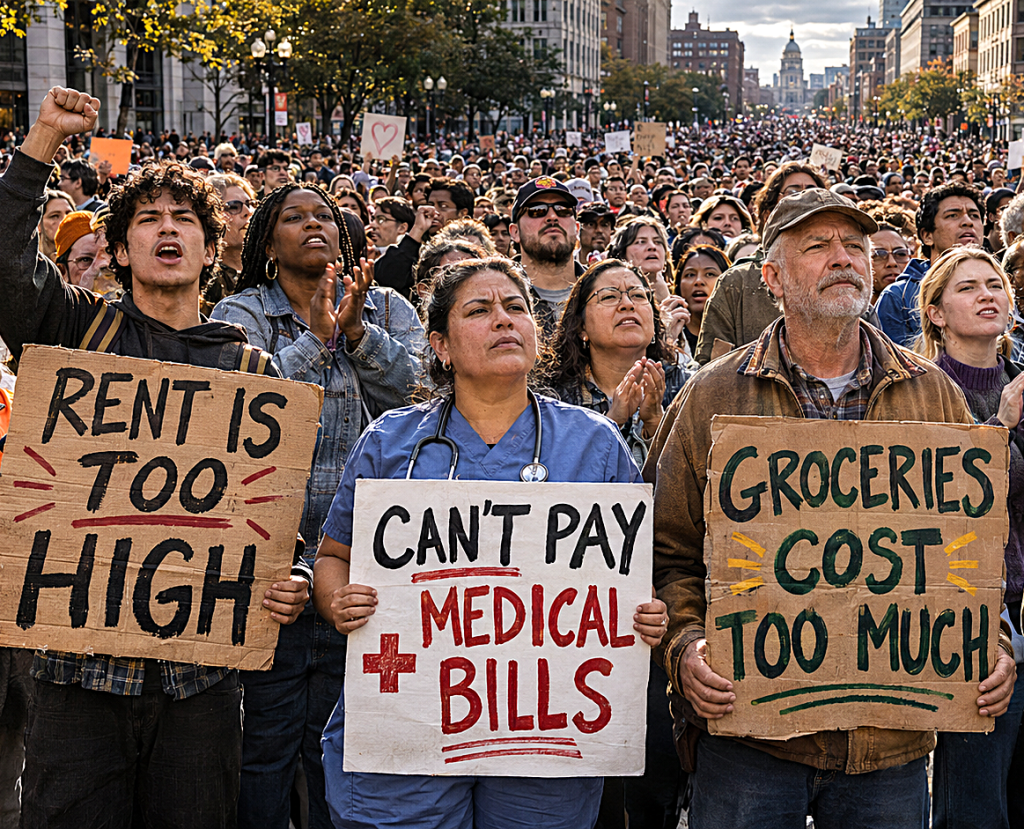
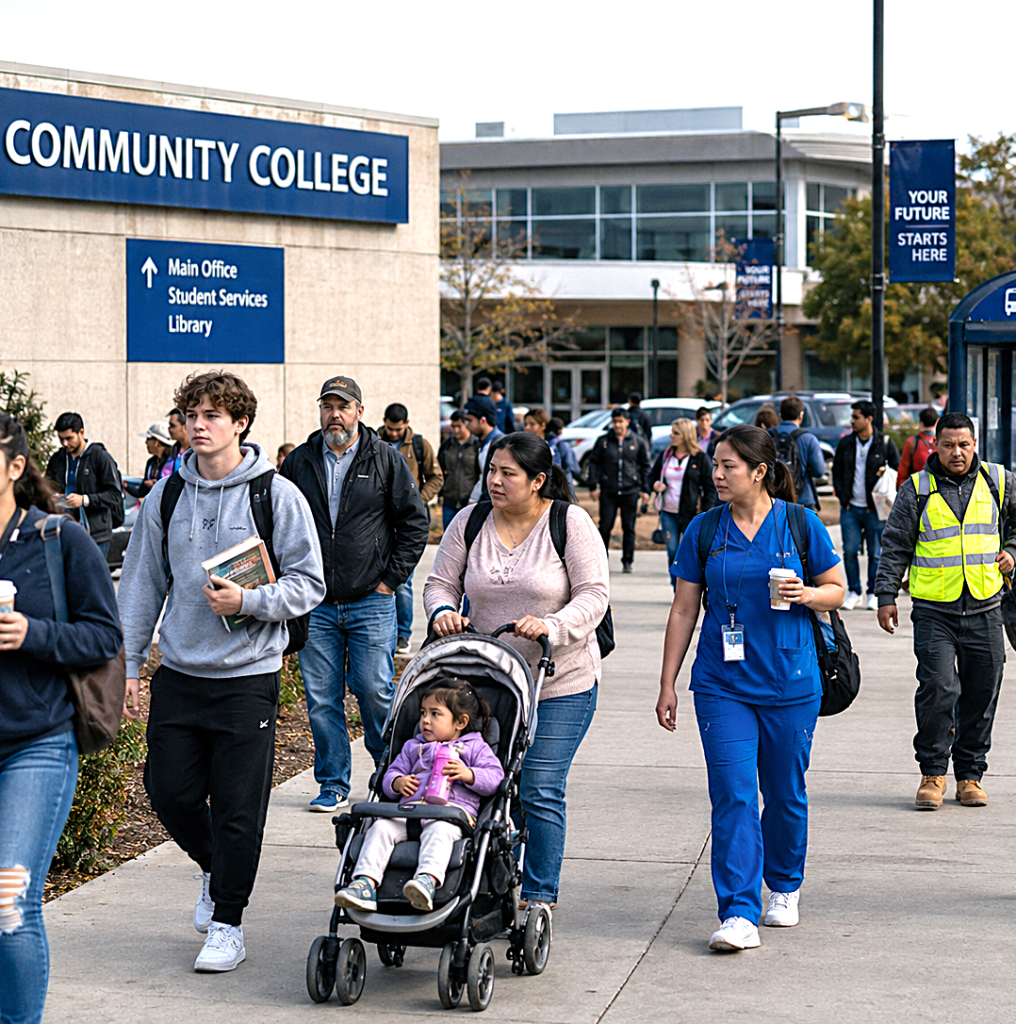
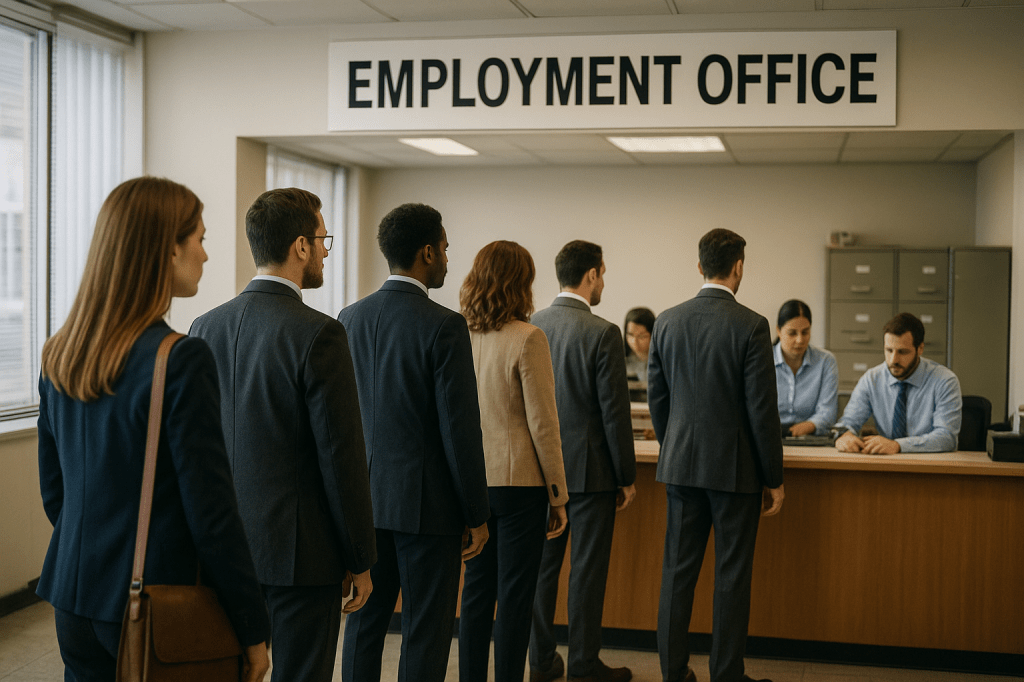
In the summer of 2026 the Pew Research Center asked American adults whether they had struggled during the past year to pay for basic needs. Forty-four percent said they had trouble with at least one of four: medical care, daily transportation, rent or mortgage, or food, which Pew measured by visits to a food bank or pantry. Twenty-eight percent had trouble paying for medical care, 21 percent had trouble with the rent or mortgage, and 20 percent had taken food from a food bank. Among lower-income adults, 71 percent reported at least one of these hardships. Sixty percent of all adults said they did not have enough income to lead the kind of life they wanted (Horowitz, 2026).
On November 3 those households voted. Democrats flipped seven Senate seats, in Iowa, Kansas, Maine, North Carolina, Ohio, South Carolina and Texas, and won the House (Stening et al., 2026; TIME Staff, 2026). The Associated Press count as of November 9 gave Democrats 54 Senate seats to the Republicans’ 44, with Alaska and Mississippi undecided, and 254 House seats to 162, with 19 races uncalled (Rose, 2026). In the AP Voter Poll, about four in ten voters named the economy as the most important issue facing the country. Roughly half said the cost of living and government corruption were “crucial” to their vote for Congress. More than eight in ten said they were concerned about the cost of gas, groceries, utilities and health care, and about eight in ten said inflation had caused their households severe or moderate financial hardship (Associated Press, 2026a).
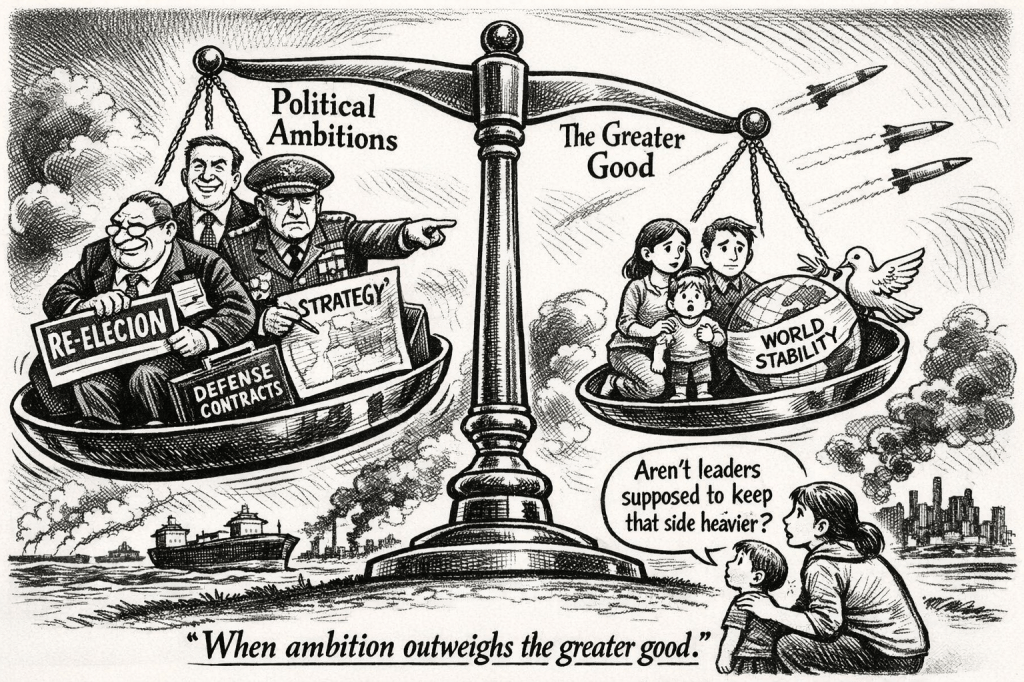
Many of the winners campaigned as economic populists. Many of the losers belonged to a party led by Donald Trump, whose “Make America Great Again” movement Pew counts among the right-wing populist forces that have reshaped politics over the past decade (Wike et al., 2026). This essay looks at how the cost of food, housing and medical care became the main fuel of populist politics, who speaks for that politics now, what they propose, how far the trend extends, and what it is likely to change in the United States over the next five to ten years.
Prices and populists
Pew’s researchers write that definitions of populism vary, but that “most emphasize a belief that ‘the people’ have been led astray by a corrupt elite” (Wike et al., 2026). The cost of living turns that belief into votes. Economists at the Kiel Institute studied 365 elections in 18 industrialized countries between 1948 and 2023. They found that an unexpected 10-percentage-point rise in prices over a legislative term raised the vote share of populist and extremist parties by 2.8 points at the next election when real wages fell behind. When wages kept up, the gain was 1.3 points. “The main reason for this is a decline in real wages in the face of negative economic surprises,” the institute reported (Kiel Institute for the World Economy, 2024).
American attitudes fit that finding. In a Pew survey of 8,512 adults in January 2026, 71 percent said they were very concerned about the cost of health care, 66 percent about the price of food and consumer goods, 62 percent about the cost of housing, and 51 percent about the price of electricity (Van Green et al., 2026). The official inflation rate explains only part of the worry. In September 2026 consumer prices were 3.7 percent higher than a year earlier. Grocery prices had risen 1.8 percent, shelter 3.2 percent, and hospital services 5.6 percent. Gasoline had risen 34.2 percent and energy as a whole 20.4 percent (Bureau of Labor Statistics, 2026a, 2026b). A grocery index rising less than 2 percent a year sits alongside one adult in five using a food bank. That combination suggests the strain comes from the level prices have reached relative to incomes, and from the few bills that are rising fastest.
Housing shows the long-term problem. Harvard’s Joint Center for Housing Studies reports that 22.7 million renter households, 49 percent of the total, spent more than 30 percent of their income on housing in 2024, and that 20.7 million homeowner households were also cost burdened. The median price of an existing single-family home in 2025 was “nearly five times the median household income,” against an average ratio of 3.2 in the 1990s. More than 770,000 people were counted as homeless on a single night in January 2024, a record. Estimates of the national housing shortfall range from 1.2 million to 5.5 million units (Joint Center for Housing Studies, 2026).
Medical costs show a short-term one. The enhanced premium tax credits for Affordable Care Act plans expired at the end of 2025. KFF reports that average premium payments then rose 58 percent, that the average deductible rose 37 percent, from $2,759 to $3,786, and that enrollment fell from 21.8 million in 2025 to 19.2 million in 2026, the first decline in seven years. In KFF polling, 67 percent said Congress “did the wrong thing by failing to extend the tax credits” (KFF, 2026a, 2026b).
The political roots of these costs run in two directions. Some of the causes are old. Analysts at the Cato Institute and the Foundation for Research on Equal Opportunity, both critics of populist remedies, trace high housing costs to local land-use and permitting rules that limit construction (Chougule, 2026; Lincicome, 2026). Writing about Britain, the Brookings scholar Anand Menon describes “a failure of the two traditional parties of government, over many years” to deal with structural economic problems (Menon, 2026). Voters who conclude that established parties let such problems build are the audience populists address.
Other causes are recent and trace to decisions made by the populist administration voters elected in 2024. Tariff collections were $77 billion in 2024 and are projected to reach $421 billion in 2027 (Committee for a Responsible Federal Budget, 2026). About two-thirds of midterm voters told the AP Voter Poll that the tariffs had hurt the national economy (Associated Press, 2026a). The health insurance credits lapsed after Republicans in Congress blocked an extension (KFF, 2026b). Gasoline prices rose by a third during a year in which the United States went to war with Iran, and Vice President JD Vance attributed his party’s losses to that war (Debusmann, 2026). The AP’s Josh Boak summarized the poll in one sentence: “Most voters said that Trump’s own policies had smothered growth and driven costs even higher” (Boak, 2026). In 2026, populist anger about prices was directed at a populist government. That fact should shape how the result is read.
The leading voices
The people named here meet at least one of three tests. They hold or have just won office on an explicit appeal to ordinary people against economic elites, they lead a party at or near the top of national polls on that appeal, or they command a following that officeholders must answer. Each also has a record on prices that can be checked.
On the American left the senior voice is Senator Bernie Sanders of Vermont, whom The Intercept calls “the grandfather of the movement.” Representative Alexandria Ocasio-Cortez of New York is described as a standard-bearer for the left and has said she is seriously considering a presidential run in 2028 (Lacy, 2026). New York City Mayor Zohran Mamdani belongs on the list because he is governing. His rent freeze for rent-stabilized apartments, which make up more than 40 percent of the city’s units, was approved by the Rent Guidelines Board in June (Brey, 2026). His record will be read as evidence for or against the whole program.
The midterms added a group of senators-elect. Abdul El-Sayed of Michigan said, “We showed that in a battle between the money and the many, the many really can win” (Johnson, 2026). Troy Jackson of Maine is a 58-year-old logger and former president of the Maine Senate from Allagash, a town of about 230 people. The state party chose him in July after the primary winner withdrew, and he defeated Senator Susan Collins on a platform that included Medicare for All (Hurwitz, 2026b; Terruso, 2026). James Talarico, who defeated Ken Paxton in Texas, said, “We must get big money out of our politics so no billionaire or trillionaire can buy our elections” (Johnson, 2026). Sherrod Brown returned to the Senate from Ohio after a campaign that labeled his opponent “the face of data centers” and promised to make data center companies pay for the electricity they use (Gioino, 2026). These four are included because they won high-profile statewide races with anti-corporate economic messages.
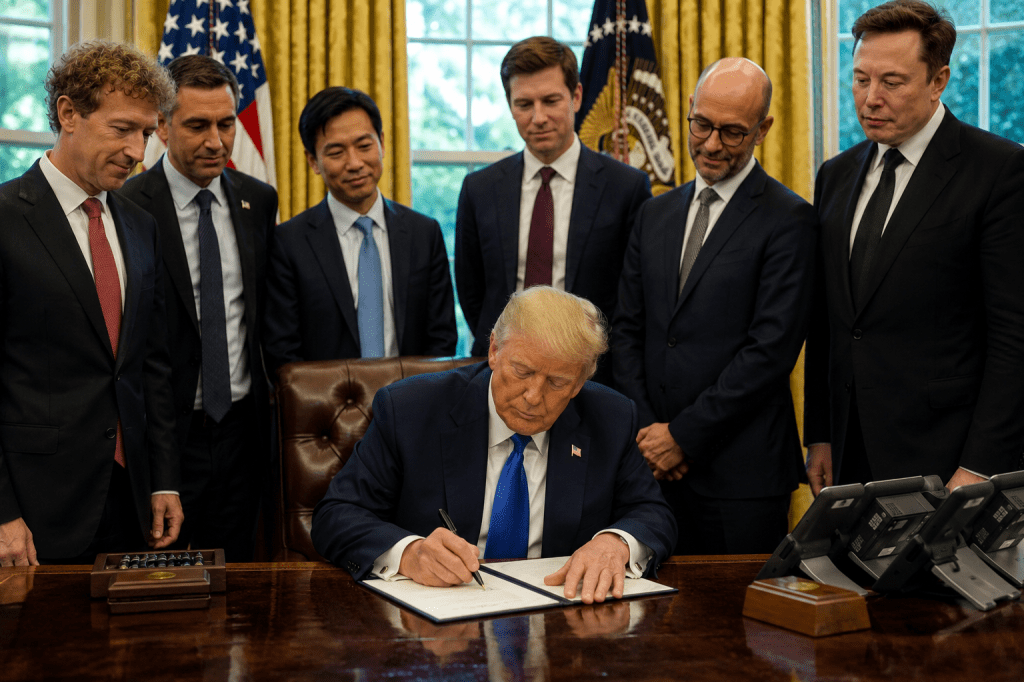
On the right, Trump remains the central figure. In January he proposed capping credit card interest rates at 10 percent and banning large institutional investors from buying single-family homes. Both ideas had earlier versions in bills from Sanders, Ocasio-Cortez and other progressive Democrats. “The president is stealing progressive Democrats’ worst economic ideas,” wrote Scott Lincicome of the Cato Institute (Lincicome, 2026). Vance is the presumed heir, and the midterms damaged him. “The one person who has been hurt badly by this election campaign is Vance,” the political scientist Karen Beckwith told the BBC (Debusmann, 2026). Senator Josh Hawley of Missouri has pressed the economic-populist case among Senate Republicans. He backed Trump’s credit card and housing proposals and told Semafor, “if you want these things done, Congress is going to actually have to legislate” (Semafor, 2026). Steve Bannon holds no office, but he speaks for the part of Trump’s base that distrusts technology billionaires. “We can never trust what an oligarch says,” he said in September. The political scientist Seth Masket described Bannon and Sanders as “the populist icons within each party” (Keierleber, 2026).
Abroad, the leading voices are on the nationalist right. Nigel Farage’s Reform UK “topped the polls for over a year,” in Menon’s words (Menon, 2026). Marine Le Pen’s National Rally holds 123 of the 577 seats in the French National Assembly, more than any other party. Giorgia Meloni has been Italy’s prime minister since her party won the 2022 elections. The Alternative for Germany holds 150 of 630 seats in the Bundestag (Wike et al., 2026). These four are chosen because each governs, holds one of the largest blocs in a national parliament, or has led national polls.
What they are offering
The proposals fall into four groups: housing, health care, everyday bills, and the question of who pays.
On housing, Trump signed an executive order on January 20 against institutional purchases of single-family homes, which, Lincicome notes, has been described as “relatively toothless” without legislation, and directed Fannie Mae and Freddie Mac to buy $200 billion in mortgage bonds to lower borrowing costs (Lincicome, 2026). Hawley wants Americans to be able to use 401(k) savings for down payments (Semafor, 2026). Mamdani froze regulated rents, pledged $22 billion to build or preserve 400,000 affordable homes over a decade, and won a state tax on second homes worth more than $1 million (Billot, 2026; McDonough et al., 2026). He and other left-wing mayors have also promised to permit denser construction (Brey, 2026).
On health care, several of the left’s candidates ran on Medicare for All (Johnson, 2026). TIME reported that Jackson struggled in one interview “to articulate how the government would pay for a universal plan” (Terruso, 2026). House Democrats’ first priorities are narrower: restoring the expired insurance subsidies and reversing recent Medicaid cuts (Rose, 2026). Trump’s main initiative is a May 2025 executive order to benchmark American drug prices against those in other wealthy countries, an approach Sanders has also proposed in legislation (Lincicome, 2026).
On everyday bills, the right offers the credit card cap, a Justice Department investigation of large meatpackers, and a rollback of tariffs on more than 200 food products (Chougule, 2026; Lincicome, 2026). Republicans campaigned in 2026 on “lower taxes for families, energy independence and new savings accounts for newborns” (Rose, 2026). The left offers universal child care, a higher minimum wage, and a ban on “surveillance pricing,” in which companies use personal data to set individual prices. Representative Greg Casar of Texas has introduced a bill on the last of these (Guastella, 2026; Johnson, 2026; Pavlou, 2026). Both sides now promise to keep data centers from raising household electricity rates. El-Sayed’s plan called for “no rate hikes,” and Republicans including his opponent, Mike Rogers, endorsed moratoriums or restrictions on new data centers (Gioino, 2026). House Democrats also plan to pass legislation ending the administration’s global tariffs (Rose, 2026).
The fourth question is who pays, and it remains open. California’s Proposition 40, a one-time 5 percent tax on residents with assets above $1 billion, lost 52.8 percent to 47.2 percent. Opponents spent $378.4 million, including $102 million from Google co-founder Sergey Brin, against $33.5 million for the yes campaign. Governor Gavin Newsom, a Democrat, opposed the measure (Hwang, 2026; Werschkul, 2026). In New York, Governor Kathy Hochul blocked the broader taxes on wealthy residents and corporations that Mamdani and the state Legislature wanted. Free buses, a campaign promise, “hardly made it to the negotiating table in Albany” (McDonough et al., 2026). His plan for five public grocery stores by 2029 is tied up in legal challenges (Billot, 2026).
Critics on both flanks doubt these programs will lower costs. From the free-market side, Akash Chougule argues that “removing one buyer from the market won’t magically build new housing; it’ll simply shrink a source of rental supply,” and that interest rate caps push borrowers toward costlier credit (Chougule, 2026). From the left, Dustin Guastella of the Center for Working-Class Politics argues that modest affordability measures are too timid. “The only way to win affordability is to embrace populism,” he wrote in The Nation, by which he means free or nearly free child care and health care, taxes on wealth, and public jobs (Guastella, 2026). The Harvard housing researchers reach a conclusion that satisfies neither camp fully: private markets are not producing enough low-cost homes, and “significant public subsidies are essential for generating the deeply affordable units in shortest supply” (Joint Center for Housing Studies, 2026). Jared Brey of Governing notes that Washington’s high housing costs “took years to develop and would take longer than a four-year mayoral term to come down.” The historian Matthew Dallek, asked whether the mayors’ agendas are achievable, said, “That’s a tall order” (Brey, 2026).
How large, and how far
The American result was large by any measure. Besides the seven Senate seats, Democrats defeated Texas Governor Greg Abbott and won the governorships of Georgia and Ohio (Gioino, 2026; Stening et al., 2026). About seven in ten voters under 30 backed the Democratic House candidate (Associated Press, 2026b). Rural voters, who favored Trump over Kamala Harris by roughly 70 percent to 29 percent in 2024, split 57 percent to 41 percent for Republican House candidates (TIME Staff, 2026). At least seven members of the Democratic Socialists of America will sit in the next Congress, and members of the organization won the mayoralties of Los Angeles and Washington, D.C. (Werschkul, 2026). An NBC exit poll cited by UnHerd found that 17 percent of midterm voters called themselves democratic socialists (Zickgraf, 2026).
Three facts argue against calling this a tsunami for the populist left. First, a midterm loss for the president’s party is normal. The House swings against the party in power by an average of 25 seats, and this election came with a war under way and gasoline prices up by a third. Martha Johnson of Northeastern University said, “I do not think we can see this as a clear victory for the Democratic Party’s policy agenda or priorities” (Stening et al., 2026). Second, voters in the largest Democratic state rejected a tax on billionaires on the same day. Third, the winning party is divided and distrusted. Reuters reports that Democrats remain split on health care, taxes and other issues, and that a group backed by a billionaire donor scheduled a gathering in Denver nine days after the election to promote a more centrist platform (Reid, 2026). The UnHerd columnist Ryan Zickgraf wrote that the party “is still weak and unpopular” and that the election “looks less like a realignment than like another turn in a long dealignment” (Zickgraf, 2026).
Voters squeezed by living costs are removing whoever is in charge, and populists of the opposing camp are usually positioned to benefit. The progressive strategist Greg Krieg put the American version this way: “Right-wing populism didn’t really defeat left-wing populism, it just ran against a kind of corporate slop for many years” (Lacy, 2026). In 2026 the two met directly, and the one that held power lost.
The phenomenon is international. In Germany’s Saxony-Anhalt in September, the Alternative for Germany won 43.8 percent of the vote, 23 points more than in the previous election, while Chancellor Friedrich Merz’s Christian Democrats fell to 17.2 percent. Seventy percent of the state’s voters said they felt overwhelmed by price rises, and 89 percent of AfD supporters feared they would no longer be able to pay their bills. Sebastian Bukow of the Heinrich Böll Foundation identified “pronounced fears of inflation and social decline” as a defining feature of the vote (Al Jazeera, 2026a; Bukow, 2026). In Britain, Reform won 1,453 English council seats in May and became the official opposition in the Welsh Parliament (Clure & Parsons, 2026). Nearly three-quarters of British voters told pollsters in January that things were getting worse (Menon, 2026). In France, an early-October survey showed Le Pen with between 31 percent and 36 percent of the first-round vote for the presidential election due in April 2027 (Iman, 2026). In Japan, voters in February ranked “the economy, particularly counter-inflation measures” first among their concerns. Prime Minister Sanae Takaichi’s Liberal Democratic Party, which had pledged to suspend the 8 percent consumption tax on food for two years, won 316 of 465 seats, and the anti-immigration party Sanseito grew from 2 seats to 15 (Nakano & Szechenyi, 2026; Nippon.com, 2026).
The trend has limits abroad as well. Hungary’s Viktor Orbán lost power in April after four consecutive national victories (Wike et al., 2026). Brazil’s President Luiz Inácio Lula da Silva won a fourth term in October with slightly more than 51 percent against Flávio Bolsonaro, whose family had the backing of the Trump administration, after making a late pitch to voters worried about the cost of living (Al Jazeera, 2026b). Reform’s support slipped from about 28 percent in May to 22 percent in some later surveys (Iman, 2026). Pew found no right-wing populist party with majority favorability in any European country it surveyed. Its authors nonetheless conclude that “regardless of any specific election outcome, right-wing populists have become a regular feature” of European politics, sustained by economic pessimism: in a 2024 survey, a median of 70 percent across ten European countries expected children to be financially worse off than their parents (Wike et al., 2026).
Birth rates, immigrant labor, AI, and students
Each of the developments in this heading is connected to populism, in different ways.
Birth rates and immigration are connected through labor. Provisional federal data show that U.S. births fell 1 percent in 2025 to roughly 3.6 million and that the general fertility rate fell to a record low of 53.1 births per 1,000 women aged 15 to 44, down nearly 23 percent since 2007 (Sunny, 2026). The Congressional Budget Office projects that deaths will exceed births starting in 2030. “Without immigration, the population would begin to shrink in 2030,” the agency wrote. It also cut its estimate of net immigration in 2025 from 2.0 million to 410,000 (Congressional Budget Office, 2026). Right-wing populists campaign on reducing immigration in countries whose workforces have come to depend on it. Japan had a record 2.3 million foreign workers in 2024, and 59 percent of respondents in a Yomiuri poll opposed admitting foreign laborers (Smith & Baylor, 2026). The AfD in Saxony-Anhalt promised a “remigration and deportation offensive” together with “baby bonuses” for families. The German Economic Institute called the party’s immigration policy “ruinous” for the state (Al Jazeera, 2026a). Reform UK proposes to deport up to 600,000 migrants (Clure & Parsons, 2026).
The connection to living costs is direct, because immigrant workers are concentrated in agriculture and construction, the industries that produce food and housing. A study by Chloe East, an economist at the University of Colorado Boulder, and her colleague Elizabeth Cox compared regions with and without sharp increases in immigration arrests in 2025. Employment among undocumented workers fell 4 percent in the surge regions, and employment among U.S.-born men with a high school education or less fell 1.3 percent. “For every six male undocumented workers lost, we found that the labor market also loses one male U.S.-born worker,” East said. She added that the contraction could lead to higher prices for homes (Marshall, 2026). A policy that populists favor can therefore raise the costs that produce populist anger. The Oxford political scientist Jane Green observes that Reform ties voters’ experience of austerity and the cost of living to immigration, and she calls that link “very contested” (Clure & Parsons, 2026).
Artificial intelligence is connected through electricity bills, jobs and concentrated wealth. Data center capacity under construction is up 48 percent nationwide. In the PJM grid region that covers much of the Midwest and mid-Atlantic, the price utilities pay to secure future generating capacity rose from $28.92 per megawatt-day for 2024–25 to $329.17 for 2026–27, and the market monitor attributed 63 percent of one year’s increase to data centers. Voters in ten states considered 41 data center measures (Gioino, 2026). In a Reuters/Ipsos poll of 4,506 adults taken in early October, 84 percent of registered voters called AI a threat to American workers, and 56 percent supported restrictions on building data centers (Chowdhury, 2026). This is unusual ground in American politics, because Sanders and Bannon, Hawley and Casar all occupy it. Sanders and others on the left have called for a temporary nationwide pause in data center construction (Larreal, 2026). The Institute for Family Studies, a conservative-leaning research group, surveyed almost 6,200 Americans and concluded that “there are absolutely no pro-AI positions that are winners for elected officials” (Toscano & Stone, 2026). Trump, who favors rapid AI expansion, is on the other side of this issue from much of his own base.
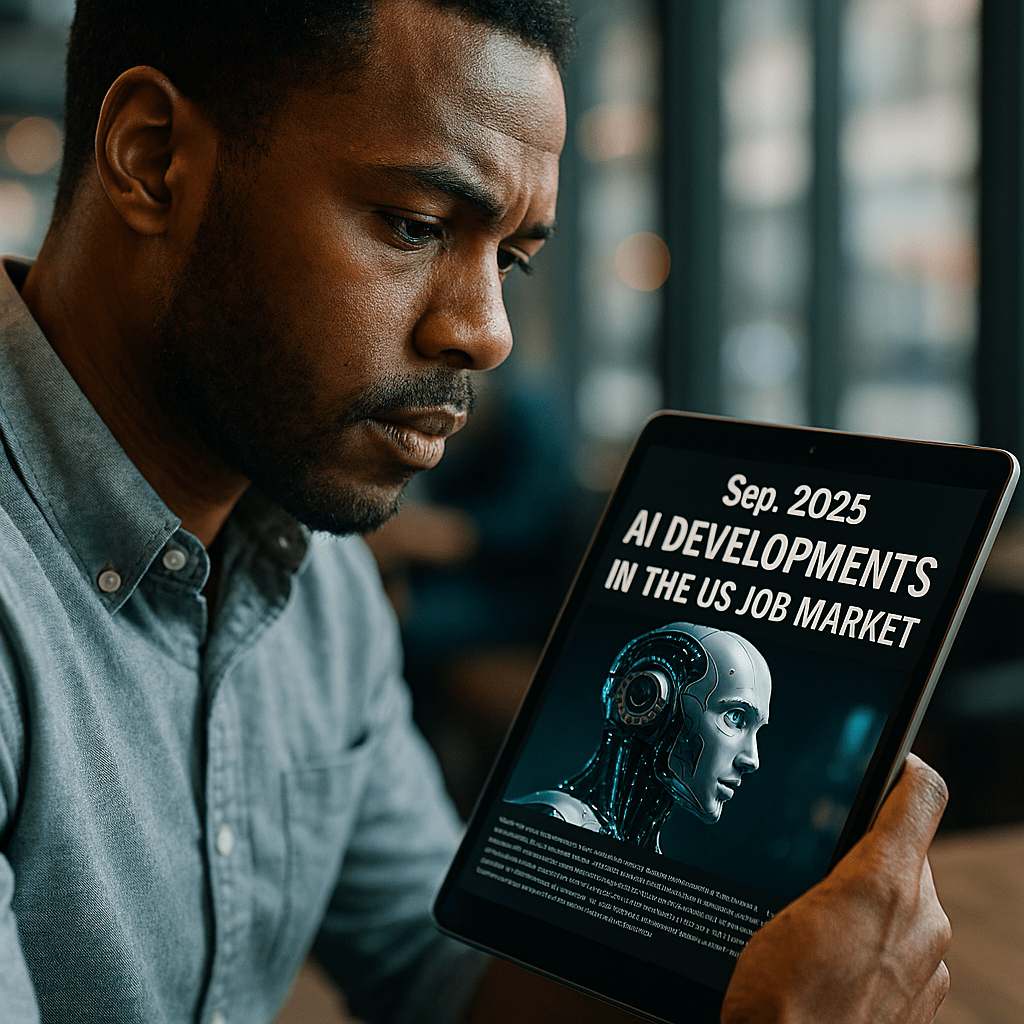
The evidence on jobs is less settled than the politics. The unemployment rate for recent college graduates was 5.7 percent in June, against 4.1 percent for all workers, according to the Federal Reserve Bank of New York. Stanford researchers found a 16 percent relative decline in employment since late 2022 among workers aged 22 to 25 in occupations most exposed to AI. The Harvard economist David Deming is not convinced AI is the cause, and a University of Chicago study of more than 21,000 firms found that those investing most in AI increased entry-level headcount (Gaines, 2026). If such losses become clear in the data, AI is likely to move to the center of populist politics. Through electricity bills, it is already a potent local issue.
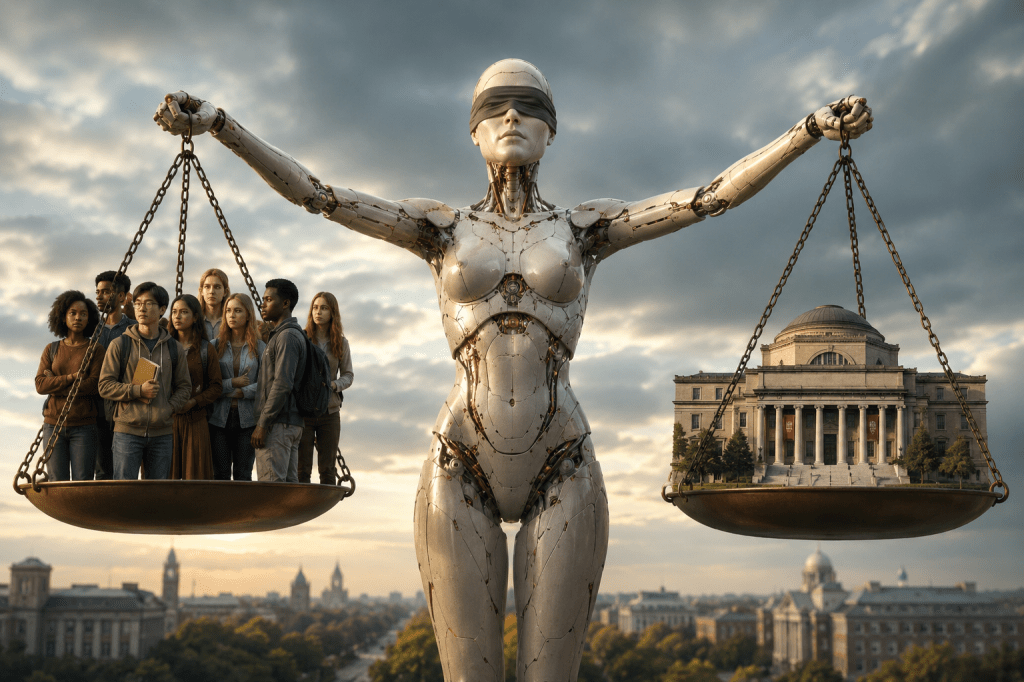
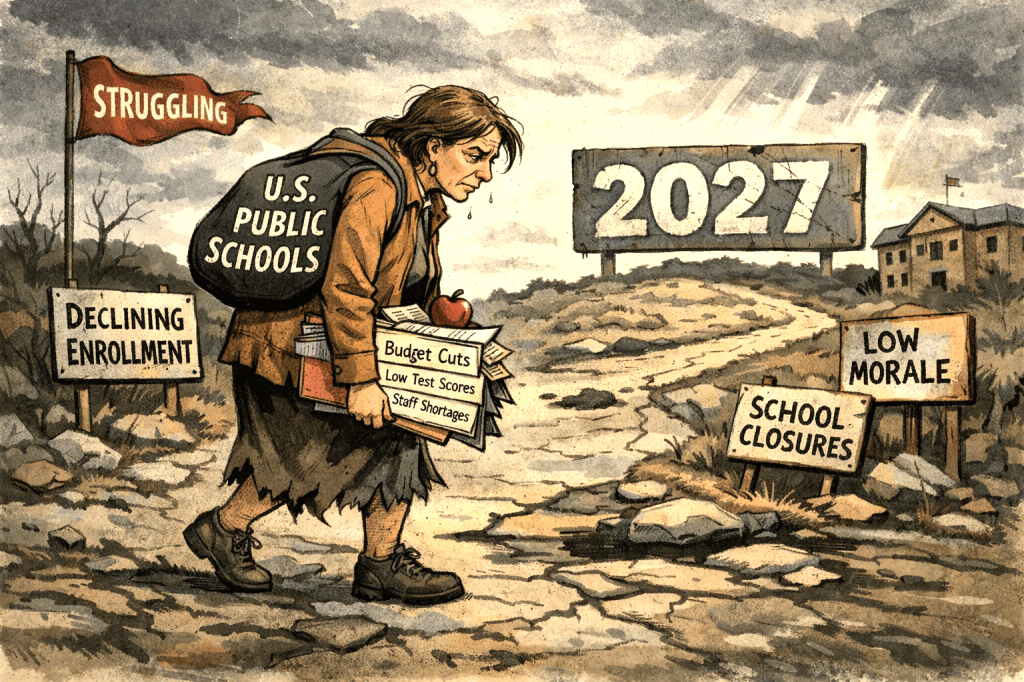
Student unrest shares populism’s grievances but mostly operates outside political parties. The European Students’ Union counted 54 student protest actions in 22 countries between mid-March and mid-May 2026, the most in any period it has monitored, and 20 of them concerned economic and living conditions (European Students’ Union, 2026). In the autumn, protests led by people in their teens and twenties spread through France, Belgium, Italy, Albania and Serbia. Reuters listed the causes as “shabby schooling facilities, perceived lack of economic opportunity, cost of living, corruption, housing and a sense of not being listened to” (Grulovic et al., 2026). In Serbia a list of candidates organized by student protesters won a parliamentary majority on October 25, and President Aleksandar Vučić conceded (Ivanović, 2026). In India, a youth movement calling itself the Cockroach Janta Party forced the resignation of the education minister in July after a leaked national medical exam. Sadanand Dhume of the Council on Foreign Relations cites a study finding that 40 percent of Indian graduates under 25 are unemployed, and he notes that AI threatens the country’s large information technology sector (Dhume, 2026). In Ontario, students walked out on November 5 over cuts to provincial grants and the end of a tuition freeze (McGinnis, 2026).
American campuses have been quieter. Mother Jones reports that campus protests dropped 64 percent between the spring and fall of 2024 and have stayed subdued under pressure from the federal government and from university discipline rules (Hurwitz, 2026a). Young Americans who voted in the midterms sided heavily with Democrats, though voters under 30 were only about one in ten of the electorate (Associated Press, 2026b).
The Harvard scholars Erica Chenoweth and Matthew Cebul conclude that the worldwide youth protests “are primarily motivated by socioeconomic inequality, corruption, and nepotism.” They caution that “changing the head of state is often far easier than resolving the root socioeconomic grievances,” and they find no association between youth protest and later improvement in youth unemployment (Chenoweth & Cebul, 2026). The students’ belief that those in charge serve themselves matches the core of populism as Pew defines it. One protester, Luka Stojakovic, told Reuters, “We have seen where people with political experience have brought us” (Grulovic et al., 2026). Where that sentiment finds a party or forms one, as in Serbia, it becomes an anti-establishment vote.
Several other developments belong on the list. Tariffs are one, since they raise revenue the government now depends on while voters blame them for higher prices. War and energy prices are a second. Money in politics is a third: the twenty largest donors spent about $2 billion on the midterms, and candidates who attacked that spending won (Johnson, 2026). Corruption is a fourth, named as “crucial” by roughly half of midterm voters and as the main rallying cry of youth protests abroad (Associated Press, 2026a; Chenoweth & Cebul, 2026). The fifth is the loss of trust across income lines. The 2026 Edelman Trust Barometer, a survey of nearly 34,000 people in 28 countries, found a 29-point gap in institutional trust between high- and low-income Americans, the widest of any country surveyed. Only 21 percent of Americans believe the next generation will be better off, down 9 points from the previous survey (Edelman, 2026). The sixth is the approaching shortfall in Social Security and the growth of federal debt, discussed below.
The next five to ten years
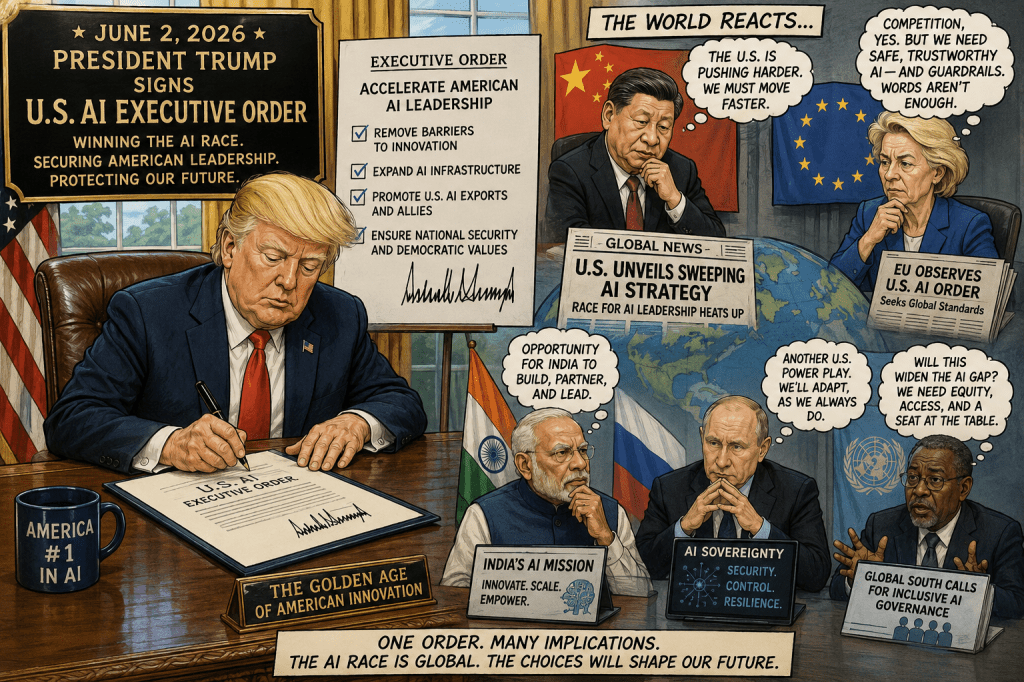
Some of what lies ahead is already scheduled. House Democrats plan to move bills on insurance subsidies, Medicaid and tariffs, and the president can veto them. DJ Flynn of IE University points out that much of what Trump does of consequence “he doesn’t do legislatively, he does unilaterally” (Rose, 2026). The likely result through 2028 is confrontation with little new law.
The 2028 nominations in both parties will probably be contested over who is the more credible populist on prices. A Working Families Party spokesman said of the Democratic field that “the populist lane is wide open for someone to seize it” (Lacy, 2026). Reuters found that no Democrat has emerged as a clear favorite. On the Republican side, Vance and Secretary of State Marco Rubio lead a field in which Trump “may be reluctant to yield center stage” (Reid, 2026). Senator Ted Cruz said after the election that too many Republicans had seemed not to care about economic issues, and former New Jersey Governor Chris Christie declared, “The Trump era is over” (Debusmann, 2026). Some repositioning on economic policy among Republicans is to be expected.
Several measures with support in both populist camps have the best chance of becoming law over the decade, whoever wins. They include requirements that data centers pay for the power and grid capacity they use, limits on institutional purchases of houses, benchmarks for prescription drug prices, and some form of AI regulation. In the Institute for Family Studies survey, about 80 percent wanted Congress to hold AI companies legally liable for harms to children, and 76 percent wanted employers required to report layoffs caused by AI (Toscano & Stone, 2026).
Larger programs will meet fiscal limits within the same period. Federal debt held by the public is about 100 percent of gross domestic product and is projected to reach 120 percent by 2036. Annual interest costs are projected to more than double, from $970 billion in 2025 to $2.1 trillion in 2036. The new tariffs are projected to reduce deficits by about $3 trillion over ten years, so repealing them has a price (Committee for a Responsible Federal Budget, 2026). The Social Security trustees project that the retirement trust fund will be depleted in the fourth quarter of 2032, within the term of the president elected in 2028. The combined retirement and disability funds are projected to run out in 2034, when incoming taxes would cover about 83 percent of scheduled benefits. The Congressional Research Service notes that the outlook worsened partly because of lower fertility and lower immigration assumptions (Congressional Research Service, 2026). Whoever governs then will have to raise revenue, reduce benefits, or borrow more, and none of those choices is popular.
Demography will add pressure on the specific costs that drive populism. With deaths exceeding births from 2030 and immigration reduced, the ratio of working-age adults to those 65 and older is projected to fall from 2.7 to 1 toward 2.2 to 1 (Congressional Budget Office, 2026). Fewer workers in construction and agriculture would tend to raise the price of housing and food unless immigration rises or automation fills the gap. The choice between those two is likely to become a main dividing line in American politics.
The record of populists in government is a reason for caution. A study of 51 populist presidents and prime ministers between 1900 and 2020 found that after 15 years, GDP per capita was 10 percent lower than in comparable countries without populist leaders (Funke et al., 2023). The economists Adam Szeidl and Ferenc Szucs add that such leaders nonetheless “remain in power for approximately twice as long as their non-populist counterparts” (Szeidl & Szucs, 2026). American populists of the left will be judged first in city halls and statehouses. Brey observes that the new mayors “may not have much runway to try out different policy approaches before voters tire of them” (Brey, 2026). Mamdani’s first ten months, with a rent freeze delivered and free buses and public groceries stalled, is an early sample (Billot, 2026).
The trend will last as long as the conditions behind it. Those conditions are a housing shortage that takes years to close, health costs that depend on subsidies Congress has not restored, energy bills tied to a war and a building boom, and a workforce that will soon stop growing without immigration. Politicians of both parties now compete to speak for the 44 percent, and voters have shown in consecutive elections that they will replace those who fail to deliver. The most useful measure of where populism goes next is whether that number falls.
References
Al Jazeera. (2026a, September 6). German far-right AfD wins Saxony-Anhalt election, falls short of majority. https://www.aljazeera.com/news/2026/9/6/far-right-afd-wins-vote-in-germanys-saxony-anhalt-state-exit-polls
Al Jazeera. (2026b, October 26). Brazil election results 2026: Key takeaways from Lula’s historic win. https://www.aljazeera.com/news/2026/10/26/brazil-election-2026-key-takeaways-from-lulas-historic-win
Associated Press. (2026a, November 3). AP Voter Poll: The economy and the state of democracy are voters’ top issues. PBS NewsHour. https://www.pbs.org/newshour/politics/ap-voter-poll-the-economy-and-the-state-of-democracy-are-voters-top-issues
Associated Press. (2026b, November 4). How America voted in the 2026 midterms: Early takeaways from The AP Voter Poll. Yahoo News. https://www.yahoo.com/news/politics/articles/america-voted-2026-midterms-early-023942718.html
Billot, J. (2026, October 18). Zohran Mamdani is no revolutionary. UnHerd. https://unherd.com/2026/10/zohran-mamdanis-hollow-revolution
Boak, J. (2026, November 10). Republicans were punished in the midterms for Trump’s economic policies, The AP Voter Poll shows. Associated Press via The Miami Times. https://miamitimesonline.com/business/republicans-were-punished-in-the-midterms-for-trump-s-economic-policies-the-ap-voter-poll/article_d287b344-6026-464c-b5b9-4cbff8e3e7b6.html
Brey, J. (2026, July 9). City government is the latest proving ground for socialist politics. Governing. https://www.governing.com/politics/city-government-is-the-latest-proving-ground-for-socialist-politics
Bukow, S. U. (2026, September 8). 2026 Saxony-Anhalt state election. Heinrich-Böll-Stiftung. https://eu.boell.org/en/2026/09/08/2026-saxony-anhalt-state-election
Bureau of Labor Statistics. (2026a, October 14). Consumer Price Index – September 2026 (USDL-26-1574). U.S. Department of Labor. https://www.bls.gov/news.release/archives/cpi_10142026.htm
Bureau of Labor Statistics. (2026b, October 16). Prices for gasoline increased 34.2 percent over the year ended September 2026. The Economics Daily. https://www.bls.gov/opub/ted/2026/prices-for-gasoline-increased-34-2-percent-over-the-year-ended-september-2026.htm
Chenoweth, E., & Cebul, M. (2026). Why Gen-Z is rising. Journal of Democracy, 37(1), 5–14. https://ash.harvard.edu/wp-content/uploads/2026/01/project_muse_977940.pdf
Chougule, A. (2026, January 18). “Affordability populism” — Cheap rhetoric, costly results. Foundation for Research on Equal Opportunity. https://substack.freopp.org/p/affordability-populism-cheap-rhetoric
Chowdhury, S. (2026, October 7). 84% of US voters see AI as a threat to American workers: Poll. The American Bazaar. https://americanbazaaronline.com/2026/10/07/84-of-us-voters-see-ai-as-a-threat-to-american-workers-poll-489540/
Clure, E., & Parsons, A. (2026, June 14). Some people believe Britain is “broken”, and they are looking to Australia for populist inspiration. ABC News. https://www.abc.net.au/news/2026-06-14/reform-uk-rising-popularity-sparks-question-if-it-can-deliver/106774178
Committee for a Responsible Federal Budget. (2026, February 11). CBO’s February 2026 budget and economic outlook. https://www.crfb.org/papers/cbos-february-2026-budget-and-economic-outlook
Congressional Budget Office. (2026, January 7). The demographic outlook: 2026 to 2056 (Publication 61879). https://www.cbo.gov/publication/61879
Congressional Research Service. (2026, June 25). Social Security: Selected findings of the 2026 annual report (IF13256). https://www.everycrsreport.com/files/2026-06-25_IF13256_e1a3332f1a9ae29c3698a1f2e5a5a1d598ec6c57.html
Debusmann, B., Jr. (2026, November 7). Four things we learned this week about 2028 White House race. BBC News via Yahoo News. https://www.yahoo.com/news/politics/articles/four-midterms-takeaways-2028-white-161355797.html
Dhume, S. (2026, July 31). India’s Cockroach Party protests have a powerful precedent—and it isn’t the Arab Spring. Council on Foreign Relations. https://www.cfr.org/articles/indias-cockroach-party-protests-have-a-powerful-precedent-and-it-isnt-the-arab-spring
Edelman. (2026, January 18). 2026 Edelman Trust Barometer reveals trust is in peril as society slides from grievance into insularity. https://www.edelman.com/news-awards/2026-edelman-trust-barometer-society-slides-into-insularity
European Students’ Union. (2026, September 28). 4th student protests monitoring: March–May 2026. https://esu-online.org/publications/4th-student-protests-monitoring-march-may-2026/
Funke, M., Schularick, M., & Trebesch, C. (2023). Populist leaders and the economy. American Economic Review, 113(12), 3249–3288. https://www.aeaweb.org/articles?id=10.1257/aer.20202045
Gaines, L. V. (2026, August 18). Many recent grads say AI is making it harder to get a job. Economists aren’t so sure. NPR via OPB. https://www.opb.org/article/2026/08/18/recent-college-grads-say-ai-is-making-it-harder-to-get-a-job-is-it/
Gioino, C. (2026, November 4). “People really effing hate data centers”: How the AI buildout became the midterms’ affordability issue. Fortune. https://fortune.com/2026/11/04/data-centers-abdul-el-sayed-michigan-incumbents-data/
Grulovic, F., Fraser, A., Biesemans, B., & Bytyci, F. (2026, October 28). “Nobody heard us” – why Gen Z are leading protests across Europe. Reuters via The Star. https://www.thestar.com.my/news/world/2026/10/28/039nobody-heard-us039—why-gen-z-are-leading-protests-across-europe
Guastella, D. (2026, January 28). Why the “affordability agenda” won’t deliver for Democrats. The Nation. https://www.thenation.com/article/politics/affordability-agenda-populism-democrats/
Horowitz, J. M. (2026, October 14). Many Americans are struggling to afford basic necessities. Pew Research Center. https://www.pewresearch.org/short-reads/2026/10/14/many-americans-are-struggling-to-afford-basic-necessities/
Hurwitz, S. (2026a, May 2). Where have all the student protests gone? Mother Jones. https://www.motherjones.com/politics/2026/05/college-university-student-protests-palestine-israel-gaza-trump/
Hurwitz, S. (2026b, November 4). Troy Jackson wins Maine Senate seat after tumultuous campaign. Mother Jones. https://www.motherjones.com/politics/2026/11/troy-jackson-maine-senate-susan-collins-democratic-victory/
Hwang, K. (2026, November 9). California voters reject Prop. 40 billionaire tax. CalMatters. https://calmatters.org/politics/elections/2026/11/prop-40-billionaire-tax-defeated
Iman, I. F. (2026, October 19). How Europe’s surging populist right is reshaping the political establishment. CBS News. https://www.cbsnews.com/news/how-europes-surging-populist-right-is-reshaping-the-political-establishment/
Ivanović, L. (2026, October 25). Student List wins Serbian election as Vučić concedes defeat. Euronews. https://www.euronews.com/2026/10/25/vucic-concedes-defeat-in-pivotal-serbian-elections-says-student-movement-has-won
Johnson, J. (2026, November 4). From Maine to Michigan to Texas, “rise of real economic populism” trounces right-wing billionaire cash. Common Dreams. https://www.commondreams.org/news/economic-populism-2026-midterms
Joint Center for Housing Studies. (2026). The state of the nation’s housing 2026. Harvard University. https://www.jchs.harvard.edu/sites/default/files/reports/files/Harvard_JCHS_The_State_of_the_Nations_Housing_2026_0.pdf
Keierleber, M. (2026, September 17). How AI’s threats are uniting Bernie Sanders and Steve Bannon in a populist crusade against Big Tech. Straight Arrow News. https://san.com/cc/how-ais-threats-are-uniting-bernie-sanders-and-steve-bannon-in-a-populist-crusade-against-big-tech/
KFF. (2026a, May 19). The average Marketplace deductible grew by about $1,000 per person in 2026, with more enrollees shifting to higher-deductible plans as enhanced tax credits expired. https://www.kff.org/affordable-care-act/the-average-marketplace-deductible-grew-by-about-1000-per-person-in-2026-with-more-enrollees-shifting-to-higher-deductible-plans-as-enhanced-tax-credits-expired/
KFF. (2026b, October 6). Midterm election update: The Affordable Care Act Marketplaces. https://www.kff.org/elections/midterm-election-update-the-affordable-care-act-marketplaces/
Kiel Institute for the World Economy. (2024, December 4). Inflation shocks strengthen extremist and populist parties in elections. https://www.kielinstitut.de/media/news/inflation-shocks-strengthen-extremist-and-populist-parties-in-elections
Lacy, A. (2026, November 6). Is there a left candidate for president? The Intercept. https://theintercept.com/2026/11/06/democrats-left-presidential-candidate-2028/
Larreal, S. (2026, May 13). Progressives bet AI anxiety will win them elections. The Washington Sun. https://www.washingtonsun.com/2026-election/progressives-ai-policy-concerns-election
Lincicome, S. (2026, February 4). The “affordability” horseshoe. Cato Institute. https://www.cato.org/commentary/affordability-horseshoe
Marshall, L. (2026, May 4). Heightened ICE enforcement harms US-born workers, shrinks workforce. CU Boulder Today. https://www.colorado.edu/today/2026/05/04/heightened-ice-enforcement-harms-us-born-workers-shrinks-workforce
McDonough, A., Pretsky, H., & Donaldson, S. (2026, June 5). What Mamdani got – and didn’t get – from Albany this year. City & State New York. https://www.cityandstateny.com/policy/2026/06/what-mamdani-got-and-didnt-get-albany-year/414015/
McGinnis, J. (2026, November 9). “These kids are so naive”: Doug Ford calls out students protesting OSAP changes. CP24. https://cp24.com/local/toronto/2026/11/09/these-kids-are-so-naive-doug-ford-calls-out-students-protesting-osap-changes
Menon, A. (2026, February 4). Back to the future? British politics in 2026. Brookings Institution. https://www.brookings.edu/articles/back-to-the-future-british-politics-in-2026/
Nakano, Y., & Szechenyi, N. (2026, February 9). Takaichi dominates Japan’s lower house election. Center for Strategic and International Studies. https://www.csis.org/analysis/takaichi-dominates-japans-lower-house-election
Nippon.com. (2026, February 9). A landslide for Takaichi’s LDP: House of Representatives election results. https://www.nippon.com/en/japan-data/h02703/a-landslide-for-takaichi%E2%80%99s-ldp-house-of-representatives-election-results.html
Pavlou, D. (2026, July 14). Populists on the left and right see AI as a threat. The middle isn’t sure yet. Straight Arrow News. https://san.com/cc/populists-on-the-left-and-right-see-ai-as-a-threat-the-middle-isnt-sure-yet/
Reid, T. (2026, November 5). Midterms over, Democrats plunge into wide-open 2028 presidential race. Reuters via Yahoo News. https://www.yahoo.com/news/politics/articles/midterms-over-democrats-plunge-wide-111023616.html
Rose, S. (2026, November 5). What just happened? What the US midterm results mean. Uncover IE, IE University. https://www.ie.edu/uncover-ie/what-just-happened-what-the-us-midterm-results-mean/
Semafor. (2026, January 13). Trump’s economic pivot becomes a battle against his own party. https://www.semafor.com/article/01/13/2026/trumps-economic-pivot-becomes-a-battle-against-his-own-party
Smith, S. A., & Baylor, C. (2026, January 28). Japan’s 2026 election: Immigration reform. Council on Foreign Relations. https://www.cfr.org/articles/political-realignment-and-the-2026-japanese-election
Stening, T., Moulton, C., & Chadwick, J. (2026, November 3). 2026 midterm election results: Who won the key House and Senate races? Northeastern Global News. https://news.northeastern.edu/2026/11/03/midterm-election-results-analysis-2026/
Sunny, M. (2026, April 10). US fertility rates drop to record low in 2025 as births fall. Reuters via KSL.com. https://www.ksl.com/article/51481355/us-fertility-rates-drop-to-record-low-in-2025-as-births-fall
Szeidl, A., & Szucs, F. (2026, March 24). The populist paradox: Economic pain, enduring power. Review of Democracy. https://revdem.ceu.edu/2026/03/24/the-populist-paradox/
Terruso, J. (2026, November 4). Troy Jackson defeats Susan Collins in Maine Senate race. TIME. https://time.com/article/2026/11/04/maine-democrat-troy-jackson-defeats-republican-senator-susan-collins/
TIME Staff. (2026, November 4). Midterm elections 2026: Live results, key races, and more. TIME. https://time.com/article/2026/11/03/midterm-elections-2026-key-races-live-results-polls-latest-news-updates/
Toscano, M., & Stone, L. (2026, January). The artificial politics of artificial intelligence: How U.S. voters feel about AI accelerationism. Institute for Family Studies. https://ifstudies.org/ifs-admin/resources/reports/ifs-theartificialpoliticsofai-brief-january2026.pdf
Van Green, T., Cerda, A., & Shepard, S. (2026, February 4). A year into Trump’s second term, Americans’ views of the economy remain negative. Pew Research Center. https://www.pewresearch.org/politics/2026/02/04/a-year-into-trumps-second-term-americans-views-of-the-economy-remain-negative/
Werschkul, B. (2026, November 4). California’s billionaire tax on track for defeat as the state continues to count votes. Yahoo Finance. https://finance.yahoo.com/economy/article/californias-billionaire-tax-on-track-for-defeat-as-the-state-continues-to-count-votes-190840319.html
Wike, R., Schulman, J., Lippert, J., Hernandez Ramones, S., Prozorovsky, A., Baronavski, C., Mandapat, J. C., & Chavda, J. (2026, May 28). Right-wing populism in the decade since Brexit. Pew Research Center. https://www.pewresearch.org/global/2026/05/28/right-wing-populism-in-the-decade-since-brexit/
Zickgraf, R. (2026, November 5). Get ready for Left populism. UnHerd. https://unherd.com/2026/11/get-ready-for-left-populism/
###
Filed under: Uncategorized |
























































































































































































































































































































































































































































































Leave a Reply