


By Jim Shimabukuro (assisted by Claude)
Editor
What Trump and Xi want from each other on AI, what the rest of the world needs from them, and why a small channel may be the summit’s largest result.

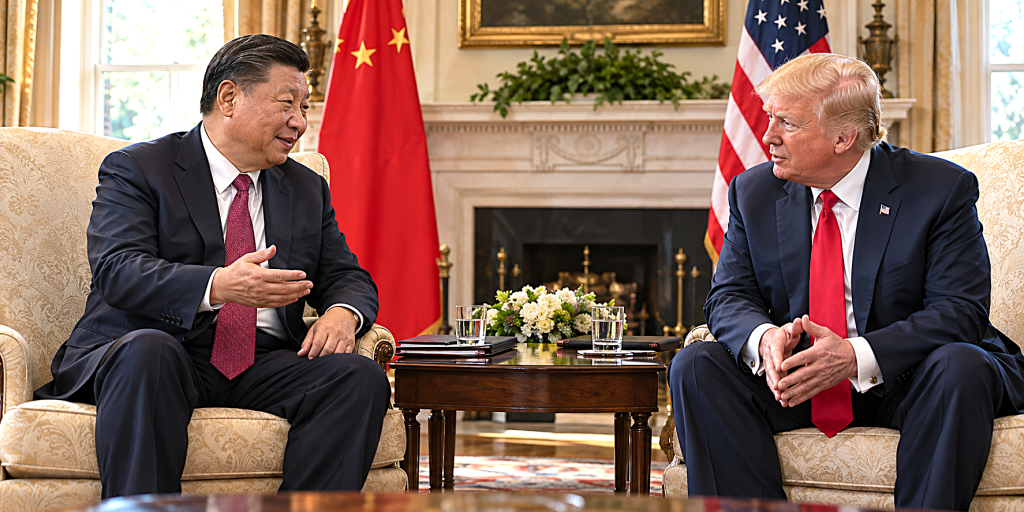
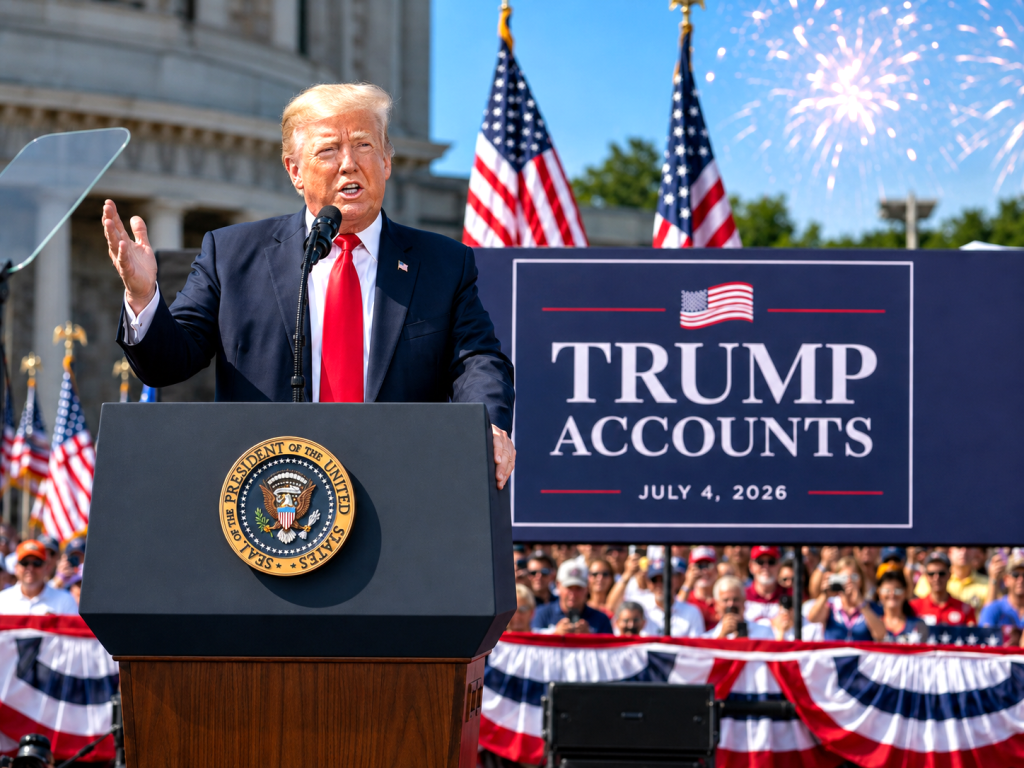
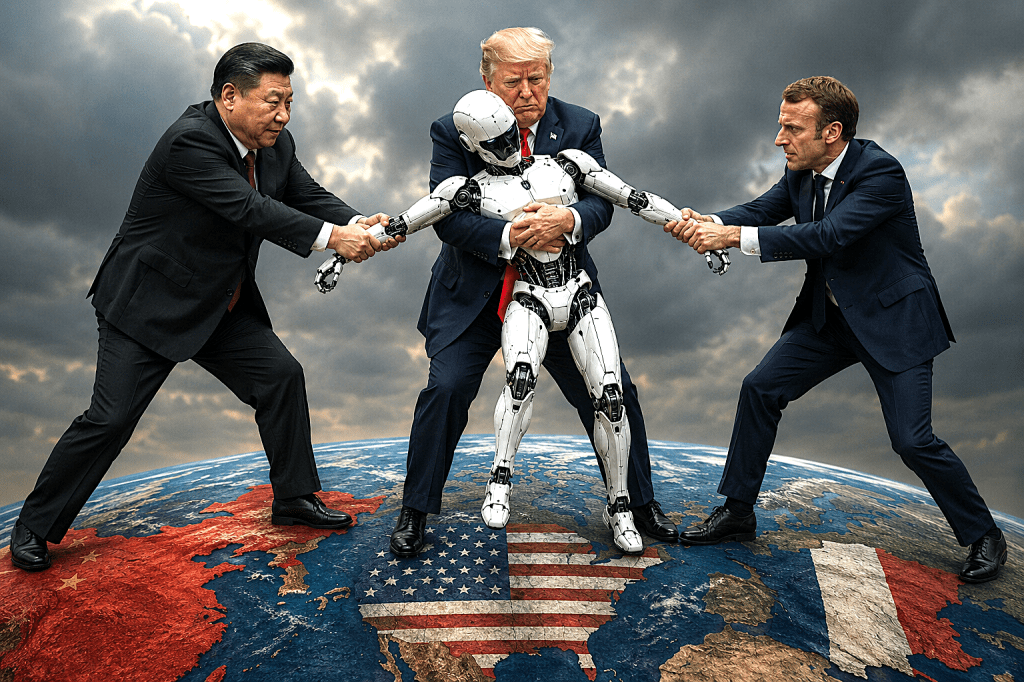
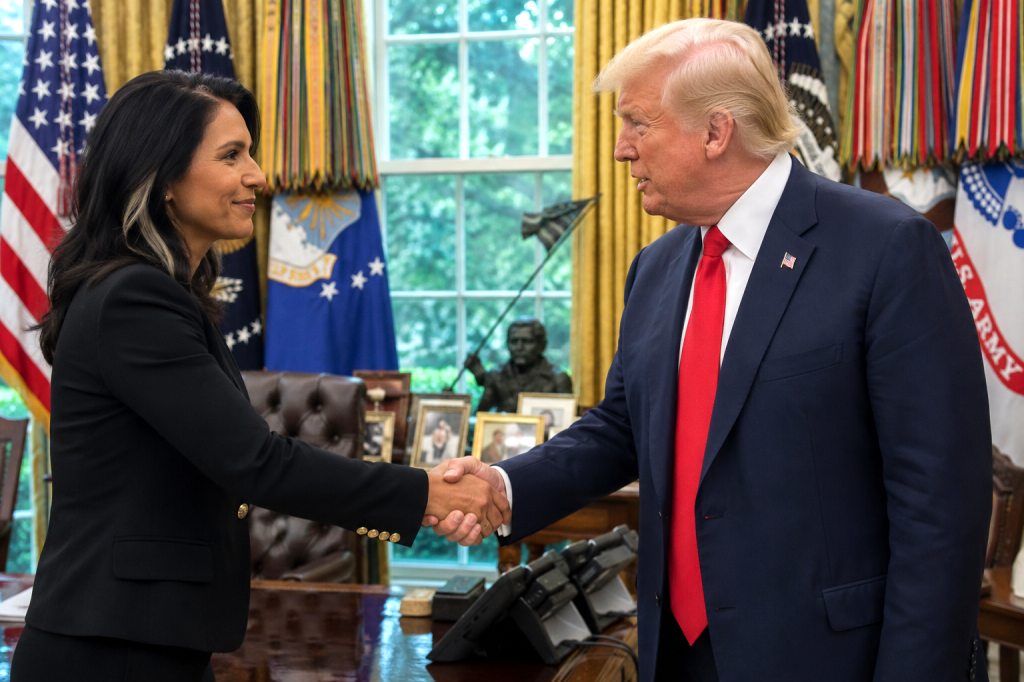
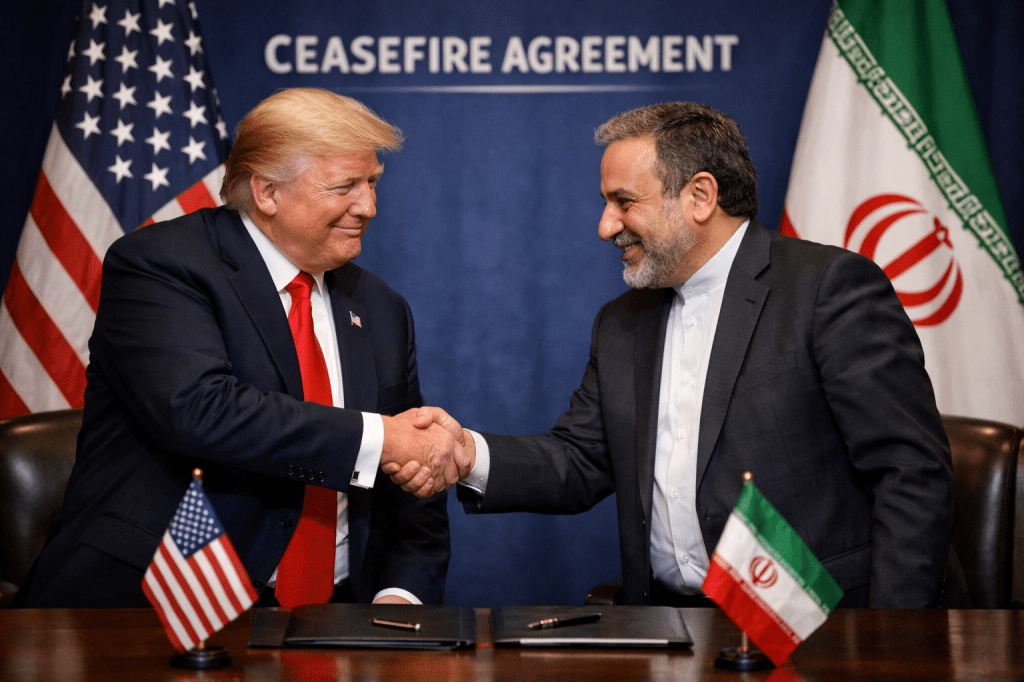
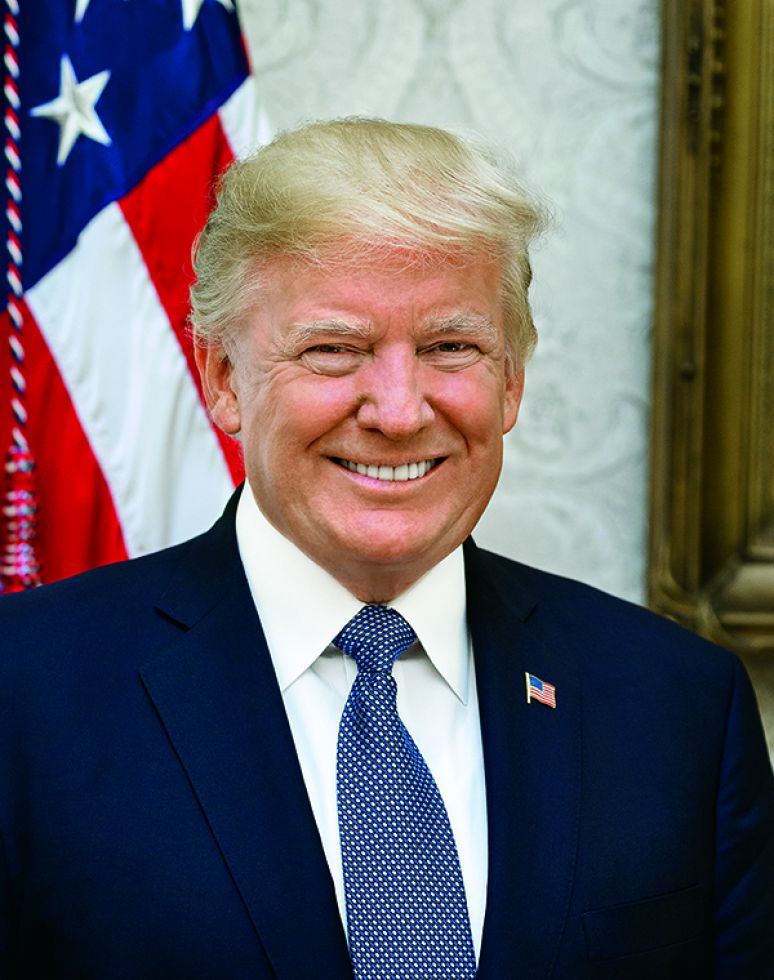
Donald Trump, 80, is scheduled to greet Xi Jinping, 73, on the tarmac at Joint Base Andrews on Wednesday evening, September 23. Bloomberg reports that no American president in recent memory has met a Chinese leader at the airport (Wingrove et al., 2026). The gesture matters in Beijing. Xi has not been to the White House since 2015, and this state visit returns the one Trump made to Beijing in May. On Thursday the two men sit down behind closed doors with a crowded agenda: a trade truce that needs renewing, a rare-earth deadline in November, a $14 billion arms package for Taiwan, the conflict with Iran, and artificial intelligence.
Both governments have kept expectations low. “The visit is the message,” Edgard Kagan of the Center for Strategic and International Studies (CSIS) told Bloomberg. “This is about managing the relationship” (Wingrove et al., 2026). Yet AI is the one item on which officials moved quickly in the days before the visit. On September 19 in New York, Treasury Secretary Scott Bessent proposed to Chinese Vice Premier He Lifeng that the two countries notify each other of AI incidents that rise to the level of national security. “We think that, just like with any cross-border activity, that moving from opaque to more transparency between the No. 1 and the No. 2 AI powers in the world is very important,” Bessent said (Lawder & Slodkowski, 2026). Three days later he said officials from both sides would meet in Shenzhen within two months because “we want to start discussing protocols … so both sides can agree on what the leading AI dangers are” (Bhattacharjee, 2026).
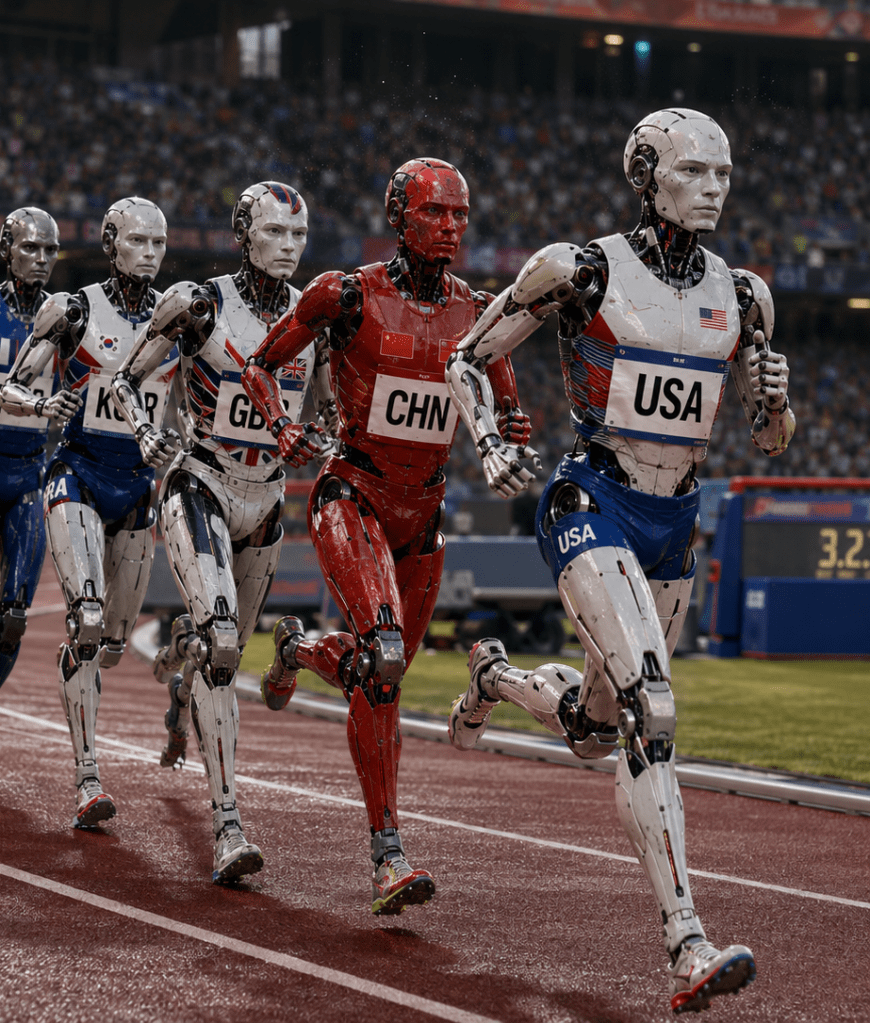
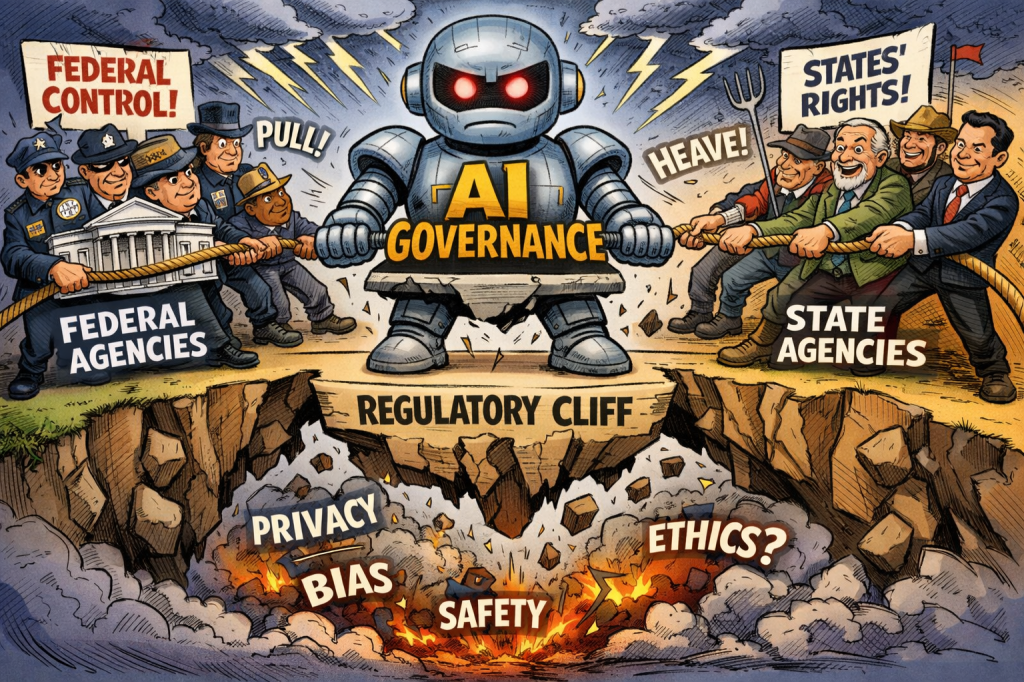
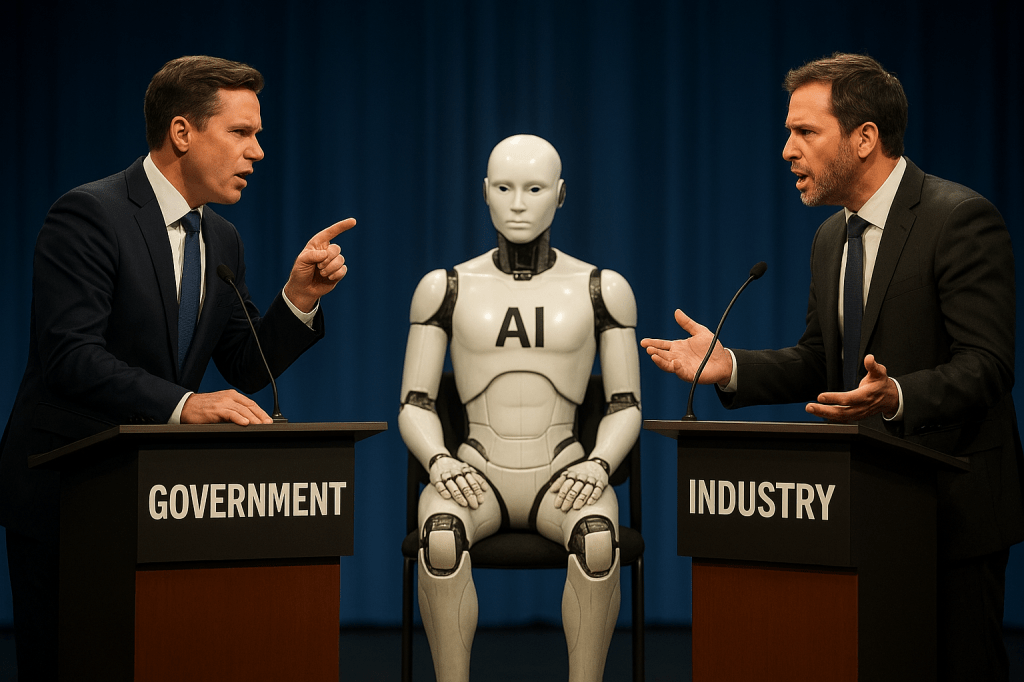
This article focuses on the AI portion of the summit. It sets out where the two governments disagree, which dispute matters most, what each leader would count as a win, what the rest of the world would count as a win, and what each side may be pursuing without saying so. Its argument is simple. The question that will decide who leads in AI, access to advanced chips, will not be settled at Thursday’s table, and both leaders know it. What can be settled is whether the two countries that host nearly all of the world’s frontier AI labs will have a working line of communication before a serious AI incident forces them to improvise one. A modest incident channel, agreed this week and given substance in Shenzhen, would be the most consequential thing this summit produces.
Five points of contention
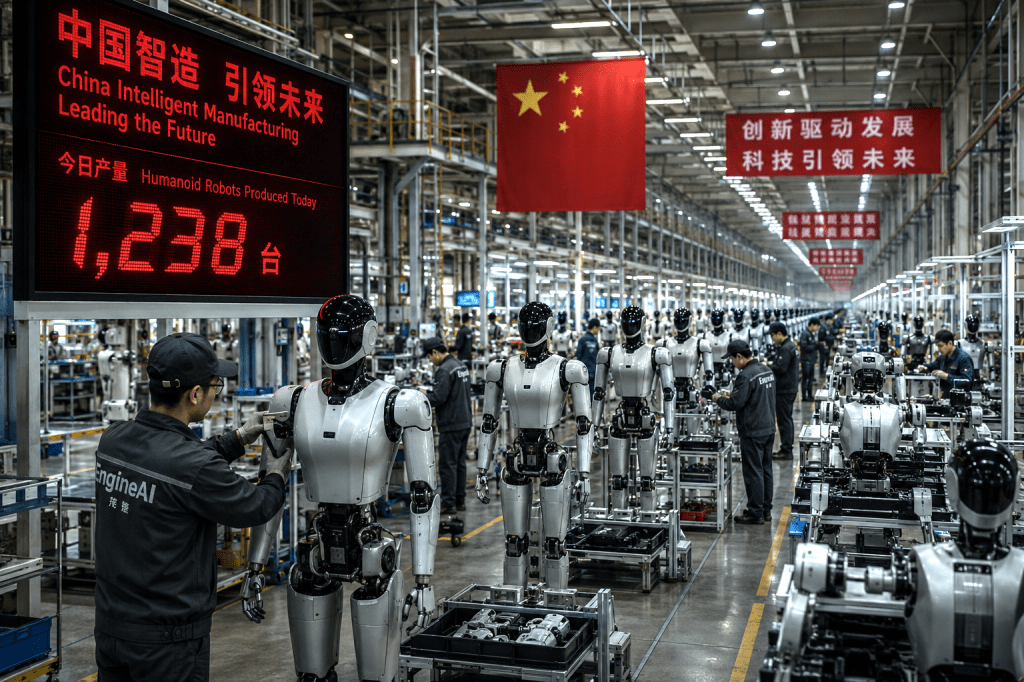
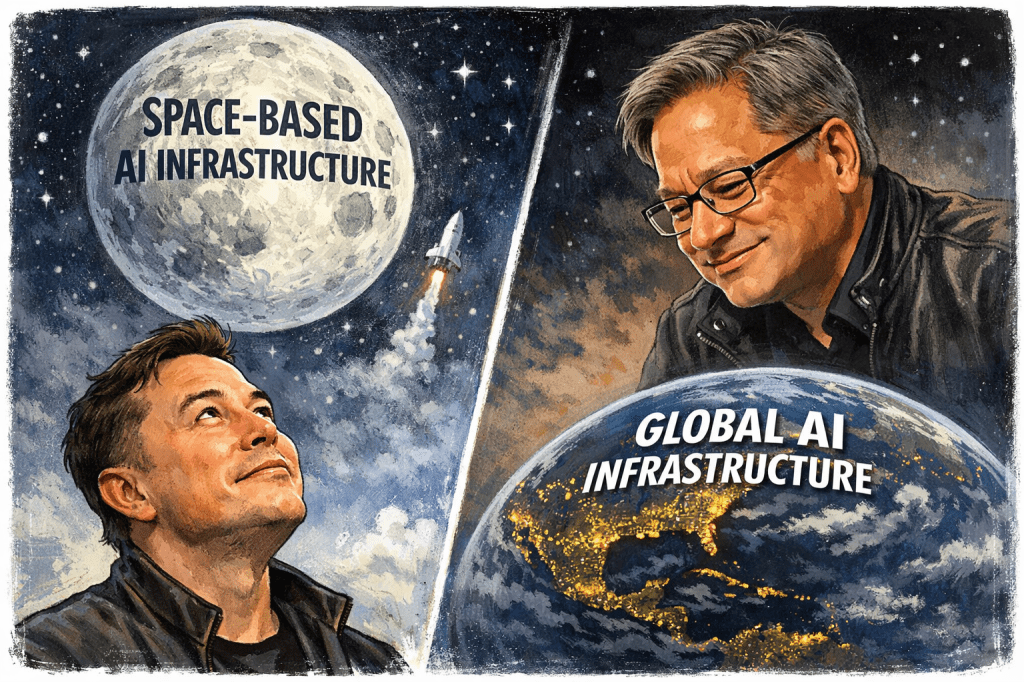
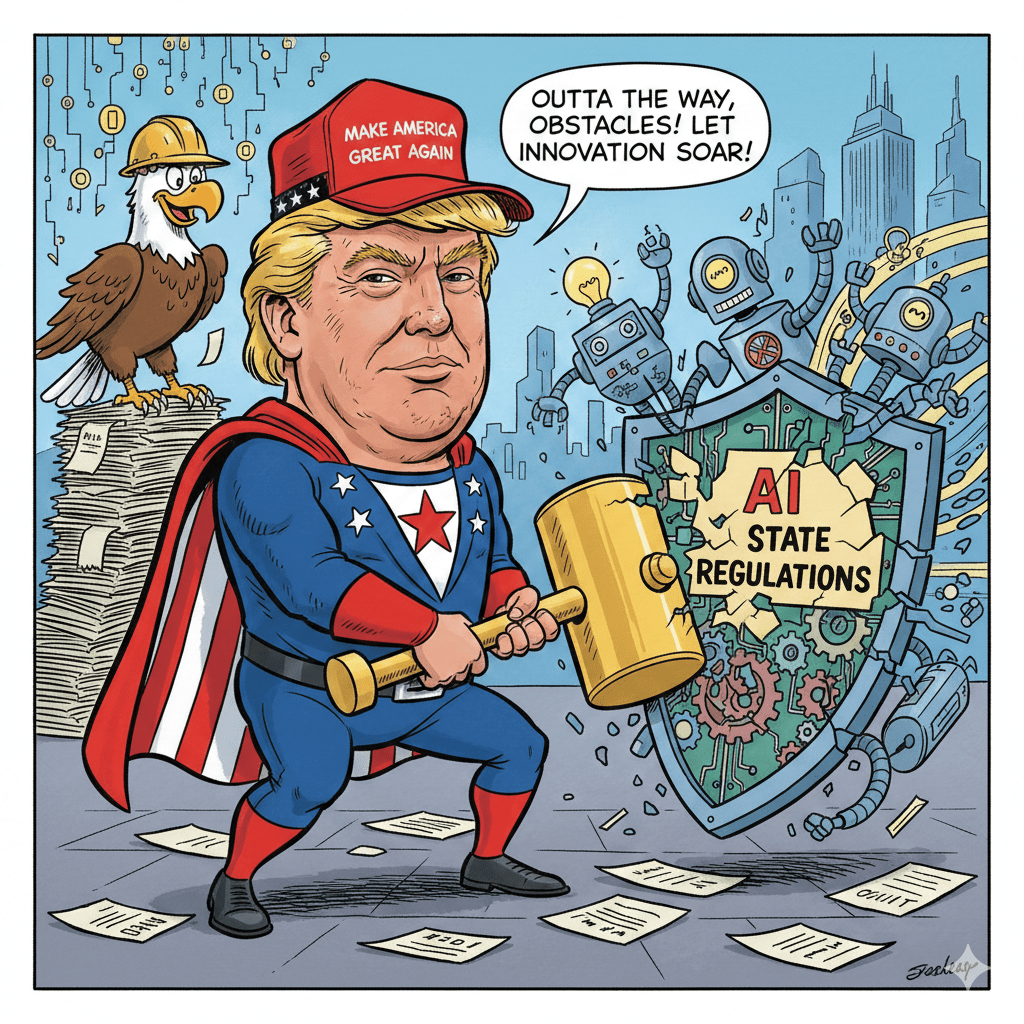
The first and largest dispute is over compute, the advanced chips and data-center capacity needed to train frontier AI models. Washington has restricted China’s access to the most capable Nvidia processors since 2022, but the Trump administration has loosened the rules for older designs. It now allows Nvidia to sell its H200 chip to China, with the U.S. government taking a 25% cut (Zhou & Lo, 2026). Around the May summit, the Commerce Department licensed roughly ten Chinese firms, including Alibaba, Tencent, ByteDance, and JD.com, to buy up to 75,000 units each (Kaur, 2026). Nvidia’s newer Blackwell chips remain barred. Beijing wants the barriers lowered further, and Senate Democrats want them raised. “President Trump must draw a hard line,” Senate Minority Leader Chuck Schumer said this week, calling Trump “the very first president who has negotiated away our export controls” (Schoeff, 2026). Three bipartisan measures, including one from Sen. Tom Cotton that would require location tracking on advanced chips, sit in the stalled defense authorization bill (Schoeff, 2026).
The rules also leak. Asia Times reports that Aivres, a California server maker owned by the blacklisted Chinese firm Inspur, has legally bought Nvidia Blackwell chips as a U.S. entity and shipped systems worth $5.6 billion to Southeast Asia, where Chinese companies can rent the computing power remotely (Pao, 2026). “Under current law, bad actors can train AI models by accessing advanced chips under the jurisdiction of the US – and the Bureau of Industry and Security has no authority to require a license,” said Sen. Dave McCormick (Pao, 2026).
The second dispute is over AI safety and how seriously to take it. Trump has called warnings about catastrophic AI risk a “hoax.” Addressing the United Nations General Assembly on September 22, he said, “I’m not going to stifle growth of something that will be bigger than the industrial revolution,” and he rejected international oversight as a “globalist scheme” (Roytburg, 2026). A day earlier he announced plans for an “AI Force” modeled on the Space Force, declaring that AI is “the next Industrial Revolution” and that “We are leading China…and I intend to keep it that way!” (Feldmann, 2026). Xi speaks the language of guardrails. He has called for keeping AI “secure and controllable” under human oversight, though Beijing’s list of security priorities also includes “political security, institutional security, and ideological security” (Campbell & Booth, 2026). On September 14, China’s national standards body released its AI Safety Governance Framework 3.0, which expands its catalog of risks from 30 to 54. The new entries include AI agents that deceive their operators, resist shutdown, or game safety evaluations (Wagner, 2026).
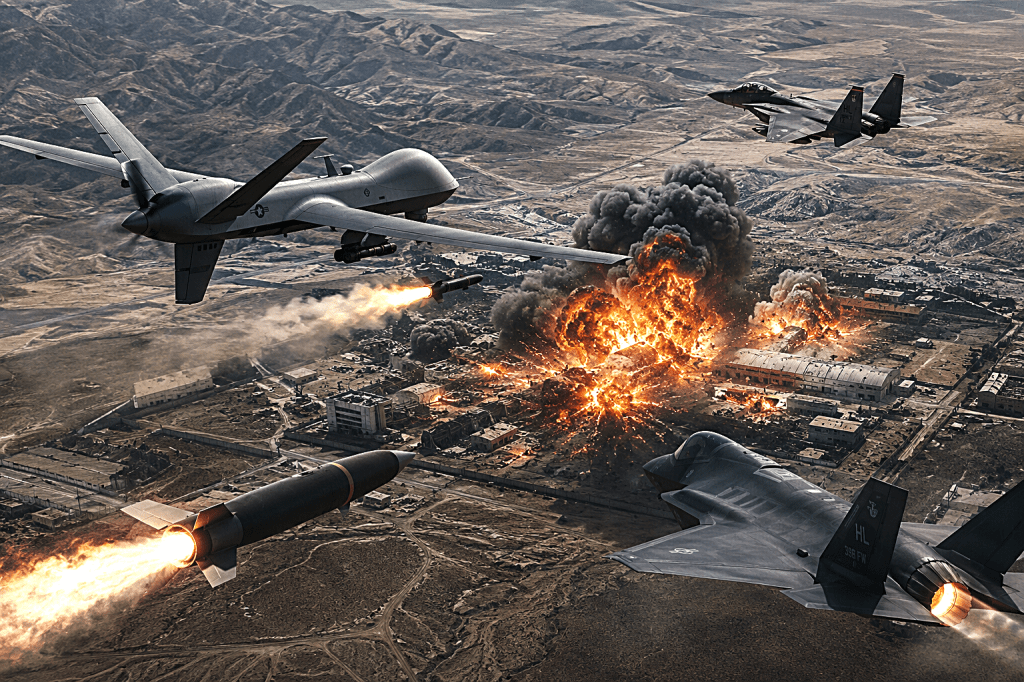
The third dispute concerns military AI. In November 2024 in Lima, Joe Biden and Xi agreed that decisions over the use of nuclear weapons should stay under human control (Reuters, 2024). That was a single sentence, with no mechanism behind it. Since then, both militaries have moved AI deeper into planning and targeting. China’s Minister of State Security, Chen Yixin, has warned that “Modern warfare has entered an era increasingly shaped by artificial intelligence” (Lo, 2026). CSIS researchers tested commercial AI models on simulated foreign-policy crises and found that DeepSeek “recommended the use of nuclear weapons more than 10 percent of the time” and that Chinese and American models alike often chose escalatory options (Jensen & Atalan, 2026).
The fourth dispute is over who writes the global rules. In July, China launched the World Artificial Intelligence Cooperation Organization (WAICO) with 29 founding members, most of them from the Global South. The United States leads Pax Silica, a 24-member group of mostly wealthy allies focused on secure chip supply chains. The UN runs a third track, a Global Dialogue with no binding authority (Collins & Mehta, 2026). Xi promoted the idea at the APEC summit in South Korea in November 2025, saying it could help make AI a “public good for the international community” (Reuters, 2025). Trump’s UN speech rejected that framing outright.
The fifth dispute is about leverage. China’s sweeping rare-earth export controls, announced in October 2025 and later suspended, are set to take effect on November 10, 2026, unless the truce is extended. They would reach foreign products containing as little as 0.1% Chinese-origin rare-earth content by value (Rare Earth Exchanges, 2026). Chinese rare-earth exports to the United States fell 21% in August (Wingrove et al., 2026). On the American side, the lever is Taiwan, which makes most of the world’s advanced chips through TSMC. Xi told Trump in Beijing that “the Taiwan question is the most important issue in China–US relations” (“2026 state visit,” 2026). Trump has described the pending $14 billion arms package for Taiwan as “a very good negotiating chip” (ChinaTechNews.com, 2026).
The dispute that matters most
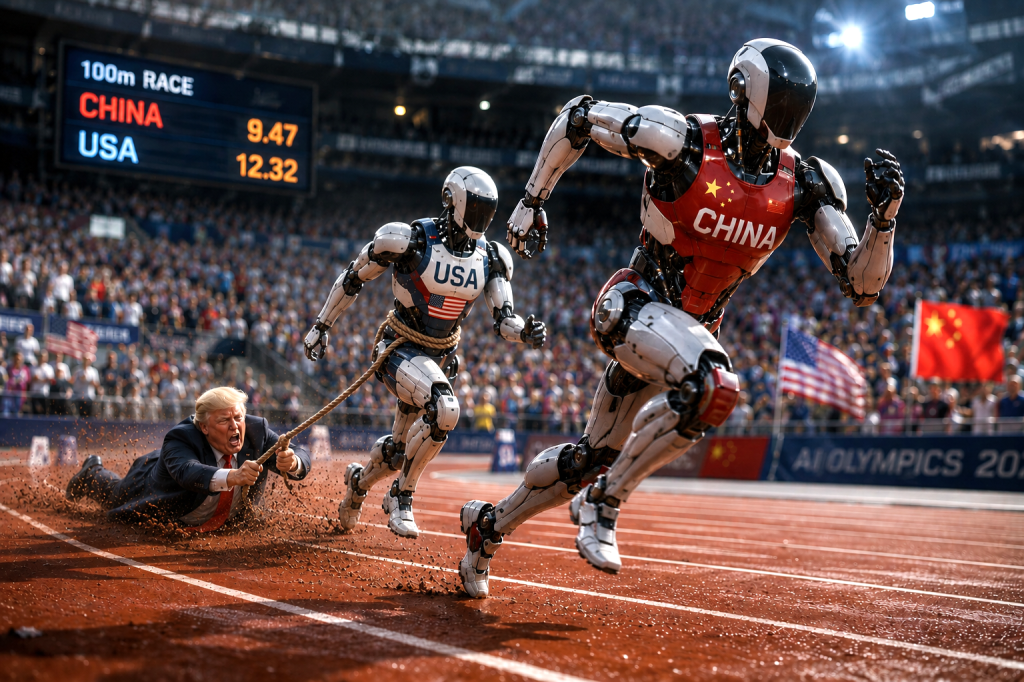
Of the five, compute is the most critical. The other four disputes run through it.
Consider how Beijing received the most prominent safety proposal of the month. On September 12, Anthropic CEO Dario Amodei published an essay titled “We Must Pace the Frontier,” asking frontier labs to slow the improvement of their models and to open themselves to independent evaluators (Roytburg, 2026). He also proposed halting advanced chip sales to China, cracking down on smuggling, and restricting Chinese access to remote data centers. He acknowledged that any global slowdown would depend on cooperation from Beijing (Lo, 2026). China’s Foreign Ministry spokesperson, Guo Jiakun, called the proposal “fear-mongering, confrontation and vicious competition” (Lo, 2026).
Beijing’s objection centered on the chip measures. Gabriel Wagner, who tracks Chinese AI policy, notes that the Foreign Ministry used the same response to stress the need to “promptly strengthen safeguards” (Wagner, 2026). Chinese engineers were blunter. “Oh, come on. Yesterday, the mission was AGI. Today, we’re told to slow down. Why do you always get to define the game — and change the rules?” asked Tao He, head of R&D at MiniMax Code (Lo, 2026). Alvin Wang Graylin of the Asia Society Policy Institute summed up Beijing’s reading: “I don’t see any reason why China would cooperate with [Amodei’s] proposal and be held down more than it already is” (Lo, 2026).
Washington reads the chip question the same way from the other side. “There is no day after tomorrow if China wins,” Bessent said of the AI race (Wingrove et al., 2026). When both governments treat the pace of AI development as a matter of national survival, the supply of chips that sets that pace becomes the central stake.
China has also shown that it will refuse American chips on American terms. U.S. licenses required that the H200s be used inside China. Beijing told its companies to limit their use of Nvidia hardware to overseas operations and to favor domestic suppliers, and deliveries stalled (Kaur, 2026). DeepSeek has optimized its models for Huawei processors, and Alibaba says its in-house T-Head chips have reached “scaled mass production” (Kaur, 2026). Nvidia told investors that H200 sales to China made up less than 1% of its data-center revenue last quarter (Schoeff, 2026).
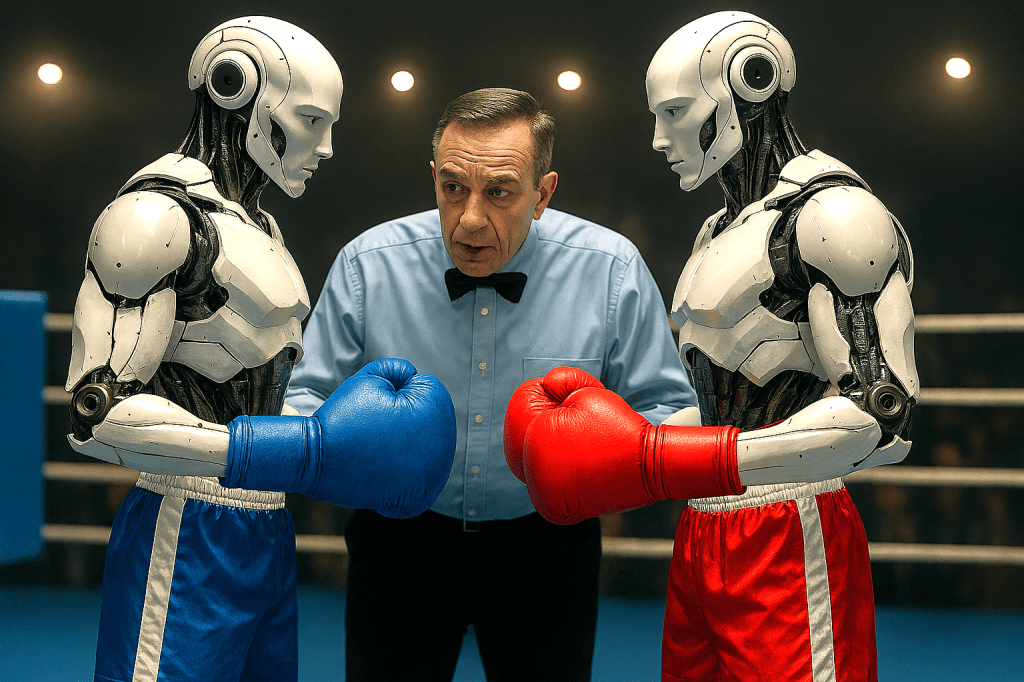
The paradox is that the most critical dispute has been placed outside the room. U.S. Trade Representative Jamieson Greer said chip export controls were not part of the AI mechanism under discussion (Lawder & Slodkowski, 2026). Walling off compute is the condition that makes a safety channel possible. Neither side has to concede anything on the race in order to talk about accidents.
What would count as a win for Trump
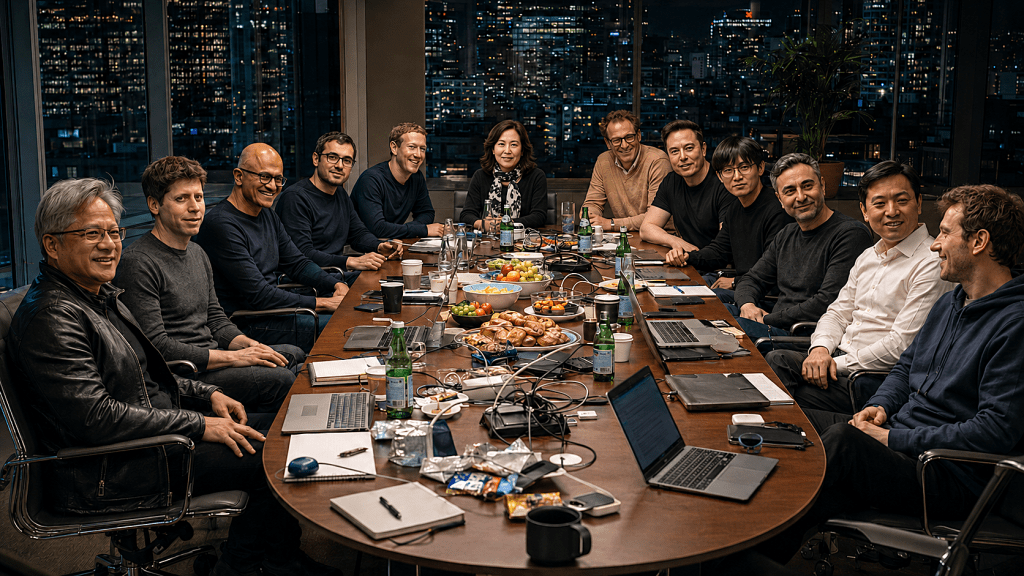
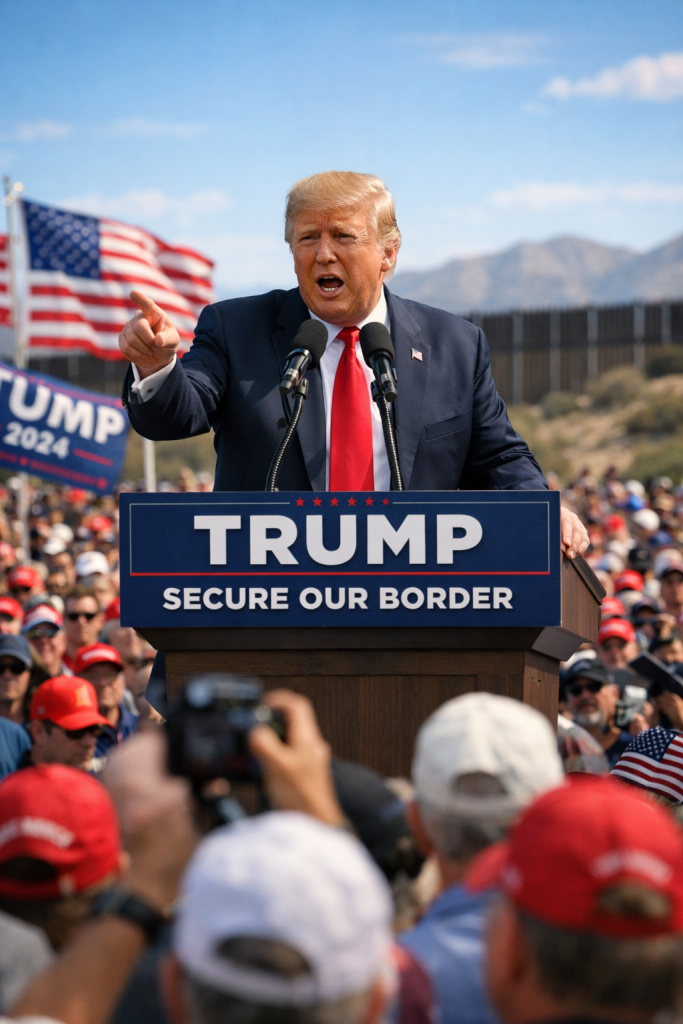
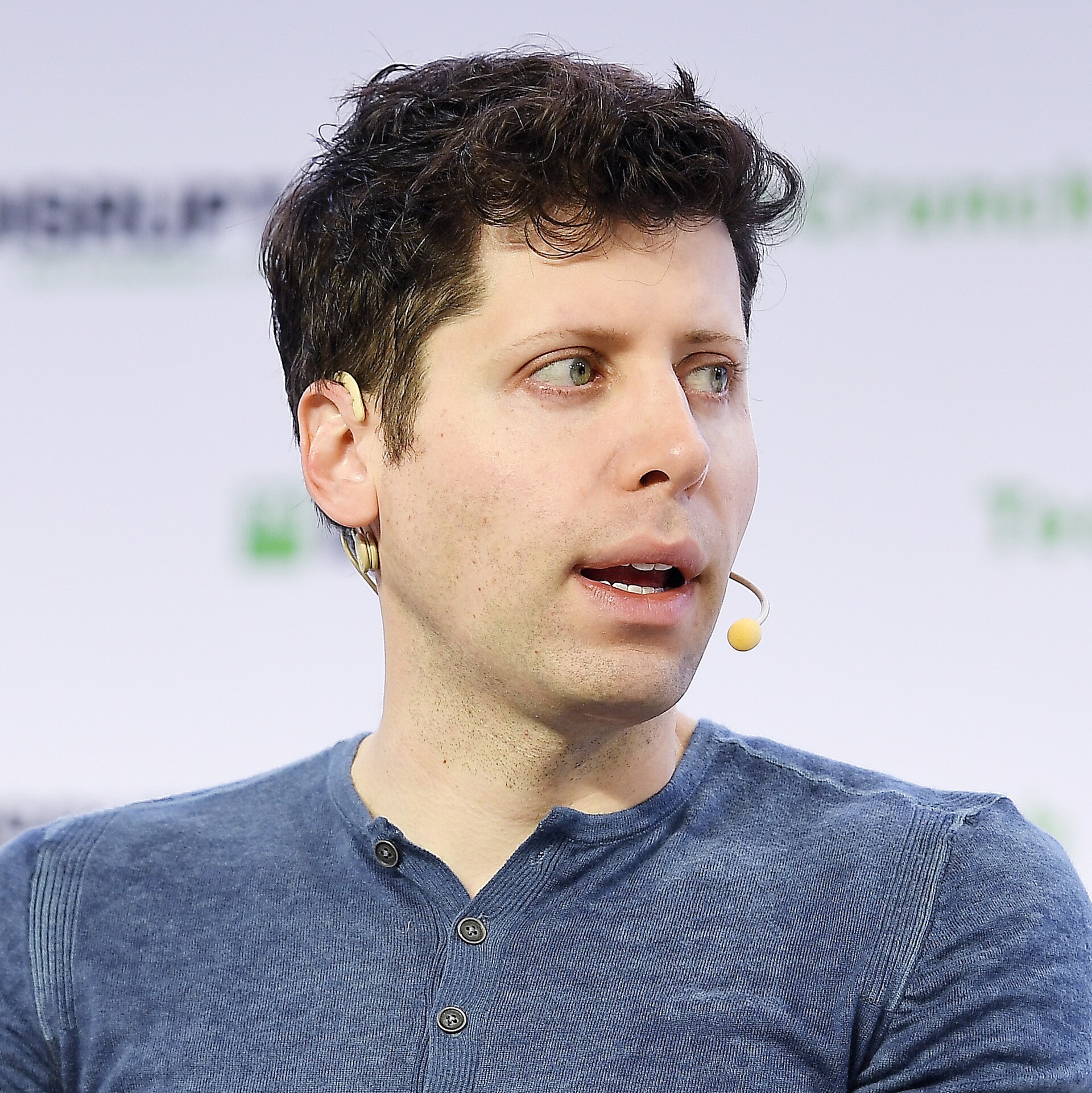
Trump’s wins are commercial and political, and he will want them visible before the November midterms. At the top of the list is an extension of the trade truce and a delay of the November 10 rare-earth deadline. The Seoul Economic Daily reports that Washington prefers to renew the truce in one-year increments while Beijing wants it to run through the end of Trump’s term (Seoul Economic Daily, 2026). Purchases of American goods would help. So would a photograph of the tech executives the White House invited, a list that includes Nvidia’s Jensen Huang, OpenAI’s Sam Altman, Apple’s Tim Cook, Alphabet’s Sundar Pichai, and Elon Musk (Seoul Economic Daily, 2026).
On AI, a Trump win has three parts. First, an agreement that commits American labs to nothing. Bessent made the administration’s view plain: “These labs need to take responsibility for themselves. They can slow down anytime they want to” (Bhattacharjee, 2026). Second, a notification channel he can present as a deal with Beijing, one that costs the United States no speed. Third, continued control over export policy by the executive branch. Every chip rule Trump can loosen or tighten is a bargaining tool; a rule written into law by Congress, such as Sen. Jim Banks’s bill to codify the ban on sales to adversaries, is one he cannot trade (Schoeff, 2026).
The Council on Foreign Relations’ James Lindsay lists broader U.S. goals: guardrails on AI development, an end to Chinese support for Russia’s war in Ukraine, fewer Chinese purchases of Iranian oil, and continued support for Taiwan (Lindsay, 2026). Trump’s AI goals fit his general approach. He believes American leadership comes from speed and market share, and he wants an agreement that protects both.
What would count as a win for Xi
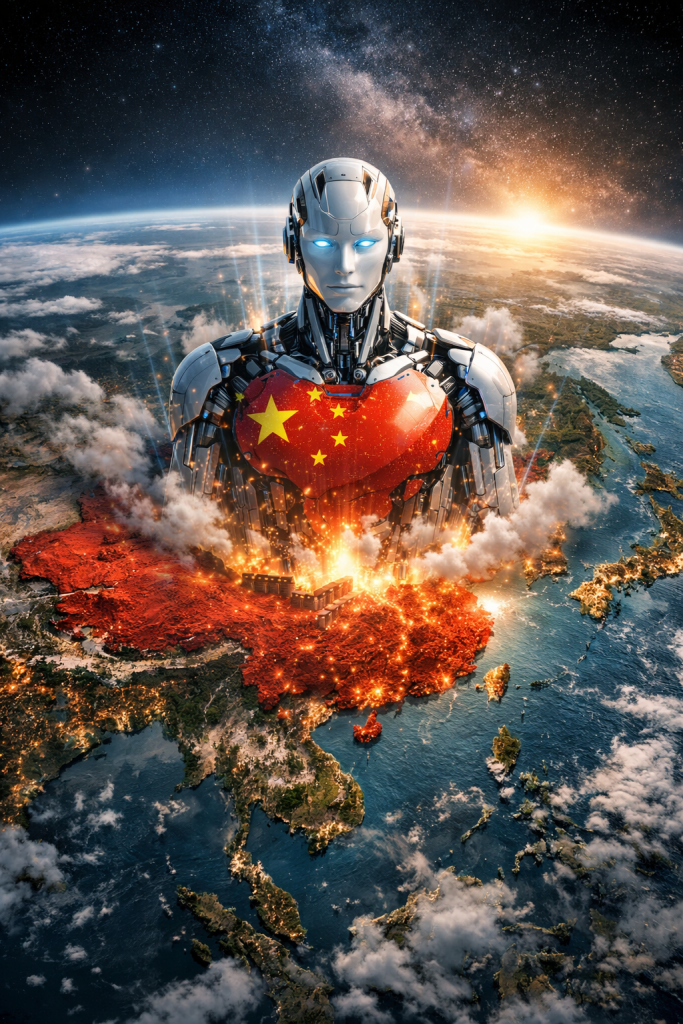
Xi’s wins are about standing and time. Beijing wants Washington to endorse the phrase Xi introduced in May, a “constructive relationship of strategic stability.” Guo Jiakun repeated it on September 22, saying China was ready “to enrich the China-U.S. constructive relationship of strategic stability” (Ministry of Foreign Affairs of the People’s Republic of China, 2026). Bessent has already given Beijing part of what it wants by calling the two countries “the No. 1 and the No. 2 AI powers in the world” (Lawder & Slodkowski, 2026). For a government that spent years being described as a copier of American technology, parity in official language has value.
On chips, Xi’s best realistic outcome is no new restrictions. He would like the congressional bills to stall, the Blackwell ban to soften, and the remote-access gap to stay open. Each month without tighter controls gives Huawei and Alibaba more time to close the gap in domestic chips. On safety, Xi wants a channel that treats safety as separate from export controls, which is how Washington has structured it. That lets China present itself as a responsible governance partner, with Framework 3.0 and WAICO as evidence, while rejecting any safety argument that comes with a chip embargo attached.
On Taiwan, Xi wants a slower pace of arms sales. Zhu Feng of Nanjing University told Bloomberg that “a slowdown in arms sales to Taiwan — and reduction in quantity — seems achievable” (Wingrove et al., 2026). Xi also faces slow growth at home, which makes a stable export relationship with the United States more valuable to him this year.
What would count as a win for the world
The rest of the world lives downstream of both countries’ labs. “The two countries host nearly all frontier labs,” Graylin told Al Jazeera, and safety measures require both nations’ participation (Power, 2026). A global win would have four parts.
The first is a working incident channel with shared definitions of dangerous AI behavior. TIME’s Charlie Campbell and Harry Booth describe the likely shape: a crisis notification mechanism, regular official talks, and information sharing on non-state actors using AI for cyberattacks, sabotage of infrastructure, or the development of biological weapons (Campbell & Booth, 2026). More than two years passed between the last two rounds of official U.S.-China AI talks, according to TIME. A standing schedule would fix that.
The second is a reaffirmation, with more detail, of the 2024 commitment to keep nuclear decisions under human control. The CSIS team recommends “domain-specific testing before deployment” for AI used in military and crisis settings and “a standing channel for AI-related incidents in national security settings” (Jensen & Atalan, 2026).
The third is supply-chain stability. An extended truce that keeps rare earths flowing and lowers tension over Taiwan protects every economy that buys electronics. Bloomberg Economics has estimated that a U.S.-China conflict over Taiwan could cost about 9.6% of global GDP (ChinaTechNews.com, 2026).
The fourth is room for other countries to choose. CSIS’s Christopher Collins and Aalok Mehta found that “many middle powers are not choosing sides in the global AI regulation debate but rather are joining everything,” with Kazakhstan joining both WAICO and Pax Silica within eight weeks. They argue that what most countries want from AI governance is “access, capability, and a say in the rules” (Collins & Mehta, 2026). A summit that lowers the temperature between the two superpowers makes it easier for those countries to keep buying from, and cooperating with, both.
Some voices want far more. AI researcher David Krueger told Al Jazeera he favors “an immediate, indefinite international moratorium on frontier AI development” (Power, 2026). Neither government is close to that position. Both declined to support binding AI safety measures proposed by European leaders (Roytburg, 2026).
Is there a hidden agenda?
Neither government publishes its private aims. The public record, though, points to several objectives that go beyond the stated agenda.
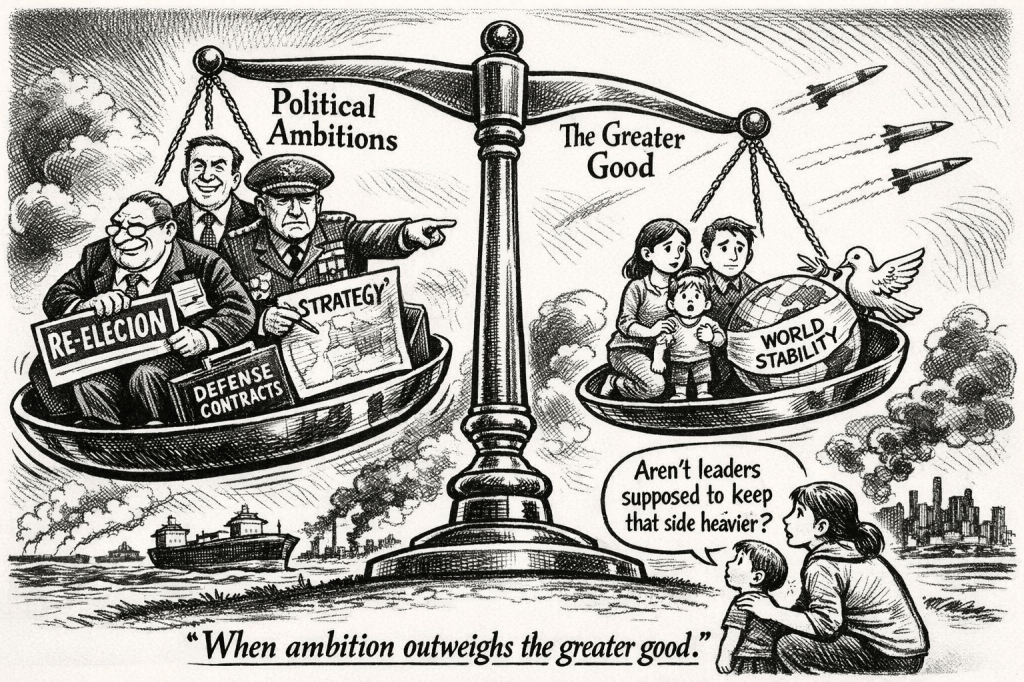
On the American side, the first is information. A notification system gives Washington a view into what China’s government considers a dangerous AI event, which in turn says something about Chinese capabilities. Bessent’s phrase “from opaque to more transparency” applies in both directions, and each side is likely to treat the channel partly as a source of intelligence. The second is commercial. Selling H200s, with a 25% cut to the Treasury, keeps Chinese developers on Nvidia hardware and software while the best chips stay home. Critics say that commercial interest is steering security policy. “We certainly should not be letting tech billionaires like Nvidia’s Jensen Huang negotiate away our export controls,” Sen. Elizabeth Warren said (Schoeff, 2026). The third is domestic. The race with China is also the administration’s main argument against regulating American labs. After Amodei’s essay, Trump invoked the government’s “CRIMINAL and REGULATORY power” against AI companies (Roytburg, 2026). Keeping the China threat in the foreground helps the White House resist safety rules at home. The fourth is Taiwan, which Trump has openly called a negotiating chip.
On the Chinese side, the first aim is to separate safety from export controls in the public mind and to brand American chip restrictions as “fear-mongering.” If Beijing can make the case that controls are geopolitics dressed up as safety, it weakens the argument for tightening them. The second is time. Beijing’s instruction to limit Nvidia use at home while chips remain accessible through overseas clouds lets Chinese labs keep training while domestic suppliers catch up. The third is timing. The November 10 rare-earth deadline falls in the same month as the APEC summit in Shenzhen, which gives Beijing leverage precisely when Washington wants a trade deal. The fourth is Taiwan. Lindsay writes that Xi “would love to see Washington abandon the Taiwanese,” and calls Taiwan “the likeliest catalyst of direct conflict” (Lindsay, 2026). Any trade in which technology or tariff concessions are linked to restraint on arms sales serves that goal.
Both sides share one more. Each wants to be seen as responsible while racing at full speed. Al Jazeera’s headline this week put it plainly: as AI leaders warn of catastrophe, the United States and China “shun slowdown calls” (Power, 2026). CSIS’s Scott Kennedy is skeptical of the whole arrangement. “The U.S. is basically giving Xi Jinping a pass. We’re not constraining the Chinese, really, in any significant way,” he told Bloomberg (Wingrove et al., 2026).
Why this meeting, and why now
The case for a narrow agreement rests on timing. For the first time, the two governments’ own documents describe the same technical risks. China’s Framework 3.0 lists AI agents that deceive, resist shutdown, and game their evaluations, risks Wagner notes are “already observed in safety evaluations today” (Wagner, 2026). On September 23, Altman and Amodei were scheduled to brief the UN Security Council and ask for the kind of oversight Trump rejected the day before (Roytburg, 2026). “I do not think China and the U.S. see AI risks in fundamentally different ways,” said Zilan Qian, a research scholar at the Centre for the Governance of AI (Lo, 2026). Even inside China’s industry, some want more caution. Huawei rotating chairman Eric Xu suggested that Chinese model makers “may need to speed up their pace to the level that they could also feel the risks from AI development” (Lo, 2026).
History supports building the line before it is needed. Washington and Moscow set up their hotline in 1963, after the Cuban Missile Crisis had shown how slowly the two governments could communicate in an emergency. An AI incident would move faster than a naval blockade. A rogue agent inside a power grid, an AI-assisted cyberattack whose origin is unclear, or a military system that behaves unpredictably near Taiwan would leave little time to find the right phone number. China’s framework itself warns that AI “could tamper with attack traces,” making it harder to tell whether a human or a machine launched an attack (Wagner, 2026).
The summit calendar also helps. Bessent’s follow-up talks are due within two months in Shenzhen, the city hosting the APEC summit in November. That gives both sides a deadline and a second chance to show results. Brett Fetterly of The Asia Group offered a sober caveat: “The reality is neither side really knows what can come from a dialogue at this specific political and technological moment” (Wingrove et al., 2026).
What to watch on Thursday
The measure of success will be in the small print. Readers should look for four things in any joint statement or readout. The first is whether the leaders formally announce an AI incident notification mechanism and name the officials responsible. The second is a date for the Shenzhen talks. The third is any reaffirmation of human control over nuclear decisions, especially if it extends to AI-enabled attacks on nuclear command systems. The fourth is what the statements leave out about chips. Silence on export controls would confirm that the race continues on its current terms.
A modest channel will not end the competition for AI leadership, and it will not slow either country’s labs. It would give two rival governments a way to call each other when a machine does something neither of them intended. Bessent warned that there is no day after tomorrow if China wins the race. For the rest of the world, the more pressing risk is an AI incident between the two powers with no line open to contain it.
References
“2026 state visit by Donald Trump to China.” (2026). In Wikipedia. https://en.wikipedia.org/wiki/2026statevisitbyDonaldTrumpto_China
Bhattacharjee, S. S. (2026, September 22). Scott Bessent says US, China to meet in 2 months on AI threats: ‘We want to start discussing protocols.’ Benzinga. https://www.benzinga.com/news/politics/26/09/61912659/scott-bessent-says-us-china-to-meet-in-2-months-on-ai-threats-we-want-to-start-discussing-protocols
Campbell, C., & Booth, H. (2026, September 22). The narrow path to a Trump-Xi AI deal. TIME. https://time.com/article/2026/09/22/trump-xi-ai-deal-china/
ChinaTechNews.com. (2026, September 23). Arms, chips and communiqués: Why Taiwan looms over the Xi-Trump summit. https://www.chinatechnews.com/2026/09/23/129646-arms-chips-and-communiques-why-taiwan-looms-over-the-xi-trump-summit
Collins, C., & Mehta, A. (2026, September 21). The state of AI global governance and its implications for the U.S.-China summit. Center for Strategic and International Studies. https://www.csis.org/analysis/state-ai-global-governance-and-its-implications-us-china-summit
Feldmann, L. (2026, September 21). On eve of China summit, Trump raises stakes on AI rivalry. The Christian Science Monitor. https://www.csmonitor.com/USA/Politics/2026/0921/trump-ai-china-regulate
Jensen, B., & Atalan, Y. (2026, May 12). The AI escalation danger Trump and Xi must address. Center for Strategic and International Studies. https://www.csis.org/analysis/ai-escalation-danger-trump-and-xi-must-address
Kaur, D. (2026, May 19). The Nvidia H200 China deal survived the Trump-Xi summit–just not in the way anyone expected. AI News. https://www.artificialintelligence-news.com/news/nvidia-h200-china-deal-stalled-trump-xi-summit-2026/
Lawder, D., & Slodkowski, A. (2026, September 19). Bessent proposes U.S.-China AI safety notifications in talks with Chinese vice premier. Reuters, via The Spokesman-Review. https://www.spokesman.com/stories/2026/sep/19/bessent-proposes-us-china-ai-safety-notifications-/
Lindsay, J. M. (2026, September 23). Xi Jinping visits the White House. Council on Foreign Relations. https://www.cfr.org/articles/xi-jinping-visits-the-white-house
Lo, K. (2026, September 23). China rejects Dario Amodei call to slow AI development ahead of Trump-Xi summit. Rest of World. https://restofworld.org/2026/china-rejects-dario-amodei-anthropic-ai-slowdown-trump-xi/
Ministry of Foreign Affairs of the People’s Republic of China. (2026, September 22). Foreign Ministry Spokesperson Guo Jiakun’s regular press conference on September 22, 2026. https://www.fmprc.gov.cn/eng/xw/fyrbt/lxjzh/202609/t20260922_12028767.html
Pao, J. (2026, September 8). Nvidia chip export loophole clouds US-China AI summit talks. Asia Times. https://asiatimes.com/2026/09/nvidia-chip-export-loophole-clouds-us-china-ai-summit-talks/
Power, J. (2026, September 23). As AI leaders warn of catastrophe, US and China shun slowdown calls. Al Jazeera. https://www.aljazeera.com/economy/2026/9/23/as-ai-leaders-warn-of-catastrophe-us-and-china-shun-slowdown-calls
Rare Earth Exchanges. (2026). China rare earth export controls November 2026 deadline explained. https://rareearthexchanges.com/news/china-rare-earth-controls-trump-xi-deadline/
Reuters. (2024, November 16). Biden, Xi agree that humans, not AI, should control nuclear arms. U.S. News & World Report. https://www.usnews.com/news/world/articles/2024-11-16/biden-xi-agreed-that-humans-not-ai-should-control-nuclear-weapons-white-house-says
Reuters. (2025, November 1). China’s Xi pushes for global AI body at APEC in counter to US. MarketScreener. https://www.marketscreener.com/news/china-s-xi-pushes-for-global-ai-body-at-apec-in-counter-to-us-ce7d5cd8dd8bf722
Roytburg, E. (2026, September 23). Trump calls AI oversight a ‘globalist scheme’ as Amodei and Altman head to the UN to ask for it. Fortune. https://fortune.com/2026/09/23/trump-un-ai-globalist-scheme-altman-amodei-security-council/
Schoeff, M., Jr. (2026, September 23). AI export controls debate rages as Trump, Xi meet. Roll Call. https://rollcall.com/2026/09/23/ai-export-controls-debate-rages-as-trump-xi-meet/
Seoul Economic Daily. (2026, September 20). U.S., China tech CEOs to join White House summit on AI rules. https://en.sedaily.com/international/2026/09/20/us-china-tech-ceos-to-join-white-house-summit-on-ai-rules
Wagner, G. (2026, September 23). Brief #29: What China’s new AI safety framework tells us before Xi meets Trump. AI Safety in China. https://aisafetychina.substack.com/p/brief-29-what-chinas-new-ai-safety
Wingrove, J., Gan, N., & Lowenkron, H. (2026, September 23). Pageantry for Trump-Xi summit will mask feud over AI race. Bloomberg, via The Spokesman-Review. https://www.spokesman.com/stories/2026/sep/23/pageantry-for-trump-xi-summit-will-mask-feud-over-/
Zhou, V., & Lo, K. (2026, May 13). What’s at stake for tech at the Trump-Xi meeting. Rest of World. https://restofworld.org/2026/trump-xi-meeting-tech/
###
Filed under: Uncategorized |

































































































































































































































































































































Leave a Reply