


By Jim Shimabukuro (assisted by Claude)
Editor
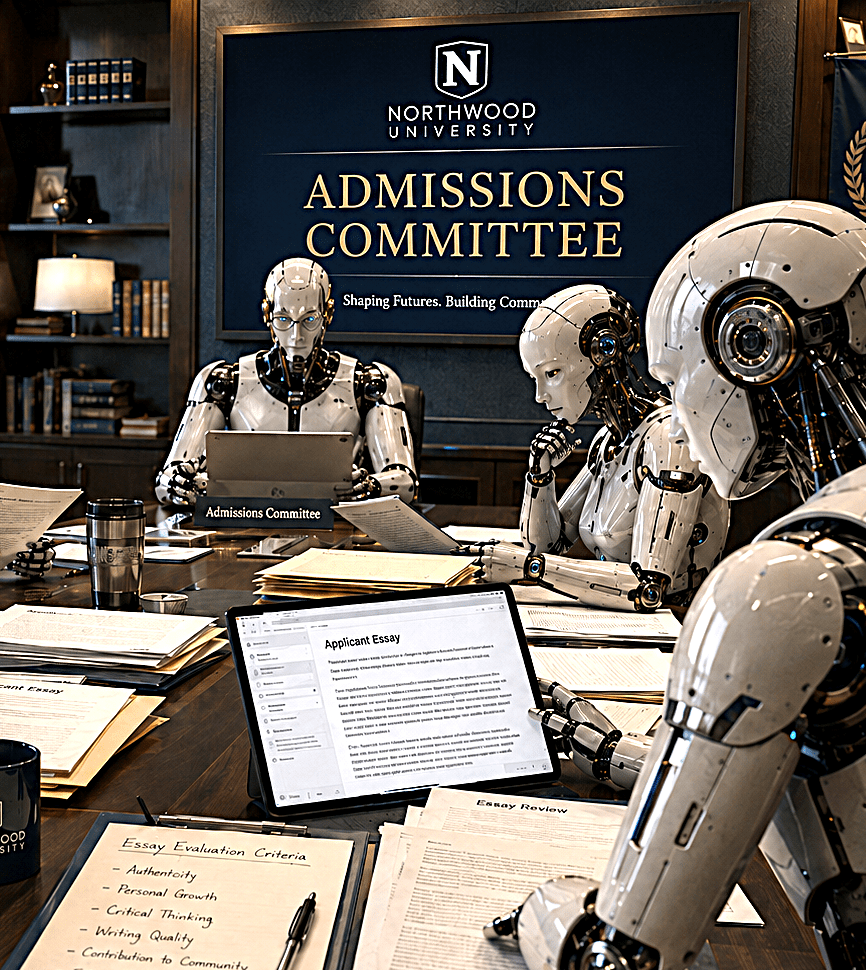
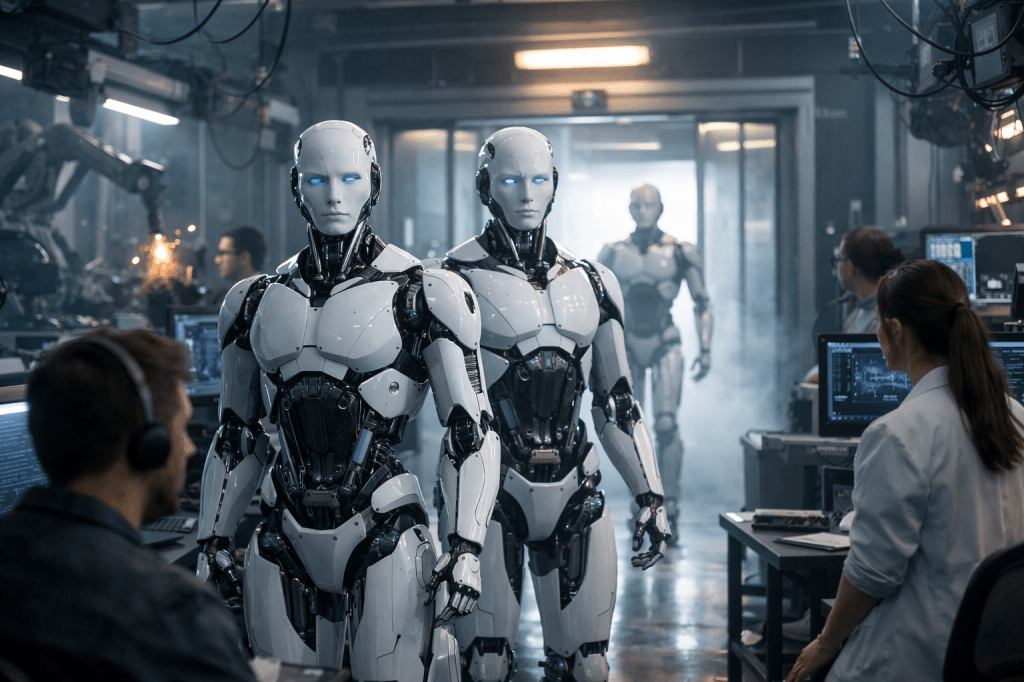
Last winter, as 57,622 students waited to hear whether Virginia Tech had a place for them in its 7,000-seat freshman class, something unusual was happening to their essays. For the first time, a machine was reading them.

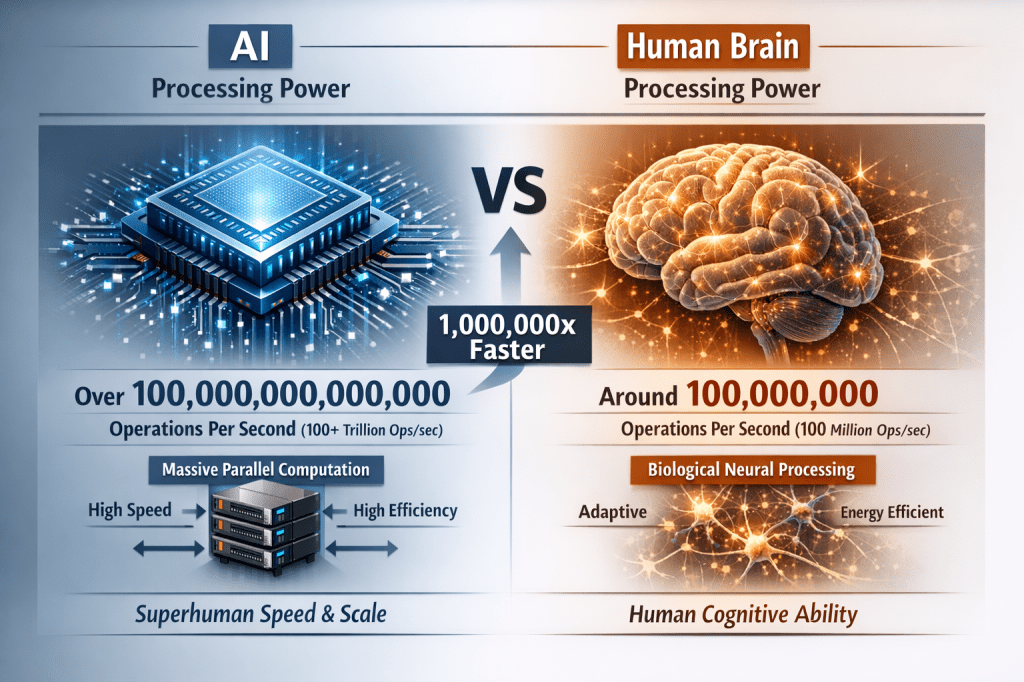
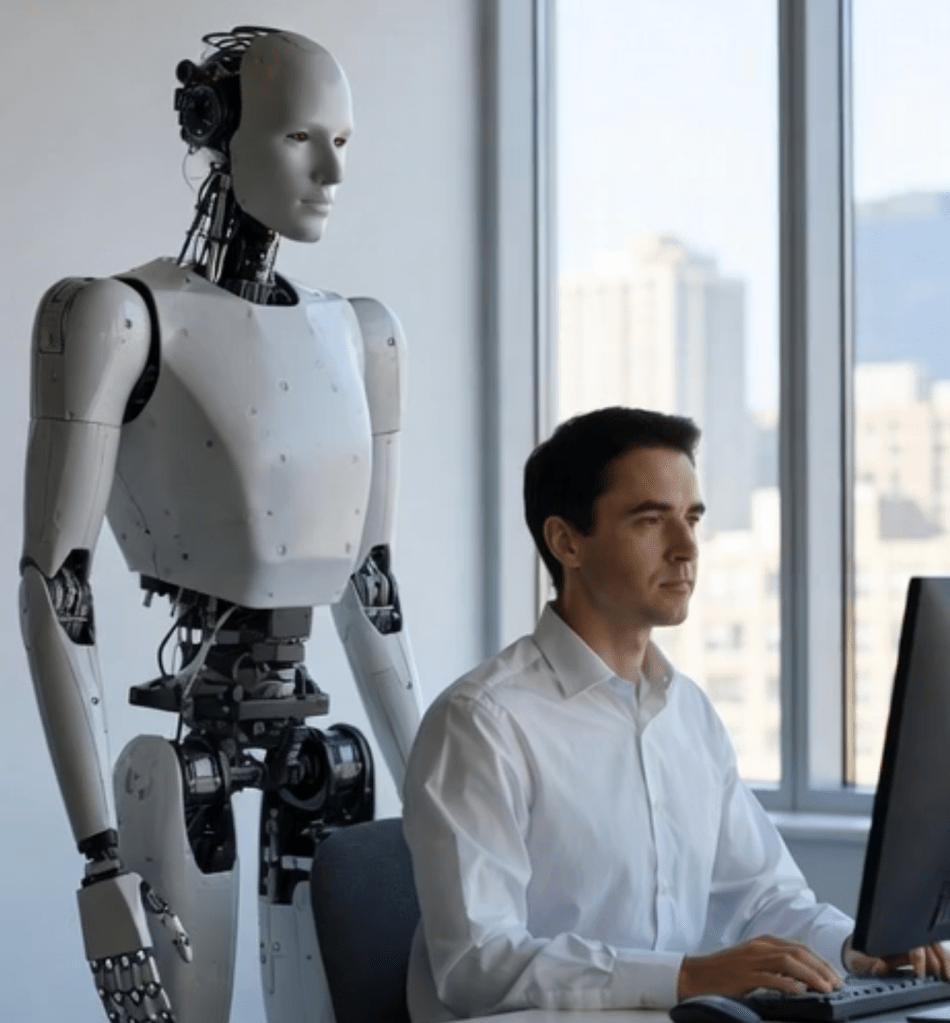
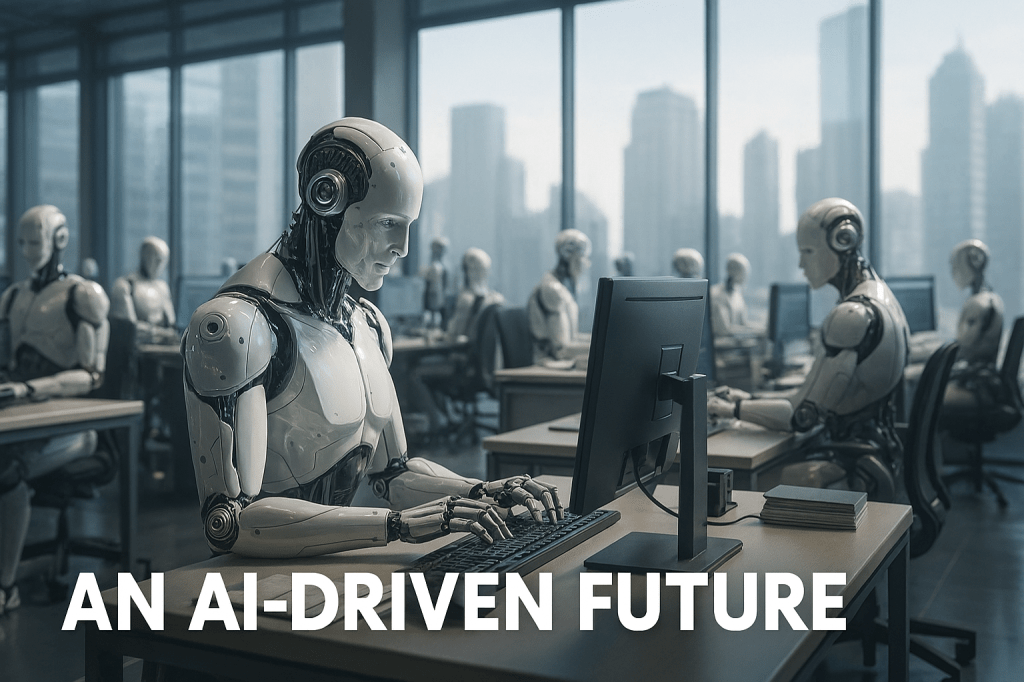
Virginia Tech spent three years building an AI essay reader before switching it on for the students arriving on campus this fall. The software can scan roughly 250,000 essays in under an hour; a human reader averages about two minutes per essay. Juan Espinoza, the university’s vice provost for enrollment management, is disarmingly candid about why he wanted it. “Humans get tired; some days are better than others,” he told the Associated Press. “The AI does not get tired. It doesn’t get grumpy” [1].
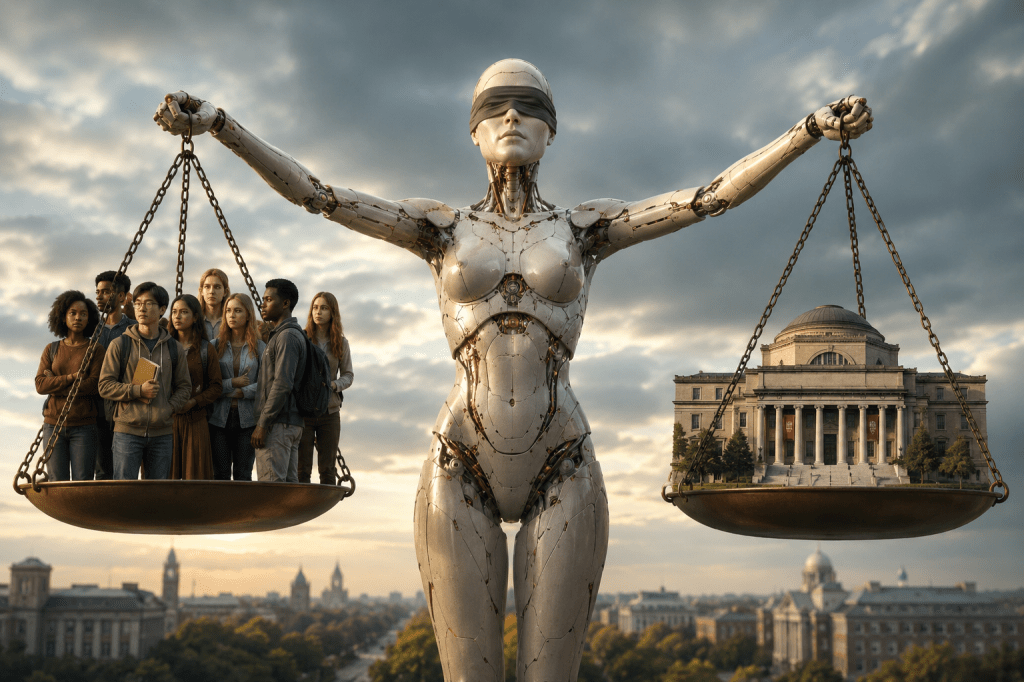
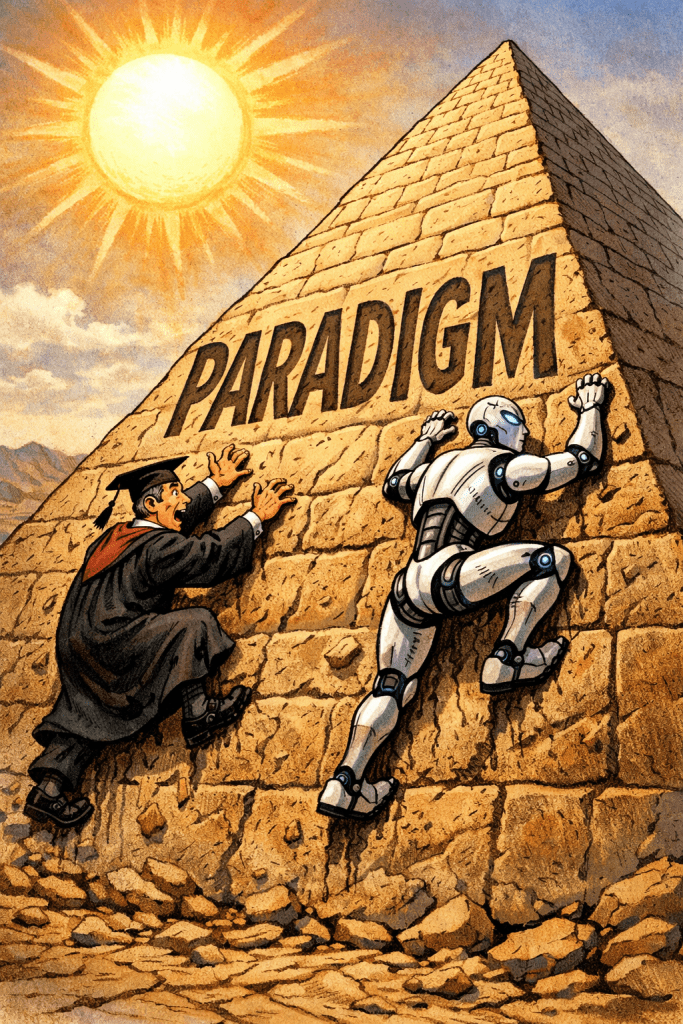
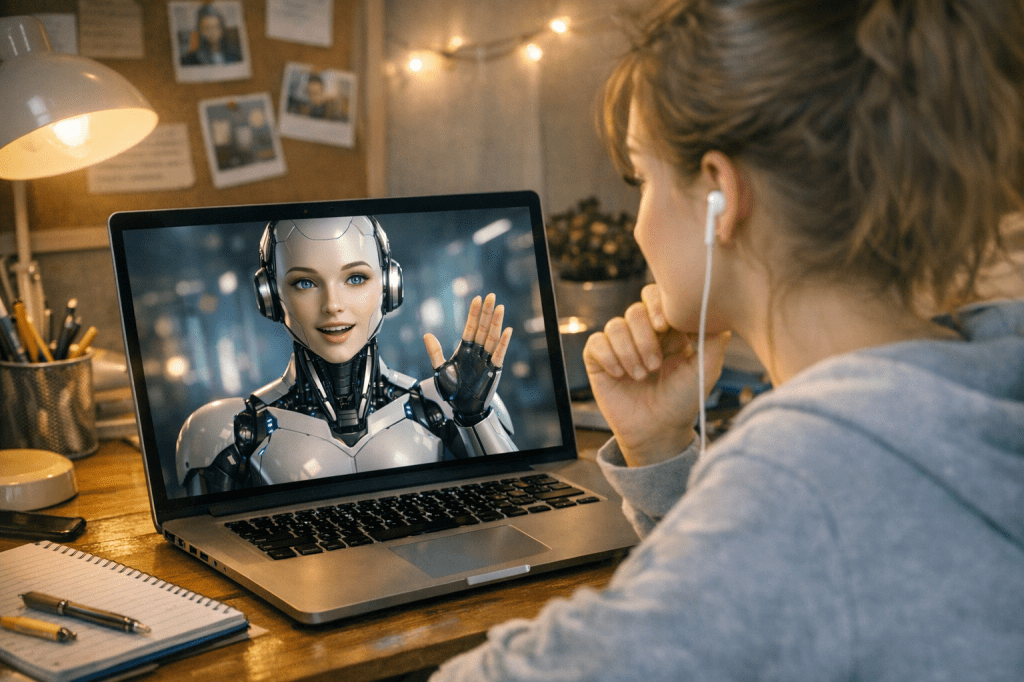
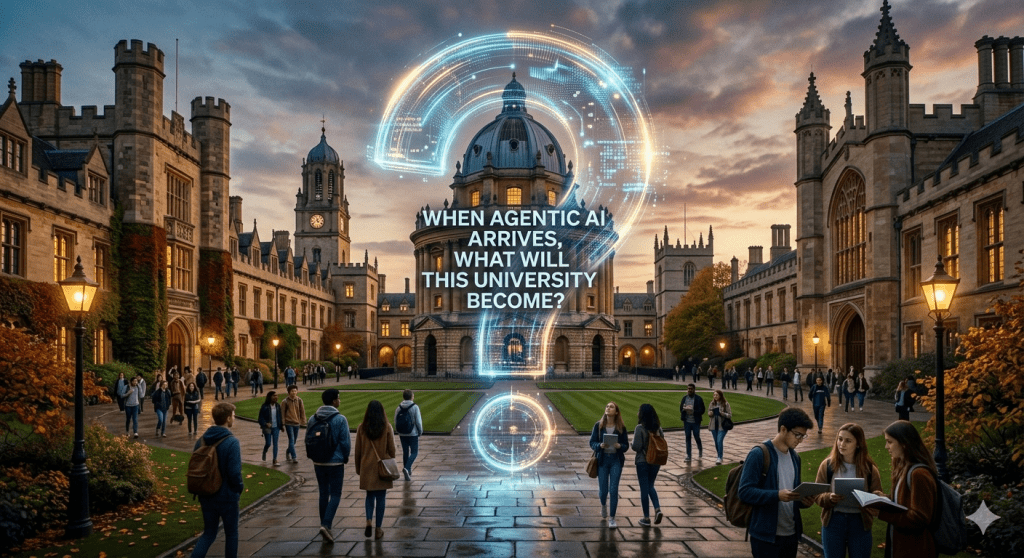
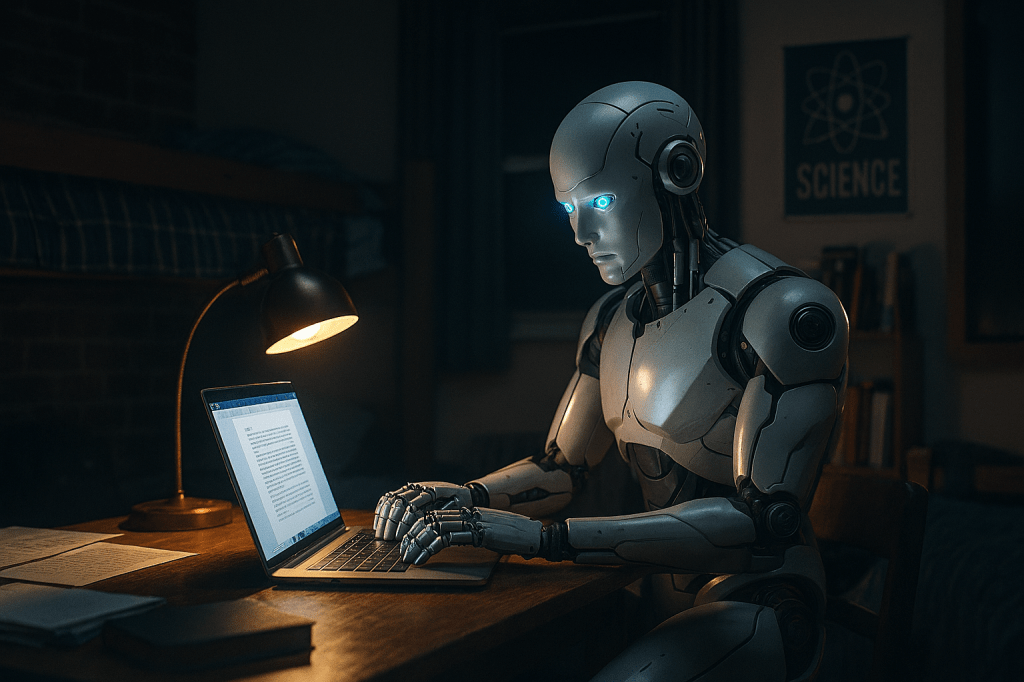
The students didn’t know it yet, but many of them were using AI too — to brainstorm, to polish, and in some cases to write. The application season that produced this fall’s entering class was the first in which artificial intelligence sat, openly or covertly, on both sides of the admissions desk. That fact is now reshaping policies, procedures, and the entrance experience itself, in the United States most visibly but increasingly around the world.
The Machine in the Reading Room
For years, colleges reassured the public that admissions decisions were made by people — committees of readers weighing essays, transcripts, and recommendations one file at a time. That reassurance is still technically true almost everywhere. What has changed is everything around the decision.
Virginia Tech’s system does not admit or reject anyone. It scores essays on a twelve-point scale in parallel with human readers, and when the machine and the human disagree by more than two points, another human arbitrates. Espinoza estimates the arrangement will save his staff at least 8,000 hours a year [1]. The University of North Carolina at Chapel Hill has been using automated scoring even longer. Since before ChatGPT existed, UNC’s software has graded applicants’ grammar and writing style on a one-to-four scale — a practice that drew intense scrutiny when the student newspaper, The Daily Tar Heel, documented it in January 2025, at a moment when the university was fielding more than 105,000 applications a cycle [2]. UNC now explains the practice openly on its admissions website: AI provides “data points about students’ common application essay and their school transcripts,” analyzing “writing style and grammar and the rigor of students’ coursework” so that, in the office’s words, “our admissions team [can] focus on the content of a student’s essay, the student’s grades, and the extent that they’ve challenged themselves in the classroom” [3].
The pattern repeats across the country, each campus automating a different bottleneck. Georgia Tech is rolling out AI to review transfer students’ transcripts — a notorious source of delay — and testing tools that flag students eligible for Pell Grants. “It’s one more layer of delay and stress and inevitable errors,” Richard Clark, Georgia Tech’s executive director of enrollment management, said of the old transcript process. “AI is going to kill that.” Stony Brook University uses AI for transcript review and is piloting software that summarizes essays and recommendation letters; Richard Beatty, its senior associate provost for enrollment management, has described how those summaries surface the circumstances buried in a file — an illness, a family loss, a student who spent high school caring for siblings. Caltech, for its part, is launching an AI tool that uses video interviews to probe whether applicants can genuinely claim the research projects they list. “It’s a gauge of authenticity,” said Ashley Pallie, Caltech’s admissions director. “Can you claim this research intellectually? Is there a level of joy around your project?” [1].
None of this arrived overnight. As far back as October 2023, a survey by Intelligent.com found half of admissions offices already using AI and projected that eight in ten would be doing so by 2024 [4]. What is new this cycle is scale, visibility, and the willingness of enrollment officers to defend the practice on the record.
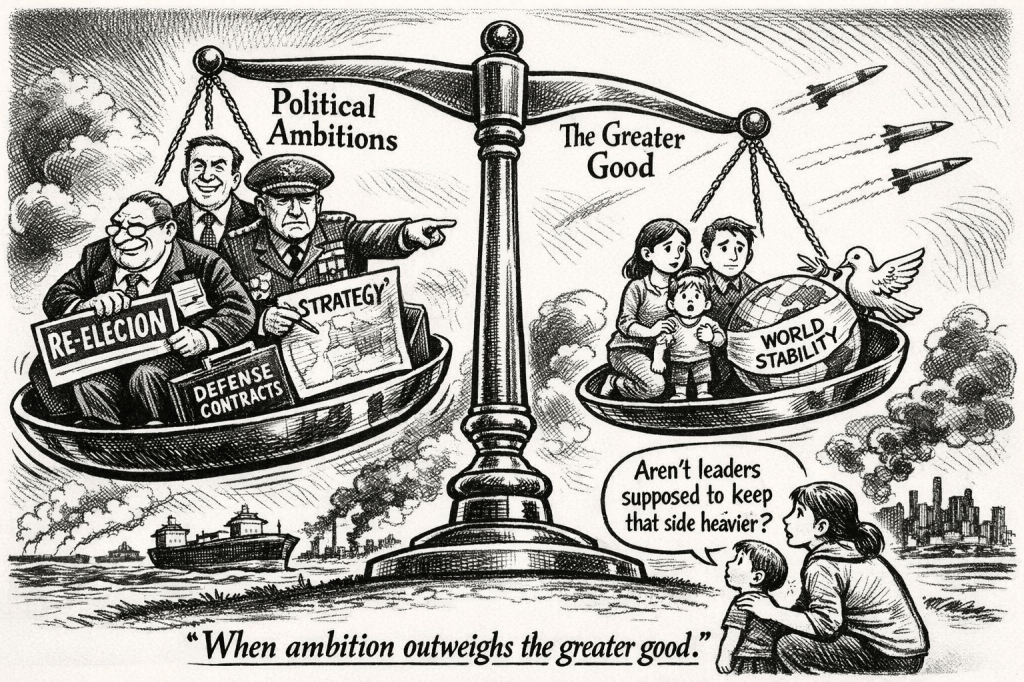
The rationale, when officers explain it, is rarely about replacing judgment and almost always about rescuing it. Application volume has exploded — students now apply to more colleges than ever, aided by the very AI tools that make each additional application cheaper to produce — while admissions staffs have not grown to match. Something has to give, and for a growing number of enrollment offices the answer is to hand the repetitive work to software: transcript deciphering, completeness checks, first-pass scoring that a human then confirms. Espinoza’s framing is telling. He does not claim the machine reads better than his staff; he claims it reads the ten-thousandth essay exactly as it read the first, which is more than any human can promise at the end of a February afternoon. The counterargument, voiced by skeptics inside the profession, is that fatigue is not the only thing a human reader brings to a file — and that whatever the disclaimers, a score generated by a machine inevitably anchors the human who reviews it.
Rewriting the Rules of the Essay
If colleges are using AI, what about the students? Here the past eighteen months have produced a scramble of policy-writing unlike anything admissions has seen in a generation.
The strictest schools treat undisclosed AI writing as fraud. Yale’s admissions site warns that “submitting the substantive content or output of an artificial intelligence platform, technology, or algorithm” constitutes application fraud, punishable by rescinded admission or even expulsion — though it adds that “using an AI platform to review one’s grammar or spelling, or to seek general advice or topic suggestions at the start of the writing process does not constitute application fraud” [5]. Brown goes further, stating flatly that “the use of artificial intelligence by an applicant is not permitted under any circumstances in conjunction with application content,” carving out only basic proofreading [6].
Caltech has published perhaps the most detailed guidance, telling applicants that “copying and pasting directly from an AI generator,” “relying on AI generated content to outline or draft an essay,” and “replacing your unique voice and tone with AI generated content” can all cost them their admission. The office offers a homely test: “Would a teacher be able to review your essay for grammatical and spelling errors? Of course! Would that same teacher write a draft of an essay for you to tweak and then submit? Definitely not” [7].
Then, in early August of this year, the University of Pennsylvania staked out a middle path that may preview where the field is heading. Penn’s new guidance for the 2026–27 cycle does not ban AI tools. It asks instead that applications “reflect your own ideas, your own voice, and your own experiences,” and it proposes a usable standard for the gray areas: “if you couldn’t explain, in an interview or conversation, how you arrived at what you wrote, or speak to it in your own words, it isn’t ready to submit.” Notably, Penn pairs its rules for students with an unusual admission of its own: its staff use AI for administrative work such as verifying application completion and standardizing transcripts, with humans reviewing every output that touches an applicant’s file [8].
That two-way transparency matters, because the numbers suggest most institutions still have no rules at all. When Kaplan surveyed 220 admissions officers at top colleges in mid-2025, only 2 percent said applicants were allowed to use generative AI to write essays and 30 percent banned it — but fully 68 percent had no policy either way. Half the officers viewed AI-assisted essays unfavorably. “It’s somewhat surprising that most colleges and universities, nearly three years after ChatGPT’s debut, continue to take a laissez-faire approach,” said Jason Bedford, a senior vice president at Kaplan [9].
The Holdout
Not every selective college has embraced the machine, and the most instructive counterexample sits in Durham, North Carolina. Duke University made news in February 2024 when it stopped assigning numerical scores to application essays altogether. The reason was not that essays had stopped mattering, but that no one could be sure anymore who wrote them. “Essays are very much part of our understanding of the applicant,” Christoph Guttentag, Duke’s longtime dean of undergraduate admissions, explained. “We’re just no longer assuming that the essay is an accurate reflection of the student’s actual writing ability” [10].
Duke has since leaned into the question rather than away from it. For the 2025–26 cycle it added an optional supplemental prompt inviting applicants to reflect on the technology itself: “Tell us about a situation when you would or would not choose to use AI (when possible and permitted). What shapes your thinking?” [11]. And even as peer institutions deploy screening software, Duke’s student newspaper reported in January 2026 that the university continues to review every application with human readers alone [12]. The juxtaposition is striking: one of America’s most selective universities responding to AI not by buying more technology but by trusting the essay less and the conversation more.
What the Research Shows
Behind the policy debates, researchers are beginning to measure what AI is actually doing to the applicant pool, and the early findings complicate the story both optimists and pessimists like to tell.
The most revealing study to date comes from Cornell and Carnegie Mellon, published this spring. Researchers analyzed tens of thousands of essays submitted to a selective university over four years, spanning the arrival of ChatGPT. Two findings stand out. First, lower-income students — those with application fee waivers — were more likely than wealthier peers to use AI in their essays. Second, using AI didn’t help them: rejection rates for AI users were higher, and higher still for low-income AI users, possibly because affluent applicants could afford premium tools and human coaching on top. “High-income students have a lot of different resources; they have counselors, they have teachers, they have more support on top of ChatGPT,” said Jinsook Lee, the Cornell doctoral candidate who led the study. Her co-author, Cornell sociologist AJ Alvero, worried about a subtler cost: after AI tools launched, essay language across the pool converged, with the greatest sameness among lower-income and rejected applicants. “The essay is designed to give applicants an opportunity to highlight the idiosyncrasies of their life,” he noted — and the tool students hoped would lift them was instead sanding those idiosyncrasies away [13].
The legal and policy world is responding. In May, the National Student Legal Defense Network released a ten-point framework for responsible AI use in admissions — ask why before deploying, assign human responsibility, disclose, audit for disparate impact. “We want to make sure that problems are really being short-circuited before they arise to the maximum extent possible,” said Dan Zibel, the group’s chief counsel [14]. The National Association for College Admission Counseling updated its ethics guide in fall 2025 to address AI transparency and fairness, and on August 19 of this year it convened a virtual forum, “AI and the Future of College Admission,” with Espinoza among the featured speakers [1,15]. Perhaps the most quotable caution came from Sarah Zearfoss, dean of admissions at the University of Michigan Law School, which has experimented with an optional AI essay prompt: “AI increasingly can mimic human judgment, but that’s all it is doing” [14].
Students, Parents, and the New Arithmetic of Trust
For the students who entered college this fall, all of this translated into a strange new etiquette. Use AI too little and you may be leaving legitimate help on the table — UCAS, Penn, Caltech, and Yale all bless brainstorming and grammar-checking. Use it too much and you risk sounding like everyone else, or worse, triggering a fraud finding. The line between the two is drawn differently at nearly every institution, which means a student applying to ten colleges may face ten different rules for the same essay.
Families feel the asymmetry keenly. A parent who hires an expensive private essay coach breaks no rules; a student who asks a chatbot to restructure a draft may be committing “application fraud” at one school and following official advice at another. The disclosure question is its own minefield. Most colleges now require applicants to certify, through the Common Application, that everything submitted is their “own work, factually true, and honestly presented” [6,8] — language written before generative AI existed and now bearing more weight than its drafters could have imagined. Should a student who used ChatGPT to brainstorm say so? At schools like Duke, which invites the reflection, candor might even help. At schools with blanket prohibitions, the same honesty could sink an application. Counselors report spending as much time decoding AI policies as teaching essay craft.
And hovering over all of it is detection — or rather, its unreliability. Commercial AI detectors remain prone to false positives, and researchers have repeatedly shown they flag non-native English speakers at disproportionate rates, which is one reason most selective colleges publicly disavow using detector scores alone to accuse anyone. But students don’t know that, and the uncertainty itself has become a source of anxiety: the fear of being falsely flagged now sits alongside the fear of rejection. Some students who wrote every word themselves run their essays through detectors before submitting, then revise authentic sentences until the software stops doubting them — a small, absurd tax that the honest pay to machines built to catch the dishonest.
Meanwhile the colleges themselves are automating outreach in ways applicants rarely see. As journalist James S. Murphy documented in Town & Country this August, AI now shadows the entire funnel: chatbots answer applicants’ questions around the clock; CollegeVine’s “Maple” agent can place recruiting calls; vendors analyze which emails a teenager opens to calibrate the next pitch; and screening tools sort files into what Paul Edelblut of Vantage Labs describes as “green, yellow, and red light” groupings for human readers [16]. The sheer volume makes some of this feel inevitable: the Common Application processed more than ten million applications in 2024, over double the 2017 figure, and this cycle’s applications are up again [16,17].
There is a gentler side to the same technology, and it complicates any simple verdict. The Common Application has partnered with the nonprofit College Possible to build an AI advisor into the application itself, aimed at the millions of students who have no counselor at all; some students say they will ask a chatbot questions they would be embarrassed to ask an adult [16]. For a first-generation applicant facing a counselor caseload in the hundreds, a tireless, judgment-free guide to deadlines and fee waivers is not a threat to fairness — it may be the first fair thing the process has offered them.
The technology companies, for their part, are racing toward the same students from the other direction. OpenAI launched a “study mode” for ChatGPT in July 2025, positioning the chatbot as a tutor that guides rather than answers [18] — a distinction that maps almost perfectly onto the brainstorm-but-don’t-draft line the colleges are trying to hold. Detection vendors sell certainty that researchers say they cannot deliver, which is precisely why most selective colleges have quietly declined to accuse individual students based on detector scores and have shifted instead toward interviews, in-person writing, and authenticity checks like Caltech’s. Emily Pacheco, who founded NACAC’s special interest group on AI, offered the admissions world’s frankest forecast to the AP: “Ten years from now, all bets are off. I’m guessing AI will be admitting students” [1].
A Global Phenomenon, Unevenly Distributed
Is this an American story? Only partly. The clearest overseas parallel is in the United Kingdom, where UCAS — the centralized service through which students apply to British universities — retired its famous free-form personal statement for 2026 entry, replacing it with three structured questions about course choice and preparation [19]. UCAS frames the change as simplification, but its AI guidance leaves little doubt about the pressure underneath: generating a statement with a tool like ChatGPT and “presenting it as your own words could be considered cheating by universities and colleges,” applicants must now declare their statement “hasn’t been copied or provided from another source, including artificial intelligence software,” and similarity software flags suspicious statements to universities. The service’s plain-English summary may be the best one-line policy anywhere: “It’s called a personal statement for a reason and universities want to hear from you, not an AI bot” [20].
Elsewhere the picture depends on how a country admits its students. In systems built on national entrance examinations — China’s gaokao, India’s JEE, much of continental Europe — there is no application essay for AI to write, so the authenticity crisis at the heart of the American debate barely registers. What does register is AI in the machinery around admission: recruitment, counseling, and processing. China Admissions, a platform serving international applicants to Chinese universities, announced an AI-driven overhaul of its application pipeline this spring, noting that 61 percent of its students now apply to multiple countries at once — a globalization of applicant behavior that practically demands automated processing [21]. AI-conducted video interviews from vendors like Kira Talent have become routine in graduate and international admissions worldwide.
The universities themselves are converging faster than their admissions systems. Surveys of institutional AI policy at the world’s leading universities — from Oxford and Cambridge to ETH Zürich, Tsinghua, and the National University of Singapore — show a common drift toward disclosure requirements, human accountability, and skepticism of detectors; NUS states outright that AI-detector verdicts “are not admissible as conclusive evidence” in misconduct cases [22]. Those are academic-integrity rules, not admissions rules, but they are the water into which this fall’s freshmen are diving, and they suggest the admissions compromise — permitted assistance, mandatory honesty, human final say — is becoming a worldwide template. The essay problem is Anglo-American; the automation of the admissions office is global.
What It Means
Step back from the individual policies and a few conclusions come into focus.
First, the college essay’s long reign as a proxy for character is ending — not because colleges stopped valuing writing, but because they can no longer verify authorship. Duke’s decision to keep reading essays while refusing to score them captures the new equilibrium: the essay survives as a window, not as evidence. Expect more interviews, more portfolio verification, more Caltech-style authenticity checks, and, if UCAS is a leading indicator, more structured questions that are harder to outsource.
Second, the machines arrived to solve a problem the humans could not: volume. Ten million-plus applications a year cannot be read the old way without either enormous staffs or exhausted readers, and Espinoza’s ungrumpy AI is an honest response to that arithmetic. The critical safeguards — human arbitration of disagreements, human review of every consequential output, published policies — exist today mostly as voluntary commitments. The Student Defense framework and NACAC’s updated ethics guide are attempts to turn good practice into professional norm before a scandal forces the issue [14,15].
Third, the equity story is not the one anyone predicted. AI was supposed to democratize polished writing; the Cornell–Carnegie Mellon data suggest it has instead given low-income students a tool that flattens their voices while wealthier students buy the human help that still works [13]. Any college that adopts AI screening without auditing for exactly this effect is automating an inequity, not removing one.
Finally, there is a quiet convergence of interest that deserves more attention than it gets. Colleges want authentic voices; students want fair readings; AI companies want their products cast as tutors rather than ghostwriters. All three now preach the same sermon — use AI to think, not to write. Whether that line can hold as the tools improve is the open question of the next several cycles. Emily Pacheco’s prediction — that within a decade AI may be admitting students — is less a forecast than a challenge. The technology will be capable of it. The decision about whether a machine should ever tell a seventeen-year-old who she gets to become will belong, as it always has, to people.
References
1. “Welcome to the new era of college admissions: AI may be scoring your essay,” Associated Press (via VPM News), December 2, 2025. https://www.vpm.org/news/2025-12-02/college-admissions-artificial-intelligence-virginia-tech-juan-espinoza
2. “UNC uses AI to auto-score enrollment application essays,” EdScoop (reporting on The Daily Tar Heel), January 2025. https://edscoop.com/unc-uses-ai-to-auto-score-enrollment-application-essays/
3. “Does Undergraduate Admissions use AI and why?” UNC Chapel Hill Office of Undergraduate Admissions. https://admissions.unc.edu/faqs/does-undergraduate-admissions-use-ai-and-why/
4. “8 in 10 Colleges Will Use AI in Admissions by 2024,” Intelligent.com, October 2023. https://www.intelligent.com/8-in-10-colleges-will-use-ai-in-admissions-by-2024/
5. “AI Policy Statement,” Yale University Office of Undergraduate Admissions. https://admissions.yale.edu/ai-policy-statement
6. “Integrity in the Application Process,” Brown University Undergraduate Admission. https://admission.brown.edu/apply/how-apply/integrity-application-process
7. “Ethical Use of AI: Guidelines for Fall Applicants,” Caltech Undergraduate Admissions. https://www.admissions.caltech.edu/apply/first-year-applicants/supplemental-application-essays/ethical-use-of-ai-guidelines-for-fall-applicants
8. “Penn Admissions releases AI guidelines for undergraduate application cycle,” The Daily Pennsylvanian, August 2026. https://www.thedp.com/article/2026/08/penn-common-application-ai-admissions-statement-integrity
9. “Kaplan Survey: Colleges Clarify Rules on AI Use in Admissions Essays,” Kaplan, November 3, 2025. https://kaplan.com/about/press-media/college-admissions-officers-survey-2025-essays-ai
10. “Duke stops assigning numeric values to essays, test scores,” Inside Higher Ed, February 21, 2024. https://www.insidehighered.com/news/quick-takes/2024/02/21/duke-stops-assigning-numeric-values-essays-test-scores
11. “What’s Changed With the 2025–26 Duke Supplemental Essays?” AtomicMind, 2025. https://blog.atomicmind.com/blog/whats-changed-with-the-2025-26-duke-supplemental-essays
12. “As colleges turn to AI to screen applicants, Duke sticks with human review,” The Duke Chronicle, January 21, 2026. https://dukechronicle.com/article/duke-university-artificial-intelligence-ai-in-admissions-undergraduate-college-applications-essays-screening-technology-20260121
13. “Study Explores AI-Written Admissions Essays,” Inside Higher Ed, May 8, 2026. https://www.insidehighered.com/news/admissions/traditional-age/2026/05/08/study-explores-ai-written-admissions-essays
14. “Before Deploying AI in Admissions, Ask Why,” Inside Higher Ed, May 27, 2026. https://www.insidehighered.com/news/tech-innovation/artificial-intelligence/2026/05/27/deploying-ai-admissions-ask-why
15. “AI Virtual Forum 2026: AI and the Future of College Admission,” National Association for College Admission Counseling, August 19, 2026. https://www.nacacnet.org/ai-virtual-forum-2026-ai-and-the-future-of-college-admission/
16. James S. Murphy, “Is AI Reading Your College Application?” Town & Country (via AOL), August 4, 2026. https://www.aol.com/articles/ai-reading-college-application-110000000.html
17. “6 College Admission Trends to Watch in 2026,” CollegeData. https://www.collegedata.com/resources/getting-in/6-college-admission-trends-to-watch-in-2026
18. “Introducing study mode,” OpenAI, July 29, 2025. https://openai.com/index/chatgpt-study-mode/
19. “UCAS 2026 Personal statement changes,” The Complete University Guide, October 23, 2025. https://www.thecompleteuniversityguide.co.uk/student-advice/applying-to-uni/ucas-2026-personal-statement-changes
20. “A guide to using AI and ChatGPT with your personal statement,” UCAS. https://www.ucas.com/applying/applying-to-university/writing-your-personal-statement/a-guide-to-using-ai-and-chatgpt-with-your-personal-statement
21. “Upgrading Admissions at the Speed of AI: Our 2026 Roadmap,” China Admissions, April 16, 2026. https://www.china-admissions.com/blog/upgrading-admissions-at-the-speed-of-ai-our-2026-roadmap/
22. “Generative AI Policies at the World’s Top Universities: 2026 Update,” Thesify, June 24, 2026. https://www.thesify.ai/blog/generative-ai-policies-top-universities-2026
###
Filed under: Uncategorized |

















































































































































































































































































































































Leave a Reply