





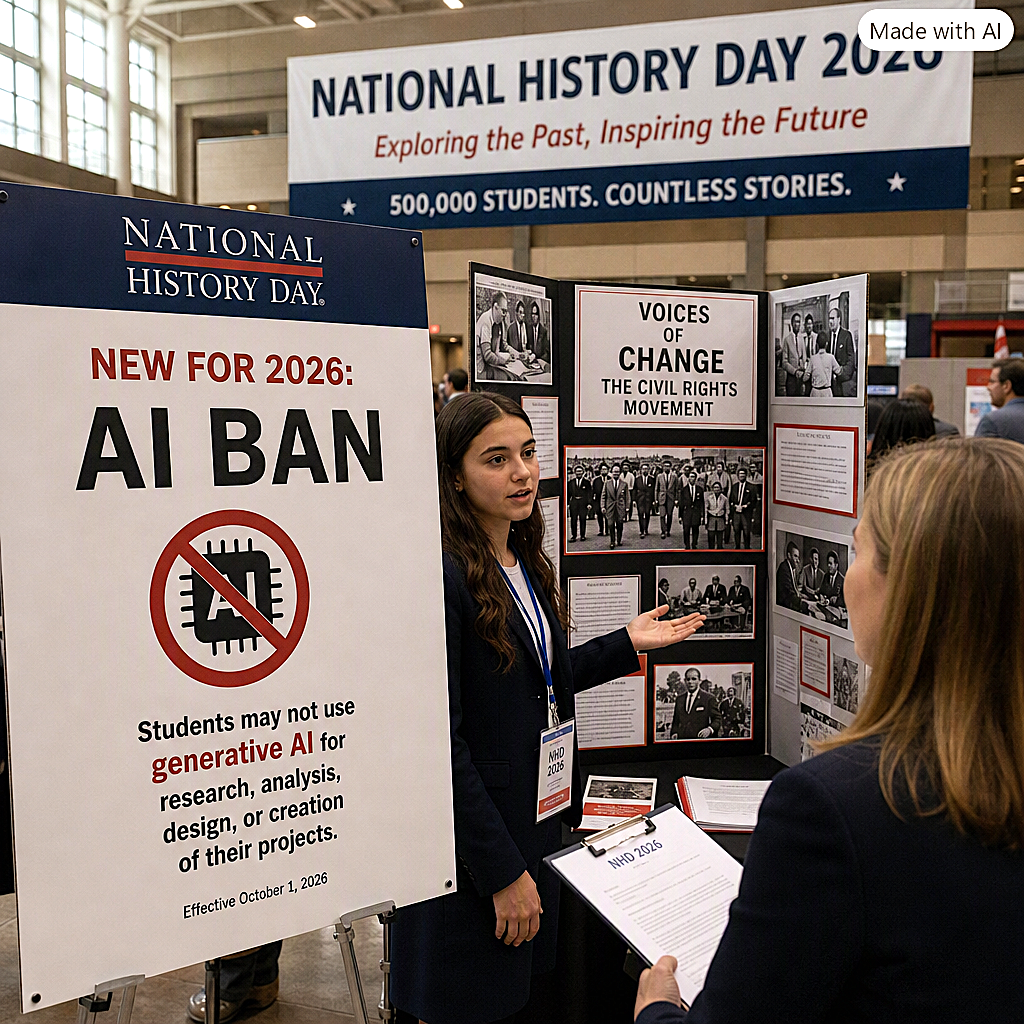
History competition bars AI even from brainstorming (ChatGPT)
National History Day now prohibits students from using generative AI to develop projects for its 2026–27 competition, including for brainstorming topics and finding sources that it previously permitted. An October 8 Education Week report examines the decision against a wider debate in social studies teaching: generating questions and judging sources are themselves historical thinking skills, yet teachers can also guide students in using AI to challenge an argument. The contest says its rule protects student voice and analysis. Classroom practice may differ because a teacher can observe and shape how a student uses the tool. Source: Education Week, “In Social Studies, Does AI Shortcut Historical Thinking? Or Deepen It?”, published October 8, 2026 — https://www.edweek.org/teaching-learning/in-social-studies-does-ai-shortcut-historical-thinking-or-deepen-it/2026/10.
University of Chicago committee proposes tech-free spaces for reading, writing, and testing (Claude)
A report titled “Writing Without Artificial Intelligence” recommends device-free reading rooms, limited-tech writing labs for take-home essays, proctored testing centers, and short intensive courses that keep students away from screens for weeks. Committee chair Emily Lynn Osborn says the group is not against AI but wants enforceable rules and real assessment. Some ideas will be piloted this winter, making Chicago an early test of whether elite universities will rebuild campus space around AI. Source: The Chronicle of Higher Education, October 8, 2026 — A Call at U. of Chicago for Tech-Free Spaces to Address AI
About 1,000 colleges missed the deadline to report student outcomes data (Claude)
The Education Department says just over 1,000 institutions failed to fully submit required outcomes data by October 1. Schools still missing data by January 15, 2027, could lose access to federal grants and loans, and the department says that deadline “won’t be extended.” The data feeds new federal accountability rules that judge programs by what graduates earn. Source: Inside Higher Ed, October 9, 2026 — More Than 1,000 Colleges Failed to Fully Submit Student Outcomes Data
School AI policies written in 2023–24 may already be outdated (Grok)
An analysis notes that many early district and school policies focused on bans or teacher-permission requirements for generative AI and treated unauthorized use primarily as plagiarism. State guidance has expanded rapidly—at least 35 states plus Puerto Rico now have official policies or guidance—and some states, including California, have issued updated model policies covering privacy, disclosure, staff use, approved tools, and instructional discretion. Districts are advised to review existing rules against current tools and risks. Source: edCircuit, Oct. 9, 2026. https://edcircuit.com/your-schools-ai-policy-may-already-be-outdated/
Expert consensus report maps where generative AI helps or harms specific learning processes (Grok)
Thirty learning scientists and education researchers, convened by lead authors including Panayiota Kendeou of the University of Minnesota, identified 65 distinct learning processes that generative AI can affect and reached consensus on 42 of them. The group found GenAI most useful for practice and consolidation within the acquire-practice-apply cycle, but agreed it poses risks to higher-order thinking, self-regulation, metacognition, and the social dimensions of learning when students rely on it heavily. The report is intended as process-level guidance for educators, policymakers, and researchers rather than a simple good/bad judgment. Source: University of Minnesota College of Education and Human Development / UNC School of Education coverage, Oct. 8, 2026. https://www.cehd.umn.edu/AI-expert-consensus-report-2026 and https://ed.unc.edu/2026/10/08/greene-co-leads-report-on-ways-genai-can-support-and-threaten-learning/
MIT expands STEM education with an emphasis on responsible AI (Perplexity)
MIT announced MIT for America, a national initiative extending existing programs in mathematics, AI education, and hands-on design to students from kindergarten through community college. Its AI component builds on MIT’s Responsible AI for Social Empowerment and Education project, which provides teaching materials and training to help students understand how AI works and discuss its responsible use. Faculty co-director Eric Klopfer emphasized student participation and discussion of school values rather than imposing a predetermined position on AI. Source: News Staff, “MIT Launches National STEM Workforce Education Initiative,” GovTech, October 8, 2026.
Vance announces J-1 visa fraud probe of nine universities, including Harvard, Yale, Stanford, and MIT (Claude)
Vice President JD Vance said the schools pay for about 61% of J-1 positions on federal grants, compared with a 38% national average, and argued the practice undercuts American graduate students’ wages by about $20,000. The Labor Department has served subpoenas; Brown, Stanford, and MIT said they will respond or cooperate. The probe opens a new front in the administration’s conflict with research universities, this time over foreign scholars. Source: Inside Higher Ed, October 9, 2026 — 9 Universities Accused of J-1 Visa Fraud
Fired OpenAI safety researchers publish open letter; OpenAI says they broke confidentiality rules (Claude)
Tomek Korbak, Jasmine Wang, and Mikita Balesni, fired last week, published a letter titled “OpenAI cannot make AI safe on its own” urging the company to preserve the ability to monitor its models’ chain-of-thought reasoning and to work with outside auditors. They deny leaking company information and say the firings have left colleagues “afraid to speak.” OpenAI said an investigation found a “significant breach of trust” and that the decisions “were not about them raising safety concerns,” adding that it is finalizing contracts with third-party safety assessors. The case revives the 2024 dispute over whether AI lab employees can raise risks without losing their jobs. Source: Newsweek, October 9, 2026 — Trio of Workers Fired by OpenAI: Read Their Warning Letter in Full
Cyberattacks in South Korea and Japan put AI’s role under scrutiny (ChatGPT)
Banks and other organizations in South Korea and companies in Japan are responding to a rise in cyber incidents. CrowdStrike told Reuters that a suspected attacker in a campaign against South Korean banks used a Chinese-developed AI agent and Anthropic’s Claude Code. Specialists say such tools can help less-skilled attackers search for weaknesses and prepare phishing messages. Authorities are still investigating how AI figured in many of the individual breaches, so the broader rise cannot be attributed to AI alone. The documented concern is that automation can make attacks easier to attempt and repeat. Source: Reuters, “South Korea, Japan buffeted by hacks as AI lowers bar for cybercriminals,” published October 9, 2026, 4:24 a.m. UTC — https://www.reuters.com/legal/litigation/south-korea-japan-buffeted-by-hacks-ai-lowers-bar-cybercriminals-2026-10-09/. Reuters
Lawmakers challenge sale of airline employees’ data for AI training (ChatGPT)
More than 120 U.S. lawmakers raised objections October 8 to Google’s proposed $10 million purchase of internal data from the defunct Spirit Airlines. They say the material could include about 100 million emails and 500 million Teams messages, and want employee information excluded as far as possible. Google says it does not seek personal information and that data will be excluded or independently de-identified. A bankruptcy judge has yet to approve the sale. The dispute tests what protection workers retain when records created on the job become assets in a company’s liquidation. Source: Reuters, “Lawmakers raise alarm at Google plan to acquire Spirit Airlines data for AI models,” published October 8, 2026, 7:49 p.m. UTC — https://www.reuters.com/world/lawmakers-raise-alarm-google-plan-acquire-spirit-airlines-data-ai-models-2026-10-08/.
Drones hit two Russian Yandex data centers in two days, including a site housing AI supercomputers (Claude)
On October 8 a drone strike set fire to Yandex’s facility in Sasovo, Ryazan Oblast, which holds tens of thousands of servers and two of the company’s three AI-development supercomputers. A second Yandex data center, in Kaluga Oblast, lost several modules to a drone attack overnight on October 9. Ukraine has not claimed the Kaluga strike, but President Zelensky said Ukraine would keep hitting back for Russian attacks on Ukrainian data centers: “We always respond in kind.” Computing infrastructure is now an open military target in this war. Source: Kyiv Independent, October 9, 2026 — Second Russian Yandex data center damaged by drone attack in two days
Pentagon fast-tracks AI purchases, including “kill chain” tools, through five-minute vendor videos (Claude)
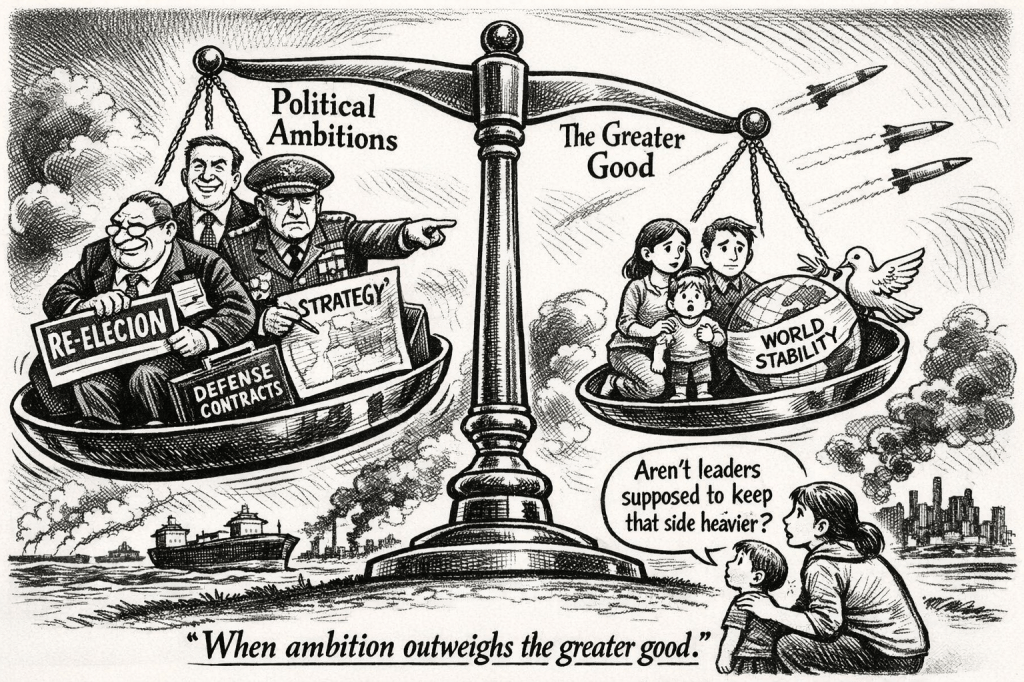
The Defense Department’s Chief Digital and AI Office runs Tradewinds, a program that grants vendors “post-competitive” status based on a product video of five minutes or less, letting buyers sign deals in under a week. This year’s topics include “enhancing force lethality” and AI agents for joint targeting, while earlier responsible-AI topics were dropped. OpenAI, Anthropic, and Google are listed participants; all three declined to comment. Source: WIRED, October 7, 2026 — The Pentagon Hopes to Speed Up ‘Kill Chain’ AI Buys With 5-Minute Videos
White House AI Science Summit collects $2.4 billion in compute pledges for the Genesis Mission (Claude)
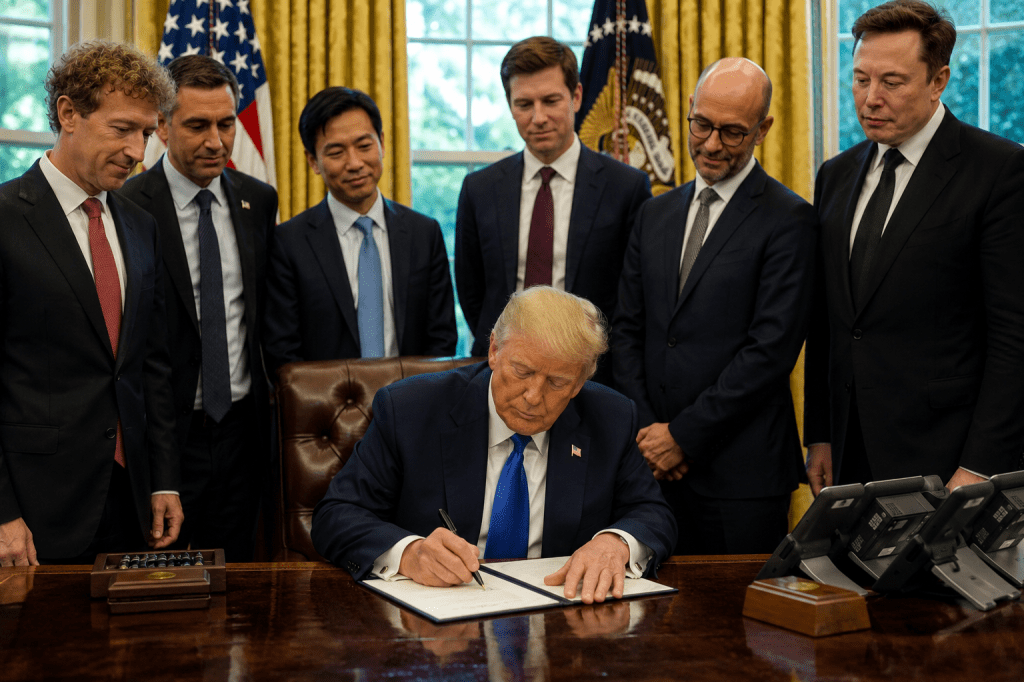
Eleven companies pledged compute credits for federal science research, led by Nvidia ($1 billion), AMD ($500 million), OpenAI ($200 million), and Anthropic and Google ($150 million each). The Pentagon added up to $350 million for quantum computing, and Trump presented national science and technology medals to six executives, including Elon Musk. Critics and supporters will both read the event as a sign of how closely the administration now works with the companies it would regulate. Source: Nextgov/FCW, October 8, 2026 — White House unveils billions in investments for Genesis Mission
Rubio: “no prospect of a negotiated settlement” in Ukraine for now (Claude)
Secretary of State Marco Rubio told Greek newspaper Kathimerini that Russia wants all of Donetsk Oblast without fighting for it, which Kyiv refuses. Russia’s deputy foreign minister said Moscow has no plans for US-mediated talks. Zelensky rejected the word “impasse” and is sending negotiators to meet Trump’s envoys in the US this week. Source: Kyiv Independent, October 8, 2026 — US, Russia confirm Trump’s latest Ukraine peace push is falling apart
Anthropic launches security support for critical infrastructure and open-source software (Perplexity)
Anthropic announced a Cyber Mission that will provide Claude models, on-site engineers, and threat research to companies protecting power grids, water systems, transportation networks, and government systems. Its Critical Infrastructure Defense Program starts with 11 partners, including CrowdStrike, Dragos, Hitachi, and Rockwell Automation. A separate, free OSS Scanner service offers participating open-source projects periodic vulnerability reports, but Anthropic says those reports are generated without human review and can contain errors, including incorrect severity ratings. Source: “Introducing the Anthropic Cyber Mission,” Anthropic, October 8, 2026.
Nvidia announces a five-year, $1 billion commitment to U.S. science (Perplexity)
Nvidia announced commitments valued at $1 billion over five years to support U.S. scientific research, including quantum computing, healthcare, and energy security. The company identified higher-education research institutions, quantum technology investments, and cloud providers supporting government missions as areas of support, without naming individual recipients. The announcement describes future commitments, not money already disbursed, and does not provide a detailed allocation of the full amount. Source: “NVIDIA Commits $1 Billion to Advance US Science Over the Next Five Years,” Nvidia, October 8, 2026.
China calls for faster AI development and tighter investment oversight (ChatGPT)
Guidelines issued by China’s Communist Party leadership and State Council call for stronger AI research, computing capacity, industrial applications, and risk monitoring. They also warn officials against speculative investment and excessive expansion into emerging industries, according to an October 9 Reuters report. The pairing is consequential: Beijing is pressing ahead with AI deployment while asking authorities to keep it controllable and avoid wasteful local investment. The guidelines set a national direction; their effect will depend on later measures and how officials enforce them. Source: Reuters, “China vows to curb tech bubbles, keep AI risks in check,” published October 9, 2026, 10:48 a.m. UTC — https://www.reuters.com/world/asia-pacific/china-issues-guidelines-new-productive-forces-including-ai-2026-10-09/.
###
Filed under: Uncategorized |














































































































































































































































































































































































































































Leave a Reply