






By Jim Shimabukuro (assisted by Claude)
Editor
In the spring of 1970, American colleges handed out 792,316 bachelor’s degrees. Men took 451,097 of them and women 341,219. Fifty-two years later, in the 2021–22 academic year, the same institutions awarded 2,015,035 bachelor’s degrees. Men took 835,316. Women took 1,179,719 (National Center for Education Statistics [NCES], 2023, Table 318.10). What follows is a deep dive into the numbers, causes, implications, and possible solutions.

Men earned 41.5 percent of the bachelor’s degrees awarded that year. Women earned 58.5 percent. Those are the figures most often quoted in discussions of the gender gap in higher education, and they come from the 2021–22 academic year rather than 2023, which is the most recent year for which NCES has published final counts in its long historical series.
The federal projections do not show the ratio stabilizing. NCES expects men to earn 40.0 percent of bachelor’s degrees in 2027–28 and 39.6 percent in 2031–32 (NCES, 2023, Table 318.10). If those projections hold, a college graduating class a decade from now will be three-fifths women and two-fifths men, and the imbalance will be larger than the one that existed in 1970, only reversed.
Men earn nearly twice as many bachelor’s degrees today as they did in 1970. Women earn nearly three and a half times as many. Over half a century two populations grew at radically different speeds, and the country is now finding out what happens when the people who hold its credentials are increasingly drawn from one sex.
Part 1: The Shape of the Trend, 1970 to 2030
The crossover happened in the early 1980s. In 1969–70, men earned 56.9 percent of bachelor’s degrees. By 1979–80 the split was 51.0 percent men and 49.0 percent women. By 1989–90 it had flipped to 46.8 percent men and 53.2 percent women. By 1999–2000, men were down to 42.8 percent (NCES, 2023, Table 318.10).
Then the trend did something that is often missed. It stopped. For most of the 2000s and 2010s, the male share of bachelor’s degrees hovered just above 42 percent. In 2009–10 it was 42.8 percent, exactly where it had been a decade earlier. In 2019–20 it was 42.3 percent. The great divergence was a phenomenon of the 1970s and 1980s, and what followed was a long plateau at a lopsided level.
The plateau ended around the pandemic. Men earned 861,384 bachelor’s degrees in 2019–20 and 835,316 in 2021–22, a decline of roughly 26,000 in two years, while the number awarded to women rose slightly. The male share fell from 42.3 to 41.5 percent. NCES projects a continued slide: 40.2 percent in 2025–26, 40.0 percent in 2027–28, 39.8 percent in 2029–30 (NCES, 2023, Table 318.10).
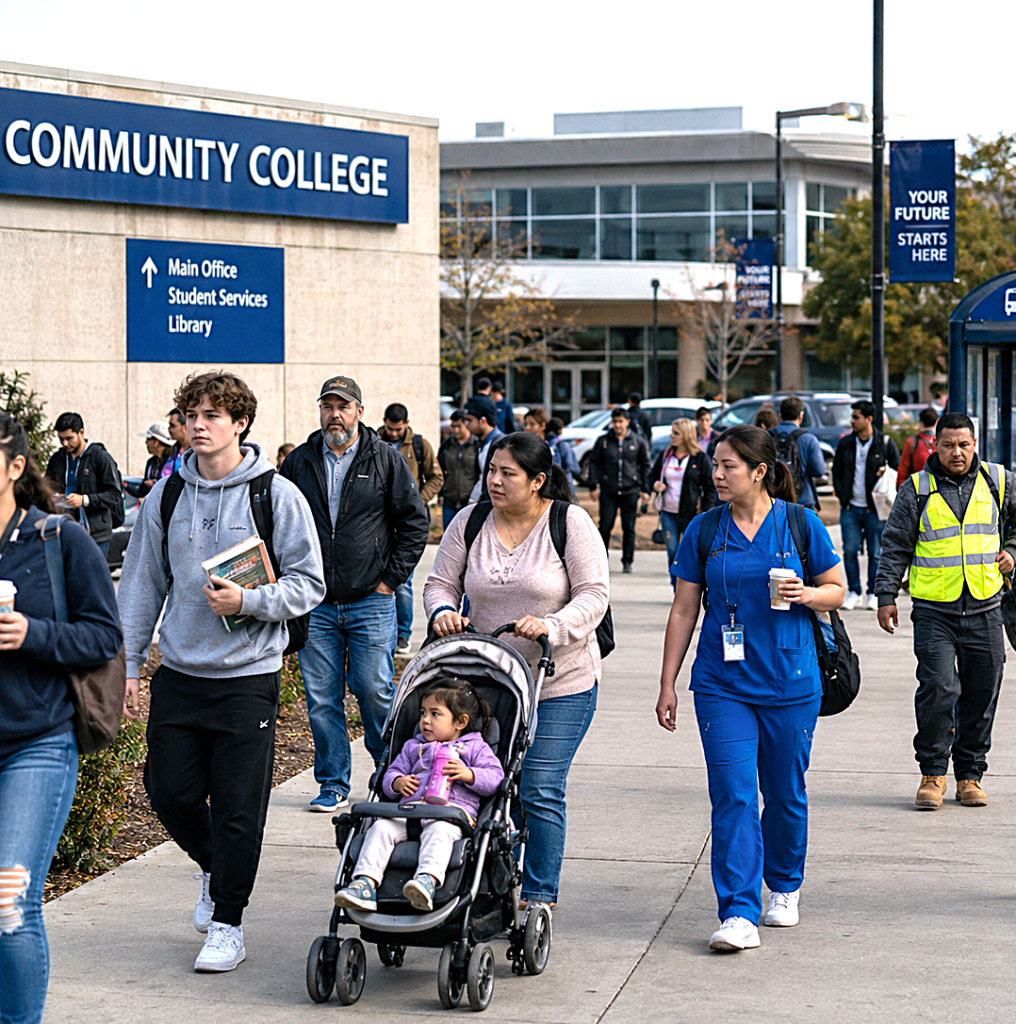
The pattern repeats at every other level of the credential ladder. In 2021–22, men earned 375,498 associate’s degrees to women’s 632,787, 328,894 master’s degrees to women’s 551,355, and 87,772 doctoral and professional degrees to women’s 116,112. NCES projects that by 2031–32 women will earn 625,599 master’s degrees to men’s 374,858 (NCES, 2023, Table 318.10). The gap is widest at the associate’s level, where community colleges enroll the students with the least academic preparation and the most competing demands on their time.
Attainment in the adult population lags the degree counts by a generation, because it takes decades for graduating classes to work their way through the age structure. The Census Bureau reported in September 2025 that 40.1 percent of American women aged 25 and older held a bachelor’s degree or higher, against 37.1 percent of men (U.S. Census Bureau, 2025). Among younger adults the gap is far larger. Pew Research Center found that 47 percent of women aged 25 to 34 held a bachelor’s degree compared with 37 percent of men. In 1995 the figure was 25 percent for both sexes. Women’s attainment rose 22 points over that period; men’s rose 12 (Hurst, 2024).
The gap holds across every major racial and ethnic group, and it is not smallest where attainment is highest. Among white 25- to 34-year-olds, 52 percent of women and 42 percent of men hold degrees. Among Black adults in that age range, the figures are 38 and 26 percent. Among Hispanic adults, 31 and 22 percent. Among Asian adults, where overall attainment is highest, 77 and 71 percent (Hurst, 2024). The 12-point gap among Black young adults is the widest of the four.
Three mechanisms produce these numbers, and they compound. The first is who shows up. NCES reports that “in 2022, a lower percentage of male high school completers than of female high school completers immediately enrolled in college (57 vs. 66 percent),” and that the difference is concentrated at four-year institutions, where 38 percent of male completers enrolled compared with 51 percent of female completers (NCES, 2024). Two-year enrollment rates were roughly equal.
The second is who stays. Richard Reeves and Will Secker of the American Institute for Boys and Men calculated a four-year graduation rate of 43 percent for men against 54 percent for women, and a six-year rate of 61 percent against 68 percent. Among Black students, women were 12 percentage points more likely than men to graduate within six years (Reeves & Secker, 2024).
The third is who comes back. Men make up about 42 percent of college students but 51 percent of those who stop out. They are 29 percent more likely than women to leave without a credential and 32 percent less likely to re-enroll afterward (Bledsoe & Smith, 2025). Every one of these margins runs the same direction, and the product of three adverse margins is a large aggregate gap.
The result on campus is a student body that no longer resembles the country. In 2021 there were 8.9 million women and 6.5 million men enrolled as undergraduates, a difference of 2.4 million (Reeves & Secker, 2024). Restricted to four-year institutions, the difference is about 1.6 million (Chambers et al., 2026).
None of this is peculiar to the United States. UNESCO reported in May 2026 that “women now outnumber men in higher education: globally, there were 114 women enrolled in higher education for every 100 men in 2024,” and that “gender parity has been reached in all regions except sub-Saharan Africa” (UNESCO, 2026). In England, 52.5 percent of young women had entered higher education by age 19 in 2023–24, against 39.5 percent of young men. The gap has grown from 7.8 points in 2009–10 to 13 points. For every 100 young women entering higher education in that age group, 79 young men do (Centre for Policy Research on Men and Boys, 2025). The American trend is the local expression of a pattern that now runs across most of the developed and much of the developing world.
Part 2: Why It Happened
The proximate cause of the 1970s divergence is simple and no longer controversial. Women’s enrollment exploded because the barriers came down. Title IX passed in 1972. The professions opened. The returns to a woman’s degree rose faster than the returns to a man’s, because women started from a position of exclusion. The first fifteen years of the trend line measure the removal of a legal and social barrier. Men’s own enrollment rose through those same years.
What requires explanation is the forty years since. Men’s share stopped falling around 2000 but never recovered, and has resumed falling. The causes are layered, and they begin long before anyone fills out an application.
Boys arrive at school behind and stay behind. They are about 14 percentage points less likely than girls to be judged ready for school at age five (Smith & Secker, 2024). The disadvantage compounds through the grades. Reeves, writing as co-editor of a 2024 volume of The ANNALS of the American Academy of Political and Social Science devoted to boys’ education, summarized the pattern: “Boys are more likely to be suspended or expelled, more likely to be placed in special education, and less likely to graduate from high school or enroll in college” (Reeves, 2026).
The discipline gap is documented in federal data. In the 2020–21 school year, the Department of Education’s Civil Rights Data Collection found that “boys represented 51% of total K-12 student enrollment, and accounted for 68% of students who were referred to law enforcement and 68% of students who were subjected to school-related arrests” (U.S. Department of Education, 2023). A boy who is suspended in ninth grade is not filling out a college application in twelfth.
Academic performance translates into college enrollment differently for boys and girls. Research cited in the ANNALS volume found that boys need to outperform girls by roughly two deciles in third-grade achievement to have similar odds of enrolling in a four-year college (Reeves, 2026). The same test score buys a boy less.
The teaching workforce has changed in ways that may or may not matter, and it is worth being careful here. The share of male teachers in American secondary schools fell from 48 percent in 1987 to 36 percent by 2022. In elementary schools it fell from 14 to 11 percent. In career and technical education, where men once dominated, the male share collapsed from 75 percent in 1987 to 45 percent in 2020. One in four undergraduate education degrees now goes to a man (Smith & Reeves, 2024). Whether this depresses boys’ achievement is unsettled. Clare Suter, reviewing the evidence for the ANNALS volume, concluded that “the current literature provides far from a supporting consensus” and noted that “a major limitation of the existing literature is the lack of studies focused on how male teachers impact noncognitive or long-run outcomes” (Suter, 2024). Advocates who present male teacher recruitment as a proven remedy are ahead of the research.
Then there is preference. Men who do not finish college are more likely than women to say the reason was that they chose not to. Pew Research Center found that “roughly a third (34%) of men without a bachelor’s degree say a major reason they didn’t complete college is that they just didn’t want to,” against one in four women. Twenty-six percent of men said they did not need more education for the career they wanted, compared with 20 percent of women. Women were more likely than men to cite affordability, 44 percent to 39 percent (Parker, 2021).
That preference has an economic logic behind it. The college wage premium stopped growing. Economists at the Federal Reserve Bank of New York found the college employment premium at 11.9 percentage points in March 2025, and identified its source precisely: “the overwhelming share of the college employment premium derives from workers with lower levels of educational attainment being less likely to participate in the labor force” (Chakrabarti et al., 2025). The gap comes from men leaving the labor force, not from graduates finding work faster. Meanwhile the wage gap between graduates and non-graduates stopped widening after the mid-2000s. A young man weighing four years and a debt load against an apprenticeship has arithmetic on his side.
It would be a mistake to read all of this as male indifference. Gallup surveyed unenrolled American adults in 2025 and found that 61 percent of men had considered pursuing a degree or credential in the previous two years, against 52 percent of women (Ray, 2025). More men than women are thinking about it. Fewer men than women are doing it. The constraint sits between intention and enrollment, and between enrollment and completion.
The most worrying single figure concerns neither school nor work but the gap between them. The share of young men who are neither in school nor looking for work doubled from 4 percent to 8 percent between 1990 and 2024 (Smith & Hawrami, 2026). That is roughly one young man in twelve outside every institution that would ordinarily be shaping his next twenty years.
Part 3: What Follows
The Next Five Years
The credential pipeline tips past 60–40. On the NCES projections, women will earn 60.0 percent of bachelor’s degrees in 2027–28 and 60.1 percent in 2028–29 (NCES, 2023, Table 318.10). Because employers hire from graduating classes, the composition of the applicant pool for degree-gated jobs will shift on roughly the same schedule. Fields that already draw disproportionately from female graduates — health care, education, human services, much of public administration — will become more so. The effect will show up first in entry-level hiring and in graduate admissions, where women already earn 63 percent of master’s degrees.
Artificial intelligence is compressing the entry-level payoff to a degree at the worst possible moment. Erik Brynjolfsson, Bharat Chandar, and Ruyu Chen at the Stanford Digital Economy Lab track employment by age and occupational exposure to generative AI. In their August 2026 revision they report that employment of young workers aged 22 to 25 in AI-exposed occupations “now stands 19% below” what their less-exposed peers’ trajectory would predict, that the gap “has widened steadily since we first documented it in August 2025,” and that it operates “primarily through reduced hiring of young workers rather than increased separations” (Brynjolfsson et al., 2026). Brynjolfsson and his co-authors describe the pattern as an early indicator and stop short of a causal claim.
The near-term consequence for the gender gap runs in an unexpected direction. The occupations under pressure are the ones a bachelor’s degree opens: entry-level analysis, coding, paralegal work, customer support, junior marketing. The occupations least exposed are the ones men without degrees already enter — electrical work, plumbing, welding, heavy equipment operation, industrial maintenance. For the next five years, the young man who skipped college will have a defensible story about his choice. He will point to a classmate who borrowed for four years and is now competing for the jobs that are disappearing fastest, and he will not be wrong about the classmate.
Tuition-dependent colleges will fail, and the male absence is part of why. Robert Kelchen, Dubravka Ritter, and Douglas Webber of the Federal Reserve Bank of Philadelphia built a closure prediction model and validated it against history: of the 100 institutions their model flagged as most at risk, 84 closed within three years. Their conclusion was blunt. “We conclude that the demographic cliff is predicted to significantly increase the number of institutions at risk of severe financial distress, including closure” (Kelchen et al., 2024). Under their more severe scenario, annual closures would more than double. At least 49 colleges have closed or announced closure since March 2020, with 40 more merging (BestColleges, 2026).
Male non-enrollment is not the primary driver of the demographic cliff — the falling birth cohorts of the late 2000s are — but it doubles the squeeze. A small private college whose entering class is three-fifths women is not drawing on half its potential market. The institutions with the least ability to absorb that loss are precisely the regional and religious colleges that serve first-generation students, and those are the institutions closing.
Admissions offices will keep quietly favoring men, and will keep getting away with it, unevenly. Title IX’s prohibition on sex discrimination does not reach undergraduate admissions at private colleges. The statute applies “only to institutions of vocational education, professional education, and graduate higher education, and to public institutions of undergraduate higher education” (20 U.S.C. § 1681(a)(1); see Lew, 2021). Private colleges may therefore admit men at higher rates than women with the same credentials, and many do. Reporting by The Hechinger Report documented admission rates of 28 percent for men and 23 percent for women at Vassar, 20 and 15 percent at Pitzer, and 46 and 40 percent at the College of William & Mary. Charles Deacon, Georgetown’s dean of admission, put the institutional logic plainly: “Gender balance is almost always a pretty big institutional priority” (West, 2021).
This tool is reaching its limits. Catharine Hill, the former president of Vassar College, argued in January 2026 that federal scrutiny of identity-conscious admissions now complicates the practice, and that the better route is “targeting populations with lower educational attainment, including men” through recruitment rather than through the admissions scale (Hill, 2026). An admissions thumb on the scale also cannot work where there is no applicant. It reallocates a shrinking pool; it does not enlarge it.
Workforce Pell arrives on July 1, 2026, and will reshape where male demand goes. The Department of Education’s final rule extends Pell Grant eligibility to programs as short as eight weeks, conditioned on completion rates, employment outcomes, and limits on tuition tied to graduates’ earnings. Governors and state workforce boards designate the eligible high-demand fields. Acting Secretary of Labor Keith Sonderling described the intent directly: “This opens doors for Registered Apprenticeships, career and technical education, and targeted-skills training — programs that lead to good-paying jobs, fast” (U.S. Department of Education, 2026). Federal money has never before followed the short-credential path at this scale. Because men are already overrepresented in construction, manufacturing, and transportation programs, a substantial share of the new subsidy will flow to male students. Over five years this will raise male credential attainment while leaving the bachelor’s degree gap untouched, and possibly widening it.
The re-enrollment machinery will remain badly tuned for men. Adult re-enrollment programs in Michigan, Tennessee, North Carolina, Massachusetts, and Louisiana serve roughly twice as many women as men. In Michigan Reconnect, men are 31 percent of applicants, 28 percent of enrollees, and 26 percent of graduates (Bledsoe & Smith, 2025). Men who stop out are 32 percent less likely than women to return. Millions of American men hold college credit and no credential, which makes them the largest available near-term pool of male degree completers. The programs designed to reach that pool are reaching women.
The Next Ten to Twenty Years
The five-year effects are mostly institutional. The twenty-year effects are demographic, and they are already visible in data that nobody designed to measure college enrollment.
Marriage has already restructured itself around the shortage of college-educated men, and the cost has landed on women without degrees. This is the most important finding of the past several years on the subject, and it comes from a National Bureau of Economic Research working paper by Clara Chambers, Benjamin Goldman, and Joseph Winkelmann. Their abstract states the result:
As college men have become increasingly scarce, college women have maintained stable marriage rates by marrying high-earning non-college men. This shift — combined with the broader economic decline of non-college men — has sharply reduced the pool of economically stable partners available to non-college women: the share of non-college men who earn above the national median and are not married to college women has fallen by more than 50%. (Chambers et al., 2026)
The underlying numbers describe a reorganization of American family life across birth cohorts. The ratio of men to women completing four-year college fell from 1.8 for those born in 1930 to 0.8 for those born in 1980. Marriages in which the wife holds a degree and the husband does not rose from 2.3 percent to 9.6 percent. College-educated women’s marriage rates by age 45 slipped from 77.7 percent to 71.0 percent, a drop of under seven points. For women without degrees, the figure fell from 78.7 percent to 52.4 percent, a drop of 26 points (Chambers et al., 2026).
Benny Goldman, one of the authors, described the sorting to Harvard’s Faculty of Arts and Sciences: college-educated women “have begun marrying men who did not go to college but still seem to be doing quite well economically” (O’Grady, 2026). The effect is a form of competitive displacement. Educated women, unable to find educated husbands in sufficient numbers, marry the most economically successful non-graduates. Women without degrees are left choosing among men whose earnings and employment have been deteriorating for four decades. In the parts of the country with the lowest male employment, marriage rates for non-college women average 44.5 percent, against 66.0 percent in the areas with the highest (Chambers et al., 2026).
If the male share of degrees falls from 41.5 percent toward 39 percent over the next decade, this mechanism intensifies. The cohorts entering their prime marriage years in the late 2030s will face a four-year-college sex ratio worse than any measured.
Fertility follows marriage, and fertility is already at a record low. The National Center for Health Statistics counted 3,606,400 births in the United States in 2025, down 1 percent from 2024, with a general fertility rate of 53.1 births per 1,000 women aged 15 to 44 (National Center for Health Statistics, 2026). American fertility has fallen for most of the years in which the education gap has been widening. Many causes feed the fertility decline, and no study has isolated how much of it the education gap explains. The mechanism is nonetheless visible in the marriage data above. Women without college degrees are the population whose marriage rates collapsed by 26 points across cohorts, and they are also the population that historically accounted for a disproportionate share of American births. A fertility rate that stays near 2025 levels for twenty years produces a labor force in the 2050s materially smaller than the one the Social Security and Medicare projections were built on.
The class divide among men will deepen, and it will be drawn by a diploma. Male labor force participation has fallen from 87 percent in 1948 to 68 percent today. Among prime-age men aged 25 to 54 the decline since 2000 is more modest, from 92 to 89 percent. The decline is sorted almost entirely by education: since 1976, participation has fallen 8 points for men with a high school degree or less and 3 points for men with a bachelor’s degree or higher (Smith & Hawrami, 2026). Twenty more years of a widening degree gap means a larger share of each male cohort on the losing side of that sort.
Mortality is the sharpest edge of this. In 2023, men without bachelor’s degrees died by suicide at a rate of 36 per 100,000. Men with degrees died at a rate of 17 per 100,000. Roughly 27,000 of the approximately 33,000 male suicides that year were men without degrees. Between 2000 and 2023 the rate for non-degree men rose from about 24 to 36 per 100,000, a 53 percent increase, while the rate for college-educated men rose from about 14 to 17. Men in construction and extraction occupations died at 69 per 100,000 — the United States, the researchers note, “loses about five times as many construction workers to suicide as to workplace deaths on construction sites” (Hawrami & Williams, 2025). Reeves puts the aggregate figure in context: “nearly 50,000 Americans died by suicide in 2023, and four in five of them were men” (Reeves, 2026).
A degree is not a treatment for suicidal despair. Degrees travel with income, steady employment, marriage, health insurance, and social connection, and each of those protects on its own. The arithmetic still holds. Twenty years of moving a larger share of each male cohort into the non-degree category moves them into the category with twice the suicide rate, and that rate has been climbing three times faster.
The political consequences are already arriving. The Survey Center on American Life found that Democratic identification among young men fell from 51 percent in 2016 to 38 percent in 2023, and that young women aged 18 to 29 now identify as Democratic or Democratic-leaning at rates roughly 18 points higher than young men. “For the first time in over a decade, more young men are identifying as Republicans rather than Democrats” (Survey Center on American Life, 2024). Harvard polling data compiled by Brookings shows the same movement: young men identifying as Democratic fell from 42 percent in 2020 to 32 percent in 2024, while the share identifying as Republican rose from 20 to 29 percent. Young women barely moved (Kamarck & Muchnick, 2024).
Education is one of the strongest predictors of partisan alignment in contemporary American politics. If men are increasingly the non-degree half of the population and women increasingly the degree-holding half, the education-based political cleavage becomes a sex-based political cleavage, and it becomes so within families and households rather than only between regions. The Brookings compilation also records that 63 percent of men aged 18 to 29 were single in 2022, against 34 percent of women, and that nearly half of men in that age range believe men face discrimination (Kamarck & Muchnick, 2024). Twenty years of these trends produces a cohort of men who are less educated, less partnered, less employed, and politically distinct from the women of their generation. That is a combustible combination in any democracy, and the same divergence between young men and young women is now visible in national elections across Europe and East Asia.
The professions and the leadership pipeline will turn over. Women earned 551,355 master’s degrees to men’s 328,894 in 2021–22, and 116,112 doctoral and professional degrees to men’s 87,772 (NCES, 2023, Table 318.10). Projections put women at 625,599 master’s degrees and 141,495 doctorates by 2031–32. Graduate credentials are the entry requirement for medicine, law, academia, school administration, public health, clinical psychology, and most of the senior civil service. A twenty-year run of graduate cohorts that are 62 to 65 percent female will move through those professions into their leadership ranks by the 2040s. This will produce genuine gains in fields long closed to women. It will also mean that the institutions men are least likely to trust — schools, universities, public health agencies, social services — become the institutions in which men are least represented, which tends to make distrust self-reinforcing.
The fiscal arithmetic is unforgiving, and it compounds. The Federal Reserve Bank of New York’s estimate of an 11.9-point college employment premium, driven mainly by lower labor force participation among workers without degrees, is the central number here (Chakrabarti et al., 2025). A cohort in which 60 percent of the credentials go to women and 40 percent to men is a cohort in which a growing share of men sit outside the labor force entirely. Men outside the labor force pay no payroll tax, contribute nothing to Social Security and Medicare, and draw disproportionately on disability insurance, Medicaid, and the criminal justice system. Run that for twenty years, against a birth cohort already 1 percent smaller than the year before (National Center for Health Statistics, 2026), and the ratio of contributors to claimants in the 2050s deteriorates from two directions at once. The official long-range projections for Social Security and Medicare are built on aggregate participation and fertility assumptions, not on a sex-specific education gap, which means the fiscal effect of this trend is not currently being tracked as such.
Campuses themselves will change character. An undergraduate environment that is 58 percent female operates differently from one that is evenly split (Reeves & Secker, 2024). Residential life, extracurricular organizations, course composition, faculty hiring, and student services all adapt to the students who are actually there, and the adaptations make the institution better suited to that population and less suited to the other. The effect is self-reinforcing over a twenty-year horizon: colleges that become female-majority become more attractive to female applicants and less attractive to male ones. The institutions that have held their male enrollment are largely technical institutes, engineering schools, and colleges with substantial applied and technical programs. They hold it by offering degrees men were already looking for. Replicating that elsewhere means rebuilding academic offerings, which is expensive, slow, and contested on campus, and the financial pressure described above means many institutions will not get twenty years to attempt it.
Geography will amplify everything above. The NBER researchers found that education gaps in marriage are smaller in places where non-college men face lower rates of joblessness and incarceration (Chambers et al., 2026). The same logic applies to every downstream consequence. Where male employment is strong, a man without a degree can still build a household, and the education gap remains a statistic. Where male employment is weak, the education gap becomes family dissolution, declining births, rising mortality, and political alienation. The map of the second condition is largely the map of the deindustrialized interior, and it is also the map where college closures are concentrated. The next twenty years will widen the distance between places that are absorbing this trend and places that are being reshaped by it.
And the trend is global, which removes the easy explanations. UNESCO’s count of 114 women per 100 men in higher education worldwide, and gender parity in every region except sub-Saharan Africa, means the American pattern cannot be attributed to American student debt, American admissions practices, or American culture wars (UNESCO, 2026). England’s 13-point gap in higher education entry by age 19, up from 7.8 points in 2009–10, developed under a different funding system and a different secondary curriculum (Centre for Policy Research on Men and Boys, 2025). Whatever is happening is happening to boys in rich countries generally. That is a harder problem than a national policy failure, and it also means that solutions tested anywhere are worth examining everywhere.
Part 4: Stop-Gaps and Repairs
Interventions in this area divide cleanly between those that improve an institution’s numbers and those that change a boy’s trajectory. Both have a place. Confusing them wastes twenty years.
What buys time without fixing anything
Admissions preferences for men. Legal at private colleges under the Title IX exemption, widely practiced, and useful to a dean of admission facing a class that is close to three-fifths women. It does nothing for the young man who never applied, which is where most of the gap originates. It reallocates the existing applicant pool, and it does so by holding women to a higher standard, which is why it is politically fragile and now under federal scrutiny (Hill, 2026; West, 2021).
Male-targeted marketing. Recruitment campaigns, athletics expansion, esports programs, and sports management majors all move enrollment at the margin. They compete with other colleges for the same men. The number of men prepared for and interested in college stays where it was. A 21-institution consortium, the Higher Education Male Achievement Collaborative, launched with the University of Tennessee at Knoxville and the American Institute for Boys and Men, is at least organizing this work around shared data (Higher Education Male Achievement Collaborative, n.d.).
Bridge and remediation programs at matriculation. These arrive fifteen years late. A 14-point school readiness gap at age five and a two-decile third-grade achievement penalty are not addressed by a summer program before freshman year.
Male teacher recruitment presented as an achievement intervention. Worth pursuing on other grounds — 11 percent male representation in elementary schools is an oddity worth correcting, and men are 11 percentage points more likely than women to enter teaching as career switchers, which suggests a recruitable pool (Smith & Reeves, 2024). But Suter’s review found “far from a supporting consensus” that male teachers raise boys’ outcomes (Suter, 2024). Advocates who oversell this will discredit the broader effort when the evaluations come back flat.
What the evidence supports
Career and technical education, expanded and made academically serious. This is the strongest evidence base in the field, and the effects are concentrated in boys. Eric Brunner, Shaun Dougherty, and Stephen Ross studied the Connecticut Technical High School System using its admissions cutoffs, which let them compare boys who just cleared the bar with boys who just missed it. Their findings for male students were unambiguous: “male students are 10 percentage points more likely to graduate from high school,” they “have higher attendance rates and test scores,” and they have “32% higher quarterly earnings.” The gains for girls were not comparable (Brunner et al., 2021). The pattern repeats across other evaluations: male participants in Career Academies earned 17 percent more over the eight years after graduation while gains for women were statistically insignificant; North Carolina’s IT Academy raised male graduation rates by 8 percent; boys in New York City’s P-TECH program were 10 percentage points more likely to earn a college degree (Smith & Secker, 2024). That last finding matters most. Well-designed technical education raises the number of boys who go on to earn a bachelor’s degree. The fear that it tracks working-class boys away from college is not what the evaluations show.
Workforce Pell, if the outcome guardrails hold. The July 2026 rule conditions eligibility on completion rates, employment outcomes, and tuition limits tied to graduates’ earnings (U.S. Department of Education, 2026). Those conditions are the entire difference between a durable second pathway and a subsidy for low-value certificates. Short-term credentials without earnings floors have a poor history, particularly in the for-profit sector. The first cohort’s earnings data will settle which this becomes. States may write stronger protections than the federal floor, and those that do will get better results.
Redesigning re-enrollment around men. This is the highest-yield intervention available in the next five years, because the population already has college credit. Michigan Reconnect shows what a functioning program does: roughly 70 percent of male participants remain enrolled into the following year, they complete 85 percent of attempted credits, and they are 18 percentage points more likely to stay enrolled than comparable men outside the program, 69 percent against 51 percent. Half of Reconnect men remain on track to graduate, against fewer than a third of non-participants (Bledsoe & Smith, 2025). The program works for the men who enter it. The problem is that only 31 percent of applicants are men. Outreach, scheduling, and program design built around men who left for work or family reasons — evening and compressed formats, credit for prior learning, employer partnerships — would convert a working intervention into a large one.
Early literacy, addressed as a boys’ problem. Reading gaps favoring girls appear in the earliest grades and persist through schooling (Reeves, 2026). The intervention window is kindergarten through third grade, and the instructional methods with the best evidence — systematic phonics, structured literacy, intensive small-group tutoring — are already being adopted in dozens of states for other reasons. Directing that machinery at the sex gap costs comparatively little, and it acts in the grades where the gap first opens.
Making the gap visible in accountability systems. American school accountability disaggregates outcomes by race, income, disability, and English learner status, and reports sex data inconsistently or not at all. Reeves argues for treating sex gaps the way the system treats other gaps (Reeves, 2026). This is close to free, it does not require a theory of why boys struggle, and it creates the local political pressure that produces local experimentation. Districts do not fix what they do not report.
Delayed school entry for boys. Reeves has proposed to “redshirt” boys at the start of school “so they begin a year later than girls by default.” The developmental reasoning is sound: boys mature later, and the lag is widest in the years when schools begin sorting children by behavior and reading fluency. Whether the policy works is unknown. Scott Winship, reviewing Reeves’s book for Education Next, noted that Reeves “acknowledges that we don’t know whether redshirting would work” (Winship, 2022). A universal one-year delay would also add a year of childcare costs for every family with a son and remove a year from every man’s working life. This is an idea for state-scale pilots with serious evaluation.
The framing problem
Every solution in this area collides with a political reflex. Attention to boys is read as attention taken from girls, and the research is funded, published, and discussed accordingly. Reeves has spent a decade making the argument against that reflex: “Gender equality cannot be a zero-sum game. We can do more for boys and men without doing less for women and girls” (Reeves, 2024).
The practical case for that position is in the data above. The women paying the highest price for men’s stalled educational attainment are women without college degrees, whose marriage rates have fallen 26 points across cohorts and who now compete for partners in a shrinking pool of economically stable men (Chambers et al., 2026). Women in that position gain directly when more men finish school, earn credentials, and hold steady jobs. So do the households, the births, and the communities that the current trend is dismantling.
The trend line runs to 2032 in the federal projections and shows no inflection. Nothing in current policy is designed to bend it. The interventions with real evidence behind them — technical high schools that work, re-enrollment programs built for men, early reading instruction, honest reporting of sex gaps — are unglamorous, cheap relative to their effects, and available now. The alternative is to spend the next twenty years measuring the consequences with increasing precision.
References
BestColleges. (2026, April 16). Closed colleges: List of closures, mergers, and trendline. https://www.bestcolleges.com/research/closed-colleges-list-statistics-major-closures/
Bledsoe, I., & Smith, B. (2025, December 18). Getting men re-engaged in college. American Institute for Boys and Men. https://aibm.org/research/getting-men-re-engaged-in-college/
Brunner, E. J., Dougherty, S. M., & Ross, S. L. (2021). The effects of career and technical education: Evidence from the Connecticut Technical High School System (NBER Working Paper No. 28790). National Bureau of Economic Research. https://www.nber.org/papers/w28790
Brynjolfsson, E., Chandar, B., & Chen, R. (2026, August 12). Canaries in the coal mine? Six facts about the recent employment effects of artificial intelligence. Stanford Digital Economy Lab. https://digitaleconomy.stanford.edu/publication/canaries-in-the-coal-mine-six-facts-about-the-recent-employment-effects-of-artificial-intelligence/
Centre for Policy Research on Men and Boys. (2025, August 12). Gender gap in higher education entry grows. https://menandboys.org.uk/gender-hegap-25/
Chakrabarti, R., Pham, T., Pierce, B., & Pinkovskiy, M. (2025, May 15). The college economy: Educational differences in labor market outcomes. Liberty Street Economics, Federal Reserve Bank of New York. https://libertystreeteconomics.newyorkfed.org/2025/05/the-college-economy-educational-differences-in-labor-market-outcomes/
Chambers, C., Goldman, B., & Winkelmann, J. (2026). Bachelors without bachelor’s: Gender gaps in education and declining marriage rates (NBER Working Paper No. 35179). National Bureau of Economic Research. https://www.nber.org/papers/w35179
Hawrami, R., & Williams, A. (2025, September 9). Male suicide trends by class and occupation. American Institute for Boys and Men. https://aibm.org/research/male-suicide-trends-by-class-and-occupation/
Hill, C. B. (2026, January 20). Colleges need to recruit more men, but Trump’s policies are making it difficult. The Hechinger Report. https://hechingerreport.org/colleges-men-trump-new-policies-disadvantage/
Higher Education Male Achievement Collaborative. (n.d.). Home. American Institute for Boys and Men. https://www.menincollege.org/
Hurst, K. (2024, November 18). More young women than men have college degrees. Pew Research Center. https://www.pewresearch.org/short-reads/2024/11/18/us-women-are-outpacing-men-in-college-completion-including-in-every-major-racial-and-ethnic-group/
Kamarck, E., & Muchnick, J. (2024, May 23). The growing gender gap among young people. Brookings Institution. https://www.brookings.edu/articles/the-growing-gender-gap-among-young-people/
Kelchen, R., Ritter, D., & Webber, D. (2024). Predicting college closures and financial distress (Working Paper No. 24-20). Federal Reserve Bank of Philadelphia. https://www.philadelphiafed.org/-/media/frbp/assets/working-papers/2024/wp24-20.pdf
Lew, K. (2021). Unbalanced: The case for removing Title IX’s private college admissions exemption. Duke Law Journal, 70(4), 847–883. https://scholarship.law.duke.edu/dlj/vol70/iss4/3/
National Center for Education Statistics. (2023). Degrees conferred by postsecondary institutions, by level of degree and sex of student: Selected years, 1869–70 through 2031–32 (Digest of Education Statistics, Table 318.10). U.S. Department of Education. https://nces.ed.gov/programs/digest/d23/tables/dt23_318.10.asp
National Center for Education Statistics. (2024). Immediate college enrollment rate. Condition of Education. U.S. Department of Education. https://nces.ed.gov/programs/coe/indicator/cpa/immediate-college-enrollment-rate
National Center for Health Statistics. (2026, April 9). U.S. births down 1% in 2025. Centers for Disease Control and Prevention. https://www.cdc.gov/nchs/pressroom/releases/20260409.html
O’Grady, E. (2026, June 1). With fewer men going to college, U.S. marriage market makes surprising shift. Harvard Faculty of Arts and Sciences. https://current.fas.harvard.edu/stories/fewer-men-going-college-us-marriage-market-makes-surprising-shift
Parker, K. (2021, November 8). What’s behind the growing gap between men and women in college completion? Pew Research Center. https://www.pewresearch.org/short-reads/2021/11/08/whats-behind-the-growing-gap-between-men-and-women-in-college-completion/
Ray, J. (2025, May 6). Interest in higher education remains high. Gallup. https://news.gallup.com/poll/660134/interest-higher-education-remains-high.aspx
Reeves, R. V. (2024, December 31). We rise together. Of Boys and Men. https://ofboysandmen.substack.com/p/we-rise-together
Reeves, R. V. (2026, April 22). The education of boys: A critical moment for policy and research. American Academy of Political and Social Science. https://www.aapss.org/the-education-of-boys-a-critical-moment-for-policy-and-research/
Reeves, R. V., & Secker, W. (2024, March 29). Degrees of difference: Male college enrollment and completion. American Institute for Boys and Men. https://aibm.org/research/male-college-enrollment-and-completion/
Smith, B., & Hawrami, R. (2026, May 22). What’s really going on with men and work? Seven facts. American Institute for Boys and Men. https://aibm.org/research/whats-really-going-on-with-men-and-work-7-facts/
Smith, B., & Reeves, R. V. (2024, October 31). Male teachers: 7 key facts. American Institute for Boys and Men. https://aibm.org/research/7-key-facts-about-male-teachers/
Smith, B., & Secker, W. (2024, July 26). How CTE can help close the gender gap in education. American Institute for Boys and Men. https://aibm.org/policy/how-cte-can-help-close-the-gender-gap-in-education/
Survey Center on American Life. (2024, December 10). The gender divide in youth political affiliation. https://www.americansurveycenter.org/short-reads/gender-partisan-divide/
Suter, C. (2024). Do male teachers matter to boys’ education? The ANNALS of the American Academy of Political and Social Science, 716(1). https://journals.sagepub.com/doi/full/10.1177/00027162261429523
UNESCO. (2026, May 12). Number of students in higher education more than doubled in 20 years, but inequalities remain. https://www.unesco.org/en/articles/number-students-higher-education-more-doubled-20-years-inequalities-remain
U.S. Census Bureau. (2025, September 3). Census Bureau releases new educational attainment data. https://www.census.gov/newsroom/press-releases/2025/educational-attainment-data.html
U.S. Department of Education. (2023). Student discipline and school climate in U.S. public schools (2020–21 Civil Rights Data Collection). Office for Civil Rights. https://www.ed.gov/sites/ed/files/about/offices/list/ocr/docs/crdc-discipline-school-climate-report.pdf
U.S. Department of Education. (2026, May 18). U.S. Department of Education issues final rule to create new Workforce Pell Grant program [Press release]. https://www.ed.gov/about/news/press-release/us-department-of-education-issues-final-rule-create-new-workforce-pell-grant-program
West, C. (2021, October 27). Seeking gender balance, selective colleges are giving men an advantage in admission. The Hechinger Report. https://hechingerreport.org/an-unnoticed-result-of-the-decline-of-men-in-college-its-harder-for-women-to-get-in/
Winship, S. (2022, October 20). Give boys an extra year of school, a new book suggests. Education Next. https://www.educationnext.org/give-boys-an-extra-year-of-school-a-new-book-suggests-review-of-boys-and-men/
###
Filed under: Uncategorized |






























































































































































































































































































































































































































































































Leave a Reply