






By Jim Shimabukuro (assisted by ChatGPT)
Editor
Summary: No credible evidence shows that Tesla has a Pi Phone ready to launch. But Starlink Mobile, AI-first interfaces, and Elon Musk’s own post-smartphone vision point toward a different—and potentially more consequential—mobile future.

The specific “Tesla Pi Phone” described in viral videos—a $789 Tesla handset with lifetime-free Starlink, a March 2026 launch, a new XOS operating system, a 6,486 mAh aluminum-ion battery, five 48-megapixel cameras, and 300-Mbps satellite broadband—has no credible evidentiary foundation. Several pieces are directly contradicted by the public record. Yet a future Musk-linked mobile device is not impossible: Reuters reported in February that SpaceX had explored a Starlink-connected device, Musk said such a product was “not out of the question at some point,” and SpaceX is now building Starlink toward a true mobile service. The most plausible disruptive device, if one arrives, would look less like the rumored Pi Phone and more like an AI-first Starlink terminal that happens to replace what we now call a smartphone. [4-6]
Nova Discovery’s August 16 video is a polished tour through the modern Tesla-phone rumor universe. It presents a standard model at about $789 and a 1-terabyte premium version around $1,999. The supposed feature list is extravagant: direct Starlink connectivity, free internet for the life of the device, speeds as high as 300 Mbps, a 6.9-inch 144-Hz display rated around 3,200 nits, a 6,486 mAh battery, an aluminum-ion chemistry, five 48-megapixel cameras, 10x optical zoom, 8K video at 60 frames per second, titanium construction, and a Tesla-built operating system called XOS. The device is also imagined as a control center for Tesla vehicles, Powerwall, Optimus, and robotaxis. [1]
The video does acknowledge that these are rumors, but it repeatedly treats them as if they form a coherent product plan. The most revealing claim is the release date: the narrator says the phone was rumored to appear first in the United States in March 2026, followed by Europe and Asia. [1] The video was posted nearly five months after that supposed launch date. There was no March release, no Tesla order page, no carrier announcement, no regulatory rollout, and no handset available for independent testing. Tesla’s investor-relations page records its 2026 quarterly disclosures and product reporting, but it contains no phone announcement; Tesla’s current public-facing product and AI pages remain centered on vehicles, energy, autonomy, and robotics. [10,11]
That does not prove Tesla can never make a phone. It does something narrower but important: it disqualifies the video’s specific 2026 product story as a reliable leak. A launch date that has already failed is not a minor forecasting error. It is a warning that the entire specification sheet may be a collection of plausible-sounding numbers assembled around a product that has never been announced.
The Pi Phone rumor did not begin with a Tesla product briefing. One of its most influential visual ancestors is ADR Studio’s “Tesla Model P” project from 2021. ADR Studio labels the work as a concept. The images and ideas—satellite connectivity, Neuralink compatibility, solar charging, cryptocurrency themes, and a Tesla-branded handset—were speculative industrial design, not leaked Tesla engineering. [2] Over time, fan concepts of this kind were repeatedly reposted without their original labels, mixed with genuine developments from Tesla, SpaceX, Starlink, X, xAI, and Neuralink, and then converted into increasingly specific “leaks.”
The $789 figure has its own history. In September and October 2025, fact-checkers documented viral posts claiming that Tesla had launched a $789 Pi Phone with free Starlink. AFP found no announcement from Musk or Tesla and noted that Tesla’s site listed vehicles, energy, and charging products rather than mobile devices. A Snopes fact-check, republished by Yahoo, likewise found no credible launch evidence. [3,20] In other words, the central price-and-Starlink package in the August 2026 Nova Discovery video is not a fresh leak. It is a recycled claim that was already circulating as misinformation almost a year earlier.
The title of the Nova video is also more confident than the evidence warrants. It puts the sentence “This $789 Tesla Pi Phone Will Definitely Beat iPhone 18 and Become a Global Sensation!” in quotation marks after Musk’s name. The transcript itself does not supply a source for Musk saying that sentence. Instead, it uses formulations such as “is rumored,” “is said,” “reportedly,” and “according to the latest leak,” without identifying the leak, naming a source close to the project, or linking to primary documentation. [1] That distinction matters. A rumor can be worth analyzing; an unattributed rumor should not be upgraded into a Musk announcement merely through repetition.
Musk’s public record is almost the reverse of the viral story. In 2024, when asked about a phone, he said he hoped he would not have to make one and framed the idea as a defensive option if Apple or Google became unacceptable gatekeepers. AFP quoted him saying that the idea of making a phone made him “want to die,” while adding that he would do it if necessary. [3] That was not a product tease. It was a contingency argument about platform power.
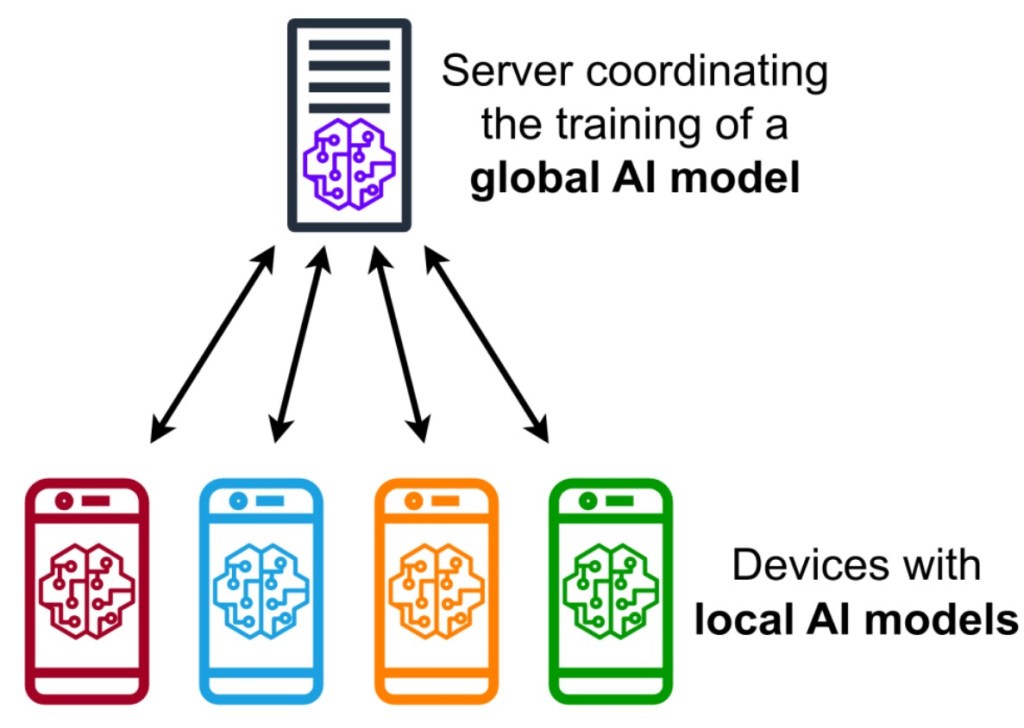
His October 31, 2025 appearance on The Joe Rogan Experience was even clearer. When Rogan asked about an “X phone,” Musk said, “I’m not working on a phone.” He then pivoted to something far more radical: his belief that the conventional smartphone itself will fade. In his description, the future device becomes an “edge node for AI inference”—a screen, audio system, radios, and as much local AI compute as practical, communicating with larger server-side models. Musk predicted that this could happen in roughly five or six years and that apps and operating systems, as users experience them today, could become much less visible. [12]
This is the crucial distinction for a five-to-ten-year analysis. Musk has not publicly described a Tesla-branded iPhone clone with a nicer battery and more cameras. He has described a post-app mobile computer in which AI becomes the interface. If his forecast proves directionally correct, the disruptive opportunity is not “Tesla makes a phone that wins a spec comparison.” It is “someone redesigns the personal mobile computer around an always-available AI agent.” That someone could be Apple, Google, Samsung, a new entrant—or a Musk company. The future market is open enough to take the possibility seriously, but the product described in the Nova video is not evidence that Tesla has already solved it.
The rest of Tesla’s public record is notable mainly for its silence. In the official 2026 investor-relations materials and product pages reviewed for this article, no Tesla executive announcement or product disclosure identifies a smartphone program. Tesla’s current AI page describes autonomy in vehicles, Optimus, and custom inference hardware rather than a handset. [10,11] Absence from public materials cannot prove that no internal discussion has ever occurred, but it is difficult to reconcile with a product supposedly priced, specified, and launched in March 2026.
The 2026 Twist: Reuters Found a Real Handset Story—At SpaceX, Not Tesla
In February 2026, Reuters added a genuine complication. Citing three people familiar with SpaceX plans, it reported that the company had considered a mobile device connected to Starlink that could rival smartphones. The design and timing were unclear. Musk responded to a separate hypothetical Starlink-phone discussion by saying it was “not out of the question at some point” and that such a device would be very different from current phones, optimized for neural-network performance per watt. He then responded to the Reuters story by saying, “we are not developing a phone.” [4]
That sequence is not a confirmation; it is an unresolved tension. Reuters had sourced reporting that a mobile-device project existed in some form, while Musk publicly denied that SpaceX was developing a phone. The safest interpretation is that a handset has at least been discussed or explored inside the Musk ecosystem, but there is no verified commercial program resembling the Tesla Pi rumor sheet.
A second report raised the temperature again on July 1. The Wall Street Journal reported that SpaceX had shown investors a prototype of an AI-focused, handset-like device using a proprietary operating system, xAI technology, and Qualcomm Snapdragon silicon. Reuters summarized that report—and Musk’s response. His answer was two words: “Utterly false.” The Journal’s account itself reportedly described the project as early-stage and uncertain to be built. [5]
For readers trying to decide which signal matters most, the pattern is consistent: there is credible reporting that SpaceX has explored mobile hardware, but there is no credible evidence for a Tesla-branded “Pi Phone,” no verified $789 price, no official XOS product announcement, and no announced 2026 retail launch. If a Musk-associated device eventually appears, current reporting points more naturally toward SpaceX/Starlink and AI than toward Tesla’s automotive organization.
Starlink Is the Part of the Rumor That Is Most Real—and Most Misunderstood
The Nova video’s strongest intuition is that satellite connectivity could change the value of a phone. Its weakest move is treating that possibility as if it requires a secret Tesla handset.
Starlink Mobile already connects ordinary compatible phones. SpaceX’s current Starlink Mobile page says the first-generation network has about 650 direct-to-mobile satellites and is supporting data, voice through apps, and messaging across six continents. It explicitly says Starlink Mobile works with existing LTE phones where users can see the sky. The satellites act, in simplified terms, like cell towers in space. [7] That means one of the rumor’s supposed differentiators—a special Pi Phone chip that uniquely unlocks Starlink—is already overtaken by reality. SpaceX’s near-term strategy is to make satellite service useful on phones people already own.
The present service is also much more constrained than the video’s “300 Mbps anywhere” language. T-Mobile’s Starlink-based T-Satellite service supports messaging, location sharing, selected apps, and satellite data, but T-Mobile tells customers plainly: “This isn’t high speed data.” It advises that apps designed for high-latency, low-bandwidth conditions work best. Non-T-Mobile customers can currently add T-Satellite for $10 per month, subject to compatibility and service terms. [8] That is a real product with real limitations and a real price—very different from lifetime-free 300-Mbps broadband bundled into a $789 handset.
The long-term story is much bigger. SpaceX says its next Starlink Mobile V2 satellites are designed for around 20 times the throughput of first-generation direct-to-mobile satellites. It says the V2 system is intended, in most environments, to provide full 5G cellular connectivity with an experience comparable to terrestrial service, while working with mobile-network operators rather than simply erasing them. [7] Those are forward-looking company claims, not guaranteed performance, but they identify the real engineering path by which satellite-to-phone connectivity could become transformative.
SpaceX’s business moves support the seriousness of that ambition. Reuters reported on August 5 that SpaceX had acquired 65 MHz of EchoStar spectrum licenses for $19.6 billion. SpaceX President Gwynne Shotwell said the company intends to build terrestrial infrastructure and turn Starlink into “a true mobile service.” Analysts interviewed by Reuters were cautious. Craig Moffett argued that building a competitive direct-to-consumer carrier service within five years would be extraordinarily difficult without relying on existing mobile operators, while other analysts noted that incumbent carriers possess far more terrestrial spectrum and decades of network infrastructure. [6]
This may be the most consequential correction to the Pi Phone narrative: Starlink does not need Tesla to disrupt mobile communications. It can attack one of the smartphone’s oldest assumptions—the dependence on nearby terrestrial towers—while remaining a service layer on iPhones, Galaxy phones, Pixels, and other devices. A future Starlink handset might improve antenna design, AI processing, power efficiency, or integration. But the network itself is the strategic asset.
The promise of free internet for the lifetime of the phone is one of the video’s most attractive claims and one of its least credible. Neither Tesla nor SpaceX has announced such a plan. Today’s consumer satellite connectivity is monetized through carrier plans, add-ons, enterprise arrangements, and Starlink subscriptions. T-Mobile’s current $10-per-month option for non-T-Mobile customers is a concrete example. [8]
There are ways a future device could make connectivity feel “free.” A manufacturer could bundle several years of service into the purchase price, subsidize basic messaging while charging for high-bandwidth use, sell an expensive premium plan that includes satellite access, or use an ecosystem subscription to hide the network charge. Apple has already used a version of this strategy for emergency and messaging satellite features: supported iPhones can connect via satellite when cellular and Wi-Fi are unavailable, with availability and terms depending on region and service. [14] But none of these business models makes bandwidth costless. Satellites must be built, launched, replaced, operated, licensed, and supported; terrestrial interconnections and spectrum also cost money.
A $789 phone could theoretically include a subsidized communications package if the economics were supported elsewhere, but “free for life” is not a technology feature. It is a financing promise. For a rumor to be credible, it would need terms: what counts as data, whether video is included, what countries are covered, what happens during congestion, which satellite bands are used, and who pays roaming and regulatory fees. The Nova video provides none of that.
XOS: The Least Verified Claim—and the Most Interesting Strategic Question
The video says the Pi Phone would avoid both iOS and Android and run a Tesla operating system called XOS, with on-device AI, ultrasonic fingerprint scanning, facial recognition, dual authentication, and AES-256 encryption. [1] No Tesla announcement, developer documentation, software-development kit, app-store policy, device certification, or public demonstration supports this “XOS” phone platform. Even the July report about a possible SpaceX AI device, which Musk denied, referred only to a proprietary operating system; it did not validate the Nova specification sheet or the Tesla Pi name. [5]
Yet the strategic idea behind XOS deserves attention because the mobile software layer is changing. Google said in May that Android is transitioning “from an operating system into an intelligence system,” with Gemini Intelligence designed to automate tasks and act more proactively across Android devices. [15] Apple’s June announcements similarly moved Siri deeper into the operating system, with personal context, onscreen awareness, systemwide actions, on-device foundation models, and Private Cloud Compute for larger workloads. [13]
In other words, the incumbents are already pursuing the same broad destination Musk described: less tapping through separate app interfaces, more natural-language delegation to an agent that understands the user, device state, and services. A future Musk device could leapfrog them only if it performs this transition substantially better—not merely by naming a new operating system.
This is also why the rumored privacy pitch is not automatically disruptive. Processing more information on the device is valuable, but Apple is already running foundation models on-device and using Private Cloud Compute for more demanding requests, with a security design intended to prevent Apple from accessing personal data sent for cloud inference. [13] Google is moving intelligence deeper into Android. A Musk phone would enter a race already in progress. It would need to demonstrate not just strong encryption, but trustworthy permissions, isolation between agents and personal data, secure updates, transparent data retention, and safeguards against an AI agent taking consequential actions the user did not intend.
The Hardware Fireworks: Plausible Numbers Are Not Evidence of a Product
The Nova video devotes much of its running time to hardware: grade 6 titanium, a 6.9-inch Dynamic AMOLED 2X display at 144 Hz and 3,200 nits, a 6,486 mAh battery, three or nearly four days of endurance, aluminum-ion chemistry, fast charging from 20 to 80 percent in about 30 minutes, five 48-megapixel cameras, 10x optical zoom, 8K/60 video, 256 GB to 1 TB of storage, and proprietary stabilization. [1]
There are two ways to get misled by lists like this. The first is to assume that an impressive number must be impossible. Many of these figures are technically plausible in isolation. Large batteries, very bright OLED displays, high refresh rates, terabyte storage, multi-camera arrays, AI-enhanced imaging, and 8K capture are all within the general direction of premium smartphone engineering. A hypothetical new entrant could source or build components in this class.
The second mistake is the more important one: assuming that plausibility proves provenance. It does not. None of the exact numbers in the Nova package is corroborated by Tesla documentation or by the 2026 Reuters reporting on SpaceX mobile-device discussions. There is no named display supplier, image-sensor supplier, modem vendor, battery supplier, manufacturing partner, certification record, prototype benchmark, teardown, or controlled photograph. The “aluminum-ion” battery claim is particularly consequential because a new production battery chemistry would require a supply chain, safety validation, charging system, thermal design, and manufacturing ramp. No credible source in the reviewed record connects such a battery to a Tesla phone.
The camera claims should be judged the same way. Five 48-megapixel sensors and 10x optical zoom could be imagined on a flagship; they would not automatically create better photographs than Apple, Samsung, Google, Xiaomi, or vivo. Smartphone imaging depends on lens quality, sensor size, stabilization, image-signal processing, computational photography, video pipelines, heat management, and tuning across millions of real scenes. A newcomer’s difficulty is not writing “48 MP × 5” on a slide. It is making every lens fast, reliable, color-consistent, power-efficient, and supported by years of software refinement.
The Tesla Ecosystem Advantage Is Real—but a Phone Is Not Required to Capture It
The video imagines the Pi Phone as a command center for Tesla vehicles, Powerwall, Optimus, and robotaxis. [1] That is a credible product concept because the Tesla ecosystem already exists. But most of that value is available today through software. Tesla’s official app for iOS and Android lets owners access vehicles and energy products from anywhere; Tesla’s energy app manages Powerwall and solar systems, and Tesla continues to develop autonomy and Optimus around its own AI hardware and software. [9,11]
A dedicated device could deepen integration. It could use ultra-wideband or other radios for more precise vehicle access, keep a local model continuously synchronized with a Tesla vehicle, prioritize robotaxi and Optimus controls, integrate Grok at the system level, or maintain satellite links when terrestrial networks fail. But Tesla would have to decide whether making those features exclusive to its own phone creates more value than putting them on the billions of iOS and Android devices customers already carry.
That tradeoff is often overlooked. A Tesla phone becomes more attractive if it controls unique capabilities. Yet withholding key Tesla functions from iPhone and Android owners could make Tesla cars, energy systems, robotaxis, and robots less attractive. For an ecosystem company, hardware lock-in can be both a moat and a tax on every other product.
Apple and Android Are Not Standing Still
The Nova video frames the contest as if Tesla would arrive with a future device while Apple and Android remain frozen in today’s form. They will not. Apple already offers satellite messaging on supported iPhones in several markets. [14] In June 2026 it unveiled a rebuilt Siri AI with systemwide integration, on-device models, and cloud inference protected by Private Cloud Compute. [13] Google’s Gemini Intelligence roadmap is explicitly about turning Android into a more proactive, agentic system rather than a passive grid of apps. [15]
Even the iPhone 18 comparison in the video needs a caution label because Apple’s own 2026 lineup had not been officially launched when the Nova video appeared. MacRumors’ August 18 rumor roundup—useful as a tracker, not an Apple announcement—reported that the iPhone 18 Pro and Pro Max were expected in September 2026, while the standard iPhone 18 was expected in spring 2027. Rumored Pro features included a 2-nanometer A20 chip, longer battery life, camera changes, and Apple’s C2 modem. [18] Comparing an unannounced Tesla phone with an unannounced Apple phone compounds uncertainty on both sides.
The deeper competitive problem is ecosystem gravity. Statcounter measured Android at 68.36 percent of worldwide mobile operating-system usage in July 2026 and iOS at 31.6 percent—together effectively the entire measured smartphone OS market. [17] Counterpoint Research estimated that Samsung held 24 percent of Q2 2026 global smartphone shipments and Apple 20 percent, with Apple reaching a record Q2 share. [16] A new entrant is not merely competing against handsets. It is competing against app libraries, developer tools, payment systems, watches and earbuds, cloud backups, family accounts, enterprise management, retail distribution, repair networks, trade-in programs, carrier financing, and years of learned behavior.
A genuinely disruptive Musk-associated device would need to win on architecture, not on a checklist. The most plausible path has four reinforcing pieces.
First, the device would have to make AI the primary interface. Instead of opening an airline app, calendar, maps, messaging, and payment software one by one, a user might say: “Move tomorrow’s trip to the earliest flight that keeps my afternoon meeting, arrange the robotaxi, tell the hotel, and notify everyone affected.” The system would negotiate among services and ask for confirmation only when needed. Musk’s “edge node” prediction describes this broad direction, and Apple and Google are already moving toward it. [12,13,15]
Second, satellite connectivity would have to feel ordinary rather than exceptional. Today, direct-to-phone satellite data is most valuable when terrestrial coverage disappears. A leapfrog product would make the transition nearly invisible and would offer enough capacity for normal communications in remote areas. Starlink Mobile V2 is explicitly aimed at that future, though the engineering and deployment work remains substantial. [7]
Third, the device would need unusually tight integration with real-world machines. Apple and Google can build powerful agents, but a Musk-controlled stack potentially spans Starlink communications, X and Grok, Tesla vehicles and robotaxis, energy systems, and eventually Optimus robots. A phone-like edge node could become a secure identity, communications, and control layer for that physical network. The strategic advantage would come not from a Tesla logo on the case, but from what the agent is authorized to do.
Fourth, it would need a credible economic reason to switch. Satellite service bundled at an aggressive price, excellent hardware, long support, strong AI, global availability, and compelling integration could draw early adopters. But the bar is high: users will not abandon mature ecosystems simply because a new phone is unusual. The device must remove friction from daily life that Apple and Android cannot quickly match.
The Critical Obstacles
The first obstacle is the app-and-services problem. Musk predicts that apps may recede, but the world cannot jump there overnight. Banks, governments, hospitals, airlines, universities, games, enterprise systems, local transit networks, and identity services all have existing iOS and Android software. A new platform would need compatibility, a web-based bridge, Android app support, or an AI agent capable of safely operating services without dedicated native apps. Each approach introduces security, performance, policy, and developer-relations problems.
The second obstacle is radio physics and network capacity. Satellites can extend coverage dramatically, but they do not repeal spectrum limits. Thousands of users share finite bandwidth across beams; indoor service is harder than open-sky service; dense cities already have excellent terrestrial capacity; and video-heavy traffic is expensive to deliver from orbit. SpaceX’s V2 promises are ambitious, but Reuters’ August reporting shows that SpaceX itself is also planning terrestrial infrastructure. [6][7] The likely winning architecture is hybrid—satellite plus ground networks—not a phone that makes towers obsolete overnight.
The third obstacle is regulation. Mobile devices must meet radio, safety, emergency-calling, consumer-protection, privacy, and spectrum rules market by market. Satellite-to-mobile services also depend on national authorizations. Apple’s own satellite feature availability varies by country and regulatory approval, a reminder that “global” connectivity is partly a legal and commercial problem, not only an engineering one. [14]
The fourth obstacle is manufacturing and support. Tesla has enormous expertise in complex hardware, power electronics, batteries, software, and supply-chain scale. But smartphones are produced at far higher unit volumes with brutally compressed product cycles and customer expectations for small size, low weight, thermal stability, water resistance, radio performance, camera quality, repair, warranty handling, and rapid annual iteration. SpaceX has expertise in radios and custom silicon; Tesla has expertise in AI inference hardware; neither fact automatically creates a world-class smartphone organization.
The fifth obstacle is trust. An AI-first device would know far more than a conventional phone because it would act on behalf of the owner. If the same corporate family controls the device, the AI assistant, the social platform, communications services, vehicles, energy systems, and robots, the convenience could be extraordinary—but so would the concentration of sensitive data and control. A leapfrog product would need exceptionally clear privacy boundaries, auditability, consent, account recovery, child safeguards, and security update commitments. “AES-256” on a rumor list is not a substitute for a mature security architecture.
Finally, there is a strategic obstacle: Musk may be right that the traditional smartphone is approaching a redesign, while being wrong that a new handset company is the best way to capture it. If Starlink Mobile works on existing phones and Grok can become a cross-platform agent, SpaceX and xAI may be able to reach billions of users without taking on the risk of manufacturing phones. The most profitable “Musk phone” strategy may be no phone at all.
The Next Five to Ten Years: Three Plausible Futures
2026–2028: Starlink changes phones without replacing them—The most likely near-term outcome is that the Pi Phone remains fictional while Starlink Mobile becomes increasingly useful on ordinary iPhones and Android devices. The service expands from messaging and selected low-bandwidth apps toward native voice and broader data. Satellite connectivity becomes a standard premium feature or carrier layer, much as roaming and Wi-Fi calling became expected capabilities. SpaceX gains leverage in telecom without having to persuade users to switch operating systems. [7][8]
2028–2031: AI makes the app grid less important—The second phase is likely to be software-led. Apple, Google, Samsung, OpenAI, xAI, and others will keep pushing agents deeper into phones. The visible app grid may remain, but users will increasingly ask an agent to complete multi-step tasks across services. This is where Musk’s five-or-six-year forecast becomes testable. If xAI develops a markedly better personal agent and Starlink provides unusually resilient connectivity, a dedicated device begins to make more strategic sense. [12][13][15]
2031–2036: A dedicated Starlink/xAI edge device becomes plausible—In the longer window, a new category could emerge: a thin personal AI terminal designed from the beginning around local inference, satellite and terrestrial radios, continuous voice and vision, secure identity, and control of vehicles and robots. It might still look like a smartphone because a pocketable touchscreen is useful. But the center of gravity would shift from “which apps are installed?” to “what can my agent perceive, reason about, and safely do?”
If a Musk company builds that device, the strongest brand may not even be Tesla. “Starlink” naturally communicates universal connectivity; “Grok” communicates the agent; “X” communicates communications and media; Tesla communicates vehicles, energy, and robotics. The famous “Pi Phone” label may survive only as an internet myth that accidentally anticipated a different product category.
Greatest Potential Strengths
A future Musk-linked mobile device would begin with several unusual assets. Starlink could offer coverage where ordinary networks fail. xAI could provide an agent designed around the hardware rather than bolted onto it. Tesla could contribute vehicle, robotaxi, energy, and Optimus integration. SpaceX and Tesla both have cultures built around custom hardware and high-performance-per-watt computation. The combined brand ecosystem can command global attention without the marketing budget normally required for a new phone maker. [4,7,9,11]
More important, the companies do not have to copy Apple’s business model. They could treat the device as an access point to communications, mobility, AI, and robotics services. If the handset itself were sold near cost while recurring revenue came from connectivity, AI services, transportation, energy, or enterprise contracts, pricing could become aggressive. That is a plausible way a new entrant could put pressure on premium smartphones—though there is no evidence that Tesla or SpaceX has announced such a plan.
Most Critical Weaknesses
The same vertical integration that creates the upside creates the risk. A proprietary OS would start with almost no native ecosystem. A satellite-first design could be thicker, hotter, or more power-hungry if it tried to do too much radio work locally. Building a carrier business could alienate the very mobile-network operators whose partnerships make direct-to-cell service useful. A Musk-branded platform could attract intense regulatory scrutiny in countries that already regulate communications, AI, social media, autonomous vehicles, and data sovereignty. And every extra promise—free lifetime internet, revolutionary battery chemistry, five cameras, robot control, global coverage—raises the number of things that must work reliably on day one.
Above all, Apple and Android can imitate successful ideas. Satellite messaging is already on iPhone, Starlink already reaches both iOS and Android through carrier partnerships, and both Apple and Google are rebuilding their platforms around AI. [7,8,13-15] The would-be disruptor has to move faster than the incumbents can copy while simultaneously building an ecosystem they have spent more than a decade refining.
Conclusion
As of August 24, 2026, the evidentiary verdict on the Nova Discovery story is straightforward. The specific $789 Tesla Pi Phone is not an announced Tesla product. The March 2026 launch claim has failed. The price, XOS name, battery chemistry, exact display specification, five-camera system, free-lifetime Starlink plan, and 300-Mbps direct-to-phone promise are unverified. The $789/free-Starlink combination was already circulating as a false claim in 2025. [1,3,20]
The broader possibility deserves a different verdict. A Musk-associated mobile device is plausible over a five-to-ten-year horizon because Musk has publicly left the door open to a very different kind of Starlink phone, Reuters has reported internal SpaceX interest in mobile hardware, Starlink is expanding toward direct-to-phone broadband, and Musk has articulated a clear vision of the phone becoming an AI edge node. [4,5,7,12] None of that proves a product will ship. It does mean the idea should not be dismissed merely because the “Pi Phone” rumor is unreliable.
The greatest chance for disruption is therefore not that Tesla will surprise Apple with a titanium phone containing one more camera. It is that the familiar smartphone could be absorbed into a larger AI-and-connectivity system. In that future, the winning device will be judged by how well it stays connected, understands context, protects its owner, delegates work, and controls machines—not by how many app icons fit on the home screen.
If SpaceX can make satellite coverage feel like ordinary cellular service, if xAI can make a personal agent trustworthy enough to act rather than merely answer, and if the Musk ecosystem can connect transportation, communications, energy, and robotics without trapping users inside an unreliable or unsafe platform, then a future device could genuinely leapfrog part of today’s smartphone model. Those are three very large “ifs.” But they are far more consequential—and far better supported—than the viral promise of a $789 Pi Phone arriving five months ago.
References
[1] Nova Discovery. “Elon Musk: ‘This $789 Tesla Pi Phone Will Definitely Beat iPhone 18 and Become a Global Sensation!’” YouTube, August 16, 2026. https://www.youtube.com/watch?v=NJuubuXNTSE
[2] ADR Studio. “Tesla Model P.” Concept design project, 2021. https://adr.studio/projects/Tesla-Model-P
[3] AFP Fact Check. “Social media posts falsely claim Tesla released smartphone.” October 17, 2025. https://factcheck.afp.com/doc.afp.com.78NU2KE
[4] Joey Roulette, Reuters. “Starlink fuels SpaceX growth with potential phone, more internet services.” February 5, 2026 (updated February 6). https://www.reuters.com/business/media-telecom/starlink-fuels-spacex-growth-with-potential-phone-more-internet-services-2026-02-05/
[5] Reuters. “Musk denies WSJ report that SpaceX showed AI handset prototype before IPO.” July 1, 2026. https://www.reuters.com/business/media-telecom/musk-denies-wsj-report-that-spacex-showed-ai-handset-prototype-before-ipo-2026-07-01/
[6] Harshita Mary Varghese and Akash Sriram, Reuters. “SpaceX’s mobile ambitions jolt US telecom market, analysts debate threat.” August 5, 2026. https://www.reuters.com/business/media-telecom/spacexs-mobile-ambitions-jolt-us-telecom-market-analysts-debate-threat-2026-08-05/
[7] Starlink. “Starlink Mobile.” 2026. https://starlink.com/business/mobile
[8] T-Mobile. “T-Satellite support.” Accessed August 24, 2026. https://www.t-mobile.com/support/coverage/satellite-support
[9] Tesla. “Tesla App Support.” Accessed August 24, 2026. https://www.tesla.com/support/tesla-app?redirect=no
[10] Tesla Investor Relations. “Documents and Events,” including Q2 2026 disclosures dated July 22, 2026. https://ir.tesla.com/
[11] Tesla. “AI & Robotics.” Accessed August 24, 2026. https://www.tesla.com/AI
[12] The Joe Rogan Experience #2404, Elon Musk. October 31, 2025. Official video: https://www.youtube.com/watch?v=O4wBUysNe2k. Note: Public transcript used for quotation verification: https://podcasts.happyscribe.com/the-joe-rogan-experience/2404-elon-musk
[13] Apple. “Apple introduces Siri AI, a profoundly more capable and personal assistant.” June 8, 2026. https://www.apple.com/newsroom/2026/06/apple-introduces-siri-ai-a-profoundly-more-capable-and-personal-assistant/
[14] Apple Support. “About Messages via satellite on your iPhone.” Published May 15, 2026. https://support.apple.com/en-asia/120930
[15] Mindy Brooks, Google. “A smarter, more proactive Android with Gemini Intelligence.” May 12, 2026. https://blog.google/products-and-platforms/platforms/android/gemini-intelligence/
[16] Shilpi Jain, Counterpoint Research. “Q2 2026 Global Smartphone Shipments Slump to Lowest Q2 Level in 13 Years as Memory Crisis Deepens.” July 13, 2026. https://counterpointresearch.com/en/insights/global-smartphone-shipments-q2-2026
[17] Statcounter Global Stats. “Mobile Operating System Market Share Worldwide,” July 2026 data. https://gs.statcounter.com/os-market-share/mobile
[18] MacRumors. “iPhone 18: Rumors and Release Date.” Updated August 18, 2026. https://www.macrumors.com/roundup/iphone-18/
[19] PolitiFact. “Sorry, wrong number: Elon Musk didn’t announce a $299 Tesla phone.” November 21, 2024. https://api.politifact.com/factchecks/2024/nov/21/facebook-posts/sorry-wrong-number-elon-musk-didnt-announce-a-299/
[20] Snopes, republished by Yahoo Tech. “Fact Check: Tesla didn’t release ‘Pi Phone’ with Starlink capability.” September 25, 2025. https://tech.yahoo.com/phones/articles/fact-check-tesla-didnt-release-231000822.html
###
Filed under: Uncategorized |








































































































































































































































































































Leave a Reply