







By Jim Shimabukuro (assisted by Claude)
Editor
[Related: AI-Generated Micro Dramas | AI-Generated Micro Dramas and the Democratization of Student Storytelling]
Summary: Shot for the phone, sliced into minute-long episodes, and engineered to end every scene on a hook, the vertical microdrama has grown from a Chinese curiosity into a multibillion-dollar global business — one that Hollywood studios, national startups, unions, and film schools are now racing to understand.

For years, Robert Palmer Watkins was one of the thousands of Los Angeles actors caught between auditions, waiting for an industry that kept shrinking around him. Then he started booking work in a format most of his peers had never heard of: serialized dramas shot vertically for the phone, released in episodes shorter than a pop song. “It has completely changed my circumstances financially,” he told Reuters in August 2026. “I am so grateful.” [1]
Watkins is a small data point in a very large shift. While the traditional American television business — a roughly $125 billion market — is projected to lose as much as $15 billion a year to cord-cutting, the microdrama is the rare corner of the screen economy that is growing, and growing fast. The research firm Omdia expects microdramas to generate about $1.5 billion in United States revenue in 2026 and nearly $2 billion in 2027; 66 million monthly viewers watched them in the U.S. last year, more than double the 26 million of the year before. Counting all vertical video — the TikTok-style feeds that trained the world to hold its screens upright — the consultancy Owl & Co. projects $150 billion in global revenue this year, excluding China. [1]
Something new is happening to the oldest human habit, the serialized story. This article traces where the form came from, who is building it, what it looks like at its best and worst, and where it is likely headed through the rest of the 2020s and into the 2030s.
What, Exactly, Is a Microdrama?
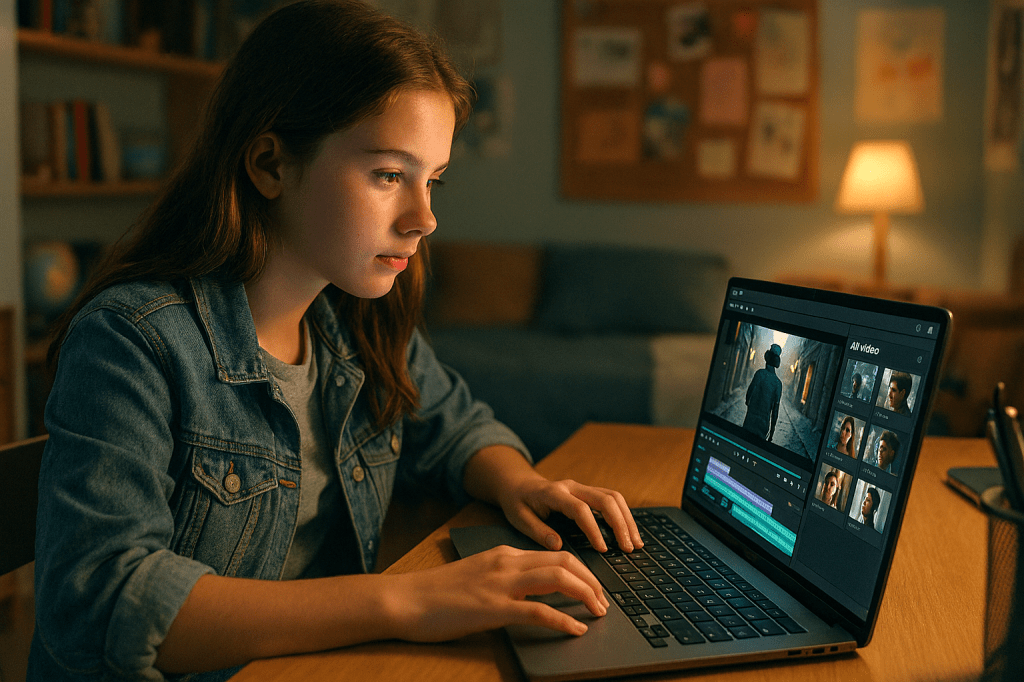
A microdrama — the terms vertical drama, vertical series, short drama, and simply “verticals” are used interchangeably — is a scripted serial designed from the first line of the script for a phone held upright. Episodes typically run from 45 seconds to two minutes, and a complete series stacks 50 to 100 of them, so a full “season” adds up to roughly the length of one feature film, consumed in fragments. [1,15] Framing is tight — faces, hands, texts on a screen — because the 9:16 frame punishes wide shots. Exposition is ruthless. “You’re dropped right into the middle of the story, so it grabs your attention right away,” is how Lily Darragh Harty, director of production at the app CandyJar, describes the grammar. [1]
The business model is as distinctive as the format. The first eight or ten episodes are free; the paywall arrives precisely at the moment of maximum suspense, and viewers unlock the rest with in-app “coins,” a subscription, or by watching advertisements. [11,7] The genre mix skews heavily toward high-emotion romance and revenge melodrama — secret billionaires, contract marriages, werewolf CEOs, vengeful heiresses — because those are the stories the conversion data rewards. The core audience, by most industry accounts, is women between 25 and 55, though the demographic is broadening. [1,8]
However easy the format is to mock, the engagement numbers are not. By early 2026, according to eMarketer, U.S. users of ReelShort, the leading Western-facing app, were spending 35.7 minutes a day with it — more time than the average mobile user spent with Netflix (24.8 minutes), Amazon Prime Video (26.9), or Disney+ (23). Microdrama apps were downloaded 2.3 billion times worldwide in 2025, double the year before, while downloads of traditional streaming apps fell. [13]
Born in China
The microdrama is a Chinese invention, and its prehistory is literary rather than cinematic. China’s enormous web-fiction industry had spent two decades perfecting serialized melodrama sold chapter by chapter; when the short-video platforms Douyin (China’s TikTok) and Kuaishou exploded in the late 2010s, producers began translating those same stories — and that same pay-per-chapter psychology — into minute-long vertical episodes called duanju, literally “short drama.” The pandemic, which locked millions of viewers onto their phones, turbocharged the form. [3,15]
The scale it reached at home is difficult to overstate. By 2023 Kuaishou alone reported 270 million people a day watching short dramas on its platform, and China’s duanju market reached an estimated 38 billion RMB (about $5.3 billion) — roughly 70 percent the size of the country’s entire theatrical box office. [3] A year later the market had grown to around $7 billion and, by most estimates, had overtaken the box office outright, a symbolic crossing that startled the global film industry. [8] By late 2024, more than 660 million Chinese viewers were watching. [15]
Chinese regulators noticed too. Early crackdowns on “unsavory” content in 2022 and 2023 pushed producers to look abroad [3], and the scrutiny has not relaxed: in June 2026 the National Radio and Television Administration launched a two-month campaign against micro-short dramas featuring content harmful to minors, “money worship” and wealth-flaunting, distorted relationship values, and copyright infringement, saying it sought to foster “a clean and healthy industry environment.” [4]
The decisive export moment came in 2022, when Crazy Maple Studio — a California-based, Chinese-backed company — launched ReelShort, an app built to bring the duanju playbook to English-speaking audiences with Western casts, Western tropes, and the same coin-gated cliffhangers. [1,3] It worked. ReelShort’s early hits, with unabashed titles like “The Double Life of My Billionaire Husband,” proved that Western audiences would pay for the formula, and a wave of rivals — DramaBox, GoodShort, NetShort and dozens more — followed it out of China. [1,15]
The Players
ReelShort’s founder and chief executive, Joey Jia, has become the format’s most visible evangelist. Speaking at the APOS media conference in June 2026, Jia said the app had reached 70 million monthly active users and 286 million downloads, with a catalog of 600 in-house shows and roughly 4,000 licensed titles, and that 70 percent of its traffic now comes from outside North America. His theory of the format is disarmingly simple. “At the end of the day, there are three kinds of stories,” he said: “plot-driven stories that work really well for feature films; character-driven stories, which are perfect for TV and series; and then emotion-driven stories, which are a natural fit for mobile viewing.” He is candid about how the market has surprised him: “Three or four years ago, I thought that nobody in the U.S. would watch Chinese content, but I admit I was totally wrong.” [2]
ReelShort’s chief rival, DramaBox — operated by Singapore-registered, Chinese-founded StoryMatrix — reported some $323 million in 2024 revenue and about 44 million monthly active users, and the two apps together have controlled well over half of the overseas market. [15,8] But the second wave is no longer Chinese. Ukraine’s Holywater, founded in Kyiv in 2020 as a book platform, turned its app My Drama into one of the world’s fastest-growing microdrama services; its hit “Spark Me Tenderly” drew more than seven billion social-media impressions and roughly $20 million in revenue, and the company has raised $22 million from investors including Endeavor Catalyst while striking a partnership with Fox. The United Kingdom has Tattle TV, Germany’s Black Forest Studios launched with sixteen completed series, France’s Shorts is targeting the U.S. market, and Israel’s AppReel debuted with 25 shows budgeted at $25,000 to $30,000 each — a reminder of how low the barrier to entry is. [6]
Hollywood, after a year of polite condescension, has jumped in with both feet. Lloyd Braun, the former ABC Entertainment chairman who greenlit “Lost,” is backing a vertical studio called aTwist with former Showtime president Jana Winograde and veteran producer Susan Rovner; former Miramax chief Bill Block launched GammaTime; NBCUniversal is bringing Bravo-branded microdramas to Peacock. [1] Disney+ added a TikTok-style “Verts” feed of vertical clips to its app, and Netflix has tested a vertical feed of its own. [7] On a single day in July 2026, four separate vertical ventures were announced, including vertTV, a subscription platform that debuted with more than 200 titles and a flagship series reuniting “Fuller House” stars, and a BuzzFeed Studios deal to produce over 100 microdramas, beginning with “Romeo & Juliet, Reimagined.” [14] TikTok itself has moved from discovery engine to distributor, launching a short-drama app of its own, PineDrama [11], while Issa Rae’s vertical series “Screen Time,” released on TikTok, drew some 500 million views a month. [1]
Susan Rovner’s summary of the new studios’ ambitions doubles as the format’s mission statement: “We’re not looking to win Emmys, we’re looking to win the People’s Choice Awards.” [1]
What the Hits Look Like
The titles tell you most of what you need to know about the house style: “Dominated by My Dad’s Boss,” “The Billionaire Married a Homeless Girl,” “Oops I Married My Enemy.” [9,6] The 93-episode mafia romance “Bound by Honor” drew more than 280 million views in 2025 and spawned a sequel, and performers like Rhett Wellington and Savannah Coffee have become the format’s first homegrown stars — recognizable to millions of viewers who could not name a single show they appeared in horizontally. Established names are arriving: Taye Diggs stars in the office romance “Off Limits & All Mine.” [9] Brands have noticed the engagement too — Crocs produced a sponsored microdrama on ReelShort that drew nearly eight million views in three weeks, and Procter & Gamble and JCPenney have followed. [7]
Production is fast and cheap by Hollywood standards, if punishing by any other. A 50-to-75-episode series typically costs $100,000 to $300,000 — against $2 million to $4 million for a single episode of a network sitcom — and shoots wrap in eight to ten days, burning through as many as twenty script pages a day. [1,11] “We’re doing a full feature in eight to 10 days,” as Savannah Coffee put it. [9]
Learning to Write Sideways
A new grammar needs new craft, and the craft is being worked out in public. Screenwriter John August devoted a widely read piece to dispatches from working vertical writers, who described a form “reverse-engineered around data-driven formulas,” where every episode must earn the next tap and the early, free episodes are polished obsessively while later ones barely see a second draft. One writer likened the work less to screenwriting than to “solving a puzzle.” [12]
Film schools are beginning to treat the format as a discipline rather than a novelty. Arizona State University’s Sidney Poitier New American Film School — a program built around the idea of training cinematic storytellers and digital media artists for a mobile-first industry — is developing an “Introduction to Writing for Vertical Filmmaking” seminar, positioning itself among the first American film schools with dedicated vertical coursework. In May 2026, ASU student Caleb Liban took second place and $5,000 in ReelShort’s Reel Vertical Impact contest with “The Two Man,” a seven-part vertical adaptation of one of his horizontal films. “Caleb’s winning entry was selected from hundreds of submissions in the editing category alone, including entries from Columbia, NYU, USC and other top programs, as well as professional filmmakers,” ReelShort noted — a sentence in which the interesting word is the list of schools now competing in a format that barely existed four years ago. [5] Vancouver Film School, meanwhile, has stood up an in-production microdrama bootcamp. [16]
The pedagogy writes itself into the scripts: hook in the first three seconds, a reversal or revelation every episode, dialogue that survives being watched with subtitles on a bus. Whether that constitutes a creative renaissance or a race to the algorithmic bottom is, as we shall see, the central argument about the form.
Growing Pains
The microdrama boom has a well-documented underside. Reporting by TheWrap in January 2026 described twelve-to-thirteen-hour days, nonunion day rates as low as $250, and scripts leaning on assault and coercion tropes that performers found, in the words of actor-director JT Garcia, “frankly, repugnant.” [11] Writers’ pay ranges from a livable $40 an hour to piecework arrangements with “no work” gaps between feedback cycles. [12] Critics also target the monetization itself: unlocking a single series can cost more than $40, and a weekly ReelShort subscription of $19.99 works out, over a year, to several times the price of Netflix — with the spending obscured behind coin bundles. [11]
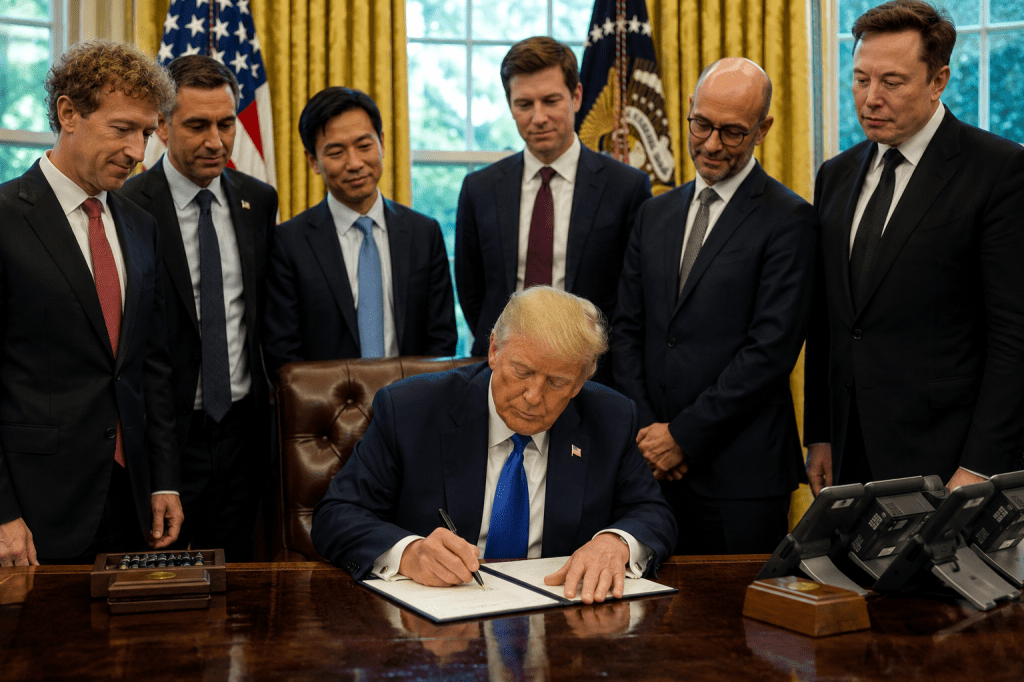
Institutions are responding. In October 2025, SAG-AFTRA introduced a dedicated Verticals Agreement for microdramas budgeted under $300,000, bringing union minimums, rest periods, and safety standards to the format; chief negotiator Duncan Crabtree-Ireland said the deal “works for the realities of these productions — their pace, their budgets, and their creative ambitions, while upholding union standards.” [10,1] In China, as noted, the regulator has moved from tolerance to active content policing. [4] And in Europe, the format has acquired the ultimate badge of establishment attention: the European Film Market at Berlinale 2026 dedicated a workshop to vertical microdrama, prompting Raindance founder Elliot Grove to observe that vertical storytelling “has officially crossed from ‘platform experiment’ into ‘global business model.'” [8]
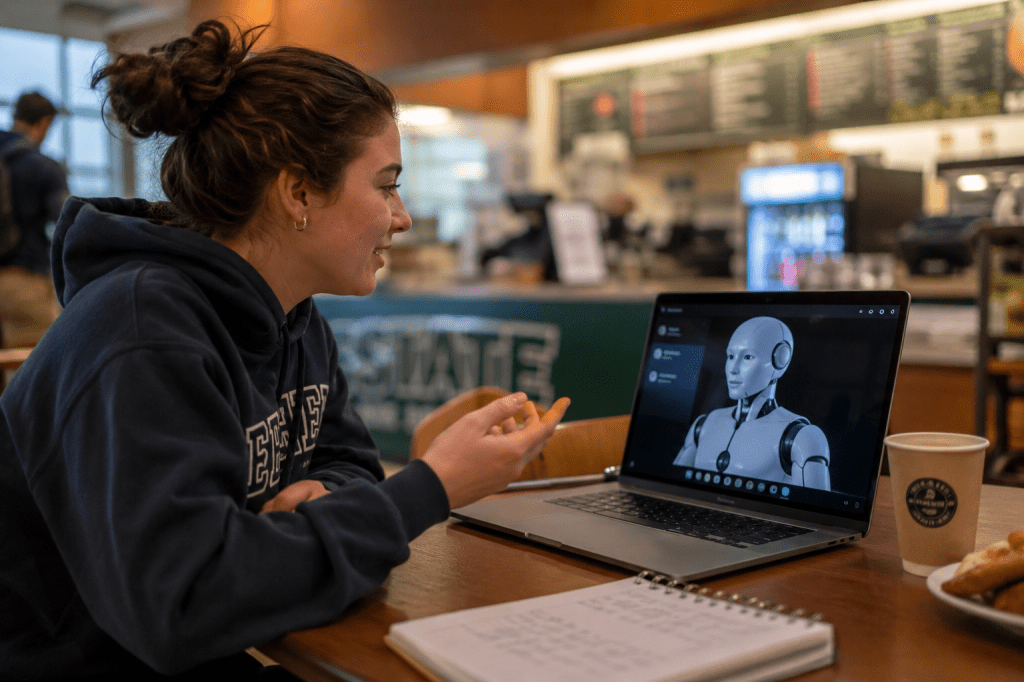
Then there is artificial intelligence, which shadows every conversation about the form. Because microdramas are cheap, fast, and formula-driven, they are the first scripted genre where AI production is economically decisive rather than experimental. Jia says AI has cut some production costs by as much as 90 percent, though he insists the technology serves previsualization, sets, and compositing while “human talent” keeps writing and acting. [2] Others go further: fully AI-generated verticals are being made in three to four weeks for $60,000 or less, and one producer of the AI series “Ironblood” described the workflow bluntly: “If they want the character to smile, I can go into the prompt, say ‘make this character smile,’ and it’s done immediately.” [1]
Disruption, Anomaly — or Quibi 2.0?
Skeptics have an obvious precedent to reach for: Quibi, the $1.75 billion short-form streaming service that collapsed in six months in 2020. But the comparison mostly illuminates why microdramas are different. Quibi was a top-down bet on premium, star-driven shorts with no social discovery and no per-episode economics; microdramas grew bottom-up from data, cost two orders of magnitude less per series, monetize episode by episode at the exact moment of narrative desperation, and use TikTok and Instagram as a vast, free trailer machine. Quibi asked viewers to change their behavior. Microdramas were built out of behavior viewers already had. [1,3,7]
Are they overshadowing traditional genres? Not in revenue terms — $1.5 billion is still a rounding error against the American television economy — but the comparison misses where the fight is actually happening, which is minutes of attention on a phone. On that battlefield, microdrama apps already beat the giants. [13] The more measured skeptics argue the format’s dominance is still confined to one emotional register. Ben Woods of Midia Research warns that microdrama apps capture “disposable attention, not long-term fandom,” and creator-commentator Tiffany Shan Li cautions against mistaking the success of romance verticals for proof that everything can go vertical. [7,11]
What seems undeniable is the labor-market effect. In a Hollywood where traditional production has contracted brutally, verticals have become the new bottom rung of the ladder — the place where actors, writers, and crew get their reps. “Today, you hear anecdotally of many people coming to L.A. and getting their first job through a vertical drama,” says Hernan Lopez, the former Fox International Channels chief who now leads Owl & Co. [1] The commercial-storytelling pipeline that once ran through commercials and soap operas now runs, increasingly, through a phone screen.
The Road Through the 2030s
The projections, for what they are worth, are steep. Deadline reports industry expectations of $20 billion to $30 billion in annual global revenue by 2030 [6]; more conservative modeling puts the market outside China at $9.5 billion by 2030, with the U.S. share near $3.8 billion. [8] Omdia’s near-term numbers — $2 billion in U.S. revenue as soon as 2027 — suggest the growth curve has not yet bent. [1]
Several trajectories for the rest of the decade look reasonably clear. First, consolidation: with hundreds of apps chasing the same romance-hungry audience and platforms spending up to 90 percent of budgets on marketing rather than content, subscriber-acquisition costs will crush the undifferentiated middle, and the survivors will be a handful of global apps plus verticals folded into the big streamers’ own feeds. [13,7] Second, genre expansion: male viewership has already climbed from roughly 10 percent to 30 percent in some territories, and thrillers, horror, sports stories, and branded content are widening the palette beyond the billionaire romance. [8,7] Third, the AI question will be settled here first — the format’s budgets and volume make it the proving ground for synthetic production, for better and worse. [1,2] Fourth, geography: Latin America’s installs grew sixfold in a single year [13], ReelShort already draws 70 percent of its traffic from outside North America and is signing carriage deals with telecom companies in Thailand and the Philippines [2] — making the microdrama arguably the first screen format to globalize from the East outward rather than from Hollywood outward.
By the 2030s, the safest prediction is not that microdramas replace television, any more than television replaced cinema. It is that vertical storytelling becomes a permanent, taught, unionized, awards-eligible register of the screen arts — a snack food that has earned a place in the pantry next to the meal. The institutional signals are already there: a SAG-AFTRA contract, a Berlinale workshop, film-school seminars, and a generation of students, like ASU’s Liban, who see the vertical frame not as a constraint but as a canvas. [10,8,5]
Why It Should Matter to the Rest of Us
For educators, the implications are immediate: the fastest-growing employer of young screen talent now hires for a form most curricula do not yet teach, and the schools that move first — as Arizona State has — will define its craft standards rather than inherit them. [5] For storytellers, the microdrama is a genuinely new set of constraints, and constraints are where forms are born; the three-minute pop single and the 22-minute sitcom were once accused of cheapening their arts too. For audiences and parents, the format’s engineered compulsiveness and coin-store economics deserve the same media literacy we now apply to social feeds and loot boxes. [11] And for anyone who cares about where culture is made, the microdrama is a case study in a new pattern: a storytelling technology invented in China, scaled by diaspora entrepreneurs, refined in Kyiv and Los Angeles, and consumed everywhere — one minute at a time. [3,6,1]
The cliffhanger, in other words, is not whether the microdrama survives. It is what the rest of the screen world looks like once it has finished adapting to the phone in your pocket. Episode two is loading.
References
[1] Reuters (Dawn Chmielewski, Rollo Ross, Harshita Mary Varghese, Lisa Richwine), “Microdramas boom in a shrinking Hollywood as studios chase a TikTok audience,” August 18, 2026, syndicated at The Manila Times. https://www.manilatimes.net/2026/08/18/business/foreign-business/microdramas-boom-in-a-shrinking-hollywood-as-studios-chase-a-tiktok-audience/2407406
[2] Deadline, “ReelShort Founder Joey Jia On Next Steps For Microdrama: International Expansion & Creating Stories On Mars — APOS,” June 19, 2026. https://deadline.com/2026/06/microdrama-ai-reelshort-joey-jia-crazy-maple-studio-asia-1236958231/
[3] Naavik, “Microdramas: China’s New Craze Goes Global,” September 8, 2024. https://naavik.co/digest/microdramas-chinas-new-craze/
[4] Global Times, “Chinese authorities launch campaign to regulate micro-short dramas, targeting issues including money worship, vulgar content and copyright infringement,” June 3, 2026. https://www.globaltimes.cn/page/202606/1362709.shtml
[5] ASU News, “Poitier Film School filmmaker, ASU diver wins $5K prize in ReelShort contest,” May 6, 2026. https://news.asu.edu/20260506-sun-devil-community-poitier-film-school-filmmaker-asu-diver-wins-5k-prize-reelshort
[6] Deadline (Max Goldbart, Jesse Whittock), “Microdramas Go Global: Meet The New Wave Of Vertical Video Creators,” January 21, 2026. https://deadline.com/2026/01/microdrama-vertical-video-apps-international-new-wave-holywater-1236684224/
[7] The Current (Travis Clark), “From Disney+ to microdrama apps, what’s behind the pivot to vertical video?,” 2026. https://www.thecurrent.com/media/streaming-disney-microdrama-apps-whats-behind-pivot-vertical-video
[8] Raindance (Elliot Grove), “Vertical Microdrama: Berlinale 2026 Just Confirmed What Indie Filmmakers Already Know,” February 21, 2026. https://raindance.org/vertical-microdrama-berlinale-2026-just-confirmed-what-indie-filmmakers-already-know/
[9] SPIN (A.D. Amorosi), “Going Vertical: How Microdramas Are Maxxing Streaming Viewers,” August 12, 2026. https://www.spinmagazine.com/2026/08/vertical-microdramas-are-big-on-streaming/
[10] SAG-AFTRA, “Turning the Industry on Its Side: SAG-AFTRA Goes Vertical With New Agreement,” October 13, 2025. https://www.sagaftra.org/turning-industry-its-side-sag-aftra-goes-vertical-new-agreement
[11] TheWrap, “Inside the Dark Underbelly of the Microdrama Phenomenon,” January 29, 2026. https://www.thewrap.com/media-platforms/streaming/microdramas-content-production-controversial/
[12] John August, “Writing for microdramas, aka verticals,” johnaugust.com, September 24, 2025. https://johnaugust.com/2025/writing-for-microdramas-aka-verticals
[13] eMarketer, “Microdrama apps surpass Netflix, Prime Video in US mobile engagement,” March 5, 2026. https://www.emarketer.com/content/microdrama-apps-surpass-netflix–prime-video-us-mobile-engagement
[14] International Business Times UK, “Microdrama Mania Hits Hollywood as Four New Studios and Deals Launch in a Single Day,” July 22, 2026. https://www.ibtimes.co.uk/hollywood-embraces-vertical-microdrama-four-major-launches-1810121
[15] Filmustage, “Vertical Drama Explained: What You Need to Know in 2026,” March 13, 2026. https://filmustage.com/blog/vertical-drama-explained-what-you-need-to-know-in-2026/
[16] Vancouver Film School, “In-Production Bootcamp — Microdrama” (program page). https://vfs.edu/content/in-production-bootcamp-microdrama
###
Filed under: Uncategorized |














































































































































































































































































































































































































































Leave a Reply