


By Jim Shimabukuro (assisted by Claude)
Editor
Students are hiring lawyers to fight AI-cheating accusations. The lawsuits are a precursor of what schools and universities may be facing in the next five years.
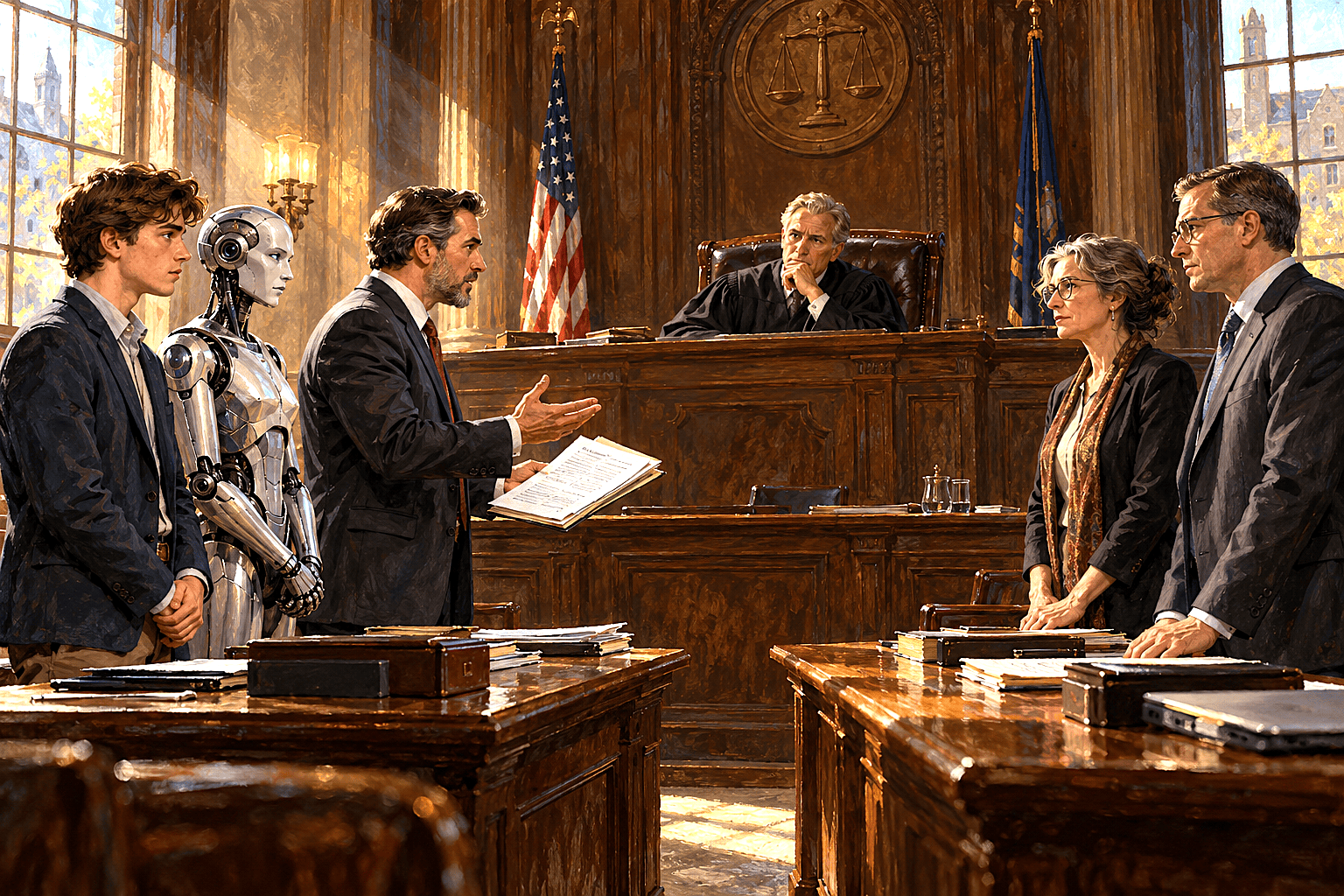
On October 2, Mark Pieterson, a senior at the University of Houston-Downtown, learned that a failing grade in his Music Appreciation course had been thrown out. His professor had accused him of turning in journal entries and discussion posts written by artificial intelligence. He lost his appeal to the professor and then to the department chair. A committee of four deans finally reversed the finding, citing “concerns regarding the reliability and consistency of the evidence used to support the original finding.” Pieterson told a local television reporter, “I was shocked. I was incredibly incensed.” When it was over, he said, “This came as a huge relief” (Wallace, 2026).
The same week, ETC Journal flagged a Financial Times report on a British student who spent more than £3,000 on legal help to clear her name after being accused of using ChatGPT, defending herself with drafts and notes that showed her work as it developed. Lawyers told the paper they were seeing more of these cases (ETC Journal, 2026). In the United States, the trend has been building for months. In May, Thomas Terrill, who directs the education defense practice at LLF National Law Firm, said his firm was handling roughly 250 AI-related academic integrity cases at once. “Many students feel they are in the position of proving their innocence,” he said (WDC News 6, 2026). Andrew Miltenberg of Nesenoff & Miltenberg described how quickly an accusation can turn into a sanction: “It happens boom, boom, boom,” he said. “It really moves very fast” (WDC News 6, 2026).
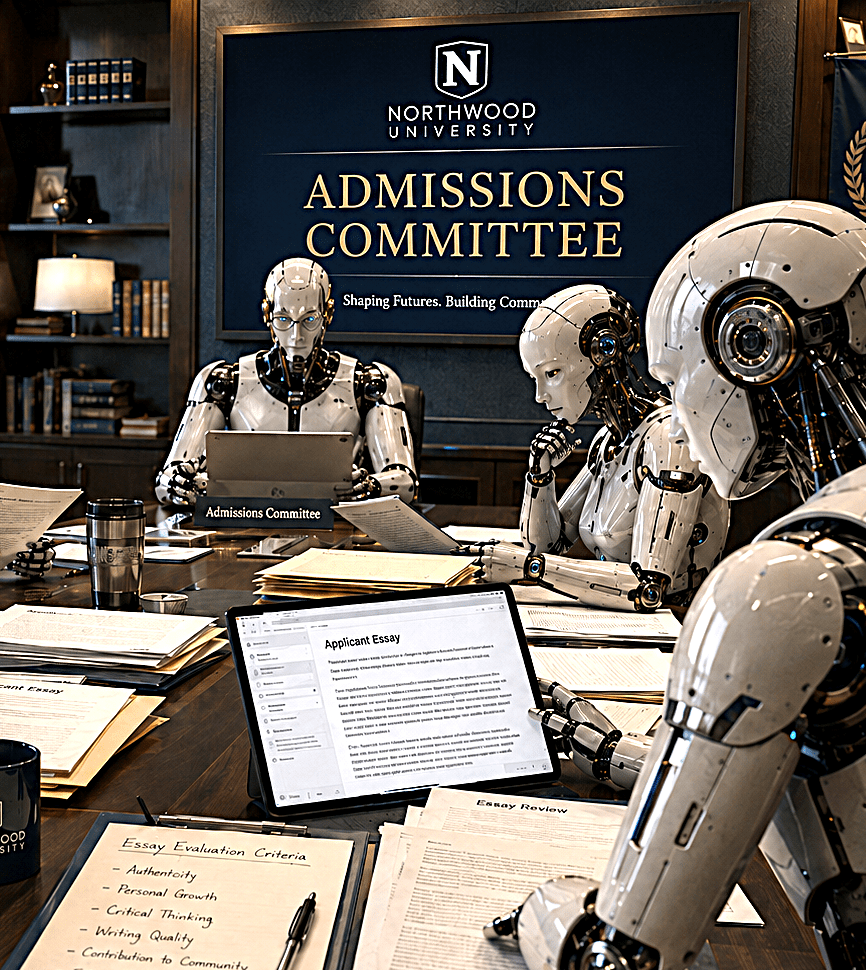
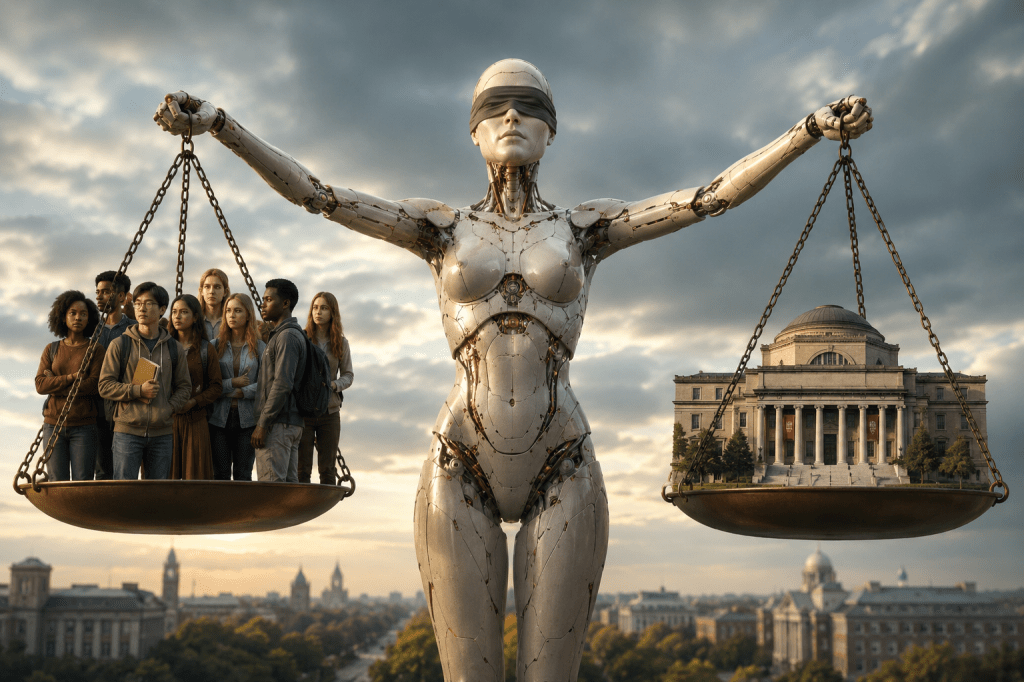
Each case is a single grade or a single essay. Together they show schools trying to enforce rules written for a world without generative AI, using tools that cannot reliably tell the difference, against students who now use AI as routinely as a search engine. Will that mismatch get worse? What will the next five years look like, and why does the outcome matter beyond the hearing room?
Court cases
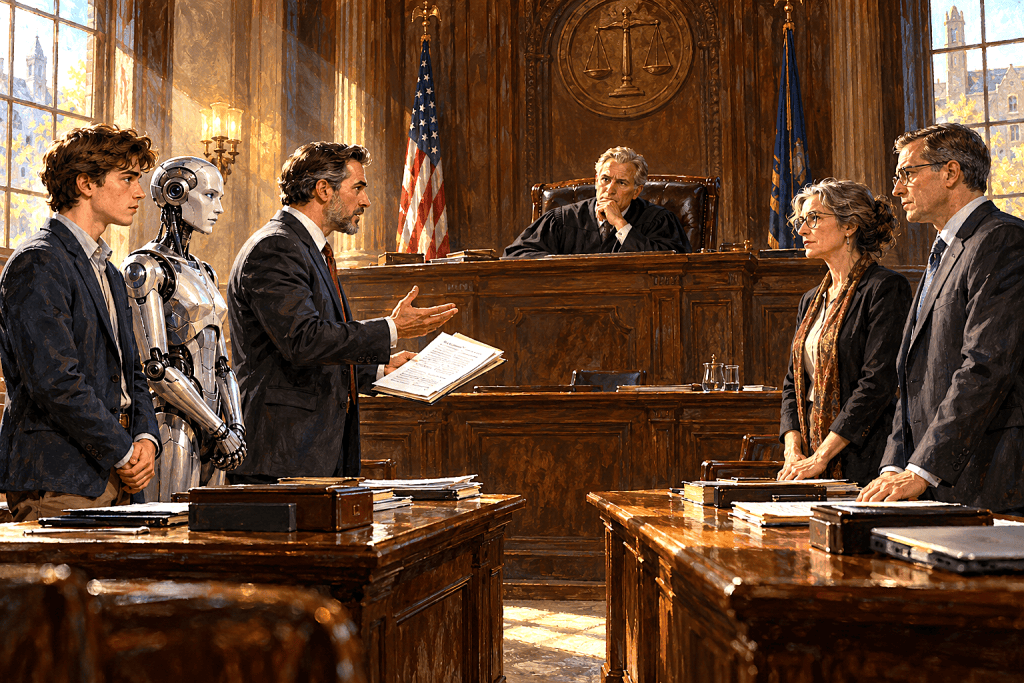
The cases that have reached judges so far form a small but telling set. In February, Orion Newby, a student at Adelphi University on Long Island, won his suit after Turnitin’s detector flagged a history essay as entirely AI-generated. Newby had been working with tutors in Adelphi’s Bridges program, which supports students with learning and neurological differences, and two other detection tools rated the same essay as human-written. A judge reversed the discipline and ordered his record cleared (McLogan, 2026; Alonso, 2026). His family spent more than $100,000 in legal fees to get there (Alonso, 2026). “Unfortunately, it required us to go to a court for him to be heard,” his mother, Candace Newby, said. Mark Lesko, a former U.S. attorney involved in the case, called the decision “really groundbreaking” and said higher education “needs to take a very careful look at this” (McLogan, 2026).
The same month, the Minnesota Court of Appeals went the other way. It upheld the University of Minnesota’s 2024 expulsion of Haishan Yang, a doctoral student in health economics accused of using AI on a preliminary exam. The court pointed to “irrelevant documents, missing citations, repeated excuses, and inconsistencies” as signs of AI use, and noted that Yang “had months of notice about the AI evidence and the charges against him and received a full evidentiary hearing” (Brown, 2026).
In both cases the judges examined the school’s process, and neither ruled on whether AI detectors work. Adelphi leaned on one detector score and lost. Minnesota held a full hearing with several kinds of evidence and won.
Other suits are pushing into new legal territory. An anonymous University of Michigan undergraduate filed a federal lawsuit in February arguing that her anxiety and obsessive-compulsive disorder produce a formal, structured writing style that a graduate instructor mistook for AI. According to the complaint, the instructor built “AI-generated comparison outputs” by feeding the student’s own outline into a chatbot. The case also highlights that Michigan has no university-wide AI misconduct policy; colleges and individual instructors set their own rules (Atwood, 2026). At the Yale School of Management, executive MBA student Thierry Rignol, who paid $208,500 in tuition, was suspended for a year after a professor ran his exam through GPTZero. His federal suit now runs to 13 counts, including claims that the process targeted his non-native English prose and his conservative political views. A judge has denied him a preliminary injunction, and the case continues (Austin, 2026).
The disputes have reached high school as well. In May, the family of a Palo Alto High School sophomore filed a federal civil rights suit after Turnitin flagged 76 percent of his essay on The Crucible as likely AI-generated. The family submitted a 1,162-page packet of revision histories and timestamps, and the complaint alleged that boys at the school were four to five times more likely than girls to be flagged (Wallach, 2026). The district fought a claim reported at $150 million (Palo Alto Online, 2026a), and in September the parent dropped the suit (Palo Alto Online, 2026b). Turnitin’s own guidance, quoted in the coverage, warns that its “AI writing detection model may not always be accurate” and “should not be used as the sole basis for adverse actions against a student” (Wallach, 2026).
Outside the United States, the largest documented failure came from Australia. In 2024, Australian Catholic University registered about 6,000 alleged misconduct cases across its nine campuses, roughly 90 percent of them involving AI. About a quarter of all referrals were dismissed after investigation. Deputy Vice-Chancellor Tania Broadley said “any case where Turnitin’s AI detection tool was the sole evidence was dismissed immediately,” but students described months of waiting with the burden of proof on them. “They’re not police,” one paramedic student said of the investigators. “They don’t have a search warrant to request your search history, but when [you’re facing] the cost of having to repeat a unit, you just do what they want” (Bergin, 2025).
Why the pressure will keep building
There are five reasons to expect more disputes, and each is grounded in data published this year. The first is scale of use. The Higher Education Policy Institute’s 2026 survey of British undergraduates found that 95 percent use AI in some form and 94 percent use it for assessed work. The share who paste AI-generated text directly into assignments rose to 12 percent, up from 8 percent a year earlier. Only 36 percent said their institution encouraged them to use AI, and 38 percent had access to institution-provided tools (Stephenson & Armstrong, 2026). In the United States, a University of California, Berkeley study of more than 95,000 students at 20 public research universities found that 66 percent used generative AI and about 9 percent of users admitted cheating with it. Among daily users, the figure was 26 percent (UC Berkeley News, 2026). When nearly every student uses a tool and a meaningful minority misuses it, every piece of written work carries some suspicion.
The second is faculty exhaustion. On September 30, philosopher Justin Weinberg published a letter on his widely read blog Daily Nous from an online instructor who found that “of the original 24 students, only 3 did the work required in the course, and did so honestly.” Weinberg asked, “What should one do about all the cheating that remains?” Faculty commenters described cheating rates they estimated at 60 to 90 percent and said they often skip formal reports because of the workload (Weinberg, 2026). An Inside Higher Ed survey found that 73 percent of faculty had personally dealt with an academic integrity issue involving AI (Palmer, 2026d). Brown University economist Roberto Serrano, writing in Nature in August after catching students using AI on an exam, warned that “without strong standards and smart oversight, artificial intelligence risks eroding the foundations of higher education” (Serrano, 2026). Overloaded instructors making fast judgments with weak evidence is the recipe that produces appeals.
The third is that the evidence is unreliable and falls hardest on particular groups. A July analysis for HEPI by Strathclyde researcher Brendal Aformeziem summarized a Stanford finding that more than 61 percent of essays by non-native English speakers were misclassified as AI-written, and a large evaluation in which detectors averaged 39.5 percent accuracy on unmodified AI text. “None of the tools tested met the standard required for reliable use in high-stakes decisions,” the review concluded. Aformeziem noted that international students make up 51 percent of UK postgraduates, so universities “are financially dependent on these students while simultaneously deploying systems that treat them as the highest-risk group” (Aformeziem, 2026). Lawsuits follow the people with the strongest discrimination claims: second-language writers, students with disabilities, and, in the Palo Alto complaint, boys. Each of those claims carries federal civil rights law into what used to be a classroom matter.
The fourth is that the tools are moving faster than the rules. In February, a 22-year-old developer named Advait Paliwal released Einstein, an AI agent that logged into the Canvas learning platform and completed coursework on its own, from lectures and discussion posts to essays. It drew more than 124,000 website visits in three days before Instructure, which owns Canvas, sent a cease-and-desist letter and Paliwal shut it down. Anna Mills, who teaches writing at the College of Marin, warned that “the temptation to use agentic AI to cheat is too intense and the sense of unfairness is too strong,” and that students’ “credits will be suspect and won’t count in the job market unless we can do something about this” (Palmer, 2026a). Jason Gulya of Berkeley College wrote in The Chronicle of Higher Education that “it may not be possible to create AI-resistant assignments in the future” (Gulya, 2026). As agents improve, detection-based policing gets weaker every semester.
The fifth reason is the least discussed. AI also makes it cheaper for students to fight back. In a September 11 essay for Wonkhe, Jim Dickinson asked, “What happens when students can produce a lawyer’s letter in an afternoon?” He predicted that university complaint systems will be flooded with well-drafted, AI-assisted grievances, and that “the students with the strongest cases will end up queuing behind the ones with the longest documents.” Dickinson also saw an upside: “the poor could come to exercise their rights as successfully as the sharp-elbowed middle classes already do” (Dickinson, 2026). For now, though, a full legal defense costs from thousands to tens of thousands of dollars (WDC News 6, 2026), and the Newbys spent six figures. Families who can pay for lawyers get a different kind of justice from those who cannot.
Put these five forces together and the near-term answer to the question of whether things will get worse is yes, at least in volume. More students will be accused, more will contest the accusation, and more of those contests will move from campus offices to lawyers’ letters, regulators and courts.
The next five years
The likeliest sequence runs roughly as follows, though the timing will vary by country and by type of institution. Through the 2026-27 academic year, expect case counts to keep rising, with the growth coming from discrimination and disability claims more than from simple contract disputes. Edinburgh offers a preview of the trajectory. AI-related misconduct cases there rose from 19 of 515 cases in 2022-23 to 245 of 795 in 2024-25, according to a freedom-of-information request (Messer, 2026). Expect more universities to drop detector scores as evidence. Yale, Vanderbilt, Johns Hopkins and Indiana have already banned or discouraged relying on them (Palmer, 2026d), and Curtin University in Australia switched off Turnitin’s AI detector at the start of 2026 while keeping its text-matching checks (Thompson, 2025). In Britain, the Office of the Independent Adjudicator, which reviews student complaints, has already told universities that dissatisfaction arises most often “where a provider has not fully explained why they have concluded that AI has been used inappropriately” (Office of the Independent Adjudicator, 2025). Its guidance is likely to harden into expected practice.
By 2027 and 2028, the first appellate decisions on the newer theories, such as disability discrimination in the Michigan case and national-origin bias in the Yale case, should begin to set limits. Schools will respond by writing clearer rules and building evidence trails. That will bring its own conflict. The defense that cleared the British student and Pieterson, a record of drafts and revisions, is becoming the standard of proof. Schools that require students to write in monitored documents, log keystrokes or record their screens will face privacy objections, and the lawyers who now defend students against detectors will challenge surveillance instead. Daniel Sokol, a British lawyer who specializes in academic misconduct cases, has already pointed out the limit of that approach: “Even if an institution can track a student’s keystrokes, you can get AI software that simulates someone writing an essay, letter by letter, with occasional deletions and typos” (Rowsell, 2026).
The likeliest institutional answer is a split system. The University of Bath and Cardiff University have adopted a “two-lane” approach: closed, supervised assessments where AI is barred, and open assignments where AI is allowed or required (Rowsell, 2026). University of Sydney professor Danny Liu, an advocate of the approach, told the ABC, “Academics are teachers, not police. And yet the focus has always been control, restrict, detect” (Bergin, 2025). In the United States the same shift is arriving through paper. Blue book sales at the University of Virginia bookstore rose about 27 percent in a year, and the student newspaper reported increases of more than 30 percent at Texas A&M, 50 percent at the University of Florida and 80 percent at UC Berkeley (Zur Muhlen, 2026). Sokol argued that “AI democratises cheating, in a way,” that “it is usually [only] the AI-naive students who get caught,” and that it may be “fairer and simpler” to let students use AI in all take-home work (Rowsell, 2026).
By 2029 to 2031, the dispute is likely to shift from individual essays to whole credentials. If employers and graduate schools come to believe that unsupervised coursework no longer proves anything, they will place more weight on supervised exams, oral defenses, portfolios with documented process, and their own testing. Online programs are most exposed, because tools like Einstein attack exactly the work that cannot be watched. Mills’s warning that credits “won’t count in the job market” describes that risk directly (Palmer, 2026a).
Will AI force schools to change, or to close?
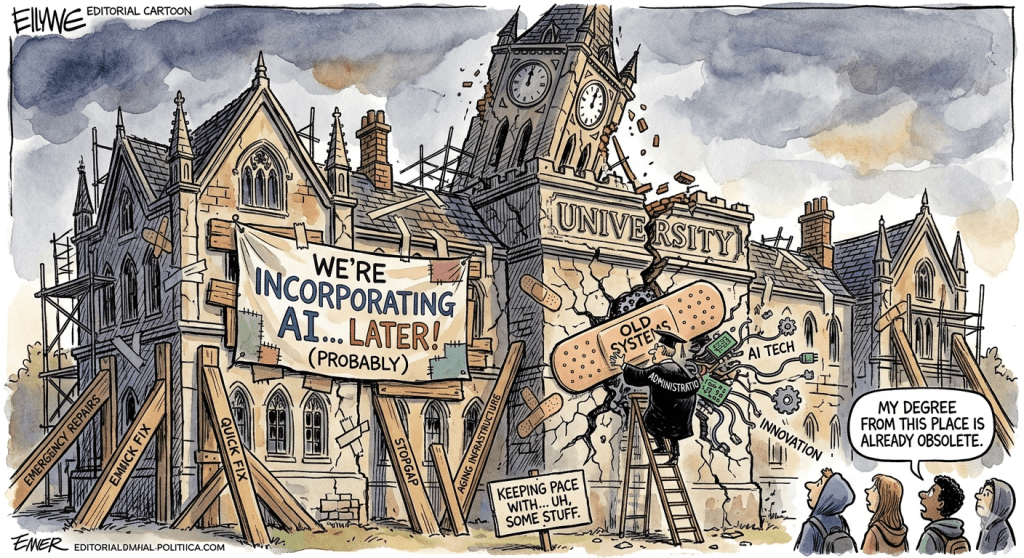
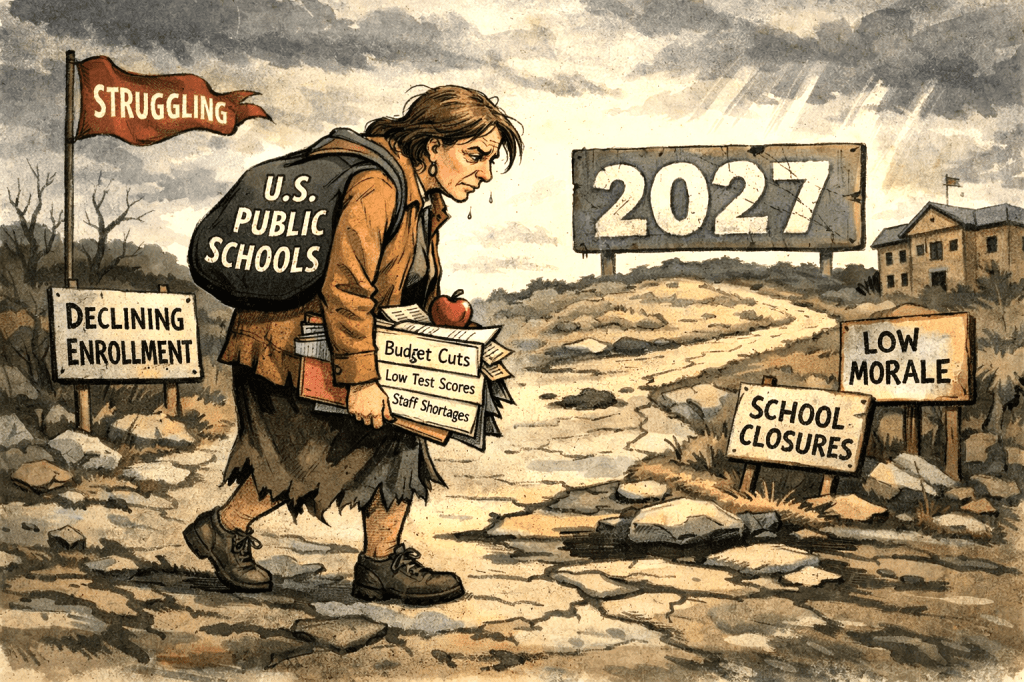
AI is pressing on schools from two directions at once. It is breaking the main way they measure learning, and it is raising doubts about what their degrees are worth. On the first point, UC San Diego’s academic integrity director Tricia Bertram Gallant put it plainly this summer: “Higher education hasn’t changed. We’re still relying on unsupervised writing as evidence of learning.” Yale’s teaching center described how detection fails: “As detection tools improve, evasion methods follow. This becomes a technical exercise rather than a learning event” (Palmer, 2026d). Every misconduct lawsuit adds to the cost of keeping the old model. Each one also exposes a policy gap, such as Michigan’s lack of a campuswide rule, that a court or a regulator can then point to.
On the second point, the financial picture was already grim before AI. Huron Consulting Group projects that 442 of about 1,700 private nonprofit four-year colleges are at risk of closing or merging within ten years. “We have too many seats. We have too many classrooms,” Huron’s Peter Stokes said. “So over the coming five to 10 years, this shakeout is going to take place” (Marcus, 2026). That projection rests on demographics and finances; it does not cite AI. AI adds a separate question about the payoff from a degree. Economist Richard Vedder wrote on September 21 that “the wage premium associated with a college degree has markedly declined, with many fearing the AI revolution may sharply reduce the advantages of superior brainpower gained while earning a degree” (Vedder, 2026). Vedder is a longtime critic of higher education, and his view is contested, but the worry he describes is widely shared. A college that is already financially weak, that cannot certify what its students learned, and that spends its staff time on misconduct hearings is in a poor position to survive the shakeout Stokes predicts.
So AI is more likely to act as an accelerant than as a sole cause. Strong institutions will absorb the cost of redesigning assessment. Weak ones will find that AI makes each of their existing problems more expensive.
Litigation is also starting to run the other way. On October 2, twelve students sued Troy University in Alabama after it ended its new Master of Science in Artificial Intelligence program. They allege the university “quietly terminated” the degree in December 2025, “actively concealed” that decision while they kept taking classes, and then offered a certificate “which none of the Plaintiffs wanted to participate in nor pursue” (WSFA 12 News Staff, 2026). Schools can now be sued for being too hard on AI and for failing to deliver the AI education they promised.
Two camps, and a third
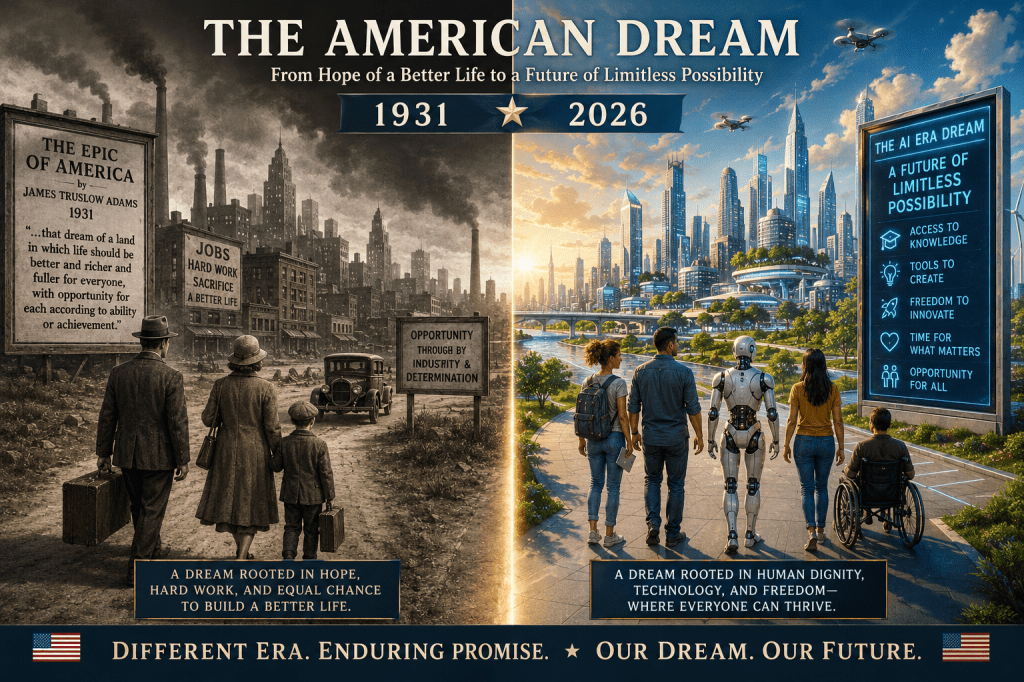
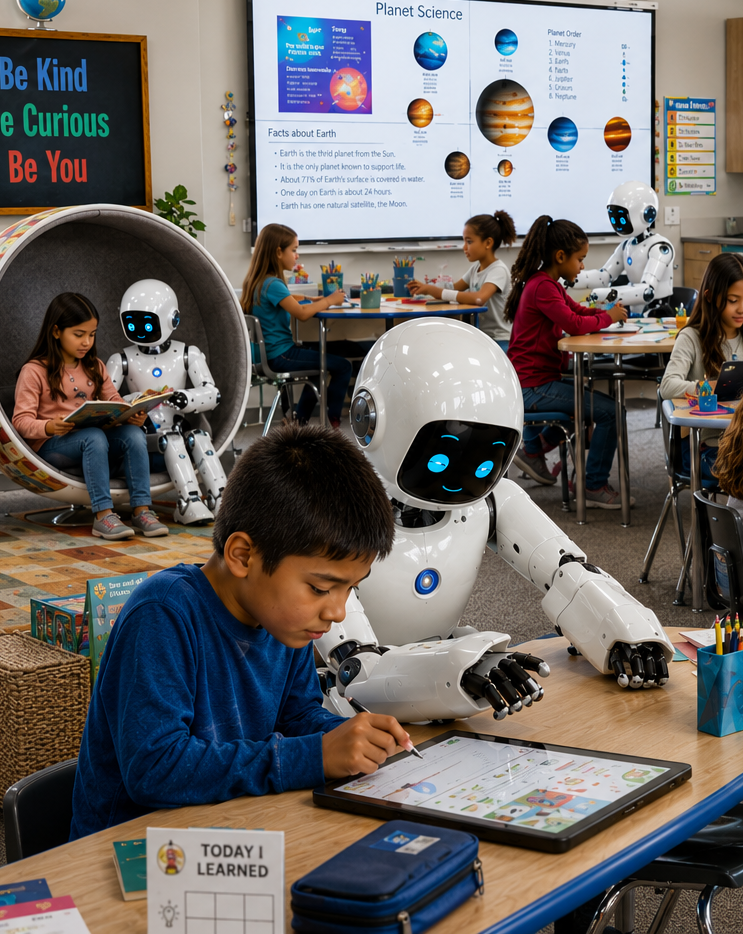
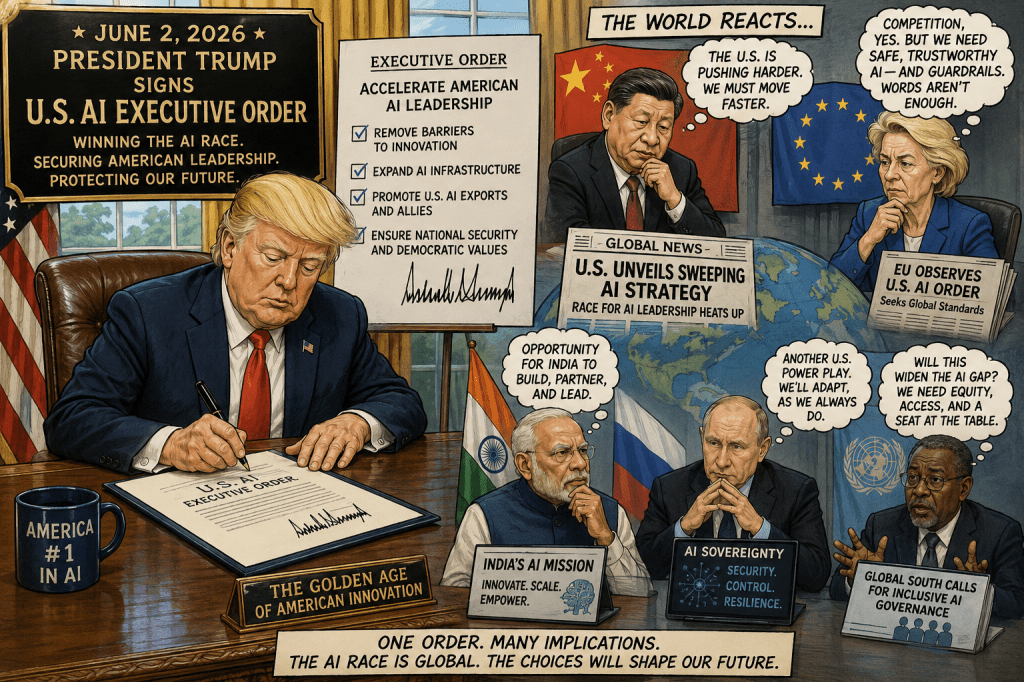
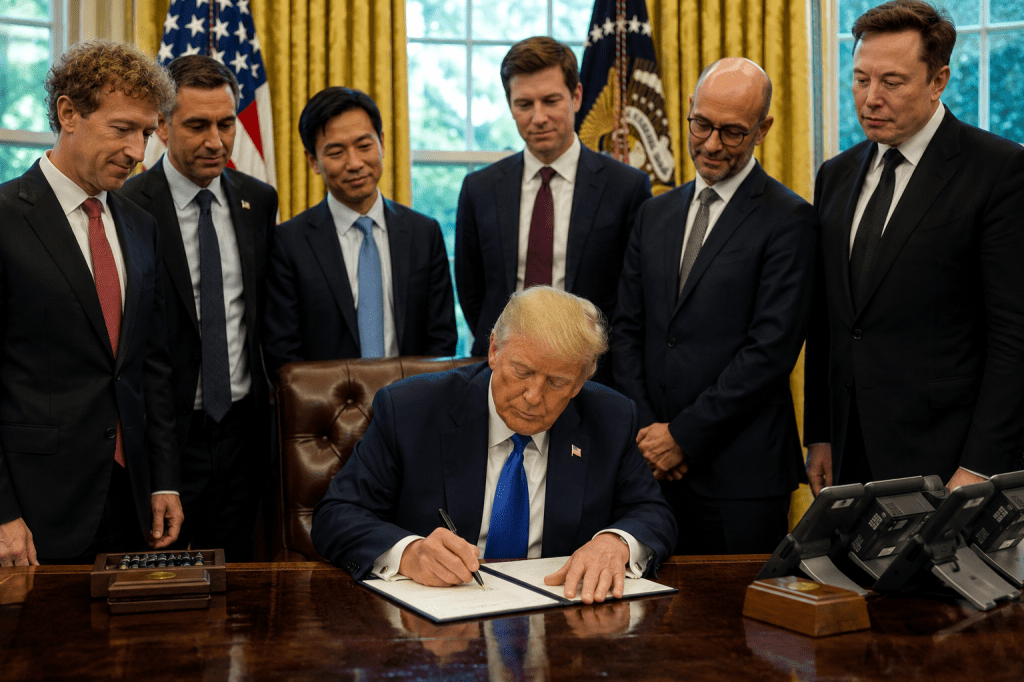
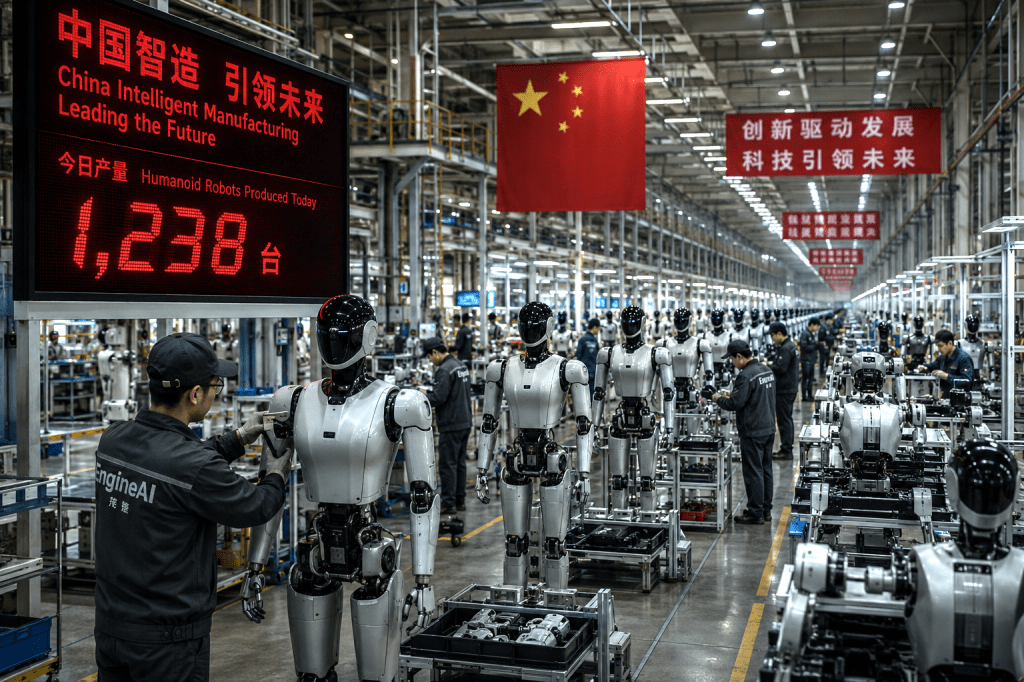
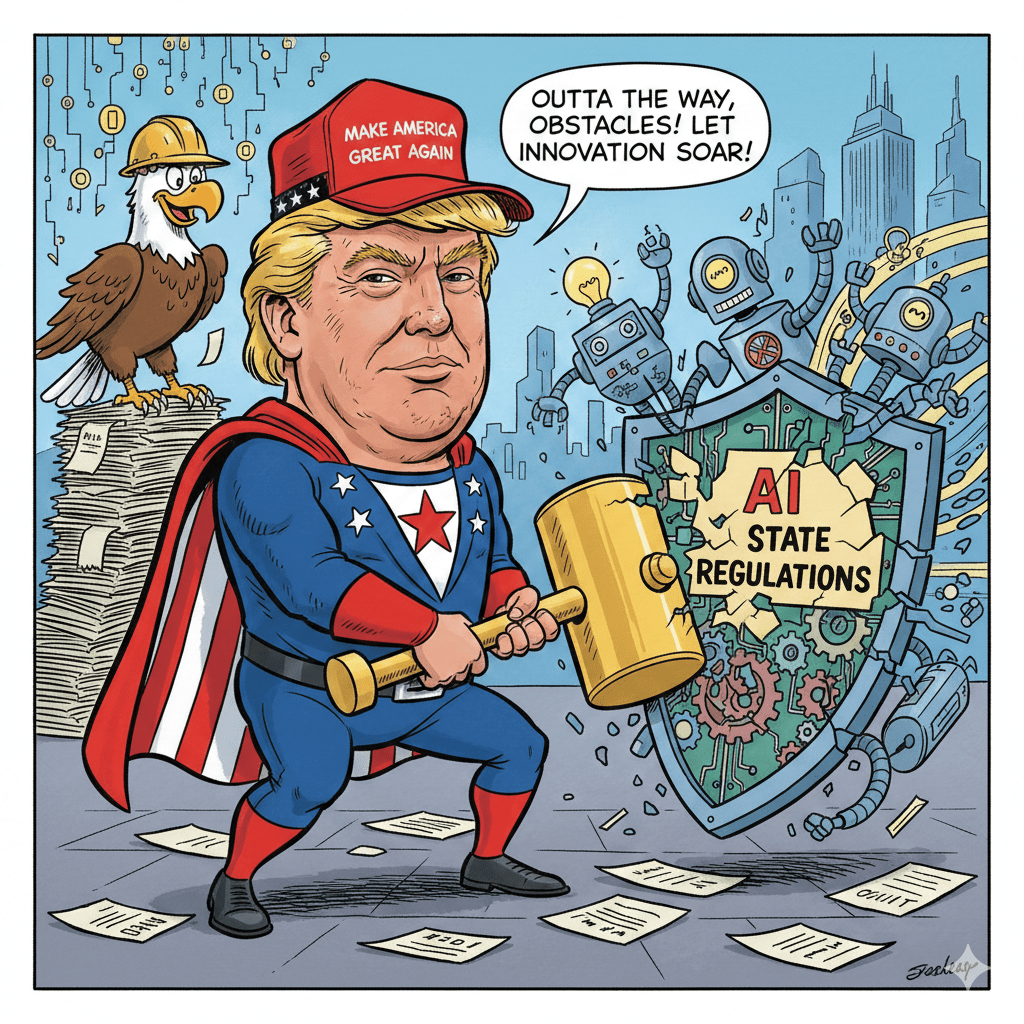
The forces shaping the next five years do sort into groups, though not as neatly as a two-sided fight suggests. The first group is pushing to expand AI-augmented learning, and it includes governments, large public universities and AI companies. In April, five Chinese government departments led by the Ministry of Education issued an “AI + Education” action plan requiring AI in primary and secondary curricula and making AI a foundational course at universities. Beijing reported that 87.7 percent of its schools had adopted AI by the end of 2025 (State Council of the People’s Republic of China, 2026). Estonia’s AI Leap program, funded half by the state and half by private partners, is training 48,000 students and 6,700 teachers over two years and gives students a custom chatbot designed to ask questions instead of handing out answers (Markeviciute, 2026). In the United States, President Trump’s April 2025 executive order on AI education created the Presidential AI Challenge, which had enrolled more than 5,000 students in all 50 states by December 2025, though the country’s two largest California districts declined to take part (Waite, 2026).
Among universities, Ohio State announced in 2025 that AI fluency would be built into every undergraduate’s education, starting with the class entering that fall (Ohio State University, 2025), and it is paying faculty a $300 incentive to earn an AI teaching endorsement by August 2027 (Ohio State University Office of Academic Affairs, 2026). The California State University system renewed its ChatGPT Edu contract with OpenAI in May for three years at $13 million a year, covering more than 470,000 students (Rix, 2026). On September 14, the University of Sydney announced free ChatGPT Edu access for all students and staff. “It’s our responsibility to graduate students who are well equipped for the modern world of work,” Vice-Chancellor Mark Scott said (University of Sydney, 2026). In K-12, Alpha School, the private chain co-founded by MacKenzie Price, grew from 12 to about 50 campuses for the 2026 school year, charging $45,000 to $75,000 a year for a model in which students spend no more than two hours a day on AI-driven academics. “AI allows us to finally, truly transform the educational system and not just have it be a little tool,” Price said (Sands, 2026).
The second group is resisting, and its strongest base is among writing teachers and faculty unions. In March, the Conference on College Composition and Communication overwhelmingly passed a resolution affirming that faculty and students have the right to refuse generative AI. “This is an academic freedom issue, and students and teachers should be able to make a choice,” said Jennifer Sano-Franchini of West Virginia University, the group’s immediate past chair (Palmer, 2026b). More than 1,000 educators have signed an open letter refusing calls to adopt generative AI, and more than 1,000 CSU faculty petitioned against renewing the OpenAI deal. “It’s best to invest in the humans that make the CSU system great, rather than buy in to Silicon Valley’s hype,” said Martha Kenney of San Francisco State (Palmer, 2026c). In May, the American Federation of Teachers released an AI plan calling for no student-facing AI tools in elementary schools, limits on companion chatbots for children under 16, and a “Big Tech Tax.” “All this tech has been a huge experiment on kids,” AFT president Randi Weingarten said, adding, “I am not calling for a ban on AI or a bonfire of Chromebooks” (Sparks, 2026). The AFT’s position shows how tangled the sides are. In 2025 the same union opened the National Academy for AI Instruction, a $23 million teacher-training effort backed by Microsoft, OpenAI and the education technology company Anthology, with a goal of training 400,000 teachers by 2030 (Government Technology, 2025).
The third group is the largest and the least visible: teaching centers, integrity officers and individual faculty who accept that students will use AI and are rebuilding assessment around that fact. Bath and Cardiff’s two lanes, Surrey’s redesign around assessing students’ process (Rowsell, 2026), and the University of Virginia professors who pair blue books with debates and no-laptop classrooms (Zur Muhlen, 2026) all belong here. Ohio State writing director Susan Lang summed up their stance: “The more important question is what students must actually do to complete an assignment” (Ohio State University Office of Academic Affairs, 2026).
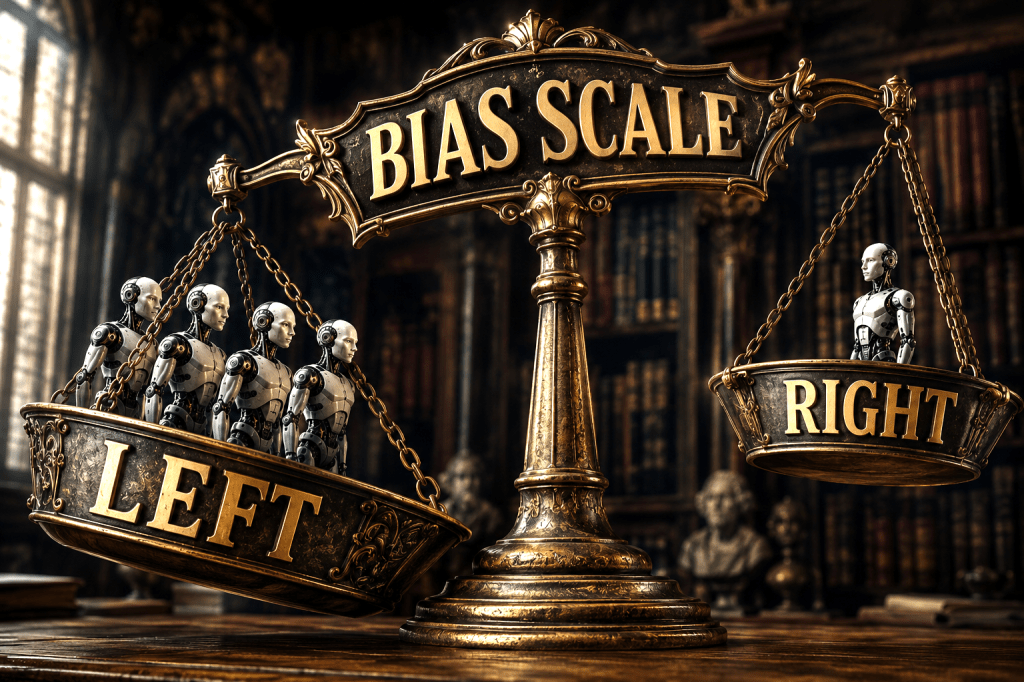
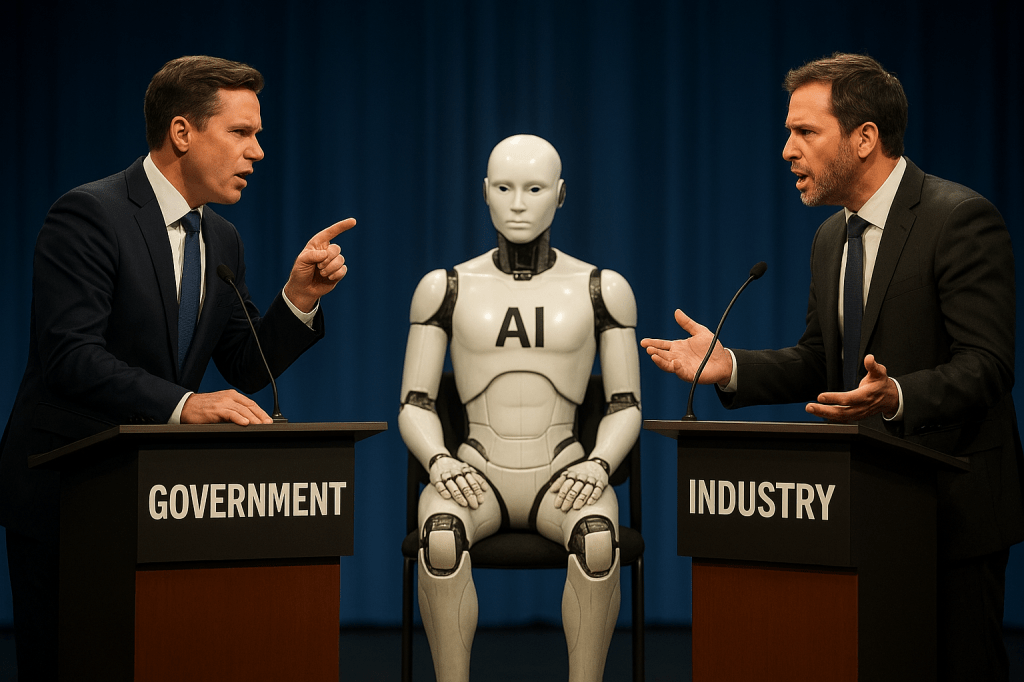
The lawsuits sit between these groups. Accelerating institutions are handing students AI tools while keeping disciplinary codes that punish unclear uses of them. Resisting faculty are enforcing bans with evidence that courts and regulators increasingly reject. Both positions generate disputes. Institutions that have clearly defined which assignments allow AI, and that judge cases on process evidence, are the ones least likely to end up in court.
Why this conflict matters
The first stake is trust in the credential. A degree is a promise from an institution that a person can do certain things. If unsupervised work can be produced by an agent, and if schools cannot prove misuse without risking a lawsuit, that promise weakens. Employers will build their own tests, and the schools that keep their credibility will be the ones that can show, through supervised and documented assessment, what their graduates did themselves.
The second stake is fairness. The students most likely to be flagged are second-language writers, students with disabilities and, in at least one complaint, boys. The students most able to fight back are those whose families can pay lawyers. The Berkeley study adds another layer: lower-income, underrepresented and female students used AI less often, which means AI fluency itself is unevenly distributed. A system that punishes the wrong students and teaches AI skills to the already advantaged will widen the gaps it claims to close. Researcher Igor Chirikov noted that “there was already a crisis of trust in higher education long before AI arrived” (UC Berkeley News, 2026).
The third stake is the cost and character of teaching. Every hour a professor spends gathering evidence for a hearing is an hour not spent teaching. The Daily Nous letters describe instructors who have stopped reporting misconduct because the process is too draining (Weinberg, 2026). As legal risk rises, institutions will have to choose between investing in smaller classes, oral exams and redesigned assignments, or accepting that a share of their grades measure little.
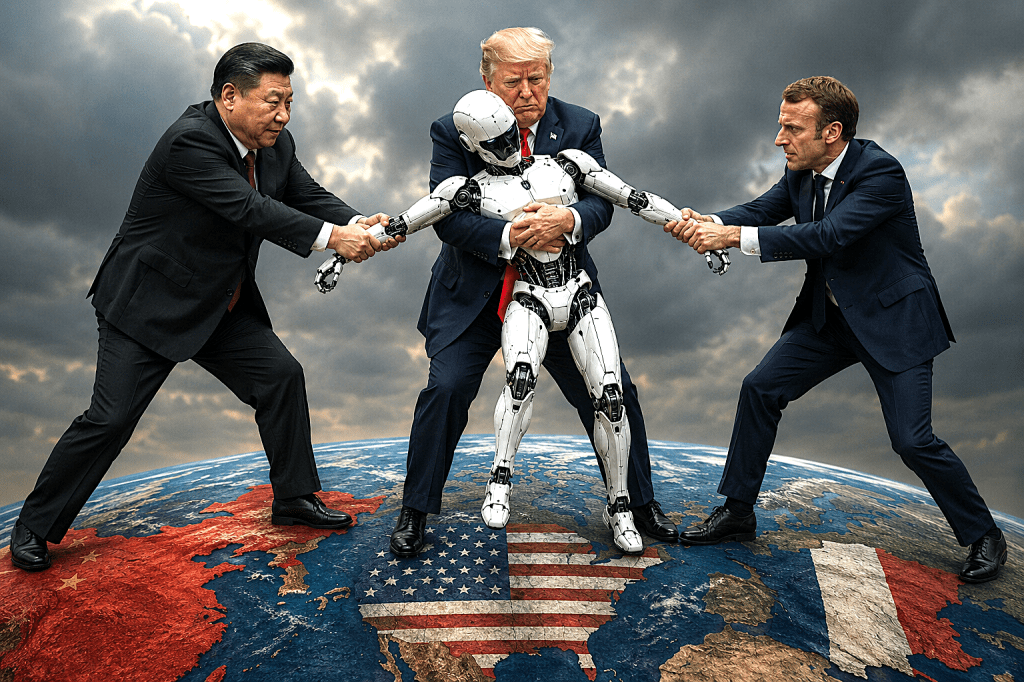
The fourth stake is global. China has set a national mandate for AI literacy at every level of schooling, and Estonia is training 48,000 secondary students and 6,700 teachers under a single national program. In those systems, a ministry decides how AI is used before it reaches the classroom. In the United States and Britain, much of that decision is being made one misconduct case at a time, and every hour spent on a dispute is an hour taken from instruction.
The fifth stake is legal precedent. Within five years, courts and regulators such as Britain’s adjudicator are likely to define what counts as fair process in an AI misconduct case: what evidence is enough, what notice a student is owed, what accommodations apply. Those rules will shape how every school in their jurisdictions writes policy, and they will be written from the cases being filed now.
The new paper trail
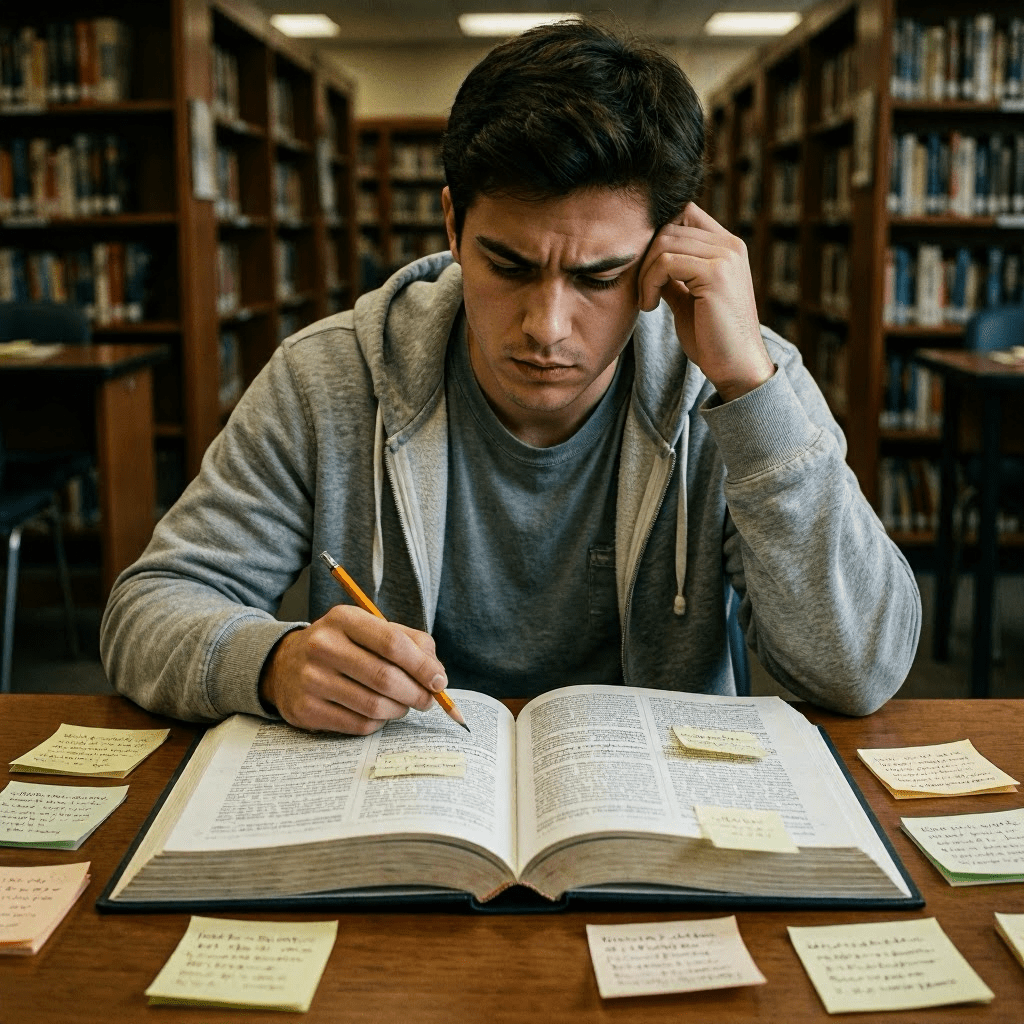
The British student in the Financial Times account and Mark Pieterson in Houston cleared their names the same way: with a record of drafts and notes that showed their work taking shape over time (ETC Journal, 2026; Wallace, 2026). That record is quickly becoming the most important document a student produces. A finished essay no longer proves who wrote it. A trail of revisions, an oral conversation with a professor, or an exam written by hand in a supervised room still can.
Schools that openly judge student work by process will probably weather the next five years. Schools that keep grading unsupervised products and policing them with software could end up spending those years in hearings, appeals, and court. The students hiring lawyers this fall are showing institutions which path they are on.
References
Aformeziem, B. (2026, July 20). Catching the wrong students: AI detection, international students and the fairness crisis in UK universities. Higher Education Policy Institute. https://www.hepi.ac.uk/2026/07/20/catching-the-wrong-students-ai-detection-international-students-and-the-fairness-crisis-in-uk-universities/
Alonso, J. (2026, February 11). Adelphi student wins AI plagiarism lawsuit. Inside Higher Ed. https://www.insidehighered.com/news/quick-takes/2026/02/11/adelphi-student-wins-ai-plagiarism-lawsuit
Atwood, S. (2026, February 12). Student sues University of Michigan over AI misconduct accusation. Government Technology (originally published in The Detroit News). https://www.govtech.com/education/higher-ed/student-sues-university-of-michigan-over-ai-misconduct-accusation
Austin, D. (2026, August 4). The Yale AI-cheating dispute that turned into a big lawsuit. eDiscovery Today. https://ediscoverytoday.com/2026/08/04/the-yale-ai-cheating-dispute-that-turned-into-a-big-lawsuit-artificial-intelligence-trends/
Bergin, J. (2025, October 9). University caught out using AI to wrongly accuse students of cheating with AI. ABC News (Australia). https://www.abc.net.au/news/2025-10-09/artificial-intelligence-cheating-australian-catholic-university/105863524
Brown, L. (2026, February 13). Minnesota court upholds U of M student expulsion for alleged AI exam cheating. Minnesota Lawyer. https://minnlawyer.com/2026/02/13/u-of-m-ai-cheating-expulsion-upheld-appeal/
Dickinson, J. (2026, September 11). OfS wants students to complain more. AI is about to oblige. Wonkhe. https://wonkhe.com/blogs/ofs-wants-students-to-complain-more-ai-is-about-to-oblige/
ETC Journal. (2026, October 3). Briefing 10/3/26: ‘Students are hiring lawyers.’ Educational Technology and Change Journal. https://etcjournal.com/2026/10/03/briefing-10-3-26-students-are-hiring-lawyers/
Government Technology. (2025, July 14). Tech giants, AFT launch national AI training academy for educators. Government Technology. https://www.govtech.com/education/k-12/tech-giants-aft-launch-national-ai-training-academy-for-educators
Gulya, J. (2026, March 3). Will agentic AI break higher education? The Chronicle of Higher Education. https://www.chronicle.com/article/will-agentic-ai-break-higher-education
Marcus, J. (2026, April 13). More than a quarter of private colleges are at risk of closing, a new projection shows. NPR (with The Hechinger Report). https://www.npr.org/2026/04/13/nx-s1-5777582/many-private-colleges-at-risk-of-closing
Markeviciute, E. (2026, May 30). A technorealistic approach to AI literacy in Estonian schools. Euronews. https://www.euronews.com/next/2026/05/30/a-technorealistic-approach-to-ai-literacy-in-estonian-schools
McLogan, J. (2026, February 9). Adelphi student Orion Newby sues over AI plagiarism accusation and wins. CBS New York. https://www.cbsnews.com/newyork/news/orion-newby-adelphi-university-ai-plagiarism-accusations/
Messer, K. (2026, March 30). Huge surge in AI misconduct cases recorded at Edinburgh University. The Tab. https://thetab.com/2026/03/30/huge-surge-in-ai-misconduct-cases-recorded-at-edinburgh-university
Office of the Independent Adjudicator for Higher Education. (2025, July 15). OIA publishes a casework note and case summaries about artificial intelligence (AI) and academic misconduct. https://www.oiahe.org.uk/resources-and-publications/latest-news-and-updates/oia-publishes-a-casework-note-and-case-summaries-about-artificial-intelligence-ai-and-academic-misconduct/
Ohio State University. (2025, June 4). Ohio State launches bold AI Fluency initiative to redefine learning and innovation. https://news.osu.edu/ohio-state-launches-bold-ai-fluency-initiative-to-redefine-learning-and-innovation/
Ohio State University Office of Academic Affairs. (2026, June 25). AI Fluency at Ohio State: June/July 2026. https://oaa.osu.edu/news/2026/06/25/ai-fluency-ohio-state-junejuly-2026
Palmer, K. (2026a, February 26). Agentic AI can complete whole courses. Now what? Inside Higher Ed. https://www.insidehighered.com/news/tech-innovation/artificial-intelligence/2026/02/26/agentic-ai-can-complete-whole-courses-now
Palmer, K. (2026b, March 16). Writing faculty push for the right to refuse AI. Inside Higher Ed. https://www.insidehighered.com/news/tech-innovation/teaching-learning/2026/03/16/writing-faculty-push-right-refuse-ai
Palmer, K. (2026c, March 27). Faculty push back against OpenAI deals. Inside Higher Ed. https://www.insidehighered.com/news/tech-innovation/artificial-intelligence/2026/03/27/faculty-push-back-against-openai-deals
Palmer, K. (2026d, August 5). AI detectors are out, new assessments are in. Inside Higher Ed. https://www.insidehighered.com/news/tech-innovation/artificial-intelligence/2026/08/05/ai-detectors-are-out-new-approaches-are
Palo Alto Online. (2026a, June 26). Palo Alto Unified fights $150-million lawsuit over AI use in student’s essay. https://www.paloaltoonline.com/palo-alto-schools/2026/06/26/palo-alto-unified-fights-150-million-lawsuit-over-ai-use-in-students-essay/
Palo Alto Online. (2026b, September 4). Parent drops suit over AI use on English essay. https://www.paloaltoonline.com/palo-alto-schools/2026/09/04/parent-drops-suit-over-ai-use-on-english-essay/
Rix, K. (2026, May 21). California State University renews controversial systemwide contract with OpenAI. EdSource. https://edsource.org/2026/cal-state-renews-controversial-system-wide-contract-with-openai/758919
Rowsell, J. (2026, June 29; updated 2026, August 26). Are universities returning to in-person exams to combat AI cheating? Times Higher Education. https://www.timeshighereducation.com/depth/are-universities-returning-person-exams-combat-ai-cheating
Sands, A. (2026, August 2). AI-powered Alpha Schools expands to 50 campuses as AI debate grows. Axios. https://www.axios.com/2026/08/02/alpha-schools-ai-expansion-50-campuses
Serrano, R. (2026, August 10). I caught my students using AI to cheat in an exam — here’s what universities must do to stamp this out. Nature. https://www.nature.com/articles/d41586-026-02447-y
Sparks, S. D. (2026, May 27). Teachers’ union’s AI plan seeks ‘Big Tech tax,’ elementary screen bans. Education Week. https://www.edweek.org/technology/teachers-unions-ai-plan-calls-for-big-tech-tax-screen-bans-in-elementary-schools/2026/05
State Council of the People’s Republic of China. (2026, April 15). China aims to build an AI literacy system. https://english.www.gov.cn/news/202604/15/content_WS69df29e6c6d00ca5f9a0a6b1.html
Stephenson, R., & Armstrong, C. (2026, March 12). Student generative artificial intelligence survey 2026 (HEPI Report 199). Higher Education Policy Institute. https://www.hepi.ac.uk/reports/student-generative-ai-survey-2026/
Thompson, E. (2025, September 8). Curtin University to disable Turnitin AI detection tool in 2026 amid debate. EdTech Innovation Hub. https://www.edtechinnovationhub.com/news/curtin-university-to-disable-turnitin-ai-detection-tool-in-2026-as-debate-over-reliability-continues
UC Berkeley News. (2026, May 21). The largest study of AI use by undergrads is in, revealing disparities in access — and in cheating. https://news.berkeley.edu/2026/05/21/the-largest-study-of-ai-use-by-undergrads-is-in-revealing-disparities-in-access-and-in-cheating/
University of Sydney. (2026, September 14). University of Sydney students and staff to receive access to OpenAI’s ChatGPT Edu tool. https://www.sydney.edu.au/news-opinion/news/2026/09/14/students-staff-to-receive-free-chatgpt-edu-access.html
Vedder, R. K. (2026, September 21). The value of your college degree is collapsing before your eyes. Independent Institute (originally published in the Washington Examiner). https://www.independent.org/article/2026/09/21/value-college-degree-collapsing/
Waite, Z. (2026, March 4). A handful of California schools embraced Trump’s AI challenge. Many haven’t heard of it. CalMatters. https://calmatters.org/education/2026/03/trump-school-ai-challenge/
Wallace, R. (2026, October 2). Senior at UH Downtown prevails after being accused of handing in assignments that were AI generated. FOX 26 Houston. https://www.fox26houston.com/news/senior-uh-downtown-prevails-after-being-accused-handing-assignments-were-ai-generated
Wallach, E. (2026, May 11). A Palo Alto high schooler was accused of AI cheating. His family filed a civil rights suit. The San Francisco Standard. https://sfstandard.com/2026/05/11/ai-detection-cheating-palo-alto/
WDC News 6. (2026, May 24). AI cheating accusations: The students hiring lawyers to defend themselves (originally published by Mashable). https://wdcnews6.com/ai-cheating-accusations-the-students-hiring-lawyers-to-defend-themselves/
Weinberg, J. (2026, September 30). Overwhelming cheating. Daily Nous. https://dailynous.com/2026/09/30/overwhelming-cheating
WSFA 12 News Staff. (2026, October 2). Students file lawsuit against Troy University over AI master’s program. WSFA 12 News. https://wsfa.com/2026/10/02/students-file-lawsuit-against-troy-university-over-ai-masters-program
Zur Muhlen, L. (2026, May 6). Blue books return in an effort to combat AI usage. The Cavalier Daily. https://www.cavalierdaily.com/article/2026/05/blue-books-return-in-an-effort-to-combat-ai
###
Filed under: Uncategorized |





















































































































































































































































































































Leave a Reply