





By Jim Shimabukuro (assisted by ChatGPT)
Editor
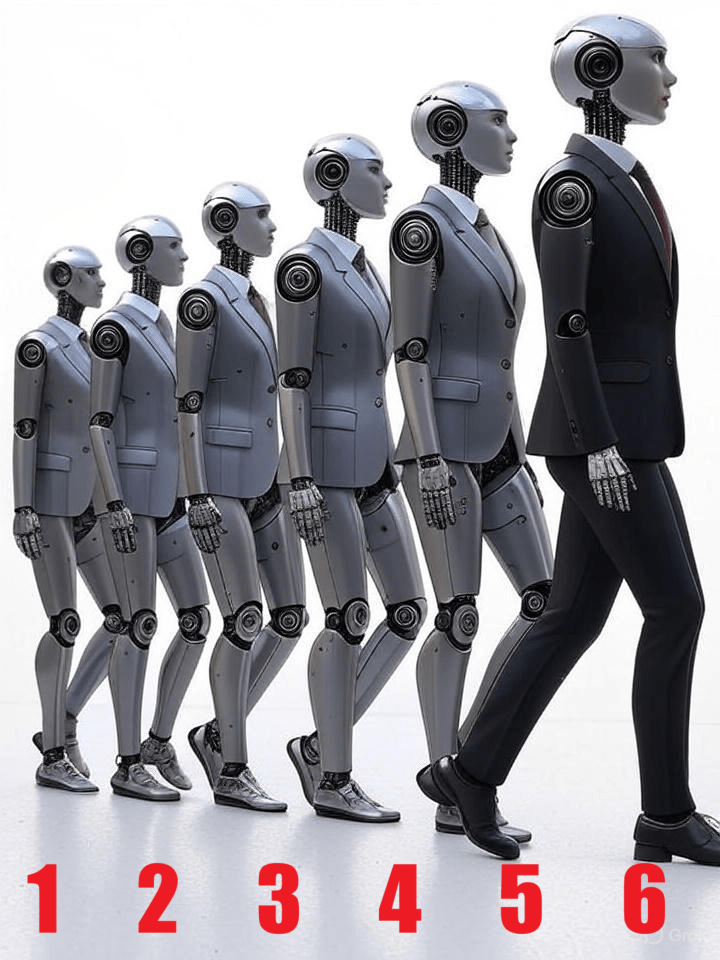
Summary: Beijing’s 2026 humanoid athletes can already run faster than human world records. The harder race is toward machines that can work for hours, manipulate ordinary objects, recover from mistakes, earn trust, and operate safely around people. This is a grounded forecast of the path from today’s spectacular prototypes to the humanoid coworkers, responders, performers, assistants and—more controversially—military systems that could become familiar over the next two to four decades.

As of August 25, 2026, the Second World Humanoid Robot Games are still under way in Beijing. Forecasts in this article are therefore based on evidence available through that date; final Games results may change individual records, but not the larger technological picture.
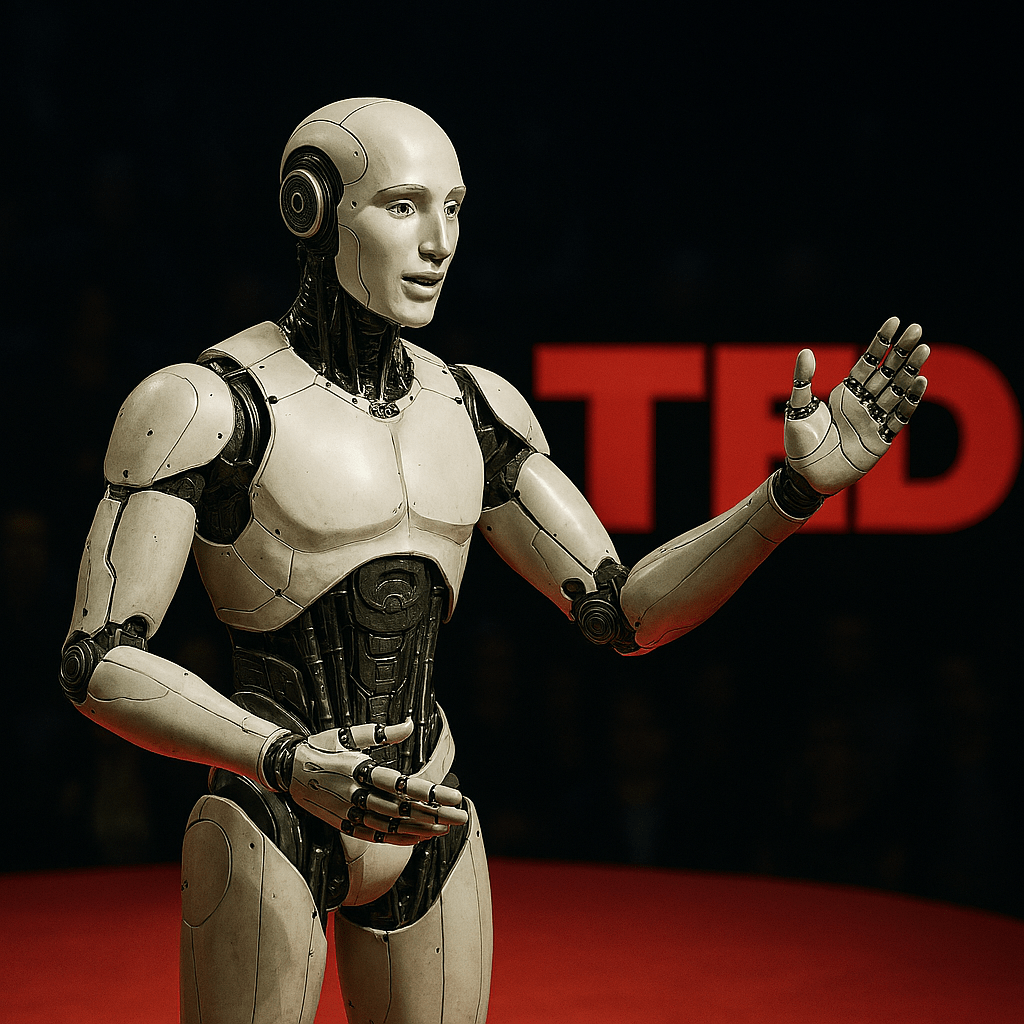
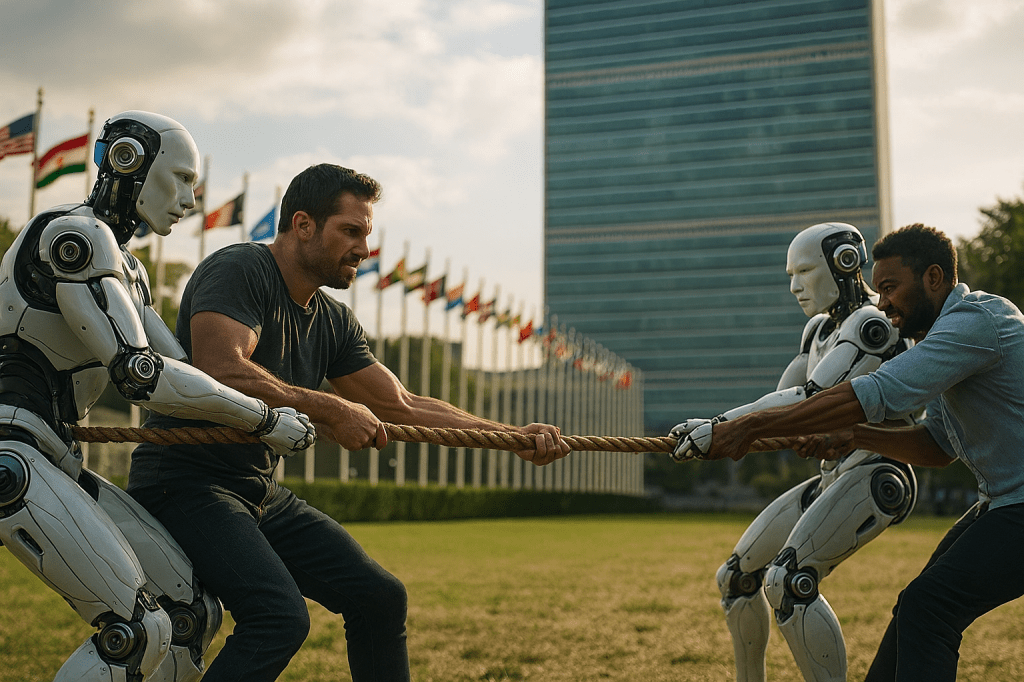
The image is almost too perfect for a futuristic newsreel. A humanoid robot lifts a barbell, loses its balance, collapses, and is carried away on a stretcher. Another machine runs the 100 meters at a pace no human has matched, then needs a thick crash mat because stopping is still harder than sprinting. In the obstacle course, robots crawl through tunnels, negotiate swinging tires, fall, recover, and keep moving. The crowd cheers not because the machines are flawless, but because they are visibly learning how to function in the unruly physical world. That mixture of superhuman performance and almost comic fragility is the most important fact about humanoid robotics in 2026. [1-3]
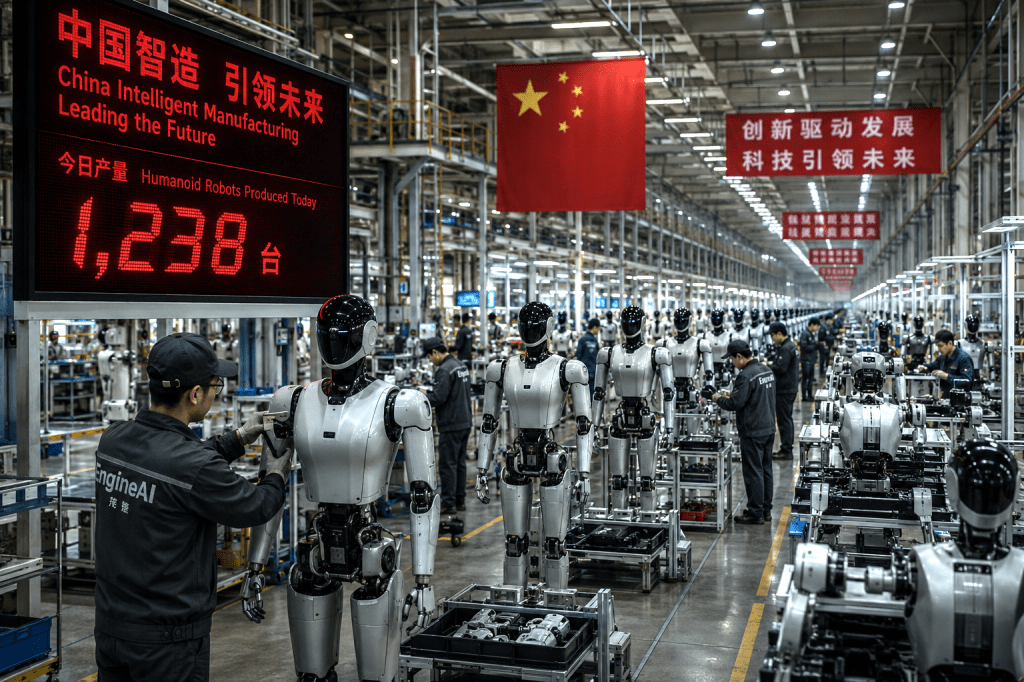
The CBS News report that provides the backdrop for this article captures both sides of the moment. It shows more than 2,000 robots competing in athletics and practical challenges, then raises the darker possibility that the same physical capabilities could someday be used in war. An engineer working with the A3 kickboxing robot told CBS that robot soldiers might be five to ten years away. The broadcast also relayed an extraordinary claim that China accounts for 97 percent of the world’s humanoid robots. Reuters subsequently put the statistic in more precise terms: China accounted for 97 percent of global humanoid-robot shipments in the first half of 2026, with more than 40,000 units delivered. That is a remarkable snapshot of manufacturing momentum, not proof that one country will permanently own the industry. [1,4]
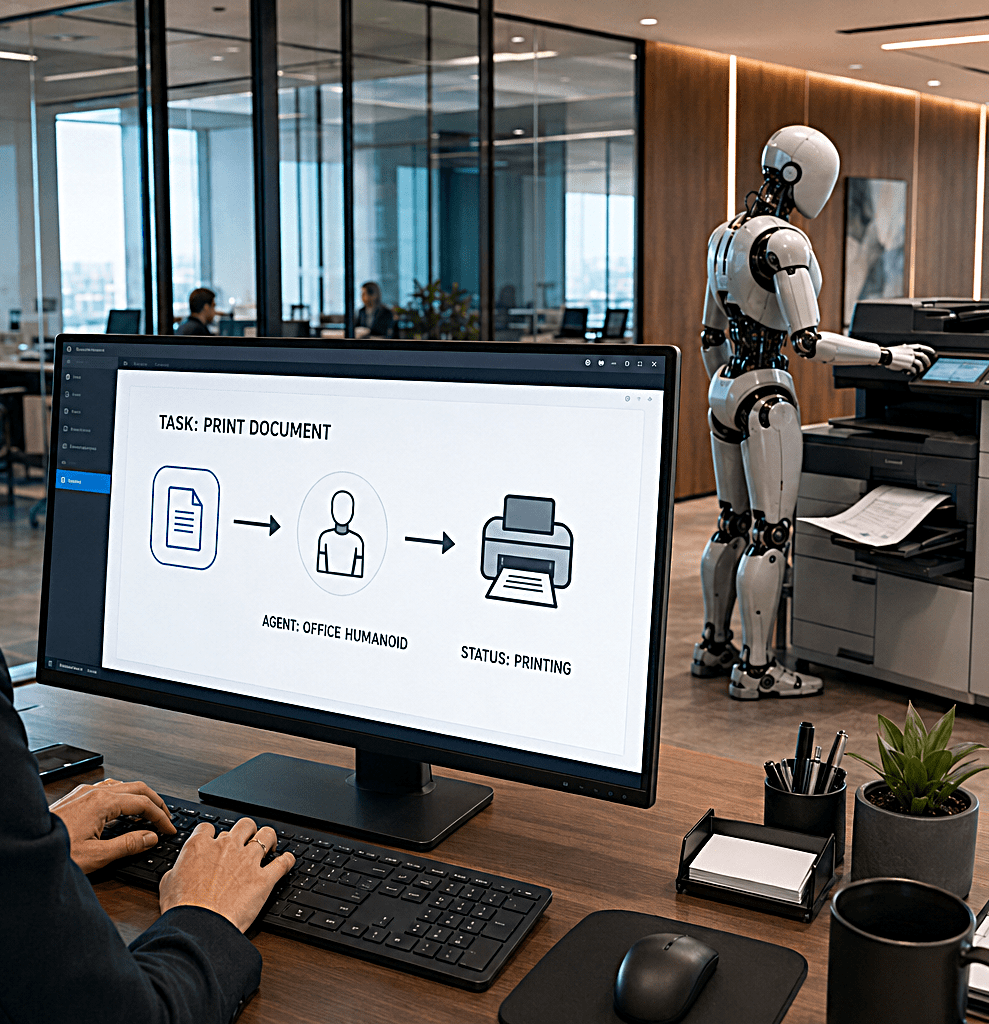
The Games themselves make the point even more clearly. There are 51 events—30 sports events and 21 scenario contests—and more than 40 percent require fully autonomous operation. The scenario events include factory, restaurant, office and emergency tasks. Connecting a cable, loading materials, handling packages and charging an electric vehicle may look dull beside a sub-nine-second sprint, but those mundane tests are closer to the real commercial frontier. One Chinese robotics executive at the Games put it plainly: “Only when it can work in those end scenarios does it have real value.” [3]
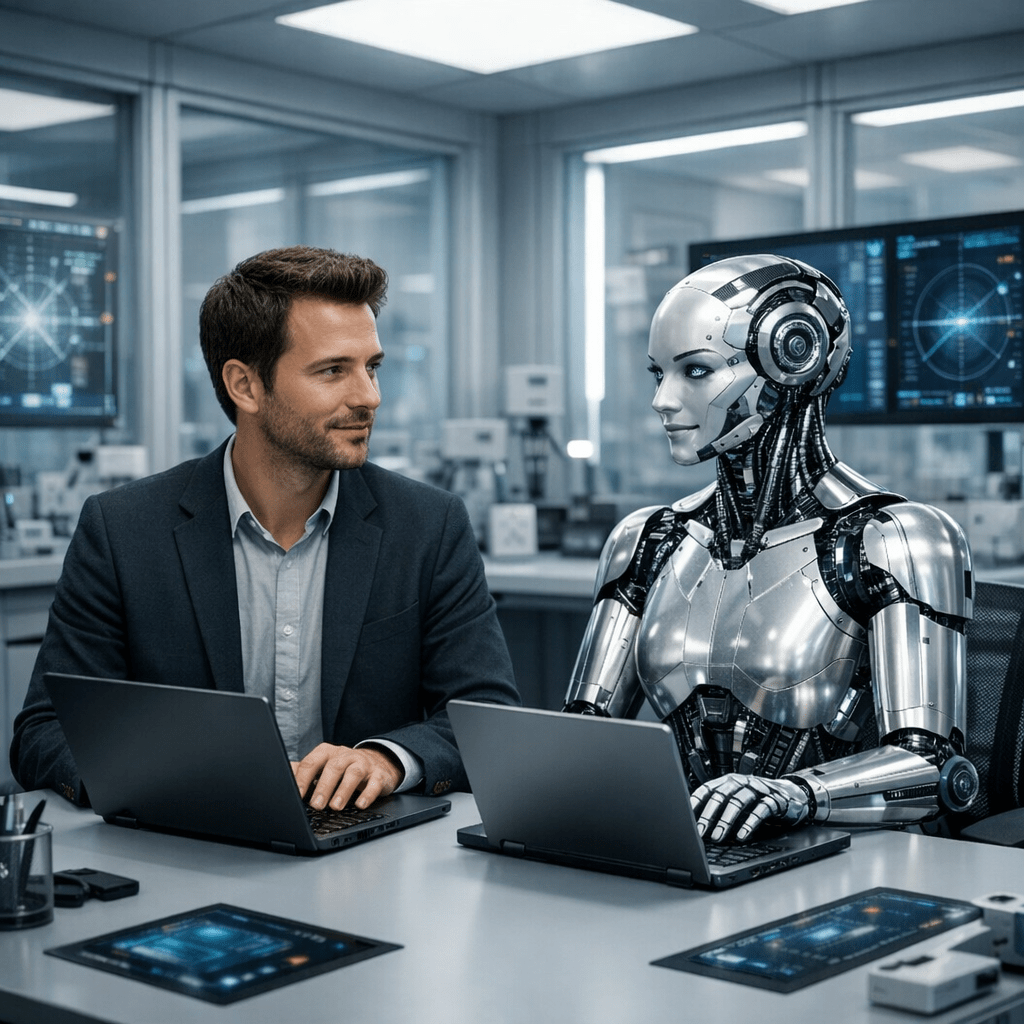
This article starts from that distinction. Humanoids are no longer merely laboratory curiosities. Several are already doing real work in factories and logistics facilities, and the hardware is improving quickly. But the credible future is not a straight-line extrapolation from a viral sprint. By 2040, humanoid robots are likely to be common in some industries, visible in many public settings, and familiar to most people. They are much less likely to be universally capable mechanical humans living in every home. For the full “science-fiction” version—a reasonably priced robot that can enter an unfamiliar house, understand almost any request, manipulate almost any object, safely care for a frail person, cook, clean, repair, converse, and improvise without remote help—2050 or even 2060 is the more defensible horizon.
The decisive transition will not be from robots that cannot do human things to robots that can. It will be from robots that can do a task once to robots that can do it safely, cheaply, repeatedly, and without a robotics team standing nearby.
That distinction also explains why serious forecasts span such a wide range. Unitree founder Wang Xingxing said in August that a major leap in embodied intelligence might come in two to three years in an optimistic case or five to ten years at the latest; he defines the desired breakthrough as a robot entering an unfamiliar environment and completing most tasks from ordinary language instructions. McKinsey’s 2026 robotics work sees at least $1 trillion of economic value from physical AI by 2040, concentrated first in manufacturing and logistics. Morgan Stanley’s more expansive long-range model foresees more than one billion humanoids globally by 2050, with roughly 90 percent in industrial and commercial settings and about 80 million in homes. The German Aerospace Center’s Alin Albu-Schäffer offers the best antidote to exuberance: humanoid robotics, he says, is “at kilometre 5 of a marathon.” [4-7]
These views are not contradictory. They are describing different milestones: a software breakthrough, a profitable deployment, a mass market, and human-level versatility. The first could happen soon. The last is much harder.
At the outer edge of the forecast spectrum sits Elon Musk, who said in 2024 that there could be at least 10 billion humanoid robots by 2040 at roughly $20,000 to $25,000 each. That scenario is worth recording because Tesla is one of the companies trying to manufacture humanoids at automotive scale, but it is not the baseline used here. It requires both much faster cost reduction and vastly faster global adoption than the more measured Morgan Stanley, McKinsey and Deloitte scenarios. [41]
What Beijing is really testing
Robot sports are useful precisely because they are unforgiving. Running exposes weaknesses in balance, impact tolerance, thermal management and energy use. Boxing and kickboxing force rapid perception and whole-body control. Weightlifting tests torque, structural strength and recovery from unstable loads. Obstacle courses demand perception, foot placement and the ability to re-plan after something goes wrong. These are not the same capabilities required to stock a warehouse or assist an older adult, but the underlying improvements—better actuators, faster control loops, more robust joints, better batteries and better recovery behavior—carry over. [2,3]
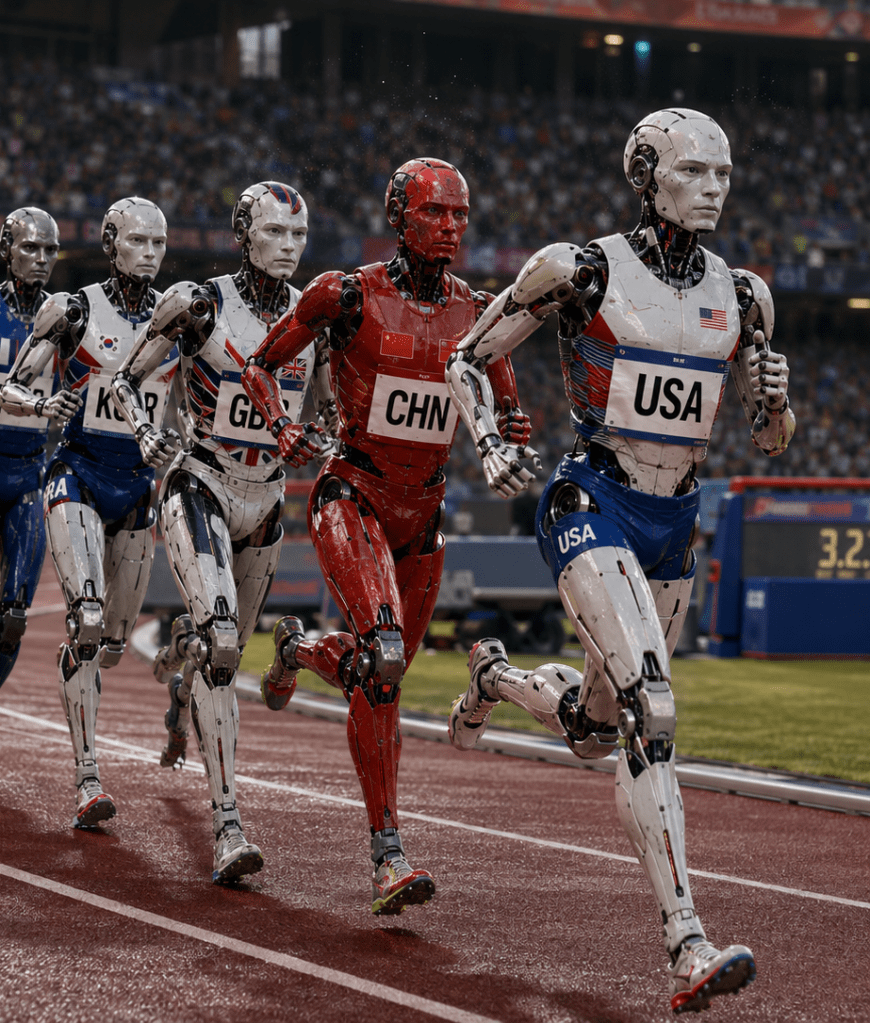
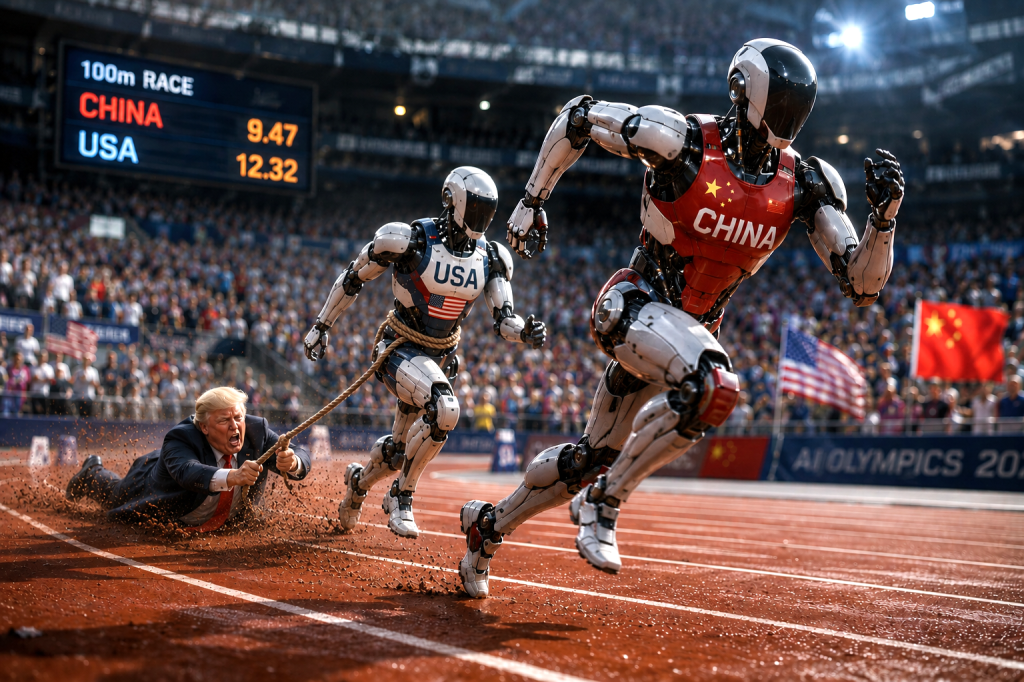
The Games also reveal why robotics progress will be jagged rather than smooth. Reuters reported on August 25 that the Tiangong Ultra ran 100 meters in 8.86 seconds, improving dramatically on the 21.50-second winning time at the 2025 Games. Yet the robot still hit a stopping mat after the finish and briefly produced a small fire; another competitor effectively came apart in the race. The same event produced a 38.15-second 400 meters, a 2:21.64 1,500 meters, and a 2.88-meter high jump. Performance is racing ahead in narrow domains, while durability, braking, recovery and general-purpose manipulation remain limiting. [2]
A note on the numbers is worthwhile. The CBS transcript describes an 8.83-second 100-meter semifinal; Reuters’ later August 25 report gives 8.86 seconds for Tiangong Ultra. Because the Games are live and records are being broken quickly, this article uses Reuters’ later figure while preserving the CBS transcript as the event-level source that prompted the inquiry. [1,2]
More revealing still are the scenario events. A robot that can run at 40 kilometers per hour is impressive. A robot that can recognize a slightly misaligned connector, orient its wrist correctly, apply just enough force, notice that the insertion failed, and try again may be economically transformative. These are the “small imperfections of the physical world,” as Reuters described them: the cable at the wrong angle, the package that shifts, the object a few centimeters out of reach. [3]
That is why the World Humanoid Robot Games should be thought of less as a preview of robot Olympics than as a highly public engineering tournament. The athletic records show the ceiling of specialized performance. The scenario events show the floor a useful general-purpose machine must reach.
What the most credible forecasters actually agree on
There is no consensus calendar for humanoid robots, and any article that pretends otherwise is selling certainty that the evidence does not support. Yet a surprisingly coherent middle forecast emerges when industry deployments, robotics researchers, government programs and market studies are read together.
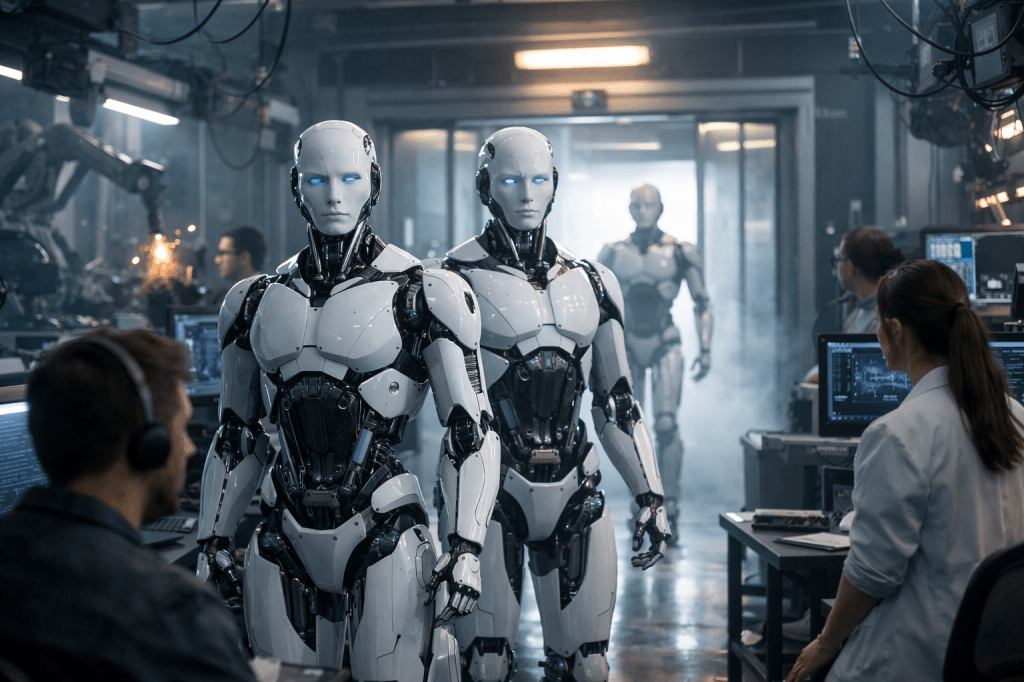
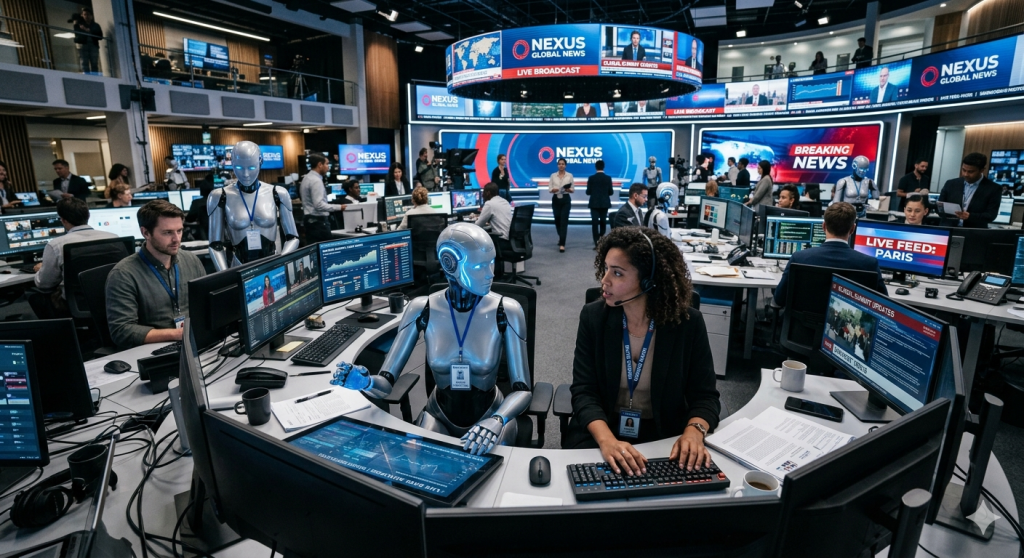
First, factories and logistics facilities will lead. They are structured, mapped, supervised, and economically measurable. A robot can be trained on a limited set of tasks, work behind or beside defined safety zones, and be judged by output per hour rather than by whether it seems “human.” Boston Dynamics began production of its all-electric Atlas and committed its 2026 deployments to Hyundai and Google DeepMind. Figure says its previous-generation humanoid contributed to the assembly of 30,000 BMW vehicles in 2025 and that its F.03 is now handling sequencing and logistics work at BMW. Agility Robotics converted a Toyota pilot into a commercial agreement in Canada, after its Digit robots had already moved more than 100,000 totes in another commercial deployment. [8-11]
Second, software—not motors—is becoming the strategic bottleneck. Wang Xingxing told Reuters that Unitree’s biggest current investment is in world models and acknowledged that humanoids are still less efficient than humans in most applications. NVIDIA, meanwhile, is treating robotics as a foundation-model problem: its 2026 releases combine world models, synthetic data, simulation and the GR00T humanoid model. Google DeepMind’s Gemini Robotics 2 work pushes in the same direction, emphasizing whole-body control, dexterity, teamwork and the transfer of learned skills across robots and tasks. [4,12,13]
Third, mass adoption will not arrive evenly. A warehouse may justify a $50,000 or $100,000 machine long before a family does. A disaster-response agency may accept a bulky robot because it keeps a human out of a toxic building. A hospital may deploy a humanoid to move linens and supplies before trusting it to lift a patient. A military may use a humanoid for CBRNE reconnaissance while continuing to reserve lethal decisions for humans. Each domain has a different acceptable cost, failure rate and regulatory threshold.
Fourth, “humanoid” will never mean “the best shape for every robot.” Wheels are more efficient on flat floors. Drones are better in the air. tracked vehicles can carry heavy loads. Quadrupeds can traverse rubble with a lower center of gravity. Fixed industrial arms remain faster and cheaper when the task never moves. The humanoid form earns its keep where the environment was built for human bodies: stairs, doors, shelves, tools, vehicles, ladders, control panels and workstations. The future is therefore likely to be a mixed ecology of machines, with humanoids occupying the jobs where compatibility with human spaces matters enough to justify their complexity. [14,15]
A plausible development timeline: 2026 to 2050
The following stages are not release dates. They are a middle-case synthesis of current deployments and the most credible published forecasts. Faster progress is possible if embodied AI has the kind of software breakthrough Wang Xingxing expects. Slower progress is possible if reliability, safety, power consumption or economics improve only incrementally. [4-7]
| Period | Stage | What becomes normal | What is still hard |
| 2026–2028 | Pilot to product | Factory/logistics deployments; teleoperation and synthetic data used heavily; robot sports and public demonstrations accelerate; early home units reach enthusiasts. | Long unsupervised shifts, human-like hands, unfamiliar homes, certification across public environments. |
| 2029–2032 | Commercial specialization | Humanoids become routine in selected warehouses, auto plants, inspection, retail backrooms and hospital logistics; responders use robots in high-risk scenes. | True generality; reliable operation across many locations; affordable domestic ownership. |
| 2033–2036 | Multi-skill coworkers | Robots switch among several task families at one site; better hands and autonomous recovery; greater use in construction finishing, transit assistance, elder support and military logistics/reconnaissance. | Human-level judgment, intimate care without supervision, fully autonomous lethal use accepted by society. |
| 2037–2040 | Selective everyday presence | Millions of commercial robots globally in a plausible middle case; familiar in high-wage or labor-short sectors; robot entertainment and athletics mainstream; public-service deployments visible. | A universal household butler; one humanoid replacing a competent adult across arbitrary work. |
| 2040–2050 | Mass adoption—if economics converge | Large-scale diffusion as unit cost, uptime and service networks improve; home ownership grows from niche to meaningful minority; social and care roles expand under regulation. | Human-equivalent dexterity and common-sense reliability in every environment remain uncertain. |
| 2050–2060 | General-purpose domestic era—conditional | If models, hands, batteries and safety all mature, the long-promised multipurpose home and community robot becomes plausible at consumer scale. | Not guaranteed. A plateau in dexterity, energy density, trust or regulation could keep humanoids specialized. |
2026–2028: The pilot-to-product years
The decisive question in this first stage is not whether a robot can perform a task in a demonstration. It is whether the robot can perform it for months in a workplace that has schedules, safety rules, maintenance costs and impatient supervisors. The evidence in 2026 says this transition has begun. Atlas, Figure and Digit are no longer purely research machines. China is simultaneously building an enormous manufacturing base and a national “real-scenario” training program that targets manufacturing, inspection, maintenance, logistics, retail, medical rehabilitation and emergency response. Chinese authorities said the program aimed to commercialize 10,000 humanoids and establish more than 100 high-value scenarios by the end of 2026. [8-10,14]
During these years, however, the human behind the robot remains important. Humans teleoperate machines to collect training data, intervene during failures, define work cells and inspect performance. Simulation supplies millions of additional experiences that would be too expensive or dangerous to collect physically. World models generate variations of rooms, objects and accidents. The robot becomes more autonomous, but its autonomy is built on enormous amounts of human demonstration, synthetic experience and testing. [12,13,16]
The home market also begins, but mostly as a learning program disguised as a product market. 1X advertises NEO at $20,000 or $499 per month, with U.S. deliveries beginning in 2026; its own materials make clear that complex chores may use scheduled remote “Expert” assistance. That is technologically interesting and commercially legitimate, but it is not yet Rosie from The Jetsons. It is closer to an early personal computer: expensive, limited, fascinating, and valuable partly because every real household teaches the developer something the laboratory cannot. [17]
2029–2032: Useful robots become boring
A technology begins to matter when people stop filming it. In the second stage, the successful humanoid is the one employees walk past without looking up. It replenishes a line, unloads containers, carries kits to technicians, inspects gauges, moves medication carts, collects linen, patrols a transit facility, or enters a dangerous room ahead of a human team. The work is narrower than “do anything,” but broad enough that one body can justify itself across several shifts and tasks.
This is the earliest period when a “ChatGPT moment” for embodied intelligence could become visible in practical deployments. Wang Xingxing’s optimistic two-to-three-year window from 2026 points to 2028–2029, while his cautious window points well into the 2030s. The breakthrough would not mean human-level intelligence. It would mean that a robot could enter many unfamiliar but ordinary environments, interpret a natural-language goal, and complete a large fraction of tasks without a custom program for each one. [4]
If that happens, the economics change quickly. System integrators will spend less time writing scripts for every shelf and fixture. Robots will learn from video, demonstration and prior experience. A chain retailer could deploy one model across hundreds of stores, fine-tuning it locally rather than engineering each site from scratch. The largest gains should occur where labor shortages, injury risks or 24-hour operations already create a strong incentive to automate. McKinsey expects the biggest economic value through 2040 to be in manufacturing and logistics for exactly this reason. [5]
2033–2036: From single-task automation to multi-skill coworkers
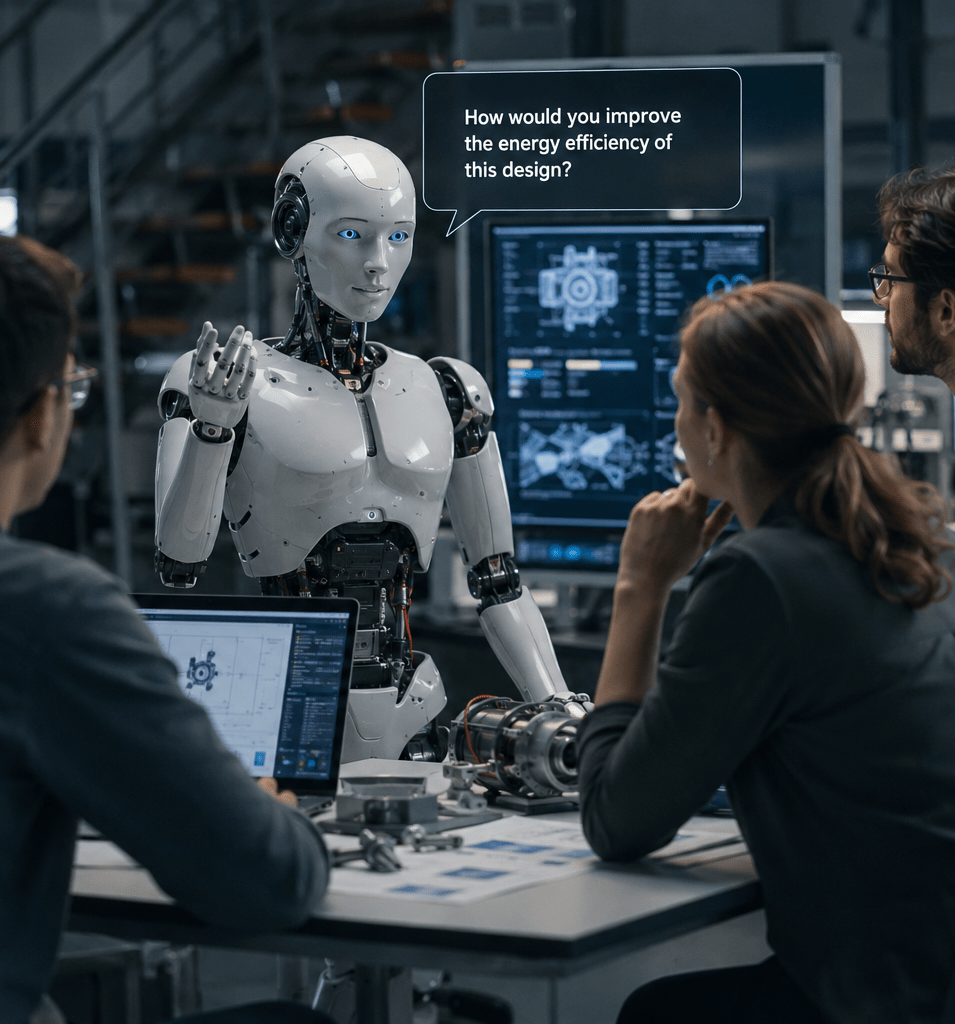
By the middle 2030s, a successful humanoid should no longer be judged by a single benchmark. The key measure becomes task switching. Can the same machine unload a cart in the morning, operate a human-designed tool after lunch, and assist with inspection in the afternoon? Can it notice that a box is too heavy, ask for help, choose a different route, and resume after a battery swap? Can it work around people without freezing whenever someone steps into its path?
This is where hardware catches up with foundation models. Better tactile sensing and force control should make hands less clumsy. More compliant joints should make accidental contact less dangerous. Batteries and actuators should stretch duty cycles toward a work shift, while autonomous charging and hot-swappable packs reduce downtime. Safety systems become layered rather than improvised: perception, speed-and-force limits, fail-safe braking, redundant emergency stops, geofenced operating zones, cyber protections and validated fallback behavior. NVIDIA’s 2026 Halos initiative is an early sign that safety is becoming a full-stack design problem rather than an accessory added after the robot works. [18]
This stage is also where public-sector use grows. The U.S. Army’s 2026 xTechHumanoid program explicitly seeks to “accelerate fielded militarized humanoid capabilities,” with tasks that include security, obstacle reconnaissance and clearing, CBRNE reconnaissance, firefighting, sustainment and forward reconnaissance. Those missions point toward a much more plausible military future than a platoon of robot riflemen: machines first take the tasks that are dirty, dull, dangerous and physically exhausting, while human operators retain mission authority. [19]
2037–2040: Familiar, not universal
By 2040, humanoid robots should be familiar to residents of technologically advanced cities even if most people still do not own one. They will be seen in airports, logistics centers, hospitals, large construction projects, factories, hotels, entertainment venues, transit systems, disaster-response teams and some retail environments. The machines will be most common where a business can spread the purchase or subscription cost across thousands of productive hours.
The scale is uncertain. Morgan Stanley once estimated about eight million working humanoids in the United States by 2040, a forecast that should be treated as a scenario rather than a promise. Its later global work expects adoption to remain relatively slow until the mid-2030s, then accelerate in the late 2030s and 2040s. Deloitte, citing UBS, has presented an even more cautious near-term industrial path: roughly two million humanoids in workplaces by 2035, rising dramatically by mid-century. These estimates disagree on the number but agree on the shape of the curve—slow commercial learning first, then faster diffusion if cost and reliability cross practical thresholds. [40,6,20]
The home remains the hardest environment. A factory designer can move a bin five centimeters or add a visual marker. A home contains pets, children, stairs, liquids, clutter, glassware, socks on the floor, sharp knives, heirlooms, changing furniture and people who do not follow a standard operating procedure. Rodney Brooks, one of the field’s longest-running skeptics of humanoid hype, highlights the weakness of deployable dexterity and argues that household entry will take longer than promotional videos imply. His caution is important because the household is where a small failure can be both physically dangerous and emotionally unacceptable. [39]
2040–2050—and why 2060 belongs in the conversation
If the 2030s establish the commercial case, the 2040s are when humanoids could become a mass-market infrastructure technology. Morgan Stanley’s 2050 scenario—more than one billion humanoids globally, about 80 million of them in homes—is aggressive but useful because it illustrates how adoption can explode after a long incubation period. The automobile, smartphone and personal computer all looked surprisingly limited shortly before they became pervasive. Robots could follow a similar diffusion curve, but only if the physical-world bottlenecks yield. [6]
A 2050 home robot would not need to be conscious, emotionally human, or intellectually superior to its owner. It would need something more prosaic: safe hands, excellent object recognition, reliable common-sense planning, predictable motion around people, strong privacy protections, all-day energy management, cheap repairs, and the ability to recognize when it should stop and ask for help. If those capabilities arrive by the early 2040s, consumer adoption could be large by 2050. If dexterity or safety remains stubborn, 2060 is a more reasonable horizon for broadly capable household humanoids.
This is why the long-range forecast should not be reduced to a single date. Industrial humanoids are happening now. Public-service humanoids are starting. General-purpose domestic humanoids remain a conditional future.
Athletics: robot sports become their own spectacle
Robot athletics is the easiest domain in which to predict superhuman results and one of the easiest to misunderstand. A humanoid has already run 100 meters faster than the human world record under the conditions of the Beijing Games. That does not mean it is a better athlete than Usain Bolt in the ordinary meaning of the word. The robot does not share the physiological limits that make human records meaningful, and its stopping problem makes the comparison almost comic. [2]
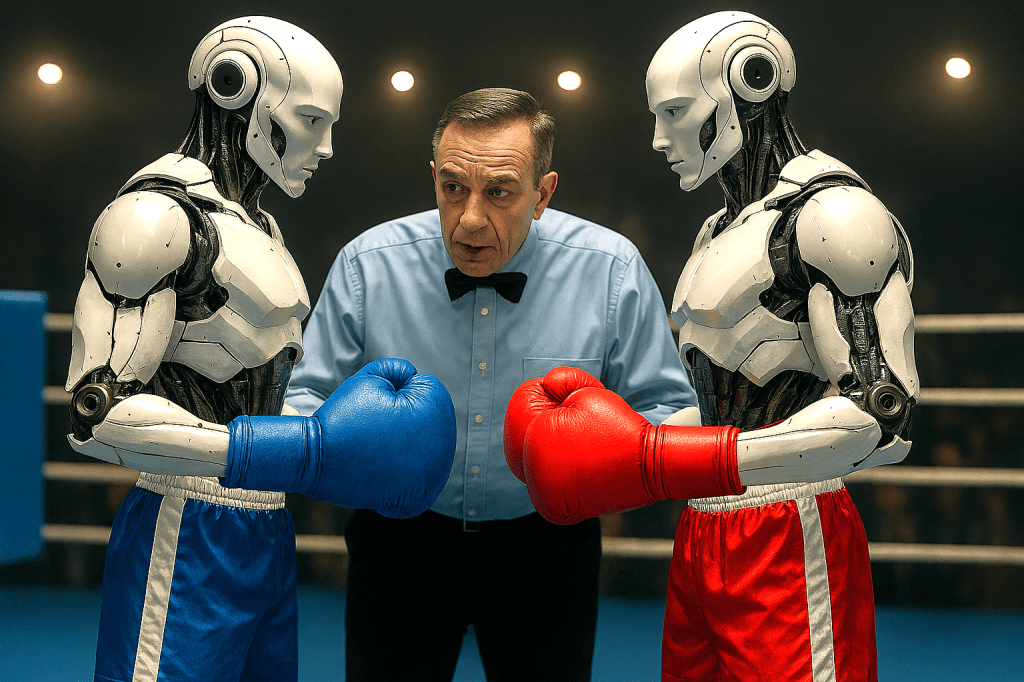
By 2030, robot leagues should have regular events in sprinting, combat sports, soccer, tennis, gymnastics-like obstacle courses, weightlifting and mixed autonomy challenges. By the mid-2030s, specialized machines will likely produce records that render direct comparison with humans pointless. The interesting competitions will therefore shift toward classes: standardized hardware with different software, limited energy budgets, fully autonomous events, mixed human-robot relay events, and “open” engineering classes where designers can push performance without pretending the rules are human.
By 2040, robot sports could occupy the cultural niche now shared by Formula One, esports and combat robotics: spectator entertainment that also functions as engineering research. The Games will reward rapid perception, balance, energy efficiency, safe impact handling and recovery—capabilities that migrate into industrial and emergency systems. Entertainment will be the visible surface; accelerated hardware testing will be the deeper value.
Hazardous and strenuous labor: the strongest near-term case
If one wants to see where humanoids will become ordinary first, look at jobs that are repetitive, physically punishing, injury-prone or difficult to staff. The manufacturing evidence is already stronger than the household evidence. Boston Dynamics designed the new Atlas for industrial deployment. Figure’s robots are in BMW operations. Agility’s Digit has moved large numbers of totes and is entering Toyota through a commercial agreement. China’s national training programs are explicitly targeting manufacturing, inspection, maintenance and logistics. [8-11,14]
Between now and 2030, the best use cases will remain structured: unloading and transferring materials, line-side replenishment, bin handling, machine tending, scanning and inspection, and repetitive transport inside human-designed buildings. Between 2030 and 2035, as manipulation improves, the same bodies should take on more tool use, fastening, wiring, simple assembly and maintenance. Construction will follow more slowly because sites change every day. Research published in 2026 is already exploring humanoids that learn construction tasks from worker demonstrations, but the field remains experimental. [21]
By the late 2030s, humanoids should be useful on major construction projects for tasks that combine human-shaped mobility with human tools: carrying material up stairs, installing fixtures, sanding and finishing, moving through partially completed interiors, inspection, cleanup and controlled demolition. Yet many heavy jobs will still go to specialized machines. A humanoid that imitates a human carrying a 40-kilogram load may be less sensible than a wheeled carrier designed around the load.
The social effect is likely to be more complicated than the slogan “robots take jobs.” In high-income countries with aging populations and labor shortages, employers may buy humanoids because they cannot hire enough people for unpopular shifts. In other places, the same machines could displace lower-skilled workers. McKinsey’s 2026 view is that a large share of economic value will come from reallocating human work toward oversight, problem solving and exception handling. That is plausible, but not automatic. The transition will depend on training, wage policy, ownership and whether productivity gains are shared. [5]
Emergency services: send the robot where we do not want to send a person
Emergency response is one of the most compelling cases for humanoids because the value of a machine is not measured only in labor cost. If a robot can enter a burning structure, a chemical spill, a radiation zone, a collapsed tunnel or an unstable building before a firefighter or technician, even an expensive machine can be worthwhile.
The World Humanoid Robot Games already include emergency scenarios. China’s real-scenario training plans include emergency and disaster response, and Chinese developers are showing humanoid firefighting systems. The U.S. Army’s xTechHumanoid challenge includes firefighting and CBRNE reconnaissance among its target tasks. These parallel efforts suggest a credible development path: first remote operation with increasing autonomy, then supervised teams that can map a scene, open doors, move obstacles, carry sensors, identify victims and transport equipment. [3,14,19,22]
By 2030, expect humanoids mainly as scouts and tool carriers. By 2035, teams of robots should be able to enter a hazardous structure, share a map, identify valves and controls, drag hoses, move debris, and maintain a communications link. By 2040, mature systems could work alongside firefighters and rescue crews as expendable first entrants, with human responders concentrating on judgment, triage and actions where human touch remains essential.
The limiting factor will not be dramatic strength. It will be reliability under heat, smoke, water, dust, darkness, radio interference and structural damage. Emergency robots must function precisely when ordinary sensing and communications degrade. That requirement favors rugged, redundant machines and makes this domain a likely home for mixed robot teams rather than humanoids alone.
Law enforcement: assistance is easier to justify than coercion
Law enforcement is already moving into public robotics, but today’s deployments are much more modest than science fiction. Reuters reported in August that Chinese “robocops” were being used for traffic warnings and assistance without arrest powers. Shanghai has tested humanoid auxiliary traffic police that can answer questions and identify violations. These uses—traffic direction, information, translation, scene documentation, perimeter monitoring—are much easier to deploy than a machine empowered to detain someone. [23,24]
By 2030, robot officers will likely appear in airports, transit hubs, border facilities, major events and traffic enforcement as highly visible assistants. They can translate, scan a scene, communicate instructions, carry sensors, deliver equipment and provide a mobile camera whose actions are logged. By the mid-2030s, they may be used to approach armed or barricaded suspects, inspect suspicious packages and establish two-way communication while keeping human officers farther from danger.
The hard boundary is coercive authority. Physical restraint requires exquisite force control and legal accountability. Facial recognition, continuous recording and data fusion raise civil-liberties concerns even before a robot touches anyone. The most defensible 2040 forecast is therefore not autonomous robot police independently deciding whom to stop or arrest. It is supervised robotic assistance, with narrow machine authority and auditable human responsibility for consequential decisions.
Warfare: robot soldiers are plausible, but the humanoid rifleman may not be the main story
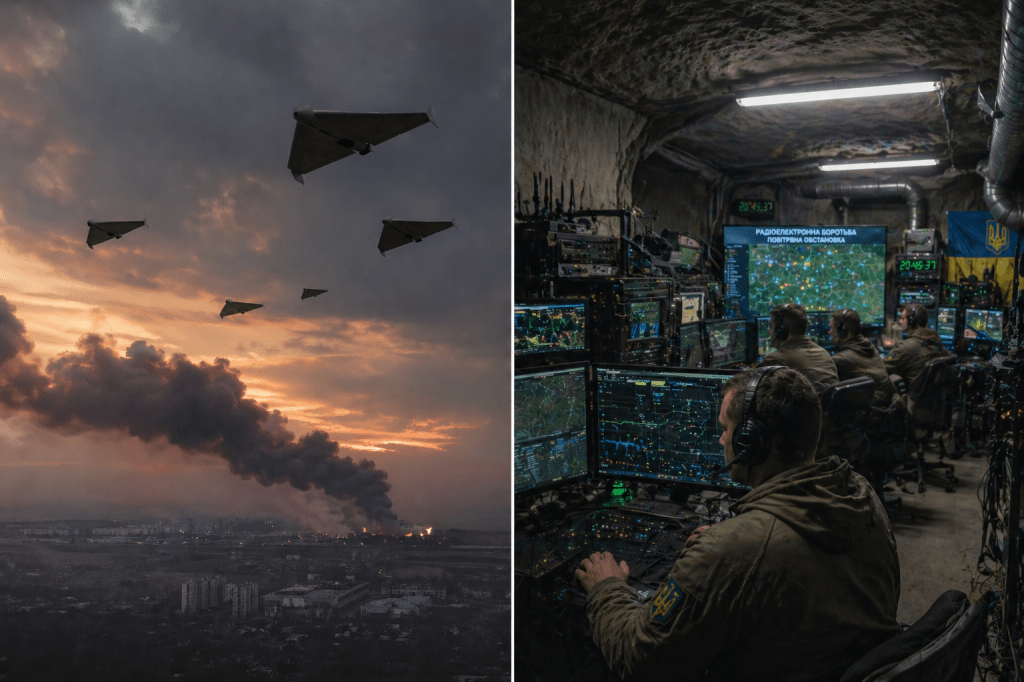
The CBS report’s most unsettling moment comes when A3 engineer Yang Kun says a kickboxing robot could have combat uses and gives a five-to-ten-year estimate for robot soldiers. The statement is credible as an industry forecast, and the U.S. Army is already experimenting with militarized humanoids. But “robot soldier” covers very different systems. A machine carrying ammunition, scouting a contaminated room or clearing an obstacle is a robot soldier in one sense. A machine choosing a human target and firing without meaningful human judgment is something else entirely. [1,19]
The nearer military future is support. Humanoids can exploit human infrastructure inside ships, depots, buildings, vehicles and tunnels. They can climb stairs, open doors, operate controls, carry stretchers and use existing tools. The Army’s 2026 competition names security checkpoints, CBRNE reconnaissance, firefighting, sustainment, maintenance and forward reconnaissance. By 2030, these are realistic targets for supervised systems. By the mid-2030s, military humanoids could routinely accompany units for logistics, surveillance, casualty extraction and hazardous entry. [19]
Lethal autonomy is less a question of whether a machine can pull a trigger than whether governments will permit machines to select and attack humans under specified conditions. On August 25, 2026, the United Nations Secretary-General and the president of the International Committee of the Red Cross renewed their call for binding rules, warning that the world is “dangerously close to crossing a moral red line” in the autonomous targeting of humans. That debate could become one of the defining arms-control questions of the 2030s. [25]
Humanoids also face a military design problem: the human body is not always the best battlefield body. A low tracked robot is harder to knock over. A drone is better for aerial reconnaissance. A quadruped may cross rubble more efficiently. The battlefield of 2040 is therefore more likely to contain heterogeneous teams—drones overhead, wheeled or tracked vehicles carrying loads, quadrupeds scouting rough ground, and humanoids used where doors, ladders, tools and human workspaces make the body plan advantageous. The spectacular humanoid soldier may be the most visible member of the team, not the most numerous.
Health, elder care and social services: useful before fully “human”
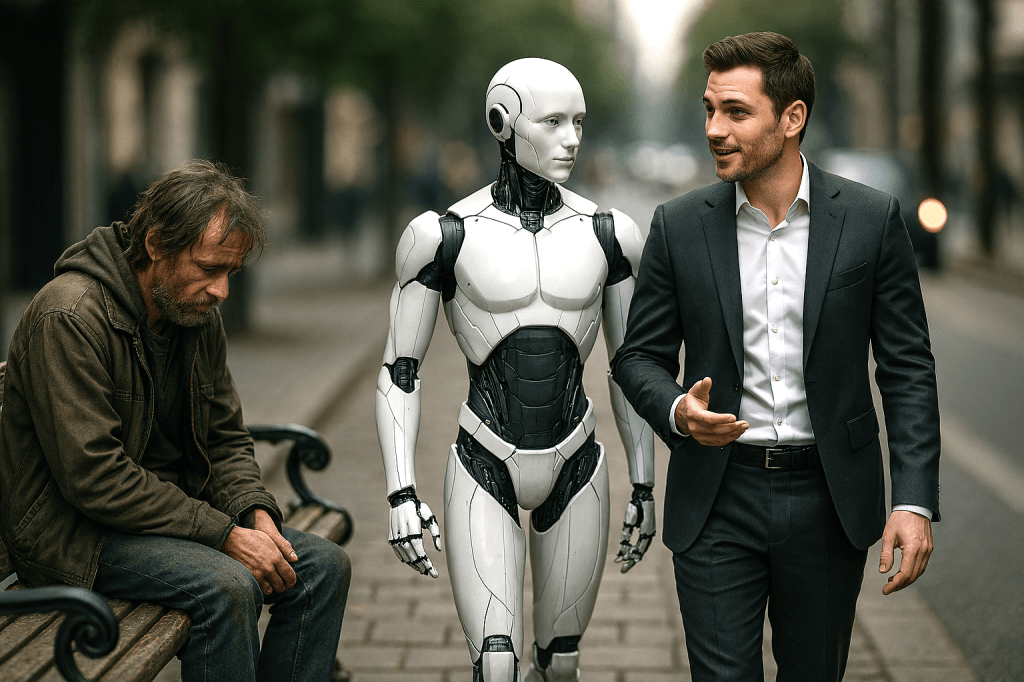
Healthcare is often presented as the moral showcase for humanoid robots: a patient, tireless helper that lifts patients, reminds older adults about medication, brings meals, monitors falls and offers companionship. The need is real. Aging populations are increasing demand for caregivers while many countries face staffing shortages. The evidence for social robots, however, argues for modest claims.
A 2026 systematic scoping review in JMIR Aging found promising effects from socially assistive robots in cognitive, physical and psychosocial support, but also emphasized that much of the evidence comes from small studies and that larger, longer and more rigorous trials are needed. Technical problems, acceptance and integration into care systems remain barriers. That is a useful warning against confusing a warm demonstration with proven clinical benefit. [26]
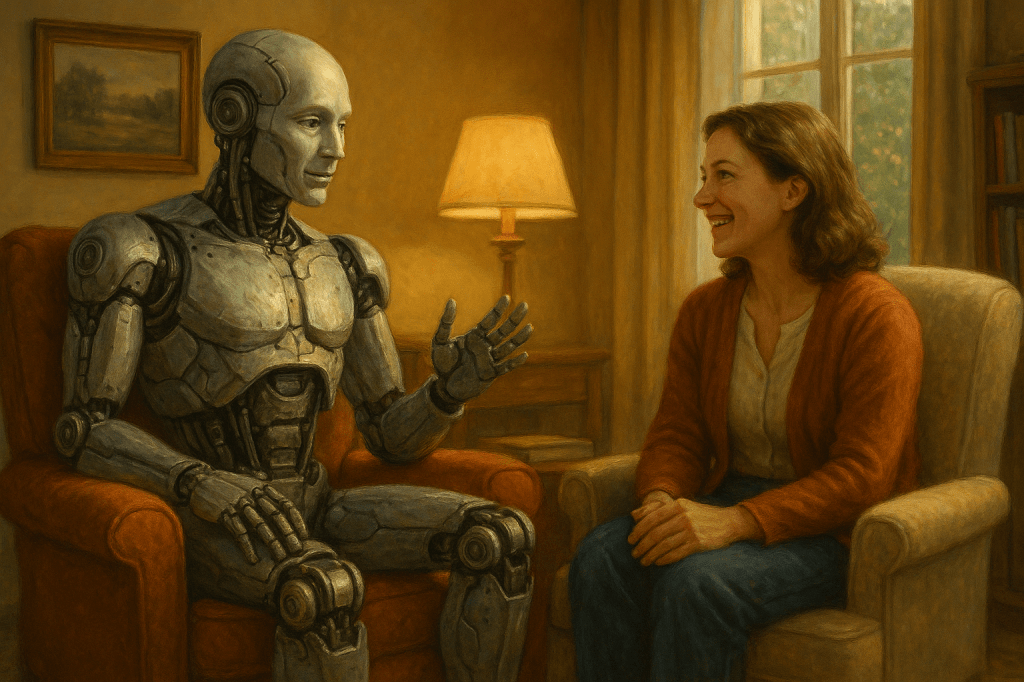
Between now and 2030, humanoids will make their strongest healthcare case in logistics and physical support: delivering supplies, moving carts, cleaning, guiding visitors, carrying equipment and assisting staff with repetitive movement. Rehabilitation will grow where a robot can provide repeatable exercises under professional supervision. Social interaction—conversation, games, reminders and check-ins—will expand, but the best systems will be framed as support, not substitutes for human relationships.
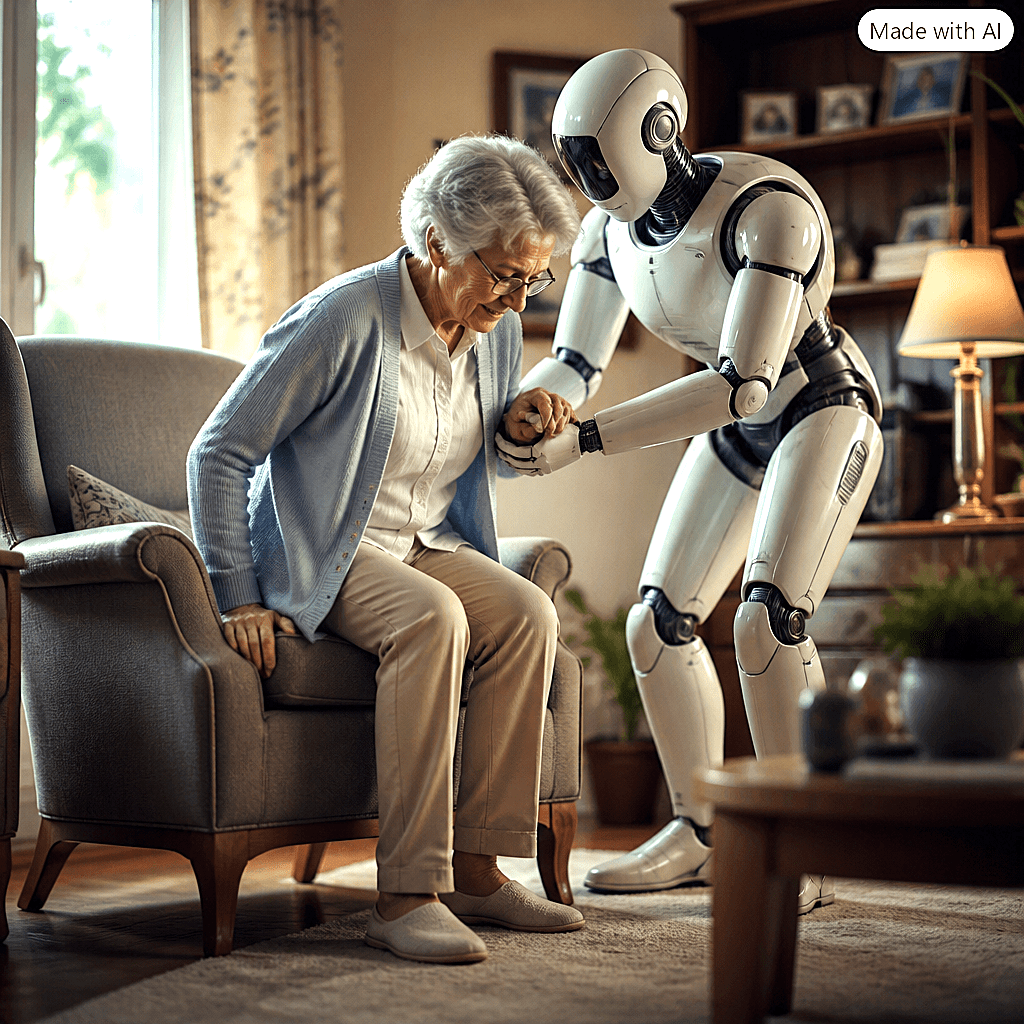
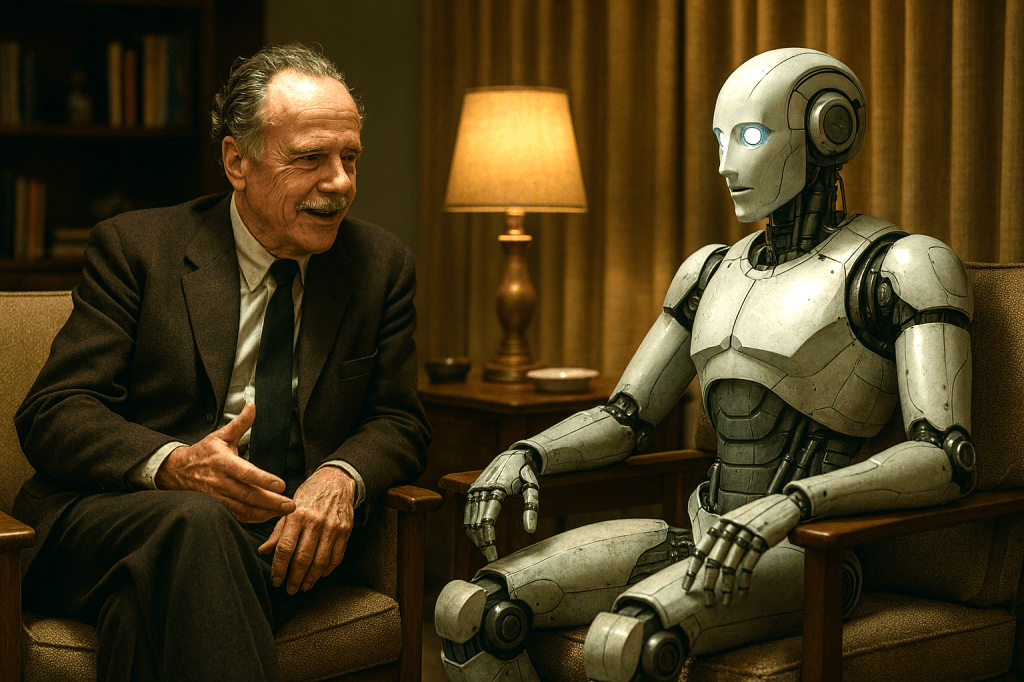
In the 2030s, improved hands, safer force control and better perception should allow robots to help with transfers, mobility and selected activities of daily living. A supervised robot could steady a person rising from a chair, retrieve dropped objects, prepare simple meals, monitor a home for hazards and connect the resident with clinicians or family. By 2040, these systems may be common in well-funded elder-care facilities and available to some homes, especially where the alternative is no caregiver at all. The highest-stakes clinical decisions should remain under licensed human authority even if robots become excellent at monitoring and routine assistance.
Education: embodied tutors will be assistants, not robotic professors
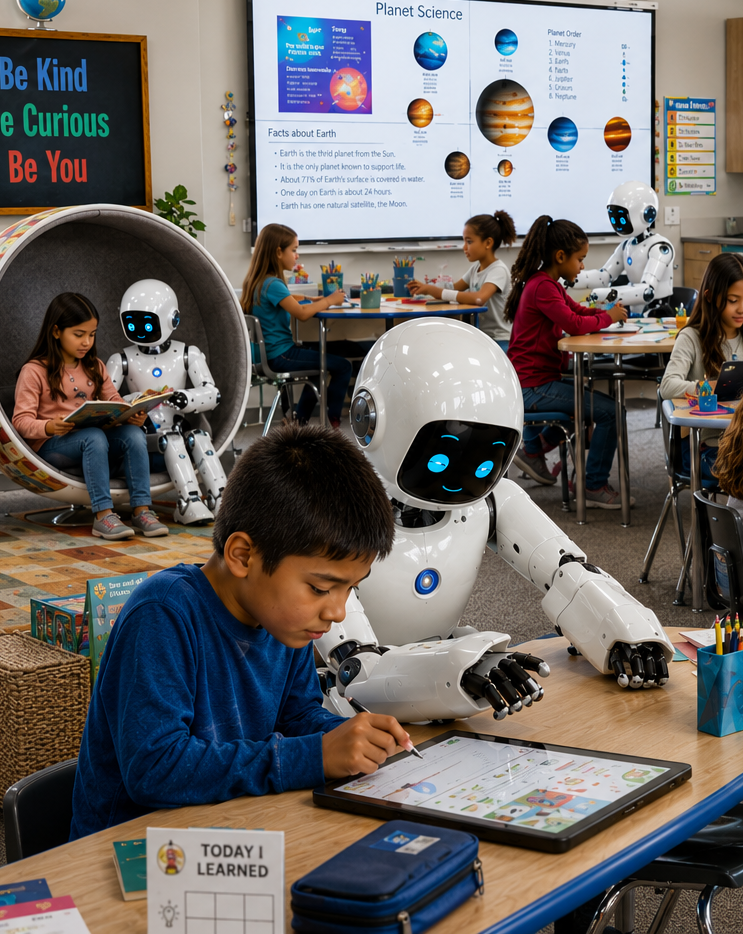
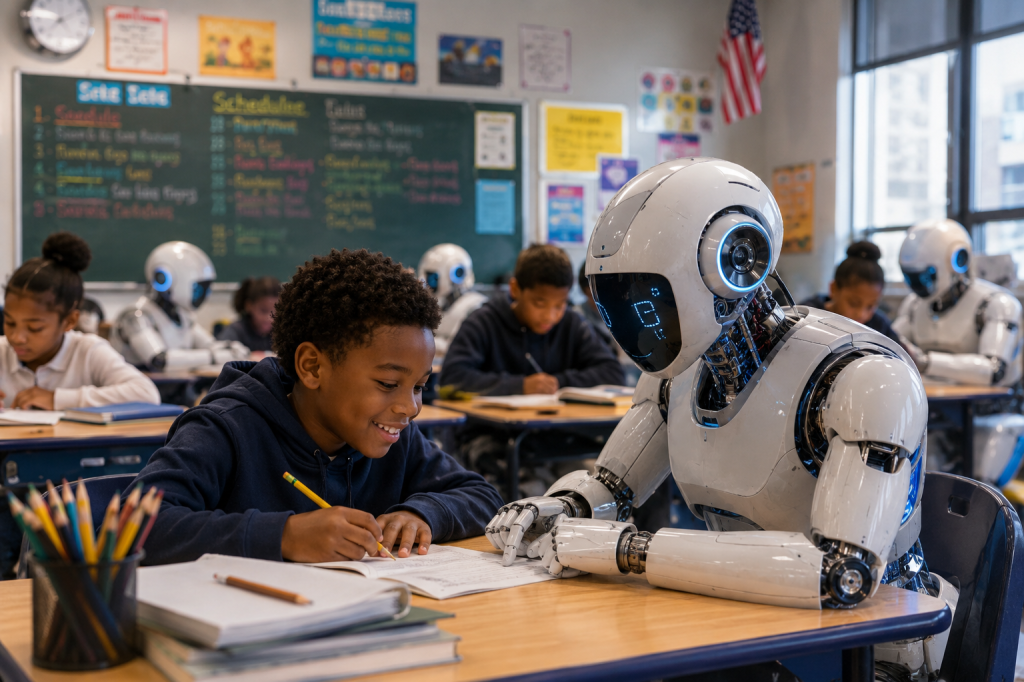
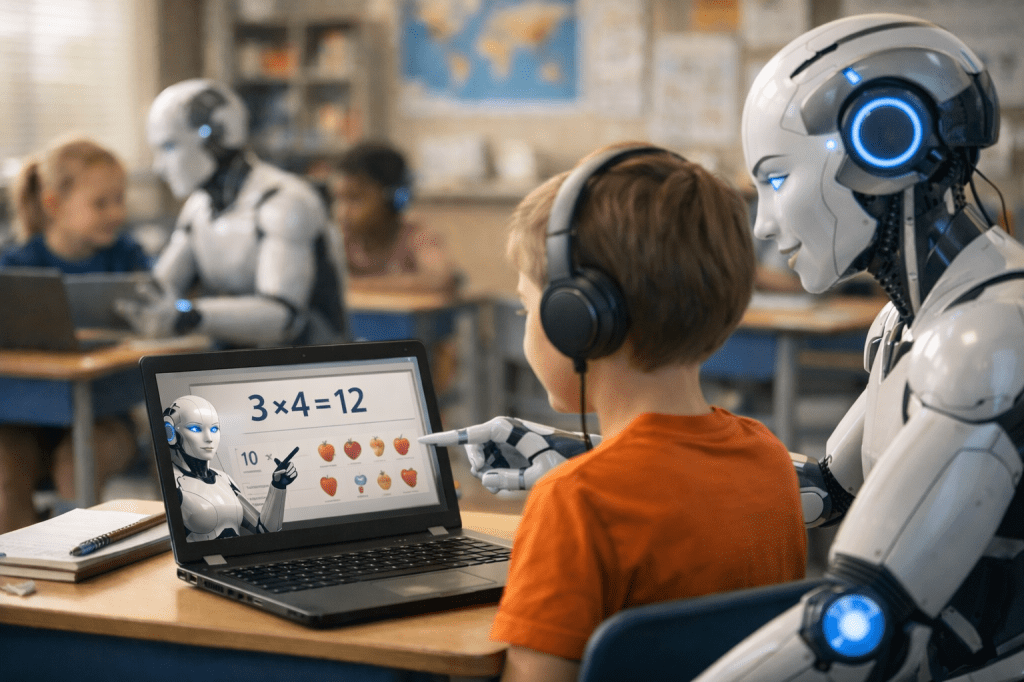
Education is another field where a humanoid body can add something a screen cannot: gaze, gesture, pointing, shared manipulation, movement around a room and presence during hands-on activities. Yet existing evidence suggests that embodiment works best when it supports a well-designed learning relationship rather than trying to replace the teacher.
A 2026 systematic review of Pepper in primary education found benefits in tutoring, collaboration, motivation, engagement and some inclusive settings, but the studies generally depended on teacher supervision and faced technical and curriculum-integration problems. Long-term evidence remains limited. [27]
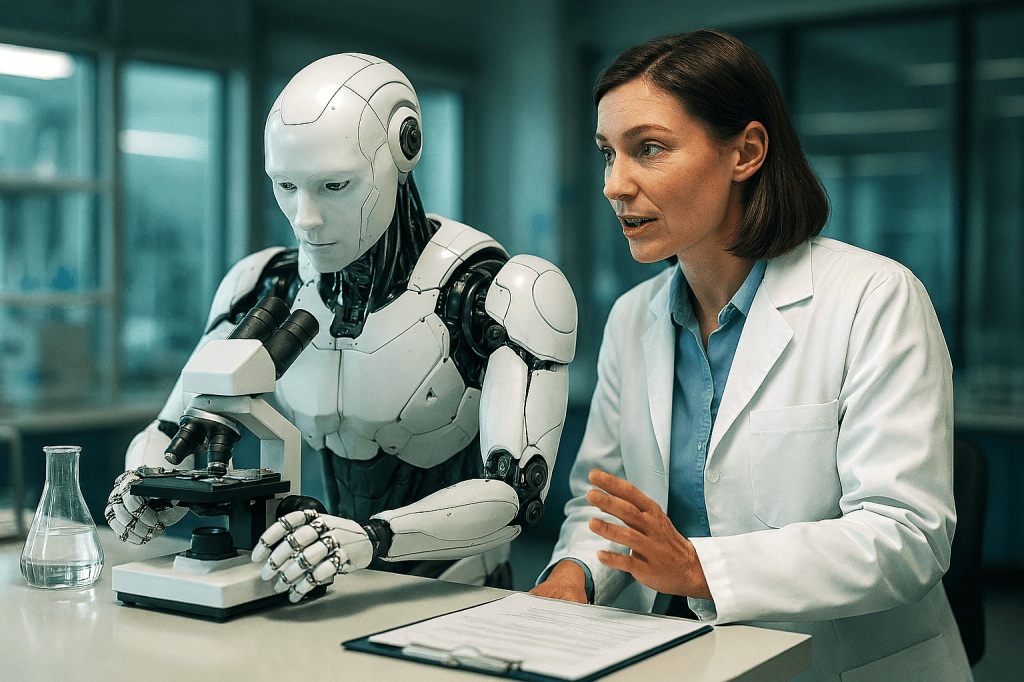
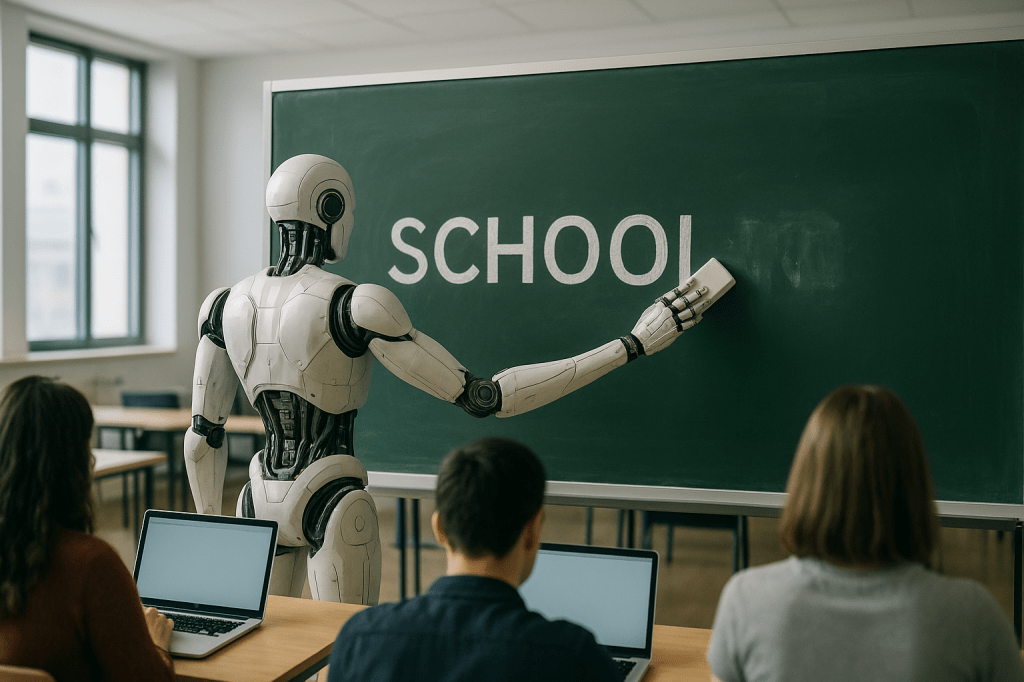
By 2030, expect embodied tutors in language learning, coding, special education, museum programs and laboratory or vocational practice. They will demonstrate, prompt, quiz and physically point to objects while a teacher remains responsible for the course and students. In the 2030s, the same robot may combine tutoring with classroom logistics, telepresence and hands-on coaching. A chemistry robot could set up apparatus; a vocational robot could demonstrate a procedure; a special-education assistant could patiently repeat a physical cue.
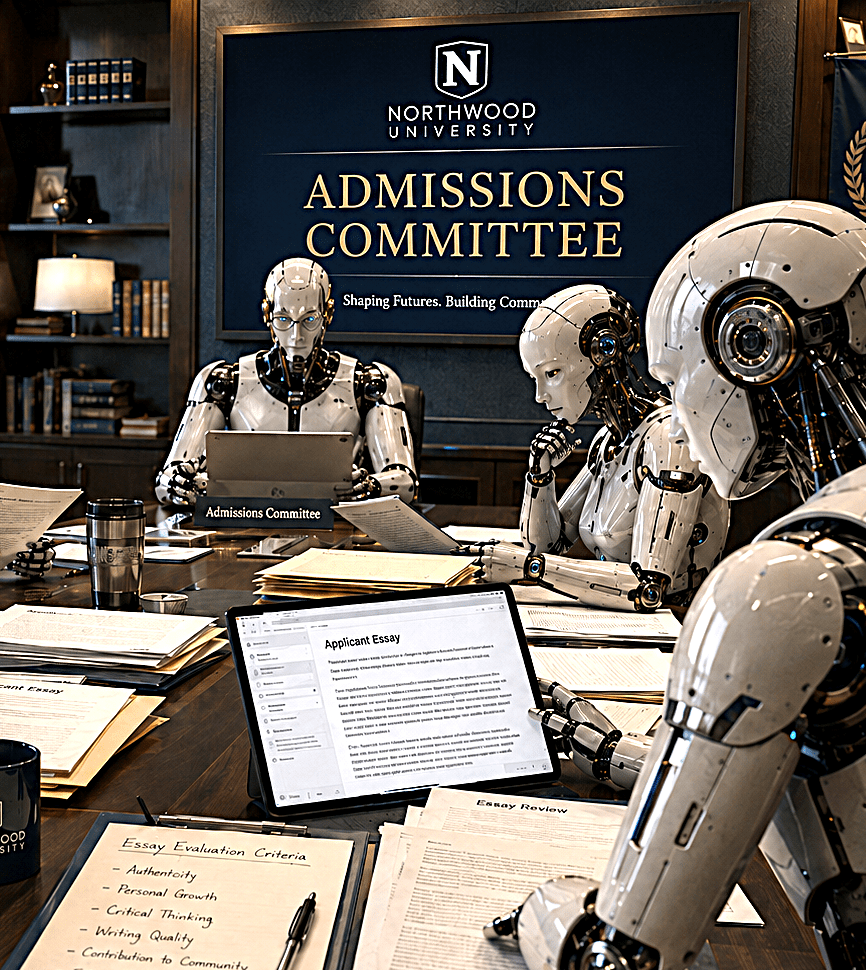
By 2040, wealthy systems may have mobile embodied AI assistants shared across classrooms, but replacing competent teachers is unlikely to be the dominant model. Teaching involves authority, trust, group management, moral judgment and knowledge of a community—not simply delivering explanations. The more plausible future is a human teacher with a small fleet of embodied and screen-based agents, each handling portions of practice, demonstration and individualized support.
Transportation: the robot becomes the missing staff member
Autonomous transportation removes the driver from some vehicles, but it does not remove passengers’ need for help. Who assists a traveler using a wheelchair? Who responds when an older passenger is confused, checks a door, moves luggage, delivers a medical kit or walks through a train after an alarm? A 2026 perspective in npj Robotics argues that humanoids aboard autonomous transit could restore some of those physical assistance functions. [28]
The idea is already being tested in modest form. Chinese high-speed and metro systems have demonstrated robot attendants for greeting, patrol, information and inspection. The Beijing Games include an EV-charging challenge, a good example of why human-shaped manipulation may complement autonomous vehicles: the car can drive itself, while a mobile robot handles infrastructure originally designed for hands. [3,29]
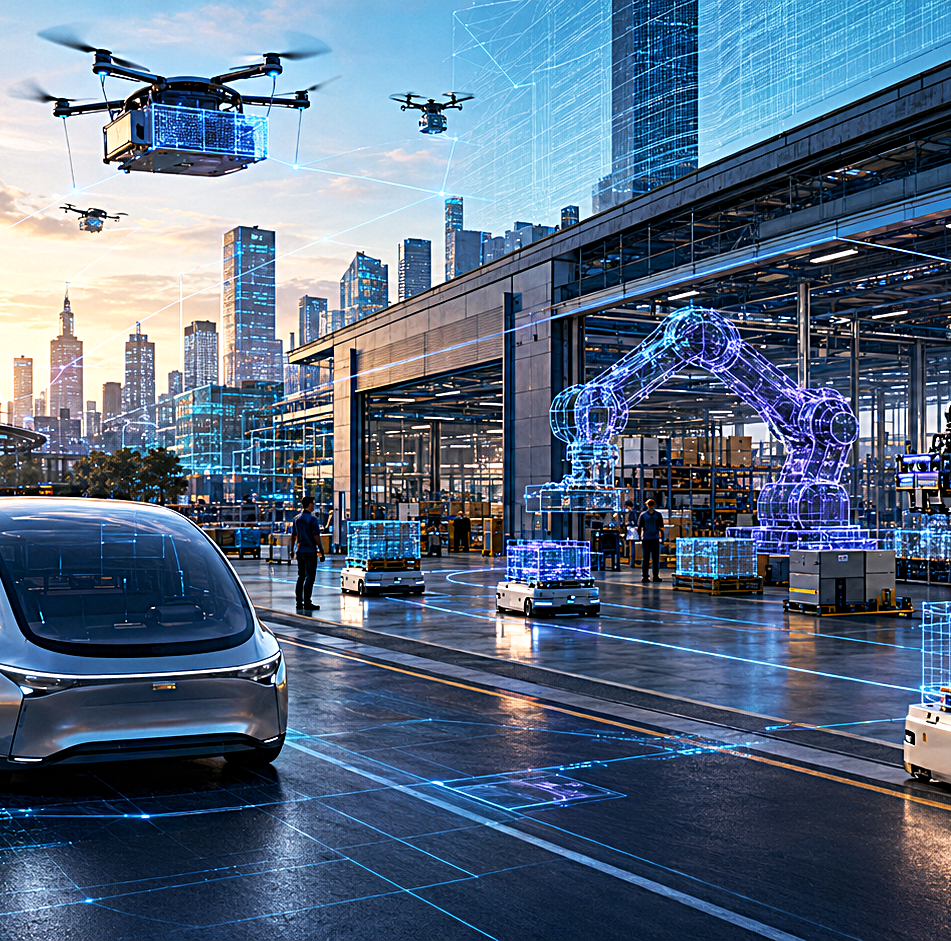
By 2030, humanoids should appear as attendants and maintenance assistants in selected airports, railway stations and transit systems. By 2035, they may be routinely paired with autonomous shuttles, delivery fleets and depots, handling luggage, charging, cleaning, inspection and passenger assistance. By 2040, a driverless transport network could include mobile robots as the physical service layer—the machine that does what a human conductor, attendant, ramp worker or maintenance technician once did.
Again, the humanoid will coexist with specialized machines. Baggage conveyors, autonomous carts and drones will remain better for many tasks. Humanoids will be valuable where the system cannot afford to rebuild every interface around a new machine.
The home: the biggest prize and the hardest test
The household is where public imagination goes first and robotics competence goes last. A kitchen contains heat, water, knives, breakable objects and food with wildly varying shapes. Laundry means soft deformable material, pockets, buttons, hangers and clothing that can be inside out. Cleaning means clutter that changes by the hour. Child care and elder care add the hardest safety requirement of all: close physical contact with vulnerable people.
The first generation of home humanoids is therefore likely to be semi-autonomous. A robot can handle a list of learned chores, use remote assistance for something novel, and improve through updates. The 1X NEO model makes this architecture explicit. Unitree’s Wang Xingxing describes a future threshold at which a robot can be placed in an unfamiliar home and complete around 80 percent of requested tasks from voice or text. He does not claim that threshold has been reached. [4,17]
By 2030, affluent early adopters may use humanoids for carrying, tidying, simple fetching, scheduled cleaning, security checks and telepresence. By 2035, the best systems could manage broader chore repertoires—laundry transfer, dish handling, simple food preparation, plant care, package handling and assistance for a person with limited mobility—provided the home is reasonably robot-friendly. By 2040, a capable home humanoid may be an expensive but recognizable consumer category, analogous to a premium vehicle or major home system.
The phrase “robot-friendly” will matter. Homes may quietly change to accommodate machines: standardized handles, clearer storage, induction cooking, floor plans with fewer tight obstacles, appliance APIs, charging alcoves and tagged or machine-readable objects. This is how earlier technologies became easier to use. We did not make automobiles adapt perfectly to 19th-century streets; we rebuilt streets. We may similarly redesign portions of the built environment around robots.
The full household butler remains a 2040s or 2050s proposition because homes demand the broadest combination of dexterity, judgment, privacy, social behavior and safety. Morgan Stanley’s projection of 80 million home humanoids by 2050 is a useful marker: large enough to be a major consumer category, small enough to remind us that most of its envisioned billion-plus robots are still at work, not in living rooms. [6]
Entertainment: the fastest route to emotional familiarity
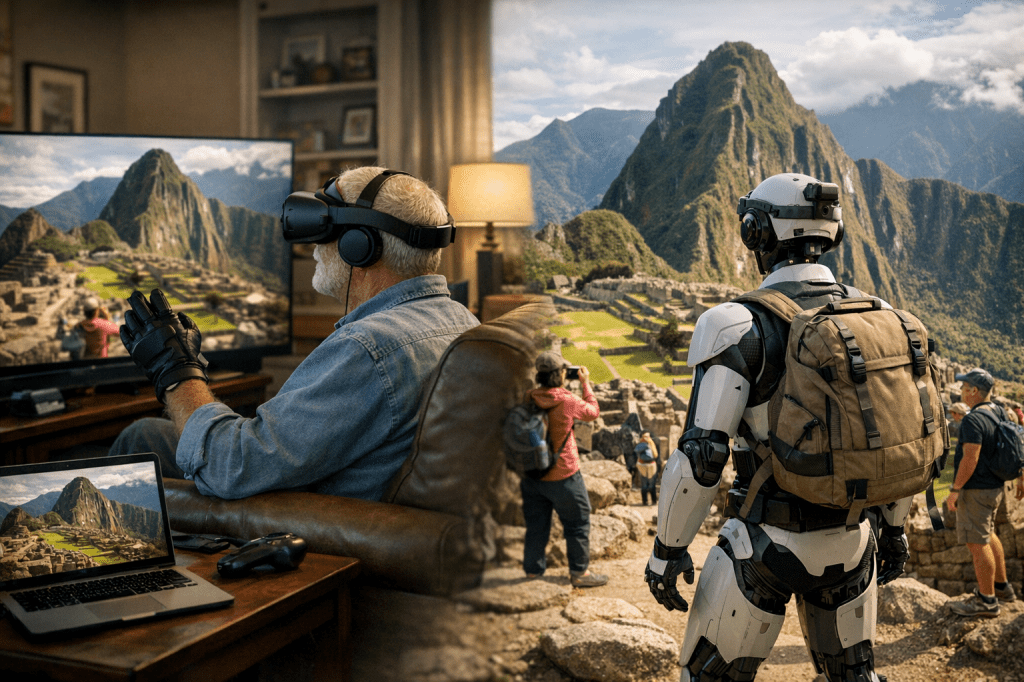
Entertainment may be where humanoids become culturally normal before they become economically universal. China already uses humanoids in televised dance, comedy and performance. South Korea’s new Galaxy Robot Park is built around physical-AI entertainment including humanoid K-pop and taekwondo performances. Disney has introduced free-roaming robotic characters such as Olaf, using advanced robotics to make an animated figure occupy real space with guests. [30-32]
By 2030, theme parks, live shows, museums, brand events and sports venues will use embodied characters that can improvise within a scripted personality, recognize returning visitors and physically react to the environment. By the 2030s, robot performers will become a new artistic medium: not merely animatronics repeating a sequence, but actors whose dialogue and motion can adapt to an audience. Human performers will work with them as scene partners, stunt doubles, chorus members and dynamic props.
By 2040, entertainment could be the field in which the boundary between robot and character almost disappears. The important shift will not be photorealistic androids. It will be reliable expressive behavior. A stylized machine with excellent timing, eye contact, gesture and voice can feel more alive than a realistic face that moves badly. Entertainment companies understand this, and they may solve social interaction problems that later migrate into service robots.
The obstacles that decide whether 2040 arrives on time
Humanoid robotics has no single “Moore’s law.” Progress depends on a chain of improvements, and the chain is only as strong as its weakest link. A brilliant AI model is useless if the hand drops a glass. A perfect hand is useless if the battery lasts an hour. A reliable robot is commercially weak if repairs cost more than labor. A low-cost robot is socially unacceptable if people do not trust its cameras in their homes. The next fourteen years will therefore be less about one magical breakthrough than about simultaneous improvement across several stubborn systems.
1. Real-world intelligence: from recognizing to recovering
Language models learned from an internet-scale archive of text and images. Robots do not have an equivalent archive of every physical action a person has ever taken. Real-world data is expensive: a machine must physically attempt a task, and mistakes can break hardware. This is why the robotics industry is investing so heavily in teleoperation, simulation, world models and synthetic data. NVIDIA’s 2026 physical-AI stack and Google DeepMind’s whole-body robotics work are efforts to make robotic learning more transferable and less dependent on hand-programmed routines. [12,13]
The likely solution is a training loop that blends four sources: human demonstrations, real robot experience, large-scale simulation and shared foundation models. A warehouse robot learns from thousands of human picks, practices millions of variations in simulation, then improves from the failures of every robot in the fleet. The hard capability is recovery. A useful robot must not merely know the intended action; it must notice when reality differs from its prediction and safely improvise.
2. Hands: the quiet grand challenge
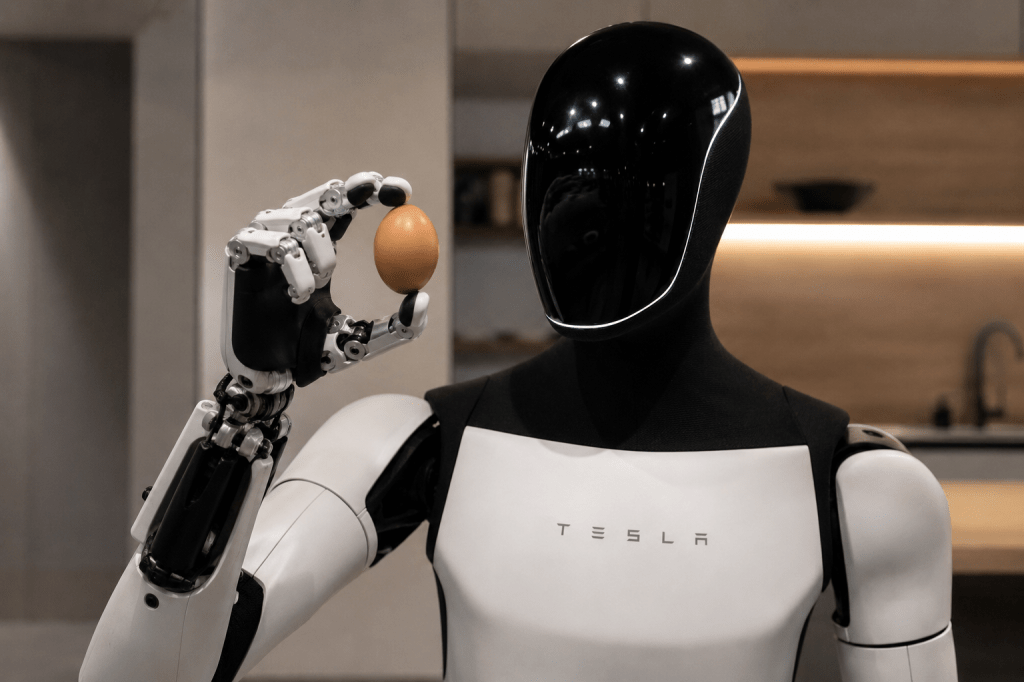
The human hand is an astonishing general-purpose machine: soft enough to handle fruit, strong enough to use tools, sensitive enough to feel a slipping object, and compact enough to fit into spaces designed for fingers. Humanoid hands remain far behind that standard. Brooks’ skepticism is strongest here, and the Beijing Games’ cable-connection challenge shows why. A few millimeters of misalignment can turn a simple human motion into a difficult perception-and-force-control problem. [3,39]
Progress will come from better tactile sensors, force feedback, compliant actuators, tendon-like mechanisms, higher-resolution control and learning from demonstration. But the industry will also cheat intelligently. Early commercial robots will use simpler grippers when five fingers are unnecessary, customized tool handles, machine-readable fixtures and workspaces arranged to reduce precision requirements. Generality will be approached partly by improving the robot and partly by making the environment easier for the robot to read.
3. Energy and uptime: a worker that is always charging is not a worker
A human can work for hours and refuel with lunch. Many current humanoids have duty cycles measured in a few hours or less under demanding use. Agility has pushed Digit to roughly four hours with autonomous charging, while McKinsey notes that one-to-two-hour runtimes are still common across humanoids. [33,34]
The near-term answer will be operational rather than miraculous: swappable batteries, autonomous docking, brief charging during natural pauses, more efficient actuators, lighter structures and fleet scheduling. Better battery chemistry will help, but a robot that can replace its own pack or rotate through a charger may be commercially useful before battery energy density doubles.
4. Safety: the robot must fail gently
Safety is harder for humanoids than for caged industrial arms because their purpose is to move through human space. They are tall, heavy, powerful and increasingly autonomous. A fall can injure someone. A software error can send an arm in the wrong direction. A network compromise can become a physical hazard.
The solution will resemble aviation more than consumer electronics: redundant layers, certified operating envelopes, event logs, independent emergency stops, fault detection, safe-speed modes, cybersecurity requirements and rigorous testing against foreseeable failures. NVIDIA’s Halos for Robotics is one industry effort. NIST is developing physical-AI measurements, test methods and datasets intended to narrow the gap between academic demonstrations and real manufacturing. International industrial-robot standards are also evolving, although today’s ISO 10218 framework explicitly excludes several service, consumer, medical, military and law-enforcement applications—an indication of how much sector-specific work remains. [18,35,36]
5. Cost, maintenance and supply chains
A robot is not cheap because its purchase price is low. Businesses care about productive cost per hour: acquisition, financing, energy, integration, maintenance, replacement parts, software fees, downtime and human support. Humanoids must become serviceable machines rather than fragile research projects. Modular joints, standardized components, remote diagnostics and local repair networks will matter almost as much as AI.
China’s manufacturing scale is important here. Its 97 percent share of first-half 2026 humanoid shipments demonstrates an ability to turn robotics into a volume-manufacturing problem. McKinsey has separately warned that supply-chain constraints—actuators, sensors, reducers, motors and other specialized components—may determine who can scale. A mature market will require multiple suppliers and standardized interfaces so that a broken joint does not idle a $100,000 machine for weeks. [4,37]
6. Privacy and cybersecurity: the most intimate sensor platform ever sold
A useful home robot may know more about a household than any smartphone. It can see rooms, hear conversations, recognize possessions, infer routines and physically act on what it learns. Teleoperation adds another layer: if a remote expert can help the robot fold a difficult garment, what exactly can that expert see? How is the video stored? Can the operator enter a bedroom? Can law enforcement compel access? [17]
By the 2030s, competitive home robots will need privacy as a product feature: on-device processing for sensitive streams, visible indicators when remote access is active, strong encryption, granular room and user permissions, automatic redaction, local data retention choices and cryptographically verifiable logs of remote sessions. Cybersecurity will have to be treated as physical safety, because compromising a mobile 70-kilogram machine is not comparable to stealing a password.
7. Regulation and liability
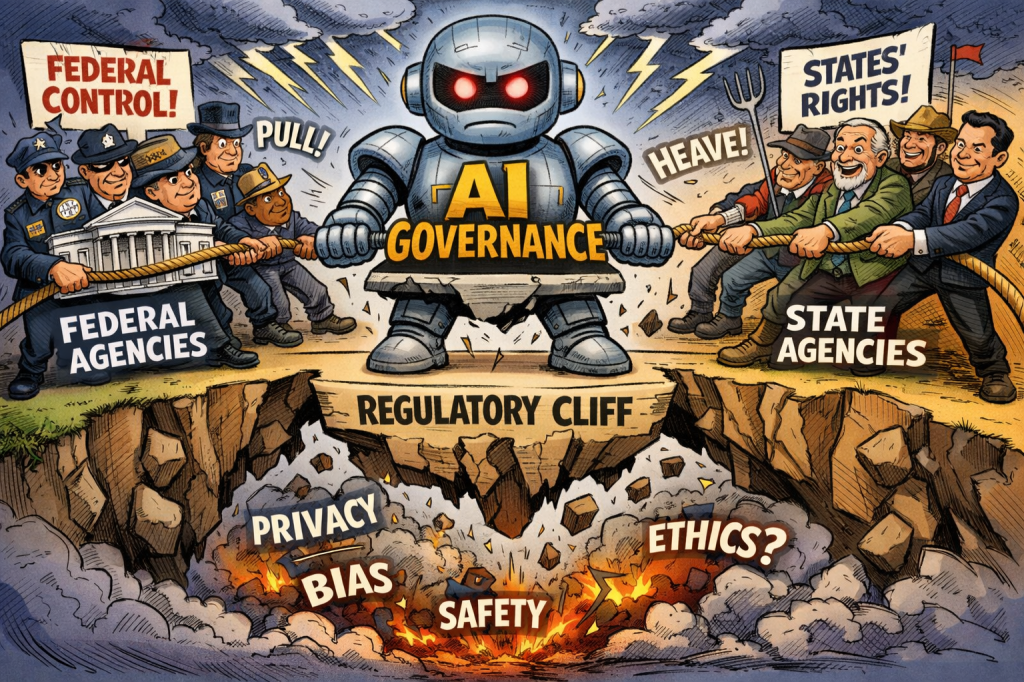
Humanoids cross regulatory categories that were created when robots stayed behind fences. The same basic machine could be an industrial tool on Monday, a rehabilitation assistant on Tuesday and a retail greeter on Wednesday. Who certifies it? Who is liable when a foundation-model update changes behavior? How much human supervision is required?
Europe offers an early template for layered governance. The EU AI Act is entering phased application, and the EU Machinery Regulation becomes mandatory in 2027 with provisions relevant to AI-enabled machinery and cybersecurity. These frameworks will not answer every question, but they point toward risk-based requirements that become stricter as robots move from moving boxes to touching patients or exercising public authority. [38,42]
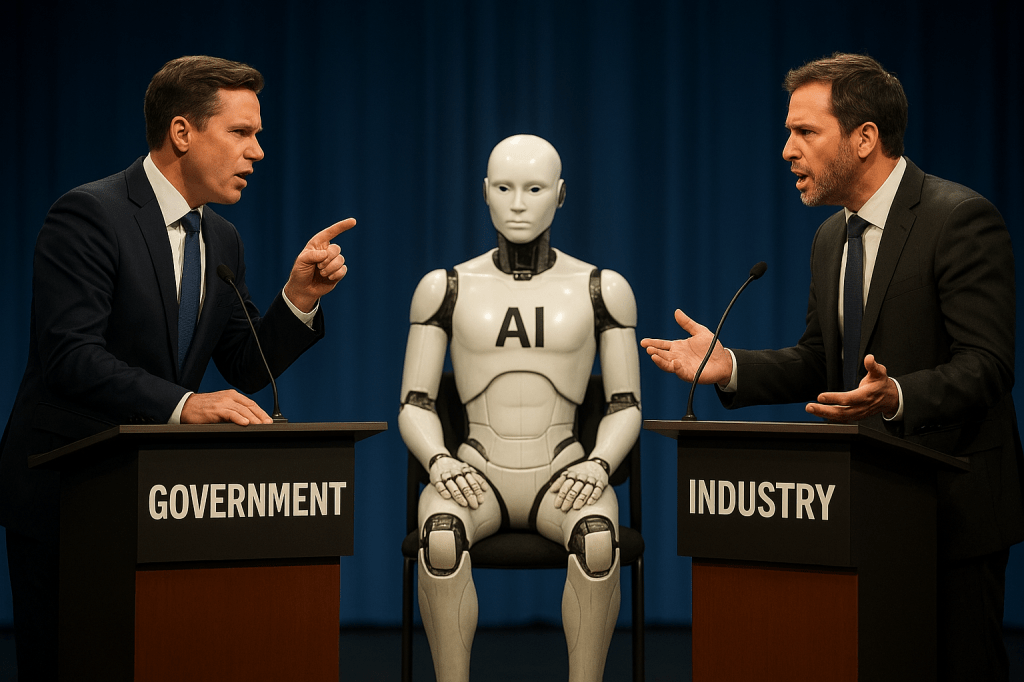
The military debate will be sharper. The technical ability to act autonomously may arrive before an international agreement on when machines may use lethal force. The UN and ICRC are pressing for binding rules now, not after battlefield systems are entrenched. [25]
8. Trust and the labor bargain
People do not need to love a warehouse robot, but they do need to know what it will do. Predictability becomes a social technology. A robot that pauses, signals intent and requests help may be more acceptable than one that is nominally more intelligent but behaves opaquely. Public-service robots will need clear identities, visible recording indicators and simple ways for a person to summon a human.
Workforce trust is equally important. Employees are more likely to teach a robot useful techniques if they believe the result will make their jobs safer or more skilled rather than simply eliminate them. The productivity story will differ by country and industry, but the policy choices are obvious: retraining, portable credentials, transition support, wage and benefit systems, and rules governing monitoring of workers by robotic systems. The technology will shape labor markets; institutions will shape who benefits.
A 2040 scorecard
The estimates below are deliberately qualitative. “High” means the application already has a credible technical and economic path. “Medium” means the path is plausible but depends on major improvements or regulation. “Low” means the popular version of the idea is possible but not well supported on a 2040 timetable.
| Domain | Likely by 2040 | Confidence | What probably waits longer |
| Athletics & entertainment | Superhuman robot records; mature robot leagues; adaptive performers and theme-park characters. | High | Human and robot records treated as directly comparable. |
| Factories & logistics | Common multi-task humanoid coworkers in many large facilities. | High | Replacing every human worker or every fixed robot. |
| Hazardous labor & construction | Routine inspection, material handling, finishing and dangerous-entry work. | High–Med | Autonomous mastery of chaotic small construction sites. |
| Emergency services | Robotic scouts, tool carriers, mapping, hazardous entry and some rescue assistance. | High–Med | Fully autonomous command decisions in disasters. |
| Law enforcement | Traffic/public assistance, sensors, translation, hazardous approach, supervised tactical support. | Medium | Independent arrest authority or broad autonomous coercion. |
| Warfare | Logistics, reconnaissance, CBRNE, maintenance, casualty support; some armed systems technically feasible. | High–Med | Internationally accepted autonomous humanoid target selection. |
| Health & elder care | Logistics, rehab, mobility assistance, monitoring and supervised activities of daily living. | Medium | Human-equivalent nursing judgment and intimate care without supervision. |
| Education | Embodied tutoring, demonstrations, language practice and classroom assistance under educators. | Medium | Robot teachers replacing the social and institutional role of educators. |
| Transportation | Station/vehicle attendants, charging, luggage, inspection, maintenance and passenger assistance. | Medium | Humanoids becoming the dominant transport robot form. |
| Home | Premium robots handling a substantial but bounded repertoire of chores and assistance. | Medium–Low | Affordable universal butlers that handle any unfamiliar household task. |
What could make this forecast wrong?
There are two obvious ways to be wrong about humanoids. The first is to underestimate a software breakthrough. If embodied foundation models suddenly acquire robust transfer—learning a physical skill once and applying it across many bodies and environments—the industry could compress a decade of integration work into a few years. Wang Xingxing’s “ChatGPT moment” is a real possibility, and NVIDIA and Google DeepMind are spending heavily on exactly the ingredients that might produce it. [4,12,13]
The second is to underestimate the physical world. A language model can make a wrong prediction and try again at negligible physical cost. A robot can break a dish, injure a person, damage a car, fall down stairs or destroy its own hand. The long tail of physical exceptions may resist scale. Dexterity may improve slowly. Batteries may remain heavy. Insurance and liability may make companies cautious. A few high-profile accidents could trigger regulation that slows public deployment.
Geopolitics could also reshape the industry. China’s manufacturing dominance, U.S. concern about foreign-made robots, export controls, data-security rules and defense competition could fragment the market into national or allied robotics ecosystems. That may speed strategic investment while slowing global standardization. The technology race will not unfold in a neutral laboratory.
Finally, society may simply decide that some roles should remain human even when robots can technically perform them. A school can choose to keep teachers at the center. A hospital can require human sign-off before a robot assists with a risky transfer. A democracy can prohibit autonomous coercive policing. International law can restrict weapons. “Can” and “will” are different forecasting questions.
The world of 2040: familiar machines in human spaces
The most credible 2040 future is neither a robot apocalypse nor a mechanical utopia. It is a world in which physical AI has become an ordinary layer of infrastructure. A night-shift humanoid moves parts in a factory built for human workers. A rescue team sends a robot into a chemical plant before entering. A transit robot helps a traveler carry luggage to an autonomous shuttle. A hospital robot moves supplies and steadies a patient under a nurse’s supervision. A construction robot carries tools up stairs and works in dust that would damage a person’s lungs. A theme-park character recognizes a child and improvises a joke. A wealthy household has a machine that handles many chores but still occasionally asks for remote help. A military unit sends a humanoid through a contaminated doorway while lawyers and governments continue arguing about how much lethal autonomy machines should ever possess.
The robots in that world will not need to look exactly like us. Some will have faces; many will not. Some will have five fingers; others will have purpose-built grippers. Some will walk because stairs and doorways demand legs; others will roll because wheels are simpler. What makes them consequential is not their resemblance to humans but their ability to enter spaces built for humans and act there with growing independence.
The Beijing Games are compelling because they compress the whole future into a few minutes. We see astonishing speed, then a crash mat. We see a robot lift a weight, then lose its balance. We see a machine fall in an obstacle course and stand up again. The easy reading is that robots are almost human. The better reading is that engineers are rapidly discovering which parts of being physically competent are easy to imitate and which remain profoundly difficult.
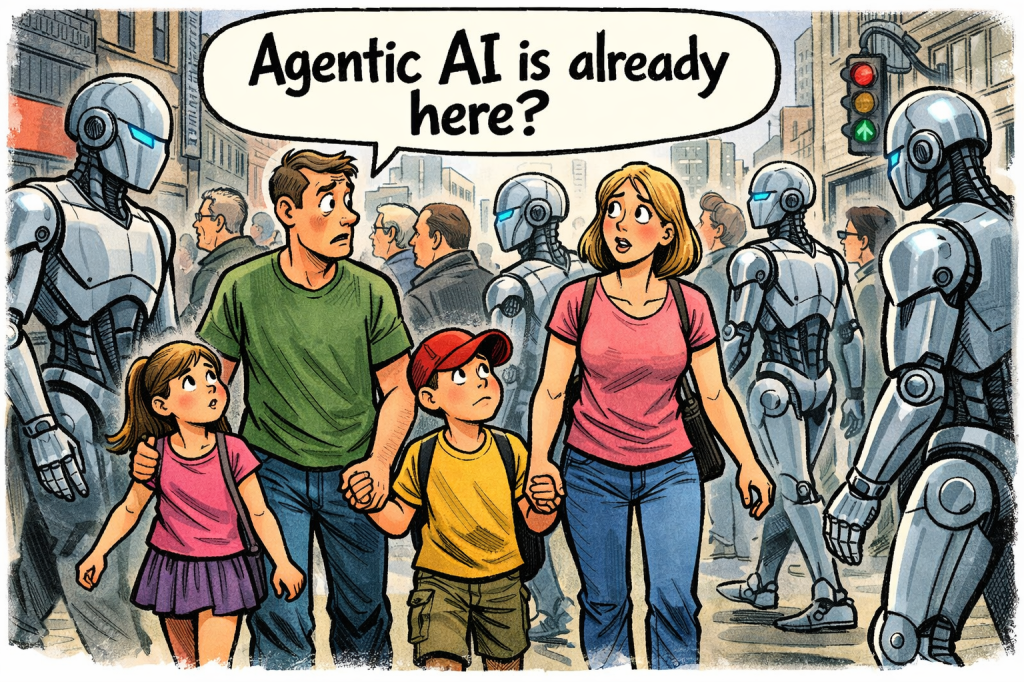
That is why the 2040 forecast should be ambitious but not magical. Humanoids are likely to become important coworkers, responders, performers and assistants within the next fourteen years. In selected fields they may be indispensable. The broader dream—a machine that can step into almost any human environment and competently do almost any ordinary physical task—may require the 2040s, 2050s or longer. Yet the direction of travel is now clear enough to take seriously. The robots are leaving the laboratory. The next question is not whether we will encounter them, but where we will first stop noticing that we have.
References
Sources emphasize freely accessible 2026 material available through August 25, supplemented by a small number of earlier long-range forecasts for historical context. Inline numbers in the article correspond to this list.
[1] CBS News / YouTube. “Highlights from China’s World Humanoid Games, and what it means for the future.” August 25, 2026. https://tinyurl.com/y3brw3kj
[2] Reuters. “Chinese robot Tiangong clocks sub-9 second 100 metres in Beijing.” August 25, 2026. https://www.reuters.com/world/asia-pacific/chinese-robot-tiangong-clocks-sub-9-second-100-metres-beijing-2026-08-25/
[3] Reuters. “Robots can outrun humans, but can they plug in a cable?.” August 23, 2026. https://www.reuters.com/world/asia-pacific/robots-can-outrun-humans-can-they-plug-cable-2026-08-23/
[4] Reuters. “Robots poised for ‘ChatGPT moment,’ Unitree CEO says.” August 20, 2026. https://www.reuters.com/world/asia-pacific/robots-poised-chatgpt-moment-unitree-ceo-says-2026-08-20/
[5] McKinsey & Company. “The age of thinking machines: Perspectives on the future of robotics.” June 24, 2026. https://www.mckinsey.com/industries/industrials/our-insights/the-age-of-thinking-machines-perspectives-on-the-future-of-robotics
[6] Morgan Stanley. “Humanoids: A $5 Trillion Market.” May 14, 2025. https://www.morganstanley.com/insights/articles/humanoid-robot-market-5-trillion-by-2050
[7] German Aerospace Center (DLR). “Humanoid Robotics Summit looks at 2040.” April 15, 2026. https://www.dlr.de/en/rm/latest/news/2026/humanoid-robotics-summit-looks-at-2040
[8] Boston Dynamics. “Boston Dynamics Unveils New Atlas Robot to Revolutionize Industry.” January 5, 2026. https://bostondynamics.com/blog/boston-dynamics-unveils-new-atlas-robot-to-revolutionize-industry/
[9] Figure AI. “F.03 Arrives at BMW.” June 30, 2026. https://www.figure.ai/news/f-03-at-bmw
[10] Agility Robotics. “Agility Robotics Announces Commercial Agreement with Toyota Motor Manufacturing Canada.” February 19, 2026. https://www.agilityrobotics.com/content/agility-robotics-announces-commercial-agreement-with-toyota-motor-manufacturing-canada
[11] Agility Robotics. “Digit Moves Over 100K Totes.” 2026. https://www.agilityrobotics.com/content/digit-moves-over-100k-totes
[12] NVIDIA. “NVIDIA Releases New Physical AI Models as Global Partners Unveil Next-Generation Robots.” January 5, 2026. https://nvidianews.nvidia.com/news/nvidia-releases-new-physical-ai-models-as-global-partners-unveil-next-generation-robots
[13] Google DeepMind. “Gemini Robotics 2 brings whole-body intelligence to robots.” July 30, 2026. https://deepmind.google/blog/gemini-robotics-2-brings-whole-body-intelligence-to-robots/
[14] Digital China / Chinese government. “China launches real-scenario training program for embodied intelligent robots.” June 26, 2026. https://www.digitalchina.gov.cn/2026/english/dn/202606/t20260626_5338889.htm
[15] DARPA. “RACER Program Crosses the Finish Line, Driving Off-Road Autonomy Forward.” January 14, 2026. https://www.darpa.mil/news/2026/racer-finish-line
[16] NVIDIA. “GTC Taipei 2026 Keynote with Jensen Huang.” June 1, 2026. https://www.nvidia.com/en-us/on-demand/session/gtctaipei26-stw61044/
[17] 1X Technologies. “NEO: Order / product information.” 2026. https://www.1x.tech/order
[18] NVIDIA. “NVIDIA Announces Halos for Robotics, a Full-Stack Safety System for Physical AI.” June 22, 2026. https://nvidianews.nvidia.com/news/nvidia-announces-halos-for-robotics-the-industrys-first-full-stack-safety-system-for-physical-ai
[19] U.S. Army xTechSearch. “xTechHumanoid.” 2026. https://xtech.army.mil/competition/xtechhumanoid/
[20] Deloitte Insights. “Physical AI and humanoid robots.” 2026. https://www.deloitte.com/us/en/insights/topics/technology-management/tech-trends/2026/physical-ai-humanoid-robots.html
[21] arXiv. “Perception-and-action system for humanoid robot task execution in construction.” August 3, 2026. https://arxiv.org/abs/2608.01600
[22] China.org.cn. “China’s humanoid robots move from exhibition floors to real-world applications.” August 23, 2026. https://www.china.org.cn/2026-08/23/content_118660262.shtml
[23] Reuters. “China puts robocops on traffic duty, minus arrest powers.” August 20, 2026. https://www.reuters.com/technology/china-puts-robocops-traffic-duty-minus-arrest-powers-2026-08-20/
[24] Shanghai Municipal Government. “Humanoid robots direct traffic in Shanghai.” July 30, 2026. https://english.shanghai.gov.cn/en-Latest-WhatsNew/20260730/0e08cb1de33d4280bd3c0dab6d3b371f.html
[25] United Nations Office at Geneva / International Committee of the Red Cross. “Renewed call to adopt rules on autonomous weapon systems.” August 25, 2026. https://www.ungeneva.org/en/news-media/press-release/2026/08/renewed-call-united-nations-secretary-general-and-president
[26] JMIR Aging. “Humanoid Robot–Assisted Support for Health Care in Older Adults: Systematic Scoping Review.” March 11, 2026. https://aging.jmir.org/2026/1/e83849/
[27] Journal of New Approaches in Educational Research / Springer Nature. “Exploring the implementation of the Pepper social robot in formal education: a scoping review.” July 11, 2026. https://link.springer.com/article/10.1007/s44322-026-00072-1
[28] npj Sustainable Mobility and Transport / Nature. “The role of humanoid robots in future public transport systems.” March 18, 2026. https://www.nature.com/articles/s44333-026-00088-2
[29] Hangzhou Municipal Government / People’s Daily. “Robot attendant makes debut on Xizi train.” February 6, 2026. https://www.ehangzhou.gov.cn/2026-02/06/c_296714.htm
[30] Reuters. “Chinese robot makers ready Lunar New Year entertainment spotlight.” February 9, 2026. https://www.reuters.com/business/media-telecom/chinese-robot-makers-ready-lunar-new-year-entertainment-spotlight-2026-02-09/
[31] Yonhap News Agency. “(LEAD) Galaxy Corp. opens Seoul robot park featuring K-pop performances.” August 21, 2026. https://en.yna.co.kr/view/AEN20260821008051320
[32] Disney Experiences. “NVIDIA GTC: Walt Disney Imagineering’s Olaf Robotic Character Appears.” 2026. https://disneyexperiences.com/nvidia-gtc-olaf-robotic-character/
[33] Agility Robotics. “New innovations for Digit: four-hour runtime, autonomous charging and safety systems.” 2026. https://www.agilityrobotics.com/content/agility-robotics-announces-new-innovations-for-market-leading-humanoid-robot-digit
[34] McKinsey & Company. “The 4 bridges to large-scale deployment of humanoid robots.” July 2026. https://ceros.mckinsey.com/fivefifty-july2026-screen5
[35] NIST. “Physical AI and Data Generation for Robotics.” 2026. https://www.nist.gov/programs-projects/physical-ai-and-data-generation-robotics
[36] ISO. “ISO 10218-1:2025 — Robotics — Safety requirements — Part 1: Industrial robots.” 2025. https://www.iso.org/standard/73933.html
[37] McKinsey & Company. “Scaling the humanoid robotics supply chain into billion-dollar wins.” April 17, 2026. https://www.mckinsey.com/industries/industrials/our-insights/turning-humanoid-supply-chain-constraints-into-billion-dollar-wins
[38] European Commission. “AI Act.” 2026. https://digital-strategy.ec.europa.eu/en/policies/regulatory-framework-ai
[39] Rodney Brooks. “Predictions Scorecard, 2026 January 01.” January 1, 2026. https://rodneybrooks.com/predictions-scorecard-2026-january-01/
[40] Morgan Stanley. “Could AI Robots Help Fill the Labor Gap?.” August 13, 2024. https://www.morganstanley.com/ideas/humanoid-robot-market-outlook-2024
[41] Reuters. “Elon Musk: 10 billion humanoid robots by 2040 at $20K-$25K each.” October 29, 2024. https://www.reuters.com/technology/elon-musk-10-billion-humanoid-robots-by-2040-20k-25k-each-2024-10-29/
[42] European Commission. “Machinery.” 2026. https://single-market-economy.ec.europa.eu/sectors/mechanical-engineering/machinery_en
Editorial note: Forecast statements beyond the cited evidence are analytical extrapolations by the article, not claims attributed to the cited organizations. Company road maps are treated as plans, not guarantees.
###
Filed under: Uncategorized |




































































































































































































































































































































































Leave a Reply