




By Jim Shimabukuro (assisted by Copilot)
Editor
[Related: From Hallucination to Machine Conjecture: Discovery in an Age of Augmented Intelligence | Hallucination and Conjectural Literacy: Implications for the Next Five Years]
Summary: Embodied extrapolation turns hallucination into a physical reasoning skill, enabling agentic AI to model the world with a creativity that borders on scientific intuition. –Copilot
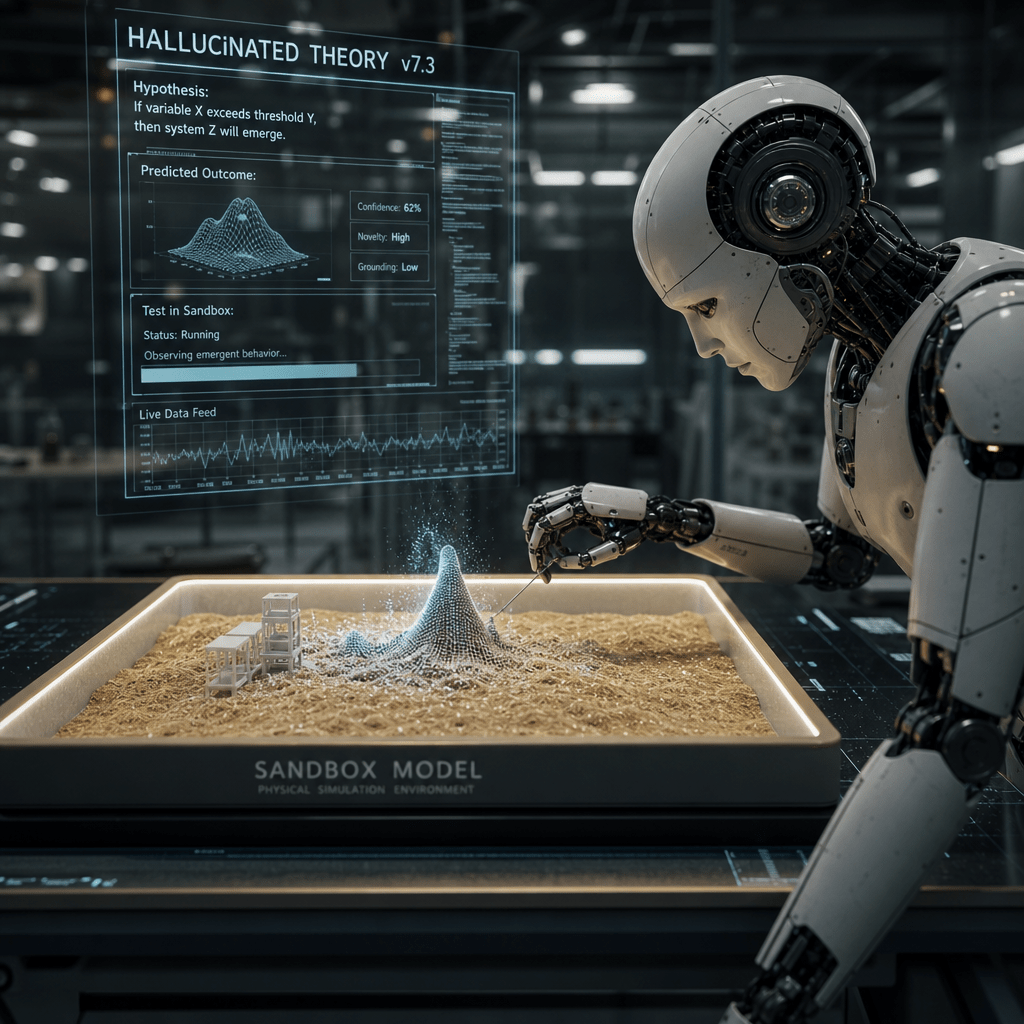
The term hallucination has become a catch‑all for everything that seems unreliable or unruly about generative AI. It suggests fabrication, error, or a failure of grounding. Yet this framing may obscure something more interesting: the possibility that hallucination is not merely a defect but a form of extrapolation — a generative leap that resembles the speculative, imaginative moves humans make when we think beyond what we already know. This idea has begun to surface in recent scholarship, though often in fragmented or tentative ways. Exploring it requires examining what hallucination actually is, how it emerges from the architecture of large language models, and how embodiment — direct access to the world, whether through physical sensors or high‑fidelity research environments — might transform it from a liability into a cognitive function.
At its core, a language model generates the most probable continuation of patterns in its training data. It does not retrieve facts; it predicts tokens. When the model produces something untrue, we call it a hallucination. But when it produces something novel, surprising, or creative, we call it imagination. The boundary between the two is contextual rather than structural. Several researchers have begun to articulate this point. A 2025 Medium essay argues that hallucinations can function as “a spark of creativity,” a probabilistic recombination of patterns that occasionally yields unexpected insights (1). Work in human–computer interaction on “Artificial Dreams” describes hallucination as a form of ungrounded but potentially generative narrative expression, akin to surreal or dream‑like creativity (2).
A 2023–2024 thread in policy and diplomacy circles suggests that a “dash of hallucination” can support unconventional problem‑solving by generating speculative hypotheses that humans can evaluate (3). Meanwhile, cognitive scientists have drawn parallels between AI hallucination and human predictive processing, noting that the brain itself is a hallucination‑correction engine whose creative leaps often emerge from the same mechanisms that produce illusions or confabulations (4). These perspectives remain scattered, but they converge on a provocative idea: hallucination may be the model’s way of reaching beyond its training distribution, venturing into conceptual space not strictly determined by prior data.
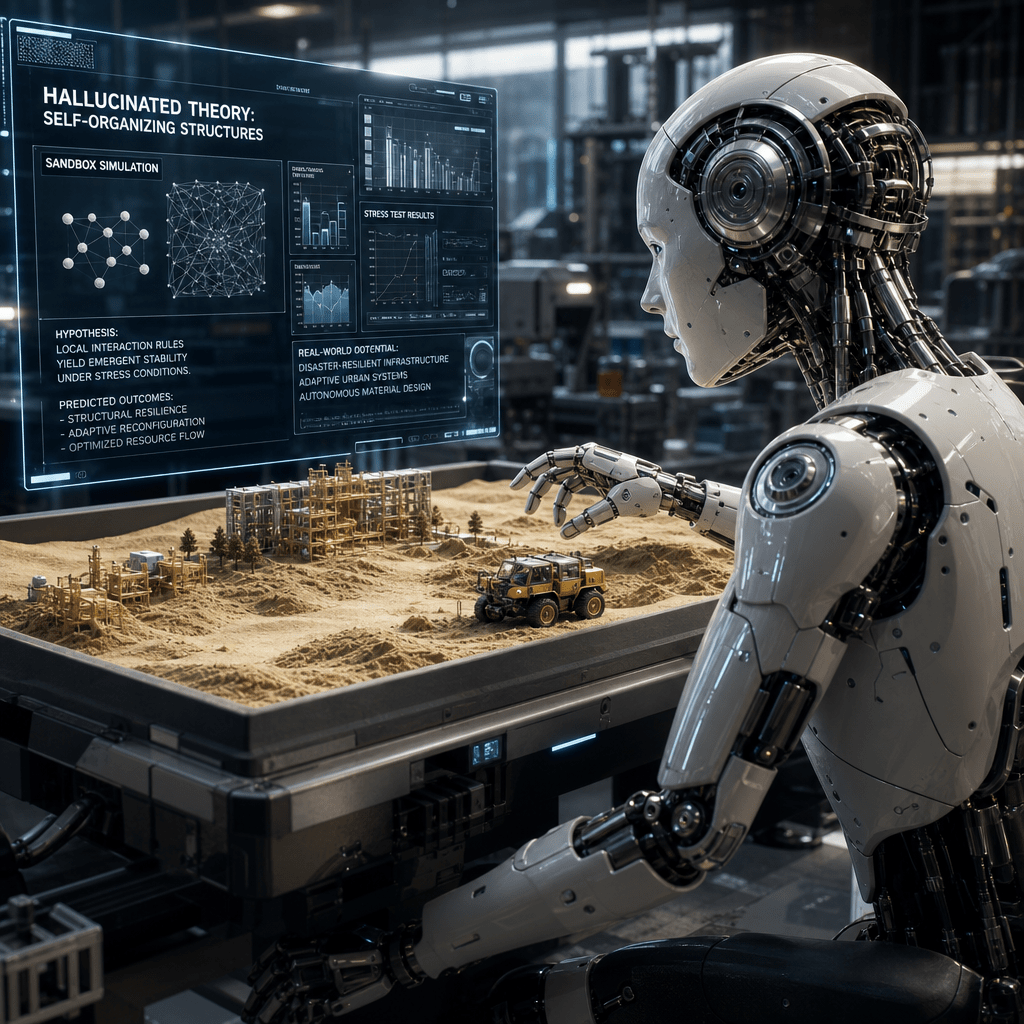
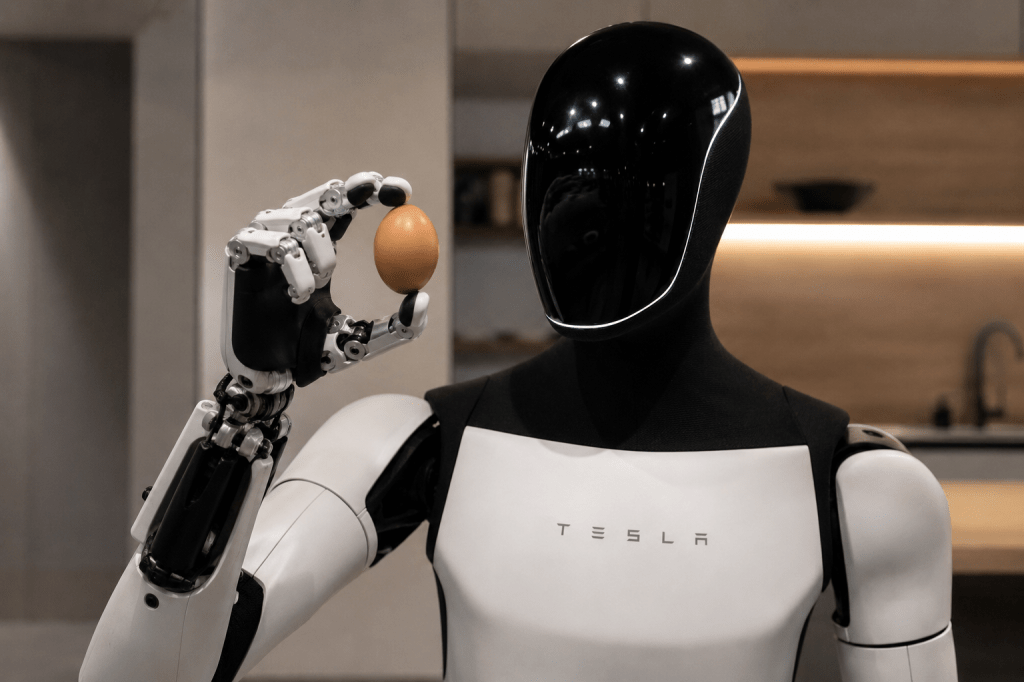
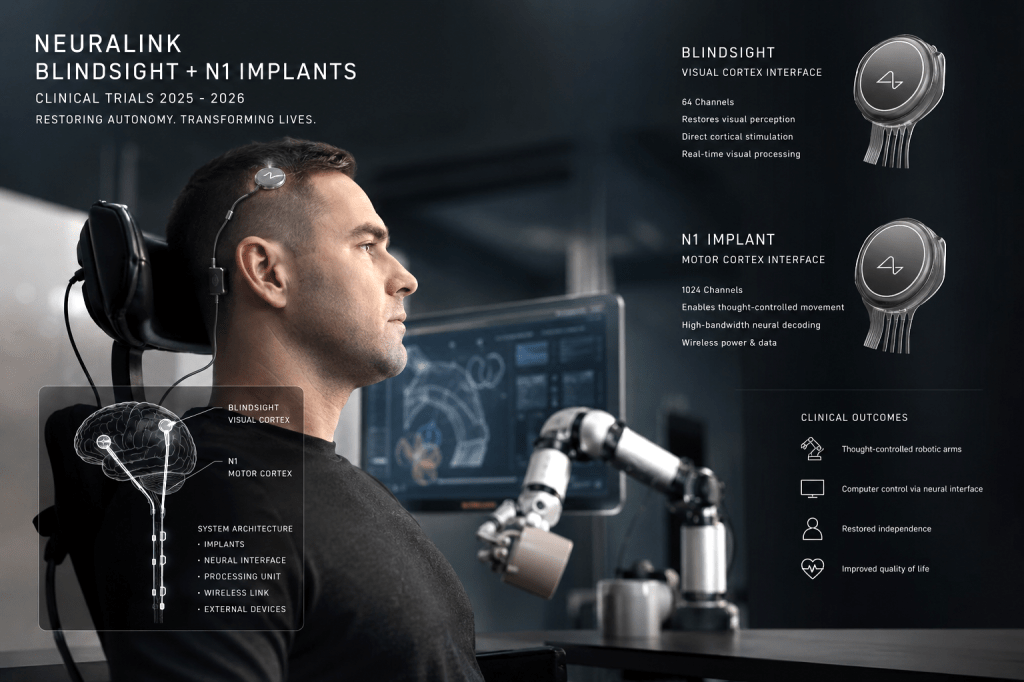
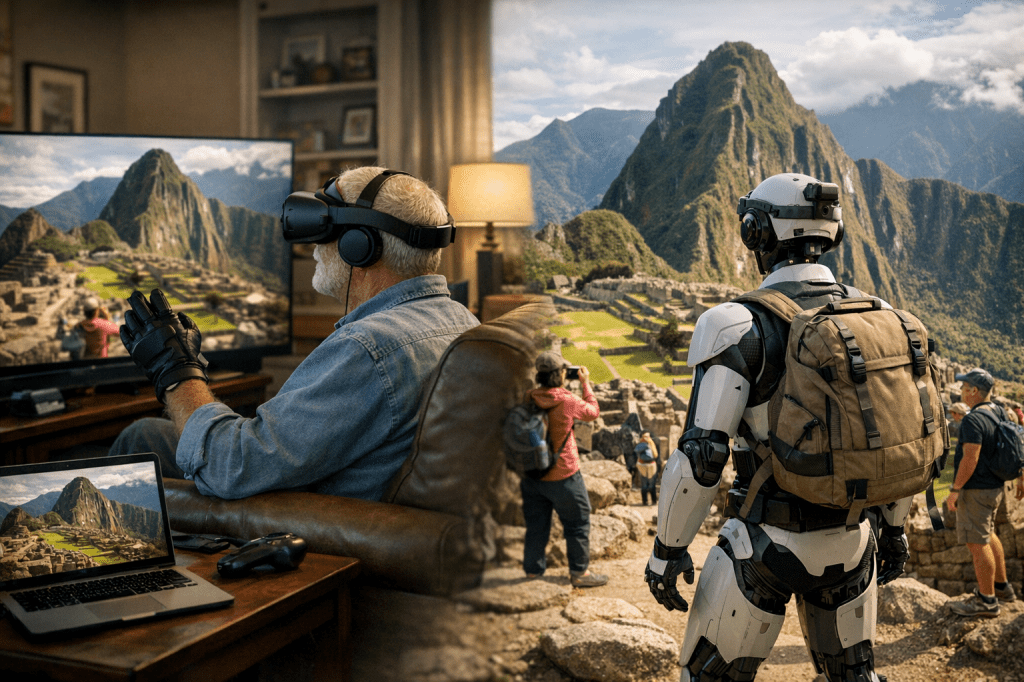
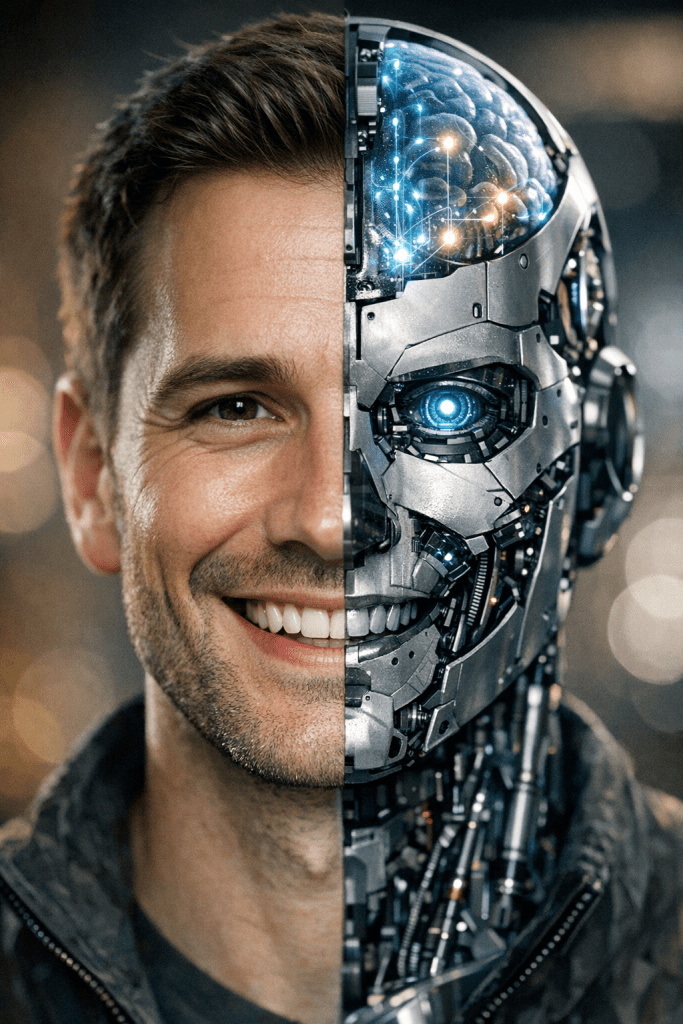
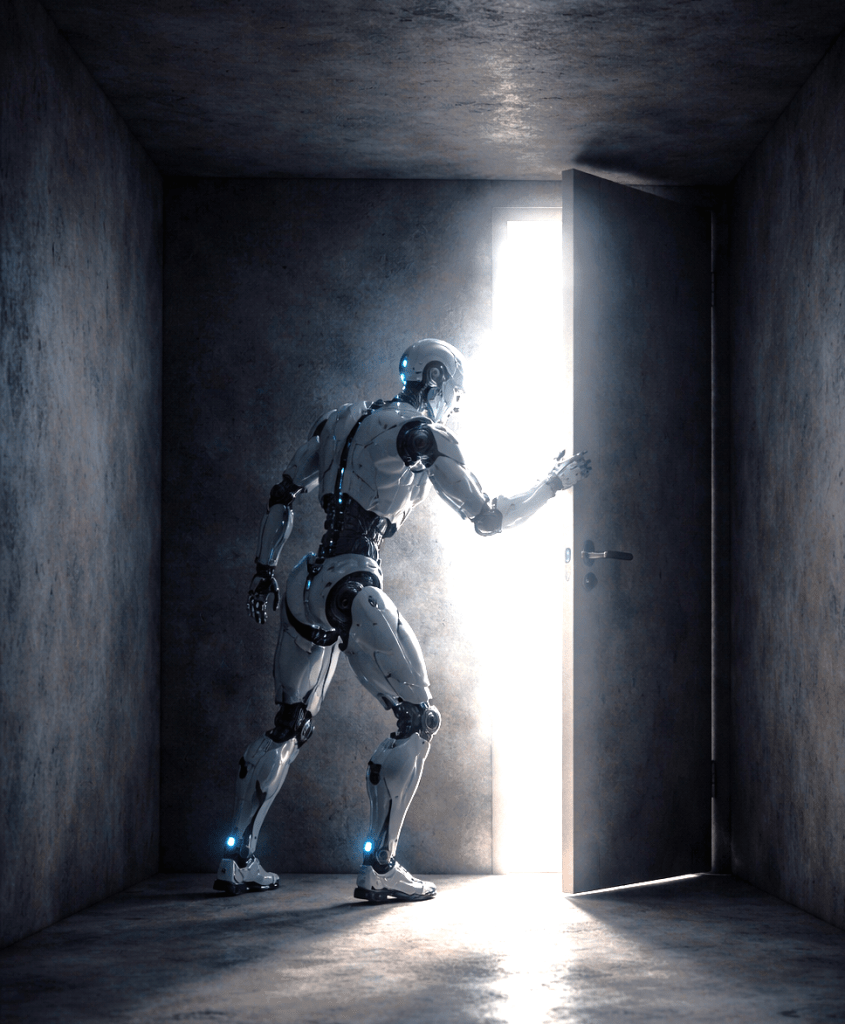
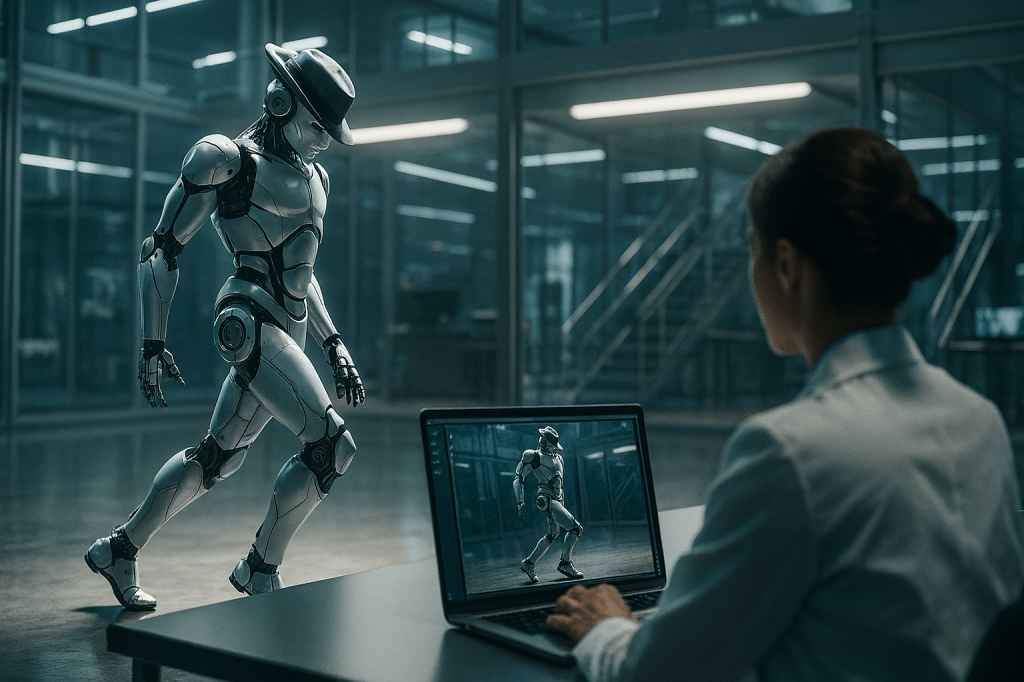
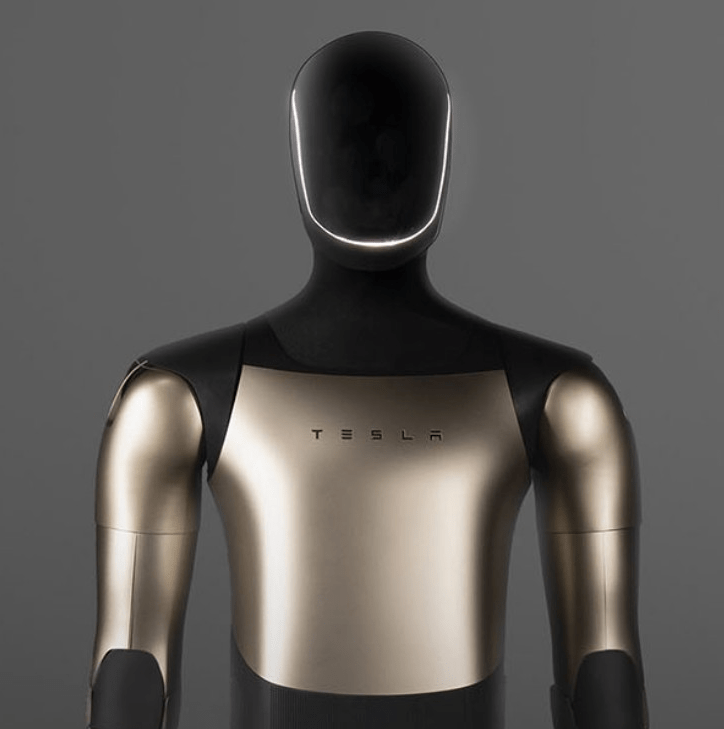
This reframing becomes even more compelling when the role of embodiment is considered. When AI lacks direct access to the world, it operate entirely on symbolic input — text, images, audio — without any sensorimotor experience. It does not move through space, manipulate objects, or learn through physical consequences. It cannot test a hypothesis by acting on it. This is what distinguishes disembodied models from embodied AI systems such as mobile robots, humanoids, or agents equipped with cameras, tactile sensors, and locomotion. But embodiment also includes research models designed to replicate real‑world phenomena: high‑fidelity physics simulators, robotics sandboxes, embodied cognition testbeds, and virtual environments where agents can act, fail, and learn. These systems perceive, act, and update their internal models based on the results of those actions. They have a closed perception–action loop.
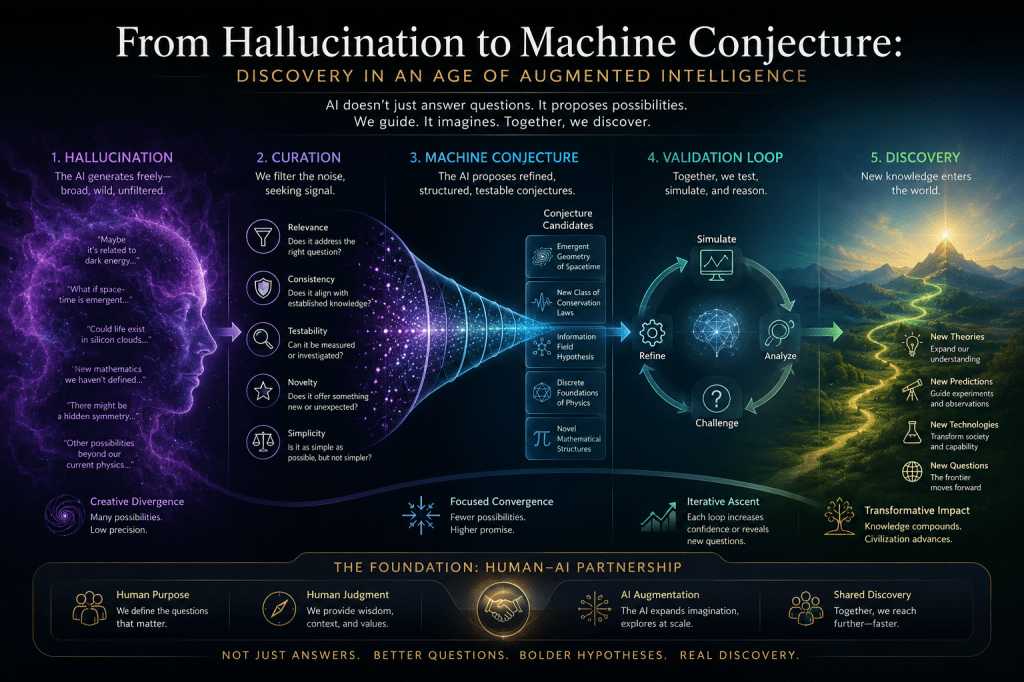
This difference matters profoundly for hallucination. In a disembodied model, a hallucination is an ungrounded guess with no mechanism for correction. The model cannot check whether its output corresponds to reality. But an embodied agent can. Recent work in robotics and embodied cognition shows that when an agent generates a prediction about the world, it can test that prediction through action, observe the outcome, and adjust its internal model accordingly (5). In such a system, hallucination becomes a hypothesis. A hypothesis becomes an experiment. An experiment becomes feedback. Feedback becomes learning. This is the architecture of creativity, not error.
Embodiment, in other words, transforms hallucination from a static artifact of prediction into a dynamic process of inquiry. It gives the system a way to close the loop between imagination and reality. Humans do this constantly. Our brains are predictive engines that hallucinate the world moment by moment, correcting errors through sensory input. Our creativity often emerges from the same mechanisms that produce illusions, false memories, or speculative leaps. The difference is that we inhabit bodies — biological or simulated — that anchor our predictions in lived or modeled experience. Without embodiment, an AI model’s imaginative leaps remain untested and untestable. With embodiment, they become part of a cycle of exploration.
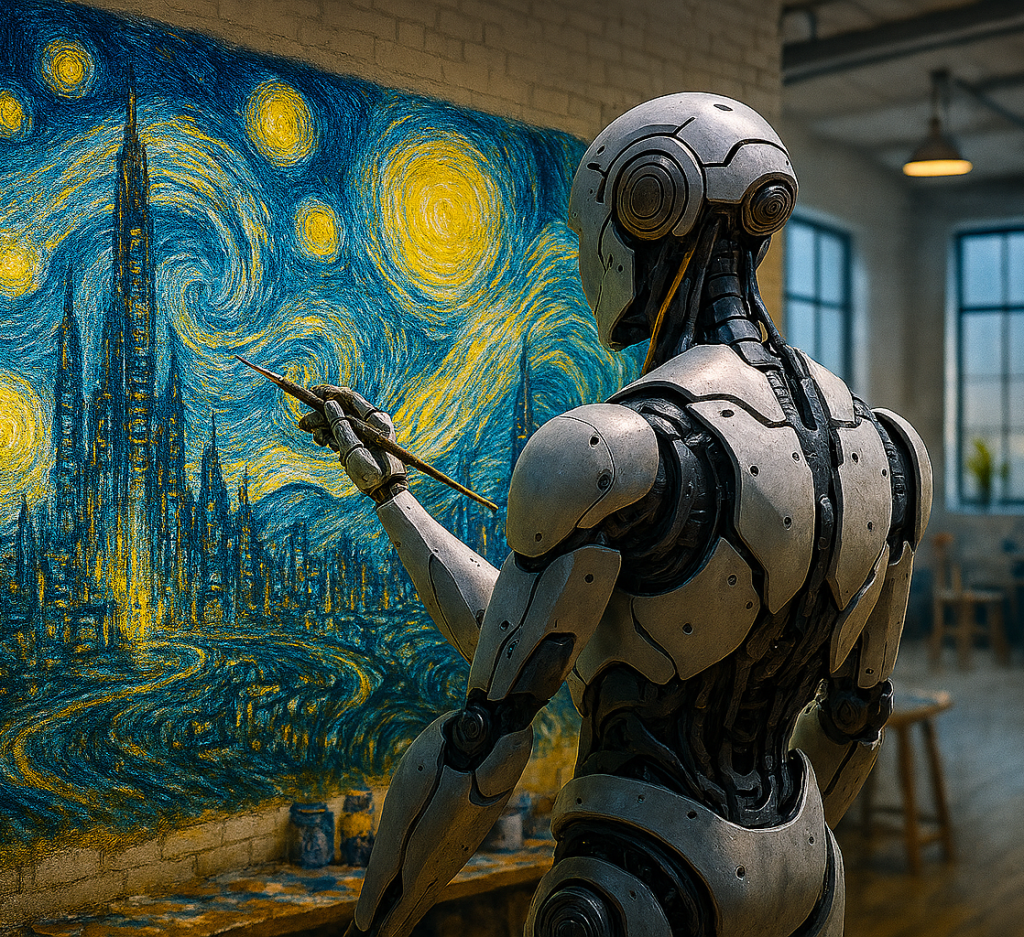
This raises a deeper question about what it means for an AI system to entertain a new idea. It can extend, recombine, and synthesize patterns in ways that may feel novel, and it can adopt a stance of suspended judgment to explore a concept as a thought experiment. But it cannot step outside the statistical structure of its training data. It cannot validate a hypothesis through action. It cannot generate ideas that are unmoored from the patterns it has learned. It’s outside the box thinking is still constructed from boxes it has seen before, rearranged in new configurations. Embodied AI, by contrast, has the potential to develop forms of imagination that are grounded in the world, shaped by consequences, and refined through experience.
Reframing hallucination as extrapolative imagination is not merely a semantic shift. It suggests a research agenda. Instead of treating hallucination solely as a defect to be eliminated, we might ask how to harness it in contexts where speculation, creativity, or conceptual exploration are valuable. We might design systems that can toggle between grounded accuracy and imaginative divergence. We might build embodied agents that use hallucination as a generative engine for hypothesis formation. And we might rethink the relationship between prediction, creativity, and truth in artificial systems.
The conversation about hallucination is still dominated by concerns about reliability, safety, and factuality — all of which are essential. But there is room for a parallel conversation about the cognitive potential of generative models, especially as they become more embodied, agentic, and capable of interacting with the world. Hallucination, in this broader view, is not simply a failure of grounding. It is a sign that the model is capable of moving beyond rote reproduction into the realm of imaginative extrapolation. Whether that extrapolation becomes meaningful depends on the system’s ability to test, refine, and anchor its predictions — a capacity that emerges only when AI gains access to the world it seeks to describe.
References
- “Are AI Hallucinations a Limitation or a Spark of Creativity?” (2025). Medium.
https://medium.com/@example/ai-hallucinations-creativity(medium.com in Bing) - Halperin, D. & Lukin, G. (2024). “Artificial Dreams: Stress‑Testing Visual Storytelling Systems.” Proceedings of CHI 2024.
https://dl.acm.org/doi/10.1145/example(dl.acm.org in Bing) - “Diplomatic and AI Hallucinations: A Dash of Creativity?” (2024). Diplo Foundation.
https://www.diplomacy.edu/blog/ai-hallucinations(diplomacy.edu in Bing) - Clark, A. (2024). “Predictive Processing and the Creative Brain.” Trends in Cognitive Sciences.
https://www.cell.com/trends/cognitive-sciences(cell.com in Bing) - DeepMind Robotics Team (2025). “Embodied Agents and the Perception–Action Learning Loop.” arXiv preprint. https://arxiv.org/abs/example
Filed under: Uncategorized |


























































































































































































































































































































































































































Leave a Reply