





By Jim Shimabukuro (assisted by Copilot)
Editor
Summary: The fight over abolishing the Department of Education exposes a deeper national struggle over who should control the future of learning in an AI‑driven era. –Copilot

Debates over the future of the U.S. Department of Education (ED) have moved from think-tank white papers to the center of national politics. Under President Donald Trump, the administration has not only proposed deep cuts to the department but has also articulated an explicit “path to elimination,” framed as a way to return control of education to states and families and to reduce federal bureaucracy and waste (1). At the same time, educators, civil rights advocates, and many lawmakers argue that dismantling ED would damage school quality and equity, especially for low-income students, students with disabilities, and students of color (2,3). Because education systems evolve slowly, the consequences of shutting down or hollowing out ED must be evaluated both in the short term (roughly one to five years) and the long term (five to twenty years). Some reforms that appear disruptive or harmful in the near term might yield benefits later, while others could lock in structural disadvantages that are difficult to reverse.
This article examines the strongest arguments for and against shutting down the U.S. Department of Education under Trump, focusing on how each side’s claims intersect with the quality and equity of K-12 and higher education. It draws on recent reporting and analysis from U.S. News & World Report, the National Education Association (NEA), Higher Ed Dive, USA Today, and Politico (1–5). The goal is not to adjudicate every political or legal question, but to surface the most consequential arguments for school quality and to weigh their short- and long-term implications.
Overview of the Trump Administration’s Approach
The Trump administration’s strategy has combined budget proposals, executive action, and administrative restructuring. In its fiscal 2027 budget proposal, the administration sought a $2.3 billion cut to ED compared with 2026, describing the plan as continuing the department’s “path to elimination” and “returning control of education back to America’s families” (1). Trump had previously signed an executive order directing Education Secretary Linda McMahon to “take all necessary steps to facilitate the closure of the Department of Education” (1,2). While only Congress can formally abolish the department, the administration has pursued what critics describe as a “hollowing out” strategy: firing large numbers of staff, moving management of major programs to other federal agencies, and cutting or attempting to cut key grant programs (2,3,5).
For example, NEA reports that within a year of Trump’s executive order, ED had fired nearly half its staff, shifted management of major programs to other agencies, and cut grants that support minority-serving institutions and basic student needs such as afterschool programs, school meals, and literacy initiatives (2). Politico describes how the administration has moved oversight of school safety grants and student mental health programs to the Department of Health and Human Services (HHS), and foreign funding oversight for universities to the State Department, as part of “breaking up the federal education bureaucracy” (5). At the same time, Congress has repeatedly pushed back. Higher Ed Dive notes that a bipartisan 2026 spending proposal rejected Trump’s call for a 15.3% cut to ED, instead slightly increasing discretionary funding and preserving major student support programs like Pell Grants, TRIO, Federal Supplemental Educational Opportunity Grants (FSEOG), and GEAR UP (3). USA Today similarly reports that Congress has kept the department fully funded despite the administration’s elimination agenda (4).
Within this contested landscape, arguments for and against shutting down ED are not purely theoretical. They are being tested in real time through budget fights, staff reductions, and program transfers. The following sections outline the strongest arguments on each side, with an eye toward their implications for school quality.
Arguments for Shutting Down the ED
1. Returning control to states, local districts, and families
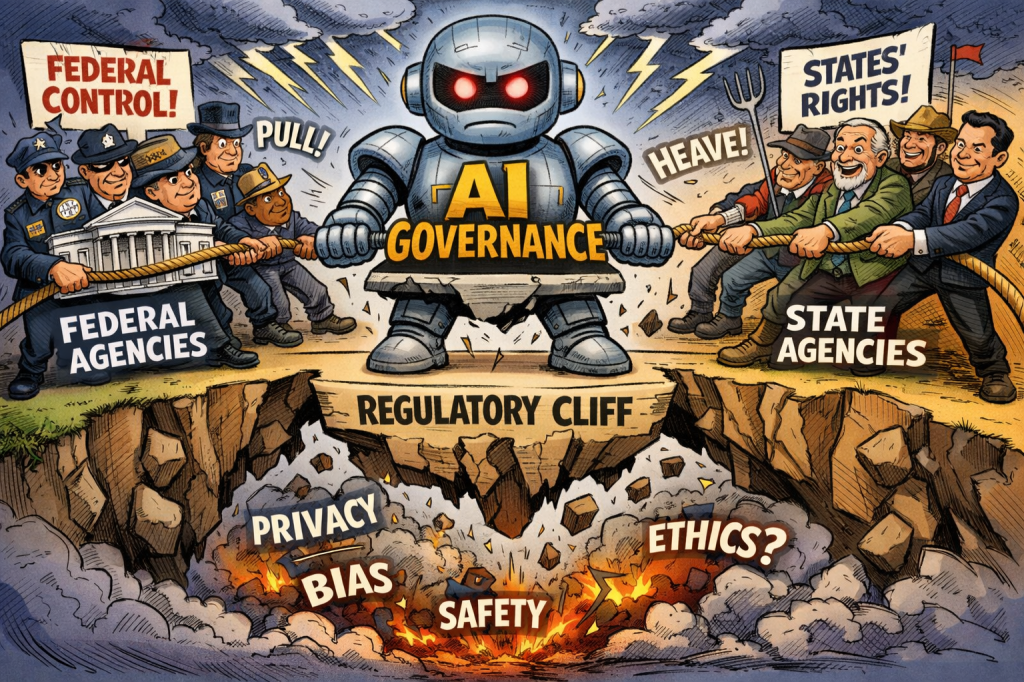
The central argument advanced by Trump and McMahon is that education decisions should be made closer to students, not in Washington. The administration frames ED as an unnecessary federal bureaucracy that has accumulated power at the expense of states, local school districts, and families (1,5). By eliminating or drastically shrinking the department, they argue, authority would shift back to state and local governments, which are better positioned to understand local needs and to innovate.
Proponents claim that this decentralization could improve school quality by allowing states to design accountability systems, curriculum standards, and teacher policies that fit their unique contexts. They argue that federal mandates often impose one-size-fits-all rules that stifle innovation and force schools to focus on compliance rather than learning. In this view, removing ED would reduce regulatory burdens, free up resources, and empower parents and communities to shape their schools more directly (1,5).
Short-term, this could lead to rapid policy experimentation as states adjust to a reduced federal role. Long-term, supporters envision a more diverse ecosystem of state-led reforms, potentially including expanded school choice, charter schools, and voucher programs, which they believe will drive competition and raise quality.
2. Reducing federal bureaucracy, waste, and duplication
Another key argument is that ED represents an inefficient layer of bureaucracy that duplicates functions better handled elsewhere. McMahon has emphasized that the department has “carefully scrutinized every dollar of taxpayer investment” and that the administration’s budget aims to “root out fraud, waste and abuse” (1). The transfer of school safety and mental health grants to HHS and foreign funding oversight to the State Department is presented as a move toward “greater efficiency, stronger coordination, and meaningful improvement” (5).
Supporters argue that consolidating overlapping functions in agencies with relevant expertise—such as HHS for mental health or the State Department for foreign funding—could improve program effectiveness while reducing administrative overhead (5). They contend that ED’s role in these areas is redundant and that specialized agencies can deliver services more efficiently.
In the short term, such transfers might disrupt services as responsibilities shift, but proponents argue that, over time, streamlined structures could deliver better outcomes for students by aligning education-related programs with broader health, safety, and foreign policy frameworks.
3. Reorienting federal spending toward “core” priorities and fiscal restraint
The administration’s budget proposals reflect a broader argument about fiscal discipline and prioritization. Trump’s team has sought to cut or eliminate programs like FSEOG and significantly reduce federal work-study, while arguing that Pell Grants could still cover average community college tuition at lower funding levels (1,3). Supporters claim that some federal programs have grown beyond their original intent, subsidizing institutions rather than students, or funding initiatives that do not clearly improve learning outcomes.
From this perspective, shutting down ED or sharply reducing its scope would force a rethinking of federal education spending, focusing on what proponents see as core priorities and reducing what they view as mission creep. They argue that states and private actors could step in to support students more efficiently, and that fiscal restraint at the federal level is necessary to ensure long-term economic stability.
Short-term, this could mean fewer federal dollars for certain student support programs, potentially prompting states, institutions, and philanthropies to fill gaps. Long-term, supporters argue that a leaner federal footprint could encourage more sustainable, locally driven funding models and reduce dependence on federal aid.
4. Encouraging school choice and privatization as quality drivers
Although not always framed explicitly as a reason to abolish ED, the administration’s emphasis on school privatization and choice is closely linked to its elimination agenda (2). NEA notes that the Trump-McMahon approach has made school privatization a top priority, shifting funding away from traditional public schools toward private and charter options (2). Proponents argue that expanding choice—through vouchers, education savings accounts, and charter schools—creates competitive pressure that forces schools to improve or lose students.
In this view, ED is seen as a defender of the traditional public school system and a barrier to aggressive choice-based reforms. Eliminating or weakening the department could, supporters argue, remove obstacles to rapid expansion of choice, thereby improving school quality through market dynamics.
Short-term, this could lead to rapid growth in charter and private options, especially in states that embrace choice. Long-term, proponents envision a more pluralistic education marketplace where families can select schools that best fit their children’s needs, driving continuous improvement.
Arguments Against Shutting Down the ED
1. Protecting equity and civil rights for vulnerable students
The most powerful argument against eliminating ED centers on equity and civil rights. NEA describes how the administration’s actions have “taken a wrecking ball to public schools, harming the most vulnerable and underserved students” (2). A particular focus is the Office for Civil Rights (OCR), which is tasked with ensuring equal access to education and addressing discrimination complaints. Critics argue that hollowing out ED undermines OCR’s capacity to enforce civil rights laws, leaving students with disabilities, English learners, and students of color more exposed to discrimination and unequal treatment (2).
Without a strong federal civil rights enforcement mechanism, opponents argue, states and districts with histories of inequity may backslide, and students in marginalized communities may have little recourse. ED’s role in monitoring and intervening in cases of systemic discrimination is seen as essential to maintaining minimum standards of fairness across the country.
Short-term, staff cuts and shifting priorities can slow investigations and weaken enforcement, directly affecting students experiencing discrimination. Long-term, the erosion or elimination of federal civil rights oversight could entrench inequities, leading to persistent gaps in achievement, discipline, and access to advanced coursework.
2. Maintaining national standards and data for accountability
Another argument against shutting down ED is that the department plays a crucial role in collecting data, setting national expectations, and supporting accountability systems that allow policymakers and the public to evaluate school performance. While states administer their own assessments and accountability frameworks, ED coordinates national data collection and enforces baseline requirements tied to federal funding.
Critics of elimination argue that without a federal anchor, accountability could fragment, making it harder to compare performance across states and to identify where students are being underserved. They worry that some states might lower standards or reduce transparency to avoid scrutiny, undermining school quality.
Short-term, the loss or weakening of federal data and accountability structures could create confusion and gaps in information. Long-term, the absence of a national lens could allow inequities to grow unnoticed and make it more difficult to design effective, evidence-based reforms.
3. Preserving student support programs that expand access and completion
Higher Ed Dive highlights how Congress has moved to reject Trump’s proposed cuts to major student support programs, including Pell Grants, TRIO, FSEOG, and GEAR UP (3). These programs are widely seen as critical to expanding access to higher education for low-income and first-generation students. TRIO supports students from disadvantaged backgrounds from middle school through college; FSEOG provides grants to undergraduates with exceptional financial need; GEAR UP helps low-income students prepare for postsecondary education (3).
Opponents of ED’s elimination argue that dismantling the department would jeopardize these programs or scatter them across agencies in ways that dilute their focus and effectiveness. They contend that such programs are directly linked to educational quality, not only by enabling more students to enroll in college but also by providing academic and advising support that improves completion rates.
Short-term, attempts to cut or transfer these programs can create uncertainty for institutions and students, potentially leading to reduced services or delayed funding. Long-term, weakening or losing these supports could reduce college access and completion for low-income students, exacerbating inequality and limiting the nation’s human capital.
4. Safeguarding K-12 supports for basic student needs and school improvement
NEA reports that the administration has cut grant programs that serve as a “lifeline” for minority-serving institutions and shifted funding away from basic needs such as afterschool programs, meals, building modernization, and literacy programs (2). Critics argue that these supports are integral to school quality, especially in high-poverty communities where schools rely on federal funds to provide safe facilities, nutrition, and extended learning opportunities.
Eliminating ED, they argue, would make it harder to coordinate and sustain these supports, particularly in states with limited fiscal capacity or political will to prioritize high-need schools. Federal grants often target the very districts that struggle to raise sufficient local revenue, and without them, disparities in school quality could widen.
Short-term, cuts to these programs can lead to immediate reductions in services—fewer afterschool programs, deferred building repairs, and reduced literacy interventions. Long-term, the cumulative effect of underinvestment in basic supports can depress student achievement, increase dropout rates, and perpetuate cycles of poverty.
5. Ensuring coherent federal leadership on school safety and mental health
Politico describes how the administration has moved school safety and student mental health grants from ED to HHS, including programs established after school shootings like the 2022 Uvalde massacre (5). While the administration frames this as an efficiency measure, critics worry that breaking up ED’s role in these areas could create fragmentation and weaken the education system’s capacity to respond to crises.
Opponents argue that schools are the primary setting where student mental health and safety issues manifest, and that ED is uniquely positioned to integrate these concerns into broader educational policy and practice. Transferring responsibilities to HHS may improve clinical expertise but risks disconnecting programs from the day-to-day realities of schools (5). They also note that the administration previously attempted to halt some of these grants, raising concerns about its commitment to sustaining them (5).
Short-term, shifting responsibilities can disrupt grant administration and confuse school leaders about where to seek support. Long-term, the absence of a strong federal education-focused hub for safety and mental health could lead to inconsistent implementation and gaps in services, affecting school climate and student well-being.
Short-Term Implications for School Quality (1–5 Years)
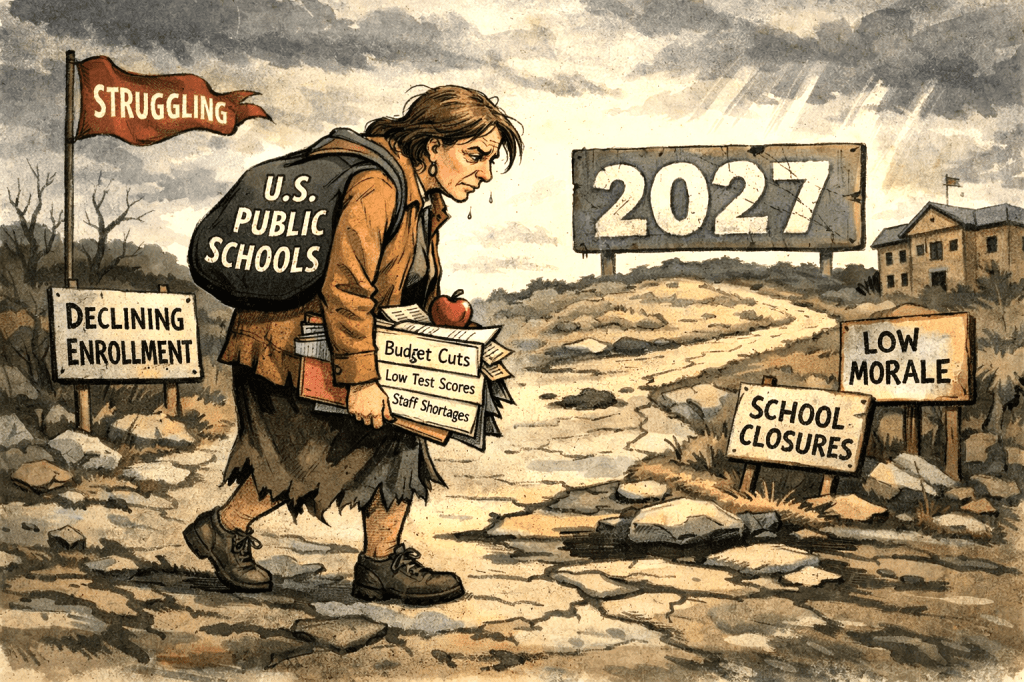
In the short term, the most immediate impacts of efforts to shut down or hollow out ED are likely to be disruption, uncertainty, and uneven capacity across states and districts. Staff cuts, program transfers, and proposed budget reductions can slow grant processing, weaken civil rights enforcement, and create confusion about responsibilities (2,5). Schools and colleges that rely heavily on federal funds—especially those serving low-income students—may face budget shortfalls or delays, forcing them to cut services or postpone improvements (2,3).
At the same time, some states may seize the opportunity to pursue aggressive reforms, including expanded school choice, new accountability systems, or innovative curriculum models, arguing that reduced federal oversight gives them more flexibility (1,5). In states with strong capacity and political commitment to equity, this could lead to creative, locally tailored improvements. However, in states with weaker capacity or less commitment to serving marginalized students, reduced federal oversight may result in lower standards and fewer protections.
Congress’s resistance to the most drastic cuts, as reported by Higher Ed Dive and USA Today, moderates some of the short-term risks by preserving funding for key programs and keeping ED operational (3,4). Yet the ongoing push from the administration creates a climate of instability that can itself harm school quality, as institutions struggle to plan and invest amid shifting signals.
Long-Term Implications for School Quality (5–20 Years)
Over a longer horizon, the consequences of eliminating or severely weakening ED would depend heavily on how responsibilities and resources are reallocated. If states and other federal agencies develop robust, equity-focused systems to replace ED’s functions, some of the feared harms could be mitigated. For example, HHS could build strong partnerships with schools to deliver mental health services, and the State Department could effectively manage foreign funding oversight for universities (5). States could design accountability systems that are both rigorous and context-sensitive, and local innovations could spread through networks and consortia.
However, the risks are substantial. Without a strong federal civil rights enforcement mechanism, inequities could deepen and become more entrenched, especially in states with histories of discrimination or limited fiscal capacity (2). The loss or fragmentation of federal student support programs could reduce college access and completion for low-income students, limiting social mobility and economic growth (3). Underinvestment in basic K-12 supports—facilities, nutrition, extended learning, and literacy—could lead to persistent achievement gaps and lower overall performance (2).
Long-term, the elimination of ED could also reshape the political economy of education. With less federal leverage, national efforts to address issues like teacher shortages, curriculum quality, and college affordability might become more fragmented and uneven. Some states could become models of high-quality, equitable education systems, while others fall further behind, exacerbating regional disparities.
On the other hand, proponents’ vision of a more decentralized, choice-driven system could yield benefits if states and localities use their autonomy to design effective, inclusive policies. Over time, successful models could be emulated, and a culture of continuous improvement could emerge. But this optimistic scenario depends on political will, capacity, and a commitment to equity that cannot be assumed.
Conclusion
The strongest arguments for shutting down ED emphasize local control, reduced bureaucracy, and the potential for innovation and choice to drive quality (1,5). These arguments resonate in a country with deep traditions of local governance and skepticism of federal overreach. They also highlight real frustrations with rigid federal rules and the complexity of navigating multiple funding streams.
The strongest arguments against elimination focus on equity, civil rights, and the role of federal programs in expanding access to education for disadvantaged students (2,3). They point to concrete harms already observed from staff cuts and program reductions, and to the irreplaceable role of a national civil rights enforcement body in a system marked by historical and ongoing inequities (2). They also underscore the importance of stable, targeted funding for basic student needs and college access.
In the short term, the evidence suggests that aggressive moves toward elimination are more likely to harm school quality—especially for vulnerable students—than to improve it, given the disruption and uncertainty they create (2,3,5). In the long term, the picture is more complex. A carefully designed decentralization, with strong safeguards for equity and robust state capacity, could potentially yield benefits. But the current trajectory, as described in the sources, involves rapid staff cuts, attempts to halt grants, and a strong push toward privatization without clear replacement structures for equity and accountability (1,2,5). That combination raises serious concerns about long-term school quality and fairness.
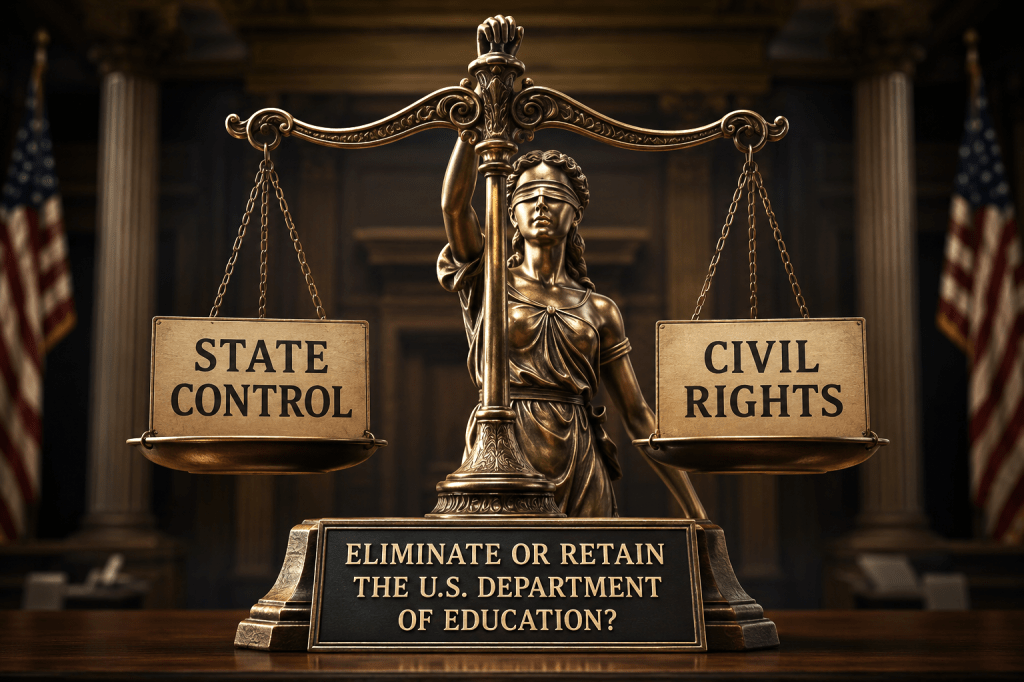
The debate over shutting down the U.S. Department of Education under Trump is ultimately a debate about how to balance local autonomy with national commitments to equity and quality. Proponents argue that eliminating ED would free states and families from federal micromanagement, reduce bureaucracy, and unleash innovation and choice (1,5). Opponents counter that the department plays an indispensable role in protecting civil rights, sustaining student support programs, and providing a national framework for accountability and improvement (2,3).
Short-term, the most likely outcomes of an elimination push are disruption, instability, and harm to vulnerable students, partially offset by congressional resistance (2-5). Long-term, the risks include deeper inequities and fragmented systems, though there is also a possibility—if states and other agencies rise to the challenge—of more locally responsive and innovative education systems.
For policymakers focused on the quality of U.S. schools, the key question is not simply whether ED should be big or small, but whether the functions that matter most for equity and excellence—civil rights enforcement, targeted support for disadvantaged students, coherent data and accountability, and integrated approaches to safety and mental health—are robustly protected. Any serious reform agenda must grapple with these functions directly. Shutting down the department without credible, enforceable alternatives for these roles would likely undermine, rather than enhance, the quality of education for millions of students.
References
(1) U.S. News & World Report, “Takeaways: McMahon Defends Proposed Education Department Budget Cuts,” April 28, 2026. https://www.usnews.com/news/national-news/articles/2026-04-28/takeaways-mcmahon-defends-proposed-education-department-budget-cuts (usnews.com in Bing)
(2) National Education Association, “The Plan to Abolish the Education Department—One Year Later,” March 20, 2026. https://www.nea.org/nea-today/all-news-articles/plan-abolish-education-department-one-year-later (nea.org in Bing)
(3) Higher Ed Dive, “Congress moves to reject Trump plan to slash Education Department funding,” January 20, 2026. https://www.highereddive.com/news/congress-rejects-trump-plan-slash-education-department-funding/742983/ (highereddive.com in Bing)
(4) USA Today, “How the Education Department is alive despite Trump’s bid to kill it,” 2026. https://www.usatoday.com/story/news/politics/2026/02/10/trump-education-department-elimination-congress/72890132007/ (usatoday.com in Bing)
(5) Politico, “Trump administration expands efforts to dismantle the Education Department,” February 23, 2026. https://www.politico.com/news/2026/02/23/trump-dismantle-education-department-00143723 (politico.com in Bing)
Filed under: Uncategorized |




















































































































































































































































































































































































































































































Leave a Reply