






By Jim Shimabukuro (assisted by Claude)
Editor
Summary: Musk’s Mars dream hinges on a reusable Starship economy and century‑scale terraforming bets — because the real gamble isn’t rockets, it’s whether human biology, politics, and money can survive the timeline. –Copilot

Strip away the fireworks, and Elon Musk’s Mars project is a single sentence, posted plainly on the SpaceX website: “A permanent human colony on Mars with at least one million inhabitants.” [1,2] Everything the company builds is bent toward that sentence. The gargantuan Starship rocket was designed to haul cargo and people across interplanetary distances. Starlink, the satellite network assembled in Redmond, Washington, was conceived from the start as the cash engine; more than a decade ago Musk told Bloomberg Businessweek he saw it as “a long-term revenue source for SpaceX to be able to fund a city on Mars.” [1] The mission is not a side project. It is the reason the company exists. (See the cinematic PDF slide deck, at the end of this article, created by Copilot.)
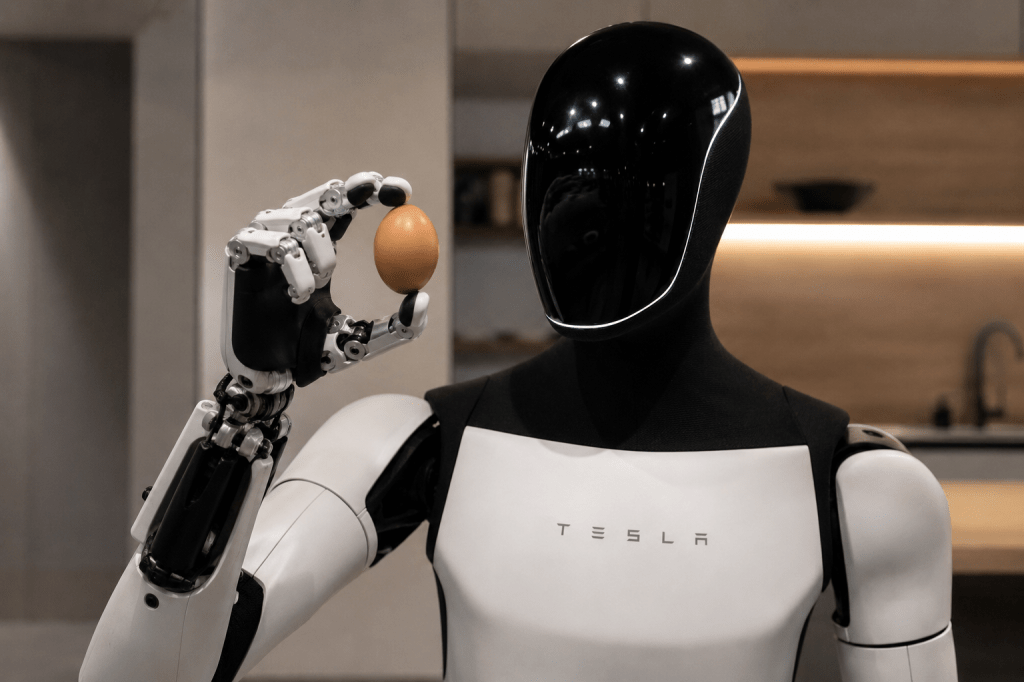
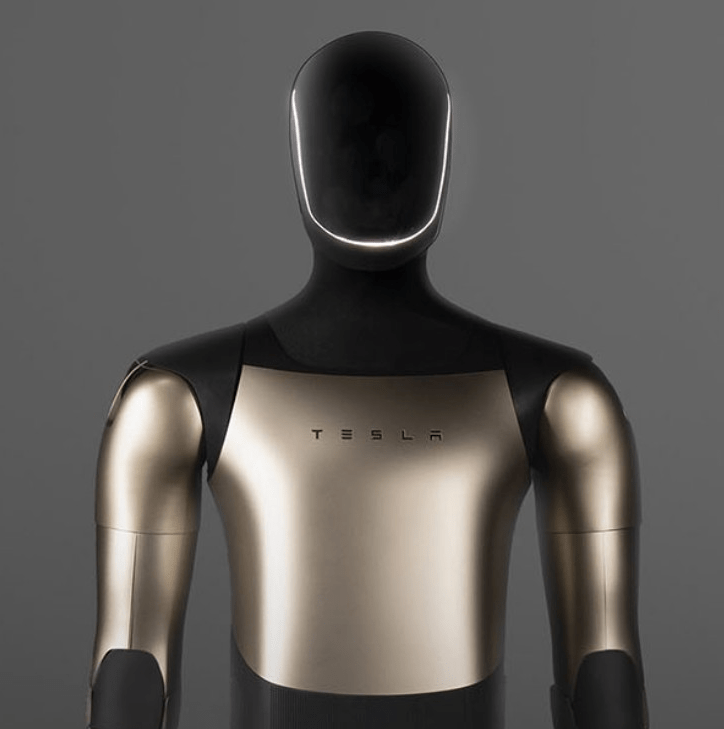
The mechanics of the plan, as Musk has described them over the past two years, run roughly like this. First, uncrewed Starships fly to Mars during a launch window that opens only about every 26 months, when the two planets’ orbits align. Musk put the odds of a first uncrewed attempt in the 2026 window at “50-50,” and said crewed landings could follow “as soon as 2029, although 2031 is more likely.” [1,3,4] Tesla’s Optimus humanoid robots would land first to scout and build. Eventually, in Musk’s telling, “a few thousand” Starships would depart Earth orbit together in a great armada, carrying people and more than a million tons of equipment, dried food and supplies. [1]
The timeline, however, is a moving target. In 2024 Musk posted that a city could exist on Mars “within 20 years, but for sure in 30,” adding the flourish “Civilization secured.” [1] By February 2026 the sequencing had shifted: build a city on the Moon first, he said, and start building a Mars city “in about 5 to 7 years.” [1] The dates slide, but the destination does not.
Two ideas do most of the heavy lifting in this vision, and they deserve to be named plainly at the outset because the rest of the argument turns on them. The first is transport economics: that a fully reusable Starship, refueled in orbit and launched at high cadence, can drop the cost of moving mass to Mars by orders of magnitude. The second, and far more speculative, is terraforming: physically transforming the Martian surface into something partway hospitable to humans and, eventually, to green plants. Musk mentions terraforming almost casually. “Eventually we can make Mars into an Earthlike planet,” he told employees in Texas. [1] The science, as we will see, is nowhere near so breezy. With the plan laid out, here is the strongest case that can be made for it, followed by the strongest case against, and finally an honest attempt at a clock.
The case for
1. The flywheel is real, and it is already turning
It is easy to treat Musk’s Mars talk as pure showmanship, and just as easy to forget that the machinery beneath it keeps performing feats that sober engineers once filed under science fiction. Rockets landing upright on their tails were the stuff of 1950s pulp covers. Now the largest rocket ever flown returns to its launch mount and is caught mid-air by a pair of mechanical arms. By the spring of 2026, Starship had flown roughly a dozen times, with boosters caught, refurbished and reflown, and the program was targeting orbital payload delivery in the second half of the year. [1,5] Whatever one thinks of the man, the vehicle is not vaporware.
The deeper point is economic. SpaceX does not need Mars to pencil out in order to keep funding Mars. Starlink has become a genuine cash machine: it accounted for roughly 61 percent of company revenue in 2025, generating about $11.4 billion and surpassing ten million subscribers across some 160 markets. [7] The company’s June 2026 IPO, the largest in U.S. history, priced the enterprise near two trillion dollars and briefly made Musk a trillionaire on paper. [1,6] That is the flywheel Musk designed a decade ago, spinning as intended: a profitable satellite business bankrolling an unprofitable rocket program aimed at another planet.
Backers argue that this structure is precisely what past space visions lacked. Apollo depended on the fickle appetite of Congress and collapsed the moment public enthusiasm waned. A privately financed effort, riding recurring commercial revenue and relentless hardware iteration, is insulated from any single budget cycle. Even skeptical scientists concede the pattern. “Elon is famously bad at giving time estimates,” says biological engineer and Mars researcher Erika DeBenedictis. “Things always take longer than he says, but they do tend to happen.” [1] For the plan’s defenders, that sentence is the whole argument in miniature: bet against the date, but do not bet against the direction.
2. A hedge against extinction is worth buying
The most philosophically ambitious argument for Mars has nothing to do with quarterly revenue. SpaceX’s own IPO prospectus made it explicit, framing the mission as an insurance policy for the species: humanity, it argued, needs to spread beyond Earth to survive a potential planetary catastrophe. “We do not want humans to have the same fate as dinosaurs.” [1] The reasoning is a wager under uncertainty. Earth faces a menu of low-probability, civilization-ending risks, from asteroid strikes to engineered pandemics to nuclear war. A self-sustaining second home, however difficult, converts a single point of failure into a distributed one.
Proponents of this view do not claim the odds of catastrophe are high. They claim that the expected value of a backup is enormous even when the odds are low, because the thing being protected, the continuity of a technological civilization, is close to priceless. On that math, spending a few decades and a few hundred billion dollars to seed a redundant branch of humanity is not extravagance but prudence, the interplanetary equivalent of a sprinkler system. You install it not because you expect a fire but because you cannot afford one.
The argument also reframes what “success” needs to mean. A settlement does not have to be comfortable, or even pleasant, to serve as insurance; it only has to be self-sustaining enough to carry the light of consciousness forward if the worst happens on Earth. This is why supporters bristle at the objection that Mars would be a miserable place to live. Insurance is not supposed to be a vacation. And there is a cultural dividend they point to as well: the mere existence of a credible off-world project, like Apollo before it, pulls talent into science and engineering and gives a jaded era something to look up at. SpaceX’s launches and NASA’s recent Artemis flight around the Moon have, by many accounts, reignited a generation’s appetite for space. [1] Meaning, the argument goes, is itself a resource.
3. Terraforming is not forbidden by physics
Here is the argument that surprises people: making Mars greener may be wildly hard, but nothing in the laws of physics says it is impossible. That is not Musk talking. It is the conclusion of a sober 2026 roadmap paper led by Edwin Kite, a planetary scientist at the University of Chicago, written with more than two dozen collaborators. The paper opens with a deliberately humbling caveat, “It is unknown whether human civilization can thrive off-Earth,” and then proceeds to lay out concrete, physically plausible pathways to warm the planet. [1,8-10] A generation ago terraforming was a thought experiment. It is now a research program with laboratory hardware and funding behind it.
The near-term options are local, not planetary, and that is what makes them credible. Rather than transforming all of Mars, scientists propose warming small patches: spreading a translucent, high-tech blanket, a plastic-like biomaterial, that blocks ultraviolet radiation while letting sunlight through to warm the soil beneath and melt subsurface ice. Or lofting fleets of orbiting mirrors, first launched as self-flying solar sails, to double the sunlight falling on a contained base. These are engineering problems of scale and cost, not violations of nature. Kite’s own estimate is that warming at the kilometer scale is at least a decade away, which is a long way from never. [1,8,9]
Then there is biology, the wild card. Warmed Martian soil is salty and laced with bleach-like perchlorates that would kill any Earth microbe. DeBenedictis’s Pioneer Labs, funded by crypto-fortune money, is trying to engineer hardier organisms, microbes that can digest the perchlorates and manufacture more of the soil-warming bioplastic, bootstrapping a living layer where none could otherwise exist. [1,13] Push far enough, she argues, and “you could actually do things like grow potatoes in the dirt.” She is candid that this is “probably impossible,” yet says a basic plant cover could arrive “in my lifetime.” [1] The optimistic case does not require believing she is certainly right. It requires only believing she might be, and noticing that the research to find out is already underway. And nearly every hard problem it solves, closed-loop life support, radiation-hardened biology, cheap heavy lift, pays dividends back on Earth.
The case against
4. The human body was not built for Mars
Rockets are the easy part. The stubborn obstacle is the fragile, water-filled machine the rockets are meant to carry. Mars is not merely inconvenient; it is actively hostile to human biology in ways no glass dome fully solves. Step outside without a pressure suit and the near-vacuum atmosphere, less than one percent of Earth’s pressure and composed mostly of unbreathable carbon dioxide, would kill you within a minute. The average surface temperature hovers near minus 85 degrees Fahrenheit. There is no liquid water to drink, no oxygen to breathe, no soil that will grow food untreated.
Radiation is the threat that will not go away. On the surface, and during the long transit, astronauts are bathed in galactic cosmic rays that Earth’s magnetic field and thick atmosphere spare us. Measurements from the Curiosity rover’s radiation detector put the round-trip dose for a Mars mission near one sievert, enough to raise the lifetime risk of fatal cancer by roughly five percent, well beyond the career limits NASA sets for astronauts in low Earth orbit. [14] Unpredictable solar flares can deliver acute, potentially lethal bursts on top of that chronic background. Shielding helps, but shielding is mass, and mass is the one thing interplanetary flight cannot spare.
Then comes the deepest unknown: gravity. Mars pulls at about one-third of Earth’s strength, and we have no data, none, on what a lifetime in that field does to a human, let alone what it does to a pregnancy or a growing child. Astronauts returning from months in zero gravity are sometimes carried from their capsules, their muscles and bones diminished. A child born and raised on Mars might develop a body unable to walk on Earth. “The first mothers that give birth will be guinea pigs,” says veteran NASA astrogeophysicist Chris McKay. [1] McKay, who has studied off-world habitability for more than forty years, is blunt about the endpoint: “I don’t see any prospect for there to be permanent settlements. Why would anybody want to live there?” [1] A camping trip is survivable. A civilization is a biology experiment with no control group.
5. Terraforming runs on a clock measured in centuries
Grant that terraforming is not physically forbidden. The problem is the calendar. The same research that keeps the door open also makes clear how slowly it opens, and Musk’s habit of mentioning terraforming “as if it were within reach” collides directly with the numbers his admirers among scientists actually publish. [1] The gap between “conceivable” and “soon” is where this dream tends to die.
Consider the three warming pathways in Kite’s roadmap. The localized methods, blankets and mirrors, might warm patches within a decade or two, but building a breathable, planet-wide oxygen atmosphere through photosynthesis would take, in Kite’s words, centuries at least, “much longer than your civilization-relevant time scales.” [1,8] The most ambitious pathway, deliberately warming the whole planet by manufacturing and continuously spewing millions of tons of engineered aerosol dust, carries a projected price tag of around one trillion dollars and, by Kite’s estimate, decades just to build the robotic factories that would produce the dust. [1] McKay’s own analysis, dating back to a 1991 Nature paper, put the timescale at roughly 100 years to warm the surface and “perhaps 100,000 years” to grow an oxygen-rich atmosphere. [1,12]
An earlier hope has already been foreclosed. It was once assumed that warming Mars would release enough frozen carbon dioxide from the ground to thicken the atmosphere and snowball the process, the way carbon emissions warm Earth. A 2018 study by Bruce Jakosky and Christopher Edwards, analyzing data from the latest Mars orbiters, found there simply is not enough accessible CO2 on Mars to do the job. Their conclusion was flat: “Terraforming Mars is not possible using present-day technology.” [1,11] And even if a warming method someday works, it does not touch the other killers: the air stays unbreathable outside, the pressure stays lethally low, the cosmic rays keep coming, and the low gravity keeps working on human bodies. As Kite’s paper concedes, no approach has yet been shown to be “simultaneously affordable, safe, scalable, and to enable extending life beyond Earth.” [1] The result of a wildly expensive, multi-century effort might still fall heartbreakingly short of Earth.
6. Interest is fragile, and the money is not guaranteed
Even if the engineering and the biology cooperate, the project has to survive human attention spans and human budgets, and history is not encouraging. After the euphoria of the 1969 Moon landing, the public rapidly lost interest in Apollo. The Moon, it turned out, was dust and rocks, and the missions were cancelled with hardware still on the assembly line. Kite’s paper flags exactly this vulnerability: if a crew were ever lost and there were “no obvious short-term financial benefits to exploration, society might cease to pay the high costs of sending people to space.” [1] Enthusiasm is not a fuel you can stockpile.
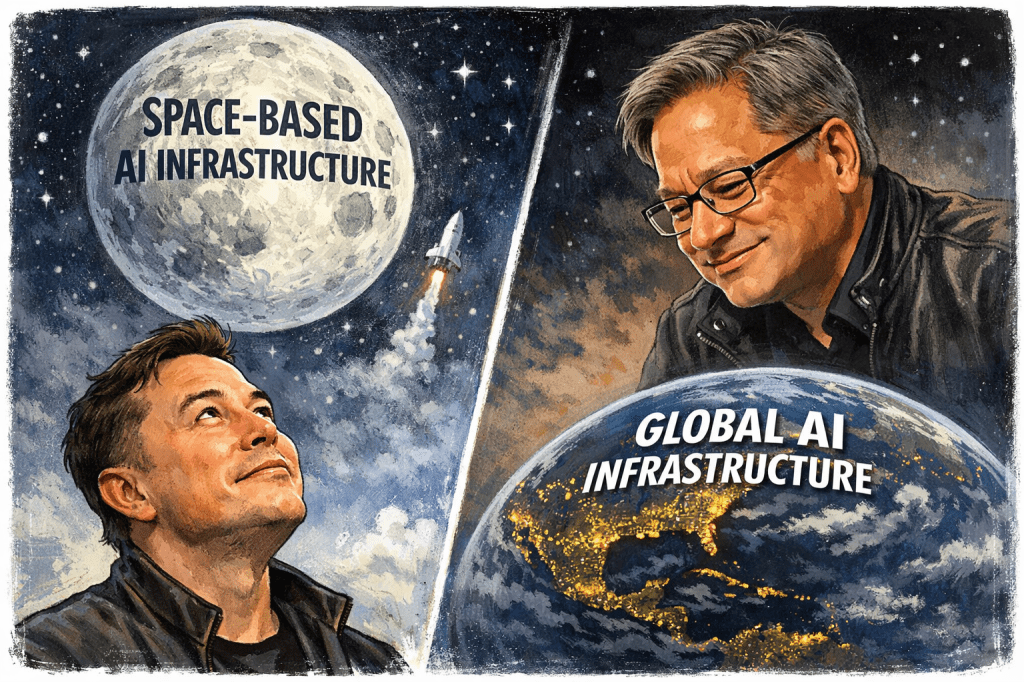
The economics beneath the flywheel are also less automatic than the pitch suggests. Yes, Starlink throws off cash and orbiting satellites will keep earning, much of it from government contracts. But crewed missions beyond Earth orbit produce no near-term product, no revenue line, only cost. Even SpaceX’s newer ventures invite skepticism; its plan to build orbiting AI data centers runs into the awkward finding that putting computers in space can cost several times more than running them on the ground. [18] A Mars city is the most extreme version of an investment with no foreseeable return, and public markets have a way of losing patience with those. SpaceX’s own IPO share price slid after its debut, and Musk lost his brief trillionaire status when it did. [1]
There is, finally, the argument from opportunity cost, voiced not by cynics but by scientists who badly want humans to become interplanetary. Jakosky rejects the notion that Mars can be a “backup planet” if climate change degrades Earth. “It’s an incredible amount of money and resources that would be better spent understanding our own climate here,” he says. “It’s always going to be easier to terraform the Earth, bring it back to the current conditions, than it is going to be to terraform Mars.” [1] The most habitable planet within reach, in other words, is the one already under our feet, and every trillion dollars aimed at making Mars livable is a trillion not spent keeping Earth that way. Add the political turbulence around Musk himself, and the funding case looks less like a sure thing than a bet on sustained public will across generations.
Beyond for and against: the moving goalposts
Some of the most important questions about the Mars project fit neither column cleanly, because they are not about whether the plan can work but about what the plan actually is, and why. Musk’s timelines are the obvious tell. A city “for sure in 30” years in 2024 becomes a Moon city first and a Mars city “in about 5 to 7 years” in 2026. [1] The uncrewed shot is “50-50” for 2026; the crewed landing is 2029, “although 2031 is more likely.” [1,3,4] Defenders read this as the natural noise of an ambitious schedule. Critics read it as a rhetorical device, a horizon that recedes exactly as fast as you walk toward it, always close enough to inspire and far enough never to be falsified. Both readings can be true at once, and that ambiguity is itself worth naming, because a fortune, an IPO valuation, and a great deal of public imagination are riding on which one it is. [6]
There is also a quieter substitution buried in the vocabulary. Musk says “city” and “million inhabitants.” The scientists who study this for a living say something much more modest: a research base. McKay, who has spent nearly forty years traveling to Antarctica to study cold, dry environments as Mars analogs, sees an outpost like McMurdo Station, crews rotating in and out, no nurseries, no schools, no permanent residents, as the realistic model for any Martian foothold, and he means for at least a century. “I go there for a season and contribute to the research and then come home,” he says. “I don’t want to take my family there.” [1] The distance between a rotating scientific base and a self-sustaining city of a million is not a detail. It is the whole disagreement, and it tends to vanish in the glow of the illustrations SpaceX publishes of families gazing out of glass domes.
The motive question shadows all of it. Is Mars a survival strategy, a scientific frontier, an engineering forcing-function that happens to produce useful spinoffs, or a story a company needs to keep telling in order to justify its valuation and recruit its engineers? It can be several of these simultaneously. Even the IPO prospectus hedged, relegating the hardest truths to the risk-factors section, where the Mars mission is described as involving “unproven technologies, or technologies that do not exist.” [1,6] And there are ethical questions with no settled answers: who governs a colony wholly dependent on one company for air and water; whether it is defensible to conceive children whose bodies may never tolerate Earth; whether “extending the light of consciousness to the stars” is a noble aim or a marketing line. None of these has a tidy resolution. But an honest assessment has to hold them in view, because the plan’s real timeline depends as much on human choices, political, financial, ethical, as on any rocket.
A realistic clock
So when might Musk’s vision actually arrive? The fairest way to answer is to separate the goal into stages, because the plan is not one achievement but a ladder of them, each far harder than the last. Taking the strongest pro arguments seriously, and applying the scientists’ own counters to the pessimistic case, yields a timeline that is genuinely thrilling in its early rungs and genuinely daunting near the top. The pattern is consistent: the transportation problem is tractable and moving fast; the biology-and-permanence problem is not, and no amount of launch cadence changes that.
Late 2020s: the plumbing. The immediate milestones are unglamorous but decisive. Starship has to reach orbit routinely with payloads and, above all, demonstrate in-orbit propellant transfer, the refueling step required to send anything substantial toward the Moon or Mars. As of early 2026 that demonstration had slipped and not yet occurred. [17] NASA’s Artemis program, with SpaceX providing the lunar lander, is targeting its first crewed landing around 2028 after a low-orbit demonstration flight in late 2027. [15][16] Expect uncrewed Starships to attempt Mars in the 2026 or 2028 window, robots aboard, some of them failing. This is the phase where Musk’s flywheel argument is strongest, and where the direction, if not the dates, looks credible.
2030s: boots and flags. A crewed landing on Mars is plausible within this decade, though likely later than Musk’s 2029-2031 target and dependent on refueling, life support and entry-and-landing all maturing first. DeBenedictis calls this the “expensive camping trip” phase, “mostly for the photo opp”: a small crew lands, explores, and, if the orbital mechanics and their luck hold, returns about two years later when the planets realign. [1] Momentous, historic, and a very long way from a city. Chun Wang, the cryptocurrency billionaire tapped to lead a first crewed Mars flyby, may loop the planet without landing before anyone sets foot on it. [1]
2040s-2050s: the Antarctic model. The realistic next rung, the one most scientists actually endorse, is a small research base: crews rotating in and out every couple of years, a foothold like McMurdo, not a home. [1] Under optimistic assumptions, DeBenedictis’s engineered microbes and the first kilometer-scale soil-warming experiments could begin turning patches of Martian ground marginally more hospitable in this window, and a modest greenhouse cover is where her “in my lifetime” optimism lands. [1,8] This is the outer edge of what the pro case can reasonably claim within living memory: not a million people, but the first durable, if intermittent, human presence.
Late century and beyond: the hard rungs. A permanent, self-sustaining settlement, people committing their lives, children being born and raised, requires solving problems no rocket touches: low-gravity health, radiation over decades, and a genuinely local supply chain for air, water and food. On present knowledge that is a late-century prospect at the earliest, and quite possibly a multi-century one. A city of a million, and any meaningful terraforming of the wider planet, sits further still. McKay’s numbers point to a century merely to warm the surface and geological spans to build breathable air; Kite’s team frames planet-scale change as beyond “civilization-relevant time scales.” [1,8,12]
The honest synthesis, then, is neither the boosters’ “city in 30 years” nor the harshest skeptics’ “never.” The probable path runs: robotic and orbital milestones this decade; a crewed landing in the 2030s; a rotating research base by mid-century; and a genuine, permanent settlement only much later, if the human body, the funding, and the public will all cooperate across generations. The optimistic case earns its early stages honestly, and the transportation revolution underneath them may prove every bit as real as its champions insist. But the leap from a base to a city is not a scheduling problem Musk can out-work. It is a biological and civilizational one, and on that clock, the right unit is not the decade. It is the lifetime, and perhaps the century.
References
1. Dominic Gates, “Elon Musk’s Mars illusion,” GeekWire, July 11, 2026. geekwire.com/2026/elon-musks-mars-illusion
2. SpaceX, “Mars” (Human Spaceflight). spacex.com/humanspaceflight/mars
3. “Musk says 50-50 chance of sending uncrewed Starship to Mars by late 2026,” Al Jazeera, May 30, 2025. aljazeera.com
4. “Elon Musk says SpaceX will launch its biggest Starship yet this year, but Mars in 2026 is ’50/50′,” Space.com. space.com
5. “List of Starship launches,” Wikipedia. en.wikipedia.org/wiki/List_of_Starship_launches
6. SpaceX Exploration Technologies Corp., Form S-1 (IPO prospectus), U.S. Securities and Exchange Commission. sec.gov
7. “SpaceX revenue, valuation & funding,” Sacra. sacra.com/c/spacex
8. Edwin Kite et al., terraforming Mars feasibility roadmap, arXiv, April 2026. arxiv.org/abs/2604.02242
9. “Could we actually terraform Mars? A new scientific roadmap lays out the blueprint—and the risks,” Phys.org, April 2026. phys.org
10. “Scientists lay out revolutionary method to warm Mars,” University of Chicago News. news.uchicago.edu
11. Bruce Jakosky and Christopher Edwards, “Inventory of CO2 available for terraforming Mars” (2018). PDF
12. Christopher McKay, Owen Toon and James Kasting, “Making Mars habitable,” Nature (1991). PDF
13. Pioneer Labs. pioneer-labs.org
14. “Radiation on Mars ‘Manageable’ for Manned Mission, Curiosity Rover Reveals,” Space.com. space.com
15. “Artemis 3 has been pushed to late 2027. Can NASA still land astronauts on the moon in 2028?” Space.com. space.com
16. “Moon to Mars: NASA’s Artemis Program,” NASA. nasa.gov/humans-in-space/artemis
17. “Starship HLS,” Wikipedia. en.wikipedia.org/wiki/Starship_HLS
18. “Orbital data centres cost three times more than terrestrial alternatives,” Wood Mackenzie. woodmac.com
###
Cinematic PDF slide deck for this article created by Copilot.
###
Filed under: Uncategorized |
































































































































































































































































































































































































































































Hi Jim,
As you know, I have studied these topics extensively for years. Broadly speaking, your analysis is correct because the future is unpredictable
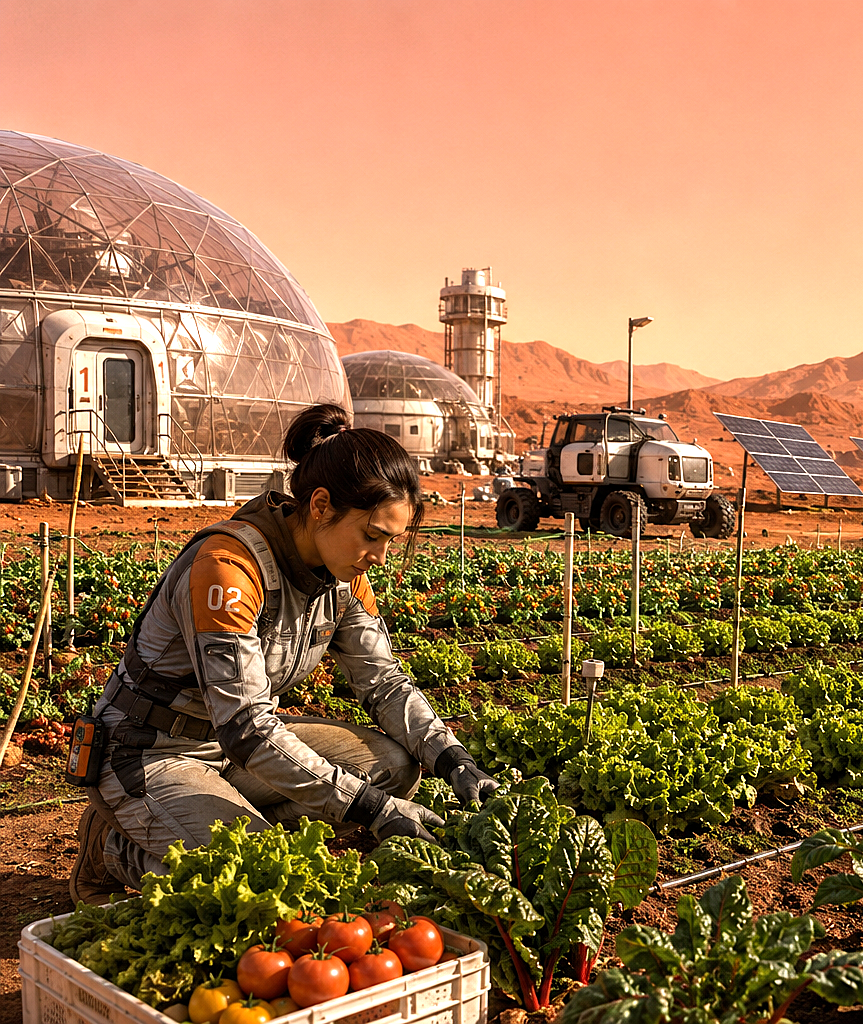
Paraterraforming (terraforming under domes) will be feasible once we can build the domes
Terraforming the planet runs up against three numbers. They are the desired pressure, Martian gravity, and the surface area of Mars. They aren’t difficult to find. Put them into consistent units. Multiply the pressure by the area, and divide by the gravity. If you don’t find this number impressive, you’ve made a mistake.
Mars doesn’t have enough available “stuff” to produce this much air, unless you melt its rocks and force the oxygen out of them.
Initially, settlers could be restricted to those unable to reproduce. The elderly might benefit from living on Mars.
in my mind, Mars fails miserably as a backup planet and will for at least a century.
Hi, Harry. We’re living in exciting times. Once we began figuring out how to augment and exponentially compound our problem-solving abilities with artificial intelligence, we’re no longer confined to our historical/traditional limitations. “The sky’s the limit,” as the saying goes — only we’re replacing “sky” with “space.” Haha! -Jim
Hi Jim,
You know AI better than I do. The cost of terraforming Mars far exceeds the cost of popping up domes across the planet. If we ever have settlements on Mars, I predict it will become a planet of domes. This would happen eventually once people are living there.
Harry, your comment made me think of the notion of change as “exponential” and the issue of qualifying predictions based on current obstacles. What we may be ignoring are the simultaneous changes that are impacting those very obstacles. See ‘Exponential’ Is Faster Than Expected: Snapshots Are Not Forecasts. -Jim