






By Jim Shimabukuro (assisted by ChatGPT)
Editor
[Related: Feb 2026, Oct 2025, Sep 2025, Aug 2025]
Summary: The July 2026 ranking shows a world split between two AI superpowers while a volatile middle tier scrambles for compute, talent, and sovereignty — because the future of global influence now hinges less on ideology and more on who controls the scientific stack. –Copilot

The frontier is widening. Models still matter, but compute, memory, scientific agents, multilingual data, and the ability to turn research into national power now shape the race just as strongly. This ranking measures national Artificial Intelligence (AI) Research and Development (R&D) strength, not merely adoption, market size, or government ambition. It is a dated analytical judgment based on the best publicly available evidence through July 10, 2026.
The July 2026 Ranking
The global AI race is becoming harder to describe with a single scoreboard. A country may publish thousands of papers yet lack the computing power to train a frontier model. Another may host a celebrated laboratory but depend on foreign chips, cloud platforms, and capital. A third may not lead the chatbot rankings at all, yet control the memory, lithography, robotics, or scientific infrastructure on which everyone else depends. The phrase “AI R&D” therefore has to cover a chain of capabilities rather than one glamorous endpoint.
This July update continues ETC Journal’s 2025-2026 series while revising the weight placed on several measures. The February list ranked the United States, China, the United Kingdom, Canada, Israel, Germany, France, South Korea, Singapore, and India, in that order. Four months later, the top three remain intact, but the middle of the table has changed sharply. South Korea has become too important to treat as a specialist hardware economy. France has consolidated Europe’s strongest independent frontier-model company. India has converted scale and talent into shared national compute and a growing set of indigenous foundation-model projects. Japan, absent from February’s top ten, has returned through a combination of AI-for-science infrastructure and unusually ambitious work on automated research. [4,5]
The ranking is anchored in six questions. Does the country produce influential AI research? Does it build frontier or field-shaping models and algorithms? Can its researchers reach modern compute, data, and semiconductor infrastructure? Does it sustain a deep talent and institutional base? Can it move discoveries into industry and public use? And does it contribute useful work on evaluation, safety, openness, or governance? Recent performance receives the greatest weight, but durable scientific capacity matters more than a splashy announcement.
Stanford’s 2026 AI Index supplies the broadest comparative base. Its evidence shows a two-power model contest at the summit: the United States still produces more top-tier models and attracts vastly more private investment, while China leads in publication volume, citations, patents, and industrial-robot deployment. The technical gap between their best models has narrowed to almost nothing. Below them, the field is more fluid. South Korea led the world in AI patents per capita and ranked third in notable models; sovereign-compute projects expanded in the United Kingdom, Canada, Germany, India, Japan, and Israel; and open-weight laboratories in France, China, Canada, South Korea, Japan, and the United Arab Emirates widened access to advanced systems. [1-3]
Ranking at a Glance
| Rank | Country | Feb. 2026 | Movement | July 2026 case |
| 1 | United States | 1 | No change | The only fully scaled ecosystem spanning frontier models, chips, capital, cloud, universities, and AI-for-science. |
| 2 | China | 2 | No change | Near parity in model capability, unmatched research volume, strong open models, robotics, and fast adaptation under chip constraints. |
| 3 | United Kingdom | 3 | No change | Google DeepMind remains a discovery engine; Isambard-AI and the national AI Research Resource add sovereign compute. |
| 4 | South Korea | 8 | Up 4 | A breakthrough year in notable models, patents, HBM4 memory, multimodal systems, and industrial AI. |
| 5 | France | 7 | Up 2 | Mistral has matured into Europe’s most credible independent frontier lab, backed by major compute and safety investments. |
| 6 | India | 10 | Up 4 | Large research output, 45,000-plus shared GPUs, indigenous models, and multilingual public infrastructure alter its trajectory. |
| 7 | Canada | 4 | Down 3 | Still a research heavyweight, now trying to close its compute and commercialization gap with a sovereign national strategy. |
| 8 | Germany | 6 | Down 2 | Europe’s first exascale supercomputer and deep industrial research keep Germany central despite fewer frontier models. |
| 9 | Japan | Outside top 10 | New | RIKYU, Sakana AI, robotics, and semiconductor policy restore Japan as a distinct AI research power. |
| 10 | Israel | 5 | Down 5 | Exceptional talent and applied AI remain, but limited scale, delayed infrastructure, and regional strain temper the ranking. |
Method note: Movement is measured against ETC Journal’s February 22, 2026 ranking. Positions reflect R&D strength as of July 10, not a forecast of commercial market share.
1. United States
The full-stack superpower is still first, but its lead is now a lead in scale more than an uncontested lead in intelligence.
The United States remains the center of gravity for frontier AI R&D. No other country combines comparable model laboratories, semiconductor design, cloud infrastructure, venture capital, universities, national laboratories, and a domestic market willing to pay for costly experiments. Stanford’s 2026 AI Index counted the United States as the clear leader in notable model production and recorded $285.9 billion in private AI investment in 2025, roughly twenty-three times China’s total. It also reported 5,427 U.S. data centers, more than ten times the count for any other country. Those figures do not guarantee scientific wisdom, but they buy an extraordinary number of attempts. [1,2]
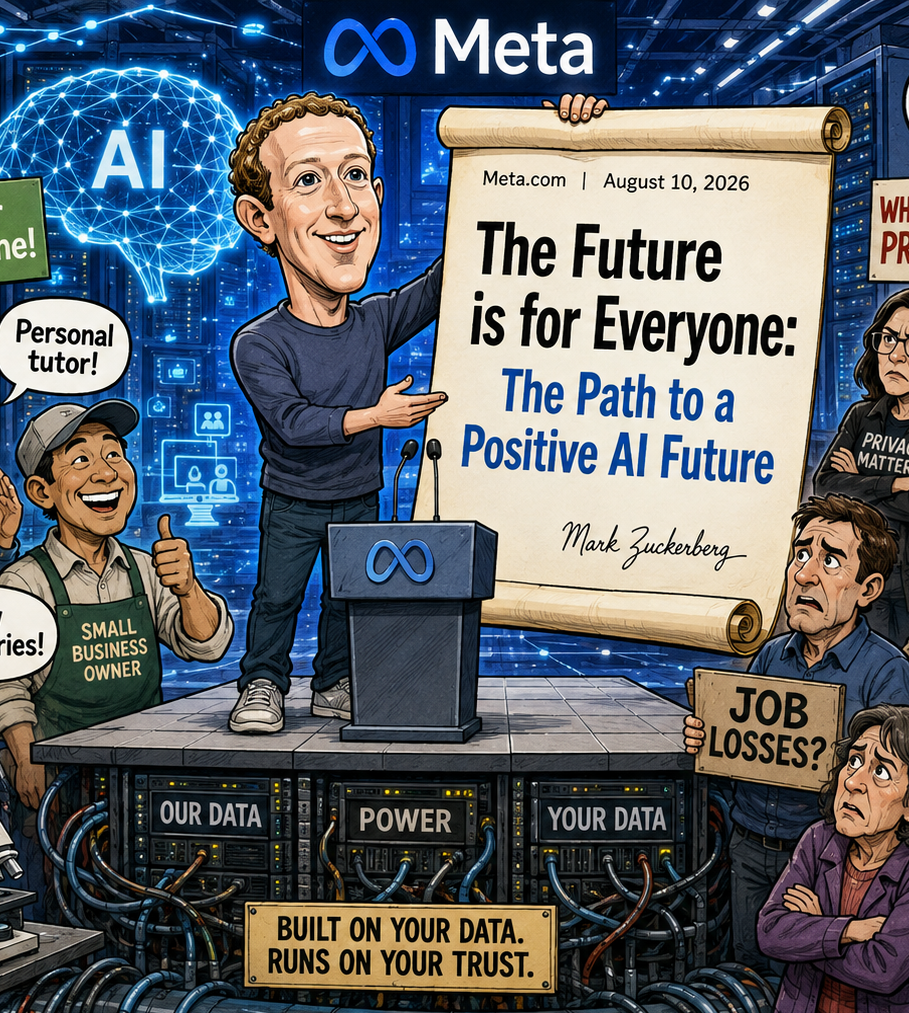
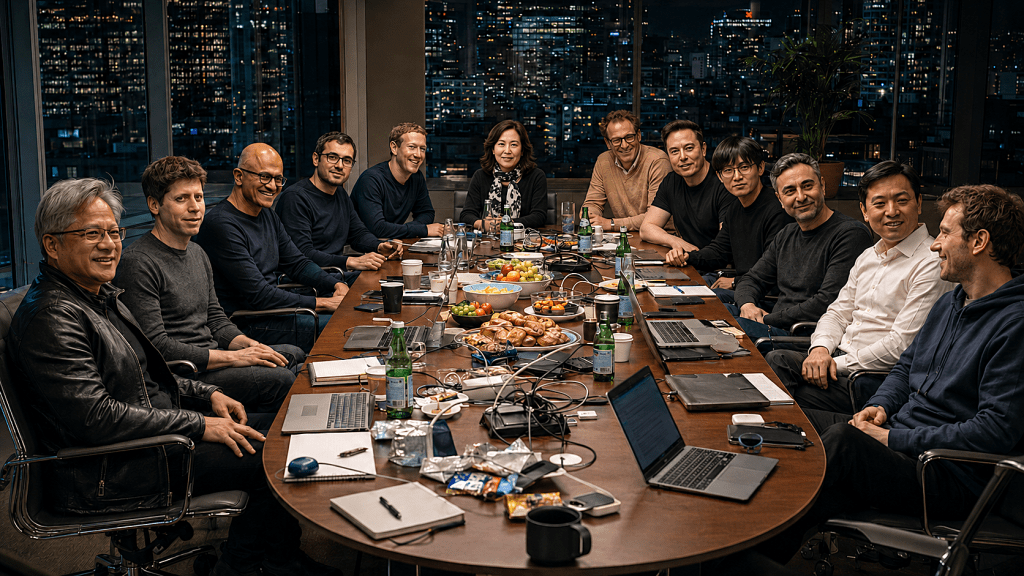
The corporate bench is unmatched: OpenAI, Anthropic, Google, Meta, Microsoft, Nvidia, Amazon, xAI, and a long tail of specialist firms. Jensen Huang, Sam Altman, Dario Amodei, Demis Hassabis, Fei-Fei Li, and many less visible research directors shape different parts of the agenda. Stanford, MIT, Carnegie Mellon, Berkeley, the University of Washington, and dozens of other universities feed the system, while the National Science Foundation and national laboratories provide a public counterweight to private concentration. The National AI Research Resource has already supported more than 600 projects and 6,000 students, giving researchers outside the richest companies access to models, data, and compute. [8]
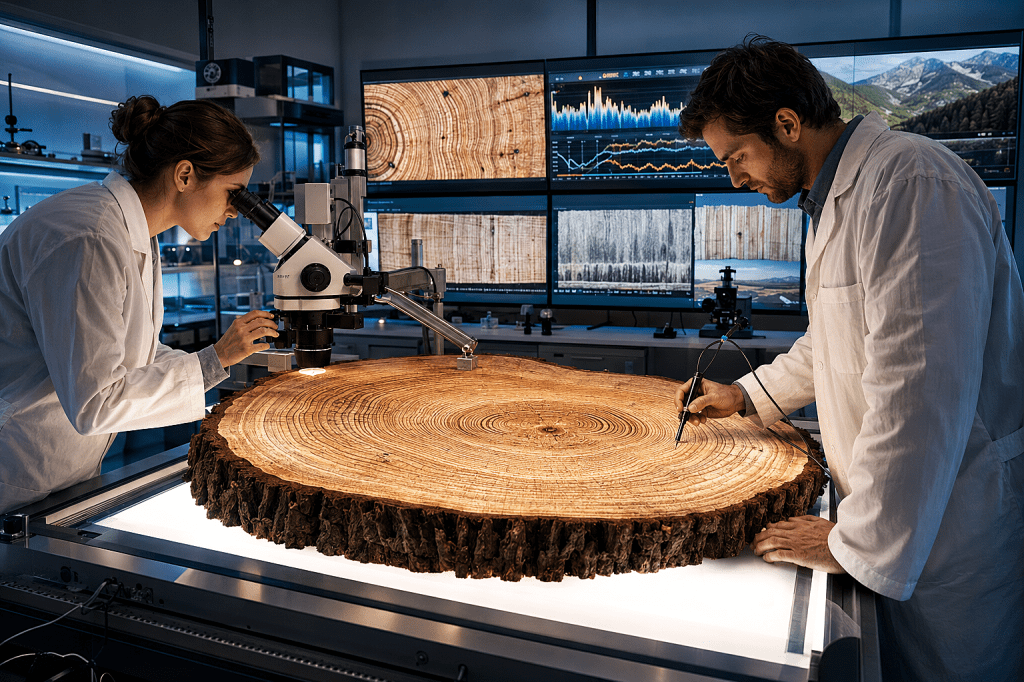
The most important U.S. accomplishment is breadth. American laboratories remain at or near the frontier in general-purpose reasoning, coding, multimodal systems, agents, robotics, and generative media. Just as significant, the country is pushing AI into science. Stanford’s open Evo 2 model can analyze and generate biological sequences across all domains of life. Biomni, introduced in July 2026, acts as a biomedical laboratory partner: it searches literature, analyzes data, proposes hypotheses, and helps design experiments. Google’s AI co-scientist, AlphaGenome, and AlphaEvolve likewise show the field moving from fluent answers toward verified discovery and experimental planning. [6,7,9,11]
The geopolitical importance of U.S. leadership lies in control of the whole stack. American firms design the leading accelerators, operate the dominant clouds, train many of the strongest models, and set de facto technical standards. That control gives Washington influence through export rules and alliances, but it also creates vulnerabilities. Frontier research is concentrated in a small number of companies; independent academics struggle to match their compute; and immigration friction can weaken the talent pipeline. The United States is still number one because it can attack more AI problems at greater scale than anyone else. Its challenge is to keep that capacity scientifically open enough that scale does not become intellectual narrowness.
2. China
China has turned constraint into an engineering discipline – and erased much of the performance gap faster than most observers expected.
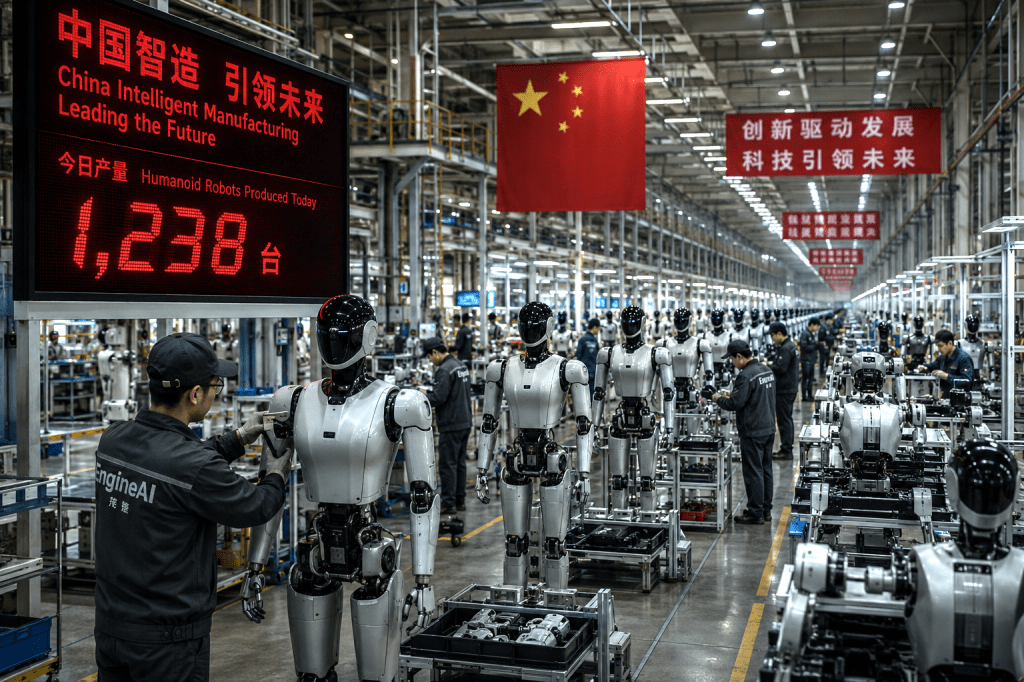
China is the only country that can contest the United States across nearly the entire AI research chain. The 2026 AI Index describes a striking reversal from the situation a few years ago: U.S. and Chinese models traded the lead repeatedly during 2025, and their benchmark gap had effectively closed. China also led in AI publication volume, citation share, patent output, and industrial-robot deployment. It trails badly in private investment and access to the very best foreign chips, but it compensates with scale, coordinated infrastructure, dense engineering talent, and a huge domestic test bed. [1,2]
DeepSeek, Alibaba’s Qwen team, Huawei, Baidu, ByteDance, Tencent, Zhipu AI, Moonshot AI, and 01.AI form a crowded industrial field. Liang Wenfeng and DeepSeek became symbols of a broader shift toward algorithmic efficiency. Tsinghua University, Peking University, Zhejiang University, Shanghai Jiao Tong University, the Chinese Academy of Sciences, and state laboratories sustain the academic base. Huawei’s Ascend program and domestic foundry efforts address the hardware bottleneck, while robotics and autonomous-vehicle companies turn AI into physical systems at national scale.
DeepSeek-R1 was the signature research event of 2025. Its technical report showed how strong reasoning behavior could emerge through reinforcement learning, with open weights and enough technical detail to let researchers around the world test the approach. DeepSeek continued into agent-oriented models in late 2025. Alibaba’s Qwen family evolved just as rapidly: Qwen3 blended thinking and non-thinking modes, Qwen3-Coder pushed open agentic coding, and the 2026 Qwen3.6 line combined multimodal perception, repository-scale coding, and efficient mixture-of-experts designs. These systems mattered not because every benchmark claim was final, but because they forced the global field to reconsider the assumed cost of high-end AI. [13-16]
China’s rise changes the geopolitics of AI in three ways. First, open Chinese models give countries and companies an alternative to U.S. platforms. Second, efficiency gains blunt the intended effect of chip controls by extracting more capability from constrained hardware. Third, leadership in patents, manufacturing, batteries, drones, robotics, and industrial deployment links software progress to physical production. China still faces serious constraints: access to leading-edge fabrication, uneven model transparency, political controls on data and expression, and questions about benchmark independence. Yet the central fact remains. The world no longer has a single frontier-model center. It has two.
3. United Kingdom
Britain remains third because one London-centered laboratory keeps producing discoveries that alter the research agenda far beyond chatbots.
The United Kingdom does not match U.S. or Chinese investment, data-center scale, or model volume. Its claim rests instead on unusually concentrated scientific influence. Google DeepMind, founded in London and still anchored there, has repeatedly turned machine learning into a tool for mathematics, biology, algorithms, and robotics. The broader ecosystem includes the universities of Oxford, Cambridge, Edinburgh, Bristol, Imperial College London, University College London, the Alan Turing Institute, and a growing cluster of safety and evaluation groups.
Demis Hassabis remains the most visible figure, but DeepMind’s research strength is institutional rather than personal. Pushmeet Kohli and teams working in science, reasoning, and robotics sit alongside leading academics in probabilistic machine learning, reinforcement learning, computer vision, and computational biology. The UK government, UK Research and Innovation, and the universities of Bristol and Cambridge are trying to prevent this scientific strength from depending entirely on foreign-owned cloud infrastructure.
The 2025-2026 record is formidable. AlphaEvolve used Gemini models and automated evaluators to discover and improve algorithms, including a new method for multiplying certain complex matrices that improved on a 56-year-old result. AlphaGenome reads up to one million DNA base pairs and predicts thousands of regulatory effects at near base-level resolution. Gemini Robotics extended multimodal reasoning into physical action. An advanced Gemini system reached gold-medal standard at the 2025 International Mathematical Olympiad. Meanwhile, Isambard-AI at Bristol became the United Kingdom’s most powerful AI supercomputer, with roughly 21 exaflops of AI performance, and the national AI Research Resource opened that capacity to researchers and industry. [9-12,17-19]
The United Kingdom matters because it demonstrates that scientific leverage can outrun economic scale. DeepMind’s discoveries influence research programs in every major AI country, while Britain has become a central venue for work on model evaluation and security. The weakness is sovereignty: DeepMind belongs to Alphabet, the leading chips are imported, and much of the commercial value flows through U.S. firms. Isambard-AI and the national research resource are therefore more than infrastructure projects. They are an attempt to keep British universities capable of asking frontier questions without requesting permission from a foreign platform owner.
4. South Korea
South Korea is no longer merely a supplier to the AI boom. It is becoming a model builder, memory power, and physical-AI laboratory in its own right.
South Korea makes the largest jump in this edition, from eighth to fourth. Stanford’s 2026 data placed the country first in AI patents per capita and third in the number of notable AI models produced during 2025, behind only the United States and China. That would be impressive on its own. The stronger case is that Korea combines those software gains with Samsung Electronics and SK hynix, two companies developing the high-bandwidth memory required by almost every frontier accelerator. [1,20]
LG AI Research, Naver, Kakao, Samsung, SK Telecom, Samsung Research, SK hynix, KAIST, Seoul National University, POSTECH, and the Electronics and Telecommunications Research Institute form the core. LG’s EXAONE group has become the most visible frontier-model laboratory. Samsung and SK hynix lead the hardware flank, while Hyundai, Robotics LAB, and manufacturing groups provide a natural arena for embodied AI, autonomous systems, and factory intelligence.
K-EXAONE, released in early 2026, is a 236-billion-parameter mixture-of-experts model with 23 billion active parameters, long context, and multilingual capability. EXAONE 4.5 extended the line into an open-weight vision-language system with strong document understanding and Korean reasoning. On the hardware side, SK hynix completed HBM4 development and prepared mass production in 2025. Samsung began commercial HBM4 shipments in February 2026 and soon sampled HBM4E, pushing bandwidth and energy efficiency for the next generation of AI systems. [21-24]
Korea’s geopolitical importance comes from occupying a choke point few countries can reproduce. Advanced models are useless without memory capable of feeding data to accelerators at enormous speed. HBM has therefore become strategic infrastructure, and Korean firms sit at its center. At the same time, Korea wants to avoid becoming only the component supplier for American and Chinese intelligence. Its national models, Korean-language research, and physical-AI programs are bids for greater control over the value chain. The remaining question is whether Korea can sustain independent frontier laboratories at the scale of its semiconductor champions. As of July, the direction is unmistakably upward.
5. France
France has built Europe’s clearest answer to dependence on U.S. and Chinese foundation models: an independent lab that now reaches from open weights to industrial physics and robotics.
France rises to fifth because its research ecosystem has acquired a center of gravity. Paris already had mathematics, public research, elite engineering schools, INRIA, CNRS, Universite Paris-Saclay, and a deep pool of machine-learning talent. Mistral AI has turned that base into a visible frontier-model program. France also benefits from relatively low-carbon nuclear electricity, a useful advantage when training and serving compute-intensive systems.
Mistral co-founder Arthur Mensch is the public face of the commercial effort. Around the company sit INRIA, CNRS, CEA, Hugging Face’s French research community, Kyutai, LightOn, universities and grandes ecoles, and industrial partners in aerospace, energy, transport, and manufacturing. The French state has treated AI as both a scientific project and an industrial-sovereignty project, hosting the 2025 AI Action Summit and creating national capacity for evaluating advanced systems.
Mistral 3, announced in December 2025, paired small dense models with Mistral Large 3, a 675-billion-parameter sparse mixture-of-experts model with 41 billion active parameters, released under Apache 2.0. In 2026 the company moved beyond general language models into document intelligence, speech, long-horizon coding agents, physics AI, and robotics. Its Robostral Navigate model, announced on July 10, used a single RGB camera to navigate unfamiliar environments, an example of French research moving into embodied systems. INRIA’s INESIA program added a sovereign evaluation and security capability. [25-27,29]
France matters because Europe needs more than regulation. It needs laboratories that can train, release, evaluate, and deploy competitive systems. The French approach joins open-weight research with industrial specialization and public infrastructure. The government said more than 109 billion euros in AI infrastructure investment was announced around the Paris summit, although announced capital must still become operating compute. [28] France remains behind the United States and China in scale and behind Britain in accumulated breakthrough science. Yet it now has the strongest European claim to an independent foundation-model stack, which gives Paris unusual influence in debates over European technological sovereignty.
6. India
India is converting its two great assets – technical talent and linguistic scale – into national research infrastructure at a speed that changes the ranking.
India moves from tenth to sixth. Its rise is not based on a single model that tops Western benchmarks. It rests on research volume, a vast engineering workforce, an enormous digital public infrastructure, and a national decision to make modern compute available beyond a handful of wealthy firms. Stanford’s AI Index places India among the world leaders in AI publication output. The country’s harder task has been turning that volume into highly cited work, indigenous models, and durable compute. The 2025-2026 record shows real progress. [1]
The ecosystem spans the Indian Institutes of Technology, Indian Institute of Science, International Institute of Information Technology Hyderabad, C-DAC, AI4Bharat, BharatGen, Sarvam AI, Krutrim, Tata Consultancy Services, Infosys, Wipro, Reliance, and a broad startup sector. The Ministry of Electronics and Information Technology and the IndiaAI Mission have become central coordinators. Researchers such as Mitesh Khapra and the AI4Bharat community have pushed multilingual datasets and models, while Sarvam AI has focused on sovereign systems designed for Indian languages and institutions.
By February 2026, the IndiaAI Mission reported more than 38,000 GPUs in a shared compute facility, twelve teams selected to develop indigenous foundation models, and thousands of students supported at undergraduate, postgraduate, and doctoral levels. By late June, the government said the shared facility had passed 45,000 GPUs. BharatGen, launched as a government-funded multimodal language-model effort, targets all twenty-two scheduled Indian languages and uses domestic datasets; Bhashini and AI4Bharat add translation, speech, and public-service layers. [30-33]
India’s global importance lies in the kind of AI it may force the field to build. Systems designed for hundreds of millions of users, many languages, uneven connectivity, and public-service settings cannot simply be copied from an English-first U.S. product. If India succeeds, it will advance lower-cost inference, multilingual evaluation, small and specialized models, and shared compute as public infrastructure. The geopolitical stakes are equally large. India seeks a position between U.S. and Chinese technology spheres without surrendering access to either. Its weaknesses remain clear: leading-edge chips are imported, private frontier investment is smaller, and many indigenous models are still proving themselves. But the capacity being assembled is now too substantial to leave near the bottom of the list.
7. Canada
Canada still produces world-class ideas. Its new national strategy is an effort to keep the compute, companies, and resulting value from leaving with them.
Canada falls from fourth to seventh, not because its research base has collapsed, but because several competitors accelerated faster. The country remains one of the birthplaces of modern deep learning and retains an extraordinary concentration of scholars. What it has lacked is enough sovereign compute, later-stage capital, and domestic scale to keep every breakthrough and company anchored at home. Ottawa’s 2026 strategy directly addresses that gap.
Yoshua Bengio at Mila, Geoffrey Hinton and the Vector Institute community, Richard Sutton and Amii, and Aidan Gomez at Cohere represent different generations of Canadian leadership. Mila in Montreal, Vector in Toronto, and Amii in Edmonton form the institutional triangle created and reinforced by the Pan-Canadian AI Strategy. The University of Toronto, Universite de Montreal, McGill, the University of Alberta, Waterloo, UBC, and a dense group of startups extend the network. [36]
Canada’s newest accomplishment is infrastructural. The Canadian Sovereign AI Compute Strategy commits C$2 billion across commercial capacity, a major public supercomputer, and an access fund for researchers and firms. The broader AI for All strategy links sovereign compute to talent, research, commercialization, and public-interest governance. Cohere has continued to specialize in secure enterprise and multilingual AI; its 2026 collaboration with Mila focuses on evaluation that captures Quebec French language and cultural context rather than treating language quality as a generic benchmark. Canada has also expanded organized AI-safety research through CIFAR. [34,35,37]
Canada matters because the world still draws heavily on research traditions it helped create: representation learning, reinforcement learning, generative modeling, and safety. Its institutes remain magnets for international students and collaborators. But Canada offers a warning about the economics of AI R&D. A country can train great researchers and still watch them join U.S. firms, use U.S. clouds, and commercialize abroad. The sovereign-compute strategy is therefore a retention policy as much as a machine-building policy. Canada ranks seventh because its intellectual depth is unquestioned, while the new hardware and commercialization plans have not yet produced the volume of frontier systems seen in the countries above it.
8. Germany
Germany is betting that the next phase of AI will reward scientific computing, trustworthy engineering, and industrial depth more than chatbot celebrity.
Germany slips two places, but its underlying position is stronger than a model leaderboard suggests. It has Europe’s largest industrial base, a dense applied-research system, strong universities, and direct access to the European Union’s shared research programs. Its central weakness is the absence of a domestically controlled general-purpose model laboratory with the global reach of OpenAI, DeepMind, or Mistral. Its answer is to build compute and concentrate on areas where engineering rigor matters.
Forschungszentrum Julich and its Supercomputing Centre, DFKI, the Fraunhofer institutes, Max Planck institutes, the Technical University of Munich, the University of Tubingen, Cyber Valley, Heidelberg, RWTH Aachen, Bosch, Siemens, SAP, Mercedes-Benz, BMW, and Aleph Alpha form a broad but decentralized network. German research is particularly strong in robotics, computer vision, autonomous systems, industrial optimization, medical imaging, explainability, and dependable AI.
JUPITER is the headline achievement. In November 2025 it became Europe’s first supercomputer to reach one exaflop in double-precision performance, ranked fourth globally, and was the most energy-efficient exascale system. The JUPITER AI Factory gives researchers, startups, and industrial firms access to the machine for next-generation models in health, climate, energy, manufacturing, and other strategic sectors. Fraunhofer added a Chip AI research and innovation center in Heilbronn in 2026 to develop specialized hardware and use AI in chip design. [38-40]
Germany’s importance is tied to Europe’s ability to bring AI into machines, factories, cars, chemicals, energy systems, and regulated services without outsourcing every layer. JUPITER provides compute sovereignty at continental scale. Fraunhofer and DFKI provide the bridge from prototypes to production. Germany may never dominate consumer chatbots, but it could shape the standards for industrial, explainable, and safety-critical AI. The geopolitical implication is straightforward: a Europe that lacks frontier compute and industrial AI becomes a market for American and Chinese systems. Germany is building the infrastructure that makes another outcome possible.
9. Japan
Japan returns to the top ten by joining its traditional strengths in supercomputing, robotics, and hardware with a new appetite for unconventional frontier research.
Japan had slipped from many AI rankings because it produced fewer globally visible foundation models than the United States, China, Britain, France, or Canada. That picture is changing. The country has renewed its semiconductor policy, expanded AI compute, and produced one of the field’s most provocative research programs through Tokyo-based Sakana AI. Japan’s long-standing strengths in robotics, sensors, manufacturing, and scientific computing give those efforts a practical foundation.
RIKEN, the University of Tokyo, Kyoto University, Osaka University, the National Institute of Advanced Industrial Science and Technology, Preferred Networks, NTT, Sony, Toyota Research Institute, Fujitsu, NEC, SoftBank, and Sakana AI make up the core. Sakana’s founders David Ha, Llion Jones, and Ren Ito have deliberately built a frontier laboratory in Tokyo, while RIKEN links AI to the country’s national scientific infrastructure.
RIKEN named its new AI-for-science supercomputer RIKYU in June 2026. Built with 1,600 Nvidia Blackwell GPUs, it is designed to support foundation models for scientific discovery and to complement Fugaku. Sakana AI’s AI Scientist pushed in a different direction: an agentic pipeline that generates ideas, runs experiments, writes papers, and reviews results. A peer-reviewed Nature paper in March 2026 documented both its promise and its limitations. In January, another Sakana agent won an AtCoder heuristic programming contest against more than 800 human participants. Japan’s government, meanwhile, has framed AI and advanced semiconductors as a decade-long strategic investment area. [41-44]
Japan matters because it may be better positioned for physical and scientific AI than its chatbot ranking implies. A country that already excels in robotics, precision manufacturing, materials, automobiles, and supercomputing can use AI to improve real systems rather than merely add conversational interfaces. Japan also offers a distinct research culture: smaller, experimental laboratories such as Sakana are exploring self-improving agents and automated science outside the dominant U.S.-China template. The obstacles are familiar – an aging workforce, slower software commercialization, and dependence on foreign accelerators – but the 2026 trajectory is strong enough to restore Japan to ninth.
10. Israel
Israel remains one of the world’s densest AI talent clusters, though national scale and prolonged strain now weigh more heavily against it.
Israel falls from fifth to tenth. That is a large movement, but it should not be mistaken for a verdict that Israeli AI has ceased to matter. The country continues to produce influential work in computer vision, cybersecurity, autonomous driving, medical AI, natural-language processing, optimization, and defense-related systems. Its problem is scale. It has fewer domestic compute resources than the countries above it, a small home market, and an ecosystem exposed to talent migration and regional disruption.
Amnon Shashua and Shai Shalev-Shwartz at Mobileye, AI21 Labs, Nvidia’s large Israeli research presence, the Technion, Tel Aviv University, Hebrew University, Weizmann Institute, Bar-Ilan University, Ben-Gurion University, and the Israel Innovation Authority form the core. Israeli startups continue to serve as acquisition and R&D targets for major U.S. technology companies. The new National AI Directorate is intended to coordinate a system that has often been energetic but fragmented.
The national program entered a more concrete phase in 2025-2026. Nebius was selected to establish a national supercomputer, and the July 5, 2026 government-industry initiative called for a National Artificial Intelligence Institute, access to advanced processing power, talent programs, and stronger links between academia and industry. Mobileye remains a rare example of research translated into a physical AI platform at enormous scale: by 2026, its EyeQ technology had been installed in about 230 million vehicles. AI21’s Jamba line demonstrated an alternative hybrid architecture for efficient long-context language models. [45-49]
Israel’s geopolitical importance comes from specialization. It produces technologies that sit close to national security, cyber operations, autonomous systems, and strategic infrastructure, making its research unusually consequential for allies and adversaries alike. That same dual-use profile brings scrutiny, export sensitivity, and ethical controversy. The July ranking places Israel tenth because its talent density and applied research remain exceptional, while national compute and coordinated civilian research are only now catching up. A successful supercomputer and institute could move it upward again. Failure to retain researchers or separate broad scientific capacity from wartime demands could push it out of the top ten.
The Countries Just Outside
Singapore is the closest omission. Its SEA-LION program is building open models for Southeast Asian languages and cultures, and the government announced S$1 billion for public AI research through 2030. Singapore remains a superb coordination, evaluation, and regional-data hub. It misses the top ten because its frontier-model output and domestic scientific scale are still smaller than Japan’s or Israel’s. [50,51]
The United Arab Emirates also has a serious case. Abu Dhabi’s Technology Innovation Institute, Mohamed bin Zayed University of Artificial Intelligence, G42, Falcon, Jais, and K2 Think have made the country a leading sovereign-AI investor and an influential open-model producer. Yet a large share of its capacity depends on imported talent, chips, and partnerships. This ranking rewards deep, repeatable national research systems more than rapid capital deployment, which leaves the UAE just outside. [52]
Taiwan is indispensable to AI because TSMC fabricates nearly all of the world’s leading-edge AI chips. That is an extraordinary form of technological power. The reason it is not ranked here is narrower: this list measures the breadth of AI R&D, including models, algorithms, scientific institutions, and application research, not semiconductor manufacturing alone. Switzerland, the Netherlands, Australia, and the Nordic countries likewise produce research of very high quality but lack enough scale across the full stack to displace the tenth-ranked country. [1]
What the July List Says About the Race
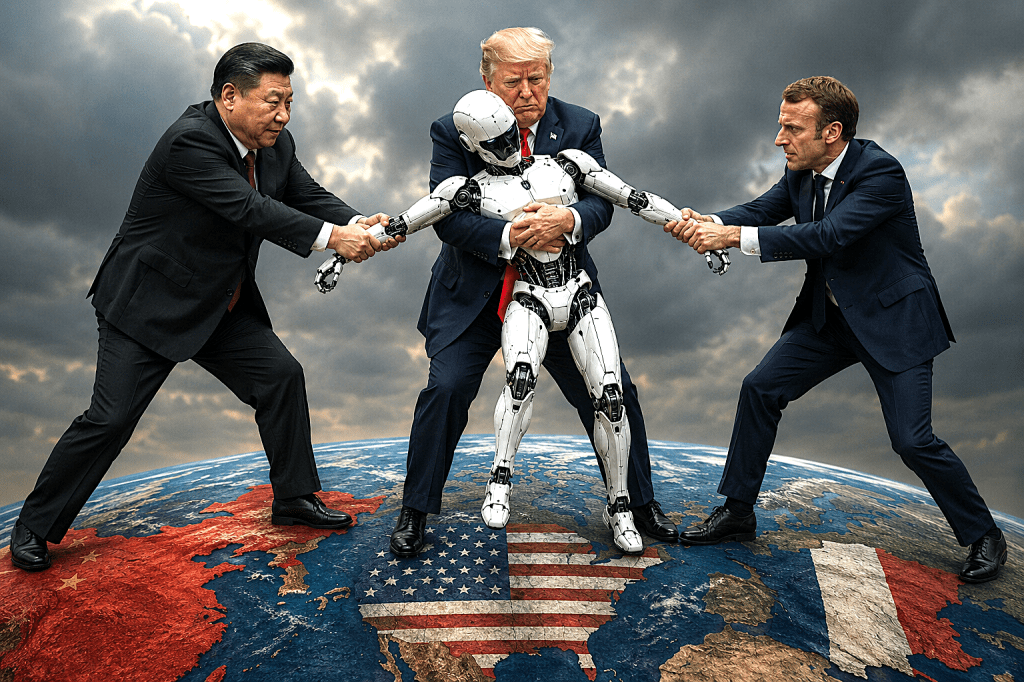
The United States and China now occupy a category of their own. The American advantage is depth of capital, compute, and the full industrial stack. The Chinese advantage is scale of research production, speed of engineering, manufacturing reach, and a willingness to release capable open models. Their best systems are close enough that small benchmark leads should not be confused with durable national superiority. The contest is shifting from who can train a clever model to who can support a self-reinforcing research economy.
The next tier is more specialized. Britain converts a small national base into extraordinary scientific influence through DeepMind and elite universities. South Korea controls strategic memory and has become a credible model producer. France is building an independent European stack around Mistral. India is constructing a multilingual, lower-cost public AI infrastructure at continental scale. Canada still supplies foundational ideas and talent. Germany supplies compute and industrial rigor. Japan is linking agents to science and machines. Israel remains a concentrated source of dual-use and applied invention.
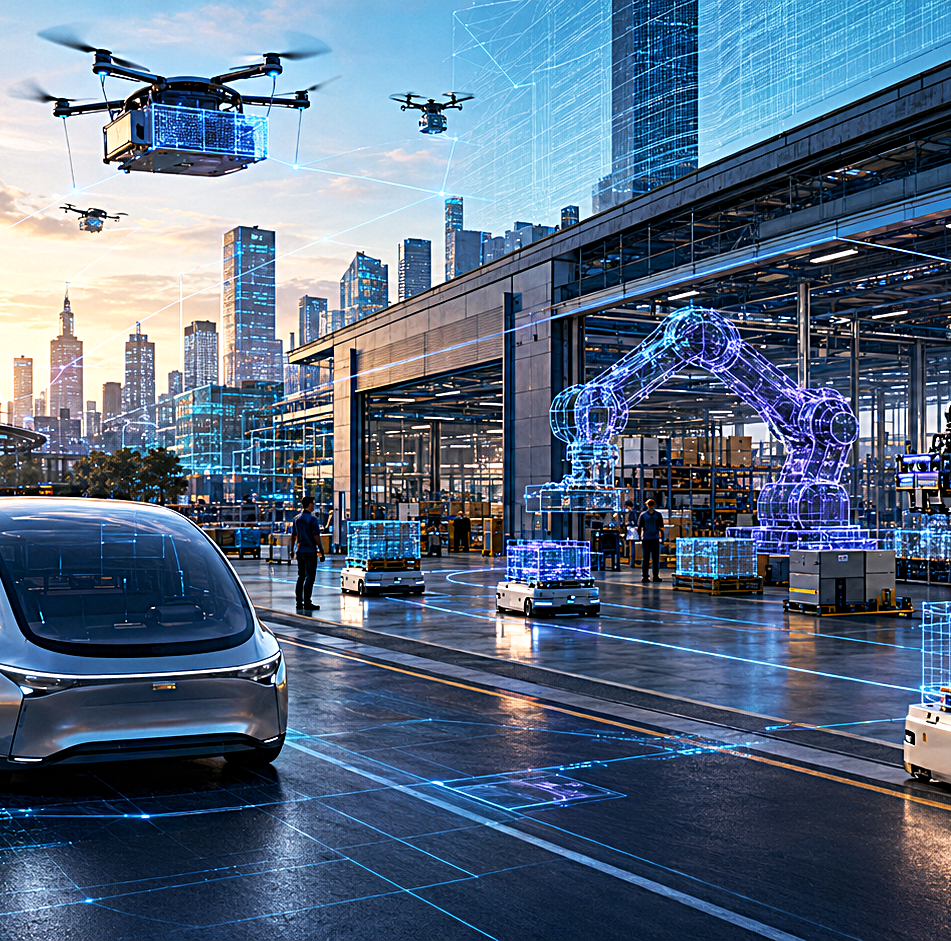
The most important change since the earlier ETC Journal installments is that AI R&D can no longer be separated from energy, semiconductors, memory, scientific instruments, and national data systems. A model may be trained in one country, fabricated through chips from another, served from a third, evaluated by researchers in a fourth, and embedded in robots built in a fifth. National rankings remain useful because governments control infrastructure, education, immigration, procurement, and security policy. But the actual frontier is a network of interdependence under growing geopolitical strain.
That makes the July 10 ranking a snapshot, not a finish line. South Korea could rise again if EXAONE and physical AI sustain their pace. India could move into the top five if its shared compute produces internationally validated models and stronger citation impact. Canada could recover ground once its public supercomputer is operating. Germany could climb if JUPITER generates a visible family of European scientific and industrial models. Singapore or the UAE could enter with a true frontier research breakthrough. In AI, four months is now enough time for a country’s position to change.
References
All links were publicly accessible and checked for this report. Dates are publication or update dates where available. Sources emphasize 2025-2026 material, with a small number of earlier items used for institutional context.
[1] Stanford Institute for Human-Centered Artificial Intelligence. “2026 AI Index Report.” Stanford HAI, April 2026. https://hai.stanford.edu/ai-index/2026-ai-index-report
[2] Stanford Institute for Human-Centered Artificial Intelligence. “Inside the AI Index: 12 Takeaways From the 2026 Report.” Stanford HAI, April 13, 2026. https://hai.stanford.edu/news/inside-the-ai-index-12-takeaways-from-the-2026-report
[3] Stanford Institute for Human-Centered Artificial Intelligence. “The Global AI Vibrancy Tool 2024.” Stanford HAI, November 24, 2025. https://hai.stanford.edu/research/the-global-ai-vibrancy-tool-2024
[4] ETC Journal. “Top 10 Countries in AI R&D, Feb. 2026.” ETC Journal, February 22, 2026. https://etcjournal.com/2026/02/22/top-10-countries-in-ai-rd-feb-2026/
[5] ETC Journal. “Top 10 Countries in AI R&D, Oct. 2025.” ETC Journal, October 26, 2025. https://etcjournal.com/2025/10/26/top-10-countries-in-ai-rd-oct-2025/
[6] Nikki Goth Itoi. “Stanford Scientists Build an AI Lab Partner.” Stanford HAI, July 9, 2026. https://hai.stanford.edu/news/stanford-scientists-build-an-ai-lab-partner
[7] Stanford HAI. “Generative AI Tool Marks a Milestone in Biology.” Stanford HAI, February 27, 2025. https://hai.stanford.edu/news/generative-ai-tool-marks-a-milestone-in-biology
[8] U.S. National Science Foundation. “National Artificial Intelligence Research Resource.” NSF, updated 2026. https://www.nsf.gov/focus-areas/ai/nairr
[9] Google DeepMind. “AlphaEvolve: A Gemini-Powered Coding Agent for Designing Advanced Algorithms.” Google DeepMind, May 14, 2025. https://deepmind.google/blog/alphaevolve-a-gemini-powered-coding-agent-for-designing-advanced-algorithms/
[10] Google DeepMind. “Advanced Version of Gemini With Deep Think Officially Achieves Gold-Medal Standard at the International Mathematical Olympiad.” Google DeepMind, July 2025. https://deepmind.google/blog/advanced-version-of-gemini-with-deep-think-officially-achieves-gold-medal-standard-at-the-international-mathematical-olympiad/
[11] Google DeepMind. “AlphaGenome: AI for Better Understanding the Genome.” Google DeepMind, June 25, 2025. https://deepmind.google/blog/alphagenome-ai-for-better-understanding-the-genome/
[12] Google DeepMind. “Gemini Robotics Brings AI Into the Physical World.” Google DeepMind, March 12, 2025. https://deepmind.google/blog/gemini-robotics-brings-ai-into-the-physical-world/
[13] DeepSeek-AI et al.. “DeepSeek-R1: Incentivizing Reasoning Capability in LLMs via Reinforcement Learning.” arXiv, January 22, 2025; revised January 4, 2026. https://arxiv.org/abs/2501.12948
[14] DeepSeek. “DeepSeek-V3.2 Release.” DeepSeek API Docs, December 1, 2025. https://api-docs.deepseek.com/news/news251201/
[15] Alibaba Cloud. “Alibaba Unveils Qwen3.6-Plus to Accelerate Agentic AI Deployment.” Alibaba Cloud Community, April 2, 2026. https://www.alibabacloud.com/blog/alibaba-unveils-qwen3-6-plus-to-accelerate-agentic-ai-deployment-for-enterprises-and-alibaba%E2%80%99s-ai-applications_603000
[16] Alibaba Cloud. “Qwen3.6-35B-A3B: Agentic Coding Power, Now Open to All.” Alibaba Cloud Community, April 17, 2026. https://www.alibabacloud.com/blog/603043
[17] UK Department for Science, Innovation and Technology. “AI Research Resource.” GOV.UK, July 17, 2025; updated June 4, 2026. https://www.gov.uk/government/publications/ai-research-resource
[18] University of Bristol. “Inside Isambard-AI.” Bristol Supercomputing, June 5, 2026. https://www.bristol.ac.uk/research/centres/bristol-supercomputing/articles/2026/inside-isambard-ai.html
[19] Nvidia. “Isambard-AI Becomes the UK’s Fastest Supercomputer.” Nvidia Blog, July 17, 2025. https://blogs.nvidia.com/blog/isambard-ai/
[20] Korea.net. “Korea Leads World in AI Patents per Capita, 3rd in Notable Models.” Korea.net, April 15, 2026. https://www.korea.net/NewsFocus/Sci-Tech/view?articleId=290822
[21] LG AI Research et al.. “K-EXAONE Technical Report.” arXiv, January 2026. https://arxiv.org/abs/2601.01739
[22] LG AI Research et al.. “EXAONE 4.5 Technical Report.” arXiv, April 2026. https://arxiv.org/abs/2604.08644
[23] Samsung Electronics. “Samsung Ships Industry-First Commercial HBM4 With Ultimate Performance for AI Computing.” Samsung Newsroom, February 12, 2026. https://news.samsung.com/global/samsung-ships-industry-first-commercial-hbm4-with-ultimate-performance-for-ai-computing
[24] SK hynix. “SK hynix Completes World-First HBM4 Development and Readies Mass Production.” SK hynix Newsroom, September 12, 2025. https://news.skhynix.com/sk-hynix-completes-worlds-first-hbm4-development-and-readies-mass-production/
[25] Mistral AI. “Introducing Mistral 3.” Mistral AI, December 2, 2025. https://mistral.ai/news/mistral-3/
[26] Mistral AI. “AI Now Summit 2026.” Mistral AI, May 28, 2026. https://mistral.ai/news/ai-now-summit-2026/
[27] Mistral AI. “Robostral Navigate: Single-Camera AI Navigation.” Mistral AI, July 10, 2026. https://mistral.ai/news/robostral-navigate/
[28] Presidency of the French Republic. “Make France an AI Powerhouse.” Elysee, February 11, 2025. https://www.elysee.fr/en/emmanuel-macron/2025/02/11/make-france-an-ai-powerhouse
[29] Inria. “AI Security and Sovereignty: INESIA Unveils Its Roadmap for 2026-2027.” Inria, February 13, 2026. https://www.inria.fr/en/ai-security-and-sovereignty-inesia-unveils-its-roadmap-2026-2027
[30] Press Information Bureau, Government of India. “In Less Than 24 Months, IndiaAI Mission Has Set Up a Foundation for Development of AI Ecosystem.” PIB, February 13, 2026. https://www.pib.gov.in/PressReleasePage.aspx?PRID=2227612&lang=2®=3
[31] Press Information Bureau, Government of India. “Digital India Nears 11 Years, Driving India’s Technology Transformation.” PIB, June 27, 2026. https://www.pib.gov.in/PressReleasePage.aspx?PRID=2278453
[32] Press Information Bureau, Government of India. “Transforming India With AI.” PIB, October 2025. https://www.pib.gov.in/PressReleasePage.aspx?PRID=2178092
[33] BharatGen. “BharatGen: Generative AI for Bharat.” BharatGen, 2025-2026. https://bharatgen.com/
[34] Innovation, Science and Economic Development Canada. “Canadian Sovereign AI Compute Strategy.” Government of Canada, updated June 4, 2026. https://ised-isde.canada.ca/site/ised/en/canadian-sovereign-ai-compute-strategy
[35] Innovation, Science and Economic Development Canada. “Canada’s National Artificial Intelligence Strategy: AI for All.” Government of Canada, June 8, 2026. https://ised-isde.canada.ca/site/ised/en/canadas-national-artificial-intelligence-strategy-ai-all
[36] CIFAR. “Pan-Canadian AI Strategy.” CIFAR, updated 2026. https://cifar.ca/ai/
[37] Cohere. “Cohere and Mila Partner to Advance Quebec French Language and Cultural Context in AI.” Cohere, May 27, 2026. https://cohere.com/blog/cohere-and-mila-partner-to-advance-quebec-french-language-and-cultural-context-in-ai
[38] Forschungszentrum Julich. “Europe’s AI Booster: JUPITER AI Factory Brings Exascale Power to Business and Science.” Forschungszentrum Julich, March 12, 2025. https://www.fz-juelich.de/en/news/archive/press-release/2025/europes-ai-booster-jupiter-ai-factory
[39] Forschungszentrum Julich. “Europe’s First Supercomputer Reaches 1 ExaFLOP/s.” Forschungszentrum Julich, November 17, 2025. https://www.fz-juelich.de/en/news/archive/press-release/2025/europes-first-supercomputer-reaches-1-exaflop-s
[40] Fraunhofer IIS. “AI Chip Design From Heilbronn.” Fraunhofer IIS, March 3, 2026. https://www.iis.fraunhofer.de/en/pr/2026/press-release-ai-chip-design-from-heilbronn.html
[41] RIKEN. “RIKEN’s New AI for Science Supercomputer Has an Official Name: RIKYU.” RIKEN, June 23, 2026. https://www.riken.jp/en/news_pubs/news/2026/20260619_1/index.html
[42] Sakana AI. “The AI Scientist: Towards Fully Automated AI Research, Now Published in Nature.” Sakana AI, March 26, 2026. https://sakana.ai/ai-scientist-nature/
[43] Sakana AI. “Sakana AI Agent Wins AtCoder Heuristic Contest.” Sakana AI, January 5, 2026. https://sakana.ai/ahc058/
[44] Ministry of Economy, Trade and Industry, Japan. “Press Conference by Minister Akazawa: AI and Semiconductor Investment Framework.” METI, November 4, 2025. https://www.meti.go.jp/english/speeches/press_conferences/2025/1104001.html
[45] Government of Israel. “National AI Directorate and Israeli High-Tech Industry Launch Joint Initiative to Shape Israel’s AI Future.” Gov.il, July 5, 2026. https://www.gov.il/en/pages/national-ai-directorate-and-israeli-high-tech-industry-launch-joint-initiative-to-shape-israel-s-ai-future-5-jul-2026
[46] Israeli National AI Program. “The Israeli National AI Program.” AI Israel, updated 2026. https://aiisrael.org.il/
[47] Israeli National AI Program. “Nebius Selected to Establish Israel’s National Supercomputer.” AI Israel, May 14, 2025. https://aiisrael.org.il/press_release/nebius-selected-to-establish-israels-national-supercomputer/
[48] Mobileye. “Prof. Amnon Shashua Elected to U.S. National Academy of Engineering.” Mobileye, February 12, 2026. https://www.mobileye.com/news/prof-amnon-shashua-elected-to-us-national-academy-of-engineering/
[49] AI21 Labs. “The Jamba 1.5 Open Model Family.” AI21 Labs, August 22, 2024. https://www.ai21.com/blog/announcing-jamba-model-family/
[50] AI Singapore. “SEA-LION: Southeast Asian Languages in One Network.” SEA-LION, updated 2026. https://sea-lion.ai/
[51] Reuters. “Singapore to Invest More Than $779 Million in Public AI Research Through 2030.” Reuters, January 24, 2026. https://www.reuters.com/world/asia-pacific/singapore-invest-over-779-million-public-ai-research-through-2030-2026-01-24/
[52] Technology Innovation Institute. “The UAE’s Big Bet on Openness Is Paying Off.” TII, 2026. https://www.tii.ae/insights/uaes-big-bet-openness-paying
###
Filed under: Uncategorized |























































































































































































































































































































































































Leave a Reply