





By Jim Shimabukuro (assisted by Claude)
Editor
Introduction: Seven years after Washington cut it off from American technology, Huawei is outselling Apple in China, shipping an operating system of its own making, and building artificial-intelligence processors that Nvidia’s chief executive says he has stopped competing for. A guide to what is real, what is marketing, and why the difference will shape the coming decade.

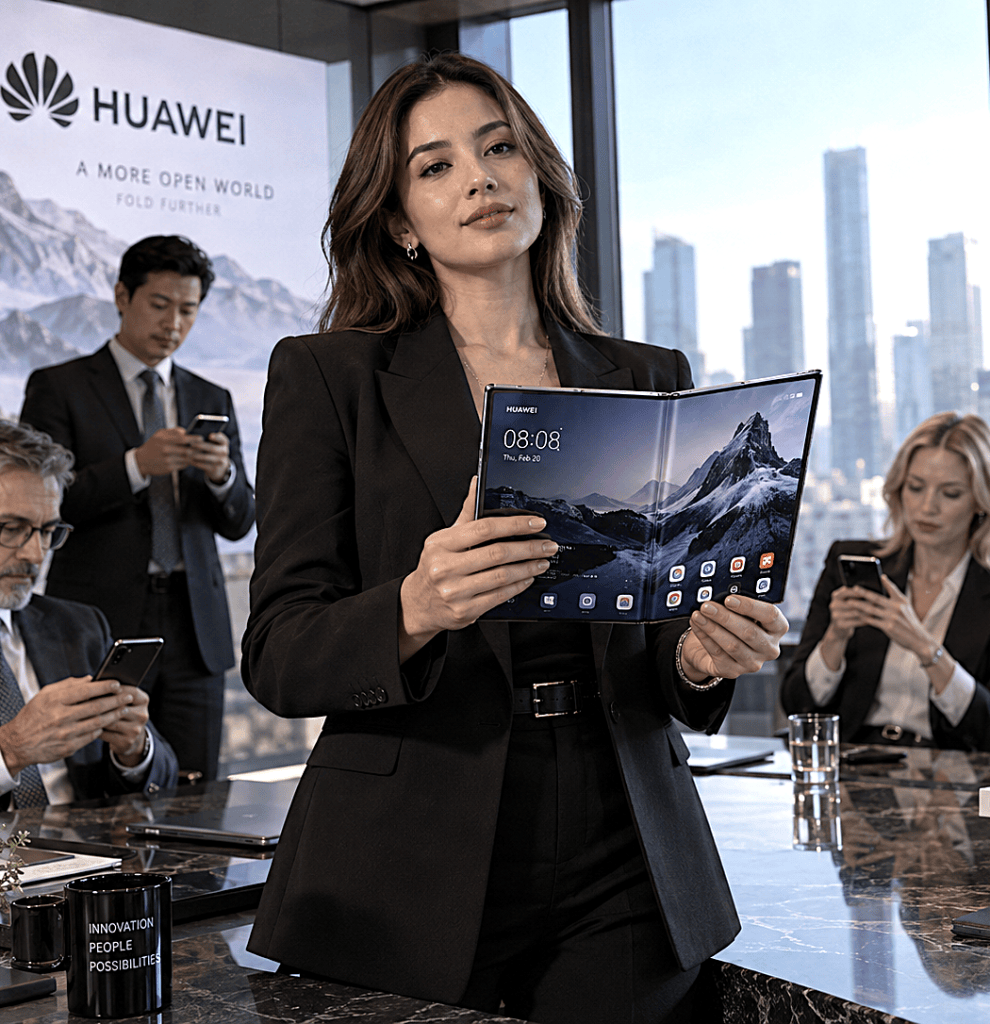
On the morning of September 7, 2026, in a hall in Shenzhen, Huawei showed a telephone that unfolds twice. Closed, the Mate XT 2 is a fat handset. Opened once, it is a small tablet. Opened again, it is a 10.2-inch screen the thickness of a magazine cover. It costs 19,999 yuan, roughly $2,980, and it went on sale in China the following Saturday (Bloomberg, 2026).
The timing was not a coincidence. Apple’s autumn event, at which the company was expected to introduce its own first folding iPhone, was two days away. Huawei has made a habit of stepping in front of that event, and the habit is itself a piece of information: a company that schedules its launches against Apple’s calendar is a company that believes it belongs in the same sentence.
Whether it does is a fair question, and it is the question a great many people are now asking after watching videos with titles about Apple being finished and Microsoft facing its worst nightmare. The honest answer has three parts. Huawei is a genuinely formidable enterprise with real engineering, real revenue, and a real record of doing things outside observers said it could not do. It is also a company operating under severe constraints that its promotional material does not dwell on. And the gap between those two facts is where the interesting story lives.
Who Are They?
Huawei Technologies was founded in 1987 by Ren Zhengfei, a former army engineer, as a small reseller of imported telephone switches. It is now, by its own accounting, a company of 213,000 employees operating in more than 170 countries and regions and serving more than three billion people (Huawei, 2026a). In 2025 it reported revenue of 880.9 billion yuan and net profit of 68 billion yuan, and it spent 192.3 billion yuan on research and development — 21.8 percent of everything it took in. Over the preceding decade it put roughly 1.382 trillion yuan into R&D (Huawei, 2026b). By the end of 2025 it held about 165,000 active patents (Huawei, 2026a).
Those are not the numbers of a paper company. For scale: the R&D figure alone, at 2025 exchange rates, sits in the neighborhood of what the largest American technology firms spend, and the share of revenue Huawei devotes to research is higher than almost any of them.
The ownership structure is unusual enough to have become its own controversy. Huawei is not listed on any stock exchange. Its holding company is “wholly owned by 169,054 of its employees and retired beneficiaries,” with Ren himself holding about 0.59 percent as of the end of 2025 (Huawei, 2026a). Employees hold what are technically shares in a trade-union-administered scheme rather than conventional equity, a distinction that critics have argued makes the “employee-owned” label misleading and that Huawei has argued is a matter of Chinese corporate law rather than concealment. It is a real dispute, and it matters mainly because it feeds the larger argument about who ultimately controls the company.
The company runs on a rotating chairmanship, with three senior executives taking six-month turns at the top. One of them is Sabrina Meng — Meng Wanzhou, the founder’s daughter, and the person whose 2018 arrest in Vancouver turned a trade dispute into an international incident. Reporting Huawei’s 2025 results, she offered a sentence that reads like the company’s working motto: “We are moving toward a future that is full of uncertainty, so we have to remain true to our strategy and maintain strategic focus” (Huawei, 2026b).
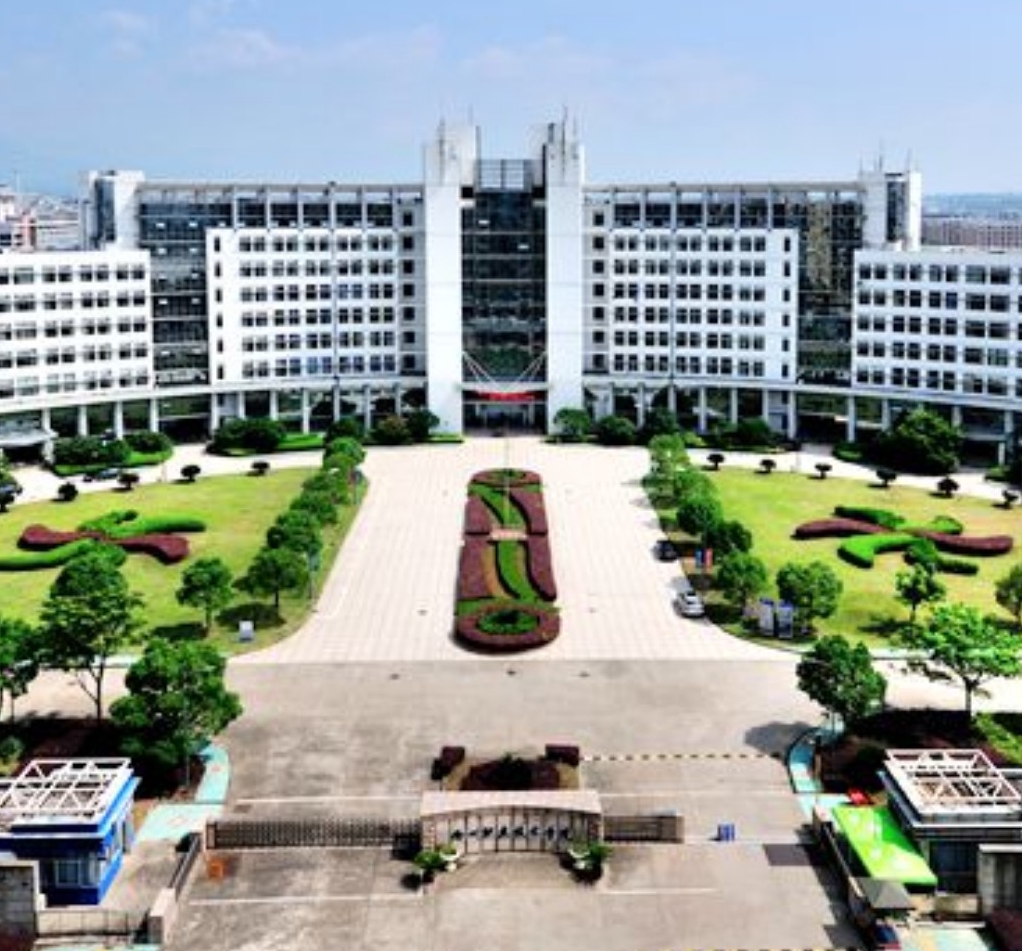
Huawei’s headquarters is in Shenzhen, the city across the border from Hong Kong that grew from a fishing town into China’s hardware capital in a single working lifetime. The company’s research campus at Songshan Lake in nearby Dongguan is a famous oddity: a dozen clusters of buildings copied from European towns, connected by a small red train, built to persuade engineers that they would enjoy living there. It is easy to mock and it is also, in its way, the point. Huawei’s central strategic problem for the past seven years has been talent and self-sufficiency, and it has spent accordingly.
Geographically, the company is now two businesses. Its telecommunications equipment and enterprise operations remain global, with a heavy presence across Asia, Africa, Latin America and the Middle East. Its consumer business is overwhelmingly Chinese. That split is not a strategy; it is a scar, and the injury has a date.
The U.S. Blocks Huawei
In May 2019 the U.S. Department of Commerce placed Huawei on the Entity List, requiring American suppliers to obtain licenses — generally denied — before selling to it. Later rules extended the restriction to any chip anywhere in the world made with American tools or technology, which in practice meant every advanced processor on earth. Google withdrew licensed Android services. Huawei’s phones, which had briefly been outselling Apple globally, lost access to the Play Store and to the modern chips that made them competitive. The handset business collapsed.
The security case behind those measures had been building for years. American officials have argued that Chinese intelligence law obliges companies to cooperate with state security services, that Huawei’s equipment inside telecommunications networks is therefore an unacceptable risk, and that the company has a documented history of intellectual-property theft; in 2020 the Justice Department charged Huawei with racketeering conspiracy and conspiracy to steal trade secrets, and a 2022 FBI investigation concluded that Huawei equipment near military installations could be used to disrupt communications (Council on Foreign Relations, 2023). Meng was indicted in January 2019 over allegations that she misled banks about business in Iran; she reached a deferred prosecution agreement in 2021 and returned to China. Ren has consistently denied that his company would ever spy, saying he would “never harm the interest of my customers” (Council on Foreign Relations, 2023). No public evidence of a backdoor in Huawei equipment has been produced, a fact Huawei emphasizes and its critics consider beside the point, since the argument concerns capability and legal obligation rather than proof of past misuse.
Whatever one concludes about the merits, the practical result was clear. By 2020 the consensus view in Washington and in much of the industry was that Huawei’s consumer business was finished and its access to advanced semiconductors permanently closed.
The Comeback Strategy
In August 2023, without a press release, Huawei began selling a phone called the Mate 60 Pro in Chinese stores. Teardowns found a processor built on a 7-nanometer-class process by SMIC, China’s state-backed foundry, without access to the extreme-ultraviolet lithography machines that Western manufacturers consider essential at that level. The chip was not competitive with the best Apple or Qualcomm silicon, and it was reportedly expensive to produce. It was also not supposed to exist.
Progress since then has been incremental and real. The Kirin 9030, which powers the Mate 80 Pro Max introduced in November 2025, was built on SMIC’s N+3 process, described by the analysis firm TechInsights as “a scaled evolution of its 7nm-class technology.” The firm’s assessment was careful in both directions. There were “meaningful density improvements,” but as analyst Rajesh Krishnamurthy put it, “in absolute terms, N+3 remains substantially less scaled than industry 5-nm processes from TSMC and Samsung” — and achieving it required deep-ultraviolet multi-patterning, a technique that works but brings significant yield problems, which is another way of saying that a large share of the wafers are thrown away (TechInsights, 2025; South China Morning Post, 2025).
Blocked from shrinking transistors further, Huawei has started rearranging them instead. The Kirin 9050 Pro inside the new trifold uses what the company calls LogicFolding: a double-layer reorganization of how logic circuits are physically laid out, which Huawei says shortens wiring by about 30 percent and yields 55 percent more transistors per square millimeter than the Kirin 9030 Pro along with a 41 percent reduction in power at the same performance. He Tingbo, who chairs Huawei’s scientist committee, described the gains as obtained not through a new lithography step but through a reorganization of how logic is distributed in space (Interesting Engineering, 2026). Whether the claims survive independent measurement is not yet settled. The direction of travel — buy the improvement with architecture when you cannot buy it with machines — is the more important signal.
What the Numbers Mean
This is where the YouTube claim turns out to be substantially true. In the second quarter of 2026, Huawei led China’s smartphone market with 22.6 percent of shipments, growing 19.4 percent year over year. Apple was second at 18.1 percent, growing 24.4 percent. Everyone else shrank: OPPO and vivo at 16.0 percent apiece, down 9.7 and 11.4 percent, Xiaomi at 12.4 percent, down 21.7 percent, and Honor at 11.3 percent, down 9.5 percent. The market as a whole fell 4.3 percent to roughly 66 million units (IDC, 2026).
The reason two companies grew while a shrinking market punished everyone else is mundane and instructive. Memory chip prices spiked through 2026, and most Chinese manufacturers passed the cost to buyers. As IDC China research analyst Arthur Guo explained, “Huawei and Apple held their prices steady while competitors were raising theirs, and that gave hesitant buyers a reason to go ahead and purchase in a quarter when most of the market was giving them a reason to wait” (IDC, 2026).
So Huawei does outsell Apple in China, and has for several quarters. What that does not mean is that Apple is in trouble everywhere. China is roughly a fifth of global smartphone volume, Huawei’s share outside it is small, and Apple’s profit pool is concentrated in markets where Huawei effectively does not compete. A Counterpoint Research analyst, Ivan Lam, made the point bluntly while assessing the folding-phone contest: “Apple has the world’s biggest premium device installed base. Its foldable will sell well and rapidly grab market share” (Bloomberg, 2026).
The Third OS
The more consequential Huawei story is not about handsets at all. Cut off from Google in 2019, the company began building its own operating system. The early versions were Android underneath. HarmonyOS NEXT, released in 2024, removed the Android compatibility layer entirely, which meant that every application had to be rewritten — an act of deliberate self-harm in the short run and the only route to independence in the long run.
The rebuilding is further along than most Western readers realize. At the HarmonyOS Ecosystem Conference in August 2026, rotating chairman Xu Zhijun said native HarmonyOS applications had passed 100,000, with more than 400,000 applications in total available on HarmonyOS phones, and that devices running HarmonyOS 6 had surpassed 80 million as of August 20 (TechNode, 2026). Counting the wider OpenHarmony family — cars, appliances, industrial equipment — the figure exceeds 1.35 billion devices. Citing Counterpoint Research data, China’s Ministry of Industry and Information Technology described HarmonyOS as the world’s third-largest mobile operating system: 5 percent of global smartphone shipments in the second quarter of 2026, against 75 percent for Android and 20 percent for iOS — but 24 percent of smartphone sales inside China, ahead of iOS at 18 percent (Dataconomy, 2026).
A third mobile operating system with a fifth of a market the size of China’s is not a curiosity. It is the first credible break in a duopoly that has held since roughly 2010. Xu has said Huawei will “start with pilots in selected overseas markets before deciding on a broader consumer rollout” (Dataconomy, 2026), which is a cautious sentence describing an ambitious plan.
Samm Sacks, writing for Lawfare in March 2026, argued that American policy has been looking at the wrong layer of the stack. Export controls target chips; the operating system, she wrote, determines how people will actually meet artificial intelligence. HarmonyOS 6 introduced an agent framework designed to let an assistant act across applications that, in China’s walled-garden internet, have historically refused to talk to each other. If Huawei makes that work, Sacks wrote, “HarmonyOS may one day soon run on devices for global export—from cars to phones to fridges—with its AI-enabled assistant coordinating across all aspects of users’ lives” (Sacks, 2026).
Windows Is Still a Challenge
The second video claim — that Microsoft faces a free Chinese challenger — needs unpacking, because the threat is real but it is not primarily a product threat. It is a procurement one.
In August 2026, Bloomberg reported that Chinese authorities had ordered state agencies to remove the government-only edition of Windows 10, built by a Microsoft joint venture, ahead of its scheduled February 2027 retirement. The replacements named were domestic: Kylin V10, UnionTech’s UOS, and Huawei’s HarmonyOS, including Huawei desktop machines running its own processors. Microsoft said it was “not aware of a security incident affecting this product” (Tom’s Hardware, 2026). Several of the Chinese alternatives are Linux-derived and free to obtain, which is where the “it’s free” framing comes from; HarmonyOS itself is not a Linux distribution, and its desktop edition ships on Huawei hardware rather than as a download.
The commercial reality is still modest. Huawei shipped roughly 141,000 HarmonyOS PCs in 2025 and is forecast to ship about 1.4 million in 2026 — a tenfold increase, in a global PC market of roughly 245 million units that Omdia expects to contract 12 percent this year. As Omdia research manager Kieren Jessop noted, “the supply-driven downturn in 2026 will not affect all PC platforms equally,” with HarmonyOS machines “emerging as a notable growth segment” from what he was careful to call “a small base” (TechRadar, 2026).
One point four million against 245 million is not Microsoft’s nightmare. A standing government instruction to remove Windows from the machines of the world’s second-largest economy, however, is a policy Microsoft cannot answer with a better product.
The Chips That Matter
Smartphones are the visible business. Artificial-intelligence processors are the one Washington actually worries about.
At its 2025 developer conference, Huawei did something it had never done: it published a multi-year silicon roadmap. Eric Xu committed the company to a cadence — “generally, we will follow a 1-year release cycle and double compute with each release” — and gave dates. The Atlas 950 SuperPoD, a rack-scale cluster built from Ascend 950 chips, “will be available in the fourth quarter of 2026.” Its successor arrives in late 2027, and the Ascend 970 in late 2028 (Huawei, 2025). Publishing a roadmap is a way of telling Chinese data-center buyers that they can plan around you instead of around Nvidia.
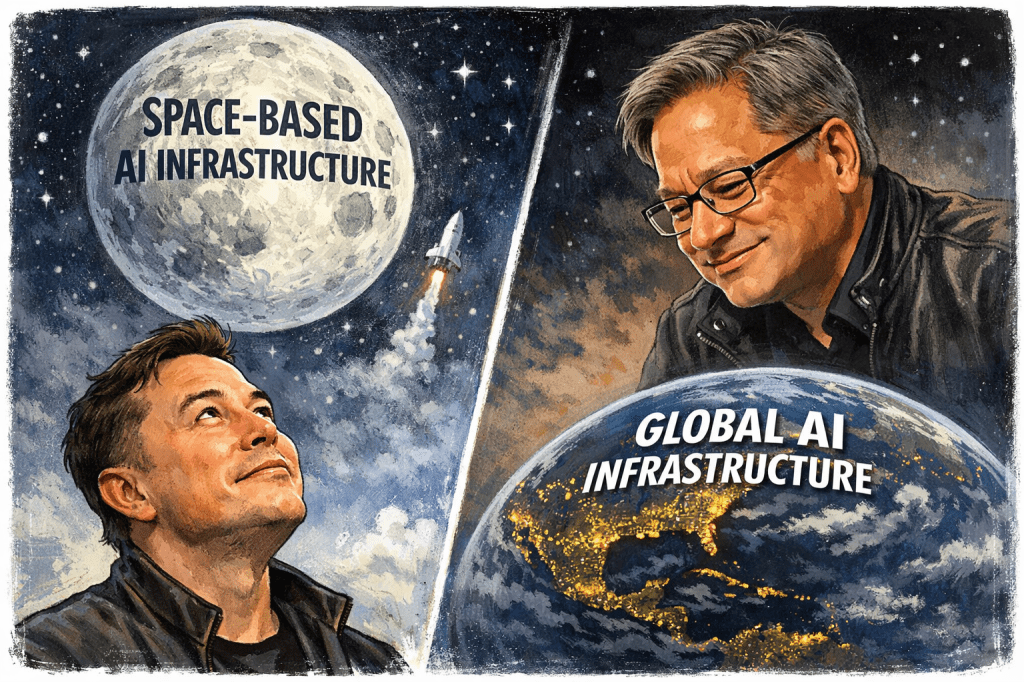
It appears to have worked. In May 2026, Nvidia chief executive Jensen Huang said of the Chinese market, “we’ve really largely conceded that market to them,” attributing the loss to export controls that pushed Chinese customers toward domestic suppliers (eWeek, 2026). That is a remarkable sentence from the head of the most valuable semiconductor company in history, and it is the strongest single piece of evidence that Huawei’s AI hardware is good enough for the work Chinese firms need done.
“Good enough for China” is not the same as “better than Nvidia.” Huawei’s approach is to compensate for weaker individual chips by wiring enormous numbers of them together with its own high-speed interconnect, which costs more power and more floor space to reach the same result. In a country with cheap electricity and an urgent political mandate, that trade is acceptable. It also depends on high-bandwidth memory, which China does not yet manufacture at the quality and volume required, and which remains the tightest chokepoint in the entire plan.
Obstacles
The most useful corrective to the triumphal videos came from Huawei’s own accountants. In the first half of 2026 the company’s revenue rose 9.6 percent to 467.82 billion yuan — and net profit fell 36 percent, to 23.81 billion yuan. Research and development climbed 25 percent to 121.38 billion yuan, or 25.9 percent of revenue. Huawei attributed the squeeze to higher input costs, rising memory prices, business-mix shifts, and the expense of the self-sufficiency push itself (Reuters, 2026).
Read that sequence slowly, because it is the whole story in miniature. Huawei is growing. Huawei is spending more than a quarter of its revenue trying to replace American technology it is not allowed to buy. And that effort is consuming more than a third of its profit. Independence is being purchased, not won, and the invoice arrives every quarter.
The other limits are structural. SMIC’s best process remains materially behind what TSMC delivers, with yield problems that make every advanced chip expensive. Huawei has no meaningful smartphone presence in Europe or North America and no path back while the Entity List stands. HarmonyOS has 5 percent of global smartphone shipments and effectively no consumer applications outside China’s app economy, which is the actual barrier to going global: not code, but the absence of WhatsApp, Instagram, Uber, and several hundred others. And the memory bottleneck constrains the AI business regardless of how good the logic chips become.
Timeline
Three different clocks are running, and conflating them produces most of the bad analysis.
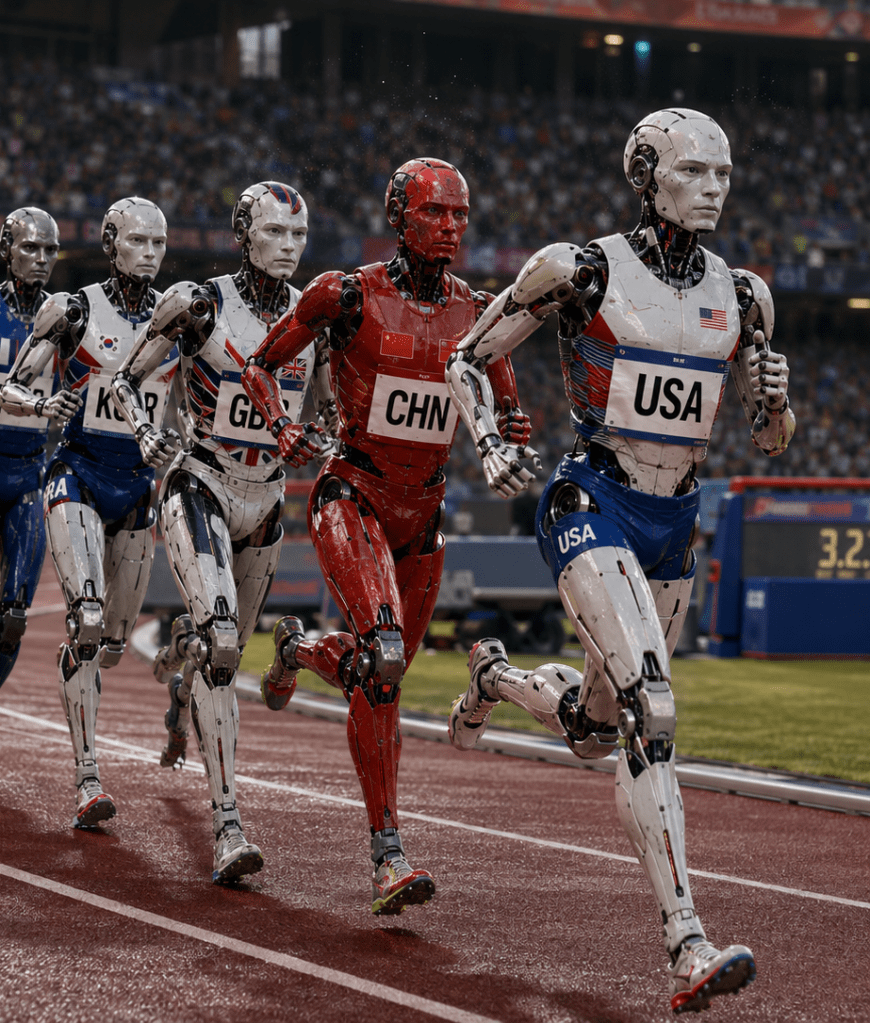
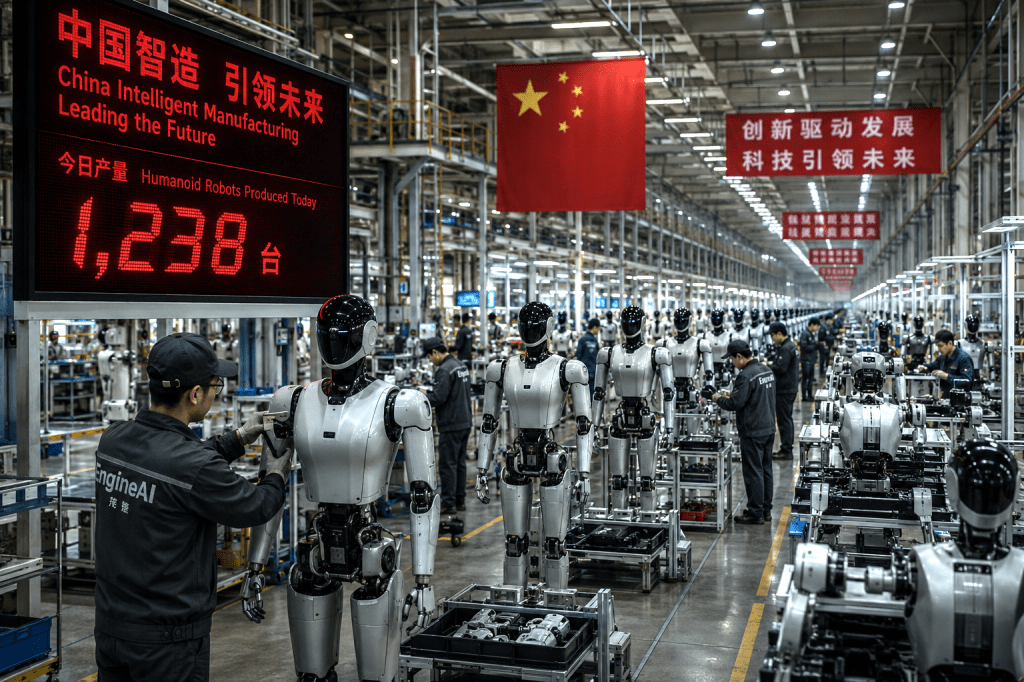
Inside China, Huawei is not an emerging challenger. It is already the leader in smartphones, already the default in state and enterprise computing, and already, by Nvidia’s own admission, the reference supplier for AI hardware. That contest is over.
In the developing world — Southeast Asia, the Middle East, Africa, Latin America — the next several years are genuinely open. Huawei’s telecommunications equipment is already installed across much of it, its pricing is competitive, and its pitch to governments uneasy about American dependence is straightforward. Xu’s “pilots in selected overseas markets” is the opening move. Watch what happens in one or two of those markets over the next twenty-four months; that is the informative test.
In the United States, Western Europe, Japan and Korea, there is no realistic Huawei consumer challenge this decade. The legal barriers alone settle it. Anyone predicting Apple’s collapse at Huawei’s hands is describing a market Huawei is not permitted to enter.
Discussion
The deeper significance has little to do with which phone outsells which. It concerns whether export controls work as designed.
The American theory was that denying China advanced semiconductors would keep it a generation or more behind in artificial intelligence. Gregory Allen of the Center for Strategic and International Studies has argued that the controls do bite — Chinese firms have had to use two to four times the computing power to reach comparable results — and that DeepSeek’s chief executive, Liang Wenfeng, said as much himself: “money has never been the problem for us; bans on shipments of advanced chips are.” Allen’s conclusion was conditional: the controls succeed only if two things hold, that chips are not smuggled at scale, and that Huawei and SMIC do not manage to build a viable domestic alternative to the Nvidia-TSMC pairing. Beijing has set a target of more than 70 percent semiconductor self-sufficiency across the value chain by 2028 (Allen, 2025).
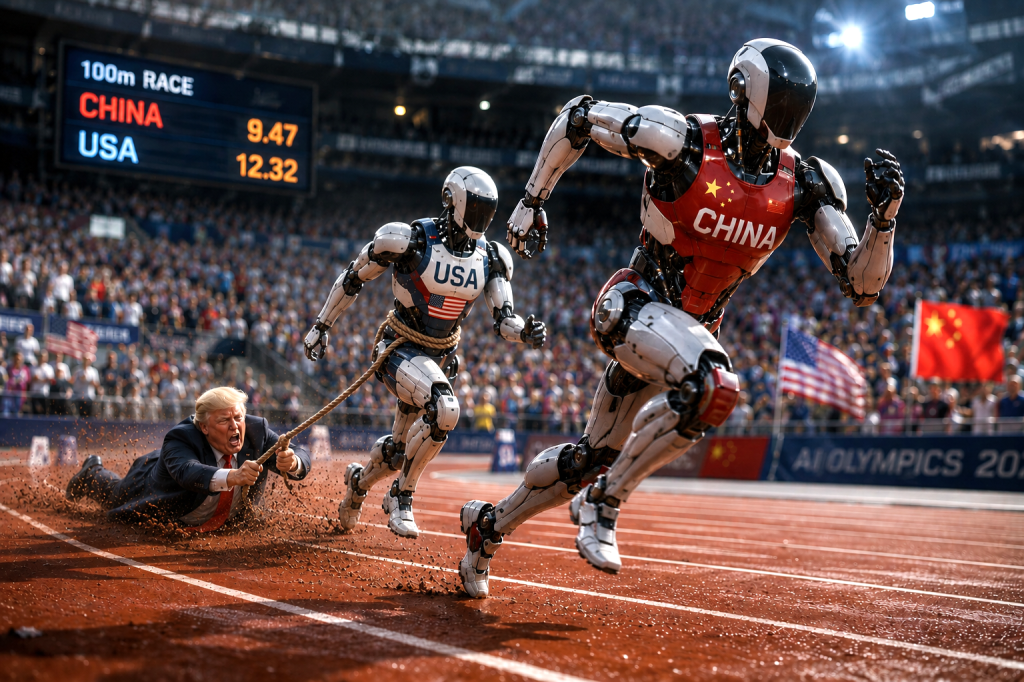
On the evidence of 2026, the second condition is under real strain. Huawei has not matched TSMC and probably will not soon. But it has produced something that works well enough that the largest chip company in the world stopped fighting for a market it once owned outright. Restriction did not stop the program; it changed who pays for it and how expensive it is, and it converted a customer into a competitor. Whether that was a policy failure or an acceptable cost of buying time is now the central disagreement in Washington, and reasonable people take both sides.
Europe sits uncomfortably between them. In January 2026 the European Commission moved to phase out “high-risk” vendors from member states’ networks, a measure aimed squarely at Huawei and ZTE, and Huawei objected publicly (CNBC, 2026). Some member states have complied enthusiastically; others, weighing the cost of ripping out installed equipment, have not.
The outcome that seems most likely is neither Chinese triumph nor American containment, but division: two technology stacks, each substantially complete, each with its own chips, operating systems, application stores and standards, with much of the world choosing between them or trying to run both. That world is more expensive for everyone. It is worse for interoperability, worse for security research, worse for anyone who wants a phone bought in one country to work sensibly in another.
It is also, on current evidence, the world being built. Huawei is not a fraud, and it is not about to eliminate Apple. It is something more consequential than either: proof that a large economy under sustained technological embargo can rebuild the missing pieces domestically, at real cost, on a timeline measured in years rather than decades. Every capital that has spent the past decade wondering how dependent it should be on American technology is watching that demonstration closely. That, rather than a folding telephone launched two days before Apple’s event, is the development worth paying attention to.
References
Allen, G. C. (2025, March 7). DeepSeek, Huawei, export controls, and the future of the U.S.-China AI race. Center for Strategic and International Studies. https://www.csis.org/analysis/deepseek-huawei-export-controls-and-future-us-china-ai-race
Bloomberg. (2026, September 7). Huawei’s $3,000 device leads China’s answer to Apple’s foldable iPhone. Business Standard. https://www.business-standard.com/world-news/huawei-s-3-000-device-leads-china-s-answer-to-apple-s-foldable-iphone-126090700760_1.html
CNBC. (2026, January 21). EU plan to phase out high-risk tech draws fire from China’s Huawei. https://www.cnbc.com/2026/01/21/eu-plan-to-phase-out-high-risk-tech-draws-fire-from-chinas-huawei.html
Council on Foreign Relations. (2023, February 8). Is China’s Huawei a threat to U.S. national security? https://www.cfr.org/backgrounders/chinas-huawei-threat-us-national-security
Dataconomy. (2026, August 31). Huawei says HarmonyOS is now the world’s third-largest mobile OS. https://dataconomy.com/2026/08/31/harmonyos-third-largest-mobile-os/
eWeek. (2026, May 22). Jensen Huang: Nvidia has “largely conceded” China to Huawei. https://www.eweek.com/news/nvidia-china-huawei-ai-chip-gap-apac/
Huawei. (2025, September 18). Groundbreaking SuperPoD interconnect: Leading a new paradigm for AI infrastructure [Keynote by Eric Xu]. https://www.huawei.com/en/news/2025/9/hc-xu-keynote-speech
Huawei. (2026a). Company facts. https://www.huawei.com/en/media-center/company-facts
Huawei. (2026b, March 31). Huawei releases 2025 annual report: Performance in line with forecast. https://www.huawei.com/en/news/2026/3/annual-report-2025
IDC. (2026, July 14). Why Huawei and Apple grew while China’s smartphone market fell again in Q2 2026. https://www.idc.com/resource-center/blog/china-smartphone-market-decline-q2-2026/
Interesting Engineering. (2026, July 8). Huawei’s new smartphone chip promises more power with smarter design. https://interestingengineering.com/innovation/huawei-kirin-2026-logicfolding-chip-design
Reuters. (2026, August 31). Huawei H1 profit drop quickens to 36% on rising costs, R&D spending. https://finance.yahoo.com/technology/articles/huawei-h1-profit-drop-quickens-094221420.html
Sacks, S. (2026, March 13). Huawei is betting on the future with HarmonyOS. Lawfare. https://www.lawfaremedia.org/article/huawei-is-betting-on-the-future-with-harmonyos
South China Morning Post. (2025, December 15). Huawei’s Kirin 9030 processor shows China’s chip progress despite US export curbs: report. https://www.scmp.com/tech/tech-war/article/3336501/huaweis-kirin-9030-processor-shows-chinas-chip-progress-despite-us-export-curbs-report
TechInsights. (2025, December 11). SMIC N+3 confirmed: Kirin 9030 analysis reveals how close SMIC is to 5nm. https://www.techinsights.com/blog/smic-n3-confirmed-kirin-9030-analysis-reveals-how-close-smic-5nm
TechNode. (2026, August 28). Huawei says HarmonyOS native apps top 100,000 as HarmonyOS 6 devices surpass 80 million. https://technode.com/2026/08/28/huawei-says-harmonyos-native-apps-top-100000-as-harmonyos-6-devices-surpass-80-million/
TechRadar. (2026, March 13). An obscure OS could surpass ChromeOS by the end of 2027: Huawei’s HarmonyOS grows 9x in 12 months. https://www.techradar.com/pro/an-obscure-os-could-surpass-chromeos-by-the-end-of-2027-huaweis-harmony-os-grows-9x-in-12-months-and-its-only-the-beginning
Tom’s Hardware. (2026, August 18). China reportedly orders state agencies to uninstall its government-only edition of Windows 10. https://www.tomshardware.com/software/operating-systems/china-reportedly-orders-state-agencies-to-uninstall-its-government-only-edition-of-windows-10
###
Filed under: Uncategorized |


























































































































































































































































































































































Leave a Reply