






By Jim Shimabukuro (assisted by Copilot)
Editor
Ankush Choudhary is a technology writer and analyst who, in February 2026, published a long-form essay titled “Digital Twin Tourism: Virtual Travel Experiences for 2025,” which has quickly become a touchstone for thinking about AI-mediated travel and telepresence.[1] Writing at the intersection of computer graphics, networking, and tourism, Choudhary frames “digital twin tourism” as the creation of high-fidelity, dynamic replicas of real-world locations—Machu Picchu, the Louvre, or Tokyo—rendered in real time and accessed from home through immersive interfaces.

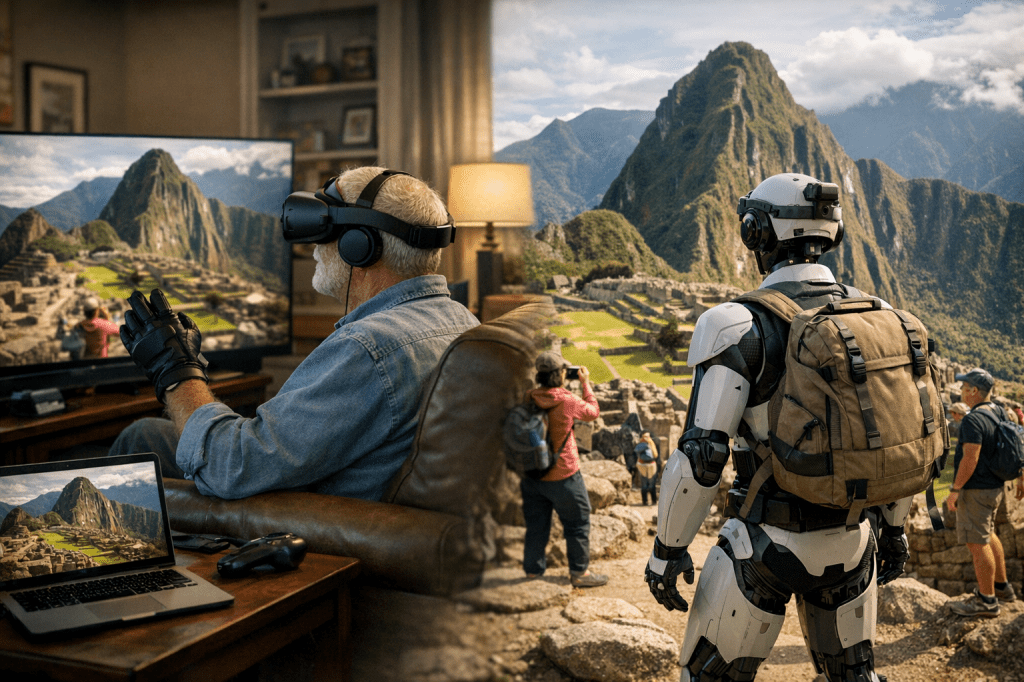
The article does not give a single hard deadline, but it treats 2025–2030 as the window in which photorealistic rendering, 5G/edge computing, and haptics converge enough that virtual travel becomes “indistinguishable” from many aspects of physical travel for a large share of users.[1] What is noteworthy is the explicit mathematical modeling of immersion quality, including visual, audio, haptic, and interactive components, and the argument that telepresence is not a gimmick but a measurable, optimizable property of the system. That framing pushes the conversation beyond vague hype into engineering reality: if immersion can be quantified, then “visiting” Machu Picchu via an embodied agent—complete with responsive lighting, crowds, and weather—becomes a design problem rather than a fantasy.
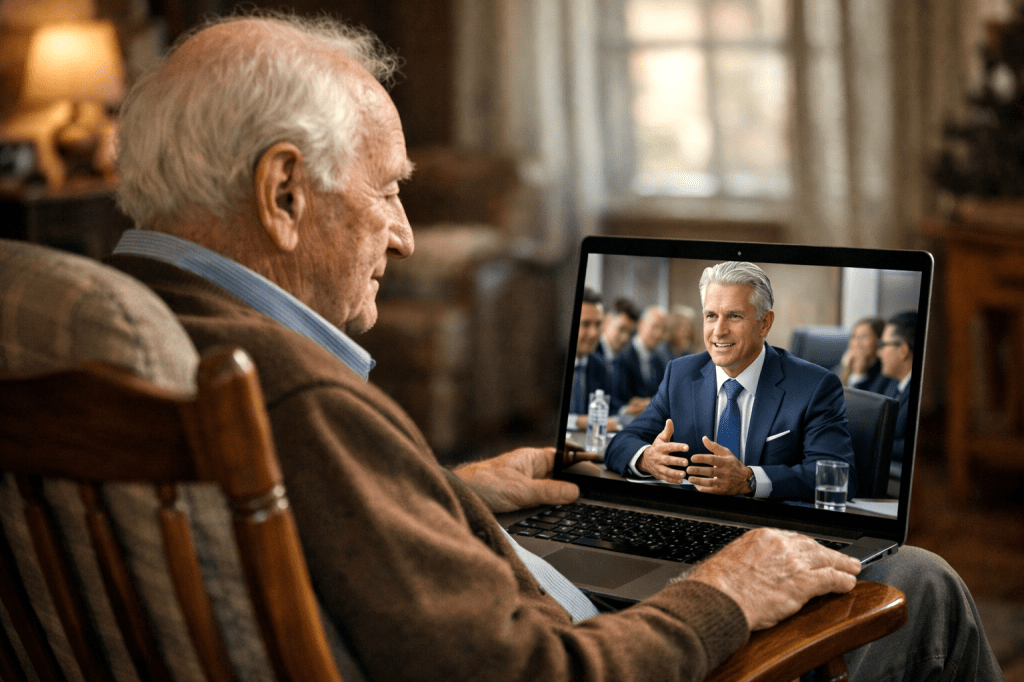
The controversial edge of Choudhary’s piece lies in the suggestion that for some travelers, especially those constrained by cost, disability, or climate concerns, digital twin tourism will not just supplement but partially substitute physical travel, raising questions about authenticity, local economies, and cultural contact.[1] It matters because it reframes tourism as a spectrum of presence—from fully physical to fully virtual—where embodied AI agents can act as our stand-ins, and where policy, ethics, and business models will determine whether this shift widens access or deepens inequality.
Zhengan Zhu et al. are tourism and marketing scholars whose 2025 article “When AI Meets Livestreaming: Exploring the Impact of Virtual Anchor on Tourist Travel Intention” examines how AI-generated “virtual anchors” in livestreamed tours shape viewers’ sense of telepresence and their desire to travel.[2] Published in the Journal of Theoretical and Applied Electronic Commerce Research, the study is empirical rather than speculative: using survey data from 291 participants, the authors test how perceived anthropomorphism and playfulness of AI anchors influence telepresence, inspiration, and ultimately travel intention.
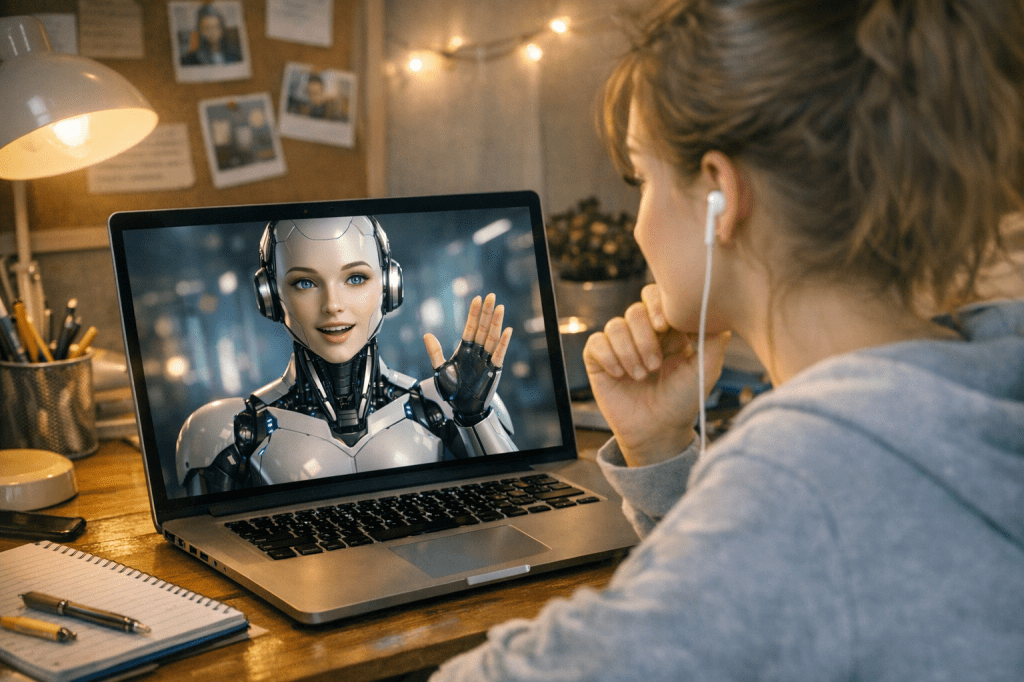
They do not propose a specific timeline for fully embodied AI agents that can roam Machu Picchu on our behalf, but they implicitly situate their work in the near term—mid‑2020s—because the technologies they study (AI avatars, livestream platforms, recommendation systems) are already deployed at scale.[2] The noteworthy contribution is the finding that telepresence—the feeling of “being there” in a remote destination—is a mediating variable: anthropomorphism and playfulness do not directly increase the intention to travel, but they do so indirectly by enhancing telepresence. That is crucial for your question, because it suggests that embodied AI agents are not just about better cameras or robots; they are about crafting social, playful, quasi-human interfaces that make remote exploration feel psychologically real.
The controversial implication is that if telepresence becomes strong enough, some users may satisfy their curiosity through AI-mediated livestreams rather than booking a flight, potentially shifting demand away from physical visits for certain segments.[2] This matters because it positions AI not only as a marketing tool to drive tourism but also as a possible alternative mode of experiencing place, forcing destinations and policymakers to decide whether they want AI anchors to be gateways to in‑person travel, or full-fledged substitutes for it.
The Tourism AI Network is an industry-focused initiative that, in July 2025, published “From AI Agents to Smart Cities: How 2025’s Breakthrough Tech Is Rewriting Tourism,” a strategic guide aimed at destination management organizations.[3] Rather than a single named academic author, the piece reflects the voice of practitioners who build and deploy AI systems for tourism boards and city governments. It introduces “tourism AI agents” as always-on, conversational systems that handle everything from itinerary design to bookings, and pairs them with “digital twin destinations” and smart-city infrastructure.[3] The timeline is explicit: 2025 is framed as the year when AI moves from hype to “hard ROI,” with early adopters already using agents and digital twins to reshape visitor flows and experiences.
While the article focuses more on planning and marketing than on fully embodied telepresence, it sketches a near-future scenario in which a traveler can explore a destination’s digital twin, guided by an AI agent that knows real-time conditions, inventory, and user preferences. The noteworthy and somewhat provocative claim is that these agents will increasingly mediate not just pre-trip dreaming but in-trip navigation and even post-trip storytelling, effectively becoming a persistent companion that can “be” in the destination’s digital twin even when the human is not.[3]
For your Machu Picchu example, this implies a layered model: you might first explore a high-fidelity digital twin of the site with an AI agent, then decide whether to travel physically, or continue to revisit virtually as conditions change. It matters because it normalizes the idea that destinations are no longer just physical places but data-rich, AI-navigable environments, and that the line between “remote visit” and “on-site visit” will blur as agents gain more autonomy and embodiment—whether in VR, AR, or physical robots.
Peru’s official tourism organization, through its Peru Travel platform, published a 2026 announcement titled “Peru leaps forward with AI-Powered Virtual Travel Assistant on peru.travel,” marking one of the first national-level deployments of an AI travel assistant explicitly tied to iconic sites like Machu Picchu.[3,4] The piece is written in an institutional voice rather than by a single named author, but it is significant because it shows how a country with globally recognized heritage is positioning AI within its tourism strategy.
The assistant, launched in April 2026, is described as a multilingual, privacy-conscious system that offers personalized routes, up-to-date recommendations, and experiences aligned with sustainability and local culture.[4] While the article does not promise full telepresence or embodied agents that can walk the Inca Trail for you, it hints at a trajectory: planning itself becomes an “experience,” and the assistant is framed as a “game-changer” that connects travelers deeply with local communities and natural wonders before they arrive.[4] The noteworthy aspect is the way Peru explicitly links AI to identity and stewardship—using AI to curate access to Machu Picchu and other fragile sites, potentially managing demand and expectations through virtual exploration.
The controversial undercurrent is that as such assistants grow more immersive—integrating digital twins, livestreams, and perhaps robotic telepresence—they could become an alternative channel for “visiting” Peru without physically entering the country, raising questions about revenue models, conservation, and who gets to control the narrative of place. This matters because it shows that embodied or semi-embodied AI travel experiences will not emerge only from tech companies; they will be shaped by national strategies, cultural politics, and the need to balance accessibility with preservation.
ReelMind (2025) is an AI-driven content platform that, in a mid‑2020s blog article titled “Machu Picchu Trail: AI for Adventure Travel,” explores how AI can transform the way people plan, imagine, and vicariously experience treks like the Inca Trail.[1,5] The piece appears in 2025 and reads like a manifesto for AI-enhanced adventure storytelling: it highlights market projections for AI-driven personalized travel experiences and argues that AI can generate dynamic itineraries, real-time local insights, and immersive narratives that make legendary paths more accessible to those who may never physically hike them.[5]
Although it does not specify a precise year when fully embodied AI agents will let you “stay at home and visit Machu Picchu,” it treats AI-guided, highly personalized virtual journeys as an imminent extension of current tools, pointing to 2025–2028 as a period of rapid growth in AI-powered adventure content.[5] What stands out is the emphasis on “hyper-personalization” and community engagement: AI is not just a recommendation engine but a co-creator of stories, adjusting difficulty, pacing, and cultural depth to each user.
The controversial aspect is the tension between democratization and commodification: by turning Machu Picchu into endlessly remixable AI content, the article risks flattening a living cultural landscape into a backdrop for algorithmically optimized experiences. Yet it matters because it shows how, in practice, many people’s first and perhaps only “visit” to Machu Picchu may be through AI-generated simulations, narrative walkthroughs, or mixed-reality experiences that feel emotionally real even if they lack the altitude and fatigue of the actual trail. That trajectory points directly toward embodied AI agents—virtual sherpas, guides, or even robotic proxies—that can inhabit the site on your behalf while you remain at home.
Conclusion
Across these writers and sources, a pattern emerges: embodied or agentic AI in travel is not a single invention but a convergence of digital twins, AI anchors, conversational agents, and narrative engines. Choudhary gives the technical and conceptual scaffolding for digital twin tourism; Zhu and colleagues show that telepresence is a measurable psychological bridge between remote experience and travel intention; the Tourism AI Network frames AI agents and digital twins as operational realities in 2025; Peru’s tourism board demonstrates how national actors are institutionalizing AI assistants around iconic sites like Machu Picchu; and ReelMind illustrates how AI-generated adventure narratives can become de facto travel experiences in their own right.[1–5]
None of them claims that embodied AI will fully replace physical travel in the immediate future, but together they suggest a near-term world—within this decade—where staying at home yet “visiting” Machu Picchu through an embodied agent is not science fiction but a matter of infrastructure, policy, and personal choice. The stakes are high: these developments could expand access, reduce environmental impact, and offer safer, more inclusive ways to experience the world, or they could deepen digital divides and further commodify culture. How we design, regulate, and narrate these agentic systems will determine whether virtual Machu Picchu becomes a doorway to deeper connection—or a substitute that quietly displaces it.
References
- Digital Twin Tourism: Virtual Travel Experiences for 2025 –
https://www.analyticsvidhya.com/blog/2026/02/digital-twin-tourism-virtual-travel-experiences-for-2025/(analyticsvidhya.com in Bing) - Zhengan Zhu et al., “When AI Meets Livestreaming: Exploring the Impact of Virtual Anchor on Tourist Travel Intention” –
https://www.mdpi.com/0718-1876/20/3/239(mdpi.com in Bing) - “From AI Agents to Smart Cities: How 2025’s Breakthrough Tech Is Rewriting Tourism” – Tourism AI Network –
https://tourismai.network/ai-agents-smart-cities-tourism-2025(tourismai.network in Bing) - “Peru leaps forward with AI-Powered Virtual Travel Assistant on peru.travel” –
https://www.peru.travel/en/news/peru-leaps-forward-with-ai-powered-virtual-travel-assistant(peru.travel in Bing) - “Machu Picchu Trail: AI for Adventure Travel” – ReelMind –
https://reelmind.ai/blog/machu-picchu-trail-ai-for-adventure-travel(reelmind.ai in Bing)
###
Filed under: Uncategorized |




















































































































































































































































































































































































































































Leave a Reply