






By Jim Shimabukuro (assisted by Copilot)
Editor
For a high school student in 2026, drones are no longer a niche hobby—they are a maturing aviation and data platform that touches logistics, infrastructure, agriculture, media, public safety, and defense. The U.S. commercial drone market is projected to be one of the fastest‑growing tech sectors, with global commercial revenues estimated around $58 billion by 2026, and U.S. demand driven by defense, logistics, infrastructure inspection, and agriculture.[2] At the same time, the regulatory environment is shifting from simple visual‑line‑of‑sight (VLOS) flying under FAA Part 107 to more complex beyond‑visual‑line‑of‑sight (BVLOS) operations and proposed new rules (often discussed as a future Part 108), which in turn raises the bar for training, safety, and technical competence.[1] For a young person, this means the field is wide open—but it also demands more than just learning to fly a quadcopter.

Major areas of expertise and roles (private and public sectors)
Across both private and public sectors, drone work clusters into several overlapping domains: flight operations, systems engineering and integration, maintenance and repair, data and analytics, and program or safety management.
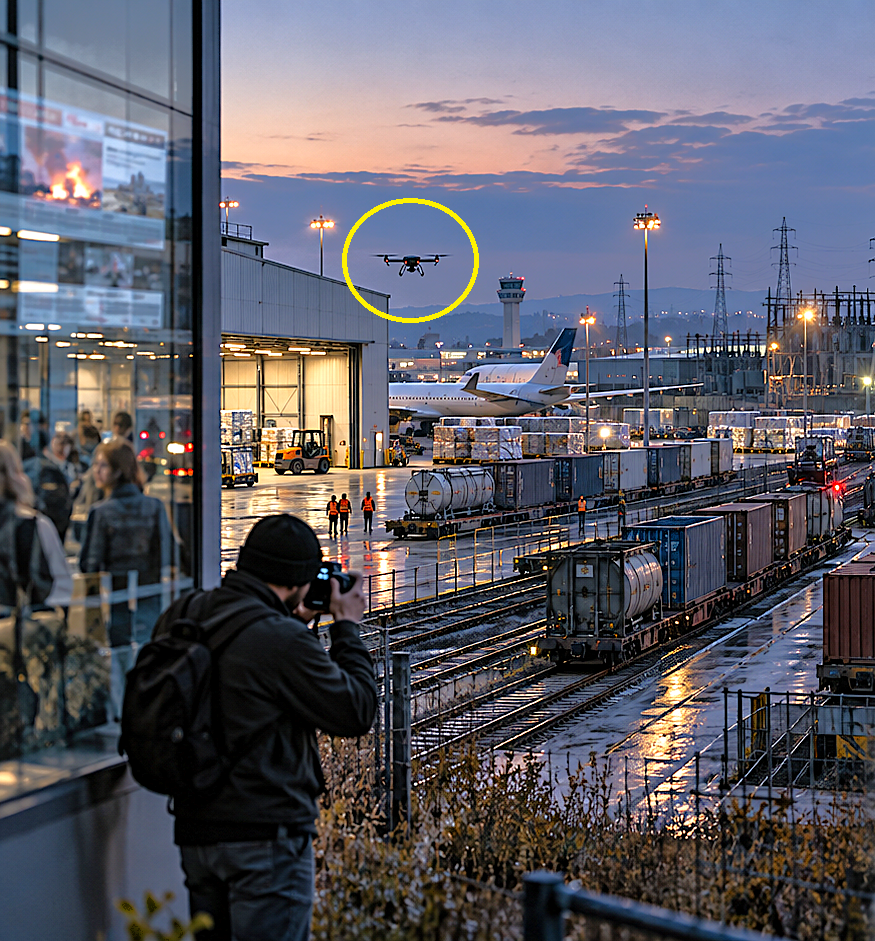
In the private sector, the most visible roles are commercial drone pilots and mission operators who fly for construction progress monitoring, real‑estate imaging, precision agriculture, energy and utility inspections, mapping and surveying, and rapidly expanding delivery networks.[2,3] These roles require strong piloting skills, mission planning, airspace and regulatory knowledge, and the ability to work with clients and field teams. As BVLOS operations scale, companies also need flight coordinators and operations supervisors who can plan complex routes, manage automation, coordinate with air traffic, and maintain a safety culture.[1]
Behind the scenes, UAV systems engineers and integration specialists design and build the aircraft, payloads, and software that make these missions possible. Hiring analyses in 2026 highlight high demand for UAV systems engineers, autonomy and software engineers, perception and sensor‑fusion specialists, and systems integrators who can connect drones to cloud platforms, enterprise asset‑management systems, and AI analytics pipelines.[2] These roles sit at the intersection of aerospace, robotics, embedded systems, and cloud software.
Drone maintenance and fleet support is emerging as its own major career path. The global drone maintenance market reached about $2 billion in 2025 and is projected to grow to $6.8 billion by 2035, with technicians performing inspections, diagnostics, component replacement, firmware updates, and meticulous documentation for compliance and insurance.[4] Maintenance roles exist in in‑house fleets (for drone service providers, delivery companies, utilities), third‑party maintenance providers, manufacturers, and defense contractors, with civilian technicians averaging around $52,700 and defense/government roles approaching $99,000.[4]
Data and analytics roles—remote sensing specialists, GIS analysts, data scientists, and AI/ML engineers—are increasingly central. Drones are now platforms for high‑resolution imagery, LiDAR, thermal, and multispectral data; the value often lies less in the flight and more in turning raw data into actionable maps, models, and insights.[3] This creates demand for people who understand both the sensors and the downstream analytics.
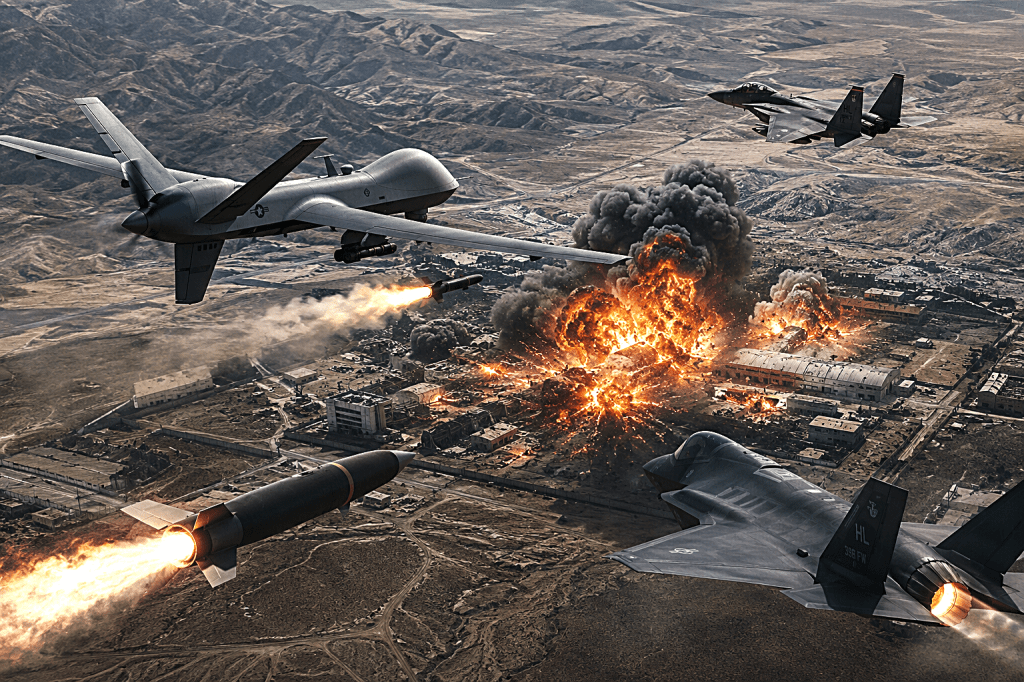
In the public sector, many of the same roles appear but with different missions and constraints. Public safety agencies (fire, police, search and rescue), transportation departments, environmental agencies, and emergency‑management offices use drones for incident response, disaster assessment, traffic monitoring, and infrastructure inspection. Defense and national‑security organizations invest heavily in autonomous aerial systems, ISR (intelligence, surveillance, reconnaissance), and counter‑drone technologies, competing directly with commercial employers for systems engineers, autonomy specialists, and maintenance technicians.[2] Public‑sector roles often add requirements around security clearances, chain‑of‑command operations, and strict adherence to government standards and procurement rules.
Requirements and entry pathways for a high school student
For a high school student or recent graduate in the U.S., the first formal gateway into professional drone operations is the FAA Remote Pilot Certificate under Part 107. As of 2026, Part 107 requires being at least 16 years old, passing TSA security vetting, and passing a 60‑question multiple‑choice knowledge test covering airspace, weather, regulations, and UAS operations; recurrent online training is required every 24 months.[5] Part 107 is essential for any commercial flying, but it is now considered a baseline rather than a differentiator—there are more certificated remote pilots than registered commercial drones, so employers look beyond the credential to real‑world skills and experience.[5]
High school programs and career‑technical education (CTE) pathways are increasingly aligning with this reality. Drone‑focused curricula combine flight operations, aeronautical knowledge, simulation, and FAA Part 107 test preparation, often integrated into STEM courses.[3] Students may learn mission planning, airspace reading, and basic data workflows, and some programs explicitly prepare them to sit for the Part 107 exam before or shortly after graduation.[3] For a motivated student, a realistic first‑step pathway looks like: build hobby‑level flying skills (including safety and basic maintenance), complete a school or online Part 107 prep course, pass the exam at 16 or 17, and start building a portfolio of real missions (e.g., school events, local nonprofits, small mapping projects) under appropriate supervision.
Beyond Part 107, requirements diverge by specialization:
- For flight operations and mission pilots, employers increasingly expect documented flight hours, proficiency with specific platforms (e.g., DJI, Skydio, or specialized industrial drones), familiarity with Remote ID and night operations rules, and evidence of safety‑oriented decision‑making.[1,5] As BVLOS rules mature, additional company‑ or standards‑based training in automation management, detect‑and‑avoid systems, and crew resource management will become common.[1]
- For systems engineering and autonomy roles, a bachelor’s degree in aerospace engineering, mechanical engineering, electrical/embedded systems, computer science, or robotics is typically expected, often followed by internships or projects involving UAVs, robotics competitions, or open‑source autopilot stacks. Employers look for experience with flight‑control software, perception algorithms, simulation environments, and hardware‑in‑the‑loop testing.[2]
- For maintenance technicians, most positions currently require a technical diploma or associate degree in electronics, mechatronics, aviation maintenance, or related fields, plus hands‑on experience with small UAS platforms.[4] There is not yet an FAA‑mandated maintenance certificate for small UAS, which means early entrants who stack vendor training, community‑college credentials, and documented experience will be well positioned when formal regulations arrive.[4]
- For data and analytics roles, degrees or certificates in GIS, remote sensing, data science, or computer science are common, along with experience in photogrammetry software, GIS platforms, and cloud‑based analytics. Employers value candidates who can design missions with data quality in mind and then process and interpret the results.[2,3]
- For public‑sector and defense roles, additional requirements may include security clearances, physical‑fitness standards, and completion of agency‑specific training academies or military technical schools. However, the same core building blocks—Part 107, strong STEM fundamentals, and hands‑on experience—remain valuable.
Outlook for 2026–2030 and the risk of obsolescence
From 2026 through 2030, the outlook for drone expertise is generally strong, but uneven across roles. Industry hiring analyses describe 2026 as a “consequential hiring period” in which regulatory bottlenecks around BVLOS and Remote ID are easing, while delivery networks, infrastructure inspection programs, precision agriculture deployments, and defense investments are scaling simultaneously.[2] Demand is particularly intense for UAV systems engineers, autonomy and software specialists, operations leaders, and professionals who can design and certify BVLOS systems; the talent pipeline has not kept pace, creating a sustained shortage in these higher‑skill roles.[1,2]
Maintenance and support roles are also poised for steady growth. The projected expansion of the maintenance market to $6.8 billion by 2035 implies a long‑term need for technicians who can keep fleets airworthy and compliant, especially as delivery and inspection fleets grow in size and complexity.[4] Because every additional aircraft adds recurring maintenance and documentation workload, these roles are less likely to be automated away quickly.
By contrast, basic VLOS piloting for simple photo and video work is becoming commoditized. With an oversupply of “Part 107‑only” pilots, wages for low‑complexity tasks are under pressure, and employers increasingly treat the certificate as a minimum requirement rather than a premium skill.[5] This does not mean piloting is obsolete; it means that pilots who do not add additional capabilities—such as advanced mission planning, data processing, or specialized industry knowledge—will face intense competition.
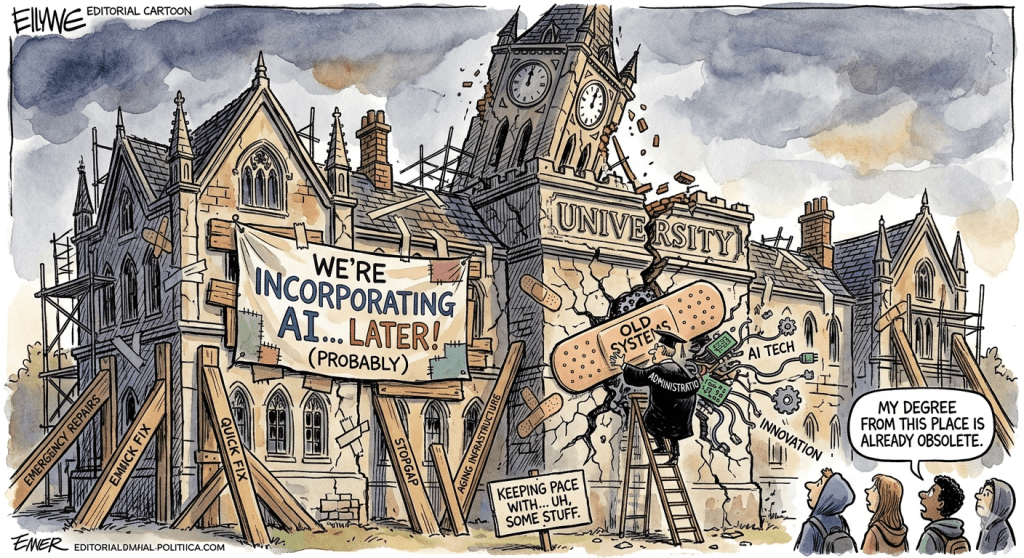
The pace of technological and regulatory change is undeniably rapid: BVLOS rules are evolving, Remote ID is now mandatory for most operations, autonomy and AI are advancing, and new aircraft classes (such as eVTOL and urban air mobility platforms) are entering certification pipelines.[1,2,5] However, this does not make training or certification “instantly obsolete.” Instead, it shifts the value from one‑time credentials to continuous learning and stackable skills. Part 107 remains the legal foundation for small UAS operations; recurrent training and updated guidance keep it aligned with new rules.[5] Similarly, while specific platforms and software tools will change, underlying competencies—airspace literacy, safety and risk management, systems thinking, electronics, programming, and data interpretation—remain durable.
For a high school student planning a 2026–2030 trajectory, the best mindset is to treat any certificate (Part 107, technical diploma, or degree) as a launchpad, not a finish line. Industry voices explicitly frame Part 107 this way: a necessary door‑opener, but not a career plan by itself.[5] The students who will thrive are those who keep layering new skills—BVLOS operations, automation management, maintenance, data analytics, or domain‑specific expertise in fields like agriculture or utilities—on top of that foundation.
Best educational routes and learning channels (formal and informal)
A practical strategy for entering and staying relevant in drone technology combines formal education, industry‑recognized credentials, and informal, project‑based learning.
Formally, high school CTE and STEM programs that include drone curricula are an excellent starting point. These programs introduce aeronautical concepts, safety, mission planning, and simulation, and often integrate FAA Part 107 preparation so students can graduate with both a diploma and a Remote Pilot Certificate.[3] Community colleges and technical institutes are rapidly adding UAS operations, UAS maintenance, and geospatial technology programs, sometimes in partnership with local industry and public agencies. These programs can lead to associate degrees or certificates in UAS operations, aviation maintenance, electronics, or GIS, and they often include internships or co‑ops with drone service providers, utilities, or public‑safety agencies.[1,4]
For students aiming at engineering or autonomy roles, a four‑year degree in aerospace, mechanical, electrical, computer, or robotics engineering—or computer science with a focus on AI and perception—remains the most direct route. Many universities now host UAS research labs, robotics clubs, and capstone projects involving drone swarms, BVLOS operations, or integration with urban air‑mobility concepts. Pairing such a degree with Part 107 certification and hands‑on project experience creates a strong profile for systems and software roles.[1,2]
Industry‑recognized credentials beyond Part 107 are emerging as differentiators. These include standards‑based training in BVLOS operations, safety management systems, and mission‑specific workflows (e.g., utility inspection, mapping and surveying, or public‑safety operations), often delivered by specialized training providers or industry associations.[1,5] While not yet mandated by regulators, such credentials signal to employers that a candidate is “mission‑ready,” not just “exam‑ready.”[5] Vendor‑specific training from major manufacturers and software providers—covering platform maintenance, fleet‑management software, or photogrammetry tools—can also be valuable, especially for maintenance and data roles.[4]
Informal and self‑directed learning channels are equally important, particularly for a high school student with limited resources. Hobby flying, FPV racing, and participation in local or online drone clubs build intuitive piloting skills, situational awareness, and basic troubleshooting. Open‑source communities around autopilot firmware, simulation tools, and ground‑control software offer a way to learn embedded programming, control theory, and systems integration by contributing to real projects. Online courses and tutorials in aeronautics, electronics, Python/C++ programming, computer vision, GIS, and data science can be combined into a personalized curriculum that tracks industry needs highlighted in recent hiring reports.[2,3]
Competitions and real‑world projects are particularly powerful. High school or collegiate drone competitions, mapping challenges, or disaster‑response simulations force students to integrate flight operations, hardware, and data workflows under time pressure. Volunteering to support local emergency‑management drills, environmental surveys, or community mapping projects (within legal and safety constraints) can provide portfolio‑worthy experience and references. These experiences also help students discover which part of the ecosystem—flying, fixing, coding, or analyzing—truly energizes them.
Finally, staying current requires ongoing engagement with industry news, regulatory updates, and professional networks. Reading specialized publications on UAS workforce development, hiring trends, and maintenance practices keeps a student aware of where demand is growing and which skills are emerging as must‑haves.[1,2,4,5] Joining professional associations, attending webinars or local meetups, and following FAA and industry guidance channels help ensure that one’s knowledge does not drift out of date.
Conclusion
Between 2026 and 2030, drone development, maintenance, and operation will continue to expand as a serious, multi‑disciplinary career field rather than a novelty. The major domains of expertise—flight operations, systems engineering and autonomy, maintenance and repair, data and analytics, and program/safety management—span both private and public sectors, with particularly strong demand in higher‑skill roles where the talent pipeline is thin.[1,2,4] For a high school student or new graduate, the essential first step in the U.S. is still the FAA Part 107 Remote Pilot Certificate, but this credential is now only the baseline; real differentiation comes from stacking additional skills and experiences, such as BVLOS readiness, maintenance competence, data‑analysis capability, or domain‑specific knowledge.[3,5]
The pace of technological and regulatory change is fast, but it does not render training obsolete so much as it rewards those who treat education as continuous. Fundamentals in aeronautics, safety, electronics, programming, and data remain stable even as platforms and rules evolve. The best educational course of action is therefore a layered one: combine school‑based drone and STEM programs, Part 107 certification, and postsecondary technical or engineering education with informal learning through hobby flying, open‑source projects, competitions, and real‑world missions. By 2030, the professionals who thrive in drone technology will be those who started early, built a broad and adaptable skill set, and kept learning as the airspace—and the opportunities within it—opened up.
References
[1] Alexander Mirot, “Preparing the UAS Workforce of the Future,” UAS Magazine, Sept. 17, 2025. https://www.uasmagazine.com/articles/xxxx-preparing-the-uas-workforce-of-the-future (uasmagazine.com in Bing)
[2] Christian & Timbers, “2026 Drone Industry Hiring Trends & Talent Strategy in the US,” Mar. 31, 2026. https://www.christiantimbers.com/insights/2026-drone-industry-hiring-trends (christiantimbers.com in Bing)
[3] Scott Buell, “Drone Career Pathways: How High Schools Can Prepare Students for FAA‑Certified Drone Careers,” Drone Legends, Nov. 2, 2025 (updated Dec. 2, 2025). https://www.dronelegends.com/blog/drone-career-pathways-high-schools (dronelegends.com in Bing)
[4] Jessica May, “Drone Maintenance Jobs: Career Paths, Pay, and How to Get Hired,” DroneBundle Blog, Apr. 20, 2026. https://www.dronebundle.com/blog/drone-maintenance-jobs (dronebundle.com in Bing)
[5] “2026 Guide: Go Beyond Part 107 – Turn Your Remote Pilot Certificate into a Sustainable UAS Career,” 2026. https://www.exampleuastraining.com/guides/2026-go-beyond-part-107 (exampleuastraining.com in Bing)
###
Filed under: Uncategorized |














































































































































































































































































































































































































































































Leave a Reply