


By Jim Shimabukuro (assisted by Copilot)
Editor
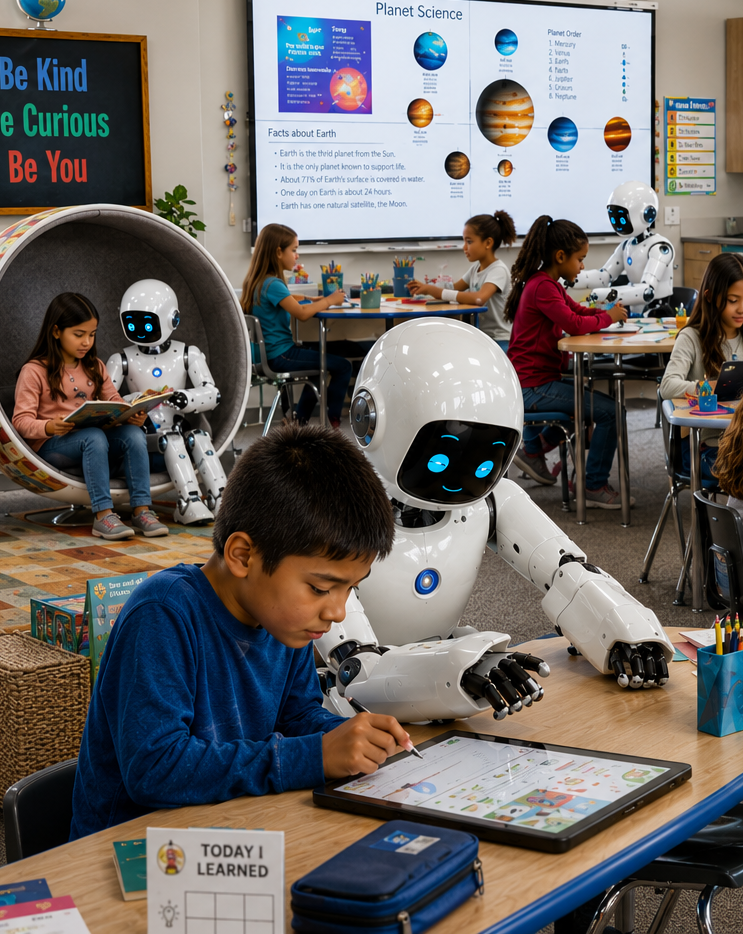
Yes, there are K‑12 equivalents to “AI colleges” or “AI‑native universities,” but the language is still unsettled. Most systems don’t yet use a single, formal label; instead you see phrases like “AI‑themed high school,” “AI magnet program,” “AI‑focused curriculum,” or “AI‑embedded education.”1,2,6 In that sense, “AI school” or “AI‑native school” is a fair, accurate shorthand for a small but growing group of K‑12 institutions that treat AI not as an add‑on tool, but as a core design principle for curriculum, pedagogy, and student pathways. These schools sit at the far edge of a broader wave: states issuing AI guidance, districts running pilots, and magnet programs weaving AI into their identity rather than sprinkling it on top.3,5,9,10

Seckinger High School, Gwinnett County, Georgia
Seckinger High School, in Gwinnett County Public Schools (GCPS) near Atlanta, is probably the clearest K‑12 analogue to an “AI‑native university.” GCPS describes it as the nation’s first artificial‑intelligence‑themed high school, opened in August 2022 as part of the new Seckinger Cluster serving grades 9–12 in Georgia’s largest district2,4. The school sits inside a 538,000‑square‑foot, state‑of‑the‑art campus and draws students from a set of feeder elementary and middle schools that are also aligning to an AI learning framework, effectively creating an AI‑infused pathway from early grades through graduation.1,2
Planning for Seckinger began several years before ChatGPT’s public debut, when GCPS leaders asked how to prepare students for an AI‑saturated future and how AI could help teachers personalize learning at scale.1 By 2022, the district had already developed a human‑centered AI approach and an “AI Learning Framework” that provides grade‑level guidance on integrating AI into standards, ethics, and real‑world problem‑solving.1,4 Seckinger opened that year with a curriculum that embeds AI across core subjects and offers a dedicated AI career and technical education pathway, supported by partnerships with companies like Google and Microsoft and higher‑education experts.1,3,4
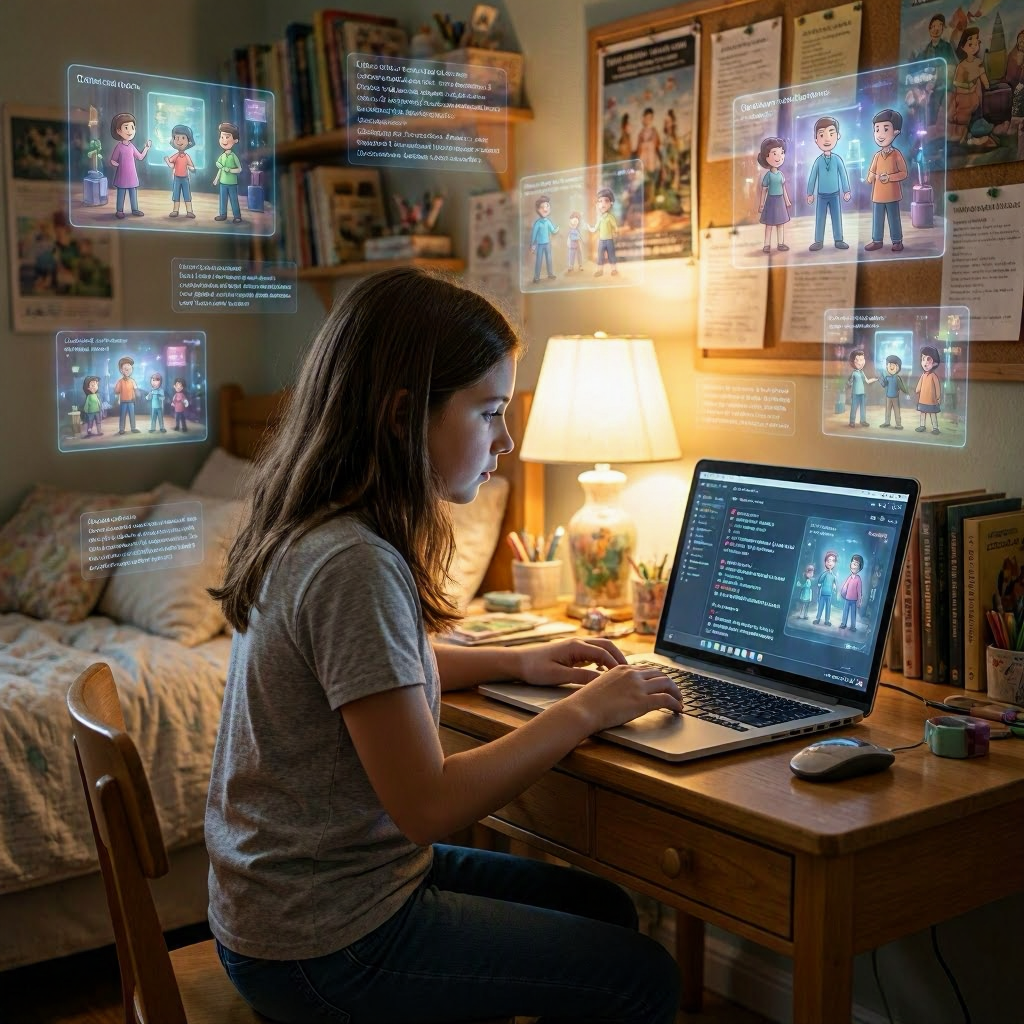
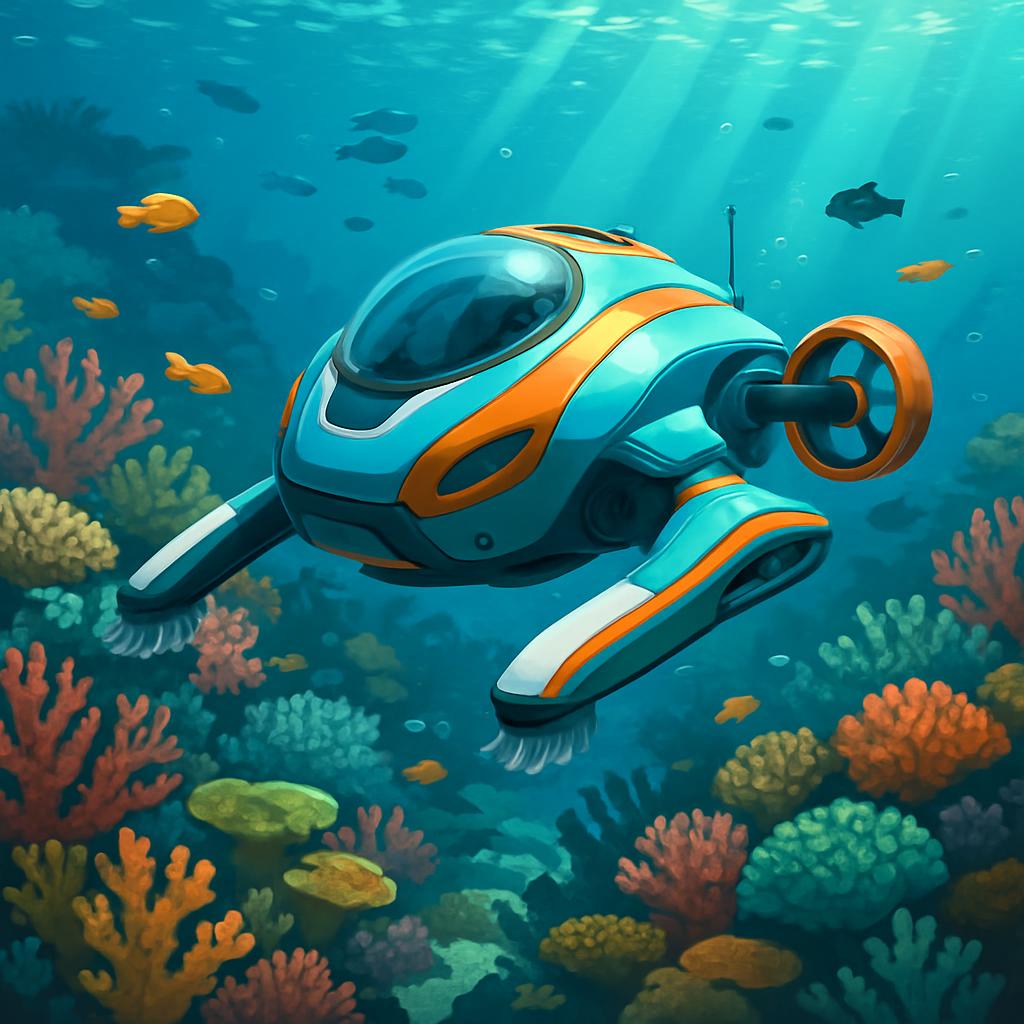
What makes Seckinger different from a traditional high school is that AI is not confined to a single elective or club. Students learn math, science, English, and social studies “through an AI lens,” using AI tools as thought partners, data‑analysis engines, and design collaborators while also interrogating their ethical and social implications. Art classes, for example, use large language models and generative tools to explore creativity and authorship, while social studies courses use AI to model historical problems such as mapping the 1854 London cholera outbreak.3,7 The school organizes student engagement around a water metaphor: all students “swim” in AI through general exposure, “snorkelers” take deeper AI electives or robotics, and “scuba divers” pursue a specialized AI pathway of advanced courses aimed at AI‑related careers.7
Early evidence suggests Seckinger is faring well. Teachers report higher engagement, fewer absences, and stronger connections between coursework and students’ perceived futures, while parents who were initially skeptical have become active supporters seeking enrollment.3,7 District leaders frame Seckinger as a pilot for system‑wide scaling, with the AI framework gradually influencing other schools in the 142‑school district.1,4 External observers, including researchers tracking “reimaginer” districts, point to Seckinger as a rare example of a public school rethinking instruction around AI rather than merely bolting tools onto existing structures.5,7 Seckinger matters because it models what an AI‑native public high school can look like: AI‑literate, ethically grounded, career‑connected, and still recognizably a neighborhood school rather than a boutique startup campus.
Marion County Public Schools’ Artificial Intelligence Magnet Program, Florida
In Marion County, Florida, the Artificial Intelligence Magnet Program represents another emerging form of AI‑native schooling, this time as a magnet model embedded in a broader district portfolio. Superintendent Diane Gullett describes the initiative as an “AI magnet school” that will enroll its first students in the 2024–25 school year, connecting emerging and existing technologies to core classes and electives that lead to industry certifications. The program sits within Marion County Public Schools’ network of magnet offerings across elementary, middle, and high school levels, alongside themes like STEAM, aviation, and equine studies.6
The AI magnet began taking shape as the district expanded its magnet strategy after 2020, adding eight new programs and emphasizing career‑connected learning. In 2024, the district announced the AI magnet as a next‑generation program powered by a partnership with the University of Florida, explicitly tying it to entrepreneurship and workforce readiness.6 While the magnet is newer than Seckinger and still in its early implementation phase, its design reflects a deliberate attempt to build AI into the DNA of the school’s curriculum rather than treating it as a peripheral technology course.
What distinguishes the Marion County AI magnet from a traditional school is its integration of AI into both core academics and career pathways. District leaders describe plans to “connect emerging and existing technology into core classes and electives,” with AI‑infused coursework leading to recognized industry certifications and entrepreneurial opportunities.6 Students are expected to use AI tools for problem‑solving, data analysis, and creative projects, while also learning about AI’s role in markets and efficiency. The partnership with the University of Florida is intended to ensure that content stays aligned with current research and industry practice, echoing the way AI‑native universities partner with tech firms and labs.6
Because the AI magnet is just launching, public data on outcomes is limited, but its trajectory is being watched closely by district‑leadership and magnet‑school networks. Marion County already operates a wide range of magnets and has experience scaling specialized programs; the AI magnet is positioned as the next step in that evolution, with the potential to influence other schools’ use of AI across the district.6 In the larger landscape, this program matters because it shows how a traditional district can create an AI‑native school within a public system, using the magnet model to concentrate innovation, attract diverse students, and build a proof‑of‑concept that can later diffuse to other campuses.
Citizens High School, an online AI‑focused high school
Citizens High School, a regionally accredited online high school based in Florida, offers a different but important version of an AI‑native K‑12 institution: a fully online school that has redesigned its courses around AI interaction and literacy. In July 2024, Citizens announced a newly redesigned set of courses that make it “one of the first AI‑focused high schools in the nation,” explicitly integrating AI into the core of its educational framework.7 As an online school serving students across geographies, it functions more like a virtual AI‑native campus than a single local brick‑and‑mortar site.
The AI‑focused redesign began in the early‑to‑mid 2020s as Citizens responded to the rapid spread of generative AI and the need to prepare students for a changing job market. By 2024, the school had re‑engineered its curriculum so that each course includes AI‑driven assignments requiring students to use AI for research, brainstorming, and problem‑solving.7 Rather than treating AI as a separate subject, Citizens embeds it into the everyday workflow of online learning, mirroring how AI colleges weave AI into general education and major requirements.
Citizens’ model differs from traditional high schools in two key ways. First, it explicitly trains students to interact effectively with large language models, emphasizing prompt‑building skills and critical evaluation of AI outputs as core competencies. Second, it frames AI literacy as a job‑ready skill, arguing that the ability to use AI tools will be a crucial asset on résumés and a gateway to roles often overlooked by conventional schooling.7 In practice, this means students repeatedly practice designing prompts, iterating with AI systems, and reflecting on when and how to rely on AI versus human judgment.
Because Citizens is online and relatively nimble, it appears to be faring well in adapting quickly to AI’s evolution. The school positions its AI‑focused curriculum as a way to keep students “ahead of the curve,” and its messaging suggests growing demand from families seeking future‑ready skills in a flexible format.7 While independent evaluations are still sparse, Citizens illustrates why AI‑native K‑12 models matter: they show how AI can be integrated into competency‑based, remote learning environments, and they push the conversation beyond device access toward sophisticated human‑AI collaboration skills that mirror those expected in AI‑intensive workplaces.
Stanford Digital Education’s high school AI curriculum pilots (North Star Academy and Niagara Falls High School)
A fourth, slightly different example comes from Stanford Digital Education’s (SDE) work with specific high schools, which points toward AI‑native practices even inside otherwise traditional schools. In 2024–25, SDE designed an “off‑the‑shelf” AI curriculum for high schools, piloted at North Star Academy Washington Park High School in Newark, New Jersey, and Niagara Falls High School in Niagara Falls, New York.8 These are not branded as “AI schools,” but the pilots show what it looks like when a school systematically embeds AI understanding and practice into its courses, much like an AI‑native university would.
The SDE project grew out of beta testing of Google’s AI Essentials course and launched its first high‑school pilots in 2024, with a second wave in 2025. The curriculum combines SDE‑designed lesson plans with Google’s AI Essentials online course, allowing students to earn a Google Career Certificate while learning about AI’s history, technical foundations, and ethical implications.8 Teachers in various subjects can take lessons “off the shelf” and integrate them into existing courses, turning AI from a niche topic into a recurring theme across the school day.
What differentiates these pilots from standard computer‑science add‑ons is their breadth and framing. The central theme, as SDE describes it, is the “healthy tension between the perils and promises of AI,” inviting students to grapple with both transformative potential and reasons for skepticism.8 Lessons cover how AI systems are built, where they can fail, and how they intersect with social issues, not just how to use tools. Students also gain practical experience with AI tools through the Google course, positioning them to earn a recognized credential while still in high school.8
Early feedback from these pilots suggests that students are both intrigued and challenged by the material, and that teachers appreciate having structured, high‑quality resources to introduce AI without having to design everything from scratch.8 While North Star Academy and Niagara Falls High School are not yet AI‑native in the same sense as Seckinger or Citizens, these pilots matter because they demonstrate a scalable model: a high‑quality, freely accessible AI curriculum that any high school can adopt, potentially moving large numbers of schools closer to AI‑native practice without requiring a full institutional redesign. In the broader ecosystem, this kind of work is a bridge between today’s “AI‑enabled” schools and tomorrow’s fully AI‑native K‑12 institutions.
Conclusion
So, are there K‑12 equivalents to “AI colleges” and “AI‑native universities”? Yes—but they are still rare, and the naming is fluid. Seckinger High School, Marion County’s AI magnet, Citizens High School’s AI‑focused online model, and SDE’s high‑school pilots all show different ways K‑12 institutions can center AI in their design, from physical magnet schools to virtual campuses and curriculum partnerships.1,2,6-8 They sit within a wider landscape where states are issuing AI guidance, districts are running pilots, and magnet networks are exploring AI’s role in innovative curricula.3,5,9,10 In that context, your terms “AI schools” or “AI‑native schools” are not only reasonable—they may be exactly the kind of language the field is groping toward as these early exemplars turn into a recognizable category.
References
- How Schools Are Blazing a Trail for AI in K–12 – EdTech Magazine (2025).
https://edtechmagazine.com/k12/article/2025/04/how-schools-are-blazing-trail-ai-k-12(edtechmagazine.com in Bing) - Gwinnett County Board of Education and community to celebrate the dedication of Seckinger High School – Gwinnett County Public Schools (2022). https://www.gcpsk12.org
- How young students in one Georgia district are getting an edge on careers in AI – Business Insider/Yahoo News (2024). https://news.yahoo.com
- Georgia High School Pioneers AI‑Embedded Education for Future Careers – LambHam Daily AI News (updated 2025). https://lambham.com
- Districts and AI: Early Adopters Focus More on Students in 2025–26 – Center on Reinventing Public Education (2025). https://crpe.org
- AI magnet school: Why this superintendent is launching one – District Administration (2024). https://districtadministration.com
- Citizens High School Launches AI‑Focused Curriculum to Equip Students with Future‑Ready Skills – EIN Presswire (2024). https://www.einpresswire.com
- Stanford Digital Education designs “off the shelf” AI curriculum for high schools – Stanford Report (2025). https://news.stanford.edu
- AI Pilot Programs in K‑12 Settings – Education Commission of the States (2025). https://www.ecs.org
- How states are rolling out AI in K‑12 education: A roadmap for your district – SchoolAI (2025). https://schoolai.com
Filed under: Uncategorized |




























































































































































































































































































































Leave a Reply