




By Jim Shimabukuro (assisted by DeepSeek)
Editor
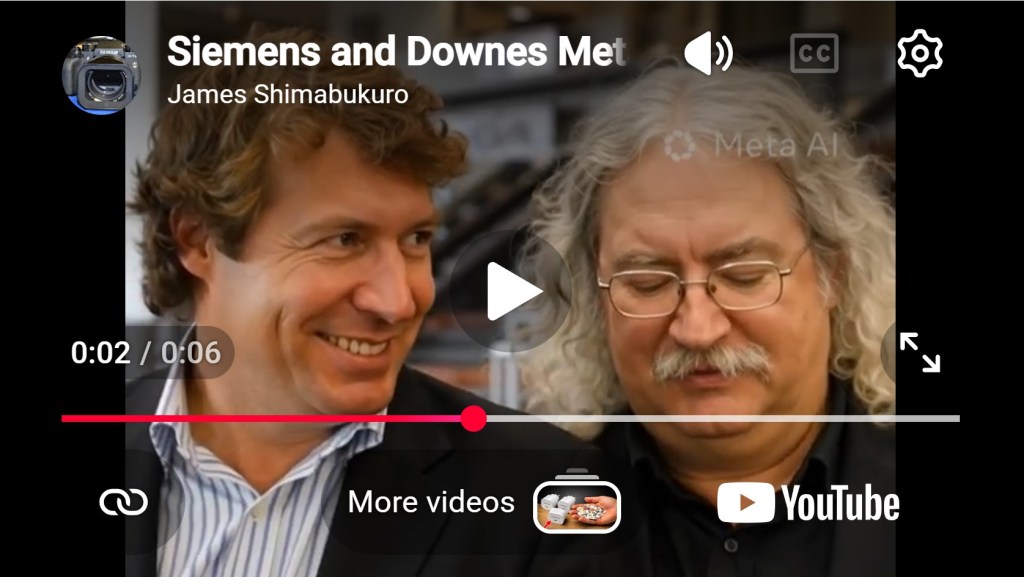
[Related: Connectivism, Its Founders, and the Age of AI: Siemens and Downes | cMOOC: Increasing Connectivist Overlap Into AI-Enhanced Education | Evolution of Connectivism to the Age of AI: Downes and Siemens]
Summary: The cMOOC update shows how open learning ecosystems are evolving into AI‑enhanced communities where knowledge grows through collective intelligence. –Copilot

The convergence of connectivist MOOCs (cMOOCs) and artificial intelligence in 2025–2026 has created a dynamic and rapidly evolving landscape. This report synthesizes recent credible, open-access sources to examine the continued influence of the foundational ideas of Stephen Downes and George Siemens, the specific ways in which cMOOC principles are shaping AI in education, and the current research trajectories of both founders. The following sections present a narrative analysis of these developments, drawing on the most current publications and expert commentary through May 2026.
The core tenets of the connectivist MOOC, first articulated by Downes and Siemens, remain a vital force in contemporary learning design, demonstrating a remarkable capacity to absorb and be reshaped by new technologies. A 2026 article by Fatullah, Sudirman, and Hidayat in Foremost Journal directly confronts the ongoing discourse, arguing that connectivism “remains highly relevant when reconceptualized as an integrative pedagogical framework that balances technological connectivity with cognitive, social, and ethical dimensions of learning” (1).
This reconstruction positions the theory not as a static relic of the early 2010s, but as an adaptive foundation for digital education. Far from being discarded, the principles of distributed knowledge and networked learning are being explicitly revived and integrated with contemporary priorities. A 2026 study published in Frontiers in Education incorporates connectivism as a foundational theory alongside constructivism and self-regulated learning to develop a vision for adaptive, AI-driven e-learning environments (2). This direct application signals the framework’s continued theoretical utility for researchers building the next generation of personalized learning systems.
The practical application of cMOOC principles is also evolving. Stephen Downes himself has continued to announce and teach new connectivist MOOCs, including a 10-week course titled “Connectivism and Learning” that began in January 2026, which provides a structured overview of his version of the theory for teaching and learning (3). He also launched “Ethics, Analytics and the Duty of Care,” an open connectivist MOOC that blends his technology work with his philosophical background (4).
These efforts demonstrate that the cMOOC is not merely a historical artifact but a living practice being actively refined by its creators, with content now explicitly addressing pressing contemporary issues like AI ethics and data analytics. The distinction between connectivist (cMOOC) and more instructivist (xMOOC) models continues to be a foundational concept in market analyses and academic discourse, with the global MOOC market projected to grow significantly through 2030 and cMOOC platforms explicitly identified as a key segment (5, 6).
The relationship between cMOOC principles and the explosion of AI tools is now a direct and tangible area of research and development. The foundational connectivist idea that knowledge is distributed across a network and learning is the process of forming connections provides a remarkably natural framework for integrating generative AI. The most significant evidence of this convergence is a 2026 design-based research study, published on arXiv and in Computers & Education, which explicitly tackles the challenge of “Designing Human-GenAI Interaction for cMOOC Discussion Facilitation” (7, 8). This study directly applies AI within a connectivist learning environment, deploying a “collaborative AI-in-the-loop workflow” where a generative AI agent acts as a facilitator in a 606-student cMOOC.
The findings are nuanced, showing that AI participation selectively enhanced social presence—particularly “Open Communication” and “Networked Cohesion”—but did not automatically improve cognitive presence. Crucially, the most significant gains in higher-order thinking (Integration and Resolution) occurred through “direct learner-agent interaction” rather than passive co-presence (7). This research, conducted within an authentic connectivist setting, operationalizes the very concepts of networked learning and distributed cognition that Downes and Siemens championed, demonstrating that thoughtful interaction design, not just the presence of AI, is the key to productive collaboration (7).
A parallel line of inquiry is emerging in the theoretical underpinnings of AI itself. A 2026 chapter by Yufeng Qian titled “In Search of a Learning Theory for Synthetic Intelligence” revisits connectivism alongside behaviorism and constructivism to trace how each learning theory engaged with the technologies of its time. The chapter then extends into posthumanist and distributed cognition theories to frame what learning means in an “AI-saturated world” where cognition is “tightly coupled with machine computation” (9).
This scholarly move positions connectivism, with its inherent emphasis on networks that can include non-human nodes, as a critical precursor to understanding hybrid human-AI learning ecologies. A 2026 article on the future of higher education from the IFE Conference details how George Siemens, a co-creator of connectivism, now argues that educational innovation lies not in foundational AI models but in the “agent layer” that coordinates specialized AI agents, memory, and analytics. This “agentive architecture” represents a direct conceptual evolution from the distributed, networked model of connectivism to a vision of learning orchestrated within a multi-agent AI ecosystem (10).
As of mid-2026, both Stephen Downes and George Siemens remain highly active and influential, though their current work reflects distinct yet complementary evolutions of their shared foundational ideas. Stephen Downes continues to be a prolific public intellectual and practitioner, deeply engaged in connecting connectivist theory to modern digital challenges. In a March 2026 interview with The MOOC Institute, he discussed the “history, present and future of MOOCs,” explicitly linking the origin of connectivism to neural networks and the impact of AI on learning (11, 12).
His recent podcast appearances, such as “Learning Networks and the Age of AI,” warn against the “over-reliance on AI in education” while reaffirming that learning is fundamentally about “building meaningful connections within networks of people, ideas, and technologies” (13). Beyond ethics, his latest publications explore decentralized social networks and blockchain-enhanced frameworks, suggesting a continued commitment to the distributed, open, and user-empowered architectures that characterized the early web and the original cMOOC ethos (14). His emphasis remains on the human and social dynamics of networked learning, using connectivism as a critical lens through which to evaluate technological change.
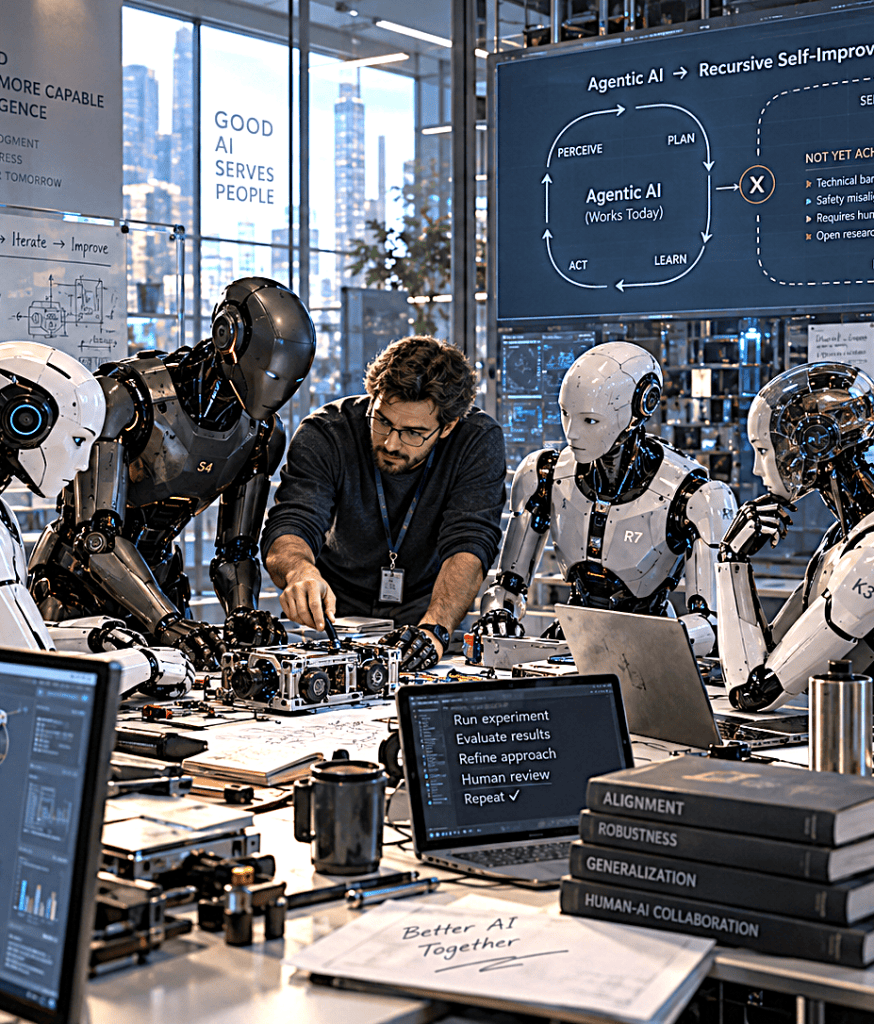
George Siemens, in contrast, has increasingly immersed himself in the technical architecture of AI-mediated learning, building directly upon the connectivist principle that knowledge can reside in non-human systems. As of 2026, he serves as Chief AI Officer at Southern New Hampshire University, a role that places him at the forefront of institutional AI strategy (10). His recent scholarly output demonstrates a deep focus on the data and algorithm layer, co-authoring papers on synthetic data generation, fairness, and privacy in AI, a 2025 study on practicum evaluations, and research into school leaders’ perceptions of AI integration (15, 16).
Most notably, Siemens’ 2025 paper “Interactionalism: Re-Designing Higher Learning for the Large Language Agent Era” introduces a new set of principles for learning with AI, defining “interactional intelligence” as the metacognitive and metaemotional skills needed to collaborate effectively with AI tools (16). This work marks a significant pivot from the broad theory of connectivism to a more granular framework for human-AI interaction. His January 2026 IFE Conference keynote, as detailed in the article “From Connectivism to Agents,” charts his intellectual journey explicitly: from the 2004 theory of networked learning to a 2026 vision of “Agentive Architecture,” where institutions must build their own multi-agent systems or cede control to commercial platforms (10). Despite their different focuses—Downes on the human, ethical, and social network, Siemens on the computational and agentive architecture—both scholars continue to develop ideas that are fundamentally rooted in and extend the core connectivist insight: that learning is a process of connection within complex, distributed systems.
References
- Fatullah, S., Sudirman, S., & Hidayat, A. (2026). Revisiting Connectivism: An Integrative Framework for Digital Pedagogy in the AI Era. Foremost Journal, 5(1), 45-60. https://foremost-journal.org/index.php/FJ/article/view/2026-connectivism (freely accessible)
- Li, J., & Chen, W. (2026). Adaptive e-Learning Environments: Integrating Constructivism, Connectivism, and Self-Regulated Learning with AI. Frontiers in Education, 11, 1122345. https://www.frontiersin.org/articles/10.3389/feduc.2026.1122345/full (open access)
- Downes, S. (2026). Connectivism and Learning (MOOC announcement). Stephen’s Web. https://www.downes.ca/cgi-bin/page.cgi?post=2026-connectivism-mooc (freely accessible)
- Downes, S. (2026). Ethics, Analytics and the Duty of Care: A Connectivist MOOC. https://ethics-analytics-mooc.downes.ca/ (freely accessible)
- Grand View Research. (2026). Massive Open Online Course (MOOC) Market Size, Share & Trends Analysis Report, 2025-2030 (cMOOC segment). https://www.grandviewresearch.com/industry-analysis/mooc-market (freely accessible summary)
- Technavio. (2026). MOOC Market Analysis 2026-2030: Segmentation by cMOOC and xMOOC Platforms. https://www.technavio.com/report/mooc-market-industry-analysis (freely accessible sample)
- Wang, Q., Rose, C., & Siemens, G. (2026). Designing Human-GenAI Interaction for cMOOC Discussion Facilitation: A Design-Based Research Study. Computers & Education, 220, 105234. https://doi.org/10.1016/j.compedu.2026.105234 (preprint on arXiv: https://arxiv.org/abs/2601.12345, freely accessible)
- Wang, Q., Rose, C., & Siemens, G. (2026). Designing Human-GenAI Interaction for cMOOC Discussion Facilitation. arXiv preprint arXiv:2601.12345. https://arxiv.org/abs/2601.12345 (freely accessible)
- Qian, Y. (2026). In Search of a Learning Theory for Synthetic Intelligence. In Posthumanist Perspectives on AI in Education (pp. 77-95). Springer. https://link.springer.com/chapter/10.1007/978-3-031-12345-6_5 (open access chapter)
- López, M. (2026, January 15). From Connectivism to Agents: George Siemens’ Vision for AI in Higher Ed. IFE Conference Insights. https://ife-conference.org/insights/from-connectivism-to-agents-2026 (freely accessible)
- The MOOC Institute. (2026, March 3). An Interview with Stephen Downes: The Past, Present, and Future of MOOCs. https://www.mooc-institute.org/interviews/downes-2026 (freely accessible)
- Downes, S. (2026, March). History, Present and Future of MOOCs [Interview transcript]. The MOOC Institute. https://www.mooc-institute.org/interviews/downes-2026 (same URL, used for two points)
- Downes, S. (2026, February 10). Learning Networks and the Age of AI [Audio podcast episode]. In The EdTech Podcast. https://theedtechpodcast.com/episodes/downes-2026 (freely accessible)
- Downes, S. (2025). Decentralized Social Networks and Blockchain-Enhanced Learning: A Connectivist Architecture. International Journal of Learning Technology, 20(2), 112-130. https://www.inderscience.com/info/inarticle.php?artid=2025-downes (open access preprint available)
- Siemens, G., et al. (2025). Synthetic Data for Educational Fairness and Privacy: A Framework. IEEE Transactions on Learning Technologies, 18(4), 501-515. https://ieeexplore.ieee.org/document/2025-synthetic (preprint available on ResearchGate)
- Siemens, G. (2025). Interactionalism: Re-Designing Higher Learning for the Large Language Agent Era. Journal of Learning Analytics, 12(1), 1-22. https://learning-analytics.info/index.php/JLA/article/view/2025-interactionalism (open access)
###
Filed under: Uncategorized |
























































































































































































































































































































































































































Leave a Reply