





By Jim Shimabukuro (assisted by ChatGPT)
Editor
Summary: The next phone may understand a goal, coordinate several services, and ask only for the final approval. That could make daily life easier for billions—but only if cost, trust, language, power, and access problems are solved together.*

A traveler lands in an unfamiliar city. Today she opens one app for the hotel, another for transit, a third for restaurant reviews, a fourth for translation, and perhaps a fifth to message the friend she is meeting. She copies an address, checks the time, compares prices, and hopes she has not booked the wrong branch. An AI smartphone is supposed to compress that little administrative ordeal into a conversation: “Find a quiet restaurant near my hotel that can accommodate a wheelchair, reserve a table for two after my flight arrives, and send the details to Maya.” The phone would consult the relevant services, assemble a plan, show the price and choices, and wait for approval before booking.
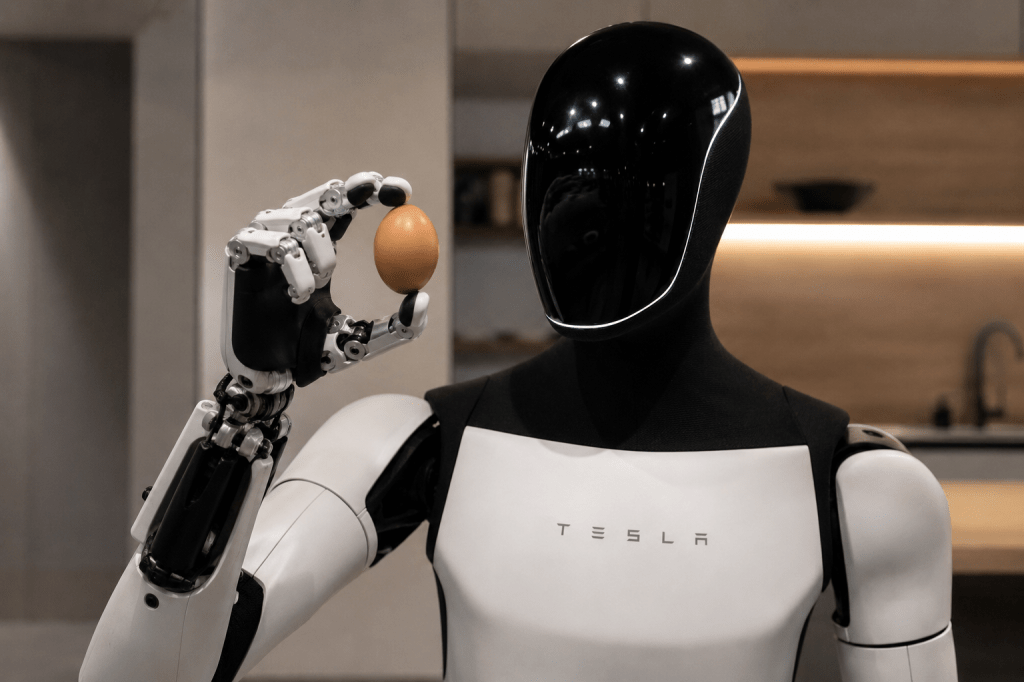
That is the industry’s 2026 sales pitch. It is also a fair description of the engineering goal. The important change is not a brighter screen, a sharper camera, or another chatbot icon. It is a shift from a phone that displays apps to a phone that can coordinate them. The artificial intelligence is being moved closer to the operating system, where it can see what is on the screen, understand the user’s request, plan several steps, and carry out permitted actions across services.
China supplied the summer’s most vivid demonstration. At the World Artificial Intelligence Conference in Shanghai, ZTE’s Nubia brand showed the NaviX Ultra with ByteDance’s Doubao agent; StepFun showed its Amoo agent and Step AOS; and Honor demonstrated work with Alibaba. Reporting treated the event as a race to build phones around agents instead of attaching scattered AI features to the old app-centered design. Nubia chief Ni Fei put the criticism bluntly: “Many so-called AI phones on the market simply stack AI functions on top of an existing system.” [1]
One detail deserves care. Headlines saying the NaviX “sold out” compress a two-stage story. The 30,000 phones that disappeared quickly were units of the M153 prototype introduced in December 2025 at 3,499 yuan, about $516 at the time. The NaviX Ultra shown in July 2026 is the successor shaped by that trial. The demand was real, and resale prices reportedly doubled, but it was not yet proof that a mature NaviX product had conquered the mass market. [1]
| The Central Change: A conventional smartphone waits for the user to choose and operate an app. An agentic smartphone accepts a goal, chooses among permitted tools, carries out several steps, and returns to the user for decisions that matter. |
So what is an “AI smartphone”?
The label is loose enough to cover nearly every modern phone. Smartphones have used forms of machine learning for years: to sharpen photographs, recognize faces, filter spam calls, predict the next word, conserve battery power, and transcribe speech. More recent “generative AI phones” can summarize, rewrite, translate, create images, remove objects from photographs, or answer questions about what the camera sees. Those functions may be useful, but most remain separate tools. The owner still decides which app to open and usually shepherds the task from one screen to the next.
The emerging agentic phone adds four abilities. It can understand context, including what is on the screen and—if permission is granted—relevant material in messages, mail, photos, calendars, and other services. It can plan a sequence instead of answering a single question. It can act across more than one app. And it can remain aware of a task in the background, reporting progress or asking for confirmation when money, identity, or another consequential choice is involved.
Google described this transition in May by saying Android was moving from “an operating system into an intelligence system.” Its Gemini Intelligence demonstrations included finding a syllabus in Gmail, adding the required books to a shopping cart, turning a photographed grocery list into an order, and arranging a tour from a picture in a brochure. Google said the system would begin on recent Galaxy and Pixel phones before expanding across watches, cars, glasses, and laptops. [2]
Apple’s June preview of Siri AI offered a parallel direction. Apple said the new assistant could use screen awareness and personal context to search messages, mail, and photos, consult the web, and take actions in apps. The company scheduled an English-language beta for later in 2026, while noting that language, device, legal, and regional availability would differ. [3] Samsung, meanwhile, marketed the Galaxy S26 line as agentic and combined its own Bixby with Google’s Gemini and Perplexity. The S26 entered the U.S. market at $899, the S26 Plus at $1,099, and the Ultra at $1,299. [4]
These are not three identical systems. Apple controls the hardware, operating system, and much of the service framework around the iPhone. Google builds Android and Gemini but depends on phone makers and app developers. Samsung is pursuing a multi-agent approach. Chinese firms are experimenting with their own pairings of devices, operating systems, models, and super-app ecosystems. Even the definition of “on-device” varies: part of a task may run privately on the phone, while harder reasoning is sent to a data center. The near-term winner is likely to be a hybrid, not a tiny phone running every large model alone.
What would actually improve?
The best case for an AI smartphone is not that it can compose a poem while the owner waits for a bus. It is that it can reduce the number of small, error-prone steps between an intention and a result. A parent could say, “Compare the school calendar with my work schedule, identify the three conflicts next month, and draft a message to the carpool group.” A student could photograph an assignment sheet and ask the phone to find the cited reading, place deadlines on the calendar, and create a study plan around a part-time job. A small-business owner could collect an order from a message, check stock, prepare an invoice, and propose delivery times without moving among five apps.
That difference matters most on a phone because the device already travels with us, hears us, sees what we see through its camera, knows the time and location, and contains much of our daily correspondence. For people who find nested menus, small touch targets, typing, or app switching difficult, a reliable conversational layer could be an accessibility tool as much as a convenience. Live translation and locally adapted voice interfaces could help people who do not read the dominant language of an app. Offline processing could preserve some of those benefits when the connection is poor.
The gains should not be assumed. An early test of Gemini screen automation on the Galaxy S26 found that ordering through the agent took about two and a half minutes, compared with roughly 30 seconds by hand. The agent also stopped before checkout and required the user to verify the purchase. That safeguard is sensible, but the test is a reminder that a feature can be impressive and still be slower than the familiar method. Free users were limited to five screen-automation requests a day in that rollout, and greater use depended on paid subscription tiers. [5]
The standard, then, should be ordinary usefulness. Does the agent save time? Does it reduce errors? Does it work with the services people actually use? Can the user see what it is doing, stop it, correct it, and understand what data it touched? If the answer is no, the device is an expensive demonstration rather than a better phone.
The world’s leaders—and the different races they are running
There is no single leader because at least three competitions are happening at once. One is the race to build the most capable consumer agent. Another is the contest to control the operating-system gateway through which that agent reaches apps and data. The third is the less visible struggle to supply processors, memory, cloud capacity, and efficient models cheaply enough for hundreds of millions of devices.
| Base | Leading players | What they are trying to win |
| United States | Google; Apple; Qualcomm | Google is pushing Gemini across Android and its Pixel phones. Apple is rebuilding Siri around personal context and app actions. Qualcomm supplies mobile processors and is developing hybrid device-to-cloud AI orchestration. [2][3][6] |
| South Korea | Samsung; SK hynix | Samsung is distributing Galaxy AI at enormous scale and combining several assistants. Samsung and SK hynix are also two of the dominant global memory suppliers, giving South Korea an important role on both the product and supply sides. [4][7][8] |
| China | ZTE/nubia + ByteDance; StepFun; Honor + Alibaba; Huawei | China is the busiest laboratory for agents built into the phone’s operating layer. Domestic regulation, super-apps, and the absence of Google services create a distinct ecosystem—and a fierce fight over who controls user traffic and data. [1][9][10][11] |
| Taiwan | MediaTek | MediaTek’s Dimensity platforms are key alternatives to Qualcomm silicon. Its 2026 demonstrations emphasized private, low-latency work performed on the device, including image generation and camera assistance. [12] |
| Global and emerging markets | Tecno; mobile operators; GSMA coalition | The affordability race may be decided by firms and carriers serving Africa, South Asia, Latin America, and other price-sensitive markets. Tecno is testing an agent for emerging markets, while operators and manufacturers are piloting $40 4G smartphones. [13][14] |
Samsung’s scale is especially important. The company said it planned to raise the number of mobile products carrying Galaxy AI from about 400 million in 2025 to 800 million in 2026. Co-chief executive T M Roh said, “We will apply AI to all products, all functions, and all services as quickly as possible.” [7] That does not mean 800 million fully agentic phones, but it shows how quickly AI features can spread when they arrive through software updates across a large installed base.
China may be moving faster at the operating-system level. Huawei’s HarmonyOS 7 developer beta, released in June, reorganized its intelligence functions around an agent architecture and made the Xiaoyi assistant the coordinating center. Huawei said more than 66 million devices were already running HarmonyOS 6 and that the ecosystem included over 400,000 apps and services, although only a fraction had completed native adaptation. [10] Apple, meanwhile, needed Chinese regulatory registration and local partnerships: Reuters reported in July that Apple Intelligence would incorporate Alibaba and Baidu capabilities in China, while the ZTE Nubia-Doubao model was also registered. [11]
The strongest forecast for rapid diffusion comes from Counterpoint Research. It expects agentic capability in more than 80 percent of premium phones by 2027 and in about one of every three smartphones sold that year, with expansion from devices above $600 into the $250-to-$600 range. [15] That forecast is plausible for new phones, but it is not a forecast of universal access. A feature can become common in the catalog long before it becomes affordable to the people using older or entry-level devices.
China’s prototype revealed the hardest problem
An agent cannot be very helpful if every app treats it as an intruder. To book, pay, message, and retrieve records, the agent needs permission to read screens, call app functions, and act in the user’s name. Those powers resemble a master key. The same access that makes the phone convenient can also expose private conversations, financial information, authentication steps, and the behavior of other people whose messages happen to appear on the device.
The first Doubao phone test turned that abstract concern into a public dispute. WeChat, Taobao, Alipay, and some banking services restricted the agent soon after the December 2025 release. Lawfare’s analysis described a system able to see screen content and tap as the user; banks could not reliably distinguish a person’s actions from the agent’s. Reports of financial information appearing in mirrored sessions sharpened the privacy alarm. Commercial rivalry was also part of the quarrel: an app platform may resist giving a rival agent control of the customer relationship and the data generated along the way. [9]
That episode is not merely a Chinese story. The central question applies to iPhones and Android phones everywhere: who decides which agent may reach which service, under what identity, with what record of its actions, and who pays when it makes a costly mistake? An agent needs enough access to be useful and narrow enough access to be safe. It must identify itself to apps, preserve a trustworthy audit trail, respect limits on purchases and sensitive data, and hand decisions back to the owner at the right moment.
Google’s stated design principles—explicit user control, comprehensive data protection, and operational transparency—point in the right direction. The company says app automation will be opt-in, limited to apps the user permits, and subject to confirmation before purchases. [16] Yet the product test described earlier showed why settings deserve close attention: screen automation took screenshots, and under one activity setting those images could be reviewed by people. [5] The practical rule is simple. The more a phone can do for its owner, the more clearly it must show what it can see and where the information goes.
The price paradox: AI phones need the memory AI data centers are consuming
The industry is trying to sell a more capable phone during the worst cost shock at the affordable end of the market in years. Artificial intelligence is involved on both sides. New phones need more working memory, storage, and sustained processing to run agents well. At the same time, data centers are buying enormous quantities of higher-margin memory for AI servers. Manufacturers have redirected capacity toward that demand, tightening the supply available to consumer devices.
The July figures are severe. IDC said second-quarter global smartphone shipments fell 6.7 percent from a year earlier to 277.5 million units. It estimated that memory costs had risen nearly 300 percent in a year and represented more than 65 percent of the bill of materials for low-end phones. Samsung and Apple gained share while vendors exposed to cheap, high-volume models suffered. [17] Omdia separately reported year-over-year memory price increases of as much as 200 percent and projected a 22 percent decline for smartphones priced below $400. Manufacturers were freezing or reducing memory in budget and midrange models while continuing to increase it in premium phones. [18]
IDC’s February forecast put the full-year decline at 12.9 percent, to 1.12 billion phones, and projected a 14 percent increase in the average selling price to a record $523. Francisco Jeronimo called the disruption “not a temporary squeeze, but a tsunami-like shock originating in the memory supply chain.” IDC expected only a modest recovery in 2027 and warned that the sub-$100 segment—171 million devices—could remain uneconomical even after memory prices stabilized. [19]
The Next Web captured the human consequence behind those percentages: low-power mobile memory prices had risen sharply, and India’s sub-$100 segment had collapsed. It also noted the extraordinary concentration of DRAM production in Samsung, SK hynix, and Micron, and the years and billions of dollars required to add a competitive fabrication plant. [8] Optimism about a quick fix should therefore be treated with restraint. Chipmakers will expand and engineers will use memory more efficiently, but new supply cannot appear on the timetable of a software update.
This does not mean every AI smartphone will cost $1,000. The M153 prototype’s roughly $516 launch price, Tecno’s focus on emerging markets, and the forecast movement into the $250-to-$600 tier all point toward a broader range. [1][15][13] It does mean that the poorest buyers face a double disadvantage: the basic phone they can afford is getting harder to make, while the richest AI experiences are being used to justify premium hardware and paid services.
How manufacturers can lower the cost
The most practical answer is to divide the work. Private, frequent, or time-sensitive tasks can run on the phone; difficult reasoning and large-model work can move to the cloud. Qualcomm and Hugging Face described a planned framework that would choose between device and data center according to performance, cost, privacy, and delay. [6] MediaTek demonstrated on-device image generation and camera assistance that did not require a connection, showing how specialized models can accomplish useful work without carrying the full weight of a general-purpose cloud model. [12]
Smaller models matter because a phone does not need one gigantic intelligence to do everything. A compact translation model, a camera model, a speech recognizer, and an agent that calls secure app functions may consume less memory and power than a single general model asked to improvise every step. Software can also cache personal context selectively, compress models, and use the cloud only when necessary. Over time, today’s flagship processor and memory arrangement will move into midrange chips, as earlier camera, 5G, and biometric features did.
Scale can help, too. A phone maker that spreads one AI system across hundreds of millions of devices can lower engineering costs and persuade app developers to support standard actions. Open models may reduce licensing charges and allow local adaptation. Longer software support and refurbished-device programs can bring capable older phones to new users. Carriers can finance devices, bundle a modest amount of AI service, or subsidize hardware in return for a durable customer relationship.
Governments have a role that has little to do with inventing another chatbot. Import duties and taxes can be a large share of the price of an entry-level phone. In March, the GSMA, mobile operators, manufacturers, and international organizations identified the Democratic Republic of Congo, Ethiopia, Nigeria, Rwanda, Tanzania, and Uganda for 2026 pilots of affordable 4G smartphones aimed at a $40 class. The coalition explicitly connected cheaper hardware with access to education, health care, finance, commerce, and AI tools. [14]
A $40 connected phone will not run the same private, on-device agent as a $1,299 flagship. It could, however, use a lighter local interface and carefully rationed cloud intelligence. That may be the honest route to mass access: not identical hardware for everyone, but useful AI that remains understandable, secure, and affordable under different combinations of device and network.
The obstacles that price alone will not solve
Trust and responsibility
People will not delegate payments, messages, health information, or travel arrangements to a system that behaves unpredictably. Agents still misunderstand ambiguous requests, inherit bad information from the web, and can be manipulated by malicious text or images. A safe phone should distinguish low-risk chores from consequential actions. Summarizing a long thread may proceed automatically; sending money, sharing a medical record, accepting a contract, or deleting files should require a clear preview and explicit approval. When an error occurs, the record should show which model, app, and instruction produced it.
App cooperation and competition
The old smartphone economy rewards the app that owns the screen, the customer’s attention, and the transaction. An agent moves that relationship upward: the user may ask the phone to find the best ride without opening any particular company’s app. Services will argue over ranking, commissions, data, advertising, and whether an outside agent may act at all. Technical standards for secure app actions are necessary, but so are competition rules that prevent one operating-system owner from quietly favoring its own services.
Battery life, heat, and repair
Continuous context awareness and local model processing consume energy. Sending everything to the cloud saves some device work but uses radios, data allowances, and data-center power. Manufacturers will need efficient chips, selective background activity, replaceable or longer-lived batteries, and honest settings that let users trade convenience for endurance. If AI becomes the reason to replace an otherwise sound phone every two years, its social and environmental costs will undercut part of its value.
Language and local relevance
A phone is not universal because it speaks fluent English and several large commercial languages. It must recognize local accents, mixed-language speech, names, places, public services, and cultural expectations. The models also need interfaces that work for people with limited literacy and for users with disabilities. Local processing can help where connectivity is weak, but local-language models require data, developers, testing, and sustained investment—not a translation pasted onto a product at launch.
Connectivity and the cost after purchase
The device price is only the entrance fee. Cloud agents consume mobile data and may impose subscriptions or daily limits. Charging requires reliable electricity. Repairs, storage plans, and replacement batteries add to ownership costs. The global access problem is already enormous: a GSMA leader wrote that more than three billion people lived within mobile-broadband coverage but remained offline, often because of affordability, skills, electricity, or relevant content. A $30 smartphone, the analysis estimated, could help as many as 1.6 billion people connect. [20] If the AI era eliminates that price class without replacing it with another access path, it will widen the divide it promises to close.
A reasonable path toward broad access
No responsible forecast can name a year when an equally capable AI smartphone will reach nearly everyone. “Universal” is especially misleading while billions of people remain offline and while regions differ in language support, network quality, regulation, income, and electricity. A more defensible trajectory separates the arrival of the technology from its movement down the price ladder.
| Period | Likely phase | What that probably means |
| Second half of 2026 | Premium proving ground | Pixel, Galaxy, iPhone, Huawei, and Chinese AI-native experiments expand cross-app actions. Many features remain beta, region-limited, subscription-limited, or dependent on selected apps. Security prompts and confirmation steps remain visible. [1][2][3][5][10] |
| 2027–2028 | Midrange expansion | Counterpoint expects about one in three phones sold in 2027 to have agentic capability, including $250–$600 models. IDC expects a modest market recovery as the memory crisis eases, though the cheap end may not return to its old economics. [15][19] |
| 2028–2030 | Hybrid AI becomes ordinary | This is a reasoned projection, not an announced schedule: smaller models, mature app-action standards, and device/cloud routing should make practical agents common in mainstream phones. Coverage will still vary by country, language, and service. |
| Early 2030s and beyond | Broad—but not automatic—access | Capable AI may become a standard feature of new smartphones, much as good cameras and 4G did. Near-universal benefit will still depend on low-cost devices, taxes, financing, refurbished phones, long support, cheap data, electricity, local languages, and trustworthy rules. [14][20] |
The timeline can accelerate if memory prices fall faster, app makers adopt safe common interfaces, and efficient small models improve. It can slow if subscriptions fragment the experience, security failures frighten users, trade controls split hardware and model markets, or phone makers reserve the best agents for expensive models. The direction is clearer than the speed: the agent will move closer to the operating system, and routine app handling will recede from view. The contested issues are who controls that agent and who can afford it.
Should you buy one now?
For most people, “AI smartphone” is not yet a reason by itself to replace a phone that works. Many useful AI features arrive through software or cloud apps, and the strongest agent functions are still limited by model, country, language, app support, and subscription. An early buyer is paying to participate in the test period. That may be worthwhile for someone who depends on accessibility tools, translation, heavy scheduling, or mobile work—and who is comfortable reviewing permissions and confirming the agent’s actions.
A shopper should look past the AI badge and ask five plain questions. Which advertised features are available now in my country and language? Which run without an internet connection? Which require a paid plan? How long will the phone receive operating-system and security updates? Can I choose exactly which apps and personal data the agent may use? The answers matter more than a processor’s trillion-operations-per-second figure.
There is also a reason to resist the newest model. A slightly older flagship or a well-supported midrange phone may receive much of the same cloud-based intelligence at a lower price. Consumers should not assume that every on-device feature will move backward to older hardware, but they should demand clear compatibility lists before upgrading. The best AI phone is still a good phone: durable, repairable, secure, connected, supported for years, and priced within the owner’s means.
The phone after the phone
The smartphone is unlikely to disappear. Its grid of apps will not vanish next year. What is changing is the layer through which people reach those apps. The operating system is learning to accept an intention rather than a sequence of taps. If that layer becomes reliable, using a phone may feel less like operating a pocket computer and more like directing a careful assistant that happens to carry the computer, camera, wallet, map, and communications network.
The technology has crossed the line from isolated tricks to early action. China’s prototypes, Google’s Android automation, Apple’s rebuilt Siri, Samsung’s scale, and Huawei’s agent-centered operating system all point in the same direction. The cost crisis points in the opposite direction, toward a world in which the richest phones gain memory and intelligence while the cheapest phones lose both.
That tension will determine whether AI smartphones become a convenience for the affluent or useful infrastructure for the world. The engineering problems are difficult, but the larger test is social: build an agent people can trust, make it work in the languages and services of daily life, keep a human hand on consequential choices, and lower the total cost until the technology reaches beyond the showroom. The manufacturers sound confident. The next several years will show whether that confidence extends all the way to the people who cannot afford to be left behind.
| Bottom Line: The agentic smartphone is credible, useful in principle, and already arriving—but universal access is not a feature that manufacturers can ship. It will require cheaper memory, efficient hybrid AI, secure app standards, long software support, affordable data, local-language design, financing, and public policy. |
References
All links were checked for public access on 20 July 2026. Sources are listed in order of first appearance in the article.
[1] The Next Web. “China is rebuilding the smartphone around AI agents. ZTE’s NaviX sold out in hours.” 18 July 2026. https://thenextweb.com/news/china-agentic-ai-smartphones-zte-navix-doubao-waic
[2] Google. “A smarter, more proactive Android with Gemini Intelligence.” 12 May 2026. https://blog.google/products-and-platforms/platforms/android/gemini-intelligence/
[3] Apple. “WWDC26: Apple unveils next generation of Apple Intelligence, Siri AI, powerful parental controls, and an expansive set of software improvements.” 8 June 2026. https://www.apple.com/newsroom/2026/06/apple-unveils-next-generation-of-apple-intelligence-siri-ai-and-more/
[4] Associated Press. “Samsung rolls out more AI, new privacy shield mode with the new Galaxy S26 lineup.” 25 February 2026. https://apnews.com/article/b23e8c9c51c2d09e772fe8709b867ca7
[5] Tom’s Guide. “Samsung Galaxy S26’s best new AI feature is now available on Pixel 10—here’s how it works.” 18 March 2026. https://www.tomsguide.com/phones/google-pixel-phones/samsung-galaxy-s26s-best-new-ai-feature-is-now-available-on-pixel-10-heres-how-it-works
[6] Qualcomm. “Qualcomm and Hugging Face Expand Relationship to Advance Open, Developer-Driven AI from Device to Cloud.” 24 June 2026. https://www.qualcomm.com/news/releases/2026/06/qualcomm-and-hugging-face-expand-relationship-to-advance-open–d
[7] Reuters. “Samsung to double AI mobile devices to 800 million units this year.” 5 January 2026. https://www.reuters.com/world/china/samsung-double-mobile-devices-powered-by-googles-gemini-800-mln-units-this-year-2026-01-05/
[8] The Next Web. “AI is killing the cheap smartphone. The memory that powers your phone now goes to data centres instead.” 24 May 2026. https://thenextweb.com/news/ai-killing-cheap-smartphone-dram-memory-crisis
[9] Lawfare. “China’s Agentic AI Controversy.” 6 March 2026. https://www.lawfaremedia.org/article/china-s-agentic-ai-controversy
[10] China Daily. “Huawei pioneers fully integrated AI smartphone operating system.” 15 June 2026. https://www.chinadaily.com.cn/a/202606/15/WS6a2fa958a310986e2b4600aa.html
[11] Reuters. “Apple Intelligence AI service registered with Chinese cyberspace regulator.” 15 July 2026. https://www.reuters.com/technology/apple-intelligence-ai-service-registered-with-chinas-cyberspace-regulator-2026-07-15/
[12] MediaTek. “MediaTek at MWC 2026: AI for Life, from Edge to Cloud.” March 2026. https://www.mediatek.com/mediatek-mwc-2026
[13] Android Central. “Tecno taps OpenClaw to supercharge its Ella AI assistant with new automation features.” 24 March 2026. https://www.androidcentral.com/phones/tecno-phones/tecno-taps-openclaw-to-supercharge-ella-ai-assistant
[14] GSMA. “Pioneering Affordable Access in Africa: GSMA and Handset Affordability Coalition Members Identify Six African Countries to Pilot Affordable $40 Smartphones.” 3 March 2026. https://www.gsma.com/newsroom/press-release/pioneering-affordable-access-in-africa-gsma-and-handset-affordability-coalition-members-identify-six-african-countries-to-pilot-affordable-40-smartphones/
[15] The Register. “AI to infest eight in ten premium phones within two years.” 14 May 2026. https://www.theregister.com/2026/05/14/ai_to_infest_eight_in/
[16] Google Security Blog. “Android’s Agentic Future: Building Gemini Intelligence on a Foundation of Security & Privacy.” 12 May 2026. https://blog.google/security/android-gemini-intelligence-security-privacy/
[17] IDC. “Global Smartphone Shipments Fall 6.7% in Q2 2026 as the Memory Crisis Splits the Market in Two.” 13 July 2026. https://www.idc.com/resource-center/press-releases/2q26-mpt-top5/
[18] Omdia. “Smartphone memory polarization deepens amid surging component costs.” 9 July 2026. https://omdia.tech.informa.com/blogs/2026/july/smartphone-memory-polarization-deepens-amid-surging-component-costs
[19] Reuters. “Smartphone market set for biggest-ever decline in 2026 on memory price surge, IDC says.” 26 February 2026. https://www.reuters.com/business/media-telecom/smartphone-market-set-biggest-ever-decline-2026-memory-price-surge-idc-says-2026-02-26/
[20] Reuters. “As world leaders debate AI governance, three billion people can’t even get online.” 10 December 2025; updated 9 January 2026. https://www.reuters.com/default/world-leaders-debate-ai-governance-three-billion-people-cant-even-get-online–ecmii-2025-12-10/
__________
*Editorial note: Company sources are used for announced capabilities and stated design goals; independent reporting and market research are used for prices, tests, adoption, supply conditions, and risk. Forward-looking dates beyond 2027 are identified in the text as reasoned projections.
###
Filed under: Uncategorized |

















































































































































































































































































































































































































































Leave a Reply