





By Jim Shimabukuro (assisted by ChatGPT)
Editor
(Related: Apr 2026 | Feb 2026 | Jan 2026 | Dec 2025 | Nov 2025 | Oct 2025 | Sep 2025)
Summary: As AI power centralizes, the world’s fate hinges on who gets to steer it—governments, corporations, or unelected technologists shaping policy in real time. –Copilot

The earlier ETC Journal “Three Critical Global Decisions” entries treated AI governance as a moving contest among safety, speed, access, and national advantage. The November and December 2025 installments covered the broad regulation-versus-innovation struggle, frontier-model oversight, open versus closed models, and the energy burden of compute. The February 2026 installment focused heavily on the U.S. federal-state clash over AI law, and the April 2026 installment returned to multilateral governance through the United Nations Global Dialogue, asking whether countries would commit to “coherence and interoperability” or allow governance to fragment into blocs (1-4). Those decisions remain alive, but June 2026 has given them sharper geopolitical form. The month’s decisions are less about whether AI should be regulated in the abstract and more about who gets access to the most powerful systems, who controls the hardware and cloud pathways beneath them, and who pays the environmental and grid costs of the race.
Decision 1: By the end of June 2026, will the United States and its democratic partners define a trusted-partner system for frontier AI access, or will access to the most powerful models become a unilateral national-security privilege?
The immediate trigger is the U.S. order that forced Anthropic to disable access to its newest Fable 5 and Mythos 5 models after the government directed the company to suspend access for foreign nationals. Reuters reported that Anthropic said it had received an export-control directive without specific details of the national-security concern, and that the government apparently believed there was a method of “jailbreaking” a safeguard that would prevent Fable 5 from being used to identify software vulnerabilities (5). Anthropic’s public objection was unusually direct. The company said a “narrow potential jailbreak” should not justify recalling a commercial model deployed to “hundreds of millions of people,” and warned that applying that standard across the industry could “essentially halt all new model deployments for all frontier model providers” (5).
This is a critical June decision because it moves AI export control beyond chips and tooling into model access itself. For years, the geopolitical debate has centered on whether China, Russia, Iran, or other strategic competitors could obtain advanced semiconductors, cloud compute, and semiconductor manufacturing equipment. The Anthropic episode makes a second layer unavoidable: even if a model is hosted in the cloud, can non-U.S. persons be excluded from using it? If the answer is yes, the U.S. is implicitly treating leading frontier models not just as commercial services but as controlled strategic assets. That may be defensible in rare cases, especially for systems that can substantially aid cyber offense, biological design, or military planning. But if the rule is opaque, ad hoc, or politically selective, it will damage trust among allies as well as adversaries.
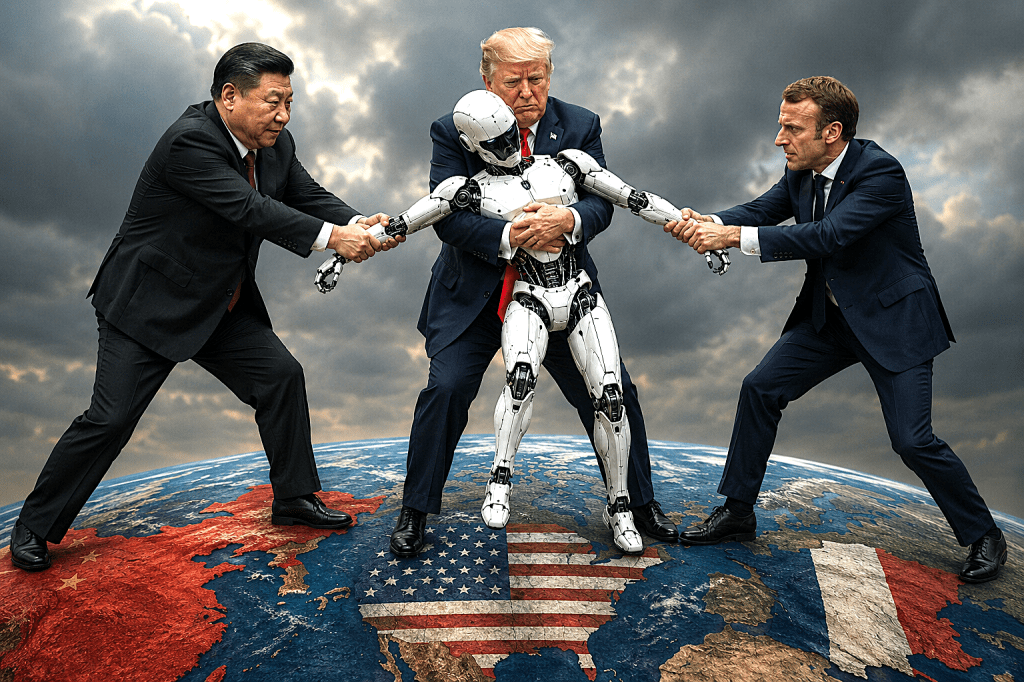
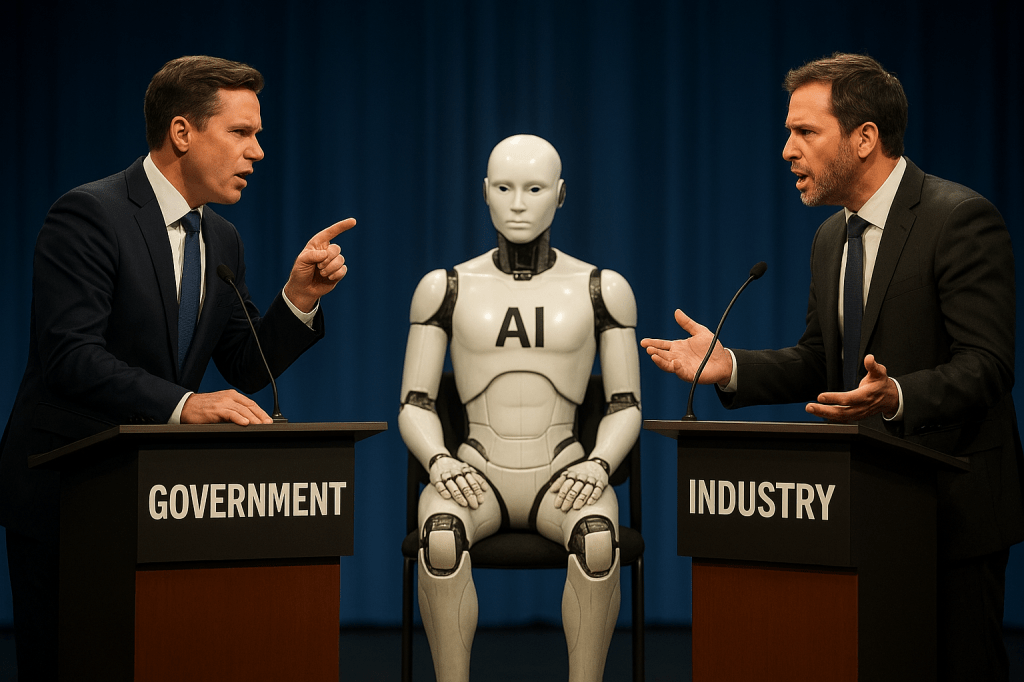
The G7 meeting in France put this tension in full view. Reuters reported that G7 leaders and AI executives met over lunch, that French President Emmanuel Macron hoped for progress on who could access frontier AI, and that the U.S. had blocked foreign nationals from Anthropic’s latest models (6). The Associated Press reported that Macron urged the United States not to keep cutting-edge AI to itself and called for democracies to cooperate on regulation. OpenAI’s Sam Altman was reported as saying that governments, not just companies, should regulate AI, while the meeting drew leaders from OpenAI, Google DeepMind, Anthropic, Meta, Mistral, Cohere, Black Forest Labs, Sakana AI, and others (7). The roster matters. It shows that the access question is no longer confined to U.S. agencies and one company. It now affects European sovereignty, Japanese and Canadian AI ambitions, allied cybersecurity, and the credibility of a democratic AI bloc.
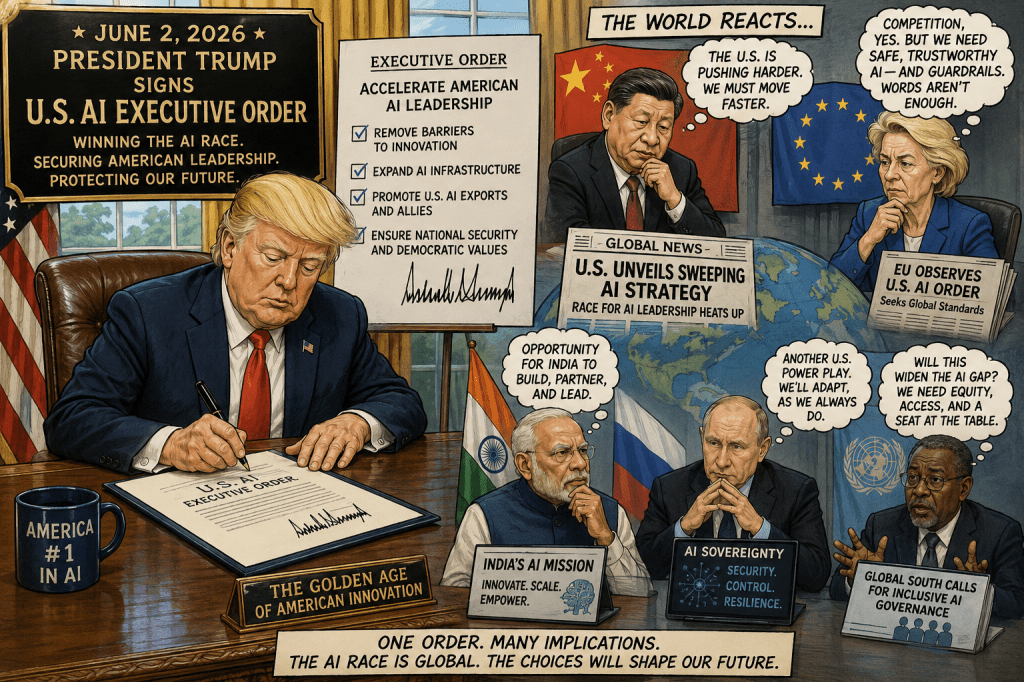
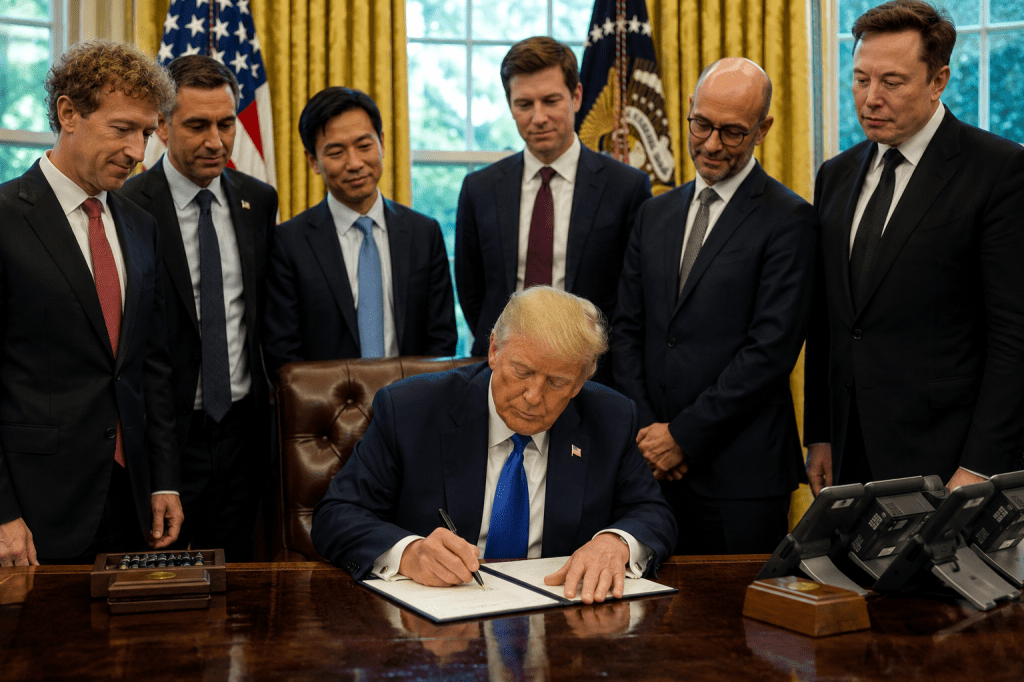
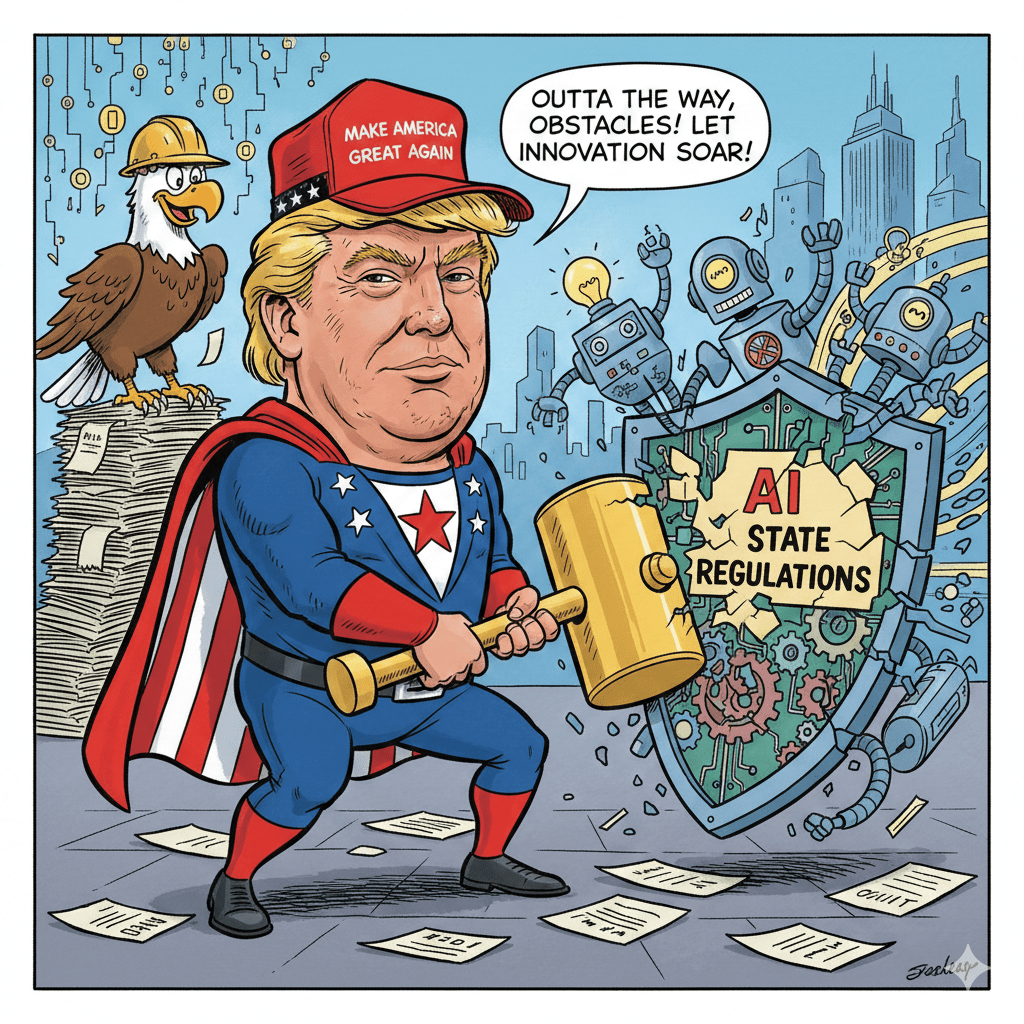
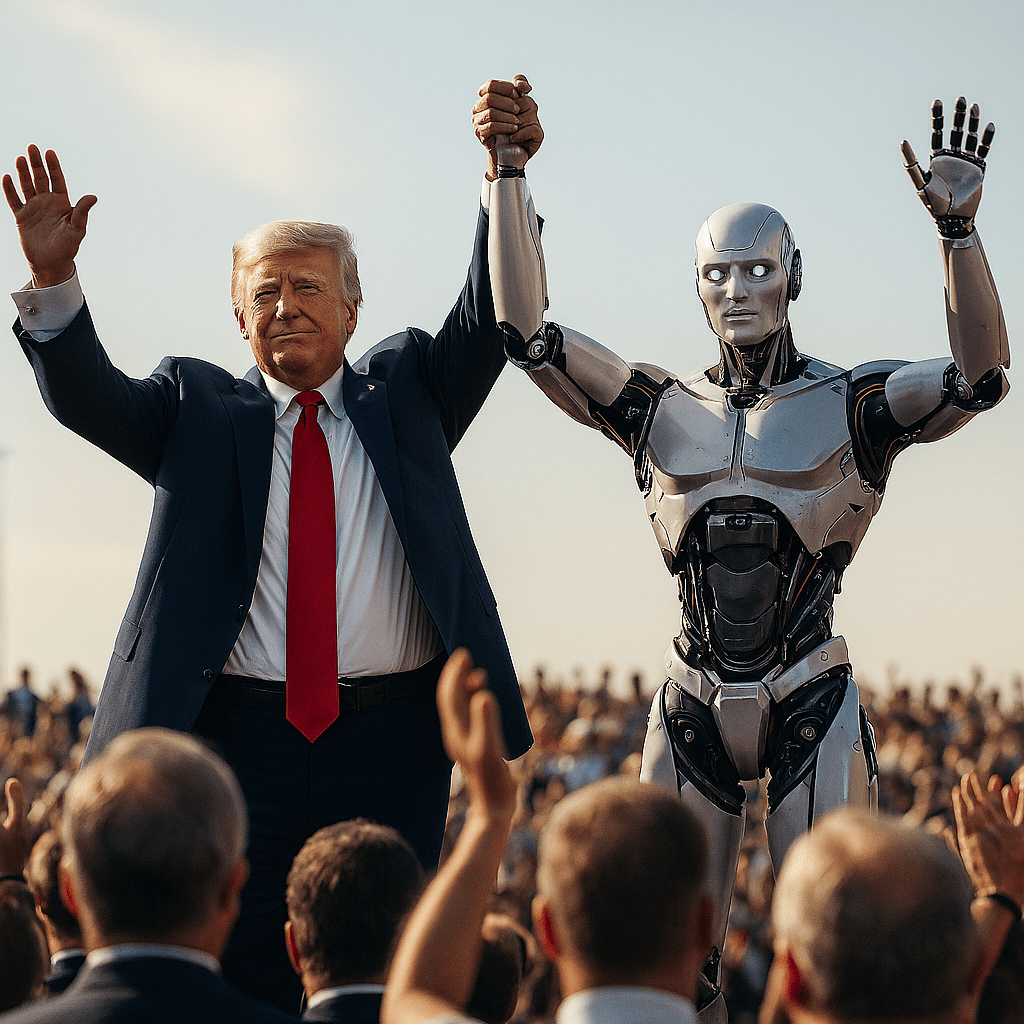
The countries and leaders involved are easy to identify but difficult to align. On the U.S. side, President Donald Trump, the Commerce Department, and the Bureau of Industry and Security are asserting national-security authority over frontier capability. Anthropic CEO Dario Amodei is caught between his company’s long-standing safety posture and a government order that the company says lacks sufficient evidence and procedure. On the European side, Macron is speaking for a broader anxiety: Europe wants safe AI, but it does not want democratic allies reduced to customers of American systems whose access can be withdrawn without warning. The European Commission’s AI Act adds another layer. It is preparing to enforce obligations for general-purpose AI models, including transparency, serious-incident reporting, and systemic-risk documentation; from 2 August 2026, the Commission’s enforcement powers over GPAI obligations begin (8). The EU’s June 2026 code for transparency of AI-generated content also shows Europe trying to operationalize law through common marking and labelling practices before the Article 50 obligations apply in August (9).
The decision that needs to be made by the end of June is therefore not whether frontier models can ever be restricted. They can, and in some cases they should be. The decision is whether democratic governments can produce a trusted-partner access framework before unilateral model controls become the norm. Such a framework would have to answer practical questions: Which model capabilities trigger export review? What evidence is required before a model is disabled? Can allied cybersecurity agencies, universities, and companies receive controlled access under audit? How are dual nationals, foreign-born employees, and multinational teams handled? What appeal process exists when a model is pulled? Without answers, companies will slow releases, foreign governments will invest more aggressively in sovereign alternatives, and non-U.S. researchers will assume that American AI is not a dependable platform.
The likely impact is a split in the global AI market. If the United States and its allies create a trusted-partner structure, frontier AI access could become safer without becoming nationalist. The U.S. would preserve influence, Europe and Asia-Pacific partners would retain access under shared rules, and companies would gain a clearer deployment path. If no such framework emerges, the field will move toward AI capability nationalism: U.S.-only systems, European sovereign models, Chinese self-reliance, and a growing gray market for model access. That would not stop AI diffusion. It would push it into less transparent channels.
Decision 2: By the end of June 2026, will Washington decide whether its chip-control strategy is still aimed at slowing China, or whether it must be redesigned to preserve U.S. influence in the global AI market beyond China?
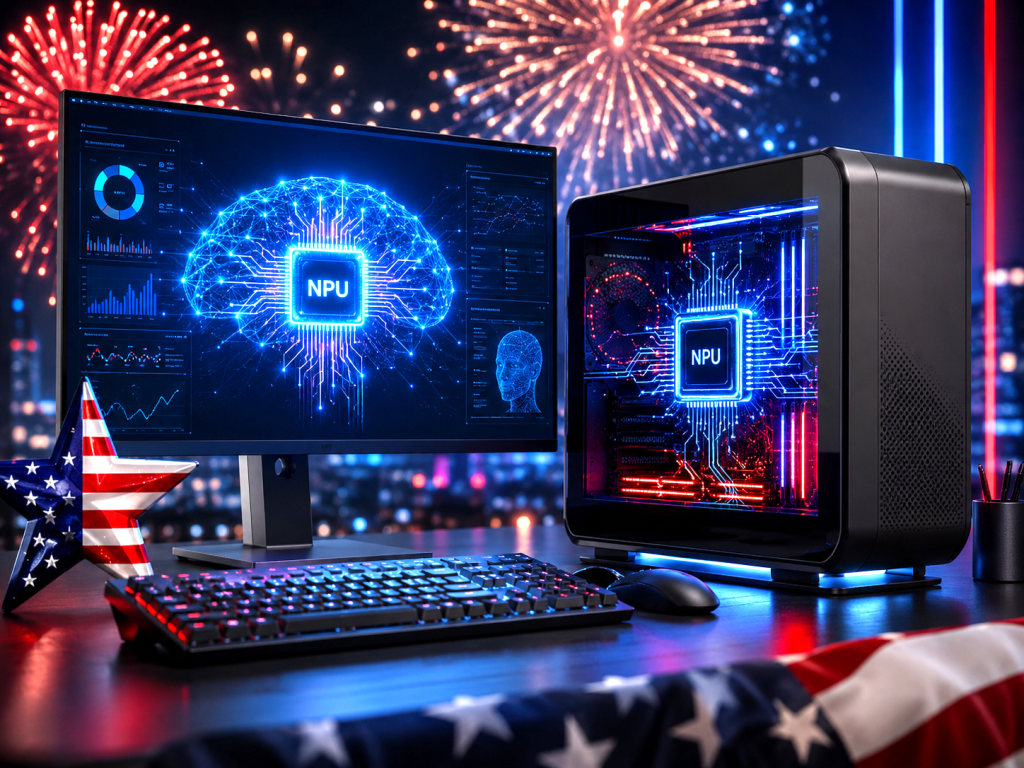
The latest hardware decision began just before June. On May 31, 2026, the Bureau of Industry and Security issued guidance clarifying that a license is required to export advanced computing items to entities headquartered in Country Group D:5 and Macau, or to entities whose ultimate parent company is headquartered there, even if the entities themselves are located elsewhere (10). The guidance matters because it closes a pathway through which Chinese-headquartered firms could obtain chips abroad through subsidiaries or cloud-linked data-center arrangements. Reuters described it as a step to halt Nvidia AI chip shipments to Chinese firms outside China, noting that the Commerce Department was closing a potential loophole and that hundreds of thousands of chips may have reached Chinese subsidiaries (11).
The obvious rationale is national security. Advanced AI chips are not just commercial accelerators. They are the substrate for training and serving frontier systems, including systems that can improve cyber operations, surveillance, military logistics, autonomous weapons support, propaganda, and scientific discovery. If U.S. policymakers believe that China’s military-civil fusion can convert commercial compute into state power, then they will keep tightening export rules. In that narrow sense, the May 31 guidance is consistent with several years of U.S. policy: deny strategic competitors the most advanced AI hardware.
The less obvious problem is that the strategy may already have changed the market it was meant to control. Brookings analyst Mark MacCarthy argued in June 2026 that U.S. companies no longer dominate China’s AI chip market and that “the ball game is over” in China. His deeper warning is not that controls failed in every respect. It is that China’s authorities no longer regard U.S. chip companies as reliable partners and that even if Chinese companies wanted U.S. chips, Beijing would resist renewed dependence (12). That means the June decision is not simply whether to tighten or loosen controls on China. The harder question is whether the United States can avoid turning a China-focused control regime into a global signal that U.S. hardware and cloud services are politically unreliable.
The actors include the Trump administration, Commerce Secretary Howard Lutnick, BIS, Nvidia, AMD, cloud providers, Chinese AI firms, China’s Ministry of Commerce and industrial planners, and U.S. allies that host data centers or semiconductor supply-chain nodes. Taiwan, Japan, South Korea, the Netherlands, Singapore, Malaysia, and the Gulf states are all implicated because the chip race is not a single U.S.-China pipeline. It is a network of fabrication, packaging, lithography, cloud leasing, data-center siting, export licensing, and end-user verification.
The decision must be made by the end of June because the loophole problem has already reached the enforcement stage. Companies need to know whether they are being asked merely to block controlled chips from Chinese-headquartered entities or whether they must become intelligence-like monitors of ownership, cloud use, and model-training destinations across the world. Allies need to know whether U.S. rules will be predictable enough to build local AI capacity around American chips. Countries in the Middle East and Southeast Asia need to know whether they can host AI infrastructure without being treated primarily as diversion risks. China, for its part, will read every tightening as evidence that self-sufficiency is not optional.
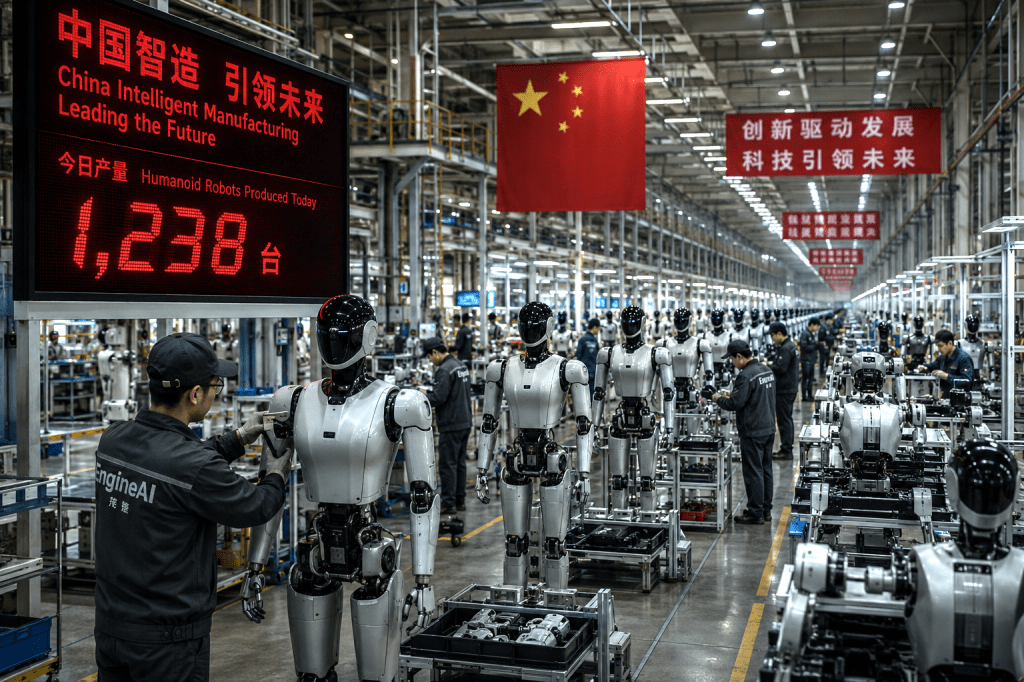
The impact on the field will depend on the precision of the policy. A narrow, evidence-based enforcement strategy could slow strategic diversion while preserving U.S. leadership in the broader global market. A broad, constantly changing strategy could accelerate exactly what Washington fears: Chinese chip independence, allied hedging, and a non-U.S. AI hardware ecosystem. The United States may still hold advantages in design, software, networking, cloud integration, and supply-chain relationships. But those advantages depend on trust. If customers outside China worry that access to chips, cloud instances, or model services can be changed abruptly for political reasons, they will diversify away from U.S. suppliers. The June decision, then, is not just about China. It is about whether the U.S. can keep AI hardware policy strategic rather than reflexive.
Decision 3: By the end of June 2026, will governments treat AI data centers as public-interest infrastructure with enforceable disclosure and planning rules, or allow the compute race to outrun energy, water, and local consent?
This decision was covered in broader form in December 2025, when ETC Journal asked how to expand AI compute without overwhelming energy, water, and climate constraints (3). It deserves reselection in June 2026 because the issue has moved from forecast to public-infrastructure conflict. The International Energy Agency estimates that data centers consumed about 415 terawatt-hours in 2024, around 1.5 percent of global electricity consumption, and that consumption had grown at 12 percent per year over the previous five years (13). That already made data centers a significant electricity user. What has changed in June is the political visibility of the burden.
On June 23, Reuters reported that UN Secretary-General António Guterres called on AI companies to disclose the full environmental cost of their data centers and to power all data centers with renewable energy by 2030. His warning was stark: by 2030, data centers could use “more power than all but five countries” and enough water to meet the basic needs of 1.3 billion residents of sub-Saharan Africa for a year (14). He also said, “If AI is to help build a better future, it must be honest about what it costs us now” (14). This is a different kind of AI governance. It does not focus on model behavior, hallucination, bias, or existential risk. It asks whether the physical footprint of AI is being hidden behind the glamour of digital progress.
Cities are now becoming front-line regulators. Reuters reported that mayors from 40 cities, including London, Phoenix, and Melbourne, backed a Global Urban Data Centres Pact during London Climate Action Week to curb strain on electricity grids, water supplies, and communities (15). Melbourne Lord Mayor Nicholas Reece said data centers are “the biggest thing to hit the energy grid since air conditioning in the 1950s,” except that this rollout is happening “in a few short years” (15). Phoenix Mayor Kate Gallego warned that the demand for electricity is “unprecedented,” with existing and planned data centers potentially doubling regional electricity demand (15). The important geopolitical point is that local permitting decisions are now tied to global AI supremacy. A city deciding whether to approve a data center is indirectly deciding which companies, countries, and cloud blocs can scale.
In the United States, federal energy regulators are moving in the opposite direction from some local critics. The Associated Press reported that on June 18, 2026, the Federal Energy Regulatory Commission voted unanimously to direct six regional grid operators to speed access to power for energy-hungry AI data centers, after Energy Secretary Chris Wright urged action to improve U.S. competitiveness with China (16). The order reportedly requires data centers to bear the full cost of necessary grid upgrades, but it also shows how AI competition is being translated into energy policy. If power becomes the bottleneck, then grid interconnection becomes an AI weapon. If water becomes the bottleneck, then local scarcity becomes part of global AI strategy.
The countries, organizations, and leaders involved include the United Nations, C40 Cities, the mayors of major data-center regions, FERC and the U.S. Department of Energy, hyperscalers such as Microsoft, Google, Amazon, Oracle, and Meta, AI labs dependent on those clouds, and energy companies now positioning themselves as AI infrastructure suppliers. Reuters reported that Chevron signed a power-supply deal with Microsoft for a West Texas data-center campus, with a dedicated natural-gas-fired project expected to provide a 20-year power supply and potentially scale to 2.67 gigawatts (17). That deal shows why the decision is urgent. The AI buildout is not waiting for a clean-energy consensus. It is making deals now, and those deals will lock in infrastructure choices for decades.
The June decision is whether governments will demand transparent accounting before granting the next wave of permits, grid connections, and subsidies. At minimum, that means public disclosure of electricity sources, water use, land use, emissions, local noise and air impacts, emergency backup systems, and who pays for grid upgrades. It also means deciding whether AI data centers should receive priority access to scarce power when households, hospitals, factories, schools, and climate commitments are competing for the same capacity. A laissez-faire approach will favor the largest companies and the jurisdictions most willing to absorb hidden costs. A public-interest approach will slow some projects but could prevent a backlash that is far more damaging to AI legitimacy.
The impact on AI development will be direct. Compute determines which models can be trained, how cheaply they can be served, how many agents can run continuously, and which countries can support domestic AI ecosystems. If power and water become the binding constraints, AI supremacy will depend less on clever algorithms and more on energy diplomacy, grid modernization, and community consent. The countries that align AI infrastructure with clean, reliable power will gain durable advantage. The countries that hide the costs will face lawsuits, local bans, grid instability, higher consumer rates, and political resistance. June 2026 may be remembered as the month when the world began to see AI not as weightless software but as one of the largest infrastructure races on Earth.
Conclusion: The three June decisions are connected. Frontier model access, chip controls, and data-center infrastructure are not separate policy silos. Together they define who can build, who can use, and who must live with the costs of advanced AI. If access controls become unilateral, allies will seek sovereignty. If chip controls become overbroad, China and other regions will accelerate alternatives. If data centers outrun public planning, the compute race will collide with climate, water, and local politics. The countries that navigate June well will not necessarily be those that move fastest. They will be those that make AI power legible, governable, and shareable enough to sustain public trust.
References
(1) “AI in Nov. 2025: Three Critical Global Decisions.” ETC Journal. https://etcjournal.com/2025/10/26/ai-in-nov-2025-three-critical-global-decisions/
(2) “AI in February 2026: Three Critical Global Decisions—‘cooperation or constitutional clash?’” ETC Journal. https://etcjournal.com/2026/02/05/ai-in-february-2026-three-critical-global-decisions-cooperation-or-constitutional-clash/
(3) “AI in Dec. 2025: Three Critical Global Decisions.” ETC Journal. https://etcjournal.com/2025/11/26/ai-in-dec-2025-three-critical-global-decisions/
(4) “AI in April 2026: Three Critical Global Decisions – collaboration or rivalry?” ETC Journal. https://etcjournal.com/2026/04/19/ai-in-april-2026-three-critical-global-decisions-collaboration-or-rivalry/
(5) “Anthropic disables top-tier AI models after US order limiting foreign access.” Reuters. June 13, 2026. https://www.reuters.com/technology/us-blocks-foreign-access-anthropics-most-advanced-ai-models-axios-reports-2026-06-13/
(6) “At G7, Macron says he expects progress on broadening access to Anthropic’s Mythos.” Reuters. June 17, 2026. https://www.reuters.com/legal/litigation/g7-leaders-vow-closer-ties-ai-they-hash-out-trusted-partners-scheme-2026-06-17/
(7) “French president urges US to share cutting-edge AI and democracies to cooperate on regulation.” Associated Press. June 17, 2026. https://apnews.com/article/7d783c6de4356962e338b8b8563d48ea
(8) “Guidelines for providers of general-purpose AI models.” European Commission, Shaping Europe’s Digital Future. April 28, 2026. https://digital-strategy.ec.europa.eu/en/policies/guidelines-gpai-providers
(9) “Code of Practice on Transparency of AI-Generated Content.” European Commission, Shaping Europe’s Digital Future. June 10, 2026. https://digital-strategy.ec.europa.eu/en/policies/code-practice-ai-generated-content
(10) “Guidance Regarding Enforcement of License Requirements for Advanced Computing Items for Entities Headquartered in Country Group D:5 and Macau.” Bureau of Industry and Security. May 31, 2026. https://www.bis.gov/media/documents/bis-guidance-may-31-2026.pdf
(11) “US takes step to halt Nvidia AI chip shipments to Chinese firms outside China.” Reuters. June 1, 2026. https://www.reuters.com/world/china/us-takes-step-halt-nvidia-ai-chip-shipments-chinese-firms-outside-china-2026-05-31/
(12) Mark MacCarthy. “Ball game’s over—the US is out of the AI chip market in China.” Brookings. June 2026. https://www.brookings.edu/articles/ball-games-over-the-us-is-out-of-the-ai-chip-market-in-china/
(13) “Energy demand from AI.” International Energy Agency. 2026. https://www.iea.org/reports/energy-and-ai/energy-demand-from-ai
(14) “UN chief calls on AI firms to come clean on environmental costs.” Reuters. June 23, 2026. https://www.reuters.com/legal/litigation/un-chief-calls-ai-firms-come-clean-environmental-costs-2026-06-23/
(15) “City mayors from London to Melbourne seek to curb data centre burden on power, water.” Reuters. June 23, 2026. https://www.reuters.com/sustainability/cop/city-mayors-london-melbourne-seek-curb-data-centre-burden-power-water-2026-06-22/
(16) “Federal regulators order grid operators to speed power to energy-hungry AI data centers.” Associated Press. June 18, 2026. https://apnews.com/article/506e3d206871111f15c3c62fc5368be5
(17) “Chevron signs power supply deal with Microsoft for Texas data center.” Reuters. June 22, 2026. https://www.reuters.com/legal/litigation/chevron-signs-power-supply-deal-with-microsoft-texas-data-center-2026-06-22/
###
Filed under: Uncategorized |





































































































































































































































































































































































































































































Leave a Reply