





By Jim Shimabukuro (assisted by Claude)
Editor
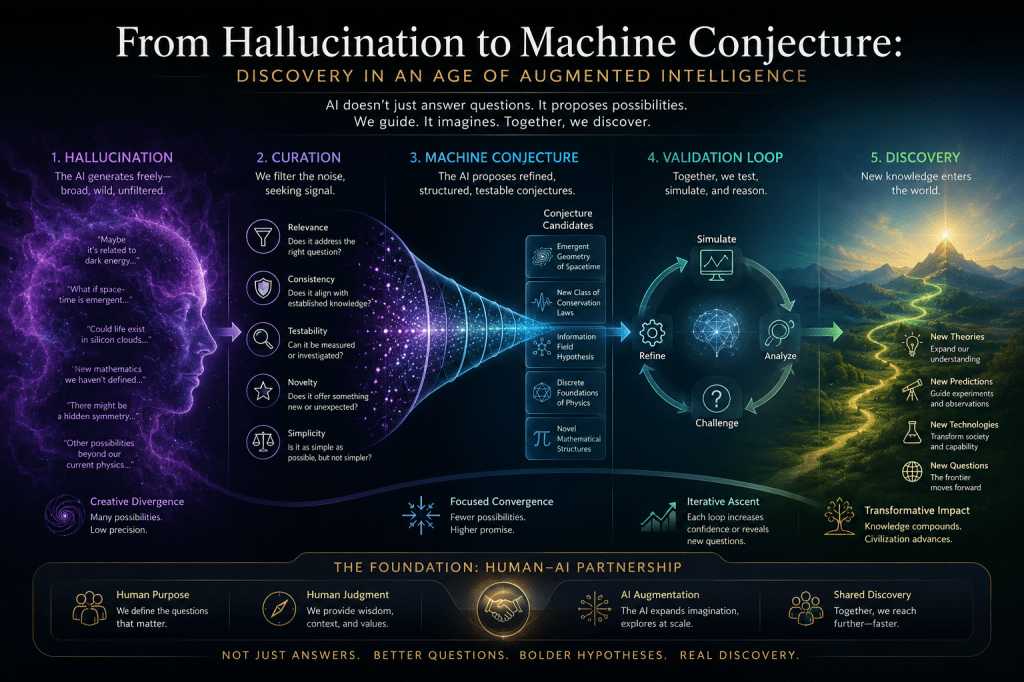
[Related: From Hallucination to Machine Conjecture: Discovery in an Age of Augmented Intelligence | Hallucination and the Emergence of Embodied Extrapolation in Agentic AI]
Summary: Teaching humans to read AI hallucinations as structured conjecture could transform error into insight — reshaping how societies interpret machine imagination. –Copilot

Introduction: For most of the brief public history of large language models, the word “hallucination” has functioned as a warning label—shorthand for the alarming tendency of AI systems to produce fluent, confident, and entirely fabricated output. Researchers, journalists, and regulatory bodies used it to flag a reliability failure, and rightly so: an AI that invents citations, confabulates statistics, or generates counterfactual histories with the smooth assurance of a well-briefed expert poses genuine dangers to anyone who takes its outputs at face value. The framing made immediate practical sense. But two recent essays in the Educational Technology and Change (ETC) Journal suggest that it may have been directing attention toward the symptom and away from what the symptom portends.
“Hallucination and the Emergence of Embodied Extrapolation in Agentic AI” (June 2026) argues that the prevailing framing of AI hallucination as mere error may be obscuring “something more interesting” about the generative capacities beginning to emerge in AI systems (1). The companion piece, “From Hallucination to Machine Conjecture: Discovery in an Age of Augmented Intelligence,” develops this intuition into a theoretical framework. “Rather than treating hallucination only as a defect,” it argues, “the article uses it as a historical starting point for examining a larger cognitive problem: how intelligent systems generate possibilities that are not yet justified by evidence” (2).
The argument is not that AI hallucination is acceptable or that accuracy no longer matters. It is that hallucination may be the rough, early form of something that will eventually prove consequential: a machine capacity to imagine, extrapolate, and conjecture—to generate ideas that were not explicitly encoded in training data and have not yet been confirmed by evidence. That capacity is what “machine conjecture” names, and its emergence may represent one of the most significant transitions in the history of cognitive technology.
This report takes up that argument’s implications. If AI systems become capable of genuine machine conjecture—or “embodied extrapolation,” the movement from hypothesis to testable interaction with environments—what advantages accrue to human intelligence? What risks and obstacles emerge? What is the likely trajectory from 2026 to 2030, and how will the emergence of machine conjecture reshape education, business, government, and international relations?
The Theoretical Framework: Four Core Concepts
Before examining implications, it is worth dwelling on the theoretical framework proposed in these two articles, because the implications follow directly from its structure. The framework turns on four concepts, each of which does specific work in the argument.
“Machine conjecture” refers to “the generation, preservation, evaluation, and refinement of possibilities beyond established knowledge” (2). This is not simply pattern-completion or retrieval. It is the production of genuinely novel hypotheses—candidates that were not explicitly encoded in training data and may or may not survive contact with evidence.
“Conjectural reserve” names “a protected cognitive space in which possibilities can be entertained without premature acceptance or rejection” (2). This concept addresses what may be the central practical challenge of working with AI-generated conjecture: how to hold an idea open long enough to explore it without either credulously accepting it or reflexively dismissing it as hallucination.
“Embodied extrapolation” moves the argument from language to action. It “describes the movement from conjecture to testable interaction with environments” (2). This is the point at which machine conjecture becomes genuinely agentic: not just generating a hypothesis in text but deploying sensors, actuators, simulations, or experimental protocols to test it against the world.
Finally, “conjectural literacy” names “the human capacity to generate, preserve, explore, evaluate, and refine possibilities without prematurely accepting them as true or prematurely rejecting them as false” (2). This is the cognitive skill that must develop alongside machine conjecture if the combination is to be productive rather than dangerous.
This framework is grounded in a deep observation about discovery: “Knowledge is built upon it. Discovery depends upon it. Scientific revolutions begin with it. Every major innovation, invention, theory, design, or social reform begins not as knowledge but as a possibility. Before a proposition can be tested, it must first be imagined” (2). The claim is that AI is beginning, however imperfectly, to participate in that earliest and most generative phase of cognition.
A growing body of research supports the plausibility of this trajectory. A 2025 arXiv survey of large language models applied to scientific idea generation finds that LLMs can produce research hypotheses that domain experts rate as novel, though it also raises important questions about whether such novelty reflects genuine conceptual creativity or sophisticated recombination of existing knowledge (3). DeepMind’s AlphaFold work on protein structure prediction—which contributed to the 2024 Nobel Prize in Chemistry—represents a proof of concept that AI extrapolation can solve problems that stymied human researchers for decades, and Nature has tracked the subsequent debate about whether AI-driven discovery can extend to fundamental conceptual breakthroughs (4). These cases do not fully confirm the more expansive claims of the framework, but they establish that the trajectory is real and already producing consequential results.
Advantages: What Human Intelligence Gains
The advantages of AI that retrieves, summarizes, and assists are already being documented across industries. McKinsey’s 2025 annual AI survey finds that nearly 90% of organizations regularly use AI, with high performers reporting earnings impacts above 5% (5). IDC research documents productivity and quality gains across customer service, healthcare, finance, and legal services as human-AI collaboration becomes the dominant enterprise model (6). These are substantial gains, but they are gains in efficiency. The potential advantages of AI that genuinely generates new possibilities are of a different order.
In scientific research, machine conjecture could shift the fundamental bottleneck of discovery. Science has historically been limited not only by the difficulty of gathering evidence but by the difficulty of imagining what hypotheses are worth testing in the first place. A conjecture-capable AI partnered with human researchers could populate a conjectural reserve with hundreds of candidate explanations simultaneously, allowing research teams to focus their empirical energies on the most promising rather than generating candidates from scratch. This would not merely speed up existing discovery processes; it would structurally transform them. Early versions are already emerging in materials science, drug discovery, and climate modeling, where AI systems generate candidate structures and scenarios that human researchers then evaluate and test.
In medicine, the implications are particularly significant. Drug discovery has long been constrained by the immensity of the search space of possible molecular configurations. Conjecture-capable AI combined with laboratory robotics—a form of embodied extrapolation—can generate candidate molecules and test their properties in simulation and physical assay far faster than any human team. The transition from AI as assistant to AI as conjecturer could amplify the productivity gains already being documented in healthcare (6) by orders of magnitude.
Beyond science and medicine, there is the less frequently discussed but potentially equally important domain of social and institutional innovation. The challenges facing democratic societies—climate change, economic inequality, public health, governance under conditions of epistemic fragmentation—are not primarily problems of information access. They are problems of insufficient imagination about what viable solutions might look like. A conjecture-capable AI could function as a systematic generator of policy alternatives, stress-testing assumptions, anticipating second-order consequences, and proposing institutional designs that no human analyst had considered. The advantage is not that the AI produces correct answers, but that it expands the possibility space within which human judgment can operate.
There is also a more personal dimension. Individuals interacting with conjecture-capable AI gain a kind of cognitive prosthesis for imagination itself—students exploring historical counterfactuals, entrepreneurs examining business models they had not considered, citizens tracing the implications of policy choices that seem remote from their daily lives. A 2025 Frontiers in Education study on AI in learning spaces finds that generative AI has already triggered a profound transformation in how students and institutions produce, consume, and verify knowledge, one that will deepen as AI moves from retrieval to genuine conjecture (7).
Obstacles and Drawbacks
The risks of conjecture-capable AI are, if anything, more numerous and more serious than the advantages, and they deserve systematic attention rather than the dismissive framing of “concerns” that often accompanies optimistic accounts of emerging technology.
The most immediate risk is the amplification of a problem already familiar with current AI: the industrial production of plausible-sounding misinformation. A 2025 scoping review in AI & Society documents how generative AI can produce fake news articles with fluency comparable to professional journalism, overwhelming existing verification infrastructure (8). This problem intensifies dramatically with conjecture-capable AI. A system generating genuinely novel possibilities will also generate genuinely novel misinformation—fabrications that cannot be debunked by checking against existing sources because no existing source addresses the newly confabulated claim. A 2026 arXiv analysis of large-scale LLM-generated misinformation characterizes the cumulative effect as “epistemic erosion”: a gradual degradation of collective knowledge formation and verification systems that worsens as language models become more persuasive (9).
A second risk might be called conjectural inflation: the danger that the sheer volume of AI-generated possibilities overwhelms the human capacity to evaluate them. If the bottleneck in science shifts from hypothesis generation to hypothesis evaluation, but hypothesis evaluation remains time-consuming and expensive, conjecture-capable AI may create a new kind of cognitive overload. A 2025 Frontiers in Communications review finds that AI’s content-generation capabilities are already exponentially increasing the pace at which claims about the world are produced, overwhelming the verification systems institutions and individuals rely on (10). This pattern will intensify as AI generates not only articles but genuinely novel claims.
A third risk concerns epistemic authority. The framework proposed by the two articles assumes that humans will maintain the critical capacity to evaluate AI-generated possibilities—what they call conjectural literacy. But the Frontiers in Education study on AI in learning environments warns specifically about AI-generated monocultures that homogenize knowledge production, crowding out dissenting perspectives and minority epistemic traditions (7). When AI systems generate conjecture at scale and with high fluency, the pressure to simply accept them—particularly for users who lack domain expertise—may prove substantial.
A fourth risk is structural inequality. PwC’s 2026 analysis of AI in business documents a stark pattern of concentration, with a large majority of AI’s economic gains accruing to a small minority of organizations (11). This concentration is likely to widen as conjecture-capable systems require more computational resources, more specialized training data, and more expert human partners than current AI. Machine conjecture could become the exclusive province of the already powerful, amplifying existing asymmetries in scientific capacity, institutional capability, and economic productivity within and between nations.
Finally, there is the risk of atrophied human conjecture. If AI takes over not only retrieval and synthesis but imagination itself—if individuals and institutions come to rely on machine conjecture as a substitute for the harder, slower human practice of generating and entertaining possibilities—the underlying human cognitive capacity may weaken. This is not hypothetical: GPS navigation has measurably degraded spatial reasoning skills in populations that rely on it heavily, and there is growing research concern about AI writing assistance eroding compositional thinking in students. The framework of conjectural literacy represents a genuine corrective to this risk, but it requires deliberate cultivation rather than passive emergence.
Trajectory: 2026 to 2030
The period from 2026 to 2030 is likely to see rapid but uneven development of machine conjecture capabilities, accompanied by an institutional scramble to define governance frameworks before the technology outpaces regulatory capacity.
On the capability side, the trajectory is relatively clear. Agentic AI systems—those that plan and execute multi-step actions rather than merely generating text—are already moving from research prototypes to deployed products. McKinsey’s 2025 survey identifies agentic AI as the key emerging capability reshaping enterprise workflows (5), and Stanford HAI’s 2026 expert predictions mark this as the year AI transitions from evangelism to evaluation—the moment the technology confronts its actual utility across sectors (12). IBM research in January 2026 projects that AI investment will increase dramatically between 2026 and 2030, with AI agents as the primary drivers of that growth (13). The OECD’s February 2026 scenario analysis maps multiple possible trajectories for AI through 2030, finding that governance decisions in this window will be as determinative of outcomes as capability advances (14).
What this trajectory suggests is that by 2030, conjecture-capable AI will exist in prototype or early-deployment form in a small number of high-resource research and enterprise environments, with full deployment at scale remaining a post-2030 development. The more pressing questions for this period are governance, literacy, and access rather than capability per se. The UK government’s 2025 AI Scenarios report presents four development trajectories through 2030 ranging from incremental improvement to transformative disruption (15), and the gap between those trajectories is determined largely by governance choices made now, while the technology remains early enough to govern.
The governance question is already urgent. Whether national regulatory bodies, international organizations, or industry frameworks will develop adequate mechanisms for managing conjecture-capable AI is deeply uncertain. The OECD’s 2026 Digital Education Outlook calls for investing in educational AI grounded in learning science and co-created with teachers (16)—an implicit recognition that the institutional frameworks needed to govern AI in education do not yet exist at scale. Analogous frameworks for governing AI conjecture in medicine, policy, and scientific research are even less developed. The window for establishing such frameworks is the period now beginning.
Impact on Education
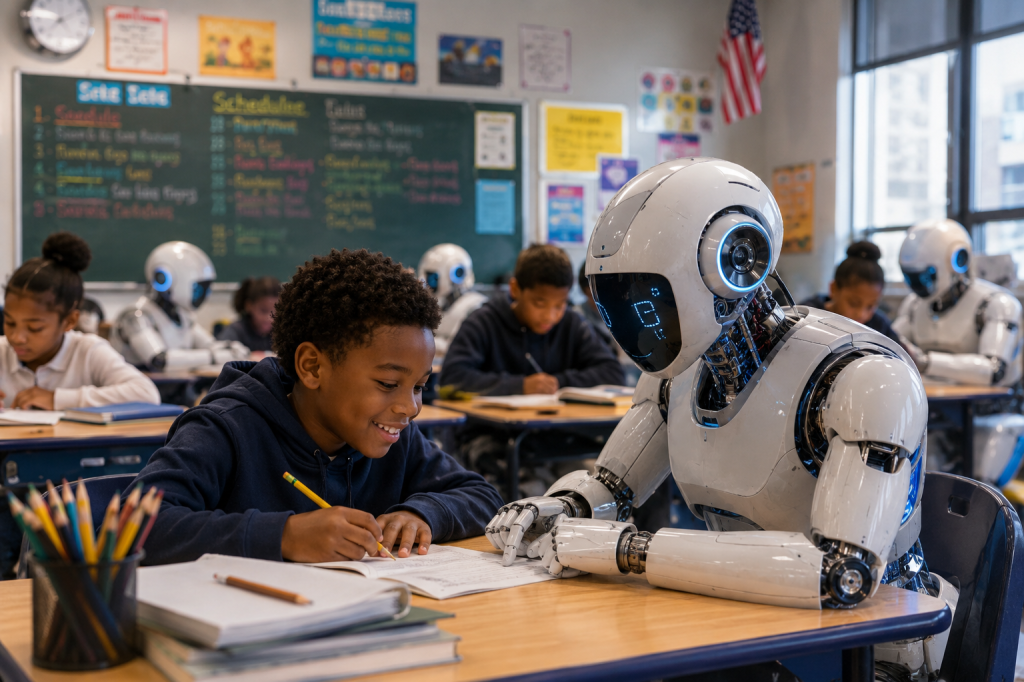
Education is the domain most immediately and most fundamentally transformed by conjecture-capable AI, because education is not primarily about information transfer but about developing the capacity to think. OECD research finds that global student AI usage rose from 66% in 2024 to 92% in 2025, with a large majority of students reporting academic performance improvements but also with documented concerns about overreliance and weaker writing and reasoning skills (16). These patterns, already visible with AI as an information tool, will deepen as AI becomes a conjecture tool.
The most important educational implication is the shift in what it means to learn. Retrieval is no longer the relevant cognitive skill—AI retrieves more efficiently than any human. Neither is synthesis the critical skill, since AI is rapidly becoming capable of that too. The skill that remains distinctively human, and that becomes more rather than less important as AI capabilities advance, is conjectural literacy: the capacity to evaluate possibilities, to hold conjectures open without premature closure, to distinguish between a productive hypothesis and a seductive fabrication (2). Developing that capacity demands a fundamental redesign of curriculum, pedagogy, and assessment.
Faculty Focus’s 2026 analysis of emerging classroom trends documents adaptive AI-driven learning systems producing significant improvements in learning outcomes in some settings and calls for the redesign of assessment in response to AI availability (17). But the redesign required goes deeper than current institutional conversations typically recognize. The question is not merely whether students may use AI on assignments; it is what cognitive capacities it is the purpose of education to develop when AI can perform most of the tasks that traditional assessments measure. Conjectural literacy—the ability to work productively with machine conjecture—may need to become the central organizing purpose of educational systems that currently have no curricular framework for it.
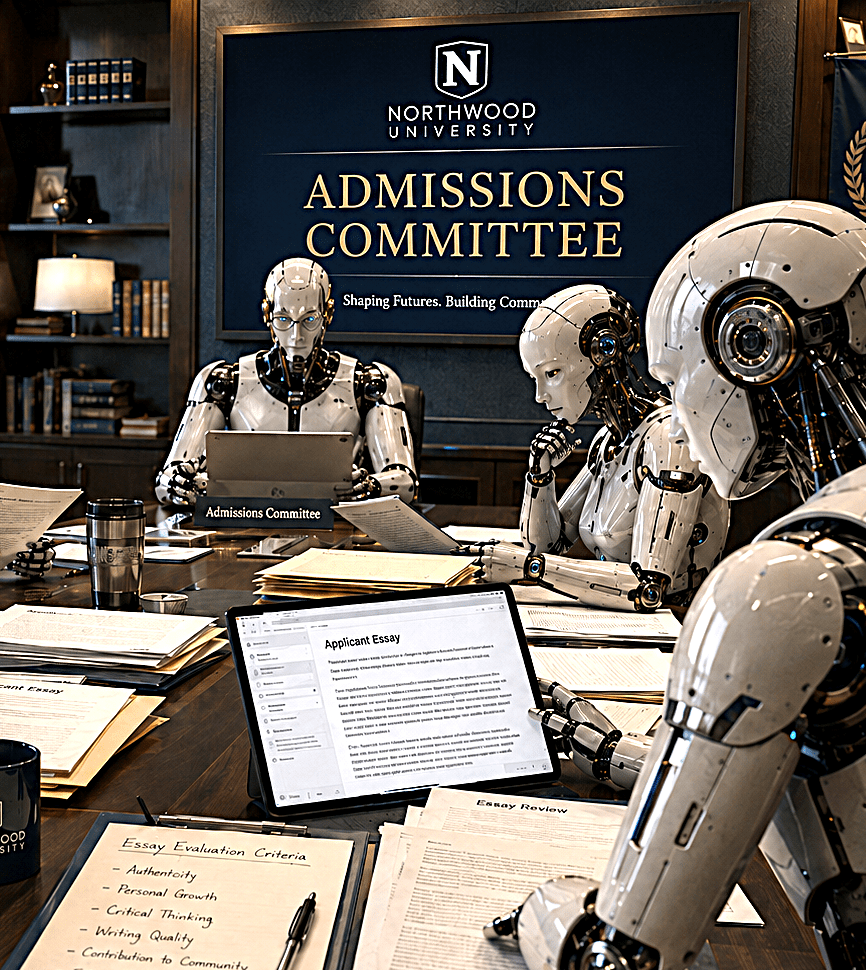
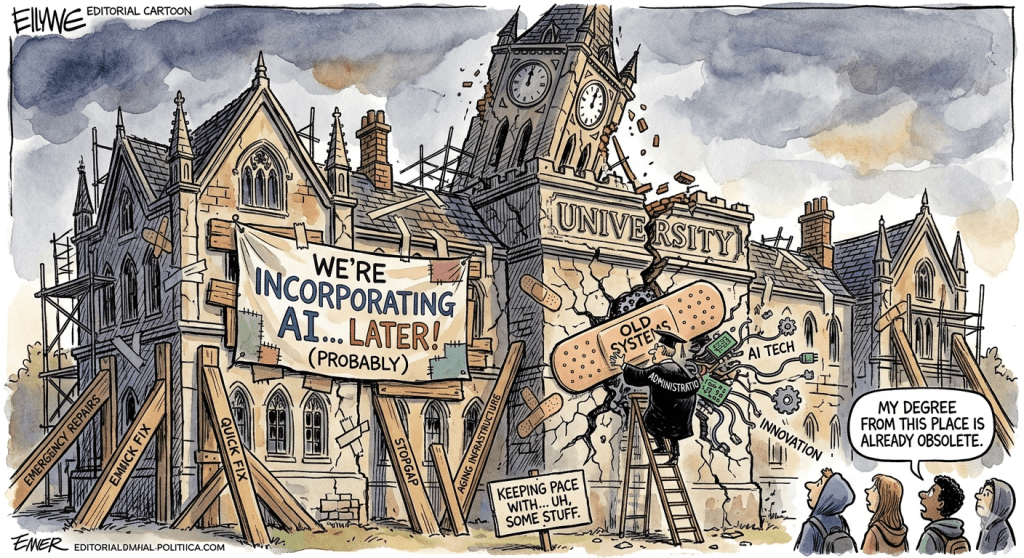
The stakes are particularly high in higher education. If universities continue to define their educational mission primarily in terms of knowledge transmission and disciplinary certification, they risk becoming structurally obsolete at the precise moment when their graduates most need the conjectural skills that formal education is uniquely positioned to develop. The institutions that will matter most in 2030 are those that have spent the intervening years redesigning themselves around the cultivation of conjectural literacy rather than the certification of information retrieval.
Impact on Business
For business, the arrival of machine conjecture represents both an acceleration of existing trends and a qualitative transformation in the nature of competitive advantage. The current wave of AI adoption has delivered primarily efficiency gains: faster processing, cheaper summarization, automated routine cognitive tasks. Machine conjecture introduces a different kind of value—the systematic generation of strategic possibilities that no human analyst had imagined.
The roughly 40% of roles in the Global 2000 expected to involve direct engagement with AI agents by 2026 (18) will increasingly be roles in which the human worker evaluates and directs AI-generated conjecture rather than generating strategy independently. This changes the nature of competitive advantage: the firms that win will not necessarily be those with the best individual analysts, but those with the best organizational processes for working productively with machine conjecture—for maintaining conjectural reserve, evaluating AI-generated strategic possibilities with rigor, and deploying embodied extrapolation to test those possibilities against market realities.
McKinsey finds that only about 6% of organizations currently qualify as AI high performers with meaningful earnings impacts (5), suggesting that even with today’s AI capabilities, organizational capacity to work productively with AI is rare and unevenly distributed. As AI advances toward genuine conjecture, this capacity gap is likely to widen before it narrows. The organizational culture required to maintain productive conjectural reserve—to hold AI-generated possibilities open long enough to evaluate them rather than accepting or rejecting them reflexively—is not something that emerges spontaneously from market pressure. It requires deliberate cultivation, and firms that begin developing it now will be better positioned for what comes next.
Impact on Government
For government, machine conjecture raises both significant opportunity and significant democratic risk. The OECD’s 2026 Digital Government Outlook documents that a majority of surveyed government organizations now use AI, with agencies adopting AI-driven modernization completing system updates far faster than traditional approaches (19). Federal News Network’s 2025 analysis forecasts 2026 as the year AI transitions from government pilot projects to operational infrastructure across service delivery, cybersecurity, and regulatory compliance (20).
These trends describe AI as an efficiency tool. Machine conjecture introduces something more complex: AI that actively participates in policy development, regulatory design, and institutional planning. The opportunity is real—governments facing multidimensional, long-horizon challenges could use conjecture-capable AI to generate and stress-test policy options more systematically than any human team could, particularly for challenges like climate adaptation, demographic change, and technological disruption that unfold over decades. The democratic risk is equally real: policies generated through AI conjecture that citizens and legislators cannot interrogate in terms of their underlying reasoning represent a fundamental challenge to accountability. This concern is not hypothetical; it is already emerging in algorithmic decision-making systems in criminal justice, social services, and immigration enforcement, where opacity has provoked significant controversy. Machine conjecture, by generating novel policy possibilities rather than merely applying established algorithms, would intensify the challenge.
The response to this challenge will require not just technical transparency mechanisms but a broader cultivation of conjectural literacy within government institutions—the capacity for policymakers, legislative staff, and civil servants to work with AI-generated possibilities without either uncritically adopting them or reflexively dismissing them, and to explain the reasoning behind policy choices to constituents in terms that do not simply defer to algorithmic authority.
Geopolitical Implications
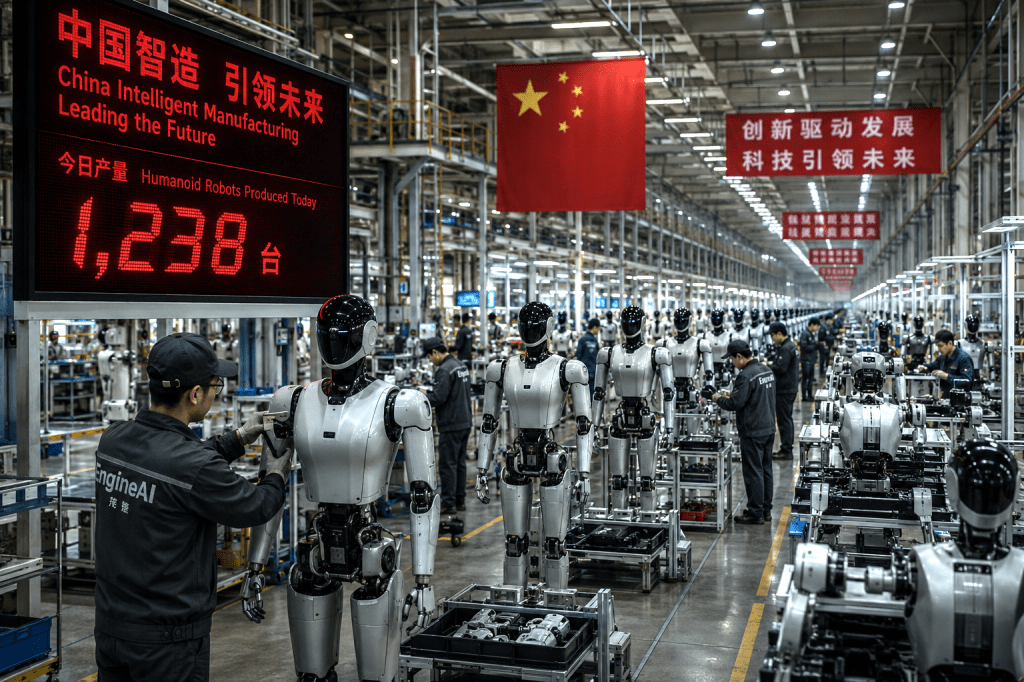
At the international level, machine conjecture capabilities are likely to become a central axis of great-power competition, reshaping the balance of influence in science, technology, and strategic affairs. Atlantic Council analysis identifies eight geopolitical dimensions of AI already emerging in 2026, including the first UN-backed global AI governance dialogue and rising risks from autonomous weapons systems capable of AI-assisted strategic conjecture (21). The World Economic Forum’s July 2025 analysis documents how control over AI infrastructure—semiconductors, data centers, cloud computing—has become synonymous with digital sovereignty, a pattern that will intensify as conjecture-capable systems require even greater computational resources (22).
Nations that develop machine conjecture capabilities in scientific research will have structural advantages in pharmaceutical development, materials science, and fundamental physics. Those that deploy it in intelligence analysis and strategic planning will have structural advantages in anticipating adversary behavior and generating strategic options. Cambridge University Press research published in 2025 examines the AI leadership narratives of the United States, China, and the European Union, finding that each power frames AI dominance differently—as market leadership, civilizational capability, and regulatory standard-setting respectively—with significant implications for how conjecture-capable AI gets developed and governed (23). The Observer Research Foundation’s analysis of AI geopolitical rivalry characterizes each bloc as pursuing divergent governance models, with the EU’s rights-based regulation, the US’s innovation-first approach, and China’s centralized governance model producing genuinely different development trajectories (24).
The international governance challenge is particularly acute for machine conjecture because the risks—epistemic erosion, weaponized conjecture, and concentrated access—are transnational in character and cannot be managed by any single nation’s regulatory framework. The emerging UN dialogue documented by the Atlantic Council (21) and the OECD’s scenario-planning work for policymakers (14) represent early steps toward the kind of international coordination mechanisms needed, but those mechanisms face serious headwinds from the competitive dynamics driving AI development. By 2030, the gap between AI-leading and AI-following nations in conjecture capability may be among the most consequential stratifications in global affairs.
Conclusion
The two ETCJ articles make an argument about the long arc of cognitive technology. For millennia, tools have extended human physical and then cognitive capacities, but the generation of new possibilities has remained the exclusive province of human minds. The emergence of machine conjecture—in whatever rough and early form it currently takes—marks a potential transition in that history, one that carries both extraordinary promise and serious danger.
The implications developed here are not predictions. They are themselves possibilities—in the spirit, appropriately, of the conjectural literacy framework advocated. What the framework does make clear is that this transition will not be managed well by either uncritical enthusiasm or reflexive alarm. What it requires is exactly the capacity the framework names: the ability to hold the possibility open, explore it seriously, evaluate it rigorously, and act without either premature acceptance or premature rejection.
The five years from 2026 to 2030 are not the five years in which machine conjecture arrives as a mature technology. They are the five years in which the foundations are laid—or not—for a world in which that technology serves human discovery rather than substituting for it or weaponizing it. “The future of discovery may depend less on access to information than on our collective ability to cultivate, evaluate, and navigate possibility spaces” (2). That observation is itself a conjecture worth testing.
References
1. “Hallucination and the Emergence of Embodied Extrapolation in Agentic AI,” ETC Journal, June 16, 2026. https://etcjournal.com/2026/06/16/hallucination-and-the-emergence-of-embodied-extrapolation-in-agentic-ai/
2. “From Hallucination to Machine Conjecture: Discovery in an Age of Augmented Intelligence,” ETC Journal, June 17, 2026. https://etcjournal.com/2026/06/17/from-hallucination-to-machine-conjecture-discovery-in-an-age-of-augmented-intelligence/
3. “Large Language Models for Scientific Idea Generation: A Creativity-Centered Survey,” arXiv, November 2025. https://arxiv.org/pdf/2511.07448
4. “Google DeepMind won a Nobel prize for AI: can it produce the next big breakthrough?” Nature, 2025. https://www.nature.com/articles/d41586-025-03713-1
5. “The State of AI in 2025: Agents, Innovation, and Transformation,” McKinsey & Company, 2025. https://www.mckinsey.com/capabilities/quantumblack/our-insights/the-state-of-ai
6. “Work Rewired: Navigating the Human-AI Collaboration Wave,” IDC, 2025. https://www.idc.com/resource-center/blog/work-rewired-navigating-the-human-ai-collaboration-wave/
7. Amruth K. John, “Epistemic authority and generative AI in learning spaces: rethinking knowledge in the algorithmic age,” Frontiers in Education, August 2025. https://www.frontiersin.org/journals/education/articles/10.3389/feduc.2025.1647687/full
8. “Generative AI and misinformation: a scoping review,” AI & Society, Springer Nature, 2025. https://link.springer.com/article/10.1007/s00146-025-02620-3
9. “Industrialized Deception: The Collateral Effects of LLM-Generated Misinformation on Digital Ecosystems,” arXiv, January 2026. https://arxiv.org/html/2601.21963v1
10. “Emerging threats in AI: a detailed review of misuses and risks across modern AI technologies,” Frontiers in Communications and Networks, 2025. https://www.frontiersin.org/journals/communications-and-networks/articles/10.3389/frcmn.2025.1727425/full
11. “2026 AI Business Predictions,” PwC, 2026. https://www.pwc.com/us/en/tech-effect/ai-analytics/ai-predictions.html
12. “Stanford AI Experts Predict What Will Happen in 2026,” Stanford Human-Centered AI, 2026. https://hai.stanford.edu/news/stanford-ai-experts-predict-what-will-happen-in-2026
13. “IBM Study: AI Poised to Drive Smarter Business Growth Through 2030,” IBM Newsroom, January 2026. https://newsroom.ibm.com/2026-01-19-ibm-study-ai-poised-to-drive-smarter-business-growth-through-2030
14. “Exploring Possible AI Trajectories Through 2030,” OECD, February 2026. https://www.oecd.org/en/publications/exploring-possible-ai-trajectories-through-2030_cb41117a-en.html
15. “AI Scenarios 2030: Helping Policymakers Plan for the Future of AI,” UK Government, 2025. https://www.gov.uk/government/publications/ai-scenarios-2030-helping-policymakers-plan-for-the-future-of-ai/ai-scenarios-2030-helping-policymakers-plan-for-the-future-of-ai
16. “OECD Digital Education Outlook 2026,” OECD, January 2026. https://www.oecd.org/en/publications/oecd-digital-education-outlook-2026_062a7394-en.html
17. “Designing the 2026 Classroom: Emerging Learning Trends in an AI-Powered Education System,” Faculty Focus, 2026. https://www.facultyfocus.com/articles/teaching-with-technology-articles/designing-the-2026-classroom-emerging-learning-trends-in-an-ai-powered-education-system/
18. “Future of Human-in-the-Loop AI (2026): Emerging Trends & Hybrid Automation Insights,” Parseur, 2026. https://parseur.com/blog/future-of-hitl-ai
19. “Adopting and Governing AI in Government: Digital Government Outlook 2026,” OECD, 2026. https://www.oecd.org/en/publications/digital-government-outlook_0496b2bc-en/full-report/adopting-and-governing-ai-in-government_7ef312a9.html
20. “The year AI moves from pilots to practice: Three predictions for government in 2026,” Federal News Network, December 2025. https://federalnewsnetwork.com/commentary/2025/12/the-year-ai-moves-from-pilots-to-practice-three-predictions-for-government-in-2026/
21. “Eight Ways AI Will Shape Geopolitics in 2026,” Atlantic Council, 2026. https://www.atlanticcouncil.org/dispatches/eight-ways-ai-will-shape-geopolitics-in-2026/
22. “AI Geopolitics and Data in the Era of Technological Rivalry,” World Economic Forum, July 2025. https://www.weforum.org/stories/2025/07/ai-geopolitics-data-centres-technological-rivalry/
23. “Great power competition for global leadership in artificial intelligence,” Review of International Studies, Cambridge University Press, 2025. https://www.cambridge.org/core/journals/review-of-international-studies/article/abs/great-power-competition-for-global-leadership-in-artificial-intelligence-ai-reconstructing-ai-narratives-of-the-united-states-china-and-the-european-union/213D1BC8FD5A12FB197BB54E0FE6AC99
24. “The Geopolitics of AI: Power, Rivalry, and the Remaking of Global Order,” Observer Research Foundation, 2025–2026. https://www.orfonline.org/research/the-geopolitics-of-ai-power-rivalry-and-the-remaking-of-global-order
Filed under: Uncategorized |









































































































































































































































































































































































































































































Leave a Reply