


By Jim Shimabukuro (assisted by Claude)
Editor
Summary: How influencers became bigger than the media that once defined “big” — and why it happened.

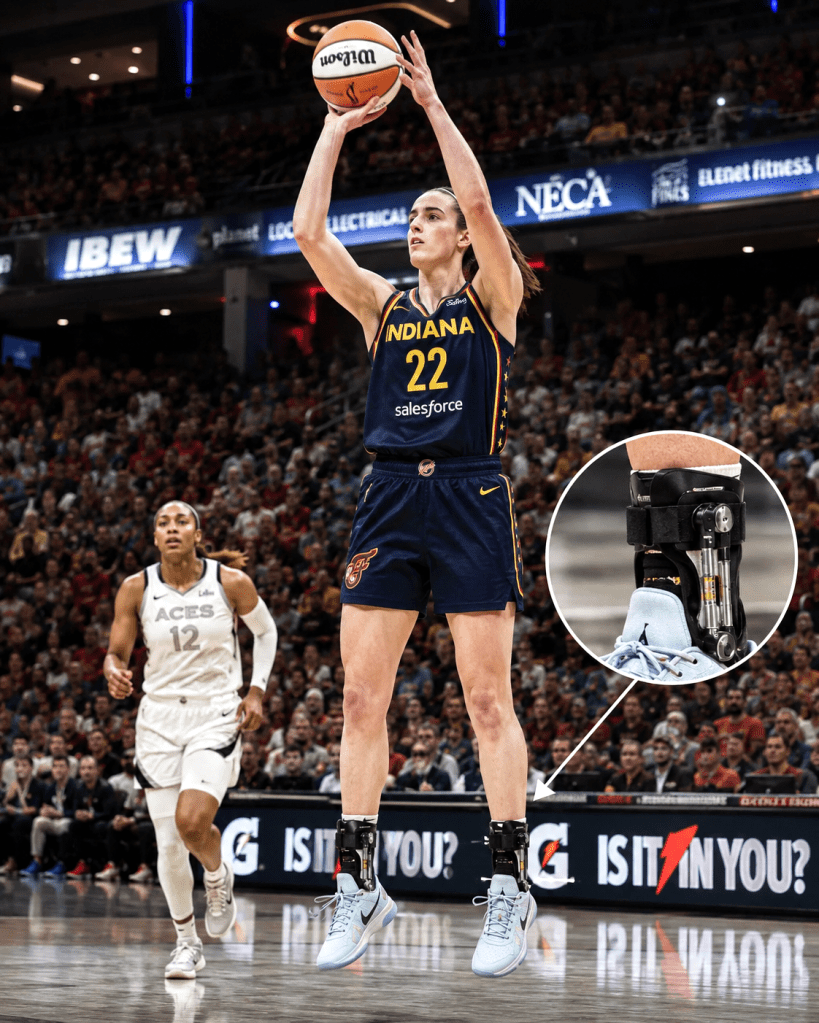
If you want to watch Caitlin Clark play basketball this season, television has finally, fully obliged: every one of the Indiana Fever’s 44 regular-season games is on a national broadcast or streaming platform in 2026, a first for any WNBA franchise [16]. But if you want to argue about her — to relive the hard fouls, question the officiating, and hear somebody say out loud what you were already shouting at your screen — television is mostly useless. That conversation lives on YouTube and in podcast feeds, hosted by creators who never set foot in a network studio and who nonetheless command the loyalty of millions of fans.
The players have noticed. Fever guard Sophie Cunningham launched her own podcast, Show Me Something, in July 2025, giving fans the kind of locker-room access no sideline reporter can match [17]. League stars A’ja Wilson and Napheesa Collier trade unguarded conversation on Tea with A & Phee [18]. When the athletes themselves would rather talk to a creator’s microphone — or become the creator — than sit for one more network hit, something fundamental has shifted.
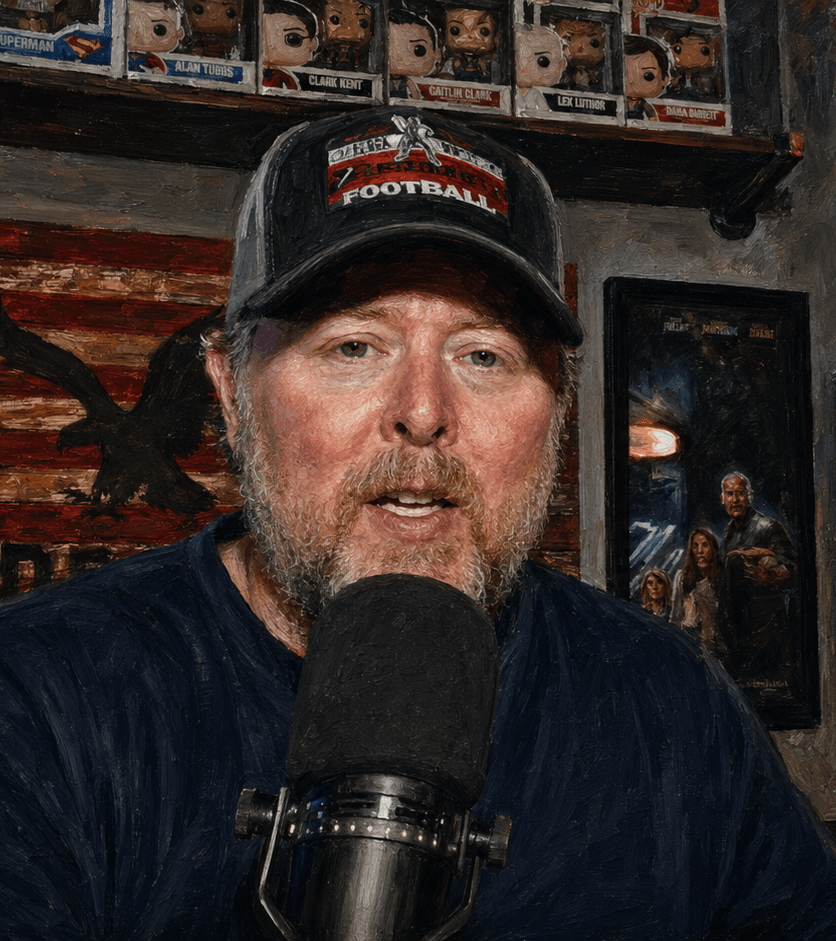
This is a basketball anecdote, but it is not a basketball story. Across news, politics, and culture, the people we once called “influencers,” usually with a slight curl of the lip, have become the primary way tens of millions of Americans learn about the world, while the institutions we still call “mainstream media” bleed audience, trust, and talent. By the numbers, the influencers now have a serious claim to being the mainstream. How that happened, and where it leads, is worth a closer look.
The Numbers Behind the Takeover
Start with a finding that made headlines across the industry this June. The Reuters Institute at Oxford, publisher of the most comprehensive annual survey of news habits in the world — 48 markets, six continents — reported that for the first time, social media and video networks are the most widely used source of news globally, ahead of television and ahead of news organizations’ own websites and apps [1]. The report describes a steady “platformisation” of news: when people go online, they increasingly prefer to watch rather than read, and what they watch is increasingly made by individuals rather than institutions.
Those individuals now have a name: news creators. Roughly 27 percent of people worldwide got news in the past week from creators who focus mainly on news; count entertainers who sometimes wander into current events, and the figure nearly doubles, to 46 percent [1]. In the United States, Pew Research Center finds about one in five adults regularly gets news from influencers on social media, rising to roughly four in ten among adults under 30 [2]. Most are not even seeking it out — about seven in ten of those who get news this way say they simply come across it [2].
Meanwhile the traditional side of the ledger keeps shrinking. Gallup’s annual measure of trust in the mass media fell to 28 percent in 2025, the first reading below 30 in the poll’s half-century history. When Gallup first asked the question in the 1970s, the answer ran between 68 and 72 percent. The partisan gap is stark: 51 percent of Democrats still express trust, against 27 percent of independents and just 8 percent of Republicans [5]. The Reuters Institute’s global numbers rhyme: trust in news sits at 37 percent, the lowest it has recorded since it began measuring in 2015, and only a quarter of Americans say they trust the news most of the time [1].
If a single event made the power shift undeniable, it was the 2024 presidential campaign, quickly dubbed “the podcast election.” The Trump operation largely sidestepped legacy outlets in favor of shows hosted by Joe Rogan, Theo Von, and other podcasters with enormous young-male audiences; Rogan’s sit-down with Trump alone piled up tens of millions of YouTube views within days [12]. Whatever one makes of the result, every political operative in America absorbed the strategic lesson: the biggest rooms no longer belong to the networks.
The Great Migration — in Both Directions
Now follow the talent, because the talent always follows the audience. In January 2025, Jim Acosta walked away from CNN rather than accept a midnight time slot and relaunched himself on Substack. Chuck Todd, longtime moderator of Meet the Press, left NBC the same month and revived his podcast, saying he had lost faith in national media. Jennifer Rubin left the Washington Post for an independent venture. And Terry Moran, out at ABC News after 28 years over a social media post attacking the White House, had a Substack running almost immediately, declaring that legacy organizations were “failing the American people” because their corporate owners feared the president [7][8].
They joined pioneers who had already proven the model. Megyn Kelly — formerly of Fox News and NBC — built her independent show into one of the most-consumed programs on the Apple and Spotify charts, then expanded it in March 2025 into a full podcast network, MK Media, complete with a stable of hosts [15]. The infrastructure carrying all of them is booming: Substack more than doubled its paid subscriptions to five million in under two years, and YouTube now claims more than a billion podcast views a month [7].
Here is the twist that makes this a genuine convergence rather than a jailbreak: the traffic now runs both ways. In October 2025, Paramount paid a reported $150 million for The Free Press, the independent outlet Bari Weiss built on Substack after resigning from the New York Times — and installed Weiss as editor-in-chief of CBS News, home of Cronkite and 60 Minutes [9][10]. Read that again: a legacy network bought an influencer operation to repair its credibility, not the other way around. Legacy brands from the Washington Post to Britain’s Daily Mail are opening “creator labs” to grow their own influencers in-house [1].
The old order keeps contracting all the while. MSNBC, spun off from NBCUniversal into a new cable company and rebranded MS NOW in November 2025, promptly logged some of its weakest ratings since the late 1990s as cord-cutting grinds on [13][14].
Why This Is Happening
None of this happened because Americans stopped caring about news. It happened because four slow-moving forces finally converged.
The first is the trust collapse itself. When barely a quarter of the country believes the press reports the news “fully, accurately and fairly,” the addressable market for alternatives is, arithmetically, the other three-quarters [5]. Distrust on that scale is not a public-relations problem; it is a vacuum, and media abhors a vacuum.
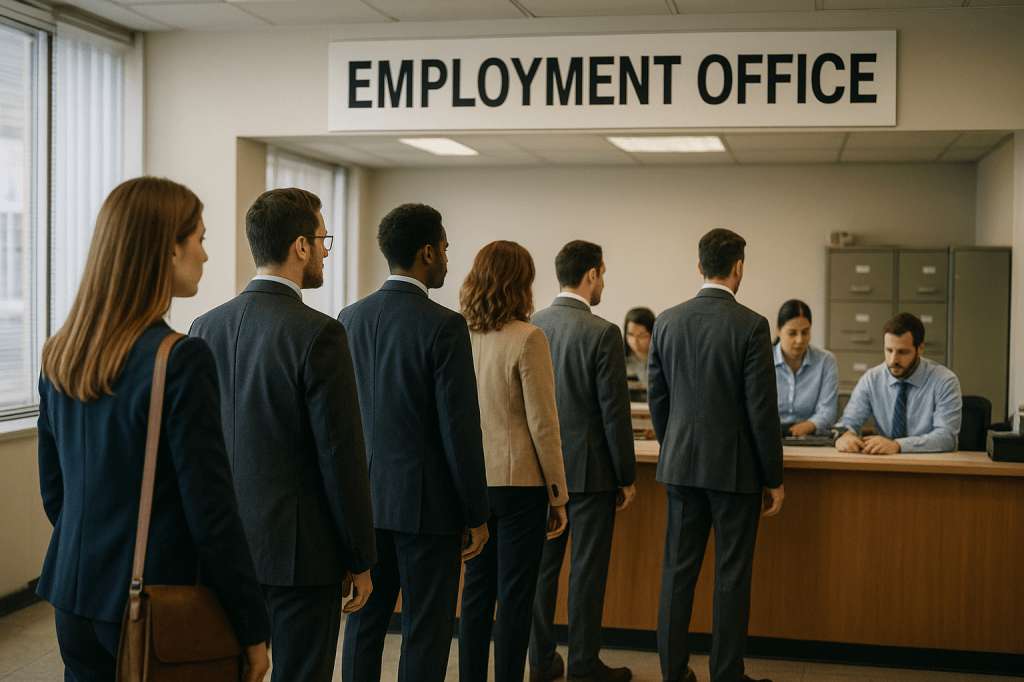
The second is economic. The business model that quietly funded professional journalism for a century has been dismantled piece by piece. Northwestern’s Medill School counted another 136 newspapers gone in the year through October 2025, leaving fewer than 1,000 daily print papers in the country and 213 counties with no local news source at all; over two decades, America has lost roughly 3,500 papers and 270,000 newspaper jobs [6]. The digital lifeline is fraying too: organic Google search traffic to publishers fell by about a third globally — 38 percent in the United States — in a single year, as AI-generated answers absorb the clicks that once became subscriptions [1]. Against that backdrop, the economics of one person, a microphone, and an ad-revenue share look ruthlessly efficient.
The third is technological, and it is almost embarrassingly simple: the gatekeepers lost the gates. A creator no longer needs a transmitter, a printing press, or anyone’s permission. The smartphone made professional-looking video nearly free to produce, and the smart TV carried YouTube into the living room, where it now competes head-to-head with Netflix and the cable bundle for the biggest screen in the house [1].
The fourth force is the one fans feel in their bones: authenticity. Reuters Institute survey respondents consistently describe creators as more entertaining, easier to understand, and more relatable than traditional outlets — and people who actually use creators rate them above legacy media on every attribute measured, including trustworthiness [1]. Pew’s portrait of American news influencers helps explain why: 77 percent have never worked for a news organization; they built their followings by sounding like their audiences rather than their editors [3]. A creator talks to you, often for hours, unscripted, reacting in real time. It is the same reason a Fever fan would rather watch a YouTuber break down a Clark game than a two-minute highlight package: the creator sounds like a fan with better information, not an institution managing its liability.
About That Political Tilt
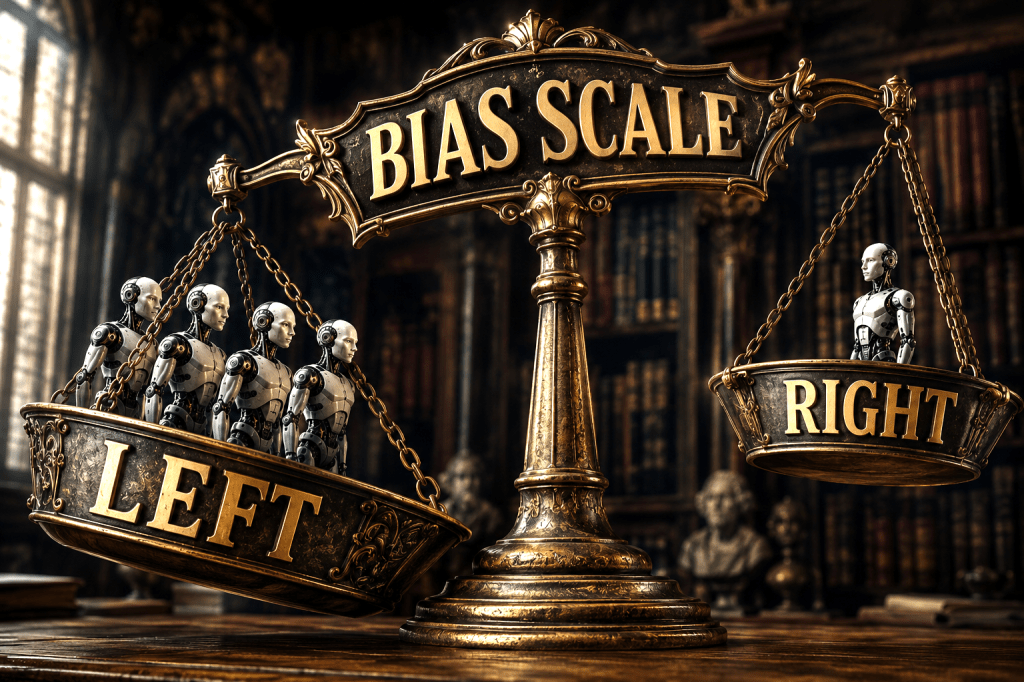
A common observation — that network newsrooms lean left while the podcast world leans right — turns out to be partly true, and interesting either way. Among American news influencers who declare a politics, Pew found somewhat more identifying as Republican or conservative (27 percent) than Democratic or liberal (21 percent): a lean, not a landslide [3]. The concentration at the top is heavier. A 2025 Media Matters analysis of 320 ideological online shows concluded that the right dominates the online media ecosystem, notably in spaces that brand themselves as non-political: by its count, 72 percent of ostensibly non-political shows with an ideological bent tilt right, and just 15 right-leaning comedy podcasts — Rogan and Von among them — account for well over 100 million followers [11].
Why the asymmetry? Partly lineage: conservative audiences had spent decades on AM talk radio, and the migration from Rush Limbaugh’s dial position to a podcast feed was short. Partly demand: with Republican trust in the mainstream press at 8 percent [5], the right had by far the greater appetite for alternatives — an audience the networks had, in effect, already lost. Fairly or not, the perception that legacy newsrooms tilt left functions as a market signal, and insurgents sell to everyone who feels unserved. The left’s creator successes are real but differently shaped — the historian Heather Cox Richardson writes to more than 2.5 million Substack subscribers [1] — and Democratic strategists have now spent two years openly searching for “their own Joe Rogan,” a quest that has so far produced more panel discussions than Rogans [12].
One nuance is worth underlining, because it cuts against the doom narrative on all sides: audiences have not abandoned the ideal of straight news. In the Reuters Institute’s global survey, people who prefer news without a point of view still outnumber those who want news that shares their views by two to one — younger audiences included [1].
Why It Matters
The case for worry is straightforward. A newsroom, whatever its flaws, has editors, correction policies, standards desks, and libel lawyers; a creator has an upload button. Audiences sense the difference — across all respondents, creators are rated less trustworthy and less impartial than established outlets, even by many who enjoy them [1]. There is no ombudsman for a podcast, and when politicians learn they can go straight to friendly creators — or become creators themselves, a trend the Reuters Institute now tracks globally — the scrutiny function of the press gets easier to skip entirely [1].
But the panic runs ahead of the evidence. The same global data show creator news is overwhelmingly a complement, not a replacement: only 13 percent of people say news-focused creators meet most or all of their news needs, a mere 3 percent rely on creators alone, and creator users actually consume more traditional media than the average person [1]. And the WNBA example shows the upside the worriers skip: creators flooded into a league the big shops under-covered for years, gave voice to a fan’s perspective the press box rarely airs, and helped grow the audience for everyone — including the networks now paying record sums for rights. The sharpest risk is not that influencers replace journalism where it is strong, but that nothing replaces it where it has already collapsed: in those 213 counties with no local news source, there is no YouTuber covering the school board [6].
Where It’s Headed
The trajectory looks less like a pendulum than a one-way door, because it is generational. Among 18-to-24-year-olds worldwide who did not read a newspaper last week, 56 percent say they never regularly read one — there is no lapsed habit to win back [1]. Pew finds American adults under 30 now trust information from social media about as much as information from national news organizations, something no older cohort comes close to saying [4]. The data give little reason to expect young people to age into their parents’ news habits [1].
So expect convergence rather than conquest. The most successful creators are professionalizing into media businesses — Kelly’s network, The Free Press’s $150 million exit — while the institutions frantically influencer-ize, from creator labs to anchors going direct. As Tyler Denk, chief executive of the newsletter platform Beehiiv, put it: “The creator use case and the enterprise use case are going to merge quicker than most people expect” [1]. The next disruptor is already in the room, too: one in ten people now uses an AI chatbot for news, a figure rising fastest among the young [1].
The Reuters Institute’s authors close their 2026 report with a line that doubles as the deepest answer to the question of why all this is happening: in a more questioning age, “simply telling people what to believe probably belongs to a more hierarchical past” [1]. For most of a century, news was something an institution handed down. It is becoming something closer to a conversation among people who sound like us — with all the vitality, and all the hazards, that implies. The fan watching a Fever breakdown at midnight, half-agreeing and half-arguing with a creator who feels like a friend, is not on the fringe of the media world anymore. Increasingly, that is what the mainstream looks like.
References
1. Reuters Institute for the Study of Journalism, University of Oxford. “Digital News Report 2026: Overview and Key Findings.” June 2026. https://reutersinstitute.politics.ox.ac.uk/digital-news-report/2026/dnr-executive-summary
2. Pew Research Center. “News Influencers Fact Sheet.” 2025. https://www.pewresearch.org/journalism/fact-sheet/news-influencers-fact-sheet/
3. Pew Research Center. “America’s News Influencers.” November 18, 2024. https://www.pewresearch.org/journalism/2024/11/18/americas-news-influencers/
4. Pew Research Center. “Young Adults and the Future of News.” December 3, 2025. https://www.pewresearch.org/journalism/2025/12/03/young-adults-and-the-future-of-news/
5. Gallup. “Trust in Media at New Low of 28% in U.S.” October 2025. https://news.gallup.com/poll/695762/trust-media-new-low.aspx
6. Medill Local News Initiative, Northwestern University. “The State of Local News 2025.” October 2025. https://localnewsinitiative.northwestern.edu/projects/state-of-local-news/2025/
7. Free Speech Center, Middle Tennessee State University. “How Journalists Leaving Legacy News Strive to Survive in New Media.” 2025. https://firstamendment.mtsu.edu/post/how-journalists-from-legacy-news-strive-to-survive-in-new-media/
8. Washington Examiner. “Terry Moran Joins Growing Wave of Unemployed Former TV Journalists Joining Substack.” 2025. https://www.washingtonexaminer.com/news/business/3439235/terry-moran-joins-unemployed-former-tv-journalists-joining-substack/
9. Paramount. “Paramount Announces Deal to Acquire The Free Press.” October 6, 2025. https://www.paramount.com/press/paramount-announces-deal-to-acquire-the-free-press
10. CNN Business. “Bari Weiss Is Now CBS News Editor-in-Chief After Paramount Acquires The Free Press.” October 6, 2025. https://www.cnn.com/2025/10/06/media/bari-weiss-cbs-free-press-paramount-sale
11. Media Matters for America. “The Right Dominates the Online Media Ecosystem, Seeping into Sports, Comedy, and Other Supposedly Nonpolitical Spaces.” March 2025. https://www.mediamatters.org/google/right-dominates-online-media-ecosystem-seeping-sports-comedy-and-other-supposedly
12. The Conversation. “US Election Shows How Podcasts Are Shaping Politics — and What the Risks Are.” November 2024. https://theconversation.com/us-election-shows-how-podcasts-are-shaping-politics-and-what-the-risks-are-243325
13. The Hill. “MSNBC Rebranded as MS NOW, Leaving NBCUniversal Behind.” November 2025. https://thehill.com/homenews/media/5608474-msnbc-leaves-nbc-universal/
14. Semafor. “The Old MSNBC Relaunches into a New Media World.” November 16, 2025. https://www.semafor.com/article/11/16/2025/the-old-msnbc-relaunches-into-a-new-media-world
15. Barrett Media. “Megyn Kelly Unveils Plans for New Podcast Network.” March 25, 2025. https://barrettmedia.com/2025/03/25/megyn-kelly-unveils-plans-for-new-podcast-network/
16. Indiana Fever / WNBA. “Indiana Fever to Feature in WNBA Record 44 out of 44 National Television Games in 2026.” https://fever.wnba.com/news/indiana-fever-to-feature-in-wnba-record-44-out-of-44-national-television-games-in-2026
17. Apple Podcasts. “Show Me Something,” with Sophie Cunningham and West Wilson. iHeartPodcasts/The Volume, 2025. https://podcasts.apple.com/us/podcast/show-me-something/id1830012718
18. Yahoo Sports. “‘Tea with A & Phee,’ A’ja Wilson and Napheesa Collier’s Candid Hit Podcast, Returns for In-Season Look at WNBA Life.” 2025. https://sports.yahoo.com/wnba-tea-aja-wilson-napheesa-colliers-candid-hit-podcast-returns-for-in-season-look-at-wnba-life-203536301.html
###
Filed under: Uncategorized |











































































































































































































































































































































Leave a Reply