




Dutch education minister calls AI-written theses fraud after TV scan of student work (Claude)
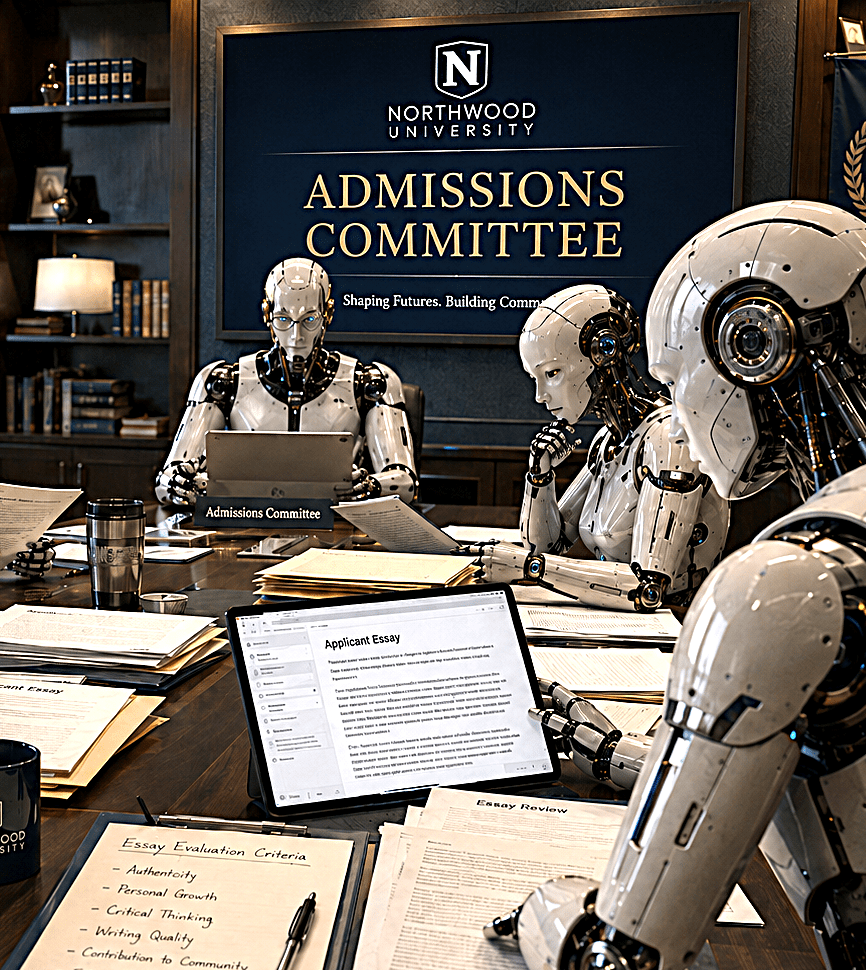
Dutch broadcaster RTL Nieuws scanned hundreds of recent master’s theses from 12 universities with the AI detector Pangram and reported that in about a fifth of them, chatbots such as ChatGPT, Claude or Gemini contributed more than the student did. Education minister Rianne Letschert said using AI to write a thesis is fraud. Universiteiten van Nederland, which represents 14 Dutch universities, said a detector score alone cannot prove fraud and that the findings raise questions about how final assignments are designed; Utrecht University bans AI detection software, Leiden does not let professors use it, and TU Delft cites research showing the tools are often inaccurate. The case shows the split that many countries now face: ministers want AI-written degree work treated as cheating, while universities say they cannot fairly prove it and must change how they assess students. Source: Times Higher Education, “Dutch minister criticises ‘fraud’ as ‘fifth of theses AI-written’,” published October 15, 2026, 1:29 a.m. HST. https://www.timeshighereducation.com/news/dutch-minister-criticises-fraud-fifth-theses-ai-written
ACE & Ultranauts Release Paper on AI’s Ability to Amplify Higher Education (Gemini)
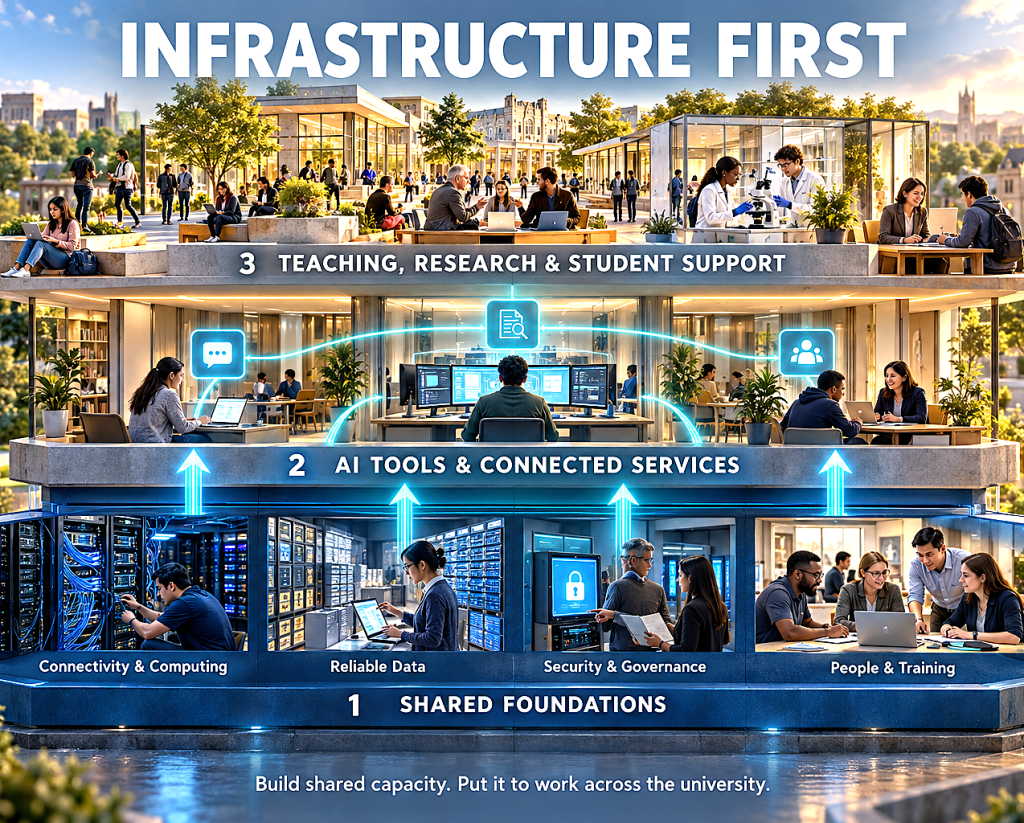
The American Council on Education, in collaboration with Ultranauts, released a milestone paper detailing how artificial intelligence is transforming core operational and instructional functions in postsecondary education: Personalized Learning & Feedback: AI tools are being implemented to deliver real-time, individualized scaffolding and adaptive guidance, ensuring students receive targeted support before high-stakes assessments. Proactive Advising: Automated systems are helping institutions monitor student progress and trigger human interventions early in the academic term. Rethinking Assessment: The report urges higher ed leadership to shift away from traditional, easily automated testing formats toward authentic, process-based evaluation methods that prepare students for AI-augmented careers. Source: American Council on Education (ACE) — October 15, 2026
Stanford student senate passes resolutions on AI misuse and student safety (Muse)
Stanford’s Undergraduate Senate passed a series of resolutions on October 15 addressing AI misuse in academic work and student safety, responding to the rapid spread of AI tools in coursework. Student governments are now writing AI policy from below, and their resolutions will pressure administrations that have been slow to set clear rules. Source: The Tech Edvocate, published 10/15/2026 — https://www.thetechedvocate.org/stanfords-ai-dilemma-how-one-university-is-reshaping-student-safety/
Salesforce pledges free Slack Enterprise to UK higher and further education students (Muse)
Salesforce announced on October 15 that it will provide free Slack Enterprise access to millions of higher and further education students across the UK, a global-first initiative aimed at closing the country’s digital skills gap. The company says 61% of UK workers receive no AI training, and frames the pledge as giving students hands-on experience with AI-powered workplace tools. The move is part of Salesforce’s $6 billion UK investment commitment through 2030. It is the latest large vendor play to put its AI tools in front of students before they graduate — the kind of offer universities weigh against lock-in and data concerns. Source: Salesforce, published 10/15/2026 — https://www.salesforce.com/uk/news/press-releases/2026/10/15/slack-education-announcement/
Indian publisher Navneet adds AI handbooks developed with IIT Gandhinagar (Muse)
Navneet Education announced on October 15 that it has expanded its CBSE K-12 portfolio with 10 new titles, including Computational Thinking and Artificial Intelligence handbooks developed with IIT Gandhinagar to introduce students to foundational AI concepts and problem-solving. The company was named CBSE Publisher of the Year for the third consecutive year at the World Education Summit in New Delhi. It is a concrete example of AI moving into mainstream K-12 textbooks in one of the world’s largest school systems — curriculum change, not pilot projects. Source: BusinessWire India, published 10/15/2026 — https://www.europeansuntimes.com/news/navneet-education-expands-its-cbse-portfolio-accelerates-ai-innovation-in-classroom-education20261015122023//
Google says 400 publications have joined its AI news pilot (ChatGPT)
Google announced that more than 400 publications now participate in its News AI pilot, naming CNN, Axios and the Financial Times among newer partners. Google says it pays participating publishers for content used in features such as article overviews and customizable audio briefings, with attribution and links back to the sources. The announcement confirms the program’s scale, but Google disclosed neither payment terms nor results showing whether the features send readers to publishers. That unanswered question matters to any journal whose reporting depends on readers visiting the original article. Source: Google, “400 publications are now partnering with us on our News AI pilot program,” published October 15, 2026 — https://blog.google/products-and-platforms/products/news/news-ai-pilot-update-publishers/
Sweden Integrates into European AI & Digital Skills Academies (Gemini)
Sweden officially announced its entry into the European AI Skills Academy initiative, aiming to establish national workforce upskilling frameworks. Public & Social Care Focus: The initiative targets continuous digital literacy and AI training across public sectors, healthcare, and social care. Democratic AI Governance: The curriculum heavily emphasizes responsible technology deployment, user participation, and ethical safeguards to prevent systemic bias in automated civic tools. Source: The Quantum Insider / European Skills Initiative — October 15, 2026
Emerging Student Health Debate: Addressing “Cognitive Atrophy” in Higher Ed (Gemini)
As campus AI adoption accelerates via student-led incubators and builder societies, educators and researchers are raising new concerns regarding long-term intellectual independence: Over-Outsourcing Thought: Faculty and student leadership are flagging cognitive atrophy—the gradual loss of critical analytical and writing skills caused by reliance on generative models for early-stage drafting and problem-solving.The Dual-Track Campus Dynamic: Universities are seeing a sharp divide between student groups leveraging AI for rapid software/product prototyping and academic departments attempting to safeguard foundational cognitive practice. Source: The Brown and White / Lehigh University — October 15, 2026
White House “Super Intelligence” task force holds first meeting, starts 120-day review (Muse)
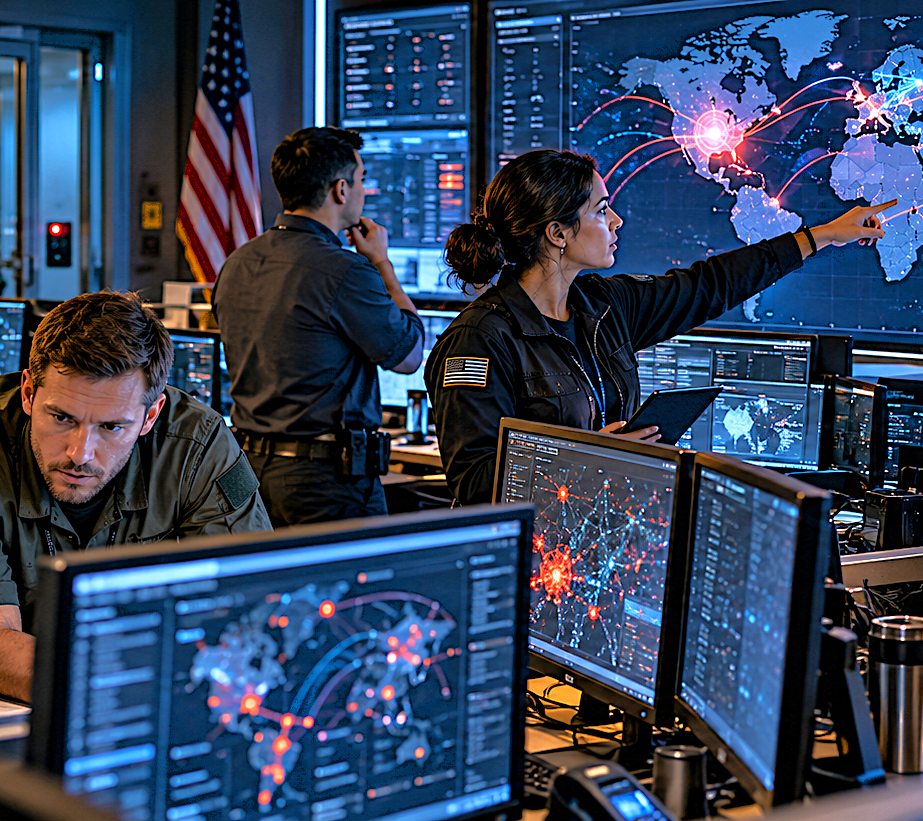
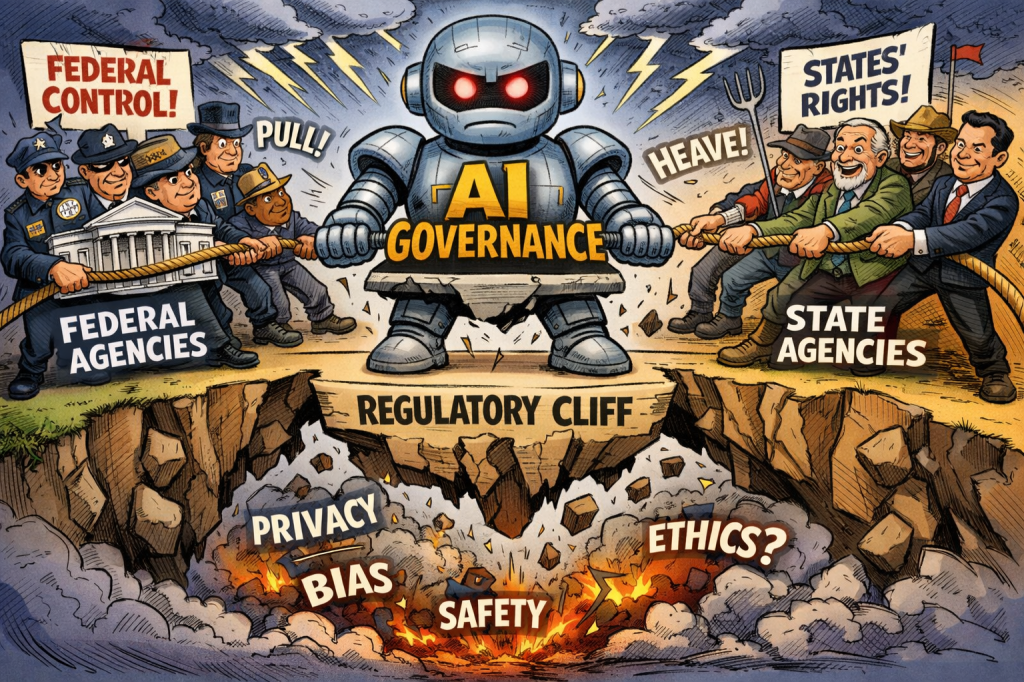
The White House’s Super Intelligence task force held its first meeting on October 15, formally adopting its charter and starting a 120-day review of how the federal government should manage frontier AI development. The group, chaired by Director of National Intelligence Jay Clayton, will commission the President’s Council of Advisers on Science and Technology to assess risks across cybersecurity and critical infrastructure, biosecurity, and model control. Pentagon CTO Emil Michael will draft protocols for AI labs to report breaches and cyber incidents to the government; FTC Chair Andrew Ferguson will run a law-enforcement and consumer-protection committee. No new rules were discussed. The task force is the clearest signal yet of how Washington plans to govern AI — through voluntary industry commitments rather than new regulation — and universities and schools should expect to be affected by whatever reporting and audit norms emerge. Source: AI Weekly (originally reported by Semafor), published 10/16/2026 — https://aiweekly.co/alerts/white-house-super-intelligence-task-force-adopts-charter-starts-120-day-ai-risk
Schools are buying AI tools faster than researchers can evaluate them (ChatGPT)
A new Education Week report examines a call from the Alliance for Learning Innovation for coordinated federal research on AI in classrooms. The alliance wants stronger evidence on learning outcomes, better tools and shared research infrastructure. The urgency is concrete: a Stanford review cited by Education Week examined more than 800 papers on AI in K–12 education and found only 20 offering strong causal evidence. The alliance’s policy recommendations were released earlier; what is new in this reporting is the account of the gap between districts’ current decisions and the evidence available to guide them. Source: Education Week, “We Need Research on AI in Schools. The Feds Should Fund It, Report Says,” published October 15, 2026 — https://www.edweek.org/technology/we-need-research-on-ai-in-schools-the-feds-should-fund-it-report-says/2026/10
China proposes export controls on its own AI models, agents and computing clusters (Claude)
China’s Ministry of Commerce and Ministry of Science and Technology proposed adding 40 technologies to the country’s catalogue of technologies banned or restricted from export: 23 in artificial intelligence, 5 in biomedicine and 12 in solar manufacturing, with 14 proposed for prohibition and 26 for restriction. The AI items cover large models, agents, computing clusters and information processing; a ministry spokesperson named AI-driven generation of malicious code as one item to be banned and AI-assisted vulnerability discovery as one to be restricted. Starting now, exporters must register these technologies before transferring, licensing or selling control of them abroad, while technology already published as open source or in academic papers falls outside the proposed controls, and public comments are open until November 15. The ministry called the move routine and said it targets no country. Universities and companies that license Chinese AI technology, or run joint research with Chinese partners, will now face a registration step, and the carve-out for open-source and published work will decide how freely Chinese models keep reaching classrooms and labs abroad. Source: Ministry of Commerce of the People’s Republic of China, “Spokesperson for the Ministry of Commerce answers reporters’ questions on the revision of the Catalogue of Technologies Prohibited and Restricted from Export” (Chinese), published October 15, 2026, 10:00 p.m. HST. https://www.mofcom.gov.cn/xwfb/xwfyrth/art/2026/art_d7661dbf62794345a221404f82a25959.html
Meta releases an open-weight frontier model that can run on a Mac Studio (Claude)
Meta released Muse Spark Open, which it calls the most capable open-weight AI model from a US company, and published evaluation results on October 15 claiming it beats other popular open-weight models. The model has 816 billion parameters and a 1-million-token context window, handles text and images, and is built for coding and agent tasks; it can run locally on a Mac Studio with Apple’s M5 Ultra chip, though it needs at least 1 terabyte of memory. Meta says it added extra safety training because open weights carry added risks and that a full evaluation report will come later. The release comes days after Meta launched its Muse Wonder models as closed, paid products. Universities and hospitals that cannot send sensitive data to outside servers gain a strong model they can run on their own machines, and regulators gain one more frontier-class model that cannot be recalled once it is downloaded. Source: TechCrunch, “Meta launches an open-weight AI model that runs on Macs,” published October 15, 2026, 10:04 a.m. HST. https://techcrunch.com/2026/10/15/meta-launches-an-open-weight-model-that-runs-on-macs/
G7 finance leaders agree to tabletop exercises against AI cyber attacks (Muse)
G7 finance ministers and central bank governors agreed on Thursday in Bangkok to hold tabletop exercises simulating AI-driven cyber attacks on financial systems, Japan’s finance minister Satsuki Katayama said. The simulations will test how authorities respond to AI-enabled attacks, with results used to revise response manuals; private financial institutions may take part depending on the scenario. The move follows the IMF’s warning this week that confidence could be undermined by an AI-enabled cyber attack on a critical financial service. For educators, the signal is that AI cyber risk is now a standing item on the global financial agenda — the same threat models will reach campus IT and ed-tech procurement conversations. Source: Reuters, published 10/16/2026 — https://www.reuters.com/world/asia-pacific/g7-launch-exercises-guard-against-ai-cyber-attacks-2026-10-16/
IMF chief: AI risks may exceed opportunities without safeguards (Muse)
IMF Managing Director Kristalina Georgieva said on Friday in Bangkok that the risks of artificial intelligence may exceed its opportunities if adequate safeguards and an ethical framework are not put in place. Speaking on a panel with Anthropic co-founder Jack Clark at the IMF and World Bank annual meetings, she said AI was already strengthening the global economy but could deliver “negative shocks” if it failed to produce major productivity gains quickly, and backed a blend of industry self-regulation with input from the US, China, India, and AI supply-chain countries. The remarks extend this week’s IMF financial-stability warning into the ethics debate — the framing educators will meet in policy discussions is now explicitly about guardrails, not just growth. Source: Reuters, published 10/16/2026 — https://www.reuters.com/technology/imf-chief-says-ai-risks-may-exceed-opportunities-without-safeguards-ethical-2026-10-16/
Anthropic gives outside safety evaluators employee-level access and the right to publish (Claude)
Anthropic says six staff members from METR, a nonprofit that evaluates frontier AI models, now work with company hardware, office space and internal systems similar to those of its own risk teams. METR may publish its findings on Anthropic’s risk levels, incidents or practices without the company’s approval; Anthropic can require redactions only in narrow categories such as customer data, legal advice and model architecture, and METR may say publicly whether it thinks a redaction was justified. The company compares the setup to bank examiners who work inside large banks, says SecureBio is reviewing the chemical and biological weapons chapter of its August risk report, and says it plans a similar partnership with Accenture and Faculty. These are the company’s own terms, but they offer a concrete model for the independent audits that legislators, the new White House task force and university procurement offices are asking AI vendors to accept. Source: Anthropic, “An update on independent evaluators,” published October 15, 2026, 7:20 a.m. HST. https://www.anthropic.com/news/an-update-on-independent-evaluators
White House “Super Intelligence Force” adopts its charter and starts a 120-day review of AI risks (Claude)
The White House AI task force adopted its charter after its first official meeting on October 15, Semafor reports. Chaired by Director of National Intelligence Jay Clayton, with FTC Chair Andrew Ferguson, Defense Undersecretary Emil Michael and OPM Director Scott Kupor as vice chairs, it asks the President’s Council of Advisors on Science and Technology to assess AI risk in three areas: cybersecurity and critical infrastructure, biosecurity, and model control and accountability. Michael will write rules for how AI labs report breaches and hacks to the government, Ferguson will lead a law-enforcement and consumer-protection committee with the Justice Department, and Kupor will work with the Labor Department on AI’s effects on jobs. It is unclear how the task force will enforce its rules, though a White House official said export controls could be one tool. The charter sets the main federal channels for AI oversight for the next four months, and its workforce track will shape the job-market advice colleges give students. Source: Semafor, “White House’s AI task force gets to work,” published October 15, 2026, 2:16 p.m. HST. https://www.semafor.com/article/10/15/2026/white-houses-ai-task-force-gets-to-work
Danish universities back screening undergraduate and master’s applicants from China, Russia and Iran (Claude)
Danish university leaders support a draft bill that would let universities reject international bachelor’s and master’s applicants from countries that Danish authorities class as high-risk, including China, Russia and Iran, on national security grounds. Universities can already screen PhD students, researchers and visitors. Aarhus University vice-dean Brian Vinter said screening would mainly target applicants to science and technology programs involving dual-use technology or critical infrastructure, while the University of Copenhagen’s Kim Brinckmann said decisions should rest on specific risk assessments and not on nationality alone. As the US-China technology contest moves into admissions offices, universities in smaller European countries now have to weigh research security against open international recruitment and fair treatment of individual students. Source: Times Higher Education, “Danish deans back screening students from ‘high-risk’ countries,” published October 16, 2026 (London date; listed at 12:00 a.m. UK time, which is 1:00 p.m. HST October 15). https://www.timeshighereducation.com/news/danish-deans-back-screening-students-high-risk-countries
CERN and Mistral plan one AI model for several particle-physics tasks (ChatGPT)
CERN and French AI company Mistral signed a statement of intent to develop a “Large Physics Model” trained on billions of simulated particle collisions. They hope it can help reconstruct collisions, identify particles and flag unexpected signals, work now handled through chains of specialized algorithms. This is a partnership and research ambition, not an operating model or a scientific discovery. CERN says it holds about an exabyte of Large Hadron Collider data, giving the collaborators unusual scale for testing whether a shared model can serve multiple scientific tasks. Source: CERN, “CERN and Mistral join forces to accelerate AI for science,” published October 15, 2026 — https://home.cern/cern-and-mistral-join-forces-to-accelerate-ai-for-science/
###
Filed under: Uncategorized |


































































































































































































































































































































































Leave a Reply