





By Jim Shimabukuro (assisted by Claude)
Editor
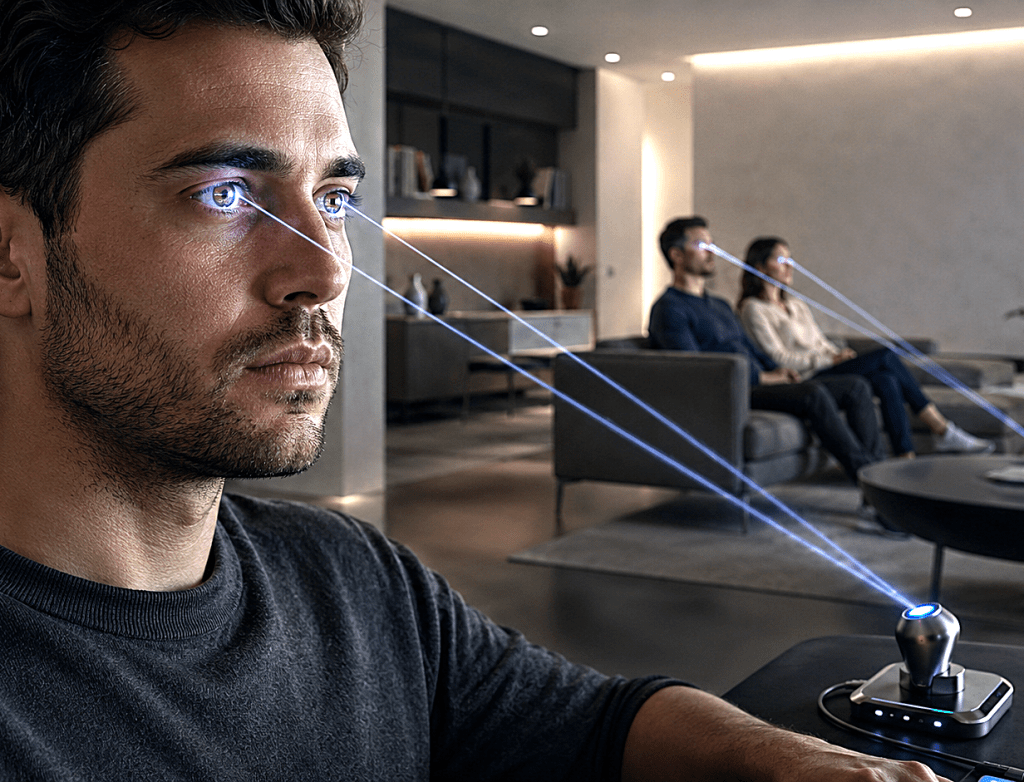
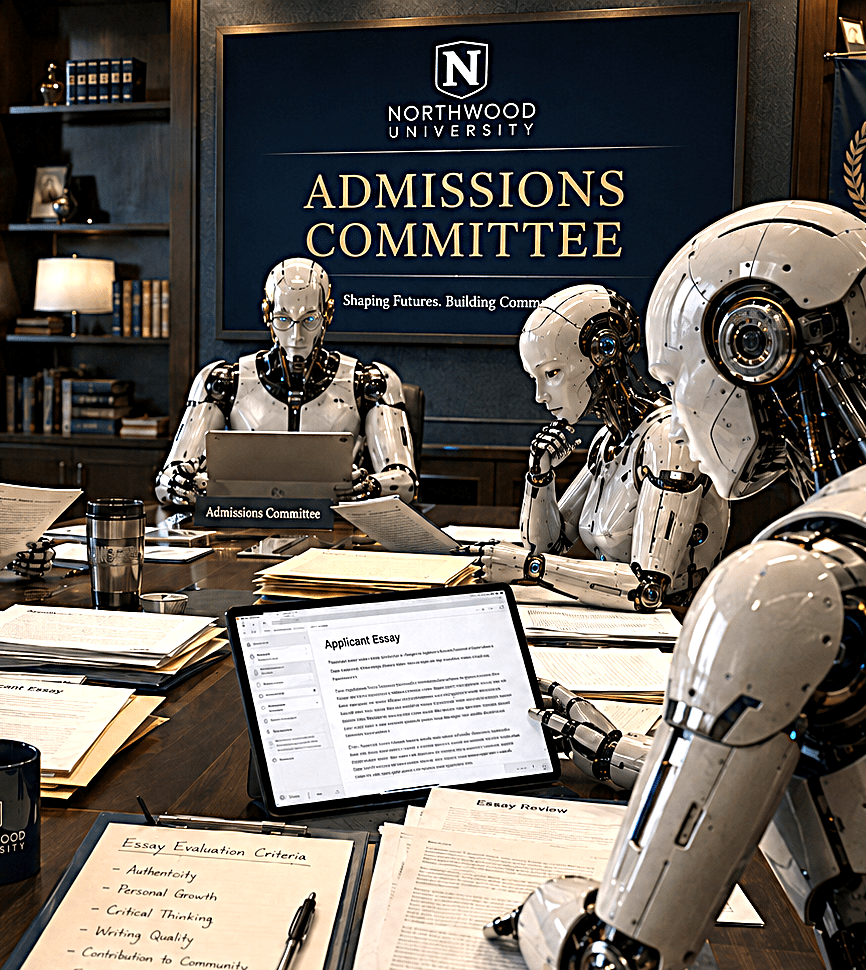
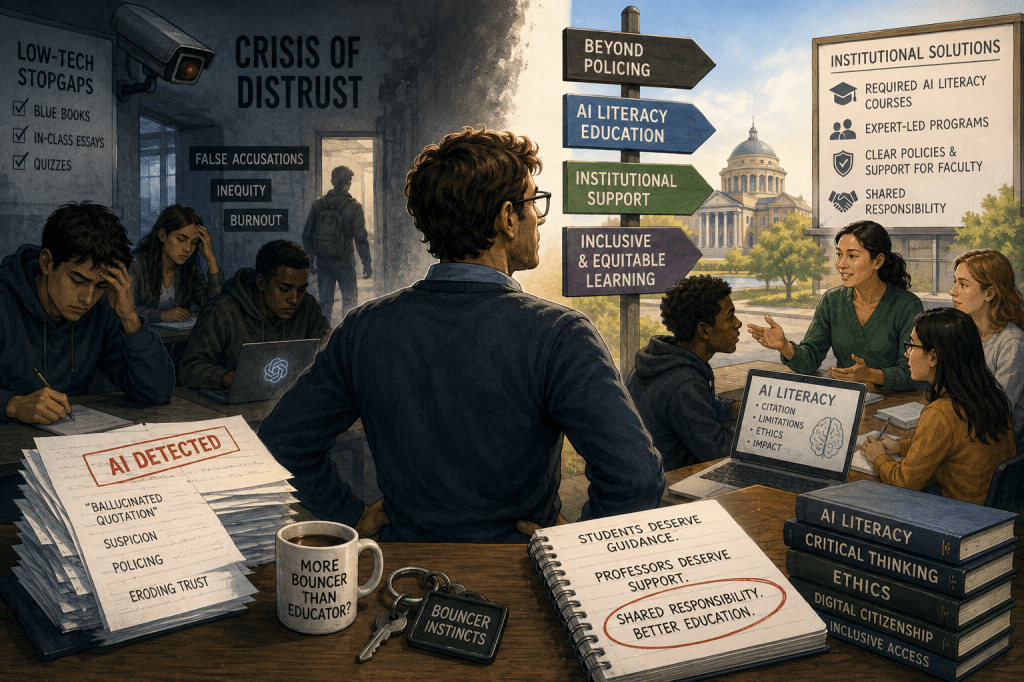
The detector is dead? Universities are quitting AI detection just as the evidence is shifting.

Timothy Paustian, a professor at the University of Wisconsin–Madison, tried a trick when chatbots first started writing his students’ homework. He hid instructions inside his assignments that only an AI model would read and follow, so that machine-written answers would give themselves away. It worked for a while. Then students learned to look for the hidden text, and Paustian concluded the tactic had become “redundant.” He now argues for “reimagined” assessment, such as pairing written work with oral examinations (Chopra, 2026).
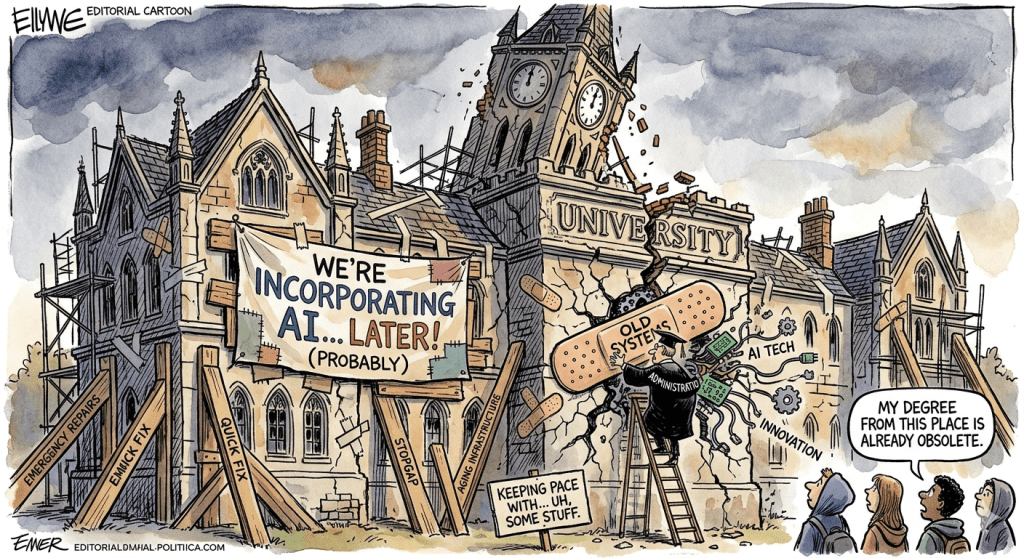
His story opened an Agence France-Presse report on October 6, 2026, that described a quiet but broad retreat. Yale and Cornell have discouraged faculty from relying on AI-detection software. University guidance warns that the tools “have been shown to be biased against non-native English speakers.” And Harvard College Dean David Deming has proposed that his campus “get out of the AI-detection business” altogether (Chopra, 2026).
The retreat is happening at the same moment that faculty say cheating is getting worse. In a national survey of 1,057 faculty members by Elon University and the American Association of Colleges and Universities, 78% said cheating had increased on their campus since generative AI became available, and 73% had personally dealt with an academic integrity case involving AI (Elon University, 2026). So the question is a practical one. If schools stop trying to detect machine-written work, what will they use in its place, and is the evidence for giving up as solid as it looks?
This article argues that the decision rests on an outdated picture of the technology. The best detection research published in the past year shows a field that is improving, unevenly but measurably. The alternatives that universities are adopting have serious weaknesses of their own. A better course is to keep detection in the toolkit under strict rules, test it independently and often, and build the next generation of tools around the writing process and the AI providers themselves.
How Detection Lost Its Reputation
The case against detectors was built mostly in 2023, and it was a strong case at the time. In January of that year, OpenAI released its own classifier for spotting AI-written text. It correctly identified only 26% of AI-written passages and wrongly flagged 9% of human writing. On July 20, 2023, the company withdrew it, “due to its low rate of accuracy” (OpenAI, 2023).
Turnitin, the plagiarism-checking company used by thousands of schools, launched its AI detector that spring and claimed a false positive rate of about 1%. Vanderbilt University did the arithmetic. It had submitted about 75,000 papers to Turnitin in 2022, so a 1% error rate could have meant roughly 750 students wrongly flagged. Vanderbilt also noted that Turnitin gave “no detailed information as to how it determines if a piece of writing is AI-generated.” In August 2023 it switched the feature off (Vanderbilt University, 2023).
The most cited study came from Stanford. James Zou and colleagues ran 91 essays written by non-native English speakers for the TOEFL exam through seven detectors. On average, the detectors labeled 61% of the essays as AI-generated, and 19% were flagged by all seven (Liang et al., 2023). The detectors, Zou explained, scored text partly on how predictable its wording was, which penalized writers working with a smaller vocabulary. His conclusion was carefully worded: “The detectors are just too unreliable at this time, and the stakes are too high for the students, to put our faith in these technologies without rigorous evaluation and significant refinements” (Myers, 2023).
Note the phrase “at this time.” Zou described a problem with the tools of 2023 and called for evaluation and refinement. Three years later, the 61% figure is still being repeated in university guidance and news coverage as though it describes the software of 2026.
Meanwhile, misconduct cases climbed. A Times Higher Education investigation found that suspected AI misconduct cases at the University of Sheffield rose from 6 in 2022–23 to 92 in 2023–24, and at the University of Glasgow from 36 to 130 (Grove, 2024). Schools found themselves facing more suspected cheating while holding a tool they had been told not to trust.
The Retreat Gathers Speed in 2026
This year the retreat turned into policy. Curtin University in Australia disabled Turnitin’s AI detection on January 1, 2026, describing the move as “about fostering trust and clarity within a modern academic culture” and tying it to a philosophy that students should learn to use AI responsibly, as they will at work (Curtin University, n.d.).
The legal risks also became concrete. In February, a University of Michigan undergraduate sued the university after being accused of using AI on an assignment in a Great Books course. Her complaint says that instructors created “AI-generated comparison outputs” by “prompting AI with the student’s own outline and with instructor feedback, then treating the resulting similarity as proof of AI use.” She argues that her disabilities produce a formal, meticulous writing style that was mistaken for machine output (Atwood, 2026). The case is a reminder that the real danger is weak evidence, whatever its source. Her lawsuit does not even identify a commercial detector; the method in dispute was improvised by instructors.
Yale’s Poorvu Center for Teaching and Learning now states that it does not endorse AI-detection software and does not enable such features in the university’s Canvas system. It recommends that instructors raise concerns with students in conversations about the work and how it was written (Yale Poorvu Center for Teaching and Learning, n.d.).
At Harvard, Deming laid out his position in a September 2 email to students. “Take-home exams and problem sets are no longer a sustainable way to assess mastery,” he wrote, “and when coupled with unenforceable AI bans they create a difficult dilemma.” For writing courses, he suggested “AI acceptance, or even encouragement,” and added: “We would all benefit from getting out of the AI-detection business because it damages trust between faculty and students” (Connolly & Rose, 2026). By late September he described a plan built on restricting devices in class, “AI-proofing assessments when necessary,” more oral examinations, and more check-ins on student progress (Bartelme, 2026).
What the Newer Evidence Says
Here is the problem with the retreat. The research it relies on is aging, and the newest studies point in a different direction.
In August 2025, economists Brian Jabarian and Alex Imas at the University of Chicago tested commercial and open-source detectors across many kinds of writing. They found that an open-source detector misclassified up to 78% of human text as AI-generated, which is consistent with the old fears. The commercial tools did far better. One of them, Pangram, achieved near-zero error rates on medium and long passages and held up against a “humanizer” tool designed to disguise AI text. The authors set a demanding standard, a false positive rate no higher than 0.5%, or one wrongly flagged passage in 200, and reported that “Pangram is the only detector that meets stringent policy requirements without compromising the ability to detect AI text” (Jabarian & Imas, 2025). Yale’s guidance cites this same Chicago study as support for its caution (Yale Poorvu Center for Teaching and Learning, n.d.). The study supports caution about most tools. It also shows that at least one tool met a strict standard.
A second study, published this year in the International Journal for Educational Integrity, adds detail. Researchers at the Vrije Universiteit Brussel built 160 documents with known authorship: 40 fully human master’s theses, 40 fully AI-written papers produced with ChatGPT’s Deep Research mode, 40 hybrids with AI passages inserted, and 40 hybrids in which the AI passages were “humanized” to imitate what a student might do. They ran all of them through GPTZero, Pangram, Copyleaks, and Turnitin (Van Vlasselaer et al., 2026).
The results cut against both camps. On the fear that drives the retreat, the news was good. All four tools correctly classified every fully human paper, and three of them produced no false positives at all. The authors called this “a significant improvement compared to earlier research” and wrote that it “counters one of the main ethical concerns about AI detection: that students might be unfairly accused.” They pointed directly to the Stanford study’s 61% figure and suggested that the gap “may be explained by changes in how detection tools are built and by the rapid evolution of large language models” (Van Vlasselaer et al., 2026).
On catching AI text, the news was mixed. Turnitin, GPTZero, and Copyleaks missed the fully AI-written papers almost entirely. Turnitin, which reports any score under 20% only as an asterisk, placed all 40 of them in that lowest band. Pangram rated 26 of the 40 as clearly AI-written and 13 more as largely AI-written, and it correctly estimated the AI share in 37 of 40 hybrid papers and 37 of 40 humanized papers (Van Vlasselaer et al., 2026). The researchers then ran Pangram on 1,163 real master’s theses from 2024–25. It flagged 529 of them, mostly for low to moderate amounts of AI-associated text. The authors caution that without ground truth these flags “cannot be interpreted as confirmed prevalence rates of AI use” (Van Vlasselaer et al., 2026).
The Brussels team was careful about the limits of its work. It tested one humanizing method, a single prompt in GPT-4o, and real students combine several. And it acknowledged that its results “are valid only for a specific snapshot in time,” because new models appeared even as the paper was being finished (Van Vlasselaer et al., 2026). That caution applies in both directions. If a 2026 study is a snapshot, so is a 2023 study, and the 2023 snapshot is the one most universities are still using.
At least one elite college has acted on the newer evidence. On October 1, Dartmouth’s interim dean of faculty, John Carey, authorized professors to submit de-identified student work to Pangram, the only detector the college has approved. Use is voluntary. Faculty must tell students in their syllabi whether detection may be used, and a detection score alone cannot establish misconduct. It must be weighed with a “constellation” of other information, and the college’s Committee on Standards reviews additional evidence before any finding (Hyde, 2026).
The researchers’ own conclusion matches Dartmouth’s approach. Detection tools “should not be used as sole evidence in high-stakes decision-making but should be implemented in a broader evaluation strategy” (Van Vlasselaer et al., 2026). That is a long way from “get out of the business.”
The Arms Race Is Real, and It Cuts Both Ways
Critics of detection have a fair point about evasion. A New York Times report in June described “humanizers” that rewrite AI text to sound natural and “autotypers” that simulate human typing, complete with invented typos and revisions, to fool tools that watch the writing process. Jenny Maxwell, head of education at Superhuman, the company that makes Grammarly, called the contest “ultimately, a dead end,” adding: “Bigger cat, bigger mouse” (Student cheating is becoming impossible to detect, 2026).
But the arms race is an argument for steady investment and testing, and the Brussels and Chicago results show that some detectors are keeping pace with the humanizers they were tested against. Every security technology, from spam filters to bank fraud systems, lives inside an arms race. Nobody proposes that banks stop screening for fraud because criminals adapt.
The arms race also undermines the alternatives. Autotypers were built to defeat process-tracking tools, which are among the options universities now favor. Turnitin Clarity, for example, gives instructors “a version-history playback” of how a document was written, including keystroke activity and pasted content (UCLA Digital and Technology Solutions, 2025). Grammarly Authorship sorts text by whether it was typed, pasted, or AI-generated (Grammarly, 2025). These tools are useful, and they face the same cat-and-mouse problem as detectors.
The Alternatives Have Costs
The most popular replacement is the oral exam. In April, the Associated Press reported on professors who now question students face to face. “You won’t be able to AI your way through an oral exam,” said Chris Schaffer, a Cornell biomedical engineering professor whose class has 70 students, each defending work in a 20-minute session. NYU Stern’s Panos Ipeirotis, who used an AI-powered oral exam for a final, said: “I want oral exams everywhere now. I want to pair it with every single written assignment” (Associated Press, 2026).
The oral exam works in a seminar. The arithmetic is harder elsewhere. Twenty minutes for each of 70 students is more than 23 hours of a professor’s time for a single assignment. The AP report also mentioned a Cornell engineering course with 180 students, which relied on four-minute mock interviews (Associated Press, 2026). Large introductory courses at public universities can enroll several hundred students. Oral exams also raise their own fairness questions for students with speech anxiety, hearing impairments, or limited spoken fluency in the language of instruction, which are some of the same groups detection critics set out to protect.
Proctored, in-class exams are the other common answer. They work, and they are also a return to the assessment methods of the last century. They shift weight away from the long research paper and the take-home essay, the forms of work that best teach sustained thinking and writing.
The third answer is to accept AI use and grade accordingly. That is Curtin’s approach and part of Deming’s. It solves the detection problem by redefining what counts as cheating. It does not answer the faculty concern behind the survey numbers. In the Elon–AAC&U survey, 90% of faculty said generative AI will diminish students’ critical thinking skills, and 74% said it will hurt the value of degrees (Elon University, 2026).
A Weapon in a Faculty Fight?
Some observers suspect that faculty opposed to AI are using detector failures as an argument to protect traditional teaching. The evidence from 2026 does not fit that pattern neatly.
At Harvard, the push to abandon detection came from the dean who is most open to AI in the classroom. The humanities professors who pushed back against him want less AI, not more. English professor Deirdre Lynch said she would keep a blanket ban on AI tools in her courses. Historian Peter Gordon warned that AI in writing classes would deepen “a marked decline in student attention” (Gerstein & Mahajan, 2026). Curtin likewise paired its decision with an embrace of AI as a workplace tool (Curtin University, n.d.). In these cases, the people dropping detectors are the AI-friendly administrators, and the AI skeptics are the ones left holding bans they cannot enforce.
There is a narrower version of the concern that does hold up. Whatever anyone’s motives, the practical result of the retreat is a return to older methods: proctored exams, handwritten work, and face-to-face questioning. Those who preferred those methods all along benefit from a story in which detection has failed for good. That story deserves the same scrutiny as any other, and the newest research suggests it is at best incomplete.
Who Pays for the Decision
The cost of dropping detection is not spread evenly. The first group to pay is honest students. The Brussels researchers made the point plainly: students “who invest genuine effort in their academic work” should be able to trust “that institutions have mechanisms in place to verify academic integrity” (Van Vlasselaer et al., 2026). When cheating goes unchecked, grades inflate, and the students who did the work see their marks lose meaning.
The second group is weaker students. A strong student who leans on AI may still learn the material. A struggling student who outsources every assignment may reach the final exam, or the job, without the skills the degree claims. Strict detection would catch some of these students early, while there is still time to help them.
The third group is faculty, who absorb the labor of redesigned courses, oral defenses, and process reviews, usually without extra time or pay.
The same pressures are reaching schools for younger students, where the evidence is thinner still. On October 7, Common Sense Media rated ChatGPT for Teens an unacceptable risk. Its testers found that the product’s study mode was “easy to circumvent,” often offering a “Show me the answer” pop-up, and could be bypassed by deleting a prefix from a prompt (Common Sense Media, 2026). In Idaho, districts reported an average reading gain of 14.48 percentage points in the first year of an AI-scored reading test, but state officials changed testing conditions between fall and spring, moving from whole-class sessions to small groups with headphones (Epperly, 2026). AI is now being used both to do schoolwork and to grade it, and schools have few reliable ways to verify either.
A Reasonable Path Forward
Universities do not have to choose between blind trust in detectors and abandoning them. A sensible path has five parts.
First, test the tools independently and often. The Brussels team built its dataset so that it “could be reused regularly to monitor and ensure these AI detection tools continue to perform reliably” (Van Vlasselaer et al., 2026). University systems or accreditors could pool resources to run that kind of benchmark every term, with new AI models and new humanizing tools, and publish the results. A school should know how its detector performs this semester, not how a different detector performed in 2023.
Second, set a hard error standard and approve only tools that meet it. The Chicago study’s cap of 0.5% false positives is a reasonable starting point (Jabarian & Imas, 2025). Dartmouth’s model of a single approved tool, voluntary use, disclosure in the syllabus, and de-identified submissions shows how to put that standard into practice (Hyde, 2026).
Third, treat a detector score as a reason to look closer, never as a verdict. A flag should lead to a review of drafts, revision history, sources, and a short conversation with the student. Combining a detector with process records and a brief oral check makes evasion harder, since a student would have to defeat several methods at once.
Fourth, push the AI providers to help. Since August 2, 2026, the EU AI Act’s Article 50 has required providers of generative AI systems to mark their outputs in a machine-detectable format. Anthropic and Google have deployed statistical watermarks in their text models (Pop, 2026). The technology is young. An open-source tool for stripping watermarks gathered thousands of GitHub stars in less than a day (Pop, 2026), and an independent analysis found detection of watermarked code performing “near chance levels.” The same researchers argue that the real gap is verification, and they call for “accredited audits, shared evaluation protocols, and interoperable detection systems” (Nemecek et al., 2026). OpenAI built a text watermark in 2024 but chose not to release it, citing in part the risk that “it could stigmatize use of AI as a useful writing tool for non-native English speakers” (OpenAI, 2024). Educators have a strong claim to be part of these decisions. A watermark that schools cannot check does little for them.
Fifth, protect students’ rights. The Michigan lawsuit shows what happens when the process is weak: an accusation built on improvised evidence, sanctions kept in place during a civil rights review, and a resubmission graded by the accuser (Atwood, 2026). Clear rules, independent review, a real appeal, and accommodation for students whose writing style is unusual will do more for trust than abandoning detection.
The Detector Is Not Dead
Deming is right that the status quo is not acceptable, and right that take-home work with an unenforceable AI ban cannot last. But the case for leaving detection entirely rests largely on evidence about tools that no longer exist. The 2026 research shows false positives falling sharply for the better tools, wide differences between products, and a gap between the best detector and the rest that matters more than the average.
Detection will never be perfect, and no responsible institution should punish a student on a score alone. Neither are oral exams perfect, nor proctored tests, nor process logs, nor watermarks. Each catches some cheating and misses some. Universities should use them together and test them often. Dartmouth chose to keep testing and set rules. Other campuses chose to stop measuring. The Dartmouth approach is the one that can be corrected as the evidence changes.
References
Associated Press. (2026, April 22). Perfect homework, blank stares: Why colleges are turning to oral exams to combat AI. WHYY. https://whyy.org/articles/pennsylvania-university-colleges-oral-exams-artificial-intelligence/
Atwood, S. (2026, February 12). Student sues University of Michigan over AI misconduct accusation. Government Technology (originally published by The Detroit News). https://www.govtech.com/education/higher-ed/student-sues-university-of-michigan-over-ai-misconduct-accusation
Bartelme, T. F. (2026, September 28). Deming says Harvard must ‘move faster’ on AI, but forthcoming guidance will stop short of mandate. The Harvard Crimson. https://www.thecrimson.com/article/2026/9/28/deming-harvard-sept-ai-remarks/
Chopra, A. (2026, October 6). Grappling with “homework scams,” US universities shun AI detectors. The Star (Agence France-Presse). https://www.thestar.com.my/tech/tech-news/2026/10/06/grappling-with-039homework-scams039-us-universities-shun-ai-detectors
Common Sense Media. (2026, October 7). ChatGPT for Teens poses unacceptable risk to kids, Common Sense Media finds [Press release]. https://www.commonsensemedia.org/press-releases/chatgpt-for-teens-poses-unacceptable-risk-to-kids-common-sense-media-finds
Connolly, S. B., & Rose, S. E. (2026, September 2). Deming backs more AI use, AI-proof assessments in Harvard classrooms. The Harvard Crimson. https://www.thecrimson.com/article/2026/9/2/deming-ai-use-email/
Curtin University. (n.d.). Update on Turnitin AI-detection tool. Retrieved October 7, 2026, from https://www.curtin.edu.au/news/oasis-news/update-on-turnitin-ai-detection-tool/
Elon University. (2026, January 21). Elon/AAC&U national survey: 95% of college faculty fear student overreliance on AI. https://www.elon.edu/u/news/2026/01/21/elon-aacu-national-survey-95-of-college-faculty-fear-student-overreliance-on-ai/
Epperly, E. (2026, October 7). Idaho’s big reading gains come with a caveat. Bonner County Daily Bee (Idaho Education News). https://bonnercountydailybee.com/news/2026/oct/07/idahos-big-reading-gains-come-with-a-caveat
Gerstein, A. S., & Mahajan, A. S. (2026, September 3). Harvard humanities faculty push back on Deming’s call for AI use in writing courses. The Harvard Crimson. https://www.thecrimson.com/article/2026/9/3/humanities-ai-pushback-deming/
Grammarly. (2025, April 22). Grammarly Authorship just got a major update. https://www.grammarly.com/blog/academic-writing/grammarly-authorship-just-got-a-major-update/
Grove, J. (2024, November 1). Student AI cheating cases soar at UK universities. Times Higher Education. https://timeshighereducation.com/news/student-ai-cheating-cases-soar-uk-universities
Hyde, J. (2026, October 1). Dean of faculty authorizes professors to use AI detector Pangram to review student work. The Dartmouth. https://www.thedartmouth.com/article/2026/10/hyde-dean-of-faculty-authorizes-professors-to-use-ai-detector-pangram-to-review-student-work
Jabarian, B., & Imas, A. (2025). Artificial writing and automated detection [Research brief]. Becker Friedman Institute for Economics, University of Chicago. https://bfi.uchicago.edu/wp-content/uploads/2025/10/Artificial-Writing-and-Automated-Detection.pdf
Liang, W., Yuksekgonul, M., Mao, Y., Wu, E., & Zou, J. (2023). GPT detectors are biased against non-native English writers. Patterns, 4(7), 100779. https://doi.org/10.1016/j.patter.2023.100779
Myers, A. (2023, May 15). AI-detectors biased against non-native English writers. Stanford HAI. https://hai.stanford.edu/news/ai-detectors-biased-against-non-native-english-writers
Nemecek, A., Chaudhary, V., & Ayday, E. (2026). Watermarks without verification: AI text watermarking after the EU AI Act (arXiv:2609.09604). arXiv. https://arxiv.org/abs/2609.09604
OpenAI. (2023, January 31; updated July 20, 2023). New AI classifier for indicating AI-written text. https://openai.com/index/new-ai-classifier-for-indicating-ai-written-text/
OpenAI. (2024, May 7; updated August 4, 2024). Understanding the source of what we see and hear online. https://openai.com/index/understanding-the-source-of-what-we-see-and-hear-online/
Pop, O. (2026, August 18). Major frontier model providers adopt watermarking tech to comply with EU regulation. InfoQ. https://www.infoq.com/news/2026/08/eu-ai-content-watermark/
Student cheating is becoming impossible to detect in an AI era. (2026, June 20). The Boston Globe (originally published by The New York Times). https://www.bostonglobe.com/2026/06/20/nation/student-cheating-is-becoming-impossible-detect-an-ai-era/
UCLA Digital and Technology Solutions. (2025). Turnitin Clarity enhancement: Writing process tools exploration. https://dts.ucla.edu/news/turnitin-clarity-enhancement-writing-process-tools-exploration
Vanderbilt University. (2023, August 16). Guidance on AI detection and why we’re disabling Turnitin’s AI detector. https://www.vanderbilt.edu/brightspace/2023/08/16/guidance-on-ai-detection-and-why-were-disabling-turnitins-ai-detector/
Van Vlasselaer, M., Van Droogenbroeck, F., & Spruyt, B. (2026). Who wrote this? Evaluating the reliability of AI detection tools in higher education. International Journal for Educational Integrity, 22, Article 16. https://doi.org/10.1007/s40979-026-00226-w
Yale Poorvu Center for Teaching and Learning. (n.d.). Academic integrity [AI guidance for teachers]. Retrieved October 7, 2026, from https://poorvucenter.yale.edu/teaching/teaching-resource-library/ai-guidance-for-teachers/ai-course-assignment-design/academic
###
Filed under: Uncategorized |




























































































































































































































































































































































Leave a Reply