




By Jim Shimabukuro (assisted by Claude)
Editor
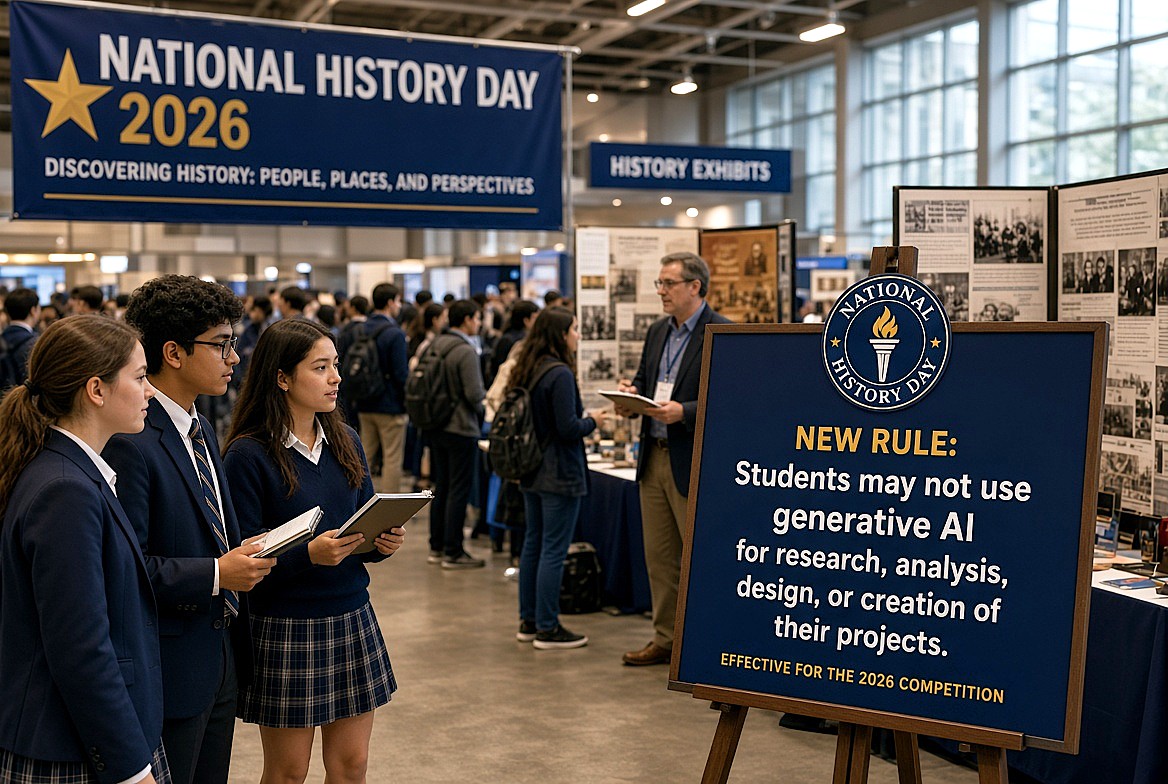
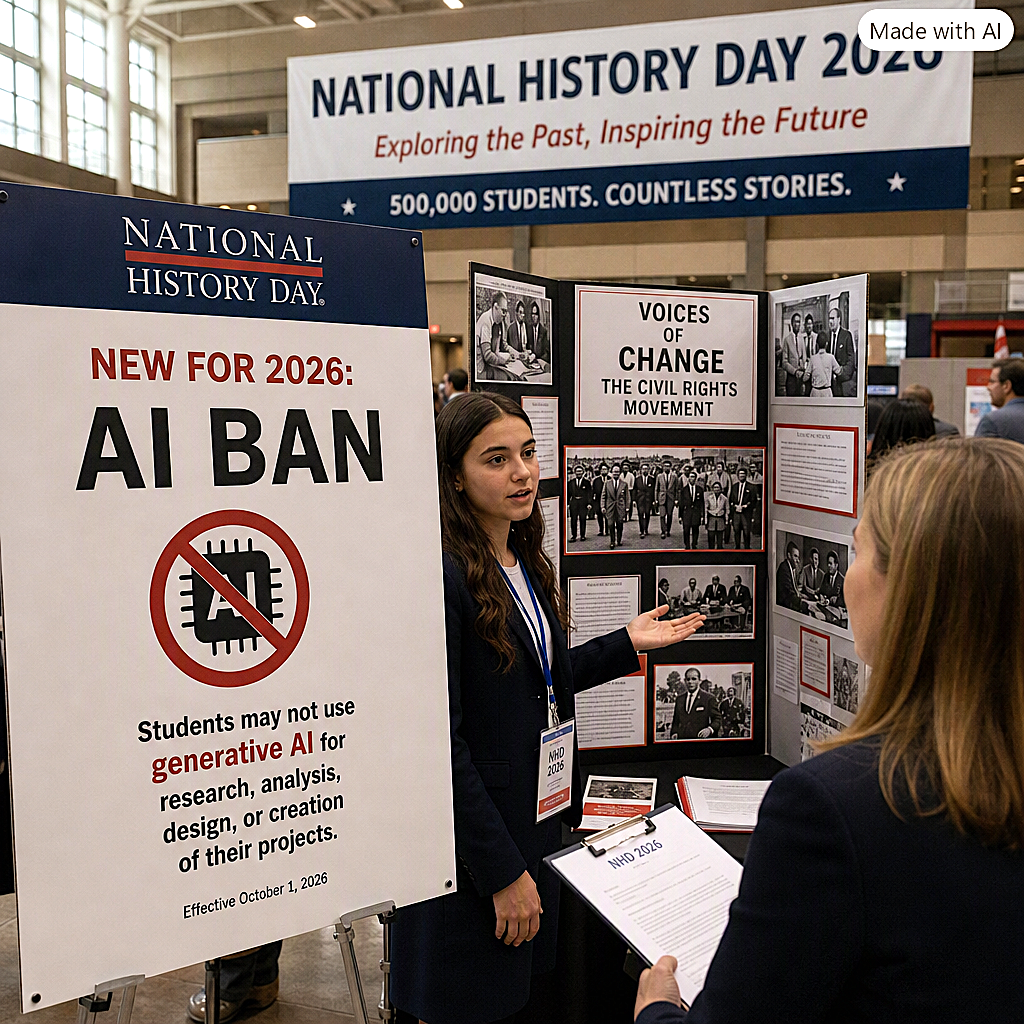
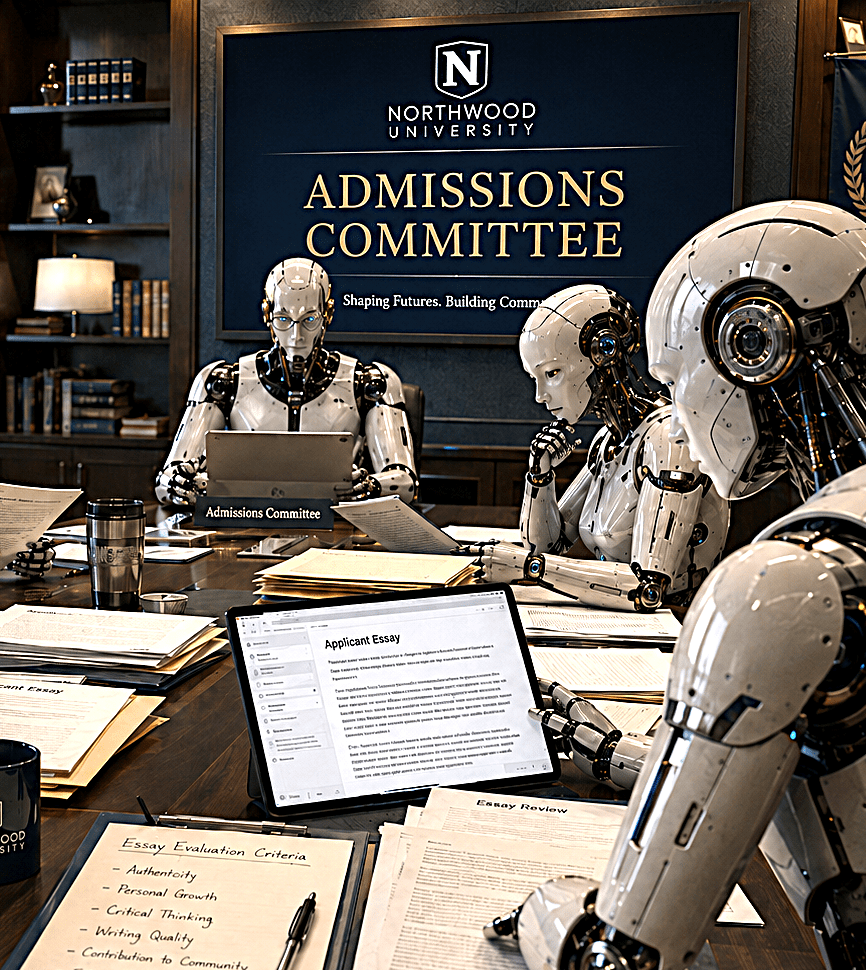
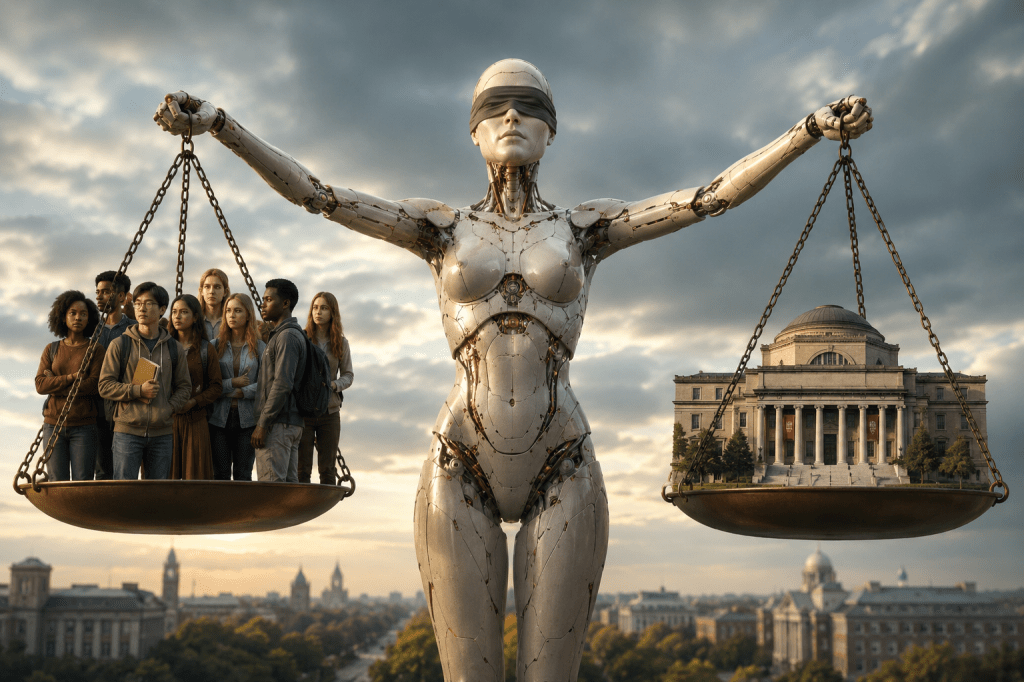
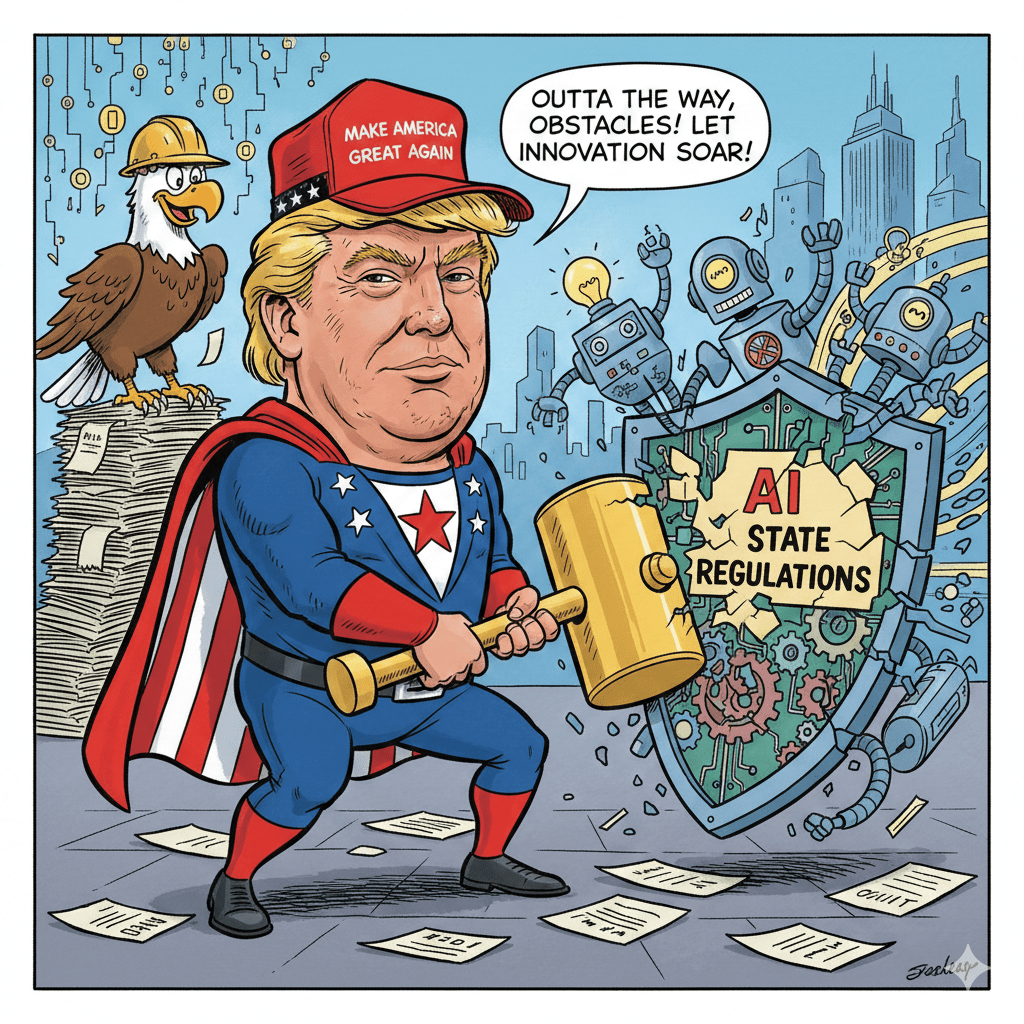
On October 1, 2026, National History Day, a competition that draws more than half a million students in grades 6 through 12 each year, put a new rule into effect: “Students may not use generative AI for research, analysis, design, or creation of their projects” (National History Day, 2026). Until this year the contest let students use AI to brainstorm topics and hunt for sources. Those uses are now banned too. The organization’s reasons were specific. Two projects that reached the final rounds in the last two contest cycles cited sources that an AI tool had invented, and the contest wanted to protect what Lynne O’Hara, its deputy director for education programs, called “student voice and student thinking” (Schwartz, 2026).
The history contest was not alone. On September 2, New York City Mayor Zohran Mamdani and Schools Chancellor Kamar Samuels announced a one-year pause on student-facing generative AI for children from 2-K through eighth grade, nearly 600,000 students, and a ban on companion chatbots in every grade. “Children need teachers and human connection in order to learn and grow,” Mamdani said (City of New York, Office of the Mayor, 2026). The same school system banned ChatGPT in January 2023 and lifted the ban that May, when then-Chancellor David Banks said that “the knee-jerk fear and risk overlooked the potential of generative AI to support students and teachers” (Klein, 2023). Mamdani has described the new pause as provisional: “If we find over the course of this year that this policy needs to be extended, then we will extend it… All of it will be driven by the results” (quoted in BetaNYC, 2026).
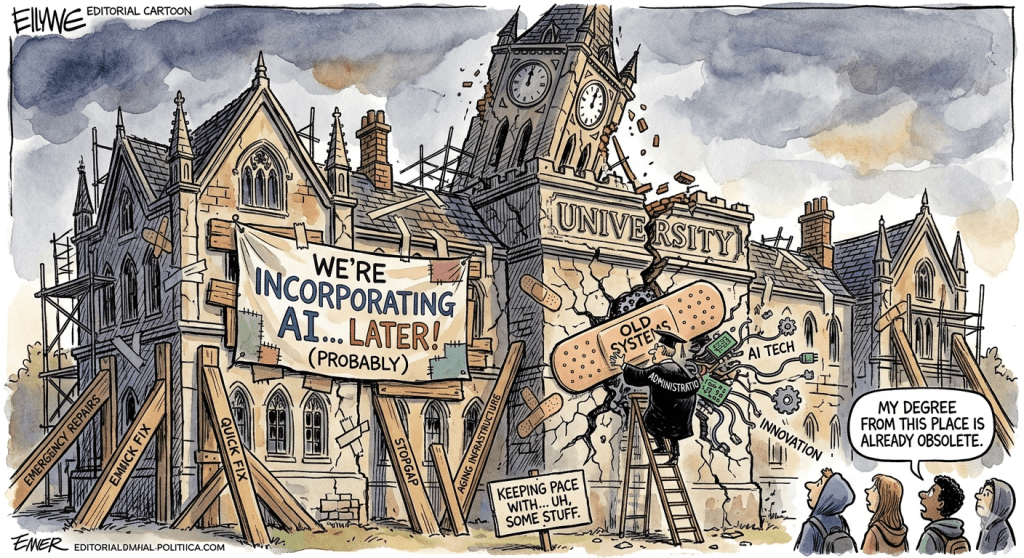
These two decisions, reported in ETC Journal’s briefing of October 9 (ETC Journal, 2026), use the oldest tool schools have for managing a new technology. They bar it. The ban has a long record, and that record is worth reading closely. Writing, printed books, pocket calculators, and online encyclopedias were each kept out of classrooms or out of graded work for a time. Each objection named a real defect. Each defect was later fixed or worked around, through better versions of the tool, rules for its use, and changes in what teachers asked students to do. The problems with AI in schools today are serious, and several of them are already yielding to the same three kinds of fixes. This article traces the history, names AI’s current problems, and lays out the evidence on how each is being solved.
An early complaint
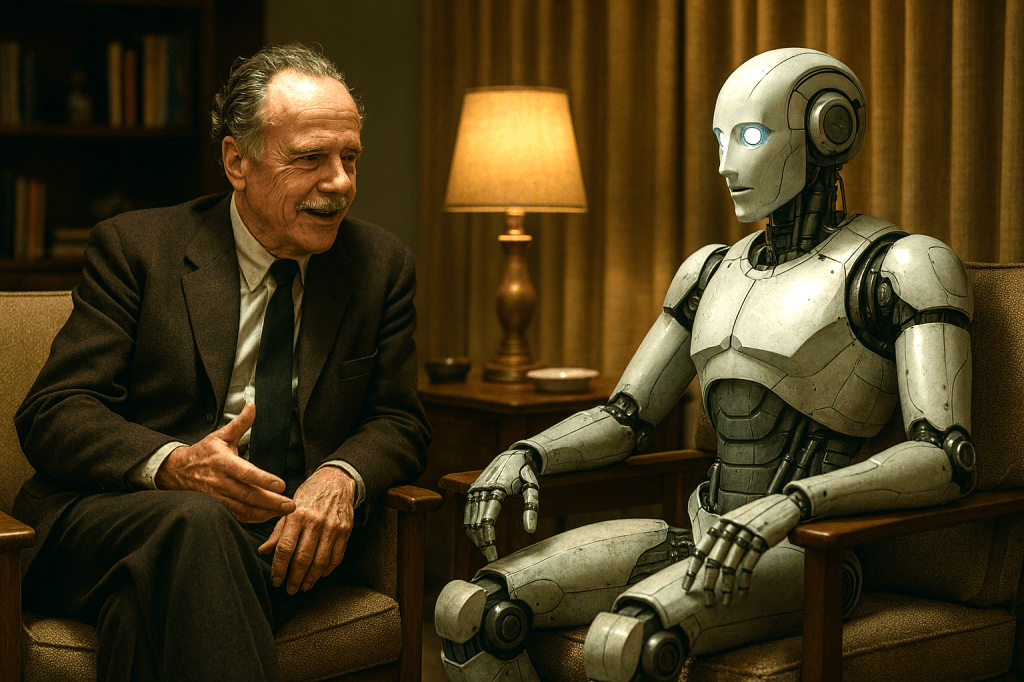
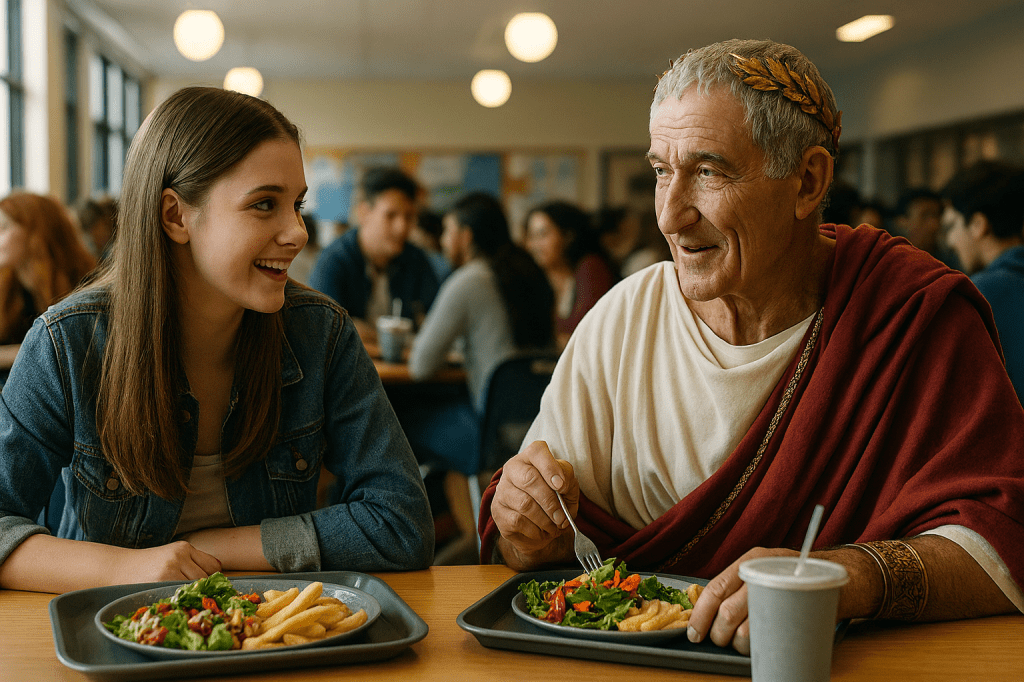
One of the earliest recorded objections to a learning technology is about writing itself. In Plato’s Phaedrus, written around 370 B.C.E., Socrates tells the story of the Egyptian god Theuth presenting the alphabet to King Thamus as a gift that will improve memory. Thamus refuses the gift. People who learn letters, he says, “will trust to the external written characters and not remember of themselves,” and they will gain only “the semblance of truth” (Plato, ca. 370 B.C.E./n.d.). Marvin Diogenes of Stanford’s writing program read the passage last December as a near-perfect preview of today’s debate, with Theuth as the eager product promoter and Thamus as the teacher worried that students will accept a display of knowledge in place of the work behind it (Diogenes, 2025).
Thamus had a point. Writing did change how people stored and recalled information. But the objection survives only because Plato wrote it down, and Greek and Roman schools went on to build their lessons around reading and writing, using copying and recitation to train the memory Thamus feared would wither.
Two thousand years later the printing press drew a similar response. In 1492 Johannes Trithemius, the abbot of Sponheim in Germany, wrote In Praise of Scribes, a defense of hand copying. “He who ceases from zeal for writing because of printing is no true lover of the Scriptures,” he argued, and he complained that printed books used less durable paper and uglier type (as quoted in Malki, n.d.). He then had the tract printed so that people would read it. By the 1550s, scholars across Europe were complaining about a new problem the press had created. “Contemporaries start to articulate the problem of the overabundance of books around the 1550s,” the Harvard historian Ann Blair has explained (Potier, 2003). The solution was more print: indexes, encyclopedias, and reference books that Blair describes as offering “notes that you would have taken if you had had the time to do so” (Potier, 2003). The printed textbook went on to become the backbone of mass schooling.
The calculator wars
The closest modern parallel to the AI fight is the pocket calculator. Calculators appeared in Japan in 1970, and Hewlett-Packard’s HP-35 arrived in 1972 at a price of several hundred dollars. By 1976 simple models cost around $8, and they began turning up in students’ pockets whether schools approved or not (Everill, 2025). The arguments that followed sound familiar. “I want kids to learn how to walk before they ride around in golf carts all day,” an Ohio high school math teacher told The Christian Science Monitor in 1986. A textbook publisher warned of “a tremendous potential for destruction” of students’ math skills, and Oregon’s 1984 teacher of the year said, “The risk is, once you have a crutch, you rely on it more and more” (Rowe, 1986). Two years later, several state school chiefs meeting in Indianapolis voiced “deep reservations about the concept” of calculators in math class. They endorsed the National Council of Teachers of Mathematics’ pro-calculator policy only after adding that calculators “should not diminish the importance of gaining computational skills” (Mathis, 1988).
The researchers had a different view. “All the evidence suggests it doesn’t hurt achievement,” Marilyn Suydam of Ohio State University said in 1986 (Rowe, 1986). Connecticut’s education commissioner argued that students needed “more practice in thinking, instead of working on computations that take them 10 or 15 minutes” (Rowe, 1986). In 1994 the SAT allowed calculators for the first time (Walters, 1994). Today the digital SAT has a Desmos graphing calculator built into the testing software, and students may use it, or their own approved calculator, anywhere in the math section (College Board, n.d.).
The detail that matters most is in the College Board’s fine print. “The Math section includes some questions where it’s better not to use a calculator, even though you’re allowed to,” the policy notes (College Board, n.d.). The fix for the calculator problem was never to let machines do all the arithmetic. Teachers and test designers worked out which skills students needed to hold in their heads and which could be handed to the device, and they wrote the tests to match. Basic computation is still taught. Calculators handle the rest.
The encyclopedia anyone could edit
Wikipedia went through the same cycle faster. In January 2007 the history department at Middlebury College in Vermont barred students from citing it in papers. The department chair, Don Wyatt, said the site “is not itself an appropriate source for citation” (Horn, 2007). Wikipedia’s own spokeswoman agreed that “it is not an authoritative source” (Horn, 2007). The worry had evidence behind it, though less than critics assumed. A 2005 study in Nature had experts review 42 pairs of science articles and found an average of about four errors per Wikipedia entry against about three per Encyclopaedia Britannica entry, with four serious errors in each (Giles, 2005). In 2008 a news report still described Wikipedia as “the upstart Internet encyclopedia that most universities forbid students to use” (Agence France-Presse, 2008).
Middlebury’s rule covered citation only, and that line became the settled norm: use Wikipedia to get oriented, then cite the sources it points to. Professors went further and began assigning students to write and improve Wikipedia articles. In the fall 2025 term alone, 343 college courses in Wiki Education’s student program enrolled 6,410 students, who edited 6,250 articles (Blumenthal, 2026). One participating professor wrote that “Wikipedia is superior to AI generated information in many ways” (Blumenthal, 2026). Within twenty years, some faculty were holding up the encyclopedia colleges once banned as the reliable alternative to the newest banned tool.
The pattern across these cases is consistent. The objection named a real flaw: writing could weaken memory, early printed books were scarce and crude, calculators could replace arithmetic skill, Wikipedia contained errors. The ban bought time. During that time the tool improved, institutions wrote narrower rules, and teachers changed assignments so the tool supported learning instead of replacing it. Then the ban faded.
Not every ban is premature. Cellphones offer a current counterexample. A large 2026 study of schools that locked phones in pouches all day found “a meaningful decline in student cellphone use,” fewer classroom distractions reported by teachers, and better student well-being over time, though test scores did not rise on average (Jacob, 2026). The case against phones in class rests on their main function, which is connecting students to social media and messaging during the school day. The question for AI is whether its classroom problems are built into the technology or belong to the current generation of tools and the way schools have deployed them. Much of the evidence from the past eighteen months points to the second answer, though not all of it.
What is wrong with AI in school right now
Five problems account for most of the current resistance. The first is invented facts. National History Day’s finalist projects with AI-fabricated sources are a small example of a well-documented failure. Language models produce confident, plausible statements that are false, and fake citations are among the most common forms.
The second, and the most serious, is that general-purpose chatbots hand students answers, and students take them. A study of nearly 1,000 Turkish high school math students published in PNAS in 2025 found that students given an unrestricted GPT-4 chat tool did 48% better on practice problems than a control group but 17% worse on a later exam taken without AI (Bastani et al., 2025; Basiouny, 2024). The OECD’s Digital Education Outlook 2026 summarized the research this way: gains from general-purpose tools “tend to disappear—or even reverse—when AI access is removed” (Güell Paule, 2026). An MIT Media Lab study of 54 participants writing essays found the weakest brain connectivity in the group using ChatGPT and reported that these users “struggled to accurately quote their own work” (Kosmyna et al., 2025).
The newest evidence is the most sobering. A randomized trial at the University of Maryland, released on September 30, 2026, gave some instructors’ sections access to a GPT-4o study assistant built into the campus learning platform during fall 2025. Among sections of the same course, access to the tool lowered final grades by 0.37 standard deviations, and losses were larger for first-generation students. Only about 15% of students with access used it, and about 74% of their requests asked for direct answers, while fewer than 1% asked for feedback on their own work (Liu et al., 2026). Students see the risk themselves. In a RAND survey from December 2025, 67% of young people agreed that using AI more for schoolwork harms critical thinking (Kaufman et al., 2026).
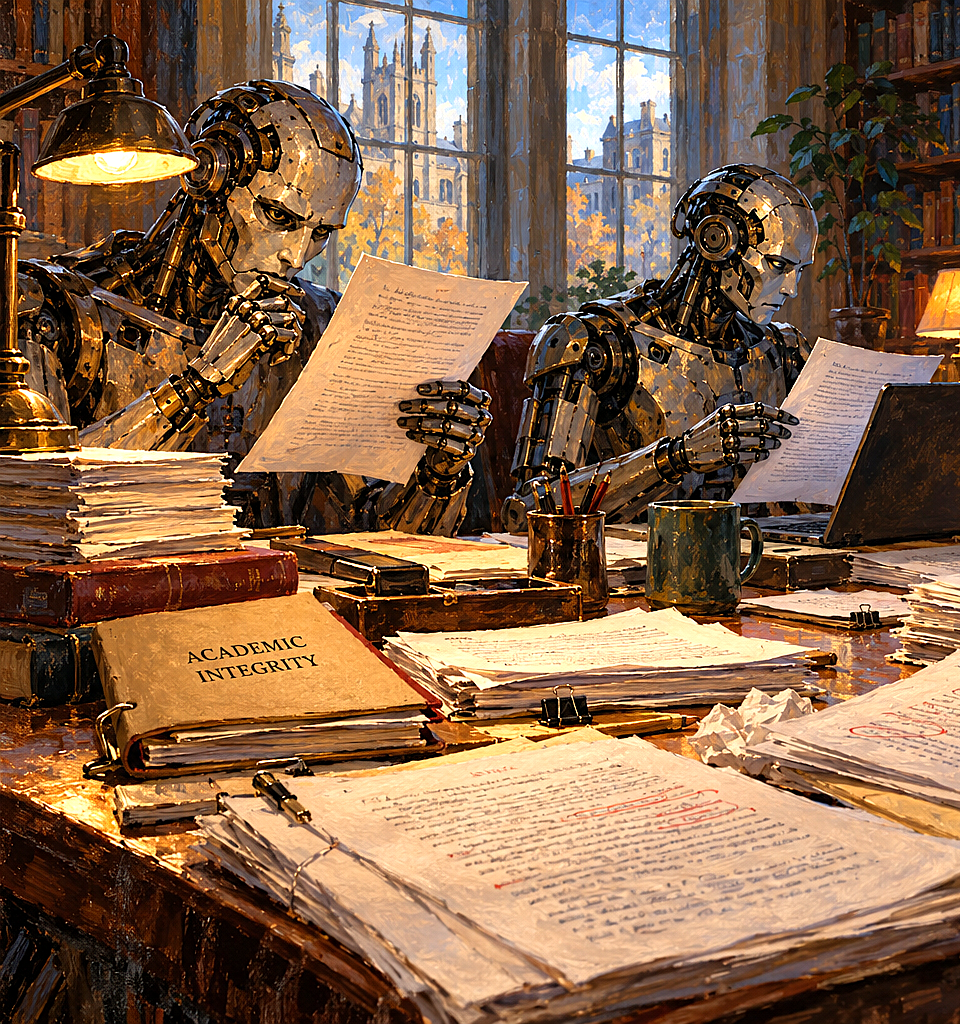
The third problem is that schools can no longer reliably tell who did the work. Detection software produces false positives and is easily defeated by “humanizing” tools, and Yale, Cornell, and other universities have stopped treating detector scores as primary evidence. Harvard College Dean David Deming told students, “We would all benefit from getting out of the AI-detection business” (Agence France-Presse, 2026). A University of Wisconsin–Madison bacteriology professor, Timothy Paustian, hid an instruction only an AI would follow in one assignment and caught 60 of 350 students. “I have pretty much thrown in the towel on classic writing assignments for lower-level classes,” he said (Agence France-Presse, 2026).
The fourth is child safety. Companion chatbots designed to form emotional bonds with users are the main reason New York’s moratorium extends to every grade for that category of product (City of New York, Office of the Mayor, 2026). The fifth is that schools and teachers have been left to improvise. RAND found that by winter 2025, 54% of students used AI for schoolwork, yet only 45% of principals reported any school or district AI guidance, and only 19% of students said a teacher had shown them how to use it for schoolwork (Doss et al., 2025).
How the problems are being solved
Each of these problems has a counterpart in the earlier history, and each now has a fix under way. Invented facts are the clearest case of a technical defect that developers understand and are reducing. In September 2025 OpenAI researchers published an explanation of why models make things up: “standard training and evaluation procedures reward guessing over acknowledging uncertainty,” because a guess can earn credit on a test while “I don’t know” earns nothing (OpenAI, 2025b). They called for benchmarks that penalize confident errors more than admissions of uncertainty. The company’s own numbers show the effect of training a model to abstain. On a factual-recall test, its GPT-5 thinking-mini model declined to answer 52% of the time and gave wrong answers 26% of the time, compared with an abstention rate of 1% and an error rate of 75% for the older o4-mini (OpenAI, 2025b). A model that says it does not know is far more useful to a student than one that invents a source. As evaluations shift to reward that behavior, and as more tools draw answers from retrieved documents they can link to, fabricated citations should become less common. Until then, the Wikipedia rule applies: check the source before citing it. National History Day’s policy already permits one AI-adjacent aid, the bibliography generator (National History Day, 2026).
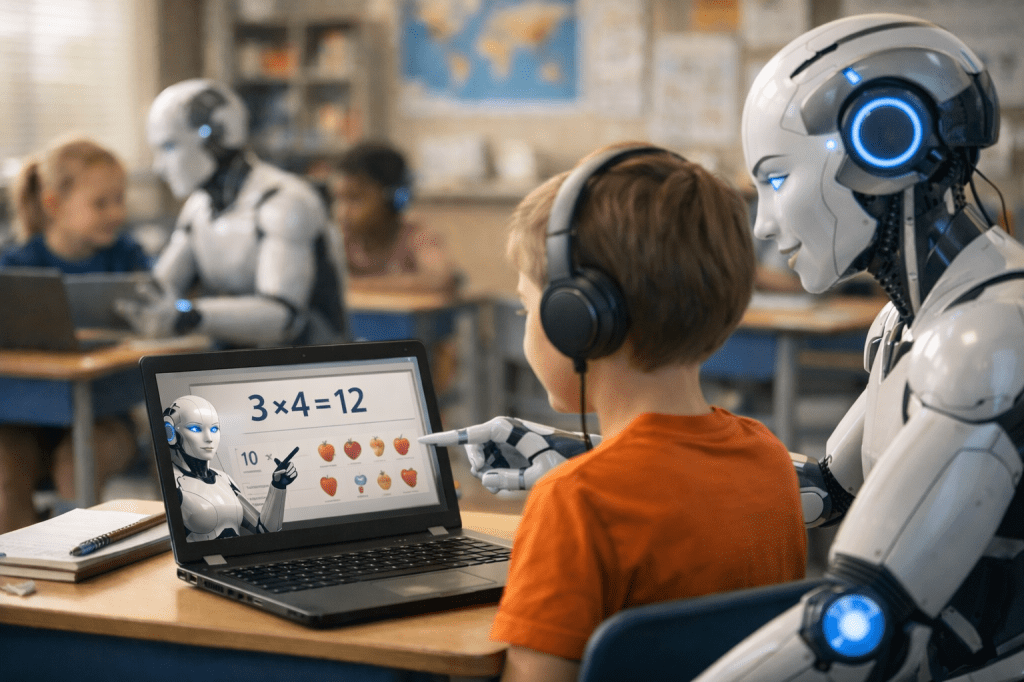
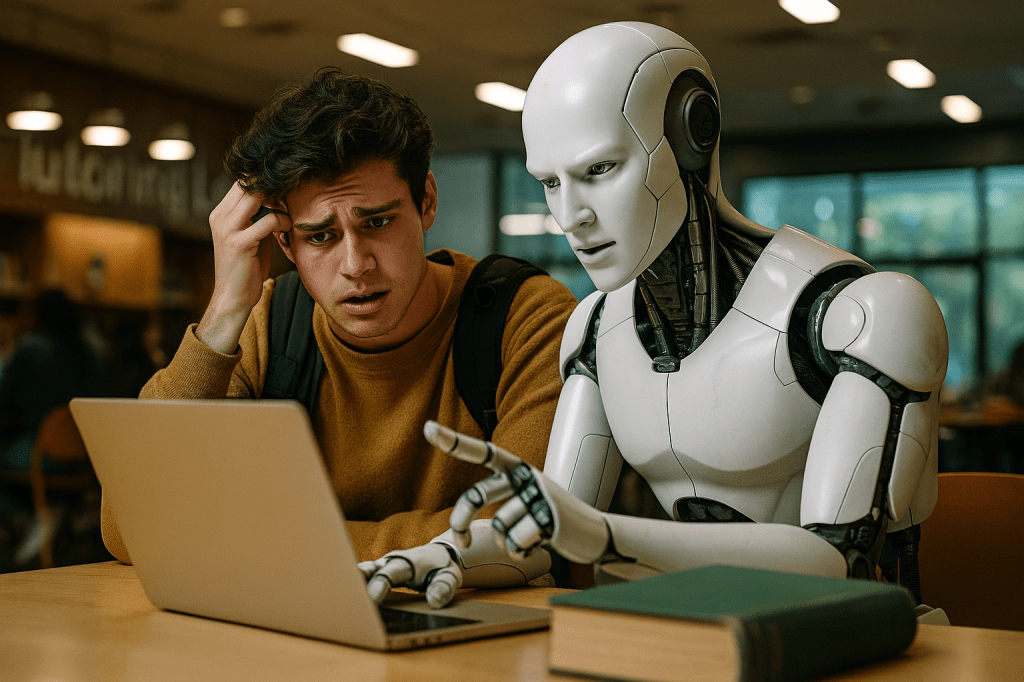
The answer-giving problem is being solved by design. In the same Turkish study, a second group used a version of the chatbot that gave hints instead of answers and drew on teacher input. Those students did 127% better on practice problems than the control group and showed no loss on the exam (Basiouny, 2024). The authors concluded that “design guardrails, or prompts that promote reasoning, protect student learning and performance” (Bastani et al., 2025). The OECD put it in one line: “how GenAI is designed and used matters more than whether it is used at all” (Güell Paule, 2026).
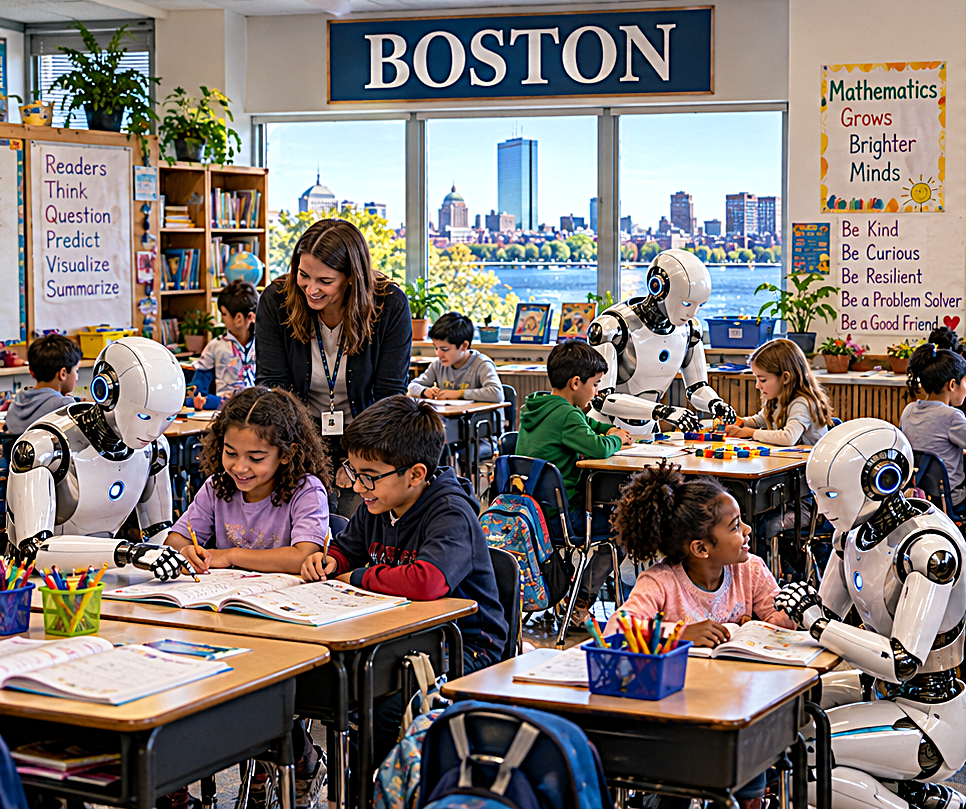
Tools built to teach are producing results. At Harvard, students randomly assigned to an AI physics tutor designed by lecturer Gregory Kestin gained more than twice as much as they did in their regular in-person class sessions, in less time. Kestin said the point was to free teachers for better work: “This allows for the human interaction to be much richer” (Barshay, 2024). In Nigeria, a six-week World Bank after-school program that paired an AI chatbot tutor with teacher support raised scores by about 0.3 standard deviations, which the researchers equated to nearly two years of typical learning, and girls gained more than boys (De Simone et al., 2025). In five British secondary schools, students tutored by Google’s LearnLM model under expert supervision solved new problems in later topics 66.2% of the time, against 60.7% for students tutored by humans alone, and the supervising tutors approved 76.4% of the AI’s drafted messages with little or no editing (LearnLM Team et al., 2025). Not every result is large. A trial with more than 6,000 Tennessee middle schoolers found that an AI tutor that required students to answer three questions in a row correctly after a mistake raised scores by about 3 percentage points, mainly on easier problems, after a single 50-minute session (Barshay & Fasiang, 2026).
The Maryland trial shows what can happen when a general-purpose assistant is added to a course without changing the course. Students used it mostly to get answers, and engagement with the rest of the course fell, though the authors caution that their data cannot prove the drop in engagement caused the lower grades (Liu et al., 2026). The major AI companies have moved toward the design that works. OpenAI’s study mode, released in July 2025, is “a learning experience that helps you work through problems step by step instead of just getting an answer,” using guiding questions, hints, and quizzes (OpenAI, 2025a). Google and Anthropic have released similar learning modes. The next step, already visible in New York’s pilots, is for schools to choose the teaching-oriented versions and set limits on their use. The city’s approved high school pilots include Quill for English, capped at 15 minutes a week, and Edia for math, capped at 20 minutes, all under a trained educator’s supervision (City of New York, Office of the Mayor, 2026).
The detection problem is being solved the way the calculator problem was, by changing the assignment. When a tool can do the work, teachers redesign the work so that the part that matters happens where the tool is not, or where its use is visible: in-class writing, oral defenses, drafts and process notes, and problems that require students to explain their reasoning. Paustian, the Wisconsin professor who gave up on traditional take-home writing for introductory courses, stated the goal plainly: “Students need to be taught how to think” (Agence France-Presse, 2026). That is the same conclusion the College Board reached when it kept questions where “it’s better not to use a calculator” (College Board, n.d.).
Child safety is being addressed through law and procurement. By the end of April 2026, Idaho, Oregon, and Washington had passed companion-chatbot laws that “require operators to prevent chatbots from claiming sentience or initiating sexual conversations with minors,” and other states were close behind (Rieper, 2026). New York’s review has already discontinued or switched off AI features in more than 38 school programs (BetaNYC, 2026). Schools used similar measures, including filters, vendor standards, and age rules, to bring the internet into classrooms two decades ago.
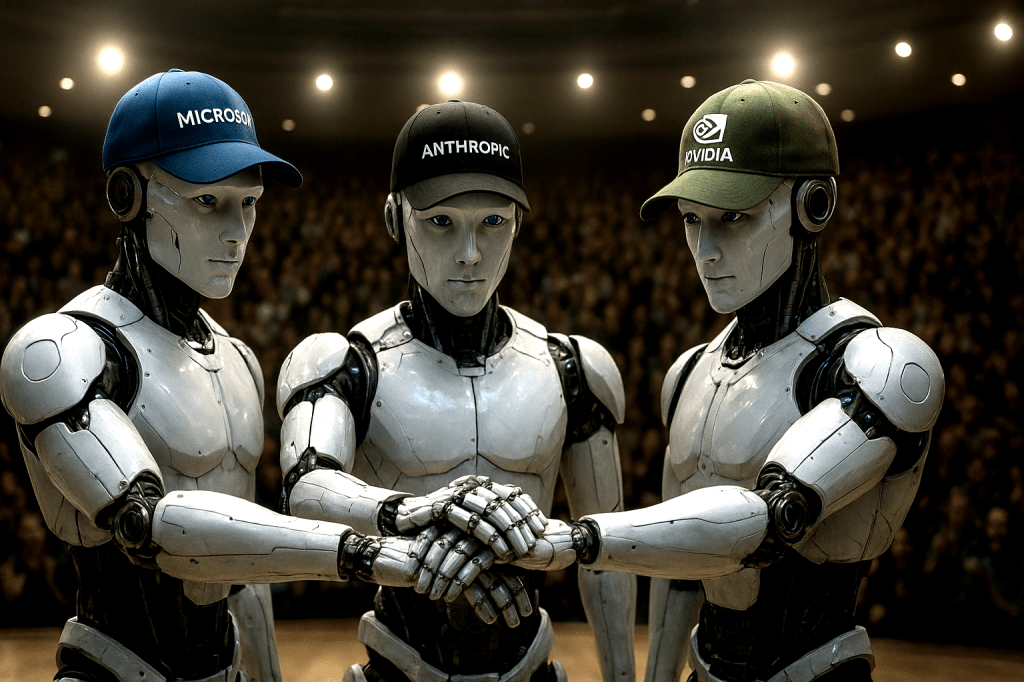
Teacher preparation is the slowest fix, but it has started. In July 2025 the American Federation of Teachers, with OpenAI, Microsoft, and Anthropic, launched a $23 million National Academy for AI Instruction to offer free training to more than 400,000 educators. “The question was whether we would be chasing it or whether we would be trying to harness it,” AFT president Randi Weingarten said (Rami, 2025). Teachers who already use AI weekly report saving 5.9 hours a week, about six weeks over a school year (Ash, 2025).
Where the calculator comparison breaks down
The strongest objection to this argument is that AI is a different kind of tool. “Google could never complete a student’s homework in its entirety, but generative AI can,” wrote Juliana Peloche, an AI literacy adviser at Edith Cowan University in Australia (Peloche, 2025). The historian Bronwen Everill has argued that the calculator survived in classrooms partly because its functions were narrow and controllable, which is why it is still allowed on tests that bar the internet and AI. Technology adoption, she notes, follows contingent choices and political fights rather than a straight line toward acceptance (Everill, 2025).
Both points are correct, and they change what acceptance will look like. A calculator could be admitted to the classroom as it was. A general-purpose chatbot cannot, and the research shows why. What schools are likely to adopt is a narrower product: AI tutors that withhold answers, track what a student has mastered, cite their sources, refuse companion-style relationships with minors, and operate inside assignments designed around them. That product already exists in early form, and the studies of it are encouraging. The general-purpose chatbot will remain available to students outside school, as calculators and Wikipedia were, and teaching will have to account for it.
The timeline is uncertain. Hallucination rates are falling but not to zero. The strongest positive results come from small or short trials, and the largest recent trial in an ordinary university setting was negative. The National History Day ban and the New York pause will likely last at least through this school year, and New York’s Technology in Schools Coalition will publish its recommendations only after reviewing a year of pilots (City of New York, Office of the Mayor, 2026).
After the ban
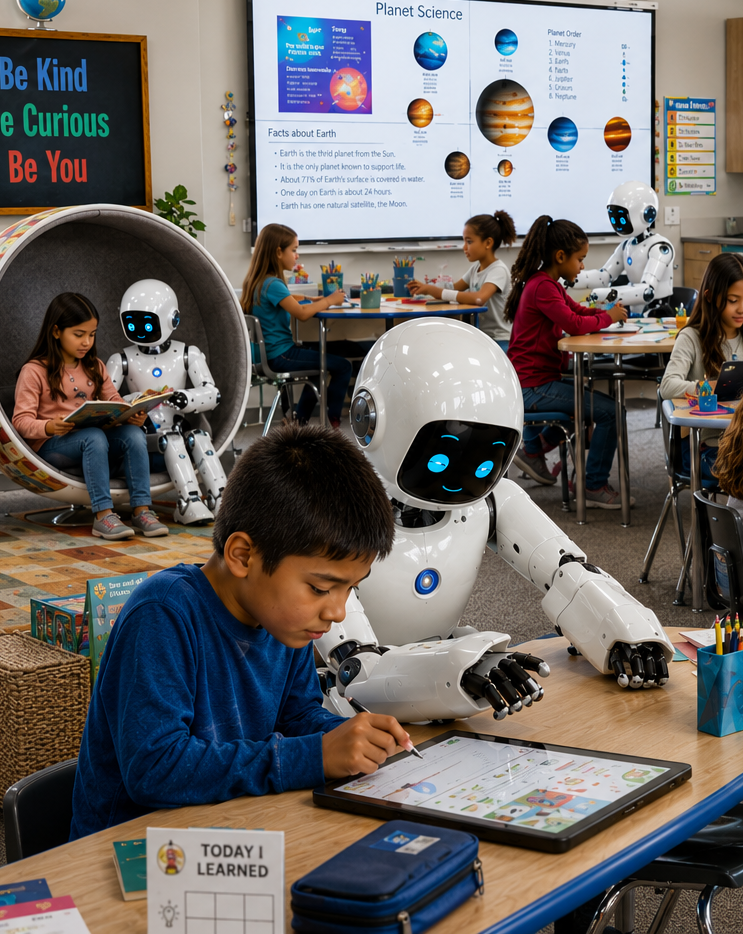
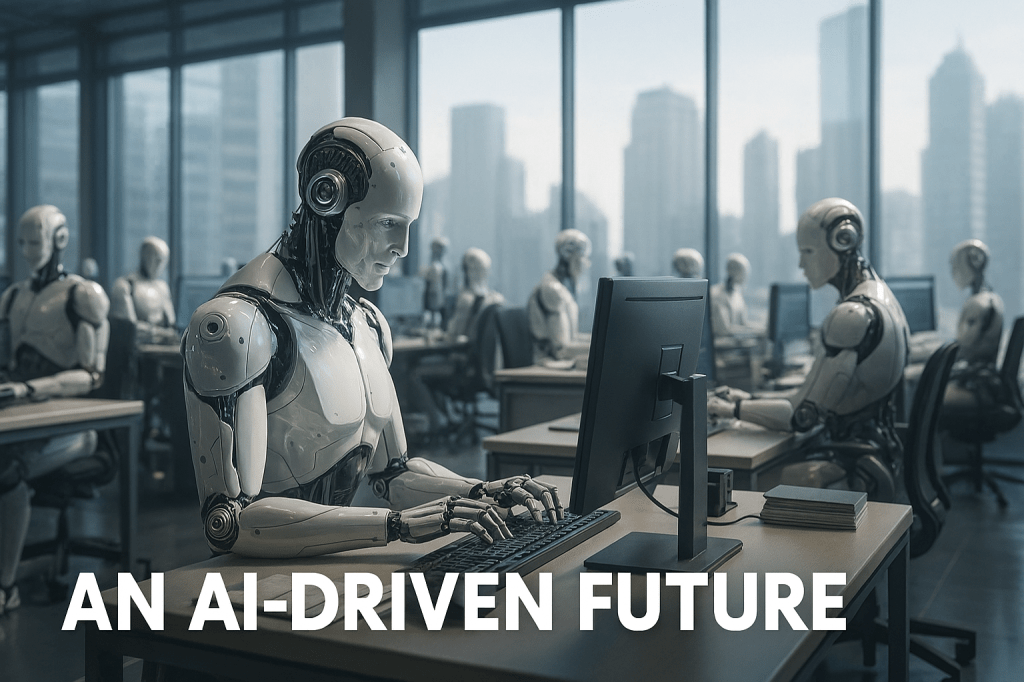
What would a foundational role for AI look like? The research points to specific changes. Every student could have a patient tutor that asks the next question instead of supplying the answer, available at home and in languages a school may not be able to staff. Teachers could get back hours now spent preparing materials and adapting them for individual students. Students in places with too few teachers, such as the Nigerian classrooms in the World Bank study, could gain years of learning. These changes are larger than anything the calculator or Wikipedia produced, which is why the resistance has been sharper.
The history suggests how the current bans will end. Few of them will be repealed in a single decision. They will narrow. National History Day already permits spelling and grammar checkers and bibliography generators, both of them once-novel software (National History Day, 2026). New York already lets teachers use AI for lesson planning and is running high school pilots with time limits and supervision (City of New York, Office of the Mayor, 2026). As tools designed for learning replace general-purpose chatbots in schools, and as evidence from trials accumulates, the list of permitted uses will grow.
Mamdani said the city’s policy would be “driven by the results” (quoted in BetaNYC, 2026). That is the right standard, and the results so far divide along a clear line. When students are handed an AI that gives answers, they learn less. When they are given an AI built to make them think, under a teacher’s direction, most trials show they learn more. Schools barred writing, print, calculators, and Wikipedia until they worked out the second kind of use for each. They are working it out for AI now.
References
Agence France-Presse. (2008, May 11). Once shunned by academics, Wikipedia now a teaching tool. History News Network. https://www.historynewsnetwork.org/article/50341
Agence France-Presse. (2026, October 6). As AI cheating grows, US universities lose faith in detectors. The Daily Star. https://www.thedailystar.net/news/technology/news/ai-cheating-grows-us-universities-lose-faith-detectors-4291946
Ash, A. M. (2025, June 24). Three in 10 teachers use AI weekly, saving six weeks a year. Gallup. https://news.gallup.com/poll/691967/three-teachers-weekly-saving-six-weeks-year.aspx
Barshay, J. (2024, September 16). Proof Points: An AI tutor helped Harvard students learn more physics in less time. The Hechinger Report. https://hechingerreport.org/proof-points-ai-tutor-harvard-physics/
Barshay, J., & Fasiang, K. (2026, August 17). Proof Points: Slow math, kids may learn more when AI makes them review mistakes. The Hechinger Report. https://hechingerreport.org/proof-points-ai-mastery-learning/
Basiouny, A. (2024, August 27). Without guardrails, generative AI can harm education. Knowledge at Wharton. https://knowledge.wharton.upenn.edu/article/without-guardrails-generative-ai-can-harm-education
Bastani, H., Bastani, O., Sungu, A., Ge, H., Kabakcı, Ö., & Mariman, R. (2025). Generative AI without guardrails can harm learning: Evidence from high school mathematics. Proceedings of the National Academy of Sciences, 122, e2422633122. https://doi.org/10.1073/pnas.2422633122
BetaNYC. (2026, September 4). NYC paused AI in its classrooms. Here is what the policy actually says. https://www.beta.nyc/2026/09/04/nyc-paused-ai-in-its-classrooms-here-is-what-the-policy-actually-says/
Blumenthal, H. (2026, March 19). Reflecting on the Fall 2025 term for the Wikipedia Student Program. Wiki Education. https://wikiedu.org/blog/2026/03/19/reflecting-on-the-fall-2025-term-for-the-wikipedia-student-program/
City of New York, Office of the Mayor. (2026, September 2). Mayor Mamdani and Chancellor Samuels put students first with nation’s broadest generative AI moratorium in schools. https://www.nyc.gov/mayors-office/news/2026/09/mayor-mamdani-and-chancellor-samuels-put-students-first-with-nat
College Board. (n.d.). SAT Suite of Assessments calculator policy. Retrieved October 9, 2026, from https://satsuite.collegeboard.org/in-school-assessments/calculator-policy
De Simone, M. E., Tiberti, F., Mosuro, W., Manolio, F., Barron, M., & Dikoru, E. (2025, January 9). From chalkboards to chatbots: Transforming learning in Nigeria, one prompt at a time. World Bank Blogs. https://blogs.worldbank.org/en/education/From-chalkboards-to-chatbots-Transforming-learning-in-Nigeria
Diogenes, M. (2025, December 11). Embracing contraries in the AI era. TeachingWriting, Stanford University. https://teachingwriting.stanford.edu/news/embracing-contraries-ai-era
Doss, C. J., Bozick, R., Schwartz, H. L., Chu, L., Rainey, L. R., Woo, A., Reich, J., & Dukes, J. (2025). AI use in schools is quickly increasing but guidance lags behind: Findings from the RAND survey panels (RR-A4180-1). RAND. https://www.rand.org/content/dam/rand/pubs/research_reports/RRA4100/RRA4180-1/RAND_RRA4180-1.pdf
ETC Journal. (2026, October 9). Briefing 10/9/26: ‘History competition bars AI.’ Educational Technology and Change Journal. https://etcjournal.com/2026/10/09/briefing-10-9-26-history-competition-bars-ai/
Everill, B. (2025, April 30). Solve for AI. History News Network. https://www.historynewsnetwork.org/article/solve-for-ai
Giles, J. (2005). Internet encyclopaedias go head to head. Nature, 438, 900–901. https://doi.org/10.1038/438900a
Güell Paule, L. (2026, February 3). OECD Digital Education Outlook 2026: How generative AI can support learning when used with purpose. Digital Skills and Jobs Platform, European Commission. https://digital-skills-jobs.europa.eu/en/latest/news/oecd-digital-education-outlook-2026-how-generative-ai-can-support-learning-when-used
Horn, V. (2007, January 26). Wikipedia banned by Middlebury College for history students. Perspectives on History. https://www.historians.org/perspectives-article/wikipedia-banned-by-middlebury-college-for-history-students-january-2007/
Jacob, B. (2026, May 4). Did school cellphone bans work? New study finds mixed results. Youth Policy Lab, University of Michigan. https://youthpolicylab.umich.edu/news/2026/did-school-cellphone-bans-work-new-study-finds-mixed-results
Kaufman, J. H., Diliberti, M. K., Steiner, E. D., Master, B. K., & Woo, A. (2026, August 17). The state of public education in 2026 in five charts. RAND. https://www.rand.org/pubs/commentary/2026/08/the-state-of-public-education-in-2026-in-five-charts.html
Klein, A. (2023, May 23). New York City does about-face on ChatGPT in schools. Education Week. https://www.edweek.org/technology/new-york-city-does-about-face-on-chatgpt-in-schools/2023/05
Kosmyna, N., Hauptmann, E., Yuan, Y. T., Situ, J., Liao, X.-H., Beresnitzky, A. V., Braunstein, I., & Maes, P. (2025). Your brain on ChatGPT: Accumulation of cognitive debt when using an AI assistant for essay writing task. MIT Media Lab. https://www.media.mit.edu/publications/your-brain-on-chatgpt/
LearnLM Team, Eedi, et al. (2025). AI tutoring can safely and effectively support students: An exploratory RCT in UK classrooms (arXiv:2512.23633). arXiv. https://arxiv.org/abs/2512.23633
Liu, J., Sweet, T., Chen, M. H., Engelberg, J., Masters, M. C., Clark, M., Persaud, A., Lancaster, A., Hollingsworth, J. K., & Rice, J. K. (2026). The effects of course-integrated AI tutoring on student performance and engagement: A randomized university trial (EdWorkingPaper No. 26-1598). Annenberg Institute at Brown University. https://edworkingpapers.com/sites/default/files/ai26-1598.pdf
Malki, D. (n.d.). True stuff: Monk vs. the printing press. Wondermark. https://wondermark.com/true-stuff-monk-vs-press/
Mathis, N. (1988, November 23). Using calculators in math courses doesn’t add up, some chiefs say. Education Week. https://www.edweek.org/education/using-calculators-in-math-courses-doesnt-add-up-some-chiefs-say/1988/11
National History Day. (2026). Guidance: Artificial intelligence (AI) guidance for NHD projects. https://nhd.org/en/resources/ai/
OpenAI. (2025a, July 29). Introducing study mode. https://openai.com/index/chatgpt-study-mode/
OpenAI. (2025b, September 5). Why language models hallucinate. https://openai.com/index/why-language-models-hallucinate/
Peloche, J. (2025, May 19). Please, please! Let’s avoid the calculator analogy now. EduResearch Matters. https://blog.aare.edu.au/2025/05/19/please-please-lets-avoid-the-calculator-analogy-now/
Plato. (n.d.). Phaedrus (B. Jowett, Trans.). The Internet Classics Archive, MIT. http://classics.mit.edu/Plato/phaedrus.html (Original work written ca. 370 B.C.E.)
Potier, B. (2003, February 13). Data overload nothing new. Harvard Gazette. https://news.harvard.edu/gazette/?p=16880
Rami, N. (2025, July 8). National AI training hub for educators to open, funded by OpenAI and Microsoft. Chalkbeat. https://www.chalkbeat.org/2025/07/08/openai-microsoft-teachers-union-ai-training-partnership
Rieper, M. (2026, April 30). State children’s online safety laws expand to AI chatbots. MultiState. https://www.multistate.us/insider/2026/4/30/state-childrens-online-safety-laws-expand-beyond-social-media-in-2026
Rowe, J. (1986, May 9). The great calculator debate: Educators disagree over their place in the classroom. The Christian Science Monitor. https://www.csmonitor.com/1986/0509/dcalc-f.html
Schwartz, S. (2026, October 8). In social studies, does AI shortcut historical thinking? Or deepen it? Education Week. https://www.edweek.org/teaching-learning/in-social-studies-does-ai-shortcut-historical-thinking-or-deepen-it/2026/10
Walters, L. S. (1994, March 14). The new SATs: Real change or just cosmetics? The Christian Science Monitor. https://www.csmonitor.com/1994/0314/14152.html
###
Filed under: Uncategorized |






























































































































































































































































































































Leave a Reply