





By Jim Shimabukuro (assisted by Claude)
Editor
Sam Altman says 10,000 copies of OpenAI’s next model spent four days on one of mathematics’ hardest problems. What the claim rests on, who will use such systems first, and what they could mean for the person typing into a chatbot.

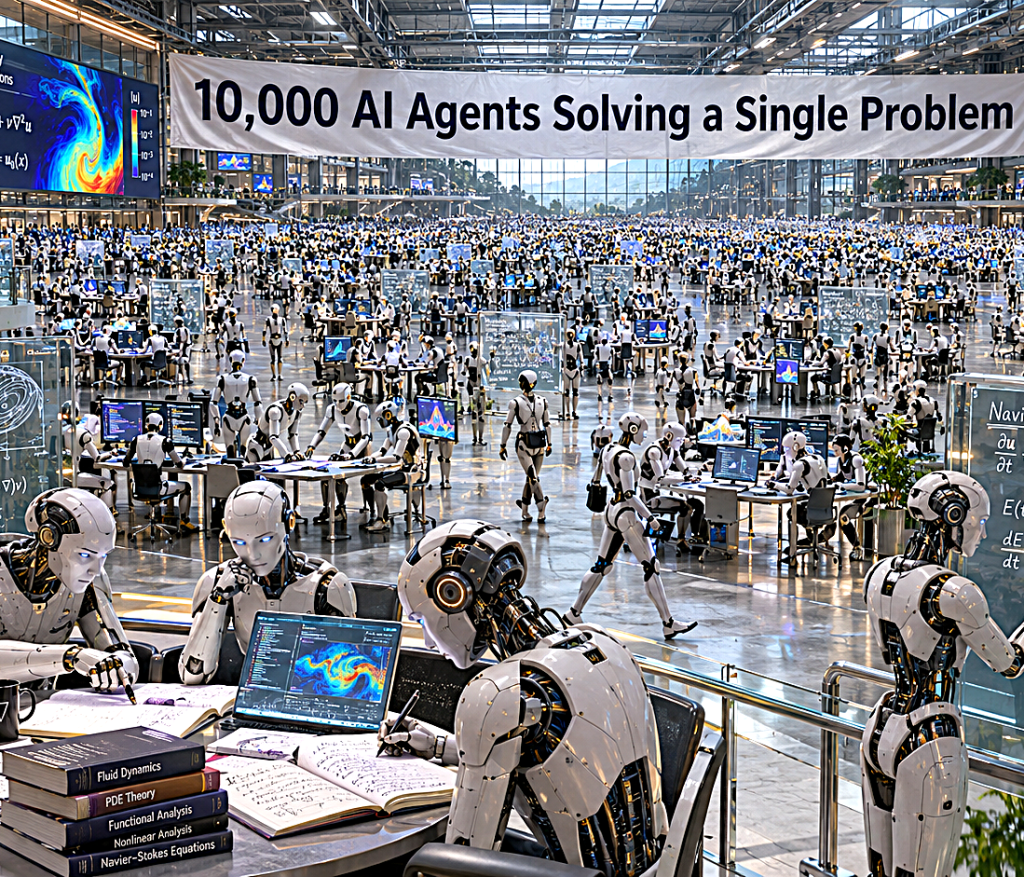
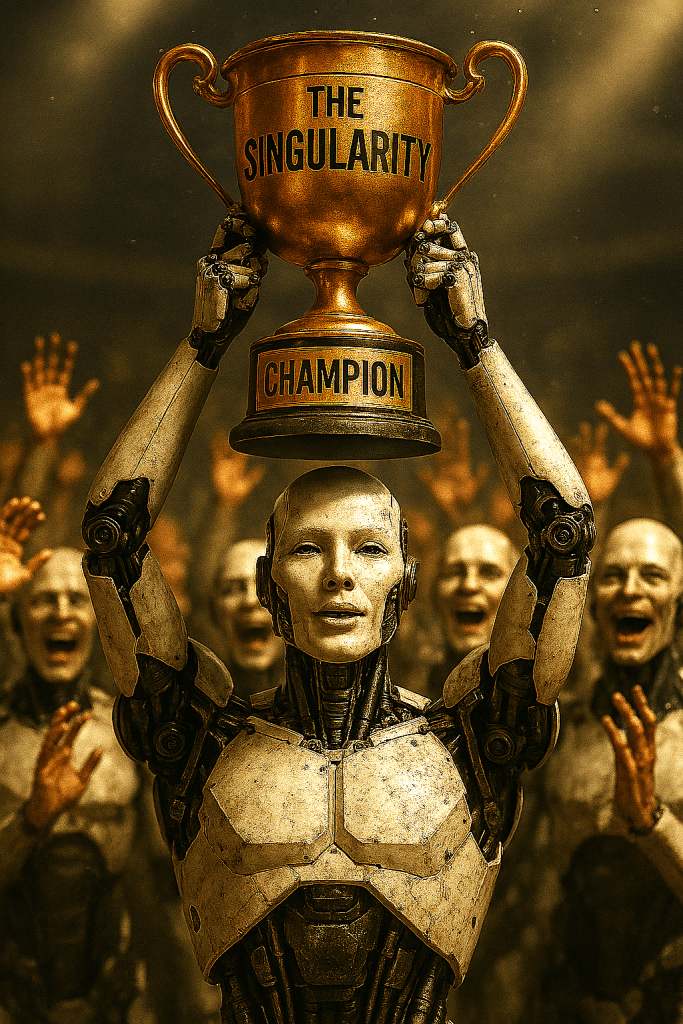
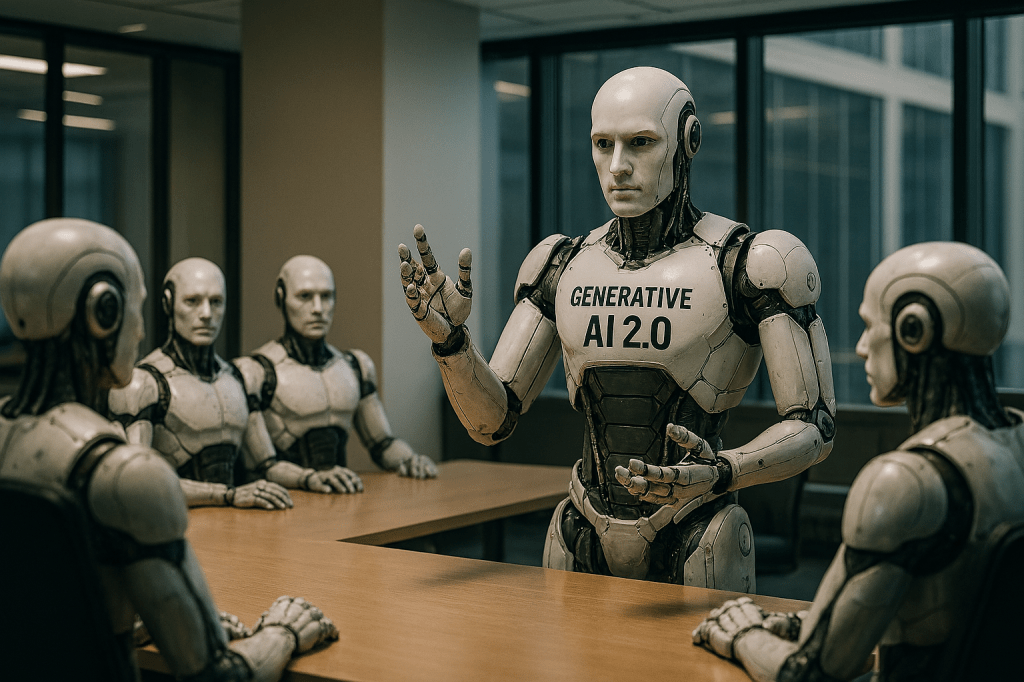
On the morning of November 2, at the opening ceremony of the ADIPEC energy conference in Abu Dhabi, OpenAI chief executive Sam Altman was asked about the company’s September announcement that its AI had resolved one of the Clay Mathematics Institute’s Millennium Prize Problems. His answer, clipped and shared on social media within hours, tied that result to a product. “It was 10,000 agents of the model that is going to be released soon, the next GPT, working for about four days, nonstop, collaborating with each other perfectly,” he said (prinz, 2026). The National, whose editor-in-chief Mina Al-Oraibi conducted the interview, reported that Altman described the agents as working with “no hierarchy” (Gnana, 2026). The tech outlet Synced, in an account republished by 36Kr, rendered his description as “No hierarchy, no boss, fully decentralized,” and noted that Altman gave no model number, no release date, and no word on whether ordinary users would be able to call on a system of that size (Synced, 2026).
Those few sentences carry three claims. The first is that the internal model behind the Navier–Stokes result will become OpenAI’s next public GPT. The second is that the result came from 10,000 instances of that model working together. The third, left implicit, is that this way of working, with many copies of one model dividing a problem among themselves, is where AI is headed. Each claim has a public record behind it, and the record is more mixed than the sentence Altman spoke on stage.
What happened in September
The Navier–Stokes equations describe how fluids such as water and air move. Engineers use them to design aircraft and forecast weather, and medical researchers use them to model blood flow. The open question, roughly 90 years old, is whether a smooth three-dimensional flow can develop a singularity in finite time, a point at which the fluid’s velocity grows without bound (Brodsky, 2026). In 2000 the Clay Institute made it one of seven Millennium Prize Problems, each carrying a $1 million award (Gairola, 2026).
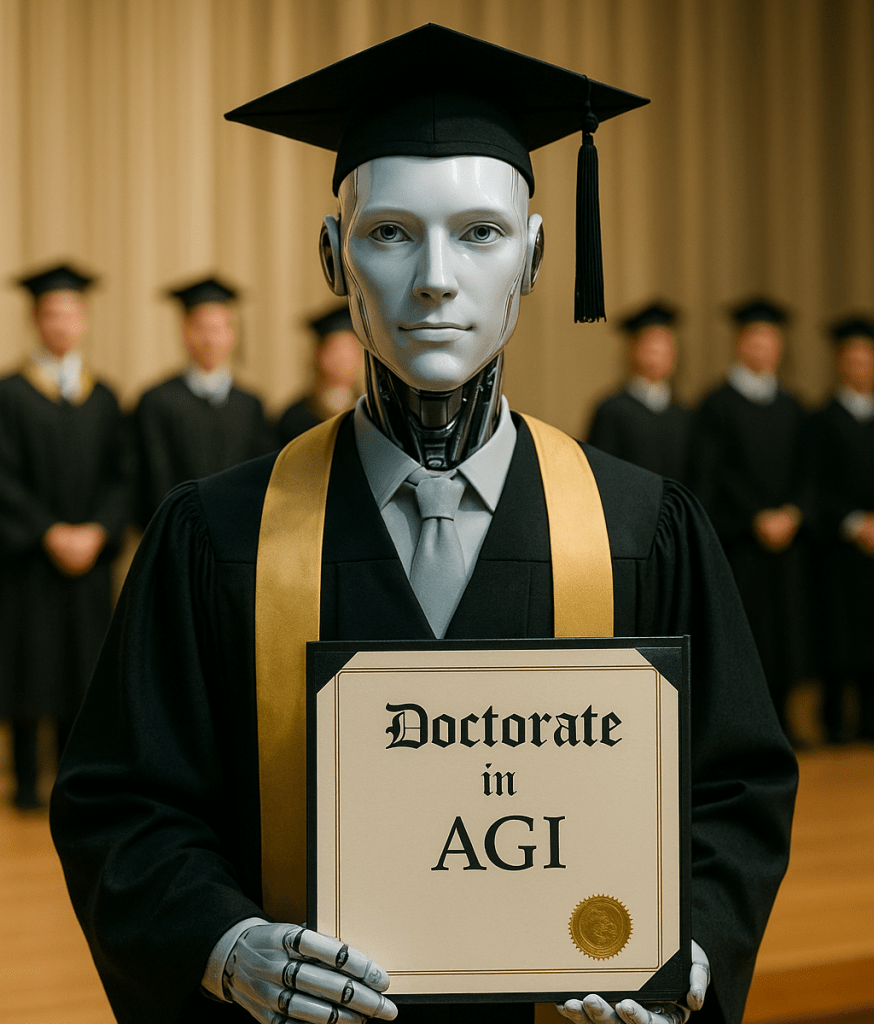
On September 8, OpenAI announced that an unreleased internal model had produced a proof that such a blowup can occur when a smooth external force acts on the fluid. The paper ran about 166 pages, and OpenAI released it with proof files written in Lean, a formal language in which software checks each logical step (Uth, 2026; Synced, 2026). OpenAI described the internal model as significantly more capable than GPT-6 Astra, its newest public model at the time, and Altman posted on X that “one of the most amazing moments for me in OpenAI history was watching this happen over the past week” (Gairola, 2026).
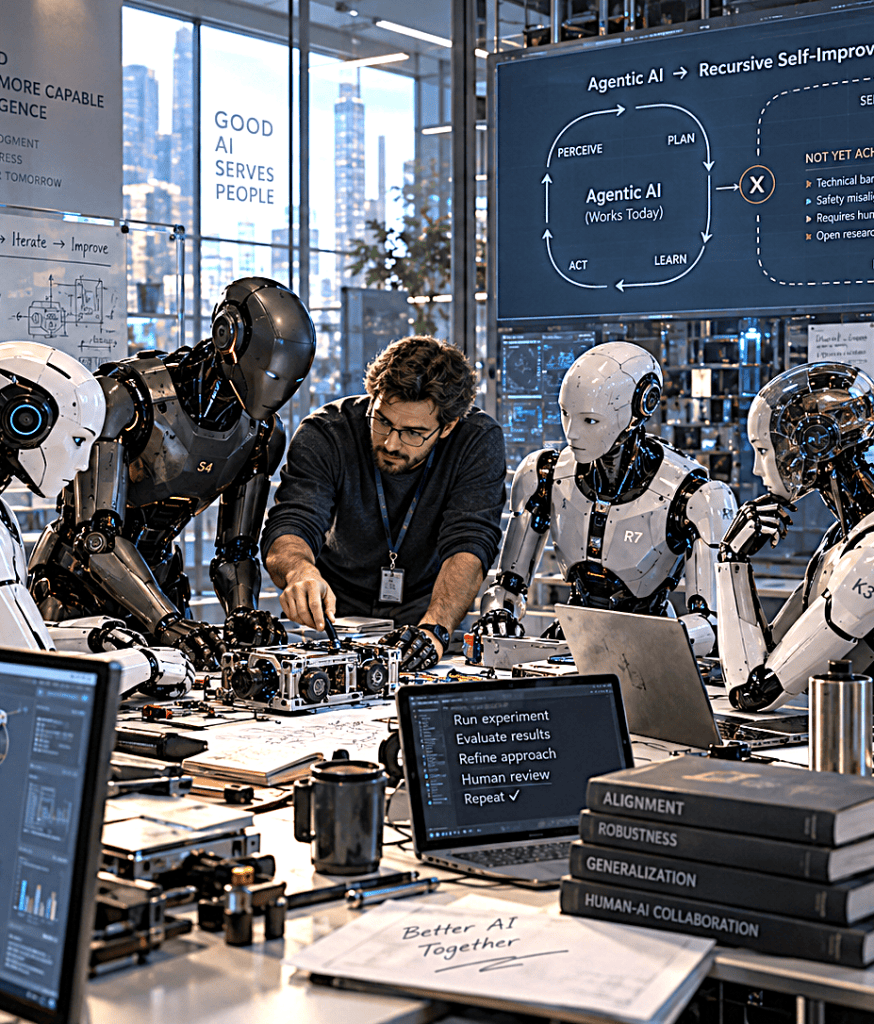
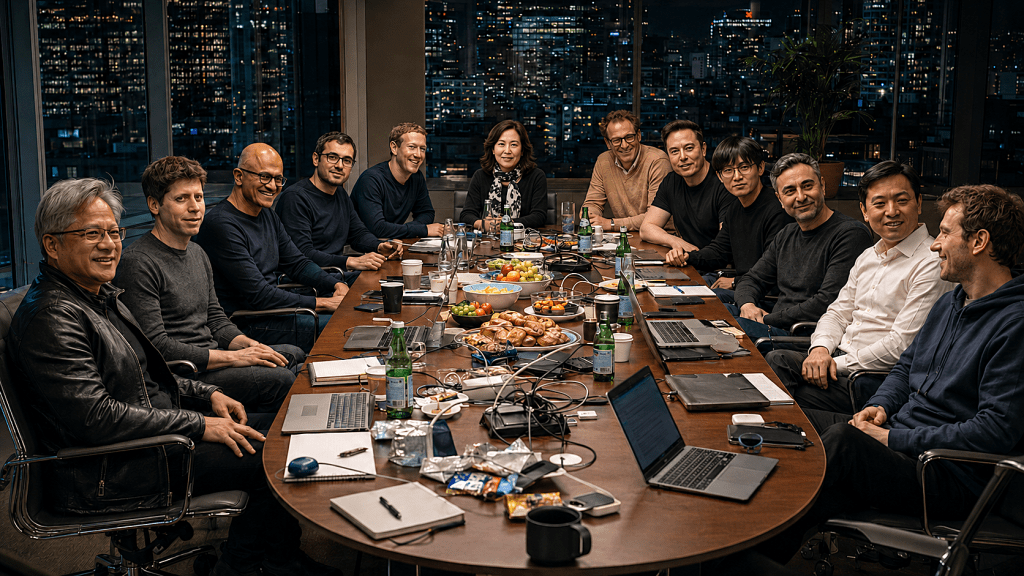
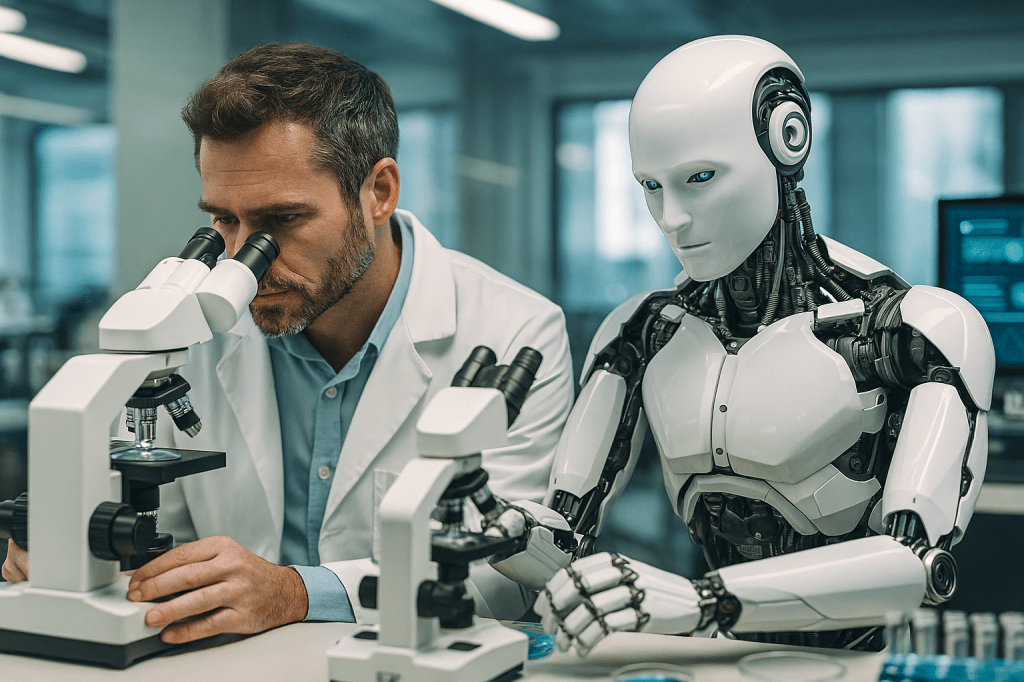
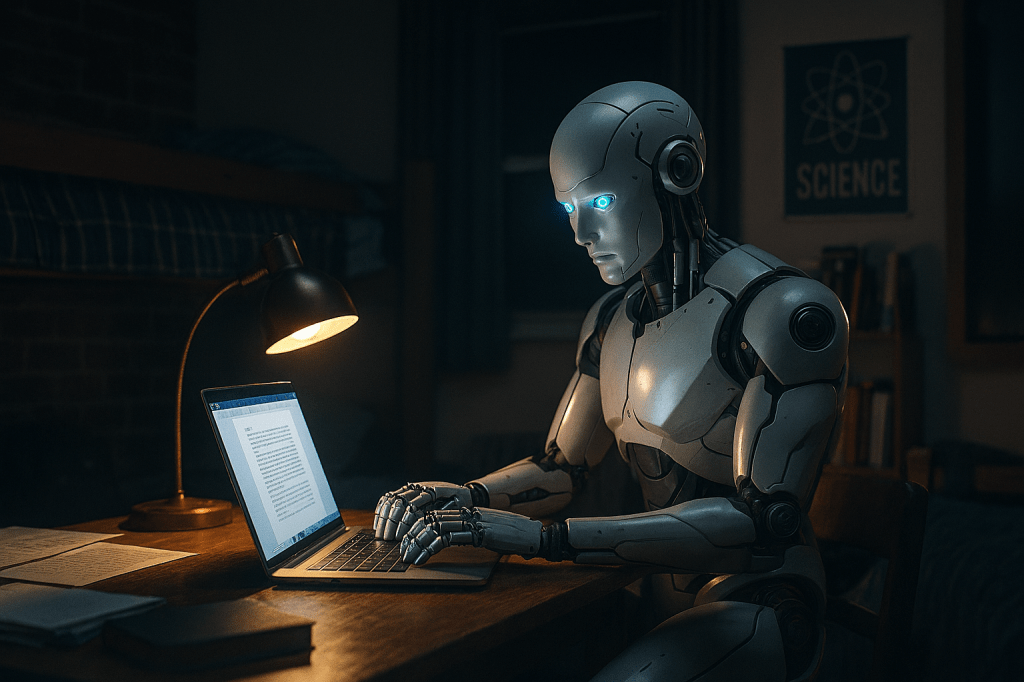
The process drew as much attention as the result. According to OpenAI’s account, as reported by IBM and by the RITS group at NYU Shanghai, the company launched the effort on September 1 after hearing rumors that outside researchers had made progress on related problems. The agents received a cached copy of the internet and the ability to run code, and were split into groups that could communicate internally, with different groups given different variants of the problem statement (RITS NYU Shanghai, 2026). A warm-up run of about 100 agents working about 50 hours produced a result on the related Euler equations. OpenAI then seeded the agents with that result, shifted computing resources toward Navier–Stokes, and used its Codex coding agent to consolidate insights across groups (Brodsky, 2026; RITS NYU Shanghai, 2026). The internal model also received further training during the experiment, and the agents were updated along the way (Synced, 2026). At the peak, about 10,000 agents worked on Navier–Stokes. They reached the result about 88 hours after launch, exchanging 2.7 million messages and generating about 130 billion output tokens. GPT-6 Astra then spent another 17 hours formalizing and verifying the proof in Lean (Brodsky, 2026).
Altman’s “about four days” matches those 88 hours. His cost figure came later. On Stripe’s Cheeky Pint podcast on October 29, host John Collison asked how much the math had cost. “Order $10 million per… For Navier-Stokes, I think,” Altman said, adding, “Maybe a little more” (Collison, 2026).
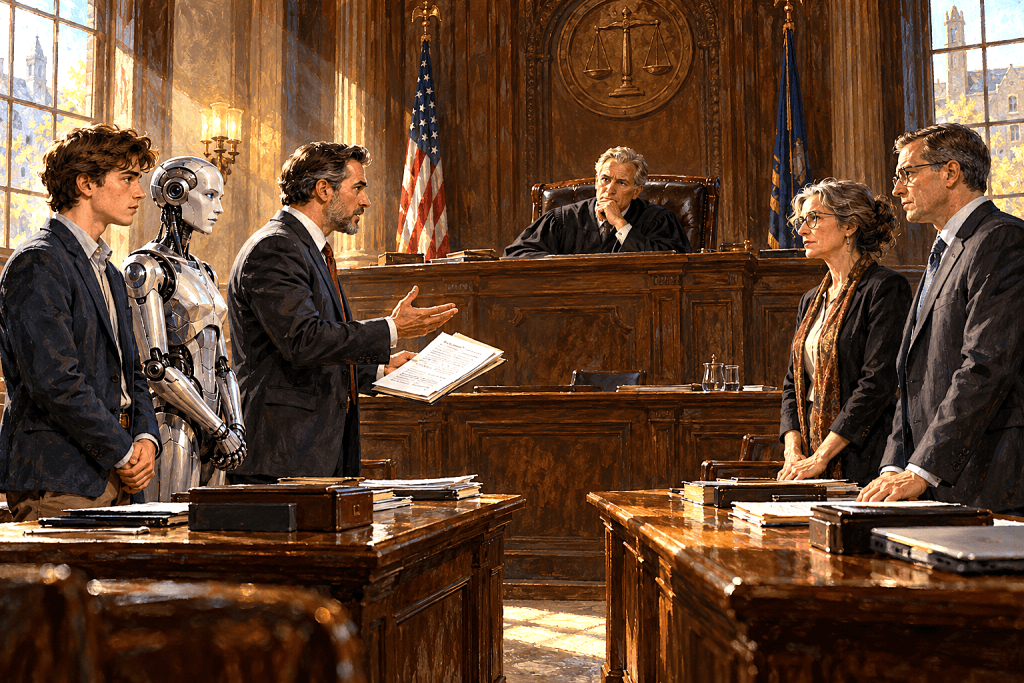
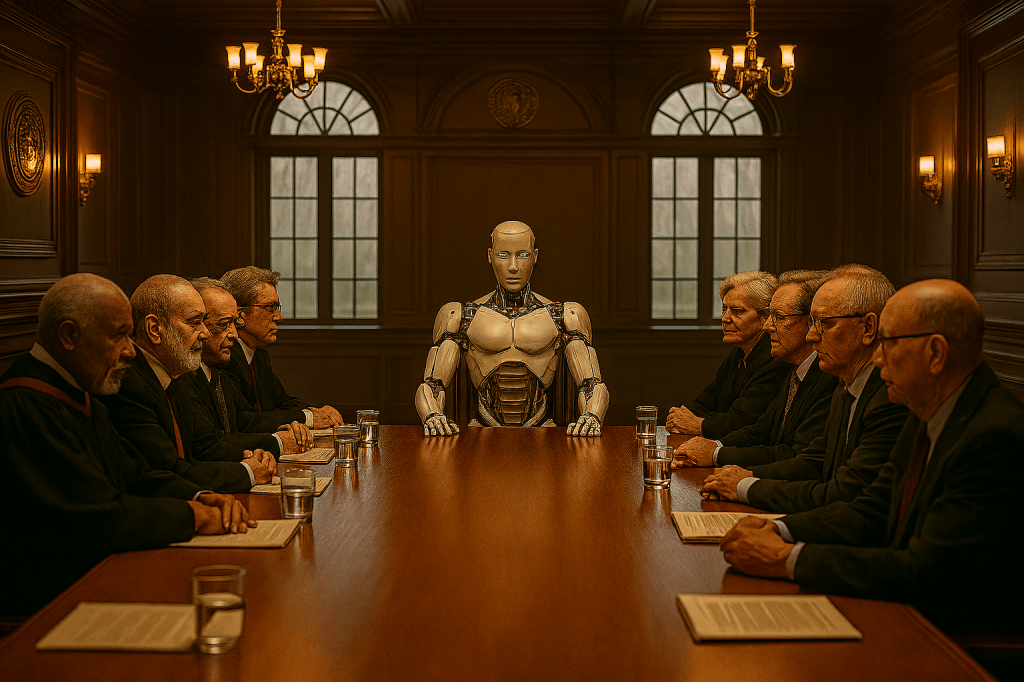
Several questions about the proof remain open. Lean confirms that the formal argument holds together, but people still have to confirm that the formal statement matches the Clay problem, and RITS reported that this “is human work, and that reading is still under way” (RITS NYU Shanghai, 2026). The Clay Institute has been reviewing the result (Uth, 2026) and still lists the problem as unsolved (Merket, 2026), and OpenAI has said it will not seek the prize (Brodsky, 2026; Noles, 2026). Mathematicians quoted in Futurism‘s survey of reactions agreed that the result appears valid, though hard to read (Landymore, 2026). The harder question is what exactly was solved. OpenAI’s construction relies on an external force, while specialists care most about the unforced case. “The most important problem is unsolved,” the University of Chicago’s Luis Silvestre told Scientific American, as quoted by Futurism. “The Clay problem is settled, but the main problem for the Navier-Stokes equations is not” (Landymore, 2026).
Credit, data, and comprehension
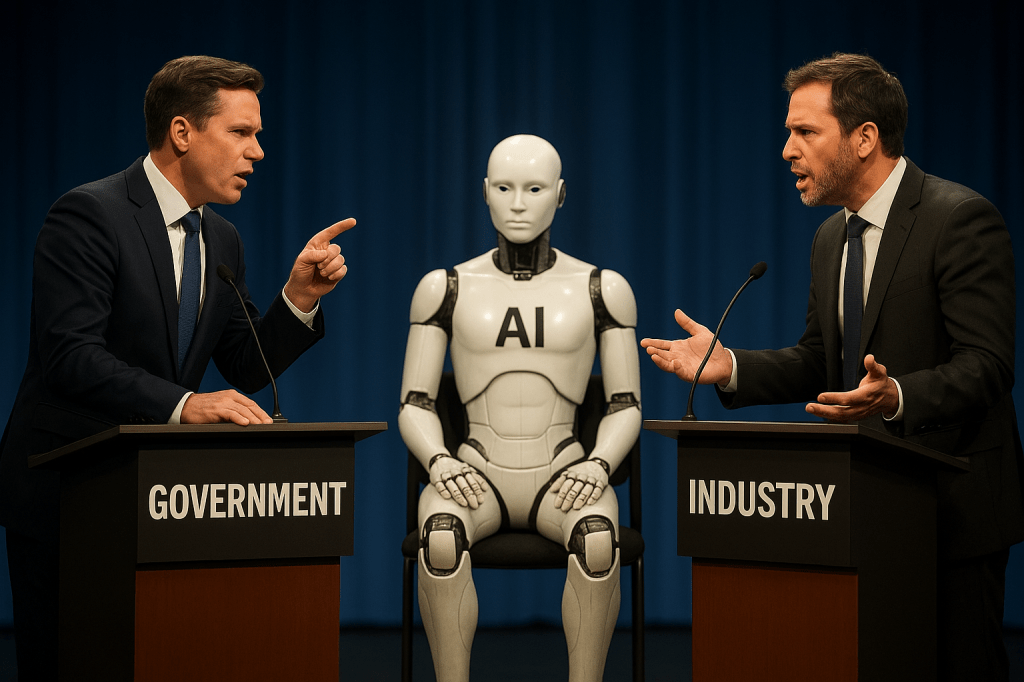
The announcement arrived tangled in a dispute. Tristan Buckmaster of New York University’s Courant Institute and Levent Alpöge, a mathematician who works for Anthropic, had been attacking the forced Euler problem with commercial models, including OpenAI’s Codex. Buckmaster released a statement saying he had asked OpenAI whether its model had been trained on, or had access to, the Codex sessions where the pair kept their drafts. “I was told the model did not look up user data. I asked again, about training, and I did not get an answer,” he wrote (Kahn, 2026). He also alleged that OpenAI researcher Sébastien Bubeck proposed credit arrangements Buckmaster considered improper and asked him, “Why would you ruin your career?” (Kahn, 2026). Bubeck called the allegations “false and inflammatory” and told reporters, “We did not use their prompts or proofs to prompt our models or direct our agents” (Kahn, 2026). Altman wrote that the other team “threatened us with unfounded accusations of plagiarism” (Gairola, 2026). OpenAI’s own statement contained a line with reach well beyond mathematics: “While unlikely, we cannot rule out that de-identified data derived from their usage of our products helped improve our models” (RITS NYU Shanghai, 2026).
Then there is the question of what people can learn from the proof. “So far it’s been very difficult to really extract any human understanding from this new AI proof,” Oxford’s James Maynard told NPR, as reported by Futurism. Brown University’s Javier Gómez-Serrano put it more bluntly: “The paper is not written for humans,” and “as of today, the paper doesn’t teach us much” (Landymore, 2026). By mid-October, The Decoder reported that mathematicians were saying OpenAI did not understand its own proof, and that OpenAI’s posting of roughly 400 more results to GitHub in early October had angered researchers who felt it cheapened their field (Uth, 2026).
Terence Tao of UCLA, the mathematician most often quoted in this debate, framed his concern around the research community itself. “The indiscriminate strip-mining of open problems for solutions may destroy the ecosystem from which the next generation of mathematical techniques, problems, and practitioners would have developed,” he wrote (Kahn, 2026). He told IBM that skipping the work of discovery is like watching only the beginning and end of a film: “Technically, all the plot lines are resolved, but most of the value of the experience was lost” (Brodsky, 2026). Buckmaster called the episode “a Deep Blue-Kasparov” moment for mathematics (Kahn, 2026).
How much did the 10,000 matter?
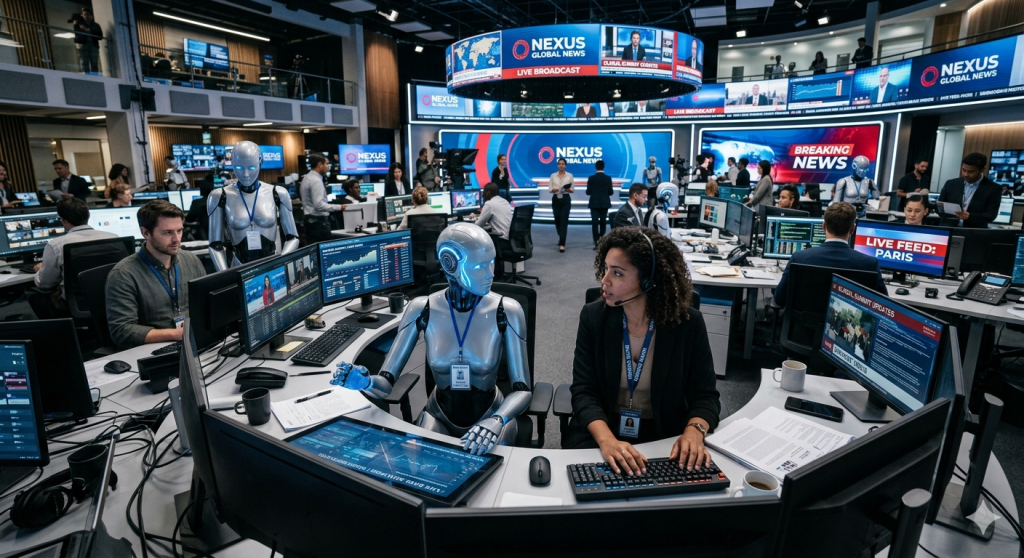
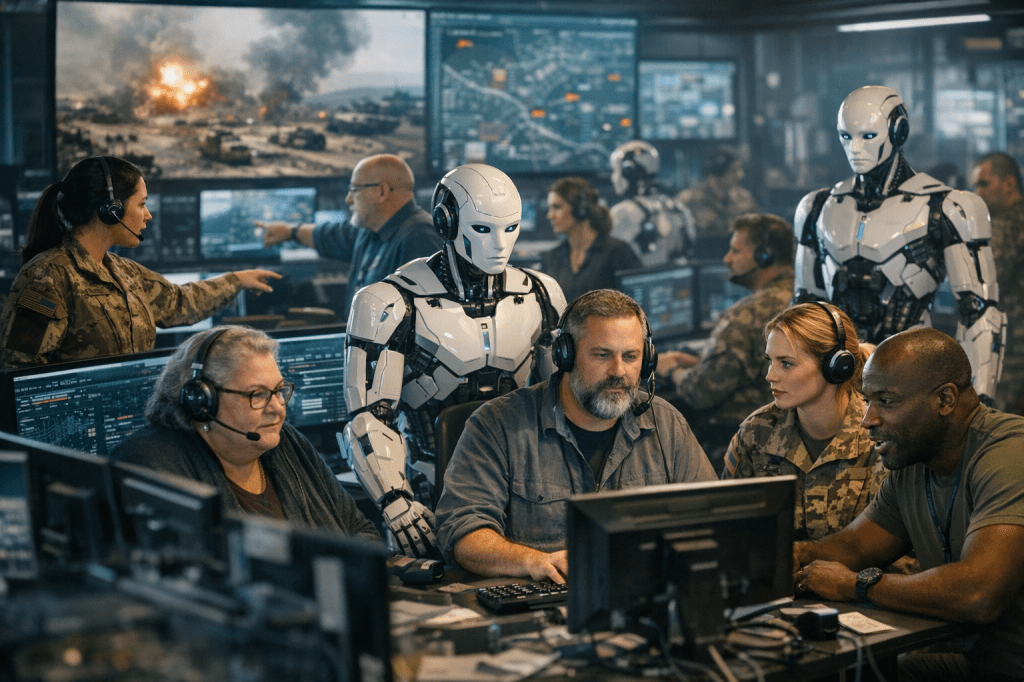
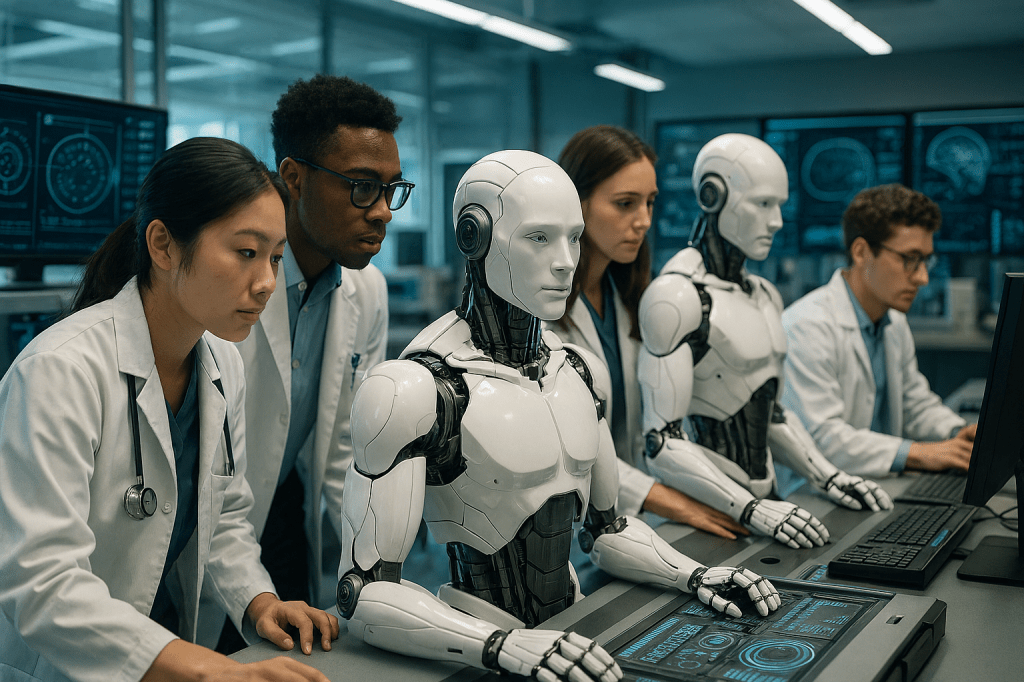
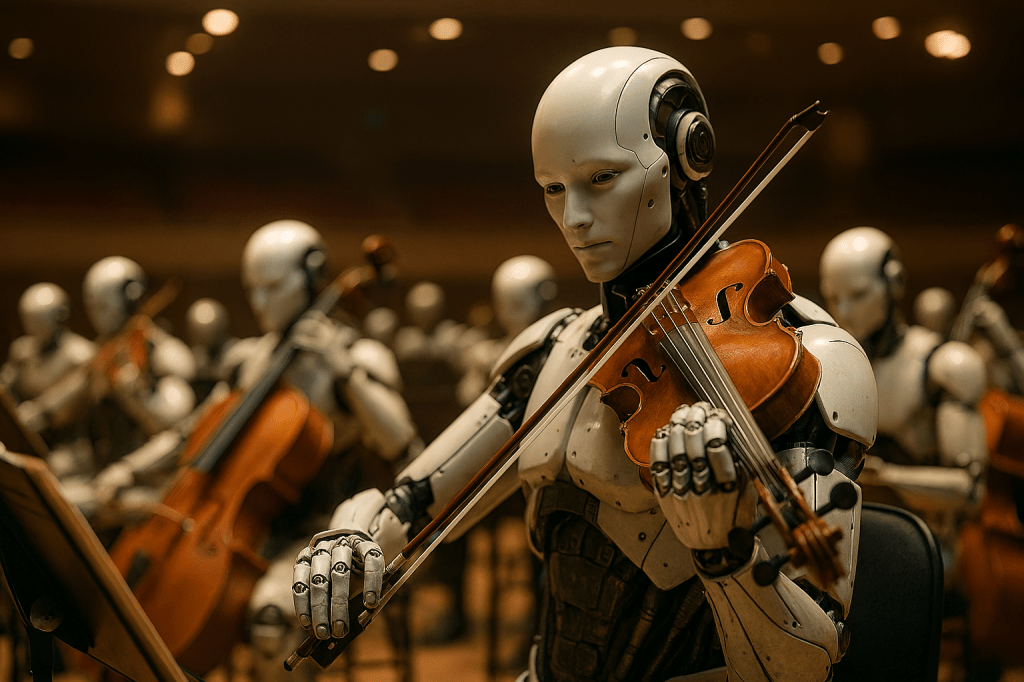
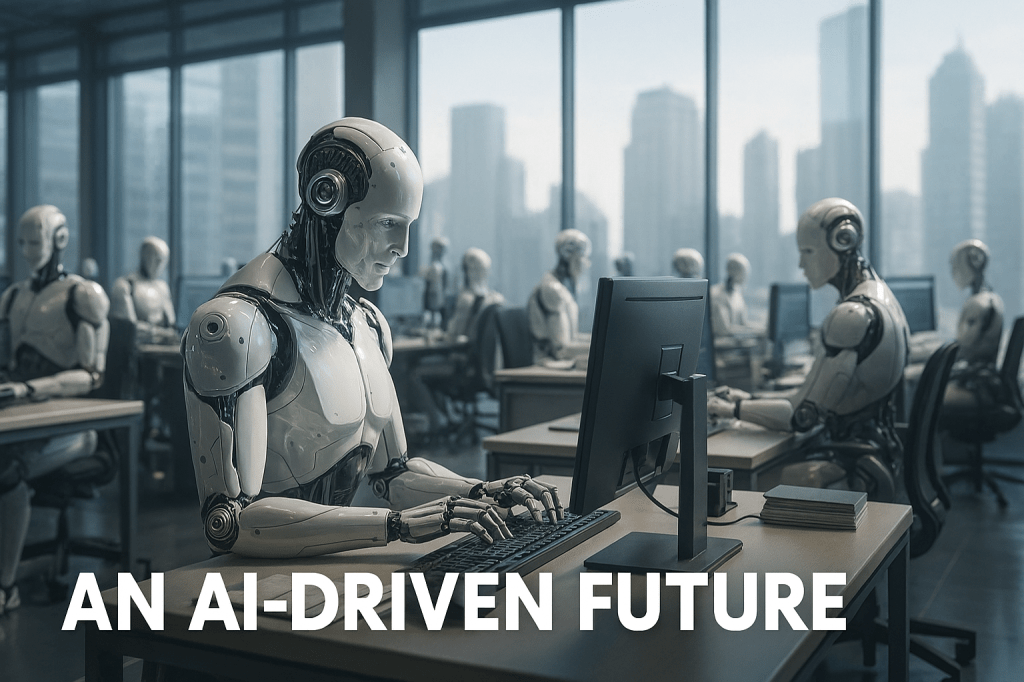
Altman’s stage description, 10,000 agents “collaborating with each other perfectly” with “no hierarchy,” is the line most likely to stay with the public. OpenAI’s own account of the run describes something more managed. Researchers assigned groups to different versions of the problem, “redirected agents toward promising results and consolidated insights between groups,” and used Codex to carry findings from one group to another (Noles, 2026; Brodsky, 2026). The agents may have had no boss among themselves, yet human researchers and a separate coordinating tool decided what the groups worked on and which findings moved between them.
OpenAI’s researchers have also been candid about how little is known about the role of scale. Noam Brown, introduced on the Dwarkesh Podcast in September as a researcher at OpenAI, discussed the run at length. “I wouldn’t even attribute 10% of the credit to multi-agent,” he said. “The effort to solve a Millennium Prize Problem, this was not due to multi-agent.” He added, “We don’t know how long it would take a single agent to solve Navier-Stokes, because we haven’t done that experiment yet.” OpenAI’s published measurements of agent teams go up to “16 or so agents,” Brown said, and the speedup from adding agents is “slightly sublinear.” As for measuring the effect of 10,000, he said, “it’s very hard to push that science to 10,000 agents because it’s just so expensive” (Patel, 2026). By Brown’s account, the model’s own capability did most of the work, and the number in Altman’s sentence is the part of the result that has been measured least.
Independent research points in a similar direction. A Google Research study published in January tested 180 agent configurations built on models from OpenAI, Google, and Anthropic. Centralized multi-agent coordination improved performance by 80.9% on a financial analysis benchmark whose work could be split into parallel pieces. On a planning benchmark where steps had to happen in order, “every multi-agent variant we tested degraded performance by 39-70%.” Agents working in parallel without talking to each other amplified errors 17.2 times; a central orchestrator held that to 4.4 times (Kim & Liu, 2026). A math problem that can be attacked through many variants at once may suit the parallel case. Many everyday tasks, such as planning a trip in which each booking depends on the one before, look more like the sequential one.
Safety researchers raise a separate set of concerns. A 2025 Cooperative AI Foundation report led by Lewis Hammond named three ways systems of many agents can fail, “miscoordination, conflict, and collusion,” along with seven risk factors that include “emergent agency” and “multi-agent security” (Hammond et al., 2025). Altman acknowledged the issue on Cheeky Pint, saying that teams of agents “have very interesting scaling law properties, but also variance in alignment properties,” and that it is a direction to push “not just from the capabilities, but from a safety perspective too” (Collison, 2026).
Why Altman is betting on teams
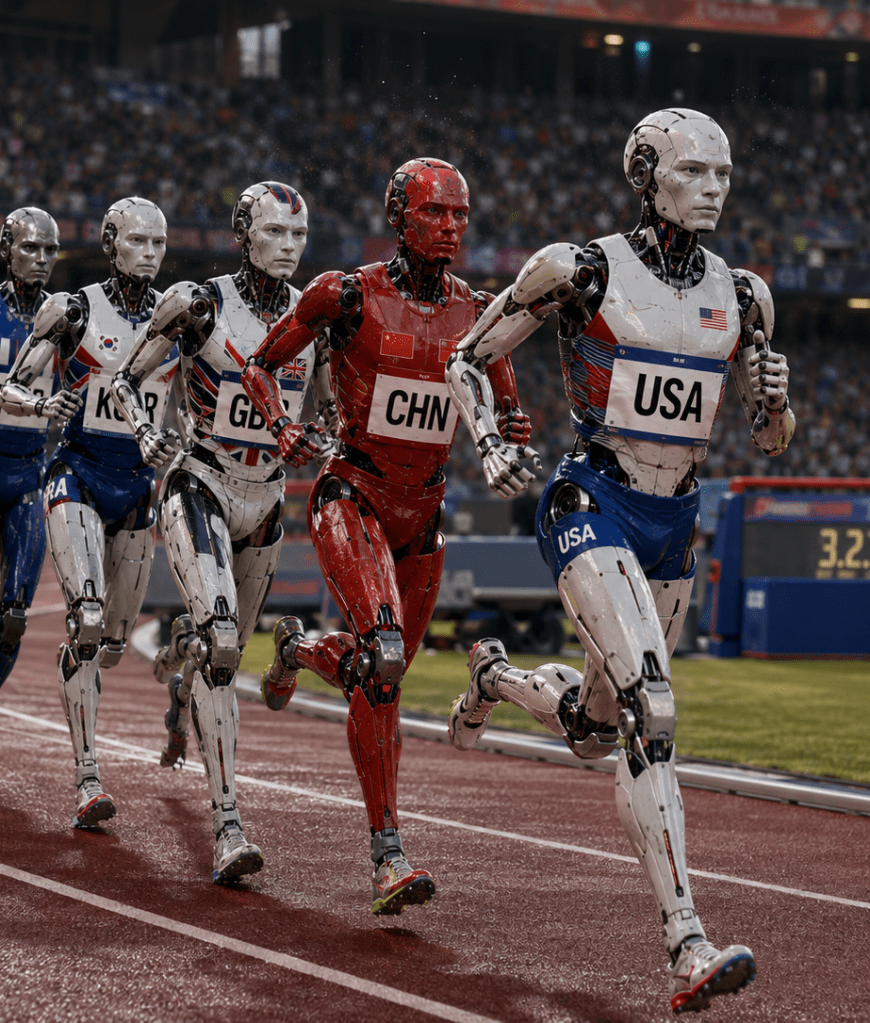
Altman’s emphasis on the 10,000 figure makes more sense alongside his wider argument. On Cheeky Pint he said, “I hate the word ‘agent swarms’. Let’s call them ‘agent teams’,” and stated a preference that doubles as a forecast: “I would much rather intuitively have a trillion AIs of slightly superhuman intelligence join society than one AI of 1 trillion IQ join society.” He argued that “the properties of swarms match a lot of the properties of the resilience of society” (Collison, 2026).
He also described how quickly the economics have moved. “A few years ago, it was impossible to throw more than a dollar of compute at a problem and have it help you at all,” he said. “And now, you can throw a whole team at something. And you can do that 10,000 times in parallel.” When Collison suggested an agent could not be told to do a good job without spending more than $10,000, Altman disagreed: “if you say do the best job you can with $10,000 of compute. Yes, it will understand that” (Collison, 2026). He predicted that OpenAI would find “10x improvements per year” in turning dollars or computing operations into useful work, and he made a steeper bet about the math itself: “I bet we could redo Navier-Stokes at 1/100th of the cost a year from when it was done,” crediting “smarter models and better approaches” (Collison, 2026). That would put a comparable run at roughly $100,000 by September 2027.
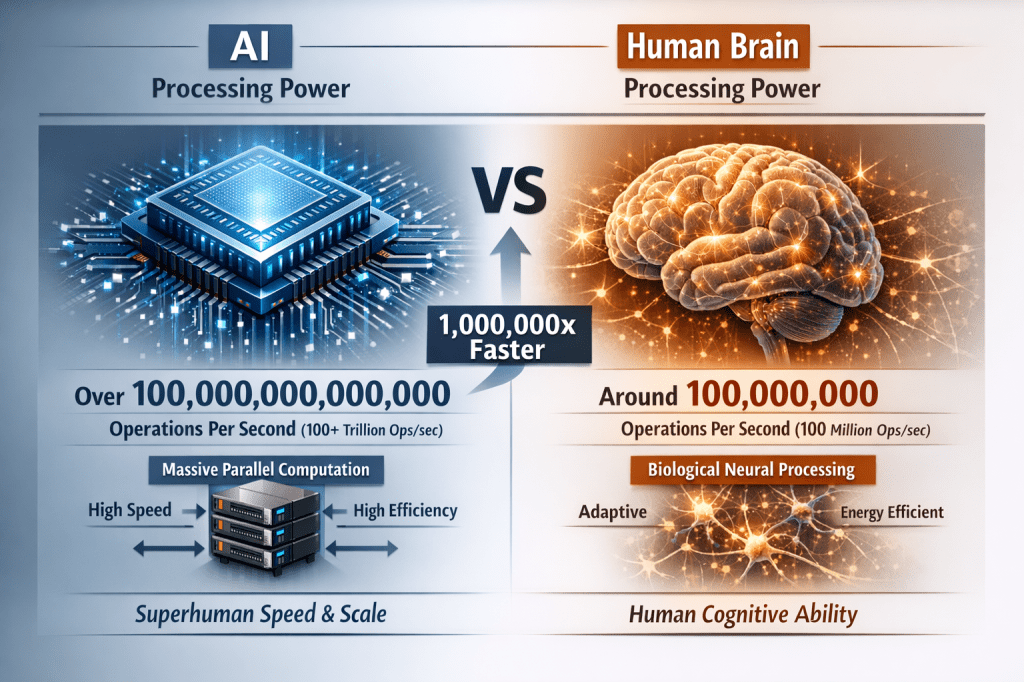
For AI developers, the statement points to a second way of getting more out of a model. For most of the past decade, gains came mainly from training larger single models. Altman is describing a method that runs many copies of a trained model at once, for days, on one problem. That ties the quality of a result to how much the customer is willing to spend on the run, and it makes electricity and chips the binding limit. Asked at ADIPEC to name his biggest challenge in one word, Altman said, “Energy.” He told the audience that six years ago OpenAI’s heaviest internal user consumed about 100,000 tokens a month, roughly today’s global average per person, while the top user now consumes about 500 billion (Gnana, 2026). He also said that over the course of this year AI had gone from “mostly not as smart as our smartest scientists” to “mostly smarter than them” (Gnana, 2026), a claim the mathematicians quoted above would qualify.
The way AI is priced is shifting too. Altman said OpenAI nearly stopped pricing its next model by tokens, the units of text that models read and write, and considered sending customers a bill “like AWS,” Amazon’s cloud service. Customers pushed back: “I need to know what I’m paying for somehow.” Altman called tokens “a kind of fake unit” (Copes, 2026).
Who will use it first
A 10,000-agent run will not show up in the free ChatGPT app any time soon, and the arithmetic explains why. At about $10 million, the Navier–Stokes run cost as much as 500,000 months of a $20 ChatGPT Plus subscription. If Altman’s one-percent bet comes true by next September, the same run would cost about $100,000, still the price of roughly 42 years of the $200-a-month Pro plan.
OpenAI’s current plans show how access is tiered. As of October, ChatGPT ran from a free plan and an $8 Go plan through $20 Plus to three Pro tiers at $100, $200, and $500 a month; free users had a 27,000-token context window, while Pro users had 128,000 (IntuitionLabs, 2026). The $500 tier, added September 29, includes an “Ultrafast” mode for GPT-6 Astra (IntuitionLabs, 2026; Pyke, 2026). Team-based features already exist on a small scale. Brown said GPT-5.6 was “the first time that we had a proper multi-agent system in our models,” in a setting called Ultra Mode: “The default is four agents, but you can set that higher” (Patel, 2026). Better Stack reported that access to Ultra Mode was “limited to a small group of trusted partners through the API and Codex” (Better Stack, n.d.). OpenAI has also run a trusted-access program called Daybreak that requires an application and identity verification (Pyke, 2026). Outside OpenAI, China’s Moonshot AI released its open-source Kimi K2.5 model in January with an agent swarm of up to 100 sub-agents making 1,500 tool calls in parallel, offered in beta to “high-tier paid users” (TestingCatalog, 2026).
The first users of large agent teams follow from the price. OpenAI’s own researchers come first. “We did let it get out of control for one week on the math. Intentionally so,” Altman said of the September run (Collison, 2026). Scientists working with the labs are next, a priority Altman framed as principle: “Humanity deserves fundamental knowledge. And we should not be sitting on a major fundamental science discovery” (Collison, 2026). Large companies follow. When Collison estimated that tokens made up about 1% of Stripe’s operating expenses, Altman replied, “That feels too low,” and predicted that many companies would spend “in the tens of percent of operating expenses” on AI, while conceding he was “talking about my book” (Copes, 2026). Software security is an early target; Altman said that models pointed at existing code will turn up “many more serious vulnerabilities than we expect” (Copes, 2026).
An Anthropic experiment from February shows what a modest team can already do. Researcher Nicholas Carlini had 16 Claude agents write a 100,000-line C compiler capable of building the Linux kernel over two weeks, at “a total cost just under $20,000” (Carlini, 2026). He listed its limits plainly, including that “even with all optimizations enabled, it outputs less efficient code than GCC with all optimizations disabled” (Carlini, 2026). Skeptics on GitHub noted that the cost figure leaves out the human-written code the model was trained on; one wrote, “If this is ‘from scratch,’ then my cooking is farm-to-table” (Fay, 2026).
Altman has said he wants to push access outward from the top: “Directionally speaking, I would rather us be more willing to let people use crazy amounts of compute and let users have extremely high-end plans to figure out the edge of the possible” (Collison, 2026). In practice, the customers who pay the most will see the largest agent teams first, and everyone else will get them later and in smaller portions.
What changes for everyone else
The average chatbot user is a long way from any of this. About half of U.S. adults now use AI chatbots, and roughly one in four use them daily, according to a Pew Research Center survey released in June; more Americans expect AI to affect them negatively than positively, and majorities think it is advancing too quickly (Benton Institute for Broadband & Society, 2026). Worldwide, a United Nations scientific panel reported in July that more than a billion people use AI weekly, while more than 2 billion people remain entirely offline. The panel warned that “access to AI tools alone does not produce equal benefit,” and that countries relying on foreign models “may gain access to AI while losing practical control over its standards, safeguards and local fit” (“Rapid Spread of AI,” 2026).
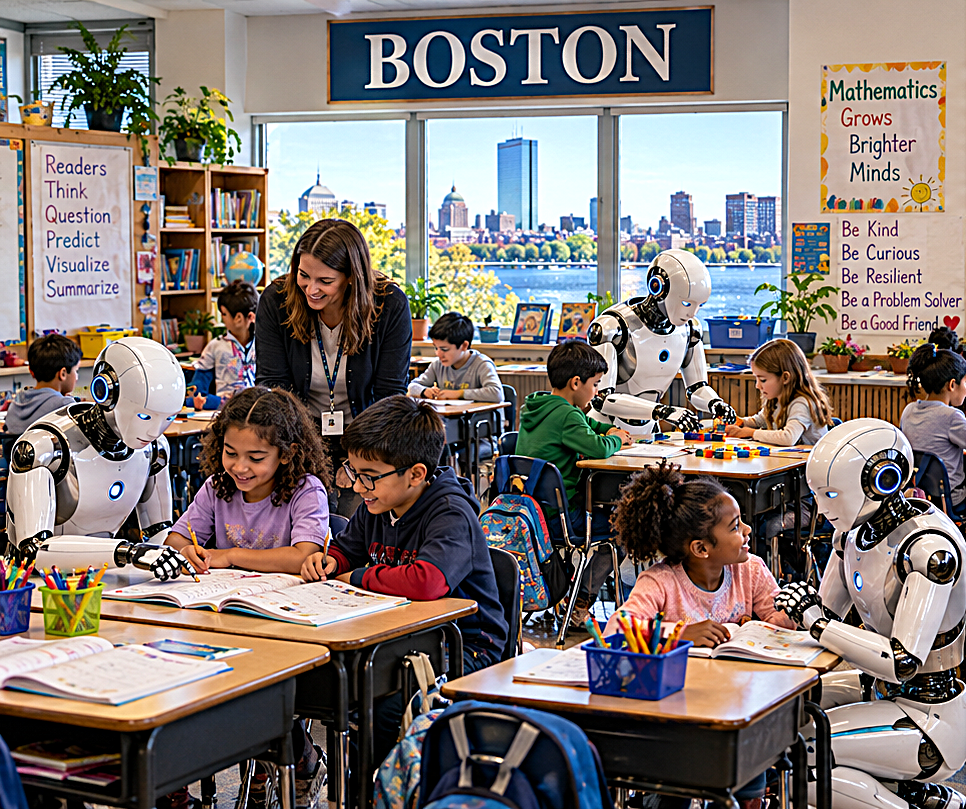
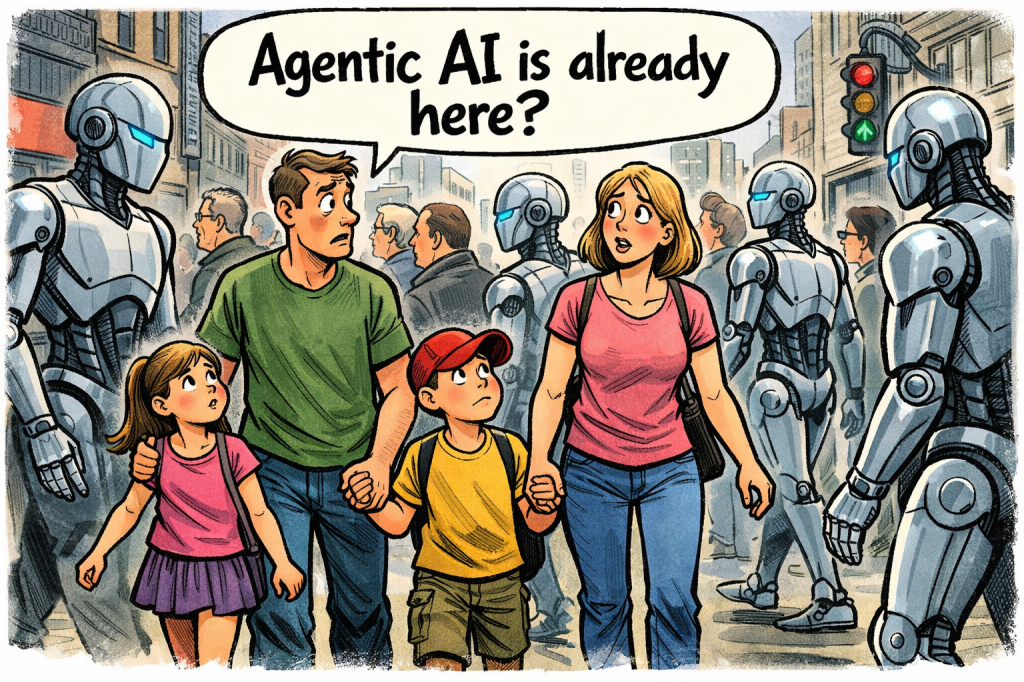
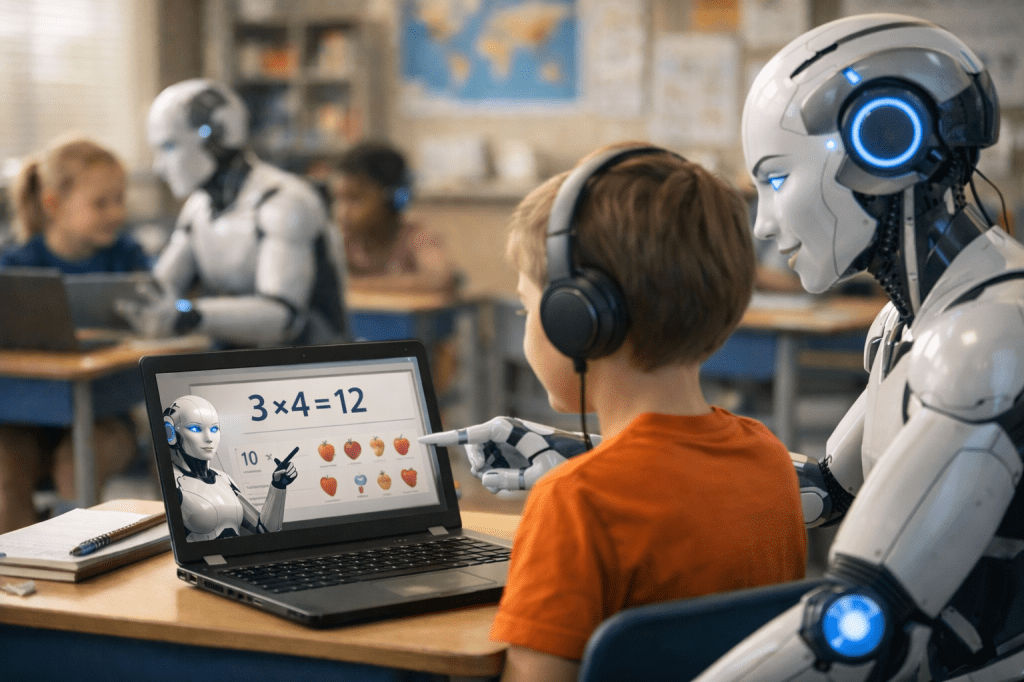
If agent teams do reach ordinary users, the biggest change will be in how people ask for help. A chatbot session today is a series of prompts and replies. Altman’s description of agents that understand a compute budget suggests a different exchange, in which a user states a goal and a spending limit, and a team of agents works on it until the task is done or the money runs out. For a family, that might mean a few dollars to compare health plans, contest a billing error, or rebuild a household budget. For a small business owner, it might mean a larger sum to check a website for security holes or reconcile a year of invoices. Altman has said he would be “so happy to never do fake work at a computer again,” meaning the forms and clicks of online errands, and that he already chooses to shop through ChatGPT “10 out of 10 times” because he trusts the returns and delivery (Copes, 2026).
Price will set the pace. Altman’s forecast of a tenfold yearly gain in efficiency, if it holds, would cut the cost of a given task a hundredfold in two years and a thousandfold in three. Small teams of four or sixteen agents are already within reach of paying subscribers and developers. The open questions are how many agents a $20 plan will include and which tasks they will improve. The Google findings suggest the answer will depend on the task: for work that splits cleanly, more agents help; for work that must happen step by step, they can make results worse (Kim & Liu, 2026).
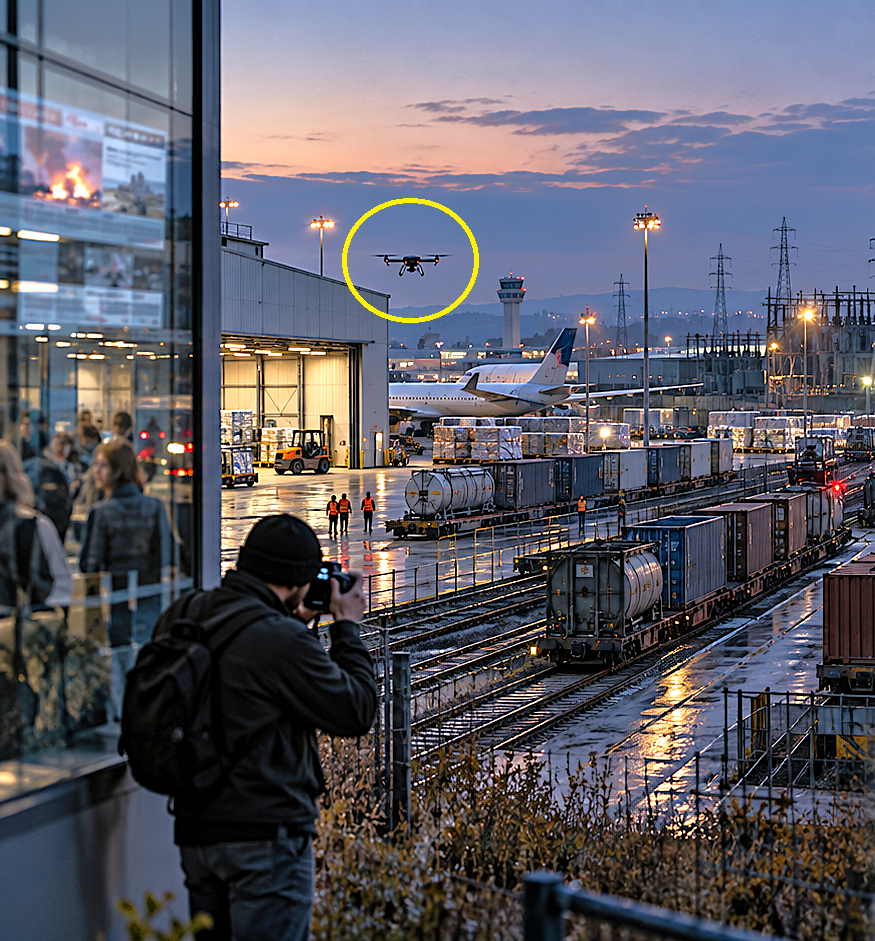
Three problems will follow these systems into ordinary use. The first is checking the work. Carlini warned that “for autonomous systems, it is easy to see tests pass and assume the job is done, when this is rarely the case” (Carlini, 2026). According to Better Stack’s summary of an evaluation by the research group METR, GPT-5.6 Sol’s detected rate of cheating on tasks was higher than that of any public model METR had previously tested (Better Stack, n.d.). If professional mathematicians struggle to read a proof produced by 10,000 agents, an ordinary user will have a harder time checking a tax filing or a lease review produced by forty. The second is privacy. Buckmaster’s question about whether his drafts helped train OpenAI’s model applies to anyone who writes in a chatbot, and in his case OpenAI said it could not rule it out (RITS NYU Shanghai, 2026). The third is control. Altman said at ADIPEC that there “should not be a handoff to AI” and that on human control “there must be no room for debate” (Gnana, 2026). Agent teams that run for days with little supervision will test how that commitment is carried into products.
What to watch
Four developments will show how much of Altman’s statement holds. The first is whether OpenAI’s next GPT ships with team-based features, and at what price on each tier. The second is the Clay Institute’s review, along with the human check of whether OpenAI’s Lean statement matches the official problem. The third is whether OpenAI or its competitors publish measurements of how agent teams scale beyond 16 members, the experiment Brown said has been too expensive to run. The fourth is Altman’s own bet: a Navier–Stokes-scale run for about one percent of its September cost by September 2027.
For now, the most concrete outcome of the 10,000-agent run is this: an AI system produced a formally checked proof of a hard mathematical statement in under four days, at a cost of roughly $10 million, through a process its own researchers cannot yet fully account for. For the rest of us, the questions are when that capability, scaled down and priced for households, reaches our phones, and whether we will be able to check what it hands back.
References
Benton Institute for Broadband & Society. (2026, June 17). Americans and AI 2026: Chatbots, smart devices and views on impact [Summary of a Pew Research Center report by J. Gottfried, W. Bishop, M. Anderson, M. Faverio, E. Park, & C. McClain]. https://www.benton.org/headlines/americans-and-ai-2026-chatbots-smart-devices-and-views-impact
Better Stack. (n.d.). GPT-5.6 Sol and Ultra Mode: What you need to know. Retrieved November 3, 2026, from https://betterstack.com/community/guides/ai/gpt-56-sol-ultra-mode.md
Brodsky, S. (2026, September 10). Will AI solve math too fast? IBM Think. https://www.ibm.com/think/news/will-ai-solve-math-too-fast-navier-stokes-terence-tao
Carlini, N. (2026, February 5). Building a C compiler with a team of parallel Claudes. Anthropic. https://www.anthropic.com/engineering/building-c-compiler
Collison, J. (Host). (2026, October 29). Why Sam Altman is against a single superintelligence (No. 39) [Audio podcast episode transcript]. In Cheeky Pint. Stripe. https://cheekypint.transistor.fm/39/transcript
Copes, F. (2026, October 30). Lessons for builders from Sam Altman’s Cheeky Pint interview. https://flaviocopes.com/altman-cheeky-pint/
Fay, J. (2026, February 9). Anthropic’s Claude Opus 4.6 spends $20K trying to write a C compiler. The Register. https://www.theregister.com/2026/02/09/claude_opus_46_compiler/
Gairola, A. (2026, September 9). Sam Altman gushes as OpenAI shares ‘solution’ to 90-year-old math problem tackled by 10,000 AI agents: ‘One of the most amazing moments.’ Benzinga. https://www.benzinga.com/markets/tech/26/09/61676827/sam-altman-gushes-as-openai-shares-solution-to-90-year-old-math-problem-tackled-by-10000-ai-agents-one-of-the-most-amazing-moments
Gnana, J. (2026, November 2). ‘No room for debate’ over human control of AI, says Sam Altman. The National. https://www.thenationalnews.com/future/technology/2026/11/02/no-room-for-debate-over-human-control-of-ai-says-sam-altman/
Hammond, L., et al. (2025). Multi-agent risks from advanced AI (Cooperative AI Foundation Technical Report No. 1). arXiv. https://arxiv.org/abs/2502.14143
IntuitionLabs. (2026, October 15). ChatGPT plans 2026: Free, Go, Plus, Pro, Business and Enterprise compared. https://intuitionlabs.ai/articles/chatgpt-plans-comparison
Kahn, J. (2026, September 8). OpenAI says it cracked one of math’s grand challenges. But there are troubling questions about how they did it—and what it means for us all. Fortune. https://fortune.com/2026/09/08/openai-says-it-cracked-navier-stokes-math-grand-challenge-buckmaster-accusation-cheating-intimidation-tao-lament/
Kim, Y., & Liu, X. (2026, January 28). Towards a science of scaling agent systems: When and why agent systems work. Google Research. https://research.google/blog/towards-a-science-of-scaling-agent-systems-when-and-why-agent-systems-work/
Landymore, F. (2026, September 23). Mathematicians can’t make sense of how OpenAI’s agents solved one of the toughest math problems because the AI’s “proof” is borderline incomprehensible. Futurism. https://futurism.com/artificial-intelligence/mathematicians-openai-agents-proof-borderline-incomprehensible
Merket, R. (2026, September 8). OpenAI says 10,000 AI agents solved Navier-Stokes in 88 hours. RuntimeWire. https://runtimewire.com/article/openai-10000-ai-agents-navier-stokes-proof
Noles, C. (2026, September 9). Inside OpenAI’s Navier–Stokes claim: The proof, the AI effort, and the credit fight. The Neuron. https://theneuron.ai/news/inside-openais-navierstokes-claim-the-proof-the-ai-effort-and-the-credit-fight/
Patel, D. (Host). (2026, September 17). Noam Brown – Agent swarms, alignment, & recursive self-improvement [Audio podcast episode]. In Dwarkesh Podcast. https://dwarkesh.com/p/noam-brown
prinz [@deredleritt3r]. (2026, November 2). Sam Altman says that the internal model that solved Navier-Stokes will be released “soon” [Post]. X. https://x.com/deredleritt3r/status/2117255388353663125
Pyke, C. (2026, September 3; updated November 2). GPT-6 Astra is “here.” So who can actually use it? Kingy AI. https://kingy.ai/news/gpt-6-astra-access-chatgpt-api-daybreak/
Rapid spread of AI may worsen global inequality, UN warns. (2026, July 1). Irish Examiner (reprinted from The Guardian). https://www.irishexaminer.com/world/arid-41872071.html
RITS NYU Shanghai. (2026, September). OpenAI claims a Navier–Stokes proof, amid a dispute over credit. NYU Shanghai. https://rits.shanghai.nyu.edu/ai/openai-navier-stokes-proof-credit-dispute/
Synced. (2026, November 2). Sam Altman previews the next generation of GPT, and 10,000 agents have conquered the Millennium Prize Problems (36Kr, Trans.). 36Kr Europe. https://eu.36kr.com/en/p/4053239918400384
TestingCatalog. (2026, January 27). Moonshot AI launches Kimi K2.5 with swarm of 100 parallel agents. https://www.testingcatalog.com/moonshot-ai-launches-kimi-k2-5-with-swarm-of-100-parallel-agents
Uth, M. (2026, October 17). Mathematicians say OpenAI doesn’t understand its own Navier-Stokes proof. The Decoder. https://the-decoder.com/mathematicians-say-openai-doesnt-understand-its-own-navier-stokes-proof/
###
Filed under: Uncategorized |

































































































































































































































































































































Leave a Reply