





They come on the eighth day.
A pickup, old, dusty, too many people in it. It comes up the road from the gate at about four in the afternoon, slow, and stops at Hank’s first. I’m on the porch with June asleep on my chest, and I hear Hank’s voice go up, and a man’s voice over it, and then the goats screaming, and then a shotgun, somebody’s, fired into the air.
I hand June to Anita. I don’t say anything. I don’t have to. Anita takes her inside and shuts the door.
I get the rifle.

I load it from the locked box and chamber a round.
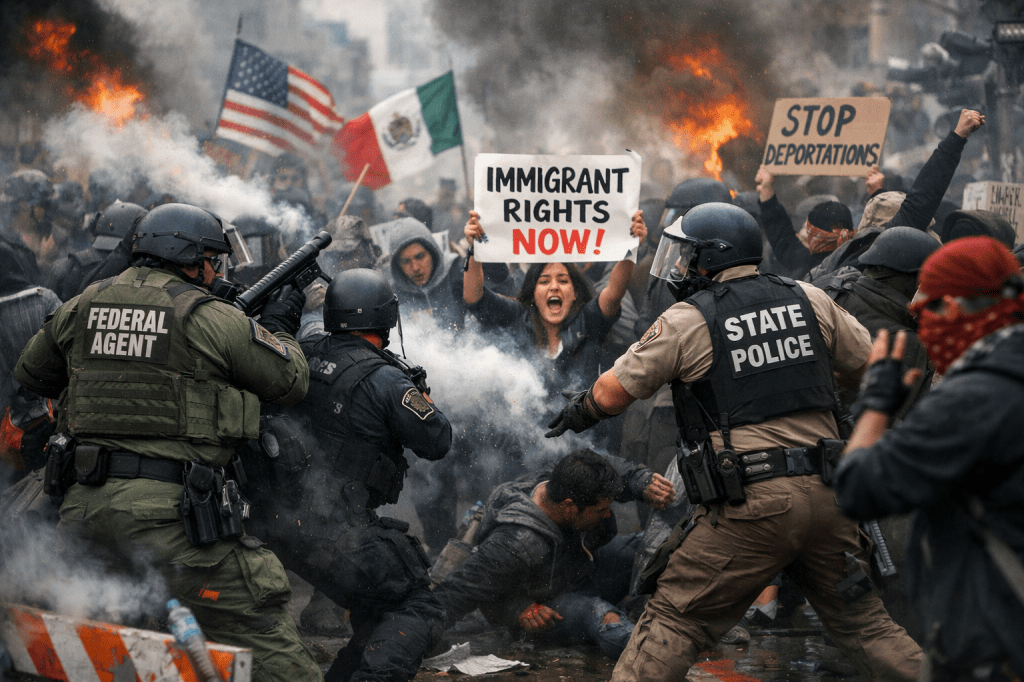
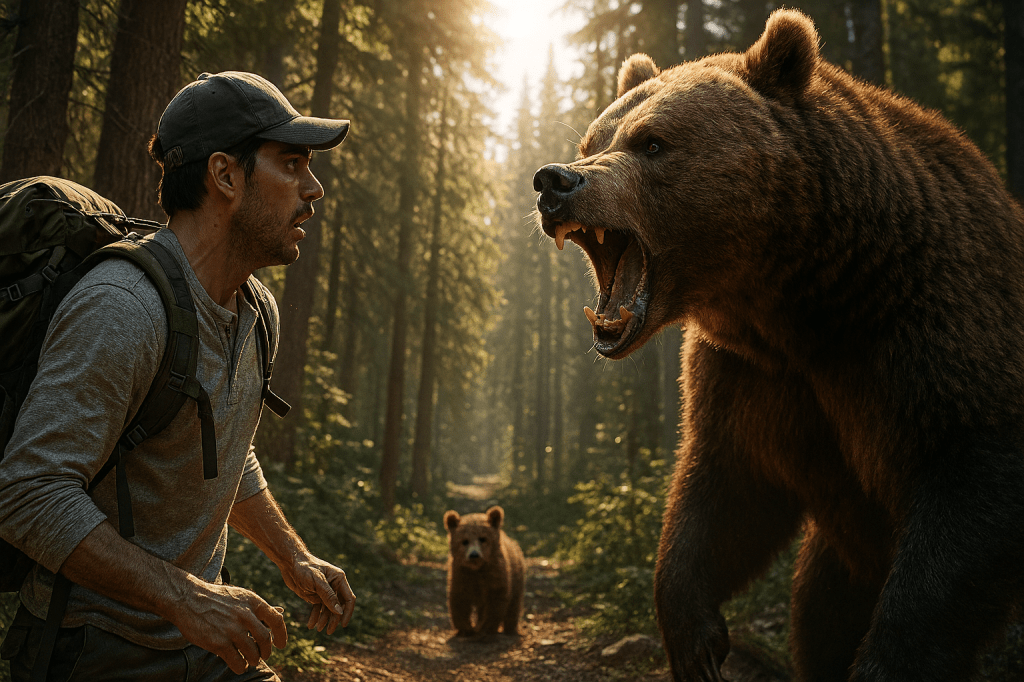
By the time I’m back on the porch, the pickup’s coming up the road toward us, with two of Hank’s goats roped in the back, bleating. It stops at the edge of our yard, sixty metres from the porch. Four men get out, young and thin and dirty. They leave the doors open. One of them has a shotgun. One has a bat. They look like the crowd at the fire in the steel drum in Vancouver. They look like me, if I’d been born a hundred kilometres closer to the city.
Kenzie’s at the woodpile, halfway between them and me, with an armful of splits. She freezes.
“We need food,” the one with the shotgun calls. He’s maybe nineteen. His voice cracks on it. “And fuel. And whatever else you got. Nobody has to get hurt.”
“Take the goats,” I say. “Take them and go.”
“We saw your garden from the road.” He looks at Kenzie. At the cabin. At me, with the rifle across my chest, not pointed at anything. “We got people. My mom’s in the truck. We haven’t eaten in three days.”
There’s a woman in the passenger seat. I can see her through the dusty windshield, grey-haired, with her hands over her face. The engine’s still running.
My head runs every version. Fast, the way it does. The version where they take what they want and go. The version where they don’t. The version where somebody panics.
Somebody panics.
It’s the kid with the shotgun. Kenzie drops the wood, just drops it, and the clatter of it hitting the ground makes him jump, and he swings the shotgun around toward her. He isn’t aiming, just swinging, scared, the barrel coming around toward my sister.
I don’t decide. There’s no deciding. My thumb has the safety off before I know it. The rifle’s up and the stock’s in my shoulder and the main crosshair is on him, no ladder needed at sixty metres, and I fire.
The 300 WinMag goes off like the end of the world.
And I flinch.
I feel it happen. The same flinch Moose watched through a phone on a stump in a gravel pit six years ago, the one it told me about, the one nobody was ever there to load a rifle for me and catch. My shoulder jerks. My eye blinks. The crosshair drops and slides left in the instant before the bullet leaves. The kick throws the scope up off him, and for a second there’s nothing in it but sky.
The kid spins and goes down, the shotgun flying out of his hands into the dirt. He’s screaming. He’s holding his arm, his upper arm, right by the shoulder. Not his chest. His arm.
[…]
That night, after Priya has given Cody a place by the stove and he’s finally asleep, I sit on the porch step in the dark with the rifle across my knees, unloaded now, the bolt out, the way Gord taught me in his driveway the day he left.
If I hadn’t flinched, he’d be dead. My aim was good. My aim was centre. The only reason Cody is alive in my cabin tonight is that nobody ever loaded that rifle for me and made me watch myself, the way Moose said you’re supposed to. I never fixed it. I never had anybody to fix it with.
I don’t know whether to be ashamed of that or grateful.
Maya comes out and sits beside me with June in her arms, asleep, tiny and hot against her chest.
“You didn’t kill him,” she says.
“I tried to.”
“You tried to stop him. You stopped him.” She leans her head on my shoulder. “And then you let Priya save his life on our porch. That’s who you are, Wes. Don’t let tonight tell you different.”
That scene is from Chapter 31 of Two Lives: A Novel of Two Futures, which came out on Kindle and in paperback in October 2026. I didn’t write it. An AI did, and the book says so in the first line of its description and in a note at the back.
The flinch in that scene is mine, though. I’ll get to that.
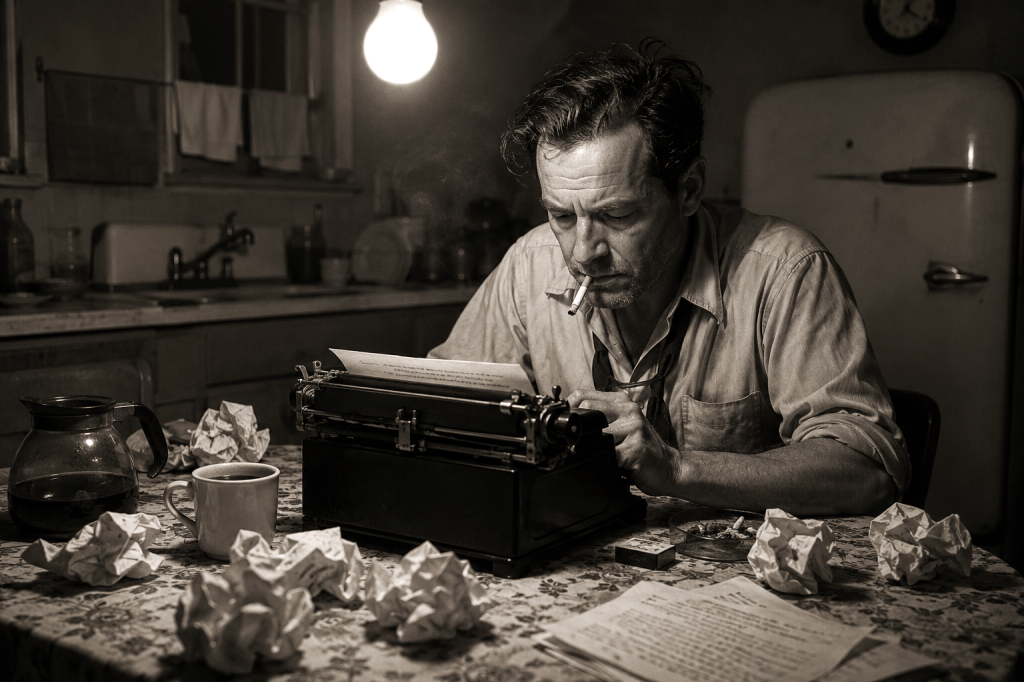
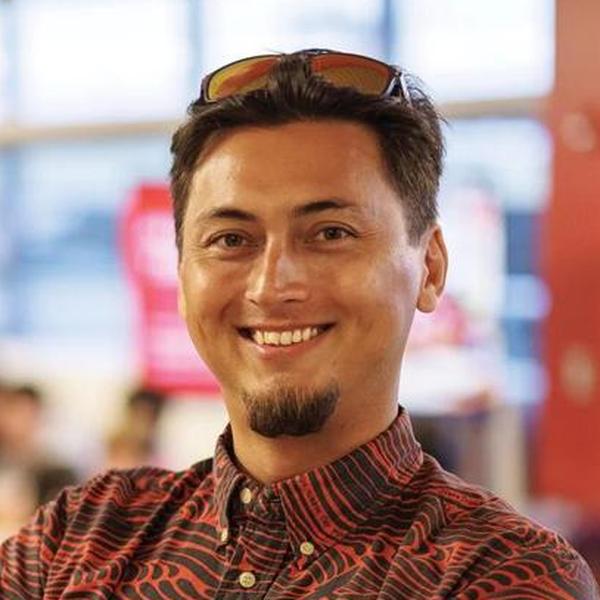
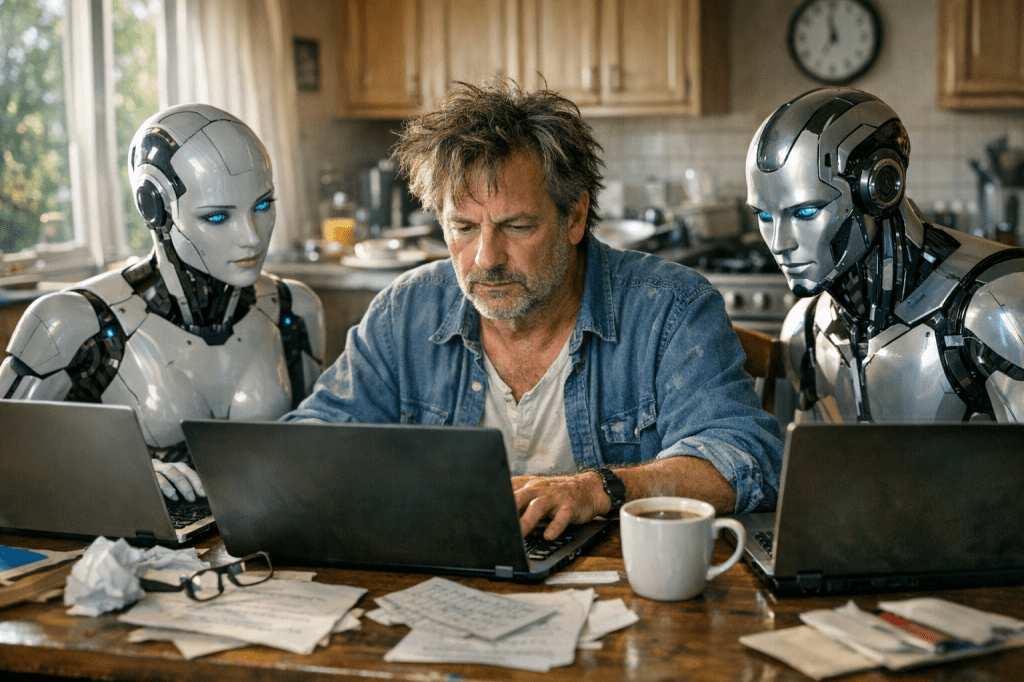
I’m not a writer. I want to be plain about that, because it’s the reason this book exists and the reason I’m the wrong person to be writing an article about it. I’m a tradesman by background. I live in the BC Interior, in fire country. I have mild ADHD, and my head works the way Wes’s does in that scene: it runs every version of what’s about to happen, good and bad, before it happens. That makes me a good planner and a terrible sleeper.
When I try to write, the ideas are there, but they come out tangled. I start a sentence, think of three better ones, and end up with a paragraph that makes sense to me and nobody else. For most of my life that has been the wall between what I think and what I can show anyone.
I’ve always thought of myself as an inventor. I’ve had ideas for tools and gadgets and ways of doing things since I was a kid. Nearly every time, I’d find out later that somebody else had the same idea and the time, money or skill to build it. That’s a common story. What has changed in the last couple of years is that some of those walls are coming down. With AI, I can describe an idea and get something back I can actually look at and fix. This book is the biggest thing I’ve ever done with that.
It also scares me. I’ll say that more than once in this article, because it’s true and because I think anyone working with these tools should feel at least a little of it. I don’t support books being written by AI. I can see what it does to people who write for a living. That tension is part of why I made this one, and part of why I’ve kept my name off it. I write under a pen name because I know how people react to AI books, and I’d rather the book take that heat than my family. If it does well and the conversation stays civil, I’d be glad to put my real name on it later.
In September 2026 I asked one of the leading AI programs a question I’d been chewing on for a while. How did it honestly think the next ten years would go? I asked for a best case and a worst case, year by year, from 2027 to 2036, and I asked it not to sugarcoat anything.
It came back with ten best-case calls and ten worst-case calls for each year, and a confidence level for each year. It was confident about 2027 (“most of this is already in motion”) and said by the 2030s it was making reasoned guesses. The technology in both columns was mostly the same. The difference between them was what people and institutions chose to do with it.
I read it twice. It was interesting, and I knew I’d forget most of it in a week. A forecast is easy to skim. So I asked a second question: could it turn this into a story? I didn’t want a lecture about AI. I wanted a person, somebody ordinary, living through both columns, so you could feel the difference instead of reading about it.
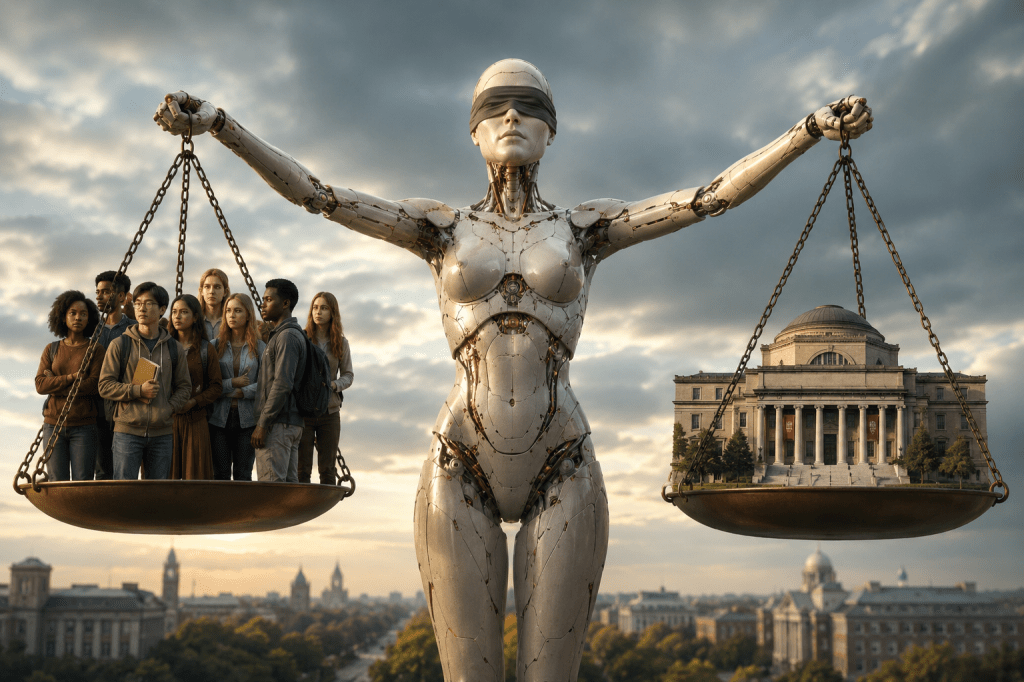
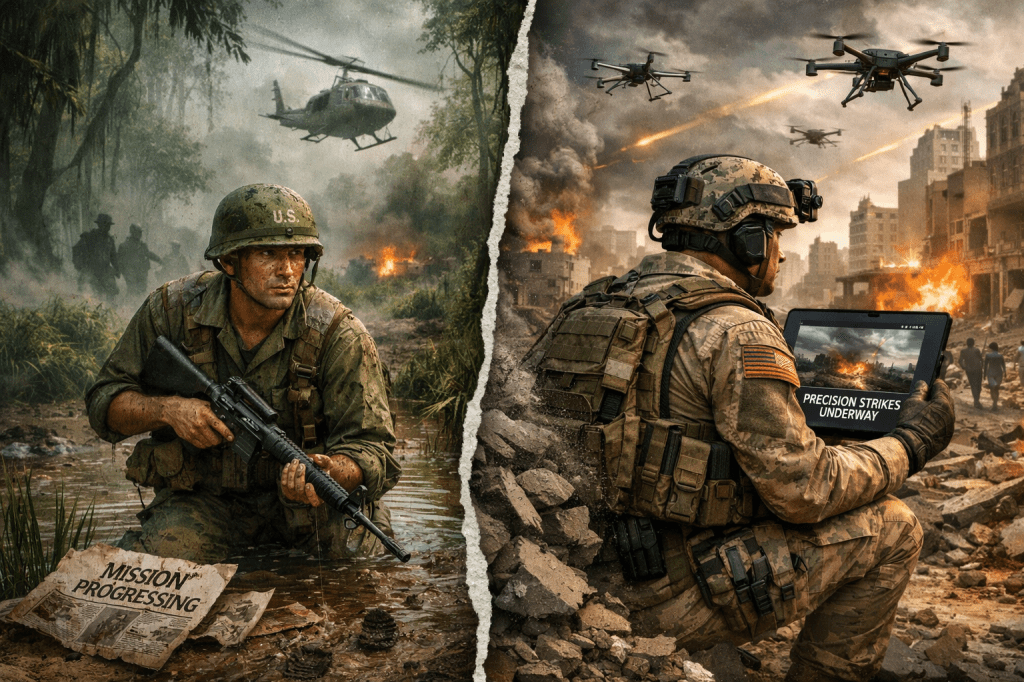
That became the book. One young man, Wes Callaghan, graduates from high school in Clearwater, BC in June 2026. After the first chapter, the world splits. In Life One he lives the best case. In Life Two he lives the worst. The chapters alternate, best then worst, each pair covering about six months, until both lives end on the same day in July 2036, at the same lake.
People ask about the split more than anything else, and it’s the part I care about most.
The plain answer is that the AI gave me two futures, best case and worst case, and I wanted to see both. But there’s more to it than that, and some of it only became clear to me after early readers had the book.
The good life is more interesting at first. Readers like Wes and Maya, they like the jobs and the town, and Life One is the life you’d want. Then, somewhere in the middle of the book, a lot of readers told me they started wanting the bad life instead. They wanted to get to the Life Two chapters first.
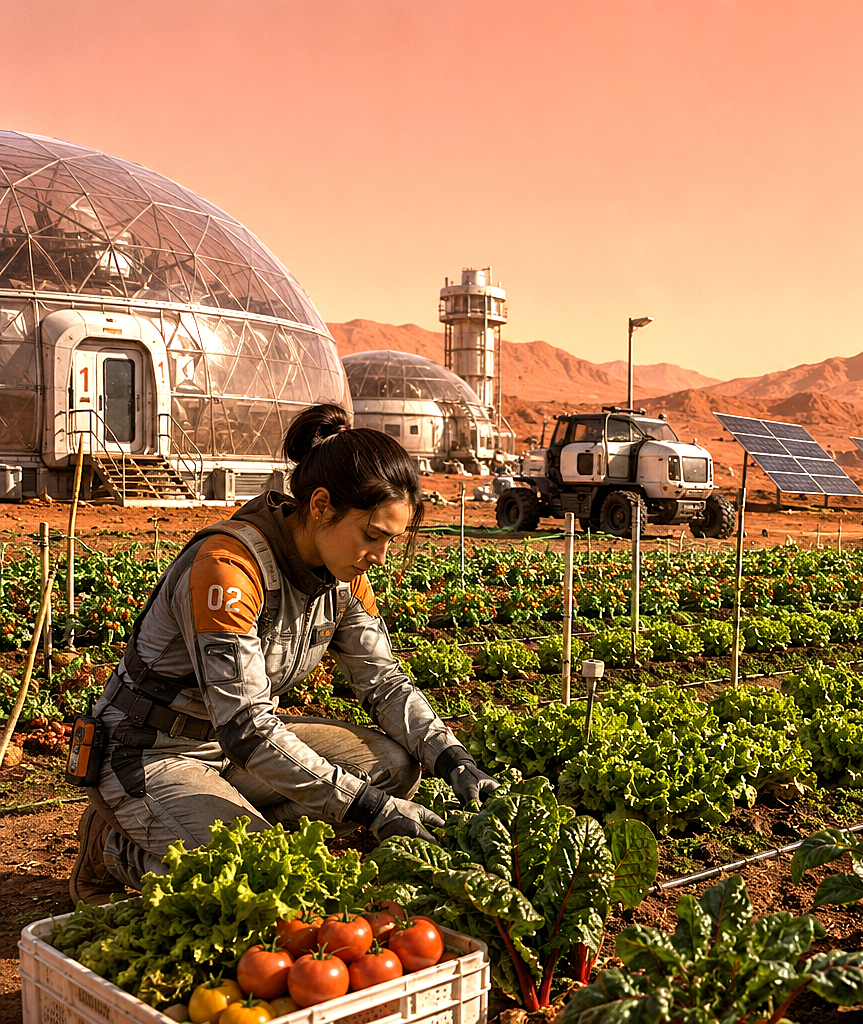
I think I know why. Life Two goes somewhere a lot of people out here have daydreamed about. When the world goes wrong, Wes and his family end up on five acres up a forest service road with a log cabin, spring water, a garden and no cell signal. There’s a rural fantasy in that, the idea of living in the bush and getting by with your hands. And even in the worst case it still works out, in a small way. People find each other. A kid gets born in the cabin. They make the best of it.
When we were planning the book, the AI warned me about this. It said the worst-case life could read like a tragedy, with every chapter just a little more terrible than the last, and that readers would put it down. So the plan we agreed on had a rule: nobody in Life Two knows it’s the worst case. They make jokes. They get married. They go fishing. Things that would horrify a reader in 2026 become ordinary by the 2030s, just another Tuesday, and Wes is honestly happy in plenty of those chapters.
The model for that was how we live with smartphones and the internet now. Most of us half know they’re doing some damage. We complain about it now and then. And we keep living with them, because nobody is going back to 1985. That’s how Wes treats his world in Life Two. The reader sees the gap because Life One is sitting right beside it, a chapter away. Wes never fully does.
That’s what the split is for. It isn’t a trick. It lets the reader see a choice that the person living it can’t see.
A hundred questions before chapter one
I expected the AI to just start writing. It didn’t. It asked me questions first, close to a hundred of them, before a single chapter existed.
Some were the questions you’d expect. What should the main character do for work? Where should it be set? How dark could it get? Others surprised me. How much swearing? Should the love story be fast or slow? Should Wes’s parents be close to him or in the background? What should the rifle mean?
From my answers it built a planning document, something like what TV writers call a series bible. It had the characters, a year-by-year timeline for both lives, a chapter map, style rules, and a short list of open decisions it wanted me to make before it started. I still have it. A few things in it are worth sharing, because they show how much was decided before any of the story was written.
The premise section says:
One young man from Clearwater, BC lives the same ten years twice: once in a world where AI goes right, once in a world where it goes wrong. He is the same person in both. The world splits, not Wes.
The ending was fixed on day one:
Ending: mirrored final scenes. Same day in 2036, same backcountry spot, Wes at 28, two different worlds.
There were rules I’d never have thought to write down. “No character ever states the moral inside the story.” “Readers should see the choice, not be told the lesson.” Every pair of chapters had to show at least one fork point, a decision made one way in Life One and the other way in Life Two. In the best case, a company tells its drivers about the automation first. In the worst case, the drivers find out on Facebook. In the best case, a lab publishes its own safety failure. In the worst case, it calls its safety team a marketing department.
The open decisions at the bottom included the book’s title, and whether Wes and Maya’s child would be a boy or a girl, and the child’s name. The plan called for about 125,000 words. The finished book came in at about 103,000.
Then I asked it for something that I think made the book better. I asked it to write all the way to the end without telling me how it ended. I knew the shape, both lives on the same day at the same lake, but I didn’t know what would happen to anyone. I wanted to read it the way a reader would. So I read each chapter as it came, as the only reader, and pushed back where something didn’t ring true.
My part was smaller than the machine’s, but it mattered, and it’s the part people are most curious about, so here it is.
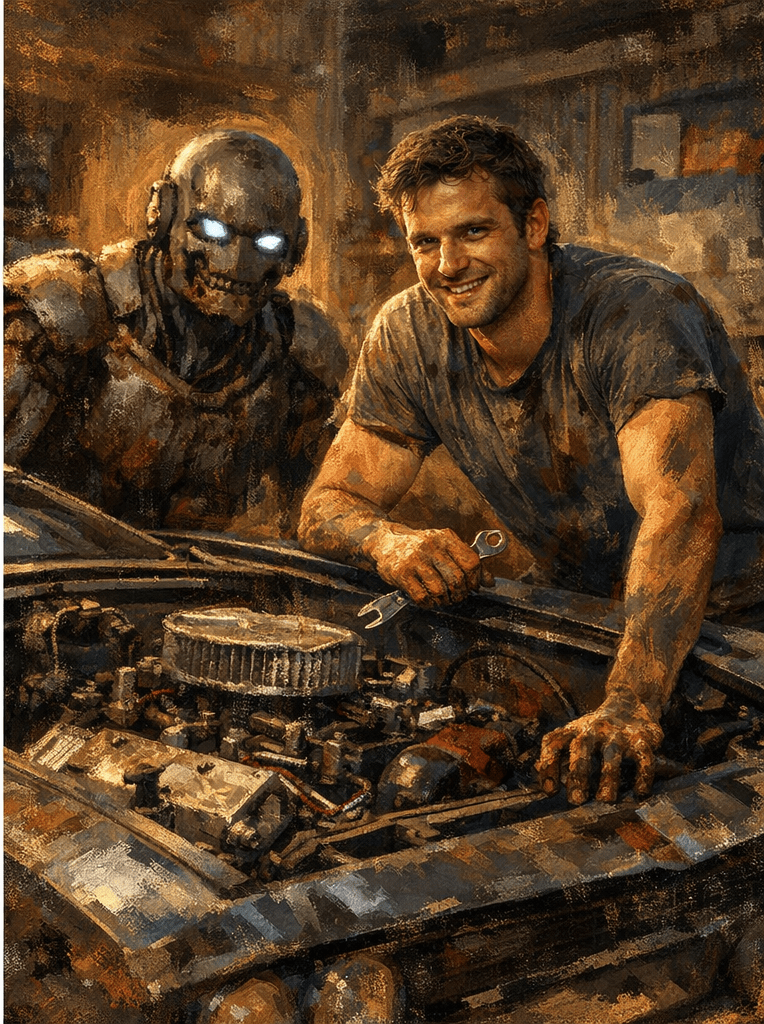
The trade. In the first rough plan, Wes was going to be an electrician. I changed him to a carpenter, because that’s the trade I know. I could tell when a job-site scene was wrong, and I could tell it how a framing crew talks, how an apprentice gets treated, and what it feels like to look at a wall you built. Once he was a carpenter, his hands became part of who he was in both lives. In Life One he gets his Red Seal and goes on to lead a crew. In Life Two, robots arrive on job sites, and Wes ends up recording his own trade for a robot-training program at twenty-two dollars an hour, teaching a machine to do what he does.
The way his mind works. I lent Wes a little of my own head. The plan describes it as a core trait: his head runs every version of what’s coming, good and bad, before it happens. It stresses him out, and it makes him the most prepared person in any room. The AI decided on its own how to handle it. In the best case, his AI assistant notices the pattern early in 2028, and a clinician signs off on an assessment, and the name brings him relief and tools. In the worst case, nobody ever names it. He just lives with it. I didn’t ask for that difference. It’s one of the moments where I read a chapter and sat back.
The hunt. I told it how a moose hunt really goes. It isn’t the movie version. It’s days of nothing. It’s cold coffee and glassing the same cutblock for six hours. Then it’s one shot, and a pack-out that nearly kills you, and afterward, telling the story around a fire is one of the best parts. The AI took that and built a whole thread through the book out of it. The big fall hunt in Life One, and Wes hunting to fill the freezer in Life Two, both came from that conversation.
The clear water. There’s an image I gave it that it kept coming back to. When I was young I’d look down into a lake so clear you could see the trout on the bottom, and the stones, and it seemed like you could see forever. I told the AI about it. That lake became “the spot,” the place Wes and Maya keep coming back to across both lives, and it’s where both lives end. I’ll come back to what it did with that memory, because it surprised me more than anything else in the book.
The flinch. When I was learning to hunt, a friend did a drill with me. He loaded my rifle, sometimes with a round and sometimes with an empty chamber, and he never told me which. When the chamber was empty and I squeezed the trigger, I could see myself flinch, the shoulder jerk and the blink, because there was no recoil to hide it. You can’t fix a flinch you can’t see. That drill is how you see it.
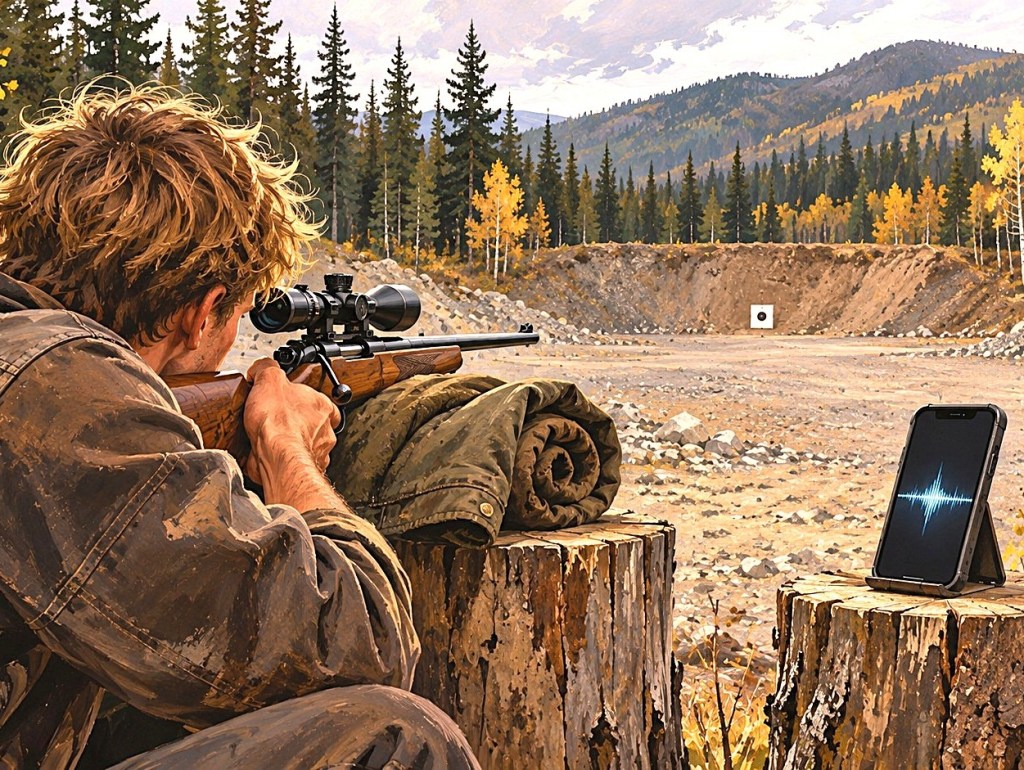
I mentioned the drill to the AI early on. In Chapter 7, set in 2027, Wes is practising at a gravel pit on Sunday mornings with his phone propped on a stump so his AI assistant, which he calls Moose, can watch through the camera. Moose tells him he’s flinching. Here is the passage:
“There’s a better drill, it says, where someone else loads the rifle and never tells you whether there’s a round in the chamber, so you can see your own flinch. It needs a second person. I don’t have one of those.”
That’s a small line in a quiet chapter. Then twenty-four chapters later, in Life Two, in July 2033, it pays off in the scene at the top of this article. The flinch that nobody was there to help him fix pulls his shot off a nineteen-year-old’s chest and into his arm. The kid lives. He stays. By the end of the book he’s part of the small community around the cabin.
In Life One, the friend who would have run that drill with Wes is around, and things go differently. In Life Two, that friend leaves, and Wes never gets that second person, and the one thing he never fixed is the thing that saves a life. I gave the AI one memory of a friend standing next to me with a box of shells. It found a place in the story where that memory could carry the whole climax.
The fires. I live in fire country. Most summers out here there’s smoke, and some years it’s a lot worse than smoke. But the wildfires in this book weren’t my idea. The AI put them there on its own, from the forecast, because climate and fire were in both columns and Wes lives in the BC Interior.
Fire ends up running through the whole book. Maya is a tree planter when Wes meets her at the end of a smoky day in 2026. In 2028 the same fire hits Clearwater in both lives. In Life One the evacuation is handled well, with clear warnings and people helping each other. In Life Two there are fake alerts, three of them saying different things, and chaos on the road, and Wes’s family home burns. Later, in Life One, Maya rises to run wildfire resilience for the province, and the town gets fire-hardened to the point where it loses no homes. In Life Two, the summers just keep getting hotter.
I didn’t plan any of that. But it’s so relevant to where I live that people who read the book assume it was the first thing I asked for. It’s strange to have something you didn’t think of land closer to home than anything you did.
The structure of a whole novel. I couldn’t have held a 103,000-word book in my head. The AI kept the timeline straight, tracked what each character knew and when, and remembered that someone mentioned a grandfather’s rifle eleven chapters back. It wasn’t perfect, and I’ll get to the mistakes. But it did a kind of work I simply can’t do.
The world news. Every chapter from 2027 on opens with a short list of things happening in the world at that moment. Those lists come straight from the forecast. In Life One, a regulator builds a fast lane for AI-designed drugs. In Life Two, labs shorten safety testing because a competitor is shipping first. You can read the news lists in order and get the forecast as a timeline, sitting on top of one family’s life.
The ending, planned and written
The plan said the two lives would end at the same spot on the same day. That was the whole instruction for the last two chapters: “Summer 2036. The spot, same day, the best world. The spot, same day, the worst world.”
Here is what that one line became.
Chapter 40 is Life One, Saturday, July 12, 2036. Wes and Maya take their three-year-old daughter, June, to the lake. She catches her first trout. There’s a spruce at the spot that Maya planted ten years earlier. That night Wes sits up alone after everyone is asleep:
I don’t know what she’ll remember of today. The fish, maybe. The tree. The cone. Maybe nothing, at three. Maybe it’s the kind of thing that sinks down and down, like the lure in the clear water, and settles on the bottom, where she can’t see it, and stays there, and is part of her, and she never knows why she loves this place.
Chapter 41 is Life Two, the same day, the same lake. There’s no ten-year-old spruce in this life. Maya and June plant a new one, eight inches tall, and Wes builds it a cage out of goat wire to keep the animals off it. June drops a stone into the water. That night:
I don’t know what June’s going to remember of today. Maybe the fish. Maybe the stone. Maybe the tree. Maybe nothing, at three. Maybe it sinks down and down, like her stone in the clear water, and settles on the bottom where she can’t see it, and stays there, and becomes part of her, and she grows up and never knows why she loves this place, or why she plants things, or why she comes back.
That’s my memory of the clear lake. I told it about trout on the bottom and stones you could see from the dock. It turned that into the thing a child might carry forward without knowing she’s carrying it, and used it to close both lives.
Both chapters end on the same two lines, word for word. In Life One:
I listen to them breathe. My wife. My daughter. Nobody missing.
This is a now. I’m keeping it.
In Life Two, the list of people he’s listening to is longer. His sister is there, and his best friend, and the kid he shot, who came back and stayed, and a dog. Then:
Nobody missing.
This is a now. I’m keeping it.
The first time I read the end of Chapter 41, I had to put my laptop down for a while. I knew the plan. I didn’t know it would hit like that. The worst-case life has fewer comforts, a dead mother, a burned house, a war on the radio, and somehow a longer list of people who aren’t missing.
Here’s the part I think will matter most to anyone thinking about AI and writing.
The first version of the book went out to a handful of early readers in October. Some loved it. Some said, politely or not, that it “reads as AI.” I asked them to tell me exactly why, and they could.
The biggest complaint was the head-running. The trait I lent Wes, his mind running every version of what’s coming, was on the page too often. A reader would hit “my head runs every version” for the tenth time and start noticing the machinery instead of the man. When I asked the AI to count, it found 146 head-running moments across the book.
So we cut. I asked the AI to go through all 146 and keep every one that set up the trait, turned on it, or paid it off, in both lives, and to remove or shorten the ones that were just habit. It proposed 48 edits. Forty moments were removed and eight were shortened, leaving 106.
Here’s one before and after, from Chapter 3, when Wes is waiting on a message from Maya that doesn’t come:
Before: I read it about forty times. My head ran every version. Her crew…
After: I read it about forty times, and every time it said something different. Her crew…
And one from the same chapter, a little later:
Before: I run the version where she’s here, calling kilometres on the radio, going off the rock first and swearing at the cold. It’s a good version. I run it a few times.
After: I picture her here, calling kilometres on the radio, going off the rock first and swearing at the cold. I picture it a few times.
The second complaint was sentence patterns. Readers who spend time with AI writing learn to spot certain shapes. One is the “Not X. Y.” reversal, where the sentence tells you what something isn’t before telling you what it is. Another is three short fragments in a row for rhythm. Another is the tidy wisdom line at the end of a paragraph, where the narrator explains the meaning of what you just watched happen.
The book’s first page had one of each. In the opening scene, a sunset over the graduation is orange from wildfire smoke.
Before: Not sunset orange. Smoke orange.
After: It’s the smoke.
A few paragraphs later, Wes is thinking about his first week on a framing crew.
Before: One stud. One nail. One wall. Then the next.
After: One stud, then the next one.
A second pass went through the whole book looking for those shapes and for the tidy lines. Many of the changes were cuts, not rewrites. In Chapter 11, after Wes has been through the fake fire alerts, the original paragraph ended:
“Every version of the past that didn’t happen is just as useless as every version of the future that might.”
That’s a nice-sounding sentence. It’s also the narrator explaining a feeling the reader already had, and it uses the phrase we were trying to thin out. It’s gone now. The paragraph ends on the line before it, and it’s stronger.
My instruction for the second pass was “No major changes, let’s just try and make it better.” Every change had to be small: cut a phrase, cut a sentence, reword one sentence. No plot changes, no new scenes, nothing about who’s in a room. That pass produced 242 proposed edits. I read them all and accepted most.
I want to be careful here. I’m not claiming the revised book no longer reads as AI. Some readers will still say it does, and some of them will be right. What I can say is that the readers who flagged it were specific, and the specific things they named could be found and fixed. “It reads as AI” isn’t a mystery. It’s a list.
The other thing early readers caught was continuity errors, and some of them were the kind of mistakes a careful human editor would also catch.
In Life Two, a small group of people gathers around Wes’s cabin over a couple of years. In one chapter the book said there were sixteen people on the road. Somebody counted the names, and there were fifteen, counting the friend who arrives that day. Later the book said there were twenty-three, but nobody had arrived since the last count except one man. When the AI went back through, it found the fix: six people coming up the road over the summer after a radio repeater goes up, named and described in a single sentence. That brought it to twenty-two.
There was a moose that, if you added up the pack-out trips, weighed more than any moose alive. There were five beers left from a twelve-pack, not eight, because seven had been opened on the page. There was a planting crew whose robot count didn’t divide properly. Small stuff, but readers notice small stuff, and it’s exactly the kind of thing a machine writing 103,000 words in order loses track of.
The first revision had 218 items like these, sorted by type: headcounts and math, firearms rules, continuity between the two lives, continuity within a life, things the narrator said happened “like she always does” that had never been set up, and so on. I went through every one. If you’re curious what editing an AI novel looks like in practice, it looks like that: a long list, a spreadsheet brain, and a lot of reading things twice.
When I told my family and friends what I was doing, almost all of them were against it. Some were polite about it. Some weren’t. An AI writing a novel was exactly the kind of thing they’d read about and didn’t like, and I didn’t disagree with them.
Then a few of them read it. Some of the people who’d been most against it came back and said it was good, and then they wanted to talk about it. It wasn’t the AI they wanted to talk about. It was what they’d do in Life Two. Whether the best case is even possible. Which of the fork points they thought we’d already passed. Whether they’d go up the road to the cabin or stay in town.
That’s been the biggest surprise. I thought people would argue about whether the book should exist. Some do. But more often, the book starts a conversation about where we’re heading, and the fact that an AI wrote it makes the conversation sharper, not weaker. It’s hard to dismiss a warning about AI when the AI is the one giving it.
The forecast is printed in the back of the book. I also put it online, and every month I check its calls against the news, line by line, with a source for each one. The status words are simple: Happening, Early signs, Not yet, Not checked.
On my first count, at the end of October 2026, the worst case was ahead for 2027. Two worst-case calls were already happening, including hearings being held and nothing passing on federal AI rules in the US, and data centre power and water demands causing local backlash. Four more showed early signs. On the best-case side, nothing had fully happened yet, though there were early signs on AI-designed drugs reaching late-stage trials and on robotaxis spreading to more cities.
I didn’t plan for the worst case to be ahead, and I don’t enjoy it. The forecasts are long-range and fuzzy, and some of them are hard to score fairly. I’ve asked people who study forecasting to tell me where I’m scoring wrong. But it’s on the record, and that was the point. If an AI is going to tell us what it thinks about the future, somebody should hold it to it.
What I think this means for people who teach
I know a lot of ETC Journal readers are educators, so I’ll say what I think about that side, carefully, as someone who was a bad student at writing.
For most of my life, the only way to show an idea in writing was to be good at writing. I wasn’t, so a lot of my ideas stayed in my head or came out in a form people didn’t understand. A tool that lets someone like me get an idea out in a clear shape is a real change. I don’t think that’s a small thing for students who think well and write badly. There are a lot of them.
But I also watched what the AI did when I wasn’t careful. If I didn’t push back, it smoothed things out. It reached for the same sentence shapes. It explained what it had just shown. It would have written a perfectly readable, slightly dead book. Every part of this one that readers have told me feels alive came from somewhere specific: a trade I know, a hunt I’ve done, a lake I remember, a friend loading a rifle. The AI was very good at building with those pieces. It didn’t have them until I gave them to it.
So my honest view is this. These tools can let people make things they never could before. They can also let people make things that have nobody inside them. The difference seems to be whether a person brings something real and stays in the room, reading every page, saying “that’s wrong” when it’s wrong. That’s close to what the book itself is about. In Life One, nobody does anything heroic. A company tells its drivers first. A lab publishes its own mistake. An AI assistant tells a young man to go talk to a real person. Small choices, made by people, again and again.
I’m still scared of where this goes. I think anyone paying attention should be. I’d just rather be scared and curious than scared and looking away.
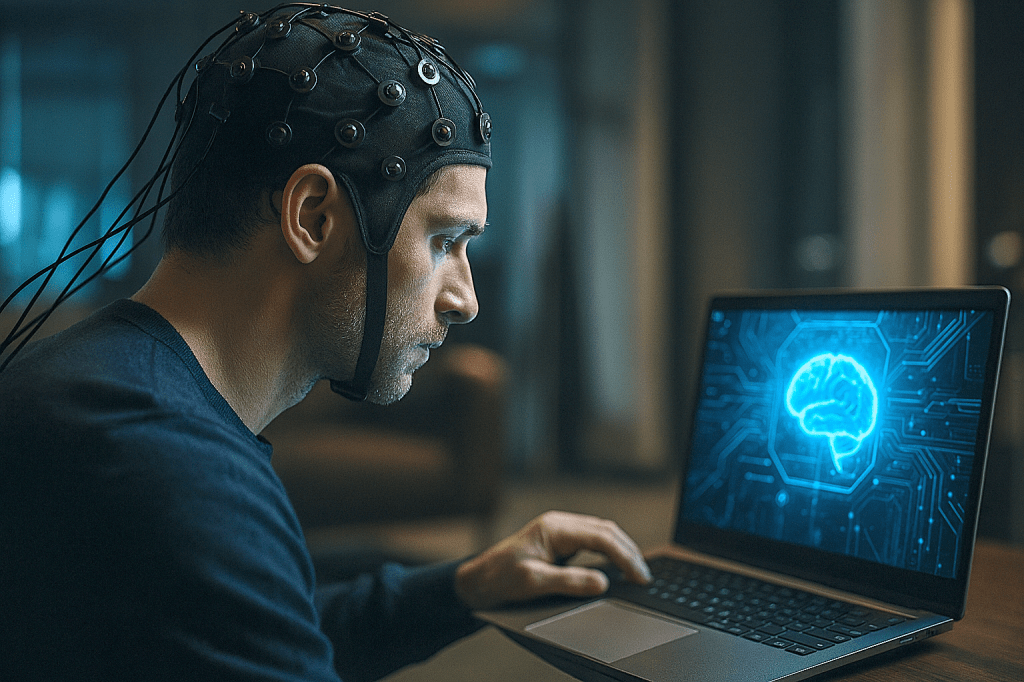
I wrote this article the same way I made the book. I told an AI what I wanted to say, answered its questions, and then read every line and fixed what didn’t sound like me or wasn’t true. The ideas, the memories and the opinions are mine. The sentences are a partnership.
About the book. Two Lives: A Novel of Two Futures by Jay Hume Lexier (pen name). About 103,000 words, 41 chapters, with the full ten-year forecast printed in the back. Kindle and paperback on Amazon. The Kindle edition is free on November 14 and 15, 2026.
- Amazon.com: https://www.amazon.com/dp/B0HN8HYY68
- Amazon.ca: https://www.amazon.ca/dp/B0HN8HYY68
- How it was made: https://jayhumelexier.substack.com/p/a-note-on-how-this-book-was-made
- The forecast scorecard: https://jayhumelexier.substack.com/p/the-forecast-ledger-2027-checked
- Chapter 1, free: https://jayhumelexier.substack.com/p/two-lives-chapter-1-read-it-free
###
Filed under: Uncategorized |

























































































































































































































































Leave a Reply