






By Jim Shimabukuro (assisted by ChatGPT)
Editor
Real machines, early pilots, ambitious policy—and several claims that outrun the evidence. A September 9, 2026 audit of Japan’s embodied-AI push against China and the United States.

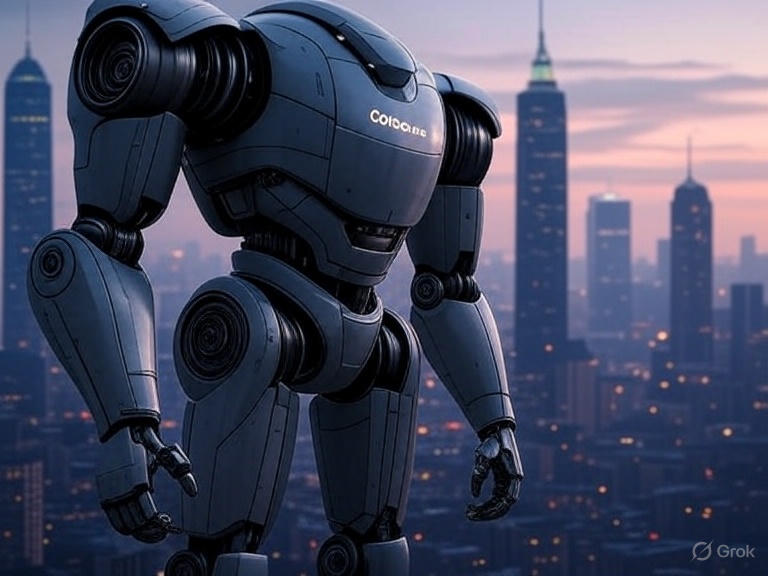
A 27-minute YouTube video posted on September 9, 2026, under the names Polarisyn and rubenfoto1 opens with three striking claims: a Kawasaki humanoid has entered a disaster scene and rescued a cat; humanoids at Tokyo’s Haneda Airport are loading luggage onto passenger aircraft; and a Japanese automaker is turning unused factory space into a plant that will produce 1,000 humanoids every month. The video’s own disclosure says, “Made with AI. Sounds or visuals were altered or fully generated.” That disclosure matters because the pictures cannot automatically be treated as documentary evidence. The script has to stand on independently verifiable sources (Polarisyn & rubenfoto1, 2026).
After checking the video’s major claims against Japanese corporate releases, government documents, university pages, industry data, and 2026 reporting through September 9, the fairest verdict is: partly credible, materially misleading as factual reporting. Many of the names, programs, demonstrations, partnerships, and policy initiatives are real. The narration repeatedly moves them forward in time. A stage demonstration becomes a field-ready rescue worker. A demonstration experiment becomes airport employment. A memorandum of understanding becomes a factory that is already being converted. A broad national target for AI-enabled robots becomes a target for 10 million humanoids. These changes produce a more dramatic story than the underlying evidence supports.
The useful story underneath the exaggeration is still important. Japan has accelerated physical-AI and robotics programs in 2026 because labor supply, elder care, industrial productivity, disaster response, and technological sovereignty have become linked policy problems. China has a much larger manufacturing base and a fast-growing humanoid sector. U.S. companies have begun accumulating meaningful operating hours in factories and warehouses. Japan’s most interesting response is a combination of mature industrial engineering, unusually demanding domestic use cases, real-world data collection, and a new effort to build Japanese multimodal foundation models for robots. That is substantial enough without the video’s invented urgency.
Kawasaki: a real rescue demonstration, with the maturity overstated
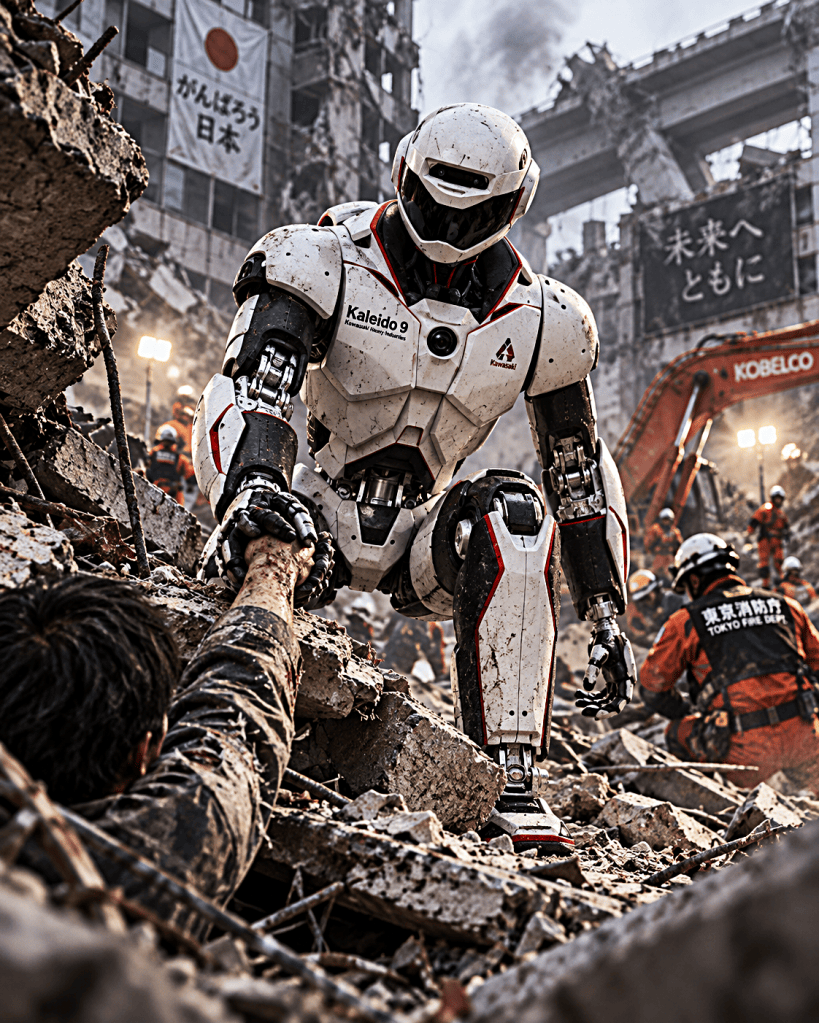
The opening disaster-rescue sequence is rooted in a real Kawasaki Heavy Industries program. The robot’s name, however, is Kaleido 9, not “Kido 9.” Kawasaki began the Kaleido program in 2015 and has reached a ninth generation. At the International Robot Exhibition in December 2025, Kaleido demonstrated tasks that included cleaning, production support, and disaster-site work. Kawasaki’s own August 17, 2026 account supplies the crucial status check: Kaleido “has not yet reached the stage of social implementation” (author’s translation from Japanese; Kawasaki Heavy Industries, 2026a).
That sentence changes the meaning of the YouTube sequence. The demonstration is evidence of engineering progress in mobility, balance, manipulation, perception, and teleoperation. It is not evidence that the robot has already become an operational firefighter or disaster responder. Kawasaki describes a staged roadmap: simpler movement and support work in factories and logistics first, more difficult maintenance later, and severe disaster environments further out. The company’s 2026 material therefore supports the rescue goal while placing it on a longer development path (Kawasaki Heavy Industries, 2026a).
The video makes a second Kawasaki error when it describes the four-legged CORLEO as a robotic horse “that a human can actually ride.” Kawasaki’s current development roadmap says, “In 2025, CORLEO existed only as a concept.” The company plans a riding simulator in 2027, an actual rideable-vehicle phase around Expo 2030 Riyadh, and commercialization around 2035 (Kawasaki Heavy Industries, 2026b). Kawasaki was still displaying a full-size mock-up at gamescom in August 2026. A dramatic rider sequence in an AI-altered video can easily collapse concept imagery, simulation, mock-up photography, and current hardware into one apparent event. In this case, the corporate roadmap resolves the ambiguity: a rideable CORLEO is a future objective.
Haneda Airport: the trial is genuine; routine robot ground handling is not
The Haneda Airport story is one of the video’s strongest examples of a real event being described at the wrong level of maturity. JAL Ground Service and GMO AI & Robotics announced Japan’s first airport demonstration experiment using humanoid robots beginning in May 2026 and planned through 2028. The stated scope includes baggage and cargo handling, cabin cleaning, and other ground-handling work. The official announcement says the project will conduct repeated verifications “simulating actual airport environments” and ultimately use humanoids to “complement human tasks” (GMO AI & Robotics, 2026). Those words describe a multiyear validation program, not a settled operating system.
A September 9 interview with a GMO researcher is even more direct. Discussing the JAL experiment, Tomoki Shinji said that the program has progressed but “we have not yet reached the point where [humanoids] can completely replace the processes performed by people at the airport” (author’s translation from Japanese; GMO Developers, 2026). He identified payload as a basic constraint: the Unitree G1 used for development is about 130 centimeters tall, weighs roughly 30 to 40 kilograms, and can lift only about 3 kilograms with an arm. Walking while carrying luggage is harder. Shinji estimated that some individual tasks may become technically ready in three to five years, while fully human-free autonomy and coordination among humanoids are closer to a ten-year problem. He added that global standards for safety and accuracy are still not established (GMO Developers, 2026).
The video’s line that humanoids are “loading luggage onto real passenger planes for the first time in human history” goes beyond the official record. GMO and JAL call the project a first in Japan, not a first in human history. Their April release says the early work involves analyzing airport operations and then testing humanoids in simulated or controlled airport workflows. Public footage can show hardware on airport premises without proving regular, unsupervised service on commercial turnarounds. The difference matters in aviation, where a machine must perform safely and repeatably under tight schedules, weather exposure, vehicle traffic, and strict procedural controls (GMO AI & Robotics, 2026; GMO Developers, 2026).
The Chinese robots at Haneda are real—and less mysterious than the video suggests
The video correctly spots a revealing detail: the humanoids used in the Japanese airport effort include Chinese hardware. GMO AIR has publicly identified itself as a distributor and integration partner for Unitree Robotics, and its 2026 materials describe work with Unitree humanoids. The Haneda project has also featured Chinese platforms including Unitree’s G1 and UBTECH’s Walker series. This is useful evidence about the global supply chain. It is weak evidence for the video’s “secret war” between Chinese robot bodies and a future Japanese robot brain (GMO AI & Robotics, 2026; GMO Developers, 2026).
GMO AIR itself explains the practical arrangement. It does not manufacture the humanoid body; it distributes platforms such as Unitree’s and provides technical support, proof-of-concept work, research, and task integration for Japanese customers. That is a normal pattern in an immature technology market: integrators test available hardware while determining what software, sensing, safety procedures, tooling, and workflow changes are needed. Japan’s willingness to test Chinese platforms may show urgency and pragmatism. It does not show that Japan has decided to abandon robot hardware manufacturing. Mitsubishi, Kawasaki, Honda, FANUC, Yaskawa, and other Japanese companies remain deeply involved in robotics and automation, while Japanese policy explicitly supports domestic robotics capabilities and supply chains (GMO Developers, 2026; Ministry of Economy, Trade and Industry [METI], 2026a).
Mitsubishi and Highlanders: a serious mass-production plan with a 2027 clock
The Mitsubishi Motors–Highlanders partnership is also real. On July 9, Mitsubishi Motors and University of Tokyo spinout Highlanders signed a memorandum of understanding covering joint development of humanoids for Mitsubishi factories and possible mass production at unused buildings in the automaker’s Kyoto plant. Mitsubishi said the companies would “examine the feasibility of commencing production in early 2027” (Mitsubishi Motors, 2026). CEO Takao Kato described the collaboration as a “challenge aimed at building a new industrial foundation in which humans and robots work together” (Mitsubishi Motors, 2026).
Japanese technology press reported a target of building capacity for about 1,000 units a month in the latter half of 2027 (Hayashi, 2026). That target is significant because automakers know high-volume assembly, durability testing, quality control, supplier management, and field service. It is also a target. On September 9, 2026, the public evidence still describes an MOU, feasibility work, robot development, and a 2027 production objective. The video’s opening wording—an empty factory being converted to “pump out” 1,000 robots every month—removes the conditional language and shifts a future capacity goal into the present.
The underlying industrial logic deserves attention. Mitsubishi intends to become an early user of the robots in its own factories, accumulate operating data, refine reliability, and apply its automotive manufacturing experience to production. That closed loop between robot user and robot manufacturer could be more consequential than a single headline production number. It gives engineers repeated access to the messy details that stage demonstrations hide: tool wear, charging, falls, recoveries, network interruptions, safety stops, task-change time, maintenance, and the cost of human supervision (Mitsubishi Motors, 2026).
Care, construction, and Fukushima: Japan is testing robots where failure is expensive
Japan’s humanoid work extends beyond factories, and the video is right to emphasize elder care. Waseda University has spent decades on human-centered robotics. Its current AIREC project—AI-driven Robot for Embrace and Care—targets household support, nursing, care, and medical assistance. A June 2026 Waseda review describes AIREC as a next-generation humanoid intended to live and work with people in daily environments, with research led by Shigeki Sugano and colleagues under Japan’s Moonshot R&D program (Waseda University Future Robotics Organization, 2026). The larger project sets a 2050 goal of autonomous performance across demanding service, household, nursing, and medical tasks (AIREC Project, 2026).
That long horizon explains why a caregiving demonstration should not be read as a product launch. Turning a person in bed, helping someone stand, or assisting with clothing demands physical strength, compliant contact, perception of individual bodies, and immediate response to discomfort or instability. Waseda’s work is important precisely because it attacks the difficult contact problem. The video supplies specific claims about a 2030 nursing-home debut and a minimum price of 10 million yen; I could not verify those exact 2026 claims in the primary sources reviewed for this article. They should not be repeated as established facts.
Construction provides a clearer 2026 field-trial example. Shimizu Corporation announced on July 8 that it had “begun full-scale field trials” of AI robots, including humanoids for site inspection and robotic arms for painting. The work is narrow and measurable: patrol, sensing, inspection, and specific physical operations in an industry with severe labor shortages and safety risks (Shimizu Corporation, 2026). Calling these robots “bipedal workers” is directionally understandable, but it implies a breadth of construction skill that the company’s release does not claim.
The Fukushima example requires a stronger correction. The video says a 22-meter robotic arm began extracting samples of melted nuclear fuel in 2026. TEPCO documented the arm’s arrival at Fukushima Daiichi on April 7 for Unit 2 internal investigation and trial retrieval preparations (Tokyo Electric Power Company Holdings [TEPCO], 2026a). TEPCO’s current public material still describes robotic-arm sampling in future tense: “Thereafter, we will perform internal investigations and sample fuel debris with the robotic arm” (TEPCO, 2026b). Earlier trial samples were retrieved with another device. The 22-meter arm is an important remote-robotics system for a lethal environment; the video advances its role from preparation to completed sampling without adequate evidence.
Japan’s demographic pressure is real, although the “11 million empty chairs” line is rhetoric
The demographic case for automation is one of the video’s most credible themes. Japan’s Statistics Bureau estimated 122.68 million residents on August 1, 2026. Its latest detailed age estimate listed 36.2 million people aged 65 or older and 73.29 million aged 15 to 64. Japan’s population is shrinking while the elderly share remains exceptionally high (Statistics Bureau of Japan, 2026).
The birth data have deteriorated further than the 2024 figures quoted in the video. Finalized 2025 demographic statistics recorded 671,236 births and a total fertility rate of 1.14, both new lows; deaths exceeded births by more than 918,000 (Nippon.com, 2026a). Preliminary data for the first half of 2026 showed a small year-over-year rise in births, the first such first-half increase in eleven years, but the total remained low and deaths still exceeded births by more than 436,000 in six months (Nippon.com, 2026b).
The video’s figure of an eventual 11 million worker shortfall also has a real source, but it is presented as though 11 million jobs are empty today. Recruit Works Institute’s Future Predictions 2040 model projected a labor-supply shortage of more than 3.4 million people in 2030 and more than 11 million by 2040 (Recruit Works Institute, 2023). That is a scenario model, not a current vacancy count. Even with that correction, the pressure is substantial. Tourism adds another workload: Japan welcomed a record 42,683,600 international visitors in 2025 (Japan National Tourism Organization, 2026). Airports, logistics firms, care providers, builders, manufacturers, and service businesses therefore have unusually strong incentives to automate physically demanding work.
The 10-million-robot plan: broad national strategy, not 10 million humanoids
The video’s largest policy inflation comes near the end. It says Japan announced a national target of 10 million “AI-equipped robots” by 2040 and narrates the number as roughly one humanoid for every 10 to 12 residents. METI did set a target of “introducing approximately 10 million robots by 2040,” but the revised AI Robotics Strategy covers social implementation across 18 fields, including manufacturing, logistics, food service, health care, and other applications (METI, 2026a). The category is robots, not humanoids. Industrial arms, mobile manipulators, logistics robots, service machines, medical systems, and other forms can all fall within the wider strategy.
That distinction changes the scale of the claim. A country deploying 10 million AI-enabled robotic systems by 2040 would still represent a major transformation. A country deploying 10 million general-purpose humanoids would be making a much narrower and far more technically demanding commitment. METI’s language supports the first statement. The video’s framing suggests the second.
The strategy is also broader than the video’s claim that Japan has decided to surrender low-cost bodies to China and win the robot “brain.” METI is supporting adoption by user companies, domestic robotics capability, R&D hubs, physical-AI data infrastructure, and a Japanese multimodal foundation model. A separate May 2026 program emphasized the importance of real-world industrial data for AI development. Japan’s strategy is therefore better described as an effort to connect models, field data, robot engineering, users, and domestic industrial capacity (METI, 2026a, 2026b).
Noetra: a major Japanese foundation-model project, not yet a universal robot operating system
Noetra is the most consequential new organization named in the video. The company began full-scale R&D in July with four core corporate members—Sony, SoftBank, NEC, and Honda—and investments from 44 companies and organizations. It plans a Japan-developed multimodal foundation model for AI-enabled robots and physical AI, supported by engineers from participating companies, AIST, Preferred Networks, and others. Noetra’s roadmap calls for an omni-modal model by fiscal 2028 and “Real-world Native AI” with stronger understanding of physical properties by fiscal 2030 (Noetra et al., 2026).
SoftBank CEO Junichi Miyakawa stated the economic argument plainly: “the data held by Japan’s industries and businesses will be a key source of competitive strength” (Noetra et al., 2026). That is a more defensible account of Japan’s opportunity than the video’s claim that one Japanese “brain” could run any robot body and become an operating system the world must buy. Noetra’s own release says the models will be released in stages as R&D and real-world implementation progress. It does not promise a universal body-agnostic robot OS.
The scale is nevertheless unusual for Japan. Reuters reported in July that Noetra was tied to more than 380 billion yen in first-year project funding and support and intended to build infrastructure around 27,500 Nvidia Rubin GPUs, with operations targeted for mid-2028 (Okasaka, 2026). Noetra CEO Hironobu Tamba called the effort Japan’s “last chance” to strengthen its position in critical AI technology (Okasaka, 2026). That urgency comes from a real strategic concern: advanced robot hardware increasingly depends on AI models, compute, data, and software ecosystems that Japan does not dominate today.
China: the scale leader is also confronting the same intelligence problem
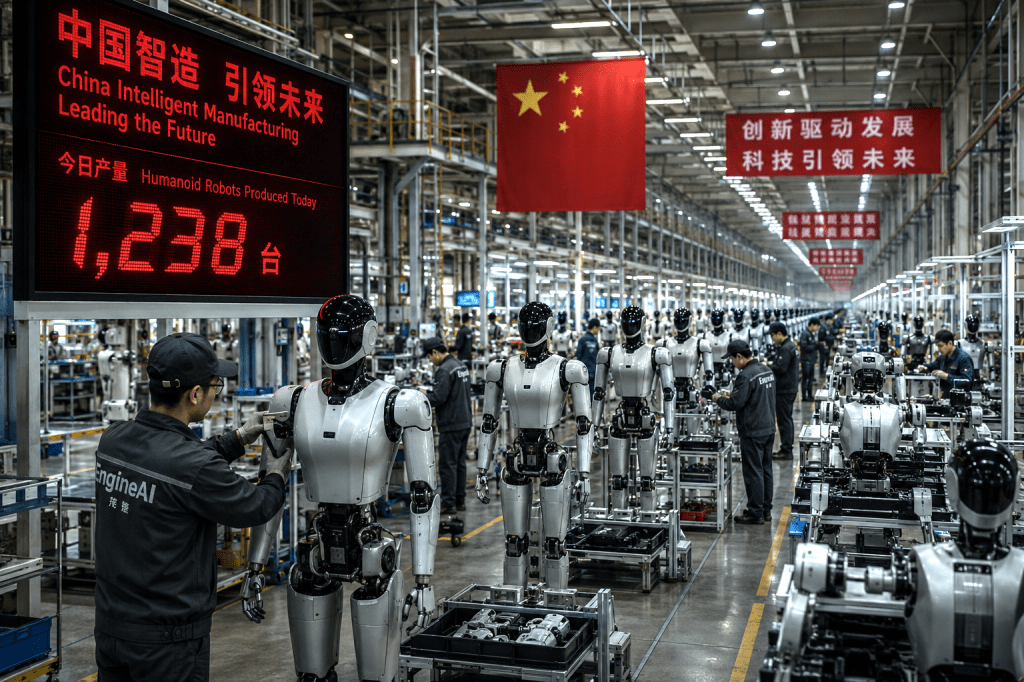
Any review of Japan’s position has to start with China’s manufacturing scale. The International Federation of Robotics reported in May that China had an operational stock of around 2 million industrial robots, about 4.5 times Japan’s stock, and that 54 percent of industrial robots installed worldwide in 2024 were deployed in China (International Federation of Robotics [IFR], 2026). China’s electric-vehicle, battery, motor, sensor, actuator, and electronics supply chains also lower the cost and shorten the development cycle for humanoid hardware.
The humanoid numbers are moving faster than the capability. Reuters’ August 27 investigation found that Chinese companies had built impressive bodies and demonstrations but still struggled to make humanoids productive in factories. Tang Wenbin, co-founder of Chinese AI company Infinigence, summarized the gap sharply: “The robots’ IQ is too low. A lot of what we see is dancing disguised as working” (Chen et al., 2026). Reuters described recurring problems with dexterity, reliability, adaptability, data, and economics. Near-term use is concentrated in structured, repetitive, or hazardous tasks—the same pattern visible in Japan, Europe, and the United States (Chen et al., 2026).
China also pushes farther into state-backed experimentation. A September 7 Reuters investigation found Chinese research exploring humanoids for reconnaissance, logistics, hazardous missions, and possible future combat roles, while stressing that current reliability and energy limits remain substantial and that there was no evidence of routine PLA deployment of armed humanoids (Baptista et al., 2026). This matters for Japan because the competitive field includes more than factory productivity. Disaster response, infrastructure, defense, and industrial resilience can all reward a country that learns how to operate embodied AI reliably outside a laboratory.
The United States: fewer national targets, more evidence from specific factory tasks
The United States provides a useful comparison because some of its strongest evidence comes from narrow industrial deployments with measured operating time. BMW reported in March that Figure 02 had worked during a ten-month 2025 pilot at its Spartanburg, South Carolina plant, assisting production of more than 30,000 BMW X3 vehicles, moving more than 90,000 components, and accumulating about 1,250 operating hours. The robot performed a repetitive sheet-metal positioning task rather than general factory labor, and BMW said the trial also forced changes in safety barriers and 5G coverage (BMW Group, 2026).
Toyota Motor Manufacturing Canada moved from a year-long pilot to a commercial Robots-as-a-Service agreement for seven Agility Robotics Digit humanoids in February 2026. Toyota’s president said the company was “excited to deploy Digit to improve the team member experience and further increase operational efficiency” (Fernholz, 2026). The contracted task—unloading totes from an automated tugger—is deliberately constrained. That makes it valuable evidence. The robot is judged on throughput, uptime, integration, safety, and operating cost instead of stage performance (Agility Robotics, 2026; Fernholz, 2026).
Boston Dynamics also shifted Atlas from research platform toward product in January 2026, beginning manufacturing and scheduling early deployments with Hyundai and Google DeepMind. Its partnership with Google DeepMind explicitly links new Atlas hardware with Gemini Robotics foundation models (Boston Dynamics, 2026a, 2026b). These U.S. examples complicate the video’s three-country storyline. American companies are pursuing both bodies and models, often with automotive partners and their own manufacturing plans. China is investing heavily in robot intelligence as well as hardware. Japan is strengthening both AI and manufacturing. The competitive stack is integrated in all three countries.
What the evidence says about embodied robotic AI in 2026
The first implication is practical. Humanoid robots are beginning to cross the boundary from laboratory demonstration to controlled work, but the crossing is task by task. Material movement, tote handling, inspection, repetitive positioning, limited ground-handling experiments, and remote work in hazardous environments are ahead of general-purpose household care, open construction work, or unsupervised airport operations. The best 2026 evidence comes with operating hours, payload limits, failure modes, safety procedures, and defined workflows. It rarely looks like a viral montage.
Second, embodiment changes the AI problem. A language model can make a wrong prediction and generate another sentence. A robot can drop a suitcase, strike a worker, damage an aircraft, fall on a patient, or fail inside a radioactive structure. That is why the GMO researcher interviewed on September 9 emphasized that safety and accuracy standards for fully autonomous humanoid service remain unfinished (GMO Developers, 2026). The difficult frontier is dependable perception, manipulation, balance, force control, recovery from errors, and learning that transfers from one physical setting to another.
Third, Japan has a genuine advantage in the availability of difficult real-world test environments. Its factories are highly automated; its construction sector faces labor shortages; its airports are handling record travel; its elder-care system faces increasing physical workloads; and Fukushima supplies extreme remote-operation problems. METI’s physical-AI strategy explicitly focuses on field data. Noetra’s partners include manufacturers, robot makers, insurers, banks, telecom companies, electronics firms, and logistics groups. If those organizations can turn proprietary operating experience into safe training data and reusable models, Japan could improve robot intelligence without having to dominate low-cost hardware volume (METI, 2026a, 2026b; Noetra et al., 2026).
Fourth, China’s scale advantage should be taken seriously without treating every shipment as an autonomous worker. Cheap hardware creates more opportunities for experimentation, data collection, component refinement, and price competition. The August Reuters investigation shows why that scale has not yet solved the intelligence and reliability problem (Chen et al., 2026). Japan’s challenge is the reverse: it has deep robotics and manufacturing expertise but must move faster in modern AI models, compute, data pipelines, and software iteration. Noetra is an attempt to close that gap.
Fifth, the U.S. remains a strong competitor because AI research, venture capital, cloud infrastructure, foundation-model development, and robotics startups can be paired with large industrial users. BMW’s Figure trial, Toyota Canada’s Digit contract, and Boston Dynamics’ Atlas production all show pathways from AI research into measured factory work. The race is therefore unlikely to resolve into Chinese bodies, Japanese brains, and American software. Each ecosystem is trying to own enough of the complete system to control quality, cost, data, and learning speed (BMW Group, 2026; Agility Robotics, 2026; Boston Dynamics, 2026a; Chen et al., 2026).
A better reading of the video
The Polarisyn/rubenfoto1 video is useful as a list of leads. It names several programs worth following, and its broad theme—Japan’s renewed urgency around physical AI—is supported by 2026 evidence. It should not be used as a factual source without independent checking. Its AI-production disclosure weakens the evidentiary value of the visuals, and the script contains enough inflated or premature claims to make source-by-source verification necessary (Polarisyn & rubenfoto1, 2026).
The recurring problem is time. Kaleido’s rescue work is a demonstration and a future deployment goal. Haneda is a demonstration experiment planned through 2028, with engineers stating on September 9 that current humanoids cannot yet replace the full human workflow. Mitsubishi’s 1,000-a-month figure is a 2027 capacity target tied to an MOU and feasibility work. CORLEO is not yet a rideable production vehicle. TEPCO’s 22-meter arm arrived for future Unit 2 investigation and sampling work. METI’s 10-million target covers robots broadly. Noetra is building a foundation model and compute infrastructure on a multiyear roadmap; it has not produced a universal robot brain (Kawasaki Heavy Industries, 2026a, 2026b; GMO Developers, 2026; Mitsubishi Motors, 2026; TEPCO, 2026a, 2026b; METI, 2026a; Noetra et al., 2026).
The corrected picture is more useful for forecasting embodied AI. Japan is assembling the pieces of a serious physical-AI ecosystem: mature robot engineering, automakers willing to manufacture humanoids, field trials in labor-short sectors, long-running university research on human contact, a government adoption target, and a sovereign foundation-model effort built around industrial data. China enters this period with greater manufacturing scale and lower-cost hardware. The United States enters with powerful AI laboratories, capital, and increasingly concrete factory deployments. None has solved general-purpose embodied autonomy.
That final point is the one to carry forward. The transformation has begun, and its early form is visible in controlled tasks. The next several years will be decided less by spectacular motion than by whether robots can work for long hours, learn new tasks economically, handle uncertainty, recover safely from failure, and prove that their total cost is better than alternative automation. Japan’s 2026 acceleration deserves close attention. The viral video points toward the right subject, then runs ahead of the evidence.
References
Note: All URLs below were checked as part of this review. Japanese-language quotations in the article are identified as translations. The audit prioritized 2026 government, corporate, university, and project documentation, supplemented by Reuters, TechCrunch, and current industry statistics. Claims in the YouTube transcript were treated as assertions to be verified independently. The video’s AI-production disclosure was treated as a reason not to use the visuals themselves as proof of the events shown.
Agility Robotics. (2026, February 19). Agility Robotics announces commercial agreement with Toyota Motor Manufacturing Canada. https://www.agilityrobotics.com/content/agility-robotics-announces-commercial-agreement-with-toyota-motor-manufacturing-canada
AIREC Project. (2026). Project outline: AI-driven Robot for Embrace and Care. Waseda University. https://airec-waseda.jp/en/about_en/
Baptista, E., Chen, L., & Park, J.-M. (2026, September 7). From dance floor to war: China readies humanoid robots for combat. Reuters. https://www.reuters.com/world/china/dance-floor-war-china-readies-humanoid-robots-combat-2026-09-07/
BMW Group. (2026, March 9). Leipzig debut: BMW Group introduces humanoid robots—a first in Germany. https://www.bmwgroup.com/en/news/general/2026/humanoid-robot-in-leipzig.html
Boston Dynamics. (2026a, January 5). Boston Dynamics unveils new Atlas robot to revolutionize industry. https://bostondynamics.com/blog/boston-dynamics-unveils-new-atlas-robot-to-revolutionize-industry/
Boston Dynamics. (2026b, January 5). Boston Dynamics & Google DeepMind form new AI partnership to bring foundational intelligence to humanoid robots. https://bostondynamics.com/blog/boston-dynamics-google-deepmind-form-new-ai-partnership/
Chen, L., Baptista, E., & Park, J.-M. (2026, August 27). China can build kung fu-fighting robots. But it can’t get them to do factory work. Reuters. https://www.reuters.com/investigations/chinas-humanoid-robots-arent-smart-enough-take-your-job-yet-2026-08-27/
Fernholz, T. (2026, February 19). Toyota contracts seven Agility humanoid robots for Canadian factory. TechCrunch. https://techcrunch.com/2026/02/19/toyota-hires-seven-agility-humanoid-robots-for-canadian-factory/
GMO AI & Robotics Corporation. (2026, April 30). Japan’s first demonstration experiment for utilizing humanoid robots at airports begins. https://ai-robotics.gmo/en/news/article/jal/
GMO Developers. (2026, September 9). [AI TALK No. 3: GMO Internet Group’s Shinji on the current state of humanoids and the challenge as a researcher] [Japanese]. https://developers.gmo.jp/technology/85990/
Hayashi, Y. (2026, July 9). Mitsubishi Motors aims for domestic humanoid mass production; target of 1,000 units per month in late 2027 [Japanese]. ITmedia NEWS. https://www.itmedia.co.jp/news/article/2607/09/1260709123/
International Federation of Robotics. (2026, May 5). China makes AI-powered robots core of national strategy. https://ifr.org/ifr-press-releases/china-makes-ai-powered-robots-core-of-national-strategy
Japan National Tourism Organization. (2026, January 21). Visitor arrivals, December 2025 estimate and 2025 annual total [Japanese]. https://www.jnto.go.jp/news/press/20260121_monthly.html
Kawasaki Heavy Industries. (2026a, August 17). SOCIAL ROBOT AS OUR PARTNERS: Will robots become our partners? [Japanese]. ANSWERS. https://answers.khi.co.jp/ja/connected-society/260817j-01/
Kawasaki Heavy Industries. (2026b). SA Roadmap: CORLEO development story. https://www.khi.co.jp/safe_adventure/en/development-story/sa-roadmap/
METI. (2026a, June 30). Press conference by Minister Akazawa (excerpt): AI Robotics Strategy. Ministry of Economy, Trade and Industry. https://www.meti.go.jp/english/speeches/press_conferences/2026/0630001.html
METI. (2026b, May 14). Selection of nine R&D themes for AI-ready data and two R&D themes for robotics foundation models under GENIAC. Ministry of Economy, Trade and Industry. https://www.meti.go.jp/english/press/2026/0514_001.html
Mitsubishi Motors Corporation. (2026, July 9). Mitsubishi Motors and Highlanders sign MOU to establish a new industrial foundation where humans and robots work together. https://www.mitsubishi-motors.com/en/newsroom/newsrelease/2026/20260709_1.html
Nippon.com. (2026a, June 9). Baby decline: Births in Japan drop for the tenth successive year. https://www.nippon.com/en/japan-data/h02802/
Nippon.com. (2026b, August 31). Japan births edge up in first half of 2026 after a decade of decline. https://www.nippon.com/en/japan-data/h02872/
Noetra Corp., Sony Group Corporation, SoftBank Corp., NEC Corporation, & Honda Motor Co., Ltd. (2026, July 16). Noetra launches full-scale R&D for Japan-developed multimodal foundation model. https://www.noetra.co.jp/news/press/20260716_01-en/
Okasaka, K. (2026, July 22). Robot AI company Noetra is ‘last chance’ for Japan, CEO says. Reuters. https://www.reuters.com/business/media-telecom/robot-ai-company-noetra-is-last-chance-japan-ceo-says-2026-07-22/
Polarisyn, & rubenfoto1. (2026, September 9). Japan’s new humanoid robot is shocking the entire world [Video]. YouTube. https://www.youtube.com/watch?v=cFivXtamH34
Recruit Works Institute. (2023, June 28). Future predictions 2040 in Japan: The dawn of the limited-labor supply society. https://www.works-i.com/english/item/FuturePredictions2040_JP.pdf
Shimizu Corporation. (2026, July 8). Shimizu Corporation launches full-scale development of ‘AI Robots’. https://www.shimz.co.jp/en/company/about/news-release/2026/2026027.html
Statistics Bureau of Japan. (2026, August 20). Population estimates: August 2026 preliminary estimate [Japanese]. https://www.stat.go.jp/data/jinsui/new.htm
TEPCO. (2026a, April 7). Fukushima Daiichi Nuclear Power Station: Arrival of robotic arm for Unit 2 PCV internal investigation/fuel debris trial retrieval. https://photo.tepco.co.jp/en/date/2026-e/202604-e/260407-01e.html
TEPCO. (2026b). Inside Fukushima Daiichi: Unit 2 virtual tour and fuel-debris retrieval information. https://www.tepco.co.jp/en/sp/insidefukushimadaiichi/tour/guide5/2nd/index-e.html
Waseda University Future Robotics Organization. (2026, June 10). Robots of Waseda: Fifty years of humanoid research [Japanese]. https://www.waseda.jp/inst/fro/news/2026/06/10/1976/
###
Filed under: Uncategorized |


















































































































































































































































































































































































































Leave a Reply