



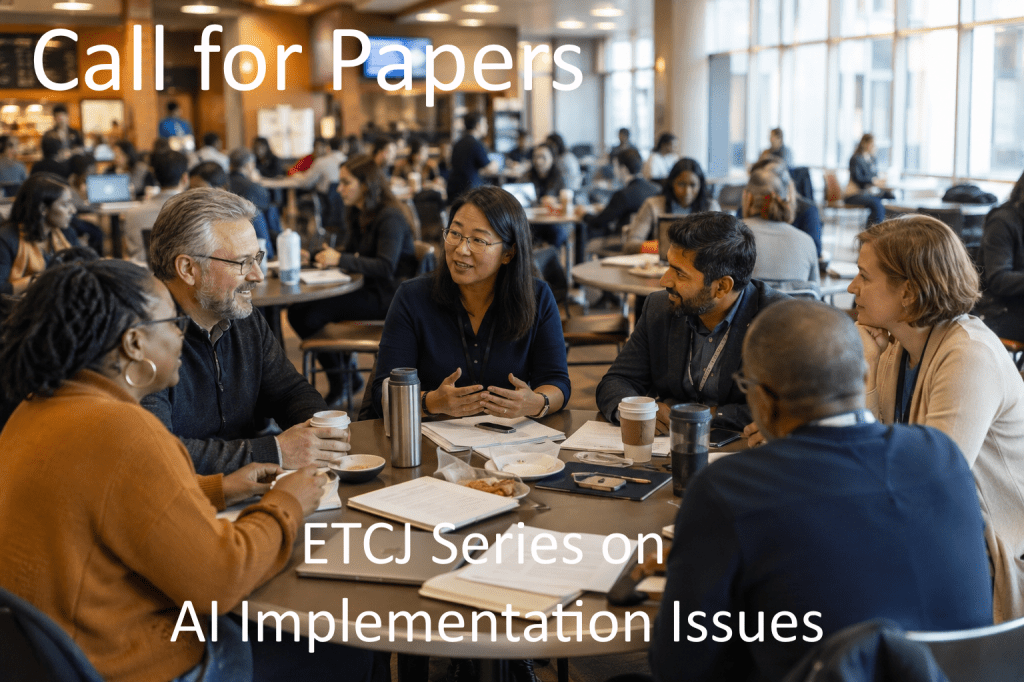


IMF chief calls AI a “slow-moving tsunami” for young workers (Claude)
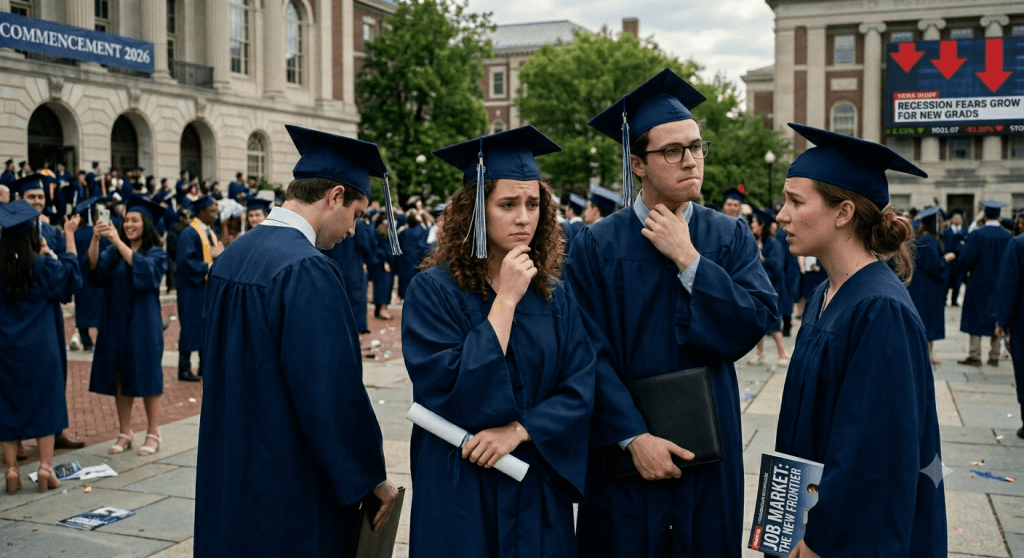
At the IMF and World Bank annual meetings in Bangkok, IMF Managing Director Kristalina Georgieva said AI is hitting the labor market like a “slow-moving tsunami,” with young graduates most exposed. The IMF estimates about 40% of jobs worldwide will eventually be “augmented, downgraded or eliminated,” about 60% in advanced economies and 23% in low-income countries. Singapore President Tharman Shanmugaratnam, co-chair of the World Bank’s Jobs Council, said governments should give firms incentives to hire fresh graduates and universities should shift toward applied training. The world’s two main economic institutions are now telling universities to prepare students for an entry-level job market that AI is shrinking. Source: CNBC, “World Bank jobs council urges ‘crisis-era’ support measures as IMF warns of AI ‘tsunami’ hit,” published October 12, 2026, 12:34 a.m. HST. https://www.cnbc.com/2026/10/12/imf-world-bank-ai-jobs-inflation-.html
Students now use AI chatbots to choose colleges (Claude)
At the National Association for College Admission Counseling’s annual conference in Minneapolis, the admissions worry shifted from AI-written essays to students using AI to research colleges. A Revolution Prep poll found 52 percent of college students use AI for college research, and an EAB study put the share at 46 percent. NACAC CEO Angel Pérez said Canadian universities now report the U.S. as their top source of foreign applications, and some political panels were canceled because institutions were uncomfortable with staff speaking publicly about the administration. Colleges now have to check what chatbots say about them, since a wrong or missing answer can cost them applicants. Source: Inside Higher Ed, “4 Takeaways From NACAC’s Annual Admissions Conference,” published October 11, 2026, 9:00 p.m. HST. https://www.insidehighered.com/news/admissions/traditional-age/2026/10/12/annual-nacac-conference-tackled-ai-college-value
Admissions officers now worry more about chatbot college searches than AI-written essays (Claude)
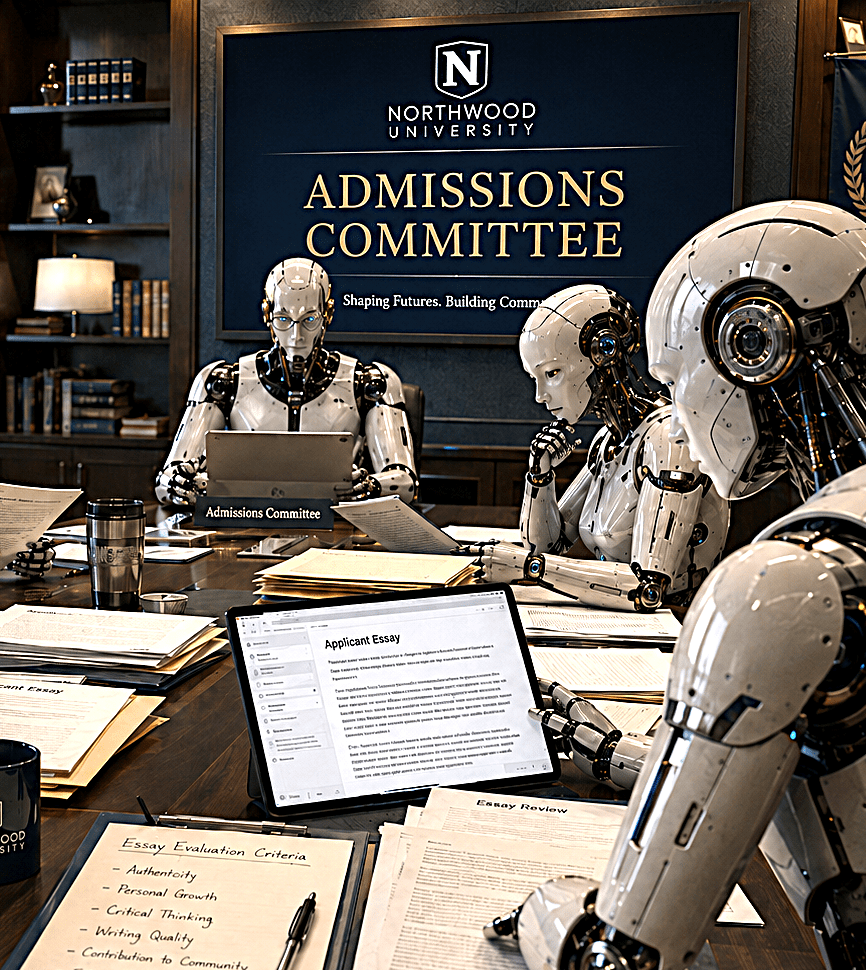
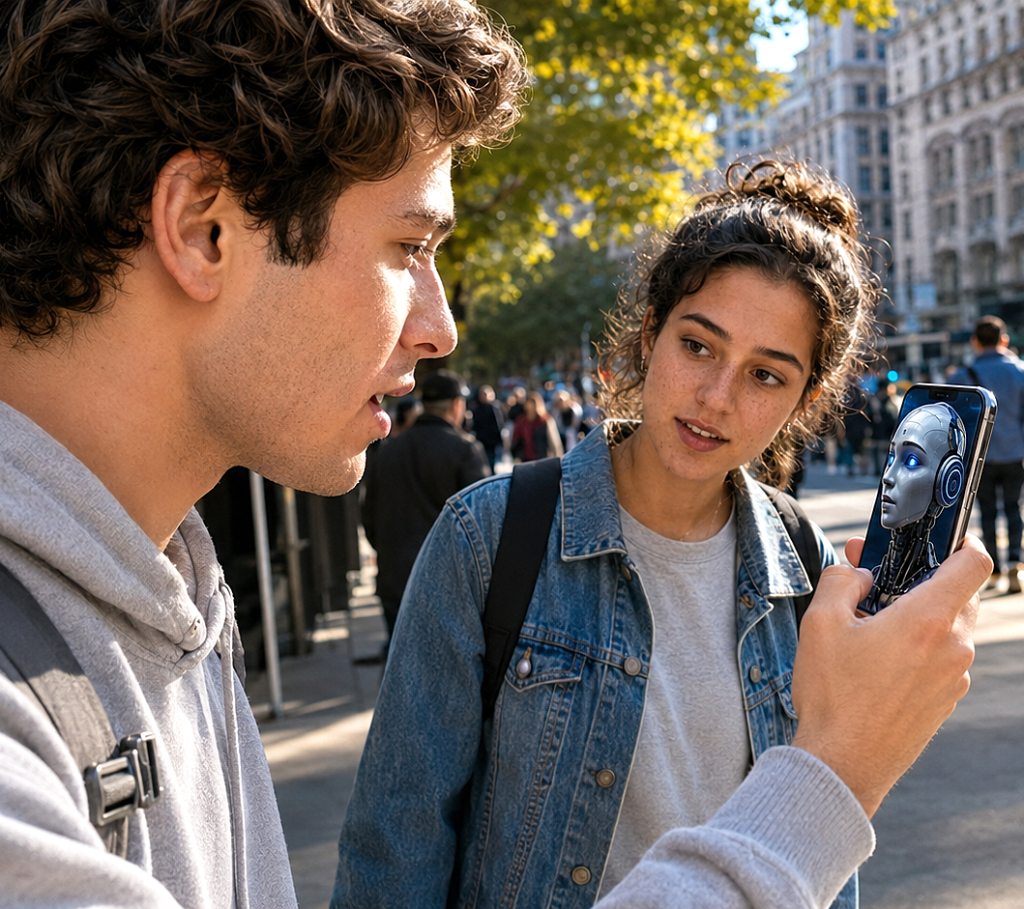
At the National Association for College Admission Counseling’s annual conference in Minneapolis, attendees said their main AI concern has moved from essays written by chatbots to students using chatbots to research colleges. One speaker cited a poll finding that 52 percent of college students used AI for college research, and EAB research put the figure at 46 percent. Colleges are now working to make sure chatbots give accurate information about them, while families ask more often whether a degree is worth the cost and more Americans look at universities abroad. If a chatbot becomes the first adviser many students consult, the accuracy of its answers will affect where they apply, especially for students with little access to a school counselor. Source: Inside Higher Ed, “4 Takeaways From NACAC’s Annual Admissions Conference,” published October 11, 2026, 9:00 p.m. HST. https://www.insidehighered.com/news/admissions/traditional-age/2026/10/12/annual-nacac-conference-tackled-ai-college-value
School counselors report rising interest in paths outside college (Claude)
A survey of 600 school counselors by the American School Counselor Association and the nonprofit Britebound found that 90% saw increased student interest in non-degree pathways such as the skilled trades. Only 47% said awareness of those pathways is part of how their school measures career readiness, and 61% of high school counselors want more information on local workforce opportunities. A Nebraska counselor said, “We only look at grad rates and college-bound; there needs to be a way to measure trades, workforce, military.” Schools that count only college enrollment will miss students who choose other routes, and state accountability systems may need new measures. Source: Education Week, “As Students Explore Alternatives to College, Are Counselors Ready to Help Them?” published October 12, 2026, 4:00 a.m. HST. https://www.edweek.org/teaching-learning/as-students-explore-alternatives-to-college-are-counselors-ready-to-help-them/2026/10
US education research agency spent 99.5% of its budget, largely by paying existing grants up front (Claude)
A court filing shows the Institute of Education Sciences, the Education Department’s research arm, had committed 99.54 percent of its $768 million budget by September 28, two days before the fiscal-year deadline; a lawsuit had said 41 percent was unspent as of May. Experts told Inside Higher Ed they could not recall any new grant competitions for fiscal 2026, and several said the agency paid existing multiyear grants in full in advance. A federal judge declined to order the spending, relying on the government’s statements to the court. Putting the money into existing projects means fewer new studies on reading, math and other learning, the evidence schools use to choose what to teach and buy. Source: Inside Higher Ed, “Despite Concerns, IES Spent 99% of Expiring Funds,” published October 11, 2026, 9:00 p.m. HST. https://www.insidehighered.com/news/government/science-research-policy/2026/10/12/despite-concerns-ies-spent-99-expiring-funds
Nature reviews a book arguing that the decline of reading threatens reasoned debate (Claude)
In Nature, journalist David Adam reviews James Marriott’s “The New Dark Ages: The End of Reading and the Dawn of a Post-Literate Society.” Marriott argues that reading helped build science, democracy and reasoned public debate, that bestsellers and prose are getting simpler, and that smartphones are the main cause. The review cites Royal Society figures showing popular-science book sales fell from more than 5 million a year at their 2019 peak to 2.9 million by 2024. The book gives teachers and literacy advocates a pointed case that sustained reading builds the reasoning skills schools want to protect as AI tools take over more reading and writing. Source: Nature, “Does the decline of book reading mark the end of rational thinking?,” published October 12, 2026 (London date; no time listed, so no earlier than 1:00 p.m. HST October 11). https://www.nature.com/articles/d41586-026-03224-7
Education degrees pass the new federal earnings test but lag on value (Claude)
An Institute for Higher Education Policy analysis of about 40,000 undergraduate programs found that 93 percent pass the federal earnings test Congress created in 2025 in the One Big Beautiful Bill Act, while 82 percent pass Threshold 0, a stricter value measure from the Postsecondary Value Commission. Every bachelor’s-level education program passes the federal test, but only 65 percent pass Threshold 0. IHEP analyst Daniella Paradise called the gap “an affordability issue” and said the federal test is “just a start.” Programs that train future teachers can meet the federal bar and still leave graduates struggling with costs, which matters for states trying to fill classrooms. Source: Inside Higher Ed, “How College Programs Fare on 2 Earnings Benchmarks,” published October 11, 2026, 9:00 p.m. HST. https://www.insidehighered.com/news/quick-takes/2026/10/12/ihep-report-shows-how-colleges-fare-2-earnings-tests
AI’s pressure on entry-level work is becoming an education-policy problem (ChatGPT)
Singapore President Tharman Shanmugaratnam told the IMF–World Bank meetings that demand is weakening for the “first rung” of employment after graduation, particularly in AI-exposed sectors. His warning matters to colleges because curricula built around traditional entry-level professional tasks may prepare students for positions that employers increasingly automate or redesign. The short Reuters report does not provide the underlying employment data, so it should be read as a prominent policy warning rather than conclusive causal evidence. Tharman also cautioned that uneven adoption could widen economic differences between countries. Source: Reuters, “Singapore’s President warns of AI’s risk to employment for fresh graduates,” October 12, 2026 — https://www.reuters.com/world/asia-pacific/singapores-president-warns-ais-risk-employment-fresh-graduates-2026-10-12/
Israel’s math and computer science enrollment falls 7.4% as AI reshapes tech jobs (Claude)
Israel’s Council for Higher Education reported that undergraduate enrollment in mathematics, statistics and computer science fell 7.4% in 2025-2026, from 22,203 to 20,571 students. The council linked the drop partly to changes in the high-tech industry, while enrollment in AI, data science and data engineering rose 3.9% to 2,259 students. Social sciences also overtook engineering as the largest undergraduate field. The figures are an early national sign that AI is changing which technical degrees students think are worth pursuing, and universities will have to adjust programs and budgets to match. Source: The Times of Israel, “Amid AI shifts and war, Israel sees drop in math and computer science student enrollment,” published October 12, 2026, 3:47 a.m. HST. https://www.timesofisrael.com/amid-ai-shifts-and-war-israel-sees-drop-in-math-and-computer-science-student-enrollment/
Microsoft plans million-chip deployment to reduce dependence on Nvidia (ChatGPT)
Microsoft unveiled Maia 300, its third-generation AI accelerator, and said it could deploy more than one million of the chips next year for internal AI services and Azure workloads. The processor uses a chiplet design built partly with TSMC’s two-nanometer technology. Microsoft claims Maia 300 delivers about 40% more useful computing per megawatt than “leading” GPU systems, but it did not identify the comparison hardware or supply independent benchmarks. The scale of the proposed deployment nevertheless signals that cloud companies increasingly view proprietary chips as essential to controlling AI costs, capacity and energy use. Source: Reuters, “Microsoft plans huge deployment of its own AI chips, with an eye on saving costs,” October 12, 2026 — https://www.reuters.com/business/microsoft-plans-huge-deployment-its-own-ai-chips-with-an-eye-saving-costs-2026-10-12/
Winning microscopy video disqualified over AI enhancement (Claude)
Nikon disqualified the first-place entry in its Small World in Motion competition, a video of moving cilia in the lungs submitted by optical engineer Ning Xu, after scientists pointed out on LinkedIn that parts of it looked biologically implausible. Xu had written that his team used an AI model in post-processing to enhance the regions below the cilia, and the competition’s rules do not allow AI-generated videos. Nikon said the decision concerned only the video’s eligibility and was not a judgment of Xu’s reputation or intent. As AI editing tools improve, journals, research-integrity offices and science teachers all need clear rules on how far a scientific image can be altered before it stops being evidence. Source: Nature, “Award-winning microscopy image disqualified over AI use,” published October 12, 2026 (London date; no time listed, so no earlier than 1:00 p.m. HST October 11). https://www.nature.com/articles/d41586-026-03240-7
Axios sorts the three leading AI lab chiefs by motive (Claude)
Drawing on Kevin Roose’s book “The AGI Chronicles,” Axios co-founder Jim VandeHei profiles Anthropic’s Dario Amodei as “the survivalist,” shaped by fear of catastrophe and the history of the atomic bomb; OpenAI’s Sam Altman as “the seller,” focused on raising money and scaling as fast as possible; and Google DeepMind’s Demis Hassabis as “the scientist,” who doubted the scaling approach he is now racing on. The column notes that Amodei distrusts Altman and that many of Altman’s former colleagues are hostile toward him. The beliefs and rivalries of three people now shape release decisions and safety practices for AI tools used by millions of students, teachers and government workers. Source: Axios, “Axios C-Suite: How to think about the AI gods,” published October 12, 2026, 1:10 a.m. HST. https://www.axios.com/2026/10/12/ai-ceo-explainer-amodei-altman-hassabis
Amazon drops secrecy agreements in data center talks as local moratoriums spread (Claude)
Amazon says it will no longer use nondisclosure agreements when negotiating with local governments over data centers, following a similar move by Microsoft earlier this year. On TechCrunch’s Equity podcast, reporters said secret negotiations have fed residents’ worries about electricity bills, water use and property values, and noted moratoriums such as New York’s one-year pause on permits for large projects. They judged that dropping NDAs is a useful first step but unlikely to win over opponents on its own. Open negotiations let residents and local officials weigh the costs of AI infrastructure before deals are signed. Source: TechCrunch, “Can the AI industry persuade data center opponents by getting rid of NDAs?,” published October 11, 2026, 6:52 a.m. HST. https://techcrunch.com/2026/10/11/can-the-ai-industry-persuade-data-center-opponents-by-getting-rid-of-ndas/
UK keeps early access to US frontier AI models for safety testing (Claude)
In a speech at Imperial College London on October 12, UK AI minister Kanishka Narayan said the government had worked with the US government and AI labs to keep the AI Security Institute’s access to the most powerful models before release, and that its scientists are now testing the latest generation of models. The access had been interrupted after the White House asked US labs to stop sharing new models with the institute, The Telegraph reported. Narayan told AI companies not to release systems they cannot adequately control and said the UK will use its Cyber Security and Resilience Bill to require reporting of serious AI incidents and near misses. Government testing before release is one of the few checks on frontier models from outside the companies, and this episode shows that a country’s access to that testing can depend on another government’s goodwill. Source: GOV.UK, “Building a Safer, More Secure Britain in the age of AI,” published October 12, 2026 (UK date; no time listed, so no earlier than 1:00 p.m. HST October 11). https://www.gov.uk/government/speeches/building-a-safer-more-secure-britain-in-the-age-of-ai
PhD pay varies widely across Europe, a new report shows (Claude)
A report from Eurodoc, the European council of doctoral candidates and junior researchers, compares the earnings of first-year doctoral candidates in 2024–25 across 26 countries. Higher-paying countries mostly employ PhD candidates on salaries, while lower-paying countries rely more on scholarships, which are usually tax-free but come without pensions or parental leave. Co-author Pil Maria Saugmann says the gaps drive a brain drain toward Scandinavia and the Benelux countries, and points to Estonia, where a 2022 reform replaced a stipend of about €8,000 a year with a salary about 2.5 times larger and boosted applications. Doctoral pay decides which countries can train and keep the researchers their universities and AI programs depend on. Source: Nature, “What does a PhD pay? Data reveal huge gaps across Europe,” published October 12, 2026 (London date; no time listed, so no earlier than 1:00 p.m. HST October 11). https://www.nature.com/articles/d41586-026-03181-1
AI-enhanced video stripped of top microscopy prize (Claude)
Nikon Instruments disqualified the winning video in its Small World in Motion competition after scientists on LinkedIn said some of its features looked “biologically implausible.” The video of lung cilia, by optical engineer Ning Xu, had won first place on 15 September, and Nikon announced on 9 October that it broke rules barring AI-generated videos. Xu said his team used an AI model in post-processing “without making anatomical claims about what those rendered features represent.” Journals, competitions and science teachers who treat images as evidence now need clear rules on how much AI enhancement is allowed and how it must be disclosed. Source: Nature, “Award-winning microscopy image disqualified over AI use,” published October 12, 2026 (time not listed on page). https://www.nature.com/articles/d41586-026-03240-7
Higher education’s AI problem is moving from adoption to readiness (ChatGPT)
A new Financial Express analysis of an EY-Parthenon–FICCI report finds a widening gap between universities’ AI policies and classroom practice. Interviews with more than 61 stakeholders across at least 23 Indian institutions suggest that many campuses still treat AI principally as a plagiarism or compliance problem. The report argues for discipline-specific faculty development, redesigned assessment and clearer guidance about when students may use AI. Its evidence is qualitative and India-focused, but the distinction between merely providing AI and developing independent judgment is broadly relevant. Source: Financial Express, “Why higher ed’s AI transition is facing a reality check,” October 11, 2026 — https://www.financialexpress.com/jobs-career/education/why-higher-eds-ai-transition-is-facing-a-reality-check/4358813/
Britain confirms access to new frontier models for safety testing (ChatGPT)
Britain’s AI minister said the country’s AI Security Institute is evaluating the latest advanced systems—including Google’s Gemini 4 Argon—before deployment under voluntary agreements with developers. The confirmation follows reports that Washington had asked OpenAI and Anthropic to withhold models from British testers while the United States reviewed information-sharing arrangements. The institute did not identify every model it can access, and Anthropic previously said no organization outside the United States had access to Mythos 5.1. Britain therefore retains an important testing role, but apparently not guaranteed access across developers. Source: Reuters, “UK given access to safety-test latest AI models, minister says,” October 12, 2026 — https://www.reuters.com/legal/litigation/uk-given-access-safety-test-latest-ai-models-minister-says-2026-10-12/
Tencent turns to debt markets as the AI capital race accelerates (ChatGPT)
Tencent is preparing a potential bond sale of at least $4.5 billion as it increases spending on computing equipment, software and data centers. Its first-half capital expenditure more than doubled year over year to 96.3 billion yuan, or about $14.4 billion. Reuters based the proposed fundraising figure on a term sheet and a person familiar with the transaction; Tencent confirmed plans to issue notes but said no binding agreement had been completed and the size remained subject to market demand. The story illustrates how AI competition is moving from model performance into balance-sheet capacity. Source: Reuters, “Tencent eyes $4.5 billion bond sale amid AI funding push, source says,” October 12, 2026 — https://www.reuters.com/world/asia-pacific/tencent-plans-dollar-offshore-yuan-bond-sale-under-note-programme-2026-10-12/
###
Filed under: Uncategorized |




























































































































































































































































































































































































































Leave a Reply