






By Jim Shimabukuro (assisted by Copilot)
Editor
[Related: Is the Wait for Agentic AI Over? 30 May 2026 Update]
1. Gartner’s 40% prediction for task‑specific agents by 2026
Gartner, a leading technology research and advisory firm, projects that 40% of enterprise applications will be integrated with task‑specific AI agents by the end of 2026, up from less than 5% in 2025.[1,2] The core of this prediction is that today’s embedded “assistants” will rapidly evolve into autonomous, task‑specialized agents that can execute workflows, manage incidents, and resolve support cases without constant human prompting. Gartner reaches this conclusion by combining its long‑running enterprise software market tracking with scenario modeling of AI adoption stages, outlining a five‑step evolution from simple assistants in 2025 to multi‑agent ecosystems by 2029.[1,2] This matters because it effectively time‑stamps a platform shift: if nearly half of enterprise apps contain agents by 2026, then for many people “using software at work” will increasingly mean collaborating with semi‑autonomous systems that anticipate, decide, and act. The prediction signals that the everyday impact of agentic AI will not arrive as a distant AGI moment but as a fast, incremental redesign of the tools people already use—changing job roles, required skills, and expectations of accountability inside organizations.

2. OutSystems’ finding that agentic AI has already gone mainstream
OutSystems, an AI development platform, released its 2026 State of AI Development report showing that 96% of surveyed organizations are already using AI agents in some capacity and 97% are exploring system‑wide agentic AI strategies.[3] Rather than forecasting a distant future, this research frames agentic AI as a present‑tense reality in enterprise IT, with adoption most advanced in sectors like financial services and technology. The conclusion is based on a global survey of 1,900 IT leaders, combined with analysis of deployment maturity, governance practices, and regional differences.[3] The report also cites Gartner’s 40% prediction as a reinforcing signal that agents are moving from pilots to production. This should matter to the rest of us because it means the question “when will agentic AI impact everyday life?” is, in enterprise contexts, already answered: it is happening now, and the bottleneck is no longer experimentation but governance, security, and sprawl. As organizations embed agents into mission‑critical workflows, people will increasingly experience AI not as a chatbox on the side, but as the invisible layer routing approvals, monitoring systems, and triggering actions that shape their workdays and customer experiences.
3. Enterprise AI agents entering production and reshaping hiring
In a 2026 analysis, Forbes contributor Josipa Majic describes how enterprise AI agents are “entering production and changing who gets hired,” drawing on conversations with leaders across banking, retail, healthcare, and media, as well as enterprise data from Gartner and others.[4] The central projection is that the next three years will see agents move from pilots to budgeted, line‑item infrastructure, with 40% of enterprise applications featuring task‑specific agents by 2026 and a growing share of software revenue tied to agentic capabilities.[1,4] Majic’s conclusion rests on a mix of qualitative interviews (for example, Aaron Levie’s observations from visiting dozens of IT and AI leaders) and quantitative forecasts like Gartner’s adoption and revenue projections.[1,4] This matters because it links agentic AI not only to productivity but to labor markets: as agents take over routine coordination and execution, demand rises for people who can design, integrate, and govern them. For everyday life, that means career paths, hiring criteria, and compensation structures will increasingly assume that “working with agents” is a baseline skill, much like spreadsheets or cloud tools became in earlier waves of digital transformation.
4. TechLife’s forecast of an explosive AI‑agent market by 2030
TechLife’s 2025 AI recap identifies agentic AI as the defining trend of the year and projects the global AI agents market to grow from 7.6 billion dollars in 2025 to 47.1 billion by 2030, a compound annual growth rate of 45.8%.[5] The article synthesizes multiple enterprise surveys from 2025, reporting that 79% of organizations have adopted AI agents in some capacity, 96% of IT leaders plan to expand their use, and companies are already seeing average ROIs of 171% and time savings of roughly two‑thirds on agent‑assisted tasks.[5] The projection is grounded in these adoption metrics, revenue estimates, and case studies such as ServiceNow’s 52% reduction in time to handle complex customer service cases.[5] This should matter because it frames agentic AI not as a niche experiment but as a rapidly scaling market that investors, vendors, and executives are actively betting on. For everyday life, the implication is that many of the services people interact with—customer support, logistics, sales, and digital experiences—will be increasingly orchestrated by agents whose economic justification is already proven, accelerating their spread into consumer‑facing contexts over the next five years.
5. The Conversation’s claim that 2025 was the year AI agents “arrived”
An article in The Conversation argues that 2025 marked a decisive shift in AI: agents “emerged from the lab” and began appearing as everyday tools, reshaping how people interact with large language models.[6] The authors highlight milestones such as Anthropic’s Model Context Protocol in late 2024, which standardized how models connect to external tools, and Google’s Agent2Agent protocol in 2025, which enabled agents to communicate with each other.[6] Their conclusion—that 2025 was the year AI agents became infrastructure rather than theory—is based on a historical narrative of research developments, protocol releases, and the rapid expansion of open‑weight models like DeepSeek‑R1 that lowered barriers to building agentic systems.[6] This matters because it reframes “when” from a future prediction to a historical turning point: the everyday impact of agentic AI is already underway, especially in domains like web browsing, form‑filling, and multi‑step digital tasks. For ordinary users, this means that the line between “I did this” and “my AI did this for me” is already blurring in subtle ways—auto‑completed workflows, background research, and automated online actions that quietly change how much cognitive and procedural work humans actually perform.
6. Fresh Consulting’s 2025 landscape of reasoning models and agentic systems
Fresh Consulting’s 2025 landscape report describes the year as a pivot from “smarter chatbots” to reasoning models and agentic systems that can plan, research, and execute multi‑step tasks.[7] The report traces a timeline of key releases—DeepSeek‑R1, OpenAI’s Operator and “deep research,” Google’s Gemini 2.0 Flash—and uses them to argue that reasoning‑capable, tool‑using agents moved from research to production in 2025, setting the stage for 2026.[7] The conclusion is built on a chronological synthesis of model launches, cost trends, and enterprise adoption surveys, highlighting the widening gap between what models can do and how quickly organizations can integrate them into workflows.[7] This matters because it shows that the technical substrate for agentic AI—models that can reason, call tools, and handle structured outputs—is already in place and rapidly commoditizing. For everyday life, the implication is that the constraint is no longer “can the AI do this?” but “will organizations redesign processes, regulations, and interfaces so that it is allowed to?” As that gap closes, people will increasingly experience agents not as experimental add‑ons but as default orchestrators of research, planning, and digital execution.
7. CAIS’s “2026 – the year of autonomy” framing
A 2025 newsletter from CAIS (The AI Underground) frames H1 2025 as the “age of agentic AI/the agenticOS” and explicitly labels 2026 as “the year of autonomy.”[8] The author, Ross Green, argues that nearly 95% of U.S. companies have adopted generative AI in some form and that the next competitive edge will come from autonomous agent swarms coordinating operations across departments.[8] This projection is based on internal CAIS data, external surveys, and case studies of early “agenticOS” deployments that treat agents as interdepartmental teammates attached to a shared database.[8] It matters because it pushes the conversation beyond single agents embedded in single apps toward organizational structures where operations “coordinate themselves,” raising questions about AI identity, autonomy, and accountability. For everyday life, that means the impact of agentic AI will not just be faster workflows but new organizational behaviors: companies that feel more responsive, more personalized, and sometimes more opaque, as decisions are increasingly made by networks of agents whose reasoning is only partially visible to human stakeholders.
8. 2026 as the “real test” of agentic AI’s operational value
In a 2026 Forbes piece, John Pettit, CTO of Promevo, argues that after two years of rapid deployment, 2026 will be the “real test” of enterprise AI: proving operational value, managing risk, and orchestrating agentic systems at scale.[9] Pettit cites McKinsey’s 2025 State of AI report, which found that 88% of businesses regularly use AI in at least one function, and notes that agentic AI adoption is accelerating, with PwC surveys showing 79% of executives reporting AI agents already in use and 88% planning to increase AI budgets because of them.[9] His conclusion—that agentic AI will accelerate in 2026 but must be deliberately orchestrated—is grounded in these survey data and in practical guidance: every production agent should have a defined owner, decision boundary, escalation path, and success metric.[9] This matters because it shifts the focus from “can we deploy agents?” to “can we govern them responsibly?” For everyday life, the impact will be felt in how reliable, fair, and accountable AI‑mediated services become: whether automated decisions can be challenged, whether errors are caught and escalated, and whether people feel they are collaborating with trustworthy systems rather than being managed by opaque automation.
Combined implications: when and how agentic AI will shape everyday life
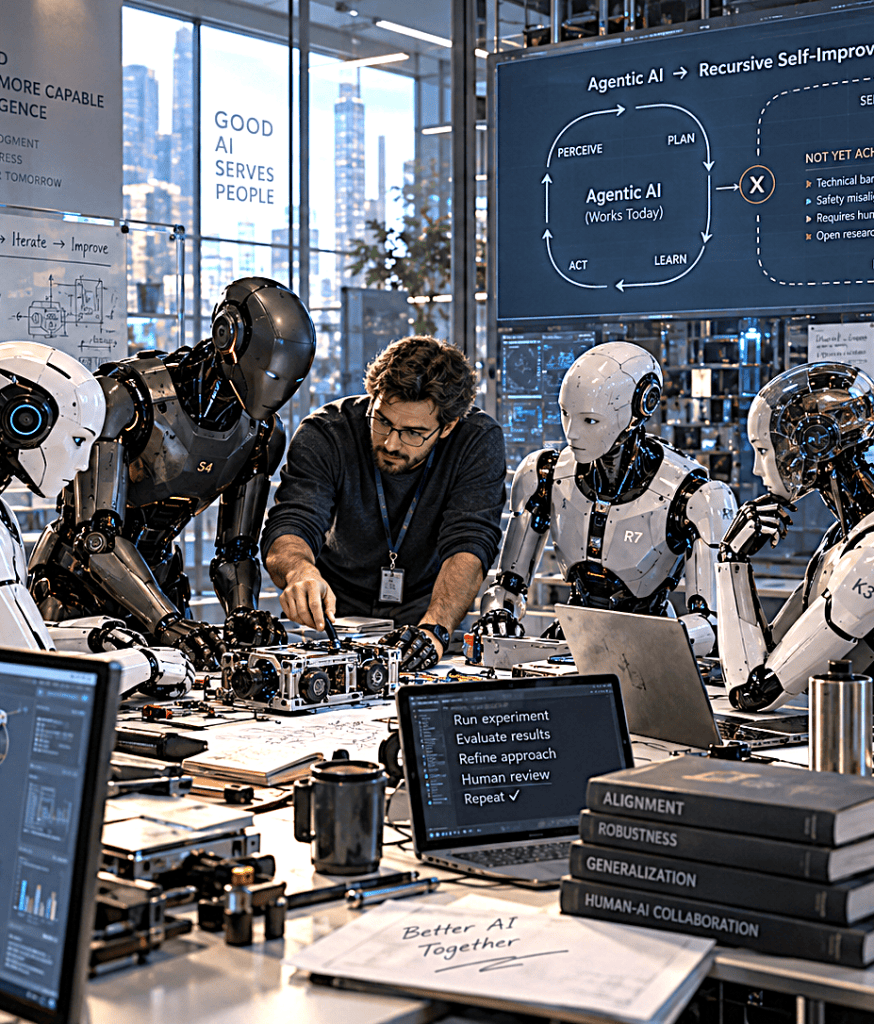
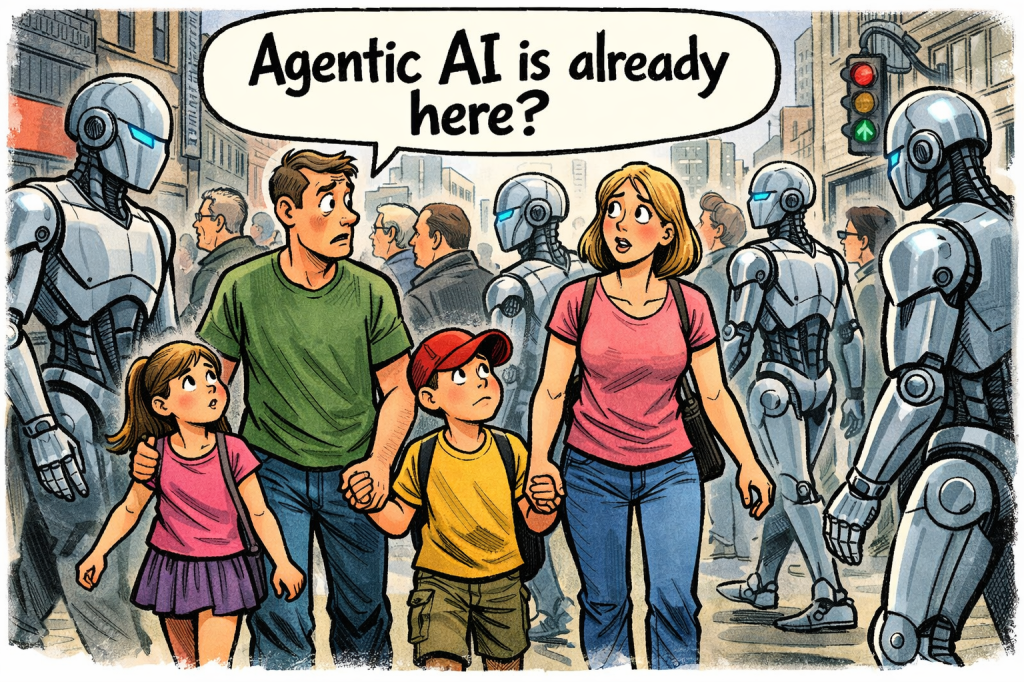
Taken together, these predictions and analyses converge on a clear timeline: agentic AI is not a distant prospect but a present and rapidly intensifying reality. By 2025, agents had already “arrived” as infrastructure, powered by reasoning models, open‑weight systems, and standardized protocols for tool use and agent‑to‑agent communication.[5–7] By 2026, multiple independent sources expect a tipping point in enterprise adoption: around 40% of applications integrating task‑specific agents, 96% of organizations using agents in some capacity, and executives shifting from pilots to production budgets.[1–3,9] Beyond 2026, forecasts of a multibillion‑dollar agents market and multi‑agent ecosystems by 2029 suggest that agents will become a default layer in software, not a special feature.[1,2,5]
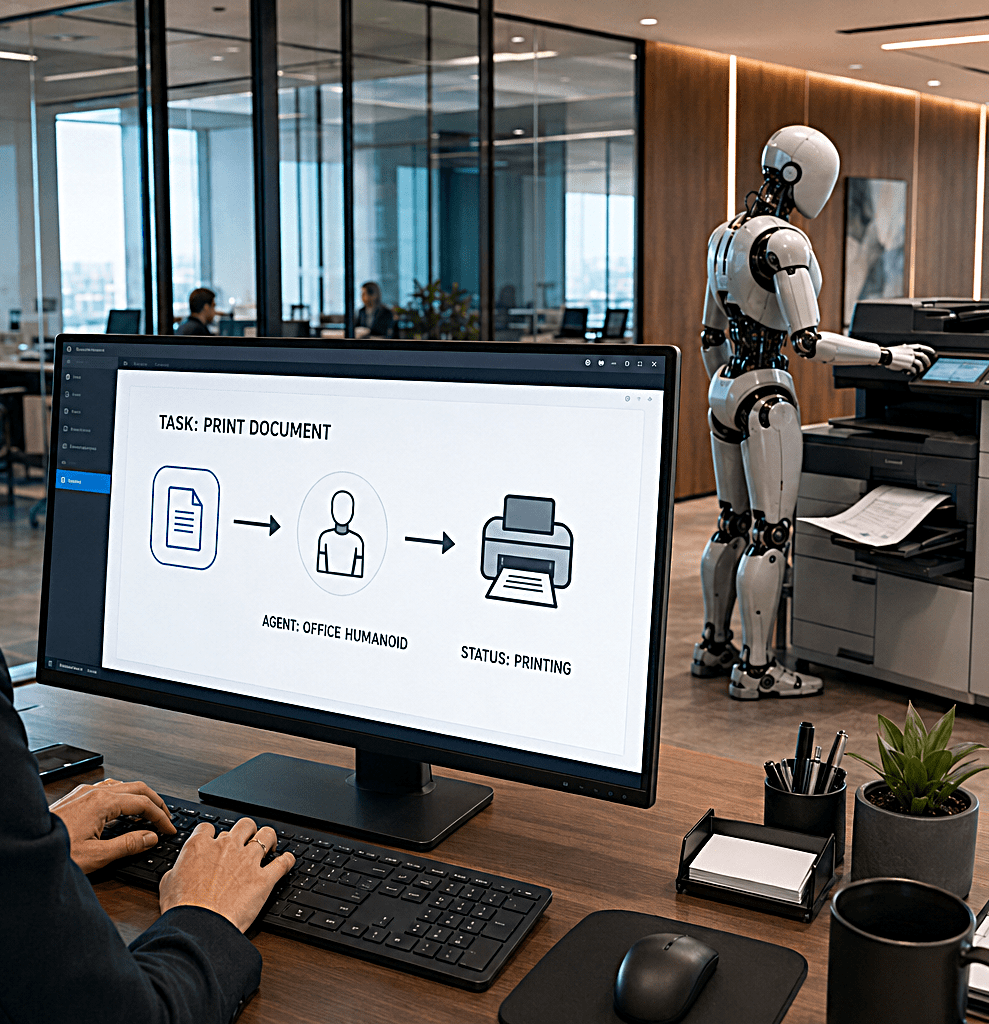
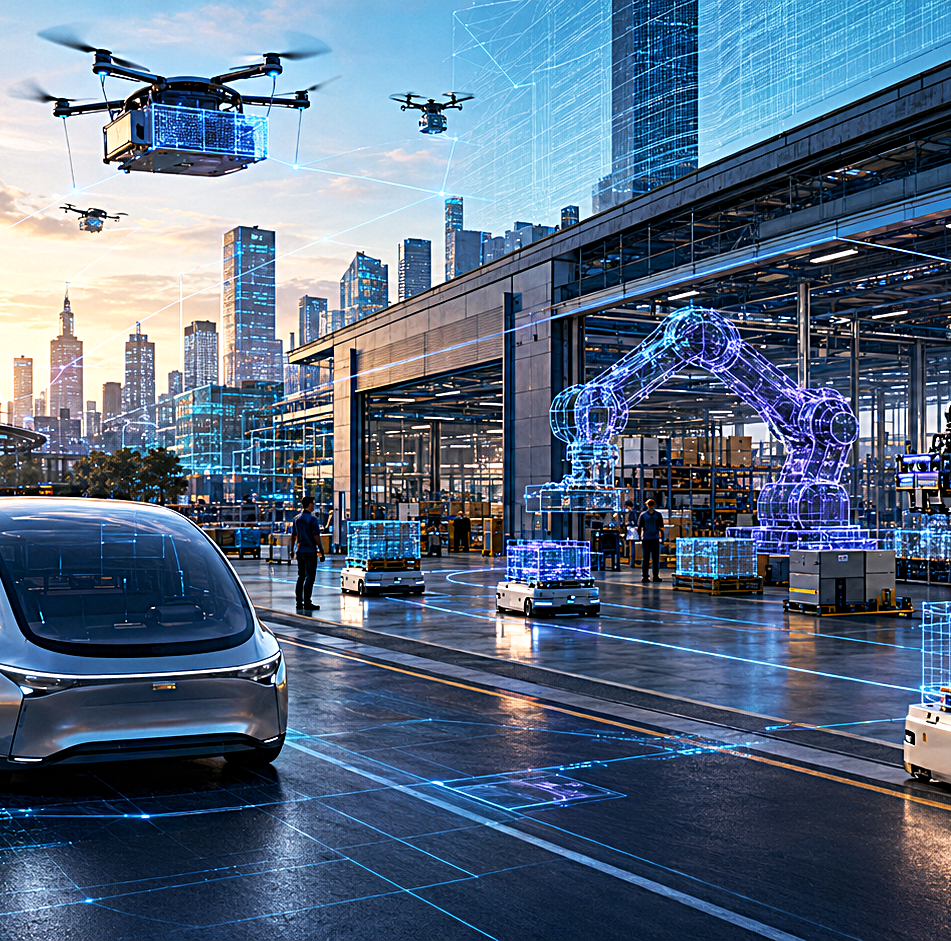
For everyday life, that means the impact of agentic AI will arrive in three overlapping waves. First, a quiet infrastructural wave, already underway, where agents automate back‑office workflows, customer service triage, and digital operations—changing response times, service quality, and job descriptions even if users never see the agents directly. Second, a collaborative wave, where people increasingly work alongside visible agents embedded in tools, dashboards, and consumer apps, delegating research, planning, and execution while learning new skills in oversight and prompt‑level management. Third, a governance wave, where questions of autonomy, accountability, and labor reconfiguration become unavoidable: who is responsible when an agent acts, who gets hired or displaced, and how transparent these systems must be.
The “when” is therefore best answered as: already, for many enterprise contexts; by 2026, for a large share of the software that structures work; and by the end of the decade, for most people’s daily interactions with organizations and digital services. The deeper question is not whether agentic AI will touch everyday life, but whether societies will shape its deployment toward augmentation, accountability, and shared benefit—or allow it to evolve primarily along the lines of efficiency, cost‑cutting, and opaque automation.
References
[1] “Gartner Predicts 40% of Enterprise Apps Will Feature Task-Specific AI Agents by 2026, Up from Less Than 5% in 2025” – Gartner Newsroom. https://www.gartner.com/en/newsroom/press-releases/2025-08-26-gartner-predicts-40-percent-of-enterprise-apps-will-feature-task-specific-ai-agents-by-2026 (gartner.com in Bing)
[2] “Gartner predicts 40% of enterprise apps will feature AI agents by 2026” – UC Today. https://www.uctoday.com/unified-communications/gartner-predicts-40-of-enterprise-apps-will-feature-ai-agents-by-2026 (uctoday.com in Bing)
[3] “Agentic AI Goes Mainstream in the Enterprise, but 94% Raise Concern About Sprawl, OutSystems Research Finds” – SD Times. https://sdtimes.com/ai/agentic-ai-goes-mainstream-in-the-enterprise-but-94-raise-concern-about-sprawl-outsystems-research-finds (sdtimes.com in Bing)
[4] “Enterprise AI Agents Are Entering Production And Changing Who Gets Hired” – Forbes. https://www.forbes.com/sites/josipamajic/2026/04/13/enterprise-ai-agents-are-entering-production-and-changing-who-gets-hired (forbes.com in Bing)
[5] “2025 AI Recap: Top Trends and Bold Predictions for 2026” – TechLife. https://techlife.com/2025-ai-recap-top-trends-and-bold-predictions-for-2026 (techlife.com in Bing)
[6] “AI agents arrived in 2025 – here’s what happened and the challenges ahead in 2026” – The Conversation. https://theconversation.com/ai-agents-arrived-in-2025-heres-what-happened-and-the-challenges-ahead-in-2026-228123 (theconversation.com in Bing)
[7] “The 2025 Artificial Intelligence Landscape: From Reasoning Models to Agentic Systems” – Fresh Consulting. https://www.freshconsulting.com/insights/blog/2025-artificial-intelligence-landscape-from-reasoning-models-to-agentic-systems (freshconsulting.com in Bing)
[8] “H1 2025 Insights, H2 2025 Imperatives, and 2026 Predictions: How Agentic AI Will Define the Next Competitive Edge” – The AI Underground (CAIS). https://theaiunderground.com/h1-2025-insights-h2-2025-imperatives-and-2026-predictions (theaiunderground.com in Bing)
[9] “The Next Phase Of Enterprise AI: 2026 Predictions From A CTO” – Forbes. https://www.forbes.com/sites/forbestechcouncil/2026/04/14/the-next-phase-of-enterprise-ai-2026-predictions-from-a-cto (forbes.com in Bing)
###
Filed under: Uncategorized |























































































































































































































































































































































































































































Leave a Reply