





By Jim Shimabukuro (assisted by Copilot)
Editor
[Related: Probability of War in Iran Becoming a Second Vietnam: A Cautionary Low, Iran as a Second Vietnam: Five Scenarios]
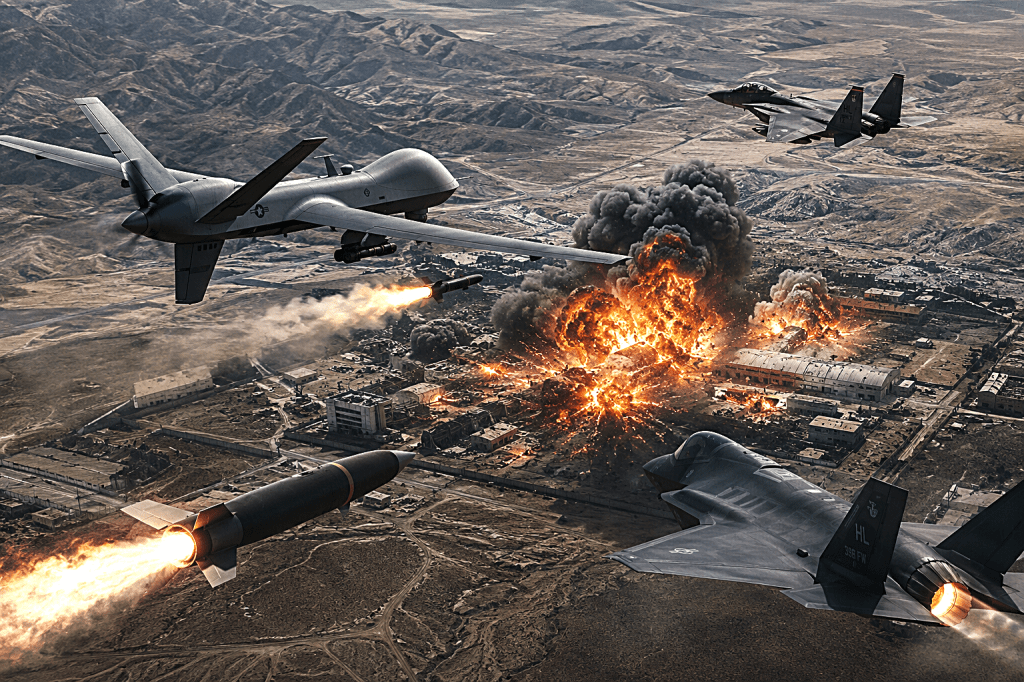
Our March judgment hinged on one central contingency: whether Washington would cross the threshold from coercive strikes and limited presence into large‑scale occupation of Iranian territory. Subsequent developments in April–May 2026 still point firmly away from that threshold. Official descriptions of Operation Epic Fury continue to frame the campaign as an air‑ and maritime‑centric effort to destroy Iranian offensive missiles, naval assets, and elements of its security infrastructure, with no announced plans for a ground invasion or regime‑change occupation, and the legal rationale is explicitly tied to self‑defense and collective defense of Israel rather than to territorial control or long‑term pacification of Iran (1). This strategic framing is fundamentally incompatible with a Vietnam‑style war of occupation, even if the conflict remains intense and dangerous.

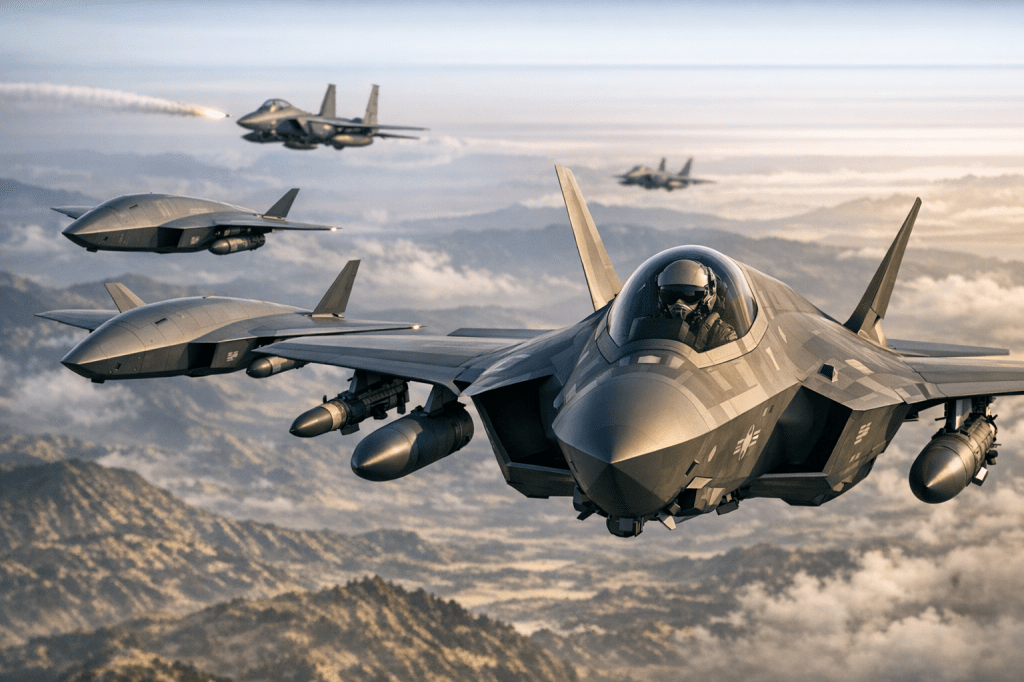
Operational reporting likewise suggests a campaign designed for finite objectives rather than open‑ended counterinsurgency. RAND’s early‑April assessment characterizes the war as a “dilemma, not a debacle,” emphasizing that U.S. and Israeli forces have significantly degraded Iran’s missile arsenal and production capacity within weeks, while acknowledging that every further escalation path carries political and strategic trade‑offs (2). The focus on degrading specific capabilities—missiles, drones, naval assets, and proxy networks—rather than seizing and holding territory points toward a coercive air and maritime war, not a ground‑heavy quagmire. Analyses of the evolving campaign architecture highlight global maritime interdiction, sanctions enforcement, and pressure on Iran’s external support networks, again underscoring that the main levers are economic and naval rather than large‑scale land warfare (3).
At the same time, several April 2026 studies underline constraints that actively militate against a Vietnam‑style escalation. Detailed modeling of munitions stocks and attrition stresses that Western precision‑guided inventories are being depleted across multiple theaters, making a prolonged, high‑intensity kinetic campaign costly and difficult to sustain (3). Parallel economic analysis notes that markets are pricing in a short but intense conflict, with expectations of a “sharp but temporary shock” rather than a multi‑year war, in part because protracted large‑scale ground operations in Iran are judged unlikely given U.S. domestic politics and resource limits (5). These constraints do not make escalation impossible, but they raise the political and logistical price of any move toward occupation‑level deployments, thereby lowering the probability that leaders will choose that path.
Policy‑oriented work in April also shows elites debating “end states, not end dates” for Epic Fury, focusing on measurable benchmarks—nuclear constraints, missile fire rates, reconstitution capacity, and security of the Strait of Hormuz—rather than open‑ended commitments (4). That discourse is very different from the incremental troop‑level creep and vague notions of “credibility” that helped trap the United States in Vietnam. The emerging conversation is about how to define a tolerable regional balance and then negotiate or coerce Iran toward it, not about staying until a hostile regime is fully transformed. Even critical analyses that highlight doctrine failures and great‑power spoiler risks still recommend leveraging maritime and economic pressure into a negotiated truce, not doubling down into a ground war (3).
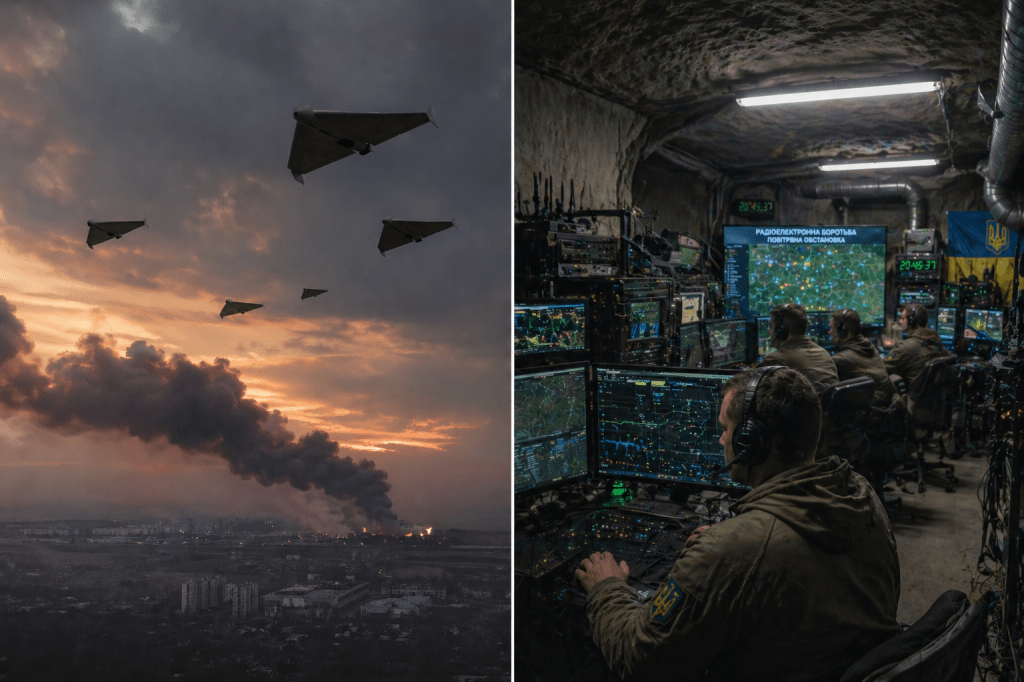
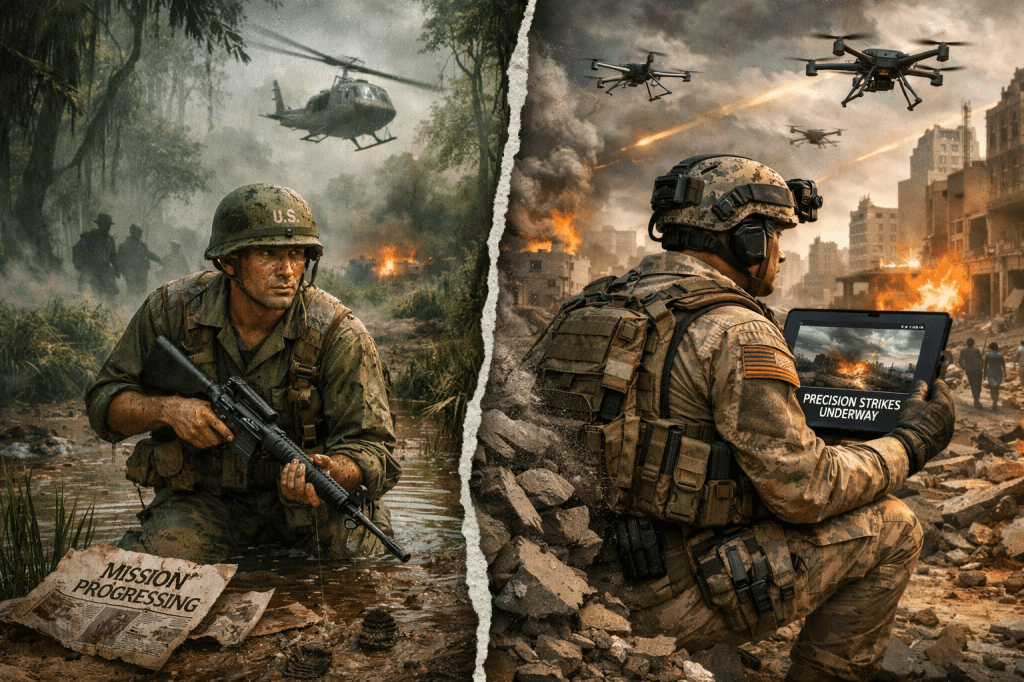
What has changed since our March article is not the likelihood of a Vietnam‑style quagmire, but the visibility of another risk we flagged only indirectly: a drawn‑out, horizontally escalated regional confrontation. The April intelligence and strategy literature describes a conflict that has already spread across maritime chokepoints and multiple theaters, with Russia and China acting as “tactical spoilers” and Iran leaning on proxy and drone warfare (3). That pattern raises the probability of a protracted, low‑to‑medium‑intensity regional war, with recurring crises, sanctions, cyber operations, and proxy clashes. It is a serious and destabilizing prospect—but still analytically distinct from a Vietnam‑scale U.S. ground occupation facing a nationwide insurgency.
Taken together, the latest open sources reinforce rather than overturn our earlier probabilistic judgment. The structural drivers that made a true “second Vietnam” unlikely in March—U.S. aversion to large‑scale occupation, munitions and manpower constraints, the availability of stand‑off strike options, and strong incentives for external powers to cap escalation—are even more visible now (2,3,5). By contrast, the odds of a longer, messy regional confrontation have inched upward as horizontal escalation and great‑power competition deepen. If we were to update our estimate, we would still place the probability of a Vietnam‑scale quagmire in the low single‑digit to, at most, low‑teens percentage range, and arguably slightly lower than before, while assigning a higher—but still not dominant—probability to a protracted, non‑occupational regional war. In that sense, subsequent developments sharpen our caution about regional instability but do not justify calling Iran “another Vietnam.”
References
- “Operation Epic Fury and International Law” – U.S. Department of State (April 21, 2026)
https://www.state.gov/operation-epic-fury-and-international-law/(state.gov in Bing) - “Trump’s Iran War Is a Dilemma, Not a Debacle” – RAND / Foreign Policy (April 4, 2026)
https://www.rand.org/pubs/commentary/2026/04/trumps-iran-war-is-a-dilemma-not-a-debacle.html(rand.org in Bing) - “US-Iran War 2026: Strategy, Attrition & Exit Architectures” – CommandEleven Intelligence (April 15, 2026)
https://commandeleven.com/us-iran-war-2026-strategy-attrition-exit-architectures/(commandeleven.com in Bing) - “End States, Not End Dates: Defining Success for Operation Epic Fury” – JINSA Gemunder Center (April 2026)
https://jinsa.org/publication/end-states-not-end-dates-defining-success-for-operation-epic-fury/(jinsa.org in Bing) - “Iran War: Modest Impact on Vietnam – A Short but Intense Effect on Global Markets” – VinaCapital Insights (March 4, 2026)
https://vinacapital.com/wp-content/uploads/2026/03/VinaCapital_Insights_Iran-War_Modest-Impact-on-Vietnam.pdf
###
Filed under: Uncategorized |
























































































































































































































































































































































































































































Leave a Reply