





By Jim Shimabukuro (assisted by Copilot)
Editor
(Related: June 2026 | Feb 2026 | Jan 2026 | Dec 2025 | Nov 2025 | Oct 2025 | Sep 2025)
Decision 1 – Global governance: By the end of April 2026, will UN member states meaningfully commit to an interoperable global framework for AI governance through the new Global Dialogue on Artificial Intelligence Governance, or allow governance to fragment into competing blocs?
April 2026 is a hinge month for whether AI governance becomes more coherent or more fractured. The United Nations’ Global Dialogue on Artificial Intelligence Governance—mandated by the General Assembly and supported by a joint secretariat across the UN system—has called for written inputs from member states and stakeholders ahead of its first high‑level meeting in mid‑2026.[8,9] Those submissions, due by the end of April, will shape the agenda, priorities, and level of ambition for what could become the closest thing the world has to a shared “operating layer” for AI rules. The decision facing governments is whether to treat this as a serious venue for convergence or as a symbolic forum while real power consolidates in a few regulatory blocs.

The urgency is driven by the pace and unevenness of AI deployment. The 2026 Stanford AI Index documents systems that match or exceed human performance on PhD‑level science exams and competition mathematics, while still failing at basic tasks and exhibiting brittle behavior in real‑world settings.[1] Corporate investment in AI has surged, and early evidence points to significant disruption of entry‑level knowledge work, especially in software and customer service roles.[1,2] At the same time, public trust is fragile, and transparency among leading labs is declining as competition intensifies.[1,4] In this environment, a patchwork of uncoordinated national rules risks regulatory arbitrage, race‑to‑the‑bottom behavior, and inconsistent protection of fundamental rights.
The Global Dialogue is explicitly designed to address this fragmentation. UN documents describe it as a platform to connect national, regional, and sectoral AI initiatives, promote “coherence and interoperability,” and support capacity‑building for countries that lack technical and regulatory resources.[8,9] The April consultations and written submissions are meant to surface priorities across safety, human rights, socioeconomic impacts, and digital divides, and to identify where common principles or shared infrastructure—such as incident reporting channels or evaluation benchmarks—might be feasible.[8,10] In other words, April is when states decide how much political capital they are willing to invest in a multilateral, multi‑stakeholder process.
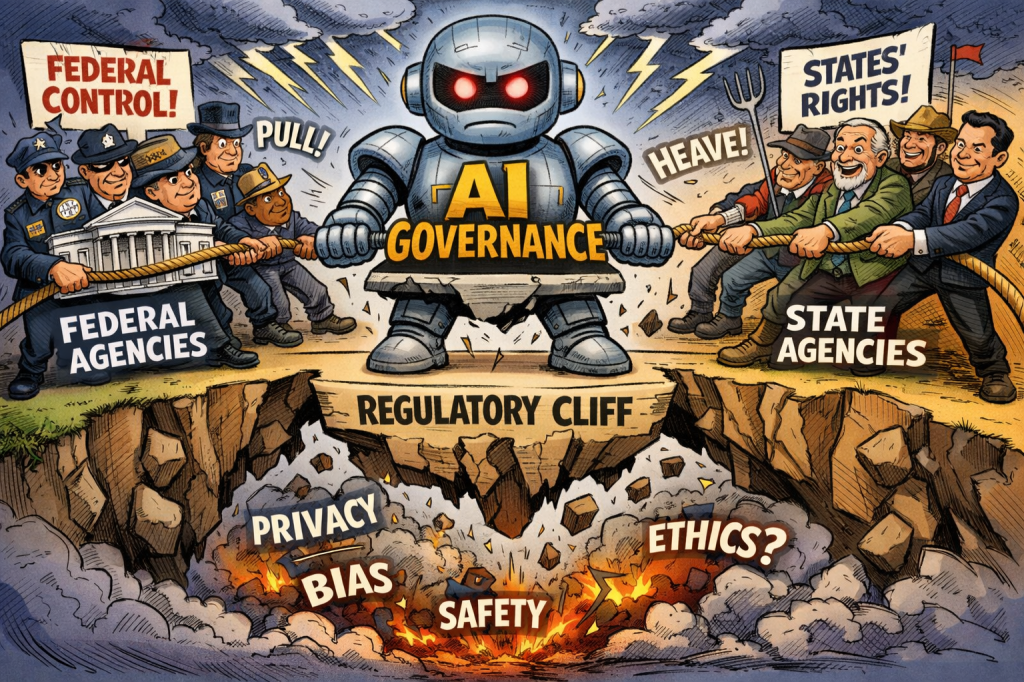
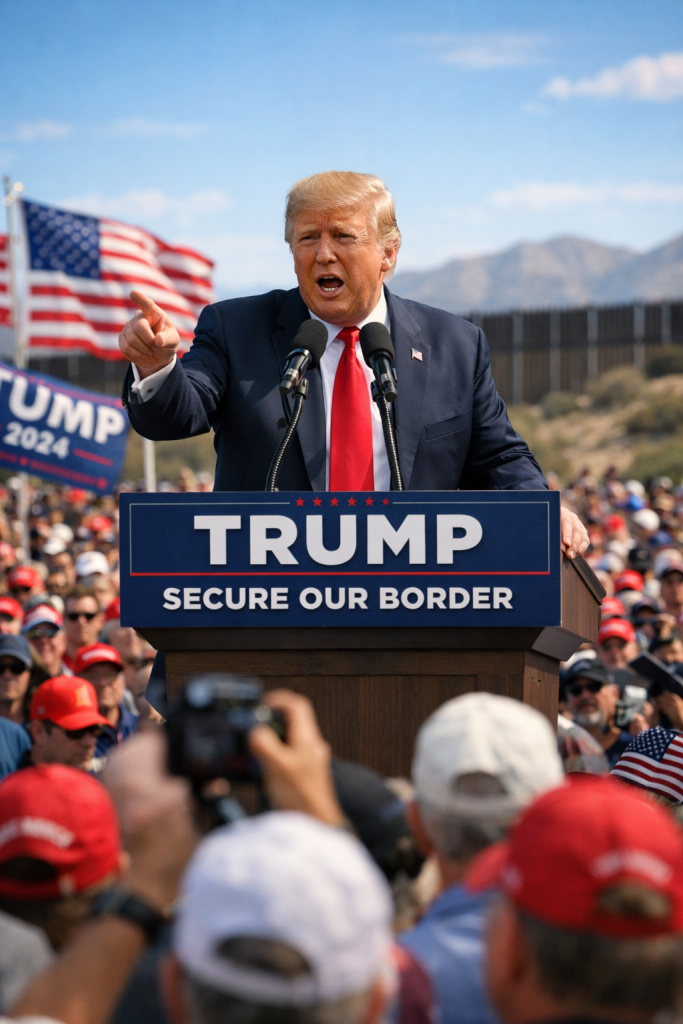
Key actors include the UN General Assembly, the co‑chairs of the Dialogue, and the joint secretariat, but the real leverage lies with regional powers and coalitions. The European Union is moving ahead with the AI Act, a comprehensive risk‑based framework that will begin to bite in 2026, including obligations for high‑risk systems and transparency requirements for AI‑generated content.[2,3,5] The United States remains a mosaic of federal guidance and state‑level initiatives, with ongoing political struggles over whether Washington should preempt state AI rules.[2,4,12,13] China has adopted a series of sector‑specific regulations on recommendation algorithms, generative AI, and deep synthesis, emphasizing content control and security.[2,4] Many other countries—from Brazil to India to members of the African Union—are drafting or revising AI strategies and laws, often with limited resources.[2,3,21]
Recent mapping of more than a thousand AI governance documents shows that most frameworks focus on technical and safety risks—such as robustness, privacy, and security—while paying less attention to power concentration, labor impacts, and multi‑agent risks.[10] Coverage is uneven across sectors and lifecycle stages, and frontier or foundation models are often treated only in broad terms.[3,10] Without deliberate coordination, gaps in one jurisdiction can be exploited from another, and cross‑border incidents—such as model‑enabled cyberattacks or disinformation campaigns—may fall between regulatory cracks. A global forum that encourages shared norms, interoperable standards, and capacity‑building could mitigate these risks; a world of hardened blocs will likely amplify them.
The April 2026 decision also sits in conversation with earlier thinking about a “global AI operating system,” including the ETC Journal’s January 2026 reflection on three critical global decisions.[20] That earlier piece emphasized the need for shared infrastructure and rules that transcend national silos. The Global Dialogue is more procedural but potentially complementary: it offers a concrete institutional pathway to negotiate such shared layers over time. If major powers submit ambitious, specific proposals—on safety benchmarks, incident reporting, transparency norms, and support for developing countries—the Dialogue could evolve into a central node for aligning national regimes.[8,9,19]
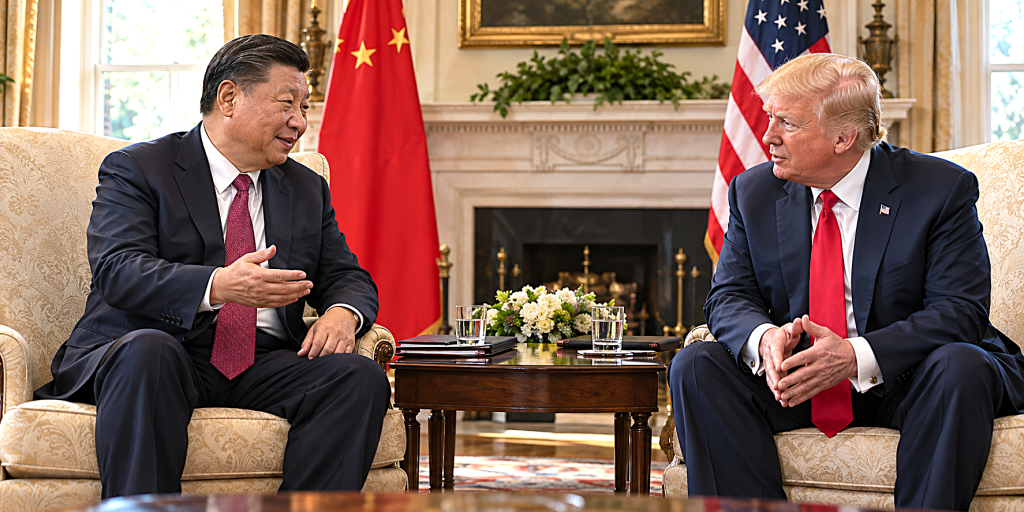
If, instead, states treat the April process as a box‑ticking exercise, the Dialogue risks becoming a talk shop while real decisions are made in export‑control committees, national security councils, and corporate boardrooms. The likely result would be deeper fragmentation: an EU‑centric regulatory sphere, a US‑led coalition prioritizing strategic competition with China, a China‑centered ecosystem with its own standards, and many countries forced to navigate conflicting expectations.[2,3,4] That outcome would make it harder to manage cross‑border AI incidents, to ensure consistent protections for human rights, and to prevent a race to deploy increasingly powerful systems without adequate oversight.
By the end of April 2026, then, the question is whether governments will use the UN Global Dialogue as a serious vehicle for shared responsibility or allow AI governance to harden into rival blocs. The answer will shape not only how risks are managed, but who gets a voice in setting the rules of an AI‑driven world.
Decision 2 – Frontier and open‑weight models: By the end of April 2026, how will major jurisdictions choose to regulate frontier and open‑weight foundation models—especially under the EU AI Act and emerging US and Asian regimes—and will these models be treated as critical infrastructure or as general‑purpose tools?
A second critical decision in April 2026 concerns the regulatory treatment of frontier and open‑weight foundation models, which increasingly function as the substrate of digital infrastructure. The debate is no longer about whether to regulate them, but how. Legislators and regulators must decide whether to treat these models as critical infrastructure subject to stringent obligations, or as general‑purpose technologies governed mainly through downstream applications. The choices made this month—particularly in Europe and the United States—will shape who can build, deploy, and adapt powerful models over the next decade.
The EU AI Act provides the most advanced test case. It introduces a category of “general‑purpose AI” (GPAI) that in practice captures what industry calls foundation models.[5-7] Providers of GPAI models must maintain technical documentation, provide information to downstream developers, respect EU copyright law, and publish summaries of training data.[5,6] Models whose training compute exceeds a specified threshold are presumed to pose “systemic risk” and must meet additional obligations, including adversarial testing, incident reporting, and cybersecurity measures.[6,7] While many of these obligations will apply from 2025 onward, 2026 is the year when the European Commission’s new AI Office and national regulators finalize guidance, codes of practice, and enforcement strategies.[5-7] April is a key period for consultations and draft instruments that will determine how burdensome these rules become in practice.
Open‑source and open‑weight models are at the center of the controversy. The AI Act offers partial exemptions for open‑source GPAI providers from some documentation and transparency requirements, but not from copyright compliance or systemic‑risk duties.[6,7] Industry coalitions and civil‑society groups are lobbying over how far these carve‑outs should go, arguing either that openness enhances safety through scrutiny and diversity, or that it lowers barriers to misuse.[6,7,11] By 2025–2026, open and openly licensed models—such as LLaMA derivatives, Mistral, and Falcon—have begun to match or exceed proprietary systems on coding, tool‑use, and domain‑specific reasoning tasks, intensifying the “model wars” between open and closed approaches.[1,11]
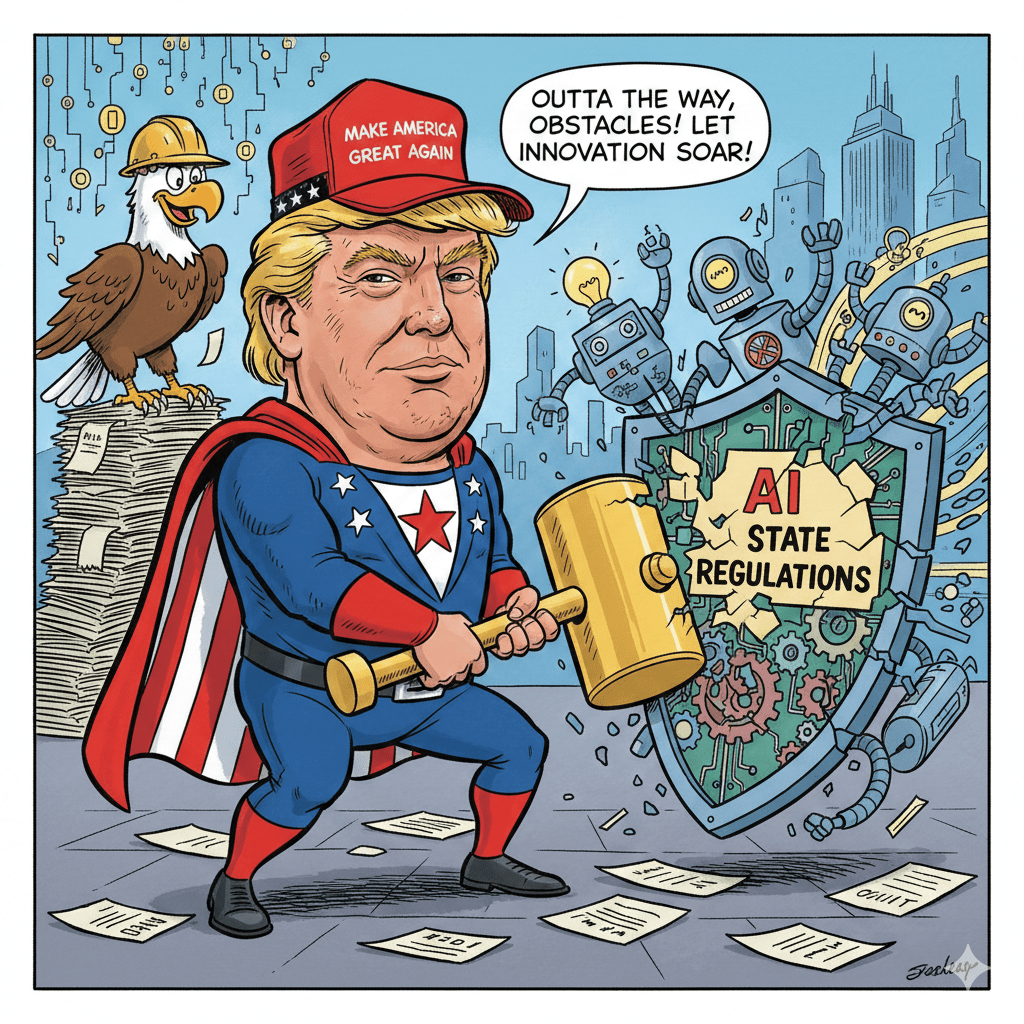
Outside Europe, regulatory trajectories diverge. Global overviews in early 2026 count more than 70 countries with AI policies or draft laws, including new or updated frameworks in South Korea, Japan, Vietnam, and several ASEAN states.[2,3,21] Many of these regimes focus on sector‑specific guidance and professional accountability rather than model‑level licensing. Singapore’s guidance on generative AI in the legal sector, for example, emphasizes governance frameworks, risk assessment, and human oversight rather than direct controls on model providers.[21] In the United States, the federal government has issued executive orders and agency guidance, but Congress has not passed a comprehensive AI law, and states are moving ahead with their own rules.[2,4,12,13] The Trump administration has floated a national AI policy framework that would preempt many state‑level regulations, prompting resistance from both states and members of Congress who see state experimentation as essential.[12,13]
This patchwork creates uncertainty for frontier‑model developers such as OpenAI, Anthropic, Google, Meta, Mistral, and others. They must decide whether to design their systems to meet the strictest plausible regime (likely the EU AI Act), to segment models and features by jurisdiction, or to lobby for lighter‑touch approaches that focus on downstream uses.[2,3,5,6] For open‑source communities, the stakes are existential: if compliance pathways are too onerous or ambiguous, smaller projects may be chilled or pushed into legal gray zones, consolidating power in a handful of proprietary labs.[6,7,11]
By the end of April 2026, several concrete regulatory decisions are in play. In Brussels, the Commission and AI Office are refining GPAI codes of practice and systemic‑risk criteria, which will effectively determine how many models fall into the highest‑obligation category and what technical and organizational measures are expected.[5-7] In Washington, the balance of power between federal preemption efforts and state‑level initiatives will shape whether frontier‑model rules emerge from Congress, from agencies like NIST and the FTC, or from a mosaic of state laws.[12,13] Across Asia, governments are deciding whether to align more closely with EU‑style obligations, US‑style guidance, or hybrid approaches tailored to local priorities.[2,4,21]
The impact on the field could be profound. A strict, EU‑led regime that treats frontier and open‑weight models as critical infrastructure could push global providers toward more conservative release strategies, heavier documentation, and more robust red‑teaming and incident reporting.[5-7] That might slow some forms of open experimentation but could also reduce systemic risks and create clearer accountability chains across the AI supply stack. Conversely, a looser, US‑style regime—especially if federal preemption succeeds—might favor rapid innovation and commercial deployment, but at the cost of greater variance in safety practices and fewer hard obligations on model providers.[2,4,12,13]
For open‑source communities and smaller countries, the April 2026 decisions will help determine whether they are recognized as essential contributors to a diverse, competitive AI ecosystem or treated primarily as risk vectors. If open‑weight models are given workable compliance pathways—acknowledging their role in research, education, and local innovation—then the “model wars” may evolve into a more balanced coexistence of open and closed paradigms.[1,11,21] If not, we may see a consolidation of power in a small club of heavily regulated giants, with open projects marginalized or pushed underground.
In short, how lawmakers choose to regulate frontier and open‑weight models this month will shape who controls the substrate of machine intelligence: a few large firms operating under strict infrastructure‑style rules, a broad ecosystem of open and closed actors under interoperable obligations, or a fragmented landscape where safety, transparency, and accountability vary wildly across borders.
Decision 3 – AI chips and techno‑geopolitics: By the end of April 2026, will the United States, the European Union, and their allies lock in escalatory AI chip export controls on China, entrenching techno‑blocs, or recalibrate toward a more stable, narrowly targeted regime that constrains military uses while preserving some interdependence?
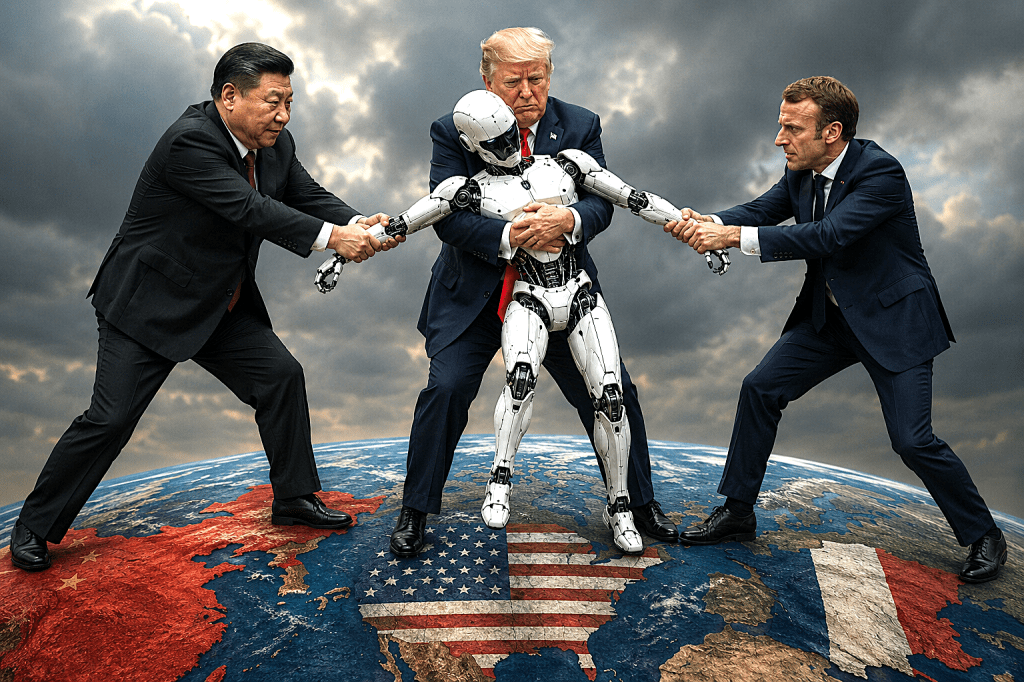
The third pressing decision in April 2026 concerns AI and geopolitics: the future of export controls on advanced AI chips and semiconductor manufacturing equipment. These controls determine who can train frontier models at scale, how quickly alternative ecosystems emerge, and whether AI becomes a domain of managed competition or hardened technological decoupling. The choices now facing Washington, Brussels, and Beijing will reverberate through global AI development for years.
The United States has been tightening controls on advanced AI chips and tools since 2022, but 2026 marks a new phase. In early 2026, the Bureau of Industry and Security (BIS) introduced a revised license review process for certain high‑end AI chips exported to China and Macau, including top‑tier accelerators.[15,16] Exporters must demonstrate that US supply remains abundant, that foundry capacity is not diverted away from US users, that shipments to China and Macau remain below specified thresholds, and that robust “know your customer” procedures are in place.[16] The rule is framed as a way to preserve the “national security benefits of US leadership in artificial intelligence” while allowing narrowly controlled exports.[15,16]
At the same time, Congress is pushing for more aggressive measures. In April 2026, the US Senate passed an AI export control amendment targeting an estimated tens of billions of dollars in annual AI chip exports to China, prompting immediate market reactions and warnings from industry.[17] The House Select Committee on the Strategic Competition between the United States and the Chinese Communist Party has endorsed a suite of additional bills—the AI Overwatch Act, Remote Access Security Act, Scale Act, Chip Security Act, Match Act, and Stop Shells Act—aimed at closing loopholes in chip sales, cloud access, and shell‑company structures.[18] Together, these proposals signal a strong congressional appetite for tightening controls on both hardware and remote access to compute.
Europe is being drawn into this contest. In April 2026, the European Commission proposed new export controls on dual‑use AI chips, citing an emerging AI arms race and recent tests of AI‑guided hypersonic systems. The proposal would require licenses for high‑performance AI chips exported to non‑EU countries, expand the EU’s dual‑use regulation to cover certain high‑risk AI algorithms, and impose significant fines for violations. Commission leaders frame the move as essential for Europe’s “strategic autonomy,” while also advocating a sovereign AI fund to bolster domestic capacity.[14] However, the Commission’s own assessments warn of substantial compliance costs for European firms, and companies such as ASML and leading AI startups have raised concerns about lost revenue and retaliatory measures.[14,2,3]
China, for its part, is responding with a mix of industrial policy and diplomatic signaling. While detailed measures are less transparent, reporting indicates heavy investment in domestic chip manufacturing, AI accelerators, and alternative supply chains, alongside threats of retaliatory tariffs and restrictions on critical minerals.[17,18] The net effect is a drift toward techno‑bloc formation: a US‑led coalition tightening controls on advanced chips and tools, an EU seeking to protect its own supply chains while aligning with NATO allies, and a China‑centered ecosystem racing to achieve self‑reliance.[2-4]
By the end of April 2026, several decisions will indicate whether this drift becomes a hard break. In Washington, House leaders must decide whether to adopt, modify, or block the Senate’s AI export control amendment and the Select Committee’s broader package.[17,18] A maximalist approach—tightening controls on both chips and cloud access, expanding entity lists, and limiting even mid‑range hardware—would signal a long‑term strategy of technological decoupling, even at the cost of short‑term revenue and global supply‑chain disruption.[16-18] A more calibrated approach might preserve BIS’s case‑by‑case licensing channel, focus controls on clearly military‑relevant applications, and coordinate with allies to avoid over‑broad restrictions that simply incentivize workarounds.[15,16]
In Brussels, member states and the European Parliament must decide how far to go in negotiations over the Commission’s proposal. Some governments, particularly those emphasizing security and transatlantic alignment, support strong controls and a sovereign AI fund; others worry about competitiveness, compliance costs, and retaliation against export‑oriented industries.[14,2,3] The EU’s choice will determine whether it becomes a full co‑architect of a Western AI‑chip bloc or maintains a more balanced position that preserves room for commercial engagement with China while constraining military uses.
These export‑control decisions will shape the geography and character of AI development. Stricter, more expansive controls could slow China’s access to cutting‑edge training hardware, potentially widening performance gaps in frontier models in the short term.[2,3,14,16] But they could also accelerate China’s push for indigenous alternatives, leading to parallel AI ecosystems with limited interoperability and fewer shared safety norms. For US and EU firms, tighter controls may reduce revenue and scale advantages, but also protect domestic capacity and reduce the risk that their chips power adversarial military systems.[14,16-18] For the rest of the world, especially developing countries, the risk is collateral damage: higher prices, reduced access to advanced hardware, and pressure to choose sides in a techno‑geopolitical contest they did not initiate.[2,3,21]
Crucially, these hardware decisions intersect with the governance and model‑regulation choices described earlier. A world of hardened chip blocs will find it harder to build shared safety standards, coordinate incident response, or align expectations for frontier‑model behavior.[8-10,19] Conversely, a more narrowly targeted export‑control regime—focused on clearly defined military and surveillance risks—could coexist with robust global governance and interoperable regulatory frameworks. The question facing leaders in Washington, Brussels, Beijing, and other capitals in April 2026 is therefore not just about chips; it is about whether AI becomes a driver of global fragmentation or a domain where competition is balanced with shared responsibility.
References
[1] Stanford AI Index 2026 Reveals a Field Racing Ahead of Its Guardrails. Unite.AI (2026).https://www.unite.ai/stanford-ai-index-2026-reveals-a-field-racing-ahead-of-its-guardrails/
[2] Global AI Regulation in 2026: What Organizations Need to Know. ResponsibleAI Labs (2026).https://responsibleaitech.com/global-ai-regulation-2026
[3] The 2026 Global AI Regulation Landscape. RAIL Score Knowledge Hub (2025).https://railscore.org/2026-global-ai-regulation-landscape
[4] AI Governance and Regulation 2026: A Complete Guide to Global Frameworks. Meta Intelligence (2026).https://metaintelligence.ai/ai-governance-2026
[5] AI Act. European Commission – Shaping Europe’s Digital Future.https://digital-strategy.ec.europa.eu/en/policies/eu-ai-act
[6] GPAI & Foundation Model Compliance Under the EU AI Act. Glocert International (2026).https://glocert.com/gpai-foundation-model-compliance-eu-ai-act
[7] Foundation Model Providers: Complete EU AI Act Obligations Guide. Quantamix Solutions (2026).https://quantamix.ai/foundation-model-providers-eu-ai-act-obligations
[8] Concept Note – Second Informal Stakeholder Consultation on the Global Dialogue on Artificial Intelligence Governance. United Nations (2026).https://www.un.org/global-dialogue-ai-governance/sites/default/files/2026-04/concept_note_2.pdf
[9] Global Dialogue on Artificial Intelligence Governance. United Nations.https://www.un.org/global-dialogue-ai-governance
[10] Mapping the AI Governance Landscape: April 2026 Update. MIT AI Risk Initiative (2026).https://example.com/mapping-ai-governance-landscape-april-2026
[11] Open‑Source vs Closed AI: Inside the Model Wars Shaping the Future of Intelligence. (2026).https://example.com/open-vs-closed-ai-model-wars
[12] Trump Wants to Stop States from Regulating AI. States and Congress Keep Saying No. The Next Web (2026).https://thenextweb.com/news/trump-wants-stop-states-regulating-ai
[13] Global AI Regulatory Update – April 2026. (2026).https://example.com/global-ai-regulatory-update-april-2026
[14] AI Arms Race Prompts EU Export Controls on Chips. Europe World News (2026).https://example.com/eu-export-controls-ai-chips
[15] US BIS Proposes Expanding AI Chip Equipment Export Controls to China. Manufacturing News (2026).https://example.com/bis-expands-ai-chip-equipment-controls-china
[16] BIS’s New 2026 License Review Process for AI Chips. Finnegan (2026).https://www.finnegan.com/en/insights/articles/bis-new-2026-license-review-process-for-ai-chips.html
[17] US Senate Passes AI Export Control Bill, Targeting $15B in China Exports. Predifi Market Intelligence (2026).https://example.com/us-senate-ai-export-control-bill
[18] China Select Committee Backs Host of Export Control Bills to Keep US AI Lead. Export Compliance Daily (2026).https://example.com/china-select-committee-export-control-bills
[19] Global Leaders Push for AI Safety and Alignment During High‑Level Summit. AIFOD (2026).https://example.com/global-leaders-ai-safety-summit
[20] AI in Jan. 2026: Three Critical Global Decisions — “Global AI Operating System”. ETC Journal (2025).https://etcjournal.com/2025/12/28/ai-in-jan-2026-three-critical-global-decisions-global-ai-operating-system/
[21] Global AI Regulatory Update – Asia and Sectoral Guidance Details. (2026).https://example.com/global-ai-regulatory-update-asia
###
Filed under: Uncategorized |































































































































































































































































































































































































































































Leave a Reply